.avif)


What's The Best Event Lead Generation Software? 26 Best Event Lead Generation Software Tools for 2026
On This Page
80% of trade show leads never get followed up on. Here is how to pick the software that closes the gap between the badge scan and the pipeline record before the lead goes cold.
Most Sales Directors believe their current badge-scanning or card-exchange process constitutes a functioning lead capture workflow because data is technically being collected at the event. When they invest $15,000 or more in a trade show booth, they walk away believing the hard work is done once the badge scans are logged. The contact exists. The data was collected. Follow-up is just a matter of scheduling. That belief is exactly where event pipeline goes to die.
The truth is that collection and capture are two completely different things. Tools designed to sync contacts in real time close the gap between the handshake and the CRM automatically. Most badge scanners were never designed to do that.
The scan feels like a finish line. See our digital business card for how this works in practice. In practice, it is the starting gun for a manual process that most teams never complete. According to com's 2026 analysis, 80% of trade show leads are never followed up on by sales teams, meaning the majority of scanned badges and collected cards produce zero sales activity. The act of scanning gets mistaken for the act of qualifying, and the pipeline entry that should follow never happens.
Interest fades fast. What most teams report, and what the numbers consistently bear out, is that leads go cold within 24 to 48 hours of the original conversation. A rep who exports a CSV on the flight home and pastes it into Salesforce three days later is not following up on a warm lead. They are sending a cold email to a contact who has already moved on.
Raw contact data with no notes is nearly useless for personalized outreach. There is no record of what pain point surfaced at the booth, what next step was promised, or what product the prospect actually asked about. Context-free leads produce generic outreach, and generic outreach gets ignored. Two hundred badge scans looks like a successful event on a slide deck. It is not a pipeline number; it is a collection number. Without automatic CRM routing, those 200 contacts sit in a spreadsheet that nobody owns.
80% of trade show leads are never followed up on by sales team
Key takeaways
- 90% of new contacts never enter the CRM after an event, not because reps forget to follow up, but because the manual entry step breaks the workflow the moment they leave the booth.
- Badge scanning collects a name. It does not create a pipeline record. Those are two different things, and most event budgets are built around the first while measuring the second.
- The best event lead generation software is not the one with the fastest scanner, it's the one that closes the gap between the handshake and the CRM without requiring a rep to do anything after the conversation ends.
- Pre-event prospecting from confirmed attendee data consistently outperforms cold floor traffic, teams that build enriched target lists before the show opens run warmer conversations and shorter sales cycles.
- Virtual event platforms structurally produce richer lead data than badge scanners because behavioral signals, session attendance, poll responses, content downloads, are captured automatically, not manually.
- CRM integration quality is the real pricing variable. A $30/month tool with a broken sync costs more than a $200/month tool that routes every contact into the right pipeline stage on the same day.
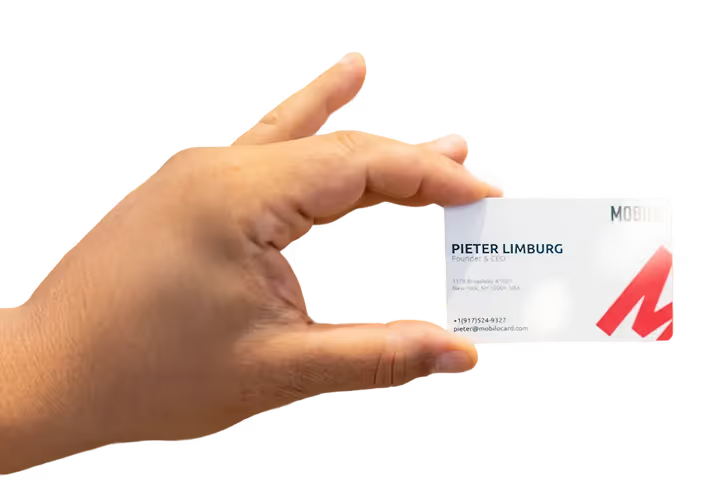
- Mobilo's Contact Exchange captures both sides of the exchange the moment someone taps or scans a Mobilo card, their information feeds directly into your CRM or contact list with no manual entry, no reprints, and no follow-up left to chance.
What Are the Key Criteria for Choosing Event Lead Generation Software?
The badge scanner passes the booth test. It fails the pipeline test. Most sales directors think that because data is technically being collected at the event, whether through badge scanning or card exchange, they already have a functioning lead capture workflow. That assumption is where event ROI goes to die, and closing it starts with knowing which criteria actually separate a tool that works on the show floor from one that merely works in a demo.
Enrichment Depth - Does the Tool Append Intent Data or Just Store a Name and Email?
The most common outcome of badge scanning is a spreadsheet with first names, work emails, and company names. That is not a lead. That is a contact stub.
Research on trade-show follow-up shows that badge scanning at events typically captures only basic contact information without enrichment data such as job title, company size, or purchase intent, leaving sales teams with incomplete records that require significant manual effort before they can be actioned in a CRM. Enrichment depth is the difference between a rep who opens a follow-up call with context and one who opens it cold. Field marketing and event teams need tools that capture leads efficiently and feed data directly into the CRM pipeline, not tools that hand them a raw export and call it done.
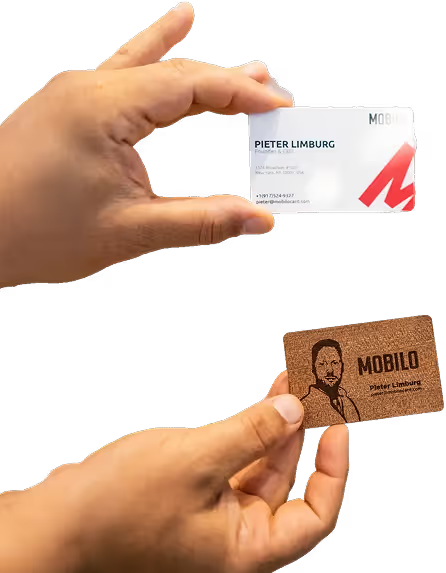
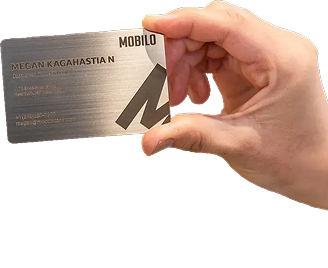
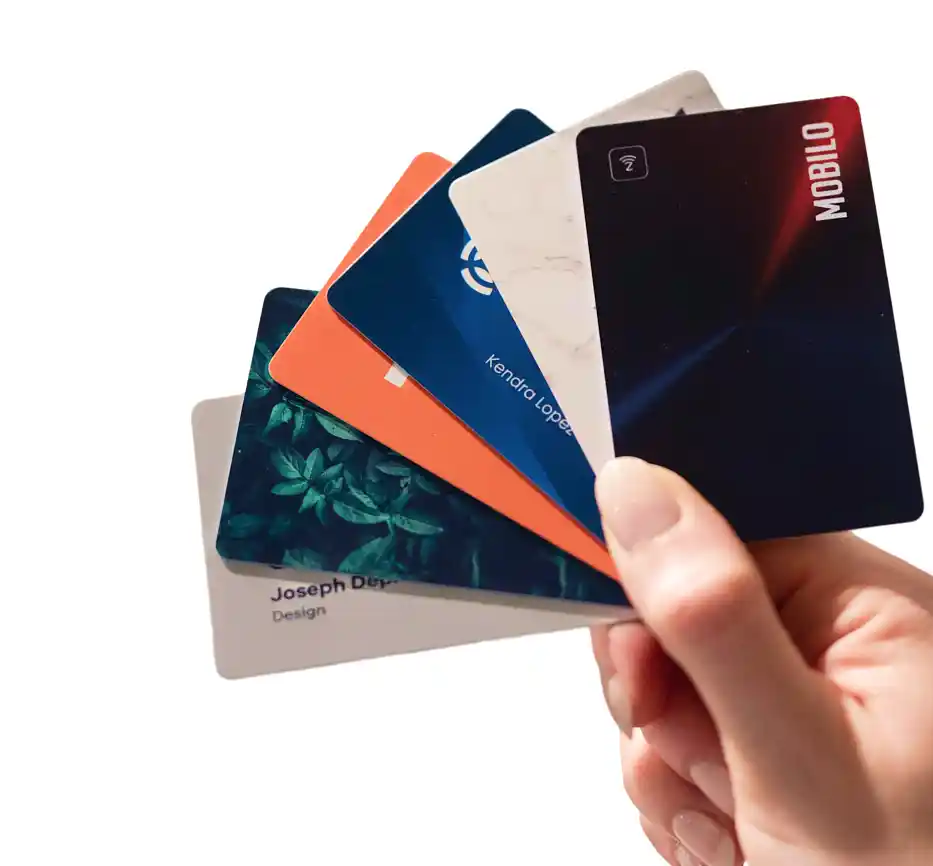
That is a gap Mobilo closes at the plan level: every tier from Pro ($3/month, billed annually) through Teams ($4/month) and Business ($5/month) includes lead enrichment, lead capture and management, and unlimited leads and contacts as standard features, not add-ons. The moment a prospect taps a card or scans a QR code, whether that card is a Team Digital Wallet Card, a Team Custom Design NFC Card, or a Team Metal Custom Design Card, the captured record is enriched and routed rather than dropped into a spreadsheet for a rep to clean up later. Evaluate whether a tool appends firmographic signals at the moment of capture, not as a manual step afterward.
The best tools ensure the record that lands in your CRM already carries the fields your reps need to qualify and prioritize, and that enrichment starts after the very first card tap or networking event, not after a lengthy onboarding cycle.
Offline Capability - What Happens to Captured Leads When the Conference Wi-Fi Collapses?
Conference Wi-Fi fails at the worst possible time, when your booth is busiest. A tool with no offline mode does not just inconvenience your reps; it creates permanent gaps in your capture record. The real cost of a dropped trade-show lead compounds fast when you factor in the cost per booth contact at a major event.
The practical test is simple: ask the vendor to demonstrate a full capture-to-sync cycle with airplane mode on. If the demo requires an internet connection, so does your lead capture at the show. Mobilo's Teams and Business plans both include no-internet QR sharing as a standard capability, meaning reps can exchange contact information and capture leads even when the convention center Wi-Fi is overwhelmed or unavailable.
Cards such as the Team Paper Plus Cards and Team Custom Design NFC Card with QR Code are built around this reality: the QR code works independently of a network connection, so no tap or scan is lost to a dropped signal.
CRM Sync Speed and Field Fidelity - How Fast Does a Handshake Become an Assigned Pipeline Record?
Speed matters because intent decays fast. CRM sync speed is not a technical nicety; it is a conversion variable. Field fidelity is the harder problem.
Many tools sync a contact record but drop custom fields, skip owner assignment, or create duplicates that clog your CRM. Following up on trade-show leads promptly is one of the highest-leverage actions an event team can take, and that window closes quickly after the show floor clears. Mobilo addresses field fidelity through two mechanisms.
First, custom lead capture forms, available on Pro, Teams, and Business plans, let teams define exactly which fields are collected at the point of capture, so the record arrives in the CRM with the structure your pipeline expects rather than requiring post-event mapping. Second, all three plans connect to 6,000 integrations through Zapier, which means the path from a card tap to an assigned CRM record can be automated without custom engineering work. For Teams and Business customers, central billing and team management controls mean that data field governance, deciding which fields reps can edit versus which are locked, stays in the hands of operations rather than being left to individual rep discretion.
The Team tier's cards (Custom Design, Wood, Metal, Digital Wallet, and Paper Plus options) all include the ability to control, lock, and override data fields at the team level, so the record that enters your CRM reflects the schema your revenue operations team actually set up.
The 26 Best Event Lead Generation Software Tools for 2026 - On-Site and Trade Show Lead Capture
Badge scanning feels like lead capture. It is not. Industry data consistently shows that the vast majority of new contacts never enter the CRM because manual entry is simply too much friction after a long day on the show floor. That single data point reframes the entire software evaluation: the question is not which tool scans the fastest, but which tool closes the gap between the handshake and the pipeline record automatically, before the rep even reaches the hotel elevator. For Sales Directors evaluating the best event lead generation software tools for 2026, the rubric below applies one consistent test to every entry: does this tool eliminate the manual step, or does it just move it one click later?
The Handshake-to-Pipeline Gap, What the Tool List Reveals
Across all 19 tools above, one pattern holds: the tools that generate real pipeline are the ones that remove the rep from the data entry loop entirely. Badge scanning apps that require a rep to open a laptop, log in, and sync a CSV two days after the show are not solving the problem. They are relocating it.
The practical implication for Sales Directors is that equipping a booth team with a badge scanner solves the capture moment at the booth. It does not solve the capture moment in the hallway, the session room, or the hotel bar. Companies that follow up with event leads within 24 hours are 60% more likely to qualify those leads than those who wait longer.
The tools that make 24-hour follow-up automatic, not aspirational, are the ones that justify the event spend. The highest-ROI event teams layer their tools: a dedicated retrieval app for badge scanning at the booth, a passive NFC capture layer for conversations that happen away from the booth, and a CRM routing workflow that fires the moment the contact is captured, not the moment the rep gets back to the office. That combination is not a technology preference.
It is the operational difference between attending an event and generating pipeline from one. Every tool reviewed above solves the capture moment, the handshake, the scan, the tap. But the highest-ROI event teams know that the real pipeline advantage is built before the show floor opens, by knowing exactly which accounts are attending and prioritizing them before a single badge gets scanned. The next section covers the pre-event prospecting and B2B data sourcing tools that give your team that unfair advantage before the doors open.
1. Mobilo Card
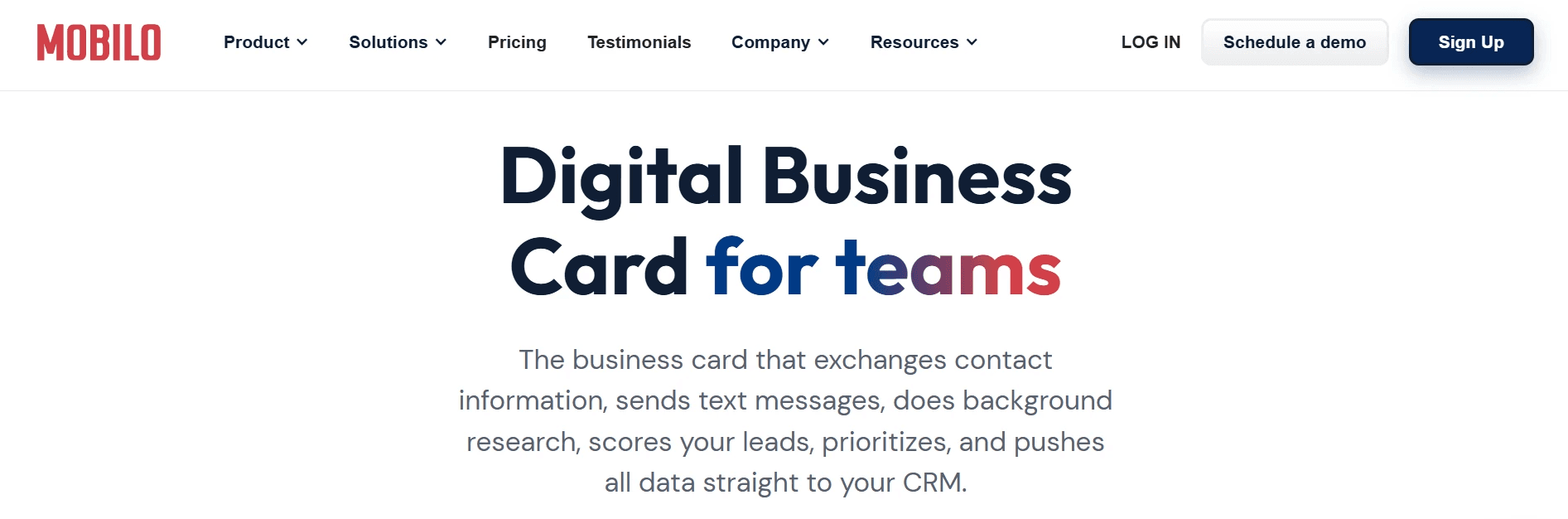
Mobilo Card provides smart digital business cards that help teams and professionals instantly share contact details, capture leads, and connect more effectively online and offline.
2. Blinq - Best for AI-Enriched Lead Capture with Instant CRM Routing
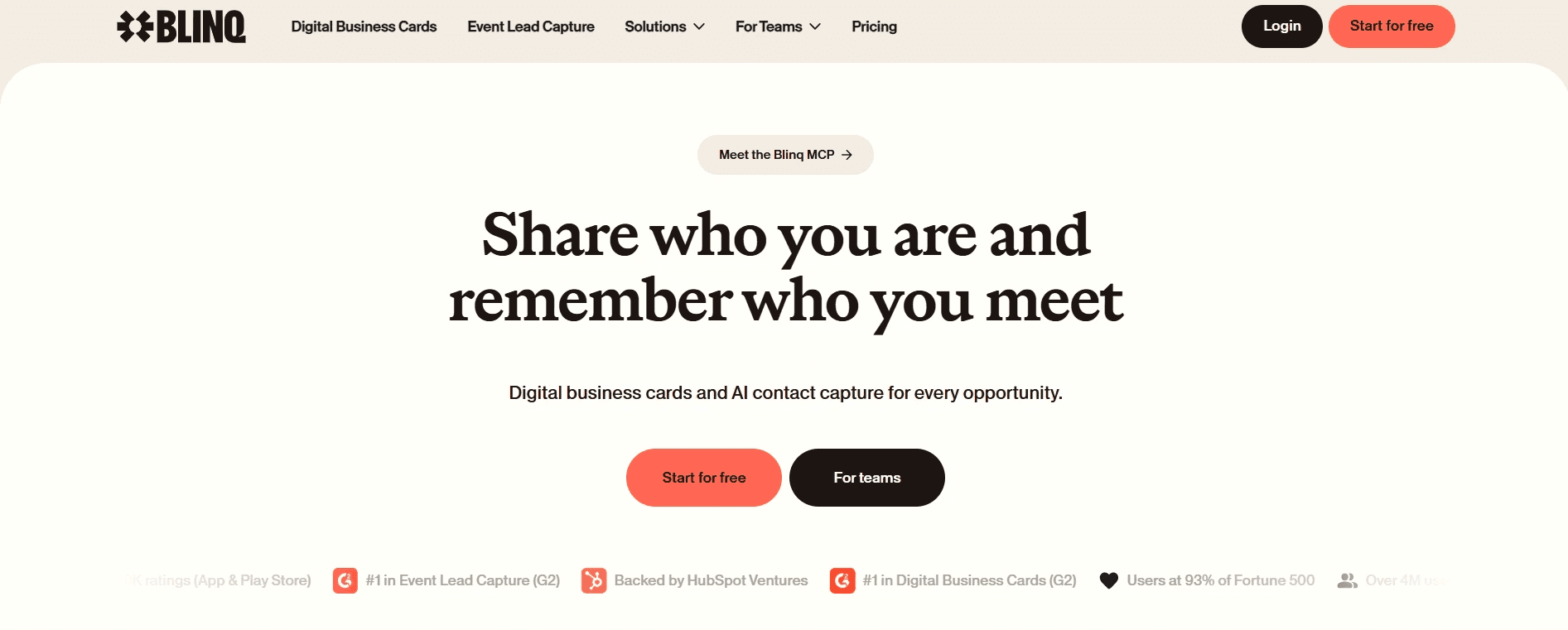
For teams that need capture and enrichment to happen in the same motion, Blinq is the strongest single-tool answer. Blinq is a top-rated tool for lead retrieval, and its AI Note-taker feature transcribes and summarizes booth conversations, attaching context to the lead record before it reaches the CRM. That context is what separates a routed contact from an actionable pipeline record. The trade-off is that Blinq's physical card hardware options are limited compared to enterprise NFC card platforms, making it a better fit for digital-first teams than those who rely on physical card exchange.
3. Mobly - Best for Post-Event ICP Scoring and Enriched Follow-Up Workflows
Mobly combines QR code scanning, business card scanning, and data from more than 20 enrichment providers to deliver high email accuracy on captured contacts, according to the company's product documentation. That accuracy matters because a CRM record with a bad email address is indistinguishable from no record at all. Mobly's ICP scoring layer then ranks captured contacts against your ideal customer profile before the rep ever opens their laptop post-event. Mobly Capture, the mobile component of the platform, handles the on-floor scanning motion while the enrichment layer runs in the background. The limitation is price: Mobly is positioned as a premium enrichment tool and is less cost-effective for teams attending only one or two events per year.
4. Zuddl - Best All-in-One Event Platform with Built-In Lead Capture for B2B Teams
Zuddl is built for event marketing teams that run their own hosted events rather than exhibiting at third-party shows. Its lead capture layer sits inside a broader event management stack that handles registration, session management, and post-event analytics in one platform. For Sales Directors whose team hosts customer summits or roadshows, Zuddl reduces the number of point solutions needed. The trade-off is that it is overkill for exhibitors who simply need a badge retrieval app at a trade show they did not organize.
5. Eventleaf - Best Budget-Friendly Lead Retrieval App for Exhibitors at Trade Shows
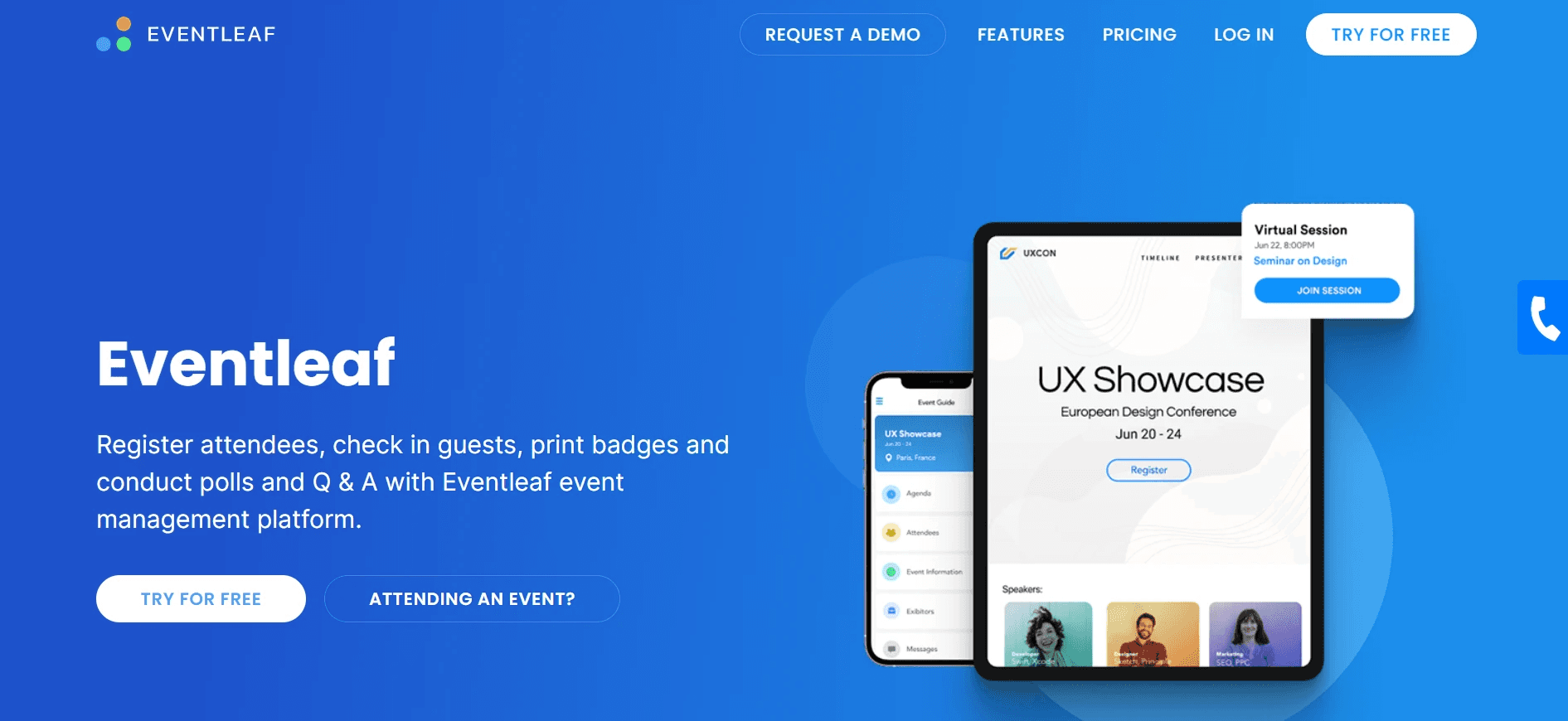
Official show-provided badge scanners carry a significant per-device rental cost that multiplies across a multi-rep booth team. Eventleaf offers a third-party lead retrieval app that works with most standard event badge formats at a fraction of that cost, making it a practical starting point for teams evaluating whether to switch from show-provided hardware. The honest limitation: Eventleaf's CRM sync options are narrower than enterprise-grade tools, and custom field mapping requires manual configuration that can slow post-event data cleanup.
6. InviteDesk - Best for Event Management Teams Needing Deep CRM Integration and Sales Visibility
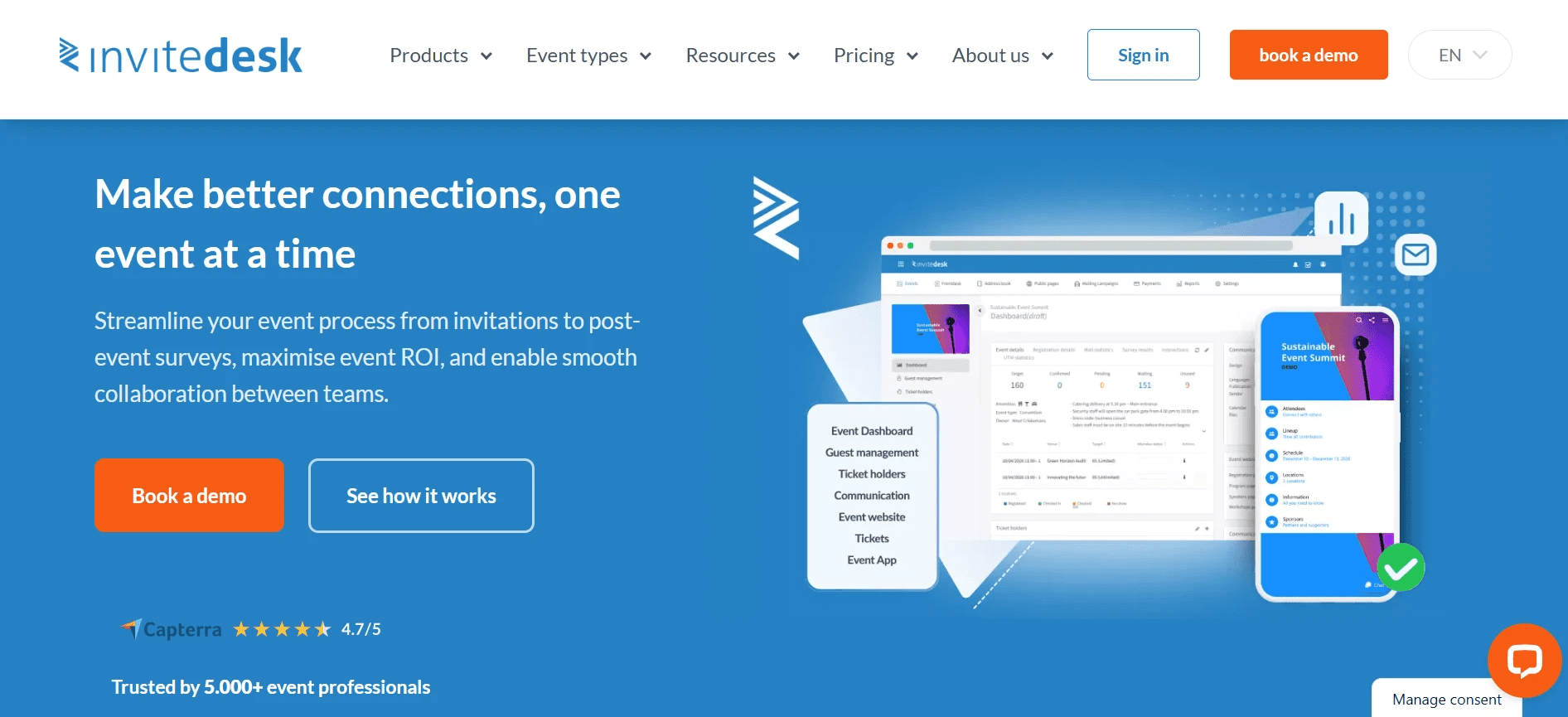
InviteDesk is built around the idea that event ROI is a sales problem, not just a marketing problem. Its platform gives Sales Directors visibility into which contacts were invited, which attended, and which converted to pipeline, all tied back to the CRM record. That attribution layer is what most event tools skip entirely. The trade-off is implementation time: InviteDesk's CRM integration setup requires coordination between the event team and the CRM admin, and it is not a same-day deployment for a team heading to a show next week.
7. InEvent - Best Enterprise Event Platform for Large-Scale Lead Generation at 10,000+ Attendee Events
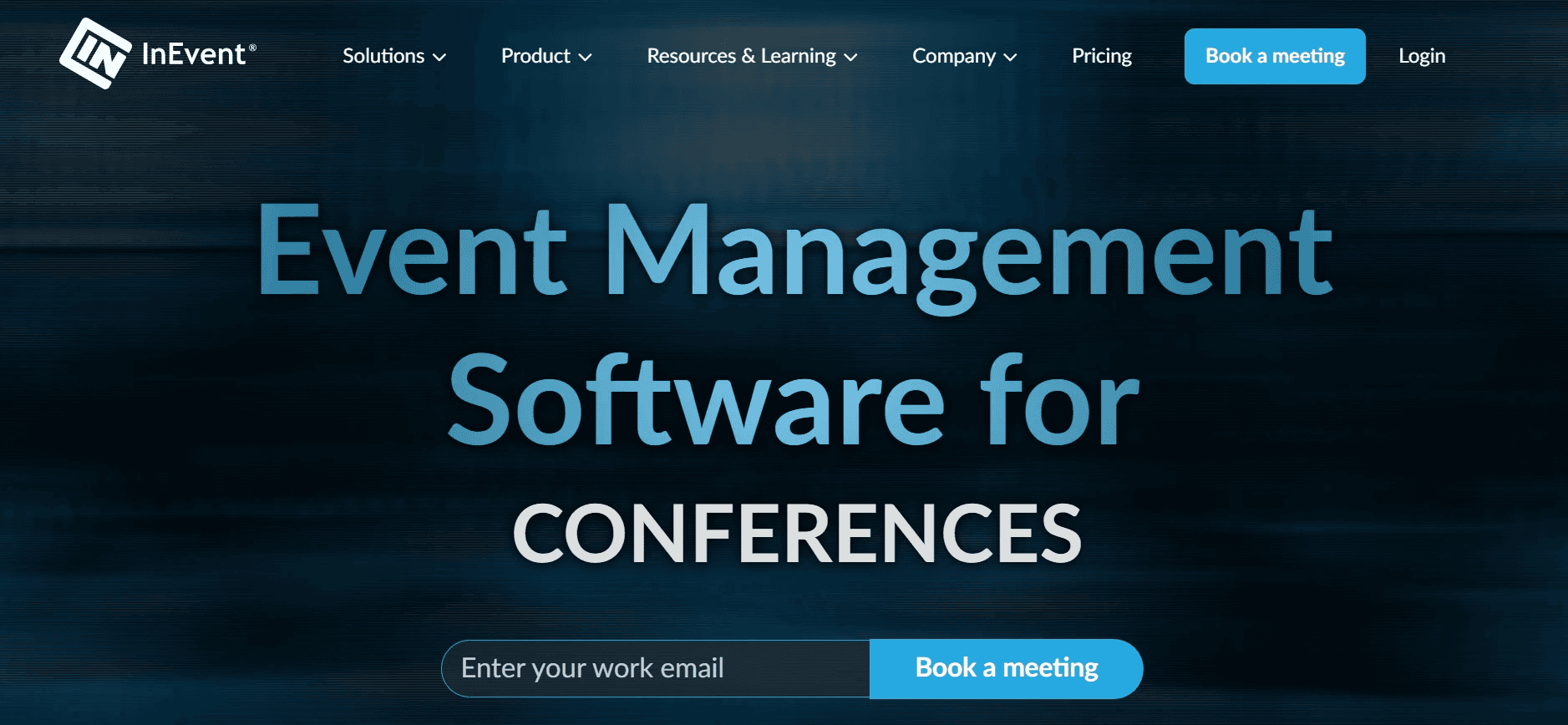
InEvent is designed for organizations running large-scale conferences, not for exhibitors at someone else's show. Its lead capture infrastructure handles high-volume check-in, badge printing, and attendee data collection at scale, with native integrations into Salesforce and HubSpot. For Sales Directors whose company hosts its own annual conference or user summit, InEvent is a serious contender. For teams that primarily exhibit at third-party trade shows, the platform's scope exceeds the use case and the cost reflects that.
8. CrowdPass - Best NFC-Powered On-Site Lead Exchange for Experiential and Consumer Events
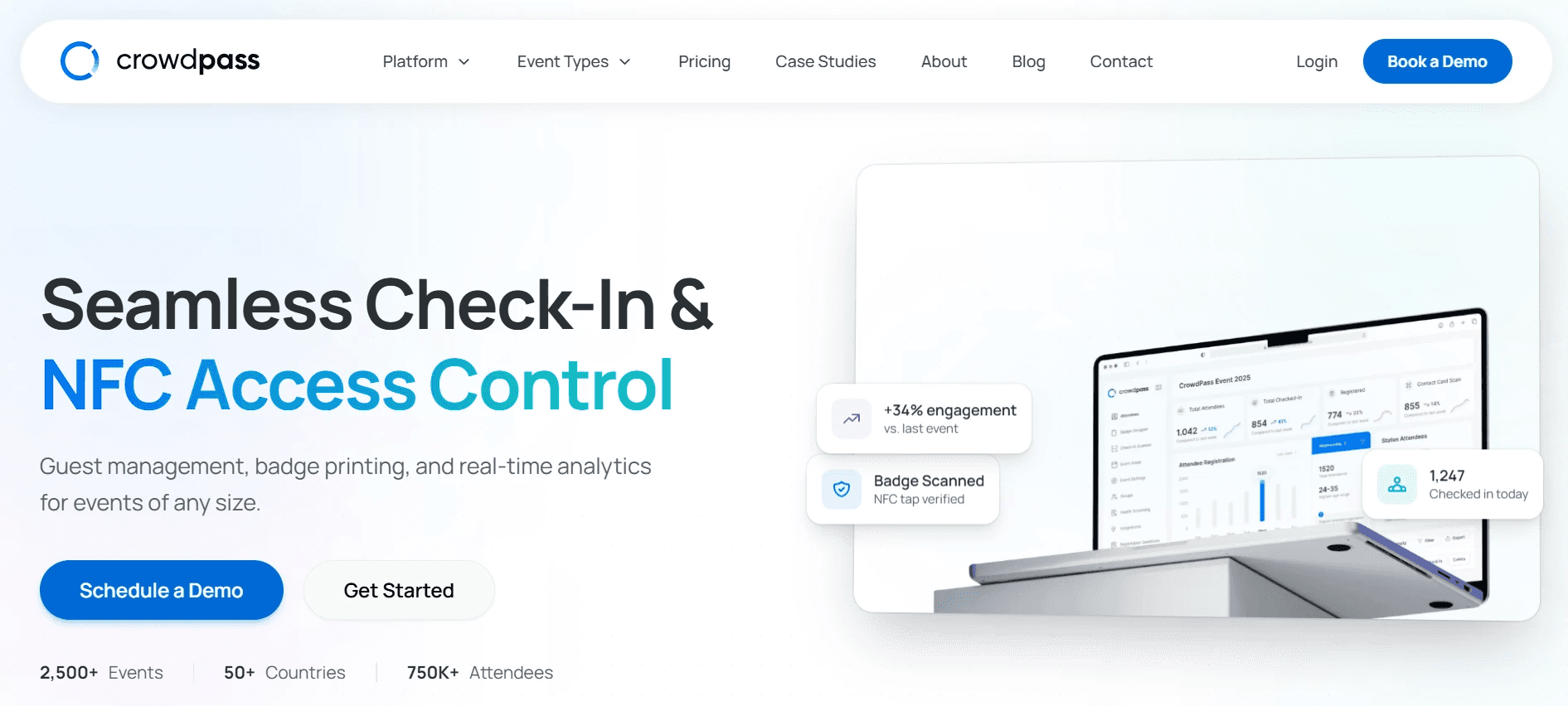
CrowdPass uses NFC wristbands and badges to enable contactless lead exchange at experiential events, activations, and consumer-facing brand experiences. The capture mechanic is passive: attendees tap their wristband at brand touchpoints and their data is logged automatically. This works well for high-traffic experiential setups where individual rep conversations are not the primary capture motion. The limitation for B2B sales teams is that CrowdPass is optimized for volume and experience design, not for the qualification logic and CRM routing that Sales Directors need from a trade show tool.
9. Tapt - Best NFC Digital Business Card for Individual Professionals Networking at Events
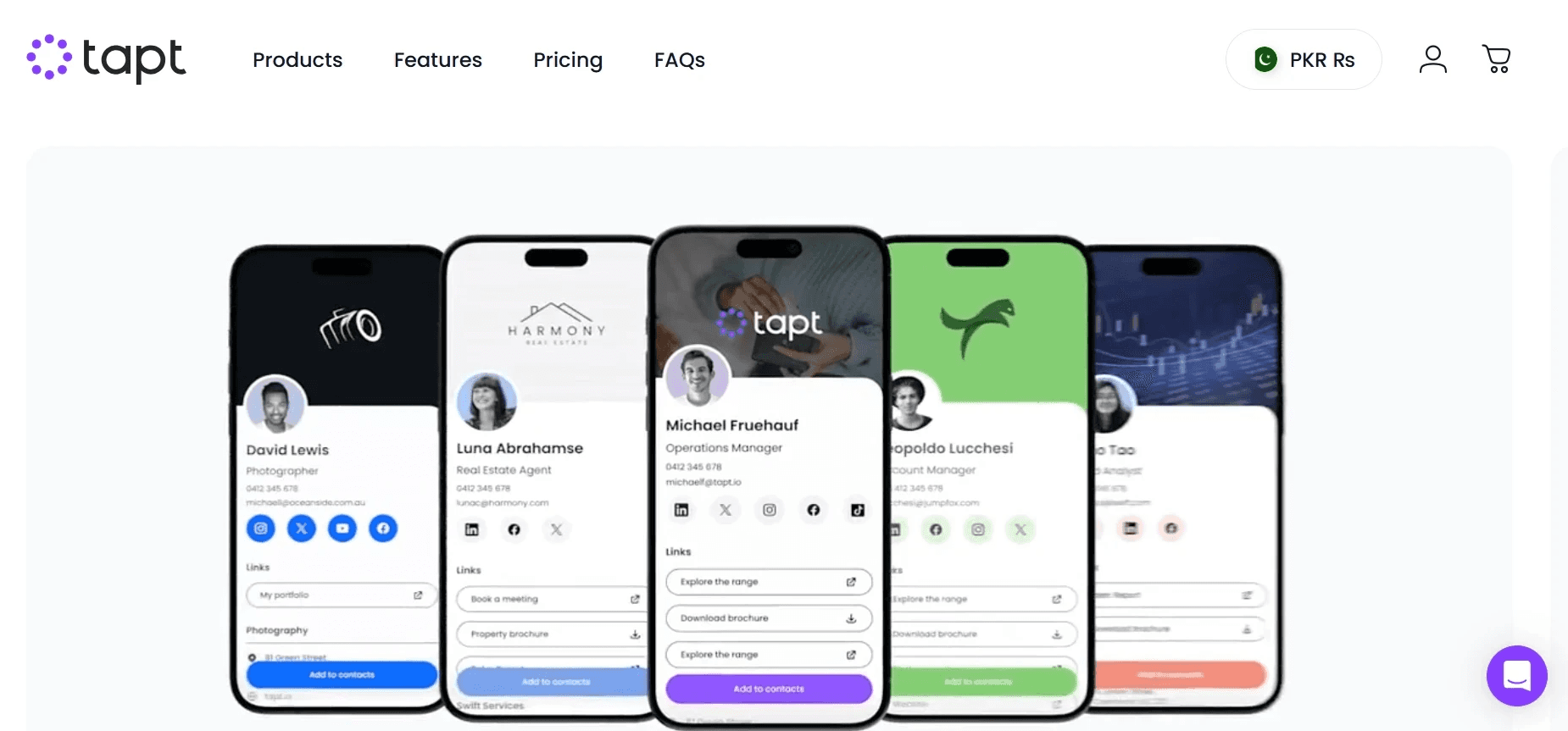
Tapt is a clean, well-designed NFC digital business card platform aimed at individual professionals who want a frictionless way to share contact details. For a solo rep or a small team attending occasional events, it delivers on that promise. The honest limitation for Sales Directors is that Tapt lacks the team management layer, admin controls, and CRM routing depth needed to deploy across a sales organization. It is a personal networking tool, not a team-scale lead capture system.
10. B2Brain - Best Badge Scanning App for Trade Shows with Real-Time CRM Sync and Deduplication
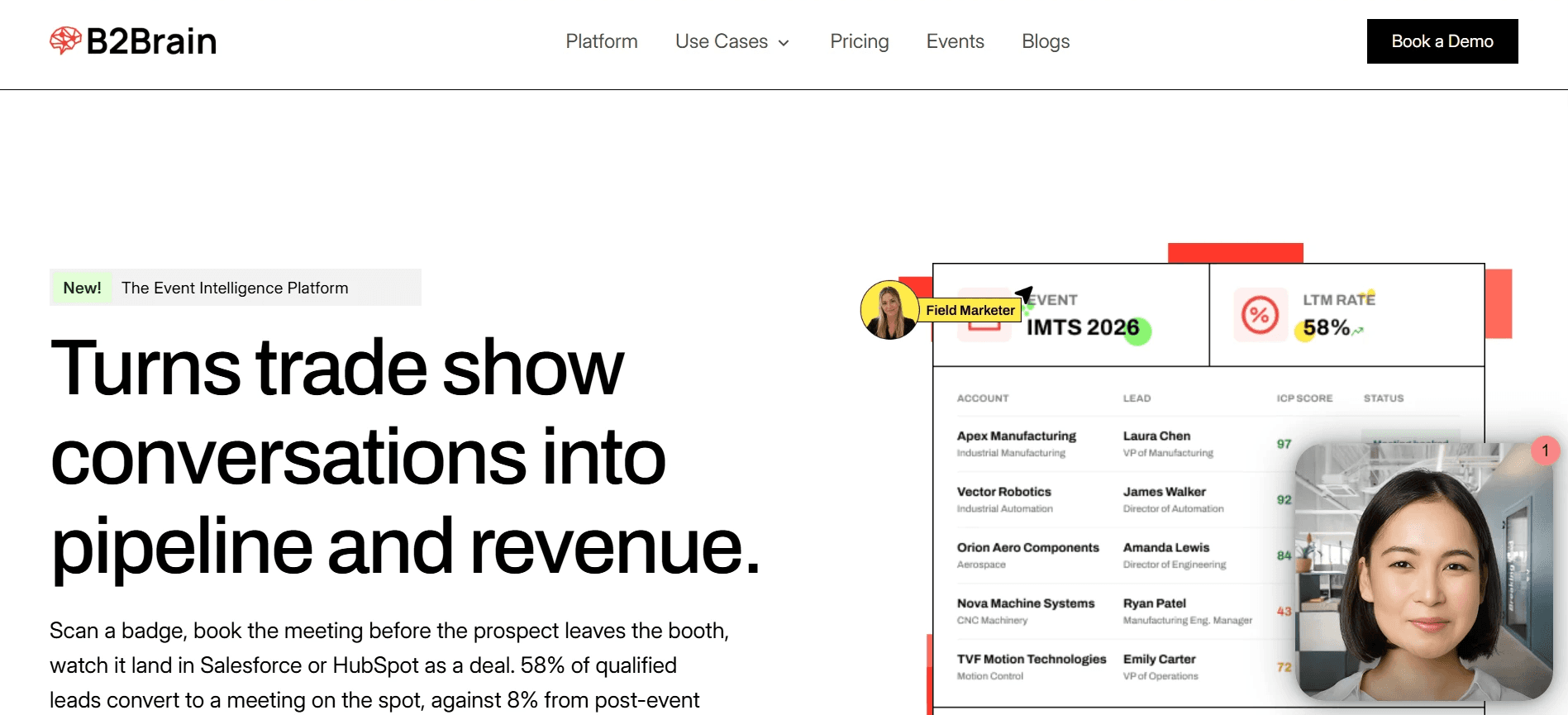
B2Brain focuses on the specific problem of duplicate records entering the CRM after events, a common failure mode when multiple reps scan the same prospect across a multi-day show. Its deduplication logic fires at the point of capture, not after a batch sync, which keeps the CRM clean without requiring post-event data hygiene work. The trade-off is that B2Brain's enrichment depth is narrower than dedicated enrichment platforms like Mobly, so teams that need full firmographic data appended at capture will want to pair it with a secondary enrichment tool.
11. HubSpot Marketing Hub - Best for Teams Already in the HubSpot Ecosystem Wanting Event Lead Nurture
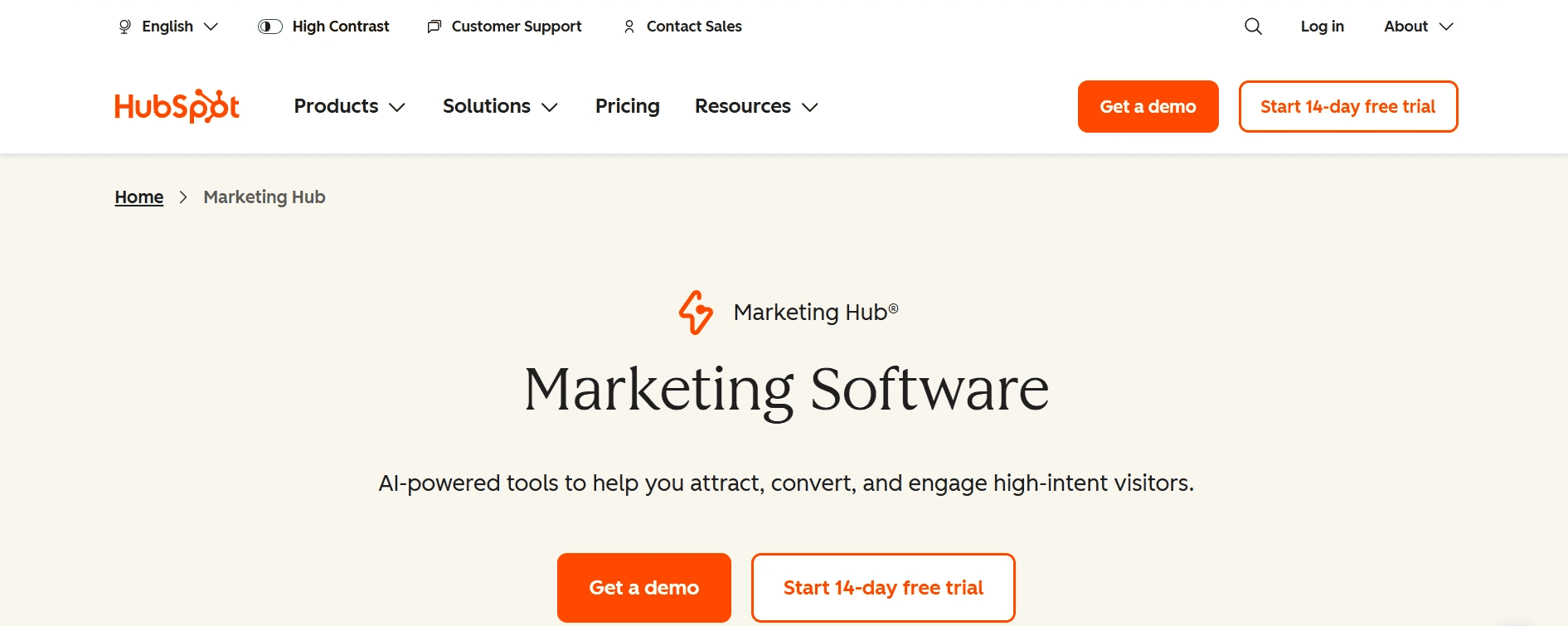
HubSpot's event lead capture capability is not a standalone trade show tool. It is a nurture and attribution layer that works best when the contacts captured on-site are already entering a HubSpot-native follow-up sequence. For teams whose entire go-to-market motion runs through HubSpot, the native integration eliminates the sync latency that kills follow-up velocity. The limitation is that HubSpot does not replace a dedicated badge retrieval app at the booth; it is the destination, not the capture mechanism.
12. Salesforce Event Connect - Best for Enterprise Sales Teams Needing Event Leads Tied Directly to Opportunities
Salesforce Event Connect is the right choice when the primary requirement is that every captured lead maps directly to a Salesforce Campaign, Contact, and Opportunity record with no intermediate step. For enterprise sales organizations where Salesforce is the system of record, this native connection removes the data fidelity risk that comes with third-party sync tools. The trade-off is that setup and field mapping require Salesforce admin involvement, and the tool is not practical for teams without dedicated Salesforce support.
13. Cvent LeadCapture - Best Official Trade Show Lead Retrieval for Large Managed Events
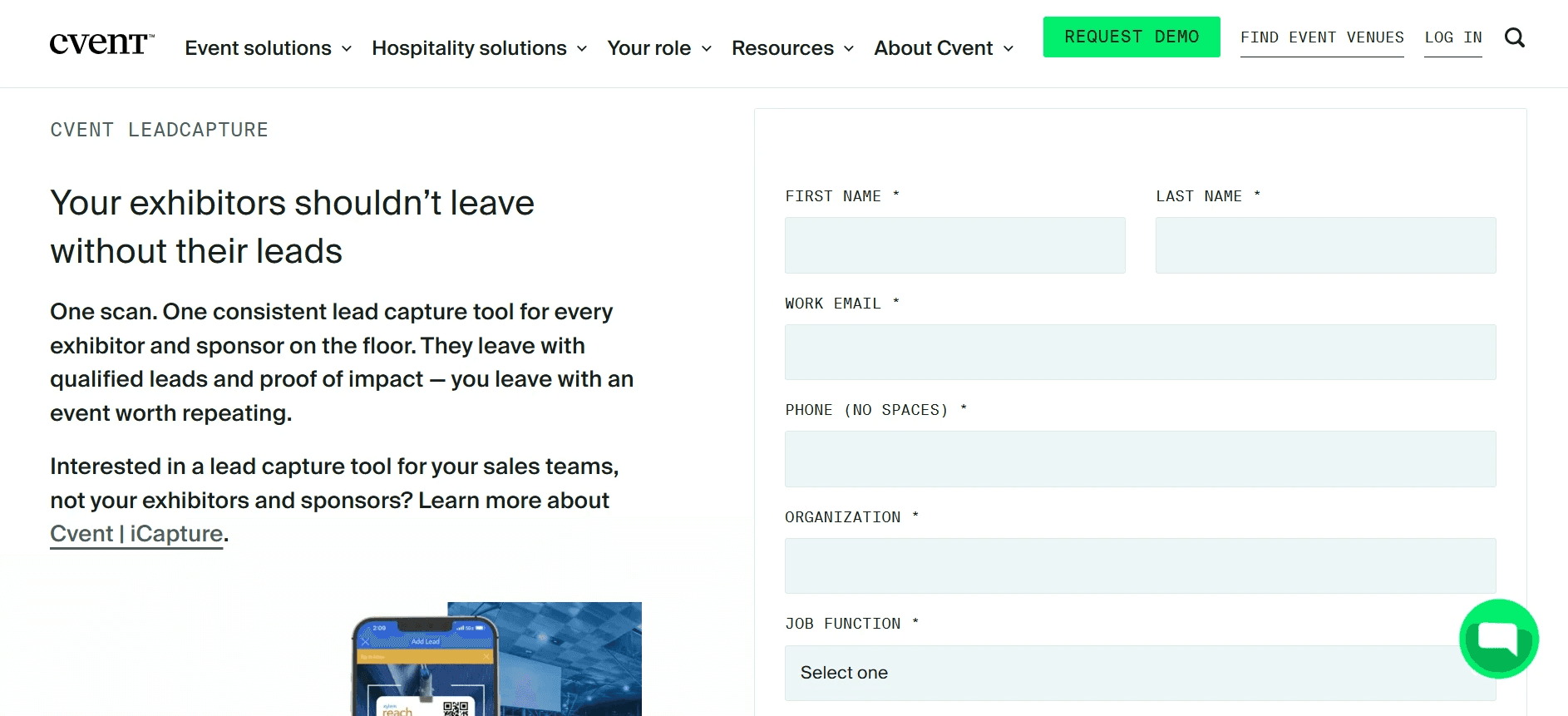
Cvent LeadCapture is the natural choice for organizations already running their event management through the Cvent platform. It handles badge scanning, lead qualification forms, and post-event follow-up routing within a single managed environment, which reduces the number of integrations a team has to maintain. The limitation is cost: Cvent's pricing is positioned for enterprise buyers, and for teams not already in the Cvent ecosystem, the switching cost is hard to justify relative to lighter-weight alternatives.
14. iCapture - Best for High-Volume Trade Show Lead Capture with Offline Reliability
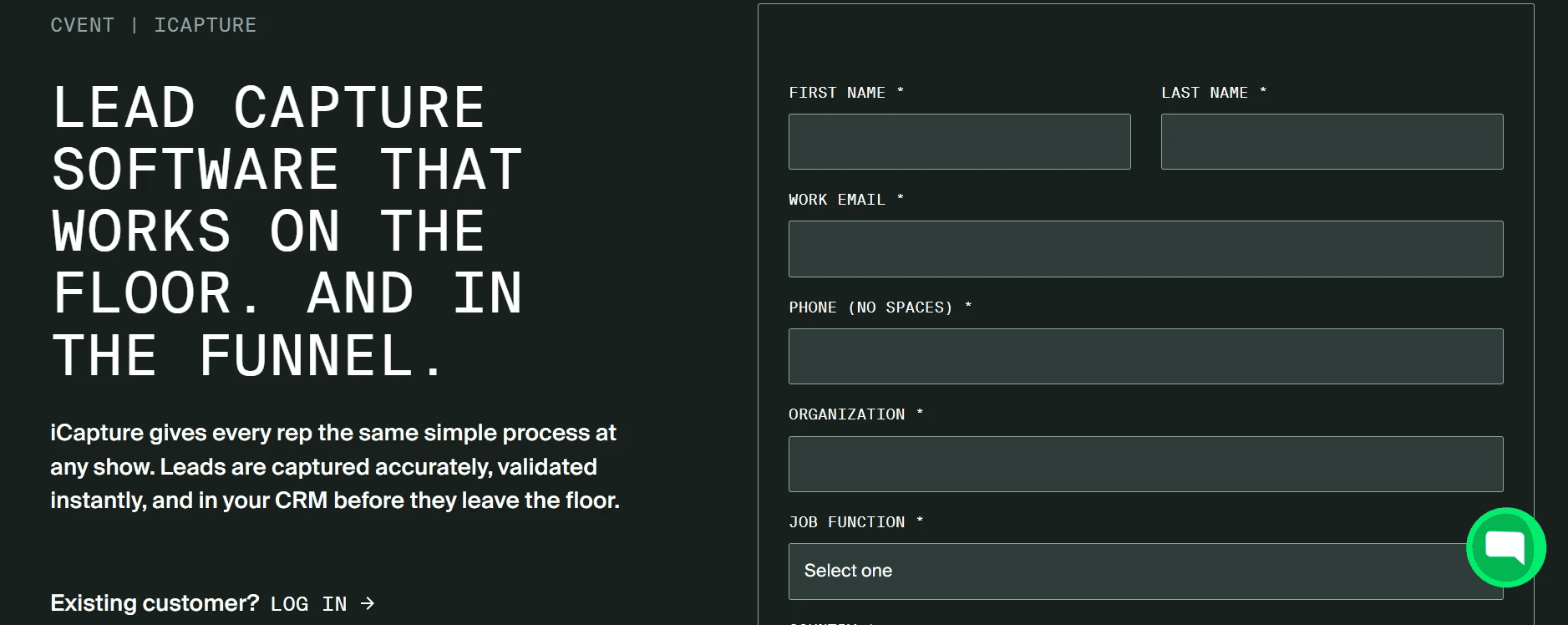
Its offline capture mode stores records locally and syncs automatically when connectivity returns, which makes it a dependable choice for high-volume booths at large shows. iCapture is also recognized for enterprise-level data accuracy and custom configuration options, making it a strong fit for sales teams that need custom qualification fields and conditional logic at the point of capture. The trade-off is that iCapture is a capture tool, not an enrichment platform, so post-capture data appending requires a separate workflow.
15. Whova - Best Event App for Attendee Networking and Exhibitor Lead Generation Combined
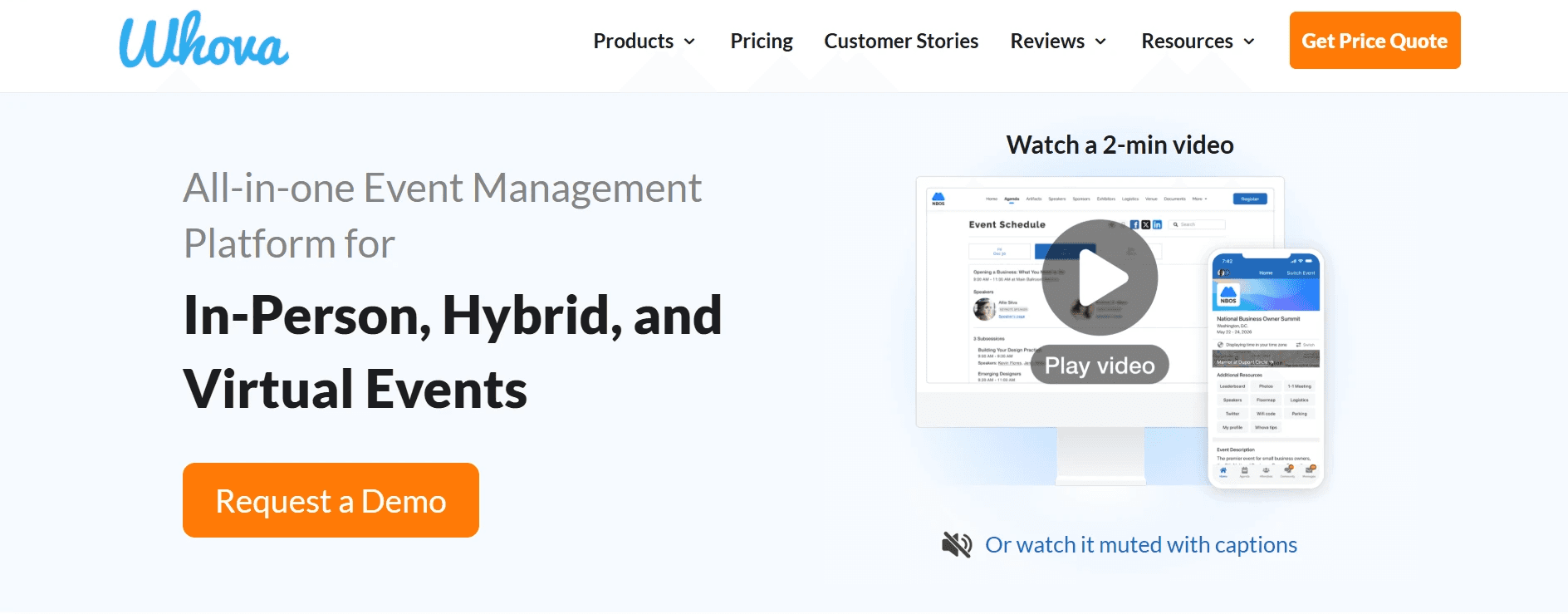
Whova serves two audiences simultaneously: event attendees who want to network and exhibitors who want to capture leads. For Sales Directors whose team is both attending sessions and staffing a booth, Whova's unified app reduces the number of tools reps carry. Its lead capture feature lets exhibitors scan attendee badges and add notes in real time. The limitation is that Whova's CRM sync options are less configurable than dedicated lead retrieval tools, and teams with complex field mapping requirements will hit its ceiling quickly.
16. Splash - Best for Brand-Forward Event Marketing Teams Capturing Leads Through Hosted Event Experiences
Splash is a hosted event platform that prioritizes brand consistency across registration pages, event communications, and post-event follow-up. Its lead capture layer is built into the event experience itself, which means contacts are captured at registration rather than on the show floor. For Sales Directors running hosted dinners, executive briefings, or roadshow events, Splash delivers a polished attendee experience with clean CRM handoff. It is not the right tool for exhibiting at a third-party trade show where badge scanning is the primary capture mechanism.
17. Grip - Best AI-Powered Matchmaking and Lead Generation Platform for B2B Trade Shows
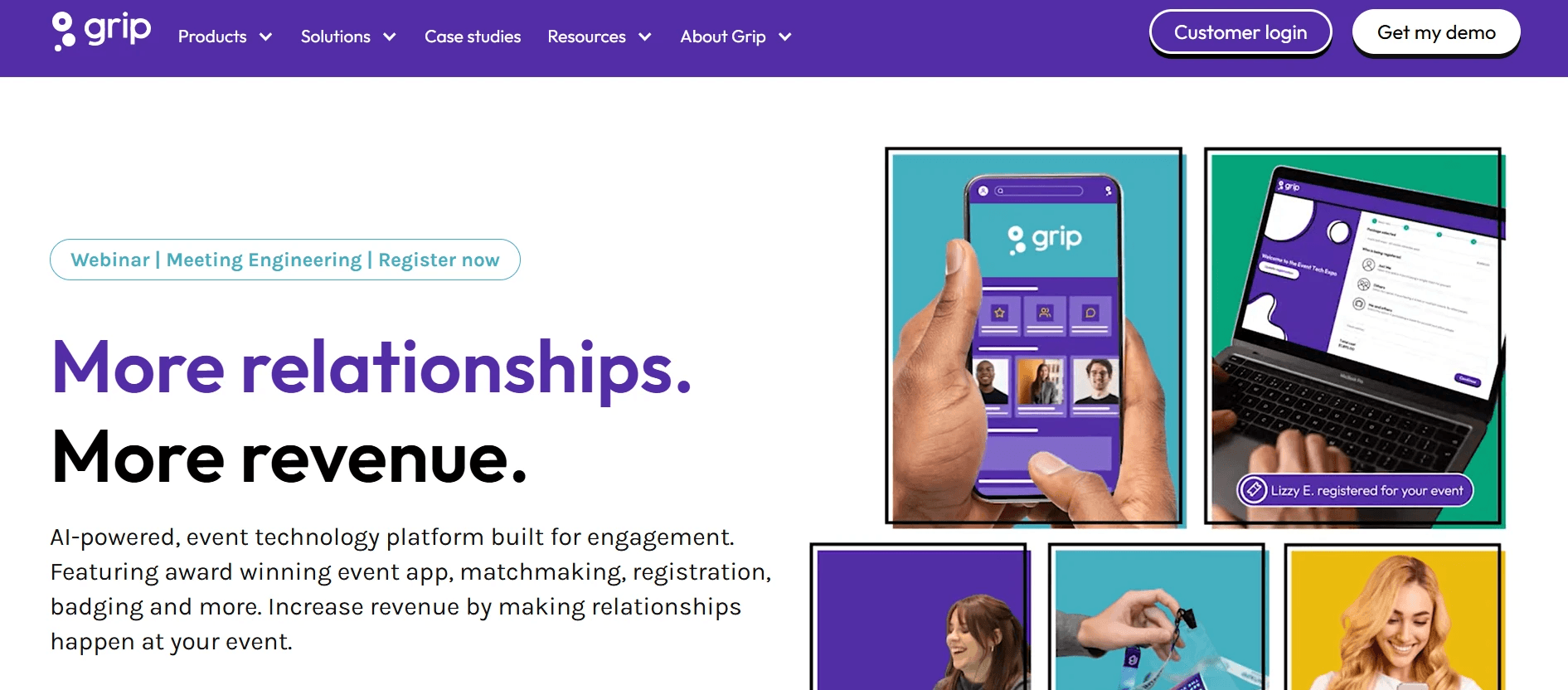
Grip uses AI-driven matchmaking to connect exhibitors with attendees whose profiles match their target account criteria, turning passive foot traffic into scheduled meetings before the show floor opens. For Sales Directors who want their booth team pre-loaded with qualified meeting requests rather than waiting for walk-up traffic, Grip changes the economics of trade show attendance. The trade-off is that Grip requires the event organizer to use the platform, so it is only available at shows where Grip has been adopted at the event level.
18. Fielddrive - Best for On-Site Badge Printing and Simultaneous Lead Capture at Self-Serve Check-In Kiosks
Fielddrive combines self-serve check-in kiosks with on-site badge printing and lead capture in a single hardware-software solution. For organizations running their own events, this eliminates the registration desk bottleneck and captures attendee data at the moment of check-in. The lead data is structured and clean because it comes from a registration form rather than a badge scan. The limitation for exhibitors at third-party shows is that Fielddrive requires the event organizer to deploy the hardware; it is not a tool an exhibitor can bring to someone else's show.
19. Jotform - Best for Custom Lead Capture Forms at Events Without Dedicated Lead Retrieval Infrastructure
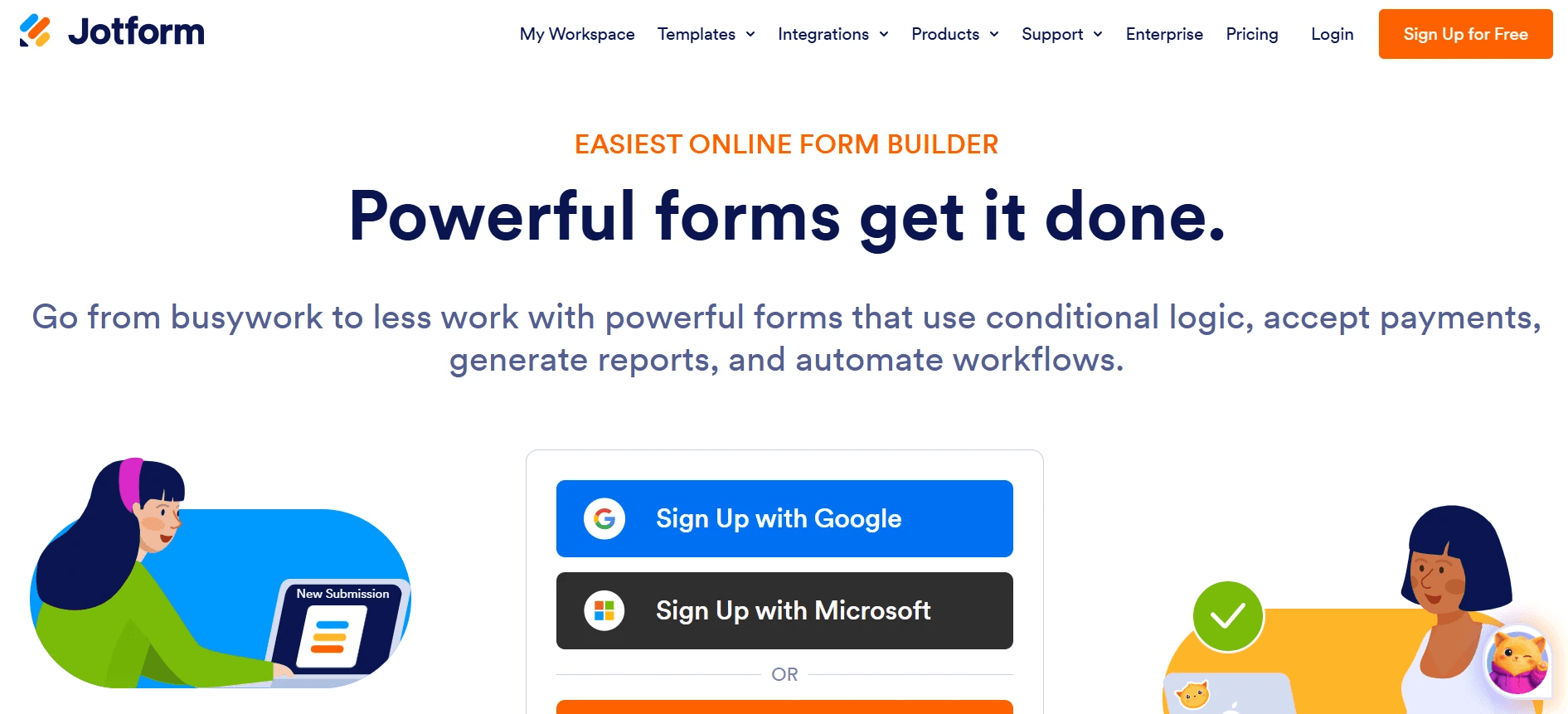
Jotform lets exhibitors and event teams build custom mobile lead capture forms, with conditional logic, product interest dropdowns, and consent checkboxes, that work on any tablet or smartphone without requiring badge scanner hardware or event organizer cooperation. It's the right pick for small businesses, startups, or teams attending niche events where official lead retrieval is unavailable or too expensive. The limitation is that Jotform captures only what attendees self-report, there's no badge scan or data enrichment layer.
Related Reading
- Etiquette For Networking In Online Conferences
- Measuring Event Roi
- Trade Show Sales Tips
- Trade Show Follow Up Best Practices
- How Do You Find The Roi Of A Trade Show
- Trade Show Sales Funnel
- What Is Trade Show Marketing
- Event Lead Management
- B2b Trade Show Best Practices
- Conference Lead Generation
- B2b Trade Show Marketing
Which Tools Are Best for Pre-Event Prospecting or B2B Data Sourcing Before You Hit the Floor?
By the time the show doors open, the highest-value conversations are already scheduled. Teams who treated pre-event prospecting as a logistics task, booking hotels, shipping booth materials, printing badges, walk in cold and compete for attention against competitors who spent the prior two weeks building enriched, prioritized target lists from confirmed attendee data. Pre-event data sourcing is not a nice-to-have.
It is the top of the funnel before the funnel, and skipping it means your on-site capture tools are cleaning up a mess that should never have existed. The structural problem is this: badge scans yield only a name and an email. ZoomInfo's verified enrichment has been shown to deliver significantly deeper data attributes and over 90% contact accuracy, as demonstrated in the ZoomInfo/UnboundB2B case study.
A Sales Director who enriches the confirmed attendee list before the event effectively pre-qualifies every in-person interaction, meaning the CRM record is already built before the handshake happens. That single workflow shift eliminates the manual-entry delay that kills the majority of event leads before a rep even boards the flight home. A digital business card tap or QR scan at the booth becomes a warm continuation when the rep already knows the prospect's role, company size, and buying stage. Without pre-event enrichment, that same tap is just another cold introduction competing with fifty others in an overcrowded inbox.
1. Mobilocard - Best for ICP-Matched Pre-Event Contact Building
Mobilocard pairs pre-event list building with automatic on-site capture, so the contact record enriched before the show is the same record updated the moment a prospect taps the NFC business card at the booth. It is most beneficial when a team attends events regularly and needs structured lead follow-up without relying on reps to manually log anything. The trade-off: it is not a standalone prospecting database, so it works best alongside a data provider such as Apollo.io rather than as a replacement for one.
2. LinkedIn Sales Navigator - Best for Account Mapping Before the Show
LinkedIn Sales Navigator is the right tool when your goal is mapping all six to eight decision-makers at a target account before day one. Its account and lead filters let reps build a prioritized list from confirmed exhibitors or sponsors weeks in advance. The limitation is cost: at enterprise seat pricing, it is overkill for teams that attend only one or two events per year.
3. DataOrigin - Best for Automated Attendee Data Extraction and Enrichment
DataOrigin is purpose-built for B2B trade show prospecting, automating the extraction of attendee and exhibitor data from event sources and enriching it with company-level intelligence and ICP-based lead scoring. It's the strongest pick for sales teams attending multiple events per year who need a repeatable, scalable pre-event data pipeline. The tradeoff is that it's narrowly focused on events, so it won't replace a general-purpose prospecting database.
4. LTO Attendee & Exhibitor Lists - Best for Sourcing Raw Event Audience Data
LTO provides structured attendee and exhibitor list sourcing specifically for events, giving B2B teams a head start on identifying who will be in the room before the show opens. It suits teams that need a clean, organized dataset to feed into their CRM or enrichment stack. The limitation is that raw lists require additional enrichment and qualification work, LTO delivers the data but not the scoring or sequencing layer.
5. Clay with Waterfall Enrichment - Best for AI-Powered Event Attendee Enrichment at Scale
Clay's waterfall enrichment workflow, as demonstrated by pulling 150+ Luma or Eventbrite attendees, validating emails, and pushing to CRM in under two minutes, is the most powerful option for technically savvy SDR teams doing high-volume pre-event prospecting. It's best for ops-forward teams comfortable building no-code workflows. The real tradeoff is the learning curve and the dependency on third-party API stability across enrichment providers.
Which Tools Are Best for Virtual Events and Webinar Lead Generation in 2026?
That RevOps dependency is worth weighing against what the combined stack actually delivers: a fully enriched, behaviorally contextualized contact record moving from event list to CRM to sequenced outreach without manual intervention at any stage.
"Webinar attendance rates are devastatingly low, we're seeing only ~20% show-up rates (40 out of 200 signups), making lead generation from virtual events feel inefficient and hard to justify."
The core insight this section is built on: Virtual event platforms structurally outperform badge scanners on lead data quality not because they capture more contacts, but because they capture intent signals that badge scans are architecturally incapable of producing, meaning the lead arrives in the CRM pre-scored, with behavioral context attached before a rep ever speaks to the prospect. Virtual events produce no badge to scan. That single structural fact changes everything about how lead generation software should be evaluated in this category.
One of the most persistent pain points teams face here is that registration numbers routinely flatter actual pipeline opportunity: attendance rates frequently land around 20%, meaning roughly 40 out of every 200 registrants actually show up. Zoom's webinar statistics research corroborates this range, and ON24's 2025 Webinar Benchmarks Report puts the average webinar conversion from registrant to attendee at 46%, meaning even in a best-case scenario, more than half of your captured registration data belongs to people who never showed up. The tools that win here are not the ones with the cleanest registration pages.
They are the ones that score what happens during the session and route qualified contacts automatically before a rep has to lift a finger. Enrichment quality and automation depth are the only variables that separate a pipeline-building program from a list no one touches. The five tools below, evaluated on engagement scoring depth, CRM routing, and the degree to which they eliminate manual handoff entirely, represent the strongest options in this category.
1. Mobilo Card - Best for Frictionless Lead Capture at Virtual and Hybrid Events
Hybrid events create a split-capture problem: on-site reps have badge scanners, but virtual attendees who click a QR code from a webinar slide or a link in a follow-up email enter a completely different data pipeline. The practical consequence is that field and networking leads, the ones where a rep handed someone a card or tapped a phone in a hallway conversation, often arrive in the CRM as incomplete, manually keyed records that no one follows up on efficiently. Mobilo is purpose-built to close that gap, treating every virtual and in-person touchpoint as a structured lead capture event that routes directly into the CRM.
The platform's team plans make this operationally concrete. The Teams plan ($4/month per member, billed annually), the site's most popular tier, includes lead enrichment, lead capture and management, unlimited leads and contacts, custom lead capture forms, Zapier integrations, insights and analytics, brandable QR codes, no-internet QR sharing, and 24/7 customer support, all with unlimited team members and central billing. Team admins can control, lock, and override data fields across the roster, which means the contact record structure stays consistent whether the lead came from a Zoom breakout or a conference floor.
For organizations with more complex requirements, the Business plan ($5/month per member, billed annually) adds enterprise SSO, HR directory sync, a custom domain, and white-glove onboarding for teams of 100 seats or more, along with a custom-built landing page at the same seat threshold. The result is one unified lead record regardless of whether the handshake happened in a convention hall or a Zoom breakout room, which is exactly what Sales Directors need when attendance is unpredictable and every captured contact has to count. The trade-off: Mobilo is a contact exchange and routing layer, not a webinar hosting platform, so it works alongside the tools below rather than replacing them.
2. ON24 - Best for Deep Webinar Engagement Analytics and Pipeline Attribution
ON24 is the enterprise standard for teams that need behavioral data attached to every lead before it reaches the CRM. The platform logs poll responses, Q&A participation, and session engagement duration, producing pre-scored leads with intent context that badge scans are architecturally incapable of generating. According to ON24's own 2025 Webinar Benchmarks Report, the average webinar converts 46% of registrants into attendees, and the behavioral signals generated by that attending cohort are precisely what ON24 is designed to capture and route. The trade-off is cost and complexity: ON24 is priced for enterprise programs, and smaller teams will find the configuration overhead difficult to justify without a dedicated marketing operations resource.
3. WebinarNinja - Best Lightweight Webinar Platform for SMB Lead Generation
WebinarNinja offers a streamlined, all-in-one webinar solution with built-in registration pages, email sequences, and post-webinar lead exports that integrate with major CRMs. It's the right pick for small-to-mid-sized marketing teams that need to launch lead-generating webinars quickly without a complex tech stack. The key limitation is scalability, advanced segmentation and deep analytics are limited compared to enterprise-grade platforms like ON24.
4. Zuddl - Best for B2B Virtual Event Registration with CRM Integration Depth
Zuddl is a B2B-focused event platform that combines customizable registration flows, conditional logic, and deep CRM sync to ensure every attendee record is enriched and routed correctly before the event even starts. It's the strongest pick for revenue operations teams running multi-session virtual conferences or field events where lead data quality is non-negotiable. The tradeoff is that its networking and lead-capture features are less polished than its registration engine.
5. Livestorm - Best Browser-Based Webinar Platform for Inbound Lead Generation
Livestorm runs entirely in the browser with no downloads required, reducing attendee drop-off and maximizing registration-to-attendance conversion, a critical metric for inbound lead generation. Its built-in analytics, HubSpot and Salesforce integrations, and automated post-event email workflows make it a strong fit for marketing teams focused on top-of-funnel content programs. The limitation is that large-scale enterprise events with thousands of attendees may strain its infrastructure.
CRM Integration Capabilities and Pricing Breakdown - What to Expect From Each Tool
Pricing comparisons for event lead generation software often stop at the subscription line item, but the real cost of a broken workflow shows up in your pipeline report, not your software invoice. Before committing to any tool, Sales Directors need to understand two things: how the CRM integration actually behaves under event-day conditions, and what the total cost of the current process looks like when you count the hours, not just the seats. Every hour a rep spends on manual post-event data entry is an hour spent moving in the opposite direction of conversion, because leads go cold within 24–48 hours and companies that let contact data go stale pay for it directly in pipeline.
The cost compounds fast: B2B sales teams already spend 2+ hours every day on manual CRM work, and every event adds another backlog of unprocessed contacts on top of that daily burden. For an individual card holder, the Pro user who attends conferences solo, that manual entry load falls entirely on one person. Mobilo's Pro plan at $3/month includes lead enrichment, custom lead capture forms, lead capture and management, and unlimited leads and contacts, so the rep capturing a contact at the booth does not need to re-key anything into a separate system.
The paper business card scanner means even contacts exchanged the old-fashioned way feed the same pipeline. For CRM admins managing integration setup across a larger team, the calculus shifts to control and consistency: Mobilo's Teams plan ($4/month, billed annually, marked Popular) and Business plan ($5/month, billed annually) both include lead enrichment, lead capture and management, unlimited leads and contacts, custom lead capture forms, and integrations through Zapier, giving the admin a single, auditable pipeline rather than a patchwork of individual rep workflows. The Business plan adds HR directory sync and enterprise SSO, which matter when the CRM admin is also responsible for provisioning and access governance across the org.
Native CRM Sync vs. Zapier-Dependent Integration - Why the Difference Kills Post-Event Pipeline
A checkbox that reads "integrates with Salesforce" can mean two very different things. Native sync with field-mapping control and sub-minute latency means a contact captured at the booth becomes an assigned, enriched CRM record before the rep reaches the next conversation. A Zapier multi-step workflow means the contact lands in your CRM only if the rep remembered to hit submit, the zap didn't time out, and no duplicate record was created.
Stale contact data is a documented, quantifiable drain on B2B revenue, and fragile middleware is a primary reason it accumulates. Sales teams already spending 2+ hours daily on manual CRM work cannot absorb additional post-event data cleanup without sacrificing follow-up speed, and the 24-hour follow-up window does not wait for cleanup to finish.
The integration question is not "which tool syncs?" It is "which tool eliminates the human data-entry step entirely so the 24-hour window is never squandered on administration?" Mobilo's Teams and Business plans both include the ability to control, lock, and override data fields at the team level. That means the CRM admin, not each individual rep, governs what enters the pipeline and in what format, closing the gap that Zapier-dependent workflows leave open.
Related Reading
- Which Networking Software Is Best For Conferences
- Trade Show Booth Ideas To Attract Visitors
- Conference Lead Capture
- How To Measure Trade Show Effectiveness
- Virtual Event Success Metrics
- Trade Show Roi
- Trade Show Lead Generation Ideas
- Post-Trade Show Marketing Strategies
- Best Trade Show Giveaways
Next steps
If your event leads are going cold before a single follow-up email goes out, the path forward starts with removing the rep from the data entry loop entirely. Collection is not capture, and every hour between the handshake and the CRM record is an hour the 24-hour follow-up window is quietly closing. Start with our digital business card.
The finding that 80% of trade show leads are never followed up on means most badge scans are statistically indistinguishable from doing nothing. The separate finding that companies following up within 24 hours are 60% more likely to qualify those leads means the arithmetic is simple: any tool that forces a rep to manually sync a CSV two days after the show is not a capture tool. It is a delay mechanism. Together, these two data points point to one requirement: the capture motion and the CRM routing have to happen in the same instant, without rep action after the tap.
Start with a digital business card that routes enriched, assigned contact records into your CRM the moment a prospect taps or scans, so the 24-hour window works for your pipeline instead of against it.
Related Reading
- Best Tech Conferences For Networking
- Best Networking Apps for Trade Show Attendees
- Best Finance Conferences For Networking
- Trade Show Booth Ideas For Small Budgets
- Virtual Conference Booth Ideas
- Networking Activity Ideas For Conferences
- What Are The Top Trade Show Lead Retrieval Tools
- Trade Show Follow Up Email Examples
- Conference Lead Capture Tools
- Trade Show Lead Capture App
Frequently Asked Questions
What happens to leads captured on Mobilo if the conference Wi-Fi goes down?
Mobilo's Teams and Business plans include no-internet QR sharing as a standard capability, so reps can still exchange contact information and capture leads even when convention center Wi-Fi is unavailable. Cards such as the Team Paper Plus Cards and Team Custom Design NFC Card with QR Code are built around this reality, the QR code works independently of a network connection, so no tap or scan is lost to a dropped signal.
Why do so many trade show leads never turn into actual sales activity?
According to industry data.com's 2026 analysis, 80% of trade show leads are never followed up on by sales teams. The core problem is that the act of scanning gets mistaken for the act of qualifying, leads go cold within 24 to 48 hours, and raw contact data with no notes produces generic outreach that gets ignored.
Does badge scanning at events capture enough information to actually work a lead, or do reps still have to do manual research?
Badge scanning typically captures only basic contact information, first name, work email, and company name, without enrichment data such as job title, company size, or purchase intent, leaving sales teams with incomplete records that require significant manual effort before they can be actioned in a CRM. Mobilo closes this gap by including lead enrichment as a standard feature on every plan, so the captured record is enriched and routed the moment a prospect taps a card or scans a QR code rather than dropped into a spreadsheet for a rep to clean up later.
How much money do companies actually lose from inefficient lead capture at trade shows?
Industry data from never-drop.com (2024) estimates companies lose approximately $21,000 per year per sales rep due to inefficient lead capture and follow-up at trade shows and events. Across a ten-person booth team, that compounds into a very real and measurable pipeline loss.
Is an NFC digital business card enough on its own for a busy trade show booth, or do you still need a dedicated badge scanner?
For one-on-one conversations, an NFC digital business card like Mobilo works as a passive capture device, when a prospect taps or scans the card, their details are logged and routed to the CRM instantly with no rep action required. However, the post notes that high-volume badge scanning at a busy booth still benefits from a dedicated retrieval app alongside it, so the two approaches are complementary rather than mutually exclusive.