.avif)

8 Conference Lead Generation Strategies That Fill Your Pipeline
On This Page
Your reps are showing up. The leads are still dying. Here is exactly where the process breaks and what fixes it.
Conference budgets keep growing, but post-event pipeline numbers stay flat. Most sales directors believe this gap exists because their reps aren't hustling hard enough, that if teams worked harder, collected more cards, and followed up faster, the pipeline would fill. The card exchange is seen as the finish line, not the starting gun. But the real problem isn't rep motivation. A critical step in the lead generation process has always been structurally broken. Conferences work as lead sources because attendees self-select. See our digital business card for how this works in practice.
A VP of Sales who registers for an industry event, books flights, and blocks three days out of the office has already signaled genuine interest in solving a problem. Across the market, more than 50% of B2B marketers rate in-person events as their top source for high-quality leads, precisely because that self-qualification happens before the first conversation. The quality is real. The problem is what happens after the handshake. That figure isn't a rep motivation story. It reflects a process that was never designed to move contact data reliably from a physical exchange into a digital system.

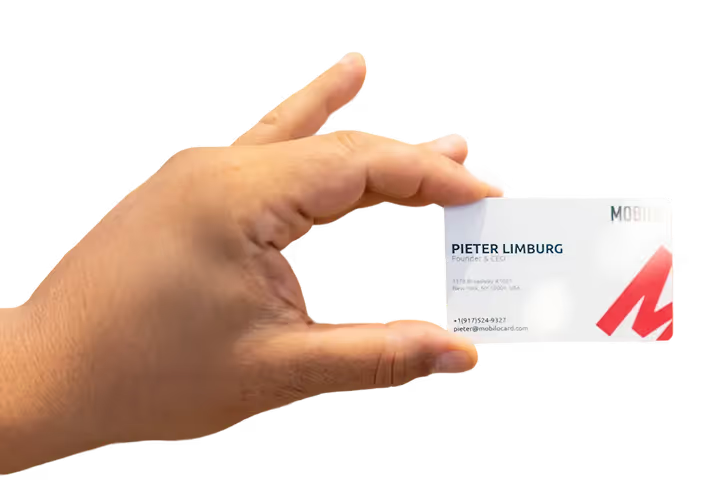
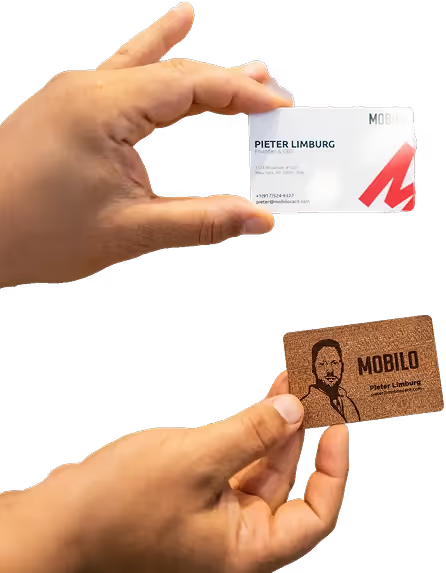
A sales team can return from a three-day event with 200 badge scans and a stack of cards. By the following Friday, fewer than 20 contacts have been logged in Salesforce. Manual CRM entry after a multi-day conference is a significant burden: reps are tired, inboxes are full, and logging 40 contacts from memory competes with every other priority that built up while they were away. Sales Directors have no visibility into which reps are actively networking and which conversations are converting, because there is no analytics layer attached to a card exchange. Tools like smart digital business cards close this handoff directly: when a prospect taps or scans a rep's card, the contact is automatically logged, giving managers a real-time view of which reps are generating conversations and which leads are moving into the pipeline.
50% of B2B marketers rate in-person events as their top source
Key takeaways
- Ninety percent of new conference contacts never reach a CRM, not because reps skip follow-up, but because the handoff from physical meeting to digital record is broken before anyone gets back to the office.
- Conference lead generation is a data infrastructure problem, not a hustle problem, fixing rep motivation without fixing the capture chain produces the same flat pipeline numbers every quarter.
- Lead volume is the wrong metric to optimize at events; a rep who captures 30 qualified contacts with full context outperforms one who collects 200 names that decay into noise by Tuesday.
- Each of the eight strategies here only produces results when it passes clean data to the next stage, a gap at any one checkpoint bleeds leads from every stage that follows.
- The decay starts at the handshake, not at the inbox, research consistently shows lead quality drops sharply within hours of the conversation ending, not days.
- Badge counts and booth traffic are not pipeline metrics; the only numbers that defend event ROI to a CFO are cost-per-captured-contact and closed revenue tied to a specific event.
- Mobilo's Contact Exchange closes the loop at the moment the card changes hands, when someone taps or scans a Mobilo card, their information is captured and synced directly into your CRM, cutting manual entry out of the chain entirely.
What Conference Lead Generation Actually Looks Like When It Works
The most common assumption teams carry into conference season is that lead volume is the primary metric worth optimizing, that a rep who collects more contacts is automatically outperforming one who collects fewer. That assumption is wrong, and it quietly undermines follow-up before the event is even over. The volume-as-proxy-for-performance assumption is deeply embedded in how most teams debrief after conferences.
Walk the floor at LeadsCon for two days and your reps will collect 80 to 100 badge scans, business card scanner captures, and contact exchanges. The question isn't whether they can collect contacts. The question is how many of those contacts are still alive in your pipeline five days later, and that answer depends almost entirely on what happens structurally between the handshake and the CRM record, not on how hard anyone worked.
The Three-Phase Structure That Separates Pipeline-Builders from Badge-Collectors
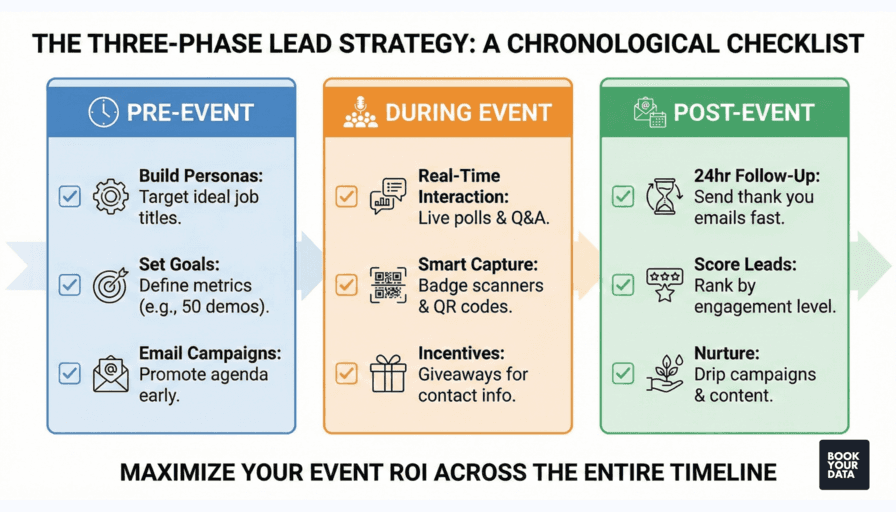
A working conference lead generation process runs in three distinct phases:
- Pre-show targeting
- On-floor capture
- Post-show conversion sequencing
Each phase feeds the next. Pre-show work determines which conversations happen on the floor. On-floor capture determines what post-show follow-up is even possible. Skip or weaken any phase, and the whole structure degrades. Industry analysis of conference sales processes consistently shows that most teams execute only phase two: showing up.
Phases one and three get treated as optional, which means the event lead generation process never actually closes a loop. The teams we work with that break this pattern share one structural trait: they've integrated lead capture directly with their CRM tools, removing the manual translation layer between the floor conversation and the pipeline record entirely. That integration is what makes it possible to follow up on trade show leads before the event is even over, not because their reps are more disciplined, but because the process doesn't depend on discipline at that stage.
The Manual Handoff Tax, How Contacts Die Between the Show Floor and the CRM
Consider a concrete example: a rep spends three days at LeadsCon, collects 80 contacts, and returns to a full calendar. The other 72 sit in a spreadsheet no one opens. This isn't a discipline failure. It's a structural one. From surveying 4,000 sales reps, Mobilo's own research found that 90% of new contacts collected at events never make it into a CRM under a manual-entry system, not because reps lack discipline, but because the handoff from physical exchange to digital record was never built into the process. Messy or incomplete CRM data doesn't just slow pipeline management; it actively costs you clients.
The damage compounds quietly: contacts that were never enriched can't be segmented, contacts that were never routed can't be followed up, and contacts that were never entered don't exist. The structural fix is to capture and follow up on leads more efficiently at the point of exchange, and to make CRM integration a feature of the capture tool rather than a separate manual step. This is exactly what Mobilo's Teams plan ($4/month per member, billed annually) is built to do.
It ships with full team data analytics, CRM integrations, and centralized team management baked in. Reps tap or scan; the contact moves into the pipeline. The team manager retains control over data fields, locking and overriding them as needed, so the records that do enter the CRM are clean and consistent from the first touch, not after a post-show cleanup session.
For organizations where branding consistency and rich media presentation matter most, the Business plan ($5/month per member, billed annually) extends that foundation with enterprise SSO, HR directory sync, a custom domain, lead enrichment, and 6,000 integrations through Zapier, plus 24/7 customer support. White-glove onboarding and a custom-built landing page are available for teams of 100 seats or more. The result is a capture-to-pipeline process that doesn't require a rep to remember anything after the handshake.
Related Reading
- Etiquette For Networking In Online Conferences
- Measuring Event Roi
- Trade Show Sales Tips
- How Do You Find The Roi Of A Trade Show
- Trade Show Sales Funnel
- What Is Trade Show Marketing
- Trade Show Follow Up Best Practices
- Event Lead Management
- B2b Trade Show Best Practices
- B2b Trade Show Marketing
- Trade Show Lead Follow Up
The 8 Conference Lead Generation Strategies That Actually Fill Your Pipeline
Eight strategies sit between your conference budget and your pipeline. Most Sales Directors treat them as a checklist: show up, work the room, send a follow-up email. The problem is not the list. The problem is that each strategy only produces results when it hands clean data to the next one. A gap at any checkpoint bleeds leads from every stage that follows.
On-Floor Strategy 6 - Capture and Score Leads in Real Time
This is the checkpoint where most conference pipelines silently collapse. Badge scanners capture a name and email, which feels like progress. The hidden cost is that 200 badge scans over two days produce 200 identical, flat data rows with no conversation context, no lead temperature, and no indication of what was discussed or promised.
SDRs then inherit a cold-qualification job for leads that were already warm on the floor. The familiar workaround is to take notes in a separate app and reconcile them later. That reconciliation rarely happens before the flight home lands.
Mobilo's Contact Exchange and Lead Capture pairs the physical tap or scan moment with a two-way data exchange and an immediate CRM sync, so each lead enters the pipeline with context rather than just a name. The lead capture form can be customized per event, and the sync is automatic, not a task a rep has to remember. This is most beneficial when a team attends events regularly and needs structured, segmented follow-up rather than a flat export.
It is not the right investment for a team that attends one event per year and manually manages a contact list of under 50 names. Regardless of the tool your team uses, score every lead on the floor: Hot, Warm, or Cold. That temperature tag determines the speed and channel of follow-up, and it needs to be captured while the conversation is still fresh.
What unifies all eight strategies is a single dependency: each one requires clean, timely contact data to move automatically from the exchange moment into your CRM. When that handoff is manual, re-keyed from a card stack after the flight home, the 88% discard rate and the post-event entry backlog compound into a near-zero probability that any given conversation survives to become an active lead. The real cost isn't the card itself; it's the invisible tax on pre-show filtering, on-floor scoring, and post-show sequencing, every stage that assumed the data would arrive intact.
On-Floor Strategy 7: Network Beyond the Booth traffic is inbound. The highest-value prospects at events like Lead Generation World or Affiliate Summit West (January 26-28, that same figure, Caesars Forum, Las Vegas, over 7,000 attendees) are often the ones who never visit your booth. Assign at least one rep per day to floor-walk with a specific list of target accounts from your 555 Plan. Use session rooms and sponsored events as natural entry points. When approaching booth staff at a target account, a direct question ("Is your VP of Sales here this week?") moves faster than a cold pitch and often results in a warm introduction on the spot.
1. Pre-Conference LinkedIn Outreach Sequenced 3 Weeks Out
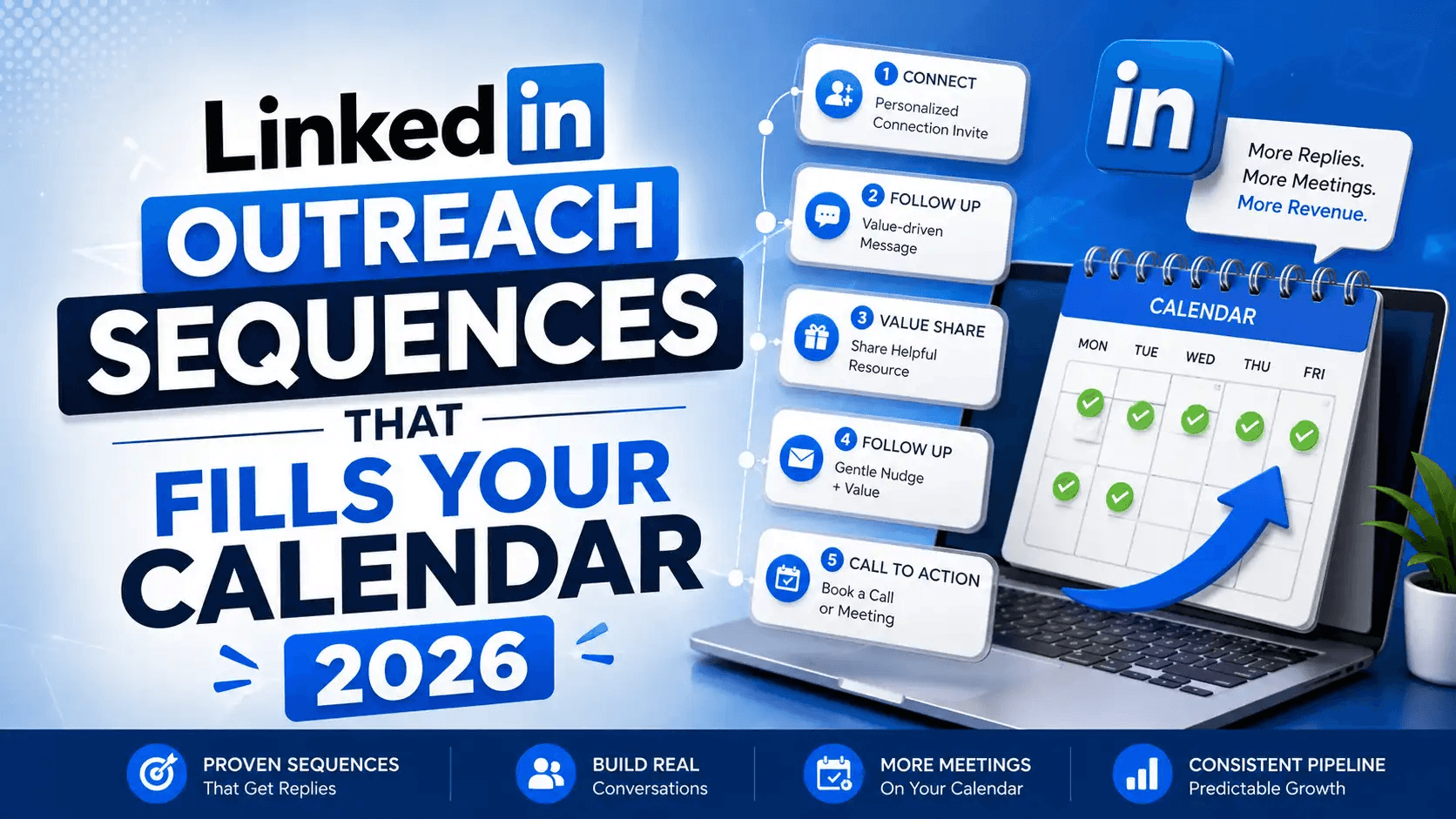
Starting your conference lead generation engine three weeks before the event gives you a decisive edge over competitors who blast the attendee list days before doors open. Use the conference app and LinkedIn to identify high-priority targets, send personalized connection requests referencing the event, and lock in 10-minute meetups during networking slots. The real tradeoff: this approach demands 5–10 hours of pre-work per event, which strains lean sales teams.
2. Invite-Only Satellite Roundtable the Night Before the Conference
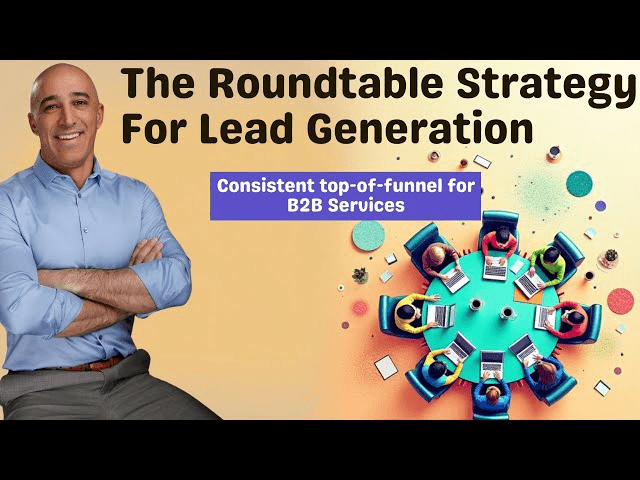
Hosting an exclusive dinner or closed-door discussion the evening before the main event lets you own the conversation before competitors even set up their booths. Inviting 10–15 senior decision-makers to something private and curated converts far better than booth traffic requests. Follow-up rates spike because you've already built rapport over a shared meal. The tradeoff is real budget commitment, catering and venue costs can rival a mid-tier sponsorship package.
3. Attendee Signal Segmentation - Prioritizing New Roles and Recent Pain-Point Posts
Not all attendees are equal pipeline opportunities. Filtering your conference lead generation list by LinkedIn signals, specifically people who've started a new role within six months or recently posted about challenges your solution addresses, dramatically improves outreach conversion. These prospects are actively evaluating change, making them far more receptive than tenure-stable contacts. The limitation: this segmentation is time-intensive and requires manual LinkedIn review unless you have intent-data tooling.
4. Badge-Scan Lead Retrieval with Real-Time CRM Sync
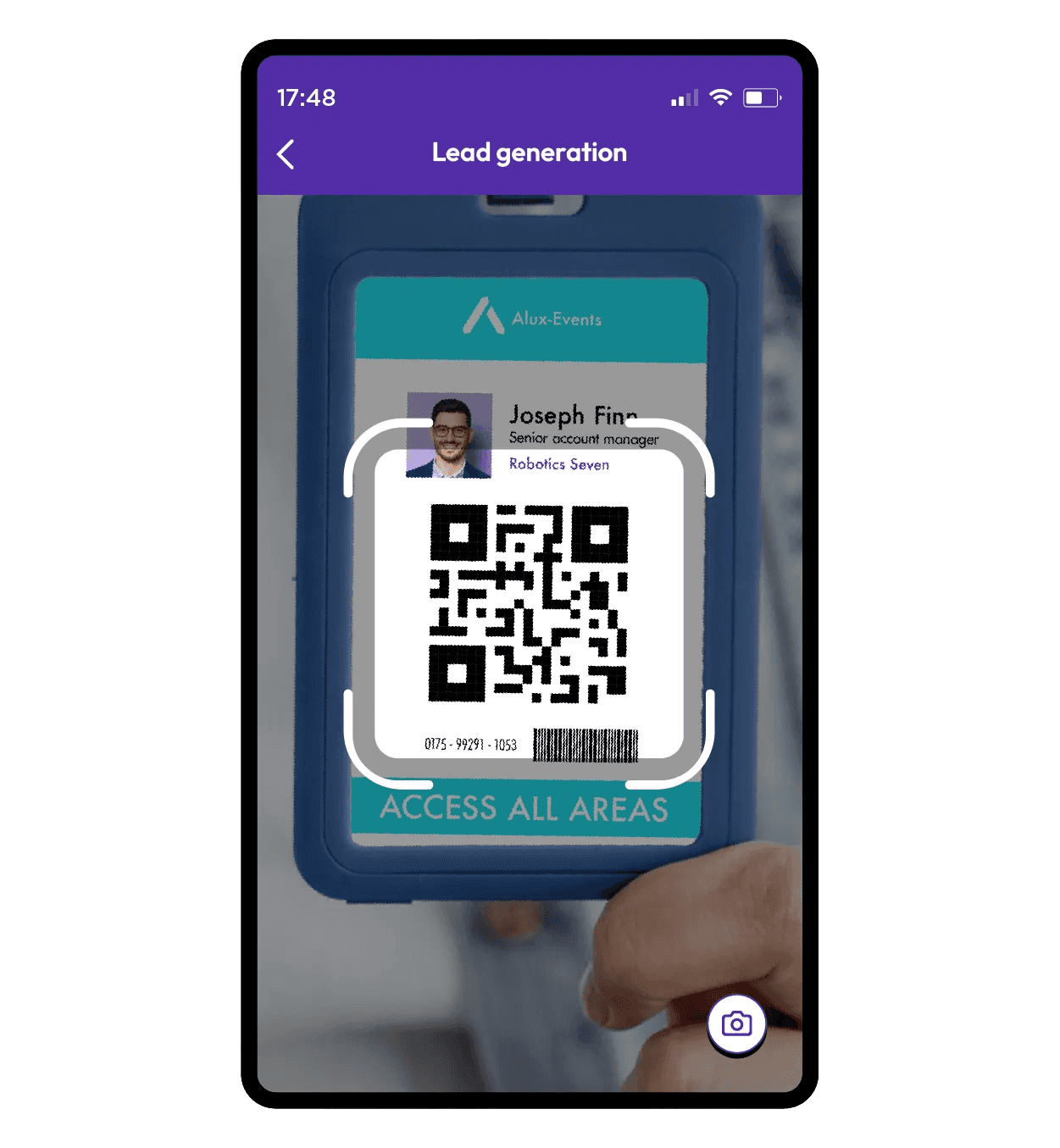
Digital badge scanning at your booth eliminates the business-card pile that never gets followed up and pushes contact data directly into your CRM while conversations are still warm. For conference lead generation at scale, think 200-plus booth interactions over two days, this is the operational backbone that separates teams who follow up within 24 hours from those who don't. The tradeoff: app licensing fees add up, and scan-only data lacks the qualifying context your reps need without a post-scan note-taking discipline.
5. Interactive Booth Experience Designed to Require Engagement Before Exit
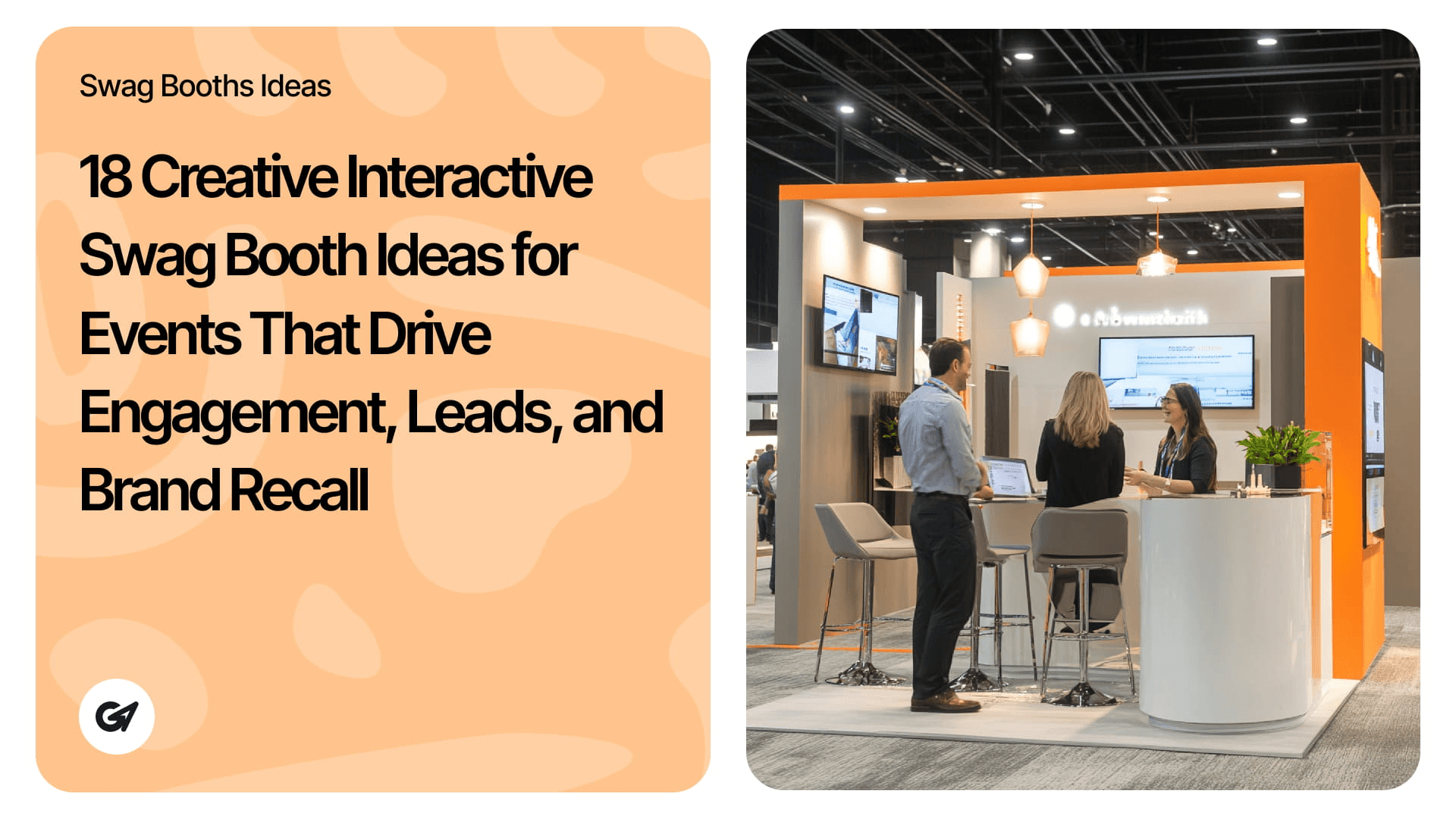
On a crowded show floor, passive displays generate foot traffic but not leads. Designing your booth around an interactive trigger, a live product demo, a scored assessment, or a gamified challenge, creates a natural gate where prospects must engage meaningfully before moving on. This approach is ideal for conference lead generation when your ICP needs to experience value before committing to a follow-up. The tradeoff: high-engagement setups require trained staff and can bottleneck throughput during peak hours.
6. Cold Email Outreach to Conference Attendees - Pain-First Messaging Framework
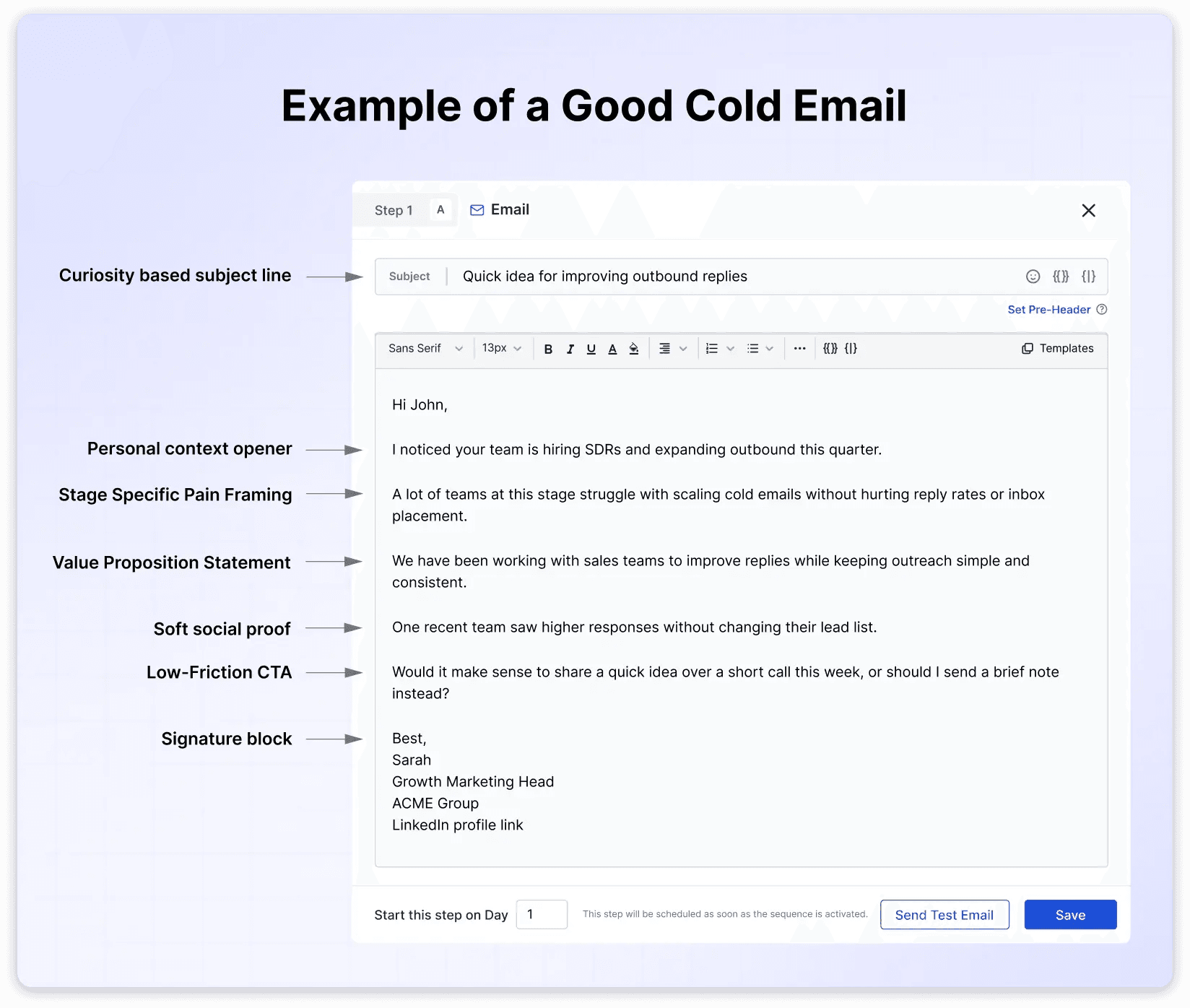
For B2B audiences like HR analytics and workforce planning professionals, cold email consistently outperforms LinkedIn InMail for pre-conference lead generation because inboxes are less saturated than LinkedIn feeds. The key is leading with a specific pain point your ICP is likely facing heading into the event, not a feature pitch. Short, contextual emails referencing the conference and a relevant challenge convert significantly better than generic introductions. The tradeoff: deliverability and list sourcing require careful compliance management.
7. During-and-Post-Event Follow-Up Sequence Timed to Conference Energy
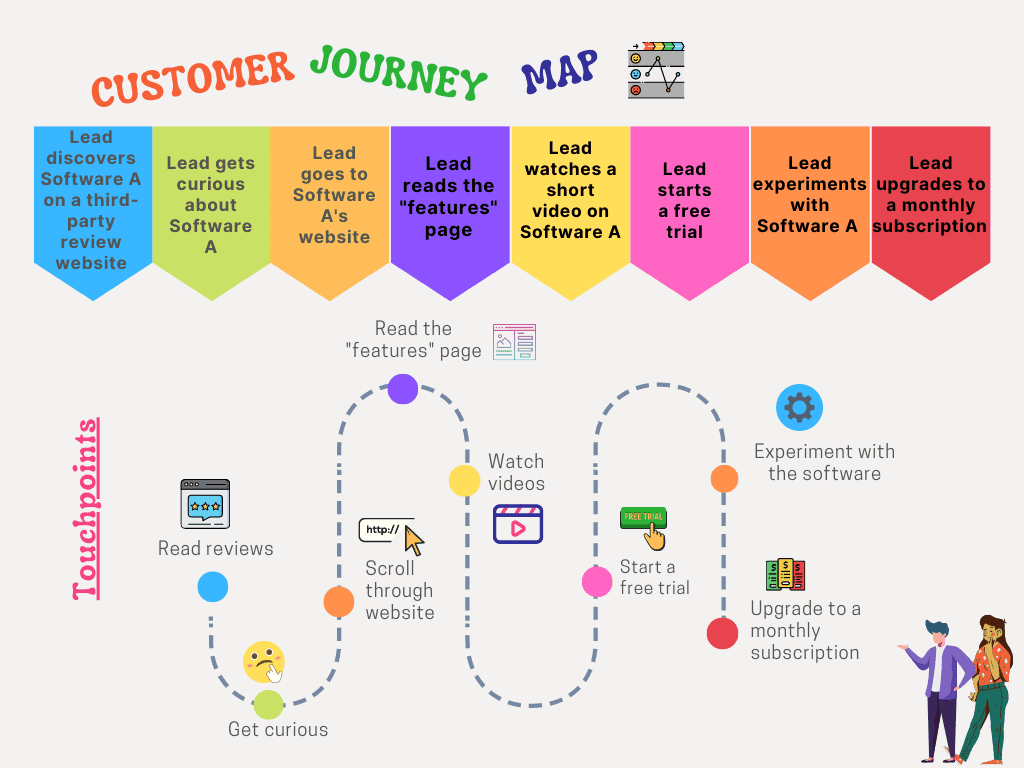
The biggest conference lead generation mistake is front-loading all outreach before the event while prospects' inboxes are destroyed. Flipping the timing, concentrating your highest-effort touchpoints during the event and in the 48 hours immediately after, captures prospects when shared context is freshest and competitors have gone quiet. Reference specific conversations or sessions to personalize at scale. The tradeoff: this requires real-time note-taking discipline on the floor, which is hard to enforce across a large sales team.
8. Intra-Conference Referral Mapping - Using Sales Reps to Navigate to Decision-Makers
The decision-maker you need to reach often isn't the person staffing the booth, but that person knows exactly who you should talk to. A deliberate strategy of engaging sales reps and sales VPs at competitor or partner booths, presenting yourself professionally, and asking for an internal referral to the right contact routinely surfaces pipeline that cold outreach never would. This conference lead generation tactic generated 15 qualified follow-ups in a single show for practitioners who use it consistently. The tradeoff: it requires strong interpersonal confidence and a non-threatening positioning approach.
Related Reading
- Which Networking Software Is Best For Conferences
- Trade Show Booth Ideas To Attract Visitors
- Conference Lead Capture
- How To Measure Trade Show Effectiveness
- Virtual Event Success Metrics
- Trade Show Roi
- Trade Show Lead Generation Ideas
- What's The Best Event Lead Generation Software
- Post-Trade Show Marketing Strategies
- Best Trade Show Giveaways
Tools and Technology for Conference Lead Generation That Remove the Manual Tax
The right conference lead generation stack starts one step before your CRM. Lead scanning apps, NFC business card hardware, and Salesforce-native capture tools are the technologies that determine whether a conversation at a booth becomes a pipeline record or a forgotten pocket card. The tool category matters less than where in the handoff chain each one operates.
Industry data consistently surfaces the same structural problem: the majority of trade show leads never reach a CRM after the event ends. When the average B2B conference lead costs between $150 and $300 to generate, a high drop-off rate at the data entry step is not a minor inefficiency. It is a calculable budget loss that compounds across every event on the calendar.
A messy or incomplete CRM is one of the fastest ways to lose clients, and the data decay typically begins at the capture step, not inside the CRM itself. Manual CRM entry already consumes roughly a quarter of a rep's working week at baseline. Asking those same reps to re-key post-event contacts on top of that is structurally guaranteed to be skipped.
The only fix that actually moves the system is removing the re-entry requirement entirely, so that leads from events and field meetings flow directly into the CRM without relying on reps to manually log contacts, and the capture moment itself becomes the CRM trigger. The eight tools below are evaluated on that single criterion: does the capture event create the CRM record, or does a human have to?
1. Mobilocard - Best All-in-One Digital Card and CRM Pipeline for Conference Lead Generation
Mobilocard earns the top position because the physical card is the first node in the pipeline, not a pre-CRM detour, Landsea Homes deployed Mobilo's digital business cards across 400 employees and saved $21,000 per year, and Mobilo's own survey of 4,000 sales reps confirmed equally striking results. A tap or QR scan at the handshake moment auto-populates a lead record through one of 6,000 Zapier integrations, with zero manual entry required, quantifying device-level ROI before any CRM efficiency gain is counted. That pipeline starts at the card itself.
00). Every Team-tier card ships with unlimited taps and scans, full team data analytics and CRM integrations, team management, and the ability to control, lock, and override data fields, so managers can enforce data hygiene at the rep level rather than chasing it after the event. The software layer that routes each tap into the CRM is the Teams plan at $4/month per seat (billed annually), which includes unlimited team members, lead enrichment, custom lead capture forms, a paper business card scanner, unlimited leads and contacts, insights and analytics, 24/7 customer support, brandable QR codes, no-internet QR sharing, email signatures, free digital wallet cards, an Apple/Google QR code widget, and that same figure integrations through Zapier.
For larger organizations that need enterprise SSO, HR directory sync, a custom domain, central billing, and white-glove onboarding (available at that same figure seats or more), the Business plan adds those controls at $5/month per seat (billed annually). The result is a system where capturing a lead from an event or field meeting feeds the CRM directly, eliminating the manual-entry step that accounts for the majority of post-event data loss in most teams' workflows. Most beneficial when a team attends events regularly and needs structured, rep-level follow-up analytics. Less compelling for teams that rarely meet prospects face-to-face.
2. BadgeScanner - Best Dedicated Badge Scanning App for High-Volume Conference Floors
BadgeScanner is purpose-built for high-volume conference floors: reps scan event-issued badges quickly and the contact data queues for export. The tradeoff is that "queues for export" is not the same as "syncs to CRM." Post-event, someone still has to map and import that queue, which reintroduces the manual tax at a later stage, and as research on CRM data quality shows, every additional human handoff is another opportunity for records to go cold or get dropped entirely. Best pick when the event organizer controls badge format and your team needs a fast, hardware-agnostic scan option on a high-volume floor, provided someone is assigned to own the post-event import before the data goes cold.
3. Momencio - Best for Real-Time Salesforce Sync During Live Conference Lead Generation
Momencio pushes event leads directly into Salesforce the moment a badge is scanned or a contact is captured, eliminating the post-show data dump that kills follow-up speed. It's the right choice for revenue operations teams running Salesforce as their system of record who cannot tolerate a 48-hour lag between event capture and rep action. The tradeoff is meaningful: it's Salesforce-only, so HubSpot or Dynamics shops need to look elsewhere.
4. BoothMaven - Best for Salesforce Campaign Object Integration at Trade Shows
BoothMaven maps captured conference leads directly to Salesforce Campaign objects with custom field mapping and real-time activity writes, giving marketing ops teams clean attribution data tied to specific events. It's best suited for enterprise exhibitors who need campaign ROI reporting inside Salesforce rather than a standalone dashboard. The limitation is that its Growth plan is required for full Salesforce integration, making it cost-prohibitive for smaller teams attending only one or two shows annually.
5. HubSpot Mobile CRM - Best for Teams Already in the HubSpot Ecosystem Capturing Conference Leads
HubSpot's mobile app allows reps to scan business cards on the conference floor, add qualification notes, and trigger automated sequences or Slack notifications based on lead scoring criteria, all within a single platform. It's the obvious choice for teams already paying for HubSpot Sales Hub who want to avoid adding another tool to their stack. The real limitation is that card scanning accuracy degrades with non-standard card layouts, and the workflow automation requires pre-built sequences set up before the event.
6. Zuddl Lead Capture - Best for B2B Event Teams Needing Scan Versatility Plus Qualification Depth
Zuddl's lead capture tooling is evaluated specifically for scan versatility across badge types and the depth of in-app lead qualification, making it a strong fit for B2B event teams who need to score and segment leads on the floor rather than after the show. It's particularly well-suited for companies running their own hosted events alongside third-party trade shows. The gap is CRM sync speed, some users report delays between capture and downstream delivery that can slow same-day follow-up.
7. Covve Scan with Zapier - Best Lightweight Stack for Solo Reps Doing Conference Lead Generation on a Budget
Pairing Covve Scan's business card OCR with a Zapier automation layer lets individual reps or small teams push scanned contacts into virtually any CRM without enterprise contracts or event organizer dependencies. It's the right pick for consultants, SDRs, or startups attending conferences without a dedicated event tech budget. The honest tradeoff is fragility, Zapier zap failures or OCR misreads can silently drop leads, and there's no built-in lead qualification layer to prioritize follow-up.
8. QR2Leads - Best for Gated Landing Page Lead Capture That Feeds Directly Into a Conference Lead CRM
QR2Leads links a conference-specific QR code to a branded capture form or landing page, with leads flowing directly into its built-in CRM for post-show management. It's best for exhibitors who want prospects to self-submit their own contact details, reducing transcription errors entirely, and who need a lightweight CRM without integrating into an existing stack. The limitation is that it depends on attendee willingness to scan and fill out a form, which can reduce capture volume compared to rep-initiated badge scanning.
Measuring Conference Lead Generation Success: and Defending Event ROI to the CFO
Badge counts feel like progress until a CFO asks what they produced. The real problem with most conference measurement frameworks is not a lack of data; it is that the data collected at the event never survives the journey back to the systems where pipeline is actually tracked.
The Four Metrics That Actually Prove Conference ROI
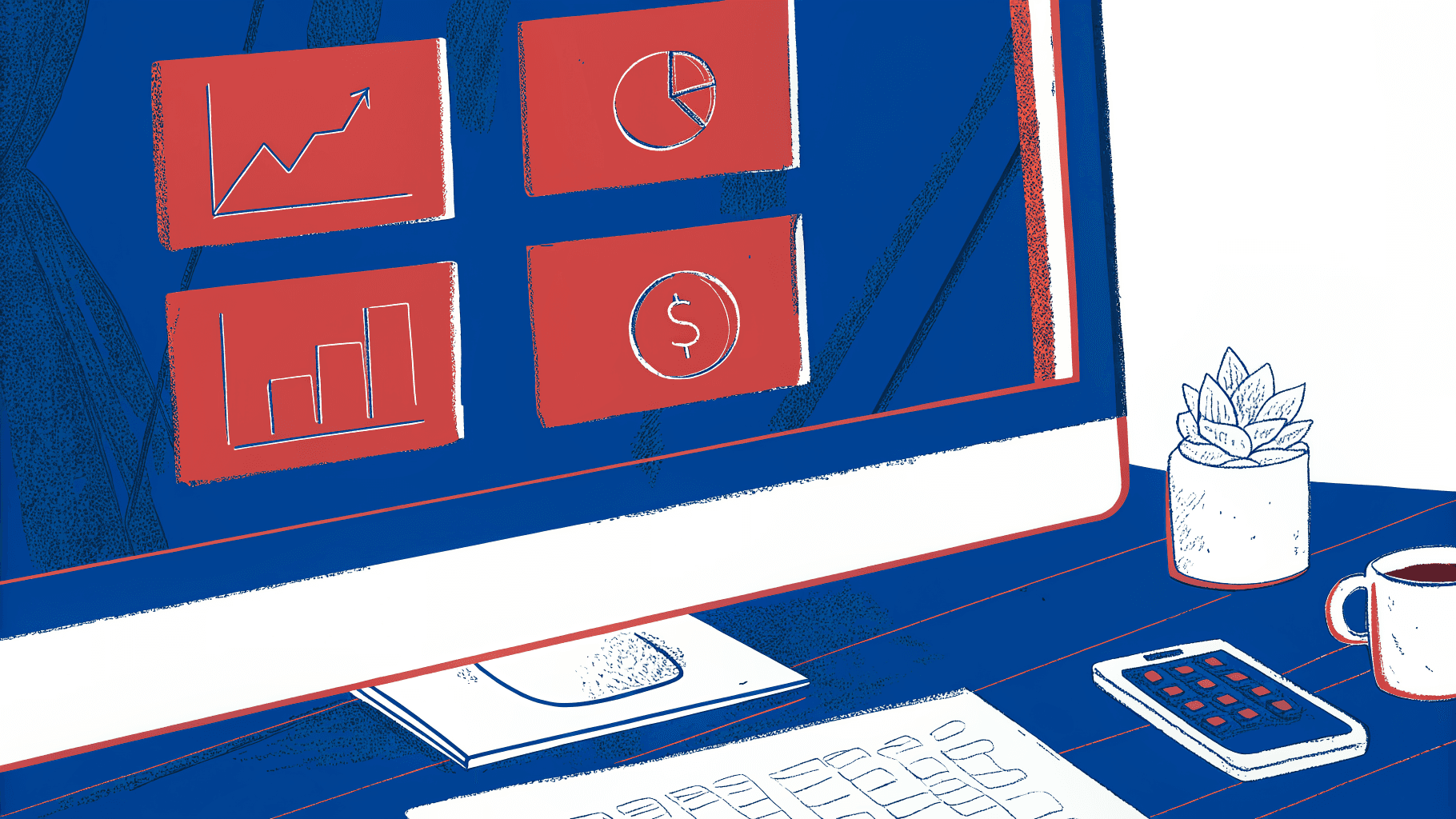
"Tracking conference lead generation across a long (7+ month) customer lifecycle makes it extremely difficult to attribute closed deals back to specific events, complicating ROI measurement." According to momencio's analysis of event lead economics, the four metrics that hold up under finance scrutiny are:
- Total leads captured with verified contact data
- Lead-to-opportunity conversion rate
- Pipeline value attributed to the event
- Cost-per-lead benchmarked across events
Tap counts and badge scans do not appear on that list. They measure activity, not output. A rep who scanned 60 badges but entered zero contacts into the CRM generated zero measurable pipeline, regardless of what the event summary deck says. This is most acutely felt by professionals who attend frequent in-person networking events or hold client-facing roles, exactly the people for whom a structured, tap-to-CRM capture workflow pays off most quickly. After that first networking event or card tap, the difference between a team that captures verified contact data and one that collects badge scans becomes visible almost immediately in pipeline reporting.
The Sales Director Visibility Gap
Without structured capture, sales rep activity tracking at conferences is essentially invisible. There is no way to know which rep had three high-quality conversations with target accounts and which spent the afternoon in the session hall. That invisibility has a compounding cost: you cannot coach what you cannot see, and you cannot improve event ROI without knowing which behaviors actually produced it.
Mobilocard's Teams and Business plans address this directly. Both tiers include team management, insights and analytics, lead enrichment, and lead capture and management, giving sales directors a view of rep-level activity rather than an aggregate tap count. The Teams plan ($4/month per member, billed annually) adds central billing and full team data analytics with CRM integrations, while the Business plan ($5/month per member, billed annually) layers in enterprise SSO and HR directory sync for organizations that need tighter identity governance across large field teams.
Critically, both plans include unlimited leads and contacts, so capture volume at a busy event is never artificially capped. The Teams plan also includes brandable QR codes, no-internet QR sharing, and integrations through Zapier, meaning leads flow from a tap directly into the CRM stack without a manual export step that typically kills data fidelity by Monday morning.
Cost-Per-Lead by Event, Building a Comparison Framework
Zeliq's 2025 B2B benchmarking data puts the average cost-per-lead for B2B events at $811, making conferences one of the most expensive lead generation channels available. That number only becomes defensible when you can attach a conversion rate to it. Industry data suggests B2B event leads convert to opportunities at rates between 5% and 20%, depending on qualification rigor at capture.
If your team cannot produce a per-event cost-per-lead figure because the capture data does not exist, you are asking finance to approve next year's budget on approximation. One of the most persistent problems in conference ROI measurement is that the customer lifecycle from first tap to closed deal frequently stretches seven months or longer. Attribution breaks down not because teams lack ambition but because the original capture record, often a badge scan or a manually typed note, is too thin to survive that journey intact.
A Mobilo card tap, by contrast, writes a timestamped, enriched contact record into the CRM at the moment of exchange. When that deal closes eight months later, the originating event is already logged in the system, not reconstructed from memory during a QBR.
From Tap to Closed Deal - Building a Repeatable Attribution Chain
The attribution chain requires three things to hold across a long sales cycle: a verified contact record created at the moment of the conversation, a consistent event tag that survives CRM migration and rep turnover, and enriched data that gives the contact record enough signal to be matched to an opportunity later. Mobilocard's lead enrichment feature, available on Pro ($3/month), Teams, and Business plans, addresses the enrichment layer at capture rather than as a retroactive data-cleaning exercise. Combined with custom lead capture forms and the paper business card scanner included on all three tiers, reps can capture, qualify, and route contacts before they leave the event floor, regardless of whether they are using an NFC card, a QR code, or converting a paper card handed to them by a prospect. The result is a cost-per-lead figure that finance can actually audit, because every lead in it has a source, a timestamp, and a record that did not require a spreadsheet reconciliation to exist.
2026 Lead Generation Conferences Worth Putting on Your Event Calendar
Picking the right event is the first real decision in your conference lead generation strategy, not an afterthought once travel is booked. The largest event in your vertical is not automatically the highest-value one. according to industry data, more than 50 percent of B2B marketers rank in-person events as the best source for high-quality leads, but that advantage only holds when the attendee profile matches your ideal customer profile.
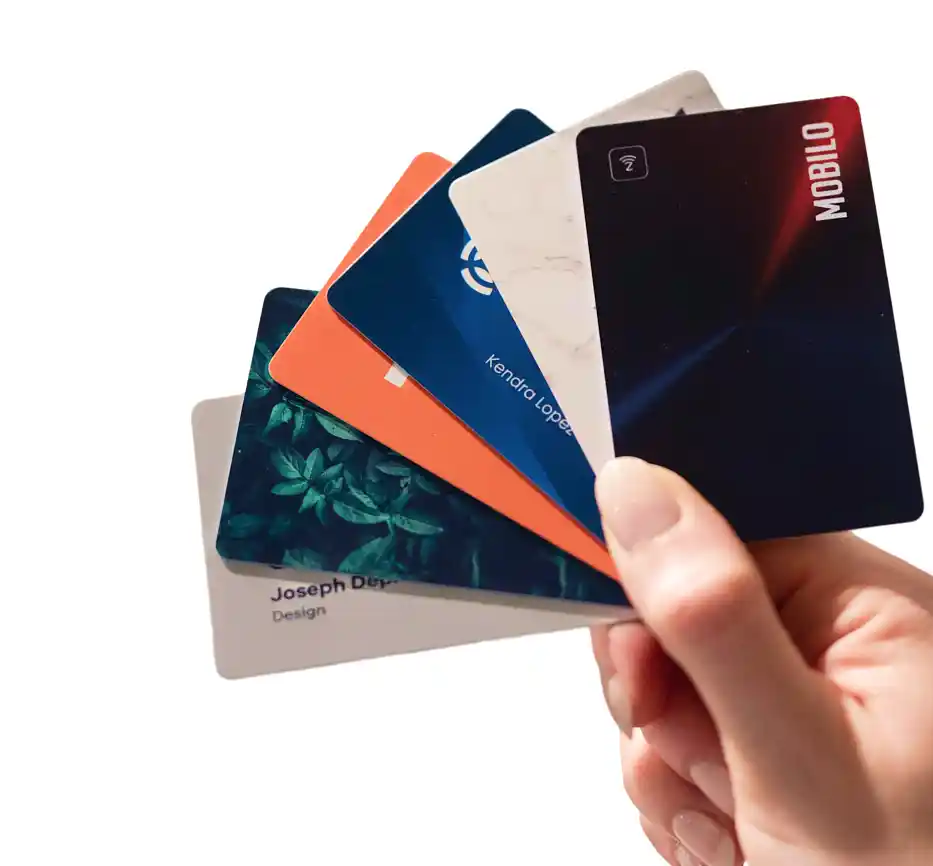
Decision-makers who attend a lead generation summit decay from high-signal prospects to cold contacts within days, and the 24-hour follow-up window closes before most paper-card-dependent reps have finished their travel home, let alone completed manual CRM entry. This is precisely where capture and follow-up efficiency becomes a competitive differentiator, not a back-office nicety. io armed with a Mobilo NFC card, whether a Custom Design Card, a Metal Card, or even a Digital Wallet Card, tap once, capture the contact instantly, and push that data directly into their CRM through any of Mobilo's that same figure integrations through Zapier.
The lead is enriched, timestamped, and actionable before the conversation has cooled. Paper Plus Cards offer the same unlimited scans and unlimited leads and contacts for teams that prefer a physical handout format, with none of the manual re-entry delay that kills post-event pipelines. For teams attending multiple events across the calendar year, the Teams plan ($4/month, billed annually) is the operationally sound choice: it covers unlimited team members, gives managers the ability to control, lock, and override data fields across every rep's card, delivers full team data analytics and CRM integrations, and includes 24/7 customer support, all with brandable QR codes and lead enrichment built in.
Organizations with compliance or IT requirements can step up to the Business plan ($5/month, billed annually), which adds enterprise SSO, HR directory sync, a custom domain, and white-glove onboarding for qualifying teams. Both plans include lead capture and management, custom lead capture forms, insights and analytics, and the paper business card scanner, so reps can digitize any card they receive on the floor, not just the ones they hand out. The table below covers confirmed that same figure and early 2027 events with real logistics data. Use it to filter your event calendar before committing budget.
Before the events below, equip your team: Mobilo Card’s NFC and QR digital business cards turn every conversation at these conferences into a CRM-ready lead. One tap shares your full details and captures theirs, then syncs the contact straight into your CRM — no manual entry, no lost cards, no follow-up gap. It is the networking tool to bring to the events ranked below, not a conference itself.
1. Lead Summit 2026 - Best for Practical B2B Pipeline Frameworks
Lead Summit bills itself as the most practical B2B lead generation conference, drawing 2,500+ professionals who want actionable client acquisition frameworks rather than keynote fluff. It's the right pick for revenue-focused teams who need repeatable outbound and inbound playbooks they can deploy immediately after the event. The tradeoff: its no-nonsense format means limited vendor expo space, so it's less useful for those prioritizing product discovery.
2. Forrester B2B Summit North America - Best for Enterprise Demand Strategy
Forrester's B2B Summit is the premier event for enterprise marketing and sales leaders who need analyst-backed research to justify pipeline strategy decisions. Sessions blend Forrester data with real-world case studies, making it ideal for VP-level and above audiences shaping multi-quarter demand generation roadmaps. The key limitation: the premium price point and Phoenix location make it a harder sell for lean or early-stage teams with tight travel budgets.
3. ANA Masters of B2B Marketing - Best for Brand-to-Demand Integration
The ANA Masters of B2B Marketing conference attracts senior marketers focused on bridging brand-building with measurable demand generation outcomes. It's the right fit for CMOs and marketing directors at mid-to-large organizations who need to align brand equity investments with pipeline contribution metrics. The tradeoff is that its content skews toward established enterprise brands, making it less relevant for growth-stage companies still defining their positioning.
4. Demand Gen Summit - Best for Marketing Automation and Pipeline Ops
Demand Gen Summit is purpose-built for demand generation professionals who live inside marketing automation platforms and need to optimize pipeline operations. Sessions cover lead scoring models, nurture sequencing, attribution frameworks, and CRM hygiene, making it ideal for marketing ops managers and demand gen directors. The limitation: content depth assumes existing familiarity with tools like HubSpot or Marketo, so it's a steep entry point for generalist marketers.
5. B2B Sales & Marketing Exchange - Best for Sales-Marketing Alignment
The B2B Sales & Marketing Exchange is designed for organizations struggling with the handoff between marketing-generated leads and sales follow-through. It brings together sales enablement leaders, revenue operations professionals, and demand gen marketers to close the alignment gap that kills pipeline conversion. Best for mid-market companies with dedicated sales and marketing functions. The tradeoff: sessions can feel redundant for teams that have already invested heavily in revenue operations infrastructure.
6. SaaStr Annual - Best for SaaS-Focused Lead Generation at Scale
SaaStr Annual is the largest gathering of SaaS founders, revenue leaders, and growth marketers, making it uniquely valuable for B2B SaaS companies looking to benchmark lead generation strategies against peers at similar growth stages. The density of decision-makers on the floor creates genuine pipeline opportunities beyond the sessions themselves. The tradeoff: the sheer scale of the event, tens of thousands of attendees, makes structured lead capture chaotic without a pre-planned outreach strategy.
Related Reading
- Best Tech Conferences For Networking
- Best Networking Apps for Trade Show Attendees
- Best Finance Conferences For Networking
- Trade Show Booth Ideas For Small Budgets
- Virtual Conference Booth Ideas
- Networking Activity Ideas For Conferences
- What Are The Top Trade Show Lead Retrieval Tools
- Trade Show Follow Up Email Examples
- Conference Lead Capture Tools
- Trade Show Lead Capture App
How to Stop Losing Conference Leads the Moment the Card Changes Hands
Every one of the eight strategies above produces something valuable: a warm conversation, a qualified contact, a genuine reason to follow up. What happens in the 60 seconds after that conversation ends determines whether any of it reaches your pipeline.
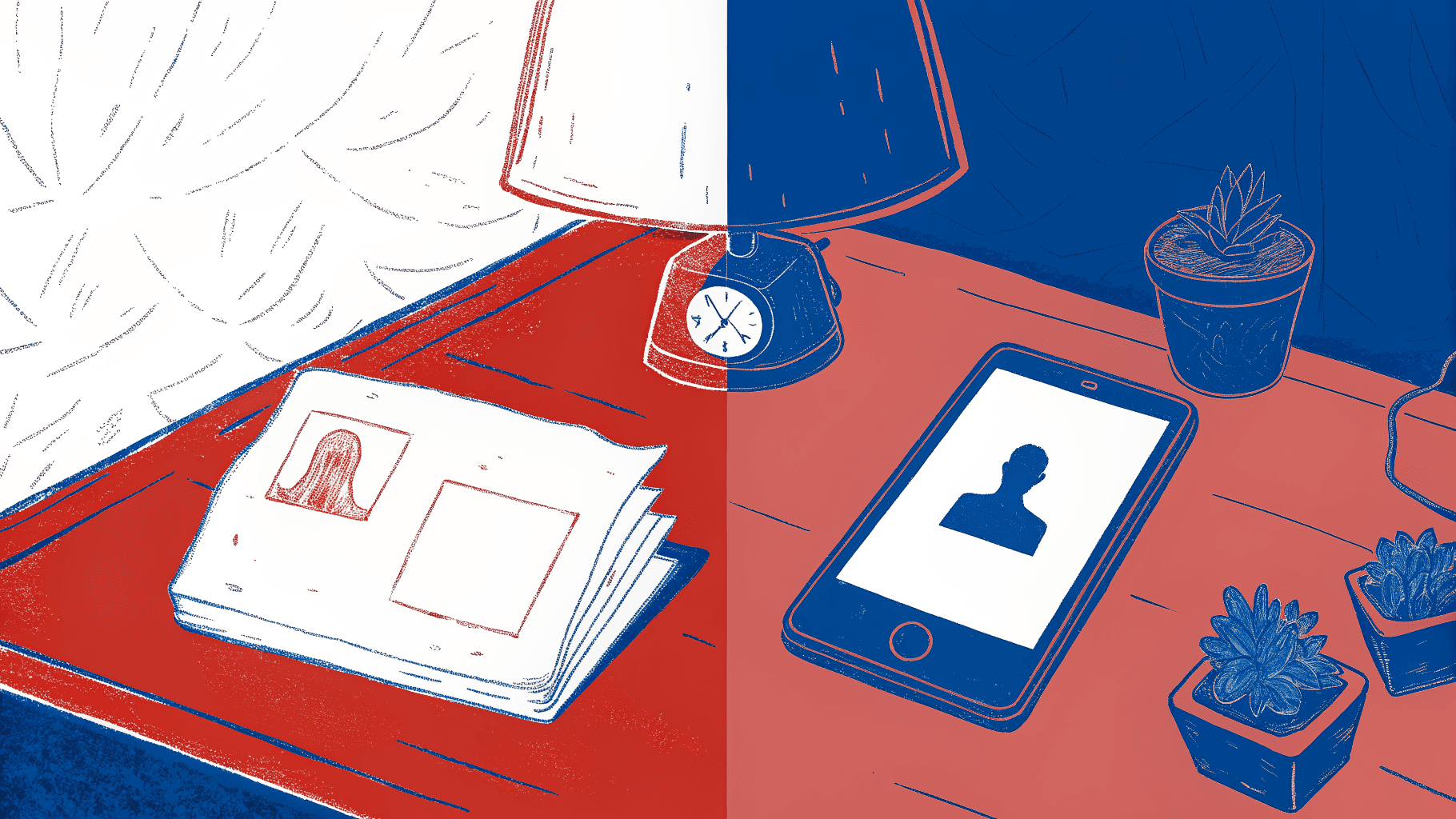
Why Conference Lead Quality Degrades by the Hour (And How to Stop It)
The decay starts at the handshake, not at the inbox. 88% of business cards are discarded within a week of being exchanged. More telling: leads contacted within one hour of an initial conversation convert at dramatically higher rates than those reached 24 or 48 hours later.
Every hour a contact sits on a physical card instead of inside a CRM is an hour the conversation cools, the context fades, and the rep's recall of what made that lead worth pursuing gets murkier. This is not a motivation problem. It is a physics problem: information degrades without a system to hold it.
That structural gap is exactly what a scan-on-contact workflow closes. Mobilo's Pro, Paper Plus Cards are custom designed for easy handouts and support unlimited scans, meaning the moment a prospect scans the card, their contact data moves toward your pipeline, no manual entry, no delay, no lost stack on a hotel nightstand. The card works for the individual rep the instant it arrives and is first used; for teams rolling out bulk orders, a team admin handles provisioning so every rep walks the floor ready from day one.
Why the Post-Conference Handoff Fails, and What to Fix Instead
The failure point is the gap between physical exchange and digital record, and that gap was built into the process before your reps ever walked the floor. The right diagnosis is structural, not personal. The accountability gap sits at the leadership level: Sales Directors who have no analytics layer over their team's conference activity cannot distinguish high-performing networkers from low-performing ones, which means coaching stays generic and event budgets keep renewing on hope rather than evidence.
Closing that accountability gap requires two things working together: a capture tool that works in the rep's hands at the moment of exchange, and an analytics layer that surfaces what happened across the whole team. On the software side, both the Teams plan ($4/month, billed annually) and the Business plan ($5/month, billed annually) include:
- Full insights and analytics
- Lead capture and management
- Unlimited leads and contacts
- Integrations through Zapier, giving the CRM admin the integration surface needed to route captured leads directly into existing workflows without rebuilding anything
The Teams plan additionally includes central billing and team management, so leadership sees activity across every rep, not just the ones who remembered to log their own notes. That visibility is what turns a conference debrief from a guess into a coaching conversation grounded in actual data.
Next steps
If your conference budget keeps funding conversations that never reach your CRM, the path forward starts with treating the card exchange as the pipeline trigger, not the end of the process. Start with our digital business card.
The 88% discard rate on paper cards means the structural failure begins at the handshake, before any follow-up sequence can run. Manual CRM entry already consumes roughly a quarter of a rep's working week at baseline, which means post-event re-entry is structurally guaranteed to be skipped. Together, those two realities point to one corrective action: capture has to create the CRM record automatically, at the moment of exchange, or the eight strategies above never close a loop.
For a deeper look at how NFC-based capture removes the manual tax across a full conference calendar, see digital business card for the complete workflow.
Frequently Asked Questions
Why do conferences attract so many decision makers in the first place?
Conference attendees self-select in a way that most other lead sources don't produce. A VP of Sales who registers for an industry event, books flights, and blocks three days out of the office has already signaled genuine interest in solving a problem, which is why more than 50% of B2B marketers rate in-person events as their top source for high-quality leads.
How should I set a success target before we go to the conference?
Define your numeric goals before you register, not after you land. Set a specific number of qualified leads, booked demos, and pipeline dollars you expect from the event, for example, 40 qualified leads and 8 booked demos, so your reps can filter conversations on the floor rather than collecting every badge scan in sight, and so you have a defensible ROI story for the CFO.
What's the right way to reach out to attendees before the event?
Send personalized outreach via LinkedIn or short-form email two to three weeks before the event, referencing something specific to the prospect, a recent funding round, a session they're speaking at, or a shared connection. Keep the message under 80 words, make the ask concrete (a custom demo or a solution to a named problem), and avoid blasting a generic list the week before.
If I only have time to fix one thing in our post-show process, what matters most?
Close the gap between the handshake and the CRM record as fast as possible, ideally at the point of exchange itself. The post identifies that 80% of event leads are never followed up on, and its own research found that 90% of new contacts never make it into a CRM under a manual-entry system, meaning the single highest-impact fix is removing the manual data-entry step so leads enter the pipeline automatically the moment a contact is exchanged.
How quickly do we actually need to follow up after the conference ends?
Within 24 to 48 hours, the post calls this a conversion threshold, not just a best practice. Lead quality drops sharply after the first week, and the probability that any contact converts to an active opportunity falls steeply after that window closes, regardless of how strong the floor conversation was. All lead data should be inside your CRM before the week is out.