.avif)

18 Best Trade Show Booth Ideas to Attract Visitors in 2026
On This Page
Your booth ideas aren't the problem. The broken capture infrastructure underneath them is where pipeline goes to die, and this post shows you how to fix both.
Trade shows reward the bold. Most sales directors assume the booth itself is the ROI lever, that a better design, a louder display, or a more memorable giveaway is what separates a winning trade show from a wasted budget. A striking booth, a live demo, a crowd gathered three rows deep, these are the visible wins Sales Directors point to when justifying the budget. See our digital business card for how this works in practice.
But foot traffic and a full badge-scan export are not the same thing as pipeline, and the gap between them is where most event investment quietly disappears. 79% of trade show leads are never followed up on by sales reps, not because the booth failed to attract visitors, but because the handoff between floor conversation and CRM record collapsed the moment the conversation ended. A team using tap-to-share cards can close that gap at the point of contact, before the rep walks to the next conversation.
The failure point is almost never the conversation itself. It is the three to five days between a badge scan and the moment a rep finally logs it, if they log it at all. Manual entry introduces errors, duplicates, and omissions that erode data quality before a single follow-up is sent. The contact captured on the floor and the record that reaches your CRM are rarely the same thing. When follow-up relies on individual memory, personal card stacks, and manual logging, your entire event ROI sits on a single point of failure per rep. The problem isn't that your booth ideas are wrong; it's that the infrastructure underneath them is still running on a decade-old assumption about how contacts get captured.
"Booth traffic is heavily dependent on physical placement rather than booth quality or messaging, suggesting that even well-designed booths in poor locations struggle to attract visitors, let alone convert them."
your entire event ROI sits on a single point of failure per rep
79% of trade show leads never followed up
Table of Contents
- The Hidden Cost of Running Your Booth Like It's 2015
- 18 Trade Show Booth Ideas That Stop Visitors and Capture Them as Leads
- How to Turn Every Booth Idea Into a Closed-Loop Lead Capture System
- Booth Ideas as a Closed-Loop Lead Capture System
- Next steps
- Frequently Asked Questions
Key takeaways
- A striking booth drives foot traffic, it does not drive pipeline. Those are two different problems requiring two different solutions.
- 90% of new contacts never enter the CRM after a trade show because the manual re-entry step breaks down the moment the rep leaves the floor.
- Badge scans feel like lead capture. They are not, the export arrives days later, long after the intent window has closed.
- The booth ideas that actually produce ROI are engineered around lead capture automation first, and visual appeal second.
- 79% of trade show leads go unfollowed and 88% of business cards are discarded, the design of your booth is not what's causing that number.
- NFC tap stations, QR-linked landing pages, and live CRM-sync forms are structural fixes for a broken handoff, not aesthetic upgrades.
- Mobilo's Contact Exchange captures both sides of every conversation the moment someone taps or scans a card, their information feeds directly into your CRM or contact list, so the follow-up workflow starts before the rep walks away from the booth.
The Hidden Cost of Running Your Booth Like It's 2015
That outdated infrastructure has a price tag most sales directors never see on the post-show report. The assumption embedded in it, that the booth itself is the ROI lever, that a better design, a louder display, or a more memorable giveaway is what separates a winning trade show from a wasted budget, quietly survives every planning cycle. But according to industry data, 80% of trade show leads are never followed up on, which means the real liability is not the booth budget. It is the moment after the handshake, when a contact slips into a jacket pocket and disappears from the pipeline forever.
Failure Mode 1 - Paper Cards That Never Reach the CRM
Reps return from high-volume shows with a stack of cards that sits on a desk until Monday, then Tuesday, then indefinitely. 88% of business cards are thrown away within a week of being received, meaning contact data collected at significant cost per lead never reaches a CRM record. The gap is structural, not individual: without an automated capture workflow, even the most diligent rep faces a process that was never designed to close reliably.
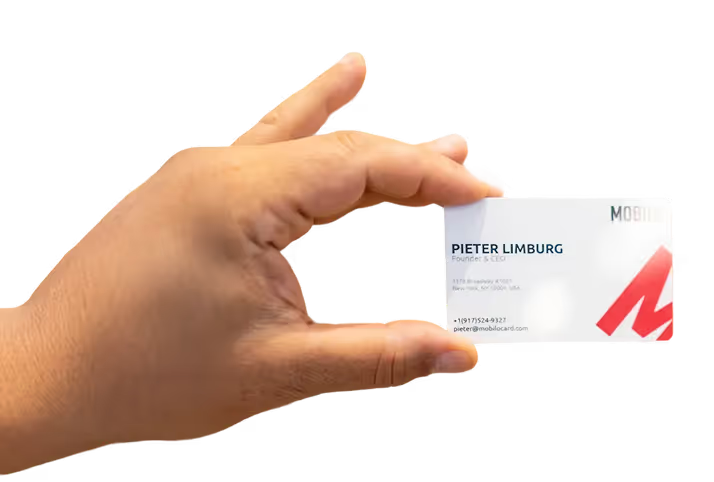
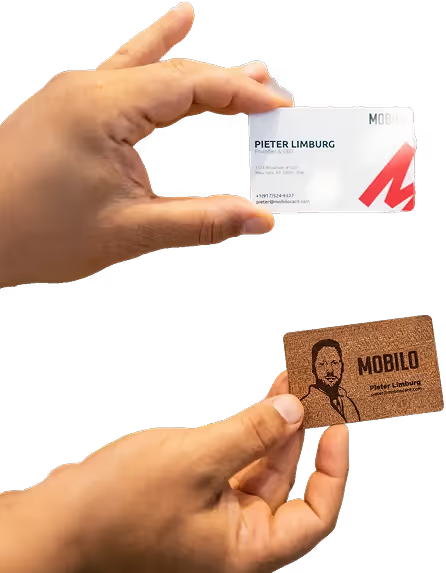
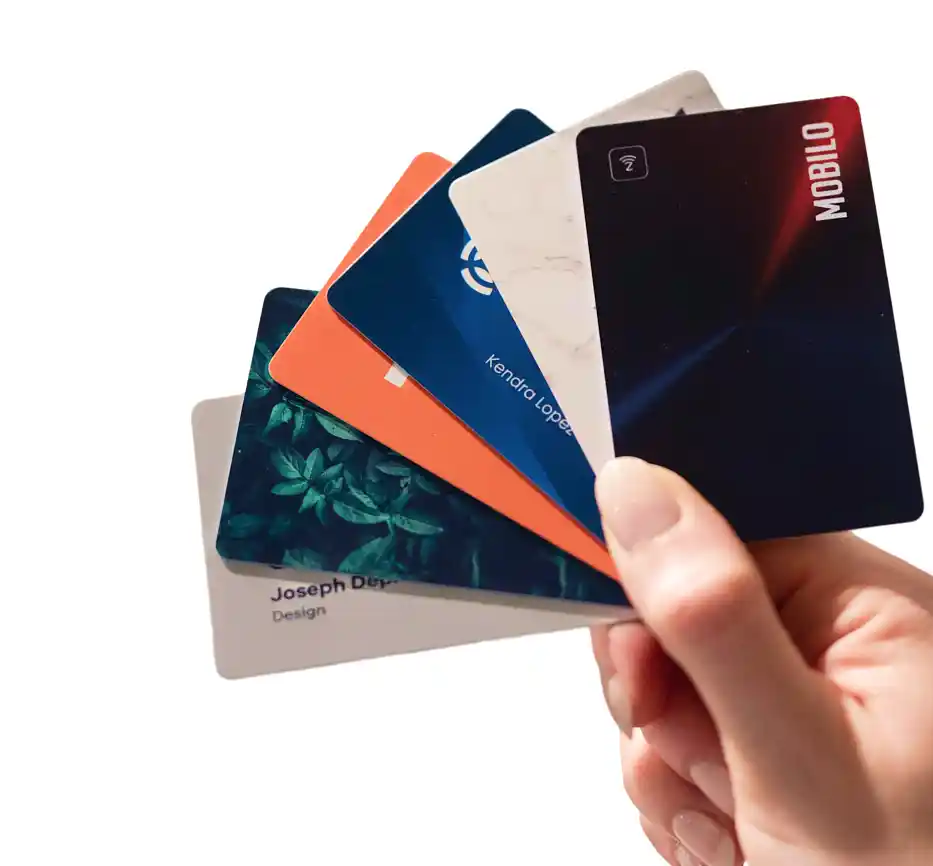
This is exactly the failure Mobilo's card lineup is built to prevent. A rep carrying a Team Custom Design Card, an NFC card with QR Code available under the Teams plan, shares their full digital profile instantly with a single tap or scan, without ever running out of physical cards or handing over anything that can be thrown away. For teams that need to move fast across a busy show floor, the Team Digital Wallet Card puts a scannable contact profile directly into a prospect's Apple or Google Wallet before they leave the booth.
Contact information is captured and stored, not pocketed and lost. Both options sit inside the Teams plan, which includes unlimited team members, team management, lead capture and management, and full insights and analytics, so captured contacts flow into a structured record rather than a pile on a desk.
Failure Mode 2 - Badge Scan Exports and the Closed Intent Window
88% of business cards trashed within a week
Badge scan exports feel like a safety net. They are not. Export files arrive days after the show floor closes, batch-delivered and unsegmented, with no conversation context attached. By that point, prospect intent has already peaked and begun to decay. The highest-converting follow-up window has closed. Teams using Mobilo sidestep this entirely.
Because every tap or QR scan captures lead data in real time, with lead enrichment and custom lead capture forms included across the Teams and Business plans, reps leave each conversation with a structured contact record already in the system, not a badge number to be decoded later. The Teams plan also includes integrations through Zapier, meaning those records route directly into whatever CRM or follow-up sequence the team already runs, without a manual export step that adds days of delay.
Failure Mode 3 - Zero Analytics, Zero Accountability
When contact capture depends on paper cards and manual badge scans, there is no record of which rep engaged which prospect, which card generated the most follow-through, or where the pipeline actually broke down. Accountability is impossible because the data was never collected in a form that could be measured. The Teams and Business plans both include full insights and analytics, giving sales managers visibility into team-level engagement, not just aggregate lead counts, but the activity behind them.
The Business plan extends this further with HR directory sync, enterprise SSO, a custom domain, and central billing, so performance data lives inside a managed, auditable system rather than scattered across individual rep inboxes. For organizations requiring a higher-touch rollout, white-glove onboarding and a custom-built landing page are available for qualifying larger teams. The result is a contact-capture infrastructure that can actually be held to account, because it was designed to produce records, not just handshakes.
18 Trade Show Booth Ideas That Stop Visitors and Capture Them as Leads
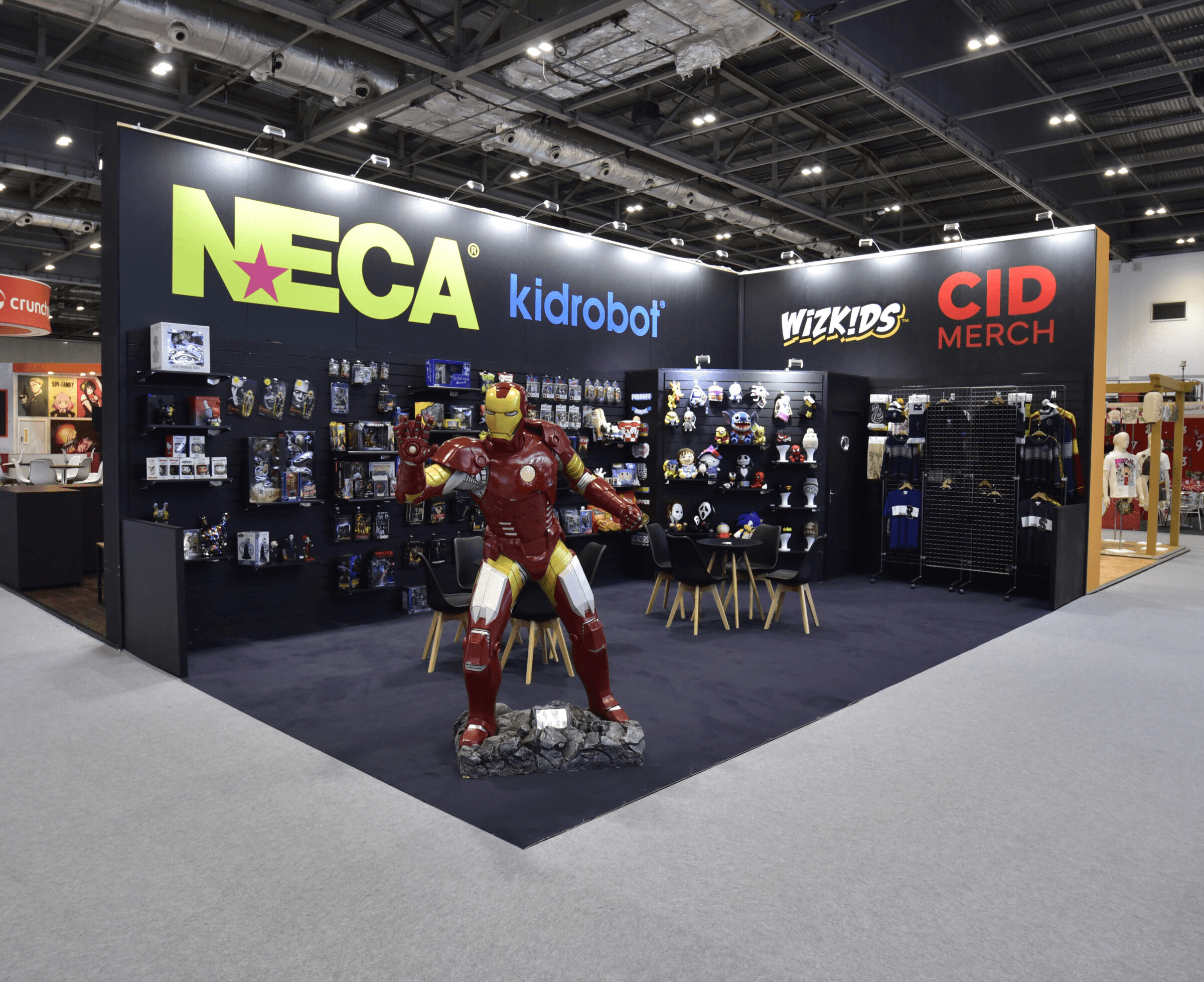
Walk the floor of any major trade show and you will notice the same pattern: the busiest booths are not always the ones that fill the CRM after the show. A crowd is not a lead. A shrinking giveaway pile is not a pipeline. A booth optimized purely for foot traffic converts only a small fraction of contacts into anything actionable, making the capture mechanism, not the booth aesthetic, the actual ROI constraint. That is the real cost of treating attraction and capture as the same problem.
They are not the same problem. They are two separate engineering challenges, and every idea below is evaluated on both axes: what stops the visitor, and what captures the contact. Attraction without a capture trigger is expensive entertainment. The 18 ideas that follow are chosen because each one can be paired with a deliberate exchange mechanism, so the conversation that starts at your booth ends with a CRM record, not a forgotten interaction.
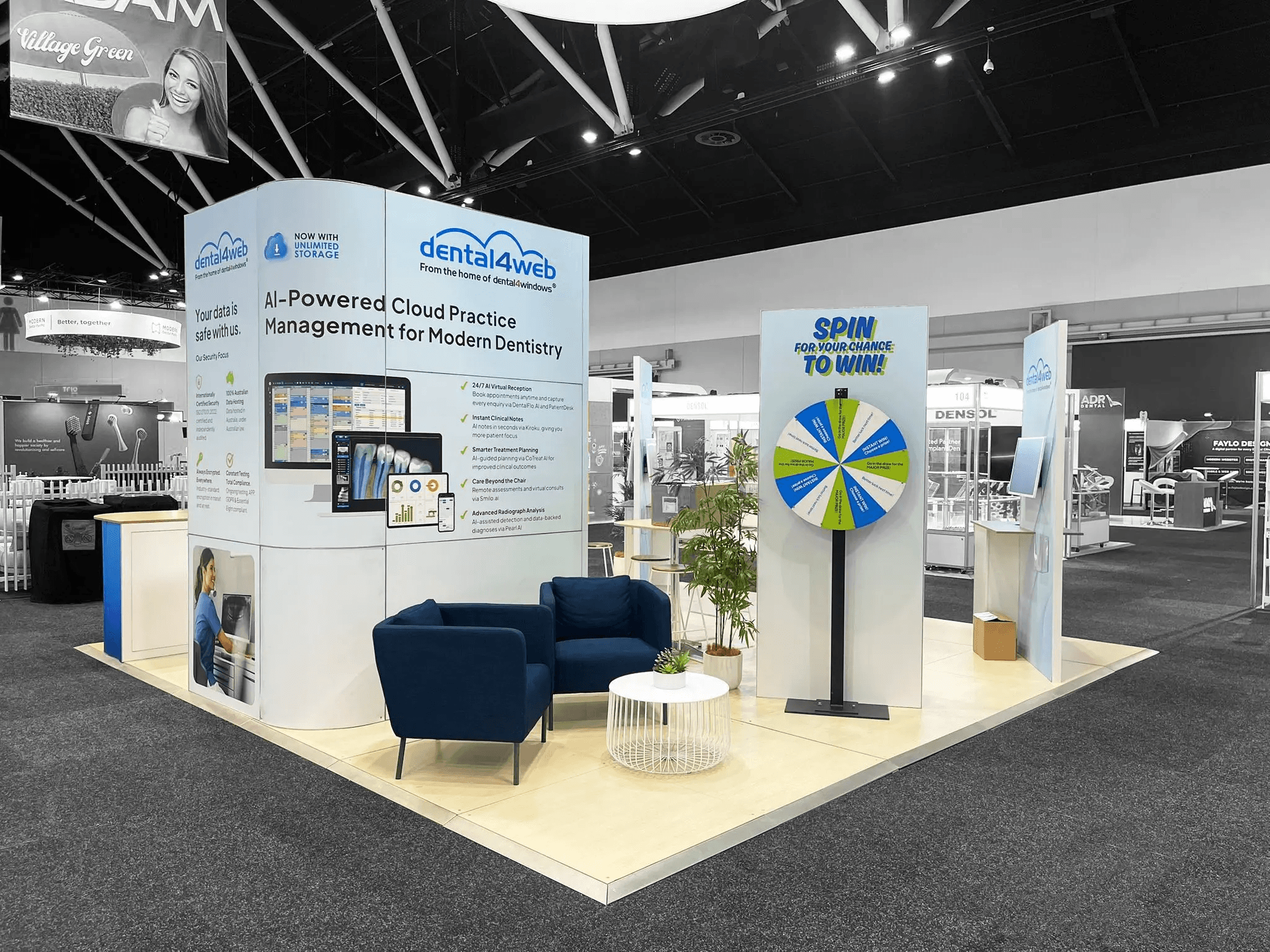
1. Spin-to-Win Prize Wheel with Branded Lead Capture Gate
A visually bold, brand-wrapped prize wheel stops aisle traffic cold by triggering the same dopamine loop as a slot machine. It works best for B2C-adjacent brands or consumer product launches where volume of interactions matters more than deep qualification. Require an email or badge scan before the spin to gate every lead. The real tradeoff: prize cost scales fast at high-traffic shows, so cap giveaway value carefully.
2. Augmented Reality Product Visualizer Built Into the Booth Structure
AR overlays let visitors point a tablet or kiosk camera at a physical object and see 3D product internals, configuration options, or use-case scenarios in real time. This is the right pick for manufacturers, construction tech, or medtech brands whose products are too large, dangerous, or complex to ship to a show floor. The limitation is meaningful: AR experiences require significant pre-show development time and a reliable on-site technician.
3. Branded Photo Booth with Instant Social-Share and Logo Watermark
A branded photo booth turns every attendee into an organic social amplifier the moment they text themselves a watermarked image. The lead-gen hook is the email or phone number required to receive the photo, making data capture feel like a reward rather than a toll. Best for lifestyle brands, SaaS companies building awareness, and any exhibitor targeting a younger demographic. Tradeoff: booth footprint is substantial, eating into demo space in smaller 10x10 setups.
4. Touchscreen Interactive Product Demo Kiosk
Self-guided touchscreen kiosks let visitors explore product specs, watch embedded video demos, and configure options at their own pace without waiting for a sales rep. This format excels for software platforms, complex hardware, or multi-SKU product lines where a single rep cannot cover every feature. Kiosks also collect interaction data, which screens visitors dwell on, that qualifies leads before a follow-up call. Limitation: requires robust content design to prevent dead-end navigation.
5. Live Personalized Printing Station - Custom Swag On Demand
A live printing station that personalizes a product, branded cookies, tote bags, or phone cases, with a visitor's name or photo in real time creates a powerful dwell-time magnet and a take-home brand impression that outlasts a brochure. It is ideal for consumer brands, food-tech companies, and any exhibitor whose audience responds to novelty and personalization. The tradeoff is operational: the station demands dedicated staff, consumable inventory management, and queue control to avoid bottlenecks.
6. Virtual Reality Headset Experience Tied to a Core Brand Story
A 60-to-90-second VR experience that immerses visitors inside a brand narrative, a factory floor, a product in action, a future-state scenario, creates emotional memory that flat video cannot match. It is best suited for industrial, real estate, travel, and energy brands with a compelling environment to showcase. The hard limitation is throughput: one headset serves roughly 30–40 visitors per hour, so VR works as a premium qualifier for high-value prospects, not a mass-traffic tool.
7. Hands-On Product Trial Zone with Timed Challenges
Inviting visitors to physically touch, test, and complete a timed challenge with your product converts curiosity into conviction faster than any pitch. This approach is the right fit for hardware, tools, fitness equipment, or any product whose tactile quality is a key differentiator. Adding a leaderboard or fastest-time prize layer amplifies competitive engagement and extends dwell time. The tradeoff: product durability under repeated handling must be validated before the show, and replacement units should be on hand.
8. Interactive Trade Show Game - Custom Branded Digital Arcade Cabinet
A custom-branded digital arcade game, think a branded version of a classic like Pong, a trivia challenge, or a product-knowledge quiz, draws competitive clusters of visitors and keeps them engaged long enough for a rep to qualify them. It works especially well for tech companies, gaming-adjacent brands, and any exhibitor targeting millennials or Gen Z buyers. The key tradeoff is content development lead time: a truly custom game requires 6–10 weeks of build time and thorough QA before the show.
9. Trivia Game with Industry-Specific Questions and Instant Prize Redemption
A branded trivia game built around industry pain points, product knowledge, or market trends positions your brand as the category expert while entertaining visitors. High scorers unlock instant prize redemption, which drives repeat plays and word-of-mouth traffic from the show floor. This format is ideal for B2B exhibitors in professional services, fintech, or healthcare where demonstrating expertise is the primary sales motion. The limitation: questions must be refreshed across multi-day shows to prevent repeat visitors from gaming the system.
10. Comfort Lounge with Branded Charging Stations and Soft Seating
Providing a shaded, comfortable seating area with branded phone-charging stations solves a real attendee pain point, dead batteries and aching feet, and earns extended dwell time in return. Visitors who sit down are far more receptive to a relaxed conversation than those rushing past. This tactic is best for enterprise software, consulting, and financial services brands where relationship-building matters more than spectacle. The tradeoff: lounge visitors may not be actively shopping, so reps need a light-touch qualification script.
11. Giant Inflatable or Air Dancer Brand Mascot as Aisle Beacon
An oversized branded inflatable or kinetic air dancer creates a vertical visual anchor that is visible from across a crowded exhibition hall, directing foot traffic to your booth before a visitor even reads your signage. It is the right choice for consumer brands, food and beverage companies, and any exhibitor competing in a dense, visually noisy show environment. The limitation is venue-specific: many convention centers have height restrictions and require advance approval for inflatables, so confirm regulations early.
12. Live Social Media Wall Displaying Real-Time Visitor Posts and Hashtags
A large display screen aggregating live Instagram, LinkedIn, or X posts tagged with your booth hashtag creates a social proof loop: visitors post to see themselves on the wall, which drives more posts and more organic reach beyond the show floor. This tactic works best for brands with an active social community or those targeting marketing and media buyers who understand the amplification value. The tradeoff: content moderation is non-negotiable, unfiltered feeds can surface off-brand or inappropriate posts in real time.
13. Lead-Gated Exclusive Research Report or Industry Benchmark Download
Offering an exclusive, data-rich industry benchmark report or buyer's guide, available only by scanning a badge or entering an email at the booth, attracts the most qualified visitors: those actively researching solutions. This is the strongest lead-quality tactic for B2B exhibitors in professional services, enterprise software, and consulting. The content itself pre-qualifies intent. The tradeoff is production cost: a credible report requires original research or proprietary data, not a recycled blog post dressed up as a PDF.
14. Live Expert Micro-Talk Stage with 10-Minute Scheduled Sessions
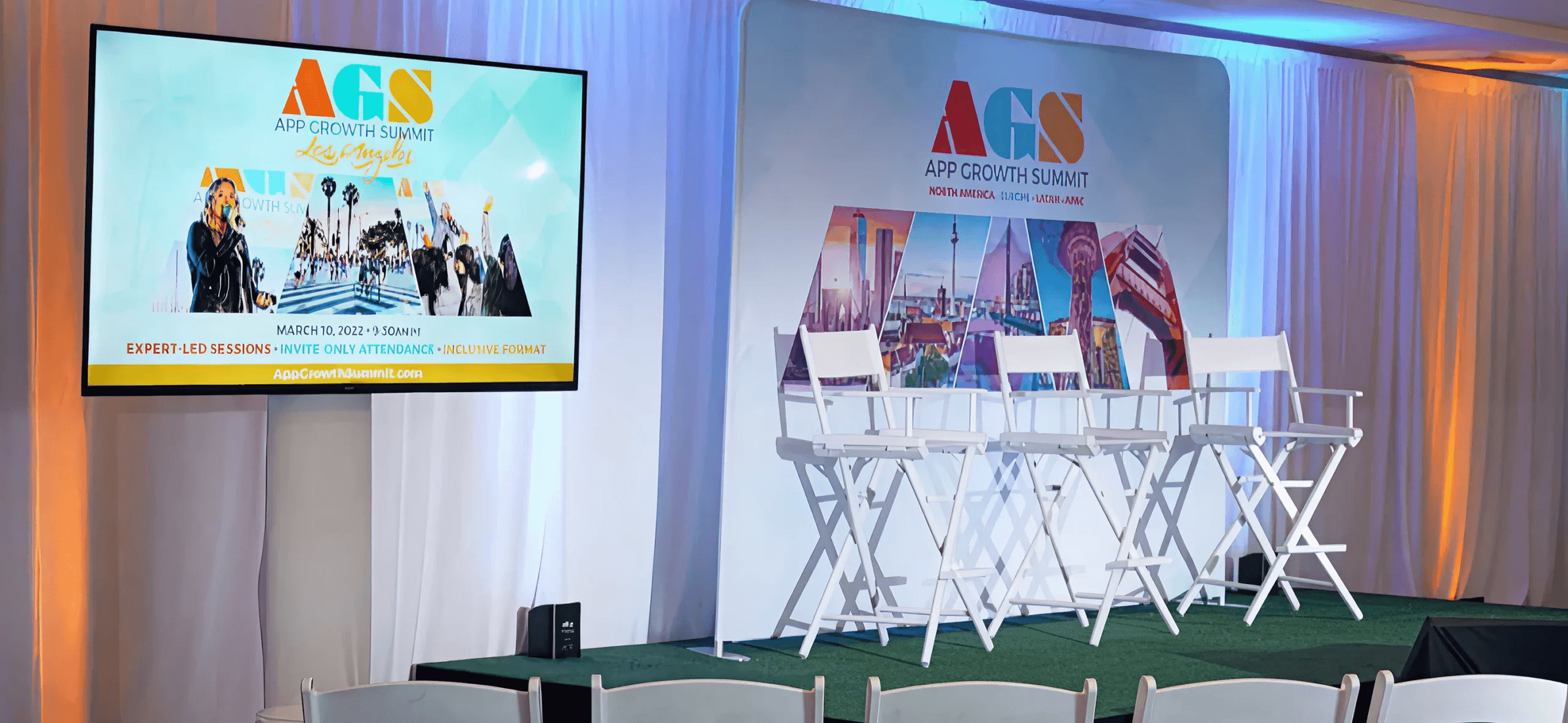
A small in-booth stage or elevated speaking area hosting 10-minute expert talks on a pressing industry topic draws standing-room crowds and positions your brand as the authoritative voice in the category. Scheduling sessions every 30 minutes creates recurring traffic pulses throughout the day. This format is ideal for technology, healthcare, and financial services exhibitors whose buyers respond to education over entertainment. The limitation: speaker quality is everything, a weak presenter will clear the crowd faster than no stage at all.
15. Personalized On-the-Spot ROI Calculator with Printed Takeaway
An interactive ROI or savings calculator, where a rep inputs a visitor's specific business parameters and generates a personalized cost-benefit printout on the spot, transforms a generic pitch into a tailored business case the prospect takes home. This is the highest-converting tactic for enterprise SaaS, logistics, and manufacturing exhibitors selling on measurable business outcomes. The tradeoff: the calculator must be rigorously validated before the show; an output that feels inflated or inaccurate destroys credibility instantly.
16. Scavenger Hunt Across the Show Floor with Your Booth as the Redemption Hub
Partnering with other non-competing exhibitors to run a show-wide scavenger hunt, where clues are collected across booths and prizes are redeemed exclusively at your location, drives repeated, intentional visits to your booth from attendees who are already engaged and moving. It is best suited for anchor exhibitors with larger booth footprints who can absorb the redemption traffic. The key limitation is coordination complexity: securing partner buy-in and aligning logistics across multiple exhibitors requires weeks of pre-show outreach.
17. Branded Giveaway with Utility Value - Engraved or Embroidered Premium Item
A high-quality, genuinely useful branded item, an engraved multi-tool, embroidered jacket, or premium notebook, given only to visitors who complete a full product demo or qualification conversation dramatically increases demo completion rates and leaves a lasting brand impression. Unlike cheap swag that ends up in a hotel trash can, a premium utility item travels home and stays in daily use. The tradeoff is unit economics: at $25–$75 per item, budget must be tightly controlled by qualifying recipients rather than distributing broadly.
Related Reading
- Etiquette For Networking In Online Conferences
- Measuring Event Roi
- Trade Show Sales Tips
- Trade Show Follow Up Best Practices
- How Do You Find The Roi Of A Trade Show
- Trade Show Sales Funnel
- What Is Trade Show Marketing
- Event Lead Management
- B2b Trade Show Best Practices
- Conference Lead Generation
- B2b Trade Show Marketing
How to Turn Every Booth Idea Into a Closed-Loop Lead Capture System
Booth Ideas as a Closed-Loop Lead Capture System
The overwhelming majority of new contacts never enter the CRM after a trade show, not because reps are careless, but because the handoff workflow was never built into the booth plan. The core synthesis here is this: NFC tap stations, QR-linked landing pages, and live CRM-sync forms are not aesthetic differentiators or engagement gimmicks, they are the only structural fix for a handoff failure that exists independently of booth creativity. Every booth design decision should therefore be evaluated on a single criterion: does this element reduce friction between tap and pipeline, or does it add a manual step? The 18 ideas in this post each earn a conversation. This section is about making sure that conversation ends as a pipeline record, automatically, without adding a single manual step to your rep's day.
Stop, Trigger, Sync, The Three-Step System
Every booth mechanic worth deploying maps to the same three-beat sequence. The booth design stops the visitor. A contact-exchange trigger, an NFC tap, a QR scan, a custom lead capture form, captures their details at that exact moment.
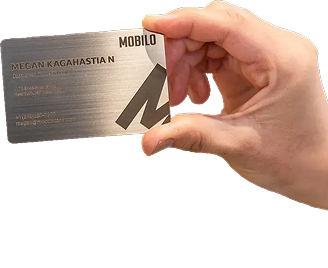
An automated sync pushes the record directly into your CRM before the rep walks to their next conversation. Evaluate every design decision on one criterion: does this element reduce friction between tap and CRM record, or does it add a manual step? On the Teams and Business plans, every rep card, whether a custom-designed NFC card, a Wood or Metal card, or a free Digital Wallet Card included with each subscription, carries that same three-beat sequence built in: tap triggers capture, capture syncs to pipeline, automatically.
Critically, team admins retain control over every data field across every card, so every customer-facing touchpoint consistently reflects the brand identity and drives measurable engagement rather than drifting into off-brand improvisation mid-show.
Why Badge Scans Alone Won't Capture Trade Show Leads at Scale
Badge scanners feel like infrastructure. They are not. They deliver a batch CSV after the show closes, by which point the 48-hour follow-up window, the period when lead intent is highest, has already passed.
Because badge scanners deliver no rep-level attribution, no custom qualification fields, and no structured path to repeat the same process at the next event, they leave Sales Directors rebuilding their capture workflow from scratch after every show. A system your team rebuilds from scratch at every show is not a system. The Teams plan is purpose-built to close exactly this gap.
Full Team Data Analytics and CRM integrations give sales leadership visibility into which reps are actively networking and converting connections into pipeline, in real time, not in a post-show CSV. That rep-level attribution is what turns an aggregate lead count into an accountable, coachable process your team can repeat at the next event without rebuilding from scratch.
Related Reading
- Best Tech Conferences For Networking
- Best Networking Apps for Trade Show Attendees
- Best Finance Conferences For Networking
- Trade Show Booth Ideas For Small Budgets
- Virtual Conference Booth Ideas
- Networking Activity Ideas For Conferences
- What Are The Top Trade Show Lead Retrieval Tools
- Trade Show Follow Up Email Examples
- Conference Lead Capture Tools
- Trade Show Lead Capture App
Next steps
If your booth is generating badge scans that never become pipeline, the path forward starts with treating lead capture as a structural decision, not a post-show task. Start with our digital business card.
The 48-to-72-hour intent window means the follow-up conversation is only valuable if the contact is already in your CRM before the show floor empties. Waiting for a batch export to arrive days later means outreach begins after conversion probability has already collapsed. Rep-dependent capture habits mean that the same booth, staffed by different reps, produces structurally incomparable pipeline outcomes, making foot traffic volume a misleading proxy for ROI rather than a reliable one. Together, they point to one action: replace the manual handoff with a tap-to-CRM trigger that works the same way for every rep, at every interaction, before they walk to the next conversation.
Start with a digital business card from Mobilo, connect it to your CRM, and every tap your team makes on the show floor becomes a structured contact record in real time, with no batch export, no card stack to process on Monday, and no rep variance in what gets logged.
Frequently Asked Questions
What's the real reason most trade show leads never turn into pipeline?
The failure point is almost never the conversation itself, it's the three to five days between a badge scan and the moment a rep finally logs it, if they log it at all. Manual entry introduces errors, duplicates, and omissions, and industry data shows 79–80% of trade show leads are never followed up on, meaning the contact capture infrastructure underneath the booth is the actual ROI constraint, not the booth design.
How can I actually qualify leads at the booth instead of just collecting everyone's badge scan?
The post recommends pairing your attraction mechanic with a deliberate qualification gate, for example, requiring visitors to answer two qualifying questions to unlock a premium tiered giveaway, or adding a one-question intent form to a QR code scan at a demo session. The key trade-off to set expectations around is that a harder qualification gate will reduce total lead count but produce a smaller, more qualified list that outperforms a large, cold one in pipeline conversion.
Do immersive or themed booth environments actually work, or are they just expensive?
Themed environments work best when the theme connects to a genuine product truth rather than a random aesthetic, and they perform better when the immersive experience is paired with a structured lead capture journey, such as a passport mechanic where visitors collect stamps across booth zones and submit their contact at the final station. The honest limitation the post flags is that themed builds require significantly more lead time and budget than modular setups, making them impractical for every show.
Can VR or AR experiences at a trade show booth actually generate leads, or do they just create a crowd?
A headset-based product experience creates a visible queue that acts as social proof, and the wait itself becomes a capture opportunity by collecting contact details as the entry ticket to the experience. The post notes that interactive booth formats generate measurably longer dwell time than passive displays, and a VR queue compounds that by adding pre-experience wait time to post-experience conversation time, though it also flags that the cost, headset logistics, and need for a dedicated operator make this overkill for a single-rep booth or a one-day regional event.
What's the best way to run expert talks or demo sessions so they actually capture leads instead of just drawing a crowd?
The post recommends displaying a QR code that links to the speaker's digital profile and a one-question intent form at both the start and end of each session, so attendees can submit their contact before they leave the stage area. It also warns that scheduling discipline is critical, a micro-talk stage with no audience because the timing clashed with a keynote is worse than no stage at all, so the session schedule should be built around the show's main-stage agenda, not your team's convenience.