.avif)


How to Master Event Lead Management for Better ROI
On This Page
Most teams blame slow follow-up for cold event leads. The real break happens the moment a conversation ends, and no nurture sequence can recover a contact that never made it into the CRM.
Most sales directors believe the follow-up process is the problem: if reps just moved faster after events, the leads wouldn't go cold. The assumption is straightforward: collect contacts at the event, then activate them afterward with a nurture sequence and a few well-timed calls. It sounds logical.
It is also where most event pipeline quietly dies. The real failure point sits upstream, at the moment a conversation ends and a contact either enters the CRM automatically or disappears into a jacket pocket. By the time the follow-up sequence is ready to run, the majority of contacts from the event floor have already been lost.

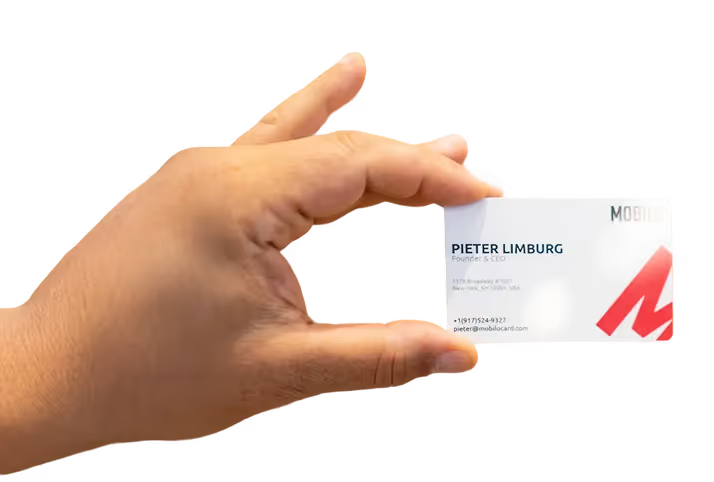
See our digital business card for how this works in practice.
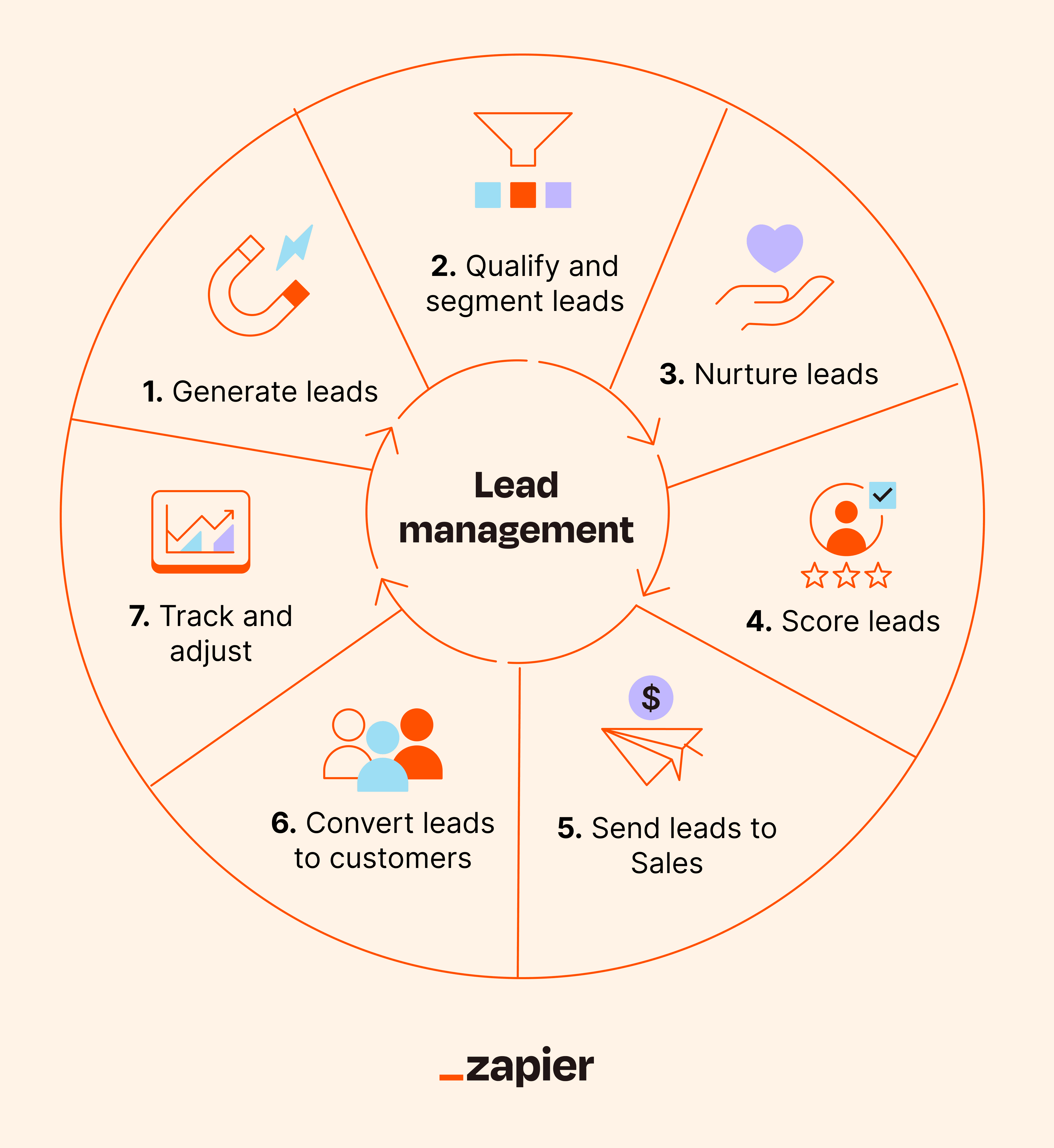
No nurture cadence, no matter how well-crafted, can recover a lead that was never captured in the first place. Event lead management is the end-to-end process of handling every contact made at an event, from the moment the conversation ends through to a closed opportunity. The sequence is fixed: capture first, then qualify, then distribute to the right rep, then nurture.
Skipping or stalling at Step 1 makes every downstream step irrelevant. A rep who returns from a three-day trade show with 40 cards in a jacket pocket and a badge-scan CSV in their inbox has not completed Step 1. They have deferred it, and deferral is where pipeline goes to decay.
Lead generation and lead management are not the same process. Most teams invest heavily in generation, spending on booth space, sponsorships, and event staff, while leaving management to chance. According to a 2024 analysis by Never Drop, up to 90% of event contacts never make it into the CRM, with the breakdown occurring at the capture and handoff stage, not during follow-up. That gap is not a follow-up speed problem. It is a structural one. The failure is physical-to-digital: a badge scan lives in an event platform silo, requiring a manual export before it reaches the CRM.
90% of event contacts never make it into the CRM
Key takeaways
- 90% of new contacts never reach the CRM after events, not because reps are slow to follow up, but because the capture layer at the moment of exchange was never built.
- The follow-up process is not where event pipeline dies. It dies at the handoff between a physical conversation and a digital record, before any nurture sequence ever fires.
- Pre-event infrastructure, ICP targeting, CRM field mapping, rep provisioning, determines pipeline yield more than post-event speed does.
- Badge scanners produce a count, not a pipeline. Getting that data into your CRM still requires a manual CSV export, field mapping, and someone disciplined enough to do it before the weekend.
- Lead scoring works best on two axes: how deeply a contact engaged at the event, and how closely they match your ideal customer profile. Treating every badge scan as equal is how high-intent prospects get buried.
- The 24-to-48-hour window after an event is when response rates are highest. Teams working from an incomplete or unsynced contact list lose that window before the first email goes out.
- Mobilo's Contact Exchange and Lead Capture closes the gap at the source, when someone taps or scans a Mobilo card, their information is captured and fed directly into your CRM in real time, with no manual entry required.
The Five Stages of Event Lead Management: and Where the Pipeline Actually Breaks
The common assumption is that the follow-up process is the problem: if reps just moved faster after events, the leads wouldn't go cold. Most event programs treat the five stages between a badge scan and a closed deal as roughly equal checkpoints, assuming that if reps show up and collect contacts, the pipeline will sort itself out through follow-up and nurture. The data tells a different story.
According to research cited by Momencio, 80% of trade show leads are never followed up on, and the primary breakdown happens before follow-up even begins. The pipeline doesn't leak evenly across all five stages. It hemorrhages at the capture layer, and every stage downstream is only as strong as the data that survives that first physical-to-digital handoff.
1. Stage 1: Pre-Event Lead Planning: Where Most Pipelines Are Already Broken Before the Doors Open
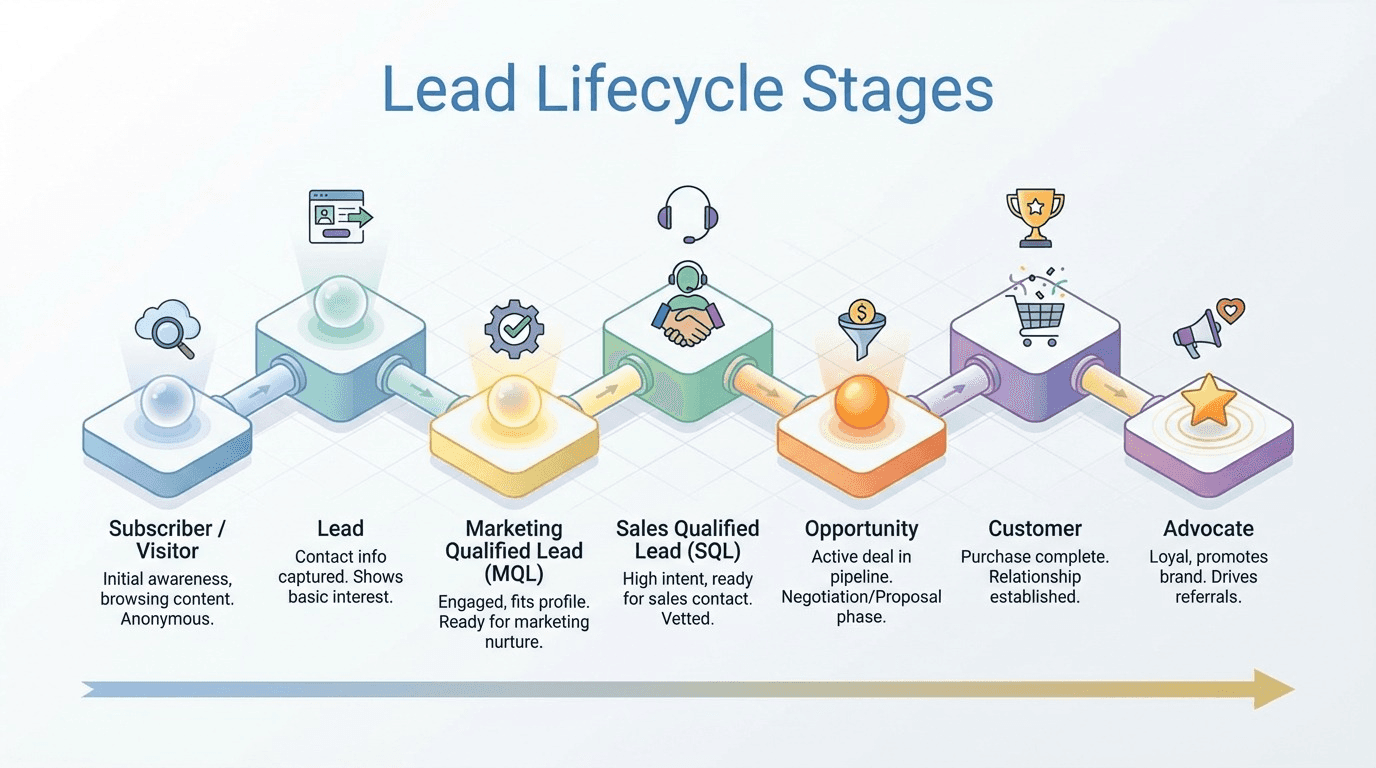
The failure at Stage 1 is invisible until it's too late. Teams board planes without a defined target account list, without CRM field mapping confirmed, and without a capture method decided. That means reps improvise on the floor, each one collecting contacts differently, and no two records land in the same format. When there's no agreed ICP tier threshold before the event, there's no way to route leads after it. Lead conversion velocity collapses not because follow-up was slow, but because the conditions for fast follow-up were never built.
2. Stage 2: On-Floor Lead Capture: The Badge-Scan Gap That Strips Context From Every Conversation
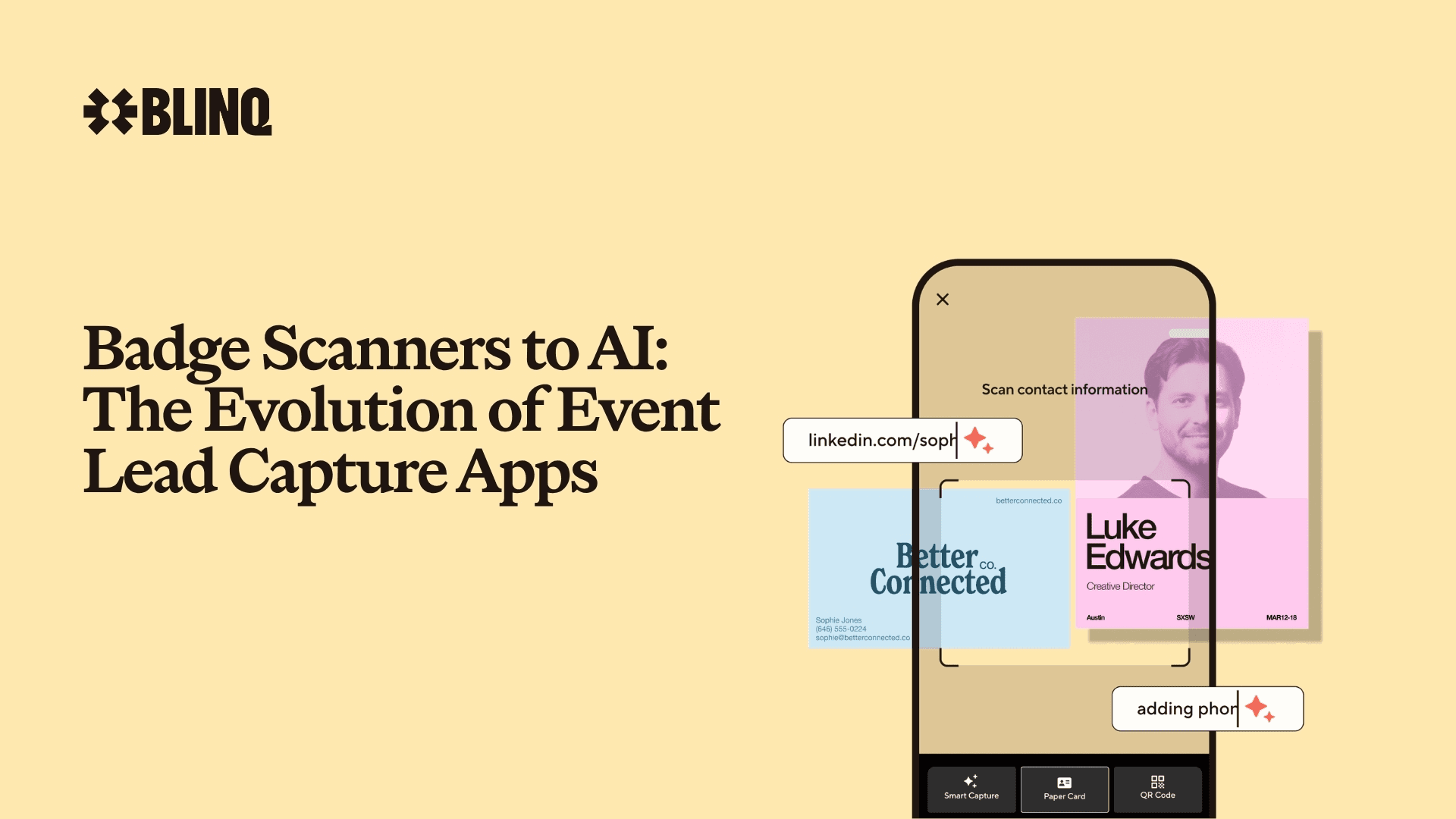
Badge scans record that a conversation happened. They don't record what was said, what the prospect needed, or how close they were to a buying decision. That context lives in the rep's memory, and memory degrades fast on a busy show floor.
Fewer than half of scanned leads carry enough qualifying context to be actionable in a CRM without significant manual cleanup. The hidden cost is structural: every conversation that doesn't auto-capture into the CRM at the moment of exchange creates a compounding data deficit that makes enrichment unreliable, routing ambiguous, and follow-up generic. Field marketing and event teams need tools that capture leads efficiently and feed data directly into the CRM pipeline, not tools that hand the cleanup burden back to reps at the end of a ten-hour show day.
Mobilo's Contact Exchange and Lead Capture workflow closes that gap at the exact point of conversation, routing a structured CRM record in real time so Stage 2 feeds Stage 3 automatically, no pocket, no spreadsheet, no manual export step between the handshake and the pipeline. For teams deploying at scale, the Teams plan ($4/month per member, billed annually) includes lead capture and management, lead enrichment, custom lead capture forms, and 6,000 integrations through Zapier, so leads captured from events and field meetings flow directly into the CRM without relying on reps to manually log contacts. Teams also get full insights and analytics and team management controls, including the ability to control, lock, and override data fields, so every rep's capture method is consistent from the first tap, not improvised on the floor.
The Business plan ($5/month per member, billed annually) layers on enterprise SSO, HR directory sync, and a custom domain, giving larger organizations the compliance and brand infrastructure to deploy the same structured capture workflow across every territory and event simultaneously.
3. Stage 3: Lead Enrichment and Scoring: The Silent Bottleneck Between Capture and CRM Entry
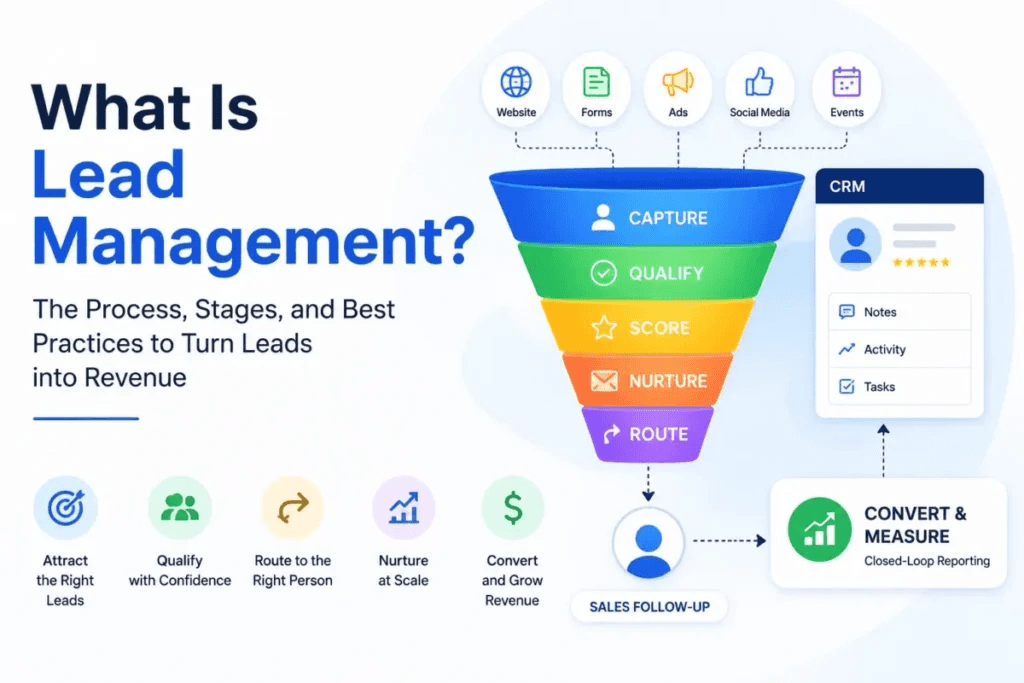
The breakdown between capture and CRM entry rarely shows up on a post-event debrief slide. It accumulates silently: reps return from a networking event or a card tap with a stack of names that need context, scoring signals, and routing decisions before they can move. When enrichment depends on manual input, the data that reaches the CRM is only as complete as the rep's memory and availability after a full event day, which is to say, it's incomplete by default. Capture leads from events and field meetings directly into the CRM without relying on reps to manually log contacts, and enrichment has structured, real-time data to work with from the first interaction forward. That is the condition Stage 3 requires to function, and the condition that badge scans and paper cards, by design, cannot provide.
4. Stage 4: CRM Routing and Handoff: Where Qualified Leads Disappear Into Ownership Ambiguity
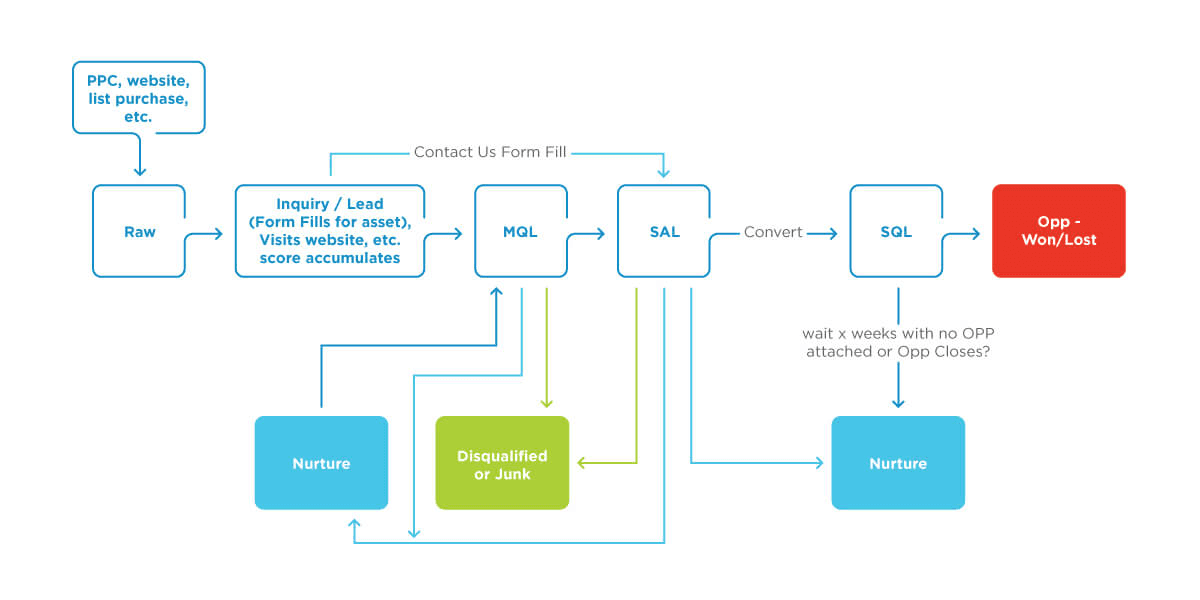
Even well-captured, well-scored event leads stall when CRM routing rules are misconfigured, duplicate records are created, leads land in the wrong territory, or they sit unassigned in a default queue. Effective event lead management requires routing logic that accounts for event source, lead tier, and rep capacity simultaneously. The persistent failure point is that CRM integration between event capture apps and Salesforce or HubSpot is often set up once and never audited, causing silent data loss across every subsequent event.
5. Stage 5: Post-Event Follow-Up Sequencing: The 48-Hour Window Where Pipeline Is Won or Permanently Lost
Research consistently shows event leads go cold within 48 hours if follow-up is generic, delayed, or disconnected from the booth conversation. Personalized nurture sequences that reference the specific pain point captured on the floor, not a boilerplate trade show email blast, are the defining variable between pipeline conversion and lead decay. The hard tradeoff is scale: personalizing follow-up for hundreds of event leads simultaneously demands automation infrastructure and rep discipline that most teams have not built before the event.
Related Reading
- Etiquette For Networking In Online Conferences
- Measuring Event Roi
- Trade Show Sales Tips
- How Do You Find The Roi Of A Trade Show
- Trade Show Sales Funnel
- What Is Trade Show Marketing
- Trade Show Follow Up Best Practices
- Event Lead Management
- B2b Trade Show Best Practices
- Conference Lead Generation
- B2b Trade Show Marketing
- Trade Show Lead Follow Up
Pre-Event Preparation - The Lead Generation Strategy That Starts Before You Arrive
The week before your event is not administrative time. It is the window where pipeline yield is structurally set, and most sales teams spend it booking flights instead of building the infrastructure that determines whether any lead ever reaches a rep's follow-up queue. Research into trade-show follow-up patterns consistently shows that a significant share of event leads never enter the CRM at all, not because reps forget to follow up, but because the capture conditions were never established before the show floor opened. That is a setup problem. No follow-up cadence fixes a record that was never created, and as messy-CRM audits confirm, incomplete or duplicate contact records are one of the leading causes of lost clients, damage that originates at capture, not at follow-up.
Build Your Target Account List Before You Board the Plane
The best pre-event lead generation strategy starts with a named account list, not a badge scanner. Identify your top 20 to 30 target accounts before the event and map each to a specific rep, so every conversation on the floor has a purpose before it starts. A sales team targeting 25 named accounts that pre-schedules 18 booth meetings arrives with a structured pipeline; everyone else arrives hoping to get lucky.
This matters most for professionals in client-facing roles or those attending frequent in-person networking events, the very people who benefit most from Mobilo's team infrastructure. When your reps tap or scan a contact using a Team, Custom Design Card or a Team, Metal Custom Design Card, the lead flows directly into your CRM through one of 6,000 Zapier integrations available on every Teams and Business plan, with no manual re-entry and no incomplete records. The capture condition is built into the card itself.
Prioritizing accounts in advance also protects your reps from the trap of optimizing for volume over fit. Without a target account list, reps gravitate toward whoever stops at the booth, which fills the CRM with low-ICP contacts and dilutes follow-up capacity on the accounts that actually matter. Mobilo's Teams plan ($4/month, billed annually) includes custom lead capture forms so reps collect only the fields your team has agreed matter, keeping every record actionable from the moment it lands.
Align Sales and Marketing on Lead Definitions and ICP Tier Thresholds in Advance
Pre-event alignment on ICP definitions, scoring criteria, and capture workflow SLAs is not a preparation best practice, it is the prerequisite that determines whether the event produces any usable pipeline at all. Incomplete capture records created by on-floor improvisation enter the CRM without the context needed to act on them, making every post-event speed metric meaningless before rep one touches the keyboard. Trade-show follow-up data reinforces this: qualification applied at the moment of capture, not days later, is what separates leads that convert from leads that stall.
Sales and marketing alignment on ICP tier thresholds must happen before the event, not after. When both teams agree on what constitutes a Tier 1 lead versus a Tier 3 contact, every rep qualifies against the same standard on the floor and hot leads route immediately into the CRM without a post-event debate about who owns them. Mobilo's Business plan ($5/month, billed annually) adds lead enrichment, HR directory sync, enterprise SSO, and central billing, the operational layer that lets larger teams enforce a single capture standard across unlimited members without relying on individual rep discipline.
For teams crossing 100 seats, white-glove onboarding is available to configure those workflows before the event, not after. The Team, Digital Wallet Card (included at $0 + $4/month on the Teams plan) means even a rep who misplaces their physical card can still tap and capture, with the same data fields, the same routing rules, and the same analytics your marketing team is tracking in real time through Mobilo's full team data analytics and CRM integrations. When the infrastructure is consistent across every rep, alignment isn't aspirational, it's structural.
Event Lead Capture Methods and Tools That Actually Feed Your CRM
Badge scanners feel like the safe, professional choice. Rent the device, hand it to your reps, scan every badge that stops at the booth. By end of day, you have a count. The problem is that count lives inside the event organizer's platform, not your CRM. Getting it out requires a manual CSV export, a field-mapping exercise, and someone disciplined enough to do it before the weekend. Up to 90% of event contacts never make it into a CRM because that handoff step routinely fails, drops fields, and introduces 48 to 72 hours of lag before any follow-up can begin. The capture method you choose at the point of exchange determines whether a contact ever becomes a pipeline record at all.
1. Mobilocard - Best All-in-One Digital Card with Native CRM Push
Mobilocard combines digital business card sharing with direct CRM integration, making it the strongest pick for sales teams who need every booth conversation to land in Salesforce or HubSpot without manual entry. It excels at high-volume networking events where speed matters. The tradeoff: it requires attendees to interact with your card link, so passive or distracted prospects may not convert into captured leads.
2. CrowdPass - Best NFC Badge Scanner for Trade Show Exhibitors
CrowdPass uses NFC-enabled smart badges so exhibitors capture a qualified lead with a single tap, no app download required from the attendee. Real-time dashboards let booth managers monitor pipeline as the show floor runs. It's the right pick for mid-to-large trade shows where badge infrastructure is already in place. The limitation is dependency on the event organizer deploying NFC badges, which not all shows support.
3. BoothIQ - Best AI-Powered Lead Retrieval App for Exhibitors Without Rental Hardware
BoothIQ replaces expensive rental scanner hardware with a smartphone app that reads QR-coded badges and layers AI-driven lead qualification on top of each scan. It's ideal for exhibitors attending multiple shows per year who want consistent event lead management without paying per-event hardware fees. The tradeoff is that QR badge scanning requires adequate lighting and a steady hand, which can slow throughput during peak booth traffic.
4. snapAddy VisitReport - Best Digital Lead Form for Structured Post-Conversation Data
SnapAddy VisitReport gives exhibitors a customizable digital lead form that reps fill out immediately after each conversation, capturing qualification notes, product interest, and follow-up actions, then exports everything to the CRM in one click. It's the right choice for B2B teams selling complex solutions where context matters as much as contact data. The tradeoff is that it adds 60–90 seconds per interaction, which can feel slow during a busy show.
5. Grip - Best Event Platform Lead Generation Tool with Salesforce and HubSpot Integration
Grip's lead retrieval module is built into a broader event matchmaking platform, letting exhibitors capture badge scans, qualify leads, and push records directly to Salesforce or HubSpot from within the same ecosystem they use for meeting scheduling. It's best suited for conference organizers and enterprise exhibitors who want lead capture tied to pre-scheduled meetings. The limitation is that Grip's full value only unlocks when the event organizer also runs the platform.
Related Reading
- Which Networking Software Is Best For Conferences
- Trade Show Booth Ideas To Attract Visitors
- Conference Lead Capture
- How To Measure Trade Show Effectiveness
- Virtual Event Success Metrics
- Trade Show Roi
- Trade Show Lead Generation Ideas
- What's The Best Event Lead Generation Software
- Post-Trade Show Marketing Strategies
- Best Trade Show Giveaways
Lead Scoring and Qualification - How to Prioritize Event Leads Before Follow-Up Begins
Not every contact you scan at an event deserves the same follow-up, and treating them as if they do is where pipeline stalls before it starts. The scoring model covered here separates engagement depth from ICP fit, so your team can tier leads before a single rep picks up the phone, and enrich incomplete records before routing decisions get made. The result is a qualification process that stops mid-tier leads from consuming rep time that should go to your highest-intent prospects.
Score on Two Axes, Not One - Engagement Depth x ICP Fit Determines Tier
Lead scoring for events works best when it combines two independent signals: how deeply a contact engaged at the event, and how closely they match your ideal customer profile. Engagement depth separates the badge-scan-and-walk contact from the prospecwho sat through a 20-minute demo or asked for a proposal. ICP fit adds company size, title, and industry to confirm the intent signal is commercially relevant.
A prospect who attended a full product demo and fits your target segment scores Tier 1 and gets a same-day call. A casual visitor from an out-of-profile company scores Tier 3 and enters a nurture sequence. One of the most persistent pains teams face in practice is the mid-tier lead, the contact who scores in a 5–8 range and creates a genuine qualification gray zone: too commercially interesting to discard, but too uncertain to book confidently.
Without a two-axis model, that gray zone swallows entire rep weeks. Demo attendees convert at materially higher rates than booth-visit-only contacts, which means collapsing both groups into a single follow-up queue produces fast failure, not fast pipeline.
"Manual lead qualification is slow and resource-intensive. We struggle to score and prioritize event leads before follow-up begins when there's no automation in place."
Enrich Before You Route - Fill Profile Gaps Using LinkedIn and Public Data Providers
Incomplete records are the silent killer of event scoring models. Badge scans frequently miss job title, company size, or direct contact details, leaving the CRM with a name and an email but none of the ICP-fit signals the scoring model needs to tier correctly. Manual lead qualification compounds the problem: teams struggle to score and prioritize event leads before follow-up begins when every record arriving from the floor still needs a human to reconcile missing fields, a slow, resource-intensive bottleneck that is especially damaging in the hours immediately after a session ends.
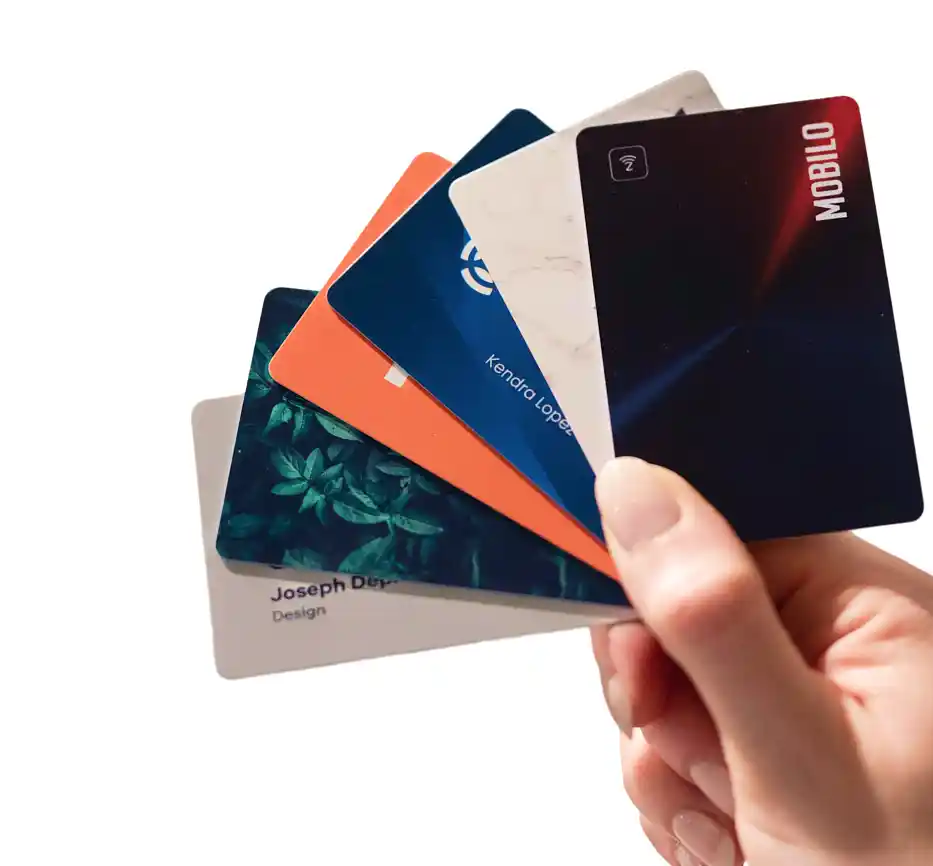
Lead enrichment solves this by appending missing fields automatically before the record ever reaches a rep. Mobilo's built-in lead enrichment, available on the Pro plan ($3/month), the popular Teams plan ($4/month/billed annually), and the Business plan ($5/month/billed annually), fills those profile gaps at the moment of capture, giving the scoring model clean inputs rather than forcing reps to manually reconcile incomplete records before routing can begin. Because enrichment runs at capture rather than at import, the CRM receives a properly populated record the moment a prospect taps or scans a card, whether that card is a Custom Designed NFC Card with QR Code, a Digital Wallet Card, or a Paper Plus card handed off on the floor.
Unlimited leads and contacts are supported across all three plans, so volume from a large event never triggers per-record fees that incentivize under-capturing. Following up on trade show leads effectively is precisely what clean, enriched records make possible, and what raw badge-scan exports routinely fail to deliver.
Capture-and-Release in Practice - Qualify on the Floor So Hot Leads Don't Wait for Monday
The standard complaint from sales teams after trade shows is that the scored list arrives Monday morning and the hottest contacts have already heard from a competitor. A capture-and-release approach flips the sequence, and the friction point is usually at the very first moment of exchange. Capturing and following up on leads more efficiently at networking events and in the field requires that qualification happen on the floor, not in a spreadsheet two days later.
Mobilo is built for exactly that moment. 50 + $4/month, or at promotional pricing under the Pro tier), the contact's details flow directly into Mobilo's lead capture and management system, and the built-in paper business card scanner handles the prospects who hand back a paper card instead. Custom lead capture forms let reps record engagement depth, demo attended, proposal requested, pricing discussed, right at the point of contact, so the tier is assigned before the rep walks away from the booth.
Because Mobilo connects to that same figure integrations through Zapier, that enriched, tiered record routes automatically to the CRM and triggers the appropriate sequence without any manual re-entry on Monday morning. Teams handling bulk event volume can take advantage of bulk discounts for events under the Teams plan, and the Team tier's full team data analytics and CRM integrations give managers a live view of lead capture across every rep on the floor, so no hot contact sits in an unassigned queue while the event is still running. Trade show follow-up timing consistently shows that same-day outreach outperforms delayed outreach, and capture-and-release is the only workflow that makes same-day outreach operationally realistic at scale.
Post-Event Lead Follow-Up Strategies That Keep Conversion Velocity High
Follow-up timing is everything in event sales, yet the teams most focused on speed are often working from a dataset that was already broken before the first email was drafted. Research consistently identifies 24 to 48 hours as the highest-intent window after an event. Across the market, open rates and response rates drop sharply after 48 hours, and conversion velocity is largely lost once that window closes.
Sales trainer Skip Miller has put it plainly: waiting beyond 48 hours signals to a prospect that they are not a priority. The implication is clear: same-day or next-day outreach is not a best practice, it is a structural requirement. The problem is that most sales teams cannot hit that window.
Not because reps are slow, but because the data is not ready. A rep who spent two days collecting badge scans and exchanging cards returns to the office on Monday, spends hours cleaning a CSV, waits for CRM upload confirmation, and begins outreach on Wednesday. The 24-hour window closed Tuesday morning.
What most teams report is that sales reps spend an average of several hours per event manually entering contact data before a single follow-up can be sent. That hidden time cost is where conversion velocity dies, not in the follow-up sequence itself. This is the exact problem Mobilo is built around: capturing and following up on leads more efficiently at networking events and in the field.
The Teams plan ($4/month, billed annually) includes lead enrichment, custom lead capture forms, unlimited leads and contacts, and integrations through Zapier, so the moment a prospect taps or scans, a clean, enriched record lands in your CRM, eliminating the Monday morning CSV cleanup that kills the 48-hour window. Team managers also get full control to lock and override data fields across every card, meaning the record that enters the CRM is structurally correct from the first touch, not after a manual audit.
1. Send a Hyper-Personalized Follow-Up Email Within 24 Hours of Event Close
In event lead management, the first 24 hours after an event are the highest-intent window you'll ever have. Referencing a specific booth conversation, session attended, or pain point discussed in your follow-up email dramatically outperforms generic templates. Best for B2B sales teams with moderate lead volume. The real tradeoff: personalization at scale requires solid note-taking systems or AI capture tools during the event itself.
2. Segment and Score Leads by Booth Engagement Depth Before Any Outreach
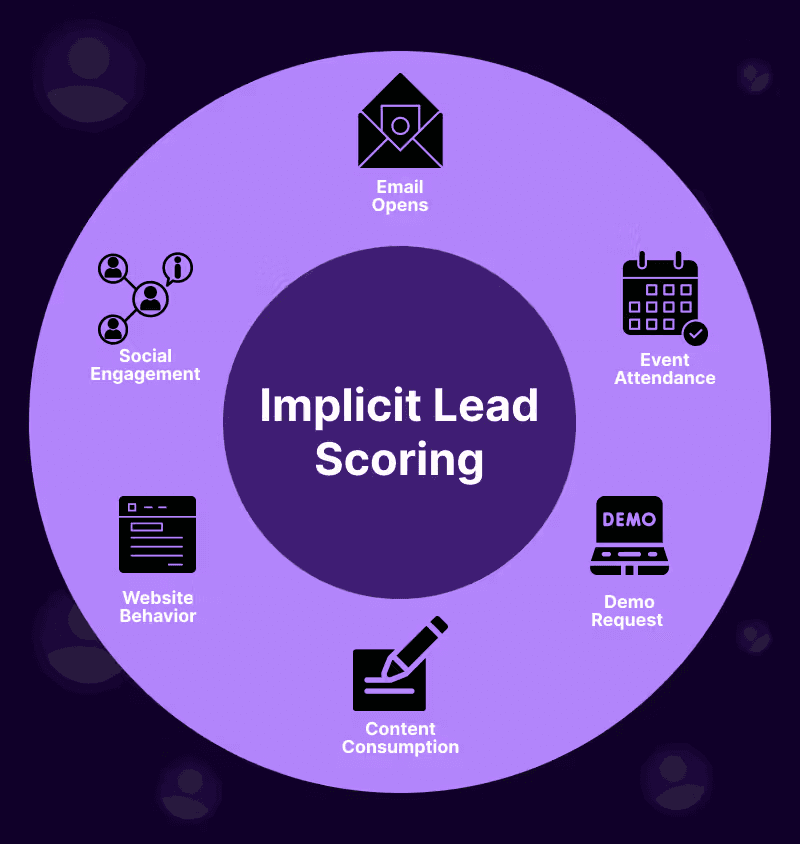
Not every badge scan represents equal intent. Effective post-event lead management requires tiering contacts by engagement signals, demo requests, session attendance, dwell time at a booth, or explicit next-step commitments, before routing to sales or nurture tracks. This prevents reps from wasting cycles on cold contacts while hot leads go stale. The limitation: scoring models require upfront alignment between marketing and sales on what 'qualified' actually means.
3. Deploy a Multi-Channel Follow-Up Sequence Combining Email, LinkedIn, and Phone
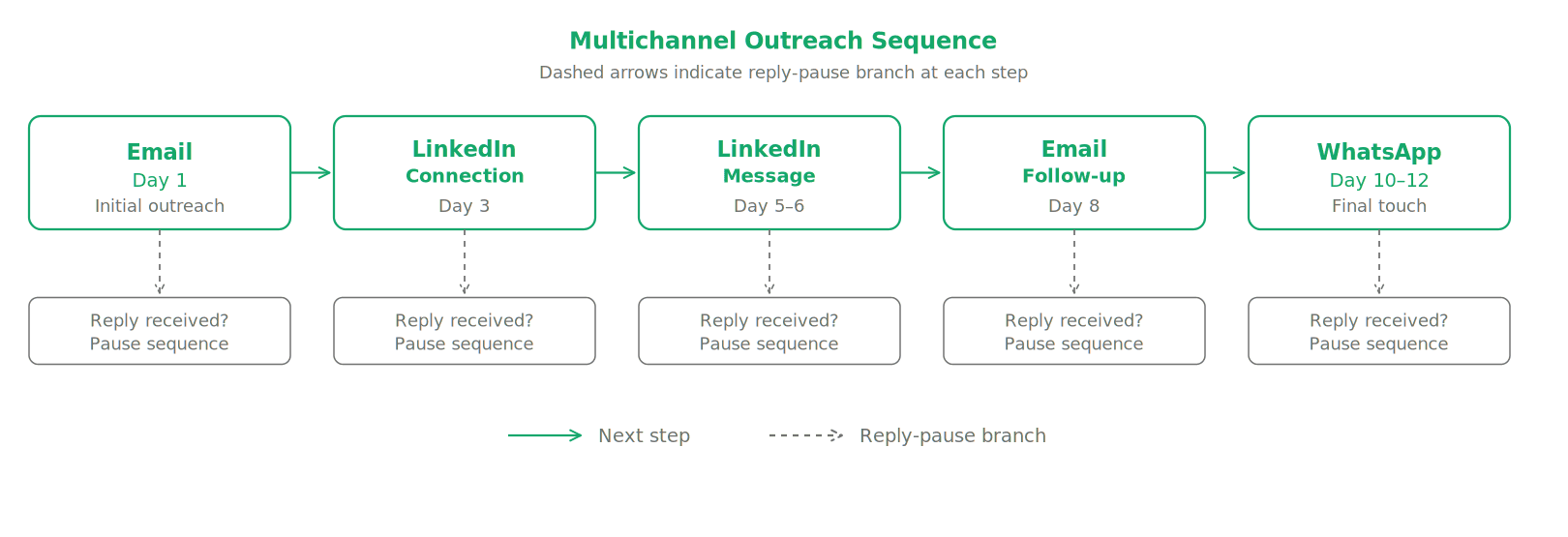
Single-channel follow-up after events leaves significant pipeline on the table. A coordinated sequence, personalized email on day one, LinkedIn connection request with a note on day two, and a call on day four, mirrors how modern B2B buyers actually consume outreach. This approach is ideal for mid-market and enterprise event lead management programs. The tradeoff is coordination overhead; without a sequencing tool, reps often drop one channel entirely under post-show workload pressure.
4. Route Hot Leads Directly to a Self-Serve Meeting Booking Page to Eliminate Friction
For leads who expressed strong buying intent at the event, every extra step between follow-up and a booked meeting kills conversion velocity. Embedding a direct calendar link in the first follow-up email, rather than asking for a reply, removes the back-and-forth that stalls momentum. This tactic is most effective for SaaS and services companies with defined sales cycles. The limitation: it can feel presumptuous for cold or low-engagement contacts, so it must be reserved for genuinely hot event leads.
5. Enroll Unresponsive Event Leads into a Long-Tail Nurture Track with Value-First Content
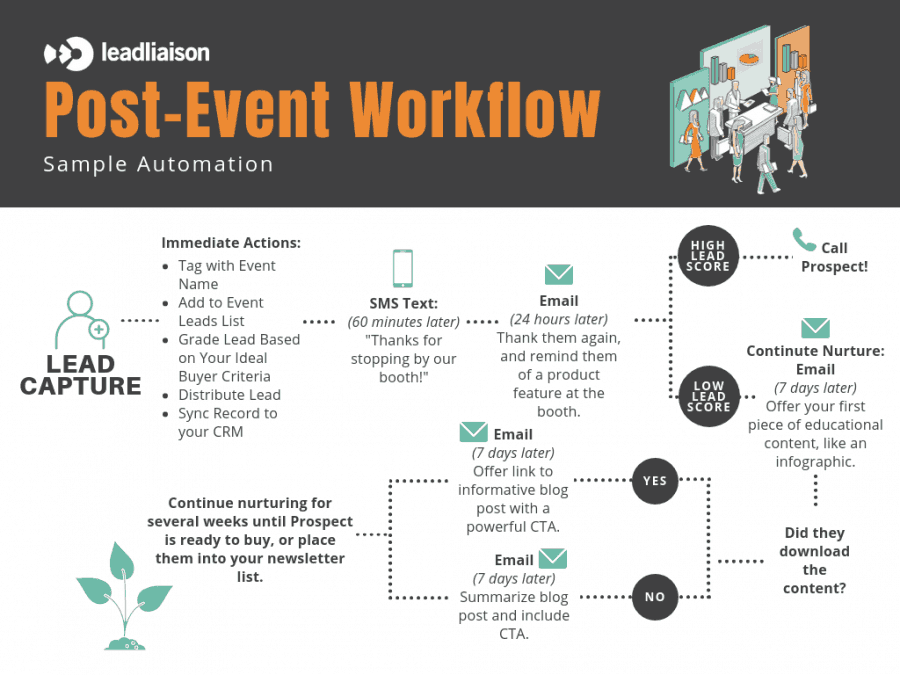
A significant portion of event leads won't convert in the first two weeks, but that doesn't mean they're dead. Enrolling non-responders into a structured nurture sequence that delivers relevant case studies, ROI calculators, or industry insights keeps your brand top-of-mind until their buying window opens. This is the right strategy for teams with longer sales cycles or high-volume event programs. The key tradeoff: nurture tracks require consistent content investment and can mask pipeline health if over-relied upon instead of direct follow-up.
How to Measure Event Lead Management ROI: and Which Metrics Actually Matter
Most teams measure event ROI by counting leads collected and comparing that number against cost per contact. Those two figures are easy to pull and easy to present, but they say nothing about whether the follow-up system actually converted interest into revenue. Event measurement that stops at badge scans, registration numbers, attendance counts, or post-event email opens is measurement that systematically fails to indicate actual pipeline movement or account progression, and as event budgets grow, finance teams are pushing harder for clearer evidence that the spend was justified.
Event ROI measurement frameworks that begin with badge scans or cards collected systematically overstate pipeline potential because the 5–10% lead-to-MQL conversion rate for events applies only to the contacts that actually entered the CRM. Every contact lost at the capture stage reduces that already-low benchmark further, and that reduction stays invisible as long as activity metrics are treated as pipeline metrics.
Counting badge scans after an event feels productive, but it isn't. A team that collects 400 scans but enters 40 into the CRM and closes zero deals has a worse outcome than a team that exchanges 80 contacts, syncs all 80 within 48 hours, and closes four enterprise accounts. The number that matters isn't volume, it's what happened to each contact after the handshake. Pipeline influence from events is also notoriously difficult to measure cleanly; attribution becomes messy when digital touchpoints mix with in-person ones, and that messiness makes it easy to understate or overstate the true value of a single conversation on the floor. According to First Page Sage's 2024 channel benchmarks, event and trade show leads convert from lead to MQL at only 5 to 10%, already the lowest rate of any B2B acquisition channel.
That benchmark applies only to leads that made it into the CRM. When you calculate conversion against every contact made on the floor, including the ones that never got entered, the true organizational rate drops well below that and stays invisible as long as activity metrics stand in for pipeline metrics.
1. Cost Per Lead (CPL): The Budget Accountability Metric
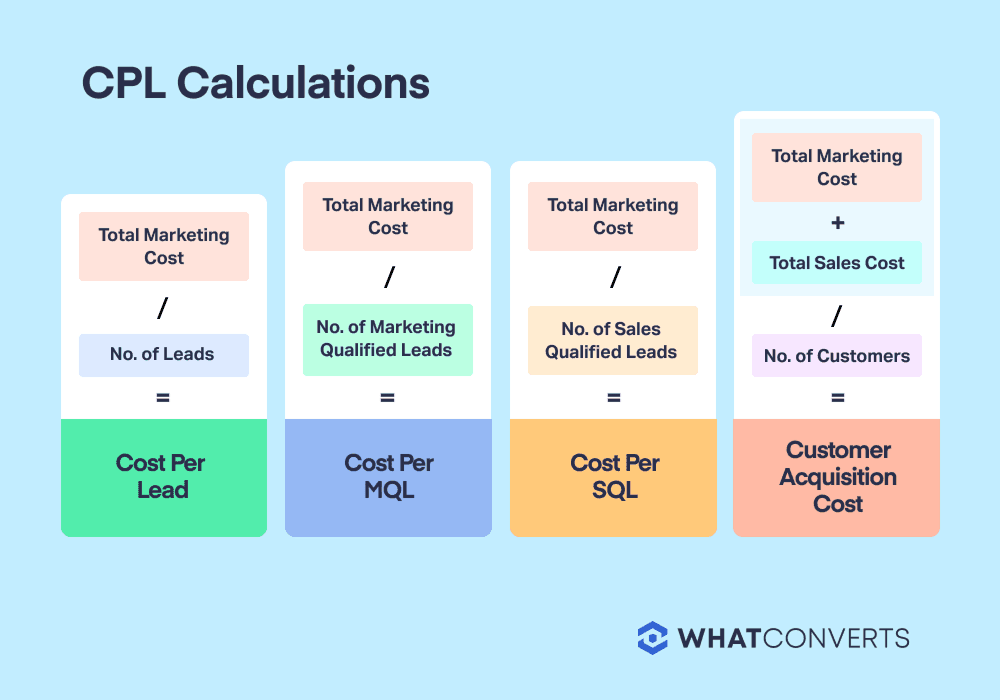
CPL divides total event spend by the number of qualified leads captured, giving event marketers a hard number to defend budget requests. It's the right starting metric for teams reporting to finance-focused stakeholders or comparing events against digital channels. The real tradeoff: CPL ignores lead quality entirely, so a low CPL from a poorly targeted event can look better than a high-CPL event that closes three enterprise deals.
2. Lead-to-Opportunity Conversion Rate - The Pipeline Quality Signal
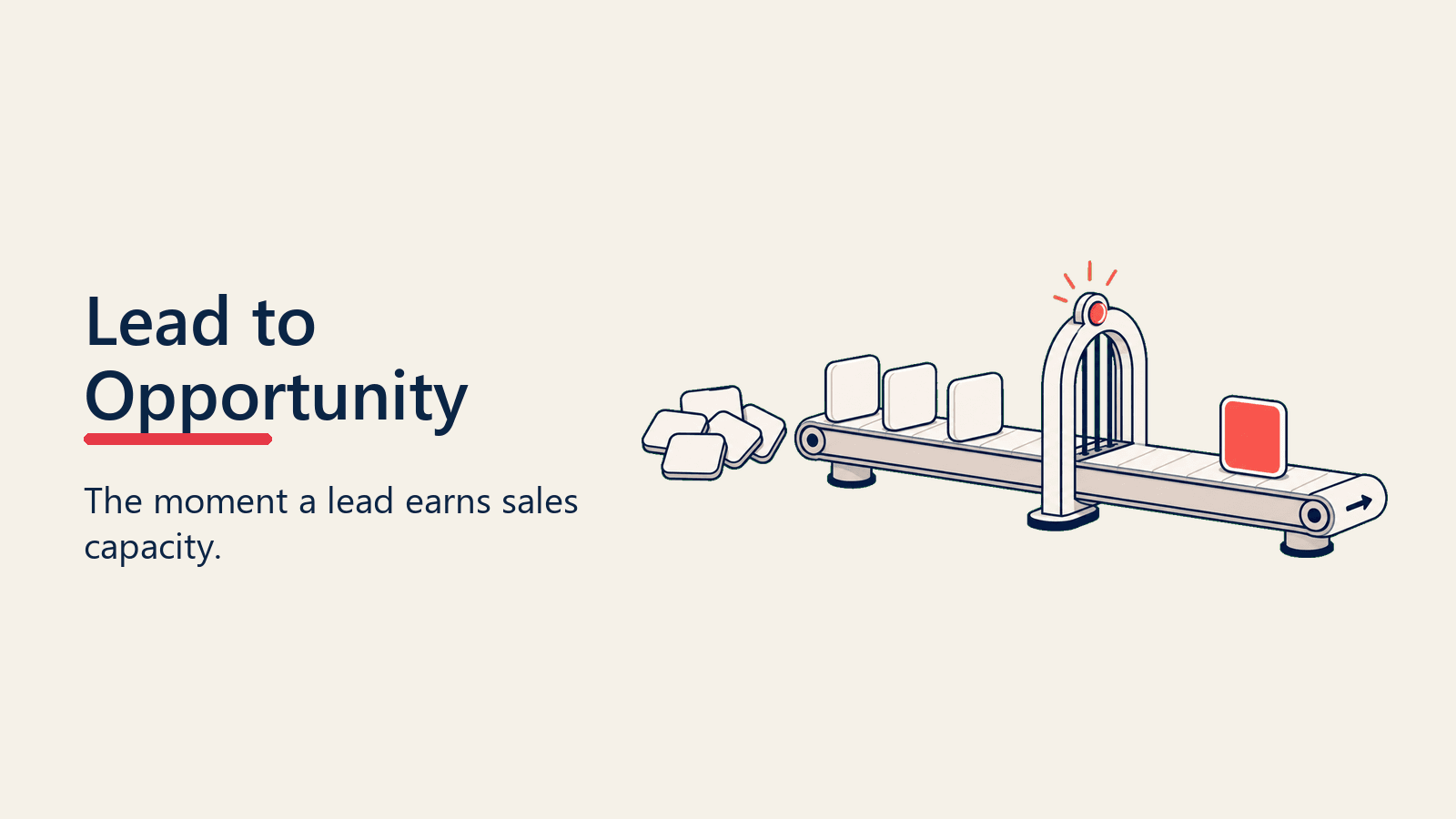
Lead-to-opportunity conversion rate tells you whether the contacts your team captured are actually moving through the funnel. The 5 to 10% lead-to-MQL benchmark is the floor, not the target. Teams that eliminate the manual export and field-mapping step, the stage responsible for a significant share of event contacts never reaching the CRM, give this metric something real to measure: actual CRM entry rates rather than a fraction of a fraction obscured by capture failures upstream.
This is where the structure of how your team shares contact information starts to matter. Mobilo's Teams plan ($4/month per member, billed annually) includes lead capture and management, unlimited leads and contacts, custom lead capture forms, and integrations through Zapier, so every tap or scan from a Custom Designed NFC Card or a Digital Wallet Card routes directly into the tools your sales team already uses, without a manual re-entry step. The Teams plan also includes full team data analytics and CRM integrations, which means you can see not just how many contacts were captured, but which reps are actively networking and converting connections into pipeline, visibility that surface-level badge-scan reports cannot provide.
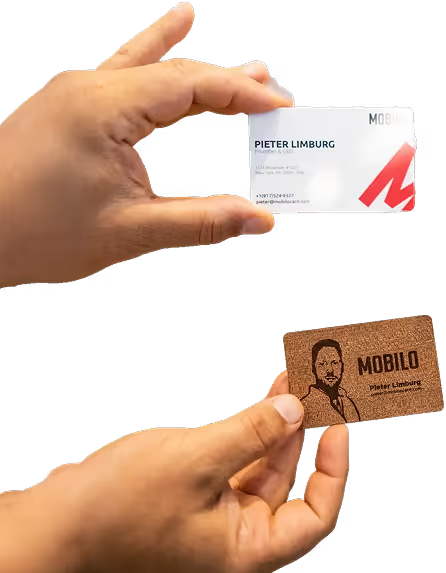
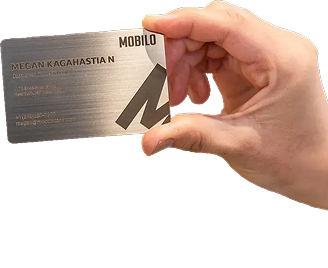
For organizations where branding consistency and rich media presentation matter, the Team tier's Custom Design Cards (available in standard, Wood, and Metal finishes) ensure every tap delivers a consistent, on-brand digital experience that reinforces the impression made in the room. For enterprise teams that need deeper controls, the Business plan ($5/month per member, billed annually) adds HR directory sync, enterprise SSO, a custom domain, and white-glove onboarding (for teams of 100 seats or more), along with a custom-built landing page at that same threshold, so the attribution chain from first tap to closed-won revenue can be traced through a controlled, branded environment rather than pieced together from disconnected data exports.
3. Event-Attributed Revenue - The Ultimate ROI Denominator
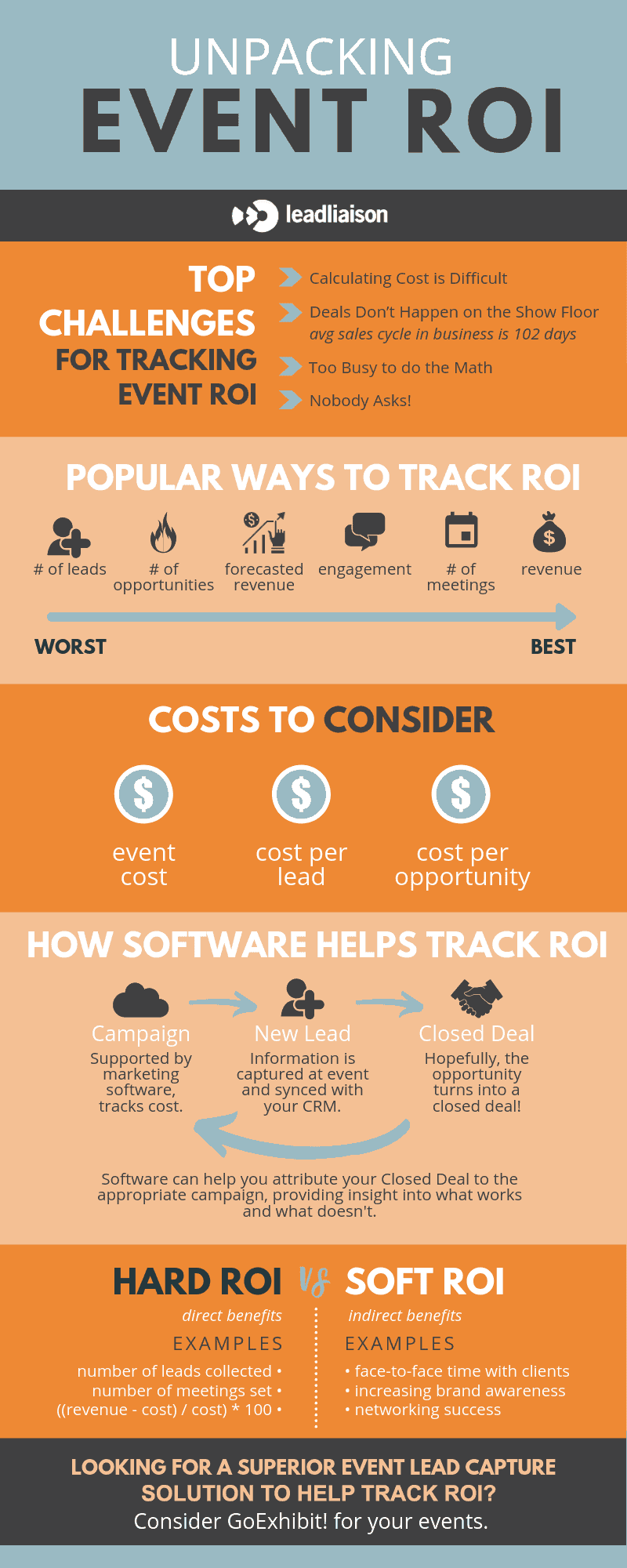
Event-attributed closed-won revenue is the number a CFO will actually respect, but it requires clean multi-touch attribution set up before the event begins. Without it, the pipeline influence question stays unanswered, and with events becoming more expensive line items, unanswered questions about attribution are increasingly treated as evidence of poor ROI rather than a measurement gap. The way to close that gap is to make sure every contact captured on the floor enters a trackable system at the moment of exchange, with rep-level and card-level data attached, so the path from handshake to closed deal can be reconstructed accurately rather than estimated after the fact.
In event lead conversion analysis, the teams that improve on the baseline event conversion rate share one structural trait: a capture and routing process that reduces the gap between contacts made and contacts that enter an active follow-up sequence.
4. Lead Response Time - The Follow-Up Speed Multiplier
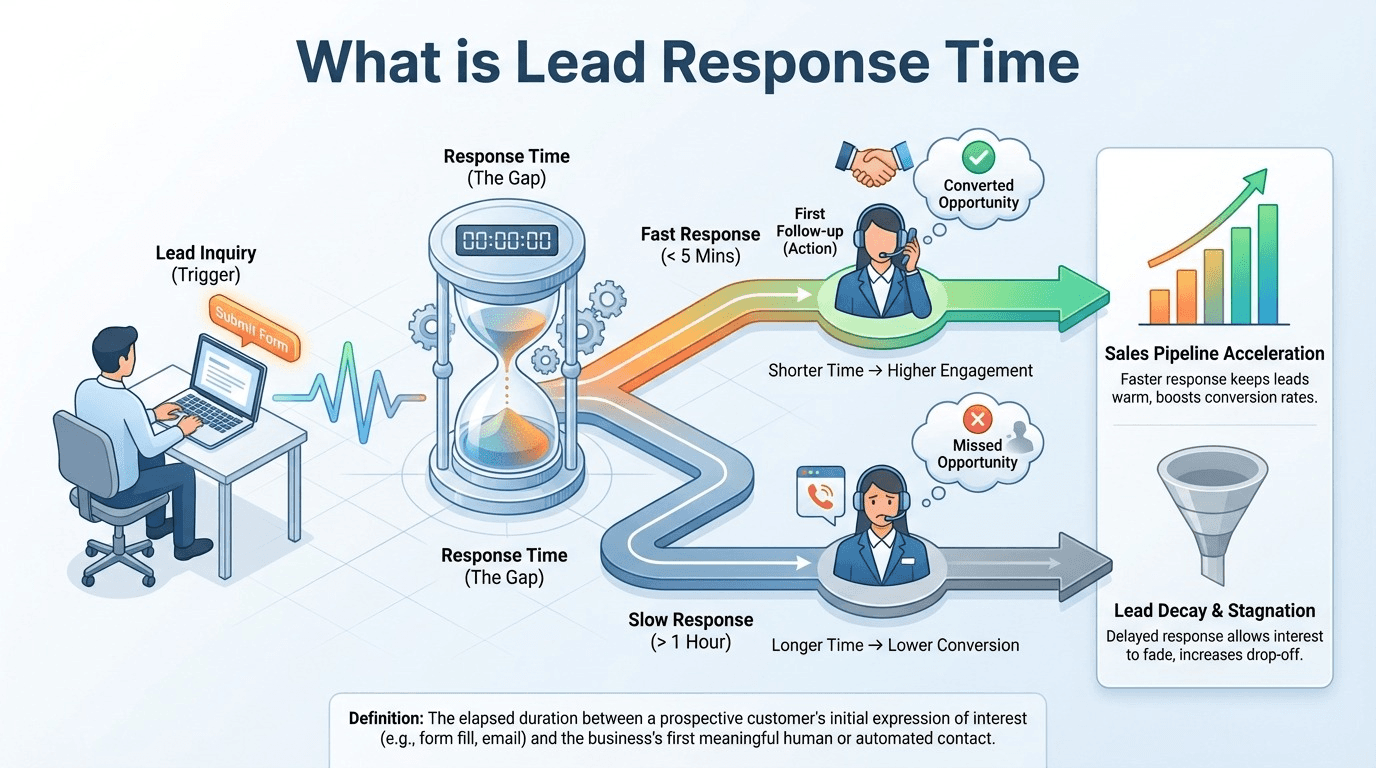
Lead response time measures the average hours between a lead being captured at an event and the first meaningful sales outreach. Research consistently shows that responding within 24 hours dramatically increases conversion rates, making this an operational metric with direct ROI impact. It's especially critical for trade shows where competitors are capturing the same prospects. The limitation: fast response without personalization or lead context can actually damage conversion by feeling generic.
5. Event Attribution by Channel - The Multi-Touch Comparison Framework
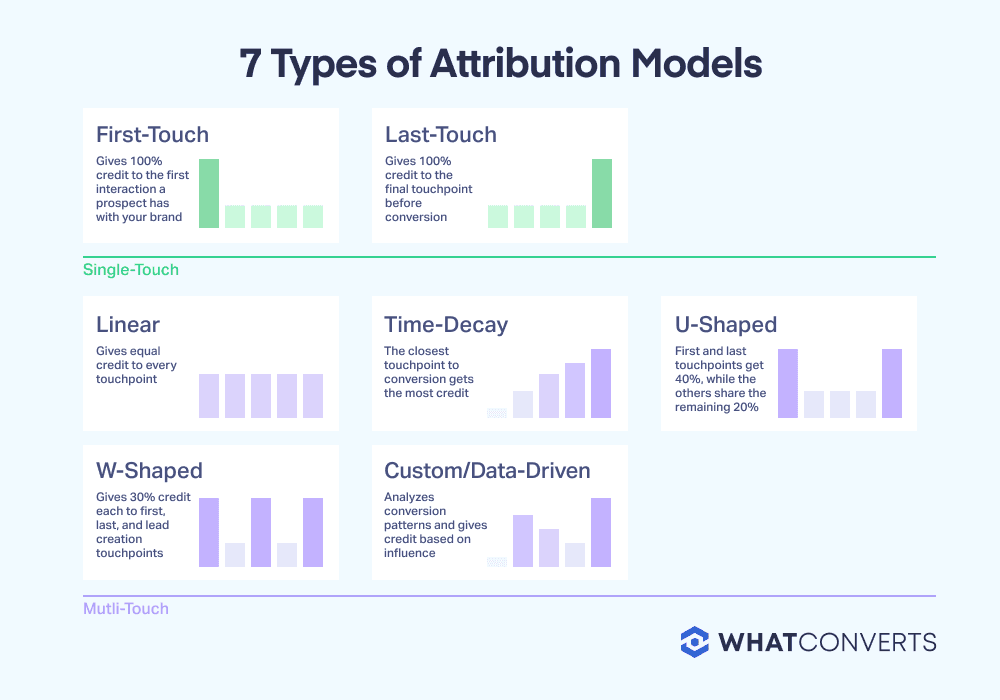
This approach uses attribution reporting tools, such as HubSpot's multi-touch models, to compare how event-sourced leads perform against leads from other channels like paid search or content. It answers whether events deserve their share of budget relative to alternatives. Best for revenue operations teams managing mixed-channel programs. The key limitation: first-touch and last-touch models will each tell a different story, so teams must agree on a model before drawing conclusions.
Related Reading
- Best Tech Conferences For Networking
- Best Networking Apps for Trade Show Attendees
- Best Finance Conferences For Networking
- Trade Show Booth Ideas For Small Budgets
- Virtual Conference Booth Ideas
- Networking Activity Ideas For Conferences
- What Are The Top Trade Show Lead Retrieval Tools
- Trade Show Follow Up Email Examples
- Conference Lead Capture Tools
- Trade Show Lead Capture App
Fix the Capture Layer First - How a Digital Business Card Closes the CRM Gap at the Source
Most event lead problems are blamed on slow follow-up or poor rep discipline, but the failure is usually structural and starts at the exchange itself. When contact data is never cleanly captured, no downstream process, whether a nurture sequence, a CRM workflow, or a post-event review, can recover what was lost in that first moment. This section covers how replacing paper cards with NFC and QR-based digital cards fixes the capture layer directly, what that means for real-time CRM entry, and how rep-level analytics finally give sales leadership the visibility that paper cards make impossible.
Why Every Downstream Failure Traces Back to the Same Broken Handshake
From our market understanding, a significant share of paper business cards are never followed up on. Cards pile up in bags for days. Context evaporates. By the time anyone opens a spreadsheet, the lead is cold and the field is blank. No nurture sequence recovers a contact that was never recorded. The failure is structural, not behavioral, and it starts at the exchange moment itself.
How to Capture Event Leads Directly into Your CRM Using NFC and QR Exchange
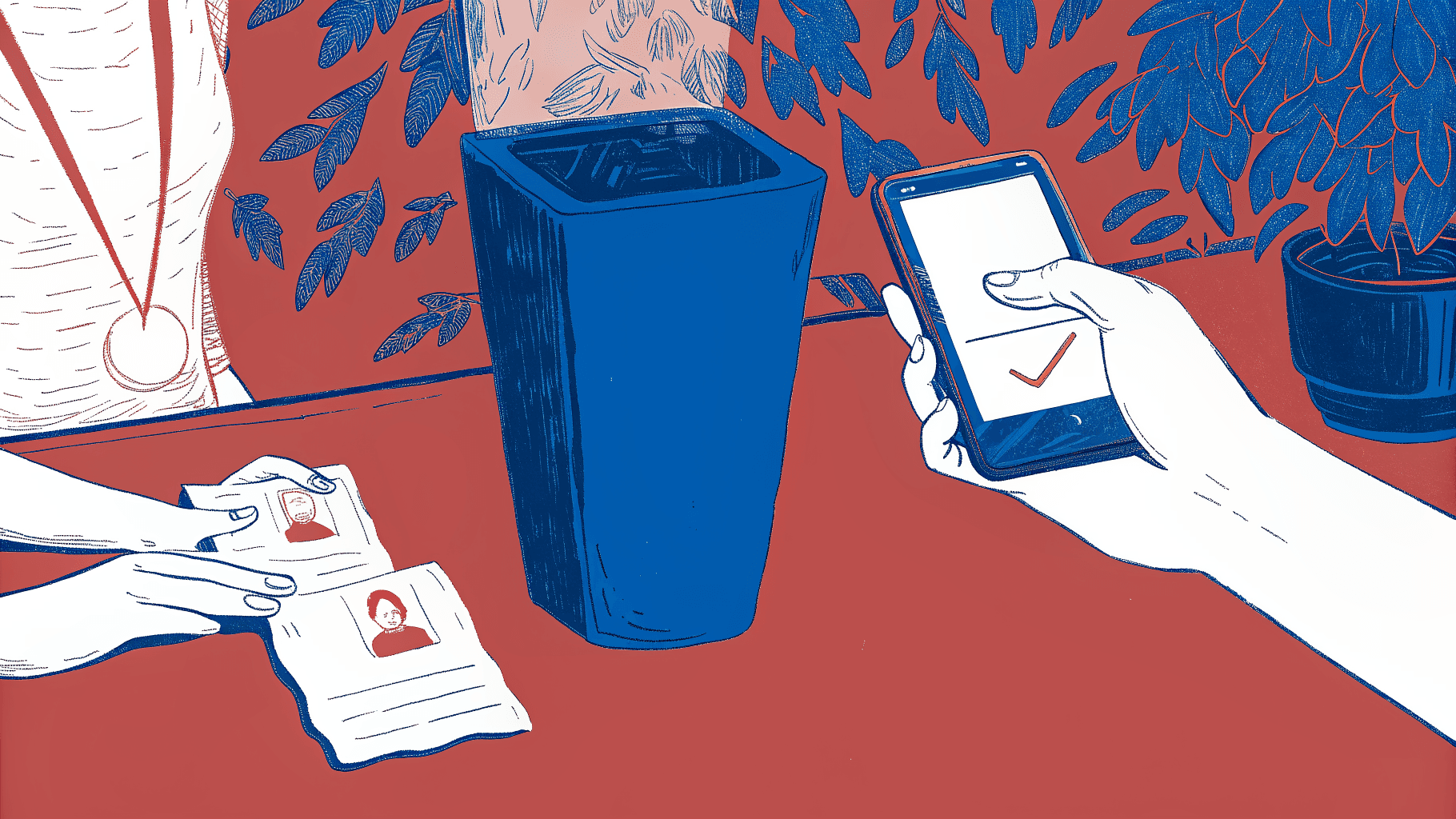
A digital business card with NFC or QR capability changes the physics of that moment. When a prospect taps or scans, their information feeds directly into a custom lead capture form, which pushes to the CRM in real time, no export file, no manual transcription, no lag. The pipeline entry exists before the rep walks to the next booth.
Rep-Level Event Lead Analytics - The Visibility Gap Paper Cards Leave Open
Paper cards generate zero data about rep activity. A Sales Director sponsoring a three-day conference has no way to know which reps worked the floor, how many contacts each one exchanged, or whether any of those contacts reached the CRM. Rep-level networking analytics, available when digital cards are deployed centrally across the team, close that visibility gap and give sales leadership a clear view of which reps are generating exchanges, which accounts were touched, and whether those contacts reached the CRM, the same data that makes event budget decisions defensible in a quarterly business review.
Next steps
If your event budget keeps producing a pile of cards and a CRM that shows nothing, the path forward starts with fixing the capture layer at the moment of contact exchange, not the follow-up sequence that runs after it. Start with our digital business card.
The data on badge scanners and paper cards makes the problem concrete: both route contacts into an offline silo that requires a manual handoff before a single record reaches your pipeline, and that mandatory human step is why up to 90% of event contacts never become CRM records. Combine that with the 48-hour follow-up window, where conversion velocity drops sharply after two days, and the math is unforgiving: the urgency window closes on contacts that were never captured in the first place. Together, those two realities point to one action, replacing the broken capture moment with a tool that writes the CRM record at the handshake, not on Monday morning.
Start with a digital business card from Mobilo. A prospect taps or scans, a structured record routes directly into your CRM in real time, and the 48-hour window starts with clean data already in the pipeline, not with a rep still cleaning a spreadsheet.
Frequently Asked Questions
What is event lead management, and how is it different from lead generation?
Event lead management is the end-to-end process of handling every contact made at an event, from the moment the conversation ends through to a closed opportunity, covering capture, qualification, distribution, and nurture in that fixed order. Lead generation and lead management are not the same process: most teams invest heavily in generation (booth space, sponsorships, event staff) while leaving management to chance, which is where pipeline quietly dies.
Why do so many event leads never make it into the CRM?
The breakdown happens at the physical-to-digital handoff, not during follow-up. A badge scan lives in the event organizer's platform silo and requires a manual CSV export and field-mapping exercise before it reaches the CRM, while paper cards require someone to type or scan each one, and that handoff step routinely fails, drops fields, and introduces 48 to 72 hours of lag. According to a 2024 analysis cited in the post, up to 90% of event contacts never make it into a CRM because of this structural gap.
What should my team do before the event to avoid losing leads on the show floor?
Build a named target account list of your top 20 to 30 accounts before you board the plane and map each to a specific rep, so every conversation has a purpose before it starts. Equally important, align sales and marketing on ICP tier thresholds, lead definitions, and capture workflow SLAs in advance, because when reps improvise on the floor, records land in different formats and there's no agreed standard for routing leads after the event.
What's wrong with just using badge scanners at our booth?
Badge scanners record that a conversation happened but not what was said, what the prospect needed, or how close they were to a buying decision, and that context lives in the rep's memory, which degrades fast on a busy show floor. The deeper structural problem is that scanned data parks inside the event organizer's platform, requiring a manual export before it reaches your CRM, which is the same broken handoff point that paper cards create.
How should we score and prioritize leads once the event is over?
Score on two axes, engagement depth and ICP fit, rather than treating every contact as an equal entry in a follow-up queue. Engagement depth separates the badge-scan-and-walk contact from the prospect who sat through a 20-minute demo or asked for a proposal, while ICP fit (company size, title, industry) confirms the intent signal is commercially relevant. A prospect who attended a full demo and fits your target segment scores Tier 1 and gets a same-day call; a casual out-of-profile visitor scores Tier 3 and enters a nurture sequence.