.avif)


How to Build a Trade Show Sales Funnel That Converts
On This Page
Most teams collect leads at trade shows. Almost none build the funnel that converts them. Here is why the bottom half goes missing, and how to engineer all four stages before the show opens.
The common assumption is that Sales Directors believe the problem is rep follow-up discipline: if reps would just log their cards and send emails faster, the pipeline would materialize. Most sales teams return from a trade show believing the funnel worked because the badge scanner filled up. Two hundred contacts in a spreadsheet feels like momentum.
It rarely is. A real trade show sales funnel is a stage-by-stage system, and contact collection is only the first quarter of it. The teams that consistently convert event spend into closed pipeline treat the funnel as an engineering problem, not a metaphor, and they build all four stages before the show opens, not after.
A complete trade show conversion funnel has four distinct stages:
- Pre-show awareness, warming target accounts before the floor opens
- On-floor lead capture, collecting contact and qualification data in real time
- Post-show qualification, scoring and routing leads by intent
- Structured close sequence, rep-owned follow-up tied to CRM deal records
Most teams operate stage one and part of stage two. Stages three and four, the qualify and convert layers, are left entirely unbuilt.
The result is a lead capture process with no downstream infrastructure to carry contacts toward revenue. Collecting a contact and owning a funnel stage are not the same thing. A badge scan or a card exchange creates a name and an email.
It does not create a CRM record, an ownership assignment, a lead score, or a follow-up trigger. The majority of trade show contacts never make it into a CRM at all, meaning the event pipeline exists only as a pile of business cards with no audit trail and no next step. When the bottom half of the funnel is missing, cost-per-lead figures become meaningless, because the cost-per-closed-deal quietly becomes enormous.
The failure is structural, not behavioral. Coaching reps to follow up faster does not fix a funnel that was never fully built. A real event pipeline requires ownership, scoring, and CRM synchronization at every stage, configured in advance, so that each tap or scan writes a record that arrives in the CRM pre-attributed, pre-timestamped, and ready to enter a follow-up sequence before the rep's next conversation begins.
"Teams spend thousands on booths hoping the right buyers walk by, a passive, unstructured approach that reflects running only the top half of a trade show the field funnel (awareness) with no deliberate mid- or bottom-funnel strategy."
Key takeaways
- A trade show sales funnel does not break on the floor, it breaks in the 48 hours after the show ends, when badge scans sit in a spreadsheet and never reach the CRM.
- 90% of new contacts collected at events never make it into a CRM, which means the follow-up problem most Sales Directors blame on reps is actually a data infrastructure problem.
- Two hundred badge scans feel like pipeline momentum; without a timestamp, a lead score, and a synced CRM record, they are a contact list with no trigger attached.
- Pre-show configuration, goal-setting, ICP targeting, and capture routing, determines post-show pipeline more than rep energy on the floor does.
- Qualification must happen the moment a conversation ends, not three days later; intent signals decay fast, and post-show lead sorting destroys the value you paid to capture.
- ROI attribution only holds up in a budget review if the data behind it is a real-time record, not a manual reconstruction built the week after the show.
- Mobilo's Contact Exchange captures both sides of every tap or scan and pushes a complete, structured record directly into your CRM, so the funnel is already running before the rep boards the flight home.
Why Trade Show Leads Go Cold - The 48-Hour Data Black Hole After the Show Ends
Three weeks after a major B2B event, a Sales Director at a mid-market SaaS company pulls up the post-show pipeline report and finds almost nothing. The booth was busy. The badge scanner worked.
The team came home with a folder of contacts and a sense that the show had gone well. But the CRM tells a different story: sparse records, no qualification notes, and follow-up emails that went out five days late with no context attached. Most sales directors think the problem is rep follow-up discipline: if reps would just log their cards and send emails faster, the pipeline would materialize.

That gap, the silent collapse between the show floor and the sales system, is where most trade show funnels actually die.
The Illusion of Capture - Why a Badge Scan Is Not a CRM Record
A badge scan produces a file. It does not produce a lead. When a rep waves a scanner at a prospect's lanyard, what gets recorded is a name, a company, and an email address in a proprietary export queue. No qualification notes, no conversation context, no ICP score. The export arrives as a CSV, sometimes 24–48 hours after the final session closes, and someone has to manually clean, map, and import it. By that point, the rep has moved on mentally, and the prospect has already heard from vendors who moved faster.
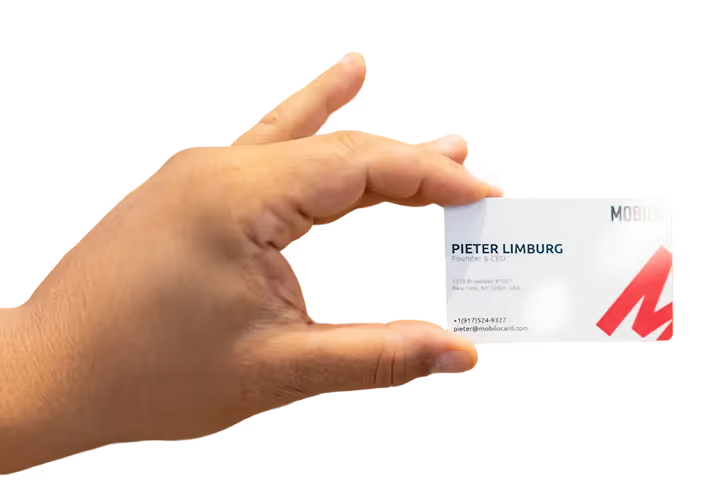
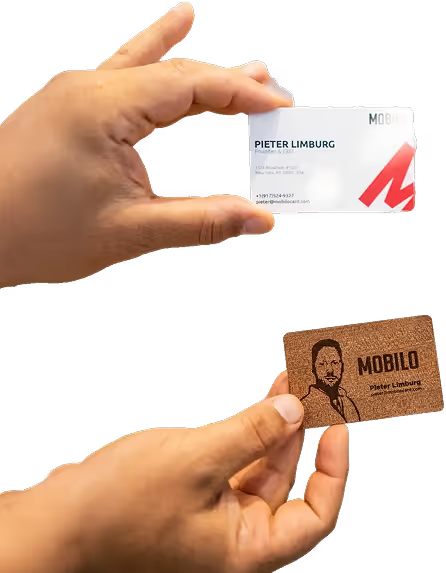
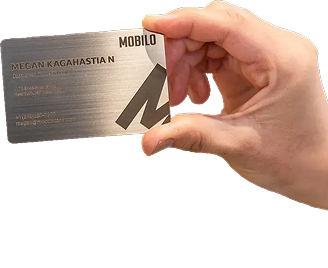
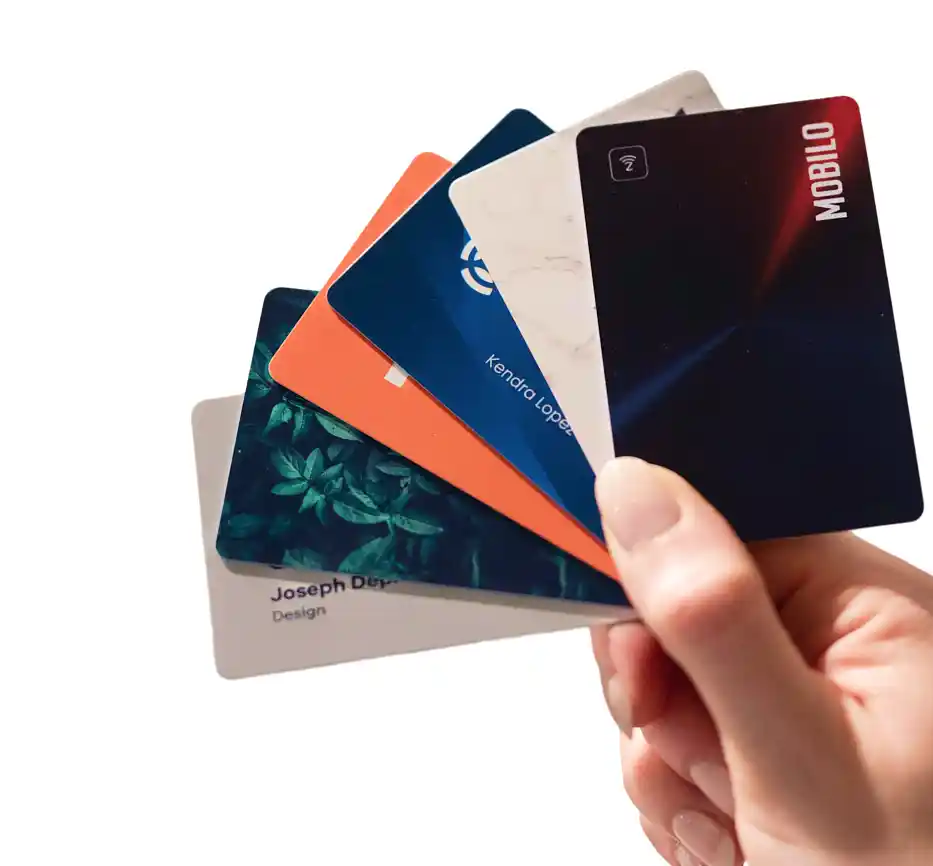
The structural fix is to arm field marketing and event teams with tools that capture leads efficiently and feed data directly into the CRM pipeline, so that a conversation on the show floor becomes a qualified record in the sales system before the rep walks to the next booth. That is precisely the workflow Mobilo is built around: every tap of a Mobilo card, whether a Custom Designed NFC Card with QR Code, a Metal card, a Wood card, or a Digital Wallet Card, pushes contact data into the CRM pipeline in real time, with no CSV export step in between. Teams on the popular Teams plan ($4/month, billed annually) get full team data analytics, CRM integrations through 6,000 Zapier-connected apps, lead enrichment, custom lead capture forms, and the ability for managers to control, lock, and override data fields across every rep's card, so the record that lands in the CRM reflects what the company needs to see, not whatever a rep happened to type in a notes field at the airport.
The 48-Hour Window - How Quickly Lead Intent Decays
Intent is not durable. Research on B2B follow-up response rates consistently shows that contact made within the first 24 hours produces dramatically higher engagement than outreach sent on day three or five. The decay is not linear; response likelihood drops sharply after 24 hours, then again after 48, so every hour of delay compounds the loss. According to industry data, 80% of trade show leads receive zero follow-up. That figure is not explained by rep laziness. It is explained by structural friction between physical card collection and digital record creation.
CRM data decays at approximately 30% per year even under normal conditions. In fact, Marketing Sherpa's research found that B2B data decays at 2.1% per month, or an annualized rate of 22.5%. When the starting record is incomplete and entered days late, decay begins before the first outreach email is ever sent, compressing an already narrow conversion window into something closer to zero.
The moment a prospect taps or scans a Mobilo card is the moment the clock on that intent window starts, and with data flowing directly into the CRM pipeline from that first tap, the follow-up window opens immediately rather than after a multi-day import cycle. For teams running events at scale, the Business plan ($5/month, billed annually) adds enterprise SSO, HR directory sync, a custom domain, central billing, and white-glove onboarding for qualifying teams, ensuring that every rep across an unlimited-member organization is set up and capturing leads consistently after the first networking event or card tap, not after a week of IT back-and-forth. That consistency is what converts a busy booth into a pipeline report worth reading three weeks later.
80% of trade show leads receive zero follow-up
Pre-Show Strategy and Goal Setting - Engineering the Funnel Before You Arrive
The funnel you walk away from a trade show with is the one you built before you arrived. That sounds counterintuitive when the booth design, the demo script, and the travel logistics are all competing for your attention in the weeks before the show, but the evidence is clear: pre-show configuration determines post-show pipeline, not rep energy on the floor.
Set Revenue-Anchored Booth Goals, Not Badge-Scan Targets
Badge scans feel productive. They produce a number, and numbers feel like progress. The problem is that a badge scan tells you nothing about budget authority, timeline, or fit.
The average B2B exhibitor spends several hundred dollars per qualified lead when total event costs are spread across the contacts who actually convert, which means treating raw scan volume as a success metric is an expensive way to confuse activity with outcome. Set goals that connect directly to revenue: a target number of qualified conversations by ICP role, a pipeline dollar value the event must generate to justify the spend, and a cost-per-qualified-lead ceiling that you can defend to leadership. Those three numbers give the booth team a filter, not just a target.
Funnel Stage Owners and Handoff Triggers
Without a named owner at each funnel stage, every lead becomes everyone's responsibility, which means it becomes no one's. Decide before the show who owns MQL-to-opportunity handoff, what the trigger is (a lead score threshold, a specific job title, a stated timeline), and what the SLA is for first contact. Research on follow-up speed consistently shows that response time within the first few hours of a qualified conversation produces significantly higher conversion rates than follow-up sent 24 to 48 hours later. Pre-assigning ownership is what makes that speed possible. This is worth being direct about: if your CRM has no deal stage mapped to "event-sourced MQL," the handoff trigger has nowhere to fire. Fix the CRM architecture first, then assign the owner.
Build Your ICP Qualification Criteria Into a Shared Scoring Card the Whole Team Uses
Reps return from a show with 80 contacts, and when the Sales Director tries to prioritize follow-up, the records are inconsistent. One rep logged budget authority; another didn't ask. According to analysis of post-show CRM failure, the absence of a shared qualification framework is a primary structural cause of pipeline collapse, because records that can't be compared can't be routed into the right nurture sequence.
Build that scoring card before the show, share it with every booth rep, and embed its fields directly in your capture form so that qualification is a byproduct of the exchange, not a separate task that gets skipped when the floor gets busy. This is precisely where arming field marketing and event teams with tools that capture leads efficiently and feed data directly into the CRM pipeline stops being a nice-to-have and becomes a structural requirement. Mobilocard's Teams plan (at $4/month per member, billed annually) is built for this exact scenario: it includes custom lead capture forms, lead enrichment, and unlimited leads and contacts, so every rep on the floor is collecting structured, consistent data against the same fields, not free-typing notes into a badge scanner app that no one will clean up later.
The plan supports unlimited team members, central billing, and full team management, meaning you can configure every rep's card and capture form centrally before the show opens, lock the data fields that matter, and ensure no one goes rogue with an off-script form. For teams that need it, bulk discounts are available for events. If your booth runs larger, or if enterprise IT requirements are in play, the Business plan at $5/month adds enterprise SSO and HR directory sync on top of everything in Teams, and white-glove onboarding is available for deployments of 100 seats or more.
Both plans connect to 6,000 integrations through Zapier, so the capture form your reps use on the floor feeds your CRM in real time rather than sitting in a CSV export that someone has to import on Monday morning. The physical card your reps carry matters too, with all card options including unlimited taps and scans, full team data analytics, and CRM integrations built in.
A rep taps a prospect's phone, the lead lands in the CRM with enriched data, and the handoff trigger you configured before the show fires automatically. That is what closing the gap between event activity and pipeline actually looks like in practice.
On-Floor Booth Lead Capture Tactics That Feed the Funnel in Real Time
The booth is where preparation meets pressure. Every rep on the floor now carries a single job: run the capture-qualify-route sequence so smoothly that the prospect never notices it happening. Tap-to-CRM contact exchange is the mechanical center of that sequence, replacing the badge-scan lag and business-card pile with an instant, structured record that lands in the pipeline before the conversation is over.
The shift from badge-scan batch exports to real-time CRM record creation is not a convenience upgrade; it is the structural fix for the 48-hour dead zone responsible for collapsing post-show pipeline. The tap is the mechanism; the data workflow it triggers is the actual intervention. When CRM record creation happens at the moment of contact, not via batch upload hours or days later, the structural gap that allows the majority of post-show data loss to occur is closed at its source.
By initiating the CRM data trail at the start of the booth conversation rather than after it, the tap mechanism itself raises Contact Conversion Gravity: it eliminates the manual logging step that allows intent context to decay before it is ever recorded. When a rep taps a prospect with an NFC business card, the prospect fills a short lead capture form on their own phone in under 30 seconds. A scored contact record appears in Salesforce or HubSpot before the rep's next conversation begins.
No batch upload at the hotel. No CSV reconciliation on Monday morning. The tap IS the data event. This benefit materializes most clearly when a team attends events regularly and needs structured lead follow-up. The more events per year and the larger the booth team, the greater the compounding advantage of eliminating batch-upload lag across every show.
How to Use Gamified Lead Capture Without Polluting Your Funnel
Spin-to-win activations and prize draws consistently lift opt-in rates compared to passive badge scanning. Reply rates drop sharply after 72 hours, and teams using gamified capture with embedded qualification fields tend to report stronger early-stage pipeline than badge-only booths, provided the capture form filters for role, company size, and timeline rather than collecting contact details alone. However, the quality trade-off is real.
A prize wheel pulls foot traffic indiscriminately; a meaningful percentage of entrants will have no budget authority and no fit with your ICP. The tactic earns its place when the capture form includes two or three qualification fields (role, company size, timeline) that let the team sort genuine prospects from giveaway hunters before follow-up begins. Without those fields, gamification inflates contact volume without improving pipeline.
Pros and cons at a glance
Interactive lead-capture tactics can improve booth engagement, but higher volume does not always translate into better pipeline quality:
✓ Pros
- Higher opt-in rates – Interactive experiences can consistently generate more opt-ins than passive badge scanning.
- Stronger early-stage pipeline – Teams often report better initial pipeline generation compared with badge-only booths.
- Increased booth traffic – Interactive tactics attract more visitors and create additional opportunities for engagement.
✗ Cons
- Quality trade-off – Higher traffic can attract visitors indiscriminately, reducing overall lead quality.
- Limited buyer fit – A meaningful share of entrants may lack budget authority or fail to match the ideal customer profile (ICP).
- Inflated contact volume – Without qualification fields, increased contact numbers may create more leads without meaningfully improving the sales pipeline.
Badge scanning alone produces a name and an email; it produces nothing about intent, authority, or timing. A five-field capture form (title, company size, stated pain, budget authority, timeline) takes 20 seconds to complete and gives every rep identical qualification data to work from. When the Sales Director reviews pipeline after the show, every record carries the same fields, making scoring and prioritization a data exercise rather than a memory exercise.
How to Set Up Real-Time Rep Attribution So Funnel Performance Is Measurable
The capture method only creates pipeline visibility if every record is attributed to the rep who initiated the conversation. Without rep-level attribution, the Sales Director sees a flat list of contacts with no way to measure individual performance or identify which booth conversations converted at the highest rate. Automatic rep attribution is built into Mobilo's team management layer: each card tap is logged against the rep who initiated it, giving the Sales Director a performance dashboard that ties every contact, every qualified lead, and every closed deal back to the individual conversation that started it.
1. NFC Smart Badge Tap-to-Capture - Zero-Friction Contact Exchange at Peak Traffic Moments
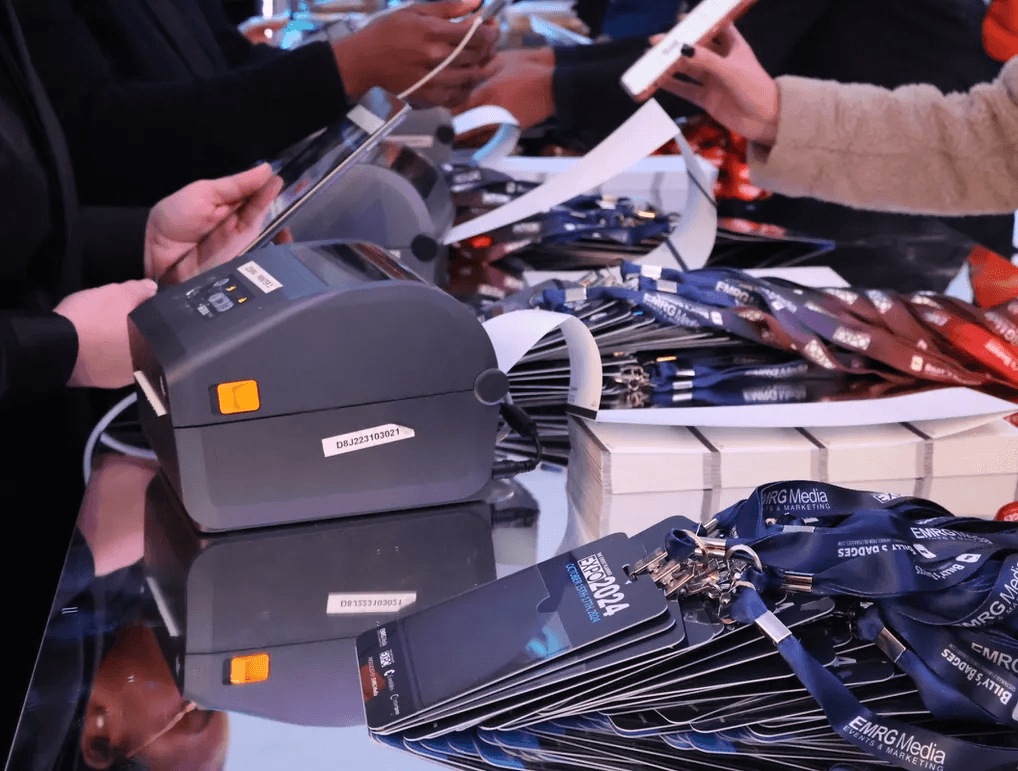
When booth traffic spikes and reps have seconds per visitor, NFC badge tapping eliminates manual data entry entirely. A single tap pulls full attendee profile data and queues it directly into the trade show sales funnel. Best for high-volume exhibitors at badge-enabled shows. The real tradeoff: NFC infrastructure depends on the event organizer's badge format, so confirm compatibility before the show.
2. Mobilo Card Digital Business Card Scan - Rep-Level Lead Attribution With Built-In CRM Routing
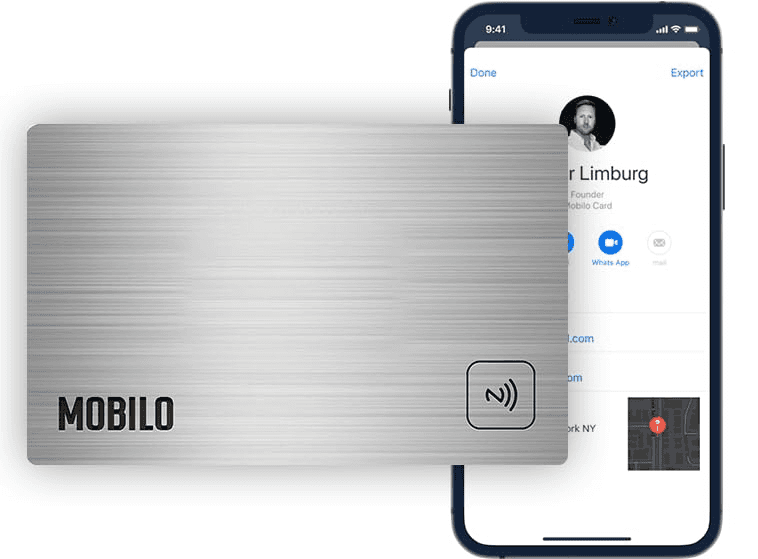
Mobilo Card lets each booth rep share a digital card via tap or QR, automatically attributing every captured contact to that specific rep inside the CRM. This makes it the strongest pick for multi-rep booths where pipeline ownership and follow-up accountability matter. The limitation: it works best when prospects have smartphones ready; passive or rushed visitors may skip the exchange entirely.
3. QR Code Lead Capture With On-Device Qualification Forms - Segment Leads While the Conversation Is Hot
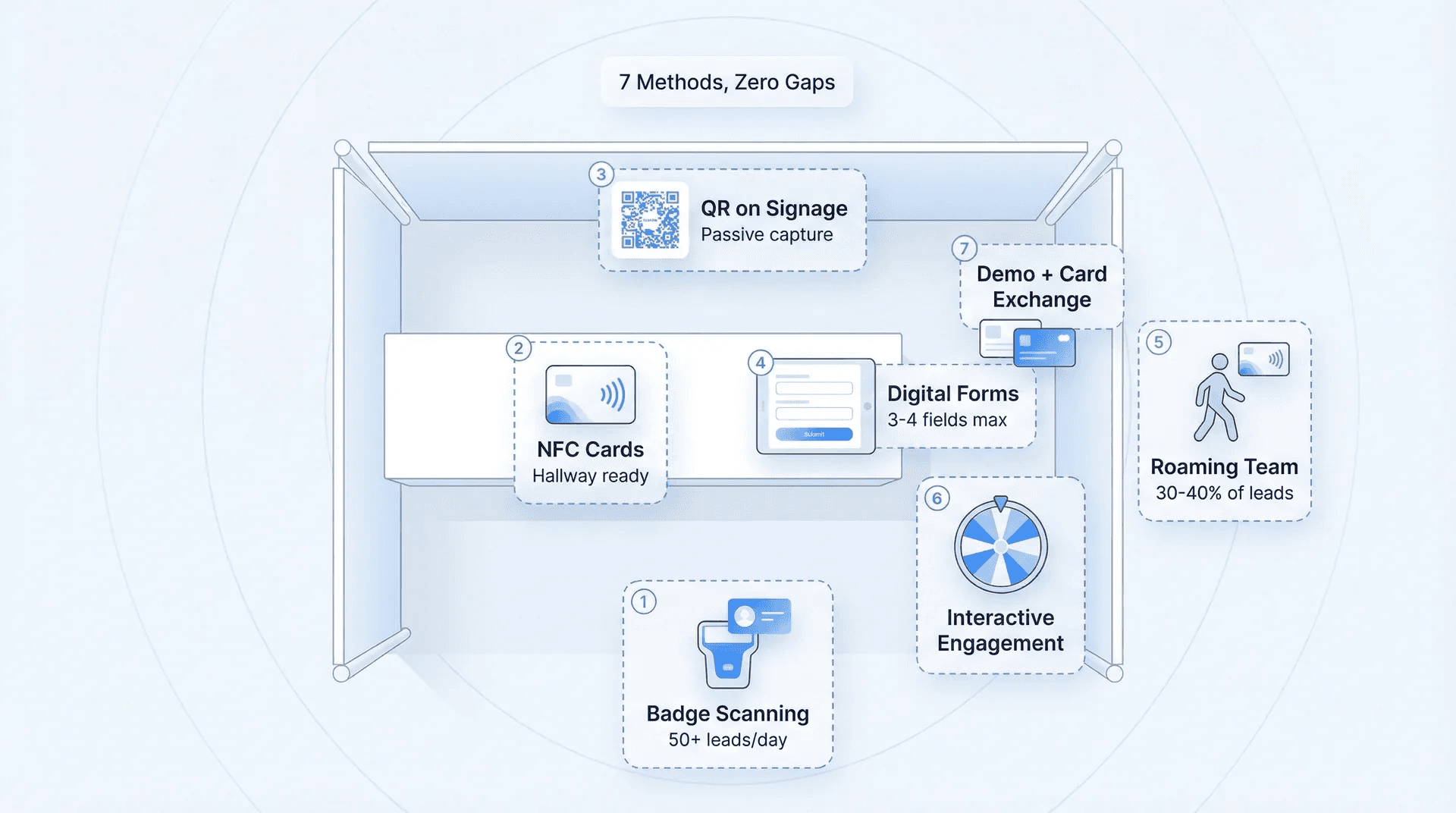
Pairing a booth QR scan with a short on-device qualification form lets reps tag interest level, product fit, and next-step intent before the prospect walks away. This feeds a pre-scored segment directly into the trade show sales funnel, cutting post-show triage time significantly. The tradeoff: form length must stay under 60 seconds or conversion drops sharply on the show floor.
4. Lead Retrieval App With Offline Mode - Capture Without Connectivity Gaps in Dead-Zone Halls
Convention center Wi-Fi is notoriously unreliable, and a dropped connection mid-scan means lost pipeline. Lead retrieval apps with robust offline mode store scans locally and sync the full batch the moment connectivity returns. This is the right choice for large-format shows in basement halls or international venues with poor infrastructure. The limitation: sync delays mean CRM data isn't truly real-time until the rep reconnects.
5. Spin-to-Win Gamified Booth Activation - Drive Voluntary Lead Submission From Passive Aisle Traffic
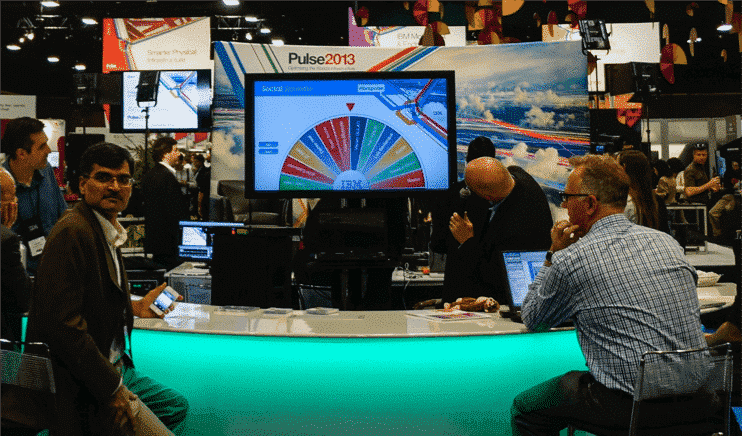
A gamified prize wheel displayed on a booth tablet or kiosk incentivizes aisle passersby to voluntarily submit contact details in exchange for a spin, dramatically increasing top-of-funnel volume in the trade show sales funnel. It works best for brand-awareness-focused exhibitors targeting high foot-traffic aisles. The key tradeoff: lead intent is lower than rep-initiated captures, so these contacts require heavier nurture sequencing post-show.
Lead Qualification Framework and Prioritization - Scoring Leads on the Floor, Not Next Week
Qualification happens the moment the conversation ends, not three days later when a rep is back at their desk squinting at a stack of badge scans. For Sales Directors running booth teams at major B2B events, the gap between those two moments is where pipeline quietly disappears.
Why Post-Show Lead Sorting Destroys the Intent Signal You Paid to Capture
The instinct to sort leads after the show feels organized. In practice, it is the single most expensive habit in your event budget. Reply rates drop three times after 72 hours post-show, according to BoothMaven platform data from North American trade shows.
By the time your team sits down to sort, score, and assign follow-up, the intent signal your reps worked the floor to surface has already decayed into guesswork. A lead scored on memory is not a lead scored on evidence. It is a lead scored on whoever the rep remembers most vividly, which is rarely the highest-value prospect in the pile.
The manual qualification burden makes this worse than most Sales Directors realize. Teams that rely on spreadsheet-based review after a show routinely spend upward of 8 hours per week processing as few as 50 leads, a pace that makes real-time, on-the-floor scoring practically impossible at scale. When your booth generates 200 contacts over two days, that math produces a qualification backlog that outlasts the intent signal entirely.
The deeper problem is structural, and it is not the one most Sales Directors diagnose. When reps apply inconsistent scoring criteria at the booth, the downstream conversion data reflects that same breakdown. Faster rep SLAs cannot fix a data gap that was created on the floor.
Four-Field Lead Qualification Scoring Rubric
A shared lead qualification framework removes the inconsistency that makes post-show sorting unreliable. Every rep on the booth team should apply the same four fields at capture: role seniority, budget authority, stated timeline, and pain match. These are not nice-to-have notes.
They are the minimum data points that determine whether a contact belongs in a hot, warm, or cold tier. The rubric only works if it is embedded directly in the capture form, not written on a notepad or filled in later from memory. Mobilo's Teams plan, the platform's most popular tier at $4/month per member, billed annually, includes custom lead capture forms, lead enrichment, and full lead capture and management built into the tap-to-exchange flow.
When qualification fields are part of that flow, every contact that enters the CRM arrives pre-scored by the rep who had the actual conversation. Unlimited team members can operate under a single central billing arrangement, and team management controls let a Sales Director lock and override data fields across the entire booth team, ensuring every rep applies the same rubric, not a personal variation of it. That is the structural fix.
The Teams plan also connects to integrations through Zapier, so scored leads route automatically into whatever CRM or sequencing tool your follow-up workflow already runs on. For organizations that need an additional layer of governance, the Business plan at $5/month adds enterprise SSO and HR directory sync, controls that matter when a booth team spans multiple business units and headcount changes between events.
Hot, Warm, Cold - Assigning Follow-Up Tiers at Capture Time, Not After the Debrief
Trade show lead prioritization collapses without a tiering decision made at the moment of capture. Hot leads, senior role, confirmed budget authority, short timeline, strong pain match, enter an immediate 24-hour outreach sequence triggered the moment the CRM record is created. Warm leads, right role, unclear budget or longer timeline, enter a structured 3-to-5-touch nurture sequence over two weeks.
Cold leads, poor fit, no stated timeline, no budget signal, are flagged for low-priority or suppression, keeping the pipeline clean and the follow-up effort concentrated where conversion probability is highest. Executing this at scale requires the right physical capture layer as well. Mobilo's Team tier cards, available in Custom Design, Wood, Metal, and Paper Plus formats, each deliver unlimited taps and scans, full team data analytics, and CRM integrations, with data field controls that enforce the shared rubric across every card on the floor.
A Digital Wallet Card option is included at no additional hardware cost beyond the $4/month software subscription. When every rep on the booth team taps with a card that feeds the same enriched, form-gated capture flow, the tiering decision is made in the conversation, not reconstructed from badge-scan memory three days after the show ends.
Related Reading
- Etiquette For Networking In Online Conferences
- Measuring Event Roi
- Trade Show Sales Tips
- How Do You Find The Roi Of A Trade Show
- What Is Trade Show Marketing
- Trade Show Follow Up Best Practices
- Event Lead Management
- B2b Trade Show Best Practices
- Conference Lead Generation
- B2b Trade Show Marketing
- Trade Show Lead Follow Up
Post-Show Follow-Up and Lead Nurturing - Converting the Funnel Before the Memory Fades
Most trade show leads don't die because reps fail to follow up. They die because the system hands reps a pile of badge scans with no timestamps, no CRM records, and no triggers, days after intent has already cooled. This section breaks down how to close that architectural gap, from the moment of contact exchange through the 24-hour outreach window where conversion rates are won or lost.
Why the Follow-Up Trigger Must Be CRM Record Creation
The rep who promised to "follow up Monday" is not the weak link. The system that handed them a stack of badge scans with no timestamp, no trigger, and no CRM record is. A rep lands, clears their inbox, and faces 60 badge scans with no context.
Across the market, a strikingly similar trend emerges. The follow-up system only works when the CRM record is the trigger, created at the exact moment of contact exchange, not two days later when memory and intent have both moved on. Without a timestamped CRM record, there is no pipeline entry, no rep notification, and no nurture sequence to fire. Coaching reps to "log faster" does not fix this. The handoff gap is architectural.
Hot Lead Protocol - The 24-Hour Outreach Window
Following up within 48 hours produces substantially higher conversion rates than outreach sent later in the week, a gap that widens the longer the delay extends past that initial window. That window is even narrower for hot leads, where intent is sharpest and competitive alternatives are actively being evaluated. A hot lead protocol only works when the CRM deal record exists before the rep leaves the show floor.
When a Mobilo Card tap writes the contact directly to the CRM, a Zapier-triggered Salesforce task and personalized email sequence can fire within minutes through any of Mobilo's integrations through Zapier, while the rep is still at the booth. The rep receives a mobile notification, the prospect receives a relevant first touch, and the 24-hour window stays intact without any manual action. This matters especially for teams: with Mobilo's Teams plan ($4/month, billed annually) or Business plan ($5/month, billed annually), managers get visibility into which reps are actively networking and converting connections into pipeline, a real-time signal that lets sales leadership intervene early rather than discover gaps in a post-show debrief. The insights and analytics included in both plans mean that attribution is live, not reconstructed from memory.
Warm Lead Nurture Sequences - Tier-Based, Not Memory-Based
Warm leads need structure, not urgency. A 3 to 5 touch email and content sequence over approximately two weeks, triggered automatically by lead score tier, consistently outperforms ad hoc rep outreach in B2B contexts. What most teams report bears this out: structured, tier-based nurture sequences produced measurably higher MQL-to-opportunity conversion rates than unstructured rep-initiated follow-up across B2B events.
Without a scored CRM record created at capture, there is no tier to route against and no sequence to fire. For teams running multiple reps at a single event, the Team tier's team management and data field control features, the ability to control, lock, and override data fields across every card, ensure that every contact captured hits the CRM with clean, consistent field mapping rather than rep-by-rep improvisation. That pre-event configuration work is what makes post-show nurture sequences fire correctly instead of requiring manual cleanup.
One honest limitation: automated nurture sequences still require that field mapping to be finalized before the event. Even the best capture hardware cannot compensate for a CRM schema set up on the fly.
Closing the Conversion Loop - Every Touch Must Write Back to the Deal Record
Every email opened, reply received, meeting booked, and demo completed should write back to the originating CRM deal record created at the moment of tap. This closes the attribution loop: the Sales Director can trace each won deal back to the show, the booth conversation, the rep, and the qualification tier assigned on the floor. That closed loop is what separates event ROI as a number you can defend in a board meeting from event ROI as an estimate.
Mobilo's Business plan adds enterprise SSO, HR directory sync, central billing, and, for teams of 100 seats or more, white-glove onboarding and a custom-built landing page, so the attribution infrastructure is enterprise-grade from configuration through reporting. The result: visibility into which reps are actively networking and converting connections into pipeline becomes a standing dashboard item, not a quarterly exercise in spreadsheet archaeology.
Measuring Trade Show ROI - The Funnel Metrics That Make Event Spend Defensible
Defending event spend without clean data is not a messaging problem. It is a measurement infrastructure problem. The numbers you present to leadership are only as credible as the capture system that generated them, and if contacts were logged manually after the show, what you have is a reconstruction, not a record.
The Five Funnel Metrics Every Trade Show Budget Justification Needs
Five metrics form a defensible event ROI report:
- Total contacts captured
- Qualification rate (qualified leads divided by total contacts)
- Cost-per-qualified-lead
- MQL-to-opportunity conversion rate
- Pipeline generated per event dollar spent
Across the market, pipeline-per-dollar is the metric that replaces anecdotal rep reports with a single comparable number across shows. Badge scan volume does not belong on this list. Foot traffic counts are poor predictors of actual ROI, and any report built on them invites the leadership skepticism that kills future event budgets.
Cost-Per-Qualified-Lead - The One Number Leadership Actually Trusts
Cost-per-qualified-lead is calculated by dividing total event spend by the number of leads that meet a defined qualification threshold. The catch: the denominator is only accurate if qualification was scored at the moment of capture, not estimated afterward. A number you can trace to a timestamped record beats an industry average every time.
How to Use Contact Conversion Gravity to Translate Tap Volume Into Board-Level Revenue Language
Contact Conversion Gravity is the total pipeline value generated per contact captured. It collapses the entire event funnel into one efficiency metric, making it possible to compare rep performance, booth zones, and show-over-show results in revenue terms rather than raw counts. A digital business card that writes a contact record and qualification signal directly to the CRM at the moment of tap gives this metric a clean numerator and denominator from day one. Without that, you are dividing estimated pipeline by an incomplete contact count and calling it a ratio.
Why Your ROI Calculation Is Only as Good as Your Day-One Capture Rate
What most teams report is that a significant share of contacts collected at events never enter the CRM at all. When contacts are missing from the system, the qualified-lead denominator shrinks, cost-per-lead inflates, and pipeline attribution becomes impossible to close. Organizations measuring event ROI from incomplete CRM data are, in effect, measuring a fraction of the funnel and presenting it as the whole, a habit that consistently understates true cost-per-lead and makes it harder to secure next year's event budget.
MQL-to-Opportunity Conversion Rate - The Metric That Closes the Loop Between Marketing and Sales
MQL-to-opportunity conversion rate measures how many marketing-qualified leads from an event advance to a formal sales opportunity within a defined window, typically 30 to 90 days post-show. It is calculated by dividing the number of opportunities created by the number of MQLs passed to sales from that event. This metric matters because it is the first number in the chain that sales leadership will independently verify against their own pipeline records, which means any inflation in the MQL count is exposed the moment the conversion rate is calculated.
A low conversion rate signals one of two problems: either the qualification threshold at capture was too loose, or the handoff between marketing and sales broke down before follow-up occurred. Both are diagnosable, but only if the original capture records are timestamped, attributed to a specific event, and stored in a system that sales can audit. When MQL-to-opportunity conversion rate is tracked consistently across shows, it also becomes the clearest leading indicator of which events produce revenue-ready contacts and which produce volume that stalls in the funnel, giving budget committees a forward-looking signal rather than a post-mortem explanation.
Related Reading
- Which Networking Software Is Best For Conferences
- Trade Show Booth Ideas To Attract Visitors
- Conference Lead Capture
- How To Measure Trade Show Effectiveness
- Virtual Event Success Metrics
- Trade Show Roi
- Trade Show Lead Generation Ideas
- What's The Best Event Lead Generation Software
- Post-Trade Show Marketing Strategies
- Best Trade Show Giveaways
Next steps
If your event spend keeps producing contact lists that never become pipeline, the path forward starts with building capture infrastructure before the show opens, not coaching reps harder after it closes. Start with our digital business card.
Pre-show CRM infrastructure failure, not post-show rep behavior, is the true determinant of trade show pipeline outcomes. That means every configuration decision made after the show has already cost you the majority of your qualified leads. At the same time, the absence of a shared on-floor qualification rubric is what makes post-show pipeline statistically unrecoverable, because a contact record with no intent signal cannot drive relevant outreach no matter how fast the follow-up email goes out. Together, they point to one action: arm your booth team with a capture tool that writes a scored, attributed CRM record at the moment of conversation, not after it.
Start with a digital business card built for team deployment. Each tap writes a timestamped, enriched contact record directly to your CRM before the rep moves to the next conversation, closing the data gap where most trade show funnels silently collapse.
Related Reading
- Best Tech Conferences For Networking
- Best Networking Apps for Trade Show Attendees
- Best Finance Conferences For Networking
- Trade Show Booth Ideas For Small Budgets
- Virtual Conference Booth Ideas
- Networking Activity Ideas For Conferences
- What Are The Top Trade Show Lead Retrieval Tools
- Trade Show Follow Up Email Examples
- Conference Lead Capture Tools
- Trade Show Lead Capture App
Frequently Asked Questions
Why do so many trade show leads never make it into our CRM?
The root cause is structural, not behavioral. A badge scan produces a CSV file that someone must manually clean, map, and import, a process that can take 24–48 hours after the show closes, while the rep has mentally moved on and the prospect has already heard from faster-moving competitors. Industry data cited in this post shows that 80% of trade show leads receive zero follow-up, a figure explained by this friction between physical contact collection and digital record creation, not by rep laziness.
How quickly does lead intent actually decay after a show ends?
Very quickly, and the drop is not gradual. Response likelihood falls sharply after 24 hours and again after 48, meaning every hour of delay compounds the loss. When a starting CRM record is incomplete and entered days late, data decay begins before the first outreach email is ever sent, compressing an already narrow conversion window into something closer to zero.
What should we set as our booth goal instead of badge-scan volume?
Set goals anchored to revenue, not activity: a target number of qualified conversations by ICP role, a pipeline dollar value the event must generate to justify the spend, and a cost-per-qualified-lead ceiling you can defend to leadership. Those three numbers give your booth team a filter rather than just a target, because a badge scan tells you nothing about budget authority, timeline, or fit.
We use gamification at our booth, does that actually improve pipeline quality?
Only if the capture form includes qualification fields. Spin-to-win activations lift opt-in rates compared to passive badge scanning, but they pull foot traffic indiscriminately, and a meaningful percentage of entrants will have no budget authority and no fit with your ICP. The tactic earns its place when the form requires two or three fields, such as role, company size, and timeline, so you can sort genuine prospects from giveaway hunters before follow-up begins; without those fields, gamification inflates contact volume without improving pipeline.
What happens if the Wi-Fi goes down on the show floor while we're capturing leads?
A branded QR code displayed on booth signage lets inbound visitors self-capture while the rep is mid-conversation, and the form saves locally then syncs the moment connectivity returns, so no lead record is orphaned by a dropped connection. This approach also handles volume spikes at large B2B shows where a single booth can generate 200-plus contacts per day and rep-initiated capture alone cannot keep pace.