.avif)

18 Best Conference Lead Capture Tools for 2026
On This Page
Most event leads die in the gap between the handshake and the CRM. Here is exactly where the pipeline breaks, and which capture features close each one before the follow-up window shuts.
The common assumption is that the problem is rep discipline: if reps would just enter the contacts into the CRM after the show, the pipeline would be fine. But for most exhibiting teams, a quiet failure happens the moment the conversation ends, and it has nothing to do with how well your reps networked. A 10-rep booth team can return from a 3-day show with 400 badge scans sitting in a spreadsheet. No rep is assigned. No CRM record exists. No follow-up has started. See our digital business card for how this works in practice.
That stack of contacts represents real conversations, real interest, and real revenue potential, all of it sitting in a data-entry queue that may never get cleared. Tools like tap-to-share cards exist precisely to close this gap before the rep walks away from the booth, a benefit that is most pronounced for teams that attend events regularly and need structured lead follow-up across multiple reps. Lead capture apps replace manual data entry at the point of contact, not hours later.

When a rep exchanges information digitally, the contact is captured immediately, accurately, and without relying on anyone's memory or free time after the show. Roughly 88% of manually entered contact records contain at least one critical error, meaning even diligent reps are feeding the CRM corrupted data. Badge scanning feels like a modern solution, but a scan that exports to a CSV file is still a manual step waiting to happen.
The data sits in an event platform until someone maps fields, cleans duplicates, and imports records into the CRM under the correct rep owner. That process routinely takes days. According to a LinkedIn analysis by sales consultant Nathan Carlson, 80% of all trade show leads receive no follow-up, a figure that reflects systemic process failure, not individual negligence. A 2025 analysis published by Never Drop found that up to 90% of new contacts collected at events never reach the CRM, consistently, across teams, regardless of rep quality.
88% of manually entered contact records contain at least one c
Key takeaways
- 80% of trade-show leads never make it into a CRM, not because reps are lazy, but because the capture workflow breaks the moment the conversation ends.
- The 5-minute follow-up window is the difference between a 100x higher conversion rate and a cold contact; manual data entry queues kill that window before anyone gets back to the hotel.
- Badge scans feel like capture, but a spreadsheet full of names without job titles, assigned owners, or matched accounts is functionally invisible to the rep who needs to act on it.
- Three distinct pipeline breaks, speed gap, enrichment gap, and attribution gap, account for most event ROI loss, and fixing only one of them still leaves the other two open.
- The right conference lead capture tool is a workflow match problem, not a feature checklist problem; four operational variables determine the correct answer before you open a single comparison page.
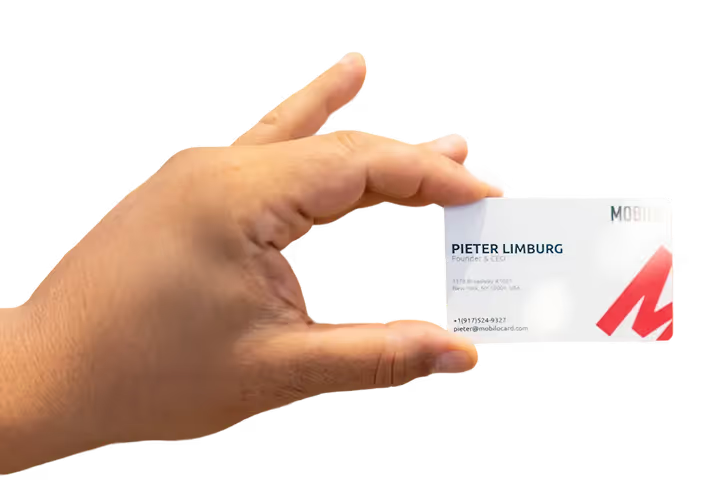
- Mobilo's Contact Exchange closes the loop at the handshake itself, when someone taps or scans a Mobilo card, their information is captured and synced directly into your CRM, so your team leaves the floor with enriched, pipeline-ready records instead of a pile of contacts no one will enter.
The Three Pipeline Breaks That Cost Sales Teams Event ROI
Most sales teams leave conferences blaming rep effort when the real damage happens inside the workflow itself. The leads are real, the conversations happened, and the budget was spent, but three structural gaps in how contacts move from handshake to pipeline quietly erase the return before follow-up even begins. Understanding exactly where those breaks occur is the first step toward fixing them.
Pipeline Break 1 - The Speed Gap
Manual data-entry queues kill follow-up before it starts. The common assumption is that the problem is rep discipline: if reps would just enter the contacts into the CRM after the show, the pipeline would be fine. According to LeanData, leads contacted within 5 minutes of an interaction are 100x more likely to connect than those reached after 30 minutes.
Yet the standard post-event workflow, reps batch-entering badge scans into the CRM on the flight home, guarantees that window closes for every single contact. The structural problem is not rep effort. It is the gap between the handshake and the pipeline record. Companies that automate lead follow-up respond an average of 3x faster than those relying on manual entry, and that speed difference shows up directly in conversion rates.
Pipeline Break 2 - The Visibility Gap
Sales Directors cannot see which reps are converting conversations into pipeline. Event ROI attribution fails not because data is unavailable, but because it was never captured at the rep level in the first place. When six reps share one badge scanner and one generic login, every lead gets pooled into the same undifferentiated export. There is no way to know which rep had the conversation, how qualified the contact was, or whether anyone followed up. Without rep-level lead capture, post-show attribution becomes guesswork rather than accountability.
Pipeline Break 3 - The Ownership Gap
Shared capture setups produce unassigned, unqualified, unclaimed leads. Lead qualification fields go unenforced when the capture tool has no per-rep ownership model, so records arrive in the CRM without ICP scoring, without context notes, and without a named owner to drive follow-up. The contact exists. The pipeline record does not.
Key Features to Look for in Conference Lead Capture Apps
Feature checklists for conference lead capture apps look deceptively simple until you map each capability to the exact moment in the event workflow where pipeline actually breaks. There are three breaks: capture fails on the floor, enriched data never reaches the right rep, and no one can prove what happened afterward. Every feature worth paying for solves one of those three problems specifically.

Universal Badge Scanning and Offline Mode Are Non-Negotiable
Universal badge scanning is the foundation of any lead capture app because it eliminates manual contact entry at the moment of conversation. Without it, reps leave the booth carrying a mental list of names they intend to log later, and later rarely comes. Capturing leads from events and field meetings directly into the CRM without relying on reps to manually log contacts is exactly the gap that costs teams real pipeline. Conference venue Wi-Fi fails or degrades during peak exhibitor hours, which means any app that depends on a live connection will stop working precisely when booth traffic is highest.
Mobilo's no-internet QR sharing capability, included on every plan from Pro at $3/month through Teams at $4/month and Business at $5/month, ensures every tap and scan is captured regardless of network conditions, so capture never stalls when the floor is most crowded.
Real-Time CRM Sync With Automatic Field Mapping Closes the Speed Break
The speed break is time-sensitive in a measurable way. Research on trade-show lead follow-up shows that delayed outreach after an event interaction directly degrades conversion rates, meaning every hour a captured contact sits unsynced is pipeline left on the table. The real cost of losing a trade-show lead compounds that urgency: the longer the gap between capture and contact, the lower the likelihood of a meaningful conversation ever happening.
Integrating lead capture with CRM tools to streamline pipeline management is why Mobilo ships 6,000 integrations through Zapier on every subscription tier, Pro, Teams, and Business alike. Real-time sync with automatic field mapping routes each captured contact to the correct rep's CRM pipeline the moment the scan completes, with fields pre-mapped so no one spends Tuesday morning reconciling spreadsheet columns. On the Teams plan ($4/month, billed annually), full team data analytics and CRM integrations are included alongside unlimited taps and scans, so the sync covers the entire booth roster, not just the team lead.
Custom Qualification Fields Let Reps Enforce Consistent Scoring on the Floor
A qualification field requiring reps to tag budget confirmed, timeline, or decision-maker status at the point of scan creates a structured record in the moment, not a reconstructed one from memory two days later. Without enforced fields, every rep qualifies differently, and the pipeline data that reaches the CRM reflects individual interpretation rather than a consistent standard. Mobilo's custom lead capture forms, available on Pro, Teams, and Business plans, let admins define exactly which fields are required before a scan saves, enforcing consistency at the source.
The honest trade-off: custom fields add friction to the scan flow. Fields that matter most should be set as required at the admin level, and the Teams and Business plans both include team management and data field control, the ability to lock and override data fields across the entire team, so that standard is set once and applied everywhere.
Multi-User Team Access With Per-Rep Assignment Fixes the Ownership Break
Multi-user team access with per-rep lead assignment closes the accountability gap that shared generic setups create. When every scan is attributed to the rep who made it, the CRM record carries the right owner from the start, follow-up responsibility is clear, and a team admin can see coverage in real time rather than discovering gaps after the show ends. The Teams plan supports unlimited team members at $4/month per member (billed annually), includes central billing, and pairs full team data analytics with lead enrichment, so the same subscription that covers the booth floor also surfaces the data needed to prove ROI afterward.
For organizations with more complex identity requirements, the Business plan adds enterprise SSO and HR directory sync on top of the same unlimited-member foundation. Following up on trade-show leads effectively starts with clean ownership data at the point of capture, and per-rep attribution ensures that ownership is never ambiguous by the time the event ends.
Contact Exchange Capture Beyond the Badge
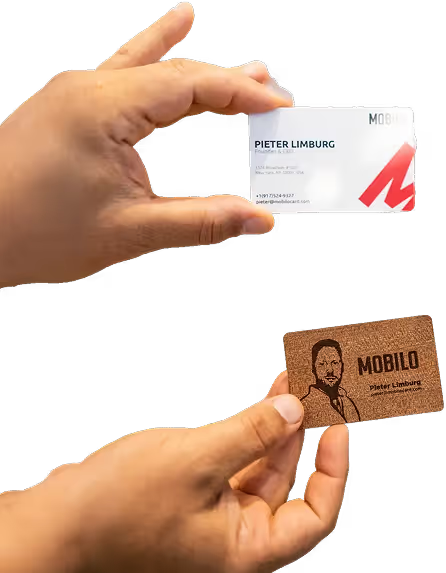
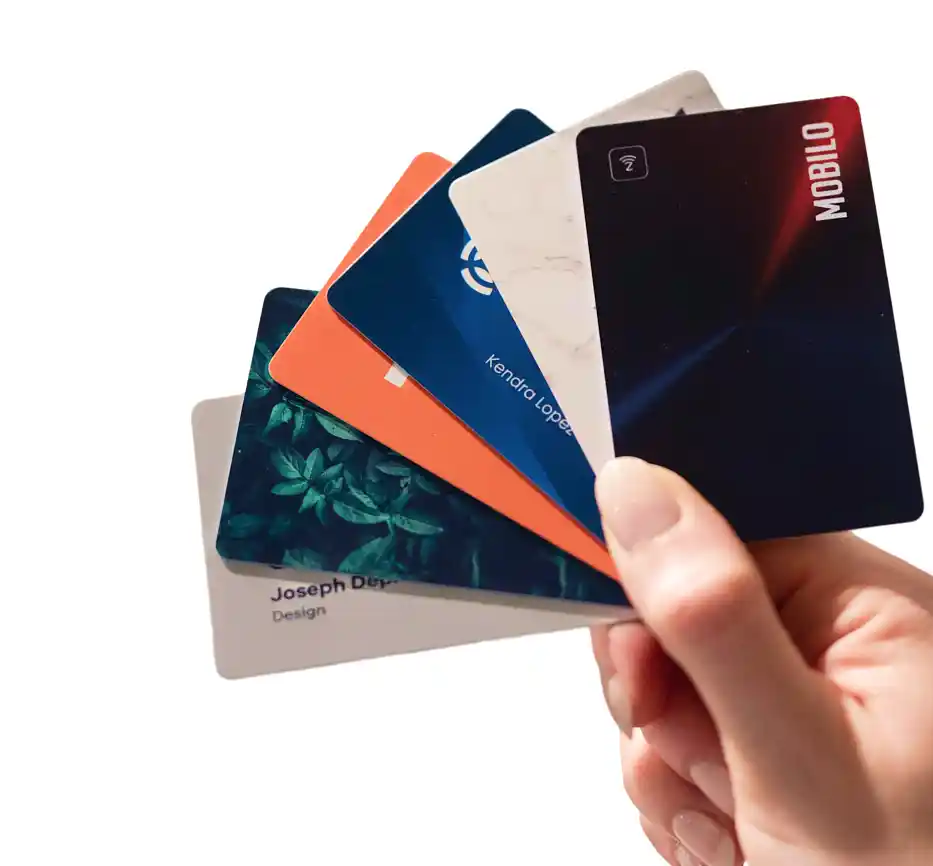
The hidden cost of badge-only capture is the contact who never wore a badge: the VP who walked the floor without scanning in, the partner who stopped by mid-conversation. Mobilo's paper business card scanner, included on every plan, converts physical cards into digital records in the same workflow, so reps have a single capture surface whether the other person tapped, scanned a QR code, or handed over a card. The Teams tier's Digital Wallet Card ($0 card cost + $4/month) and Paper Plus Cards ($29.99 + $4/month) extend that flexibility to the card format itself, giving teams options that fit every interaction style on the floor without switching tools or workflows.
How Conference Lead Capture Tools Integrate With Your CRM
Getting a lead into your CRM and getting a lead your sales team can actually act on are two very different outcomes. The gap between them comes down to how your capture tools handle field mapping, record enrichment, source attribution, and duplicate management before a contact ever reaches a rep. What follows breaks down where that gap opens, why it quietly kills pipeline quality, and what genuinely CRM-ready capture looks like in practice.
Connected vs. CRM-Ready - Why the Distinction Decides Your Pipeline Quality
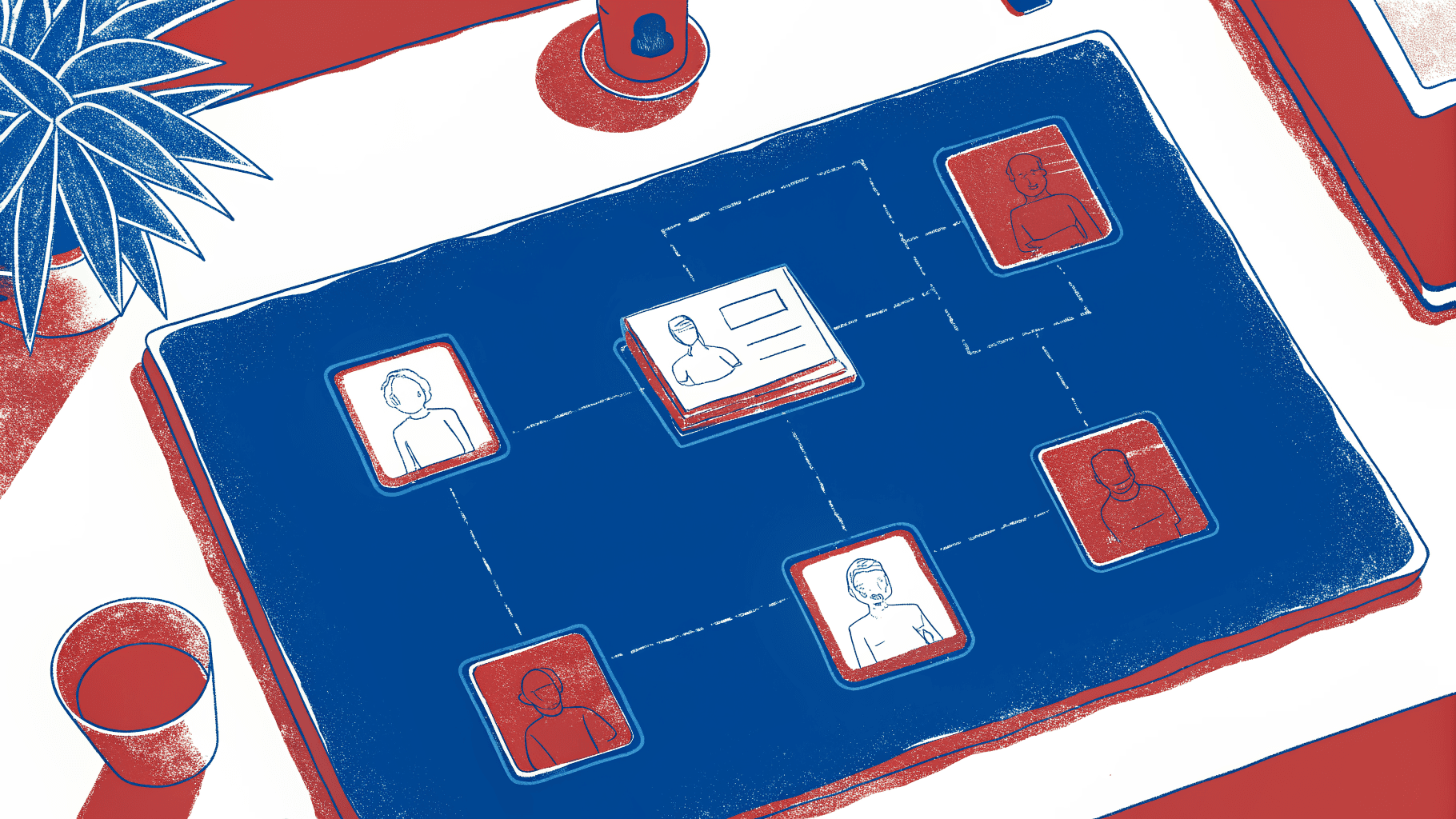
A CRM connection and a CRM-ready record are not the same thing. The distinction sounds minor until you realize that a contact landing in your Salesforce org without a job title, assigned owner, or matched account is functionally invisible to the rep who needs to act on it. The architecture of manual capture guarantees every conference lead is contacted outside the window where connection is even statistically possible, making the follow-up sequence a ritual rather than a sales motion.
CRM-ready tools move enriched, mapped, and assigned records. One of the most consistent problems teams encounter is that conference and event lead data imported into the CRM arrives tagged as "Offline" or with entirely blank source fields, wiping the original lead origin and making it impossible to attribute closed deals back to specific conference touchpoints. A blank job title or a missing company name is not a minor inconvenience; it means the record cannot be scored, routed, or sequenced without manual intervention that rarely happens under post-show pressure.
And when leads are flowing in simultaneously from multiple channels, badge scans, digital card exchanges, ad campaigns, duplicate contacts compound the damage, creating over-targeting and data clutter that erodes list quality before a single follow-up is sent. A messy CRM is not merely an admin burden; it is a direct driver of lost clients. Native CRM integrations map contact fields directly to Salesforce Account, Contact, and Lead objects in real time.
A Zapier-based middleware connection, by contrast, typically dumps a flat row of data into a zap that fires on a delay, often dropping custom field mappings in the process, and teams relying on Zapier chains frequently discover that conference leads arrive tagged as "Offline" or with blank source fields, exactly the attribution failure described above. Mobilo's Teams and Business plans both include 6,000 integrations through Zapier, giving CRM admins a broad connection surface to work with. For teams that need automation beyond Zapier, that same integration layer supports the N8N and custom webhook workflows that are increasingly common among ops-forward event teams.
The distinction that matters is not whether the tool connects to Zapier, nearly every modern tool does, but whether the record that arrives through that connection is clean, mapped, and attributed before it lands. AI-powered lead enrichment automatically fills missing contact details, including job title and company name, before the record is written to the CRM. This enrichment step happens before the record lands, so data quality is determined by the tool, not by what the rep managed to capture in a two-minute booth conversation.
Mobilo's Teams plan ($4/month per member, billed annually) and Business plan ($5/month per member, billed annually) both include lead enrichment as a standard feature, not an add-on, meaning every contact exchanged at an event is enriched at the point of capture rather than cleaned up retroactively by a CRM admin after the show. The Teams plan also includes a paper business card scanner, so leads collected the old-fashioned way are pulled into the same enriched, structured pipeline rather than living in a separate stack. This is particularly valuable for teams that attend events regularly and need structured lead follow-up built into their workflow from the first tap, which is precisely the context where Mobilo's contact exchange and lead capture capabilities are most beneficial.
Team-level plans add a layer of structural control that individual tools cannot replicate: team management, central billing, the ability to control, lock, and override data fields across every card in the deployment, and full team data analytics with CRM integrations. For a CRM admin responsible for data integrity across a multi-rep booth, field-level locking means that the records arriving in the CRM reflect the schema you defined, not whatever the rep typed into a free-text field at 4 PM on day two of a trade show. The Business plan extends this further with HR directory sync and enterprise SSO, which matter when onboarding and offboarding are part of the compliance surface.
Best-in-class tools assign each captured contact to the rep who performed the scan, automatically and without post-show reassignment. On a multi-rep booth, without scan-level ownership tied to the capturing rep at the moment of exchange, lead routing defaults to whoever processes the export, which is rarely the person who had the conversation. Mobilo's team management layer, available on both the Teams and Business plans with unlimited team members, preserves that rep-to-lead relationship from tap to CRM record, so the follow-up sequence starts with the right sender, not a reassigned alias that the prospect has never heard from.
"I struggle to find CRM tools that offer reliable, easy-to-use integrations with automation platforms like N8N and Zapier, which I commonly use to connect conference lead capture tools to CRMs."
18 Best Conference Lead Capture Tools for 2026 - Compared
That filter lands hardest when you look at what happens without it: the vast majority of trade show leads receive no follow-up, on post-event follow-up failure rates. The number sounds dramatic until you watch it happen in real time. A rep scans a badge, tucks a card into a jacket pocket, and boards a flight home with every intention of logging the contact later. Later never comes.
The pipeline gap is not a discipline problem. It is a structural one, built into every workflow that puts a human data-entry step between the handshake and the CRM record. The 18 tools below are the top conference lead capture tools evaluated for 2026.
They are not equivalent. Evaluated on what happens in the 90 seconds after the scan, they fall into three tiers: workflow closers that push enriched, CRM-ready records automatically; data collectors that capture well but still require manual cleanup; and badge scanners that solve the physical problem while leaving the pipeline problem entirely intact. The table below maps pricing and key features before the item-by-item breakdown.
Quick-Reference Comparison Table
Event lead-capture platforms vary widely in badge scanning, CRM connectivity, enrichment, and offline capabilities:
- Mobilo → From $4/user/month → QR + NFC tap → Native, rep-level routing → Auto enrichment: Yes → Offline: Yes.
- Wave Connect → $60/user/year → Universal badge scanner → HubSpot, Salesforce, Zoho → Auto enrichment: No → Offline: Yes (QR).
- iCapture → $8k+/year → 2D barcode + QR → Native CRM sync → Human verification → Offline: Yes.
- Cvent LeadCapture → Custom → QR → Native Cvent ecosystem → Notes + tags → Offline: Yes.
- Blinq → $2.4k+/year → Any badge/QR/card → Native → AI enrichment via 25+ data providers → Offline: Yes.
- Mobly → Flat annual, opaque → OCR + human verification → Native → AI-powered OCR → Offline: Yes.
- Whova → $1k/event → In-app → Exhibitor Hub → Auto enrichment: No → Offline: Partial.
- Captello → From $500/event → Badge scan → CRM sync → Gamification layer → Offline: Varies.
- BoothIQ → $6k/year → Badge scan → CRM sync → Advanced analytics → Offline: Varies.
- Popl → $6k+/year → Badge scan → Native → List enrichment → Offline: Yes.
- Eventleaf → Custom → Badge scan → Native → Notes/tags → Offline: Yes.
- Tap → Custom enterprise → NFC tap → Native → Auto enrichment: Yes → Offline: Yes.
- SpotMe → Custom → Universal badge capture → Native → AI enrichment → Offline: Yes.
- BadgeScanner → Low/per event → iOS badge scan → Export/CSV → Auto enrichment: No → Offline: No.
- eylet → No monthly fee → NFC tap → Export → Auto enrichment: No → Offline: Yes.
- Zuddl → Custom → Hybrid event → Native → AI enrichment → Offline: Partial.
- momencio → Custom → Badge scan → Native → AI-powered ROI → Offline: Yes.
- Salesforce Event Lead Capture → Salesforce license → Badge scan → Native Salesforce → Salesforce-native enrichment → Offline: Yes.
- HubSpot Business Card Scanner → HubSpot license → Card scan/OCR → Native HubSpot → OCR → Offline: No.
- Grip → Custom → Hosted-buyer capture → Native → AI matchmaking → Offline: Partial.
- Expo Logic → Custom hardware → Hardware rental → Native → Session data → Offline: Yes.
The top conference lead capture tools for 2026 span three distinct categories. Workflow closers (Mobilo, iCapture, Blinq, Cvent LeadCapture) push enriched records to the CRM automatically. Data collectors (Wave Connect, Mobly, Captello, BoothIQ) capture reliably but require a sync or cleanup step. Badge scanners (BadgeScanner, eylet, Eventleaf at the entry tier) solve the physical capture problem without addressing the pipeline routing gap.
Why the Manual Gap Is the Real Cost
Most Sales Directors evaluating this list focus on the badge scan and the CRM checkbox. The real question is different: does the tool close the loop before the rep leaves the booth, or does it hand the team a data file that still requires someone to map fields, assign ownership, and import records? That second path is where leads go cold.
The manual queue is not a minor inconvenience. It is a near-total systemic loss that produces no data on what it fails to capture, which is exactly why it never shows up on any post-event report. The ROI case for automated capture tools is not primarily an efficiency argument; it is a pipeline recovery argument.
The cost savings realized by enterprises deploying automated CRM capture, $21,000 per year for Landsea Homes and $6,000 per year for The Falcon Group, are not primarily labor savings from eliminated data entry. They are the monetized value of contacts that would otherwise have died in the manual queue, meaning the ROI case for automated capture tools should be framed not as efficiency gain but as pipeline recovery from a systemic loss that was previously invisible on any report. Landsea Homes (400 employees) saves $21,000 per year using Mobilo's automatic CRM routing and lead capture, according to published case data from Mobilo. The Falcon Group saves $6,000 per year on the same basis. Neither figure represents labor saved on data entry alone.
Both represent the monetized value of contacts that would otherwise have died in the manual queue, invisible on every report because manual workflows produce no record of what they failed to capture. The digital business card feature is most beneficial when a team attends events regularly and needs structured lead follow-up: when a prospect taps or scans a rep's NFC business card, their information is captured, enriched, and routed to the correct CRM owner automatically, with no manual step between the handshake and the pipeline record.
1. Mobilo Card
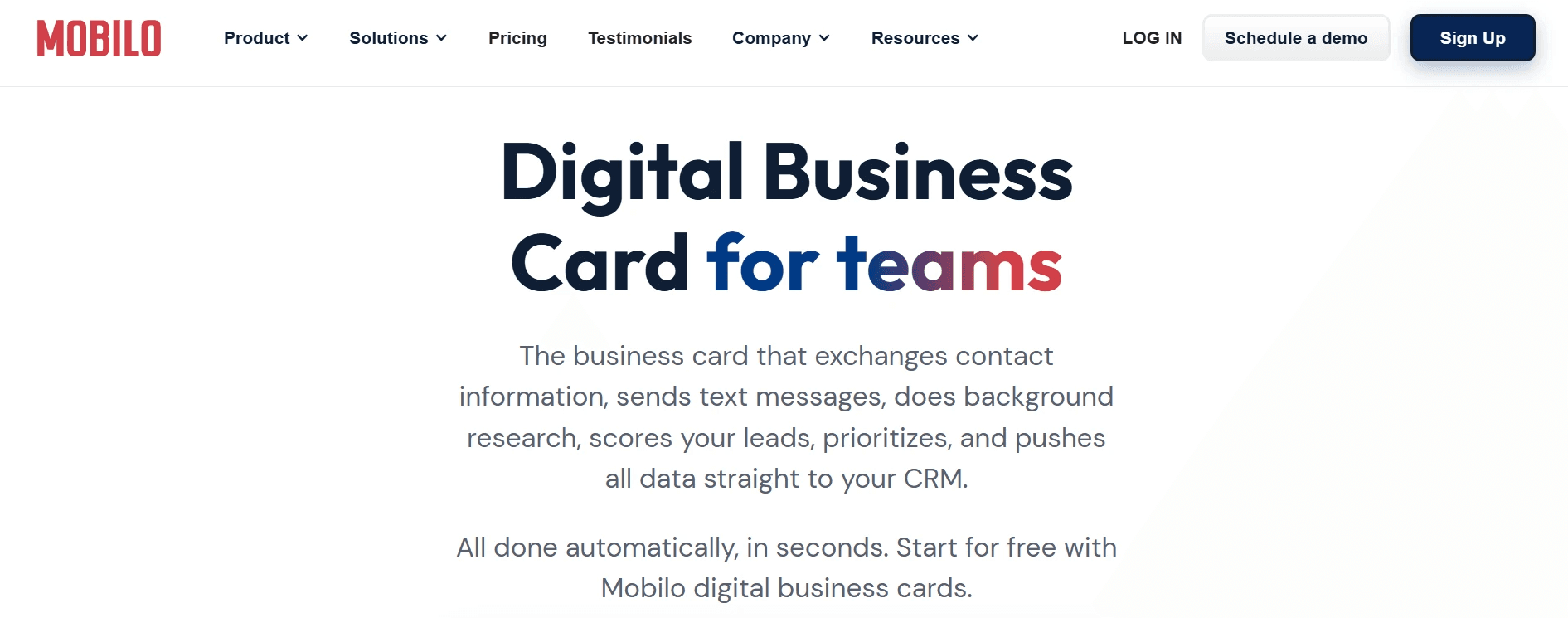
Mobilo Card provides smart digital business cards that help teams and professionals instantly share contact details, capture leads, and connect more effectively online and offline.
2. Eventleaf - Best Badge-Scanning Lead Retrieval for Trade Show Exhibitors

Eventleaf is a solid choice for exhibitors who need reliable badge scanning without committing to a high-cost annual platform. It handles lead qualification with notes and tags on the floor, works on iOS and Android, and connects to CRM via export. The limitation that matters to Sales Directors running multi-rep booths: lead assignment to individual reps requires manual post-event cleanup, so if rep-level CRM ownership is a priority, Eventleaf is a data collector rather than a workflow closer.
3. Tap - Best NFC Digital Business Card Platform for Global Enterprise Sales
Tap is built for enterprise sales teams that operate across multiple regions and need consistent digital card provisioning at scale. NFC tap-to-share is the core mechanic, with CRM integration and enrichment included. It competes directly with Mobilo on the NFC digital business card use case and wins on brand customization depth for global deployments. The trade-off is pricing opacity: enterprise custom quotes make it harder to benchmark against per-seat alternatives during procurement, which can slow internal approval for mid-market teams.
4. SpotMe - Best Universal Lead Capture Module for Medical Congresses & Large Conferences
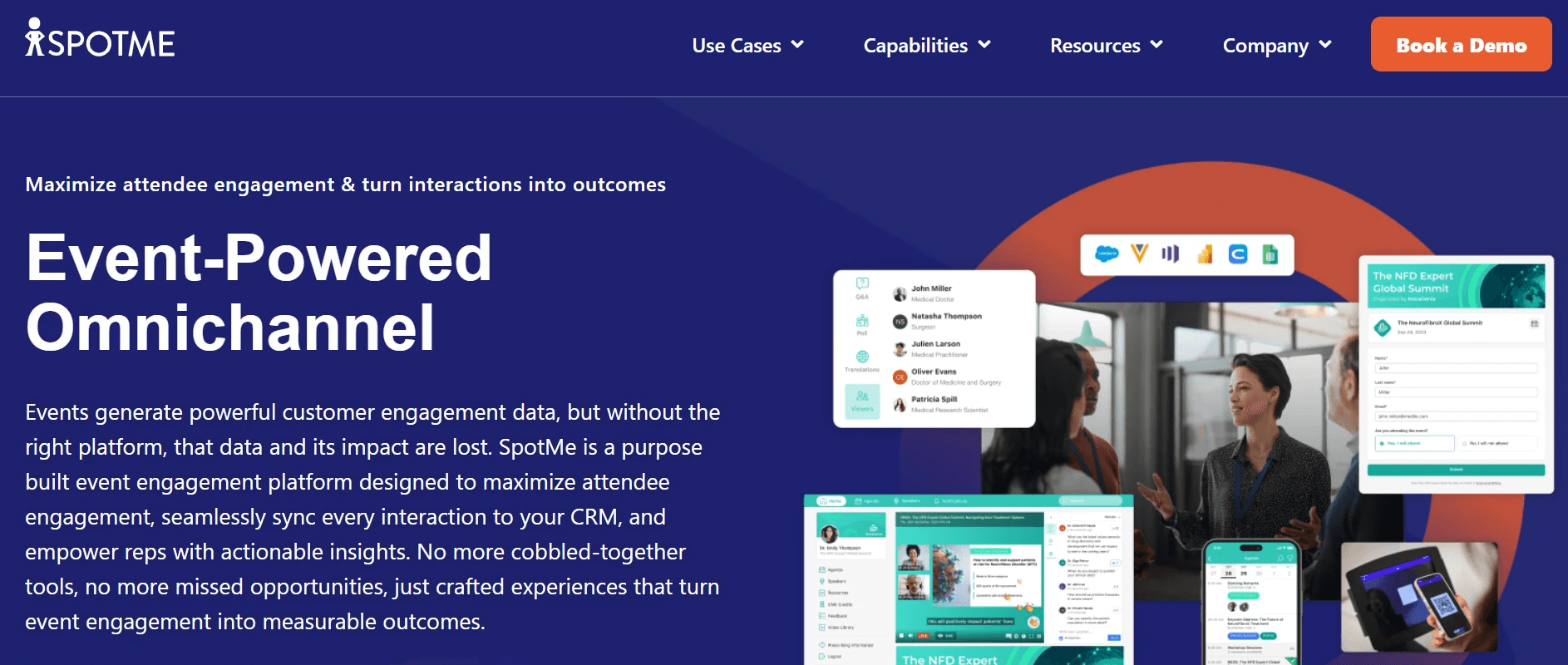
SpotMe is purpose-built for regulated industries, particularly pharma and medical device companies running congresses under compliance constraints. Its universal lead capture module works across badge providers, includes AI enrichment, and integrates natively with major CRMs. The platform is genuinely strong for large, complex events. The limitation: it is event management infrastructure first and lead capture second, so teams that only need capture without a full event platform will pay for features they will never use.
5. Mobly - Best Lead Capture App with ICP Scoring & Data Enrichment Post-Show

Mobly combines AI-powered OCR with human verification for badge and card scanning, which is a meaningful accuracy differentiator over pure OCR tools. Its native CRM sync and ICP scoring layer make it a genuine data collector with enrichment capabilities. Pricing is a flat annual fee but is not publicly transparent, which creates a friction point during procurement. Best suited to SMB and mid-market teams that want enrichment without the complexity of a full event platform; less ideal for teams that need rep-level lead routing out of the box.
6. BadgeScanner - Best Lightweight iOS App for Independent Exhibitors
BadgeScanner is the lowest-friction entry point on this list: an iOS app that scans badges and exports contact data without requiring a platform subscription or show-specific hardware rental. For an independent exhibitor or a very small team attending one or two shows per year, it removes the cost barrier entirely. The honest trade-off is significant: there is no CRM sync, no enrichment, and no rep-level assignment. Every lead still requires manual entry after the show, which means BadgeScanner solves the physical capture problem while leaving the pipeline problem intact.
7. eylet - Best NFC Card for Trade Show Lead Capture with No Monthly Fee
Eylet targets exhibitors who want NFC tap-to-share without a recurring software subscription. The no-monthly-fee model is genuinely attractive for teams that exhibit infrequently or want to equip a small number of reps without a per-seat commitment. The limitation is the same as any hardware-only NFC card play: without a connected lead capture workflow and CRM routing layer, the tap captures a contact but does not push it anywhere automatically. Best for teams that prioritize low cost over pipeline automation.
8. Zuddl - Best Lead Capture App for B2B Event Teams Running Hybrid Conferences
Zuddl is built for teams that run both in-person and virtual components within the same event, and its lead capture sits inside a broader hybrid event management platform. AI enrichment and native CRM sync are included. The trade-off for Sales Directors evaluating it as a standalone lead capture tool: Zuddl is most valuable when the team also uses it to manage the event itself. Buying it purely for booth-level lead capture is like buying a full event production suite for one feature.
9. momencio - Best AI-Powered Lead Capture for Trade Show Exhibitor ROI Measurement

Momencio differentiates on post-show ROI measurement rather than capture speed. Its AI layer connects badge scan data to content engagement tracking, so Sales Directors can see not just who was scanned but which collateral each contact interacted with and how that maps to pipeline. For teams that need to justify event spend to a CFO, that attribution layer is genuinely useful. The limitation: setup requires more pre-show configuration than lighter tools, and the ROI reporting value only materializes if the team is consistent about content tagging before the event.
10. HubSpot Business Card Scanner - Best Lead Capture for Teams Already in the HubSpot CRM Ecosystem
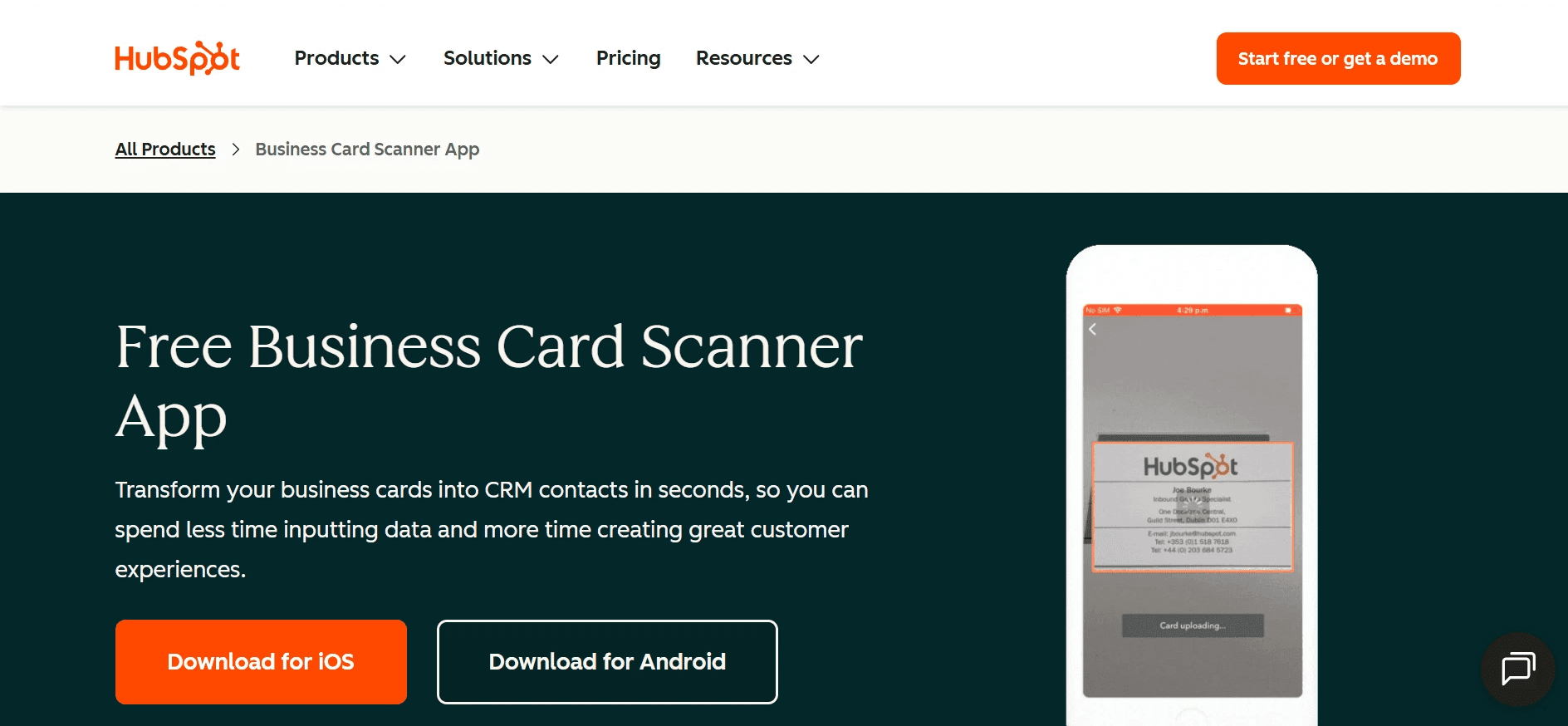
The HubSpot Business Card Scanner is exactly what it sounds like: an OCR-based card scanner built into the HubSpot mobile app that pushes contacts directly into HubSpot CRM. For teams already on HubSpot, it removes the integration question entirely and costs nothing beyond the existing license. The limitation is equally clear: OCR accuracy on physical cards is imperfect, there is no badge scanning capability, and it does not work offline. It is the right tool for HubSpot teams at small events; it is not the right tool for high-volume trade show booths.
11. Salesforce Event Lead Capture - Best for Enterprise Teams Running Salesforce as System of Record
Salesforce's native event lead capture is the obvious choice for enterprise teams where Salesforce is the system of record and IT will not approve a third-party integration. Badge scanning, lead qualification, and direct Salesforce record creation are all included within the existing license structure. The trade-off is flexibility: the tool is optimized for Salesforce-native workflows, which means teams using HubSpot, Zoho, or a custom CRM get no value from it. Also worth noting: configuration requires Salesforce admin involvement, so "no IT headaches" is not a realistic expectation for this option.
12. iCapture - Best Kiosk-Style Lead Capture for High-Traffic Conference Booths
Its human verification layer, real people reviewing OCR transcriptions rather than automated processing alone, produces accuracy rates that pure OCR tools cannot match consistently. It works offline, scans 2D barcodes and QR codes across badge providers, and connects natively to CRM. Pricing starts at $8,000 per year, which makes it the right call for teams running five or more major shows annually but hard to justify for lighter event schedules.
13. Cvent LeadCapture - Best Lead Retrieval for Organizers Running Cvent-Managed Events
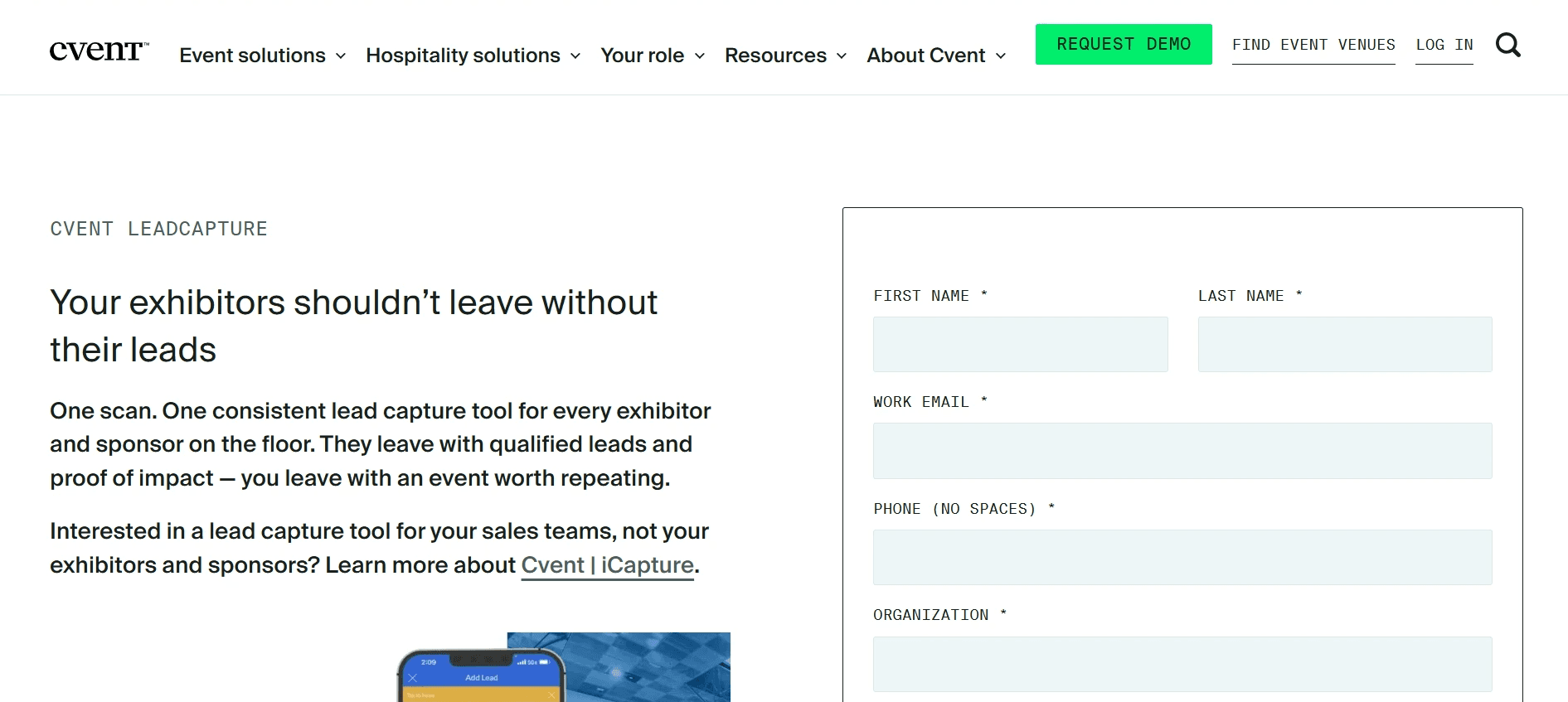
Cvent LeadCapture is the standard choice for large conferences where the event itself runs on the Cvent platform. Lead qualification with notes, tags, and scores works on iOS and Android, offline QR sharing is supported, and the integration with Cvent's event data is tighter than any third-party tool can replicate. The limitation is just as clear: if the event does not run on Cvent, the native advantage disappears and the custom pricing is harder to justify against lighter alternatives. Best suited to exhibitors at Cvent-managed enterprise conferences.
14. Bizzabo - Best Lead Capture for Event Organizers Wanting Attendee Intelligence Across the Full Event Lifecycle
Bizzabo is an event management platform with lead capture built in, not a lead capture tool with event management bolted on. For event organizers who want attendee behavioral data, session engagement, and lead capture unified in a single platform, it is a strong fit. Bizzabo's G2 reviews and analyst coverage consistently cite its attendee data unification as the primary differentiator over standalone capture tools. For Sales Directors evaluating it purely as a booth-level capture tool, the scope is wider than needed and the pricing reflects that. The right buyer is an event team that owns the full conference experience; the wrong buyer is an exhibitor looking for a lightweight capture app.
15. Whova - Best Lead Capture App for Academic Conferences & Association Events
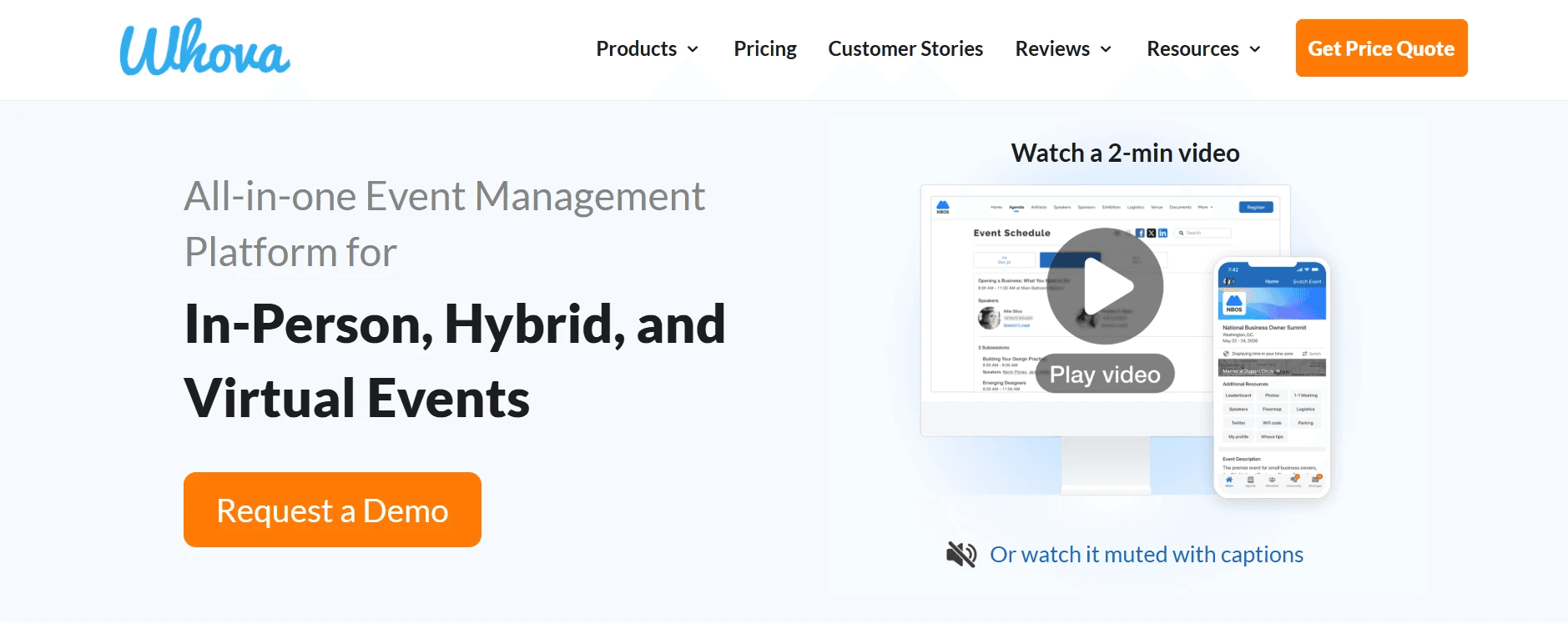
Whova is the dominant platform for academic conferences, association events, and professional society meetings where in-app networking and meeting scheduling matter as much as badge scanning. Its Exhibitor Hub and in-app lead capture work well within that context. The limitation for sales-driven teams: Whova is attendee-experience software first, and its lead capture does not push enriched, rep-assigned records to CRM automatically. Pricing starts at $1,000 per event. Best for teams exhibiting at academic or association conferences where the audience is already using the Whova app.
16. Grip - Best AI-Powered Matchmaking & Lead Capture for Hosted-Buyer Events

Grip is built specifically for hosted-buyer formats where pre-scheduled one-to-one meetings are the primary lead generation mechanism. Its AI matchmaking engine connects buyers and sellers before the event, and lead capture is embedded in that meeting workflow. For teams exhibiting at hosted-buyer trade shows, Grip is a genuine workflow closer. For teams at open-floor trade shows where unscheduled booth visits are the norm, Grip's matchmaking infrastructure is largely irrelevant and the lead capture capability alone does not justify the platform cost.
17. Expo Logic - Best Hardware-Inclusive Lead Retrieval for Large-Scale Trade Show Organizers

Expo Logic is a hardware-first lead retrieval platform designed for large trade show organizers who need to provision scanning devices across hundreds of exhibitor booths. It handles badge printing, session scanning, and lead retrieval under one contract. For exhibitors, it is often the show-provided option rather than a tool they select independently. The limitation for Sales Directors: show-provided hardware typically outputs a flat CSV with no rep-level assignment, no enrichment, and no automatic CRM routing. It solves the physical capture problem at scale; it does not close the pipeline gap.
Related Reading
- Etiquette For Networking In Online Conferences
- Measuring Event Roi
- Trade Show Sales Tips
- Trade Show Follow Up Best Practices
- How Do You Find The Roi Of A Trade Show
- Trade Show Sales Funnel
- What Is Trade Show Marketing
- Event Lead Management
- B2b Trade Show Best Practices
- Conference Lead Generation
- B2b Trade Show Marketing
Which Conference Lead Capture Tool Should You Choose for Your Specific Use Case?
Picking the wrong conference lead capture tool doesn't just mean a suboptimal experience on the show floor. It means the tool you trusted actively breaks your pipeline at the moment when follow-up velocity matters most. The decision is a workflow match problem, and four operational variables determine the right answer before you ever open a feature comparison page.
Four Selector Questions to Answer Before You Evaluate Any Tool
Answer these four questions first, in order:
Before choosing an event lead-capture platform, answer four questions that determine the technical requirements of your setup:
- Which badge ecosystem does the show run? → Determines whether native or third-party scanning is required.
- How many reps share your booth simultaneously? → Determines whether you need per-rep lead assignment or shared capture.
- Which CRM owns your pipeline? → Defines which native integrations are non-negotiable.
- Is offline mode a hard requirement? → Convention-center Wi-Fi failure is a structural risk, not an edge case.
A significant share of lead capture app failures at convention centers trace directly to unreliable Wi-Fi, making offline reliability a structural requirement rather than a nice-to-have checkbox. Getting even one of these wrong means the tool ranked highest in a listicle will create more cleanup work than it prevents. The answers narrow your viable tool set faster than any feature matrix will. A six-rep team at a Salesforce shop exhibiting at a Cvent-ecosystem show has a completely different match than a two-person SMB team at a regional trade event. Treat these four questions as your decision journal entry before procurement ever sees a budget request.
Cvent-Ecosystem Shows - When Cvent LeadCapture Fits
For enterprise shows where Cvent manages the badge infrastructure, Cvent LeadCapture is the lowest-friction choice because the badge data flows natively into the retrieval system without any middleware or manual mapping. The integration is pre-built at the show level, not the tool level, which eliminates the most common source of field-mapping errors. Cvent LeadCapture is not the right answer when your show calendar is mixed, when your team needs per-rep lead assignment at scan time, or when your CRM is not already part of the Cvent ecosystem. In those cases, the path of least resistance becomes the path of most constraint.
High-Volume, Multi-Rep Teams - CRM-Ready Records at Scan Time
What matters is which tool produces a CRM-ready record, assigned to the correct rep, at the moment of the scan. Manual post-show CRM entry is structurally incompatible with follow-up velocity at scale, and the gap between enterprise-tier and SMB-tier tools here is not a matter of polish or price. This is where a platform built around physical-plus-digital capture changes the equation.
Mobilo's Teams plan ($4/month per member, billed annually) and Business plan ($5/month per member, billed annually) both include lead enrichment, lead capture and management, unlimited leads and contacts, custom lead capture forms, and integrations through Zapier, so the record that enters your CRM is enriched and routed from the first tap, not reconstructed hours later from a badge-scan CSV. Critically, both plans also include no-internet QR sharing, which means the offline reliability problem identified in selector question four is addressed at the product level, not solved with a workaround. The visibility gap that kills post-show follow-up is not just about whether leads were captured; it is about whether managers can see which reps are actively networking and converting connections into pipeline.
Mobilo's Teams and Business plans include insights and analytics and team management specifically to surface that signal: you get visibility into which reps are actively networking and converting connections into pipeline, upon card delivery and within minutes of first tap, rather than waiting until post-show debrief reveals a coverage gap that can no longer be closed. Every Team card option includes unlimited taps and scans, full team data analytics and CRM integrations, team management, and the ability to control, lock, and override data fields, so the record each rep produces is structurally consistent, not dependent on individual data hygiene.
The Business plan adds enterprise SSO, HR directory sync, a custom domain, central billing, and, for qualifying deployments of 100 seats or more, white-glove onboarding and a custom-built landing page. For large booth teams where onboarding friction and brand consistency are their own operational risks, those features move from nice-to-have to load-bearing. A two-person SMB team at a regional event and a 20-rep enterprise booth at a national trade show are not the same procurement problem, but both share the same structural failure mode: leads captured on the show floor that never convert because follow-up was too slow.
Choosing a tool that produces CRM-ready, rep-assigned records within minutes of first use, and keeps working when convention center Wi-Fi fails, is the only way to keep follow-up velocity inside the window where it matters.
Related Reading
- Which Networking Software Is Best For Conferences
- Trade Show Booth Ideas To Attract Visitors
- Conference Lead Capture
- How To Measure Trade Show Effectiveness
- Virtual Event Success Metrics
- Trade Show Roi
- Trade Show Lead Generation Ideas
- What's The Best Event Lead Generation Software
- Post-Trade Show Marketing Strategies
- Best Trade Show Giveaways
Next steps
If your conference leads are stalling in a manual queue while follow-up windows close, the path forward starts with eliminating the data-entry step between the handshake and the CRM record. Start with our digital business card.
The 5-minute response window that makes contact 100x more likely means every hour a lead sits unsynced is a conversation that will never happen. The pipeline recovery figures from Landsea Homes ($21,000/year) and The Falcon Group ($6,000/year) mean the ROI case is not about efficiency, it is about recovering contacts that would otherwise disappear without a trace on any report. Together, they point to one action: replacing the post-show data-entry ritual with a capture workflow that writes a clean, enriched, rep-assigned CRM record before the rep walks away from the booth.
Start with a digital business card from Mobilo. Every tap or scan creates an enriched, rep-attributed CRM record in real time, across all plans, with no manual step between the conversation and the pipeline.
Frequently Asked Questions
How quickly do I need to follow up with a lead after meeting them at a conference?
Within 5 minutes if at all possible. According to LeanData, leads contacted within 5 minutes of an interaction are 100x more likely to connect than those reached after 30 minutes, meaning every hour a captured contact sits unsynced is pipeline left on the table.
What does AI-powered lead enrichment actually do for event contacts?
It automatically fills in missing contact details, including job title and company name, before the record is written to the CRM. This means data quality is determined by the tool at the point of capture, not by what a rep managed to collect in a two-minute booth conversation, eliminating the manual cleanup that typically falls on a CRM admin after the show.
Why do so many of our trade show leads end up with blank source fields or tagged as 'Offline' in the CRM?
This is a common failure of Zapier-based middleware connections, which typically dump a flat row of data into a zap that fires on a delay and often drop custom field mappings in the process. The result is that leads arrive with blank source fields, making it impossible to attribute closed deals back to specific conference touchpoints. Native or properly mapped integrations write enriched, attributed records directly to the CRM before the contact lands.
What happens to leads collected from people who weren't wearing a badge at the event?
Badge-only capture misses them entirely, the VP who walked the floor without scanning in or the partner who stopped by mid-conversation. A paper business card scanner solves this by converting physical cards into digital records within the same workflow, so reps have a single capture surface regardless of whether the other person tapped, scanned a QR code, or handed over a card.
If six reps are working the same booth, how do we make sure each lead is assigned to the right person?
Per-rep lead assignment closes this gap by attributing every scan to the rep who made it at the moment of capture, so the CRM record carries the correct owner from the start and follow-up responsibility is never ambiguous. When reps share a single badge scanner and a generic login, every lead gets pooled into an undifferentiated export with no way to know which rep had the conversation, how qualified the contact was, or whether anyone followed up.