.avif)

How to Master Etiquette for Networking in Online Conferences
On This Page
Good virtual networking etiquette gets you into the conversation. It does nothing to save it. Here is why capturing contacts at the moment of exchange matters more than any follow-up habit.
Most sales and business development professionals assume the networking problem is behavioral: if they just send a timely follow-up message and present well on camera, the contacts will convert. The lag between meeting a prospect and entering them into the CRM is accepted as normal, unavoidable friction. That's useful, but it covers only the visible half of the problem.
The invisible half, the part that actually determines whether a warm conversation becomes pipeline, is what happens to the contact's details in the 48 hours after the session ends. For teams attending events regularly, that gap is where revenue quietly disappears. A BDR spends 40 minutes in a conference breakout room, has three genuinely warm conversations, exchanges LinkedIn handles in the chat, and by Thursday has no record of any of them in Salesforce.
See our digital business card for how this works in practice.
That failure isn't a behavior problem. It's a structural one, and no amount of etiquette advice fixes it. Standard etiquette guides cover the interaction layer: camera on, crisp introduction, active listening, polite exit. They treat the networking moment as the finish line. In practice, it's the starting line. The contact still needs to move from a chat window into a CRM record before any follow-up can happen, and most guides say nothing about how that transfer occurs or who is responsible for it.
The vast majority of new contacts never enter a CRM because the manual entry step is simply too much friction after a full day of sessions. If a new contact is not logged at or immediately after introduction, the probability of that lead entering the pipeline drops sharply. Etiquette gets you into the conversation.
It does nothing to preserve it. The fix isn't better follow-up discipline. It's moving the capture step to the moment of exchange itself, so etiquette and data entry happen simultaneously rather than sequentially.
That's where contact-exchange tools close the gap: when a contact taps or scans a digital business card during the session, their details flow directly into the CRM in real time, with no manual entry required after the fact. This benefit is most pronounced for teams that attend events regularly and need a structured, repeatable lead-follow-up process; ad-hoc or solo attendees may find lighter-weight methods sufficient.
Key takeaways
- Polished camera presence and a well-timed follow-up message cover only half the networking problem, the invisible half is the gap between the conversation ending and the contact hitting your CRM.
- 90% of new contacts never enter a CRM because manual data entry creates too much friction between the networking moment and the follow-up action.
- Context evaporates fast: responding to a lead within five minutes makes you 100 times more likely to make contact than waiting just 30 minutes after a breakout room closes.
- Top-performing sales reps listen 57% of the time, in a virtual breakout, that ratio is a data-gathering discipline, not a social nicety.
- Five channels are open at every online conference simultaneously; without one place to reconcile them, warm contacts scatter before you've typed a single name.
- Goal-setting before an event is the step that makes contact-capture infrastructure worth having, most attendees skip it entirely.
- Mobilo's Contact Exchange and Lead Capture closes the loop by enabling two-way contact exchange the moment someone taps or scans a Mobilo card, feeding that contact directly into your CRM or contact list, no manual entry, no lost leads.
How to Prepare Goals Before a Networking Event So You Don't Wing It
The goal-setting step that makes contact-capture infrastructure worth having is also the one most attendees skip. Most sales managers and business development professionals believe the networking problem is behavioral: if they just send a timely follow-up message and present well on camera, the contacts will convert. The lag between meeting a prospect and entering them into the CRM is accepted as normal, unavoidable friction.
Arriving at a virtual conference without written goals is like opening your CRM on Monday morning and typing "follow up with people" as a task. It feels productive. It produces nothing.
The gap between a warm breakout room conversation and a pipeline entry is not a follow-up problem; it is a goal-setting problem that starts days before the event opens.
Why "Meet as Many People as Possible" Guarantees Zero Pipeline Movement
Vague goals produce vague results. When every contact feels equally worth collecting, none of them get prioritized, and industry data consistently shows that the overwhelming majority of new contacts never enter a CRM because the effort of sorting and entering them after the fact feels overwhelming. A goal like "meet as many people as possible" gives you no filter for deciding who deserves a follow-up call versus a polite LinkedIn connection. The contacts blur together by Tuesday, and the pipeline stays empty.
Concrete, Measurable Targets Before the Event Opens
Set a specific number and a specific role. "Five meaningful conversations with VP-level Operations contacts at this summit" is a goal. "Network a lot" is a wish. Professionals who define target roles, session counts, and conversation numbers before an event are consistently the ones who convert contacts afterward, not because they work harder in the room, but because they already know which conversations are worth capturing.
How to Turn Your Networking Goals Into a Contact-Capture Checklist
Decide before the event which contact types are worth logging, not after. If your goal is VP-level Operations contacts at companies between 200 and 1,000 employees, that criterion becomes your capture trigger. Use the following checklist to translate your goals into a capture-ready system before the event opens:
- Define a specific target role (e.g., VP-level Operations)
- Define a specific company size range (e.g., 200–1,000 employees)
- Set a concrete conversation count (e.g., five meaningful conversations)
- Identify which session types are highest-priority for those contacts
- Set your capture trigger: when a conversation matches your criteria, log it immediately; when it does not, move on without guilt
Most sales managers accept that some contacts will slip through; the real cost is that even the intentional ones evaporate between the session ending and the CRM being opened two days later. Mobilo's Contact Exchange and Lead Capture closes that gap by making capture instantaneous at the moment of exchange, so the goal-setting work you did before the event actually translates into pipeline entries rather than a list of names.
Related Reading
- Measuring Event Roi
- Trade Show Sales Tips
- Trade Show Follow Up Best Practices
- How Do You Find The Roi Of A Trade Show
- Trade Show Sales Funnel
- What Is Trade Show Marketing
- Event Lead Management
- B2b Trade Show Best Practices
- Conference Lead Generation
- B2b Trade Show Marketing
- Trade Show Lead Follow Up
How to Present Yourself Well on Virtual Calls and Make a Strong First Impression
The moment your audio cuts out mid-sentence in a breakout room, the other person's brain makes a fast, automatic judgment: this person isn't prepared. That judgment lands before you've said anything about your company, your product, or your value. According to Data Projections research, poor audio causes one in three participants to disengage entirely from a virtual meeting, and industry research confirms that low sound quality causes listeners to rate the speaker's content as less intelligent, independent of what was actually said. Your setup is not cosmetic. It is the first credibility signal the other party receives.
Here is the synthesis that matters: A professional on-camera setup, audio, lighting, framing, raises the credibility threshold required for a contact to even consider continuing a conversation after the session ends, but that credibility is entirely wasted if the exchange closes with a chat-window connection that is never captured. The technical environment creates the permission to be heard; it does not create the pipeline entry that follows. That pipeline entry has to happen immediately after setup, recipients see your details on the very first tap, within minutes of first use, meaning every second of credibility you build on camera can convert into a captured lead the moment the meeting ends.
Why Your Audio Quality Signals Credibility Before You Say a Word
Audio is trust infrastructure. A muffled microphone or an echo-heavy room tells the listener, at a subconscious level, that the conversation isn't worth their full attention. Data Projections documents that audio degradation is one of the fastest triggers for participant disengagement, not the content, not the speaker's expertise, but the fidelity of the channel carrying the voice.
Key takeaway: Poor audio causes one in three participants to disengage entirely from a virtual meeting, and research shows it makes listeners rate the speaker's content as less intelligent, independent of what was actually said.
The fix is not expensive: an entry-level USB cardioid microphone eliminates most room noise that built-in laptop mics pick up. If budget is a constraint, even a wired earbud mic outperforms the default. Skipping that step costs you credibility you cannot recover mid-conversation.
The same principle applies to what happens after the call ends. A contact who left the meeting impressed has a window, measured in minutes, where follow-through either confirms or erodes the impression you made. Mobilocard's Teams plan gives every team member a digital presence that is live upon card delivery and ready to capture leads on the first tap, with full team analytics and CRM integrations so that first impression translates directly into pipeline. The Teams plan supports unlimited team members, centralised billing, and lead enrichment, so the infrastructure that follows up on your audio credibility scales as your team does.
Camera Angle, Lighting, and Background - The Trust Signals You're Already Sending
A camera positioned below eye level reads as submissive on screen. A camera at eye level, paired with a single ring light placed in front of your face, reads as confident and present. A neutral background removes visual distractions that pull the other party's attention away from what you're saying. The three setup elements that signal professionalism before the conversation begins are:
- Ring light placed in front of your face
- Camera elevated to eye level
- Clean, neutral background
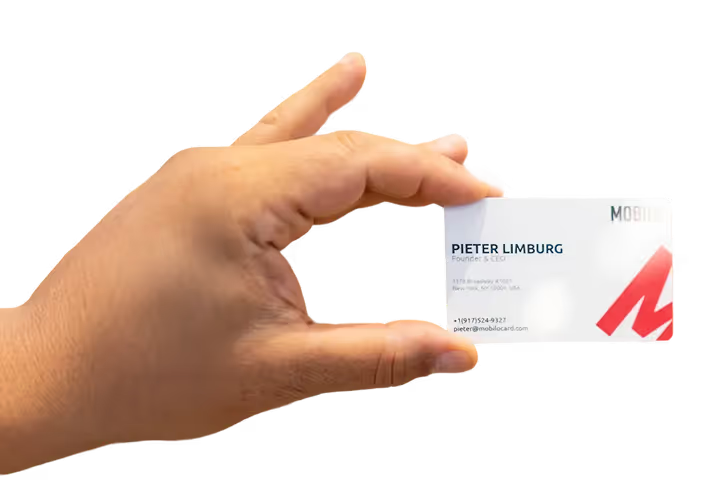
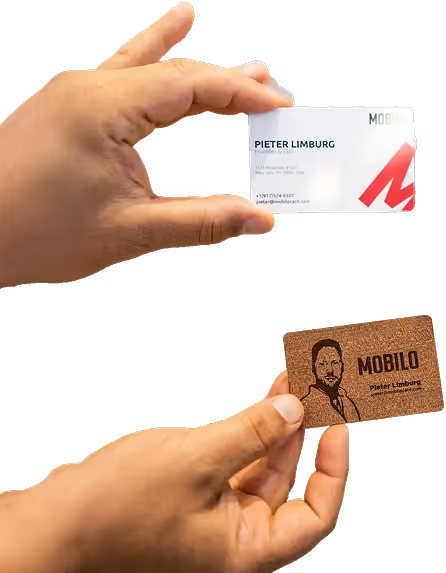
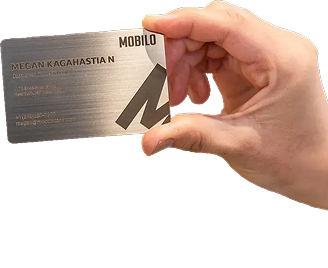
This three-point setup is available at a low cost and signals professionalism before the conversation begins. That visual professionalism extends to the card you hand or tap after the meeting. The Team, Custom Design Card pairs a custom-designed NFC card and QR code with the same team management, data-field control, and full team analytics that live behind every other Teams-tier product. For teams that want a premium material signal, the Team, Metal Custom Design Card and the Team, Wood Custom Design Card are also available. Each option delivers unlimited taps and scans, so the card you hand a contact after a polished on-camera call keeps working without a usage ceiling.
Eye Contact With the Lens, Not the Screen
The instinct is to watch the other person's face on screen. The effect that creates, however, is that you appear to be looking slightly downward, which reads as uncertainty. Looking directly into the lens creates the perception of direct eye contact for the person on the other side.
Research on virtual audio and perception shows that first impressions in video settings are shaped by environmental signals, including visual ones, before the speaker's words register, which means your eye-line choice shapes the other party's confidence in you before your introduction is complete. First impressions in virtual settings form fast, and they expire fast. The window between a strong on-camera introduction and a forgotten connection is measured in minutes.
Mobilocard's Teams plan includes a complimentary Digital Wallet Card so that even before a physical card arrives, every team member has a shareable digital credential ready to deliver immediately after setup, giving that first-tap moment to the contact while the impression from the call is still fresh. Combined with 24/7 customer support, Zapier integrations across 6,000 apps, and custom lead capture forms, the Teams plan turns the credibility you build on camera into contacts your team can actually act on.
How to Practice Active Listening and Avoid Dominating or Overselling in Virtual Conversations
Most virtual networking conversations fail before the product ever comes up, because one person talks too much and listens too little. The difference between walking away with a qualified lead and walking away with nothing often comes down to how much silence you're willing to hold, how visibly you signal attention on camera, and whether you open with their problem instead of your pitch. Get those three things right, and every detail someone shares becomes a data point you can act on later, whether that's a follow-up message or the note you attach to a digital business card exchange.
The 70/30 Rule in Virtual Breakouts - Why Talking Less Surfaces More Qualifying Information
According to Gong's conversation intelligence research, top-performing sales reps listen 57% of the time and talk only 43%. That ratio isn't a social nicety; it's a data-gathering discipline. The rep who asks "What's the biggest friction point in your current event strategy?" and then stays quiet walks away with a CRM-ready pain point. The rep who fills that silence with a product pitch walks away with nothing actionable.
57% top reps listen more than they talk
Active Listening Signals That Read on Camera
Virtual multitasking is rampant, which means genuine attention is genuinely rare. The active listening signals that register most clearly on camera include:
- Nodding visibly during the other person's response
- Using brief verbal affirmations like "that makes sense"
- Following up with a specific question that references a detail they just shared (e.g., "You mentioned Q3, is that a budget cycle or a board deadline?")
Gong's data also shows that top reps ask a notably higher number of discovery questions per call, with each additional question correlating to higher close rates. The follow-up question is not just rapport; it is qualification in real time.
Don't Lead With Your Product - Lead With Their Problem
The overselling trap is easy to fall into when you have 10 minutes and a prepared pitch. A rep who opens with "we help companies like yours automate lead capture" closes the conversation down. A rep who opens with "what does your current post-event follow-up process look like?" opens it up, and the answer usually contains role, company size, and pain point in a single sentence. The conversation itself is the qualification form; the product mention earns its place only after the problem is named.
How to Turn Every Volunteered Detail Into an Actionable Follow-Up Note
Role, pain point, decision timeline: every detail a prospect volunteers during a virtual session is a field that belongs in your pipeline, not in your short-term memory. Even disciplined listeners face memory decay the moment the session ends and the next calendar invite fires.
How to Use Diverse Networking Methods and Channels - Including LinkedIn: Without Losing the Thread
Five channels are open at every online conference simultaneously, and each one feels productive while you're in it. The problem surfaces at 6 p.m., when you close your laptop and realize your contacts are split between session chat, Q&A threads, LinkedIn requests, the event platform's native messenger, and a breakout room conversation you half-remember. Without a single place to reconcile them, multi-channel activity doesn't multiply your pipeline; it multiplies the places a lead can quietly disappear.
The core synthesis here is worth naming directly: as virtual events expand across conferences, webinars, expos, and entertainment formats, in a market growing at an 18%+ CAGR, the contacts a sales rep must track are no longer concentrated in a single touchpoint but distributed across multiple simultaneous channels. LinkedIn connection requests, chat logs, and breakout-room notes are not complementary threads but competing decay vectors that each independently approach zero without a unified capture system. One of the most common struggles we see among sales reps attending online events is running out of a reliable way to share their own contact information mid-session, and the moment you can't instantly hand someone your details, you're already losing the lead.
That's exactly the gap Mobilo closes: sales professionals can share contact information and digital profiles instantly, without running out of physical cards or fumbling for a follow-up message.
The Five Channels and How Each One Leaks
Each of the five channels open at a typical online conference has its own failure mode:
Event networking channels can generate valuable prospects, but important lead information is easily lost when conversations are fragmented or short-lived:
- Session chat – Moves quickly and can bury names within minutes, making promising contacts difficult to recover.
- Q&A threads – Often reward the loudest comment rather than the strongest prospect, making quality signals harder to identify.
- LinkedIn requests – Can remain pending without any context, leaving reps unsure why the connection matters.
- Event platform DMs – Live inside a platform that may rarely be revisited after the conference ends, causing valuable conversations to disappear.
- Breakout rooms – Often provide the highest-signal conversations, but structured discussions can last under ten minutes, leaving a very short window to capture actionable lead information.t
Breakout Rooms - Highest Signal, Shortest Window
Breakout rooms consistently produce the most candid conversations at any online conference. People are in smaller groups, guards are lower, and role-specific problems surface naturally. The limitation is time.
When the room closes, there is no physical card exchanged, no spatial memory to anchor the name, and no automatic record. A rep who doesn't capture the contact detail in real time is relying entirely on memory and a chat log that the platform may archive or delete. This is where a Mobilo digital business card changes the outcome.
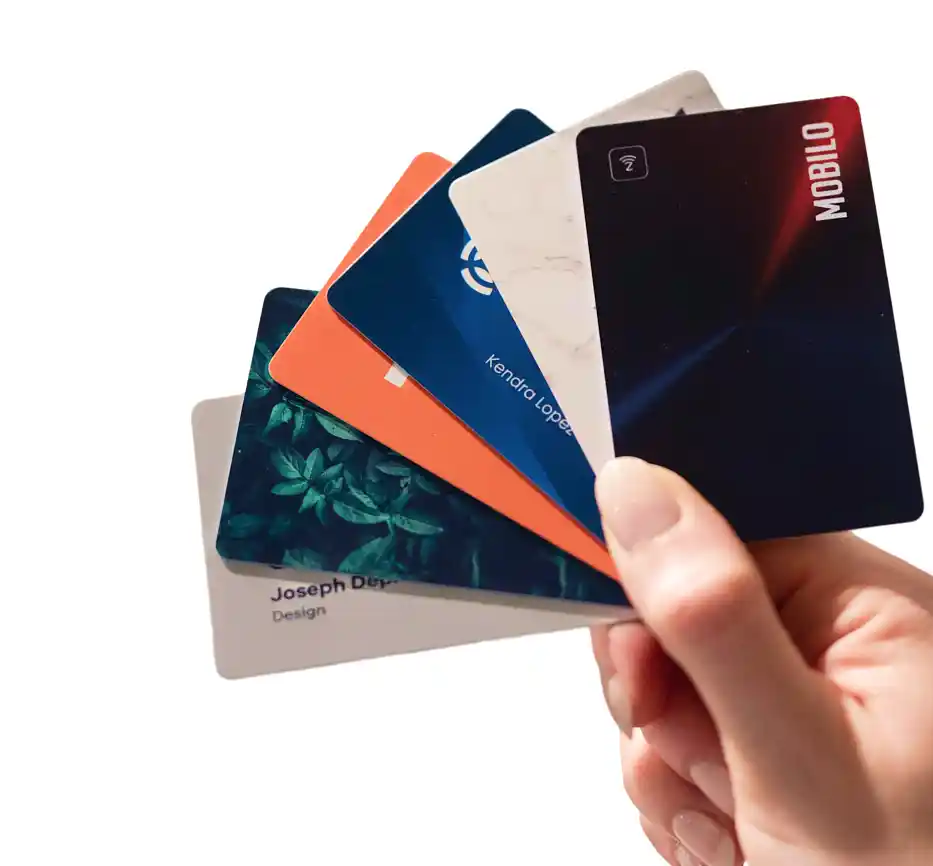
With a Mobilo card, whether a Team, Digital Wallet Card (available at $0 + $4/month on the Teams plan) or a custom-designed NFC card with QR code, a rep can share a complete digital profile instantly via a QR code scan, no internet connection required on the recipient's end thanks to Mobilo's no-internet QR sharing feature. The contact lands in the recipient's phone before the breakout room closes, rather than in a mental note that evaporates by morning. Teams managers can set up and deploy digital business cards across their entire sales team quickly and without IT headaches. The Teams plan supports unlimited team members, central billing, team management, and full control, lock, and override of data fields, all billed at $4/month annually.
Writing LinkedIn Requests That Reference the Session
A connection request that says "I saw your question about sales cycle compression in the RevOps breakout" converts at a measurably higher rate than a blank invite. Personalized outreach consistently outperforms generic messages on acceptance rate, and referencing a specific session is the fastest way to signal that the request is intentional, not a volume play. Keep it to two sentences: what you noticed, and one concrete reason to continue the conversation. Attach your Mobilo profile link, generated automatically with every card, so the recipient can review your full details without a back-and-forth exchange.
How to Reconcile Contacts Spread Across Multiple Channels After the Event
The more channels you work during a conference, the more critical a single capture layer becomes. Mobilo's lead capture and management tools, available across the Pro, Teams, and Business plans, pull contacts from every channel into one place, with lead enrichment, unlimited leads and contacts, and thousands of integrations through Zapier to push records directly into the CRM your team already uses. The paper business card scanner means even a physical card exchanged in a hybrid session doesn't fall through the cracks.
Insights and analytics let managers see which reps are generating taps and which channels are actually converting, turning the post-event contact reconciliation from a manual chore into a dashboard review. For organizations that need enterprise-grade deployment, the Business plan adds enterprise SSO, HR directory sync, and, for teams of 100 or more, white-glove onboarding and a custom-built landing page, all backed by a virtual events market that makes this infrastructure a competitive necessity, not a nice-to-have.
Turning Session Chat and Q&A Threads Into Recoverable Leads
Session chat and Q&A threads are the channels most reps treat as passive, scrolling through them opportunistically rather than working them with the same intentionality they bring to a breakout room. That instinct is understandable: the pace is fast, the signal-to-noise ratio is low, and a sharp comment can disappear beneath thirty replies in under two minutes. The correction is not to slow down the chat but to build a capture habit that runs parallel to it.
When a name surfaces in chat with a comment worth following up on, the action is immediate: copy the name, drop it into a running note with one line of context, and move on. At the end of the session, that list becomes the input for LinkedIn requests written while the session content is still fresh. The same logic applies to Q&A threads, where the person asking the most operationally specific question is often the highest-intent prospect in the room, not the most upvoted one.
Reps who share their Mobilo profile link directly inside a chat reply or Q&A response, rather than waiting for a private message exchange, give the contact a frictionless path to their full details in the same moment attention is highest. Because every Mobilo card generates a permanent, shareable profile link automatically, dropping it into a public thread takes seconds and works whether the recipient is on mobile, desktop, or any device, without requiring an app download or an account on either side.
Related Reading
- Which Networking Software Is Best For Conferences
- Trade Show Booth Ideas To Attract Visitors
- Conference Lead Capture
- How To Measure Trade Show Effectiveness
- Virtual Event Success Metrics
- Trade Show Roi
- Trade Show Lead Generation Ideas
- What's The Best Event Lead Generation Software
- Post-Trade Show Marketing Strategies
- Best Trade Show Giveaways
How to Follow Up After Connecting: and Why the Window Is Shorter Than You Think
Most people treat follow-up as something that happens after the event wraps up, but by then the window has already started closing. Virtual connections decay faster than in-person ones because there are no physical anchors to keep the memory of a conversation alive, which means the quality of your follow-up depends almost entirely on how well you captured context in the moment. What you do in the minutes and hours after a breakout room closes, and what data you actually have to work with, determines whether a promising exchange turns into a real conversation or disappears into a chat log no one reopens.
The Network Decay Clock Starts the Moment the Breakout Room Closes
Context evaporates faster than most reps expect. According to DemandLocal's CRM lead response time research, responding to a lead within five minutes makes you 100 times more likely to make contact than waiting just 30 minutes. That window is not a follow-up etiquette guideline. It is a structural ceiling, and manual post-event data entry cannot clear it. The moment the session ends, the clock is already running against you.
Key takeaway: Responding to a lead within five minutes makes you vastly more likely to make contact than waiting just 30 minutes, a ceiling that manual post-event data entry structurally cannot clear.
Why Virtual Contacts Decay Faster Than In-Person Ones
In a physical event, a name badge, a handshake, and a specific room create spatial memory anchors that keep a face tied to a conversation for days. Virtual sessions offer none of that. There is no card to find in a jacket pocket, no lobby you both walked through. Without a physical anchor, the mental association between a name and a pain point dissolves within hours, leaving only a LinkedIn notification and a chat log no one will reread.
Personalization Is Only as Good as the Data You Actually Captured
A follow-up email that opens with "great connecting at the conference" reads as generic because it is generic. The qualifying detail, the specific phrase the prospect used to describe their problem, the timeline they mentioned, the team size they referenced: all of that context is only useful if it was recorded at the moment of exchange. Personalization requires data, and data requires capture. Skipping the capture step makes personalization architecturally impossible, regardless of how good the follow-up template is.
The 24-Hour Rule Is Meaningless If Your CRM Has Never Heard of This Person
The follow-up message is not the bottleneck. The missing CRM record is. Sending a polished email within 24 hours to a contact who does not yet exist in your pipeline means your sales engagement tools cannot trigger sequences, your manager cannot see the lead, and your own memory is doing the work your system should be doing.
The 24-hour rule assumes the contact was captured in real time. When it was not, the rule is advice built on a foundation that was never laid. Industry research reinforces the same principle: speed only converts when the underlying contact record already exists and is actionable.
This is where a structured contact exchange workflow changes the outcome. When Mobilo's Lead Capture and Management feature is in place, available on every plan, including the Teams and Business plans, a contact's name, role, company, and any notes typed during the session flow directly into the CRM before the breakout room fully closes.
- Lead enrichment
- Unlimited leads and contacts
- Custom lead capture forms
- 6,000 integrations through Zapier
So the record that lands in your pipeline is already connected to the sequences your team has built. After initial team setup is complete, every new contact captured through a tap, QR scan, or the paper business card scanner routes automatically through that same pipeline, no manual re-entry, no delay, no record that the system has never heard of. The follow-up that goes out 12 hours later already knows who Sarah is, what she said, and which sequence should be running.
The Missing Layer - Contact Exchange That Feeds Your CRM From the First Hello
The professionals who handle contact exchange most gracefully share one structural trait: they have eliminated the gap between the moment a conversation ends and the moment that contact is recorded. That gap is where warmth dies. A lead who felt genuine rapport at the end of a chat, a coffee, or a conference floor introduction does not go cold because time passes; they go cold because the person they connected with never had a reliable way to move them from the physical or digital exchange into any system that could act on the relationship. Contact conversion gravity is the pull that works against you in that interval, and it operates on a simple principle: the longer a contact sits outside
"Users struggle to maintain relationship context on existing contacts, there is no native layer in standard contact apps to add notes, interaction history, or follow-up reminders at the point of contact."
Sixty seconds after a virtual breakout room closes, the cognitive window for that conversation starts narrowing fast. The chat log scrolls away, the browser tab gets buried, and the mental note you made about a promising prospect competes with 40 new emails before you've even poured a second coffee. The contact-exchange moment itself is where online conference leads structurally fail, and it is a fixable system problem, not a discipline problem.
Across the market, the majority of event leads never make it into a CRM at all. The failure is not that reps forget to follow up; it is that the capture step was never engineered to survive the cognitive load of a live session. What most teams report, consistently, is that the vast majority of new contacts do not enter the CRM because manual entry is simply too much of an effort.
That is not a motivation gap. That is a system design gap, and the system breaks at the moment of exchange, not the morning after. Posting your LinkedIn profile in the session chat feels productive. It is actually a one-directional broadcast. The other party may save it or may not; you receive nothing back in a structured, CRM-ready format. A genuine contact exchange requires both parties to walk away with data.
Without a mechanism that captures the other person's details at the same moment you share yours, the "exchange" is really just a hope that they will find you later. When a digital business card is dropped into the session chat or displayed as a QR code on-screen, the other party taps or scans to share their details back in real time, triggering automatic two-way capture that syncs directly into the rep's CRM through Mobilo's 6,000+ Zapier integrations and custom lead capture forms. The follow-up is not a memory exercise; it is a personalized message sent to a contact who already exists in the pipeline. The professionals who handle contact exchange most gracefully in virtual rooms are not the ones with the smoothest pitch.
Related Reading
- Best Tech Conferences For Networking
- Best Networking Apps for Trade Show Attendees
- Best Finance Conferences For Networking
- Trade Show Booth Ideas For Small Budgets
- Virtual Conference Booth Ideas
- Networking Activity Ideas For Conferences
- What Are The Top Trade Show Lead Retrieval Tools
- Trade Show Follow Up Email Examples
- Conference Lead Capture Tools
- Trade Show Lead Capture App
Next steps
If your warm conference conversations keep evaporating before they reach your CRM, the path forward starts with moving the capture step to the moment of exchange, not the morning after. Start with our digital business card.
The 57% listening ratio that top-performing reps maintain is also the primary mechanism for collecting the role, pain point, and timeline context that makes follow-up personal and relevant. But that qualifying intelligence is only useful if it was recorded at the moment of exchange. At the same time, as virtual events multiply across conferences, webinars, and expos, your contacts are no longer concentrated in one touchpoint but distributed across competing decay vectors that each approach zero without a unified capture system. Together, these two realities point to one action: a contact-exchange tool that syncs to your CRM in real time, before the breakout room closes and the context disappears.
Start with a digital business card so every conversation you have, across every channel, ends with a CRM-ready record instead of a chat log you will never reopen.
Frequently Asked Questions
What does virtual networking etiquette actually cover, and what does it leave out?
Virtual networking etiquette covers the interaction layer: camera on, a crisp introduction, active listening, and a polite exit. What it leaves out is everything that happens after the session ends, specifically, how a contact's details move from a chat window into a CRM record, and who is responsible for making that transfer happen.
How do I make sure I'm facilitating a conversation rather than dominating it?
Follow the 70/30 principle: according to Gong's conversation intelligence research, top-performing sales reps listen 57% of the time and talk only 43%. Lead with a question about the other person's problem, such as "What does your current post-event follow-up process look like?", and stay quiet long enough to let their answer surface qualifying details like role, company size, and pain point.
Do dress and setup actually affect how people perceive me in a virtual networking call?
Your setup is the first credibility signal the other party receives before you've said a word about your company or value. Research shows that poor audio quality alone causes one in three participants to disengage entirely, and listeners rate a speaker's content as less intelligent based on low sound quality independent of what was actually said, so a professional audio and camera setup raises the credibility threshold required for a contact to even consider continuing a conversation after the session ends.
Is it better to have a few quality conversations at a virtual event, or try to meet as many people as possible?
Quality, targeted conversations consistently outperform volume. When every contact feels equally worth collecting, none get prioritized, and the effort of sorting and entering them afterward feels overwhelming, which is why the overwhelming majority of new contacts never enter a CRM. Setting a specific target like "five meaningful conversations with VP-level Operations contacts" gives you a filter for which conversations are worth capturing and which aren't.
What's the best way to reach out to someone on LinkedIn after meeting them at an online conference?
The post does not detail a specific LinkedIn outreach sequence, but it does identify the core problem: contacts collected through LinkedIn requests during a session become one of several competing "decay vectors", alongside chat logs and breakout-room notes, that each independently approach zero without a unified capture system. The fix the post describes is moving the capture step to the moment of exchange itself, so the connection is logged in your CRM in real time rather than depending on a manual follow-up step days later.