.avif)


20 Best Carrd Alternatives for Landing Pages and Websites
On This Page
Simple landing page builders often fall short as online presence needs grow beyond basic functionality. Whether seeking better design flexibility, advanced features, improved mobile responsiveness, or a platform that better fits specific workflows, the right alternative can transform how individuals and businesses present themselves online.
The best link in bio tool, best website builders and landing page tools deliver professional results without requiring coding knowledge, offering everything from customizable templates to integrated marketing features. For those building a comprehensive digital presence, a digital contact card can complement any landing page strategy by creating dynamic, shareable profiles that update in real time.
Table of Contents
- Why Carrd Might Not Be Enough for Networking
- What to Look for in a Carrd Alternative
- Top 20 Carrd Alternatives to Consider in 2026
- Ditch Limitations and Upgrade Your Business Cards with Mobilo
Summary
- Landing page builders work well for showcasing portfolios or capturing initial interest, but they create a critical gap in professional networking. When someone visits your page and wants to connect, static platforms offer no automated follow-up, CRM synchronization, or relationship tracking. You've built a digital presence that answers "who are you?" but doesn't solve "how do we stay connected systematically?" This limitation becomes obvious the moment you're exchanging information with multiple people at an event or trying to convert page visitors into actual business relationships.
- Manual contact management kills networking momentum at scale. According to research, 90% of business contacts never make it into CRMs when professionals rely on traditional exchange methods like photographing business cards or manual data entry. The friction between meeting someone and following up systematically becomes the bottleneck between introductions and conversions. When 85% of jobs are never posted online, and real opportunities come from direct connections, losing contact information or forgetting to follow up means losing the relationships that actually drive growth.
- Simple page builders prioritize presentation over infrastructure, creating a trade-off between launch speed and business development capabilities. Platforms like Carrd load quickly and look clean because they avoid complex features such as conditional forms, dynamic content systems, and deep automation. This works perfectly for portfolios or event announcements. But when your business model depends on capturing qualified leads, routing them to sales teams, and measuring conversion rates across multiple touchpoints, aesthetic simplicity becomes an operational limitation. You're manually moving data between disconnected systems instead of building a pipeline that updates itself.
- Design freedom and feature abundance create their own problems without solving the networking gap. Alternatives like Wix and Squarespace offer unlimited pages, drag-and-drop control, and extensive template libraries, but they still treat contact capture as a static form submission rather than the start of a relationship workflow. You can build a more complex website, but you're still hoping people remember to email you later or manually import form submissions into your CRM. The additional design capability doesn't address the fundamental issue of what happens after someone decides they want to connect with you.
- Context preservation matters more than contact collection when it comes to networking and driving revenue. Knowing you met someone at a conference means nothing three weeks later if you can't remember which session you attended together or what problem they mentioned needing help with. Systems that automatically tag interactions with event names, conversation notes, and engagement signals turn scattered introductions into a qualified pipeline. When platforms generate 10x more leads at events compared to traditional methods, the advantage comes from eliminating manual processes that cause follow-up delays and relationship decay between initial contact and actual conversion.
- Digital contact card platforms like Mobilo address the infrastructure gap between making a good first impression and building relationships that convert by syncing contact details directly to CRMs with full context, triggering follow-up sequences based on engagement, and treating every interaction as data that feeds your growth system rather than information you hope to remember later.
Why Carrd Might Not Be Enough for Networking
Carrd builds beautiful single-page sites, but offers no automation when visitors capture your email or download your portfolio. There's no lead capture, no CRM sync, or follow-up trigger: a digital storefront with no cash register.

🚨 Warning: Without automation, you're essentially running a networking strategy with manual processes that don't scale.
This gap matters most when it comes to networking, which drives growth. A landing page answers "who are you?" but not "how do we stay connected?" or "how do I measure this relationship over time?" At events, exchanging information with multiple people, Carrd's static nature becomes apparent. You're manually typing contacts into spreadsheets or relying on people to email you later.

"A landing page without lead capture is like having a business card that disappears after someone reads it."
💡 Key Insight: The real challenge isn't creating a beautiful page—it's building a system that turns casual visitors into meaningful professional connections.

TL;DR The Bottom Line on Carrd
Carrd is limited to single-page websites. At $19 per year for 10 sites, the pricing is unbeatable. The block-based editor suits beginners but restricts advanced customization. It works well for landing pages, portfolios, and business cards, though it's unsuitable for growing businesses. Mobile optimization is excellent, but the mobile editor can be frustrating. You'll need separate marketing services to drive traffic to your site.
What makes Carrd's single-page structure limiting?
Carrd is built around single-page websites, which works well for focused messaging but becomes restrictive for complex narratives, structured navigation, and layered storytelling. As content grows, pages feel heavy, and users lose orientation quickly. Scrolling fatigue is a problem on mobile screens. Section breaks can imitate a multi-page format, but you're still fighting the platform's core design.
How can you work around these content limitations?
The professional workaround is intentional content design: narrow, focused messaging with each section clear and relevant. For deeper content, many designers link Carrd pages together to create a multi-page feel without straining the platform. However, if your strategy includes educational content, case studies, or resource libraries, you've exceeded what Carrd can support.
No Advanced CMS Or Dynamic Content
Carrd lacks a built-in content management system, making it unsuitable for content-heavy blogs or database-driven experiences. For many business websites, this is a significant limitation.
Outside tools like Hyvor blogs or simple embeds can handle changing content, while Carrd serves as a presentation layer. However, for professionals who need to publish updates regularly or maintain a knowledge base, this workaround complicates the process at every step.
What are the main limitations of Carrd's form capabilities?
Carrd forms are simple and reliable but lack conditional flows, advanced validation, and deep automation. For basic lead capture, they suffice. For complex onboarding or qualification processes, they fall short.
How do scaling issues affect form data management?
Experienced builders connect forms to external services like Typeform or Tally for logic and processing, keeping Carrd focused on interface clarity. At scale, manually exporting submissions and importing them into your CRM becomes a bottleneck.
According to OpenArc, 85% of jobs are never posted online; real opportunities come from direct connections. Manual data entry for contact capture kills momentum when relationships matter most.
SEO Control Is Focused but Narrow
Carrd offers basic SEO settings to manage titles, descriptions, and a simple HTML structure. You cannot deeply control schema, complex indexing logic, or large site architecture. This matters for content-heavy growth strategies, but for simple landing pages or early-stage ventures, it suffices.
Professionals treat Carrd as a focused SEO tool rather than a content engine. Initial traffic typically comes from social media, word of mouth, and ads rather than search. For broader SEO strategies, Carrd can help, but doesn't lead. If your strategy depends on being found through search or on building authority through published content, you'll quickly outgrow these limits.
Styling Limits for Complex Brands
Carrd supports custom CSS, offering flexibility, but with limits for complex branding systems. Large design systems with many variations quickly feel constrained, especially compared to platforms like Framer. This poses challenges for agencies and startups with evolving visual identities. If your brand requires advanced visual storytelling or interactive elements to build credibility, you'll run up against the platform's constraints.
Performance Versus Flexibility Tradeoff
Carrd's speed comes from avoiding heavy features. This trade-off is intentional: forcing full-site builder behaviour would eliminate Carrd's main advantage.
Many successful projects start on Carrd and later move to other platforms for validation and launch. Some five and six-figure businesses operate successfully on Carrd alone, though this depends on whether your growth strategy requires systematic relationship management, lead tracking, and automated follow-up. If it does, Carrd becomes incomplete despite its design quality.
Who should accept these limits?
Carrd works best for entrepreneurs who value clarity over complexity: landing pages, MVPs, portfolios, and focused business sites. It struggles with scale-heavy content and complex logic. Designers who succeed with Carrd work within its boundaries and use external tools intelligently.
What happens when you need more than static pages?
When your business model depends on capturing, organizing, and nurturing professional relationships at scale, a static landing page solves only part of the equation. Platforms like Mobilo address the gap between presentation and connection.
Instead of hoping someone remembers to save your contact details after visiting your Carrd site, our digital business card platform automates the handoff. Contact information syncs directly with CRMs, follow-ups are triggered based on interactions, and you measure which connections convert into opportunities.
Understanding what Carrd can't do matters only if you understand what makes a networking tool work.
Related Reading
- Best Link in Bio Tool
- What is Link in Bio
- How to Improve Linkedin Profile
- How To Build Personal Branding
- How to Add Portfolio to Linkedin
- How To Add Link To Tiktok Bio
- How to Add Instagram Link to Tiktok
- Where is Link in Bio on Instagram
- How to Add Link to Linkedin Post
- How to Add Website Link to Linkedin Profile
- Link in Bio Examples
- How To Add Link To Tiktok Bio
- How to Add Instagram Link to Tiktok
What to Look for in a Carrd Alternative
The right choice depends on your workflow needs. If you need to capture contact information for a system, process payments to convert website visitors into buyers, or update content without republishing, you're looking at infrastructure, not aesthetics. The best tool solves the problem that Carrd cannot handle.
🎯 Key Point: Focus on functionality gaps rather than aesthetic preferences when evaluating Carrd alternatives. The most important features are those that Carrd simply cannot provide.

"The best tool solves the problem that Carrd can't handle - prioritize infrastructure needs over visual preferences." — Website Builder Analysis, 2024
💡 Tip: Before comparing alternatives, create a priority list of missing features that are blocking your workflow. This ensures you choose based on actual needs rather than feature overload.

What are the main differences between design freedom and template constraints?
Carrd's block system keeps layouts clean but locks you into predetermined structures. You arrange elements vertically, adjust spacing, and swap colors—usually sufficient for portfolios or event pages. However, when your brand requires layered visuals, interactive elements, or asymmetric layouts that reinforce credibility, you're fighting the platform's core assumptions.
Alternatives like Webflow or Framer offer canvas-level control: position elements freely, build custom animations, and create responsive behaviours that adapt to user interaction. This matters when visual storytelling becomes part of your value proposition.
How do you balance complexity with practical needs?
The tradeoff is complexity. Full design freedom requires more decisions, steeper learning curves, and longer build times. For professionals needing their site live tomorrow, template constraints feel practical. For those building authority through distinctive presentation, constraints feel like a compromise.
How does Carrd handle payment processing?
Carrd supports payment buttons through third-party embeds but doesn't manage inventory, process refunds, or track purchase history. It works for single digital products or donations, but falls short for SKUs, shipping zones, or subscription billing. Shopify, Squarespace, and WordPress with WooCommerce handle cart logic, tax calculation, and fulfillment workflows natively.
What are the limitations of lead generation?
The same applies to lead generation. According to Anything, over 2 million sites have been built with Carrd. However, capturing qualified leads, sending them to sales teams, and measuring conversion rates requires infrastructure that Carrd lacks. Purpose-built platforms treat contact capture as the start of a workflow, not the end of a page visit.
How do CRM integrations eliminate manual contact management?
Static pages collect information but don't act on it. When someone fills out a contact form on Carrd, you receive an email notification—but creating CRM records, scoring leads, setting up follow-up sequences, and updating your pipeline all require manual work. This approach works until you're managing dozens of contacts across multiple events or campaigns.
Alternatives with native CRM integrations eliminate friction. HubSpot, Salesforce, and purpose-built networking platforms sync contact details instantly, trigger follow-ups based on engagement, and display relationship insights without manual data entry. Solutions like Mobilo treat contact exchange as a system: when you share your digital profile at an event, information flows directly into your CRM, tagged with context such as the event name and interaction type. Follow-up becomes systematic rather than hopeful.
What separates simple page builders from professional networking infrastructure?
The best alternatives fail if they can't grow with your team, follow your industry's rules, or work with your existing tools. This is where scalability, compliance, and integration separate simple page builders from professional networking infrastructure.
Related Reading
- How to Add Linktree to Tiktok
- How To Add Linktree To Instagram
- How To Add A Link To Instagram Story
- How To Add Link To Instagram Profile
- Personal Landing Page Examples
- Graphic Design Portfolio Websites
- Personal Portfolio Website Design Examples
- Small Business Bio Examples
- One Page Website Examples
- Best Photography Portfolio Websites
- Instagram Landing Page Examples
Top 20 Carrd Alternatives to Consider in 2026
The tools below solve different problems. Some replace Carrd's simplicity with power; others trade speed for scale. A few things Carrd was never designed to attempt. Match capability to your problem, not features you might use someday.
1. Mobilo
Overview
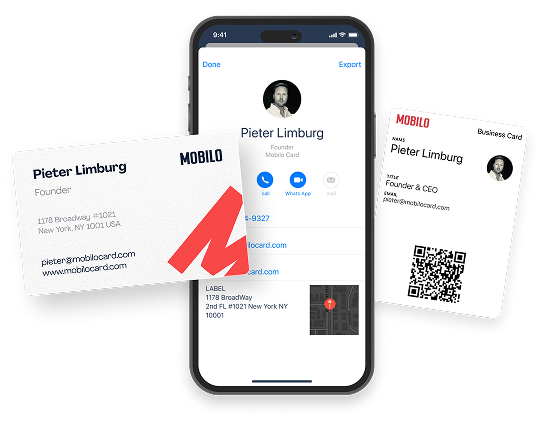
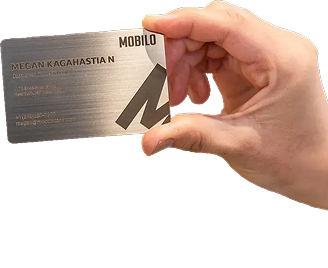
Mobilo offers smart digital business cards that automatically capture and manage leads.
Notable Features
- NFC digital business cards
- Automatic contact exchange
- CRM syncing and lead scoring
- Lead enrichment and analytics
Carrd vs Mobilo Features
Carrd
- Primary Purpose: One-page websites
- Lead Capture: Basic forms
- CRM Integrations: Limited
Mobilo
- Primary Purpose: Digital networking
- Lead Capture: Automated contact capture
- CRM Integrations: Built-in CRM syncing
Pros
- Excellent for events and networking
- Automatic lead data enrichment
- CRM-ready contacts
Cons
- Not a website builder
- Networking-focused
Ideal User Profile
Sales teams, event marketers, and B2B professionals
2. Wix
Overview
Wix is one of the most powerful website builders available, offering a full ecosystem for building portfolios and complex business websites.
Notable Features
- AI website builder
- Massive template library
- Drag-and-drop editor
- App marketplace
- Built-in SEO tools
Carrd vs Wix Features
Carrd
- Page Types: Single page
- Complexity: Simple
- Customization: Moderate
Wix
- Page Types: Multi-page
- Complexity: Feature-heavy
- Customization: Very high
Pros
- Huge template selection
- AI site creation
- Advanced design flexibility
Cons
- Can feel overwhelming
- Easy to create cluttered layouts
Ideal User Profile
Beginners, small businesses, and freelancers building portfolios
3. Squarespace
Overview
Squarespace focuses on beautiful templates and premium visual presentation.
Notable Features
- High-end design templates
- Integrated e-commerce
- Built-in blogging
- Professional typography system
Carrd vs Squarespace
Carrd
- Design sophistication
Basic - Ecommerce
Limited - Learning curve
Very easy
Squarespace
- Design sophistication
Premium - Ecommerce
Built-in - Learning curve
Moderate
Pros
- Stunning templates
- Strong branding tools
- Good e-commerce system
Cons
- More expensive than Carrd
- Less flexible customization
Ideal User Profile
Photographers, designers, and creative professionals
4. Hostinger Website Builder
Overview
Hostinger provides an affordable AI-powered builder for multi-page websites without the complexity of larger builders.
Notable Features
- AI website generator
- Drag-and-drop editor
- Integrated hosting
- Basic ecommerce tools
Carrd vs Hostinger
Carrd
- Pages
Single - Cost
Very low - Complexity
Minimal
Hostinger
- Pages
Multiple - Cost
Still affordable - Complexity
Moderate
Pros
- Affordable pricing
- Easy to start
- AI design tools
Cons
- Smaller template library
- Limited advanced customization
Ideal User Profile
Beginners, small business owners, and budget-conscious creators
5. WordPress.com
Overview
WordPress.com offers massive flexibility through themes, plugins, and integrations.
Notable Features
- Blogging platform
- Extensive plugin ecosystem
- Advanced SEO tools
- Highly customizable
Carrd vs WordPress
Carrd
- Complexity: Very simple
- Scalability: Limited
- Customization: Moderate
WordPress
- Complexity: Complex
- Scalability: Unlimited
- Customization: Extremely high
Pros
- Best for SEO
- Highly scalable
- Massive community
Cons
- Learning curve
- Maintenance required
Ideal User Profile
Bloggers, content creators, and businesses scaling long-term
6. Landingi
Overview
Landingi is a marketing-focused landing page builder designed for campaigns and conversion optimization.
Notable Features
- Pixel-perfect drag-and-drop editor
- 400+ templates
- EventTracker analytics
- A/B testing
- Smart Sections and programmatic pages
Carrd vs Landingi
Carrd
- Marketing tools: Basic
- A/B testing: No
- Campaign scalability: Low
Landingi
- Marketing tools: Advanced
- A/B testing: Yes
- Campaign scalability: High
Pros
- Built for marketers
- Powerful analytics
- Extensive integrations
Cons
- More complex than Carrd
- Mobile design requires manual adjustment
Ideal User Profile
Marketing teams, agencies, and enterprise campaign managers
7. Unbounce
Overview
Unbounce is a premium landing page builder focused on conversion rate optimization for paid traffic campaigns.
Notable Features
- AI Smart Traffic routing
- A/B testing
- Dynamic text replacement
- Pop-ups and sticky bars
Carrd vs Unbounce
Carrd
- Conversion tools
Minimal - Pricing
Low - Target users
Individuals
Unbounce
- Conversion tools
Advanced - Pricing
High - Target users
Marketing teams
Pros
- Strong testing tools
- Ideal for PPC campaigns
- Advanced marketing features
Cons
- Expensive
- Steep learning curve
Ideal User Profile
Paid advertising teams, CRO specialists, and growth marketers
8. Jotform Apps
Overview
Jotform Apps lets you build simple apps or microsites combining links, forms, and multimedia.
Notable Features
- Form builder integration
- Shareable web apps
- Market research tools
- Event management features
Carrd vs Jotform Apps
Carrd
- Feature: Focus
- Websites
- Integrations: Limited
Jotform Apps
- Feature: Focus
- Apps/forms
- Integrations: Extensive
Pros
- Powerful forms
- Easy app creation
- Versatile business use cases
Cons
- Not a traditional website builder
Ideal User Profile
Businesses collecting data, event organizers, and survey creators
9. Linktree
Overview
Linktree is the most popular link-in-bio service, commonly used on Instagram and TikTok.
Notable Features
- Multiple links on one page
- Social integrations
- Analytics tools
Carrd vs Linktree
- Carrd
- Linktree
- Yes
- Minimal
- Yes
- Core feature
Pros
- Simple setup
- Social media optimized
Cons
- Limited design options
- Not a full website
Ideal User Profile
Influencers and social media creators
10. Taplink
Overview
Taplink offers design flexibility and mini-website features beyond basic link-in-bio tools.
Notable Features
- Image galleries
- Social icons
- Payment integrations
Carrd vs Taplink
- Feature
- Carrd
- Design control: Higher
- Social integrations: Moderate
- Taplink
- Design control: Moderate
- Social integrations: Strong
- Carrd
Pros
- Rich link page design
- Social integrations
Cons
- Limited full website features
Ideal User Profile
Creators and influencers
11. Smart.bio by Tailwind
Overview
Smart.bio connects social posts to landing links within the Tailwind ecosystem.
Notable Features
- Instagram link automation
- Free forever plan
- Post scheduling integration
Carrd vs Smart.bio
- Carrd
- Smart.bio
- Yes
- No
- Moderate
- Strong
Pros
- Free
- Excellent for social media automation
Cons
- Limited design customisation
Ideal User Profile
Pinterest marketers and Instagram creators
12. Lnk.Bio
Overview
Lnk.Bio is a minimalist link page tool with support for embedded content.
Notable Features
- Clean layout
- Video embedding
- Link analytics
Carrd vs Lnk.Bio
Feature
- Carrd
- Website builder: Yes
- Link hub: Yes
- Lnk.Bio
- Website builder: No
- Core focus: Core focus
Pros
- Simple interface
- Quick setup
Cons
- Limited customization
Ideal User Profile
Social media creators
13. Hypage
Overview
Hypage focuses on monetization and memberships.
Notable Features
- Donations
- Memberships
- Digital product sales
Carrd vs Hypage
- Carrd
- Hypage
- Limited
- Strong
Pros
- No platform transaction fees
- Monetization-focused
Cons
- Less design flexibility
Ideal User Profile
- Creators, coaches, and online communities
14. SleekBio
Overview
SleekBio is a lightweight link page builder created by AppSumo.
Notable Features
- Video and audio embedding
- Email capture
- Booking integrations
Carrd vs SleekBio
- Carrd
- SleekBio
- Yes
- Limited
- Yes
- Primary focus
Pros
- Multiple media types
- Easy setup
Cons
- Limited customization
Ideal User Profile
Content creators
15. Flowpage
Overview
Flowpage integrates closely with Flowcode QR codes.
Notable Features
- QR code integration
- Analytics tracking
- Link hub pages
Carrd vs Flowpage
Carrd
QR code use: Limited
Flowpage
QR code use: Core feature
Pros
- Excellent for offline marketing
- QR integrations
Cons
- Limited website design
Ideal User Profile
Event marketers and retail brands
16. hoo.be
Overview
hoo.be is an exclusive link page platform for influencers and celebrities.
Notable Features
- Creator tools
- Brand partnerships
- Invite-only access
Carrd vs hoo.be
Feature
Carrd
Access: Open
hoo.be
Access: Application-only
Pros
- Premium creator community
Cons
- Limited access
Ideal User Profile
Influencers and celebrities
17. SiteGround
Overview
SiteGround is a high-performance hosting provider optimized for WordPress.
Notable Features
- SuperCacher performance system
- Free CDN and SSL
- Staging environments
Carrd vs SiteGround
Feature
- Carrd: Built-in
- SiteGround: Dedicated
WordPress support
- Carrd: Limited
- SiteGround: Excellent
Pros
- Excellent support
- Strong performance
Cons
- Requires WordPress setup
Ideal User Profile
WordPress users and scaling businesses
18. DreamHost
Overview
DreamHost offers reliable hosting with strong support for open-source tools.
Notable Features
- Free site migration
- Unlimited bandwidth
- Daily backups
Carrd vs DreamHost
Hosting
- Carrd: Included
- DreamHost: Dedicated
Flexibility
- Carrd: Low
- DreamHost: High
Pros
- Affordable
- Developer tools
Cons
- Requires setup
Ideal User Profile
Bloggers and developers
19. Cloudways
Overview
Cloudways offers managed cloud hosting across providers such as DigitalOcean and AWS.
Notable Features
- Managed cloud servers
- Scalable resources
- Staging environments
Carrd vs Cloudways
Feature
- Hosting type
Carrd
- Basic
Cloudways
- Cloud
Pros
- Highly scalable
- Great performance
Cons
- Technical setup required
Ideal User Profile
- Developers and growing startups
20. A2 Hosting
Overview
A2 Hosting focuses on speed and developer-friendly features.
Notable Features
- Turbo servers
- Multiple data centres
- Developer tools (SSH, WP-CLI)
Carrd vs A2 Hosting
Feature
- Website builder
- Performance control
Carrd
- Basic
- Limited
A2 Hosting
- Hosting infrastructure
- High
Pros
- Fast hosting
- Flexible developer tools
Cons
- Requires WordPress or CMS setup
Ideal User Profile
Developers and performance-focused websites
Related Reading
- Taplink Vs Linktre
- Bio Site vs Linktree
- Linktree Alternatives
- Shorby Vs Linktree
- Linkinbio vs Linktree
- Linktree vs Carrd
- Beacons vs Linktree
- Beacons vs Stan Store
- Milkshake vs Linktree
Ditch Limitations and Upgrade Your Business Cards with Mobilo
When networking becomes your growth engine, you need infrastructure that turns introductions into relationships that compound over time. Carrd creates beautiful first impressions, but most professionals still exchange contact details as they did a decade ago: business cards get photographed, typed into spreadsheets, or lost in jacket pockets.
.webp)
LinkedIn requests pile up without context about where you met or what you discussed. Follow-ups depend on memory and manual effort, making them inconsistent or nonexistent. Events compress dozens of valuable conversations into hours, and manual processes become the bottleneck between meeting someone and building something together.
🎯 Key Point: Contact exchange should be the beginning of a system, not the end of a handshake.
Mobilo treats contact exchange as the beginning of a system, not the end of a handshake. When you share your digital profile at an event, information syncs directly to your CRM with full context attached (event name, conversation notes, interaction type). Lead scoring happens automatically against your ideal customer profile. Follow-up sequences are triggered based on engagement signals, without you having to touch a spreadsheet. You're building a qualified pipeline that updates itself while you focus on conversations that actually matter.

💡 Tip: Automation becomes the infrastructure that separates relationships that convert from conversations that disappear.
Over 59,000 companies use Mobilo because it generates 10x more leads at events compared to paper cards through the elimination of friction in the follow-up process. When 90% of business contacts never make it into your CRM using traditional methods, automation becomes the infrastructure that separates relationships that convert from conversations that disappear.
"90% of business contacts never make it into your CRM using traditional methods, making automation the infrastructure that separates relationships that convert from conversations that disappear." — Digital Business Card Statistics
Traditional Cards
- Manual data entry
- Lost context
- Delayed follow-ups
- 90% contact loss
Mobilo Digital
- Automatic CRM sync
- Full conversation notes
- Triggered sequences
- 10x more leads
🔑 Takeaway: For teams where networking drives revenue, Mobilo is the system that makes sure every meaningful conversation actually goes somewhere.
Book a demo today and get your first 25 Mobilo business cards free (worth $950). For teams where networking drives revenue, that's the system that makes sure every meaningful conversation actually goes somewhere.