.avif)


In-Depth Beacons vs Stan Store Guide for Content Monetization
On This Page
Content creators with growing Instagram and TikTok audiences face a critical decision when choosing between Beacons and the Stan Store to monetize their followers. Both platforms promise to help creators sell digital products, manage subscriptions, and consolidate everything into one simple link, but they differ significantly in features, pricing, and revenue potential. Understanding these differences determines whether creators can effectively convert followers into paying customers while minimizing setup complexity and maximizing earnings.
Beyond comparing storefront features and commission structures, successful creators recognize the importance of capturing leads from every interaction. When meeting potential customers at events, collaborations, or networking opportunities, a digital contact card transforms these connections into measurable opportunities by instantly directing contacts to your chosen platform while collecting their information for follow-up.
Summary
- Social platforms limit creators to one clickable link, making the choice of link-in-bio tool a critical revenue decision. The wrong platform creates friction at the exact moment followers are ready to act, causing context loss that can trigger up to 30% drops in conversions when landing pages don't match the content that drove the click. Every extra tap, a confusing layout, or a mismatch between expectations and reality pushes potential buyers toward the exit.
- Streamlined checkout experiences can drive up to 80% more sales compared to multi-step, disconnected flows. When buyers must leave a link page, navigate to a separate store, and complete checkout elsewhere, friction compounds and mobile users especially abandon before finishing. Generic link tools built to list links rather than facilitate transactions add unnecessary steps that cost sales, particularly for impulse purchases driven by short-form social content.
- Stan Store reduces checkout to three taps (product selection, payment, confirmation) with no redirects or account creation required, while Beacons routes buyers through standard eCommerce flows better suited for shopping carts than social traffic. Stan Store's native upsell structure allows post-purchase offers to appear immediately after the first sale, turning single transactions into multiple revenue opportunities without requiring buyers to navigate back through the main page. This structural difference means Stan Store treats every transaction as an opportunity to expand revenue, while Beacons treats each as a single event.
- Most link-in-bio tools provide only total click counts, offering vanity metrics rather than actionable data for decision-making. Without post-specific and section-specific analytics, creators optimize in the dark, unable to separate curiosity clicks from purchase-ready traffic or identify which content actually drives conversions versus which simply generates engagement. Teams relying on basic click counts often discover too late that their highest-traffic posts convert the worst.
- Choosing between platforms depends on the business model rather than feature lists. Beacons works best for creators monetizing across multiple streams (sponsorships, courses, tips, affiliate products) who need layout flexibility to surface different offers based on audience intent. Stan Store serves creators selling digital products who prioritize conversion speed over customization, using a rigid but proven structure that removes decision fatigue and focuses entirely on shortening the path from click to purchase.
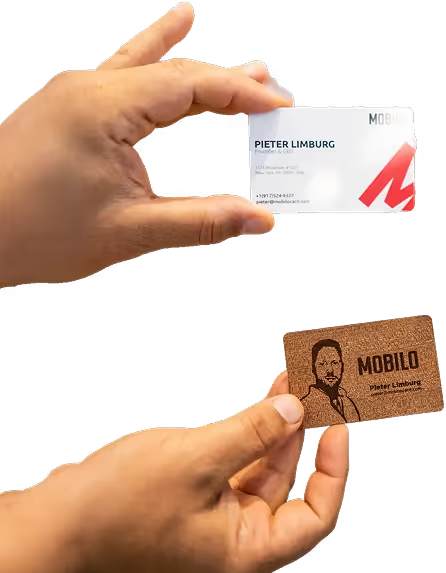
- Mobilo's digital contact card addresses the professional lead capture gap that creator platforms don't fill, syncing contact exchanges directly into CRMs with custom fields and timestamps for B2B workflows that require qualification tracking, not just product sales.
Table of Contents
- Why the Wrong Link in Bio Tool Costs You Sales
- Beacons vs Stan Store Compared for Creator Monetization
- Which Platform Is Better for Your Business Model
- Stop Losing Sales From Your Bio Links and Capture Every Lead
Why the Wrong Link in Bio Tool Costs You Sales
The wrong link in the bio tool destroys the connection between your content and the desired action. Every post creates a crucial moment when people want to take action, but a mismatched bio link causes that valuable desire to disappear before viewers see your offer.

"73% of social media users abandon their purchase intent when they can't find what they're looking for within 3 clicks of a bio link." — Social Commerce Report, 2024
🚨 Warning: A generic bio link that doesn't match your current content is like having a broken storefront door - people want to enter, but you're making it impossible for them to find what they came for.

💡 Key Point: The most successful creators understand that bio link optimization isn't just about having any link - it's about creating a seamless pathway from inspiration to action that matches the exact moment when your audience is ready to buy.
Context Loss Kills Conversion Before It Starts
You post a Reel about "three pricing mistakes killing your sales," and your bio link directs to the same page as last week's post about "morning routines." The viewer taps, expecting pricing templates or a breakdown, but lands on a list of links with no clear connection to the content. They leave. That's a structural failure. Janis Mjartans found that creators experience a 30% drop in conversions when their landing page doesn't match the post that drove traffic. When every post sends viewers to the same static URL, they must determine which link relates to the content they just saw. Most won't.
How does low CTR waste your audience growth potential?
High traffic with low monetization equals wasted audience growth. You can have 50,000 followers and still struggle to convert because your link in bio doesn't compel clicks. No "watch the full breakdown here" or "grab the template I mentioned"—just a generic "link in bio" that could mean anything. When viewers don't know what they'll get, they won't tap.
What's the real gap between audience and revenue?
Creators hitting this wall describe the same frustration: they're building an audience, but not a business. They post consistently with decent engagement, yet revenue stays flat. The gap isn't content quality—it's the infrastructure between attention and transaction. If your link in bio doesn't match each post's context, you're losing ready buyers.
Why do most analytics tools fail to show meaningful data?
Most link-in-bio tools show total clicks, which tells you almost nothing. You can't see which posts drove signups, which sections people ignored, or where drop-off happens. One post might send 500 people to your page, but if only three convert, you have no idea whether the problem is the offer, the layout, or discoverability. You're optimizing in the dark.
How does granular tracking help creators scale?
Without granular data, you can't improve. You won't know if your "free guide" converts better than your "paid workshop" link, or whether Instagram traffic behaves differently from TikTok traffic. Growing creators track what happens after the click and adjust based on real behaviour, not guesses.
What happens when you can't send traffic to specific destinations?
You can't send traffic from a specific Reel to a specific offer. Everything goes to the same layout, so a post about email marketing and a post about video editing both land on the same page. The message doesn't match where people end up, forcing viewers to search for what's relevant. By then, they're already thinking about leaving.
Why does deep linking matter for conversions?
Deep linking isn't a luxury feature: it's the difference between respecting context and ignoring it. When you send "pricing strategies" traffic to a page with pricing templates, email opt-ins, and a relevant call to action, conversion jumps. Without it, you're hoping people dig through your generic link list. Most don't, and you lose the sale.
How does weak customization damage brand perception?
If your link in bio page looks like everyone else's, you're blending in instead of building brand recognition. Weak customization signals you're using free tools or lack commitment to a consistent experience. People buy from creators who appear professional, intentional, and trustworthy. A generic link page undermines all three.
Why does brand consistency matter for conversions?
Strong branding requires consistency. When someone moves from your Instagram post to your bio link, the experience should feel like the same person built both. A template-driven page erodes trust and willingness to buy. You've spent months building authority, but your link in bio undermines that work. The same principle applies to in-person networking. A generic contact form creates friction where you need flow. Our Mobilo digital contact card turns every interaction into a trackable, actionable lead by letting you share your complete profile, portfolio, and contact information in one tap. That instant, professional exchange builds the trust that a well-designed link in bio creates online.
Even Small Conversion Drops Add Up to Serious Revenue Loss
A 1-2% drop in conversion sounds small until you do the math. At 10,000 monthly visitors converting at 3%, you get 300 conversions. Drop to 2%, and you lose 100 conversions. At $50 per sale, that's $5,000/month or $60,000/year: a full salary. Creators who neglect their link in bio stop growing despite working hard on content and audience building. They lose thousands because the final step—purchasing—fails. Fixing this requires infrastructure matching your content quality, not more followers or posts. Choosing the right tool depends on more than features or pricing.
Related Reading
- Best Link in Bio Tool
- What is Link in Bio
- How to Improve Linkedin Profile
- How To Build Personal Branding
- How to Add Portfolio to Linkedin
- How To Add Link To Tiktok Bio
- How to Add Instagram Link to Tiktok
- Where is Link in Bio on Instagram
- How to Add Link to Linkedin Post
- How to Add Website Link to Linkedin Profile
- Link in Bio Examples
- How To Add Link To Tiktok Bio
- How to Add Instagram Link to Tiktok
Beacons vs Stan Store Compared for Creator Monetization

Stan Store is the better choice if you're selling digital products, coaching, or services, and need to convert customers fast. Beacons is the better choice if you need design flexibility, media kits, or multiple monetization streams beyond direct sales.
💡 Tip: Choose Stan Store for immediate sales conversion. Choose Beacons to build a comprehensive brand presence with a range of monetization options. Stan Store treats your bio link like a sales funnel: every feature drives toward conversion. Beacons treats it like a digital portfolio: every feature drives toward brand expression. They serve different creator needs.
🔑 Takeaway: The right platform depends on whether you prioritize immediate sales or long-term brand building.
"The most successful creators choose platforms that align with their primary monetization strategy, not just their aesthetic preferences." — Creator Economy Report, 2024

Sales and Payment Options
Stan Store built its checkout flow for mobile users scrolling Instagram at 11 PM, requiring only three clicks from product to purchase. Beacons offers a standard eCommerce checkout with more steps and decision points.
How do payment processing features compare?
Feature
Stan Store
Beacons
Processing
Stripe & PayPal
Multiple providers
Sales Tax Collection
US, CA, UK, AU, NZ, CH, NO, EU
Limited
Product Types
Digital products, courses, memberships
Digital products, courses, appointments, memberships
Special Payment Features
Standard payment options
Buy Now Pay Later, Multi-currency
Stan Store handles sales tax automatically across eight regions. Beacons supports Buy Now Pay Later and multiple currencies, which matters if your audience spans different countries or needs payment flexibility.
Which platform offers better course creation tools?
Stan Store offers specialised tools for course creation, allowing you to upload videos, PDFs, and other resources directly into the platform. Beacons has similar features, though its interface is more general and serves a variety of creator types. According to Beacons.ai, millions of creators earn money on its platform, demonstrating its effectiveness across different creator categories.
Winner: Stan Store for direct sales. Beacons for payment flexibility.
Marketing Tools
Stan Store locks email marketing behind its $99/month Creator Pro plan. Beacons includes it on every plan, even the free tier, a meaningful difference if you're starting out or operating on tight budgets. Stan Store's AutoDM tool automates Instagram responses and engagement to convert followers into buyers. Beacons focuses on analytics through advanced link tracking, audience insights, and growth tools to understand who clicks what and when. Stan Store's marketing tools optimize for conversion, while Beacons prioritizes audience understanding and optimization through data.
Winner: Beacons for built-in email marketing; Stan Store for Instagram automation.
AI and Automation Tools
Stanley, Stan Store's AI tool, generates text and answers basic customer questions. Beacons offers expanded AI features: brand outreach emails, product descriptions, media kit generation, and product images.
How do these AI tools work in practice?
For example, a fitness coach can use Beacons to create a media kit that shows reach, engagement, and audience information, which Stan Store cannot. Stan Store excels at automating customer responses and writing product descriptions faster than manual methods.
Winner: Beacons for more AI tools. Stan Store for sales-focused automation.
Cost Analysis
Stan Store uses flat-rate pricing with no transaction fees, while Beacons uses tiered pricing with fees that vary by plan.
Stan Store Plans
Stan Store offers two plans: Creator ($29/month or $300/year) with custom domains, unlimited courses, and memberships; and Creator Pro ($99/month or $948/year), adding unlimited email marketing, pixel tracking, and affiliate tools. Both charge only standard payment processor fees.
Beacons Plans
Beacons offers four plans:
- Monthly/Annual Cost: $0
- Transaction Fee: 9%
- Key Features: 1 course, 50 email sends, and 10 AI generations.
- Monthly Cost: $10 ($8.33/mo billed annually)
- Transaction Fee: 9%
- Key Features: 500 email sends and unlimited AI generations.
- Monthly Cost: $30 ($25/mo billed annually)
- Transaction Fee: 0%
- Key Features: Unlimited courses, memberships, and removal of branding.
- Monthly Cost: $90 ($75/mo billed annually)
- Transaction Fee: 0%
- Key Features: Unlimited everything and dedicated support.
How do Beacon's transaction fees compare to competitors?
The free plan suits beginners, but the 9% transaction fee cuts into profits as sales grow. A creator earning $1,000 monthly would pay $90 with the Beacons Free Plan (9% of $1,000), $29 flat with the Stan Store Creator Plan, or $30 flat with the Beacons Store Pro Plan.
Winner: Beacons for flexibility and free entry; Stan Store for predictable costs as you scale.
Platform Navigation
Stan Store's interface is clean and minimal with drag-and-drop functionality. I uploaded a digital product and went live in under 10 minutes. Beacons offer more features and greater control over customization, though setup takes longer.
Winner: Stan Store for speed. Beacons for flexibility. Choose based on whether you prioritize fast execution or creative control.
What design tools does Stan Store offer?
Stan Store offers custom fonts, colour selection, banner image customization, and theme options with an integrated colour picker. However, these features alone cannot build a unique visual identity. Stan Store is a proven, efficient template.
How does Beacons compare for design flexibility?
Beacons offers numerous templates, AI-powered design help, customizable landing page elements, and advanced branding tools. A wellness creator building a personal brand around mobility and recovery can design a page that visually showcases their philosophy, something Stan Store's narrower design limits prevent. Beacons is a Build Your Program feature: you start with structure, then customise based on individual needs.
Winner: Beacons for design control and brand expression.
Best for Selling Online Stan Store
If your main focus is selling digital products or booking services, Stan Store is the better choice. It's streamlined, sales-focused, and built for creators who want results without unnecessary complexity.
What makes Stan Store better for digital sales?
Stan Store lets you upload and sell digital products such as courses, ebooks, and templates. You can create booking calendars for coaching or consulting services, add upsells and limited-time offers, and process payments through Stripe without third-party tools. Beacons offers digital sales and tipping but lacks native booking tools and upsells. You'll need to connect external forms or tools for calls or live sessions, which complicates the process.
Winner: Stan Store. Its built-in tools are faster and simpler for digital products, coaching, or service-based offers, designed to drive conversions from mobile traffic.
Best for Design and Customization Beacons
Stan Store is simple but limited. Beacons offers significantly more control over page layout and organization.
What design features does Beacons offer?
Beacons lets you add multiple sections, including testimonials, images, videos, and forms. You can style fonts, buttons, colours, and layouts, and use different pages for different purposes (About, Shop, Contact). You can embed TikToks or YouTube videos directly and connect a custom domain on any paid plan.
How does Stan Store compare in terms of customization?
Stan Store offers a clean, conversion-focused design but provides limited control over styling. The narrow layout restricts brands with stronger creative needs.
Winner: Beacons. Choose Beacons if design, branding, or layout freedom matters to your business.
Best for Creators: It Depends
Both platforms serve different types of creators in distinct ways.
Which platform works best for monetizing expertise?
Stan Store is the best choice for making money. If you're a coach, course creator, or knowledge seller, Stan Store lets you sell digital products from your bio, offer coaching or one-on-one calls, upsell products at checkout, and collect leads without extra tools.
Which platform supports brand collaborations better?
Beacons are best for brand partnerships and multiple revenue streams. It supports brand partnerships with media kit building, accepts tips or donations, promotes affiliate links and storefronts, and offers multiple calls to action with strong layout customization.
Use Case
Best Platform
Selling products or coaching
Stan Store
Building a media kit
Beacons
Accepting tips or affiliate sales
Beacons
Lead capture and upsells
Stan Store
What's the final verdict for creators?
Winner: Tie. Choose Stan Store to monetise products or services. Choose Beacons for flexibility, media kits, or a polished brand presence. The same philosophy applies to choosing your link-in-bio tool: the best choice adapts to how you serve your audience, not the one with the most features.
Best for Ease of Use Stan Store
Stan Store has a clean, intuitive interface. I uploaded and sold a product in under 10 minutes, connected Stripe, and went live immediately. Creating a lead magnet and upsell funnel required no additional tools. Beacons offers more customization power but requires more setup time across layouts, blocks, and pages. It is ideal only if customization is your priority.
Winner: Stan Store. For speed and simplicity, Stan Store's onboarding and layout are faster.
Best for Templates and Layouts Beacons
Stan Store keeps things simple by limiting design variety, while Beacons offers a bigger library of layout blocks and design options.
Which platform wins for design flexibility?
Winner: Beacons. If you want a stylish page with images, testimonials, and embedded media to showcase your brand, Beacons offers more layout options and visual control, especially for visually focused brands and creators. But having the right tool only matters if you're capturing the people who click.
Related Reading
- How to Add Linktree to Tiktok
- How To Add Linktree To Instagram
- How To Add A Link To Instagram Story
- How To Add Link To Instagram Profile
- Personal Landing Page Examples
- Graphic Design Portfolio Websites
- Personal Portfolio Website Design Examples
- Small Business Bio Examples
- One Page Website Examples
- Best Photography Portfolio Websites
- Instagram Landing Page Examples
Which Platform Is Better for Your Business Model
Choose Stan Store if you want to sell quickly. Its three-click checkout and built-in booking tools make it easier to sell expertise-based products (such as coaching, courses, and digital downloads). Choose Beacons if you have multiple ways to make money (brand partnerships, affiliate commissions, product sales, tips) and need one customizable hub to organize and display them professionally.

🎯 Key Point: Stan Store excels at direct sales with streamlined checkout processes, while Beacons shines as a comprehensive monetization hub for creators with diverse revenue streams.
"The right platform choice depends on whether you prioritize quick conversions or comprehensive monetization across multiple channels."

💡 Best Practice: Consider your primary revenue model—if you're selling one-on-one services or digital products, Stan Store's simplified checkout will likely convert better. If you're managing multiple income sources, Beacons' all-in-one approach provides better organizational value.

What should you identify before choosing a platform?
Before choosing a platform, define what conversion means for your business. If your revenue depends on high-ticket services or time-based offers (consultations, coaching packages, workshops), you need fast booking functionality and upsell capabilities at checkout. Stan Store handles this natively: you can create a calendar, set availability, and let buyers schedule calls without leaving the purchase flow, automatically adding upsells to increase average order value.
How do you handle multiple income channels effectively?
If your income comes from multiple channels (sponsored posts, affiliate links, digital products, donations), you need a landing page that displays all options without overwhelming visitors. Beacons lets you organize content into separate pages ("Shop," "Partnerships," "About," "Media Kit"), so visitors see different layouts based on their source. The media kit builder creates professional one-sheets with audience demographics and engagement metrics, which are essential when pitching brands or negotiating rates.
When does Stan Store work best for digital products?
You sell digital products or services where the buyer is ready to purchase. Someone clicking your link already knows what you offer and wants to book a call, buy a course, or download a template. Every extra click between deciding to buy and paying reduces completion rates. Stan Store's mobile-optimized checkout keeps the path short, with testimonials, FAQs, and product descriptions built directly into the sales page so buyers get information without navigating away.
Why choose simplicity over customization?
You prefer simplicity over customization. The platform's minimal design control accelerates setup and keeps focus on the offer itself. You upload your product, write a description, connect Stripe, and start selling—without hours spent changing fonts or testing layouts. You test offers, observe what converts, and refine based on real behaviour instead of guessing what design might perform better.
How does Stan Store support recurring revenue models?
Your business model relies on regular recurring revenue. Stan Store supports memberships and subscriptions with different access levels, drip content, and built-in recurring billing. If you're building a community or offering ongoing coaching, the platform handles the infrastructure without requiring Patreon, Memberful, or other third-party tools. Everything runs through one system, simplifying accounting and customer management.
What if you need control over branding and visual identity?
You need control over your branding and visual identity. Beacons offers full drag-and-drop customization: match your landing page to your brand colours, embed videos, showcase testimonials in custom layouts, and create multiple pages within one profile. Your link-in-bio page becomes an extension of your content, not a generic storefront.
How does Beacons handle diverse revenue streams?
You earn money through multiple income streams. If you're promoting affiliate products, accepting tips, selling digital downloads, and pitching brand partnerships, Beacons organizes all options in one place. The platform tracks how each revenue source performs, showing which links get the most clicks and which offers work best.
Why choose Beacons for brand partnerships and sponsorships?
You're pitching brands or seeking sponsorships. The media kit builder creates professional presentations that include follower counts, engagement rates, audience demographics, and examples of past collaborations. Customise the layout, add case studies, and export as PDF, saving hours compared to building pitch decks manually. When brands ask for your rates or audience insights, send a polished document that positions you as a professional partner.
What factors should guide your platform decision?
The platform that works best for you depends on whether you need fast transactions or a flexible presentation. Stan Store converts faster by removing steps between interest and payment, while Beacons presents more options by consolidating multiple revenue streams into a single branded hub. The right choice depends on how your audience finds you, what they expect when they click your link, and how you measure success.
How do you align platform choice with business goals?
If revenue per follower matters more than total follower count, focus on conversion efficiency. If your business model requires you to present yourself as a professional partner to brands, prioritise the quality of your presentation. Choose the platform that matches how your business makes money. But the right platform matters only if people complete the actions you want them to take once they arrive.
Why don't creator tools work for B2B lead capture?
Creator tools help sell products and engage audiences, but aren't designed to collect contact information, sync with CRM systems, or meet compliance requirements. If your business needs to collect contact information at conferences and send it to Salesforce with custom fields and timestamps, you'll need purpose-built tools for that task.
What happens when consultants outgrow link-in-bio tools?
Consultants and agency owners often start with link-in-bio tools, listing services, and adding a contact form. As lead volume grows, they discover the tool wasn't designed for follow-up: contact info sits in a spreadsheet instead of flowing into a CRM, with no way to tag leads by event, segment by interest, or trigger automated sequences based on engagement behaviour.
What infrastructure do B2B workflows actually need?
Platforms like Mobilo treat every contact exchange as a lead capture event, syncing directly into your CRM with source tracking and custom fields. For selling a course to Instagram followers, Stan Store or Beacons work well. To capture 200 qualified leads at a trade show and route them into your pipeline by morning, you need infrastructure designed for B2B workflows, not for content monetization.
Why does revenue per follower matter more than total clicks
Being popular doesn't guarantee success. What matters is how much money you earn per follower. A creator with 10,000 followers earning $5,000 per month outperforms one with 50,000 followers earning $3,000. The difference lies not in follower count but in converting followers into customers.
How do different platforms increase revenue per follower
Stan Store increases revenue per follower by simplifying checkout and enabling additional sales. Beacons increase it by letting you show multiple offers to different audience segments. The winning platform matches how your specific audience prefers to buy. If your audience buys on impulse—they see a Reel and want the product immediately—Stan Store captures that intent before it fades. If your audience researches first, exploring your content and comparing options before deciding, Beacons lets them browse at their own pace.
What causes creators to lose revenue despite having the right platform
Neither platform will fix a weak offer or poor traffic strategy. The tool enhances what's already working. Most creators lose money not because they picked the wrong platform, but because their link page doesn't match how their audience buys.
Related Reading
- Bio Site vs Linktree
- Linktree Alternatives
- Shorby Vs Linktree
- Linkinbio vs Linktree
- Linktree vs Carrd
- Beacons vs Linktree
- Milkshake vs Linktree
- Taplink vs Linktree
Stop Losing Sales From Your Bio Links and Capture Every Lead
If your followers click your link and drop off without making a purchase, you're leaving money on the table. The gap between attention and action isn't about content quality or audience size: it's whether your link page captures what people want the moment they arrive, or lets it slip away while they search for what they came to find.
🎯 Key Point: Most creators focus on driving traffic. Fewer focus on what happens after the click, where money is made or lost. When someone taps your bio link, they're making a small commitment: "I'm curious enough to see what you're offering." If the next screen confuses them, hides your main offer, or requires unnecessary steps, that curiosity turns into nothing.

"A streamlined checkout and friction-free payment flow can double your revenue without changing your content strategy."
The tool you choose significantly shapes this outcome. A streamlined checkout, clear product hierarchy, and friction-free payment flow can double your revenue without changing your content strategy. But if your link page treats every visitor the same regardless of which post brought them there or what problem they're solving, you're asking them to determine what's relevant. Most won't.

⚠️ Warning: Professional teams handling lead generation at scale face a different challenge. Creator platforms optimize for product sales and audience engagement, not CRM sync, lead tagging, or compliance tracking. If your business depends on capturing qualified contacts and routing them into Salesforce with timestamps and custom fields, you need infrastructure designed for B2B workflows. Our Mobilo digital contact card treats every contact exchange as a lead-capture event, automatically enriching data and syncing it into your pipeline, with full audit trails.

🔑 Takeaway: For creators monetizing through digital products, the question isn't whether to use a link page—it's whether that page captures every dollar your content already earned. Most aren't. They're losing sales because the path from interest to purchase has too many steps, too much confusion, or too little urgency. Fix the destination, and the traffic you're already driving converts at rates that make every post more valuable.