.avif)

20+ Best Linktree Alternatives to Upgrade Your Link-In-Bio Strategy
On This Page
Instagram's single bio link creates a frustrating bottleneck for creators, businesses, and professionals who need to share multiple destinations. Whether promoting various platforms, driving traffic to different landing pages, or showcasing portfolio pieces, that lone link forces impossible choices about what content gets priority. The right Linktree alternative can solve this problem by creating a centralized hub that maximizes the potential of every bio visitor.
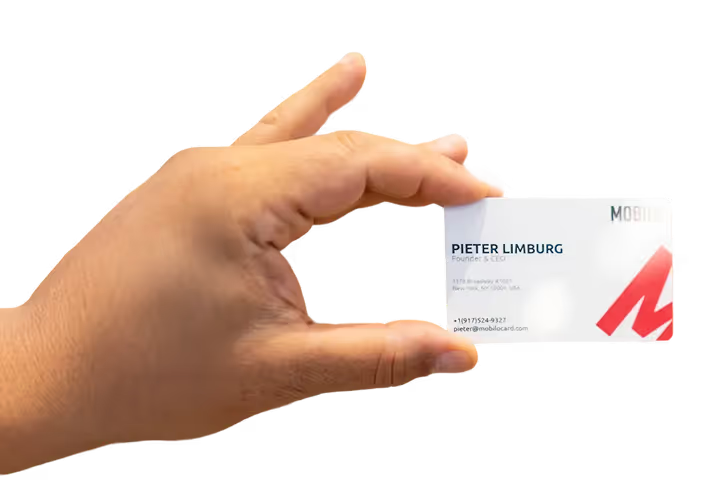
Smart link-in-bio tools go beyond simple link collection by offering analytics, lead capture, and professional networking features. These platforms transform passive bio visits into meaningful connections while providing insights into audience behavior and content performance. For professionals seeking a comprehensive solution, Mobilo's digital contact card combines link management with powerful networking capabilities, turning every interaction into a potential business opportunity.
Summary
- Instagram's single bio link forces creators and businesses to choose what gets visibility, creating a bottleneck that limits traffic distribution and lead capture. This constraint drove the rise of link aggregator tools, but as brands scale and conversion goals become more sophisticated, basic link pages reveal their limitations. Generic layouts lack brand consistency, add unnecessary friction through extra clicks, and fail to capture visitor information that could feed sales pipelines.
- Most link-in-bio pages lack intentional funnel architecture, treating all destinations as equally important when they should guide users toward primary conversion actions. HubSpot research shows companies with 10 to 15 targeted landing pages generate 55% more leads than those with fewer pages, highlighting how specificity and clear hierarchy outperform catch-all directories. A cluttered page with twelve undifferentiated buttons triggers decision fatigue, causing visitors to leave without taking action.
- Static link pages rarely capture contact information, meaning engaged visitors leave no trace for follow-up or retargeting. Without email capture or CRM integration, every profile view represents lost potential value. Platforms that automatically capture visitor data and sync it to sales systems transform anonymous clicks into trackable leads, turning networking interactions into measurable pipeline opportunities.
- Generic link tools build domain authority for third-party platforms rather than your owned channels. Every click routed through an intermediary service sends SEO value elsewhere instead of compounding on your own website. This matters more as businesses mature, since long-term growth depends on owned channels such as websites and email lists rather than on rented visibility on external platforms.
- Advanced link management platforms offer behavioral retargeting, A/B testing, scheduled link visibility, and traffic routing based on visitor attributes like location or device type. These features address gaps that basic aggregators ignore, allowing marketers to optimize conversion paths, run time-sensitive campaigns, and generate presentation-ready analytics. Tools with white-label branding and custom domain support maintain a professional perception that generic layouts undermine.
- Digital contact card addresses this by automatically capturing visitor information when someone views your profile, syncing that data directly to your CRM, and turning passive bio visits into trackable leads without requiring manual form fills.
Why Linktree Stops Working as You Grow
Linktree works because it solves an obvious problem with almost no friction. You paste a URL into your bio, add a few links, and you're finished. But simplicity at the start becomes a significant limitation as you grow.

🎯 Key Point: What makes Linktree attractive initially—its bare-bones simplicity—becomes the exact reason it holds you back when your business needs advanced functionality and professional branding.
"The tools that get you started are rarely the tools that scale with your success." — Business Growth Principle

⚠️ Warning: Many creators stick with Linktree too long, missing conversion opportunities and professional credibility because they mistake familiarity for effectiveness.
What happens when your business outgrows simple solutions?
What feels like freedom when you're starting out becomes a cage as your audience grows, your brand matures, and your goals shift from "getting noticed" to "capturing leads and closing deals."
Why do growing businesses need more than basic link tools?
Linktree requires no design skills, no developer, and no domain setup—you can be live in five minutes. For a solo creator testing content ideas or a small business establishing a social presence, that's sufficient. The problem arises when you need more than a list of links: when branding matters, when analytics inform strategy, and when every click represents a potential customer, not a casual follower.
What are the branding limitations?
Linktree's free tier offers a basic page with set layouts and limited customization. You cannot change colours to match your brand or add your logo without upgrading. Even paid plans restrict font and design options compared to custom landing pages or professional link management platforms.
Why does brand consistency matter for conversions?
This matters beyond appearance. When someone clicks from your Instagram profile to your link page, they're deciding whether to trust you enough to click again. A generic page that doesn't reflect your brand identity signals you're using the same tool as every other account they follow. That split-second impression matters more than most people realize, especially in industries where credibility drives conversion.
Why does every extra click hurt conversions?
Every extra step between your audience and your content costs you conversions. Someone sees your post, clicks your bio link, lands on your Linktree page, reviews the options, then clicks again to reach their destination. That second click is where you lose people—not because they don't care, but because attention is finite and friction increases drop-off rates.
What direct linking options do platforms offer now?
Instagram now lets you add multiple links directly to your profile. TikTok has in-app shopping. LinkedIn has native lead forms. Sending people through an extra page when you could send them straight to your shop, booking page, or newsletter signup creates unnecessary friction.
The Analytics Gap
Free Linktree plans show only click counts per link, with no insights into user behaviour, traffic sources, conversion paths, audience segments, or page engagement duration. You know what got clicked, but not why or what happened after. Professional marketing requires understanding drop-off points, A/B test variations, and how link performance correlates with campaign timing or content themes. Click counts alone confirm activity but don't reveal opportunity or inform strategy.
The SEO Cost
Every click to your Linktree page builds their domain authority, not yours. That traffic could go directly to your website instead, building SEO value that grows over time and improves your search rankings. This becomes more important as you grow. Long-term growth depends on owned channels: your website, your email list, and your direct relationships with people. Using Linktree delays that shift. You're paying for visibility instead of creating something that's yours.
The Dependency Risk
Using a third-party platform means your links depend on their uptime, policy changes, and business continuity. Technical problems can block your audience from accessing your content. Pricing or feature changes might force you to adapt or migrate platforms. If a platform shuts down, you must rebuild everything from scratch. This isn't a theory. Professionals have faced real disruption when platforms changed their terms, stopped supporting free users, or removed important features. The more critical a tool becomes to your work, the greater the risk of depending on something you don't control.
Why does professional perception matter for link pages?
A Linktree page can look rushed, generic, and low-effort. Prospective clients, partners, or employers form impressions quickly. A custom landing page demonstrates care for your brand; a default Linktree layout suggests you prioritised convenience over quality. This perception gap widens in professional contexts. If you're positioning yourself as a consultant, agency, or premium service provider, your tools communicate your standards. A polished, branded link page signals attention to detail; a generic one suggests you're still developing your offering.
How can digital contact cards improve lead capture?
A digital contact card treats your profile page as a lead-capture system, not a link directory. Teams use our platform to share contact details, social profiles, and custom links while automatically capturing visitor information. That data feeds directly into CRM workflows, converting passive bio visitors into trackable leads. Our digital contact card is built for professionals who need conversions, pipeline visibility, and control over their networking data.
The Feature Ceiling
Linktree is a link aggregator. Other platforms offer email capture, product sales, appointment booking, and deep integrations with marketing tools. If your goals extend beyond aggregating links, you'll quickly outgrow Linktree. A creator selling digital products needs checkout functionality. A consultant needs calendar integration. A brand running campaigns needs a conditional link display based on the traffic source. Linktree's architecture wasn't designed for these use cases: it was built to solve the one-link problem, and that's what it does best.
When Linktree Still Makes Sense
Linktree works if you're managing multiple brands and need a single hub, lack a website and need a fast, no-code solution, or are active across many platforms and want a single centralized link to update. The question isn't whether Linktree is bad—it's whether it's right for your goals. For someone starting out, yes. For a brand optimizing conversions, lead capture, and credibility, usually no. But knowing Linktree isn't the answer only gets you halfway. The real question is what those extra clicks and generic pages are costing you.
Related Reading
- Best Link in Bio Tool
- What is Link in Bio
- How to Improve Linkedin Profile
- How To Build Personal Branding
- How to Add Portfolio to Linkedin
- How To Add Link To Tiktok Bio
- How to Add Instagram Link to Tiktok
- Where is Link in Bio on Instagram
- How to Add Link to Linkedin Post
- How to Add Website Link to Linkedin Profile
- Link in Bio Examples
- How To Add Link To Tiktok Bio
- How to Add Instagram Link to Tiktok
When a Simple Link Page Costs You Clicks, Leads, and Sales
A generic link-in-bio page wastes opportunities at every step of your funnel. Without clear organization, tracking, or strategy, you're missing sales and teaching your audience to expect less from you.

🚨 Warning: The damage builds up slowly. A few percentage points lost here, a handful of leads missed there. Most people don't realize how much friction their link page creates because they count clicks rather than drop-offs, hesitations, and bounces caused by generic or confusing experiences.
🎯 Key Point: Your link-in-bio page is not just a directory—it's a conversion tool that either accelerates or destroys your sales funnel.
What happens when users face too many choices?
A cluttered link page kills momentum. Someone clicks from your Instagram story expecting to book a consultation or download a guide, only to land on a page with twelve buttons, no clear visual priority, and unclear labels like "Learn More" or "Check This Out." Decision fatigue sets in, and they leave.
Why do targeted pages perform better than generic directories?
According to HubSpot, companies with 10-15 landing pages see a 55% increase in leads compared to those with fewer than 10. Multiple targeted pages outperform a single catch-all directory because they help visitors quickly understand what they need and find it. A generic link page forces users to search independently, which most won't do.
The Funnel Logic Gap
Most link pages lack a clear plan: no one considers the order of links, which ones stand out, or what action matters most. If your primary goal (newsletter sign-ups, product sales, or meeting bookings) sits between a podcast link and a social media profile, you've already lost. People scan quickly, notice the first three options, and decide. Professional marketers build funnels with a clear path: awareness → consideration → action. A random list of links skips that path entirely, treating every destination as equally important, which renders nothing important. You're asking your audience to do the strategic thinking you should have completed.
Why do static pages fail to capture leads?
A static link page rarely captures contact information. Visitors explore your content and leave with no email to nurture them or data to retarget them. That visitor is gone, and you'll never know who they were or what they cared about. Email capture is essential for growth. It's the difference between renting attention and owning a relationship. Without a way to capture information, that value disappears when visitors close the tab.
How can digital contact cards transform lead capture?
Platforms like digital contact card flip this dynamic. Instead of relying on visitors to remember to follow up, the system automatically captures their information when they view your profile. That data flows directly into your CRM, turning anonymous clicks into trackable leads and transforming networking interactions into pipeline opportunities.
The Analytics Blindspot
Basic link pages provide limited information. You might know how many people clicked a specific link, but not where they came from, how long they stayed, or what they did after clicking. Without that context, improving performance becomes guesswork: you change a button label or reorder links and hope it helps, but you cannot measure the impact or understand why something works. Real marketing requires detailed insights: which traffic sources convert best, which links drive purchases, and where people drop off. A proper link management system answers these questions; a basic link page does not.
The Retargeting Gap
If your link page doesn't support tracking pixels, you can't retarget visitors who didn't convert—a significant missed opportunity. Someone who clicked through from your TikTok video, viewed your services, but didn't book is a warm lead who showed genuine interest. Losing the ability to remind them of your existence through retargeting ads means starting from zero each time. Retargeting turns near-misses into conversions by keeping your brand visible during the consideration phase, when people compare options and decide whether to commit. Without it, you rely on memory and goodwill, which rarely work for most audiences.
The Branding Disconnect
A generic link page with default fonts, inconsistent colours, and no logo feels disconnected from your brand. Someone who follows you on LinkedIn for polished, professional insights clicks your bio link and lands on a placeholder-like page. This mismatch creates doubt about your attention to detail. Brand consistency builds trust. Every interaction should reinforce who you are and what you stand for. A link page that looks like everyone else's signals you're not serious enough to stand out, a perception that matters in professional contexts where credibility determines whether someone reaches out or moves on.
The Choice Overload Trap
Showing too many choices without guidance causes decision paralysis. Research on decision fatigue shows that too many options often lead to inaction. A link page with twenty unorganised buttons overwhelms visitors, who scan quickly, find no clear path, and leave rather than expend effort locating what they need. Simplicity isn't about having fewer links: it's about making priorities clearer. Three well-organized, visually distinct options with strong calls to action work better than fifteen identical buttons. Guide people toward the action that helps them and you most.
The Outdated Information Problem
Static link pages rarely get updated. You launch a new product, run a limited-time promotion, or change your booking system, but the link page still points to last month's offer. Visitors click expecting current content and land on expired material. That mismatch destroys trust and signals carelessness. Keeping a link page current requires weekly checks. Automation helps, but only if your system supports dynamic updates tied to campaign schedules or inventory status. Most generic link pages don't. But even if you fix every technical flaw, the bigger question remains: are you building an asset or maintaining a list?
Related Reading
- How to Add Linktree to Tiktok
- How To Add Linktree To Instagram
- How To Add A Link To Instagram Story
- How To Add Link To Instagram Profile
- Personal Landing Page Examples
- Graphic Design Portfolio Websites
- Personal Portfolio Website Design Examples
- Small Business Bio Examples
- One Page Website Examples
- Best Photography Portfolio Websites
- Instagram Landing Page Examples
20+ Linktree Alternatives That Offer More Control and Conversions
The right link tool depends on your specific goals. A creator monetising digital products needs different tools than a consultant booking calls or a retail brand driving sales. The alternatives below address gaps Linktree leaves open: weak branding, shallow analytics, limited conversion tools, and minimal control over user experience. Each solves a critical problem when clicks must convert to results.
🎯 Key Point: Your link-in-bio tool should align with your business model—creators need sales features, consultants need booking systems, and brands need customization control.
"The biggest mistake businesses make is choosing a link tool based on popularity rather than functionality that drives conversions." — Digital Marketing Institute, 2024

⚠️ Warning: Using the wrong link tool can cost you up to 30% of potential conversions due to poor user experience and limited functionality that doesn't match your audience's needs.
1. Mobilo
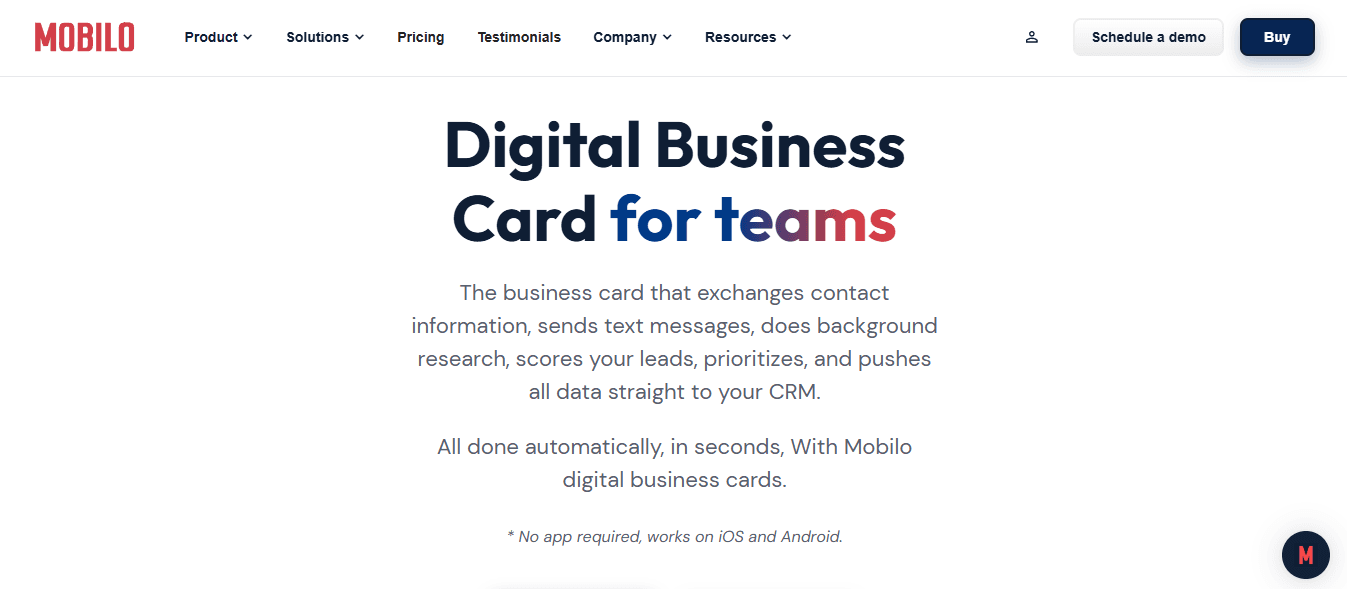
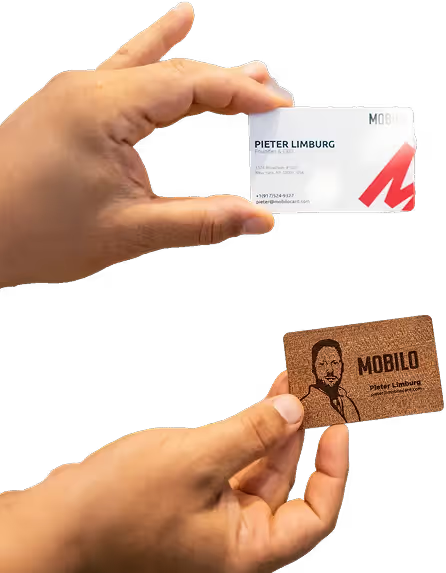
Mobilo transforms your profile page into a lead capture system that feeds directly into sales workflows. Instead of relying on visitors to follow up, the platform automatically captures contact information when they view your digital business card. That data syncs to your CRM in real time, turning passive profile visits into trackable pipeline opportunities.
Pros
- Automatic lead capture without requiring manual form fills
- Direct CRM integration (Salesforce, HubSpot, Pipedrive, and others)
- Team analytics showing who's generating the most qualified connections
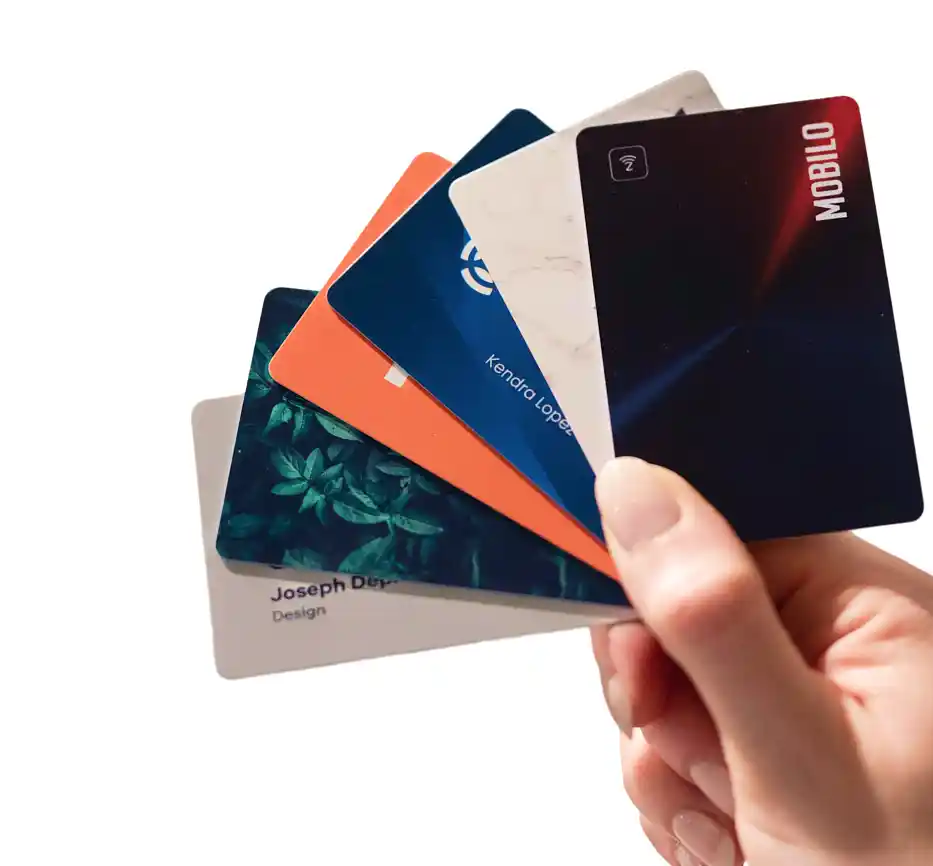
- Customizable profile pages with branding control
- Works via NFC tap, QR scan, or direct link share
Cons
- Built for professional networking rather than general social media linking
- Higher price point than basic link aggregators
- Requires CRM integration to unlock full value
Pricing
Starts at $119/year for individual users; team plans scale based on seat and feature levels. Enterprise pricing is available for organizations needing advanced compliance and analytics.
Key Specs
- Branding flexibility: Yes (custom logos, colors, backgrounds)
- Conversion tools: Lead capture forms, calendar booking, file sharing
- Analytics depth: Advanced (engagement tracking, lead scoring, team performance)
- Integrations: Major CRMs, email platforms, calendar tools
- Custom domains: Yes
Why it matters
If your bio link strategy involves generating qualified leads rather than distributing content, Mobilo treats every interaction as a potential deal. The platform captures information you'd otherwise lose and routes it into the systems that drive revenue.
Ideal for
Sales teams, consultants, agencies, and professionals who attend networking events or conferences need to convert conversations into CRM records without manual data entry. Ready to transform your team's networking and generate 10x more leads at every event with Mobilo's business card? Join over 59,000 companies who've made the switch to intelligent digital business cards that automatically exchange contact information, enrich lead data, score prospects against your ICP, and sync directly to your CRM. Book a demo today and get your first 25 Mobilo business cards free (worth $950), because in a world where 90% of business contacts never make it into your CRM, you can't afford to keep using paper cards.
2. Hopp by Wix

Hopp delivers a drag-and-drop editor that lets creators build mini-websites matching their existing brand assets. The standout feature is its search functionality. Visitors can search your link page for specific products, services, or coupon codes instead of scrolling through a static list. This reduces friction when someone knows what they want but doesn't want to hunt for it.
Pros
- Searchable link pages (rare among competitors)
- Direct payment processing on your page
- Strong customization without coding
- Comprehensive analytics (clicks, views, conversion tracking)
- Integrates with the Wix ecosystem if you already use it
Cons
- Best suited for users comfortable with Wix's design philosophy
- Some advanced features require paid plans
- Less flexibility for non-eCommerce use cases
Pricing
Free plan available; premium plans start at $4.50/month with expanded customization and analytics.
Key Specs
- Branding flexibility: Yes (full design control)
- Conversion tools: Payment processing, product listings
- Analytics depth: Advanced
- Integrations: Wix, Shopify, payment gateways
- Custom domains: Yes
Why it matters
If your audience needs to find specific offers quickly (limited-time promotions, seasonal products, exclusive codes), searchable pages eliminate the scroll-and-scan frustration that kills conversions.
Ideal for
Content creators, eCommerce sellers, and influencers managing multiple product lines or affiliate partnerships.
3. Linkin.bio by Later

Linkin.bio mirrors your Instagram feed, creating visual continuity between the app and your landing page. When someone clicks a post on your link page, they go directly to the intended destination. This design reduces cognitive load because the interface feels familiar, and users don't need to decode generic button labels.
Pros
- Visual feed layout matches Instagram's design
- Simplifies shopping from posts
- Integrates with Later's scheduling and analytics tools
- Reduces decision fatigue through visual recognition
Cons
- Customization options are limited
- Works best for Instagram-focused strategies
- Less useful if your audience comes from multiple platforms
Pricing
The free plan includes basic features; paid plans start at $16.67/month (billed annually) and include advanced scheduling and analytics.
Key Specs
- Branding flexibility: Limited
- Conversion tools: Shoppable posts
- Analytics depth: Basic to moderate
- Integrations: Instagram, eCommerce platforms
- Custom domains: No
Why it matters
If your Instagram strategy drives most of your traffic and you want to maintain brand consistency across touchpoints, Linkin.bio removes the visual disconnect that generic link pages create.
Ideal for
Instagram-first creators, influencers, and brands with strong visual content strategies.
4. Koji
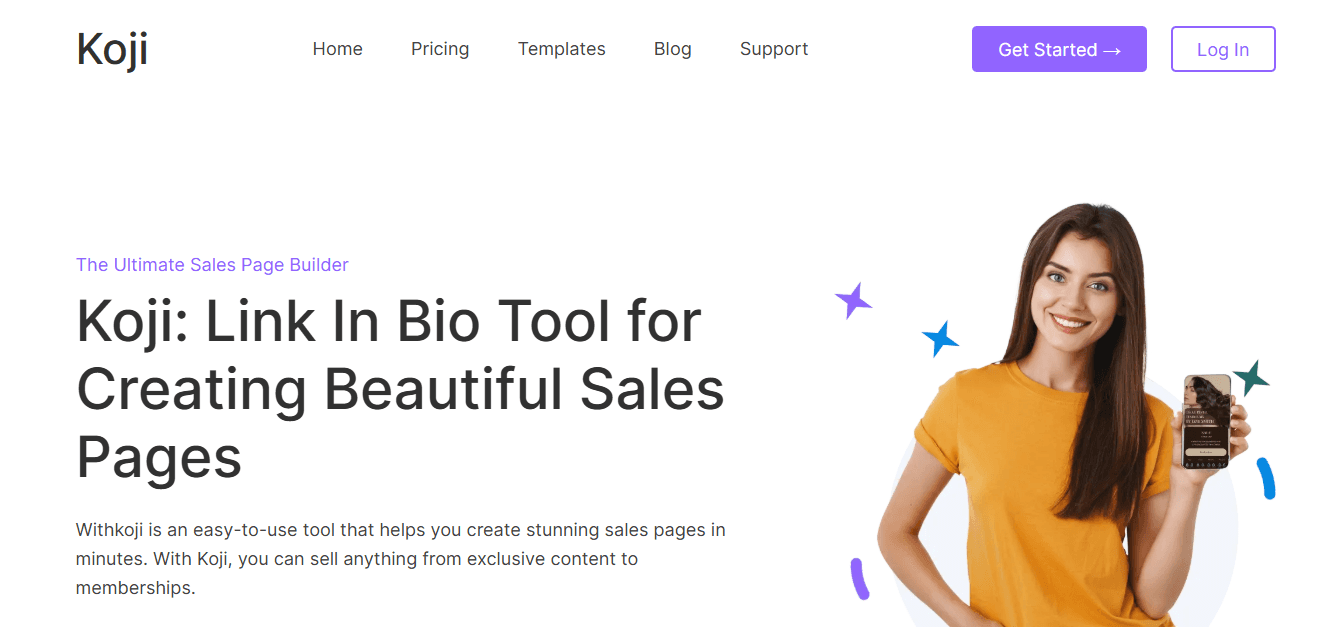
Koji offers a bio-link tool alongside other mini-apps designed to enhance social presence. The drag-and-drop editor is intuitive, though templates don't allow deep customization. Analytics track clicks and engagement, providing basic insights without overwhelming users who don't need enterprise-level data.
Pros
- Easy setup with no coding required
- Tracks engagement metrics
- Works with other Koji mini apps for extended functionality
- Clean, simple interface
Cons
- Limited template customization
- Fewer advanced features compared to competitors
- Best for users prioritizing simplicity over flexibility
Pricing
Free plan available; premium features start at $5.99/month.
Key Specs
- Branding flexibility: Moderate
- Conversion tools: Basic
- Analytics depth: Basic
- Integrations: Limited
- Custom domains: No
Why it matters
If you want an engaging link page without technical complexity, Koji balances ease of use with enough functionality to track what's working.
Ideal for
Casual creators, hobbyists, and users new to LinkinBio tools.
5. Beacons

Beacons focuses on conversions and sales, offering customizable bio pages with call-to-action buttons and integrations with Shopify, Etsy, Mailchimp, and Patreon. The "requests block" feature lets creators offer personalized shoutouts and one-on-one calls directly from their profile.
Pros
- Strong eCommerce integrations
- Personalized interaction features (calls, shoutouts)
- Integrated analytics
- Media kit creation and email marketing tools included
Cons
- Higher pricing (up to $40/month for advanced features)
- A feature-rich interface may overwhelm users seeking simplicity
- Best suited for creators monetizing directly
Pricing
Free plan available; paid plans range from $10 to $40/month, depending on features.
Key Specs
- Branding flexibility: Yes
- Conversion tools: eCommerce, payment processing, email capture
- Analytics depth: Advanced
- Integrations: Shopify, Etsy, Mailchimp, Patreon
- Custom domains: Yes
Why it matters
If your bio link needs to function as a storefront, booking system, and communication hub simultaneously, Beacons consolidates tools that would otherwise require multiple subscriptions.
Ideal for
Creators, influencers, and small businesses monetizing through products, services, or direct fan engagement.
6. Lnk.bio
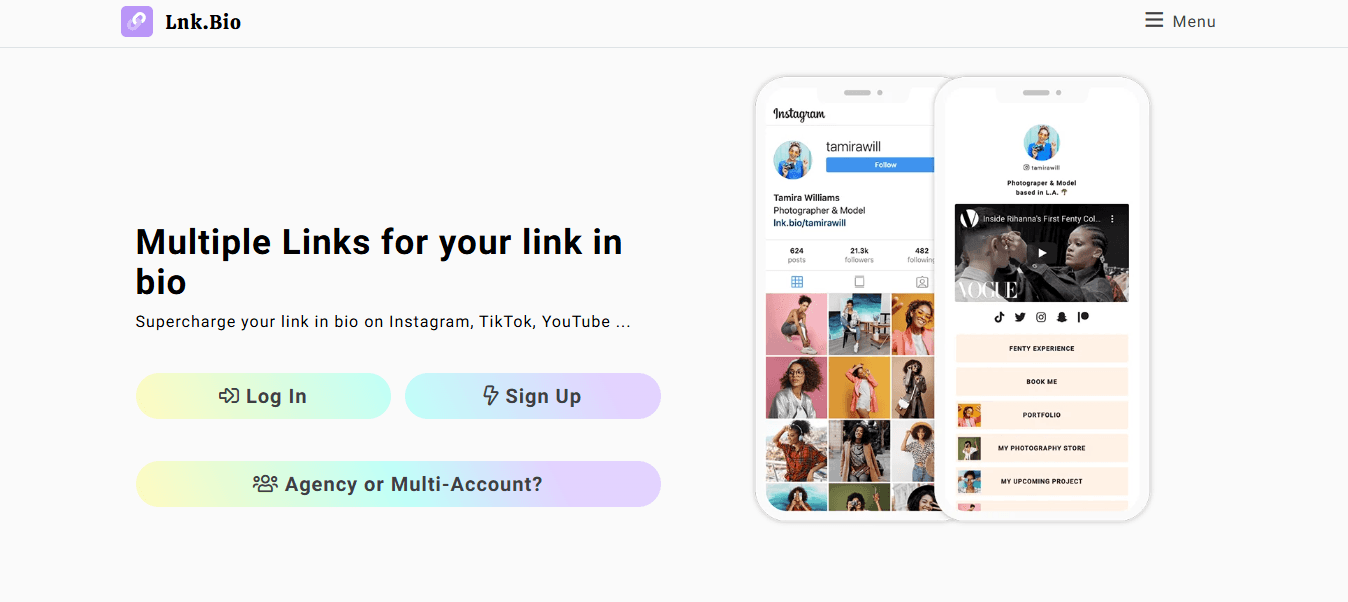
Lnk.bio simplifies cross-platform engagement by integrating links to TikTok, YouTube, X, and Facebook into a single page. The platform offers analytics tracking, including click-through rates, views, and engagement. A unique feature is scheduled links that appear or disappear at specific times, useful for time-sensitive promotions without manual updates.
Pros
- Cross-platform link integration
- Scheduled link visibility
- Analytics track performance across channels
- Simple setup
Cons
- Advanced analytics require higher-tier plans
- Limited customization compared to competitors
- Fewer conversion tools
Pricing
Free plan available; premium plans start at $2.99/month.
Key Specs
- Branding flexibility: Moderate
- Conversion tools: Basic
- Analytics depth: Moderate (advanced features on paid plans)
- Integrations: Multiple social platforms
- Custom domains: Yes
Why it matters
If you run time-sensitive campaigns or need to coordinate promotions across multiple platforms without constantly updating your bio link, scheduled visibility removes the need for manual maintenance.
Ideal for
Multiplatform creators, marketers running limited-time offers, and users managing frequent campaign rotations.
7. Milkshake
Milkshake is an Instagram-specific tool that lets you build an "Insta website" directly from your mobile device. It uses interactive cards for each piece of content, allowing users to swipe across the screen to explore links in a format that mirrors Instagram's interface.
Pros
- Mobile-first design optimized for Instagram users
- Interactive swipeable cards
- Visitor analytics and integrated email features
- Fast setup from sa martphone
Cons
- Cannot create or edit from the desktop
- Limited to mobile optimization
- Fewer features than desktop-capable platforms
Pricing
Free plan available; premium features start at $2.99/month.
Key Specs
- Branding flexibility: Moderate
- Conversion tools: Email capture
- Analytics depth: Basic
- Integrations: Instagram
- Custom domains: No
Why it matters
If you manage your entire content strategy on your phone and prioritize Instagram, Milkshake's mobile-first approach removes the friction of switching to a desktop to make updates.
Ideal for
Mobile-first creators, Instagram influencers, and users who prefer managing everything from their smartphones.
8. Stan
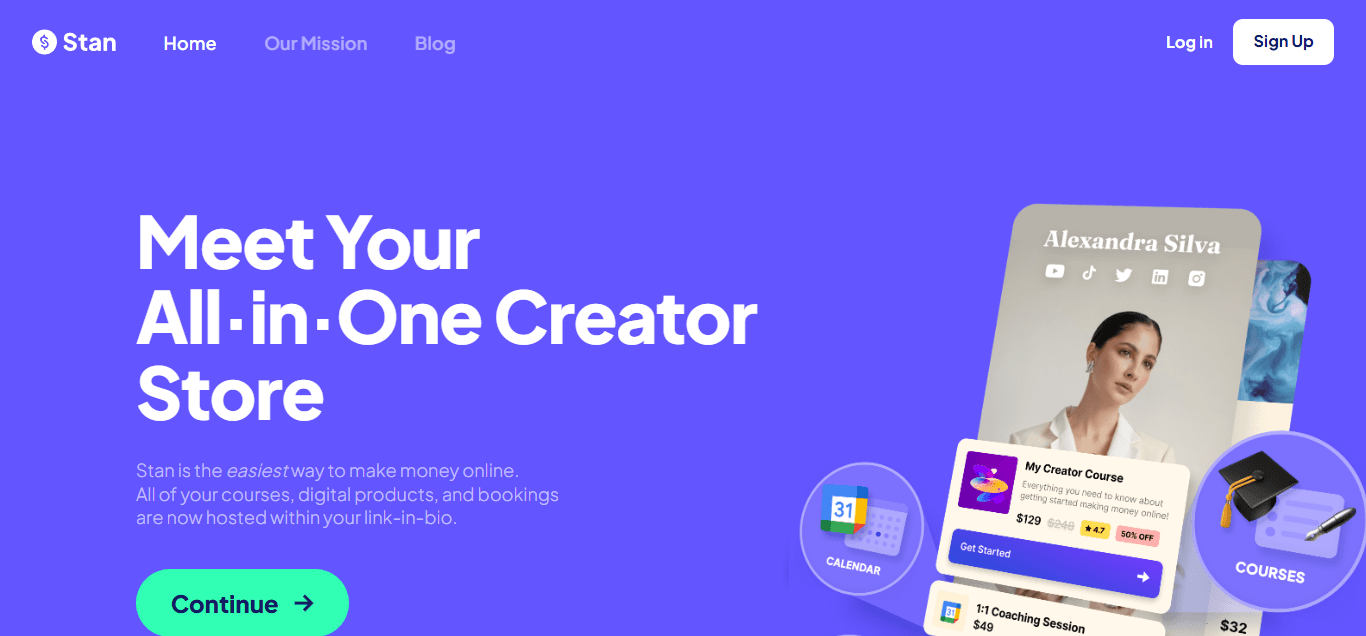
Stan transforms your bio link into a full storefront, allowing you to sell products, accept meeting bookings, and enroll customers in courses directly from your page. The platform emphasizes one-tap checkout across all transaction types.
Pros
- Full eCommerce functionality
- Meeting and course booking integrated
- One-tap checkout reduces friction
- Designed for revenue generation
Cons
- Less versatile for noneCommerce strategies
- Limited features for content-only creators
- Higher learning curve for setup
Pricing
Free plan available; paid plans start at $29/month.
Key Specs
- Branding flexibility: Yes
- Conversion tools: eCommerce, booking, course enrollment
- Analytics depth: Moderate
- Integrations: Payment processors, scheduling tools
- Custom domains: Yes
Why it matters
If your bio link needs to function as a checkout page, Stan eliminates the extra steps between interest and purchase.
Ideal for
eCommerce businesses, course creators, consultants, and service providers monetizing through direct sales.
9. Shorby
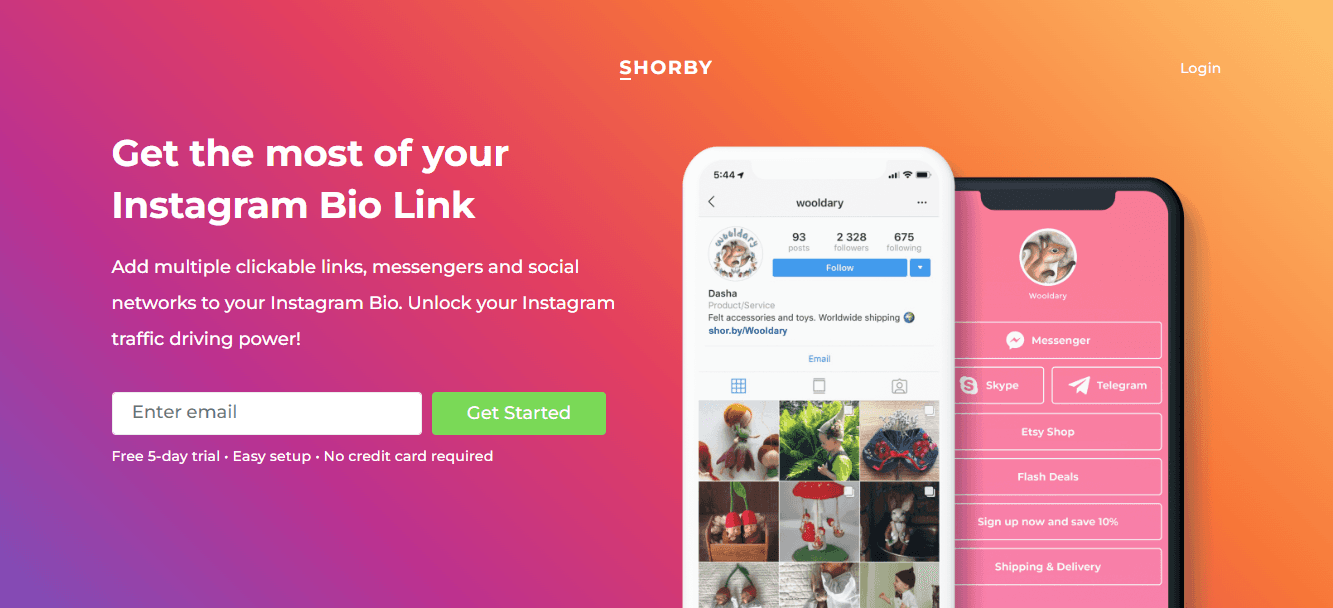
Shorby integrates a landing page creator, link shortener, and lead-generation software into a single platform. It delivers targeted ads based on how users interact with your bio page, amplifying conversion rates. The automatic updating feature pulls the latest blog posts from an RSS feed, keeping content fresh without manual updates.
Pros
- Targeted ad delivery based on user behavior
- Automatic content updates via RSS feed
- Combines multiple tools (landing page, link shortener, lead gen)
- Advanced conversion optimization
Cons
- Higher price point ($9 to $99/month)
- Steeper learning curve
- Overkill for users with simple needs
Pricing
Plans range from $9 to $99/month, depending on features.
Key Specs
- Branding flexibility: Yes
- Conversion tools: Lead generation, targeted ads
- Analytics depth: Advanced
- Integrations: RSS feeds, CRMs, ad platforms
- Custom domains: Yes
Why it matters
If you're running sophisticated campaigns that require behavioral targeting and automated content updates, Shorby consolidates the tools you'd otherwise need to subscribe to separately.
Ideal for
Marketers, agencies, and brands running multichannel campaigns with advanced targeting needs.
10. DotMe

DotMe offers a sleek, customizable platform with interactive widgets and unlimited links on the free plan. Realtime analytics provide insights into clicks, views, and audience behavior. The platform plans to launch a media kit feature that lets creators present stats and portfolios to brands and collaborators.
Pros
- Unlimited links on the free plan
- Interactive widgets
- Realtime analytics
- Upcoming media kit feature
Cons
- Media kit feature not yet launched
- Fewer integrations than competitors
- Limited advanced features
Pricing
Free plan available; premium plans start at $5/month.
Key Specs
- Branding flexibility: Yes
- Conversion tools: Basic
- Analytics depth: Moderate
- Integrations: Limited
- Custom domains: Yes
Why it matters
If you need a clean, customizable page with solid analytics and don't require deep integrations, DotMe delivers strong value at a low price point.
Ideal for
Creators, influencers, and small businesses seeking affordable customization with room to grow.
11. Pallyy
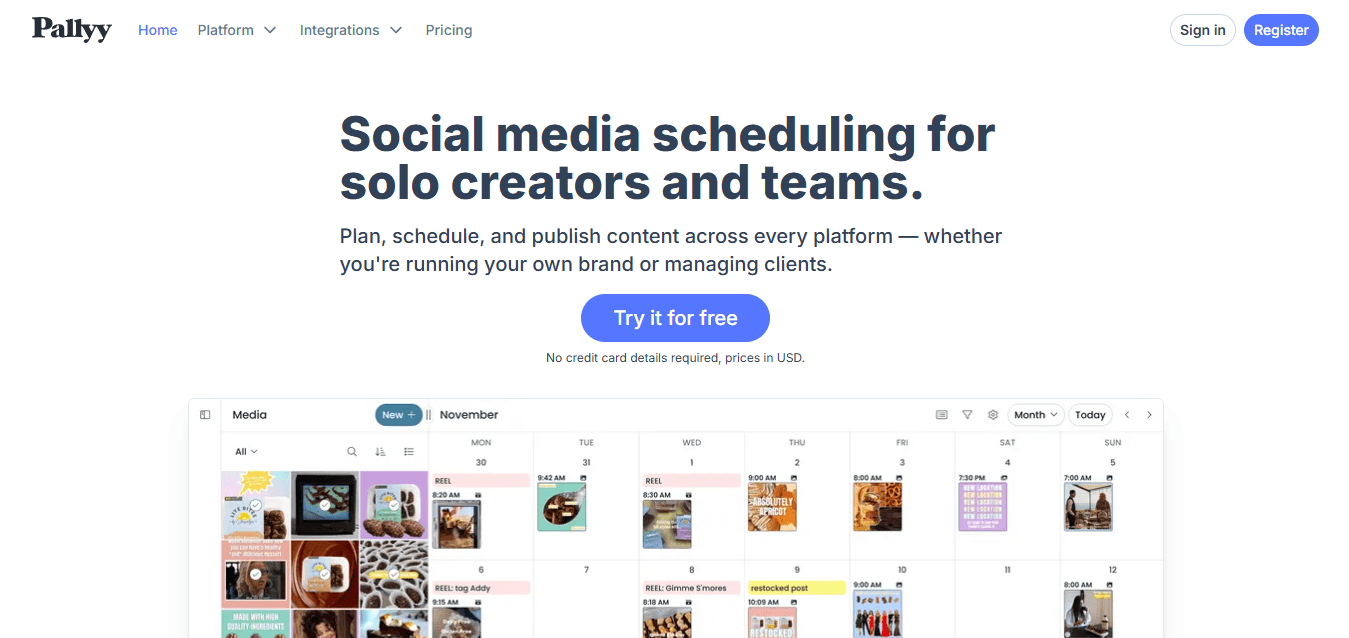
Pallyy is an all-in-one social media management platform with a built-in biolink tool. You can create list-style or grid-style pages. The grid view displays your Instagram posts in a 3x3 layout, with each post functioning as a clickable button. Pallyy also includes scheduling, autopublishing, a social media inbox, and detailed analytics.
Pros
- More features than Linktree (scheduling, inbox, analytics)
- Gridstyle and liststyle page options
- Excellent value for money
- Simple, effective page designs
Cons
- Not an all-in-one social media tool (lacks social listening)
- Fewer flashy widgets than competitors
- Best for users needing scheduling alongside bio links
Pricing
Plans start at $15/month (billed annually).
Key Specs
- Branding flexibility: Yes
- Conversion tools: Basic
- Analytics depth: Advanced
- Integrations: Major social platforms
- Custom domains: Yes
Why it matters
If you need a link page plus social media management tools, Pallyy consolidates functionality that would otherwise require multiple subscriptions.
Ideal for
Social media managers, agencies, and creators are managing multiple platforms.
12. Tap.bio
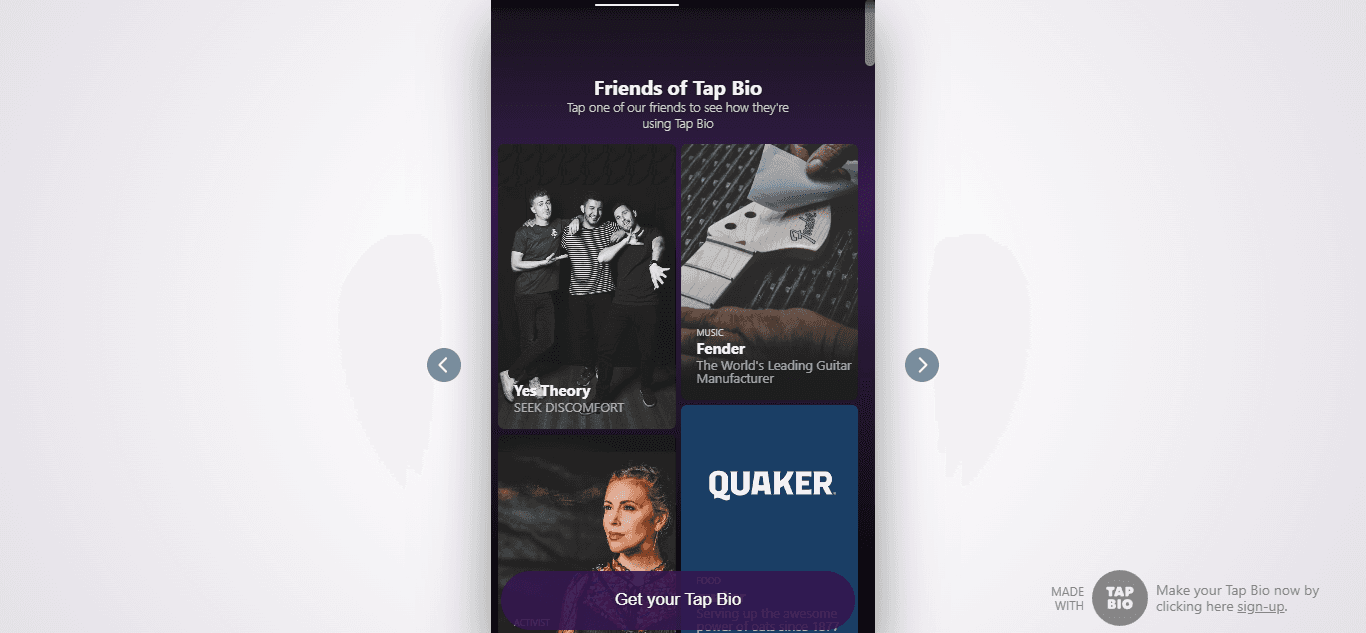
Tap.bio uses a unique card-based layout in which visitors swipe left or right to move between sections. Each card functions as a landing page with different links and widgets. Templates include email collection cards, Instagram link cards, and shop cards for product promotion.
Pros
- Unique swipeable card layout
- Mobile-optimized design
- Interactive features (messengers, opt-in forms, product blocks)
- Visually distinct from standard link pages
Cons
- Paid plan required for analytics
- Takes longer to set up than simpler tools
- Card-based design may not suit all audiences
Pricing
Free plan available; premium plans start at $5/month.
Key Specs
- Branding flexibility: Yes
- Conversion tools: Email capture, product blocks
- Analytics depth: Moderate (paid plans only)
- Integrations: Limited
- Custom domains: Yes
Why it matters:
If you want a link page that stands out visually and encourages exploration through interaction, Tap.bio's card-based design creates a more engaging experience.
Ideal for
Creators, brands, and marketers are prioritizing visual differentiation and mobile engagement.
13. Woorise
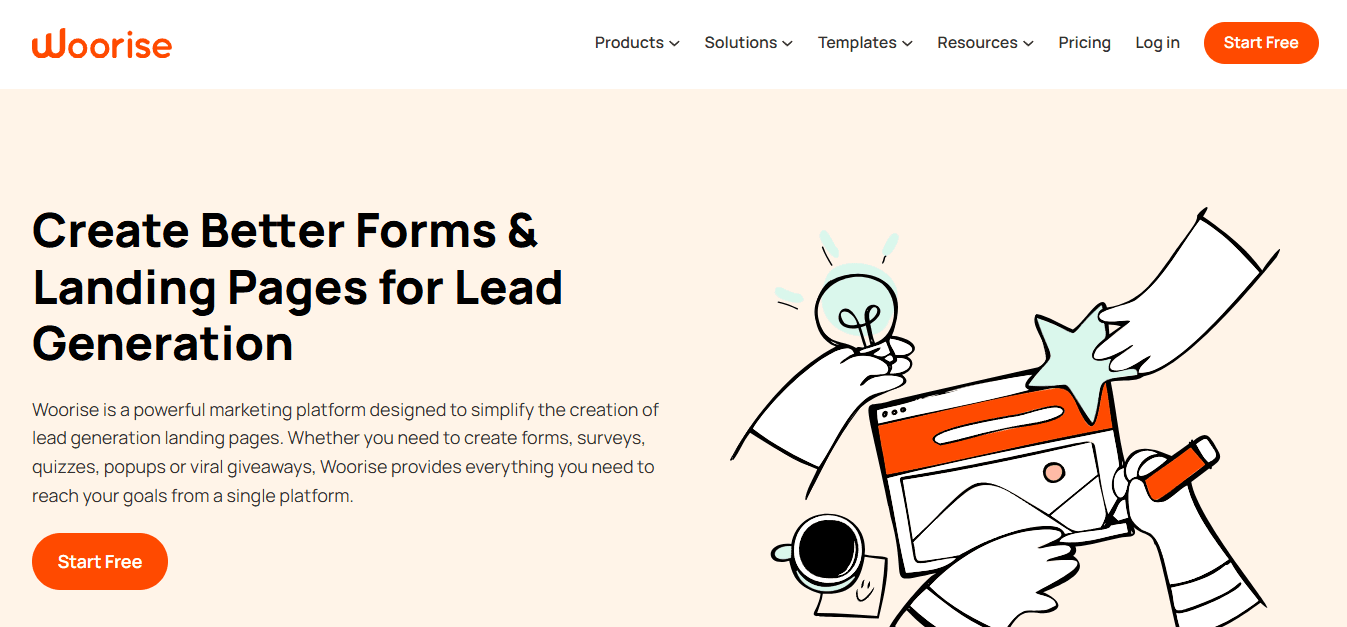
Woorise is an all-in-one lead generation platform that builds landing pages, forms, quizzes, giveaways, and bio link pages. The draganddrop editor offers more flexibility than Linktree, and you can connect a custom domain. Templates include simple bio links and more elaborate profile layouts optimized for desktop.
Pros
- More flexible editor than Linktree
- Create multiple campaign types (landing pages, forms, quizzes)
- Custom domain support
- Multiple templates
Cons
- Not specifically designed for bio link pages
- Higher starting price than Linktree
- Overkill for users needing only a link page
Pricing
Free plan available; premium plans start at $23/month.
Key Specs
- Branding flexibility: Yes
- Conversion tools: Forms, quizzes, payment buttons
- Analytics depth: Advanced
- Integrations: Email platforms, CRMs
- Custom domains: Yes
Why it matters
If your marketing strategy extends beyond link aggregation into lead capture and interactive campaigns, Woorise consolidates tools that would otherwise require separate platforms.
Ideal for
Marketers, agencies, and brands running multiformat campaigns.
14. Replug

Replug is a comprehensive link management solution with advanced features like link rotation, retargeting via tracking pixels, and whitelabel branding. You can route traffic to different landing pages based on filters like visitor country or time/date. Analytics cover clicks, demographics, conversions, and average visit duration.
Pros
- Advanced link management (retargeting, UTM tags, A/B testing)
- Whitelabel branding
- Deep analytics and presentation-ready reports
- Link rotation and intelligent traffic routing
Cons
- Steeper learning curve
- No free plan (only free trial)
- More complex than needed for basic use cases
Pricing
Plans start at $29/month.
Key Specs
- Branding flexibility: Yes (fully whitelabel)
- Conversion tools: Retargeting, UTM tracking, A/B testing
- Analytics depth: Advanced
- Integrations: CRMs, analytics platforms
- Custom domains: Yes
Why it matters
If you need to retarget visitors, run A/B tests, and generate client-ready reports, Replug offers tools that basic link aggregators can't match.
Ideal for
Marketers, agencies, and brands require advanced analytics and retargeting capabilities.
15. Leadpages
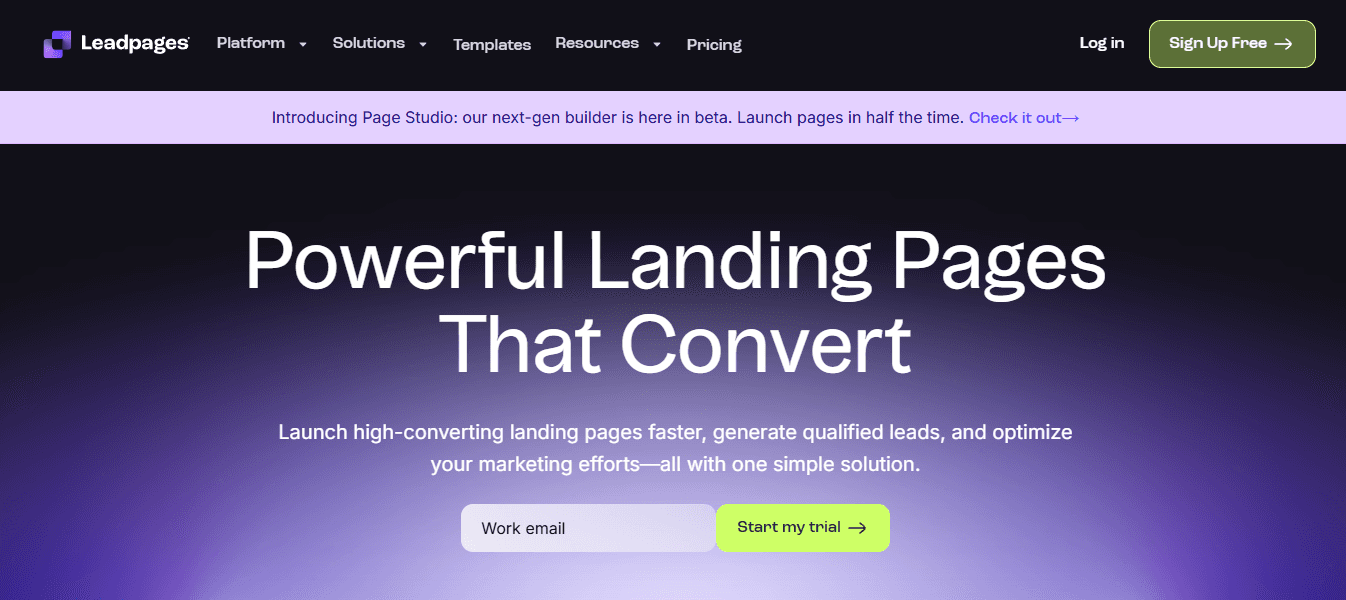
Leadpages is a landing page builder that also creates bio link pages. The draganddrop editor offers complete design flexibility, and you can publish pages directly to your custom domain instead of a subdomain. Templates include bio link layouts and more elaborate leadcapture pages.
Pros
- More flexible than Linktree
- High-quality template library
- Custom domain publishing
- Create all types of landing pages
Cons
- Overkill for users wanting only a bio link tool
- No free plan
- Higher price point
Pricing
Plans start at $37/month.
Key Specs
- Branding flexibility: Yes
- Conversion tools: Forms, payment processing, A/B testing
- Analytics depth: Advanced
- Integrations: Email platforms, CRMs, payment gateways
- Custom domains: Yes
Why it matters
If you need landing pages for multiple campaigns and want your bio link to live on your own domain, Leadpages consolidates functionality that generic tools don't offer.
Ideal for
Marketers, agencies, and businesses are running multipage campaigns.
16. Taplink
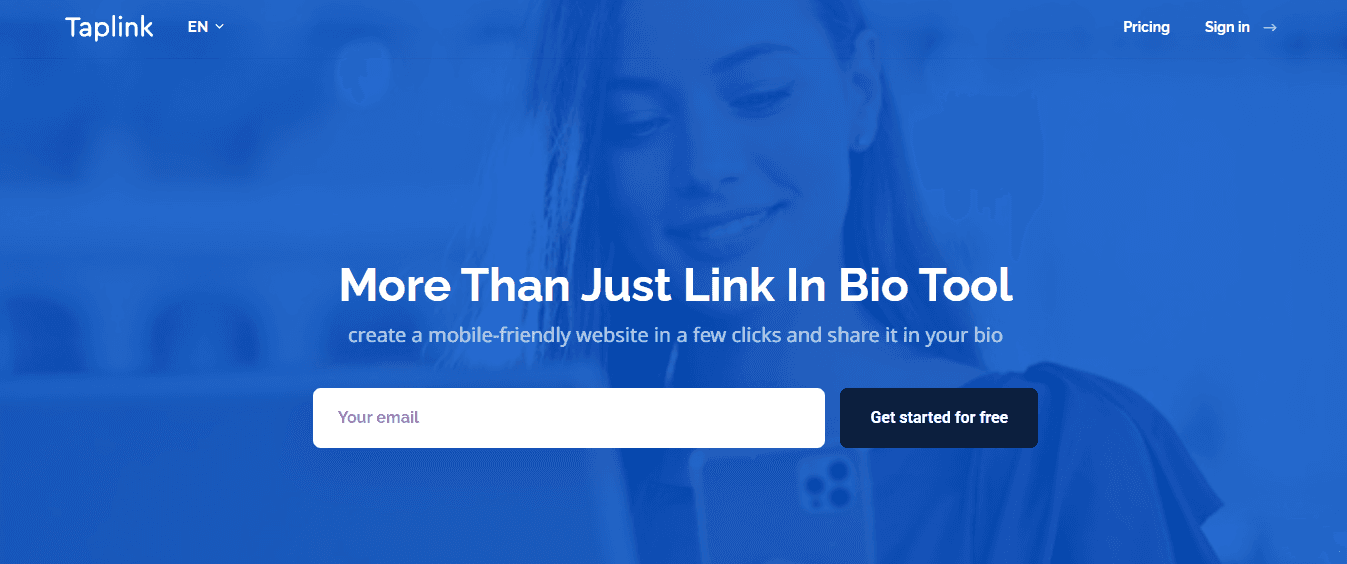
Taplink (formerly ContactInBio) lets you add videos, images, image carousels, and payment links directly on your landing page. You can embed store products so customers can make purchases without leaving the page. Messenger links allow users to connect via WhatsApp, Messenger, and Skype.
Pros
- Embed eCommerce products directly
- Messenger links for multiple apps
- Direct payment links via Stripe and PayPal
- Advanced design customization
- Integrates with Google Analytics and Facebook Pixel
Cons
- More features may overwhelm simple use cases
- Requires setup time to leverage full functionality
Pricing
Free plan available; premium plans start at $3/month.
Key Specs
- Branding flexibility: Yes
- Conversion tools: eCommerce, payment processing, messaging
- Analytics depth: Advanced
- Integrations: Google Analytics, Facebook Pixel, payment gateways
- Custom domains: Yes
Why it matters
If you need a link page that functions as a storefront and communication hub, Taplink consolidates tools that would otherwise require multiple subscriptions.
Ideal for
eCommerce sellers, creators monetizing directly, and service providers needing integrated payment and messaging.
17. Bio.fm

Bio.fm is a content aggregator that curates feeds from Instagram, Twitter, YouTube, Facebook, and Spotify. It includes dynamic elements like survey polls, opt-in forms, and GIFs. The platform seamlessly integrates various digital profiles, making it ideal for users managing multiple accounts.
Pros
- Aggregates content from multiple platforms
- Embed GIFs and survey polls
- Customizable themes
- Strong cross-platform integration
Cons
- Learning curve for emerging influencers
- More complex than simple link aggregators
- Best for users with a wideranging online presence
Pricing
Free plan available; premium plans start at $4.99/month.
Key Specs
- Branding flexibility: Yes
- Conversion tools: Optin forms, polls
- Analytics depth: Moderate
- Integrations: Instagram, Twitter, YouTube, Facebook, Spotify
- Custom domains: Yes
Why it matters
If you're active across multiple platforms and want a single hub to aggregate everything, Bio.fm removes the need to manually update links across channels.
Ideal for
Multiplatform creators, influencers, and brands with diverse content strategies.
18. Everlink

Everlink is a straightforward Linktree alternative that supports unlimited links, YouTube videos, and a built-in link shortener. The analytics feature provides clear graphics covering views, location, devices, and referrers. Link scheduling lets you display certain links only at specific times or days.
Pros
- Unlimited links
- Built-in link shortener
- Intuitive analytics with clear visuals
- Link scheduling for timesensitive promotions
- Supports videos and images
Cons
- Fewer advanced features than competitors
- Limited integrations
- Best for users prioritizing simplicity
Pricing
Free plan available; premium plans start at $3/month.
Key Specs
- Branding flexibility: Moderate
- Conversion tools: Basic
- Analytics depth: Moderate
- Integrations: Limited
- Custom domains: Yes
Why it matters
If you need a clean, simple link page with solid analytics and scheduling, Everlink delivers strong value without unnecessary complexity.
Ideal for
Creators, small businesses, and users seeking affordable simplicity.
19. Campsite.bio
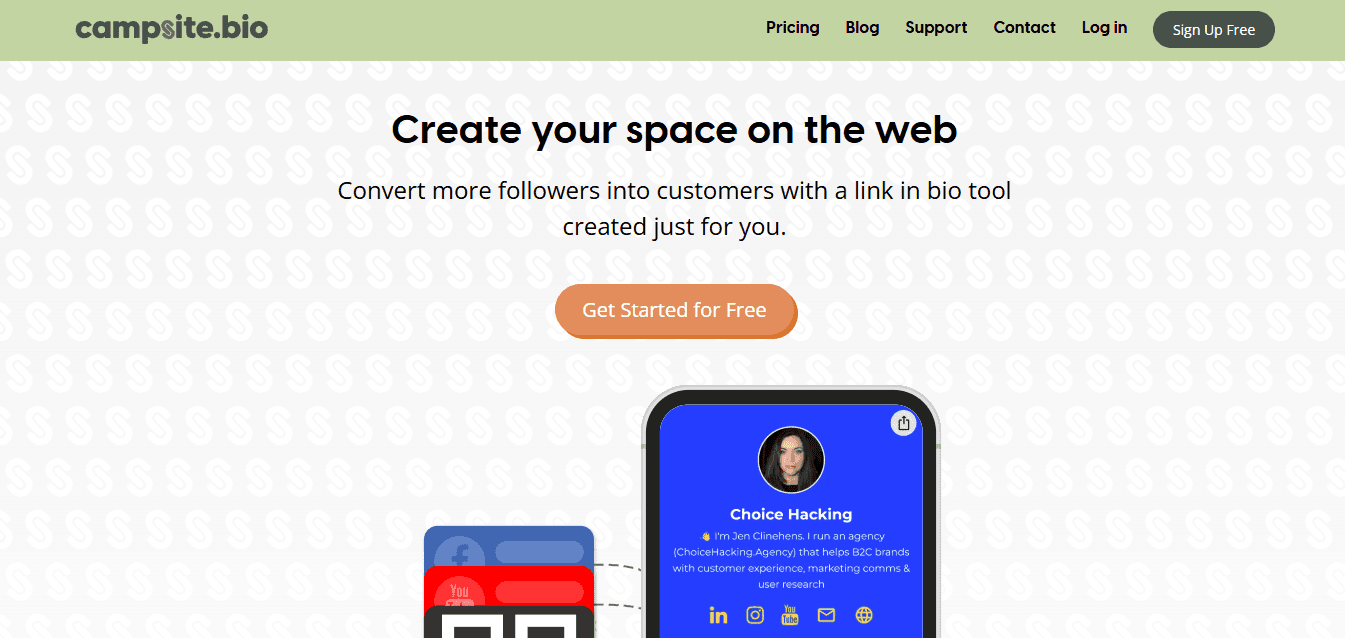
Campsite.bio lets you add images to link buttons, making links stand out. Extensive customization options let you tailor color schemes, icons, and fonts to match your brand identity. Integrations include Mailchimp and other email marketing platforms.
Pros
- Add images to link buttons
- Extensive branding customization
- Integrations with CRMs and email platforms
- Detailed link statistics
Cons
- Fewer advanced features than competitors
- Best for users prioritizing visual customization
Pricing
Free plan available; premium plans start at $7/month.
Key Specs
- Branding flexibility: Yes
- Conversion tools: Basic
- Analytics depth: Moderate
- Integrations: Mailchimp, email platforms
- Custom domains: Yes
Why it matters
If you want a link page that visually reinforces your brand and stands out from generic layouts, Campsite.bio offers the flexibility to customize it.
Ideal for
Creators, brands, and marketers are prioritizing visual identity.
20. Linkpop
Linkpop focuses on eCommerce with seamless Shopify integration. You can embed order links directly on your bio page, turning it into a revenue-generating extension of your store. Analytics track unique visits, clicks, and clicks per visit.
Pros
- Shoppable links within the bio page
- Seamless Shopify integration
- Easy setup
- Analytics track key metrics
Cons
- Best suited for Shopify users
- Limited features for noneCommerce use cases
Pricing
Free plan available; premium features included with Shopify subscription.
Key Specs
- Branding flexibility: Moderate
- Conversion tools: eCommerce, shoppable links
- Analytics depth: Moderate
- Integrations: Shopify
- Custom domains: Yes
Why it matters
If you're running a Shopify store and want to monetize your bio space efficiently, Linkpop integrates seamlessly with your existing setup.
Ideal for
Shopify store owners, eCommerce sellers, and product-based businesses.
21. Smash Balloon

Smash Balloon is a WordPress plugin that adds social media feeds from Instagram, Twitter, and Facebook to your site. It syncs with your Instagram feed, so new content posted on Instagram updates automatically on your WordPress site in real time.
Pros
- Realtime feed syncing
- Promotes social content via your website
- Easy setup for WordPress users
- Reverses discovery flow (website promotes social feeds)
Cons
- Requires WordPress
- Not a standalone LinkinBio tool
- Best for users with established websites
Pricing
Free plugin available; premium plans start at $49/year.
Key Specs
- Branding flexibility: Moderate
- Conversion tools: Basic
- Analytics depth: Basic
- Integrations: Instagram, Twitter, Facebook, WordPress
- Custom domains: Yes (via WordPress)
Why it matters
If you want your website to promote your social feeds rather than the other way around, Smash Balloon leverages your site's traffic to gain visibility for your social content.
Ideal for
Bloggers, site owners, and WordPress users with established web traffic. But choosing the right tool only matters if you know what to do with the leads you capture.
Make Every Connection Count with Mobilo — Book a Demo Today
Static link pages treat every visitor identically. A casual browser receives the same experience as a decision-maker ready to engage. Paper cards disappear into pockets without reaching your CRM. Link-in-bio tools track clicks but lose sight of the person behind them.
💡 Tip: Our digital contact card captures leads automatically. When someone taps your card or scans your QR code, the system pulls their contact information and enriches it with publicly available data. That record syncs directly to your CRM, tagged with context about where you met and what you discussed.
"Over 59,000 companies use this approach because it removes the manual work that causes most networking follow-up to fail." — Mobilo User Data, 2024
Your sales team sees actionable prospects instead of scattered business cards. Book a demo today and receive your first 25 Mobilo business cards free, worth $950. Convert every connection into a measurable pipeline.
🔑 Takeaway: Stop losing potential customers to outdated networking methods — Mobilo's automated lead capture turns every handshake into CRM-ready prospects with zero manual data entry required.
Related Reading