.avif)


25 Small Business Bio Examples That Build Trust and Drive Sales
On This Page
Your potential customers are scrolling through your website or social media profile, ready to connect, but they pause at your bio. That tiny block of text carries enormous weight in whether someone trusts you enough to buy, book, or reach out. This guide walks you through best link in bio tool as well as 25 small-business bio examples that build trust, showing you exactly how to craft your own bio that attracts customers and drives sales.
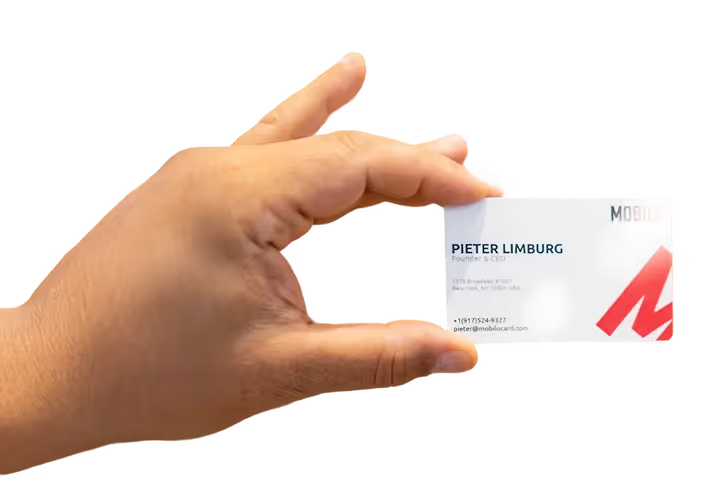
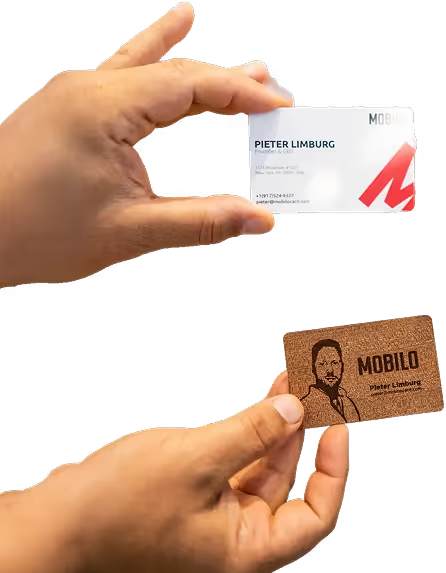
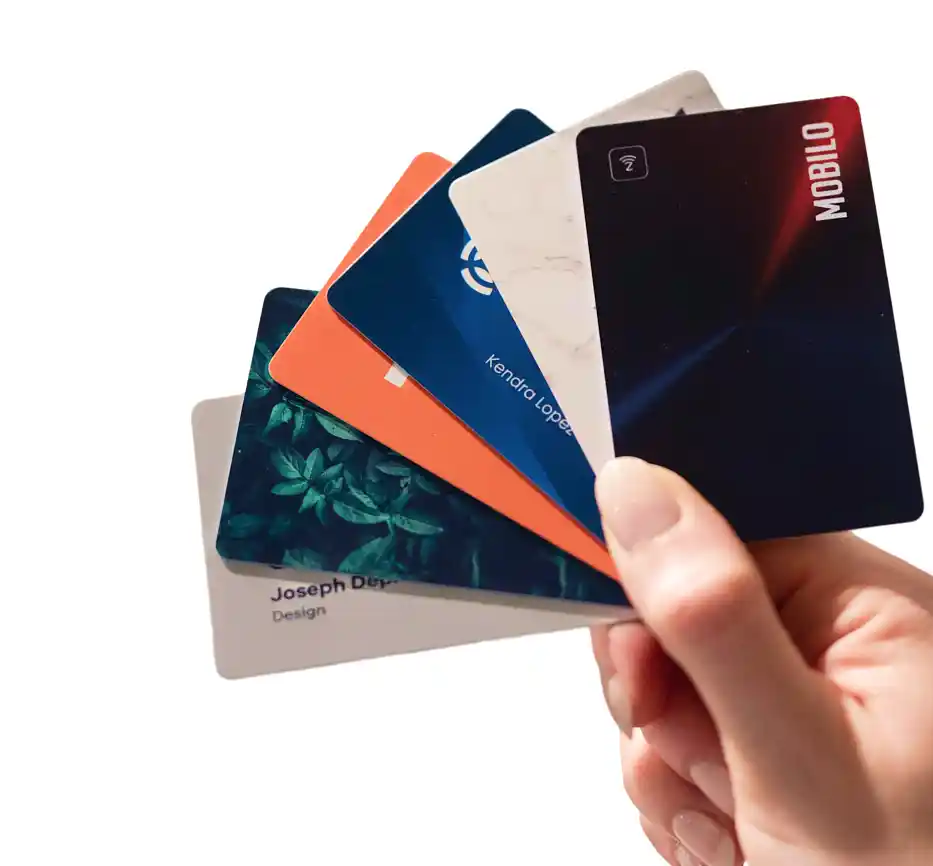
Once you've created a compelling bio, you need a way to share it instantly with everyone you meet. Mobilo's digital contact card lets you present your professional story alongside your contact details with a single tap or scan. When someone receives your digital card, they get your carefully crafted bio, your social links, and everything they need to become a customer, all without fumbling for paper business cards or typing information manually.
Table of Contents
- Why Most Small Business Bios Get Ignored
- A Weak Bio Doesn’t Just Look Generic — It Costs You, Customers
- The Revenue Impact of Vague Positioning
- 25 Excellent Small Business Bio Examples You Can Adapt
- Your Bio Opens the Door. Mobilo Makes Sure the Lead Doesn’t Walk Away.
Summary
- Generic business bios cost more than credibility. They create measurable revenue loss through higher bounce rates, weaker engagement, and longer sales cycles. When your bio sounds interchangeable with competitors, visitors default to price comparison because you haven't given them another decision factor. Vague positioning leaves cold leads unsure what you offer, prolonging sales conversations and increasing objections.
- Specificity functions as a filter, not a limitation. The most effective bios don't try to appeal to everyone. They signal exactly who they serve, so ideal customers immediately recognize themselves, while poor fits self-select out. When a financial advisor says "I work with families navigating career transitions in their 40s and 50s" instead of "I help people with their finances," the right audience feels seen, and the wrong audience moves on without wasting anyone's time.
- Your bio gets evaluated in five to ten seconds maximum. In that window, visitors decide whether you understand their problem, whether they trust you, and whether it's worth clicking further. Most businesses underestimate how quickly first impressions form on Instagram profiles, LinkedIn pages, or Google Business listings. Every second spent decoding unclear language moves them closer to clicking away, and platforms interpret immediate exits as low relevance, which contracts your future reach.
- The 25 bio examples demonstrate strategic choices, not copyable templates. Each shows how specific businesses lead with audience identifiers, credibility signals, operational advantages, or mission statements, depending on what differentiates them. Emojis function as visual separators that improve readability in character-limited spaces. Link hubs let businesses with multiple offerings (content, products, services) provide separate pathways so visitors can self-select their journey without forcing one conversion path on everyone.
- Values-driven positioning attracts customers who filter by alignment. When 72% of U.S. consumers believe it's important to buy from companies that reflect their values, certifications like B Corp or 1% for the Planet become trust signals, not just badges. Businesses that lead with mission (sustainability, inclusivity, local sourcing) intentionally filter for customers who share those priorities, which creates stronger customer relationships and reduces price-based competition.
- Nearly 90% of paper business cards never make it into a CRM because manual data entry, lack of context capture, and absence of follow-up triggers create conversion failure points between initial interest and pipeline entry. Mobilo's digital contact card addresses this by automatically transferring contact information when someone taps or scans, enriching lead data in real time, and syncing directly with CRM systems so every real-world interaction becomes a trackable opportunity before the person leaves the venue.
Why Most Small Business Bios Get Ignored

Most small business bios fail because they sound exactly like everyone else's. When your bio opens with "We provide high-quality services" or "Customer satisfaction is our priority," you've already lost the reader. These phrases don't clarify who you help, what problems you solve, or why someone should choose you over the competitor three clicks away.
Your bio isn't a corporate mission statement. It's a positioning statement. And if it doesn't immediately answer "Why you?" it's just noise.
The invisibility problem
Walk through any industry directory or scroll through LinkedIn profiles. You'll see the same language repeated endlessly: passionate teams, dedicated service, commitment to excellence. According to MetLife's 2025 Small Business Confidence Report, small business confidence inches up, but economic uncertainty lingers. In that environment, generic positioning becomes a liability. When customers can't quickly distinguish between options, they default to price or simply move on.
The pattern surfaces everywhere. A consulting firm says they "deliver innovative solutions." A retail shop claims "unmatched customer care." A design agency promises "creative excellence." None of these statements means anything because they could apply to literally anyone. They're filler words that occupy space without creating differentiation.
When every bio uses identical language, readers stop processing the words entirely. They skim past your carefully crafted paragraph because their brain has already categorized it as generic business speak. You're not being evaluated and rejected. You're being ignored completely.
What customers actually care about
Customers don't care about your internal values or your passion for your craft. They care about outcomes. They want to know if you can solve their specific problem, whether you've done it before, and why your approach works better than alternatives.
A weak bio forces potential customers to do detective work. They have to dig through your website, read between vague lines, and guess whether you're the right fit. Most won't bother. Gateway Commercial Finance's 2025 analysis shows small businesses responding to economic uncertainty through careful resource allocation and strategic decisions. Your customers are doing the same. They're not going to waste time decoding unclear positioning when clearer options exist.
The businesses that break through do something different. They lead with specifics. Instead of "We help businesses grow," they say "We help B2B SaaS companies reduce churn by 30% through onboarding workflow optimization." Instead of "Quality products at great prices," they say "Handmade leather goods using vegetable-tanned Italian leather, designed to last 20+ years."
Specificity creates clarity. Clarity creates confidence. Confidence drives decisions.
Your bio as a filter, not a net
Many businesses try to appeal to everyone, worried that being specific will exclude potential customers. This backfires. When you try to be everything to everyone, you become nothing to anyone. Your bio should filter out poor-fit customers while magnetizing ideal ones.
The most effective bios don't just describe what you do. They signal who you're for. A financial advisor who says "I work with families navigating career transitions in their 40s and 50s" immediately connects with that exact audience while politely steering away people in different life stages. That's not limiting. That's strategic.
When someone reads your bio and thinks, "This is exactly what I need," you've succeeded. When they read it and think, "This sounds nice, but I'm not sure if it applies to me," you've failed. Ambiguity kills conversion.
Traditional networking tools compound this problem. You hand someone a paper business card with your vague title and generic tagline, and they file it away with dozens of others. There's no context, no story, no reason to follow up. Solutions like digital contact card let you pair your positioning with your contact details in one shareable profile. When someone taps your card or scans your code, they immediately see who you help, what makes you different, and how to reach you. The clarity happens instantly, not three days later when they finally look at that stack of paper cards.
The specificity test
Run your current bio through this filter: Could your closest competitor use the exact same language? If yes, rewrite it. Your bio should be so specific to your approach, your story, and your differentiators that no one else could honestly claim the same things.
Ask what you want to be known for, not what you think you should say. What have past customers praised you for? What specific results have you delivered? What's the story behind why you started this business? Those answers contain your real differentiation, but most bios bury them under corporate platitudes.
Your company's story is unique. No two businesses have identical origin stories, turning points, or reasons for existing. Yet most bios strip out that narrative in favor of sanitized, forgettable language. The backstory is where connection happens. It's where customers start to see you as real people solving real problems, not just another vendor.
When you remove the generic filler and replace it with honest specifics about who you help, what you've accomplished, and why your approach works, something shifts. Readers stop skimming and start evaluating. They can finally answer the question that matters: "Is this business right for me?"
If your bio sounds like it could belong to anyone in your industry, you've already answered that question for them.
But sounding generic isn't just a branding problem. It's actively costing you business in ways you probably haven't measured.
Related Reading
- Best Link in Bio Tool
- What is Link in Bio
- How to Improve Linkedin Profile
- How To Build Personal Branding
- How to Add Portfolio to Linkedin
- How To Add Link To Tiktok Bio
- How to Add Instagram Link to Tiktok
- Where is Link in Bio on Instagram
- How to Add Link to Linkedin Post
- How to Add Website Link to Linkedin Profile
- Link in Bio Examples
- How To Add Link To Tiktok Bio
- How to Add Instagram Link to Tiktok
The Revenue Impact of Vague Positioning

Your bio gets five seconds. Maybe ten if the visitor is patient. In that window, they're deciding whether you understand their problem, whether they trust you, and whether it's worth clicking further. If your bio is vague, they don't pause to analyze it. They leave.
This isn't about branding polish. It's about lost revenue.
The Attention Window
Most businesses underestimate how quickly first impressions form. When someone lands on your Instagram profile, LinkedIn page, or Google Business listing, they're scanning for signals. Is this relevant to me? Do they specialize in what I need? Can I picture working with them?
A generic bio forces them to guess. "Helping businesses succeed" doesn't tell a retail manager whether you handle inventory software or marketing strategy. "Passionate about customer service" doesn't clarify whether you're a consultant, a trainer, or a software provider. Every second spent decoding vague language is a second closer to them clicking away.
The pattern surfaces everywhere. Someone searches for "accounting help for freelancers" and finds three profiles. The first says "Trusted financial services since 2015." The second says "Helping clients achieve their goals." The third says "Tax prep and quarterly bookkeeping for freelance designers and consultants, with same-week turnaround." Which one gets the inquiry?
When your bio doesn't immediately answer "Is this for me?" the answer defaults to no.
What You're Actually Losing
Vague positioning creates measurable business costs. Fewer people click through to your website. Fewer visitors convert to followers. Fewer followers become inquiries. The leads who do reach out are colder because they're not sure what you offer, which means longer sales cycles and more price objections.
According to LinkedIn engagement data, weak profiles generate significantly lower interaction rates. When 134 comments accumulate on a post about profile optimization, it signals how many professionals recognize this problem in their own positioning.
The hidden cost compounds over time. Every profile visit that doesn't convert is a missed opportunity. Multiply that by hundreds or thousands of monthly impressions, and the revenue gap becomes substantial. You're not just losing individual sales. You're losing momentum, visibility, and the compounding effect of strong positioning.
Higher bounce rates signal another problem. When visitors land on your profile and immediately leave, platforms interpret that as low relevance. Your content gets shown less often. Your reach contracts. The algorithm assumes you're not worth surfacing because people aren't engaging with you. Weak positioning doesn't just cost you the current visitor; it costs you the next one, too. It costs you future visibility.
The Interchangeability Trap
A generic bio sends one of three signals. You don't know your audience well enough to speak directly to them. You don't know what differentiates you from competitors. Or you're interchangeable with everyone else offering similar services.
That third signal is the most damaging. When customers can't distinguish between options, they default to price. If your bio could belong to any consultant, any designer, any coach in your field, then the only remaining decision factor is cost. You've positioned yourself as a commodity.
In crowded markets, interchangeability means price pressure. Clients assume all providers deliver roughly the same results, so they shop for the lowest rate. You end up competing against people who undercut you by 30% because you haven't given anyone a reason to choose you beyond cost.
The businesses that avoid this trap lead with specificity. They state exactly who they serve, what outcomes they deliver, and what makes their approach different. A vague "marketing services" becomes "email automation for e-commerce brands selling physical products, focused on cart abandonment and post-purchase sequences." That level of clarity attracts the right clients and repels poor fits, so no one wastes time on a discovery call.
When your bio doesn't clearly position you, you end up competing on price by default.
Your Bio as a Filter
On platforms like Instagram, LinkedIn, and Google Business, your bio isn't just a description. It's filtering. The right people should instantly recognize themselves in it. The wrong people should self-select out.
Most businesses resist this. They worry that being specific will exclude potential customers. But trying to appeal to everyone means connecting with no one. When you say "We work with all types of businesses," you've told the reader nothing useful. When you say, "We work with family-owned restaurants preparing for second-generation leadership transitions," someone in that exact situation feels seen.
That recognition drives action. A prospect reads your bio and thinks, "This person gets my situation." They're not wondering whether you can help. They're already picturing the conversation. That's the difference between a cold inquiry and a warm one.
Traditional networking tools make this harder. You hand someone a paper card with a vague title and a phone number. They file it away with dozens of others. There's no context, no story, no clarity about whether you're relevant to their needs. Solutions like digital contact card pair your positioning with your contact details in one shareable profile. When someone taps your card or scans your code, they immediately see who you help, what makes you different, and how to reach you. The filtering happens instantly, not three days later when they finally look at that stack of cards.
If your bio doesn't create alignment, you don't just lose attention. You lose the right kind of attention.
The First Impression You're Missing
Before someone reads your content, visits your website, or books a call, your bio already made the first impression. Most businesses are losing that moment without realizing it.
They assume people will dig deeper if they're interested. But interest doesn't form in a vacuum. It forms when someone quickly understands what you offer and why it matters to them. A weak bio prevents that understanding from ever happening.
The businesses winning this moment aren't more talented or better funded. They're clearer. They've stripped out the corporate platitudes and replaced them with honest specifics about who they help, what they've accomplished, and why their approach works. That clarity doesn't just improve conversion rates. It changes the entire quality of the pipeline.
But knowing your bio is weak and fixing it are entirely different challenges.
Related Reading
- How to Add Linktree to Tiktok
- How To Add Linktree To Instagram
- How To Add A Link To Instagram Story
- How To Add Link To Instagram Profile
- Personal Landing Page Examples
- Graphic Design Portfolio Websites
- Personal Portfolio Website Design Examples
- One Page Website Examples
- Best Photography Portfolio Websites
- Instagram Landing Page Examples
25 Excellent Small Business Bio Examples You Can Adapt

You don't need more templates. You need to understand why certain bios convert while others get scrolled past. The examples below aren't here for you to copy word-for-word. They're here to show you the strategic choices behind positioning that works: who each business targets, which credibility signal it leads with, how it differentiates, and what action it drives. Study the structure, not the sentences. Then adapt the thinking to your own context.
1. Ellevest
Ellevest is a digital investing platform co-founded by CEO Sallie Krawcheck to help women take control of their financial futures through membership-based services.
Bio
"By women, for women. Financial services built to close the gender money gap. Membership-based investing platform."
Why This Bio Works
The opening immediately signals who this is for with "by women, for women." No guessing. The problem being solved is explicit: the gender money gap. The business model is stated upfront (membership-based), so readers know what type of relationship they're entering. The credibility comes from Krawcheck's reputation in finance, though the bio doesn't lean on her name because the mission itself carries weight.
What You Can Borrow
Lead with your audience identifier if it's your primary differentiator. Notice how this avoids generic phrases like "empowering clients" and instead anchors the reader immediately in a specific demographic and problem. If you serve a niche that feels underserved or overlooked, state it plainly in your first sentence. For link strategy, Ellevest uses a Linktree-style hub pointing to blog content, membership pages, and educational resources. This turns the bio into a funnel rather than just a description. Your bio should answer "Is this for me?" in under three seconds.
2. Pura Vida Bracelets
Pura Vida is a bracelet retailer with a community of over 800 artisans across Costa Rica, El Salvador, and India who craft homemade jewelry.
Bio
"Handmade bracelets from artisans worldwide / FREE SHIPPING on all orders / 1% for the Planet partner / #PuraVidaBracelets."
Why This Bio Works
Emojis function as bullet points, saving character space while adding visual rhythm. The structure feels playful, which aligns with the brand's colorful, lifestyle-focused imagery. "FREE SHIPPING" is capitalized because it's a competitive advantage many retailers don't offer. The 1% for the Planet certification signals alignment with the values of eco-conscious buyers. The branded hashtag (#PuraVidaBracelets) serves triple duty: social listening, UGC collection, and brand visibility.
What You Can Borrow
If your brand personality leans casual or vibrant, emojis aren't just decoration. They're functional separators that improve readability. Highlight operational advantages your competitors lack (free shipping, same-day turnaround, lifetime warranty) prominently. Create a branded hashtag and include it in your bio so customers can find community content, and you can track mentions. This bio is a masterclass in using every character strategically while maintaining brand voice.
3. The Freckled Hen Farmhouse
This general store, created by lifestyle blogger Natalie Freeman and her husband Luke, serves both in-person shoppers and online customers with home goods, local products, and garden supplies.
Bio
"Open Tues-Sat 10-5 / Local delivery available / (555) 123-4567 / Rental cottage available / Link: Shop online + Newsletter + Seasonal collections."
Why This Bio Works
The bio addresses two distinct customer segments: those who can visit the physical store and those who shop online. Store hours, phone number, and local delivery serve the local audience. The Linktree link serves remote shoppers with direct paths to the online store, newsletter signup, and category pages. Mentioning the rental cottage adds a revenue stream many followers might not know about. This is smart for businesses with multiple offerings under one brand.
What You Can Borrow
If you operate both online and offline, your bio should serve both audiences equally. Include practical information (hours, location, phone) for local customers and digital pathways for remote ones. Use a link hub to separate offerings so visitors can self-select their journey. Don't assume people know about all your services. If you have secondary offerings (workshops, rentals, consulting), mention them.
4. Lush Cosmetics
Lush is a values-driven cosmetics company founded in London, known for fresh ingredients, minimal packaging, and cruelty-free testing.
Bio
"We're creating a cosmetics revolution to save the planet. / #LushCosmetics / [Linktree]."
Why This Bio Works
This bio keeps it short and bold. "Revolution" and "save the planet" feel urgent and mission-driven, not corporate. The emojis reinforce the environmental and cruelty-free positioning without adding words. The branded hashtag invites community participation. The Linktree directs to product categories, campaigns, and values pages. This works because Lush's brand is already well-known. They don't need to explain what they sell. They need to remind people why they exist.
What You Can Borrow
You don't have to fill all 150 characters. Sometimes brevity creates impact because it's unexpected. If your mission is your differentiator, lead with it boldly. Use language that feels alive, not sanitized. "Revolution" is a stronger word than "commitment." If your brand values are what attract customers, make them the headline. This approach works best when you're not introducing yourself to a cold audience but reinforcing positioning for people who already have some awareness.
5. Later
Later is a social media marketing platform used by millions to schedule and manage content across Instagram, Pinterest, and TikTok.
Bio
"Later | Social Marketing Platform / #1 Marketing Platform for Instagram / Plan, schedule, analyze / [Linktree]."
Why This Bio Works
The bio expands beyond the brand name to include "Social Marketing Platform" for Instagram SEO. When people search for social media tools, Later surfaces in results. The "#1 Marketing Platform for Instagram" claim is a credibility signal that positions them as the category leader. The three-word value proposition (plan, schedule, analyze) clarifies what the tool does. The Linktree leads to tutorials, case studies, and signup pages.
What You Can Borrow
If your business name is a common word or doesn't accurately describe what you do, add context to improve searchability. Include keywords your target audience actually searches for. If you have a defensible claim to being the best, biggest, or first in your category, state it. Keep your value proposition to three action verbs or outcomes. This bio is a lesson in optimizing for discovery while maintaining clarity.
6. ALOHA
ALOHA produces USDA organic, vegan, and gluten-free protein powders, drinks, and foods.
Bio
"Organic. Plant-based. Real ingredients. / Certified B Corp / [Link to shop]."
Why This Bio Works
The bio leads with the keywords health-conscious customers care about: organic, plant-based, and real ingredients. No fluff about "wellness journeys" or "nourishing your body." Just the facts. The B Corp certification is displayed in the profile picture and mentioned in the bio, signaling alignment with values that resonate with conscious consumers. The link goes directly to the shop, not a hub, because the goal is conversion.
What You Can Borrow
Lead with the attributes your customers use to filter. If you're certified, accredited, or recognized by a respected organization, feature it. Don't bury credentials in your About section. Put them in your bio where first-time visitors see them immediately. If your product speaks for itself, skip the storytelling and go straight to purchase. This works best for e-commerce brands with clear product categories.
7. Lokal Hotel
This boutique hotel and cabin brand, created by a husband-and-wife team, offers hyper-local lodging experiences in Philadelphia and Southern New Jersey.
Bio
"Boutique hotels | cabins | apartment suites & homes / Philadelphia & South Jersey / Book your stay / #LokalHotel / [Linktree: Book now, Newsletter, Packages]."
Why This Bio Works
The bio specifies the type of lodging (boutique hotels, cabins, suites) instead of just "hotel," which helps travelers searching for specific experiences find them. The location is clear. The CTA ("Book your stay") with a pointing emoji creates urgency. The Linktree separates booking, newsletter signup, and package options so visitors can choose their path. This keeps potential guests engaged with the profile longer.
What You Can Borrow
Use specific category descriptors instead of generic terms. "Boutique hotels | cabins" performs better in terms of discoverability than "accommodations." If you serve a specific geography, state it. Include a clear CTA with a visual cue (an emoji) to direct the action. Use a link hub to separate transactional (book now) from informational (packages, newsletter), so you don't force one path on everyone.
8. GOODEE
GOODEE is an online marketplace founded by designers Byron and Dexter Peart to curate brands that prioritize positive environmental or social impact.
Bio
"Curated marketplace / Good design meets good purpose / B Corp | 1% for the Planet / [Shop now]."
Why This Bio Works
The bio states what the business is (curated marketplace) and its focus (design + purpose). The certifications (B Corp, 1% for the Planet) align with the mission and signal to values-driven consumers what the business stands for. According to Retail TouchPoints, 72% of U.S. consumers believe it's important to buy from companies that reflect their values. This bio speaks directly to that audience.
What You Can Borrow
If your business is values-driven, don't hide it. Make it the positioning. Certifications aren't just badges. They're trust signals that attract the customers you want. If you're part of a movement or community (e.g., a B Corp or Fair Trade), mention it. This approach works because it filters. People who don't care about purpose will move on. People who do will lean in.
9. Rumpl
Rumpl operates in the outdoor industry, producing blankets made from the same technical materials as premium sleeping bags.
Bio
"Blankets made from the same stuff as sleeping bags / As seen on Shark Tank / #GetRumpl / [Current giveaway link]."
Why This Bio Works
The product description is simple and relatable. No jargon. Just a clear comparison that helps people understand what makes these blankets different. The Shark Tank mention is a credibility signal that builds trust with new visitors. The branded hashtag encourages UGC. The bio link points to a current giveaway, which drives engagement and partnership leverage.
What You Can Borrow
Describe your product in terms people already understand. "Made from the same stuff as sleeping bags" is clearer than "technical insulation materials." If you've been featured in media or on a platform like Shark Tank, include it. Run contests or giveaways and promote them in your bio to accelerate growth. Partner with complementary brands to leverage each other's audiences.
10. Letterfolk
Letterfolk produces letter boards, tile sets, paper goods, and thoughtfully designed home decor products. Founded by a married couple, the company has built a strong following through press hits and community engagement.
Bio
"Letter boards & home goods / Small business, big heart / See LF products in the wild: #Letterfolk / [Shop link]."
Why This Bio Works
Instead of directing followers to use hashtags, Letterfolk invites them to explore how other customers use their products. "See LF products in the wild" feels community-oriented rather than transactional. The "small business, big heart" line signals to shoppers who specifically seek to support smaller companies. Since some buyers actively filter for small businesses, this is a smart differentiator.
What You Can Borrow
If you're a small business, say so. It's a competitive advantage with a meaningful segment of buyers. Frame hashtags as invitations to explore community content, not commands to participate. This subtle shift makes your bio feel less self-promotional and more inclusive. If UGC is part of your strategy, make it easy for people to find and contribute.
11. Grove Collaborative
Grove sells eco-friendly home and personal care products, partnering with 200+ brands while maintaining plastic-neutral operations.
Bio
"Eco-friendly home & personal care / 200+ brands / Plastic Neutral Certified / Shop sustainably / #GroveCollaborative / [LikeShop page]"
Why This Bio Works
This bio does everything. It states what the company sells, mentions the breadth of partnerships (200+ brands), highlights a key credential (Plastic Neutral), includes a catchy CTA, and features a hashtag for community engagement. The LikeShop page organizes products, newsletter signups, and category links. This is a masterclass in maximizing 150 characters without clutter.
What You Can Borrow
If you partner with other brands, mention the number to signal scale and variety. Credentials matter. If you're certified in something your audience cares about, put it in the bio. Use emojis to separate elements visually. Include a CTA that tells people exactly what to do next. A link hub lets you offer multiple pathways without overwhelming the bio itself.
12. A Color Story
A Color Story is a design and photo editing app that emphasizes color customization and creative control.
Bio
"Design & photo app for creators / Share your edits: #AColorStory / Tutorials: [website link] / Support: [email] / [Homepage link]."
Why This Bio Works
The bio clearly states what the app does in one line. It then lists four ways to engage: a hashtag for users to showcase their work, a web address for tutorials, an email for support, and a clickable link to the homepage. This structure encourages interaction at multiple levels, depending on where someone is in their journey.
What You Can Borrow
Provide multiple contact and engagement options. Not everyone wants to click a link. Some want to email. Others want to explore community content. By offering variety, you reduce friction. If you have educational content (tutorials, guides), link to it directly. Make it easy for people to get help, learn, and engage without having to hunt for information.
13. Blume
Blume produces period care and skincare products designed for younger audiences, emphasizing clean ingredients and body positivity.
Bio
"Period care + skincare for real bodies / Clean ingredients / Cruelty-free / Partners: @brand1 @brand2 / B Corp Certified / [Shop link]"
Why This Bio Works
The list format packs a lot of information into a limited space without feeling cluttered. Emojis emphasize values and partnerships. The "real bodies" language signals inclusivity and body positivity, which resonates with the target demographic. Certifications and partner mentions build credibility. The shop link is direct, not a hub, because the goal is conversion.
What You Can Borrow
Use list formatting with emojis to improve readability. If you partner with recognizable brands, tag them. It builds credibility and can increase discoverability when those brands' audiences find you. State your values plainly. "Clean ingredients" and "cruelty-free" are filters for conscious buyers. Make it easy for them to identify you.
14. Kuki Candles
Kuki Candles is a local candle business emphasizing handmade quality and customer incentives.
Bio
"Handmade candles | Local business / Free delivery on orders $50+ / Sign up for 10% off your first order / [Homepage link]."
Why This Bio Works
The bio leads with the product and local business status. It then tempts visitors with two promotions: free delivery over a threshold and a discount for newsletter signups. This creates multiple conversion paths. The free delivery offer is especially effective if competitors don't provide it.
What You Can Borrow
Use your bio to promote current offers. If you offer free shipping or delivery above a certain amount, state it. It's a decision factor for online shoppers. Incentivize newsletter signups directly in your bio. This builds your list while giving visitors a reason to engage immediately. Update your bio regularly to reflect seasonal promotions or new offers.
15. World of Vegan
World of Vegan promotes plant-based living through recipes, podcasts, grocery delivery, and educational content. The brand is built around founder Michelle Cehn's personal mission.
Bio
"Vegan recipes / Podcast / Grocery delivery / Newsletter / By @MichelleCehn / [Link hub with +4 options]"
Why This Bio Works
The emoji-list format clearly separates offerings. Personalizing the brand by mentioning the founder (@MichelleCehn) adds authenticity and trust. The link hub includes a podcast, recipes, a newsletter, and grocery delivery options, so visitors can choose their entry point. This works because the brand has multiple content types and products under one umbrella.
What You Can Borrow
If your brand has multiple offerings (content, products, services), use a link hub with clear labels. Mention the person behind the brand if it strengthens positioning. Personal brands often convert better because people connect with individuals, not faceless companies. Use emojis to visually separate offerings and make the bio feel less like a wall of text.
16. ~Pourri
Pourri (formerly PooPourri) sells odor-eliminating sprays with a playful, irreverent brand voice.
Bio
"Sprays that actually work. Guaranteed. / Find us at @Target @Walmart @Amazon / Shop now / [Buy online link]."
Why This Bio Works
The bio includes a product guarantee upfront, which reduces purchase hesitation. It lists major retail partners (Target, Walmart, Amazon) to build credibility and show availability. The CTA with a pointing emoji directs visitors to the online store. The tone is casual and confident, matching the brand's personality.
What You Can Borrow
If you have a product guarantee, feature it in your bio. It's a trust signal. If you're sold in major retailers, mention them. It signals legitimacy and makes it easier for people to find you offline. Use a clear CTA with a visual cue to direct action. Your bio should reflect your brand voice. If you're playful, be playful. If you're serious, be serious.
17. Master & Dynamic
Master & Dynamic sells premium headphones and earphones with a focus on superior sound quality and minimalist design.
Bio
"Sound matters. / [LikeShop page]."
Why This Bio Works
The bio is minimalist, which aligns with the brand's design aesthetic. The two-word slogan ("Sound matters") conveys the brand's focus without explanation. The LikeShop page features a prominent newsletter signup and a section of featured products below. This works because the brand is already known. They don't need to explain what they sell. They need to reinforce their positioning.
What You Can Borrow
If your brand is established, you can afford brevity. A short, memorable slogan can be more effective than a detailed description. Make sure your link hub is well-organized with a clear hierarchy (newsletter at top, products below). Minimalism works when it's intentional and aligned with your brand identity, not when it's lazy.
18. Silk Laundry
Silk Laundry produces clothing made from natural materials with a focus on sustainability and environmental responsibility.
Bio
"Natural materials. Sustainable fashion. / Protecting the planet, one garment at a time / [Shop link]."
Why This Bio Works
The bio clearly states the mission (sustainability) and the method (natural materials). The second line reinforces the environmental commitment without sounding preachy. This resonates with shoppers who prioritize eco-friendly brands. The shop link is direct because the goal is conversion.
What You Can Borrow
If sustainability is core to your business, make it the headline. Don't bury it in your About page. State your mission plainly and connect it to your product. This filters for customers who share your values. If your mission is your differentiator, lead with it.
19. Drizly
Drizly is an alcohol delivery app that emphasizes convenience and speed.
Bio
"Alcohol delivered in under 60 minutes / Download the app / [App store link]"
Why This Bio Works
The bio shows personality with emojis and a playful tone. The value proposition (delivery in under 60 minutes) is clear and specific. The CTA directs people to download the app, which is the primary conversion goal. The tone is casual and fun, which matches the brand's positioning.
What You Can Borrow
Let your brand personality show. If you're fun and casual, write that way. State your value proposition with specificity (e.g., "under 60 minutes," not "fast delivery"). Direct people to the action you want them to take (download, shop, book). Your bio should feel like your brand, not a generic business description.
20. Brick Lane Bookshop
Brick Lane Bookshop is an independent bookstore with both a physical location and an online presence.
Bio
"Independent bookshop in East London / Browse online or visit us in-store / [Website link]"
Why This Bio Works
The bio serves both local customers (who can visit in-store) and online shoppers (who can browse the website). The location is clear for people searching for local bookstores. The website link drives traffic for online sales. This dual-channel approach maximizes reach.
What You Can Borrow
If you have both a physical and online presence, address both audiences. Include your location for local discoverability. Provide a clear path to your website for remote customers. Don't assume people know you have an online store or a physical location. State both.
21. Emolyne Cosmetics
Emolyne Cosmetics offers inclusive shade ranges, focusing on empowering customers to find their perfect match.
Bio
"Your shade. Your rules. / Inclusive beauty for all skin tones / #YourShadeYourRules / [Shop link]."
Why This Bio Works
The branded hashtag (#YourShadeYourRules) doubles as a positioning statement and a community engagement tool. The inclusivity message is clear and resonates with customers who struggle to find their shade in mainstream brands. The shop link is direct.
What You Can Borrow
Create a branded hashtag that reflects your positioning, not just your business name. Use it to build community and track mentions. If inclusivity or accessibility is part of your value proposition, state it clearly. This attracts the customers who need what you offer.
22. Mixology Clothing Company
Mixology Clothing sells confidence-boosting apparel with a focus on fit and style.
Bio
"Confidence-boosting clothing / [Shop link]"
Why This Bio Works
The bio is short but clear. "Confidence-boosting" is the emotional benefit, not a product feature. The shop link is direct. This works because the brand's Instagram content (photos, videos) does the heavy lifting. The bio just needs to reinforce the positioning.
What You Can Borrow
Lead with the emotional benefit, not the product category. "Confidence-boosting clothing" is more compelling than "women's apparel." If your content speaks for itself, keep the bio short. Let your posts, stories, and visuals do the storytelling.
23. Linzi Shoes
Linzi Shoes is a footwear retailer with a strong online presence and customer service focus.
Bio
"Footwear for every occasion / [Shop now] [Message us] [Follow for updates]"
Why This Bio Works
The bio includes multiple CTA buttons: shop, message, and follow. This gives visitors options based on where they are in their journey. Some want to browse. Others have questions. Others just want updates. By offering all three, Linzi reduces friction.
What You Can Borrow
Use CTA buttons to guide different actions. Not everyone is ready to buy. Some need support. Others want to stay informed. Make it easy for people to engage in the way that suits them. This increases overall conversion by meeting people where they are.
24. Black Cat Bakery
Black Cat Bakery is a local bakery emphasizing fresh, handmade goods and community connection.
Bio
"Fresh baked goods daily / Local ingredients / Open Tues-Sun 7am-3pm / Order ahead: (555) 123-4567 / [Menu link]."
Why This Bio Works
The bio is broken into multiple lines with emojis for readability. It includes practical information (hours, phone number) for local customers, as well as a menu link for online ordering. The "local ingredients" line signals quality and community support.
What You Can Borrow
Break your bio into lines to improve readability. Don't create a wall of text. Include practical details (hours, phone, location) if you serve local customers. Use emojis to guide the eye and visually separate elements. Make it easy for people to take the next step, whether that's calling, visiting, or ordering online.
25. Olive Clothing
Olive Clothing offers both women's and men's clothing lines, focusing on versatile, timeless pieces.
Bio
"Timeless clothing for women & men / [Shop women's] [Shop men's]"
Why This Bio Works
The bio explicitly mentions both product lines (women's and men's) to address the full target audience. The separate shop links let visitors self-select their path. This maximizes reach by ensuring no segment feels excluded.
What You Can Borrow
If you serve multiple audience segments, mention them explicitly. Don't assume people will explore to find out if you have what they need. Provide separate pathways (links, CTAs) for different segments so they can go directly to what's relevant to them. This reduces friction and improves conversion.
Traditional networking tools like paper business cards don't give you this kind of flexibility. You hand someone a card with a vague title and a phone number, and they file it away with dozens of others. There's no story, no positioning, no reason to follow up. Solutions like digital contact card let you pair your bio positioning with your contact details in one shareable profile. When someone taps your card or scans your code, they immediately see who you help, what makes you different, and how to reach you. The clarity happens instantly, not three days later when they finally look at that stack of paper cards.
But a strong bio only opens the door.
Related Reading
- Bio Site vs Linktree
- Linktree Alternatives
- Shorby Vs Linktree
- Linkinbio vs Linktree
- Linktree vs Carrd
- Beacons vs Linktree
- Beacons vs Stan Store
- Milkshake vs Linktree
- Taplink vs Linktree
Your Bio Opens the Door. Mobilo Makes Sure the Lead Doesn’t Walk Away.
A strong, concise small-business bio helps people understand who you are and why you matter. But clarity alone doesn't build a pipeline. You can have the sharpest positioning in your industry, and still lose 90% of the people who decide you're worth talking to. The breakdown happens in the gap between interest and action.
Most businesses still rely on paper cards at events, meetings, and conferences. Someone reads your bio, likes what they see, and asks for your card. You hand them a rectangle with your name, title, and phone number. They pocket it alongside a dozen others. Three days later, they find the stack on their desk and can't remember which conversation went with which card. Your positioning, your story, and the reason they wanted to follow up in the first place get lost. According to research on business card retention, nearly 90% of paper cards never make it into a CRM. The contact sits in a drawer or gets thrown away. That's not a networking problem. That's a conversion problem.
The traditional networking workflow creates three failure points. First, manual data entry. Someone has to type your information into their phone or CRM, which means they probably won't. Second, no context capture. The card doesn't tell them where you met, what you discussed, or why they saved your information. Third, no follow-up trigger. Without an automated reminder or next step, the lead goes cold before anyone takes action.
Mobilo's intelligent digital business cards solve all three. When someone taps your card or scans your QR code, your contact information is transferred automatically. No typing. The system enriches lead data in real time, scoring prospects against your ideal customer profile so you know who to prioritize. Everything syncs directly with your CRM, so every real-world interaction becomes a trackable opportunity. The person who met you at the conference is already in your pipeline before they leave the venue.
You've optimized your online positioning. You've clarified who you help and what makes you different. Now optimize what happens after someone decides you're worth talking to. Book a demo today and get your first 25 Mobilo business cards free (worth $950). Because visibility is powerful, but captured data is what drives growth.