.avif)

Complete Bio Site vs Linktree Guide to Optimize Your Link in Bio
On This Page
Every creator, entrepreneur, and brand faces the same challenge: one Instagram bio link to share everything that matters. The Bio Site vs Linktree debate has become central to solving this limitation, as choosing the right platform can transform how audiences connect with content and convert into customers. Both solutions allow multiple links to be routed through a single bio URL, but they differ significantly in features, customization, and conversion potential.
Beyond simple link sharing, modern professionals need platforms that capture leads, track engagement, and build genuine connections with their audience. Rather than just directing visitors to various links, the most effective bio tools combine contact sharing, social profiles, and content distribution while providing measurable insights into what resonates. For those seeking a comprehensive solution, Mobilo's digital contact card offers advanced features that turn profile visits into meaningful business relationships.
Summary
- Instagram gives you one link in your bio, and how you use it determines whether profile visitors become customers, subscribers, or lost opportunities. The Bio Site vs Linktree debate centers on which platform better supports growth, but both share a core limitation: they redirect traffic without capturing leads or tracking meaningful engagement beyond basic click counts.
- Choice overload kills conversions faster than bad design. Research from Columbia University found that shoppers presented with 24 jam varieties were 10 times less likely to make a purchase than those shown just 6 options. The same psychology applies to bio pages crammed with 20+ links of equal visual weight, where visitors freeze rather than take action because nothing feels like the obvious next step.
- Sales fees compound quickly when you're processing revenue through your bio link. Bio Sites charges a flat 8% on all transactions, while Linktree's fees range from 12% on free plans to 0% on Premium tiers. A creator earning $5,000 monthly pays $400 in fees with Bio Sites versus $360 annually for Linktree Premium, making the subscription cost-effective at around $700 in monthly revenue.
- Mobile page speed directly impacts whether visitors stay or abandon your bio link before it even loads. A 2018 Google research study found that 53% of mobile users abandon sites that take longer than 3 seconds to load, and bio pages face the same expectations yet are treated as simple redirect tools rather than conversion-critical landing pages.
- Generic bio pages create a trust gap that quietly erodes conversion rates. When visitors tap through from a polished Instagram feed and land on a template that feels disconnected from your brand identity, they subconsciously question whether your offers are worth their time. According to Andy Crestodina's 2025 consumer research, this breakdown in trust across digital touchpoints directly influences whether people convert or move on.
- Mobilo's digital contact card addresses this by capturing lead information and tracking engagement patterns in both online and offline interactions, turning profile visits and in-person QR code scans into measurable pipeline growth rather than just traffic redirection.
Getting Clicks but No Conversions? Here's Why Your Bio Link Might Be the Problem
You're driving traffic across Instagram, TikTok, YouTube, and email. But sales stay flat, signups barely move, and engagement disappears the moment someone lands on your bio link. The problem happens in the three seconds after that tap. Your bio page is where interest either turns into action or disappears.

🎯 Key Point: The bio link is your most critical conversion point - it's where social media traffic either converts or bounces forever.
"Three seconds is all you have to capture attention before visitors decide to stay or leave your bio link page." — User Experience Research, 2024
⚠️ Warning: Even high-performing social content means nothing if your bio page fails to guide visitors toward your desired action.
Why do visitors abandon bio links so quickly?
People don't abandon your bio link because they're lazy. They leave because they don't see immediate value, the page looks messy or untrustworthy, or they're unsure what to do next. If someone has to think too hard, you've lost them.
What makes a bio link page convert visitors into customers?
A strong link-in-bio page makes your main action (buy, book, subscribe, watch, join) clear, matches your brand visually for consistency and trust, loads quickly on mobile devices, and adapts based on user behaviour. Liinks enables this, but only if you avoid the problems that prevent conversions.
Mistake #1: No Clear "Main Thing"
If your bio link looks like a junk drawer with 20+ buttons all the same size, people freeze. Everything feels equally important, and visitors must guess what matters. Your highest-value action gets buried under identical options. When every link competes for attention, none of them wins. The visitor's brain shifts from "what should I do?" to "this feels like work," and they leave.
Mistake #2: Overwhelming Visitors with Too Many Choices
A long scroll of buttons creates choice overload, leading visitors to leave rather than explore. Important links get buried, and finding the next step takes effort, which drops engagement. According to research from Columbia University (2000), shoppers presented with 24 jam varieties were 10 times less likely to make a purchase than those presented with 6 jam varieties. The same psychology applies to your bio link: more options create decision paralysis, not conversions.
Mistake #3: Bland, Vague, or Missing CTAs
"New video." "Website." "Shop." These are labels, not invitations. Visitors don't know why they should click, and every button feels generic and low-stakes. Compare "New video" to "Watch how I built this in 48 hours." One is a passive label; the other creates curiosity and context. The difference between a click and scrolling past often comes down to whether your call to action communicates value or merely existence.
Mistake #4: Off-Brand or Unpolished Design
Your content might be high quality, but a generic or messy link-in-bio page creates friction. Mismatched colours, low-quality avatars, inconsistent button styles, and poor text contrast signal carelessness. People make snap judgments based on visual cues. A thrown-together page suggests the same about your offers. When your polished Instagram grid disconnects from a generic bio page, trust erodes before visitors read a single button.
Mistake #5 Ignoring Mobile Experience and Speed
Most people tap your bio link from their phone. If your page loads slowly, requires pinch-zooming, or has tiny tap targets, you'll lose them before they can even use the page. According to Google research (2018), 53% of mobile users abandon sites that take longer than three seconds to load. If someone must wait, Zoom, or struggle to tap the right button, they're gone.
Mistake #6: Treating Your Bio Link as "Set It and Forget It"
Your content, offers, and priorities change. If your link-in-bio doesn't change with them, it quickly becomes outdated: old launches, expired offers, outdated branding, and broken links all kill trust. Visitors expecting something current find something outdated, signalling neglect rather than inspiring action.
What happens when you don't align your bio link with your audience's needs?
Your bio link works best when it's part of a bigger plan. Ask yourself: Where is most of your social traffic coming from? What do those people want when they tap your link? What's the logical next step for them? If your TikTok audience wants quick entertainment and your YouTube audience wants deep tutorials, sending both groups to the same generic bio page misses the opportunity to meet them where they are. Strategy means matching what you feature with where people come from and what they seek.
How can you create a more strategic bio link?
While most link-in-bio tools focus on directing traffic to external links, solutions like Mobilo's digital contact card take a different approach. Instead of listing links, our digital contact card creates a complete profile that captures leads, tracks engagement, and converts visitors into genuine connections. You collect contact information, measure what resonates with them, and build a pipeline of engaged prospects who want to stay connected.
Why do creators avoid using analytics for bio link optimization?
If you're guessing which links matter, you're probably wrong. Analytics transform your bio link from a static page into a feedback loop. Watch total clicks to see if your bio link is getting used. Track the click-through rate per link to identify which buttons receive the most attention. Monitor top traffic days and times to understand when people are most likely to take action.
How can data insights improve your bio link performance?
Use those insights to move high-CTR links higher on the page, rewrite or replace low-CTR links, and align your social posting schedule with peak click times. Without data, you're optimizing based on assumptions; with it, you're optimizing based on behaviour. But even when you fix all of these mistakes, a deeper issue emerges that most creators never anticipate.
Related Reading
- Best Link in Bio Tool
- What is Link in Bio
- How to Improve Linkedin Profile
- How To Build Personal Branding
- How to Add Portfolio to Linkedin
- How To Add Link To Tiktok Bio
- How to Add Instagram Link to Tiktok
- Where is Link in Bio on Instagram
- How to Add Link to Linkedin Post
- How to Add Website Link to Linkedin Profile
- Link in Bio Examples
- How To Add Link To Tiktok Bio
- How to Add Instagram Link to Tiktok
How A Generic Link Page Quietly Kills Trust, Data, and Revenue
Your bio link either builds your business or bleeds it. When someone clicks from your social profile, they're making a small investment of attention. What they find next determines whether they convert, subscribe, or vanish. Most bio pages list links without branding, data capture, or clarity about who you are or why they should care. That's a missed opportunity with a single URL.

🎯 Key Point: Every click from your social media represents qualified traffic that's already interested in your content - don't waste it on a generic link list.
"Bio link clicks represent some of the highest-intent traffic you'll ever receive, yet most creators treat them as an afterthought." — Digital Marketing Research, 2024
⚠️ Warning: A poorly designed bio page doesn't just lose one visitor - it trains the algorithm that your content doesn't drive meaningful engagement, reducing your future reach.
The Conversion Gap Nobody Measures
Optimised link-in-bio pages achieve 25-40% higher conversion rates than basic single-link setups. Well-designed bio links see up to 350% increase in click-through rates. More clicks create more conversion opportunities, such as email signups, product sales, or booked consultations. Conversion rates vary significantly by platform: Instagram at 1.08%, TikTok at 3.4%, and YouTube at 1.4%. A 3–4% conversion rate from optimized link-in-bio traffic represents strong social media performance. If your bio page converts below that threshold, you're funding your competitors' growth with your own traffic.
Why Generic Pages Fail at Scale
Most link-in-bio tools offer a list of buttons on a white background: no custom branding, no email capture, no behavioural tracking beyond basic click counts. When your page looks identical to everyone else's, you're asking people to trust you based solely on your Instagram caption. That's a weak foundation. The real cost is what you can't measure: which links get ignored, how long people hesitate before clicking, and who visited but didn't convert. Without that data, you're optimizing blind, guessing which content works instead of knowing for sure. Each day that gap widens, your competitors who track behaviour pull further ahead.
Why does renting attention limit your revenue potential?
If your bio page doesn't let people sign up for email, you're renting attention instead of owning it. Every visitor who leaves without subscribing must be re-attracted through another post and an algorithmic battle. According to 2025 research from Andy Crestodina and QuestionPro, surveying over 1,000 consumers, trust in digital interactions weakens when businesses fail to establish clear, professional touchpoints. A generic link page without branding feels transactional rather than trustworthy.
How does trust impact conversion rates?
Money from affiliate revenue, product sales, and service bookings depends on trust. When your bio page lacks a clear visual identity, social proof, or permanence, you're asking people to buy from someone they don't know. Most won't. The real money comes from people who need one more reason to believe you're legitimate. A professional, branded landing page provides that reason. A list of links does not.
What happens when you don't optimize your bio link
Fewer email subscribers mean smaller groups to reach when you launch something new. Lower conversion rates mean lower revenue per visitor. Lost affiliate clicks accumulate over months. Weak brand authority makes it harder to convert followers into customers. These small problems compound quietly. You post regularly and create good content, but the system that turns attention into valuable assets is missing.
Why is your bio link the conversion bottleneck
Most people never optimize their bio link because it feels minor, yet it's your conversion bottleneck. Every click-through signals interest. What happens next is entirely within your control: you can offer a forgettable list of links or give them a reason to stay, subscribe, and buy. Choosing the right tool to fix this isn't as simple as picking the most popular option.
Related Reading
- How to Add Linktree to Tiktok
- How To Add Linktree To Instagram
- How To Add A Link To Instagram Story
- How To Add Link To Instagram Profile
- Personal Landing Page Examples
- Graphic Design Portfolio Websites
- Personal Portfolio Website Design Examples
- Small Business Bio Examples
- One Page Website Examples
- Best Photography Portfolio Websites
- Instagram Landing Page Examples
Bio Sites vs Linktree: Which Link-in-Bio Approach Actually Supports Growth?
Comparing Bio Sites and Linktree isn't about which one has more features—it's about which one works the way you actually need to grow. Both let you add links, change how they look, and track basic information about who clicks them. But when you look at them as business tools instead of just simple link managers, the differences become important to your strategy, not just how they appear.
🎯 Key Point: The real decision comes down to whether you need a simple link hub or a comprehensive growth platform that integrates with your broader marketing strategy.
"The difference between a link-in-bio tool and a growth platform is whether it helps you collect leads or just organizes your links." — Digital Marketing Research, 2024
💡 Tip: Choose Linktree if you need something quick and simple. Choose Bio Sites if you're serious about turning profile visits into measurable business growth.
What content types do both platforms support?
Both platforms support links, text, video, music, and contact forms. According to the Bio Sites and Linktree text block comparison, both allow up to 1000 characters per text block for adding context and explanations.
How do their unique features compare?
Linktree includes map and FAQ blocks that Bio Sites lack. For location-dependent businesses (restaurants, retail, services), map integration is important. FAQ blocks answer common questions without requiring visitors to leave the page. Bio Sites offers a TikTok post grid; Linktree provides Instagram grids. Neither supports standalone image galleries, limiting photographers, artists, and visual creators who cannot build portfolios directly on the page.
What impact do content limitations have on user experience?
This content limit forces a redirect strategy, sending visitors elsewhere instead of displaying the work on the bio page itself, which adds friction to the user journey.
Bio Sites vs Linktree Page Branding
Your social media and bio page should match. This matters for getting people to take action. When someone clicks a link from Instagram and lands on a visually different page, they may not trust it.
What design options do Bio Sites and Linktree offer?
Bio Sites offers 21 themes and 14 templates, while Linktree provides 26 themes but no templates. Templates provide pre-built page structures for specific uses (creator, business, portfolio), accelerating setup. Bio Sites offers 12 profile image layouts, compared to Linktree's two, allowing you to present your image as a circle, square, split design, or a creative arrangement.
Which platform gives you more control over customization?
Linktree excels at detailed customization. You can adjust text size, button style, button rounding, button shadow, and button animation. Bio Sites keeps design settings simpler, enabling faster setup but offering less control. If your brand requires specific typography or button styling, Linktree's flexibility matters.
How do custom domains impact your brand authority?
Custom domains significantly separate the two platforms. Bio Sites lets you connect a custom domain through Squarespace (starting at $14 annually), while Linktree doesn't offer this at any price tier. A custom domain reinforces brand authority: sending people to "links.yourbrand.com" instead of "linktr.ee/yourname" signals professionalism and ownership. Neither platform removes its branding entirely. Linktree hides the footer on paid plans but keeps the logo at the top, while Bio Sites maintains Squarespace attribution. Both fall short on complete white-labelling.
How do Bio Sites and Linktree handle direct sales?
Being able to sell directly from your bio page removes barriers to buying. Each additional click between interest and purchase increases the likelihood that people will abandon their transaction. Both platforms let you sell digital products and book appointments. Bio Sites limits you to one digital product block and one appointment block, while Linktree allows unlimited products and services. That limit becomes a problem if you're selling multiple things. You can't show a full product catalogue or service menu, so you must link to an external store or booking system, creating barriers to buying.
What sales infrastructure features do they offer?
Linktree includes a course builder and built-in CRM, positioning it as a more complete sales infrastructure. You can create and sell courses directly, manage customer relationships, and track the full journey from click to purchase. Bio Sites prioritises simplicity: sell one thing, book one appointment type, or collect tips and donations.
How do transaction fees compare between platforms?
Sales fees vary significantly between services. Bio Sites charges 8% on all transactions. Linktree's fee structure depends on the plan: 12% on the free plan, 9% on Starter and Pro, and 0% on Premium. A creator earning $5,000 monthly through their bio link pays $400 in fees with Bio Sites, $450 on Linktree's free plan, or zero on Linktree Premium (which costs $30 monthly or $360 annually).
Which payment processors do they support?
Payment processor options matter. Bio Sites supports Stripe and PayPal, while Linktree integrates only with Stripe. Since Stripe isn't available in every region, some international customers may be unable to complete purchases. PayPal's broader geographic reach makes Bio Sites more viable for international audiences despite its other limitations. Bio Sites allows native tip and donation collection, whereas Linktree requires third-party platforms, adding another redirect and potential drop-off.
How do advanced monetization platforms differ?
Most link-in-bio platforms treat monetization as an add-on feature, helping you collect payments but not capture leads or track engagement beyond the initial click. Platforms like Mobilo's digital contact card shift this model by capturing contact information, tracking which offers generate interest, and integrating with CRM systems to automate follow-up. You build a pipeline of prospects who engaged with specific offerings, creating opportunities for future conversion even if they don't purchase immediately.
What QR code and SEO differences exist between these platforms?
QR codes connect physical and digital spaces. Linktree creates one automatically; Bio Sites doesn't. If you're using printed materials, business cards, or event signage, Linktree's QR code eliminates the need for a third-party tool. SEO settings determine whether your bio page appears in search results. Linktree lets you add meta titles and descriptions; Bio Sites doesn't. A properly optimised Linktree page has a better chance of appearing when someone searches your name or brand.
How do analytics and extensions compare?
Analytics depth varies significantly. Bio Sites tracks views, clicks, and conversions. Linktree adds subscriber count, geographic location, traffic source, and device type. Understanding which channels drive engagement (Instagram versus email versus direct link) and whether your audience is primarily mobile or desktop, informs strategy and design decisions. Extensions expand functionality by connecting your bio page to other tools. Bio Sites integrates Facebook Pixel, TikTok Pixel, Google Analytics, and Acuity Scheduling. Linktree supports those, plus Google Sheets, Zapier, Klaviyo, Kit, Mailchimp, and Canva. Zapier alone unlocks thousands of automation possibilities.
What features require paid plans?
Most of Linktree's advanced features are available only on paid plans. The free tier includes content blocks, basic themes, and a QR code. Better analytics, extensions, design flexibility, and SEO settings are available only with paid plans.
Bio Sites vs Linktree Pricing
Bio Sites is free with the option to connect a custom domain starting at $14 per year. You get every feature without tiered restrictions, though the platform offers fewer overall features and limits you to one product for monetisation. Linktree uses a freemium model: the free plan offers basic features, and paid plans unlock advanced features. Starter ($6/month billed annually) adds button animation, reduced sales fees (9% vs 12%), and basic analytics. Pro ($12/month) unlocks all themes, full design customization, footer removal, SEO settings, extensions, and conversion tracking. Premium ($30/month) removes sales fees completely.
How do you calculate which pricing plan works best?
The pricing decision depends on your revenue model. If you're not selling through your bio link, Linktree's free plan or Starter tier suffices. If processing transactions, calculate the break-even between sales fees and subscription costs. At $1,000 in monthly revenue, Bio Sites charges $80 in fees; Linktree's free plan charges $120; Starter charges $90; and Premium charges a $30 subscription with no fees. Premium becomes cost-effective at around $700 monthly revenue. For creators prioritizing design control and analytics over monetization, Pro makes sense. For those selling at scale, Premium's zero-fee model justifies the higher subscription cost. Bio Sites works for those who want simplicity without multiple products and value PayPal support for international audiences.
What matters most when choosing a platform?
Pricing and features matter only if the platform supports your growth trajectory.
Related Reading
- How to Add Linktree to Tiktok
- How To Add Linktree To Instagram
- How To Add A Link To Instagram Story
- How To Add Link To Instagram Profile
- Personal Landing Page Examples
- Graphic Design Portfolio Websites
- Personal Portfolio Website Design Examples
- Shorby Vs Linktree
- Linkinbio vs Linktree
- One Page Website Examples
- Best Photography Portfolio Websites
- Instagram Landing Page Examples
Ensure Your Link-in-Bio Worked Everywhere — Not Just Online — With Mobilo
Bio sites and Linktree organize links, but they work only when someone clicks your Instagram profile. What about QR codes at booths, networking events, or physical locations? Most creators lose momentum there: your bio page stops working the moment interaction moves offline.
🎯 Key Point: Traditional bio pages create a massive gap between online and offline interactions, leaving potential leads stranded.
"Most creators lose momentum when interaction moves offline—your bio page stops working the moment someone scans a QR code at an event."
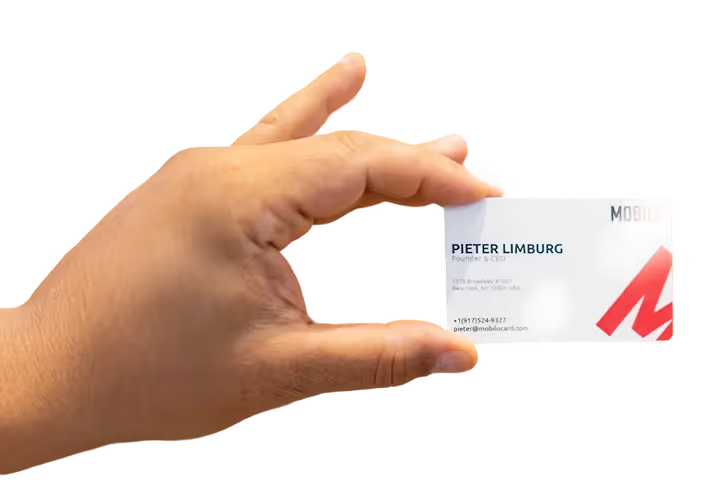
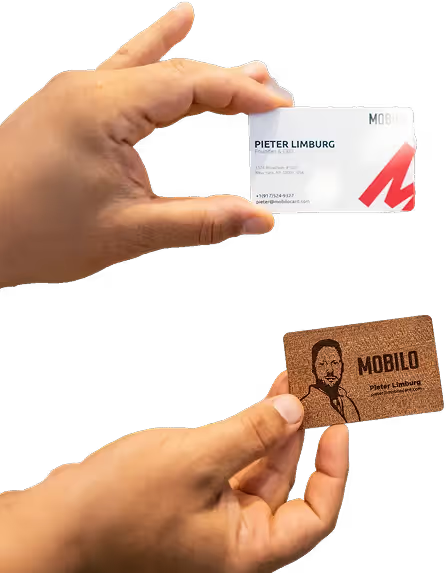
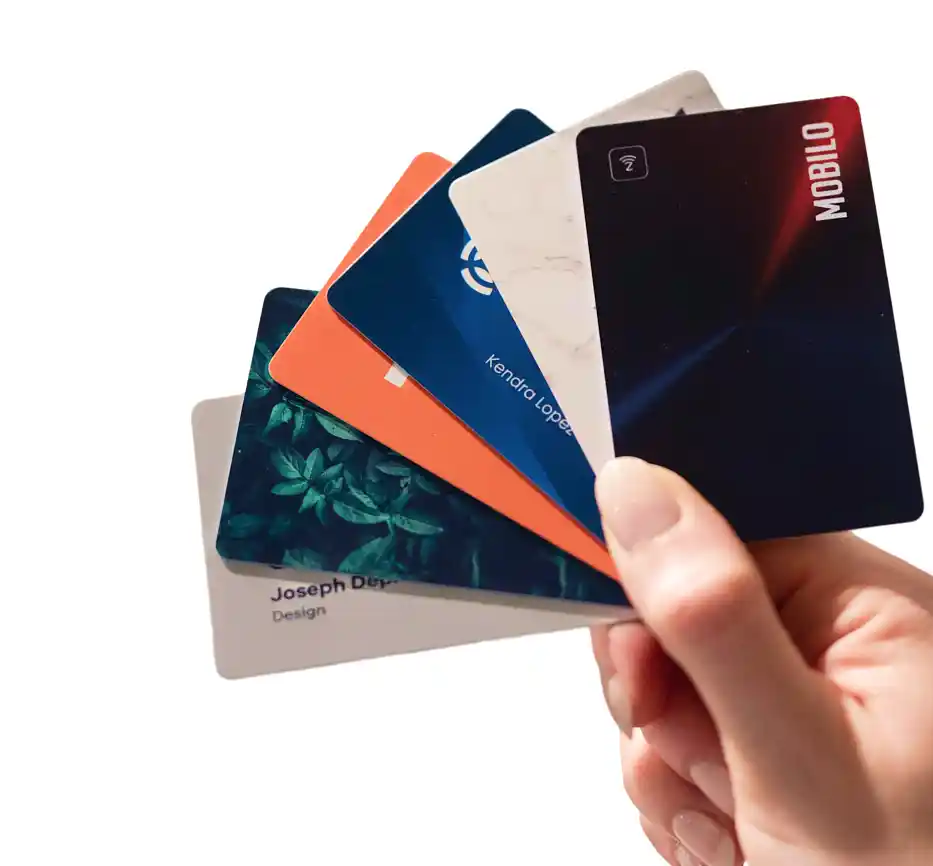
Mobilo turns your QR code into a trackable, conversion-optimized landing experience. Instead of a static bio page, you share a smart digital contact card that automatically captures contact information, enriches lead data, and syncs to your CRM. It's a real-time lead engine working both online and offline, converting every interaction into measurable growth. Mobilo converts attention into a pipeline. Book a demo today and receive your first 25 Mobilo digital business cards free (worth $950).
💡 Tip: Transform every networking event, trade show, and physical interaction into a lead generation opportunity with smart QR technology.