.avif)

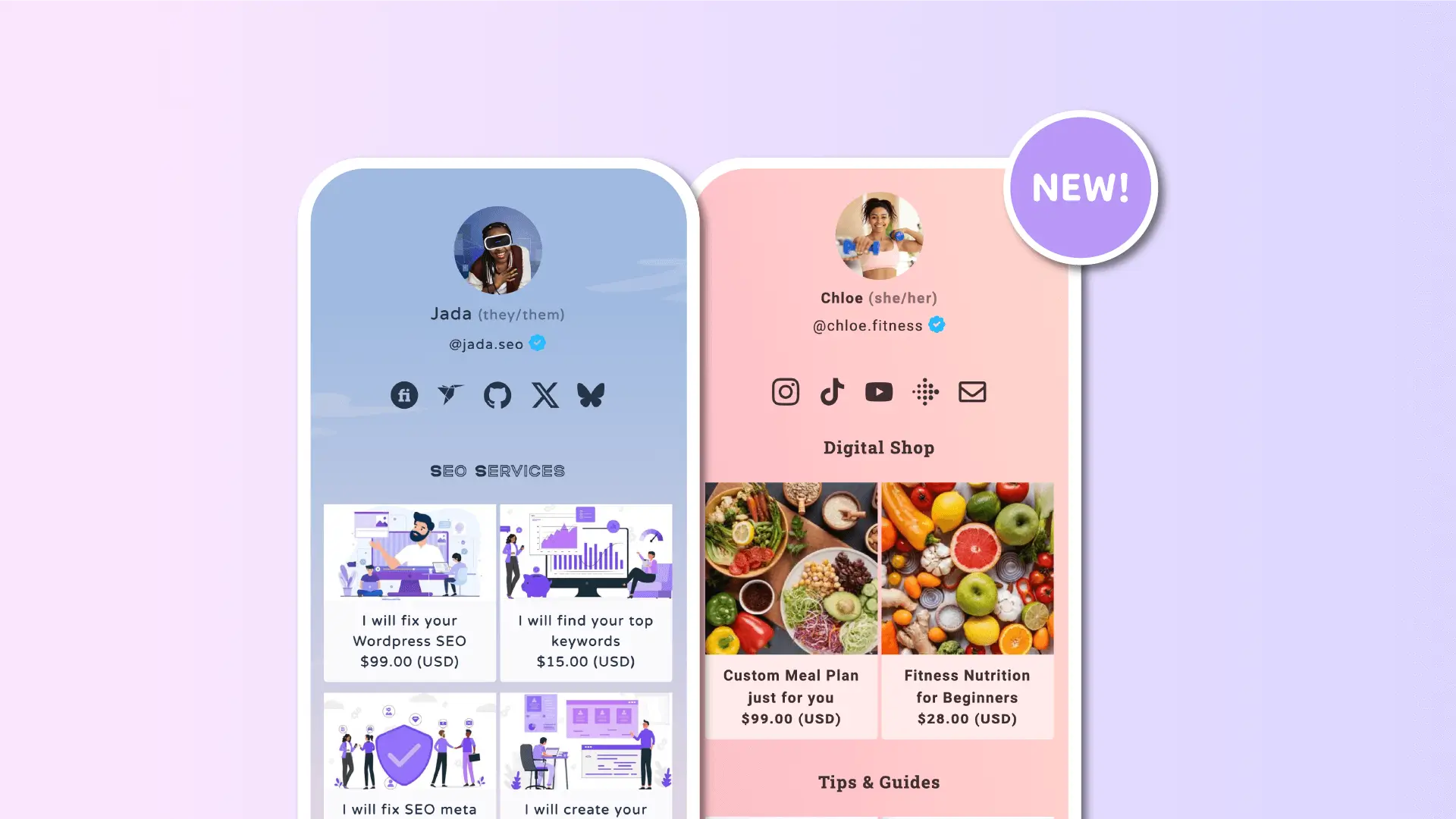
23 Best Link in Bio Examples for Creators and Brands
On This Page
You've perfected your Instagram profile, created compelling content, and built a loyal following. But there's one small problem: you only get one clickable link in your bio, and you have dozens of places you want to send your audience. That single link becomes prime real estate, and how you use it can make or break your ability to convert followers into customers, subscribers, or community members. This article showcases the best link in bio examples from brands, creators, and businesses that have mastered the art of turning that one link into a powerful traffic driver, so you can discover what works, what doesn't, and how to optimize your own profile for maximum engagement.
Mobilo's digital contact card builds on these principles by transforming your bio link into a dynamic networking tool that not only drives traffic to your content but also captures leads, shares contact information instantly, and creates meaningful connections with your audience. Instead of just listing links, you're building relationships and making it effortless for people to reach you, follow up, or take the next step in their journey with your brand.
Summary
- Instagram delivers 200 million business profile visits daily, yet most bio links fail to capture the moment of curiosity because they route visitors to generic homepages rather than specific next steps. When someone clicks expecting to find what they saw in your story and lands somewhere unrelated, they leave without converting.
- Multi-link tools can increase click-through rates by up to 300% when they direct visitors to engagement opportunities rather than passive content pages. The difference shows up in conversion rates, email list growth, and community building. Strategic creators understand that growth isn't limited by content output but by what happens after someone clicks.
- Users spend an average of 8 to 10 seconds on a link-in-bio page, which means you have almost no time to orient visitors and guide them toward relevant actions. The most effective pages use a three-tier structure: high-intent actions first (buy, book, join), trust-building elements second (testimonials, case studies, proof), and low-friction exploration third (social profiles, content archives).
- Platform-specific link pages convert better than generic destinations because TikTok visitors behave differently from Instagram visitors, and YouTube audiences have different expectations than podcast listeners.
- Seasonal messaging adaptation increases conversions by matching language to the psychological moment your audience occupies. Q1 centers on "reset" and "fresh start"; Q2 shifts to "build" and "momentum"; Q3 emphasizes "optimize" and "scale"; and Q4 features "offer" and "year-end urgency."
Digital contact card solutions connect bio link interactions to automated CRM workflows, so when a prospect clicks through to download a resource or visit a booking page, their information flows directly into your pipeline and triggers follow-up sequences automatically.
Why Your Link In Bio Strategy Matters More Than Ever
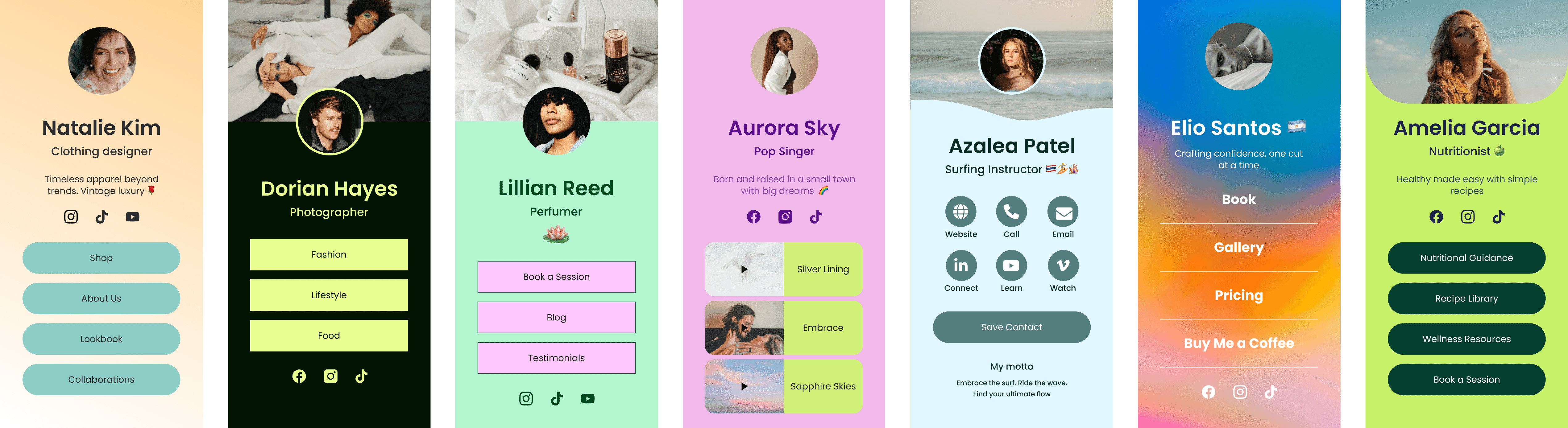
Many creators and brands still treat their Instagram bio link as a simple redirect—a quick URL pointing to a homepage, product page, or latest blog post. It feels convenient. You drop in a link, maybe update it when launching something new, and assume anyone interested will figure it out. This belief persists because it requires no technical setup, no extra tools, and no strategic thinking. One link. One destination. Done. But that convenience comes with a steep cost. Every time someone clicks expecting to find what they saw in your story or post and lands somewhere generic instead, you lose them. They won't hunt through your website navigation. They won't scroll past unrelated content. They'll just leave.
The Curiosity Gap
Traffic arrives, but conversions don't follow. Engagement stays flat. Your audience grows confused about what you actually offer or where to go next. According to Instagram, 200 million users visit at least one business profile daily, yet most of those visits lead nowhere meaningful because the link architecture fails at the moment of curiosity. Picture this: A follower watches your Reel about a new service you're launching. They're interested. They click your bio link, hoping to learn more or sign up. Instead, they land on your homepage with no clear path forward. No signup form. No service details. Just a generic "About Us" page. They close the tab. You've spent hours perfecting that Reel, optimizing the caption, and timing the post perfectly. But the path you gave them to take action? It scattered their attention instead of directing it.
The Real Function of Your Bio Link
Multi-link tools, optimized landing pages, and smart linking strategies solve this by centralizing every possible next step. One URL in your bio opens to a structured page where visitors choose their own path: shop your products, read your latest article, book a consultation, join your newsletter, or follow you elsewhere. The mechanics are simple, but the strategy runs deeper. You're not just offering options. You're designing the first decision surface your audience encounters after they decide you're worth their time.
Designing the Transition
This matters because platforms restrict external links to protect their own engagement metrics. Attention drives revenue, so Instagram provides an off-platform channel. That constraint forces a question most creators ignore: How do you design the moment after someone becomes curious about you?
Intent-to-Outcome Routing
A poorly designed bio link distracts from the focus. A strategic one routes behavior. The difference shows up in your conversion rates, email list growth, product sales, and community building. When someone clicks, they're signaling intent. What happens next either converts that intent into an outcome or wastes it entirely.
Why Strategic Creators Operate Differently
Most people see their bio link as a convenience feature. Strategic creators see it as an asset that compounds over time. They understand that growth isn't limited by content output. You can post daily, nail every trend, and write perfect captions. None of it matters if the moment someone decides to click leads nowhere meaningful.
The Value Ecosystem
The real role of a link in bio is to turn attention into direction, and direction into outcomes. Every piece of content you publish builds curiosity. Your bio link is where that curiosity either converts or dies. Strategic creators treat this space like a mini-value ecosystem, not a static directory.
- They reduce cognitive load so visitors aren't overwhelmed by choices.
- They collapse the distance between what someone saw in a story and what they can access immediately.
- They centralize their identity such as products, content, proof, story, and next steps, in a single, controlled space rather than spreading it across platforms.
Connection Over Transactions
People are increasingly seeking genuine, face-to-face interactions even in digital spaces. Younger and older generations alike are growing tired of performative social media.
- They want a real connection. Successful creators respond by using their bio links to create seamless experiences that mirror real-world interactions.
- They build communities where members can connect through live and asynchronous video, fostering relationships that feel genuinely personal rather than transactional.
How Bio Links Actually Work Beyond the Basics
Yes, technically, it's one link that opens a page with many links. But the mechanics aren't the strategy. The strategy is about three things: reducing cognitive load, collapsing distance, and centralizing identity. Reducing cognitive load means your audience isn't having to choose among many options. They're choosing whether to choose at all. A well-designed bio page makes that first decision effortless. Clear categories. Obvious next steps. No mental friction.
Eliminating Friction Gaps
Collapsing distance means eliminating the gap between what people saw in your content and what they can access. Did they watch a tutorial about your new course? The bio link takes them directly to enrollment, rather than a homepage where they have to search for it. You mentioned a free resource in your caption? It's right there, one click away.
Unified Brand Identity
Centralizing identity means everything resides in a single, controlled space. Your products. Your content. Your proof points. Your story. Your call to action. Visitors don't need to piece together who you are or what you offer by jumping between platforms. It's all there, organized, intentional.
Connecting Bio Links to Broader Networking Systems
The most sophisticated approach treats your bio link not as a standalone social media tool, but as part of a larger digital networking ecosystem. Every click becomes trackable. Every visitor can be captured as a lead. Every interaction feeds into your CRM, employee directory, or lead scoring system.
Actionable Behavioral Insights
When someone visits your bio link, they're not just browsing options. They're entering a system where their behavior tells you what they care about. Which link did they click? How long did they stay? Did they return later? This data informs your content strategy. It integrates directly into how you follow up, nurture relationships, and measure outcomes.
Automated Pipeline Integration
Teams using digital contact card solutions further extend this concept by connecting bio-link interactions to automated CRM workflows. When a prospect clicks through to download a resource, their contact information is automatically added to your pipeline. When they visit your booking page, a follow-up sequence triggers automatically. The bio link stops being a passive directory and becomes an active lead generation tool that tracks, organizes, and routes every interaction into measurable business outcomes.
From Traffic to Revenue
The shift from static linking to dynamic networking changes how you think about every piece of content you create. You're not just driving traffic. You're building a system where attention converts into relationships, relationships convert into opportunities, and opportunities convert into revenue. The bio link becomes the entry point to that entire system, not just a convenience feature you update occasionally.
Related Reading
- Best Link in Bio Tool
- What is Link in Bio
- How to Improve Linkedin Profile
- How To Build Personal Branding
- How to Add Portfolio to Linkedin
- How To Add Link To Tiktok Bio
- How to Add Instagram Link to Tiktok
- Where is Link in Bio on Instagram
- How to Add Link to Linkedin Post
- How to Add Website Link to Linkedin Profile
- Link in Bio Examples
- How To Add Link To Tiktok Bio
- How to Add Instagram Link to Tiktok
23 Link in Bio Examples to Increase Traffic and Conversions
1. The Linktree Approach
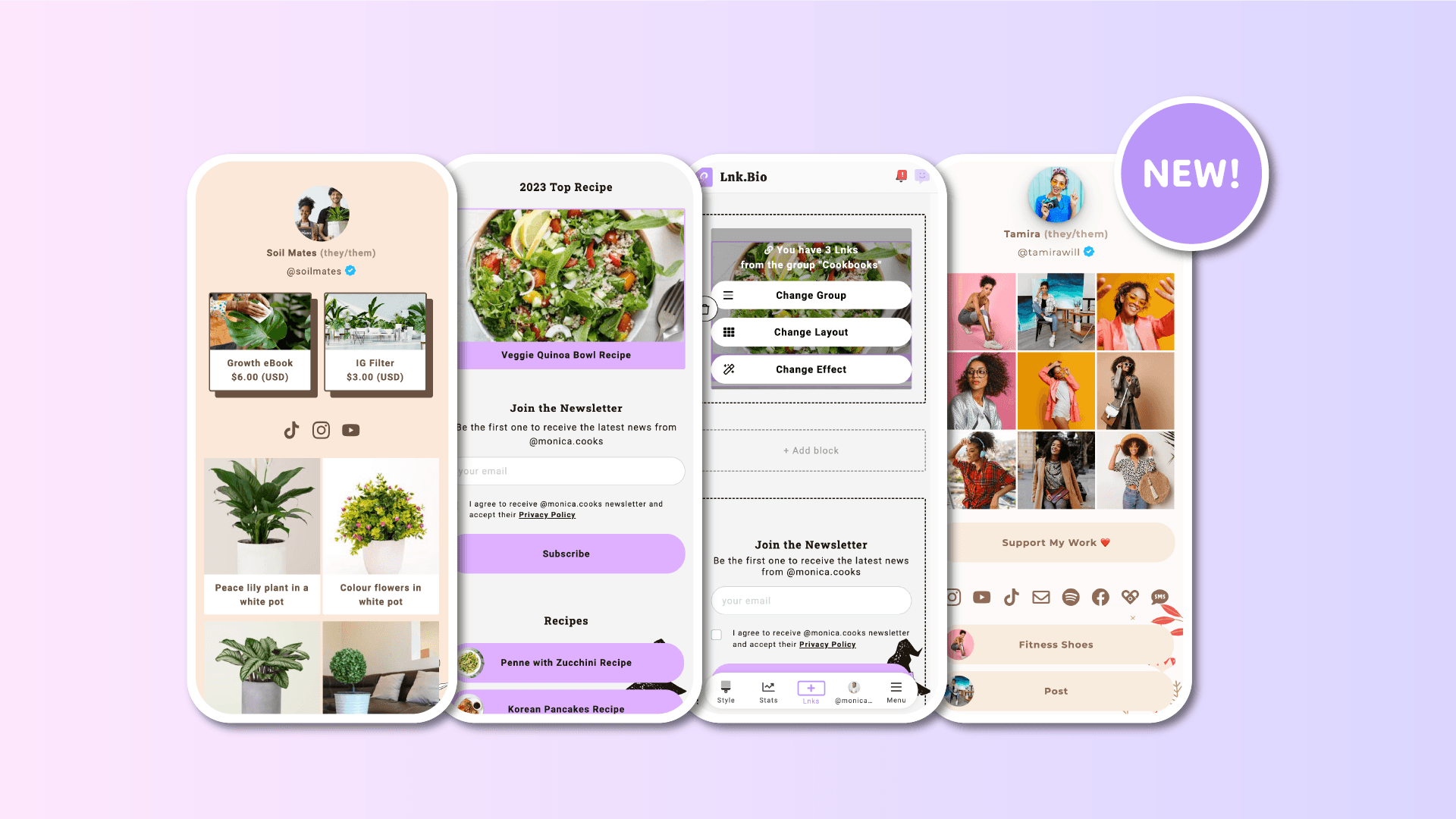
Donna Hay, an Australian chef and author with a substantial following, uses a link-in-bio tool to showcase her books, dozens of recipes, and newsletter subscription. Someone discovers her through a recipe video, clicks her bio, and immediately finds pathways to explore more recipes, purchase her books, or join her community via email. This approach works because it provides followers with multiple pathways to engage with her content ecosystem, rather than forcing everyone through a single funnel.
Intent-Based Organization
This strategy fits content creators with diverse offerings, influencers with multiple revenue streams, or businesses with various product lines. The key is organizing links by intent. Group recipes separately from products. Make newsletter signups visible but not intrusive. Each link serves a different visitor need, so the page becomes a hub rather than a bottleneck.
Implementation tip: Prioritize your top three actions on your link page. Most visitors won't scroll past the first screen, so place your highest-value conversions where they're immediately visible. Use clear, action-oriented language for each link rather than vague labels.
2. The Direct-to-Community Strategy
Kassandra, a yoga instructor with 170,000 followers, links directly to her video-first community platform where members access live classes, participate in challenges, and connect through asynchronous video check-ins. She's not sending traffic to a generic homepage or social media profile. She's routing interested visitors straight into her membership ecosystem, where deeper engagement happens.
Beyond Passive Consumption
This works because it creates immediate access to interactive experiences beyond surface-level social media interactions. People aren't just consuming content. They're participating, contributing, and building genuine relationships with both the creator and fellow community members. According to Verlynk Blog, link-in-bio tools can increase click-through rates by up to 300% when they connect visitors directly to engagement opportunities rather than passive content pages.
Authentic Community Building
Best for coaches, fitness instructors, educators, and anyone building membership-based communities. The authentic approach recognizes that today's users want more than passive content consumption. They're seeking interactive experiences where they can participate and connect.
Implementation tip: Include a preview or teaser of what's inside your community. A short video showing live class energy or member testimonials helps visitors understand what they're joining before they commit. Reduce uncertainty by showing, not just telling.
3. A Storytelling Landing Page
Dana Shultz of Minimalist Baker creates recipes with 10 ingredients or fewer, prepared in one bowl or under 30 minutes. Her custom landing page tells her brand story through video, then guides visitors to recipes, courses, and community discussions. Video storytelling creates emotional connections that static text can't match.
The Narrative Arc of the Bio Link
This approach works for personal brands, mission-driven businesses, or creators who want to establish deeper connections before asking for conversions. When visitors understand your story and values first, they're more likely to engage with your offers because they feel aligned with what you represent.
Implementation tip: Keep your story video under 90 seconds. Attention spans are short, but emotional connection happens quickly when the narrative is tight and authentic. Focus on why you do what you do, not just what you offer.
4. A Product Showcase Hub
Glossier, a skincare brand, uses Instagram Shopping integration combined with a custom bio link that showcases:
- New products
- Customer reviews via video testimonials
- Behind-the-scenes content
This carefully integrates retail and community, showcasing products in action while establishing social proof.
Shoppable Social Proof
This strategy fits eCommerce brands, product-based businesses, and creators selling physical goods via:
- Shopify
- Etsy
- Amazon
- eBay
The power comes from blending commerce with authenticity. Visitors see real customers using products, not just polished marketing images.
Implementation tip: Rotate featured products based on what you're currently promoting in your content. If your latest post highlights a specific item, make sure that product appears prominently on your link page. Consistency between content and the link page reduces cognitive friction.
5. An Event-Focused Link
TED Talks, with 8.2 million followers, rotates their bio link to highlight upcoming events, speaker spotlights through video content, and community discussions around each talk's themes. This creates urgency and exclusivity while building anticipation through video previews that encourage community engagement.
The Live State Bio Link
Best for event organizers, conference speakers, workshop leaders, and seasonal businesses. The rotating nature keeps content fresh and signals that something new is always happening. Visitors return because they know the experience changes.
Implementation tip: Add countdown timers to event links. Visual urgency increases conversion rates by making the opportunity feel limited and immediate. Pair this with clear next steps, such as "Reserve Your Spot," rather than generic "Learn More" buttons.
6. Create an Educational Resource Center
National Geographic creates a bio link hub featuring documentaries, educational videos, conservation projects, and a community forum where nature enthusiasts share their own expedition videos. This positions the brand as an authority while creating opportunities for user-generated content and community building. Educational content performs exceptionally well when it includes interactive elements like community discussions, video Q&As, and peer-to-peer learning opportunities across social platforms. Best for educational brands, nonprofits, thought leaders, or expertise-based businesses, including coaches.
Implementation tip: Organize resources by skill level or topic area. A visitor interested in beginner photography tips shouldn't have to hunt through advanced techniques. Clear categorization reduces decision fatigue and increases engagement with your content library.
7. A Social Proof Strategy
Airbnb showcases guest stories through video testimonials, destination highlights, and a community platform where hosts and guests can connect and share experiences. Video testimonials and community stories build trust more effectively than written reviews alone because potential customers see and hear from real users in authentic settings. Social proof becomes even more powerful when it includes video elements and community interaction. Best for service-based businesses and professionals like coaches, where community-led growth becomes a powerful tool for engagement. Verlynk Blog reports that 70% of Instagram users have purchased a product they discovered on the platform, and social proof is often the deciding factor.
Implementation tip: Feature diverse testimonials that address different objections or use cases. One video might highlight ease of use, another cost savings, and another customer support. This helps different visitor segments find proof that resonates with their specific concerns.
8. Multimedia Portfolio
AnneMarie Hamant, a Philadelphia family photographer, uses her bio link to showcase recent work, behind-the-scenes videos, and client testimonials. Instagram displays her wonderful photography, and her bio link provides a structured pathway for potential clients to see what photos of their family could look like. Best for creative professionals, freelancers, artists, or anyone showcasing visual work. Portfolio links are most effective when they're more than just displays of visual work. They demonstrate creative skills and help potential clients visualize outcomes.
Implementation tip: Include pricing information or starting rates on your link page. Many potential clients abandon inquiry processes when they can't gauge affordability upfront. Transparency filters out mismatched leads and attracts serious prospects.
9. Seasonal Retail Campaigns
Starbucks regularly updates its profile and bio link to reflect current campaigns, seasonal offerings, and customer video stories. They include community challenges around new products. This keeps content fresh and relevant while encouraging user participation and community engagement.
Campaign-Driven Momentum
Best for brands with seasonal offerings, campaign-driven marketing, or businesses that regularly launch new products. Seasonal campaigns perform best when they include interactive elements such as video challenges, community discussions, and opportunities for customers to share their own content. Social media helps Starbucks drive customers back into stores as it continues evolving its business strategy.
Implementation tip: Plan your link page updates in advance and schedule them in your campaign calendar. When you launch pumpkin spice season, your link page should reflect that on the same day your first post goes live. Consistency across touchpoints reinforces your message.
10. A Collaboration Hub
Spotify creates bio link pages featuring playlist collaborations, artist spotlights through video content, and community spaces where music lovers can discover and discuss new artists. This leverages artist partnerships while creating opportunities for community discovery and engagement. Best for brands that frequently collaborate, platforms connecting creators, or businesses in partnership-heavy sectors like music, TV, film, and other content creation. Collaboration hubs excel when they include video content that showcases authentic relationships and community spaces where audiences from different partnerships can interact.
Implementation tip: Tag or credit collaborators prominently on your link page. This not only shows respect for partnerships but also encourages collaborators to share your link page with their audiences, expanding your reach organically.
11. Take Fans Behind-the-Scenes
WeWork shares behind-the-scenes content from different locations, member spotlights through video interviews, and community forums where members can connect across locations. This humanizes the brand and fosters connections among community members. A smart social strategy helps WeWork continue to recover and grow as a healthy business.
Campaign-Driven Momentum
Best for brands with physical locations, service-based businesses, or those wanting to showcase authentic company culture and the people behind the brand. Behind-the-scenes content is most engaging when it includes opportunities for two-way interaction and community building among your audience.
Implementation tip: Show the people, not just the place. Behind-the-scenes content featuring employees, customers, or community members performing real work creates a stronger emotional connection than empty office tours or product shots.
12. A Mission-Driven Call-to-Action
Charity: Water uses its bio link to share impact stories through videos, donation opportunities, and a community platform where supporters can connect with beneficiaries and with one another. They also link to other social accounts in their bio, which is another successful approach. This combines storytelling with action, creating emotional connections that drive both engagement and conversions.
Community-Driven Impact
Best for nonprofits, mission-driven businesses, or brands with strong social or environmental impact strategies. Mission-driven links are most effective when they create opportunities for supporters to connect not just with the cause but also with one another through video sharing and community engagement.
Implementation tip: Show impact metrics clearly. Donors want to know that their contributions matter. Display how many people served, projects completed, or lives changed. Specificity builds trust and motivates action.
13. Podcast Marketing
The Blitz Growth Podcast, hosted by Jack Paxton, focuses on content creators and their journey to building their online brands. Promoting podcasts on Instagram presents challenges: you want people to notice your best episodes first and to direct them to other hosting platforms. Blitz Growth uses Hypage, a link-sharing tool, to promote multiple links in their bio. When someone clicks, they're directed to a page with key podcast links, including best episodes, social media, and podcasting platforms. The link page serves as a hub, directing people to the best podcast experiences.
Implementation tip: Feature your top three episodes prominently, not just your latest release. New listeners don't care about chronology. They want your best work first. Make it easy for them to start with episodes that immediately showcase your value.
Key insight: Social media links on the link page are ideal for cross-promotion. The link page is also an excellent opportunity to collect email addresses via prominent opt-in buttons.
14. Promote Your Video
FailArmy, a comedy channel that curates amateur home videos of people falling and making bad decisions, has a massive Instagram following. They effectively use their profile to promote their latest YouTube videos. FailArmy's link in bio takes visitors directly to the video they're currently promoting, like their "Expectations vs Reality" compilation. When FailArmy uploads a new compilation, they simply add the video link to their bio. This allows Instagram users to discover new content directly from their profile. An excellent strategy to promote new YouTube uploads and boost subscribers.
Implementation tip: A similar strategy works for cross-promoting content on other socials, like driving Instagram users to your latest Facebook post. The downside is that links must be updated manually for each video. A link-sharing tool makes this task easier by allowing quick updates without logging into Instagram each time.
15. Build Links for Your Instagram Posts
G Fuel, an energy drink popular within the gaming community, uses an image-centric link page. They use the same images they post on Instagram on their link page. Clicking an image opens the linked website. This is an excellent strategy for building links for your Instagram posts. For example, G Fuel uploaded an image of their latest "Hype Sauce" drink to Instagram, then uploaded the same image with a purchase link on their link page. "Link in bio to get yours" appears in the post caption. Users click the link, locate the matching image on the page, then click to open the product page and complete the purchase.
Implementation tip: G Fuel's image-centric link page setup is ideal for websites and blogs wanting to use Instagram to promote blog posts. Post new blog feature images on Instagram, then publish the feature image and blog post URL on the link page. Visual consistency reduces confusion and increases click-through rates.
16. Promoting Every New Product
Steve Madden, a boutique shoe brand with global stores, promotes products through Instagram posts. They post product images on Instagram, then publish the same image on their link page. Instagram users interested in a product click the bio link, find the corresponding image, and go directly to the product page. This strategy is similar to G Fuel's approach but focuses exclusively on products. Best for eCommerce brands with frequent product launches.
Implementation tip: Steve Madden's link page should also include additional links, such as promotional videos, social media profiles, blog posts, and podcasts. Product-only focus misses opportunities for deeper brand engagement. Balance commerce with content to build relationships, not just transactions.
17. Share Albums, Gigs, and Music
John Digweed, a prolific UK DJ since the 90s, regularly releases new songs, singles, EPs, DJ mix albums, weekly radio shows, and live DJ mix videos on YouTube. He uses Instagram to promote his latest content and upcoming gigs. With multiple content types and shows running simultaneously, a link page that aggregates links is essential. John Digweed's link page includes all key links he's currently promoting: the Budapest tour page, the latest Apple Music mix, music magazine features, and live DJ video mixes. Best for music artists promoting albums, songs, and tours. Link pages allow musicians to instantly sell tickets to gigs, merch, and albums all in one place.
Implementation tip: Include more embedded media, like music and video, on your link page. This allows quick access to media that plays instantly without leaving the page. Reducing clicks to experience your work increases engagement.
18. Link in Bio Giveaway Examples
Several brands effectively incorporate their link-in-bio into giveaways. The main strategy drives eager giveaway entrants to the link in bio, exposing them to your full ecosystem along the way. Just Food for Dogs, a pet food and recipe brand, ran a giveaway with one month's supply of Shepherd's Pie as the prize. To enter, users clicked the link in bio, then the giveaway link, which directed them to the giveaway page to submit entries. Ideal for pet brands and businesses looking to acquire qualified leads.
Implementation tip: Having a link page while hosting a giveaway is extremely beneficial. New leads generated from the giveaway post discover all your links on their way to your giveaway link. No need to add instructions to your caption. Just send people to the link in bio to enter. They'll eventually reach the giveaway page, which has all the info needed.
The OCR Bridge: Digitizing the Analog Handshake
Most traditional networking relies on paper business cards that get lost, forgotten, or never followed up on. When someone hands you a card at an event, you might tuck it in your pocket with good intentions, but the connection often dies there. No automated follow-up. No CRM integration. No way to track which conversations turned into opportunities.
Lead Routing: Matching Intent to the Right Expert
Teams using digital contact card solutions extend this concept by connecting bio link interactions to automated CRM workflows. When a prospect clicks through to download a resource, their contact information is automatically added to your pipeline. When they visit your booking page, a follow-up sequence triggers automatically. The bio link stops being a passive directory and becomes an active lead generation tool that tracks, organizes, and routes every interaction into measurable business outcomes.
19. Launch Digital Services
Freelancers use their bios to showcase their portfolios, include testimonials, and link to booking pages. This centralizes everything a potential client needs to evaluate your work and take action. Best for consultants, designers, writers, coaches, and service providers who need to demonstrate expertise and streamline the hiring process.
Implementation tip: Include a clear service menu with starting prices. Ambiguity around cost creates hesitation. Even if your pricing varies by project, providing ranges helps visitors self-qualify and increases inquiry quality.
20. Build Anticipation with Waitlists
Before launching, collect emails with a waitlist. This strategy works for new products, courses, memberships, or services. A waitlist creates exclusivity and urgency while building an audience of pre-qualified prospects who've already expressed interest.
Implementation tip: Offer waitlist members exclusive benefits like early access, launch discounts, or bonus content. Incentives increase sign-up rates and reward early interest.
21. Drive Newsletter Signups
Convert social traffic into long-term subscribers with a visible opt-in. Social media platforms control your access to your audience. Email lists give you direct communication channels that platforms can't take away. Best for content creators, educators, and businesses building long-term relationships with their audiences.
Implementation tip: Clearly communicate what subscribers get. "Join my newsletter" is vague. "Get weekly marketing breakdowns and templates" clearly communicates the value people'll receive, increasing conversion rates.
22. Showcase Content Across Platforms
Podcasters and YouTubers centralize episodes, videos, and playlists. This solves the distribution problem of content scattered across multiple platforms. Visitors find everything in one place rather than hunting across Spotify, YouTube, Apple Podcasts, and other platforms.
Implementation tip: Organize content by theme or topic rather than just chronologically. Someone interested in your marketing content doesn't want to scroll through episodes about productivity. Categorization helps visitors find relevant content faster.
23. Build Community
Link to Discord groups, Patreon memberships, or private communities. This transforms casual followers into engaged community members. Best for creators building dedicated audiences who want a deeper connection beyond public social media interactions.
Implementation tip: Explain what makes your community valuable. Don't just say "Join my Discord." Explain what happens there: weekly Q&As, member spotlights, exclusive resources, peer support. Value clarity drives membership growth. But structure alone doesn't convert visitors into customers.
Related Reading
- How to Add Linktree to Tiktok
- How To Add Linktree To Instagram
- How To Add A Link To Instagram Story
- How To Add Link To Instagram Profile
- Personal Landing Page Examples
- Graphic Design Portfolio Websites
- Personal Portfolio Website Design Examples
- Small Business Bio Examples
- One Page Website Examples
- Best Photography Portfolio Websites
- Instagram Landing Page Examples
Best Tools and Platforms for Managing Multiple Links in Your Bio

Choosing the right platform for your bio link determines how much of your traffic actually converts. Each tool below solves a different constraint, so matching it to your use case matters more than chasing the most popular name.
Linktree, Beacons, and Milkshake: Which Platform Fits Your Use Case
Linktree is the default starting point for most creators: it is fast to set up, supports a generous number of links on its free tier, and works well for anyone who needs a simple hub for content and affiliate links. Beacons targets creator monetization more directly, offering built-in tipping, digital product sales, and brand deal management, which makes it a stronger fit for influencers building a revenue layer into their bio page. Milkshake is mobile-first by design and offers app-based card-style pages that are ideal for small businesses or solo creators who want a branded micro-site without touching a website builder. Later's link-in-bio product is purpose-built for Instagram scheduling workflows, connecting published posts directly to matching product or content links, a meaningful advantage for e-commerce brands running high-frequency content calendars.
When Your Bio Link Needs to Do More Than Route Traffic
Standard link-in-bio platforms are built to route social clicks; an in-person introduction is outside their design. For sales professionals and field teams that network in person, a personal landing page that also exchanges contact details and feeds directly into a CRM closes a gap those tools leave open. Mobilo's personal landing page is linked to every Mobilo Card and works the same way a link-in-bio page does — displaying contact details, social links, brand imagery, and media — but it is activated by a tap or scan in the physical world, not just a social bio click. For enterprise sales teams, that means every in-person interaction generates a capturable, CRM-ready contact rather than a dead-end exchange. If your networking spans both digital and in-person channels, the tool you choose for your bio link should be evaluated alongside the tools that handle the offline half of that equation.
How to Build a High-Converting Link in Bio
The Three-Tier Funnel Structure
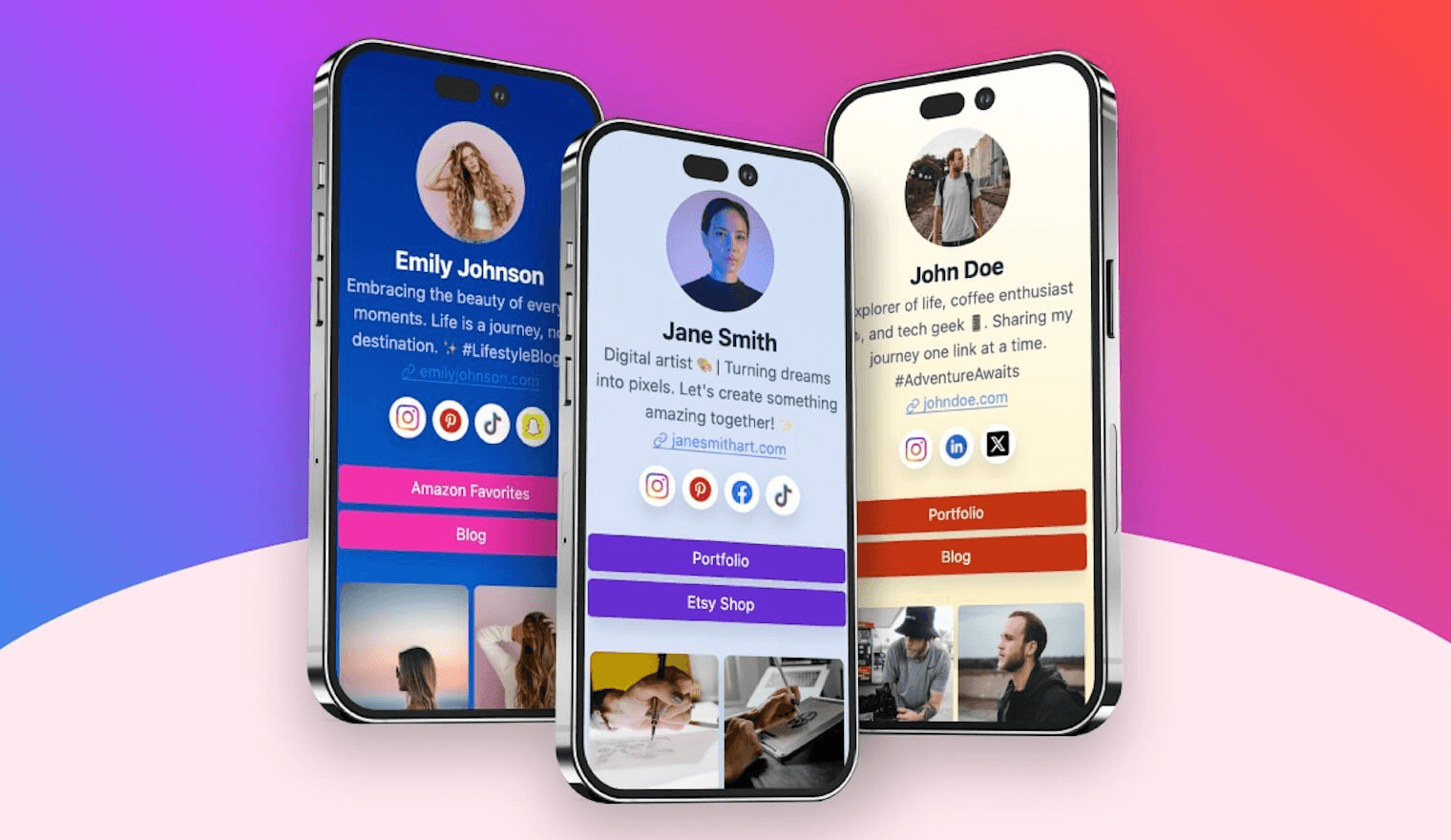
You can replicate these strategies with a few key tweaks. Start by organizing your link page into three psychological layers that mirror how people actually make decisions.
- Layer 1 sits at the top. High-intent actions only. Buy. Book. Join. These are for visitors who already know what they want. They saw your post about your new course, clicked through, and they're ready to enroll. Don't bury this action four links down. Put it first.
- Layer 2 builds trust. Portfolio pieces. Client testimonials. Case studies. Press features. This layer exists for people who are interested but not yet convinced. They need proof before they commit. Someone might love your content but hesitate to hire you until they see what you've built for others. This validation layer converts skeptics into believers.
- Layer 3 offers low-friction exploration. Social profiles. Content hubs. Playlists. Newsletter archives. This serves curious browsers who aren't ready to buy but want to learn more about you. They might follow you on three other platforms after visiting this layer, building familiarity that converts weeks later.
This structure works because it matches the psychology of decision-making. Act, validate, explore. Different visitors enter at different readiness levels. Your page accommodates all of them without forcing everyone through the same narrow funnel.
The Single CTA, Multiple Paths Strategy
Your headline points people in one direction, but your page offers multiple contextual versions of that same direction. This reduces resistance without diluting focus. Your headline says "Learn how to grow with short-form content." Below, visitors will find a free guide, a coaching program, YouTube tutorials, downloadable templates, and a newsletter. One desire. Many paths. Someone not ready to pay for coaching might download the free guide first. Someone who prefers video learning goes straight to YouTube. Someone wanting ongoing tips joins the newsletter.
The “Nudge” Theory: Designing for Choice Architecture
Each path serves the same ultimate goal but meets people where they are. According to solo.to blog, 80% of users click on the first 3 links, which means your top offerings need to provide multiple entry points for different readiness levels rather than forcing one conversion path. The most common mistake creators make is presenting a single option and expecting everyone to take it. When visitors don't see a path that matches their current intent, they leave. Multiple paths mean more people find something that feels right for them, right now.
The Seasonal Relevance Engine
Smart creators adapt their link pages by quarter, matching language to the psychological moment their audience occupies.
- Q1 messaging centers on "reset," "fresh start," and "kickstart." People feel motivated by new beginnings after the holidays. Your offers should reflect that energy.
- Q2 shifts to "build," "momentum," "grow." The year is underway. People want to capitalize on their early progress and maintain forward motion.
- Q3 emphasizes "optimize," "master," and "scale." Mid-year fatigue sets in. People want to work smarter, refine what's working, and eliminate what isn't.
- Q4 features "offer," "holiday," "special," and "year-end." Urgency increases. People make decisions before the year closes, whether that's purchasing gifts, using remaining budget, or setting up for January.
Same audience. Different moments. Better conversions. A coaching offer framed as "Start fresh in January" performs differently than the same offer framed as "Scale what's working before year-end." The service hasn't changed. The timing context has.
The Proof Layer Principle
A bio page without social proof asks visitors to trust you blindly. A page with proof turns curiosity into confidence. Include testimonials. Not generic "great to work with" quotes, but specific outcome statements. "Increased our event leads by 10x in three months" tells a story that vague praise never will. Star ratings work if you have them. Client logos matter, especially if visitors recognize the brands. Press mentions add third-party validation that self-promotion can't match. "Trusted by 500+ teams" signals safety in numbers.
Closing the Loop with CRM Orchestration
Most traditional networking relies on scattered touchpoints that never connect to measurable outcomes. Someone visits your bio page, clicks a link, and maybe fills out a form. Then the trail goes cold. You don't know who they are, what they cared about, or how to follow up strategically.
Lead Enrichment: Eliminating the “Incomplete Lead” Problem
Teams using digital contact card solutions extend this concept by connecting bio link interactions to automated CRM workflows. When a prospect clicks through to download a resource, their contact information is automatically added to your pipeline. When they visit your booking page, a follow-up sequence triggers automatically. The bio link stops being a passive directory and becomes an active lead generation tool that tracks, organizes, and routes every interaction into measurable business outcomes. Proof reduces perceived risk. When someone sees that others have already taken the action you're asking them to take and gotten results, the decision becomes easier. You're not asking them to be the first. You're inviting them to join people who've already benefited.
The Platform-Adjusted Flow
TikTok visitors behave differently from Instagram visitors. YouTube audiences have different expectations from podcast listeners. The most sophisticated creators recognize this and build multiple pages for different traffic sources.
- Create: Creator for general brand exploration.
- Build: Shop for product-focused traffic from shopping posts.
- Design: Work-with-me for service inquiries from professional content. Set up /event for conference or workshop promotion.
- Develop: Newsletter for content-focused community building.
Each page serves the same brand but emphasizes different elements based on where visitors came from and what they likely want. Someone clicking from a TikTok tutorial wants quick, actionable next steps. Someone arriving from a LinkedIn article expects professional credibility and detailed service information. One page can't optimize for both without diluting effectiveness.
The “Location-Aware” Landing Page
User behavior studies show that users spend an average of 8-10 seconds on a link-in-bio page, leaving you with little time to orient visitors and guide them toward relevant actions. Platform-specific pages eliminate confusion by presenting exactly what each audience segment expects to find. This approach requires more initial setup, but the improvement in conversion justifies the effort. You're not creating entirely different brands. You're adjusting emphasis, language, and priority based on context. The same way you wouldn't pitch a product identically to a teenager and a CEO, you shouldn't send all traffic to an identical landing page.
The “F-Pattern” Layout & Cognitive Load Management
A single link can now drive multiple actions efficiently, increasing conversions and audience satisfaction. The structure guides decisions instead of overwhelming visitors with undifferentiated choices. Each element serves a purpose. Nothing exists just to fill space.
Best Practices for Link in Bio Success

These practices apply whether you are a creator on TikTok or a brand running a multi-channel campaign.
Optimize for Mobile First, Then Everything Else
More than 60% of all web traffic now comes from mobile devices, according to Statcounter Global Stats. A bio link page that loads slowly or breaks on a small screen discards the majority of its potential audience before a single CTA is read. Choose a platform that renders cleanly on mobile without requiring the visitor to pinch, zoom, or scroll past a broken image block. Test your page on at least two different device sizes before publishing, and revisit it after every major update.
Above-the-fold placement is the mobile-specific version of this rule. Your primary CTA — the one action you most want a visitor to take — should be visible without scrolling on a standard smartphone screen. If your most important link is buried below three decorative banners and a social row, you are engineering friction into the exact moment when intent is highest.
Limit Links, Update Cadence, and Test CTA Copy Consistently
Fewer links consistently outperform longer lists. When visitors face too many choices, decision fatigue reduces the likelihood that they act on any of them. Lead with a small number of links, ordered by conversion priority rather than chronology. Links placed at the top of a bio page tend to receive the greatest share of clicks, so treat that position as premium real estate.
Update frequency is an underrated signal. Pages that reflect current campaigns, recent content, or live offers perform better because they reward repeat visitors and signal credibility to first-time ones. A stale bio link that points to a long-ended event or a sold-out product erodes trust faster than no link at all. Set a standing calendar reminder to audit your bio link at the same cadence as your content calendar. Finally, run simple CTA copy tests: 'Download the guide' versus 'Get the free guide now' can produce meaningfully different click-through rates with zero additional design effort. Small copy changes compound over the lifetime of a high-traffic bio page.
Frequently Asked Questions About Link in Bio

These are the questions that come up most often from creators, brand managers, and sales professionals who are setting up or improving their bio link strategy for the first time.
What Does 'Link in Bio' Mean?
A link in bio is a clickable URL placed in a social media profile's biography section, most commonly on Instagram and TikTok, that directs followers to an external destination. Because most platforms do not allow clickable links inside individual post captions or comments, the bio section is the main built-in exit point for driving traffic off-platform. Creators and brands typically point this link to a hub page that consolidates multiple destinations: a product page, newsletter signup, latest content, or contact form.
How Do You Add or Find a Link in Bio on Instagram?
To add a link to your own Instagram bio, navigate to your profile, tap 'Edit Profile,' and enter a URL in the designated website field. Instagram now allows up to five links in the bio, though a single hub link keeps the path to your primary CTA clear. To find someone else's link in bio, go to their profile page; the clickable URL appears in the bio section directly below their account name and description. Instagram does not surface this link anywhere else, so many creators add a verbal CTA in their post captions (such as 'link in bio') to direct followers to the profile.
Does Your Choice of Link-in-Bio Tool Affect Your Reach?
It can, though not in the way most creators assume. Instagram head Adam Mosseri has said publicly that using a bio link does not reduce reach on its own. The documented risk sits at the domain level: shared link-in-bio domains serve millions of accounts, and when a domain accumulates enough spam reports, Instagram's safety systems can warn on or block links on that domain even when your specific page is clean. That makes the tool you choose a distribution decision as much as a UX decision. Always verify whether a platform's domain is treated as safe by the social networks you depend on before committing to it for a large audience.
Turn Your Link in Bio Into a Lead-Generating Machine. Book a Demo Free
If you're sharing links but losing potential connections along the way, your bio page isn't the only place where attention leaks. Every profile visit, every event interaction, every social touchpoint represents someone curious enough to engage. Most of that curiosity dies because the follow-up requires manual effort that never happens. Teams using digital contact card solutions capture leads instantly. Smart digital contact cards turn every interaction from social, events, or links in bio into:
- Automatic CRM enrichment
- Prospect scoring
- Organized contacts
No manual entry. No lost opportunities. Book a demo today and get your first 25 digital contact cards free (a $950 value) to start turning clicks and profile visits into measurable leads. The structure you build matters. The system that captures what happens next matters more.
Related Reading