


123 Business Networking Conversation Starters That Actually Work
On This Page
Your opener isn't the problem. The moment the conversation ends, the contact is already slipping away. Here's where the real conversion gap lives, and how to close it.
Strong openers are not the problem, but most sales managers and business development professionals think they are. The common assumption is that the conversation starter is the make-or-break moment, if they nail the opener, the networking win is secured. So sales and BD professionals spend real energy crafting the right first line, practicing their delivery, and reading the room before they approach. That preparation mostly works. The conversation happens. Rapport builds. And then, somewhere in the final thirty seconds, the whole thing quietly falls apart.
"After the initial exchange of contacts, people don't know what to say next, and the conversation starter creates no natural bridge to follow-up communication."
— what we hear from networking app users
The failure point is not psychological. It is operational. And it begins the exact moment the conversation ends.

The pattern is familiar to anyone who works events regularly: a genuinely warm exchange with a qualified prospect, followed by a clumsy scramble for contact details. A phone held out, a bag searched, a card that never materialises. The prospect moves on. The rep tells themselves they will find the person on LinkedIn later. They rarely do. In LinkedIn's 2017 research, 80% of professionals said networking is important to career success, yet the majority of event conversations never convert into a lasting connection. The opener did its job. The structural gap did not.
80%
say networking is important to career success
What kills conversion is the absence of a reliable contact-capture mechanism at the exact moment of exchange. Not nerves.
A weak pitch is not the culprit either. The handoff is. As Tapilink's 2025 research found, 88% of business cards handed out are thrown away within a week of receiving them, so the physical capture mechanism most sales professionals rely on fails almost universally, regardless of how well the ice was broken.
88%
of business cards thrown away within a week
The fix is a workflow, not a confidence workshop.
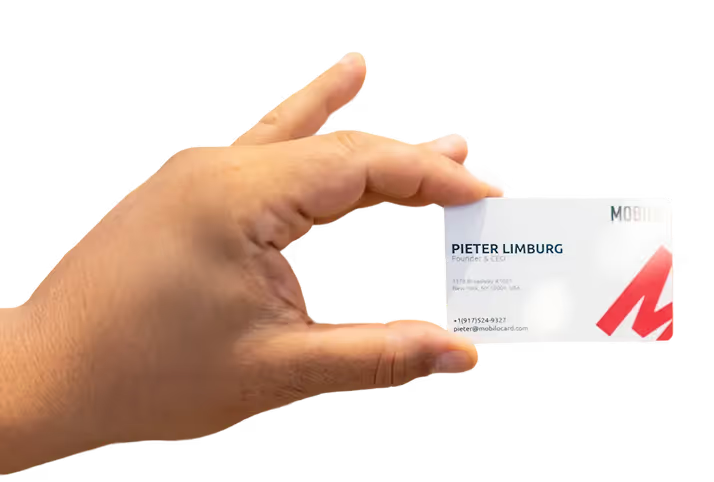
Mobilo's Contact Exchange and Lead Capture turns a tap or scan into a live CRM entry before the conversation has even cooled, closing the structural gap at the exact moment it opens.
VKARD's framework structures effective networking around five stages:
- Prepare
- Practice
- Proximity
- Professionalism
- Pipeline
The first four receive almost all the attention. The fifth is where value is either captured or lost entirely. Most professionals treat Pipeline as something that happens after the event, in a spreadsheet, during time they do not have. By then, the contact is cold, incomplete, or simply gone. The opener itself is not broken. Business networking conversation starters, when chosen deliberately, do exactly what they are supposed to do. The next section examines what a well-deployed opener accomplishes, and why that is only half the equation.
Key takeaways
- The opener is not the problem, 90% of new contacts never reach a CRM because the post-conversation workflow is broken, not the first line.
- Most professionals rehearse their conversation starter and leave the contact-exchange moment entirely to chance, which is where pipeline actually dies.
- Event-based conversation starters work best when they move fast from small talk to substance, questions tied to the specific event, session, or shared context outperform generic openers every time.
- 88% of paper business cards are discarded within a week, meaning a strong conversation can still produce zero pipeline if the handoff relies on paper.
- 123 tested openers are organized here by context, cold approach, shared session, mutual connection, and virtual mixer, so you can match the starter to the room.
- The 60 minutes after an exchange matter more than the exchange itself: contacts that don't hit a CRM within that window rarely convert.
- Mobilo's Contact Exchange & Lead Capture closes that gap directly, when someone taps or scans a Mobilo card, their information is captured and fed into your contact list or CRM in real time, so the conversation you started in the room doesn't end in a forgotten pocket.
What Event-Based Conversation Starters for Networking Actually Do
That belief explains why a significant share of professionals report feeling anxious when approaching strangers at networking events, according to We Are In Business Networking, and why so much networking advice focuses entirely on the opening line.

Event-Based Conversation Starters Work Because They Eliminate the Cold-Approach Blank Slate
Event-based icebreakers are conversation starters anchored to the shared context of the event itself: the speaker, the agenda, the venue, or even the coffee line. They work because both people already have something concrete in common before a single word is spoken.
According to We Are In Business Networking's January 2024 guide, anchoring a conversation opener to the shared event context removes cold-approach anxiety precisely because neither party is starting from a blank slate.
The 5 Ps of a Networking Opener
A practical framework for breaking the ice with strangers at events follows five steps.
- Prepare an event-anchored opener
- Practice it beforehand
- Use Proximity by approaching people near registration or the coffee station
- Lead with Professionalism
- Close the Pipeline loop
Industry data consistently shows that the majority of new contacts made at events never make it into a CRM, because manual entry after the fact is too effortful to happen reliably.
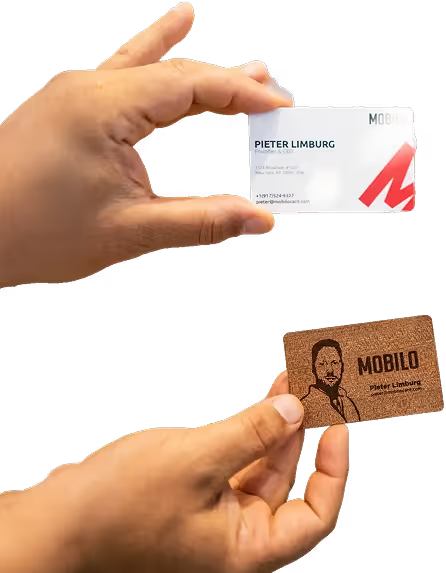
Mobilo closes the gap at the exact moment the opener creates it. A Mobilo card, whether a Custom Designed NFC Card with QR Code, a Paper Plus card for easy handouts, or a Digital Wallet Card, lets a rep share contact details instantly via a tap or scan, while the built-in lead capture routes prospect information directly into the CRM without relying on anyone to manually log it afterward.
For teams attending frequent in-person events or running client-facing roles at scale, the Team tier (marked Popular, at $4/month billed annually) adds full team data analytics and CRM integrations, team management, and the ability to control, lock, and override data fields across every card, so managers finally get visibility into which reps are networking and which conversations are converting. The Business tier ($5/month billed annually) layers on HR directory sync, enterprise SSO, and central billing for organizations managing those workflows at enterprise scale.
The next section hands you 123 ready-to-deploy starters organized by the exact moment in a conversation you need them.
Related Reading
- Business Relationship Building
- How To Build A Network For A Small Business
- How To Build A Strong Sales Pipeline
- How To Reach B2b Decision Makers
- How To Ask For Referrals In Sales
- Expand Your Network
- Business Networking Goals
- Business Cards For Networking
- How To Start A Business Networking Group
123 Business Networking Conversation Starters That Actually Work
Four words separate professionals who build pipeline at events from those who collect business cards they never scan: "What brings you here?"
That single opener, recycled across every conference, trade show, and virtual mixer, is the networking equivalent of a firm handshake with nothing behind it. It opens a door and then stands in the doorway. Research into effective networking conversations consistently finds that listening should far outweigh talking, which means the opener's only job is to get the other person talking. The words you say in the first five seconds matter far less than the open-ended questions you ask in the next five minutes.
That insight reframes the entire problem. Sales and BD professionals spend hours rehearsing the perfect opening line, treating it as the make-or-break moment. In practice, a perfect opener is the least predictive variable in whether a networking conversation produces a real business relationship. The 70/30 listening ratio that drives genuine connection only activates after the opener lands. The opener is the ignition; the open-ended questions that follow are the engine.
The opener is the ignition; the open-ended questions that follow are the engine.
The 123 starters below are organized into four functional phases that mirror the arc of a real networking conversation: Open (establish context), Deepen (invite specifics), Provoke (surface strategic thinking), and Bridge (latch onto what they just said). Deploy them in sequence, not as isolated one-liners. Dead-end yes/no questions kill networking momentum; open-ended questions anchored to the event, session content, or the other person's stated details are the structural mechanism that keeps conversations alive beyond the opener.
"What's your connection to this event?"
A broader alternative to "what brings you here," this question invites the person to frame their relationship to the industry, the organizer, or the topic rather than just their job title. It opens multiple threads simultaneously, so you can pick the one most relevant to follow. Best used at the very start of a conversation with a complete stranger.
"What made you decide to come to this one specifically?"
People attend events for specific reasons: a speaker, a deal they want to close, a problem they need solved. This question surfaces the real agenda behind the badge, which is far more useful than knowing someone's company name. The specificity of the answer tells you immediately how commercially motivated this person is.
"What's the one thing you're hoping to walk away with from today?"
This is the most commercially direct opener in Phase One. It asks the person to articulate a goal, which is exactly the information a sales or BD professional needs to assess fit. The risk is that it can feel slightly abrupt if delivered too early; pair it with a warm tone and use it after a few seconds of casual exchange.
"What industry are you coming from?
I'm trying to get a sense of who's in the room today."
The framing ("I'm trying to get a sense") makes the question feel collaborative rather than interrogative. It positions you as curious about the broader event ecosystem, not just fishing for a prospect. Particularly effective at cross-industry events where the attendee mix is genuinely diverse.
"What's your read on the energy at this event compared to last year?"
Only works with returning attendees, but when it lands, it immediately positions you as a peer rather than a newcomer. It invites a comparative opinion, which people enjoy giving. The answer often surfaces frustrations or enthusiasms that point directly toward business conversations.
"I noticed you were in the front row for that last session. What drew you to that topic?"
Observation-based openers are among the most natural conversation starters because they require no preamble. You're simply commenting on something you actually saw. The specificity signals genuine attention, which is the fastest way to differentiate yourself from someone running a script.
"What's the biggest challenge your team is working through right now?"
This is the earliest you can reasonably deploy a challenge-focused question without it feeling like a cold call. Use it only after you've established basic context about who the person is and what they do. The answer is the most commercially valuable piece of information you can collect in a networking conversation.
"What kind of conversations are you hoping to have today?"
Meta-questions about the conversation itself are surprisingly effective because they give the other person permission to be direct about their agenda. If they're looking for partners, vendors, or talent, they'll tell you. If they're just here to learn, that's useful to know too.
"What's your role at your company?
I want to make sure I'm asking you the right questions."
The transparency of "I want to make sure I'm asking you the right questions" is disarming. It signals respect for the other person's time and expertise. It also sets up a natural transition into more targeted follow-up questions once you know their function.
"What does your team actually do day-to-day?
The title never quite captures it."
Job titles are increasingly meaningless. This question acknowledges that reality and invites the person to describe their actual work rather than their org chart position. The parenthetical observation ("the title never quite captures it") creates an immediate moment of shared understanding.
"What's the one metric your team is most focused on this quarter?"
Metrics reveal priorities. If someone says "pipeline coverage," you know they're in a growth phase. If they say "churn," you know they're in a retention battle. The answer tells you more about the company's current situation than a LinkedIn profile would, and it opens a direct path to a business conversation.
"What's your company's focus right now?
Growth, efficiency, or something else entirely?"
Offering a binary (growth vs. efficiency) with an open escape hatch ("or something else entirely") is a useful structure for questions that might otherwise feel too broad. It gives the person a framework to react to without constraining their answer to your categories.
"What brought you into this field originally?"
Origin stories are engaging because they're personal, and they're always unique. This question works especially well when you've already established basic professional context and want to deepen the rapport before moving into business territory. The answer often reveals values and motivations that are more durable than job titles.
"What's the most interesting project you've worked on in the last year?"
One person will answer with a technical challenge; another will answer with a team-building story. Either way, you learn something specific about what energizes them professionally.
"What's the best conversation you've had at an event like this?"
This question is meta in a useful way: it asks the person to describe what a great networking conversation looks like to them, which tells you exactly how to have one with them. It's also a slightly unexpected question that tends to produce thoughtful, memorable answers.
"What's your take on the state of your industry right now?"
A broad industry-trend question works well as a Phase One closer, once you've established enough context to make it feel natural rather than abrupt. It opens the door to the Provoke phase without forcing the transition. Best deployed after two or three lighter exchanges have established basic rapport.
"What's one thing about your company that most people in this room probably don't know?"
Inviting someone to share an under-known fact about their organization is an effective way to surface competitive differentiators, recent pivots, or areas of genuine pride. The answer is almost always more interesting than anything you'd find on their website.
"What does success look like for you by the end of today?"
A goal-oriented opener that works well at structured events like trade shows where attendees often have specific targets. It's slightly more direct than "what are you hoping to walk away with" and works best when the event context makes goal-setting feel natural.
"What's the one session or speaker you'd recommend I not miss?"
Asking for a recommendation positions the other person as a knowledgeable guide and immediately creates a small act of generosity between you. People remember conversations in which they helped someone, which makes this opener a reliable rapport-builder even when the follow-up conversation is brief.
"What's the project that's keeping your team busiest right now?"
The specificity of "busiest right now" grounds the question in the present rather than the abstract. It invites operational detail, which is where genuine business conversations begin. The answer often reveals resource constraints, technology gaps, or strategic priorities that are directly relevant to a sales or BD professional's offer.
"What does the buying process look like at your company for something like this?"
A direct qualification question that works in Phase Two because you've already established enough rapport to make it feel like genuine curiosity rather than a qualification call. It surfaces decision-making structure, stakeholder count, and timeline without requiring a formal discovery meeting.
"What's the hardest part of your job that most people outside your function don't appreciate?"
Empathy-forward questions that acknowledge hidden complexity build trust faster than any pitch. The answer often reveals pain points that aren't visible in public-facing company materials, making this one of the highest-signal questions in the entire list.
"What's changed most about how your team works in the last two years?"
Change-focused questions surface adaptation stories, which reveal how the organization thinks about problems and solutions. The answer also tells you whether the company is reactive or proactive in its approach to market shifts, which is useful context for any sales conversation.
"What tools or platforms does your team rely on most heavily right now?"
A technology stack question that feels natural in Phase Two once you know someone's function. It reveals integration requirements, vendor relationships, and potential switching costs without requiring a formal RFP conversation. Most people answer freely because the question feels informational rather than evaluative.
"What's the gap between where your team is now and where you need to be in twelve months?"
Gap analysis framed as a conversational question is one of the most effective ways to surface unmet needs without running a formal discovery session. The twelve-month timeframe makes the question concrete enough to answer specifically. Use it after you've established that the person has budget or influence over the relevant area.
"What's the biggest misconception people have about what your team actually does?"
Misconception questions invite people to correct the record, which is an emotionally engaging activity. The answer often reveals how the person sees their own team's value proposition, which is useful context for any partnership or sales conversation.
"What's a win your team has had recently that you're proud of?"
Asking about wins rather than challenges is a useful counterbalance in Phase Two. It shifts the emotional register to positive territory and often reveals capabilities or recent investments that are directly relevant to a business conversation. People are more forthcoming about wins than losses, which makes this question a reliable rapport-deepener.
"What's the one thing you wish vendors understood better about your business?"
This question explicitly positions you as someone who wants to understand before they pitch. The answer is a direct brief for how to sell to this person. Use it only after you've established that the person is a buyer or influencer, not a peer in the same function.
"What does your ideal partner or vendor relationship look like?"
A relationship-design question that surfaces expectations, communication preferences, and past frustrations without requiring the person to describe a negative experience directly. The answer tells you whether this person values speed, depth, flexibility, or something else entirely.
"What's the one metric that would tell you a new vendor relationship is working?"
Success metrics are the most actionable piece of information you can collect in a networking conversation. If someone says "response time," you know they've been burned by slow vendors. If they say "pipeline contribution," you know they're commercially oriented. The answer shapes every subsequent conversation you have with this person.
"What's the biggest risk your team is trying to avoid right now?"
Risk-focused questions surface loss-aversion, which is often a stronger motivator than opportunity. The answer reveals what the person is most afraid of, which is frequently more actionable than what they say they want. Use it in Phase Two after you've established enough trust that the person feels comfortable being candid.
"What's a problem your team has been trying to solve for longer than it should have taken?"
Chronic problems are the highest-value target for any sales or BD professional because they signal both genuine pain and organizational inertia. The question acknowledges that some problems persist not because they're unsolvable but because they're deprioritized, which is an honest framing that people respond to.
"What's your team's biggest bottleneck right now?"
Bottleneck is a concrete, operational word that signals you understand how teams actually work. The answer is almost always directly relevant to a product or service conversation. Keep the follow-up question focused on impact rather than cause to avoid making the conversation feel like a diagnostic interview.
"What's the one thing that would make your job significantly easier tomorrow?"
The "tomorrow" framing makes the question feel urgent and practical rather than hypothetical. It invites a specific, operational answer rather than a strategic vision. The answer is often a product or process that the person has already researched but hasn't yet committed to.
"What's the most useful thing a vendor has ever done for you that wasn't in the contract?"
This question surfaces the hidden value that creates durable vendor relationships. The answer tells you what the person values beyond the transactional, which is the territory where long-term partnerships are built.
"What's your team's biggest challenge with data right now?"
Data challenges are nearly universal in B2B organizations and almost always connect to technology, process, or talent gaps that a sales or BD professional can address. The question works across functions and industries, making it a reliable Phase Two deepener regardless of the other person's role.
"What's the one thing your company does better than anyone else in your space?"
Asking about competitive advantage invites pride and specificity. The answer reveals how the person thinks about differentiation, which is useful context for any partnership conversation. It also gives you something genuine to respond to with curiosity rather than a pitch.
"What's a decision your team made recently that you'd make differently with hindsight?"
Retrospective questions build trust because they invite vulnerability. The answer often reveals organizational learning patterns, decision-making culture, and areas where the company is actively trying to improve. Use it only after you've established enough rapport that the question doesn't feel like a gotcha.
"What's the one thing your customers consistently ask for that you don't currently offer?"
This question surfaces product gaps and customer demand signals simultaneously. It's most useful in conversations with founders, product leaders, or business development professionals who have direct visibility into customer feedback. The answer often reveals partnership opportunities that aren't obvious from the outside.
"What's your team's biggest challenge with onboarding new tools or vendors?"
Implementation friction is a real and frequently underestimated barrier to technology adoption. The answer tells you whether the organization has the internal capacity to absorb a new solution, which is critical context for any sales conversation. It also surfaces the IT, change management, and training considerations that often derail deals.
"What's the one thing about your industry that outsiders consistently get wrong?"
Insider-knowledge questions position the other person as the expert, which is a reliable rapport-builder. The answer often reveals strongly held beliefs about how the industry actually works, which gives you a natural bridge into the Provoke phase questions that follow.
"What's a trend in your space that you think is overhyped right now?"
Skepticism questions are among the most effective deepeners because they invite the person to take a contrarian position, which requires genuine thinking rather than a rehearsed answer. The answer reveals intellectual honesty and often surfaces the most interesting business conversations of the event.
"What's the one thing you'd change about how your industry operates if you could?"
A vision question that works well as a Phase Two closer before you transition into Provoke territory. It invites the person to think at the level of industry architecture rather than operational detail, which often produces the most memorable and commercially relevant answers of the conversation.
"What's the one investment your team made in the last year that's paid off most clearly?"
Return-on-investment questions surface what the organization values and where it's willing to allocate budget. The answer is directly relevant to any sales conversation and often reveals the decision-making criteria the person uses when evaluating new solutions.
"What's a shift in your industry you think most people are underestimating?"
Industry trend questions are effective networking starters because they invite genuine intellectual engagement rather than a rehearsed answer. The person's response reveals how they think about the future of their market, which is the most durable basis for a business relationship. Follow up by asking what they're doing about it, not by offering your own opinion immediately.
"What's the one assumption your industry makes that you think is wrong?"
Challenging assumptions is intellectually engaging and signals that you're interested in the person's thinking rather than their title. The answer often reveals a contrarian perspective that opens a genuinely new conversation thread. This is the kind of question that makes people say "I've never been asked that before."
"What's the one technology that's changed how your team works most in the last two years?"
Technology-change questions surface adoption patterns, vendor relationships, and organizational readiness for new solutions. The answer tells you where the company is on the technology adoption curve, which is critical context for any sales or partnership conversation.
"What's the biggest threat to your business model that most people in your industry aren't talking about?"
Threat questions invite candor and strategic thinking simultaneously. The answer reveals how the person thinks about competitive risk, which is often more revealing than how they describe their current strategy. Use it after you've established enough trust that the question doesn't feel like a competitive intelligence exercise.
"What's the one thing that would have to be true for your industry to look completely different in five years?"
Scenario-based questions invite the person to think at a level of abstraction that most networking conversations never reach. The answer is almost always interesting, and it naturally leads to a follow-up conversation about how the person's organization is positioning for that future.
"What's the most counterintuitive thing you've learned in your career?"
Experience-wisdom questions are among the most engaging in Phase Three because they invite reflection rather than performance. The answer is always personal and often reveals the kind of hard-won insight that can't be found in a LinkedIn post. People remember conversations in which they shared something genuinely meaningful.
"What's the one thing your customers will need from you in two years that they're not asking for yet?"
Anticipatory demand questions surface product roadmap thinking and customer intimacy. The answer tells you how forward-looking the organization is and whether it's building for the future or optimizing for the present. It's also a natural bridge to a conversation about how a partnership or solution could help them get there.
"What's the one thing your competitors are doing that you respect, even if you'd never admit it publicly?"
Competitor-respect questions are disarming because they invite intellectual honesty in a context where people are usually defensive. The answer reveals what the person considers best-in-class in their space, which is useful context for any positioning conversation.
"What's the one decision your industry keeps making collectively that you think is a mistake?"
Collective-mistake questions invite the person to take a position against the consensus, which is a high-engagement conversational move. The answer reveals intellectual independence and often surfaces the most interesting business conversations of the event. Use it with people who have demonstrated enough confidence to take a contrarian position.
"What's the one thing that's worked in your go-to-market that surprised you?"
Surprise questions surface genuine learning rather than rehearsed strategy. The answer often reveals tactical insights that are more useful than anything in a published case study. It also signals that you're interested in what actually works, not just what sounds good.
"What's the one thing you'd tell your younger self about building a career in this industry?"
Career-wisdom questions work well in Phase Three because they invite reflection and often produce genuinely memorable answers. The emotional register shifts from strategic to personal, which deepens rapport in a way that business-focused questions can't. Use it when you sense the other person would welcome a more personal conversation thread.
"What's the one thing that's changed most about how buyers make decisions in your space?"
Buyer-behavior questions are directly relevant to any sales or BD professional's work and often surface insights that are more current than any published research. The answer tells you how the market is evolving and what the person's organization is doing to adapt.
"What's the one thing that would make your category obsolete?"
Disruption questions are intellectually provocative and often produce the most candid, interesting answers of the conversation. They signal that you're thinking at the level of market structure rather than product features. Use them with founders, senior leaders, or anyone who has demonstrated a willingness to think strategically.
"What's the one metric that most companies in your space measure that you think is the wrong one?"
Metrics-skepticism questions invite the person to challenge conventional wisdom in their industry, which is a high-engagement conversational move. The answer reveals how the person thinks about performance measurement and often surfaces a more sophisticated perspective than the standard industry benchmarks.
"What's the one thing your board or leadership team consistently underestimates about your market?"
Internal-tension questions are among the most revealing in Phase Three because they surface the gap between what leadership believes and what the operator knows. Use them only with people who have enough seniority and trust in the conversation to answer honestly. The answer is often the most commercially relevant thing you'll hear all day.
"What's the one thing that would change your company's trajectory most in the next twelve months?"
Trajectory questions invite the person to articulate their highest-priority strategic lever, which is the most useful piece of information a sales or BD professional can collect. The answer tells you where the organization is placing its biggest bet, which shapes every subsequent conversation.
"What's the one thing you wish you'd known before entering this industry?"
Hindsight questions are engaging because they invite the person to share hard-won knowledge, which creates a moment of genuine generosity in the conversation. The answer often reveals the hidden complexity of the industry that outsiders miss, which builds credibility and rapport simultaneously.
"What's the one thing that's working in your industry right now that nobody wants to talk about?"
Uncomfortable-truth questions are among the most memorable in Phase Three because they invite the person to say something they'd normally keep private. The answer is almost always interesting and often reveals a competitive insight that shapes the rest of the conversation.
"What's the one thing your customers consistently undervalue about what you provide?"
Undervaluation questions surface the gap between what a company delivers and what its customers recognize. The answer tells you where the organization's real competitive advantage lies, which is useful context for any partnership or sales conversation.
"What's the one thing that's changed most about your own leadership style in the last few years?"
Leadership-evolution questions work well in Phase Three with senior professionals who have enough self-awareness to answer honestly. The answer reveals values, learning orientation, and the kind of organizational culture the person is building. It's also a natural bridge to a conversation about team development and organizational change.
"What's the one thing that would make you switch vendors in your most critical category?"
Switching-trigger questions are among the most commercially useful in Phase Three because they surface the exact conditions under which the person would consider a change. The answer is a direct brief for how to position a competitive offer. Use it only after you've established enough trust that the question doesn't feel like a sales tactic.
"What's the one thing that most people get wrong about scaling a team in your function?"
Scaling questions surface operational expertise and often reveal the person's most strongly held beliefs about how their function should work. The answer is particularly useful for sales and BD professionals whose offer touches team productivity, tooling, or process.
"What's the one thing that's surprised you most about how AI is changing your work?"
AI-impact questions are among the most timely and engaging in Phase Three because almost everyone has a strong opinion and the landscape is genuinely uncertain. The answer reveals the person's technology orientation and often surfaces specific use cases or concerns that are directly relevant to a business conversation.
"You mentioned your team is focused on pipeline coverage. What's driving that priority right now?"
Latching onto a specific metric the person mentioned signals that you were listening, not waiting to talk. The follow-up "what's driving that" moves the conversation from description to causation, which is where the most commercially relevant information lives. This is the structural mechanism that converts a good conversation into a useful one.
"You said the onboarding process has been the hardest part.
How long has that been a challenge?"
Duration questions surface whether a problem is acute or chronic. A chronic problem signals organizational inertia and a higher urgency to solve it. An acute problem signals a recent trigger event that may have already mobilized budget. Either answer shapes how you position a follow-up conversation.
"You mentioned you're evaluating new tools right now. What's driving the timing?"
Timing questions surface the trigger event behind a buying process, which is the most important piece of context in any sales conversation. The answer tells you whether the evaluation is budget-driven, event-driven, or pain-driven, which shapes how urgently you should follow up after the event.
"You mentioned your customers are asking for something you don't currently offer. What's stopping you from building it?"
Build-vs-buy questions surface the organizational constraints that shape purchasing decisions. The answer tells you whether the barrier is technical, financial, or political, which is critical context for any partnership or sales conversation.
"You mentioned you've tried to solve this before. What happened?"
Past-attempt questions are among the most commercially useful in Phase Four because they surface the failure modes that shape the person's current skepticism. The answer tells you what didn't work and why, which is the most important context for positioning a new solution.
"You said your team is under pressure to show ROI faster. What does that timeline look like?"
Timeline questions surface the urgency behind a business challenge, which is critical context for any sales conversation. The answer tells you how much time the person has to demonstrate results, which shapes how you position the speed-to-value of any solution you discuss.
"You said your sales cycle has gotten longer. What's driving that?"
Sales-cycle questions surface the buying complexity that shapes how vendors need to engage. The answer tells you how many stakeholders are involved, how risk-averse the organization is, and what the person needs to build internally to move a deal forward.
"You said your team is experimenting with a new go-to-market motion. What's working so far?"
Experimentation questions invite the person to share early learnings, which is a high-trust conversational move. The answer reveals how the organization thinks about testing and iteration, which tells you a great deal about its culture and its appetite for new solutions.
"You said the integration with your CRM has been painful. What's the specific part that's broken?"
Specificity questions move the conversation from complaint to diagnosis, which is where solutions become relevant. The answer tells you exactly where the pain is concentrated, which shapes how you position any follow-up conversation about a solution.
"You mentioned you've been thinking about expanding into a new market. What's holding you back?"
Barrier questions surface the organizational constraints that slow strategic decisions. The answer tells you whether the barrier is financial, operational, or political, which shapes how you position a partnership or solution conversation.
"You said this is the most important event on your calendar this year. What would make it a success?"
Success-definition questions are the most effective closers in Phase Four because they invite the person to articulate a goal you can help them achieve. The answer tells you exactly what the person needs from the rest of the event, which gives you a natural reason to follow up before the day is over.
Most sales professionals invest real effort in mastering all four phases of this arc, then fumble the one moment that determines whether any of it converts. When the contact-exchange moment arrives as an awkward search through a jacket pocket for a card that may or may not be current, the conversational momentum built across Open, Deepen, Provoke, and Bridge drains away in real time.
Professionals who attend events regularly and have client-facing roles find that Mobilo's tap-to-share contact exchange removes that friction entirely: the other person receives your details instantly, their information flows directly into your CRM without manual entry, and the conversation closes on substance rather than logistics. The pipeline value of every starter in this list is actually captured, not left in a forgotten pocket.
Every starter in this list is engineered to open a conversation worth having, but a conversation worth having is only as valuable as your ability to lock it into your pipeline before you walk away. The next section shows you exactly how to make the contact exchange feel like the natural, confident close of a great conversation rather than an administrative interruption, and why the method you use to share your details in that moment determines whether the connection lives or dies.
1. Have You Been to This Conference Before, or Is This Your First Time?

Returning attendees and first-timers bring fundamentally different perspectives to the same event, and knowing which you're talking to shapes every question that follows. A returning attendee can tell you what's changed, who the real power players are, and which sessions are worth skipping. A first-timer offers fresh reactions that are often more candid than anything a veteran would share. Either answer gives you a natural next move.
2. Which Session Today Are You Most Looking Forward To?
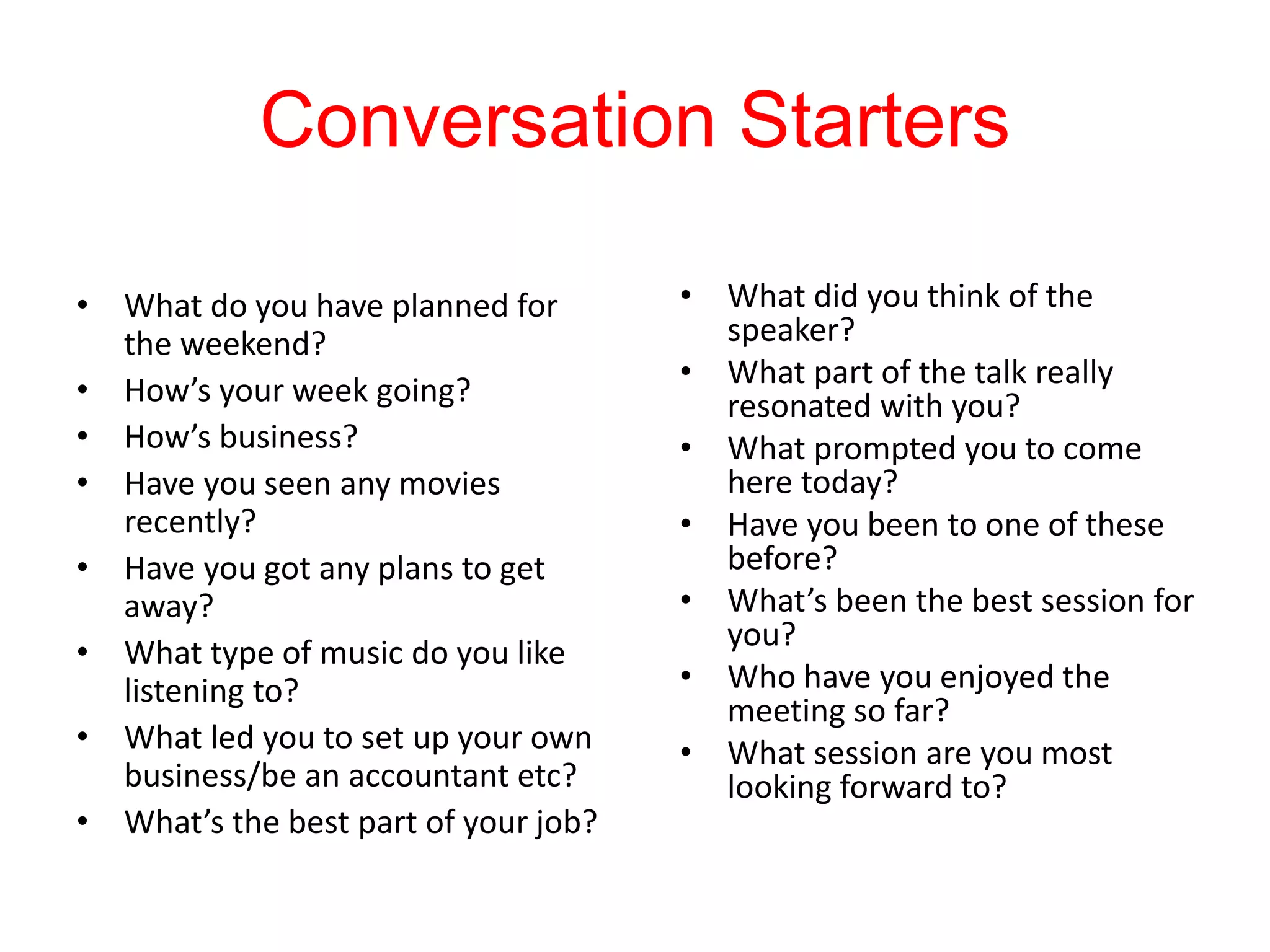
Agenda-anchored questions work because they shift the conversation away from credentials and toward curiosity, which is a lower-pressure starting point for both parties. The answer tells you what the person is actively trying to learn or solve, which is more useful than their job title. If their answer overlaps with your own agenda, you have an immediate, genuine point of shared interest to build on.
3. Is There a Specific Speaker or Panelist You Were Hoping to Meet Here?
This question surfaces the person's real priorities at the event, which are often more commercially revealing than anything on their badge. Someone hoping to meet a specific speaker is usually chasing a specific idea, problem, or relationship. The answer also gives you an immediate opportunity to help, either by making an introduction or by sharing your own perspective on that speaker's work.
4. Are You Based Locally, or Did You Travel In for This?

Geography is a low-stakes opener that reveals logistical context and often leads to genuine small talk about cities, travel, or regional industry dynamics. It also tells you something about how seriously the person takes this particular event, since traveling for a conference signals a higher level of investment.
5. Did You Catch the Workshop on [Topic] Earlier - Worth Attending?
Asking for a recommendation about a session you haven't attended yet positions the other person as a knowledgeable guide, which people find genuinely flattering. It also signals that you're engaged with the event's content rather than just working the room. The answer tells you something about the person's priorities and expertise, and it creates a small moment of practical exchange that makes the conversation feel immediately useful to both parties.
6. I Noticed You Were Taking Notes During That Panel - What Stood Out to You?
Observation-based openers are among the most natural conversation starters available because they require no preamble and no pretense. You're commenting on something you actually saw, which makes the opener feel spontaneous rather than scripted. The follow-up question invites a genuine opinion rather than a summary, and the answer often reveals the specific problem or idea the person is actively wrestling with.
7. Is This Industry's Annual Event Getting Bigger Each Year, in Your Experience?

This question only works with returning attendees, but when it lands, it immediately signals that you're interested in the industry's trajectory rather than just the event itself. The answer often surfaces strong opinions about where the industry is heading, what's drawing more participants in, or whether the event has lost its edge. Either direction opens a natural path into the Provoke phase questions that come later in the arc.
8. Have You Connected with Anyone Interesting So Far Today?
A meta-networking question that invites the person to share a recent positive experience, which puts them in a generous conversational mood. The answer often reveals who else is worth meeting at the event, which creates an immediate opportunity for reciprocal introductions. It also signals that you're here to build a network, not just collect leads, which is a more attractive posture to most people you'll meet.
9. Are You Here Representing Your Company, or More for Personal Professional Development?

The distinction between organizational and personal motivations for attending an event is commercially significant. Someone representing their company is likely in a buying, selling, or partnership mode. Someone here for personal development is in a learning mode and may be less immediately commercially relevant, but often more candid and intellectually engaging. Either answer shapes how you frame the rest of the conversation.
10. I Just Arrived - What Have I Missed That Was Worth Seeing?
Asking for a catch-up positions the other person as a knowledgeable insider and creates an immediate act of helpfulness between you. People remember conversations in which they helped someone orient themselves, which makes this opener a reliable rapport-builder even when the follow-up conversation is brief. The answer also tells you what the person found most valuable so far, which is useful signal about their priorities.
11. If You Had to Bet on One Technology That Will Most Transform Your Industry in the Next Five Years, What Would It Be?

Forcing a single bet removes the hedging that makes most technology-trend conversations forgettable. The constraint of choosing one requires genuine conviction, which produces a more honest and memorable answer than an open-ended question about trends would. The answer reveals both the person's technology orientation and their theory of how their market is evolving, which is the most durable basis for a follow-up conversation.
12. If You Could Redesign Your Industry From Scratch, What Would You Keep and What Would You Throw Out?
Zero-based redesign questions invite the person to think at the level of industry architecture rather than operational detail, which produces the most interesting answers in Phase Three. The two-part structure (keep and throw out) ensures the answer is balanced and specific rather than purely critical. Use it with people who have demonstrated enough experience and intellectual confidence to engage with a genuinely open-ended strategic question.
13. You Mentioned You're Working on [X] - What's the Hardest Part of That Right Now?
Latching onto a specific project the person mentioned and immediately asking about difficulty signals that you were listening and that you're interested in the operational reality, not just the headline. The hardest part is almost always where the most commercially relevant information lives. This is the structural mechanism that converts a surface-level description of work into a genuine business conversation.
14. You Said Your Team Is Growing - What Kind of People Are You Looking to Bring In?
What's the biggest hiring challenge that creates?"
Growth-consequence questions invite the person to describe the operational complexity that scale creates. The answer often reveals specific pain points around onboarding, tooling, or process that are directly relevant to a sales or BD professional's offer. It also signals that you understand that growth creates problems, not just opportunities.
15. You Mentioned You Came From [Previous Industry] - What Made You Make That Transition?

Career-transition questions are among the most personally engaging in Phase Four because they invite the person to share a decision that was almost certainly significant and deliberate. The answer reveals values, risk tolerance, and the kind of professional identity the person is building. It also often surfaces a cross-industry perspective that produces genuinely novel insights about the current industry you're both operating in.
16. You Touched on [Topic] Briefly - I'd Love to Hear More About That. What's Your Thinking There?
Asking someone to expand on something they mentioned only in passing is one of the highest-signal moves in any networking conversation because it demonstrates that you were paying close attention. The explicit acknowledgment that they only touched on it briefly gives them permission to go deeper without feeling like they're dominating the conversation. The answer is almost always more interesting than anything they would have said unprompted.
17. You Mentioned Your Company Is Pivoting - What's Driving That Decision?
Pivot questions surface the strategic logic behind a major organizational change, which is often more revealing than anything the company has communicated publicly. The answer tells you what the leadership team believes about where the market is going and what the organization needs to become to succeed there. It also reveals the internal pressures, whether competitive, financial, or customer-driven, that are shaping the decision.
18. You Mentioned a Partnership That Didn't Work Out - What Would You Do Differently?

Post-mortem questions are among the most commercially useful in Phase Four because they surface the failure modes that shape the person's current expectations of any new relationship. The answer tells you what went wrong, whose fault the person believes it was, and what they now consider non-negotiable in a partnership. That information is a direct brief for how to position yourself as a credible, trustworthy alternative.
19. You Said Your Customers Are Changing - In What Direction Are You Seeing That Shift?
Customer-change questions invite the person to share front-line market intelligence that is almost always more current and specific than anything published in an industry report. The answer reveals how the organization is adapting its offer, its messaging, and its go-to-market motion in response to evolving buyer behavior. It also tells you whether the company is leading or following the shift.
20. You Mentioned You're Experimenting With [Approach] - How Is That Going So Far?
Early-stage experimentation is where the most honest and unguarded answers live, because the person hasn't yet had time to construct a polished narrative around the results. Asking how it's going rather than what the results are invites a candid, in-progress assessment rather than a retrospective summary. The answer often reveals both what's working and what's creating unexpected friction.
21. You Brought Up [Person's Name] - How Did You Come to Know Them?
Relationship-origin questions surface the person's network topology, which tells you a great deal about how they build and maintain professional relationships. The answer also often reveals a shared connection, a mutual community, or a professional context that creates an immediate point of common ground. It's a low-pressure way to deepen rapport while gathering genuinely useful information about the person's ecosystem.
22. You Said That's Been a Priority for a While - What's Made It Difficult to Solve?

Chronic-priority questions are among the most commercially useful in Phase Four because they surface the organizational inertia, resource constraints, or technical complexity that has prevented a problem from being resolved. The answer tells you whether the barrier is internal or external, which shapes how you position any solution you discuss. A problem that has been a priority for a long time is almost always a problem with real budget attached to it.
23. You Mentioned Your Company Is Bootstrapped - How Has That Shaped Your Decision-Making?

Funding-structure questions surface the financial philosophy and risk tolerance of the organization in a way that feels like genuine curiosity rather than qualification. Bootstrapped companies make decisions differently from venture-backed ones: slower, more deliberate, and with a stronger emphasis on proven ROI over speculative upside. The answer tells you how to frame any solution conversation in terms that will actually resonate with this person's decision-making criteria.
24. You Said You're Seeing a Lot of Inbound Interest - What Do You Think Is Driving That?

Asking someone to analyze their own success is a high-engagement conversational move because it invites reflection rather than performance. The answer reveals how the person thinks about their own value proposition and what they believe is resonating in the market right now. It also often surfaces a specific trigger, whether a piece of content, a partnership, or a market shift, that is worth understanding in detail.
25. You Mentioned You're Considering a New Market - What's Making You Hesitate?

Hesitation questions are among the most revealing in Phase Four because they surface the specific fears, uncertainties, or resource constraints that are slowing a strategic decision. The answer tells you what the person needs to see or know before they can move forward, which is the most useful context for any conversation about how a partner or solution could reduce the risk of the move.
26. You Said That Was a Turning Point - What Changed After That?
Consequence questions are the natural follow-up to any story about a significant event or decision. The answer reveals how the organization or the person adapted in response to a change, which tells you a great deal about their resilience, their learning orientation, and the direction they've been moving since. It also often surfaces the current priorities that were set in motion by that turning point.
27. You Mentioned Your Team Is Fully Remote - How Do You Keep the Culture Strong?

Remote-culture questions surface the operational and leadership challenges that distributed teams face, which are often directly relevant to a sales or BD professional's offer around communication, tooling, or team productivity. The answer also reveals the person's values around collaboration and connection, which is useful context for any conversation about how your organization works and how a partnership would function in practice.
28. You Said You've Been Doing This for Over a Decade - What Keeps You Energized?
Longevity-motivation questions are among the most personally engaging in Phase Four because they invite the person to articulate what they genuinely love about their work, which is a rare and welcome conversation in a room full of pitches and elevator speeches. The answer reveals values, purpose, and the kind of professional identity the person has built over time. It also creates a moment of genuine human connection that makes the conversation memorable.
29. You Mentioned You're Launching Something New - What's the One Thing That Has to Go Right for It to Succeed?
Single-critical-factor questions force a prioritization that reveals the person's deepest conviction about what drives success. The answer tells you what the person is most focused on and most anxious about, which is the most useful context for any conversation about how a partner or solution could support the launch. It also signals that you understand the difference between a list of success factors and the one that actually matters most.
30. You Said Your Biggest Competitor Just Made a Move - How Are You Thinking About Responding?
Competitive-response questions invite the person to share their strategic thinking in real time, which is a high-trust conversational move that produces genuinely candid answers. The response reveals how the organization thinks about competitive dynamics, whether it leads or follows, and what it considers its most defensible position. It also often surfaces a specific window of urgency that shapes how quickly the person needs to make decisions.
31. You Mentioned You're Trying to Build More Thought Leadership - What's Your Approach?

Thought-leadership questions surface the person's content strategy, distribution channels, and the specific ideas they're trying to be known for. The answer tells you how the organization thinks about brand, authority, and the relationship between content and pipeline. It also often reveals a specific topic or perspective that creates an immediate opportunity for a collaborative conversation about how your own expertise or platform could support their goals.
32. You Said You're Working With a Lot of Enterprise Clients Now - How Has That Changed Your Approach?

Market-segment-shift questions surface the operational and strategic adaptations that come with moving upmarket, which are often more significant than the revenue numbers suggest. The answer tells you how the organization has had to change its product, its process, its team, and its sales motion to serve a more complex buyer. It's also a natural bridge to a conversation about the specific challenges of enterprise sales that both parties are likely navigating.
33. You Mentioned You're Trying to Hire but Finding It Difficult - What's the Biggest Gap You're Seeing in Candidates?

Talent-gap questions surface the specific skills, experiences, or attributes the organization values most and is struggling to find. The answer tells you something important about the company's culture, its technical requirements, and the kind of work it's actually doing day-to-day. It also often reveals a broader market dynamic about where talent is concentrated and where it's scarce, which is useful context for any conversation about organizational growth.
34. You Said You've Been Thinking About This Problem for a While - Have You Found Any Partial Solutions?
Partial-solution questions are among the most commercially useful in Phase Four because they surface the workarounds, interim tools, and manual processes the organization has already tried. The answer tells you what the person has already ruled out and what they've found marginally useful, which shapes how you position any new solution. A problem with multiple failed partial solutions is almost always a problem with real urgency and real budget.
35. You Mentioned You're Seeing a Lot of Churn - What Do You Think Is at the Root of It?

Root-cause questions invite the person to share their analytical thinking about a painful problem, which is a high-engagement conversational move that produces candid and commercially relevant answers. The response reveals whether the organization understands why customers are leaving, which tells you a great deal about its customer intelligence, its product-market fit, and its readiness to invest in a solution. A company that has a clear theory about churn is further along in its thinking than one that is still diagnosing.
36. You Said You're Trying to Move Faster - What's Slowing You Down the Most?
Velocity-barrier questions surface the specific organizational, technical, or process constraints that are preventing the company from executing at the speed it needs. The answer is almost always directly relevant to a sales or BD professional's offer, because the things that slow companies down are usually the things that vendors are positioned to solve. The specificity of "the most" forces a prioritization that makes the answer more actionable than a general complaint about pace.
37. You Mentioned You're Working With a New Partner - How Did That Relationship Come About?
Partnership-origin questions surface the person's approach to building strategic relationships, which tells you a great deal about how they evaluate, select, and onboard new partners. The answer often reveals the specific trigger event, referral source, or evaluation process that led to the current relationship, which is useful context for understanding how to position yourself as a future partner. It also signals genuine interest in the person's ecosystem rather than just their immediate needs.
38. You Said That Surprised You - What Were You Expecting Instead?

Expectation-gap questions are among the most revealing follow-ups available because they surface the assumptions the person was operating under before reality intervened. The answer tells you how the person thinks about their market, their customers, or their own organization, and where those mental models have proven incomplete. It's also a naturally engaging conversational move because it invites the person to reflect on a moment of genuine learning.
39. You Mentioned You're Reconsidering Your Pricing - What's Prompting That?

Pricing-reconsideration questions surface the competitive, customer, or financial pressures that are forcing a strategic review. The answer tells you whether the company is under margin pressure, losing deals on price, or trying to move into a different market segment, all of which are significant context for any sales or partnership conversation. It also reveals how the person thinks about value and positioning, which shapes how you frame any subsequent discussion about your own offer.
40. You Said You've Tried That Before - What Made It Not Work the First Time?
Past-failure questions are among the most commercially useful in Phase Four because they surface the specific conditions, decisions, or external factors that caused a previous attempt to fall short. The answer tells you what the person is most skeptical about and what they would need to see to believe that a new attempt would produce a different result. That information is the most important context for positioning any solution that addresses the same problem.
41. You Mentioned You're Thinking About Raising Funding - What's Your Ideal Investor Profile?

Investor-profile questions surface the organization's strategic priorities, growth ambitions, and the kind of partnership it's looking for beyond capital. The answer tells you whether the company is optimizing for speed, expertise, network, or control, which reveals a great deal about the leadership team's values and the direction the business is heading. It also often opens a natural conversation about introductions, which creates an immediate opportunity for reciprocal value.
42. You Said Your Industry Is Consolidating - How Do You Think That Plays Out for Smaller Players?
Consolidation-consequence questions invite the person to take a position on a market dynamic that directly affects their own organization, which produces more candid and personally invested answers than a general trend question would. The response reveals whether the person sees consolidation as a threat, an opportunity, or both, which tells you a great deal about the company's competitive posture and its theory of how to win in a changing market.
43. You Mentioned You're Trying to Break Into a New Vertical - What's Your Hypothesis About Why You'll Win There?

Hypothesis questions are among the most intellectually engaging in Phase Four because they invite the person to articulate their conviction about a strategic bet before the results are in. The answer reveals how the organization thinks about competitive advantage, customer insight, and the specific capabilities it believes will differentiate it in a new market. It also signals that you're interested in the person's strategic thinking, not just their current situation.
44. You Said You're Seeing Regulation Coming - How Are You Preparing for That?
Regulatory-preparation questions surface the specific compliance investments, process changes, and strategic adaptations the organization is making in anticipation of a policy shift. The answer tells you how far ahead the company is planning, which reveals its risk management culture and its operational readiness. It also often surfaces specific technology, legal, or process needs that are directly relevant to a sales or BD professional's offer.
45. You Mentioned You're Trying to Improve Your Sales Cycle - Where Does It Break Down Most Often?
Sales-cycle-breakdown questions are among the most commercially specific in Phase Four and work best when you've established that the person has direct visibility into the sales process, whether as a sales leader, a founder, or a revenue-focused operator. The answer tells you exactly where the organization is losing deals or losing time, which is the most actionable piece of information in any conversation about sales productivity. It also opens a direct path to a discussion about how a specific tool, process, or partnership could address the specific breakdown point the person identifies.
Related Reading
- How To Scale Business Networking Online
- Business Networking Automation
- Business Networking Skills
- Virtual Speed Networking
- How To Build A Referral Network
- Business Networking Tips
- Business Networking Plan
- Strategic Networking For Business Growth
- Where To Network For Business
How to Exchange Contact Information Naturally During Networking
Most sales training obsesses over everything except the moment that actually captures the lead. They audit the pitch, pressure-test the qualification questions, and run call recordings through review cycles, then leave the contact-exchange moment entirely to chance.
The Contact Exchange Moment Is a Skill, Not an Afterthought
Exchanging contact details is the second critical skill in every networking interaction, and it sits inside the conversation, not after it. That split second carries more weight than most reps realise.
It is the moment a prospect forms a final, fast impression of your operational competence, and that impression sticks.
What Fumbling for a Card Actually Signals to a Prospect
Picture the moment: a strong conversation, genuine rapport, and then a rep who spends forty seconds patting pockets, apologising for running low on cards, and finally handing over a slightly bent rectangle with a phone number that changed eight months ago. The goodwill built during the conversation begins to erode immediately. A prospect who watches you struggle at this stage starts recalibrating their read of you as a professional, often without saying a word.
The Printed Image's September analysis of physical card exchange confirms that cards risk going out of date or running out at critical moments, leaving prospects with no reliable way to follow up.
The Verbal Bridge That Turns a Tap Into a Conversation Close
The fix is a short, confident phrase that makes the exchange feel like a natural conclusion rather than an administrative interruption. Something like: "I'll send you my details right now, just tap here." That sentence does three things simultaneously: it signals preparation, it removes effort from the prospect's side, and it closes the conversational loop on a confident, forward-looking note.
The Printed Image frames the business card exchange itself as a closing mechanism, a concrete action that seals the connection rather than leaving follow-up to chance. A digital card makes that mechanism frictionless.
How a Single Tap Becomes a Live Lead Capture Event
The most effective contact exchange is one where the prospect's details enter your pipeline at the exact moment of the handoff, with zero manual effort required afterward.
The lag between meeting a prospect and entering them into the CRM is where leads die. A digital card connected to your CRM eliminates that lag entirely. When a prospect taps the card, contact details flow directly into the CRM in real time, turning a conversational close into a live pipeline event.
Related Reading
- Business Networking Trends
- Business Networking Opportunities
- Networking Ideas For Small Business
- Business Networking Event Ideas
- Business Networking Conversation Starters
- Business Networking Questions
- Networking Ideas For Virtual Events
- Virtual Networking Ideas For Large Groups
Next steps
If your event conversations keep producing warm goodbyes and cold pipelines, the path forward starts with recognizing that the conversation starter and the contact capture are one continuous workflow, not two separate tasks. Start with our digital business card.
The contact-exchange moment is a distinct, trainable skill that carries higher stakes than the opener itself, because a fumbled handoff signals low professionalism to a prospect who is already deciding whether to trust you. At the same time, post-event manual data entry is not a minor inconvenience, it is the mechanism by which the majority of networking ROI is destroyed, because most hard-won event conversations never survive the administrative gap long enough to become a CRM record. Together, those two realities point to a single corrective action: close the capture loop at the moment of exchange, before the conversation even cools.
Start with a digital business card from Mobilo. One tap shares your details, routes the prospect's information directly into your CRM, and keeps the conversation closing on substance rather than logistics, so every starter in this list actually lands in your pipeline.
Frequently Asked Questions
What are the 5 P's of effective networking?
The 5 P's are Prepare, Practice, Proximity, Professionalism, and Pipeline. The first four cover how you approach and open a conversation, while the fifth, Pipeline, is where value is either captured or lost entirely, making it the most commercially critical step.
Why do most networking conversations never turn into real business relationships?
The failure point is operational, not psychological. Most event conversations fall apart at the handoff, when there is no reliable contact-capture mechanism in place. Industry data shows that 88% of business cards handed out are thrown away within a week, meaning the most common capture method fails almost universally regardless of how well the conversation went.
What makes a good conversation starter at a networking event?
The best openers are anchored to the shared context of the event, the speaker, the agenda, the venue, or even the coffee line, because both people already have something concrete in common before a word is spoken. Open-ended questions that invite a story rather than a yes-or-no answer, such as "What brought you out to this event tonight?", are consistently more effective because they give the other person a low-pressure entry point and keep the conversation moving.
How important is the opening line compared to everything else in a networking conversation?
A perfect opener is actually the least predictive variable in whether a networking conversation produces a real business relationship. Research into effective networking conversations finds that listening should far outweigh talking, a 70/30 ratio, which only activates after the opener lands. The opener is the ignition; the open-ended questions that follow are the engine.
What's the best way to follow up after meeting someone at a networking event?
The post identifies the follow-up problem as structural rather than motivational, the common workaround of swapping cards and promising to "connect on LinkedIn later" rarely survives the commute home. Capturing contact details instantly at the moment of exchange, so that prospect information routes directly into a CRM without manual entry afterward, is what the post identifies as the reliable fix for contacts going cold or getting lost entirely.