

How to Use Strategic Networking for Business Growth in 2026
On This Page
Most teams leave events with hundreds of contacts and a leaking pipeline. The fix is not better rep discipline. It is a system that captures, qualifies, and routes every contact before the room goes cold.
It is an operational system with three defined inputs before the event begins: a target contact profile (who qualifies as a priority conversation), a conversion milestone (what "success" looks like per contact, typically a CRM entry with a follow-up task assigned), and a volume target (how many qualifying contacts per event or quarter). Most sales managers and business development professionals assume that the lag between meeting a prospect at an event and entering them into the pipeline is an unavoidable friction point, just "how networking works," and that the fix is better rep discipline: faster manual entry, more diligent follow-up emails, or stricter post-event review rituals. According to beamian's March 2025 analysis of trade show lead capture, exhibitors who define target contacts in advance and implement a repeatable post-event workflow consistently outperform those who rely on volume and physical presence alone.
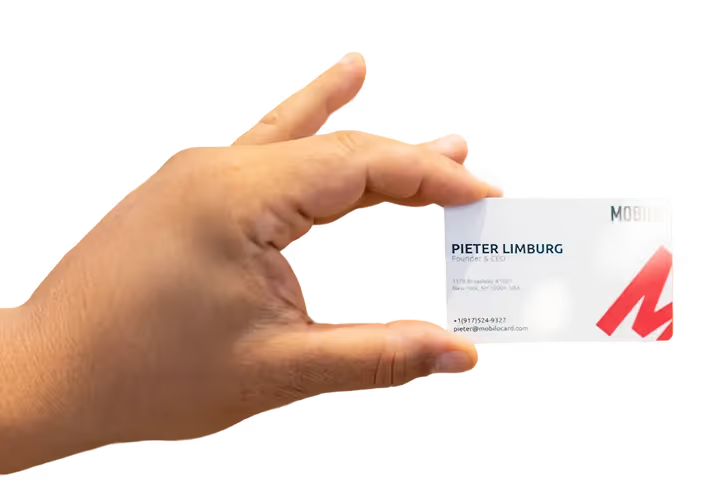
The system's value is in what it does with a new contact the moment the handshake ends. See our digital business card for how this works in practice.

A BDR who attends three industry conferences per quarter but measures success only by badge scans has a presence strategy, not a networking strategy. A sales manager who sets a quarterly goal of 20 new qualified connections, defined as contacts entered in CRM with a follow-up task assigned, is running a revenue workflow. Beamian's research draws a sharp line here: strategic lead capture qualifies prospects on the spot, tags them with context and intent data, and triggers follow-up actions immediately, so no lag exists between meeting a prospect and entering them into the pipeline.
Volume-based collecting defers every decision to a post-event session that, in practice, most reps never complete. The hidden cost is real.
When contact capture is still a manual step that happens days after the event, even the most targeted in-room strategy leaks pipeline. LeadBeam's 2025 overview of trade show lead generation frames strategic networking as an intentional, goal-driven approach to building relationships that serve specific business growth outcomes, explicitly contrasted with random connection accumulation. That framing matters most to roles where networking output is measurable: contacts entered, meetings booked, opportunities created.
Sales managers face a compounding problem. Without visibility into which events produce contacts that convert to meetings, event budget allocation becomes guesswork. The definition of strategic networking, when taken seriously, demands a closed data loop, not just better intentions from the team.
Key takeaways
- Strategic networking is an operational system, not a mindset, built on three pre-event inputs: a target contact profile, a conversion milestone, and a volume target.
- 90% of new contacts never enter a CRM, and the cause is not rep motivation, it is the absence of a capture workflow before the first session starts.
- A sales team can work a room well and still lose the quarter: 200 badge scans mean nothing if fewer than 40 contacts have a next step six weeks later.
- Networking goals built around attendance counts and connection volume have no pipeline milestone attached, which makes it impossible to know whether the quarter worked.
- Every venue format carries its own contact-value decay rate, and the 48-hour window after a handshake is where most pipeline leaks, not at the event itself.
- The three structural mistakes that drain pipeline before follow-up even starts are optimizing for volume over ICP fit, skipping a defined conversion milestone, and having no capture workflow ready on the day.
- Mobilo's Contact Exchange & Lead Capture closes the gap by letting both sides exchange contact information the moment a card is tapped or scanned, feeding directly into your CRM so no contact leaves the event without a next step.
Why Traditional Networking Quietly Kills Your Pipeline
A sales team returns from a three-day trade show with 200 badge scans and the genuine belief that they worked the room well. Six weeks later, fewer than 40 of those contacts have a next step in the CRM. The other 160 are in jacket pockets, phone camera rolls, and a stack of cards on someone's desk.
Most sales managers and business development professionals believe the lag between meeting a prospect at an event and entering them into the pipeline is an unavoidable friction point, just "how networking works," and that the fix is better rep discipline: faster manual entry, more diligent follow-up emails, or stricter post-event review rituals.

The Three Friction Points That Compound Into a Leaky Pipeline
First, contact data lands in a physical or fragmented format: a card, a blurry photo, a note in a personal app.
According to Cavendish Employment Law (2024), 88% of business cards are thrown away within a week of being received, so the majority of physical contact information exchanged at events never enters any follow-up system at all.
88%
of business cards are thrown away within a week of being r
A BDR who photographs 30 cards after a conference dinner and plans to enter them "tomorrow" is not being careless. Mobilo's paper business card scanner, included on every plan from Pro ($3/month, billed annually) through Teams ($4/month) and Business ($5/month), collapses this specific friction point: physical cards captured in the field are converted and routed directly into the lead management system, removing the manual transcription step entirely so reps can capture and follow up on leads more efficiently at networking events and in the field.
Traditional networking groups, the sales clubs, the chamber breakfasts, the referral rings, are often perceived as environments filled with exaggerated self-promotion and inflated credentials, making authentic connection genuinely difficult for the professionals who show up with real intent.
Network Decay - Why New Contacts Fade Fast
When manual entry delays a contact's CRM arrival by three or four days, the follow-up message that finally goes out lands cold.
The 48-hour window is the highest-value moment in the entire networking funnel. Letting it depend on a rep's energy level after a long event day is where networking lead leakage becomes structural, not situational. Mobilo's lead capture and management tools, available across the Pro, Teams, and Business plans, integrate directly with CRM tools through 6,000 integrations via Zapier, so a contact captured by tap, scan, or paper card scanner moves into the sales system without a human handoff step in between.
Mobilo gives visibility into which reps are actively networking and converting connections into pipeline, a capability that turns "how did the event go?" from a subjective debrief into a measurable answer.
Volume vs. Conversion Rate - The Hidden Cost
But as Cavendish Employment Law notes, the metric most teams track, contacts made, is entirely disconnected from the outcome that actually matters: contacts converted to pipeline. Strategic networking optimizes for conversion rate instead, which means fewer events attended with more deliberate post-event CRM entry and follow-up velocity built into the workflow by design.
Mobilo's unlimited leads and contacts, included on every plan tier, means the ceiling on what the system can hold is never the constraint.
"Work the room," "be memorable," "follow up with everyone", this is advice designed for extroverts, and it feels alienating to the majority of business owners and sales professionals who do not operate that way.
An introvert who has three substantive conversations and captures each contact instantly, with lead enrichment filling in the gaps and a CRM integration routing the contact before the event ends, will outperform the rep who collected 40 cards and lost most of them to the discard pile.
It is redesigning what happens in the 48 hours after the handshake, integrating lead capture with CRM tools to streamline pipeline management so that the workflow does the work the rep cannot be expected to do alone at the end of an exhausting event day.
Related Reading
- Business Relationship Building
- How To Build A Network For A Small Business
- How To Build A Strong Sales Pipeline
- How To Reach B2b Decision Makers
- How To Ask For Referrals In Sales
- Expand Your Network
- Business Networking Goals
- Business Cards For Networking
- How To Start A Business Networking Group
How to Set Networking Goals That Actually Generate Pipeline
When quarterly networking goals are built around attendance counts and connection volume, there is no pipeline milestone to measure against, which means there is no way to know whether the quarter worked. Effective goals require a different structure entirely.

Define Goals at Three Levels - Who, What Milestone, and How Many
- A defined ICP-fit contact profile
- A specific conversion milestone such as a booked demo or intro call
- A volume target tied to that milestone
The ICP profile is the filter that makes volume meaningful. A goal of 15 new contacts per event is arbitrary unless each contact matches pre-defined firmographic and role criteria: company size, buying authority, and fit with the problem your product solves. Reaching that volume consistently also depends on capturing and routing contact data without friction, which is where arming field marketing and event teams with tools that feed data directly into the CRM pipeline becomes structural to hitting the goal.
Build a Pre-Event Relationship Map Tied to Desired Next Steps
The failure most BDRs hit is arriving at an event without a prioritized target list. Before each event, identify a tier-one list of 10 to 15 attendees who match your ICP profile exactly, and assign each a desired outcome: intro call, referral conversation, or co-marketing discussion. A second tier of five to ten contacts can serve as stretch targets if tier-one conversations close quickly.
This triage prevents the common trap of spreading attention across 60 conversations that produce zero follow-through, keeping energy focused where pipeline conversion is most likely.
Mobilo's NFC Digital Business Card is purpose-built for exactly this context, most beneficial when professionals attend frequent in-person networking events or hold client-facing roles where every tap or scan needs to count. Rather than handing over a paper card that disappears into a jacket pocket, a rep can tap their Mobilo card to a prospect's phone and immediately trigger a CRM entry, keeping tier-one conversations tightly coupled to the pipeline milestones set before the event.
Run a 90-Day Pipeline Review Against Your Networking Inputs
A quarterly review only has diagnostic value when it draws on consistent, structured data. Structure it around three CRM-sourced data points: contacts entered within 24 hours of each event, first meetings booked from those contacts, and opportunities created from those meetings. Each layer reveals where the conversion chain is breaking down.
That is where Mobilo's contact exchange and lead capture closes the loop. When a prospect taps or scans a Mobilo NFC business card, their details sync directly into the CRM in real time, so "contacts entered this quarter" becomes an auditable metric rather than a manual estimate. Teams and Business plan users get access to insights and analytics alongside lead enrichment and lead capture and management, so the 90-day review draws on clean, timestamped data rather than a best-guess reconstruction of what happened at events attended two months ago. The 90-day review becomes a real pipeline audit.
Where to Build Strategic Connections That Move Business Forward

Industry Events and Conferences - High Opportunity, Steepest 48-Hour Decay Curve
Networking at industry events produces the highest concentration of ICP-fit contacts in the shortest window, but it also carries the fastest decay curve of any format. Without a capture system in place before you arrive, that concentration works against you.
This pain is especially acute for newer sales professionals, in construction, financial services, or any field where the right venue mix is unclear, who invest time in statewide expos or large contractor network events and walk away with a stack of paper cards and no clear system for what to do next. The decay has already begun before the follow-up starts.
The practical implication is this: a 200-person niche industry dinner where 80% of attendees match your ICP will outperform a 5,000-person expo if you have a real-time capture workflow running at the smaller event and nothing automated at the larger one. A digital business card with tap-to-capture functionality pushes the contact directly into the CRM at the moment of exchange, so the 48-hour window becomes irrelevant because the workflow has already started before you leave the room. Mobilo's Teams plan ($4/month per member, billed annually) includes a built-in paper business card scanner, lead capture and management, and 6,000 integrations through Zapier, so whether your team runs five reps at a regional event or fifty at a national conference, every tap and scan feeds the same pipeline automatically, with significantly less time lost to manual CRM data entry.
Consistency across the team matters just as much as speed of capture. Mobilo's Team Management dashboard lets managers control, lock, and override data fields across every card, so no rep is sharing an outdated title or a personal email address picked up from a card they designed themselves two years ago, keeping every contact record clean from the first touch.
Internal and Partner Networks - The Low-Decay Venue Most Reps Ignore
Partner and internal networks represent the most underutilized source of warm pipeline for most sales teams. These contacts do not go cold overnight because the relationship infrastructure around them stays active.
Solo founders and small teams who have spent months grinding cold outreach, an approach that requires sustained relationship-building over quarters, not weeks, often find that one warm partner introduction produces more pipeline movement than a full month of conference follow-ups. Tracking which partnerships are generating that movement is where most teams fall short. For teams scaling this motion, Mobilo's Team Management dashboard gives a central view of who on the team is generating leads and from which channel, so managers can identify which partnerships are converting and double down on the right relationships.
Digital Platforms - Lower Urgency, But Only With a Structured First-Touch Workflow
Digital platforms carry lower time pressure than live events, but that lower urgency is only an advantage if the first touch is specific and deliberate. Connect with a specific reference, a comment the contact made in an industry group, a piece of content they published, a shared event you both attended, then follow within 48 hours with a message that adds one relevant observation rather than pitching. The structured workflow is what separates a LinkedIn connection that converts into a meeting from one that sits dormant in a list.
When that first-touch moment does arrive, friction on either side kills the conversion. Mobilo's free Digital Wallet Card, included across Pro ($3/month), Teams ($4/month), and Business ($5/month) plans, makes that moment effortless on both sides, which is what turns a performative networking environment into an actual pipeline entry point.
Related Reading
- How To Scale Business Networking Online
- Business Networking Automation
- Business Networking Skills
- Virtual Speed Networking
- How To Build A Referral Network
- Business Networking Tips
- Business Networking Plan
- Strategic Networking For Business Growth
- Where To Network For Business
Common Networking Mistakes That Drain Pipeline Before the Follow-Up Even Starts
The damage is structural, baked into three specific workflow decisions that most sales teams have never consciously made but live with every day.

Optimizing for Contact Volume Instead of ICP Fit Poisons the Pipeline at the Source
The familiar post-event debrief goes like this: the team collected 150 contacts, so the event was a success. That framing treats volume as a proxy for value, which means qualification effort that should happen on the event floor gets deferred to a follow-up stage where it costs three times as much time and produces a fraction of the yield.
Mobilo's Teams plan ($4/month per member, billed annually) is built specifically for teams that attend events regularly and need structured lead follow-up. Its lead capture and management tools, custom lead capture forms, and full team data analytics give managers a real-time view of who was captured and how, so qualification decisions are recorded at the moment of exchange, not reconstructed days later from a stack of business cards.
Paper Cards and Memory-Based Notes Are a Capture System, Just a Broken One
In fact, research finds that salespeople spend approximately 34% of their time on administrative tasks, time that could otherwise be spent actually selling. The scale of the problem is well established across the market: the vast majority of physical business cards are discarded shortly after being received, and reps who attempt manual CRM entry after an event spend an average of 4.5 hours on data reconciliation that compounds that decay.
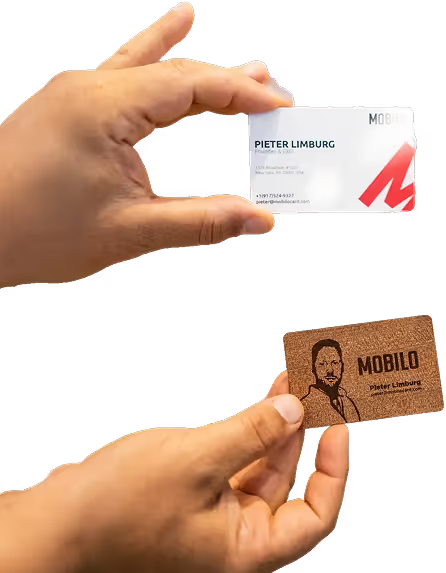
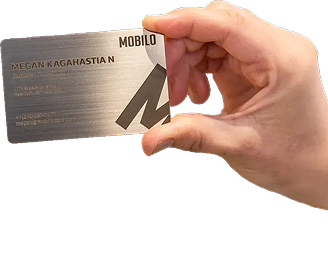
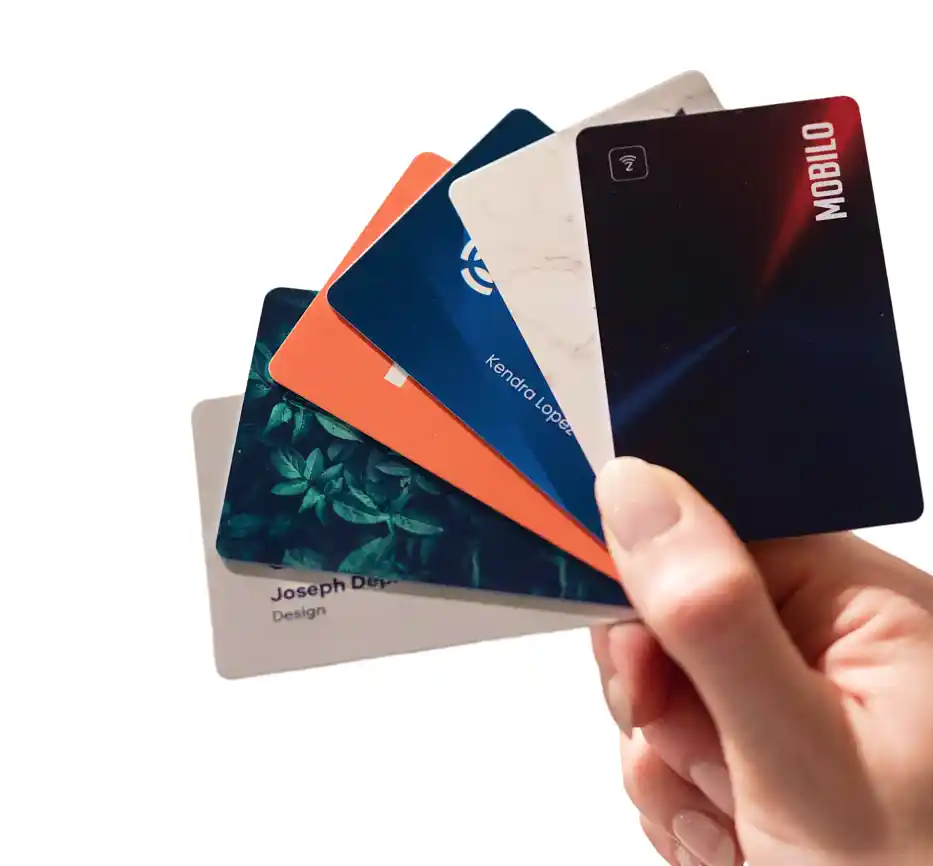
Mobilo replaces that broken design with a card that captures contact data at the moment of the tap or scan, removing the reconciliation step entirely. Under the Teams plan, every card option, from the Digital Wallet Card (included at no extra hardware cost at $0 + $4/month) to the Custom Design NFC Card with QR Code in standard, Wood, or Metal ($29.50, $39.50, or $69.50 + $4/month respectively, all with unlimited taps and scans), feeds directly into a shared team lead pipeline with full CRM integrations and the ability for managers to control, lock, and override data fields.
No Follow-Up Trigger and No Visibility Means Managers Are Flying Blind on Event ROI
A sales manager who cannot answer "which of our Q3 events produced the most pipeline-stage contacts?" is missing the data that determines next year's event budget. When all event contacts land in a single CRM source field with no event-level breakdown and no automatically created follow-up task, the manager has no mechanism to distinguish a $15,000 trade show that generated eight qualified opportunities from one that generated none. The resolution that follows, "let's be more disciplined about CRM entry next time," is the same resolution made after the previous three events.
Mobilo's Teams and Business plans address this directly. Both include insights and analytics, lead enrichment, team management, and 6,000 integrations through Zapier, so follow-up tasks can be triggered automatically the moment a contact is captured, and managers gain an event-level view of pipeline activity without waiting for reps to self-report. The Business plan ($5/month per member, billed annually) adds enterprise SSO, HR directory sync, central billing, and 24/7 customer support for organizations that need tighter governance across a large, frequently traveling sales team.
Every mistake named here shares the same root cause: the moment of connection and the moment of CRM entry are treated as two separate events, when they must be one.
How a Real-Time Contact Capture Workflow Closes the Strategic Networking Gap
"Small businesses lose touch with past clients once a job is done, failing to convert completed work into ongoing relationships, a core gap that real-time contact capture workflows are designed to close."
— what we hear from small business owners

Why the 48-Hour Delay Is the Real Networking Killer
Response rates drop sharply within the first hour after initial contact and continue falling through the 24- and 48-hour marks, yet most contacts collected at events are not entered into a CRM until the rep returns to the office.
The damage compounds because delayed entry is almost always incomplete entry, with context, conversation details, and intent signals forgotten or misremembered in the gap. By the time the record hits the CRM, it is a name and an email address, not an actionable lead.
That incompleteness also corrupts reporting.
Without source attribution, there is no way to know which events generated revenue and which generated noise.
How NFC Tap-to-CRM Turns the Moment of Exchange Into a Pipeline Event
NFC tap-to-CRM eliminates that gap entirely. It replaces a memory-filtered, fatigue-distorted record with an accurate, timestamped signal captured when context is at its peak.
Here is the mechanic: a prospect taps or scans a digital business card, enters their details into a custom lead capture form, and that record flows directly into the connected CRM, with a follow-up task automatically assigned to the rep. Before either person has crossed the conference floor, the contact exists as a structured pipeline record with a next action queued, with no manual transcription required at any point.
For a team running five or more events per quarter, the compounding effect is significant: every tap becomes a pipeline event, and the CRM reflects the full shape of the team's networking activity rather than a partial, error-prone approximation of it, so forecasting and follow-up rest on complete data.
Using CRM-Sourced Event Data to Identify Your Highest-Converting Venues
Clean, real-time data does something manual entry structurally cannot: it makes source attribution reliable. When every contact flows into the CRM at the moment of exchange, a sales manager can pull a 90-day report and see, with genuine confidence, which events generated first meetings and which generated nothing but badge scans.
That visibility changes budget decisions, shifting spend away from high-cost, low-yield events and toward the venues and formats that consistently open pipeline. Across the market, the pattern holds: when contact data flows automatically and consistently, teams can trace pipeline back to its source and allocate resources toward what is generating revenue.
When every contact is captured cleanly and in real time, the cumulative data reveals exactly which networking investments are generating revenue and which are burning budget.
The Business Growth Benefits of Strategic Networking Done with Data
Most sales teams know they are losing contacts at networking events. What they underestimate is how much revenue potential disappears between the conversation and the CRM, and how decisively that gap shapes pipeline velocity, deal size, and close rates. This section breaks down the compounding business case for pairing intentional networking strategy with automated contact capture, from the structural revenue math of closing the capture gap to the measurable conversion advantage of same-day follow-up.

The Multiplicative Revenue Case for Closing the Capture Gap
The business growth benefit of pairing intentional networking strategy with automated capture is multiplicative. Organizations that close the capture workflow gap unlock a structurally larger deal size from every networking interaction, because a contact that enters the CRM with full context and triggers an immediate sequence is a contact that can be nurtured to the purchase size the data already proves is available.
Faster Pipeline Velocity from Same-Day CRM Entry
Timing is the variable most teams underestimate. B2B response time within the first hour of a new contact dramatically outperforms follow-up attempted 24 hours later, and the gap compounds with every additional day of delay. A follow-up that arrives the same day a conversation happened feels like a continuation of that conversation. When it arrives three days later, after a rep has typed notes from memory, it reads like a form letter.
The practical consequence: same-day CRM entry is a pipeline velocity lever. Teams that automate capture at the moment of exchange remove the delay entirely, so the sequence starts while the relationship is still warm.
From Anecdote to Evidence in Networking ROI Measurement
When every contact is captured with source metadata, the pattern becomes visible fast. Which events, which reps, and which outreach sequences are converting becomes a data question rather than a gut-feel debate. Mobilo's team admin dashboard gives managers a centralized view of contact activity across the full team, most valuable once five or more reps are capturing leads in the field simultaneously.
Scalability Without Admin Overhead
Manual contact entry creates a per-rep administrative burden that grows linearly with headcount. The automated capture workflow scales without multiplying that burden: one rep or thirty use the same process. On Mobilo's Teams plan at $4 per seat per month, a 15-person team can close the capture gap within one quarter without an IT project.
Related Reading
- Business Networking Trends
- Business Networking Opportunities
- Networking Ideas For Small Business
- Business Networking Event Ideas
- Business Networking Conversation Starters
- Business Networking Questions
- Networking Ideas For Virtual Events
- Virtual Networking Ideas For Large Groups
Next steps
If your event contacts are slipping out of the pipeline before Monday morning arrives, the path forward starts with treating contact capture as a system responsibility, not a rep responsibility. Start with our digital business card.
The research cited earlier is direct: 88% of business cards are discarded within a week, meaning higher event volume without a fixed capture workflow scales losses, not pipeline. And because reps already spend roughly one-third of their time on administrative work, every hour spent on post-event manual entry is selling time consumed by a task that degrades in accuracy the further it sits from the original conversation. Together, these two realities point to one action: automate the capture moment so the CRM record and the handshake happen at the same time, while context is still intact and the follow-up window is still open.
Start with a digital business card that syncs contacts directly to your CRM the moment a prospect taps or scans. From there, every networking interaction enters your pipeline with a follow-up task already queued, source attribution intact, and no Sunday evening data entry session standing between the conversation and the opportunity.
Frequently Asked Questions
How do I actually build a pre-event relationship map before a networking event?
Before each event, identify a tier-one list of 10 to 15 attendees who match your ICP profile exactly and assign each a desired outcome, intro call, referral conversation, or co-marketing discussion. Tier-two targets are ICP-adjacent contacts worth a brief exchange and a CRM entry but not a dedicated time block, and tier-three is everyone else. This triage prevents spreading attention across dozens of conversations that produce zero follow-through.
How should I follow up with a new networking contact after an event?
Follow up within 48 hours, that is the window where a new contact still remembers the conversation and is most likely to respond, and it degrades fast after that. When manual entry delays a contact's CRM arrival by three or four days, the follow-up message that finally goes out lands cold, which is why the post frames capture speed and follow-up velocity as the variables that actually move pipeline.
How do I track and manage contacts I collect at networking events?
The post recommends routing every contact directly into your CRM at the moment of exchange, not in a post-event batch session, so that contacts enter with a follow-up task already assigned. Running a 90-day pipeline review against three CRM-sourced data points (contacts entered within 24 hours of each event, first meetings booked, and opportunities created) turns your networking activity into an auditable, measurable workflow rather than a best-guess reconstruction.
What networking goals should I actually be setting each quarter?
A networking goal only generates pipeline when it operates at three levels simultaneously: a defined ICP-fit contact profile, a specific conversion milestone such as a booked demo or intro call, and a volume target tied to that milestone. Goals built only around attendance counts or connection volume have no pipeline milestone to measure against, so there is no way to know whether the quarter worked.
Does attending more networking events mean more pipeline?
Not if the post-event capture workflow is broken, attending more events without fixing CRM entry generates more leakage at scale, not more pipeline. The post draws a direct distinction between a presence strategy (optimizing for contacts made) and a networking strategy (optimizing for conversion rate), and argues that capture speed and follow-up velocity are the variables that move pipeline, not event volume.