

How to Ask for Referrals in Sales and Actually Get Them
On This Page
Your referral ask isn't the problem. The broken workflow that happens days before you ever ask is. Here's where the pipeline is actually leaking, and how to fix it first.
Referral conversion rates dwarf cold outreach by a wide margin, which makes the consistent failure of referral programs one of the most expensive blind spots in B2B sales. Most reps assume the problem lives in the ask: the phrasing felt awkward, the timing was off, or the email template needed another pass. The real breakdown happens much earlier, at the exact moment a new contact is made and then not properly captured.
See our digital business card for how this works in practice. According to NERDBOT's December 2025 analysis, the failure point in networking is the data capture stage. When contacts are not properly logged at the event, reps lose the ability to re-engage them at the right moment.
By the time any script is deployed, the warm connection has already gone cold. The referral process has a weak link, and it is not where reps look for it. A BDR meets five strong prospects at a trade show, logs them two days later from memory, and by the time the referral ask goes out, the contact barely remembers the conversation.
That gap, between meeting someone and logging them, is where referral pipeline opportunities silently expire.
According to Marketing Donut (2025), 79% of leads never convert due to lack of follow-up, with contacts that are not properly captured and re-engaged after an event effectively lost before any referral ask can be made. That is a workflow statistic, not a scripting statistic.
79%
of leads lost to lack of follow-up
NERDBOT's December analysis names this directly: reps over-invest in optimizing the referral ask while neglecting the failure to capture, log, and organize contacts in real time, which is the true reason most referral efforts fail. Fixing the script is not wrong. It is the wrong priority when the lead capture workflow is leaking.
A digital business card that syncs contacts directly into the CRM at the moment of exchange keeps that warm window intact, so the relationship context is already logged before you leave the room. The conditions for a good ask were already broken before the conversation ended.
The three specific operational breakdowns that turn a promising connection into a dead referral are named in the next section, with exactly where each one occurs in the workflow.
Key takeaways
- Referral conversion rates beat cold outreach by a wide margin, yet most referral programs fail, not because the ask was awkward, but because the contact never made it into the CRM in the first place.
- Surveying 4,000 sales reps found that 90% of new contacts never enter a CRM, which means the average rep is walking away from networking events with a pocket full of referral opportunities that quietly expire.
- Goodwill has a half-life: the 48-72 hours after a positive interaction is the peak warmth window, and treating referral timing like a 90-day calendar task is how that warmth gets wasted entirely.
- There are four distinct referral source types, satisfied customers, adjacent partners, mutual connections, and event-sourced contacts, and each one requires a different readiness threshold before the ask lands.
- A referral ask fails when it drops invisible mental burden on the other person: defining who qualifies, scanning their network, drafting the intro. Removing that friction, not polishing the script, is what drives conversion.
- The referral leak in most pipelines is a capture problem, not a conversation problem, fixing it means building a post-event contact workflow tight enough that every new connection is already logged and primed before you follow up.
- Mobilo Cards close that capture gap by letting reps share contact details and sync new connections directly into a CRM with one tap, so the referral chain stays alive from the moment the conversation ends.
Three Operational Breakdowns That Kill Referrals Before the Ask
Most sales managers and business development professionals assume referrals fail because of how the ask is delivered: they asked too late, used the wrong words, or just needed a better email template to make the referral request feel natural. The reality is different. Referrals don't die during the ask. They die days earlier, in the gap between meeting someone and logging them. Three operational failures create that gap, and each one compounds the next.
"As networks grow, professionals struggle to remember previous conversations, important dates, and personal details, creating operational breakdowns that silently erode relationship quality before any referral ask can even be made."
— what we hear from professional networkers
1. No Systematic Contact Logging at Networking Events Lets Referral Opportunities Expire
A rep returns from a two-day trade show with 30 promising conversations and a jacket pocket full of cards. Monday morning, between catch-up calls and a pipeline review, those cards get typed into a spreadsheet. By Tuesday, several are already misread, incomplete, or simply skipped. NetworkIN's 2024 research found that contacts captured on physical cards are frequently never followed up on at all, meaning the relationship opportunity expires before any meaningful action is taken.
Manual CRM entry doesn't just slow things down. It corrupts the data. Misspelled names, missing job titles, and wrong company names are routine byproducts of transcribing cards under time pressure. A contact entered with errors can't be matched to an account, can't trigger a follow-up task, and can't anchor a referral ask. The lead leakage isn't a technology problem; it's a structural one baked into how most teams still capture contacts at events.
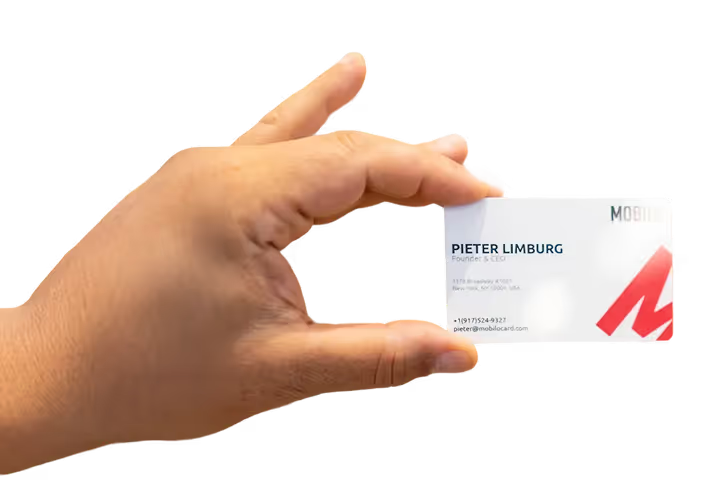
Most sales teams accept this post-event lag as unavoidable friction. It isn't. Mobilo's digital business card syncs contact details directly into the CRM at the moment of exchange, so the relationship is already logged and primed for a referral ask before the rep has left the room, a workflow teams using Mobilo report eliminates the post-event data entry lag that costs an average of 48+ hours under manual methods.
2. No Contact-Warmth Signal Means Reps Ask Too Early or Too Late - Both Kill the Relationship
Even when a contact does make it into the CRM, there's usually no signal telling a rep when that relationship is warm enough to approach. Reps rely on gut feel. The result is predictable: some ask at the first follow-up, before any trust has formed, and come across as transactional. Others wait so long that the original conversation has faded and the ask arrives feeling like a cold email from a near-stranger.
NetworkIN's 2024 analysis notes that the window to act on a new networking contact is time-sensitive; delayed or incomplete logging means the warmth from the initial meeting has passed before any follow-up can occur. Without CRM engagement signals such as email opens, meeting recency, or response time, there's no objective basis for deciding when to ask. Reps are guessing, and the guess is usually wrong in one direction or the other.
3. Vague, Open-Ended Referral Asks Offload All Cognitive Work onto the Contact - Who Then Does Nothing
Phrases like 'let me know if anyone comes to mind' sound polite but are functionally useless, they require the contact to independently recall a relevant person, assess fit, and initiate an introduction, all without prompting. Most contacts intend to help but never act because the mental lift is too high. A structured ask that names a specific profile, company type, or situation reduces friction dramatically and is the single highest-leverage change a rep can make to how they ask for referrals in sales.
How to Target the Right Customers to Ask for Referrals
Not every contact in your network is equally ready to refer you, and asking the wrong person at the wrong moment does more damage than not asking at all.
The Four Referral Source Types and the Different Readiness Bar Each One Requires
- Satisfied customers need at least one measurable win documented before you ask
- Adjacent business partners need a completed co-sell or mutual introduction on record
- Mutual connections: the shared context lowers the bar, but a recent touchpoint is still non-negotiable
- Event-sourced contacts are often the warmest because the relationship was forged face to face, and also the most fragile
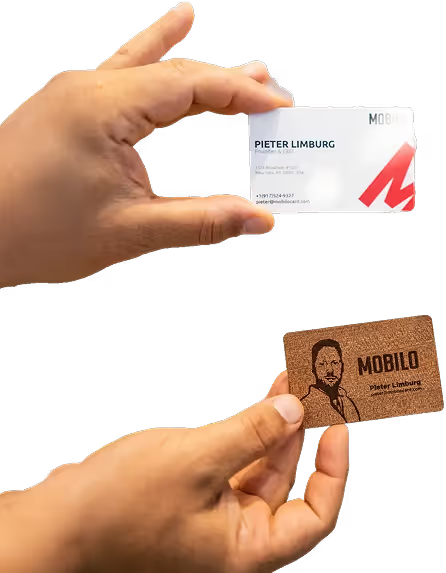
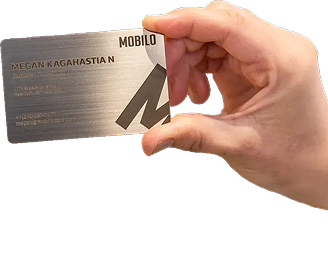
That last category is where physical-to-digital capture tools matter most. Mobilo's Team-tier cards, including the Custom Designed NFC Card with QR Code, available in standard, Wood, and Metal finishes, sync the contact directly into your CRM at the moment of exchange via 6,000 integrations through Zapier. The Team plan ($4/month, billed annually) includes full team data analytics, CRM integrations, lead capture and management, and unlimited leads and contacts, so every tap or scan at an event creates a timestamped warmth signal the rep can act on rather than a fading memory.
CRM Engagement Signals as a Warmth Indicator Before You Ask
The data needed to identify referral-ready contacts already lives in most CRMs. Most reps just don't use it. Sopro's February 2026 outreach analysis confirms that engagement recency and interaction frequency, including email opens, reply history, and meeting cadence, are reliable warm-contact indicators in B2B outreach.
A challenge we see constantly: business owners know they have a list of 1,000 contacts, but sending a generic referral request to all of them feels ineffective and impersonal, because it is. Segmentation only works when the underlying records are reliable, and that's where enrichment makes the difference. Mobilo's Team and Business plans both include insights and analytics and lead enrichment, so the records your reps pull from are populated with behavioral data, not just a name and email. The Business plan ($5/month, billed annually) adds HR directory sync and enterprise SSO, which means contact data stays accurate as teams change, with no orphaned records from employees who left six months ago showing up in a "warm contacts" segment.
The 3-3-3 Rule for Gauging Relationship Depth Before the Ask
The 3-3-3 rule gives reps a concrete pre-qualification test. Before making a referral ask, confirm that the contact has engaged across at least three separate interactions, across at least three weeks, covering at least three distinct topics beyond the original transaction:
- Three interactions prove the relationship isn't a one-off
- Three weeks rule out recency bias
- Three topics signal that the contact sees you as a resource, not just a vendor
Applying this audit is straightforward when the interaction history is already logged. When Mobilo's paper business card scanner or NFC tap logs the contact the moment it happens, the interaction timestamp is already in the record. Reps running the 3-3-3 audit against contacts captured this way are working with real data, not reconstructed guesses.
The 3-3-3 check prevents reps from burning a contact they will need later, so it functions as a relationship preservation tool as much as a qualification filter.
Related Reading
- Business Relationship Building
- How To Build A Network For A Small Business
- How To Build A Strong Sales Pipeline
- How To Reach B2b Decision Makers
- How To Ask For Referrals In Sales
- Expand Your Network
- Business Networking Goals
- Business Cards For Networking
- How To Start A Business Networking Group
How and When to Ask for Referrals Without Losing Momentum
Every positive interaction, a closed deal, a solved problem, an unsolicited compliment from a happy client, generates a short burst of genuine warmth that decays faster than most reps realize. Treating referral timing as a calendar problem ("I'll ask at the 90-day check-in") is how that warmth gets wasted entirely.
Goodwill has a half-life.
The 48-72 Hour Peak Warmth Window and Why It Closes Faster Than You Think
Research from Spiky makes the decay rate concrete: responding to a contact within five minutes makes conversion 100 times more likely than waiting just 30 minutes. The same principle applies to referral asks; delay erodes the emotional peak that makes a client want to say yes.
Mobilo eliminates that bottleneck at the source. A tap or scan shares contact information and digital profiles instantly, without ever running out of cards, and syncs the new contact into the CRM in the same motion, so reps can follow up while warmth is still at its peak.
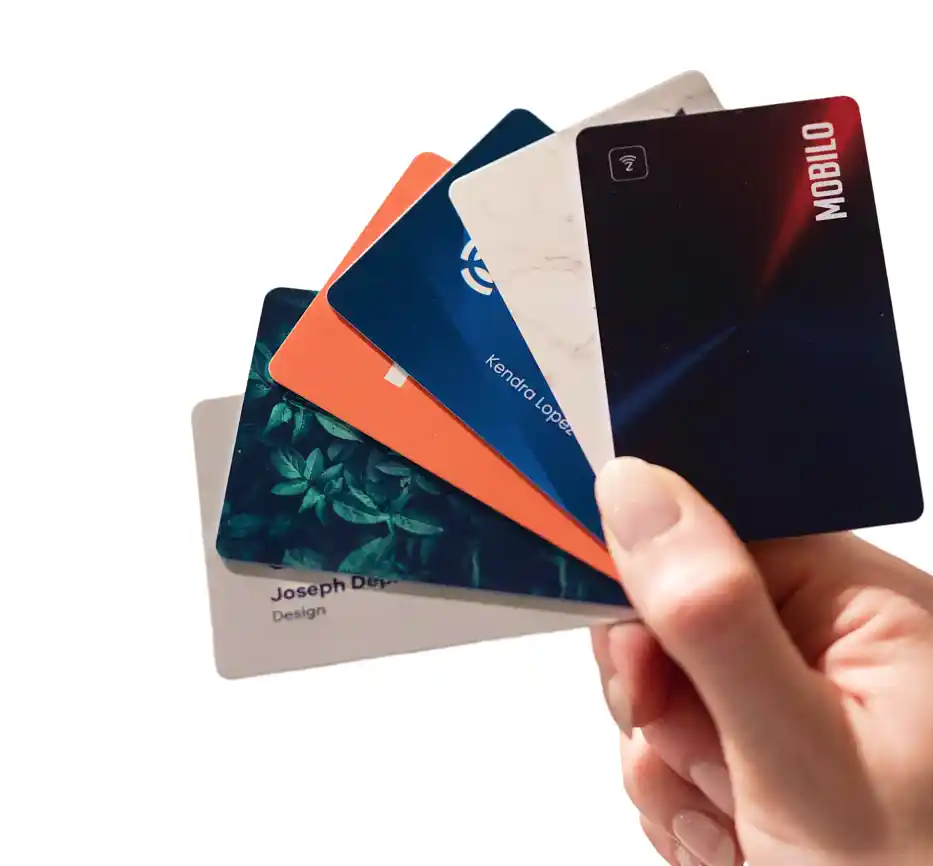
That workflow is available across Mobilo's card lineup. Teams on the popular Teams plan ($4/month, billed annually) can deploy Custom Design NFC Cards, Metal Cards, Wood Cards, Paper Plus Cards, or a free Digital Wallet Card, with every format feeding the same real-time capture pipeline and keeping the follow-up window firmly within reach.
Signals That Say Not Yet and the Re-Warm Move That Resets the Clock
When engagement goes flat before a referral ask is made, the right move is a targeted value touch rather than pushing forward anyway.
One well-timed value message re-establishes reciprocity within days and resets the warmth clock to a point where the referral ask lands as a natural follow-on. Spiky data reinforces why speed into that re-warm moment matters just as much as the initial contact: every hour of delay compounds the decay. Having unlimited leads and contacts already organized in the CRM, a feature included on every Mobilo plan from Pro through Business, means a rep can identify flat-engagement contacts and execute the re-warm touch without first hunting through a spreadsheet.
Making the Referral Ask Feel Natural Instead of Transactional

Replace "Anyone You Know" With a Named Profile That Does the Thinking for Them
As noted in Convertify's conversion framing research, replacing a vague ask with a named profile, such as "Do you know anyone leading sales ops at a mid-size SaaS company?", signals that you value the contact's network thoughtfully and reduces the cognitive load required to respond. The result is a sharper, more actionable exchange: instead of a generic ask, a rep gives the contact one person to think of and one action to take.
This is also where field marketing and event teams have a structural edge. When reps use tools designed to capture leads efficiently and feed data directly into the CRM pipeline, the way Mobilo's Teams plan does with its lead capture and management features, CRM integrations through 6,000 Zapier connections, and full team data analytics, the named-profile ask becomes a retrievable data point. The logged interaction already tells the rep which contacts mentioned specific pain points, which events surfaced the warmest signals, and who is most likely to recognize the profile you describe.
Anchor the Ask to a Shared Outcome, Not an Open-Ended Favor
Convertify's analysis of referral framing finds that anchoring to concrete value already delivered, for example, "Given what we solved together on the pipeline reporting side," makes the request feel like a natural continuation of the relationship rather than a cold pivot. That context does real work. Teams running Mobilo's Business plan get insights and analytics, lead enrichment, and unlimited leads and contacts, all billed at $5 per month annually, so the shared-outcome anchor is retrievable by any rep on the team, not just the one who attended the original meeting.
The Gift-Frame Reframe Shifts the Referrer's Role Entirely
Convertify's framing research confirms that positioning the referral as doing the referred person a favor shifts the narrative from "I'm helping my rep" to "I'm helping my colleague," which removes the social friction of feeling like a lead source.
- a text with a name
- a quick email intro
- a LinkedIn connection
For event and field marketing teams, handing a contact a Mobilo Team, Digital Wallet Card, available at $0 plus the $4 per month Teams plan, billed annually, gives the next action a physical trigger: tap, connect, done.
Related Reading
- How To Scale Business Networking Online
- Business Networking Automation
- Business Networking Skills
- Virtual Speed Networking
- How To Build A Referral Network
- Business Networking Tips
- Business Networking Plan
- Strategic Networking For Business Growth
- Where To Network For Business
Referral Ask Email Templates and Scripts That Actually Convert
Three structural elements separate a referral email that gets a warm introduction from one that gets ignored: a relationship anchor, a named prospect profile, and a single low-friction action. Strip any one of them and the email performs closer to cold outreach than a warm ask.
That last point is not intuitive. According to Smartlead's benchmarking data, signal-based outreach achieves reply rates of 15 to 25%, compared to a broad cold email average of 3.43%. The same research identifies the primary lift driver: personalization anchored to a shared outcome and a specific target profile. Every other element, subject line cleverness, friendly tone, perfect send time, is filler that does not meaningfully move the number. The practical implication is uncomfortable: a referral email written without CRM-logged interaction context will perform near the cold baseline, regardless of how polished the template looks.
The templates below are built around those two variables. Each one is a working example of the principle, not a fill-in-the-blank convenience.
1. Post-Close Warm Ask - Strike While the Win Is Fresh
The post-close window is the highest-converting moment in any referral sequence, and it closes faster than most reps expect. Send this template within 48 hours of a deal close or a resolved problem, while the shared outcome is concrete and recent for both parties. The relationship anchor is the specific result: name it. The prospect profile names a role, not a vague category. "Hi Sarah, thrilled we got the pipeline reporting issue sorted.
A one-line intro from you would mean a lot." One ask, one action, nothing else. The limitation worth naming: this template loses most of its lift if the close happened more than a week ago and no follow-up touchpoint has kept the relationship warm since.
2. Event Follow-Up Referral Ask - Send Within 48 Hours While Context Is Alive
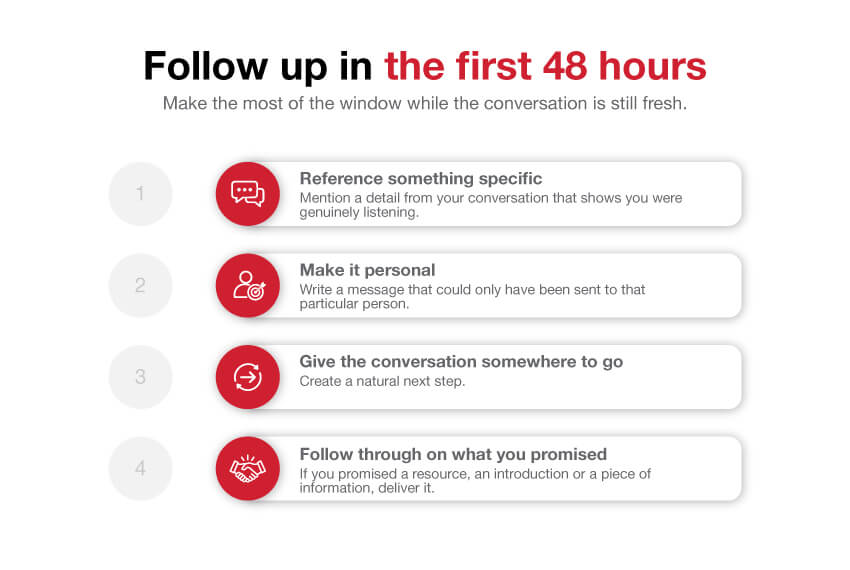
This template depends entirely on speed. Send it within 48 hours while the shared context from the conversation is still fresh for both parties. Example: "Great meeting you at [Event] yesterday. Your point about distributed team onboarding stuck with me. Is there anyone on your leadership team I should connect with? I'll mention you suggested it." The ask is specific, the action is a single connection, and the relationship anchor is a detail the contact actually said.
Reps who exchanged contact details on paper frequently spend that 48-hour window hunting for a name or a number. By the time the email goes out, the window has closed. Automatic lead capture that logs the contact directly into the CRM at the moment of tap or scan, the workflow Mobilo is built around, keeps the follow-up sequence queued before the rep leaves the venue floor, consistent with the same-day follow-up threshold Unique Exhibitions' post-show research identifies as the line between personal and generic outreach.
3. Re-Engagement Referral Ask - Revive a Contact That Has Gone Quiet
Sending a referral ask to a contact who has been silent for two or more months is a relationship risk. The re-engagement template solves this by separating the warm-up from the ask across two emails. Email one delivers value with no ask attached: a relevant benchmark, a short observation tied to something the contact mentioned previously, or a useful connection. Email two, sent three to five days later, carries the referral ask anchored to that value exchange.
"Following up on the article I sent last week. Quick ask: do you know anyone in your network leading revenue operations at a growth-stage company? Your name would carry real weight in the intro." Skipping the warm-up email and asking cold is the single most common reason re-engagement referral attempts damage rather than rebuild the relationship.
4. Anatomy of a Converting Referral Email - Four Components That Do the Work
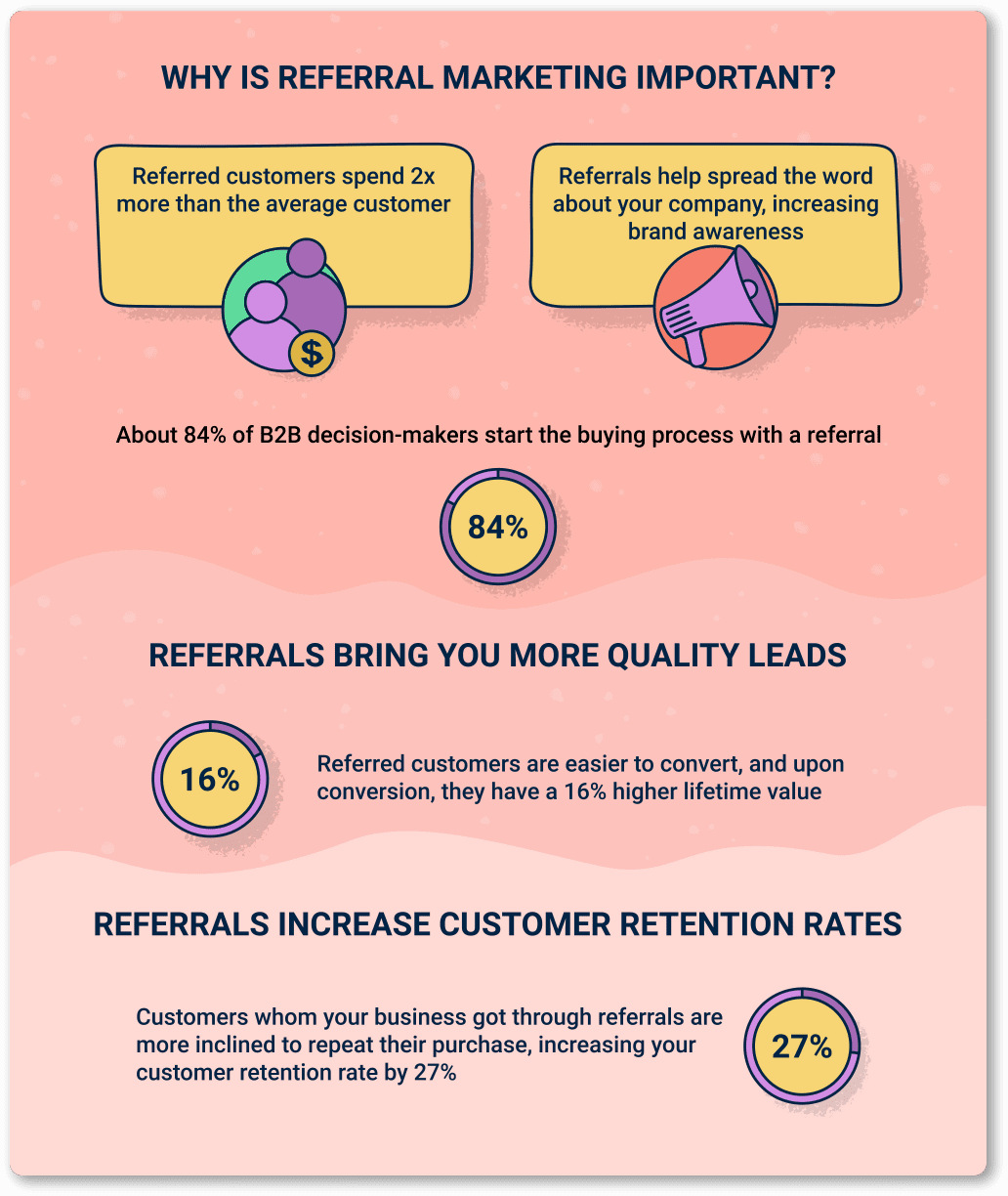
According to Smartlead's benchmarking research, personalization anchored to a shared outcome and a specific target profile is the primary driver of reply rate lift, with signal-based outreach reaching 15 to 25% versus the 3.43% cold baseline. Every converting referral email carries four components that operationalize that finding. First, a relationship anchor: one sentence that references a specific shared outcome or conversation detail, proving you remember the relationship.
Second, a named prospect profile: a role, company type, or problem, not "anyone you think might benefit." Third, a single low-friction action: a one-line intro, a LinkedIn connection, a forwarded email. Fourth, a no-pressure exit: make it easy to say no without awkwardness. Remove any one of these and the email drifts toward the cold baseline, regardless of how well-crafted the subject line is.
5. The 3-3-3 Cadence Rule - Three Follow-Ups Over Three Weeks Before You Move On

A single referral ask email rarely closes the loop on its own, but over-following-up damages the relationship faster than silence does. The 3-3-3 cadence structures the sequence: three follow-up touches, spaced roughly one week apart, over three weeks, before moving the contact to a low-priority nurture segment. Each follow-up adds a small piece of value or context rather than simply restating the original ask.
After three touches with no response, stop pushing. As Smartlead's structured follow-up cadence data confirms, maintaining this discipline protects both deliverability and relationship quality simultaneously. The cadence signals to the contact that you are organized and respectful of their time, which itself reflects well on the referral you are asking them to make.
How to Build a Contact Capture Workflow That Keeps Referrals Alive
The core claim this section builds toward is this: the failure to build a structured post-event contact capture workflow is the single upstream cause that makes every downstream referral action structurally harder. Any workflow that relies on individual rep discipline to manually log contacts after an event designs failure into the process by default, because the referral ask conversation is the last step in a chain that breaks silently at the first step, the moment a contact leaves the room without entering the CRM.
Research from Unique Exhibitions is direct on this point: post-show follow-up must happen within 24 to 48 hours while the interaction is still fresh, because every hour of delay strips away the conversational context that makes outreach feel personal rather than generic. The contact capture process almost guarantees the follow-up arrives too late to matter.
Why Same-Day Contact Capture Is the Real Referral Timing Tactic
Unique Exhibitions' post-show guidance confirms that leads must be categorised by warmth immediately after the event for sequencing to work at all.
The Four-Step Workflow That Keeps Every New Contact Primed for a Referral Ask
Teams that attend events regularly find that a digital business card connected directly to the CRM makes this the default, not the exception.
Step two: assign a warmth tier immediately. Unique Exhibitions recommends categorising leads by priority the same day so hot contacts are sequenced first and cooler ones enter a longer nurture track.
Step three: attach a follow-up task with a conversation tag. One sentence capturing what you discussed gives the outreach its personal anchor.
Step four: track conversion, not just volume. Unique Exhibitions' framework is explicit that success means measuring whether captured contacts were actually followed up and converted, not simply counting how many badges were scanned.
How Team-Level Contact Hygiene Turns Referral Readiness Into a Manager-Visible Signal
Contacts that went cold three weeks ago still show as "warm" in the CRM because no one updated the record after the event.
A contact hygiene standard fixes this by making warmth tier, capture date, and last-touch timestamp visible at the team level.
Related Reading
- Business Networking Trends
- Business Networking Opportunities
- Networking Ideas For Small Business
- Business Networking Event Ideas
- Business Networking Conversation Starters
- Business Networking Questions
- Networking Ideas For Virtual Events
- Virtual Networking Ideas For Large Groups
Next steps
If your referral pipeline keeps going cold despite better scripts and sharper timing, the path forward starts with fixing what happens in the room before any ask is possible. A well-worded referral email written without CRM-logged interaction context performs near the cold baseline of 3.43% reply rates, no matter how polished the template looks. That gap starts at contact capture, not at the inbox. Start with our digital business card.
The data-latency problem identified in the timing section makes this concrete: by the time a manually logged contact finally enters the CRM, the warmth window has already decayed past the point where any ask can compensate. The contact hygiene standard covered in the workflow section makes the fix visible at the team level, where managers can see which contacts were logged same-day with conversation context versus bulk-uploaded days later with none. Together, they point to one operational change: capturing contacts at the moment of exchange so the relationship is already primed before you leave the room.
Start with a digital business card that syncs every tap and scan directly into your CRM in real time. From there, your warm contacts are already segmented, timestamped, and ready for the named-profile ask this post lays out, before the referral window closes.
Frequently Asked Questions
What are the four types of referral sources in B2B sales?
ZeerFlow's May 2026 analysis identifies four distinct referral source categories: satisfied customers, adjacent business partners, mutual connections, and event-sourced contacts. Each has a different readiness threshold, satisfied customers need at least one documented win before you ask, adjacent partners need a completed co-sell or mutual introduction on record, and event-sourced contacts are often the warmest but also the most fragile because they expire quickly if not properly captured.
How do I know when a contact is warm enough to ask for a referral?
Use the 3-3-3 rule: before asking, confirm the contact has engaged across at least three separate interactions, over at least three weeks, covering at least three distinct topics beyond the original transaction. You can also use CRM engagement signals, email opens, reply history, and meeting recency, as objective warmth indicators; if a contact hasn't responded to your last two outbound messages, they are not warm enough to ask.
How specific should my referral ask actually be?
As specific as possible. Vague asks like "if you know anyone who might benefit, feel free to pass along my details" transfer all the cognitive work to the contact, forcing them to scan their entire network, identify someone relevant, and draft a message on their own. Asking for a named role, for example, "Do you know anyone leading sales ops at a mid-size SaaS company?", gives the contact one concrete question to answer and dramatically increases follow-through.
Does it matter how quickly I follow up after meeting someone before making a referral ask?
Yes, timing is critical. Research cited in the post shows that the positive emotional warmth a contact feels after a win or a first meeting peaks within hours and then decays toward neutral. By the time most reps finish manually entering a contact into their CRM two or three days later, that warmth window has already closed, meaning even a well-worded referral ask can't fully compensate for the lag.
Can a business card actually help me get more referrals?
Yes, when it captures and logs contact data in real time. The post identifies the gap between meeting a contact and logging them as the single biggest failure point in referral programs, not the ask itself. A digital business card that syncs contact details directly into your CRM at the moment of exchange keeps that warm window intact and creates a timestamped interaction record, so the relationship context is already logged before you leave the room and the 3-3-3 audit has real data to work from.