


How to Build a Referral Network That Sends Clients Your Way
On This Page
Most referral pipelines don't fail because of weak relationships. They fail because contacts vanish between the event floor and the CRM. Here's how to close that gap.
Consistent networking activity and a consistent referral pipeline are not the same thing. Sales professionals who attend every industry breakfast, collect every contact, and still find their referral pipeline thin and unpredictable are missing a system.
The gap between a full calendar and a full pipeline is structural, and understanding it changes everything about how you build a smart digital business card workflow into your networking routine. A general collection of professional contacts is a social calendar. A referral network is something more specific: a structured set of partners who actively route warm introductions your way because the relationship has been built, maintained, and made reciprocal.

The distinction matters because the two require completely different inputs. One rewards attendance. The other rewards operational discipline. Most sales managers and business development professionals think the problem is relationship depth or follow-up speed, that if reps just sent a better email faster, the referral pipeline would fill up. They accept the lag between meeting a contact and entering them into the system as normal networking friction, a fixable systems failure they never treat as one. They show up, they connect, they follow up once or twice, and then the contact goes quiet. The relationship never develops the trust or clarity needed for a partner to confidently make a warm introduction.
Without that structure, contacts stay contacts. They never become partners. The performance case for referrals is not subtle. According to Bookyourdata's 2025 analysis, referral-based leads convert at 3 to 5 times the rate of outbound leads, which makes relationship-driven pipeline channels comparatively more valuable with every passing quarter.
3 to 5 times
Referral leads convert vs. outbound
So why do so many active networkers still report unpredictable referral revenue? The answer is infrastructure. Industry research makes the mechanism explicit: without a reliable capture-and-nurture process, initial contact events fail to convert into actionable pipeline opportunities. The contact captured on a photographed card or a mental note rarely makes it into a CRM intact or on time. This is a capture problem. The professionals who build the thinnest referral networks are the ones whose contacts quietly disappear between the event floor and the CRM, the single point of failure most referral advice never addresses.
Key takeaways
- 90% of new contacts never make it into a CRM after a networking event, that single failure point quietly cancels every hour spent qualifying partners and scripting the ask.
- A full event calendar and a full referral pipeline are not the same thing; the gap between them is structural, not relational.
- The majority of referral partner agreements produce zero introductions, not from lack of goodwill, but from a mismatch in audience, timing, or trust.
- The highest-leverage change in a referral ask is not the incentive, it's the specificity of the target and the form of the introduction.
- Cash finder's fees backfire faster than most teams expect in B2B referral relationships where the product changes hands only once.
- Referral attribution is a capture-timing problem: the gap between meeting a partner and their contact landing in your CRM is where pipeline data disappears.
- Responding to a new contact within five minutes makes conversion 100x more likely, which makes the speed of capture a pipeline variable, not an admin task.
- When someone taps or scans a Mobilo card, their information feeds directly into your contact list or CRM in real time, closing the contact-capture gap before you leave the event floor.
The Contact-Capture Gap That Quietly Kills Referral Momentum
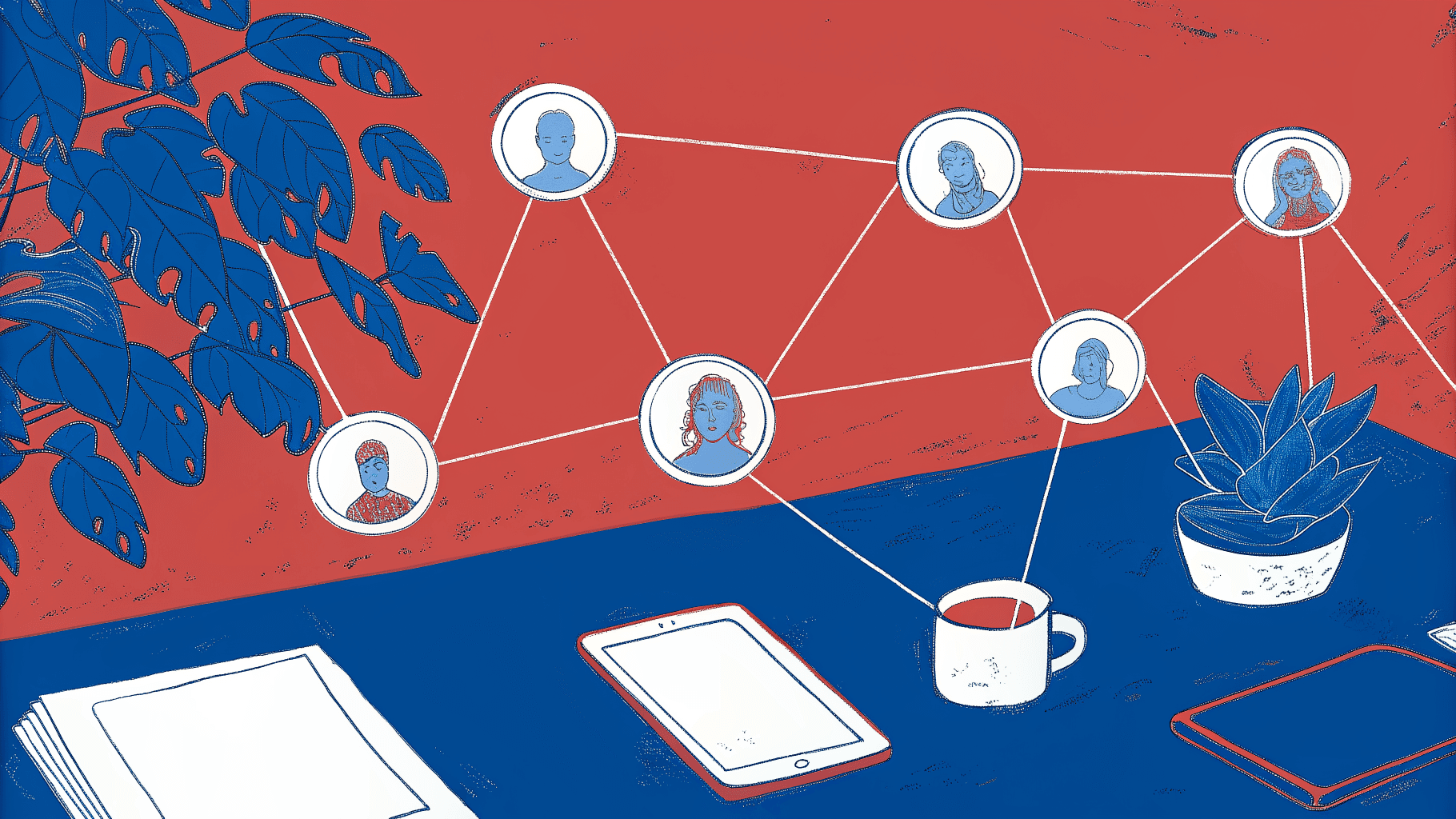
The Three Moments Where Your Referral Pipeline Silently Leaks
Most sales managers and business development professionals believe the problem is relationship depth or follow-up speed, that if reps just sent a better email faster, the referral pipeline would fill up. But industry research consistently cited across B2B networking studies finds that most business cards are discarded shortly after a networking event, and for most sales professionals, that pattern describes their referral pipeline without them realizing it.
There is a subtler version of this problem that compounds the structural one: referral momentum dies when contact capture is inherently solo. There is no obvious person standing next to them saying "did you add that to the CRM?"
As Cavendish Law's 2024 analysis frames it, returning from a conference with a stack of cards used to signal successful networking, but the card collection process creates a gap between meeting a contact and capturing them in any usable system.
- The exchange itself, where contact details land on paper rather than in a pipeline.
- The walk back to the office, where the stack sits untouched while the memory of the conversation fades.
- The manual entry session that happens days later, if it happens at all.
Lead conversion rates decay sharply with time. Research on B2B contact responsiveness consistently shows that a warm connection contacted within the first 24 hours converts at a dramatically higher rate than one reached three to five days later. Sales professionals spend a significant portion of their work week on manual CRM data entry, time that is almost never spent on event contacts first. Mobilo's card tap or QR scan pushes a new contact into the CRM at the moment of exchange, not at the end of the week. The follow-up sequence starts in minutes, not days.
At that scale, the contact-capture problem is organizational as much as individual. Mobilo's Team Management and Admin Dashboard gives sales leadership centralized control over branding and contact information across the entire team, so every rep's card reflects current, consistent data and every captured lead flows into the same pipeline. The Teams plan includes team management, lead capture and management, lead enrichment, insights and analytics, integrations through Zapier, and 24/7 customer support, giving operations and sales leadership the infrastructure to integrate lead capture with CRM tools and streamline pipeline management across every rep simultaneously.
The operational difference between a referral network that compounds and one that stalls is relationship quality. Cavendish Law's 2024 research identifies this precisely: the networking breakdown is operational, not social. The next step is knowing exactly which professionals are worth capturing in the first place.
Who Is Actually Worth Capturing - The Contact Quality Problem That Precedes Pipeline Management
Closing the capture gap creates a new problem that most sales teams do not anticipate: volume without signal. A referral pipeline is not a contact database. The contact quality problem operates at two levels. A warm handshake and a mutual interest in the industry does not make someone a referral partner. The contact sits in the pipeline, tagged but unworked, until it ages out entirely. Mobilo's lead enrichment capability addresses this at the point of entry rather than after the fact. The result is a pipeline where prioritization is built into the capture process, not bolted on as a separate review step.
The Compounding Math of a Referral Network Built on Consistent Infrastructure
It produces a sequence of them, each one arriving with the social credibility of the previous connection already embedded. A referral partner who receives a follow-up within 24 hours, encounters a professional and current digital card every time they share your contact, and experiences the same quality of responsiveness across every interaction will refer again. This is where the infrastructure question becomes a strategic one rather than a tactical one. When a rep's contact information changes, a physical card becomes a liability the moment it is printed.
They are the ones where the infrastructure makes consistent, professional contact maintenance the default outcome rather than the result of exceptional individual effort. Mobilo's combination of instant CRM capture, centralized team management, and always-current digital card delivery is not a collection of separate features.
How to Choose Referral Partners Who Actually Send Business
zero
Most referral partner deals produce nothing
- Who serves your exact buyer?
- When do their clients naturally need you?
- Does that partner carry enough credibility with their audience to make a warm introduction land?
Map Your Best Clients Backward to Find Partner Categories Worth Targeting
The most reliable method for identifying partner categories is reverse-engineering your best closed deals. Pull your last 10 to 20 ideal clients and ask which other professionals or service providers those clients also worked with during the same period.
A commercial real estate broker who reviews 20 recent clients and finds that 14 also engaged an IT infrastructure consultant within 12 months has just identified their highest-priority partner category. That is shared buyer behavior, and it tells you exactly where to invest relationship energy rather than spreading it across every professional who expressed enthusiasm at a networking event.
Accountants, bookkeepers, equipment dealers, consultants, insurance brokers, business brokers, and lawyers are the categories that tend to surface most reliably when you run this backward-mapping exercise on B2B client rosters, because they intersect with business owners at high-stakes, decision-rich moments.
The Three-Filter Test for Qualifying a Potential Referral Partner
A strong referral partner serves the same target audience without competing directly, so referring you is a natural extension of their own client service, not a conflict.
Why Five Active Partners Outperform Fifty Dormant Connections
A small number of active partners who send regular introductions consistently outperforms a large list of dormant connections, making depth of engagement the metric that matters, not list size. "Active" has a specific definition here: a partner who has sent at least one qualified introduction in the last 90 days, who understands your ICP well enough to describe your positioning correctly, and who you have invested in through reciprocal introductions or visible value delivery. Mobilo's team plans are built specifically for this problem.
The Teams plan ($4/month per member, billed annually) and Business plan ($5/month per member, billed annually) both include team management, centralized billing, insights and analytics, lead capture and management, unlimited leads and contacts, and 6,000 integrations through Zapier, so a tagged, context-rich contact record can move directly into your CRM from the moment of the exchange, before you leave the floor.
Partner Qualification Checklist
- 1. ICP Overlap → Question: Does this partner serve your exact buyer profile without competing directly? → Pass Criterion: Yes, their client roster and yours share the same role, company size, and pain point.
- 2. Trust Equity → Question: Does this partner have deep credibility with that audience, not just access? → Pass Criterion: Yes, they have long-tenured client relationships, not transactional ones.
- 3. Natural Next-Step Logic → Question: Does a predictable moment exist in their client workflow where your service is the obvious answer? → Pass Criterion: Yes, you can name the trigger event in one sentence without a long explanation.
Decision Rule: Two out of three means monitor and revisit in 90 days.
How to Make Referrals Flow with a Contact Exchange System That Works at the Event
Every minute that passes between that exchange and a CRM entry is a minute the relationship cools, and the data on this is unambiguous: CRM automation triggered at the moment of capture eliminates the manual lag entirely, firing a follow-up sequence before either party has crossed the event floor.
"No structured system for tracking who you talked to and what was discussed at networking events or outreach efforts, past a handful of contacts, conversations blur and follow-ups get missed, undermining referral flow."
— what we hear from independent networkers / referral-based professionals

Why the Tap-or-Scan Moment Is the Referral Relationship's Point of No Return
Referral intent decays fast. A partner who met you at 2 p.m. and genuinely wanted to send you business is a different person by 9 a.m. the next day, buried in their inbox and no longer thinking about you. One of the most consistent struggles professionals face when they start attending events regularly is the absence of any structured system for tracking who they talked to and what was discussed, and without that structure, past a handful of contacts, conversations blur and follow-ups get missed.
The Four-Step On-Floor Capture Sequence That Closes the Gap Before You Walk Away
That fourth step is where most manual workflows collapse, and it is precisely the step that structured capture eliminates. On the Teams plan ($4/month per member, billed annually) and the Business plan ($5/month per member, billed annually), both lead enrichment and lead capture and management are included, alongside 6,000 integrations through Zapier, insights and analytics, and 24/7 customer support, so the automation layer is already built into the plan your team is already on. This is precisely the condition under which Mobilo's Contact Exchange and Lead Capture feature delivers its full value. Every format shares the same foundation: you never run out of cards, and every tap feeds the same structured capture system.
How a Complete Digital Profile Makes You Exponentially Easier to Refer
When a partner receives your full profile, including your role, specialty, social links, and a direct call-to-action, they have everything they need to forward you credibly the moment a relevant prospect appears. Mobilo lets you share contact information and complete digital profiles instantly, without running out of physical cards, so every person you meet receives the same full picture regardless of how many events you attend in a week, making each introduction as strong as the last.
Sharing Your Referral Link Across WhatsApp, Email, and QR Without an App Download
The final friction point is the prospect's side of the exchange, and it disappears the moment no app download is required. A referral link sent via WhatsApp, embedded in an email, or encoded in a QR code opens directly in any mobile browser, showing a full professional profile with a single tap.
Related Reading
- Virtual Speed Networking
- How To Scale Business Networking Online
- Business Networking Automation
- Business Networking Skills
- Business Networking Plan
- Strategic Networking For Business Growth
- Where To Network For Business
- Business Networking Tips
How to Ask for Referrals in a Way That Actually Gets Results
The answer is precision. The single highest-leverage change in a referral ask is the specificity of the target and the format of the introduction requested, because defining the exact role, situation, and two-line introduction format you want produces disproportionate pipeline returns compared to the same time invested in cold outreach volume.
Why 'Anyone Who Needs X' Produces Nothing and What to Say Instead
Vague asks create a paralysis that polite partners rarely admit to. Whether the partner mentally files the request away or simply forgets it, both failure modes share the same root: the ask leaves the partner doing your qualification work for you, in their spare time, with no brief. Across the market, a precisely defined target profile, role, company size, and triggering situation gives the partner something concrete to match against their network and act on immediately, while a vague ask yields nothing. The script that works sounds like this: "The best referral for me right now is a VP of Sales at a mid-sized B2B company who just had a disappointing trade show. If that description fits anyone in your network, a two-line email introduction is all I need."
Give Before You Ask Using Reciprocity as the On-Ramp to a High-Quality Introduction
The ask lands as a natural next step only after you have delivered something visible to the partner, such as a useful introduction, a piece of insight that helped their clients, or a referral in the other direction. That prior deposit is what transforms the ask from a favour into an exchange. Mobilo's Teams plan, the platform's most popular subscription tier at $4 per month billed annually, includes full team data analytics and CRM integrations, giving managers the ability to get visibility into which reps are actively networking and converting connections into pipeline.
The Referral Brief That Lets Your Partner Act in Under Two Minutes
Once the timing is right and the target is specific, the final lever is format. A brief that fits in a single message, target role, triggering situation, and a suggested two-line introduction, removes every remaining obstacle between your partner's good intention and a sent email.
Mobilo's Teams plan includes For Events, so every referred contact enters a structured system rather than a business card pocket or a spreadsheet that ages out, keeping the pipeline clean from the first touchpoint forward. According to the First Page Sage B2B Conversion Rates By Industry Report, referrals convert at approximately 3.63% across B2B professional services, among the highest rates of any lead source tracked.
What Referral Incentives Actually Move Partners to Prioritize You
Cash rewards feel like the obvious answer, but for most B2B referral relationships that logic quietly backfires. It backfires faster when the product changes hands only once in a career: a partner who earns a one-time gift card for referring a contact to a tool like Mobilo has no reason to repeat the behaviour, because the discount-on-next-purchase mechanic that works in high-frequency retail is worthless when the buying cycle stretches across years.
Transactional vs. Relational Incentives - Matching the Reward to the Relationship
Across the market, transactional incentives (cash, gift cards, revenue share) suit formal partner programs and consumer referral schemes, while relational incentives (strategic introductions, co-marketing, exclusive access) sustain professional B2B referral relationships over the long term. Mobilo's Teams plan ($4/month per seat, billed annually) gives field marketing and event teams brandable QR codes, a built-in paper business card scanner, custom lead capture forms, and full CRM integrations through Zapier connections, so every tap or scan at an event feeds directly into their sales pipeline rather than landing in a pocket as a forgotten paper card. There is also a compliance dimension worth naming.
Why Structural Clarity Outperforms Cash
A written partner agreement does not need to be a legal document. One concrete format: "For each closed referral, I will make one warm introduction of your choosing within 30 days." Mobilo's Business plan ($5/month per seat, billed annually) includes insights and analytics, lead enrichment, and HR directory sync, which means team managers can surface exactly which contact types and event contexts are converting, and feed that intelligence back to referral partners so they know precisely who to introduce and when. Partners go quiet because they never had a clear picture of who to refer or how to make the introduction. Teams report that incentive design fails most commonly because partners lack that clarity, so the "what to offer" question is only solvable after the "how to introduce" question is answered.
How to Build a Sustainable Referral Strategy by Tracking Who Sends and Who Fades
B2B sales cycles span several months across multiple stages, so a referral source that goes untagged at the moment of exchange becomes nearly impossible to reconstruct accurately by the time a deal closes, as Abstrakt Marketing Group's analysis makes clear. When capture happens across three different channels and none of them feed the CRM automatically, the "referred by" field never gets populated, and the partner who sent the introduction never gets credit.
Log Referral Outcomes at the Partner Level, Not Just the Deal Level
Logging at the partner level is the distinction that changes what you can act on. A deal-level view tells you what closed; a partner-level view tells you who is generating consistent pipeline and who has quietly stopped sending introductions.
The practical fix is a "referred by" field populated at the moment of contact capture, not reconstructed from email threads three weeks later. As Abstrakt Marketing Group notes, when source data is not captured at the point of exchange, referral origin is lost and pipeline reporting becomes a reconstruction exercise rather than a live function. A BDM running a monthly partner report can then see, concretely, which three contacts drove 80% of referral pipeline last quarter and invest relationship time accordingly.
Mobilo's Teams and Business plans are built around exactly this moment. Each plan includes lead capture and management, lead enrichment, unlimited leads and contacts, and integrations through Zapier, so the partner attribution tag has a clean, automated path from the event floor into your system of record. The Teams plan ($4/month, billed annually) and Business plan ($5/month, billed annually) both include lead capture and management, lead enrichment, unlimited leads and contacts, and integrations through Zapier, so the partner attribution tag has a clean, automated path from the event floor into your system of record.
The 90-Day Decay Window for Referral Relationship Reactivation
A practical reactivation cadence treats 90 days of silence as a threshold, giving teams a concrete trigger to re-engage before a relationship goes cold entirely. Abstrakt Marketing Group's research confirms that without systematic follow-up cadences built into pipeline tracking, warm referral relationships decay well before a deal cycle closes. The Teams and Business plan analytics dashboards give team managers the visibility to identify which partners have gone quiet; full team data analytics surface those gaps so the 90-day check-in becomes a scheduled task, not a gut feeling.
Close the Loop With Your Partner and Watch the Next Referral Come Faster
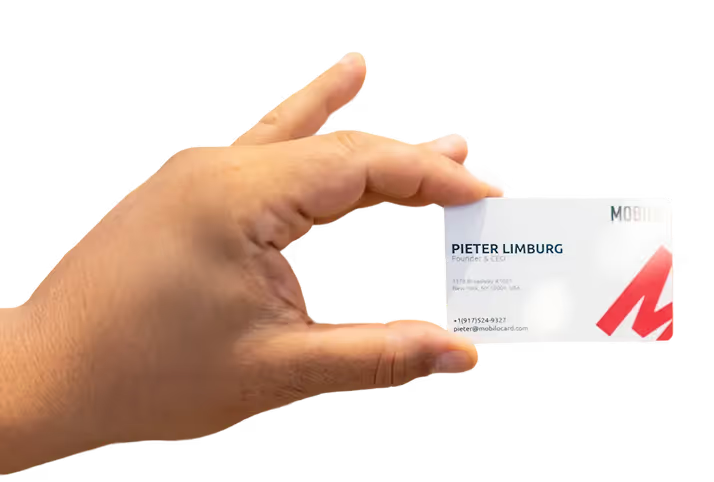
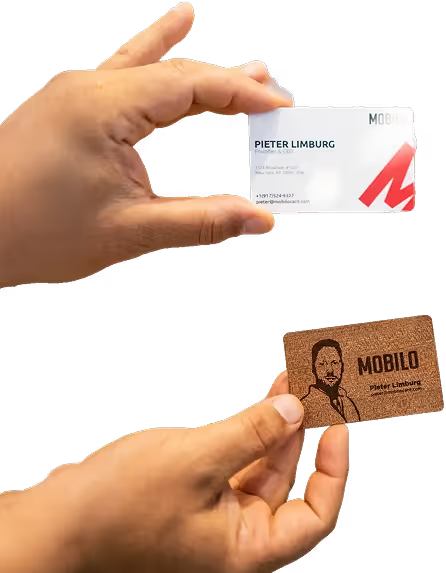
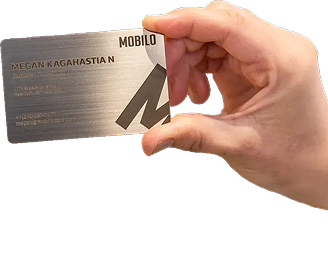
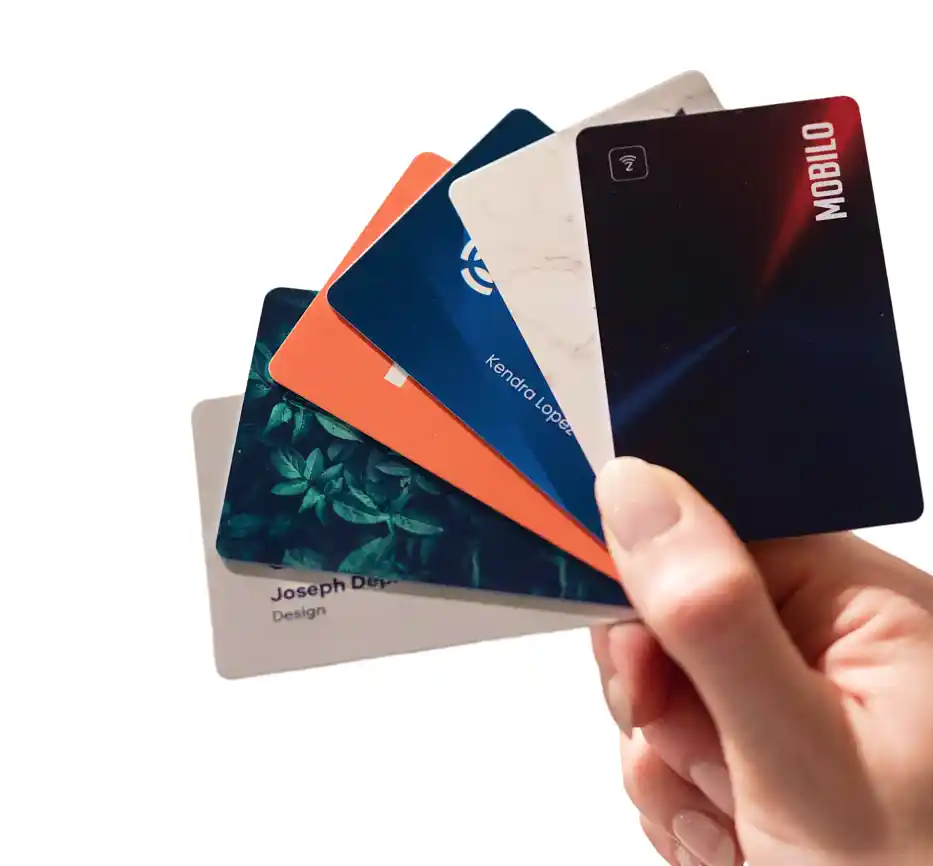
Automatic lead capture via a Mobilo digital business card, available as a Team Digital Wallet Card or across NFC card options in Custom Design, Wood, and Metal, eliminates the lag between the event floor and the CRM entry, ensuring the partner attribution data is there when you need it.
Related Reading
- Business Networking Trends
- Networking Ideas For Small Business
- Business Networking Event Ideas
- Business Networking Conversation Starters
- Business Networking Questions
- Business Networking Opportunities
- Networking Ideas For Virtual Events
- Virtual Networking Ideas For Large Groups
The Contact Exchange Infrastructure That Makes Your Referral Network Self-Filling
Every referral-building behavior this article has prescribed rests on one assumption: that the contact made at the moment of exchange actually makes it into your pipeline. Without the right infrastructure in place, that assumption fails more often than it holds.
Contact Exchange Infrastructure
According to speed-to-lead conversion research, responding to a new contact within 5 minutes makes you 100x more likely to convert compared to waiting even half an hour. That window closes before most manually entered contacts ever reach a CRM field.
The Single Point of Failure
The partner qualification, the referral ask, the incentive conversation: all of it depends on a follow-up sequence that never starts if the contact sits in a pocket. The familiar approach is to photograph a card, batch-enter contacts after the event, and trust that the relationship is warm enough to survive a two-day delay. It isn't. GreetNow's 2026 research frames that lag as a structural systems failure. The relationship is warmest in the first hour, and every minute of delay after that is pipeline the referral process never recovers.
Tap-to-Share NFC and QR Capture
When a digital business card is tapped or scanned, Mobilo's Contact Exchange and Lead Capture creates an enriched contact record at that exact moment, then pushes it through native CRM connectors or any of the integrations available through Zapier on Teams and Business plans, eliminating the manual entry step entirely. One honest constraint: if your organization operates in a purely digital-first environment with no in-person sales or event presence, or if your team only exchanges contacts occasionally with no need for CRM integration, the infrastructure investment is harder to justify. The tool earns its place through volume and consistency of in-person contact, not occasional use.
Team-Scale Deployment and Centralized Contact Insights
Consider a sales team of 12 BDRs, each attending two events per month. Industry research indicates that 90% of new contacts do not enter your CRM because it's too much of an effort. With Mobilo's team analytics dashboard, every tap and scan is tagged by rep, event, and source, giving the sales manager a live view of which reps are generating referral-quality contacts and which events are producing pipeline worth funding again. That visibility changes budget decisions and coaching conversations. Instead of asking "how did the event go?" a manager can see exactly where contact volume dropped and intervene before the referral relationship goes cold.
Next steps
If your referral pipeline stays thin despite consistent event attendance, the path forward starts with fixing contact capture before anything else. Every hour spent qualifying partners, scripting the ask, and aligning incentives produces zero return when contacts from Tuesday's conference get entered Friday afternoon, after the relationship has already cooled. Start with our digital business card.
The research on capture timing is unambiguous: responding to a new contact within five minutes makes conversion 100 times more likely than waiting even half an hour, yet manual entry lag routinely stretches that window into days. That is the structural failure underneath most thin pipelines. Separately, referral leads convert at roughly 3.6 times the rate of cold leads, meaning even a modest improvement in how consistently those contacts reach your CRM produces disproportionate pipeline returns compared to the same time invested in outreach volume. Together, these two findings point to the same action: automate the capture moment so the follow-up sequence starts in minutes, not days, and every referral relationship you have built actually has a chance to compound.
Start with a digital business card from Mobilo. Every tap or scan pushes an enriched contact record directly into your CRM at the moment of exchange, before you leave the floor, so the source tag is never missing and the follow-up sequence fires automatically.
Frequently Asked Questions
What actually makes a referral network different from just having a lot of professional contacts?
A referral network is a structured set of partners who actively route warm introductions your way because the relationship has been built, maintained, and made reciprocal. A general collection of contacts is essentially a social calendar, it rewards attendance, while a referral network rewards operational discipline.
How do I figure out which types of professionals are worth targeting as referral partners?
Reverse-engineer your best closed deals by pulling your last 10 to 20 ideal clients and identifying which other professionals those clients also worked with during the same period. Accountants, bookkeepers, equipment dealers, consultants, insurance brokers, business brokers, and lawyers tend to surface most reliably in B2B client rosters because they intersect with business owners at high-stakes, decision-rich moments.
Is it better to have a large list of referral partners or a smaller, more active group?
Depth beats volume. A small number of active partners who send regular introductions consistently outperforms a large list of dormant connections, "active" meaning a partner who has sent at least one qualified introduction in the last 90 days, understands your ICP well enough to describe your positioning correctly, and has received reciprocal value from you.
Why do so many referral partner agreements end up producing zero introductions?
The reason is almost never a lack of goodwill, it is a mismatch in audience, timing, or trust that makes the initial agreement feel genuine but quietly expire within weeks. If a partner's clients don't reach a predictable moment where your service becomes the obvious next step, or if the partner only has surface-level relationships with your buyer type, the warm introduction never materializes.
Why does waiting a few days to follow up hurt my chances of building a referral relationship?
Lead conversion rates decay sharply with time, a warm connection contacted within the first 24 hours converts at a dramatically higher rate than one reached three to five days later. Most sales reps don't enter event contacts into their CRM until days after the event, by which point the energy from the conversation is gone and the promising referral relationship has quietly expired.