


The Ultimate Business Networking Plan Guide for 2026
On This Page
Your follow-up system is not the problem. The 72-hour gap between the handshake and the CRM entry is where pipeline disappears, and most networking plans never fix it.
Packed event calendars and color-coded follow-up templates give a networking plan the look of a system. But most sales and BD professionals assume the fix for thin pipeline results is better follow-up discipline: send emails faster, block time on the calendar, use a follow-up template. The lag between meeting and entering is accepted as an unavoidable part of the process. The real breakdown happens earlier, and it is quieter than most people expect.
"Most networking advice feels superficial (attend events, send connection requests, start conversations) with no clear structure for what happens after initial contact, so the plan collapses before follow-up even becomes relevant."
— what we hear from professionals building their network
The failure lives in a single, overlooked gap: the moment between shaking someone's hand and getting their details into your CRM. Everything upstream of that moment feels productive. Everything downstream depends on it. And right now, for most teams, that gap is where pipeline quietly disappears.
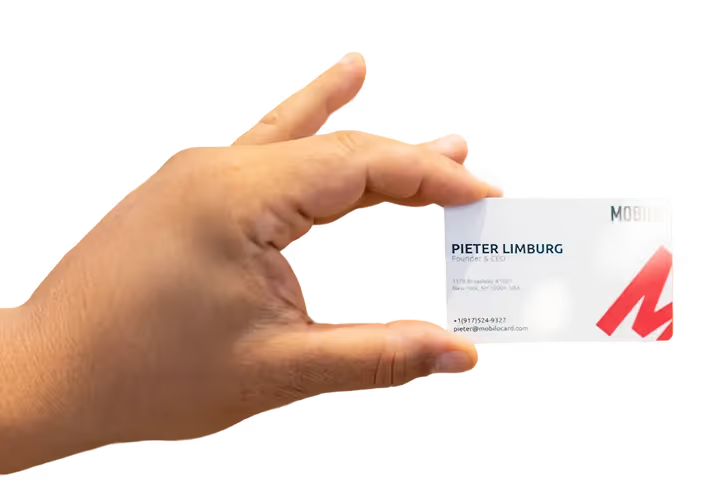
NetworkIN's analysis makes this explicit: exchanging a physical card does not complete a networking action. It creates a placeholder that still requires manual data entry, CRM upload, and email composition before any pipeline value exists. The card feels like a handoff.

It is the start of a multi-step admin task that most reps never finish. The specific moment most leads are lost is the 48-to-72-hour window between the handshake and the CRM entry, when a contact exists only as a physical card in a jacket pocket or a badge scan in an unprocessed export file.
Surveying 4,000 sales reps revealed that digital business card contacts never enter the CRM because manual entry is too much effort to complete consistently after a long event day. That number reflects a systems failure.
A BD manager returning from a three-day trade show with 60 badge scans and 40 cards on their desk will realistically enter 12 of them by Friday. The other 88 represent real conversations, real potential pipeline, and zero follow-up.
90%
of new contacts never enter the CRM
A real Business Networking Plan is a lead capture and follow-up system, not a social calendar. As NetworkIN frames it, physical card exchange delays the transition from "met someone" to "in the system," and that gap is precisely where networking momentum is lost. For teams that attend events regularly and need structured lead follow-up, tools like Mobilo collapse that dead zone to zero by routing contact data directly into the CRM at the moment of exchange, turning follow-up from a willpower exercise into a system-triggered process. Before you can fix the capture gap, you need to see exactly how wide it already is in your current network. The next section walks you through a data-first audit of your existing contacts, measuring not just who you know, but how many of them ever made it into your pipeline at all.
Key takeaways
- A business networking plan that stops at event attendance and follow-up templates is missing the only part that feeds pipeline: a system that captures contacts the moment they're made.
- 90% of new contacts never enter a CRM, not because reps forget to follow up, but because the contact was never captured in the first place.
- Companies with documented networking goals are 429% more likely to report success, yet most professionals still measure their plan by activity volume: events attended, cards handed out, LinkedIn requests sent.
- Gut-feel contact selection wastes real time and budget, deciding who belongs on your target list before you walk in the door converts more than attending more events ever will.
- Follow-up within 24-48 hours only works if the contact was actually captured; a crumpled card in your pocket is already a lost lead before your laptop opens.
- Every element of a networking plan, the audit, the channel scoring, the weekly cadence, produces exactly one thing: a contact that needs to enter your pipeline before the conversation goes cold.
- Mobilo's Contact Exchange captures both sides of every tap or scan and feeds that data directly into your CRM, closing the handshake-to-pipeline gap before the conversation even ends.
How to Audit Your Current Network Before You Build the Plan
Sixty-eight percent of contacts collected at networking events never make it into a CRM, according to industry data.
It is a structured data exercise that tells you who is actually in your CRM, who has gone quiet, and how many contacts from last quarter's events vanished before a rep ever typed their name into a field.

Map the Composition of Your Existing Network
If 60% of your contacts are in one vertical and your pipeline targets three others, your network audit has already done its job. Many sales teams are well-connected at the manager level but thin on economic buyers and executive sponsors.
One dimension most audits overlook is rep-level visibility: which individuals on your team are actively networking and which are converting those connections into pipeline. Mobilo's insights and analytics, available on the Teams plan ($4/month, billed annually) and the Business plan ($5/month, billed annually), surface exactly that data across unlimited team members, so a manager can see networking activity and conversion at the individual rep level rather than inferring it from a quarterly pipeline review.
Separate Active Relationships From Dormant Ones
Any contact with no logged interaction in 90-plus days is dormant by a working definition. The CRM Perspectives and Activities Test Bank for Midterm Exam, Foreign Trade University confirms that a core CRM function is distinguishing active contacts from dormant ones so teams can prioritize reactivation over pure new-contact acquisition.
Both the Teams and Business plans include lead enrichment, lead capture and management, and unlimited leads and contacts, so the data you need for this dormancy filter should already exist in structured form if contacts were captured through Mobilo rather than a paper card pile.
Calculate Your Contact Capture Rate From Recent Events
The gap is your capture rate loss. Habitus Mind's analysis found that out of 43 cards collected across two months of events, only 12 contacts could be placed from memory, roughly 72% effectively lost despite a physical card existing. The CRM Perspectives and Activities Test Bank for Midterm Exam, Foreign Trade University frames this directly: contacts not entered at the point of exchange corrupt any pipeline audit before it starts.
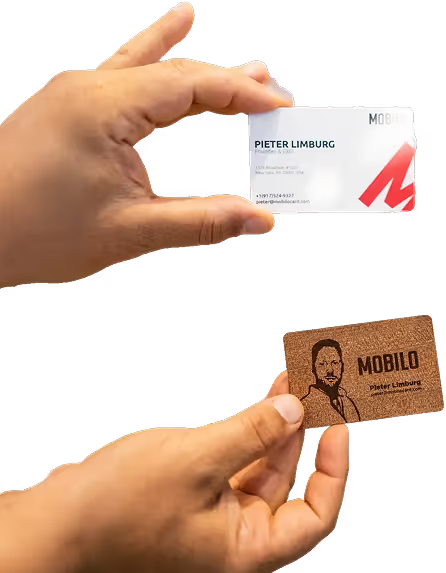
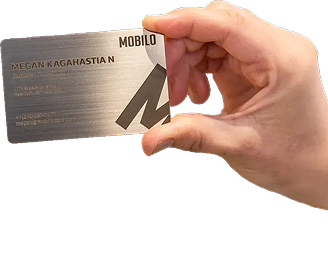
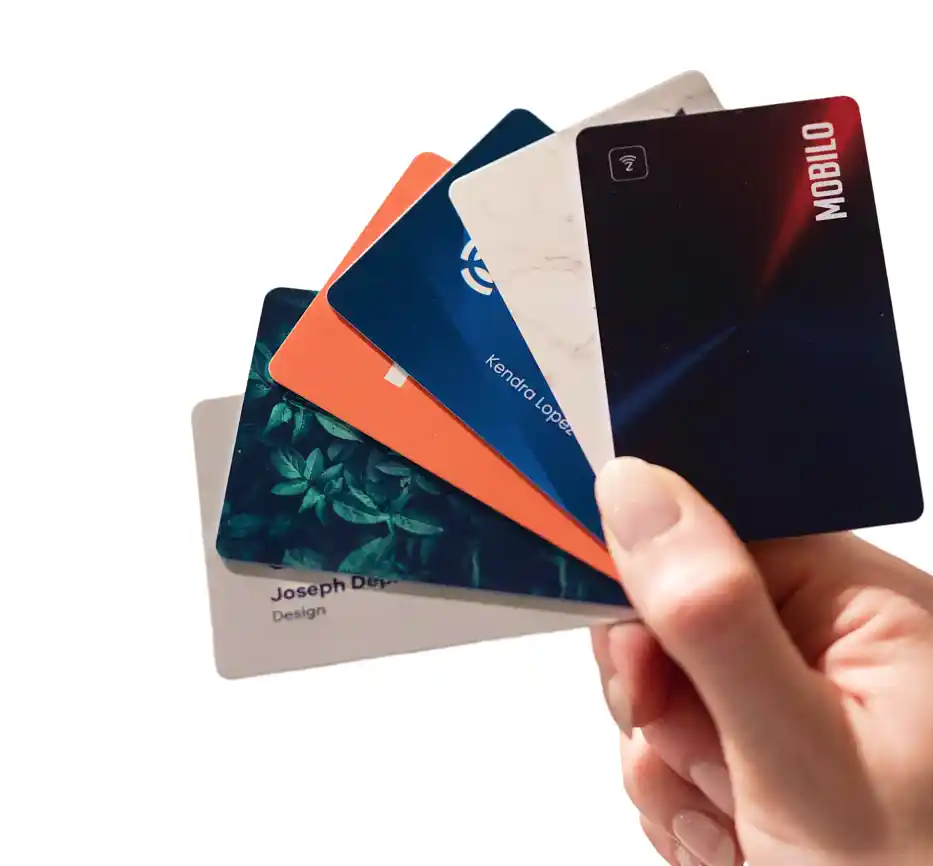
Mobilo's Team tier cards, including the Custom Design NFC Card with QR Code, the Wood Custom Design Card, the Metal Custom Design Card, the Digital Wallet Card, and Paper Plus Cards, all carry unlimited taps and scans and feed directly into the same lead capture and management layer that powers the team's CRM integrations through 6,000 integrations via Zapier.
That baseline is the only honest starting point for translating what you found into specific, measurable goals your networking plan will actually be held accountable to.
Related Reading
- Business Relationship Building
- How To Build A Network For A Small Business
- How To Build A Strong Sales Pipeline
- How To Reach B2b Decision Makers
- How To Ask For Referrals In Sales
- Expand Your Network
- Business Networking Goals
- Business Cards For Networking
- How To Start A Business Networking Group
What Specific Goals Should Your Business Networking Plan Actually Target
Companies with formal, documented networking goals are 429% more likely to report success than those without them.
The real cost surfaces later, when a quarterly review reveals no traceable connection between last month's event circuit and this month's qualified leads. Goal-setting only works when each objective connects directly to a CRM field someone can pull a report on.

Business Networking Plan Goals and Their CRM Metrics
A concrete example: generate five qualified leads per month from in-person events, tracked by CRM contacts created with an "event" source tag. The second archetype is relationship depth: book three referral conversations per month with existing contacts already in the CRM, logged as activities against those records.
Third is market intelligence: complete four discovery conversations per quarter with professionals in your target sector, each summarized as a CRM note tied to an account.
How to Write a SMART Networking Objective That Ties Directly to Pipeline
Applying the SMART framework to networking goals is rarer than it should be, because 61% of professionals say networking matters to business success yet most set no specific goals before attending events.
There is a structural problem, though. Setting a contact-entry goal collapses the moment capture breaks down.
Mobilo's automatic lead capture closes that gap directly.
Mobilo's Business plan, at $5 per month per user, billed annually, is built for this scale, letting revenue leaders deploy digital business cards across an entire sales team quickly and without IT headaches, with centralized control over branding and contact data fields.
Matching Each Goal Archetype to the Right Channel Before You Book a Single Event
Once the three archetypes are written and CRM-trackable, they tell you which channels to prioritize.
Committing budget before mapping goals to channels is how teams end up in the wrong room.
How to Identify Your Target Networking Audience and Build Your Contact Wish List

Apply Demand-Gen ICP Logic to Define Who Actually Belongs on Your Networking Radar
A SaaS BD manager building a wish list for a fintech summit, for example, might filter for VP Sales contacts at 50-500 person companies using LinkedIn Sales Navigator before the event, then cross-reference that list against registered attendees. If you cannot describe your target contact in three specific attributes (title, company size, industry), you are not doing ICP segmentation; you are doing gut-feel with extra steps.
Build a Tiered Contact Wish List Across Buyer, Referral, and Intelligence Roles
Structure your wish list across three tiers: economic buyers, referral champions, and market intelligence sources. According to what most teams consistently report, people are four times more likely to buy when referred by someone they know, and 92% of consumers trust peer referrals above every other form of advertising.
Market intelligence sources, analysts, journalists, and active community moderators belong in Tier 3.
Approach Wish-List Targets Without Triggering the Hard Sell Alarm
Running out of cards mid-event, or handing a flimsy paper card to a Tier 1 buyer you spent three weeks researching, undercuts the impression you worked to build. Mobilo's Metal Custom Design NFC Card with QR Code is built for exactly these high-stakes moments: it supports unlimited taps and scans, so you share your contact information and full digital profile instantly with every prioritized target on your wish list, with no risk of running out. Mobilo's lead capture functionality removes that dependency entirely; leads captured from events and field meetings flow directly into the CRM automatically, so every Tier 1 buyer and Tier 2 referral champion becomes a tracked, actionable lead rather than a name on a jacket-pocket card that never gets typed up.
Teams on the Teams plan ($4/month, billed annually) get full Team Data Analytics and CRM integrations alongside lead capture and management tools, giving managers visibility into which wish-list contacts converted into pipeline.
With your tiered wish list built and your etiquette calibrated to give before you get, the next challenge is making sure the right targets remember you once the room clears.
What to Include in Your Elevator Pitch So Contacts Remember You After the Event
Sixty-three percent of professionals cannot recall a new contact's role or company just 24 hours after meeting them, according to industry data. Even seasoned professionals run into a subtler trap: their explanation shifts depending on who they are talking to, which means no single contact walks away with a clear, retainable impression of what they do.

The Three-Part Frame That Makes a 30-Second Pitch Actually Land
- Who you help
- What pain you fix
- One proof point that separates you
Leading with the problem you solve rather than your job title means value lands before any ask.
This is exactly where a tool like Mobilo earns its keep after the pitch ends. Mobilo's Team plan, available at $4/month per member, billed annually, with unlimited team members, arms those teams so that the moment a contact taps a card, the data feeds directly into the CRM pipeline.
Why Pitching a Direct Buyer Sounds Different Than Pitching a Referral Partner
For a referral partner, the "who you help" element carries more weight, because their job is to connect you with the right people in their network. After initial team setup is complete, every Mobilo Team card becomes a consistent extension of the same message: branded, data-capturing, and connected to the pipeline. The Business plan ($5/month per member, billed annually, unlimited team members) adds enterprise SSO, HR directory sync, a custom domain, brandable QR codes, and white-glove onboarding for teams of 100 seats or more, so larger organizations can maintain pitch and brand consistency at scale without relying on individuals to manually log every conversation.
How a Value-First Opening Builds Credibility Faster
LionShark Digital notes that framing your introduction around the value you deliver builds credibility faster and sets a more productive tone from the first conversation. What Mobilo removes is the second failure point, the gap between a pitch that landed and a lead that never made it into the system. Both the Teams and Business plans include unlimited leads and contacts, a paper business card scanner, Zapier integrations across 6,000 apps, and 24/7 customer support, so the infrastructure for capturing and routing every conversation is in place before the event starts, not assembled after the fact.
How to Choose the Right Networking Channels and Groups for Your Goals
Choosing the right networking channels is a demand-generation decision, and the criteria that predict pipeline return are almost never the ones most sales and BD professionals use.
Map Your Goal Archetype to the Channel That Delivers It
The best networking channels for B2B lead generation depend entirely on your primary goal. In-person formats, including industry conferences, Chamber of Commerce events, and structured referral groups like BNI, produce relationship depth and referral accountability that digital communities rarely replicate at the same speed.
How to Score and Select a Networking Group Before You Commit Time or Budget
Start with ICP density, then evaluate meeting format: structured groups with mandatory attendance and explicit referral-passing norms, like BNI's one-member-per-profession chapter model, create accountability that open mixers do not. According to BNI Global, that format produced $26.9 billion in referrals across 355,000 members in a single year, precisely because weekly frequency and trade exclusivity force relationship depth rather than leaving it to chance. Referral culture and attribution clarity round out the evaluation, and both are easier to assess before you commit than after.
The Costly Mistake of Spreading Across Too Many Channels
Spreading across too many channels dilutes both time and attribution, so closing the loop on every contact you do capture matters. Mobilo's smart digital business card handles tap-to-CRM capture in real time, and for teams attending events regularly, every card tier under the Teams plan includes unlimited taps and scans, full team data analytics, CRM integrations, and the ability for managers to control, lock, and override data fields so every captured contact enters your system clean and consistently attributed. Teams also get the paper business card scanner, custom lead capture forms, and lead enrichment, all included at $4 per month per member, billed annually.
For an individual contributor working alone, the Pro plan at $3 per month carries the same lead capture and management toolkit, including unlimited leads and contacts and 6,000 integrations through Zapier, so even a sole salesperson without a team structure can close the attribution loop after every event. The checklist below gives you a repeatable way to apply that discipline before you commit to any channel.
Networking Channel Scoring Checklist
Before committing budget or recurring time to any group or channel, score it against these four criteria (1 = poor, 3 = strong):
Criterion: ICP Density
- What to Look For: % of members matching your exact buyer or referral-partner profile
- Your score (1-3):
Criterion: Meeting Format
- What to Look For: Structured attendance norms + explicit referral-passing expectation
- Your score (1-3):
Criterion: Referral Culture
- What to Look For: Group has active business-passing norm, not just a pitch environment
- Your score (1-3):
Criterion: Attribution Clarity
- What to Look For: You can tag and track which contacts from this group entered your CRM
- Your score (1-3):
Related Reading
- How To Scale Business Networking Online
- Business Networking Automation
- Business Networking Skills
- Virtual Speed Networking
- How To Build A Referral Network
- Business Networking Tips
- Business Networking Plan
- Strategic Networking For Business Growth
- Where To Network For Business
How to Build a Realistic Weekly Networking Activity Schedule That Produces Pipeline
The 5-10-2 Rule - A Minimum Viable Weekly Networking Cadence for Pipeline-Focused Professionals
The bottleneck most professionals hit is the handoff from in-person meeting to CRM entry, and Mobilo removes it. A tap of a Mobilo NFC card or a scan of its QR code pushes a new contact directly into your CRM in real time, so the connection you make at Wednesday's meetup is already a pipeline input before you walk out the door.
How to Build Your Monthly Networking Schedule Around Pipeline Inputs Not Activity Counts
A pipeline-anchored monthly target looks like this: 8 new CRM contacts entered, 3 follow-up sequences initiated, and 1 qualified meeting booked per channel.
For teams running this cadence at scale, Mobilo's Teams plan ($4/month billed annually, marked Popular in the plan comparison) includes full team data analytics and CRM integrations alongside team management and the ability to control, lock, and override data fields across every card, so managers can see, at a glance, whether the handoff leak exists and where.
The Weekly Time-Block Template Where Networking Activity Actually Fits in a Selling Week
Broader B2B engagement trends confirm that a sustainable LinkedIn engagement cadence consistently outperforms sporadic high-volume outreach in generating B2B pipeline, and the same logic applies to in-person contact capture. When a Mobilo card tap at Wednesday's event writes directly to the CRM, without a Friday afternoon data-entry session, the follow-up block stays a follow-up block rather than a catch-up session.
That is also where the economics of ditching printed collateral become concrete: a Team Digital Wallet Card starts at $0 plus $4/month on the Teams plan, replacing a stack of paper cards that neither tap into a CRM nor tell you whether anyone ever looked at them.
How to Follow Up After Networking Events Before Your Contacts Forget You
Follow-up after a networking event isn't a willpower problem. It's a systems problem.

The 24-48 Hour Rule Only Works If the Contact Was Actually Captured
The problem is that the clock starts at the moment of conversation, not the moment you sit down to write.
No template fixes what was never recorded. From surveying 4,000 sales reps, Mobilo's own data found that the vast majority of new contacts never enter the CRM because manual entry is too much effort, and that gap is where follow-up goes to die.
Landsea Homes quantified exactly what manual entry was costing their 400-person team: $21,000 per year, gone to post-event data entry that pulled reps away from selling. The follow-up clock resets to zero automatically. Willpower becomes irrelevant.
How to Write a Follow-Up That Gets a Reply
Specificity is the actual conversion mechanism, not speed alone. Instantly's analysis of follow-up email performance found that referencing a specific conversation detail, rather than sending a generic template, dramatically improves reply rates. The difference between "Great meeting you at the conference" and "Hi Sarah, great talking through the CRM integration challenge at the HubSpot summit" is the difference between noise and signal.
A message that earns a reply sounds like this: "Hi Sarah, great talking about the CRM integration challenge at the HubSpot summit. Here's the Zapier workflow article I mentioned. Happy to set up 20 minutes to walk through how we solved it." Three sentences. One piece of value. One low-friction ask, nothing more is needed.
Add Value Before You Ask
The sequencing matters as much as the message. Lead with something useful before making any request: a relevant article, a useful introduction, a resource you mentioned in person. Give first.
Persistence compounds that value signal. The same pattern holds: a single well-crafted email, however personalized, is not a follow-up sequence. It's a first touch, and most replies come only after several well-timed contacts.
Getting the follow-up right is the bridge between a contact and a conversation, and the systems that capture, store, and prompt that outreach are what make crossing it repeatable.
How to Nurture Networking Relationships and Measure Which Activities Drive Real Growth
Relationship nurture without a measurement layer is indistinguishable from relationship neglect at scale.

Schedule Touchpoints Like a Retention Campaign Not a Favour
That hesitation is real, and it causes professionals to delay contact until the relationship has already gone cold. Repeatable relationship maintenance requires scheduled check-ins, CRM notes, and activity tagging rather than good intentions.
Mobilo's Teams and Business plans both include:
- Lead capture and management
- Unlimited leads and contacts
- Direct Zapier integrations
Run a Quarterly Channel Audit to Find Which Networking Activities Generate Pipeline
Mobilo removes that gap: when every card tap or QR scan feeds directly into your CRM with event-level tagging, you get the raw data the audit needs without a spreadsheet reconstruction project.
For teams, Mobilo's insights and analytics layer, included on both the Teams plan ($4/month, billed annually) and the Business plan ($5/month, billed annually), gives managers direct visibility into which reps are actively networking and converting connections into pipeline.
The Metrics That Turn Networking From a Gut Feel Into an Accountable Growth Channel
Mobilo's team management and central billing features, available on both the Teams and Business plans, consolidate data across every rep rather than leaving it siloed in individual accounts.
Related Reading
- Business Networking Trends
- Business Networking Opportunities
- Networking Ideas For Small Business
- Business Networking Event Ideas
- Business Networking Conversation Starters
- Business Networking Questions
- Networking Ideas For Virtual Events
- Virtual Networking Ideas For Large Groups
Next steps
If your contacts are still leaking out of your pipeline between the handshake and the CRM, the path forward starts with treating capture as a real-time system trigger, not a post-event admin task. Start with our digital business card.
The 24-to-48-hour follow-up window closes at the same rate contact data degrades when entry is manual, meaning personalization, context, and timing all decay together before a single email is sent. At the same time, referral champions, the contacts who carry the most pipeline leverage, deserve a Tier 1 priority on your wish list, but that priority means nothing if those contacts never make it into a follow-up sequence. Together, they point to one action: automating the handshake-to-CRM handoff so every prioritized contact becomes a tracked pipeline event the moment the conversation ends.
Start with a digital business card from Mobilo. Each tap or scan writes the contact directly into your CRM in real time, with the context and attribution your quarterly channel audit actually needs.
Frequently Asked Questions
Why do so many contacts from networking events never make it into my CRM?
The core problem is a systems failure, not a discipline failure. A survey of 4,000 sales reps found that 90% of new contacts never enter the CRM because manual data entry is simply too much effort to complete consistently after a long event day, a BD manager returning from a three-day trade show with 60 badge scans and 40 cards will realistically enter only 12 of them by Friday.
What technology tools actually help close the gap between meeting someone and getting them into the pipeline?
Tools that capture contact data directly into the CRM at the moment of exchange eliminate the 48-to-72-hour dead zone where most leads are lost. Mobilo's digital business cards, including NFC cards, digital wallet cards, and paper plus cards, feed contact details automatically into the CRM through 6,000 integrations via Zapier, and reps can also use the built-in paper business card scanner to digitize cards they receive on the spot.
How do I measure whether my networking plan is actually working?
Every networking goal needs a CRM metric behind it that a manager can pull a report on. The post outlines three goal archetypes: lead generation (e.g., five qualified leads per month tracked by CRM contacts with an event source tag), relationship depth (e.g., three referral conversations per month logged as CRM activities), and market intelligence (e.g., four discovery conversations per quarter summarized as CRM notes tied to an account).
What is a contact capture rate and how do I calculate mine?
Your capture rate loss is the gap between the total contacts you collected at last quarter's events and the CRM entries actually tagged to those events. As one analysis found, out of 43 cards collected across two months of events, only 12 contacts could be placed from memory, roughly 72% were effectively lost despite a physical card existing.
Does swapping business cards count as completing a networking action?
No, exchanging a physical card does not complete a networking action. As the post explains, it creates a placeholder that still requires manual data entry, CRM upload, and email composition before any pipeline value exists, making it the start of a multi-step admin task that most reps never finish.