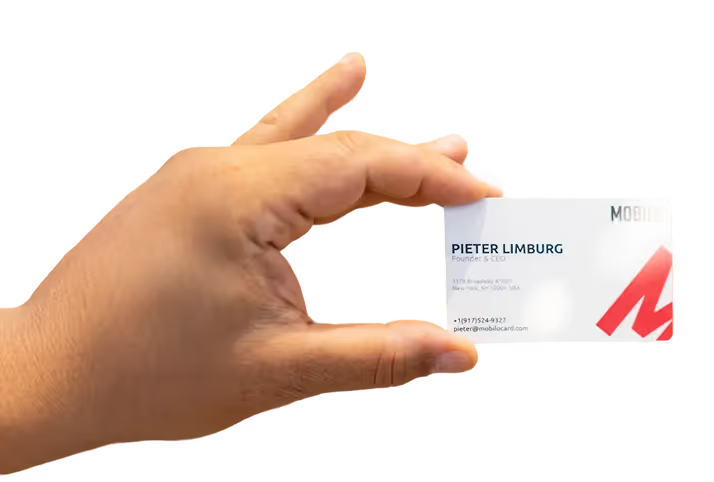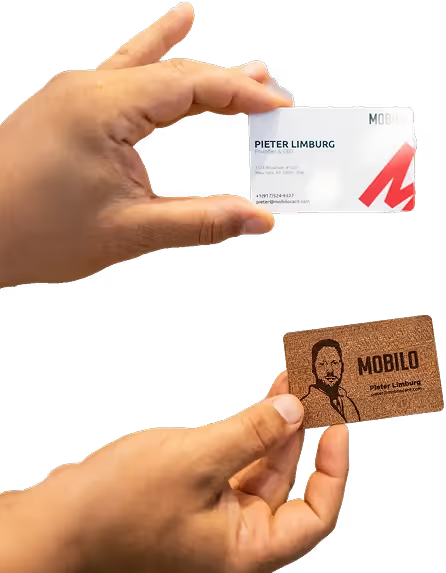



How to Scale Business Networking Online and Win More Deals
On This Page
Your reps are networking. Your pipeline is empty. The problem is not follow-up discipline: it is that most contacts never reach your CRM in the first place.
Most sales teams that actively network online share the same frustrating pattern: high activity, flat pipeline. The common assumption is that the bottleneck is rep follow-up discipline: if reps just sent faster, more personalized emails after meeting someone, conversion would improve. Reps attend virtual events, send LinkedIn connection requests, exchange contacts at conferences, and still cannot explain why none of it shows up as qualified opportunities.
The failure point is infrastructure. Every contact that lands in an inbox, a phone's camera roll, or a personal spreadsheet instead of the CRM is a contact the pipeline will never see, regardless of how many conversations happened that week.

"Online networking platforms like Instagram are flooded with bots, fake accounts, and hollow engagement that never translates into real business relationships or pipeline opportunities."
— what we hear from marketing teams
See our digital business card for how this works in practice.
Understanding this gap matters because it compounds fast. A 20-rep team attending three conferences per quarter generates hundreds of exchanges. Badge scan CSVs sit in email attachments. LinkedIn connections stay inside the app. Digital business card taps that lack an automatic sync path disappear just as quietly. None of these touch the CRM without manual entry, and manual entry almost never happens at scale.
According to MolecularCloud's 2024 analysis, contacts gathered from events, LinkedIn exchanges, and virtual meetings remain siloed in inboxes, card piles, and personal spreadsheets, never entering a structured pipeline where they can be acted on systematically. It is a destination problem.
The same analysis, drawing on Salesforce's State of Sales data, found that companies without a structured routing system lose up to 79% of leads before any follow-up attempt is even possible. Most Sales Directors assume their reps are dropping the ball on outreach. The actual failure happens one step earlier, at the moment the contact is captured but never routed.
79% of leads lost before any follow-up
In MarketingSherpa (2023), research on lead-response speed consistently finds that the odds of qualifying a lead decline sharply when follow-up extends beyond the first 24 hours, with some analyses placing that drop at more than 80% compared with sub-hour response. That window closes before most manually logged contacts even reach the CRM. When the routing step depends on a rep remembering to log the contact after returning from a trip, the 72-hour window is already gone.
Industry research consistently finds that the large majority of leads, often cited at roughly 80%, never convert to sales. Harvard Business Review (2011) identified routing and follow-up infrastructure gaps, rather than individual rep discipline, as the primary cause. Without a centralized system that automatically routes every tap or scan into the pipeline and surfaces that activity in one admin view, there is no way to know which reps are generating contacts, which contacts are entering the pipeline, and which exchanges are simply evaporating. That is the gap Mobilo's Team Management and Admin Dashboard is built to close.
Key takeaways
- 90% of new contacts never make it into your CRM, not because reps are lazy, but because there's no automated path from first tap to pipeline entry.
- High networking activity and flat pipeline growth almost always point to the same root cause: contacts are lost in the gap between the moment a connection is made and the moment a CRM record is created.
- The bottleneck isn't follow-up discipline, it's the unmanaged space before follow-up is even possible, where badge scans, LinkedIn requests, and exchanged contacts sit in four different places, none of which is your CRM.
- Contacts entered into a CRM within 24 hours of first meeting convert at significantly higher rates; every hour of delay is a measurable drop in pipeline value.
- Scaling online networking across a distributed team is an architecture problem: one rep's workflow doesn't survive the moment thirty reps need shared contacts, consistent branding, and a single CRM sync.
- Mobilo's Team Management & Admin Dashboard gives sales administrators centralized control over every card and digital profile across the team, bulk updates, brand consistency, and full pipeline visibility without routing every change through IT.
The Hidden Cost of Networking Effort That Never Reaches Your CRM
But according to LeadDelta's 2024 research, 80% of networking contacts are never followed up with after an event, meaning the majority of relationship-building effort yields zero pipeline entry.
80% of networking contacts never followed up

One pattern we see consistently: teams invest real time researching and configuring CRM integrations, only to discover too late that the automation and routing they counted on either hits a plan-tier wall or was never wired correctly in the first place.
Pipeline Visibility Collapse - Why You Cannot Coach What You Cannot See
When there is no automated routing path from first contact to CRM entry, the pipeline visibility a Sales Director needs to coach and replicate top-performer behavior simply does not exist, because the data never arrived in the first place. A subtler version of this problem is data mapping corruption: contact or interaction data that technically transfers but arrives silently broken, with mismatched fields, missing interaction timestamps, and truncated notes. The effort is simply unsustainable across a full event calendar.
The Compounding Math - How One Lost Contact Becomes Dozens of Evaporated Deals
If each rep on a ten-person distributed team misses logging just one contact per event, and the team attends six events per quarter, that is sixty contacts gone before a single follow-up attempt. LeadDelta's analysis confirms that this systemic gap in CRM entry affects every rep simultaneously, compounding what feels like an individual oversight into a quarter-level pipeline gap the Sales Director has no way to measure or close. Sixty missing contacts per quarter is not a coaching problem. It is a data-routing problem wearing a coaching problem's clothes.
Sixty missing contacts per quarter is not a coaching problem.
Mobilo's approach is to eliminate the manual step entirely. Every card tap and scan, whether via an NFC card, QR code, or Digital Wallet Card, is captured automatically and routed directly into the CRM pipeline without requiring a rep to open a form, type a name, or remember to log anything.
The Teams plan, starting at $4/month billed annually, supports unlimited team members and includes lead capture and management, lead enrichment, insights and analytics, and 6,000 integrations through Zapier, the integration surface a CRM admin needs to wire capture to routing to follow-up without building workarounds. The Business plan, at $5/month billed annually, adds HR directory sync, enterprise SSO, and a custom domain for teams that require tighter identity and access control alongside the same capture-to-CRM pipeline.
Which Contacts Disappear First, and Why High-Intent Leads Are the Most Vulnerable
LeadDelta's research on the "1% rule" in business networking shows that the small fraction of contacts who would have advanced past first touch are disproportionately lost by the absence of a routing system, precisely because high-intent leads require the fastest follow-up velocity and are most sensitive to delays.
Mobilo's Team tier covers the range: a Digital Wallet Card at $0 + $4/month (originally $10), a Custom Design NFC Card with QR Code at $29.50 + $4/month (originally $39), and premium materials including Wood at $39.50 + $4/month (originally $59) and Metal at $69.50 + $4/month (originally $139). Every format delivers unlimited taps and scans, full team data analytics, CRM integrations, and admin-level control to lock and override data fields across the team, so the contact record that enters the CRM is consistent regardless of which rep made the tap. NetworkIN notes that the physical card remains a trust signal in face-to-face networking; Mobilo closes the gap between that trust signal and the digital record it should create.
Mobilo's Team Management and Admin Dashboard addresses the structural cause: every card tap, scan, and contact capture across the entire team becomes a visible, accountable pipeline event in real time, without requiring a single rep to manually log anything.
Networking Strategies for Business Growth That Actually Route Contacts to Revenue
That gap, the one between handshake and CRM record, swallows the large majority of contacts made at networking events. The attrition is not happening in the inbox. It is not a follow-up discipline problem.
It is happening before follow-up is even possible, in the unmanaged space between the moment a connection is made and the moment, if it ever comes, that a record exists to act on. Sales professionals lose critical context from networking calls within minutes, making it nearly impossible to route contacts effectively through the pipeline toward revenue, and for small businesses in particular, the first failure is rarely a lead problem. Contacts arrive through email, referrals, calls, forms, and in-person meetings but never get captured into a structured system, breaking the path from contact to revenue entirely.
The discipline narrative is self-reinforcing but structurally false. Because most contacts never get logged, conversion rate data is calculated only on the survivors: the small minority a rep happened to enter manually. That makes follow-up speed look like the lever when the actual drop-off happened upstream. Coaching reps to respond faster does not recover contacts that were never captured in the first place. The five strategies below are routing disciplines. Each one is designed so that a rep's strategic action produces a traceable CRM event, regardless of whether the rep remembers to log it.
1. Routed Networking Over Volume - Building an Automatic Path from First Contact to CRM Entry
Volume is not the constraint. Routing is. A rep who meets 40 people at a conference and logs zero contacts produces less pipeline than a rep who meets 15 and routes every one automatically.
The operational shift is building a path where every contact method, whether a tap, a scan, or a form submission, lands in the CRM by default. Mobilo's NFC digital business card is purpose-built for exactly this moment: for professionals who attend frequent in-person networking events or hold client-facing roles, a tap shares contact information and digital profiles instantly, without running out of physical cards and without relying on a rep's memory to trigger follow-up. Without that path, even the most skilled networker is generating audience rather than pipeline.
2. Data-First LinkedIn Outreach - Pairing Every Connection Request with a Structured Lead Capture Step
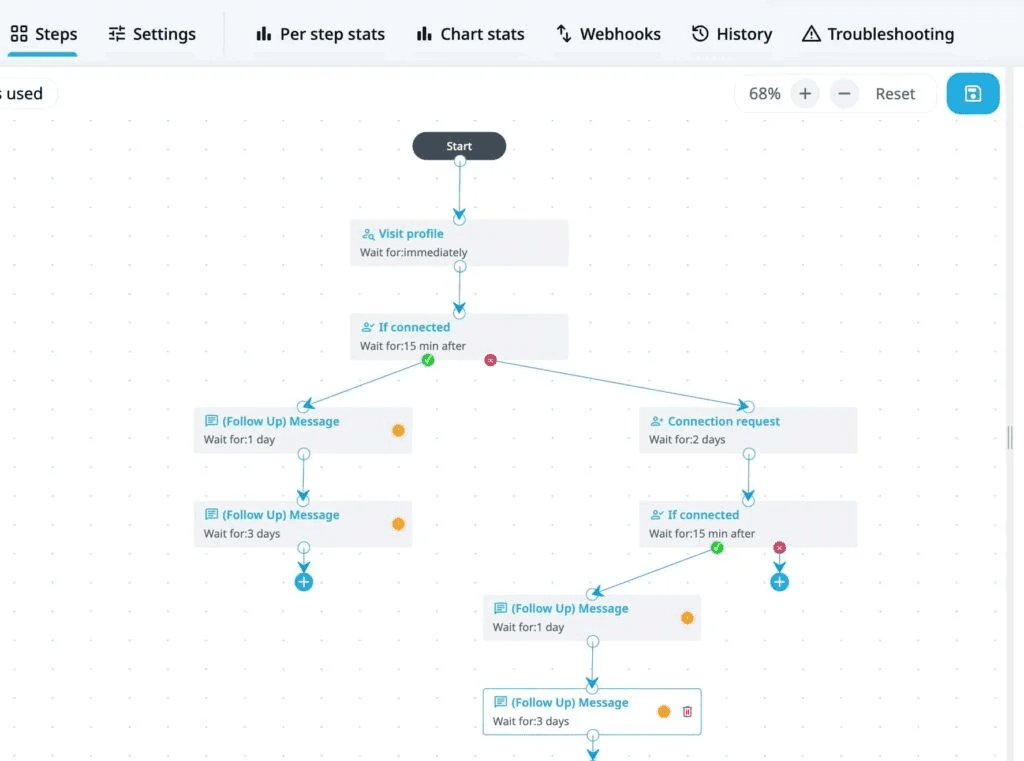
Sales-operations practitioners widely observe that LinkedIn connection-to-lead conversion rates for passive follow strategies, no structured next step, no routed capture, are very low in B2B outreach, often yielding audience growth with minimal pipeline entry. The gap closes when every connection request is paired with a structured next step: a personalized landing page link, a lead capture form, or a calendar prompt that routes the response directly to the CRM. Passive follows build an audience. Structured sequences build pipeline. The tradeoff is that over-automated sequences risk triggering spam filters, so message cadence and personalization still require human judgment.
3. The Pitch-as-Data-Capture-Trigger - Digital Cards and Landing Pages That Route Contact Info Automatically
A rep at a virtual summit drops a personalized landing page link in the chat. Every attendee who clicks and submits their details is automatically routed to the CRM as a qualified lead, with zero manual entry required. Mobilo's digital business cards work the same way in person: a tap or scan triggers the capture sequence, not the rep's memory.
Both the Teams plan and the Business plan include custom lead capture forms, lead enrichment, and lead capture and management, so each contact lands enriched and actionable. This approach is most valuable when branding consistency matters across a distributed team. On the Teams plan ($4/month per member, billed annually) and the Business plan ($5/month per member, billed annually), admins can control, lock, and override data fields across every rep's card, so every profile reflects the same approved information without requiring individual updates.
For teams that have historically spent on printed collateral, routing contacts digitally also reduces that wasteful spend while giving marketing a direct, measurable line to pipeline contribution.
4. Team Signal Yield - Measuring Which Reps, Channels, and Events Actually Feed the Pipeline

Sales Directors who lack automated capture infrastructure are coaching from survivorship-biased data. Only the contacts that got manually logged appear in the pipeline, so the analysis of which events or reps perform best reflects logging behavior as much as actual networking output. Automated capture normalizes the dataset, making it possible to measure true channel performance: which events produce CRM entries, which reps convert contacts at the highest rate, and which touchpoints generate noise.
That is the prerequisite for replicating top-performer behavior at scale. Both the Teams and Business plans include full team data analytics, insights and analytics, and 6,000 integrations through Zapier, giving Sales Directors a unified view of rep-level and channel-level performance without building a custom data pipeline. The Business plan adds HR directory sync and enterprise SSO for organizations that need identity and directory management at scale, with white-glove onboarding available for teams of 100 seats or more.
5. Networking Strategies for Small Business Growth - Low-Overhead Tactics That Still Route to Revenue
For resource-constrained teams, channel concentration beats platform breadth. Spreading networking effort across five platforms while routing contacts from none of them produces high activity and flat pipeline, a pattern that feels productive but generates no revenue. The more efficient approach is picking one or two channels where the ideal customer profile is actually active, then building an automatic capture path on each.
This dynamic is most acute for businesses with five or more employees: at that scale, centralized control over branding and contact information becomes the difference between a consistent capture path and a fragmented one where every rep's card says something different. The Teams plan supports unlimited team members, central billing, team management, and brandable QR codes at $4/month per member billed annually, giving small and mid-sized teams routing discipline without enterprise overhead. 50 respectively plus the monthly plan, all with unlimited taps and scans, full team data analytics, and CRM integrations included.
This is the wrong fit for teams that rely on broad brand awareness with no pipeline accountability, but for teams measured on pipeline contribution, concentration and routing discipline outperform volume every time.
Each of these five strategies depends on one thing the relationship-building playbooks never mention: the right infrastructure underneath the rep. The next section maps exactly which online networking tools and platforms deliver that infrastructure at team scale, and which ones only look like they do.
Online Networking Tools and Platforms That Scale Across Your Whole Team
The feature-list approach to evaluating online networking tools costs Sales Directors more than they realize. A platform that works beautifully for one rep starts breaking the moment you need thirty people sharing contacts, syncing to the same CRM, and presenting a consistent brand face, all without routing every profile update through IT. The procurement question isn't which tool has the most integrations. It's which tool has an admin layer capable of enforcing consistency and surfacing accountability data across a distributed team.
That distinction matters because the contact-loss problem is structural, not behavioral. Mobilo's survey of 4,000 sales reps found that 90% of new contacts never enter the CRM after networking events, because manual logging is simply too much friction. Speed-of-response data, the evidence most often cited to justify better rep training, actually makes the routing problem more urgent, not less: if qualifying odds drop by over 80% within the first 24 hours and contacts from events, LinkedIn, and badge scans each flow into separate siloed paths that never auto-route to the CRM, then the five-minute response window closes before a rep even knows the contact exists. The entire conversation about email speed is therefore downstream of a structural data problem that faster typing cannot fix. Here is how to evaluate the tool categories that actually close that gap.
1. Mobilo Teams and Business Plans - Full-Stack Operational Infrastructure for Distributed Sales Teams

At $4 per seat per month (billed annually), the Teams plan, Mobilo's most popular subscription tier, combines unlimited taps and scans, centralized team management, brandable QR codes, custom lead capture forms, lead enrichment, and 24/7 customer support into one admin-controlled layer. The Business plan, at $5 per seat per month (billed annually), adds HR directory sync and enterprise SSO, so a rep's title change updates every live card automatically. Both plans support unlimited team members, which matters the moment a sales org starts scaling past a handful of reps.
One friction pattern that consistently slows distributed teams down: growing organizations that relied on email threads, random group chats, and shared Google Docs find those ad-hoc systems collapse under their own weight as headcount rises. Mobilo's team management dashboard replaces that scattered workflow with a single admin layer, one place to push updates, lock data fields, and monitor contact activity across every rep, without opening an IT ticket. After initial team setup is complete, a sales director or team admin can deploy digital business cards across their entire sales team quickly and without IT headaches, which is the benchmark any team-grade tool should be held to.
The practical division of labor: the team admin or individual buyer handles configuration and field controls; the design team contributes branding assets for the personalized card templates and brandable QR codes. That separation keeps IT out of the loop entirely.
2. NFC/QR-Based Digital Business Cards - The Contact Exchange Layer That Scales Without Hardware Delays
A second friction pattern that surfaces at scale is tool-adoption resistance. When a new rep is required to download yet another app, create yet another login, and wait for a physical card shipment before they can start networking, adoption stalls, and a tool that no one uses solves nothing. Mobilo's free digital wallet card, included on both the Teams and Business plans, removes that barrier: a new hire can tap and share contacts on day one, with no shipment delay and no hardware dependency. The digital wallet card is also available as a standalone Team tier card at $0 card cost plus the $4/month software subscription (originally priced at $10.00), the lowest-friction entry point for teams that need coverage immediately.
For teams that want a physical card, the Team tier offers a range of materials: Paper Plus Cards at $29.99 + $4/month, a Custom Designed NFC Card with QR Code at $29.50 + $4/month (originally $39.00), Wood at $39.50 + $4/month (originally $59.00), and Metal at $69.50 + $4/month (originally $139.00), all with unlimited taps and scans, full team data analytics, CRM integrations, team management, and the ability to control, lock, and override data fields.
The real tradeoff: NFC exchange requires proximity, so teams that network primarily through async LinkedIn outreach need a complementary lead capture form to cover that channel. Both the Teams and Business plans include custom lead capture forms and the Apple/Google QR code widget precisely to close that gap.
3. CRM Integration Depth - The Sync Layer That Turns Every Tap Into a Pipeline Entry
Zapier's same figure-plus supported app integrations, available on both the Teams and Business plans, mean that a tap on a digital business card can route a contact record directly into Salesforce, HubSpot, or virtually any CRM a sales team already runs, with no rep data-entry required. Lead enrichment is also included on both plans, so the contact record that lands in the CRM carries more than a name and email address. Unlimited leads and contacts means there is no cap that creates a billing surprise as pipeline volume grows. The limitation to plan for: integration mapping requires an initial configuration pass by whoever owns CRM admin rights. That setup investment is a one-time cost, not an ongoing one, but it is real.
4. Team Management Dashboard - The Admin Control Layer That Enforces Brand Compliance Across Every Rep
Inconsistent collateral across a distributed team creates measurable pipeline risk: prospects who encounter mismatched rep profiles, outdated phone numbers, or off-brand landing pages lose confidence before a conversation starts. This compounds at scale. A 50-person crew spread across multiple locations can see communications and brand presentation fall apart quickly when there is no centralized control point. A dashboard with locked data fields removes that variable. Admins can push a rebrand or a title change across every rep's card without a rep-by-rep revision pass, and the control, lock, and override data field capability on Team tier cards means individual reps cannot inadvertently drift off-brand.
Centralized dashboard controls, central billing, and insights and analytics deliver the most value once a team reaches five or more reps; below that threshold, the coordination overhead of locking fields and pushing bulk updates tends to outweigh the consistency benefit, and a lighter per-rep setup is usually sufficient.
5. IT-Free Scaling for Distributed Sales Teams - Bulk Updates, Field Locking, and Digital Wallet Delivery Without Shipment Delays
When a sales team spans multiple regions or grows through rapid hiring, waiting on IT or physical card shipments kills momentum. Platforms that support bulk profile updates, locked brand fields, and digital wallet card delivery, pushed directly to a rep's phone without any hardware, let revenue operations onboard new hires and enforce rebrands in hours, not weeks. The key tradeoff: digital wallet delivery requires reps to have compatible devices and accept the wallet pass, which occasionally creates friction during onboarding.
Related Reading
- Virtual Speed Networking
- How To Build A Referral Network
- Business Networking Automation
- Business Networking Skills
- Business Networking Plan
- Strategic Networking For Business Growth
- Where To Network For Business
- Business Networking Tips
How to Scale an Online Networking System Across Your Sales Team Step by Step
That deployment starts with architecture, not activity. The failure pattern is consistent across teams. Reps return from a trade show with badge scans, LinkedIn connections, and a stack of contacts that live in four different places, none of which is the CRM. According to The Emerald Office, badge scans, email signatures, card exchanges, and LinkedIn connections each represent separate, siloed contact paths, most of which never reach a CRM record, creating a structural gap that rep behavior alone cannot close. The playbook below treats that gap as the real problem to solve.
Step 1 - Audit the Contact-Routing Gap Across Every Touchpoint

Before deploying any tool, sales ops leaders must map exactly where new contacts land today, badge scans, LinkedIn connection requests, email signatures, card exchanges, and trace which of those paths actually reach the CRM. Most teams discover that fewer than half their touchpoints feed the pipeline automatically. The tradeoff: this audit takes honest cross-team collaboration and may surface uncomfortable gaps in existing processes.
Step 2 - Deploy a Centralized Digital Presence with Locked Brand Controls
Roll out team-managed digital business cards with admin-locked brand fields, logo, colors, domain, while giving each rep a personalized landing page and custom lead capture form. Everything is administered from one dashboard, so brand consistency is enforced at scale without chasing individual reps. The real tradeoff is adoption friction: reps accustomed to paper cards or personal LinkedIn profiles need deliberate onboarding to shift their sharing habits.
Step 3 - Connect the CRM Integration Layer via Zapier or Native Connectors

Configure Zapier workflows or native CRM connectors so that every tap, scan, or lead-form submission routes automatically to the correct CRM record, no rep data-entry required. This eliminates the manual transcription step that causes most contact decay. The key limitation is initial configuration complexity: each trigger-action pair must be mapped carefully, and teams without a dedicated ops resource may need outside help to set up conditional routing logic correctly.
Step 4 - Activate Team Analytics to Monitor Rep-Level Conversion by Channel

Use the admin dashboard to track rep-level tap activity, lead capture rates, and which events or channels produce the highest contact-to-pipeline conversion, the operational expression of Contact Conversion Gravity. This visibility lets managers coach underperforming reps with data rather than intuition and reallocate event budgets toward channels that actually convert. The tradeoff: meaningful insight requires at least 60-90 days of consistent data before patterns become statistically reliable.
Step 5 - Iterate and Scale the Online Networking System Continuously
Most Sales Directors empathize with the exhaustion of chasing reps to log contacts after every event. The hidden cost is the complete absence of an accountability layer that makes coaching impossible. Mobilo's Team Management and Admin Dashboard gives a director a single view to:
- Deploy locked-brand digital cards across every rep
- Enforce consistent lead capture forms
- Monitor tap-to-CRM activity in real time
At quarterly intervals, pull channel attribution data, retire the touchpoints with the lowest CRM-entry rates, and double down on the ones that produce pipeline. Scaling business networking online is a system that compounds when the data is clean and the routing is automatic.
Once this five-step system is live, something more valuable than contacts starts accumulating: a structured data trail that follows every connection from first tap to pipeline stage. That trail is where the real leverage begins.
Before deploying your networking infrastructure, run this five-point audit across every channel your team uses.
- Trade Show Badge Scan → Auto-routes to CRM? ☐ Yes ☐ No → Manual Step Required? ☐ Yes ☐ No → Fix Needed? ☐ Yes ☐ No
- LinkedIn Connection → Auto-routes to CRM? ☐ Yes ☐ No → Manual Step Required? ☐ Yes ☐ No → Fix Needed? ☐ Yes ☐ No
- Digital Business Card Tap → Auto-routes to CRM? ☐ Yes ☐ No → Manual Step Required? ☐ Yes ☐ No → Fix Needed? ☐ Yes ☐ No
- Virtual Event Chat Link → Auto-routes to CRM? ☐ Yes ☐ No → Manual Step Required? ☐ Yes ☐ No → Fix Needed? ☐ Yes ☐ No
- Email Signature Exchange → Auto-routes to CRM? ☐ Yes ☐ No → Manual Step Required? ☐ Yes ☐ No → Fix Needed? ☐ Yes ☐ No
Scoring: If fewer than 3 of 5 channels auto-route to the CRM, your team is losing pipeline before follow-up is possible. Prioritise Step 3 (CRM integration layer) before the next event.
Leveraging Connections for Business Growth When Every Contact Has a Pipeline Trail
The gap between those two numbers is where most networking programs quietly fail, and closing it requires something most Sales Directors don't yet have: a data layer that turns every rep interaction into a visible, comparable, and replicable signal.

Why Contacts Entered Within 24 Hours Convert at Measurably Higher Rates
Industry research shows that companies that respond to leads within an hour are roughly seven times more likely to qualify that lead than those who wait even an hour longer, and as Alibaba SmartBuy reinforces, speed of first contact is the primary driver of B2B lead conversion.
Mobilo's lead capture and management tools, available across the Teams plan at $4/month per member and the Business plan at $5/month per member, both billed annually, integrate directly with CRM tools through Zapier integrations, so contacts move from tap to pipeline record without a manual handoff. That immediacy keeps the conversion window intact across an entire team, not just for the reps who happen to be diligent about manual entry.
How Top-Performer Networking Behavior Becomes a Coaching Playbook
Mobilo's personal landing page, most valuable when brand perception and memorable first impressions are a priority, ensures that every rep presents a consistent, rich-media profile at the moment of exchange. Because those interactions are captured systematically, the behaviors that distinguish top performers become visible patterns rather than anecdotal observations, giving managers a concrete basis for building coaching playbooks the rest of the team can follow.
From Unpredictable Rep Hustle to Forecastable Networking Output
The Alibaba SmartBuy analysis of B2B lead response confirms that the organizations winning on speed are the ones where capture is structural rather than volitional, and that is precisely the architecture these plans are designed to deliver.
Related Reading
- Business Networking Trends
- Business Networking Opportunities
- Networking Ideas For Small Business
- Business Networking Event Ideas
- Business Networking Conversation Starters
- Business Networking Questions
- Networking Ideas For Virtual Events
- Virtual Networking Ideas For Large Groups
How Mobilo's Team Dashboard Turns Distributed Networking Into Centralized Pipeline
Deploying a digital business card across your sales team is not the finish line. It is the starting gun. The real question is what happens after the tap: does that contact surface in your CRM within minutes, or does it disappear into a rep's personal contacts folder, never to be logged?
Most Sales Directors handle this by trusting reps to self-report. The familiar approach is a weekly check-in, a CRM hygiene reminder, and the quiet hope that event contacts made it into the pipeline. Visibility gaps at the manager level are a core reason distributed teams lose pipeline: without centralized activity tracking, there is no instrument to measure where drop-off actually occurs.

Monitor Every Rep's Networking Activity From One Admin View
Mobilo's admin dashboard surfaces rep-level networking activity without requiring IT support or per-rep check-ins. That visibility converts a black-box process into a coachable one, the kind of accountability layer that is structurally impossible when contact routing depends on individual rep logging behavior.
How to Enforce Brand Consistency Across Every Rep's Profile Without a Manual Revision Cycle
Industry research notes that brand inconsistency across rep profiles creates trust friction that undermines conversion before follow-up even begins. Mobilo's field-locking controls let an admin lock titles, logos, and CTA links team-wide, then push bulk updates instantly when anything changes. No reprint cycle. No rep forgetting to update their profile after a promotion.
Brand inconsistency and CRM data loss share the same structural failure at different points in the conversion path: a mismatched profile reduces the chance a contact engages, and a missing CRM entry ensures that even engaged contacts evaporate before follow-up lands.
Below five seats, centralized control is a convenience. Past that threshold, it becomes infrastructure. Each additional rep multiplies untracked exchanges, inconsistent profile variations, and manual logging gaps a director absorbs without a dashboard. At ten, twenty, or fifty seats, the accountability layer scales automatically while admin overhead stays flat. Every tap, scan, and exchange becomes a traceable pipeline event.
Next steps
If your networking contacts keep disappearing before follow-up is even possible, the path forward starts with fixing the capture infrastructure, not the email cadence. The bottleneck was never rep response speed. It was the unmanaged space between the moment a connection is made and the moment a CRM record exists to act on. Start with our digital business card.
The survivorship bias insight from the pipeline visibility section makes this concrete: because most contacts never get logged, conversion data is calculated only on the minority that survived manual entry, which makes follow-up discipline look like the lever when the real attrition already happened upstream. The compounding team signal insight adds the second dimension: when each rep owns contacts in their own inbox or LinkedIn account, the organization accumulates relationship surface area it cannot see, share, or coach from. Together, they point to one action: replace manual logging with automatic capture that routes every tap and scan directly into the CRM, across every rep, from day one.
Start with a digital business card on Mobilo's Teams plan. Every tap auto-creates a CRM record through Zapier, the admin dashboard locks brand fields across every rep, and the analytics layer surfaces which events and reps are actually feeding pipeline versus generating noise. No IT setup. No shipment delay. No rep behavior change required before the next event.
Frequently Asked Questions
Why are my reps networking constantly but the pipeline stays flat?
The failure point is infrastructure, not effort. Contacts that land in inboxes, camera rolls, or personal spreadsheets instead of the CRM never reach the pipeline, and without an automated routing path, companies can lose up to 79% of leads before any follow-up attempt is even possible.
How fast do I really need to follow up with a new contact before it's too late?
Research cited in the post consistently finds that the odds of qualifying a lead decline sharply when follow-up extends beyond the first 24 hours, with some analyses placing that drop at more than 80% compared with sub-hour response. When contacts depend on manual CRM entry after a rep returns from a trip, that 72-hour window is already gone before the record even exists.
Is a slow conversion rate a rep discipline problem or a process problem?
It's almost always a process problem. Because most contacts never get logged, conversion rate data is calculated only on the survivors, the small minority a rep happened to enter manually, making follow-up speed look like the lever when the actual drop-off happened upstream at the capture and routing step.
Can overcoming the technology gap in contact routing actually be done without building custom integrations?
Yes. Mobilo's Teams plan includes 6,000 integrations through Zapier, giving CRM admins the integration surface needed to wire capture to routing to follow-up without building workarounds. Every card tap or scan is captured automatically and routed directly into the CRM the moment contact is made, with no manual entry required from the rep.
How do I know which events and reps are actually generating pipeline and which are just generating noise?
Automated capture normalizes the dataset, making it possible to measure true channel performance, which events produce CRM entries, which reps convert contacts at the highest rate, and which touchpoints generate noise. Without it, pipeline analysis reflects logging behavior as much as actual networking output, which means you're coaching from survivorship-biased data.