

37 Best Business Networking Event Ideas to Boost Connections
On This Page
Your reps leave the event with 40 contacts. By Tuesday, most are landfill. The format of your next networking event matters far less than the 30 seconds after the handshake.
The common assumption is that event format and activity design are the primary variables that determine whether a networking event generates pipeline. The problem sits in the thirty seconds between the handshake and the moment a contact should appear in your CRM.
88%
of business cards discarded within a week
The gap between contact exchange and CRM record is where event ROI disappears, and it is structural. Tools like digital business cards exist to close it, and they deliver the clearest return when a team attends events regularly and needs structured lead follow-up, rather than as a one-off fix for a single mixer.
A sales team returning from a 200-person industry mixer with 40 cards is not carrying pipeline. They are carrying intent, and intent without a CRM record is invisible. The gap is a process problem. No capture step exists between the physical exchange and the data entry that should follow it, so the record simply never gets created.
The most common capture methods each share one fatal flaw: they produce a physical or semi-structured artefact that requires a separate, manual step before any CRM record exists.
- Manual card transcription
- Batch CSV uploads
- Photo-based scanning apps
As the 2024 Studocu analysis notes, the transcription process is slow, error-prone, and typically completed long after the event's relational momentum has faded. A CSV delivered Tuesday morning is not a CRM record. It is homework.
No data, no attribution. If contacts do not enter the CRM, a Sales Director has no way to know which reps networked effectively, which events produced qualified leads, or whether any event spend ever justified itself. The NetworkIN analysis frames this directly: the structural gap between in-person exchange and post-event follow-up makes CRM data permanently incomplete. The speed at which a new contact reaches your CRM is what determines pipeline.
The format of your networking event is not the variable that determines pipeline. The speed at which a new contact reaches your CRM is.
Key takeaways
- 88% of business cards exchanged at networking events are discarded within a week, the event format is not the problem; the capture failure is.
- 90% of new contacts never reach a CRM because manual entry is too much friction, turning even a packed room into a pipeline dead end.
- The conversion window closes fast: responding to a lead within the first minute lifts conversion rates by up to 391% compared to waiting an hour.
- Structured icebreakers and pitch-format events generate behavioral signals, participation, expressed interest, topic engagement, that are direct inputs to lead scoring, but only if the contact is captured before the venue clears out.
- Themed formats and workshop sessions qualify contacts inside the room; without a capture layer, that qualification disappears the moment the rep walks to the parking lot.
- Outdoor and panel formats build trust faster than a ballroom, but passive attendance alone produces no measurable business outcome, structured data collection is what converts presence into pipeline.
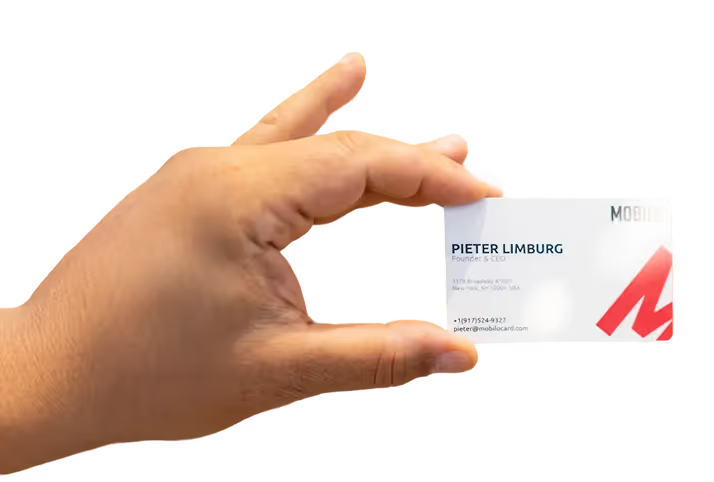
- Mobilo's Contact Exchange & Lead Capture closes the gap: when someone taps or scans a Mobilo card, their information is captured and synced directly into your CRM or contact list, no manual entry, no lost cards, no follow-up left to chance.
How Fast Warm Contacts Go Cold After a Networking Event
The 48-hour conversion window begins the moment a conversation ends, and a significant portion of it disappears before a single follow-up is sent.
"After exchanging contacts at a networking event, people quickly return to their own lives, making it difficult to maintain momentum before the connection goes cold."
— what we hear from networking professionals

Why Warm Contacts Go Cold Within 48 Hours
The real pattern Sales Directors face, and one we see repeatedly, is that contacts made at networking events go cold because both sides return to their own lives the moment the event ends. Without a frictionless capture moment built into the handshake itself, warm contacts cool to baseline almost immediately.
The optimal window for following up with a new contact is 24 to 48 hours after the event ends, according to Tradesnest's January trade show analysis.
80%
of trade show leads never followed up on
Why the Manual Entry Lag Kills Your Follow-Up Window
A rep who badge-scanned 15 contacts spends Tuesday morning manually entering names and titles. By then, contacts have already begun responding to competitors: Tradesnest's January trade show analysis confirms that same-day digital outreach captures attention first, and Popl's research shows leads contacted within five minutes are 100 times more likely to connect than those reached after thirty. Tradesnest's analysis confirms that same-day outreach captures attention first, turning warm contacts cold before slower outreach arrives.
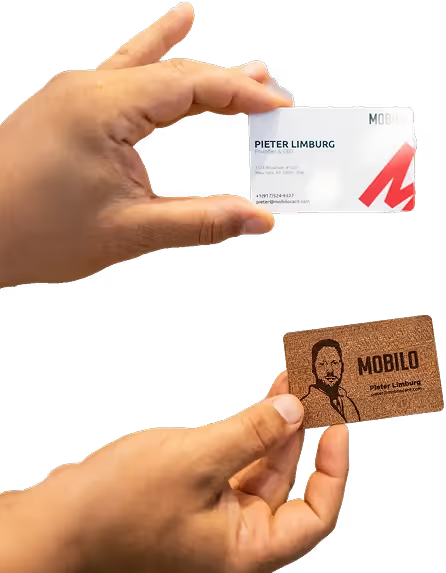
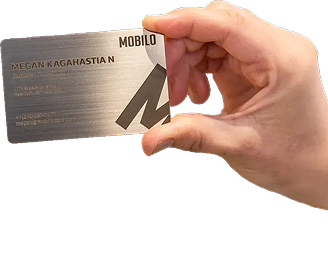
This is precisely the gap Mobilo's Contact Exchange and Lead Capture is built to close. When a contact taps or scans a Mobilo digital business card, whether that's a Custom Designed NFC Card with QR Code, a Metal card, a Wood card, or a Digital Wallet Card available under the Teams tier, their data syncs directly into the CRM before the venue finishes clearing chairs. The rep has no manual entry step to delay on Tuesday morning.
Teams on Mobilo's Teams plan ($4/month per member, billed annually) get full team data analytics and CRM integrations, team management, and the ability to control, lock, and override data fields, so managers gain visibility into exactly which reps are capturing leads and which contacts are going cold. The Business plan ($5/month per member, billed annually) extends this further with lead enrichment, HR directory sync, enterprise SSO, and 6,000 integrations through Zapier, giving operations teams the infrastructure to enforce follow-up cadence at scale.
Icebreaker Activities for Networking Events That Actually Generate Qualified Contacts
Structured icebreakers outperform open mingling because they force the kind of mutual disclosure that makes a follow-up conversation feel earned rather than cold. The problem is that most event teams design icebreakers to warm the room, then assume the pipeline will sort itself out. It won't. Research commissioned by ExCeL London confirms that networking is now the top priority for event attendees, yet the same report notes that format and facilitation quality must actively improve to meet delegate expectations. Warm feelings and a pocketful of paper cards are not the same thing as a captured lead.
It's also worth naming a reality that field marketing and event teams face before the room even opens: a meaningful share of attendees, especially those newer to professional networking, from interns sitting across from a CXO to junior reps at their first trade show, walk in unsure how to initiate conversations, identify which questions will surface qualified contacts, or break into an existing group without feeling intrusive. The icebreaker format is the lever that removes that friction. But if the format doesn't also close the contact-capture loop, the pipeline benefit disappears with the warm room.
The 88% discard rate for business cards combined with the 80% no-follow-up rate for trade show leads reveals a single, underappreciated truth: the networking event's format, icebreakers, themes, and activities, is irrelevant to pipeline generation if there is no friction-free capture mechanism in place. A perfectly executed icebreaker that produces a warm, memorable connection still loses that contact within a week through the same paper-card bottleneck that kills every other lead. The two failures compound, not offset, each other.
The formats below are evaluated on two criteria: how well they surface qualification-relevant information during the activity itself, and whether the format creates a natural moment for contact exchange before the next rotation begins. An icebreaker that scores high on energy but zero on capture is entertainment, not pipeline.
1. Role-Challenge-Goal Prompt Cards - Structured Small Talk That Surfaces Buyer Signals
Each attendee receives a card listing their role, their current biggest challenge, and one goal for the quarter. Pairs exchange cards, read them aloud, and respond. The format compresses discovery that would normally take three follow-up calls into a two-minute exchange, and it directly addresses the struggle many professionals face when trying to identify which questions lead to meaningful, qualified conversations rather than surface-level small talk. The trade-off: cards must be pre-filled during registration, which adds friction to the sign-up process and requires organizers to invest in data collection before the event starts.
2. Digital Human Bingo - Gamified Mingling With Professional Attribute Squares
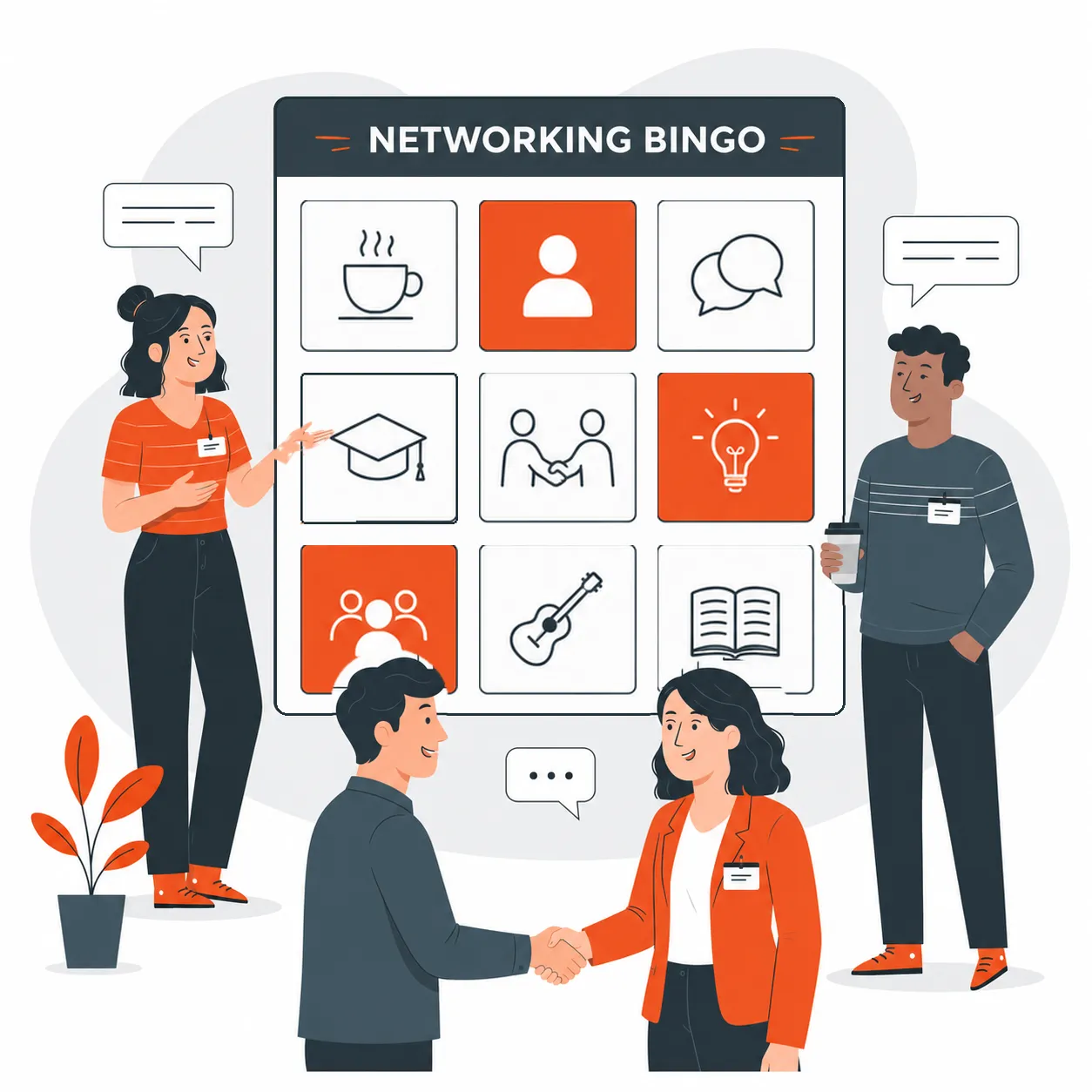
Human bingo networking replaces generic social squares ("find someone who likes hiking") with professional attributes: "find someone whose team uses a CRM they hate" or "find someone who closed a deal at an event." When a square is verified, both parties exchange contact details on the spot. This is one of the strongest warm-up networking activities for sales-heavy rooms because qualification happens inside the game mechanic, and the game mechanic itself gives attendees who struggle to break into existing conversations a structured, low-stakes reason to approach anyone in the room. It loses effectiveness at events where attendees share very similar roles, making the squares too easy and the conversations too shallow.
3. Two Truths and a Lie - Professional Edition With Industry-Specific Statement Rules

Adapted for business networking icebreakers, each participant states two real professional wins and one invented metric. The lie-detection dynamic forces active listening and creates a shared reference point ("the one where you claimed 400% pipeline growth") that makes follow-up messages specific rather than generic. Best suited for groups of eight to twelve where everyone can hear each other. At larger tables or open-floor formats, the activity fragments and loses the shared context that makes it useful for follow-up.
4. Paired Warm-Up Rounds - Timed One-on-One Introductions Before Open Networking Begins

Before open mingling starts, attendees are paired randomly for a 90-second structured introduction covering role, company, and one current priority. A facilitator signals rotation every 90 seconds for three rounds. Every attendee has already had three substantive exchanges before the room opens up, which eliminates the paralysis that many professionals, especially those newer to senior-level networking, feel when scanning a crowded room for a conversation entry point. The limitation is time: three rounds consume roughly eight minutes of agenda, which event organizers frequently resist cutting from the schedule.
5. Instant QR-Code Contact Exchange Integrated Into Icebreaker Completion
The single biggest failure point in any icebreaker is the gap between a warm conversation and a captured contact. Most reps leave that gap open, intending to follow up from memory or a scribbled note. Integrating a smart digital business card tap or QR scan as the literal completion step of the icebreaker closes that gap at the moment of highest intent.
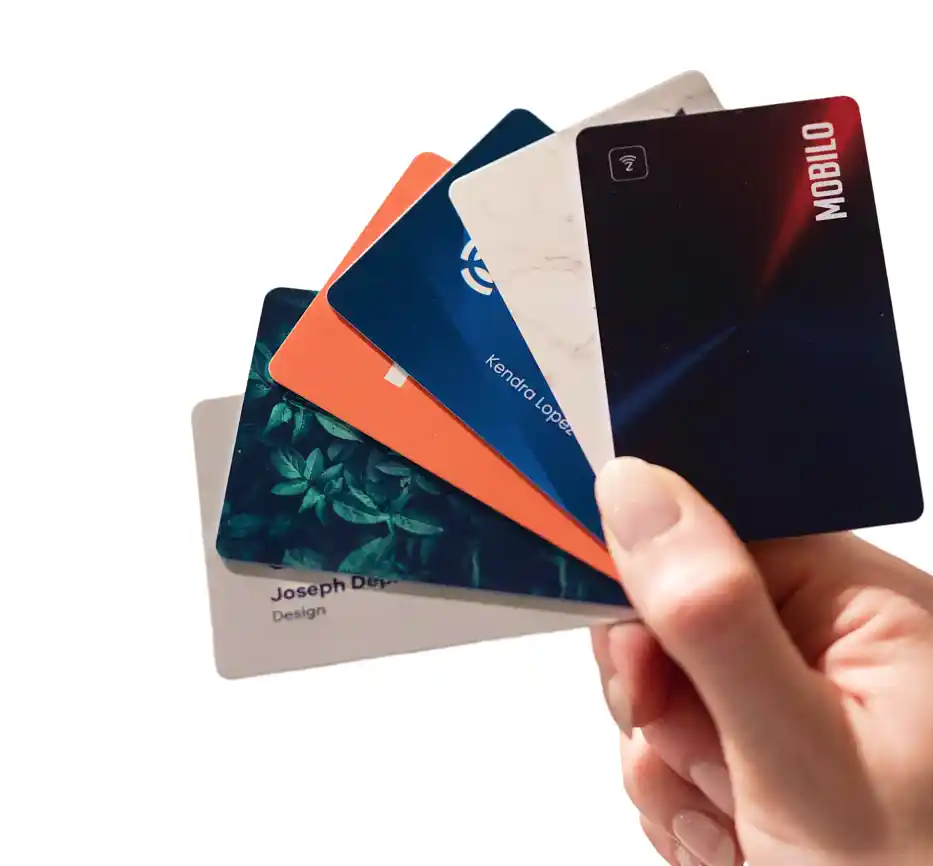
Mobilo's cards, available across the Team tier in formats including the Digital Wallet Card (included at $0 + $4/month on the Teams plan), Custom Design NFC Card with QR Code, and materials ranging from Paper Plus to Metal, let attendees share contact information and digital profiles instantly without running out of physical cards. When the bingo square is verified or the paired round ends, one scan routes the contact directly into the CRM before the next rotation begins. The Teams plan ($4/month, billed annually) includes lead enrichment, lead capture and management, unlimited leads and contacts, 6,000 integrations through Zapier, and full insights and analytics, giving field marketing teams visibility into which reps are actively networking and converting connections into pipeline.
Most beneficial when a team attends events regularly and needs structured lead follow-up without relying on reps to manually log contacts afterward.
6. Challenge Mapping Warm-Up - Attendees Plot Their Biggest Problem on a Shared Visual Board
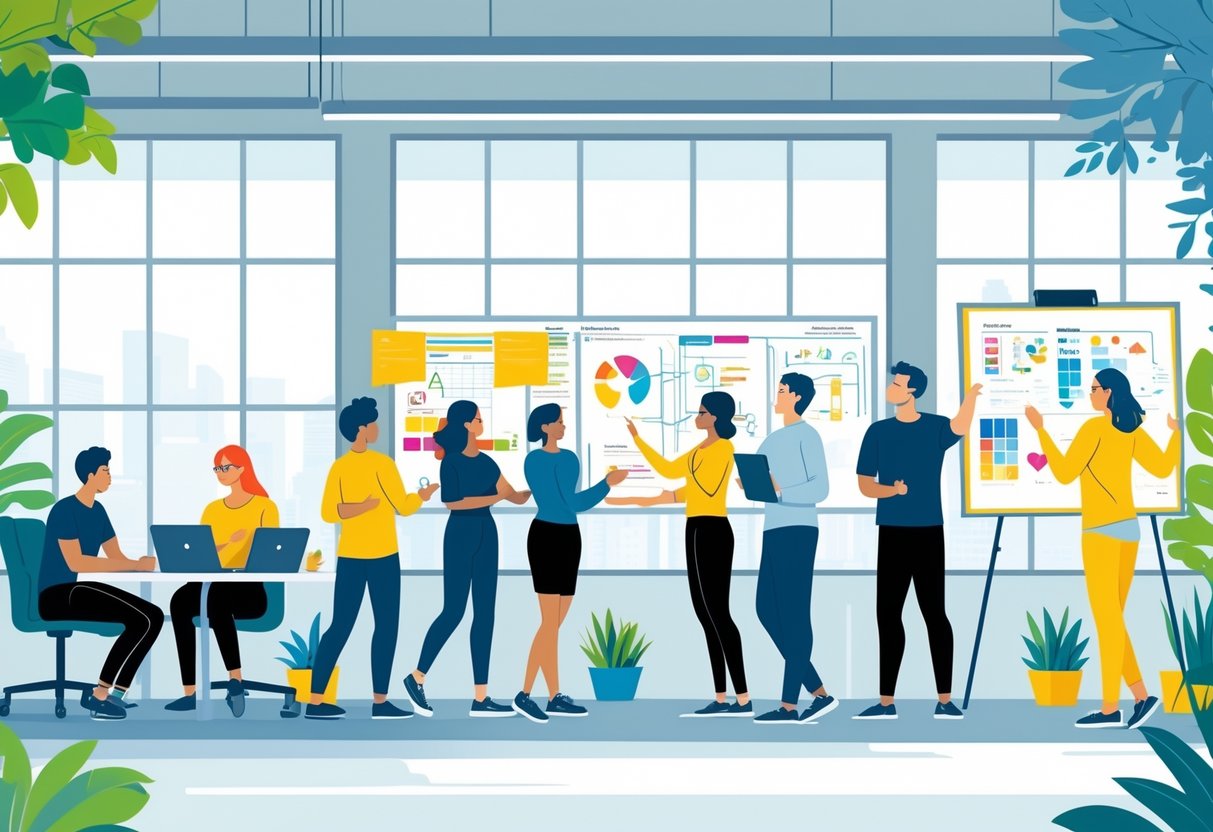
A large printed or digital board displays a grid of business challenge categories. Attendees place a sticker or marker on the challenge most relevant to them, then find others who marked the same area. The shared problem creates immediate, specific common ground, and for attendees who feel overwhelmed about how to initiate conversations with senior professionals, the board does the targeting work for them: the marker tells you exactly who to approach and why. This format is particularly effective for enterprise events where role titles are similar but pain points differ sharply. The trade-off is logistical: the board requires physical setup or a screen, and the activity stalls if facilitators do not actively prompt attendees to approach others who marked the same category.
7. Speed Networking Rounds With Pre-Set Professional Prompt Per Rotation

Speed networking events allow attendees to meet a high volume of contacts in a short time, with some formats enabling eight to twelve introductions in under an hour. Adding a single pre-set prompt per rotation shifts exchanges from surface-level introductions to qualification-relevant conversations. The prompt changes with each rotation, so attendees build a progressively richer picture of each contact.
The limitation: without a structured contact exchange mechanism at the end of each round, the volume of conversations becomes a liability. Field marketing teams running these rounds with Mobilo's Teams or Business plan can arm every rep with a brandable QR code, capture each exchange directly into the CRM pipeline, and review post-event analytics to identify which contacts converted, without relying on reps to manually log anything after an exhausting day on the floor.
8. Networking Bingo App With Built-In Contact Export - Closing the Loop After the Activity Ends
Digital bingo apps that track completed squares and automatically export matched contacts address the core failure of paper-based versions: the contacts stay in the app rather than disappearing into a jacket pocket. The best implementations push completed matches to a contact list or CRM integration in real time. Mobilo's Teams plan supports 6,000 integrations through Zapier alongside native lead capture and management, so matched contacts can flow directly into whichever CRM the event team already uses, without a manual export step that reps skip.
This format works best at mid-size events (50 to 200 attendees) where the adoption rate is high enough to make the export meaningful. At smaller events, the overhead of downloading and configuring a third-party app can outweigh the benefit compared to a simpler paired-round format paired with a tap-to-exchange digital card.
Icebreakers solve the cold-room problem, but they only produce pipeline when the format is designed around capture, not just conversation.
Icebreaker Format Selection Guide
Use the table below to choose the right icebreaker based on your event size, pipeline goal, and capture readiness.
- Role-Challenge-Goal Prompt Cards → Best group size: 10–50 → Qualification signal strength: High → Natural capture moment: Yes (card hand-off) → Pipeline risk if no capture: High.
- Digital Human Bingo → Best group size: 30–150 → Qualification signal strength: High → Natural capture moment: Yes (square verification) → Pipeline risk if no capture: High.
- Two Truths and a Lie (Pro Edition) → Best group size: 6–12 → Qualification signal strength: Medium → Natural capture moment: Low → Pipeline risk if no capture: Medium.
- Paired Warm-Up Rounds → Best group size: Any → Qualification signal strength: Medium → Natural capture moment: Low → Pipeline risk if no capture: High.
- QR-Code Exchange as Completion Step → Best group size: Any → Qualification signal strength: High → Natural capture moment: Yes (mandatory) → Pipeline risk if no capture: Low.
- Challenge Mapping Warm-Up → Best group size: 20–200 → Qualification signal strength: High → Natural capture moment: Low → Pipeline risk if no capture: High.
- Speed Networking With Prompt → Best group size: 20–200 → Qualification signal strength: High → Natural capture moment: Low → Pipeline risk if no capture: High.
- Networking Bingo App With Export → Best group size: 50–200 → Qualification signal strength: High → Natural capture moment: Yes (automated) → Pipeline risk if no capture: Low.
How to use this table: Prioritise formats in rows where 'Natural Capture Moment?' = Yes. For any format where it = No, add an explicit QR/tap exchange step at the rotation break before moving to the next activity. Teams on Mobilo's Teams plan ($4/month, billed annually) have brandable QR codes, custom lead capture forms, and a paper business card scanner available at every event, so the capture layer can be added to any format in this table without changing the icebreaker design itself.
Themed Networking Event Formats That Give Reps a Repeatable Contact Story
The theme of a networking event is not a decoration decision. It is a segmentation decision. The moment you choose a theme, you determine who walks in, what they talk about, and whether the story a rep carries out of the room is specific enough to survive a follow-up email three days later. As Purple Moon Creative's guide to post-event follow-up makes clear, the real value of any networking event is captured after the event, not during it. That means the theme has to do pre-qualification work inside the room, so the follow-up has something real to stand on.
The pattern is consistent: generic mixers produce generic contacts. One of the most common frustrations reps carry into themed events is that standard networking still feels like a room full of people selling themselves, with no structured format, no shared context, and no natural story to anchor a follow-up. They leave with a stack of names and a "great to meet you" email that reads exactly like every other one in the inbox. The themed formats below work differently. Each one compresses the qualification step by embedding context directly into the exchange moment, giving reps a repeatable contact story rather than a forgettable one.
Even the most precisely themed event leaves reps with contacts whose context evaporates the moment the venue empties. Most teams handle this by collecting cards and entering data manually on Monday morning, by which point the warm contact has gone cold. Mobilo's Contact Exchange and Lead Capture closes that gap: reps tap or scan at the exact moment of exchange, attaching the theme-embedded context as a tagged note that routes directly into the CRM before the conversation ends.
The lead-segmentation work the theme did in the room is not silently undone in the parking lot. This matters most when a team attends events regularly and needs structured lead follow-up at scale, precisely the scenario where Mobilo's Teams plan ($4/month per member, billed annually) pays for itself fastest, with full team management, lead enrichment, insights and analytics, brandable QR codes, and integrations through Zapier available across unlimited team members. For businesses with five or more employees who need centralized control over branding and contact information, the Business plan ($5/month per member, billed annually) adds enterprise SSO, HR directory sync, custom domain, and central billing, with white-glove onboarding available for teams of 100 or more.
1. Industry Speed Dating - Timed Rotations by Vertical or Job Function

Industry Speed Dating runs attendees through timed rotations scoped by declared vertical or job function, so every five-minute conversation starts with shared professional context rather than small talk. Reps can tag a contact's stated role and company type at the point of exchange, using Mobilo's paper business card scanner or a direct NFC tap, so the follow-up feels like a continuation rather than a cold open. The tradeoff is depth: volume is high, but any single conversation rarely goes far enough to surface a real buying signal without a structured second touch. Teams running this format regularly benefit from Mobilo's unlimited leads and contacts and custom lead capture forms, which let them segment the high volume of exchanges by vertical before they leave the room.
2. Niche Interest Mixer - Shared Hobby as the Entry Credential

Niche Interest Mixer formats use a declared personal interest, such as cycling, photography, or cooking, as the entry credential, which lowers social friction and creates a non-transactional opening. The contact story is immediately specific ("we met at the cycling mixer") and emotionally anchored, which raises follow-up open rates. The limitation is audience breadth: the niche that draws the right people for genuine connection may be too narrow to reliably attract enough qualified buyers to justify the event budget. For teams attending these events regularly, Mobilo's no-internet QR sharing means contact exchange works even in venues where connectivity is unreliable, a practical detail that matters when the event is held at a rooftop, a studio, or anywhere outside a conventional conference center.
3. Decade-Themed Social - Era Dress Code as a Conversation Catalyst

Decade-Themed Socials use an era dress code to create an instant shared reference point, making introductions feel playful rather than transactional. The costume itself is a conversation starter that removes the awkward opening move. The honest tradeoff is that the theme does nothing to pre-qualify attendees by role or challenge, so reps still face the same unstructured room problem once the costume jokes run out. Best suited to relationship-deepening events with existing contacts rather than new pipeline generation. Mobilo's free Digital Wallet Card, included on both the Teams and Business plans, gives reps a frictionless share option that fits the casual, low-pressure tone of this format without requiring the other person to have an app.
4. Role-Gated Roundtable Mixer - Badge Color Signals Seniority and Function

Role-Gated Roundtable Mixers use visible badge coding, typically by color, to signal seniority and function before a word is spoken. This pre-segments the room visually, letting reps identify decision-makers and route conversations efficiently. The structural risk is attendee resistance: visible hierarchy labels can feel uncomfortable, and some senior buyers opt out of badge systems entirely, which undermines the segmentation logic.
Organizers who require role declaration at registration see higher drop-off but better room composition among those who do show up. For businesses with five or more employees attending this format, Mobilo's Business plan allows administrators to control, lock, and override data fields on team cards, ensuring that every rep's digital card reflects accurate seniority and function, reinforcing the same role-clarity the badge system is trying to create.
5. Problem-Statement Speed Networking - Attendees Pitch a Challenge, Not a Title

Problem-Statement Speed Networking replaces job title introductions with a declared business challenge, so every rotation surfaces a potential buyer signal rather than a credential exchange. A founder who opens with "we can't see which reps are converting event contacts into pipeline" is already a scored lead for a relevant vendor in the room. The cost is real: requiring attendees to declare a specific problem at registration raises the no-show rate, because the commitment feels higher. Organizers should weigh that friction against the qualification depth it produces. Mobilo's lead enrichment, available on Pro ($3/month), Teams ($4/month), and Business ($5/month) plans, means that when a rep captures a contact at this format, the CRM record arrives with context attached rather than as a bare name and email to be researched later.
6. Collaborative Workshop Mixer - Hands-On Project as the Networking Vehicle
Collaborative Workshop Mixers structure networking around a shared deliverable, such as a group strategy exercise or a co-built framework, so the contact story is anchored to something concrete rather than a conversation alone. The shared output becomes a natural follow-up hook ("here's the framework we built together"). The tradeoff is time: workshop formats require longer sessions and more logistical overhead, which limits the number of contacts a rep can make per event compared to a rotation-based format. Because each contact carries genuine shared context, the quality of the follow-up matters more than the quantity, which is exactly where Mobilo's custom lead capture forms and direct CRM routing prevent that hard-won context from being lost to a manual data-entry delay.
7. Curated Dinner Party Format - Small Tables, Assigned Seating, Rotating Courses
Curated Dinner Party formats use small assigned tables with course rotations to guarantee that every attendee has a sustained, high-depth conversation with a curated set of peers. As Purple Moon Creative notes, following up promptly and with specificity is what separates a converted contact from a forgotten one, and this format creates the richest raw material for that specificity. Account-based marketing events built around this format consistently outperform large-room mixers for enterprise pipeline quality, because depth-over-volume is a defensible strategic choice when the target is a complex, multi-stakeholder sale.
The limitation is scale: the format caps attendance and requires significant curation effort, making it the right choice for senior enterprise prospects rather than broad awareness goals. For teams running this format as a repeatable program, Mobilo's Business plan includes central billing and HR directory sync alongside 24/7 customer support, reducing the administrative overhead of managing cards and contacts across a traveling enterprise team.
Themed formats do the heavy lifting of pre-qualifying who is in the room and why. But the highest-gravity networking moments happen when attendees stop talking about their work and start doing it together. That is where the next category of business networking event ideas takes over: interactive workshops and skill sessions that turn a shared deliverable into a follow-up hook no business card can replicate.
Interactive Workshops and Skill Sessions That Turn Attendees Into Warm Leads
Sixty-eight percent of trade show leads never receive any follow-up at all, and that figure assumes the contact was captured in the first place. Workshop formats change the underlying math, but not in the way most event planners assume. The qualification does not happen in the debrief. It happens inside the session itself, through the structured interactions that reveal buying signals no pitch meeting can surface.
The format is a filter. When someone joins a skill swap session or signs up for a speed mentoring carousel, they have already declared a problem type. That self-selection is qualification data. The rep who pays attention during the session leaves with something far more valuable than a name badge scan: context. What the contact is struggling with, how they respond to feedback, whether they make decisions alone or defer to a committee. That behavioral signal is the raw material of a warm follow-up. The challenge is that it evaporates the moment the room resets.
There is a compounding difficulty that goes beyond memory: most attendees at networking events arrive delivering the same polished, forgettable elevator pitch, which makes it genuinely hard for facilitators to engineer differentiated workshop experiences that convert the room into warm leads. And at venues dominated by other service providers, Chamber of Commerce expos being the clearest example, meeting actual buyers requires a format precise enough to filter them out of the crowd before the session ends. Workshop structures help, but only if the qualification signal gets captured before the next group files in.
1. Speed Mentoring Rounds - High-Velocity Qualification in 8-Minute Rotations
In an 8-minute speed mentoring rotation, a mentor-mentee pair works through one declared challenge. The contact who shows up and names a specific operational problem is already partially scored. The format is ideal for mid-market sales teams attending industry conferences where buyer density is uncertain; the rotation structure guarantees multiple qualified touch points per hour.
The real limitation: without a capture mechanism at the rotation break, the qualification signal lives only in the rep's memory. A Mobilo NFC card, available under the Teams plan at $4/month billed annually, lets a rep close the rotation with a single tap that routes the contact directly into a connected CRM before the next pair sits down. The enrichment that happened inside the session is not lost when the chair turns over. The HubSpot Community has documented exactly this gap: tracking the evolution of leads from offline programs is one of the most persistent pain points sales teams face after events.
2. Skill Swap Sessions - Peer-to-Peer Teaching That Exposes Capability Gaps
A skill swap session, where each attendee teaches a 10-minute micro-skill, creates an asymmetric dynamic that open networking never produces. The teacher reveals expertise; the learner reveals a gap. Both are qualification signals.
This format works best when attendees self-select by topic, because the topic choice maps directly to a pain category. The tradeoff: skill swaps require a facilitator to enforce time discipline, and without one, sessions drift into social conversation that produces warm feelings but thin data. Teams running multiple facilitators across simultaneous tracks can use Mobilo's Team plan, which supports unlimited team members, central billing, and full team data analytics, to keep every facilitator's captures consolidated in one pipeline rather than scattered across individual inboxes.
3. Interactive Storytelling Circles - Narrative-Driven Dwell Time That Deepens Relationship Context
Active participation formats increase dwell time at a session compared to passive reception formats, and storytelling circles sit at the high end of that range. When attendees share a two-minute professional story structured around a specific challenge and outcome, the group hears decision-making context that a business card exchange never surfaces. The limitation is audience size: circles work well at 6 to 10 people and lose signal density above 15, making them a poor fit for large-scale trade show floors. For the rep facilitating the circle, a Mobilo Digital Wallet Card, included free under the Teams plan alongside the $4/month software subscription, means every attendee who taps or scans leaves having exchanged contact details before the circle formally closes, with no paper card to lose and no manual CRM entry required afterward.
4. Collaborative Problem-Solving Sprints - Group Challenges That Reveal Decision-Making Style

A 20-minute problem-solving sprint, where small groups tackle a shared operational challenge, shows a rep exactly how a prospect thinks under mild pressure. Do they anchor on data? Do they defer to the loudest voice? Do they ask about budget before scope? That behavioral layer is qualification data that no intake form captures. The format is most valuable at niche industry events where the problem prompt maps to the rep's product category; at general business mixers, the problem is often too generic to produce useful signal.
Mobilo's lead capture and management features, available on both the Teams and Business plans, allow reps to log custom notes against each captured contact at the session boundary, preserving the behavioral context before the sprint room resets.
5. The Shared Deliverable Follow-Up - Co-Created Workshop Output as a Built-In Re-Engagement Hook

Structured event interactions give reps a content-rich, contextual reason to follow up by referencing the shared experience rather than sending cold outreach. A co-created deliverable, a filled-in framework, a shared note card from a mentoring round, a group output document, makes that reference concrete. The follow-up email writes itself.
The limitation is operational: if the rep scrambles to capture contact details while the next group is already filing in, the deliverable exists but the contact does not. Capture has to happen at the session boundary, not after. Mobilo's Zapier integration, available across both the Teams and Business plans, means that when a contact is tapped at that boundary, a follow-up sequence in the team's CRM or email tool can trigger automatically, so re-engagement starts that evening rather than the following week when the deliverable's emotional weight has already faded.
PRO EXPO notes that speed of follow-up is one of the most critical variables in whether a trade show lead converts at all.
6. Peer Feedback Sessions - Structured Critique Loops That Create Reciprocal Obligation
When one professional critiques another's work, a reciprocal obligation forms. The person who received feedback feels a genuine pull to follow up, because the interaction was not transactional. This is behavioral science, not optimism. Peer feedback sessions produce warmer post-event outreach than standard networking precisely because the asymmetry creates social debt. The format is not ideal for every audience: senior buyers who are uncomfortable having their work critiqued in a group setting will disengage, and a disengaged attendee produces no qualification signal at all.
7. Contact Conversion Gravity - Shared Artifacts That Pull Contacts Back Without Cold Outreach
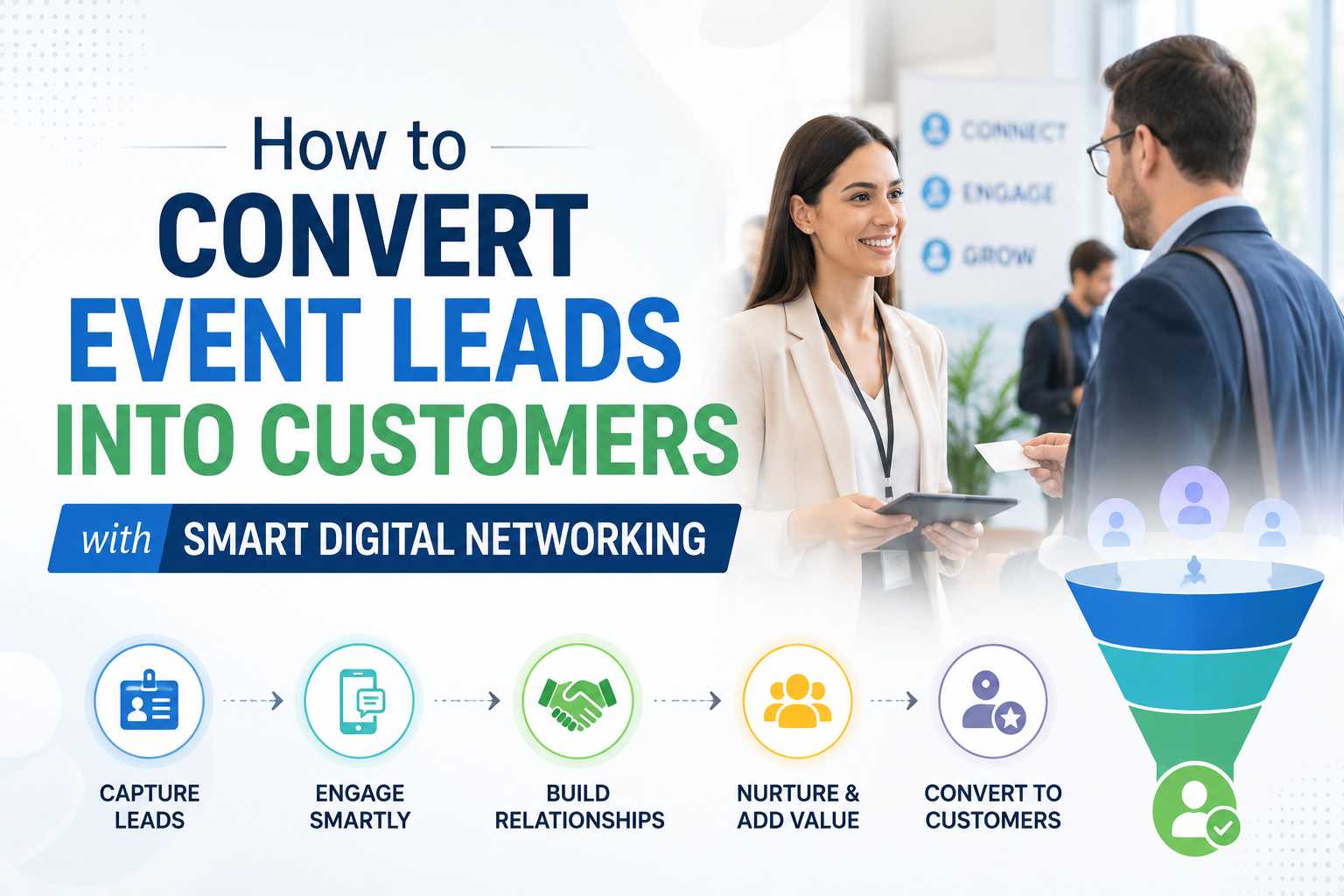
Contact Conversion Gravity is the principle that a workshop-generated artifact, a co-built framework, a group resource list, or a collaborative canvas, creates ongoing gravitational pull between participants long after the event ends. Because every contact helped create the artifact, distributing the final version is a legitimate, low-friction reason to re-open conversation, request a follow-up call, or introduce a solution. This concept is the strategic backbone of any business networking event designed to generate warm leads rather than cold contacts. The tradeoff: the artifact must be genuinely useful, not a thinly veiled sales document, or the gravity collapses.
Related Reading
- How To Scale Business Networking Online
- Business Networking Automation
- Business Networking Skills
- Virtual Speed Networking
- How To Build A Referral Network
- Business Networking Tips
- Business Networking Plan
- Strategic Networking For Business Growth
- Where To Network For Business
Outdoor and Adventure Networking Activities That Build Trust Faster Than a Ballroom
Side-by-side movement strips away the status signals that slow trust down. When two people are navigating a ropes course or walking a charity 5K, there is no conference badge hierarchy, no corner-table advantage, no one checking their phone. Traditional ballroom-style networking events feel transactional and performative, a room full of people trying to sell themselves, collecting business cards that lead nowhere. Outdoor formats break that cycle. OSF Preprints confirms that shared physical experiences encode memories with far greater specificity than ballroom small talk, because the outdoor encounter is distinctive enough to be recalled vividly, which directly improves the likelihood of meaningful follow-up.
The fatal irony is structural. Outdoor formats build the best contacts and lose them at the highest rate. There is no registration desk on the 7th fairway. There is no laptop at the base of a ropes course. The conversation that produces a genuinely warm lead happens mid-trail, and by Monday morning that contact exists only as a vague memory and a first name typed into a notes app.
1. Charity Walk Networking - Side-by-Side Movement That Dissolves Hierarchy
Charity walks remove the social friction that slows trust formation: movement is shared, pace is equal, and the cause creates instant common ground. OSF Preprints research shows that side-by-side physical activity reduces perceived hierarchy by stripping away status cues like attire and seating arrangements, enabling more candid conversation. The tradeoff is that contact capture is almost impossible without a pre-built mobile exchange method, because no one carries a laptop on a 5K route. A Mobilo Digital Wallet Card, included free with every Teams plan at $4 per month, billed annually, means a rep's full contact profile is always in their pocket, shareable offline the moment a conversation peaks.
2. Golf Networking Events - Four Hours of Uninterrupted Relationship Time

A golf outing gives reps four hours of low-pressure, high-proximity conversation with a prospect, which no conference mixer can replicate. The format rewards patience and genuine curiosity over a pitch. The limitation is real: conversations happen far from any check-in infrastructure, and the warm contact forged on the back nine is frequently never entered into the CRM, meaning the relationship ROI evaporates before the follow-up email is drafted. Teams plan members can carry a Custom Designed NFC Card with QR Code, available in standard, Wood, or Metal finishes under the Team tier, so the tap that captures a prospect's details happens on the course, not after the fact. The Teams plan's no-internet QR sharing means spotty fairway connectivity is never the reason a lead goes uncaptured.
3. Urban Scavenger Hunt Networking - Competitive Teams That Compress Trust-Building Time
Scavenger hunts force strangers into collaborative problem-solving under mild time pressure, which the Review of Social Economy, Six, Nooteboom & Hoogendoorn, 'Actions that Build Interpersonal Trust: A Relational Signalling Perspective' identifies as one of the fastest mechanisms for generating the relational signals, benevolence, competence, shared stakes, that build interpersonal trust. Teams are small enough that every member is visible and accountable. The format works best when clue checkpoints double as contact-exchange moments; without that structure, the connection stays memorable but uncaptured.
Because the Teams plan includes unlimited leads and contacts, custom lead capture forms, and full team data analytics with CRM integrations through Zapier connections, every tap at a checkpoint flows directly into the pipeline rather than stalling in someone's notes app.
4. Adventure Challenge Networking - Ropes Courses and Obstacle Formats That Build Rapid Vulnerability

Controlled vulnerability is the mechanism here. When a prospect watches a rep talk them through a high-ropes element, the interaction carries emotional weight that a panel Q&A cannot produce. The shared risk creates a specific, retrievable memory tied to a person, exactly the kind of distinctive encoding OSF Preprints links to stronger follow-up recall.
The tradeoff: adventure formats require logistical investment that smaller event budgets cannot absorb, and they self-select for a physically willing attendee pool that may not map cleanly to a target buyer list. For teams running these events at scale, the Business plan at $5 per month (billed annually) adds enterprise SSO, HR directory sync, a custom domain, and white-glove onboarding, so the infrastructure that supports a large adventure-format program is already built in.
5. QR-Based Tap-to-Exchange Contact Capture - The Only Check-In Method That Works Without a Table or Wi-Fi
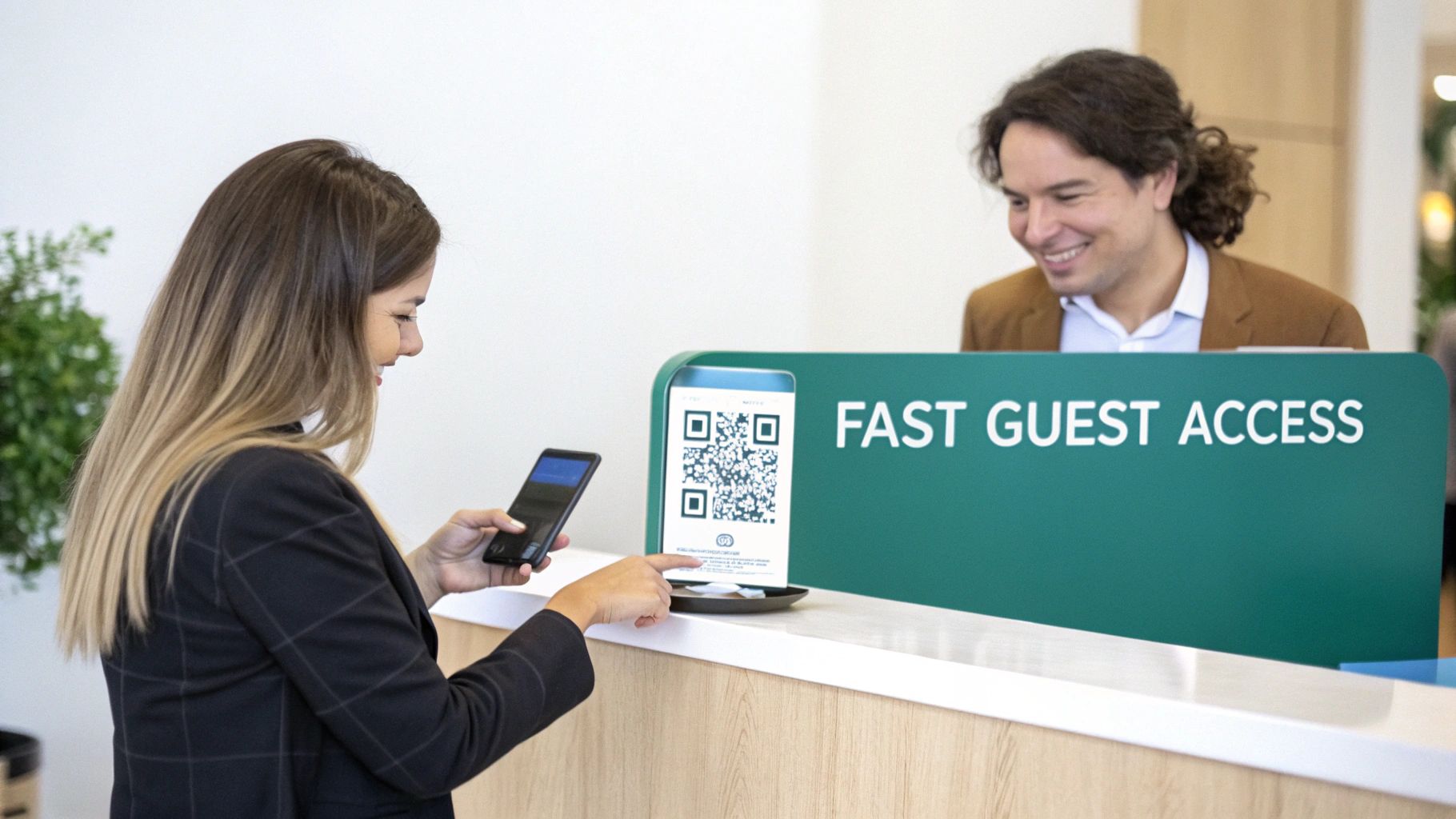
Every outdoor business networking event format, charity walks, golf rounds, scavenger hunts, shares one critical operational gap: there is no registration desk, no laptop, and often no reliable Wi-Fi when the best conversations happen mid-trail or on the 7th fairway. A QR-based tap-to-exchange tool (a phone-to-phone NFC tap or scannable badge QR) lets attendees swap full contact profiles instantly in any environment. The tradeoff is adoption friction: a short pre-event tutorial is essential so no one fumbles the exchange mid-conversation.
Innovation and Pitch-Based Networking Events That Score Contacts Before They Leave the Room
Audience voting, Q&A participation, and stage interaction at pitch-format events are audience voting, Q&A participation, and stage interaction at pitch-format events are programming choices with scoring consequences. According to industry data 2025 performance marketing research, behavioral signals such as event participation and expressed interest in specific topics are core inputs to lead scoring models, so every hand raised during a demo day Q&A is a scoreable qualification signal. The problem is that most teams treat those signals as atmosphere rather than data, and they evaporate before anyone reaches the parking lot.
One real pattern compounds this: pitch-based networking events like chamber of commerce breakfasts frequently devolve into everyone trying to sell to each other simultaneously, and even strong intent signals get buried in noise if there is no capture mechanism in place.
1. Startup Pitch Nights - Live Problem Statements That Pre-Qualify Every Founder in the Room
A founder who takes the stage and describes a supply-chain bottleneck has just announced their pain point, budget context, and urgency in a single interaction. Denave's 2025 research confirms that structured events like pitch nights naturally surface both intent and fit signals, distinguishing a marketing-qualified lead from a raw contact. The limitation: those signals only hold value if a rep captures them at the moment of relevance, not from memory on Monday morning.
A second, underappreciated friction point is founder unpreparedness. First-time founders are often approached by a potential investor immediately after their pitch, yet have no clear framework for what to do next. The event ends, the process is unclear, and anxiety fills the gap where follow-up process should be.
Mobilo removes that gap structurally: a rep or founder carrying a Team, Custom Design Card, an NFC card with QR code that supports unlimited taps and scans, full team data analytics, and CRM integrations, all under the Teams plan at $4/month billed annually, can exchange contact data in the moment, with the record timestamped and routed automatically before the conversation ends. The "what do I do after this?" anxiety dissolves because the next step has already happened.
2. Hackathons With Sponsor-Defined Problem Tracks - Embedding Buyer Intent Into the Challenge Brief

When a sponsor defines the problem track, every team that self-selects into that track has publicly declared a relevant pain point. That self-selection is a pre-qualification act. The tradeoff is volume versus depth: hackathons attract broad participation, so reps need a filtering mechanism beyond track choice, such as logging which teams asked sponsor-facing questions during check-ins, to separate curious participants from genuine pipeline candidates.
The Teams plan's lead capture and management tools, custom lead capture forms, and paper business card scanner give sponsors exactly that filtering layer at the point of contact, not reconstructed afterward. With unlimited team members, a sponsor can station multiple reps across tracks, each capturing contacts with full context, all feeding into the same centralized team dashboard. The Tomba Blog documents how quickly unlogged leads go cold, reinforcing why the capture has to happen at the check-in, not in a debrief the following week.
3. Demo Days With Audience Voting - Turning Applause Into a Ranked Contact List

Structured audience voting converts passive spectators into a rankable data source. An attendee who votes for a fintech demo and then lingers for the Q&A has signaled interest twice. That double signal is exactly the behavioral pattern Denave's lead scoring framework identifies as distinguishing high-intent prospects from ambient attendees. Without a capture mechanism tied to the voting interaction, that ranked list exists only in the room.
Teams carrying the Team, Digital Wallet Card, available at $0 card cost plus $4/month on the Teams plan, can intercept those double-signal moments without friction: no app required on the recipient's side, no internet dependency thanks to the no-internet QR sharing feature included in every Teams and Business tier seat. The contact is captured with context before the next demo begins.
4. Idea Tournaments With Bracket-Style Elimination - Qualification Data Deepens With Each Round
Each elimination round adds a layer of intent signal. A contact who engages across three rounds, asks questions between brackets, and approaches a sponsor table is not the same contact as someone who attended the opening session. The scoring data compounds with each interaction, making idea tournaments one of the richest qualification formats available at innovation events. The practical tradeoff: the format demands longer event durations, which reduces total attendance and shrinks the addressable contact pool.
The Teams plan's insights and analytics, combined with lead enrichment and unlimited leads and contacts, make it practical to maintain running qualification scores across rounds without manual reconciliation. Admins can control, lock, and override data fields across the team, a feature built into every Team-tier card product, from the Team, Paper Plus Cards at $29.99 + $4/month to the Team, Metal Custom Design Card at $69.50 + $4/month (originally $139.00), ensuring every rep captures the same structured fields so cross-round comparisons are clean and actionable.
5. NFC Tap Interactions at Pitch Events - Capturing Interest Signals at the Exact Moment of Relevance
Deploying NFC-enabled badges or tap stations at pitch and demo events lets attendees register interest in a presenter with a single physical gesture, no app download, no form fill. Each tap is timestamped against the pitch in progress, creating a contact record that includes who expressed interest, in what company, and at what moment during the event. Combined with real-time scoring apps, tap data produces a prioritized follow-up list before the room clears. The tradeoff is hardware cost and setup complexity for smaller organizers.
Expert Panels and Fireside Chats That Turn Audience Members Into Pipeline
Panel discussions fill rooms with exactly the right buyers, then lose almost all of them. Research from The Meeting Magazines confirms that passive attendance alone produces no measurable business outcome; structured data collection before, during, and after a session is what converts attendance into pipeline. The five formats below are built around that principle: each one contains a deliberate checkpoint where attendees self-identify their challenges and contact data moves into a rep's CRM before the moderator says thank you.
1. Roundtable Panel With Forced Seat Rotation and Card-Exchange Checkpoint

Seat rotation every 20 minutes turns a passive panel audience into a structured networking event running in parallel with the content. Each rotation ends with a mandatory contact exchange before attendees move to the next table. The checkpoint is the mechanism: without it, rotation produces conversation but no data. Most beneficial when reps are stationed at tables as peer participants, not hosts, so every exchange feels lateral rather than a sales approach. Trade-off: rotation logistics require a room layout decided weeks in advance, and a moderator willing to interrupt good conversation on a timer.
2. Peer-to-Peer Fireside Chat Where the Audience Member Becomes the Co-Host

Rotating a pre-selected audience member into the co-host seat for one segment forces that person to articulate their own challenge publicly, in front of a room of peers who share it. That moment of self-disclosure is the highest-quality qualification signal a panel format can generate: the contact has named their problem, on record, in front of your reps. The Meeting Magazines notes that engagement data tied to specific session moments is what allows organizers to prioritize post-event follow-up with precision. The honest trade-off: rotating co-hosts requires pre-screening; an unprepared participant derails the session and produces no usable signal.
3. Q&A-Led Panel With Live Interest-Signal Polling That Flags Hot Prospects in Real Time
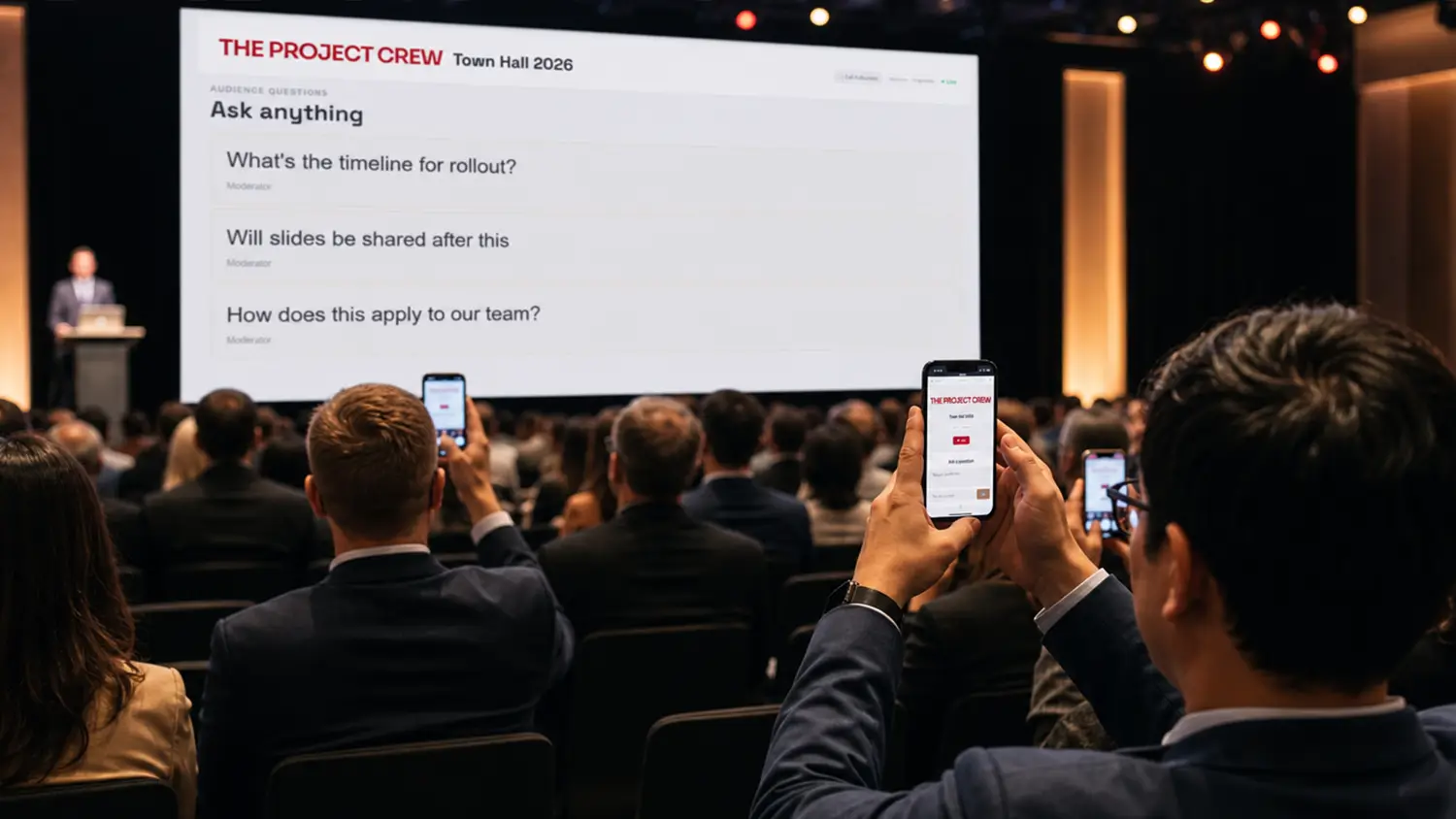
Run two polling moments maximum: one before the Q&A opens to surface the room's top challenge, one immediately after to confirm which answer landed. Industry event data shows response quality degrades sharply beyond two polls per session, so treat each poll as a precision instrument, not a warm-up exercise. The poll results become a ranked list of buyer pain points your reps can reference in follow-up the same evening. Trade-off: this format requires a moderator disciplined enough to resist adding a third poll when the room is engaged.
4. Pre-Event Topic Registration Data Used to Build Rep-Ready Prospect Shortlists Before Doors Open
Registration fields that ask attendees to select their top discussion topic are a pre-qualification instrument. Cross-referenced against ideal customer profile criteria, that selection data produces a ranked prospect shortlist before the room fills. A2Z Events frames this explicitly: topic-selection questions turn a registration form into a pipeline pre-scoring layer. Reps arrive knowing which attendees to find, not hoping to find them. The limitation is structural: this only works when registration fields are designed with lead scoring intent from the start, not retrofitted from a generic event template.
5. Recurring Monthly Panel Series That Compounds Contact Quality Through Repeat Attendance
A one-off panel captures a moment. A monthly series captures a pattern. Attendees who return across three or more sessions have self-selected as genuinely engaged, and the behavioral data accumulated across registrations, poll responses, and post-session surveys builds a progressively richer interest profile for each contact. A2Z Events' research confirms that systematically collected post-event engagement data, mapped back to contact records already in the CRM, creates a prioritized follow-up queue based on demonstrated interest rather than gut feel. The compounding effect is real, but it depends on consistent content quality; a weak panel in month two stalls the momentum that makes month four's contacts worth significantly more.
The Lead Capture Layer Every Networking Event Format Is Missing
Most event formats get judged on atmosphere and attendance, but neither metric tells you whether a single contact reached your CRM with enough context to act on.
Contacts do, or they don't, and research cited by oneVcard shows that the gap between contacts exchanged and contacts with enriched, actionable data synced to a pipeline is where the majority of event ROI disappears.
The One Metric That Shows Whether Your Networking Event Budget Is Working
The true measurable output of a networking event is not badge scans or cards collected.
Why the Format Does Not Matter If the Data Does Not Move
Format, mixer, roundtable, trade show, or hosted dinner, shapes the experience but not the yield. The one variable that determines yield, regardless of format, is whether the data moves automatically at the moment of exchange.
OneVcard's analysis is direct on this point: trade show follow-up fails not because of poor event design, but because the lead capture and data-entry process breaks down after the event ends, a pattern that repeats across every format when no automated capture layer is in place.
Real-Time Sync as the Infrastructure Layer Beneath Every Event Idea on This List
That automated capture layer is what separates events that generate pipeline from events that generate anecdotes. Mobilo's Contact Exchange and Lead Capture removes manual entry from the journey entirely.
The Sales Director's dashboard then shows which reps exchanged contacts and which converted, turning event spend from an untracked cost center into a measurable pipeline input.
Related Reading
- Business Networking Trends
- Business Networking Opportunities
- Networking Ideas For Small Business
- Business Networking Event Ideas
- Business Networking Conversation Starters
- Business Networking Questions
- Networking Ideas For Virtual Events
- Virtual Networking Ideas For Large Groups
Next steps
If your event budget keeps disappearing into a stack of paper cards that never reach Salesforce, the path forward starts with removing manual entry from the contact-to-CRM journey entirely. Format drives attendance and energy. Capture infrastructure drives revenue. Start with our digital business card.
The 88% card discard rate and the 80% no-follow-up rate are not two separate problems, they are two expressions of the same structural gap that sits between the handshake and the pipeline. Closing either one in isolation produces marginal gains. Themed and adventure formats build genuine relational momentum, but that momentum has a measurable expiration date: leads contacted within 24 to 48 hours convert at dramatically higher rates than those reached later, which means the only intervention that captures the value of a warm room is one that syncs the contact before the rep leaves the venue. Together, those two realities point to one action: deploy a capture layer that fires at the moment of exchange, not Tuesday morning.
Start by equipping your team with a digital business card before your next event. Every tap syncs an enriched contact record directly into your CRM, tagged by session, before the closing conversation ends.
Frequently Asked Questions
Does the icebreaker format actually matter if my team isn't capturing contacts properly?
No, the post is direct on this point: the networking event's format is irrelevant to pipeline generation if there is no friction-free capture mechanism in place. Even a perfectly executed icebreaker that produces a warm, memorable connection loses that contact within a week through the same bottleneck that kills every other lead, meaning the quality of the in-room experience cannot compensate for a broken handoff.
How long do I actually have to follow up before a contact goes cold?
The optimal window is 24 to 48 hours after the event ends, according to Tradesnest's January 2024 trade show analysis, after that point, the contact's recall drops sharply and their interest resets to baseline. The post also notes that leads contacted within five minutes are 100 times more likely to connect than those reached after thirty minutes, making same-day outreach the strongest approach.
Is human bingo actually useful for sales networking, or is it just a fun warm-up?
The post rates it as one of the strongest warm-up formats for sales-heavy rooms specifically because qualification happens inside the game mechanic itself, squares like "find someone whose team uses a CRM they hate" surface buyer signals during the activity. It loses effectiveness when attendees share very similar roles, making the squares too easy and the conversations too shallow.
What's the real reason so many networking contacts never end up in the CRM?
The post frames it as a structural process problem, not a rep motivation problem: no capture step exists between the physical exchange and the data entry that should follow it, so the record simply never gets created. It's compounded by the fact that 88% of business cards are discarded within a week and 80% of trade show leads are never followed up on at all.
What's the best way to run speed networking at a business event?
The post describes speed networking as a format that allows attendees to meet a high volume of contacts in a short time, and recommends pairing it with a frictionless contact-capture moment, such as a digital business card tap or QR scan, so that each rotation ends with a CRM record rather than a scribbled note or a card that gets discarded. Without that capture step built into the format, the volume of connections speed networking generates doesn't translate into pipeline.