

9 Business Relationship Building Tips That Drive Real Growth
On This Page
Referred customers are worth 16% more and churn 18% less, yet most businesses let warm contacts vanish before Monday morning. The gap is not a people problem. It is a process one.
Referred customers deliver 16% higher lifetime value and churn at rates roughly 18% lower than customers acquired through any other channel, according to the Journal of Marketing (2026). Those are compounding revenue figures, measurable in your pipeline, driven entirely by trust that no paid campaign can manufacture.
Nielsen's Global Trust in Advertising Survey found that 88% of consumers trust word-of-mouth recommendations from friends and family more than any other advertising format. In B2B contexts, that trust signal translates directly into shorter sales cycles, fewer objections, and buyers who arrive pre-sold on your credibility. A referred prospect does not need to be convinced you are legitimate.
The relationship already did that work. See our digital business card for how this works in practice.
88% Trust word-of-mouth over any ad format
Extole's 2026 analysis shows well-run referral programs can drive up to 25% of new customers for a business. Teams that rely on transactional acquisition leave that pipeline share on the table entirely because those relationships were never systematically activated.
25% Of new customers via referral programs
Most sales managers and business development professionals believe the culprit is rep follow-up discipline: if the relationship mattered, the rep would have sent the email or entered the contact. The common assumption is that the problem is behavioral. Warm rapport built in person decays fast when nothing engineers it forward: contacts go cold, follow-ups never happen, and CRM records stay blank not because the relationship was not real, but because, from surveying 4,000 sales reps, we know that 90% of new contacts do not enter your CRM because it's too much of an effort.
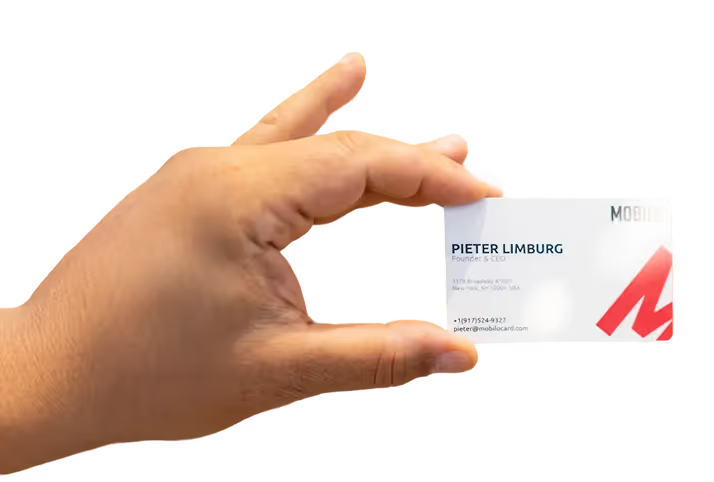
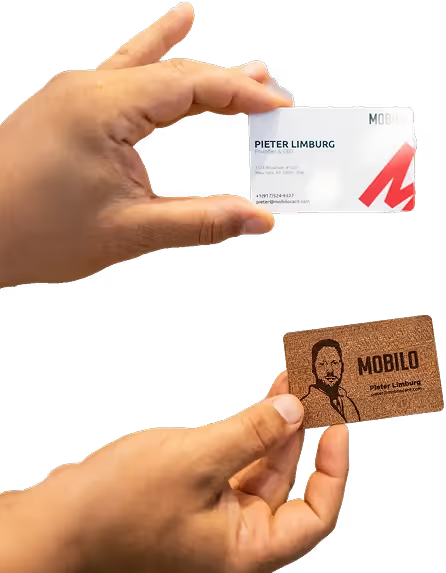
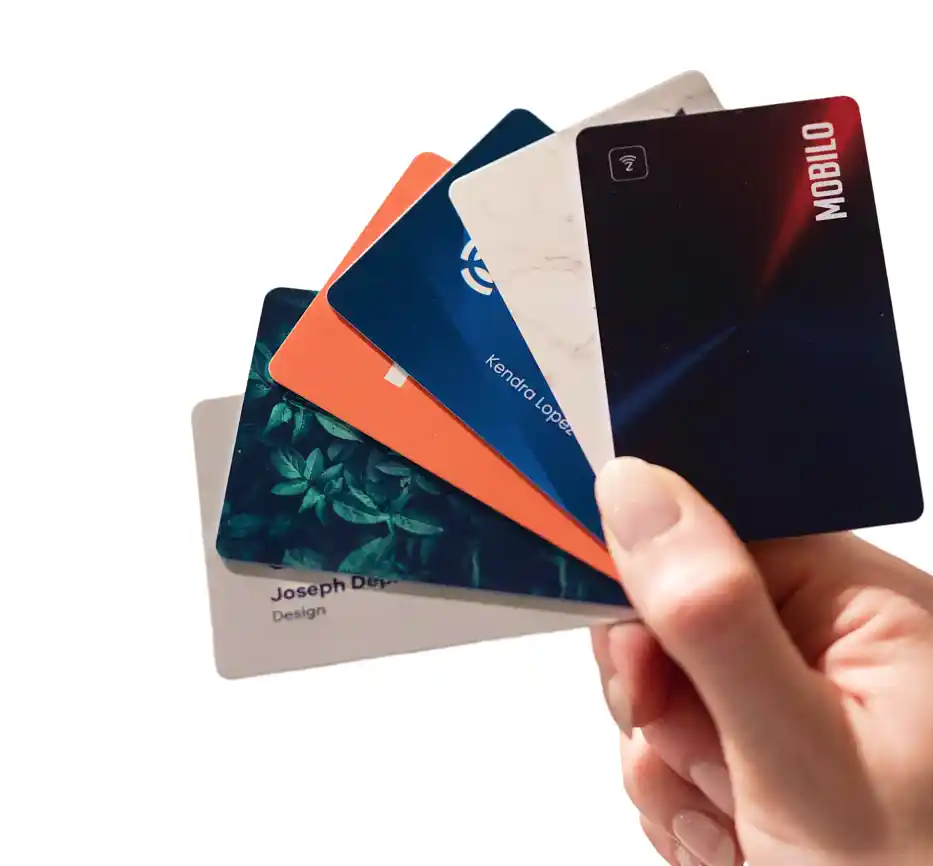
Professionals who consistently convert first meetings into lasting partnerships have solved a specific operational problem. They have engineered the handoff so the relationship has somewhere to go before the conversation even ends. Tools like a digital business card make that handoff automatic, so every new contact enters the pipeline in real time rather than disappearing into a stack of forgotten cards.
Key takeaways
- Referred customers deliver 16% higher lifetime value and churn at lower rates than any other acquisition channel, that's compounding pipeline revenue, not a soft metric.
- 90% of new contacts never enter a CRM because manual entry is too much friction, and that's where most relationship-building efforts quietly die.
- Physical business cards are thrown away within a week of most events, which means the relationship you thought you started is already gone before the follow-up window opens.
- Charm fills a room, systems fill a pipeline. The professionals who consistently convert first meetings into lasting partnerships are the ones who engineered what happens in the 48 hours after they leave.
- 65% of business comes from existing customers, yet most teams keep spending five to seven times more chasing cold acquisition instead of compounding what they already have.
- The moment of contact exchange is the most operationally critical event in your sales process, treating it as a formality is where deals fall through the cracks.
- Mobilo Card closes that gap by letting professionals share contact details with one tap, capture leads in real time, and sync every exchange directly into a CRM, no manual entry, no lost contacts, no cold pipeline.
Where Most Business Relationship Building Efforts Break Down Before They Begin
The vast majority of physical business cards are thrown away within a week of an event, according to Technology Org. Most sales managers and business development professionals think the culprit is rep follow-up discipline: if the relationship mattered, the rep would have sent the email or entered the contact.
"Rushed onboarding and unclear expectations cause relationship-building efforts to break down before they begin. Clients are brought on before the business is operationally ready to serve them consistently."
— what we hear from founders

Why Contacts Captured at Events Vanish Before They Reach Your Pipeline
The other 22 contacts are effectively lost. Manual data entry after events is structurally prone to failure: cards get shuffled, context fades, and the task competes with a full inbox waiting on Monday morning. Teams that attend events regularly and need structured lead follow-up are the ones most exposed to this breakdown, yet they are also the ones most likely to assume the fix is a motivational one. The bridge between first meeting and first logged touchpoint was never built, and no amount of rep accountability closes a structural gap.
Technology Org confirms the pattern: contacts captured at events frequently never reach a CRM or follow-up system because manual entry is skipped and cards are lost or discarded. The failure is a feature of the process, not a reflection of individual discipline. This is compounded by what teams at events experience: most networking channels, conferences included, are perceived as transactional the moment follow-up slips past a day or two, causing relationship-building to break down before genuine trust is established.
Mobilo's Teams plan ($4/month per member, billed annually) is built directly against this structural failure. It includes a built-in paper business card scanner, custom lead capture forms, and full lead capture and management, so the rep who used to photograph 30 cards and enter 8 instead captures all 30 at the point of contact, with context intact. Lead enrichment and CRM integrations through Zapier's 6,000-plus connections mean those contacts move into the pipeline automatically rather than sitting in a spreadsheet waiting to be processed.
For organizations where branding consistency matters, where every rep's card needs to reflect the same identity, the Teams plan also provides team management, the ability to control, lock, and override data fields across the team, and true branding consistency, all without a card ever leaving anyone's pocket crumpled and forgotten.
For businesses with five or more employees who need centralized control over branding and contact information, the step up to the Business plan ($5/month per member, billed annually) adds HR directory sync, enterprise SSO, a custom domain, and white-glove onboarding for qualifying teams, removing the operational unreadiness that causes rushed rollouts and inconsistent execution in the field.
Why Warm Contacts Go Cold - The 48-Hour Window You Cannot Afford to Miss
Response rates in B2B sales drop sharply after the first day or two following initial contact, yet the average rep spends meaningful unbillable time on manual post-event data entry that pushes first follow-up well past that window.
This is the moment networking tips over into the transactional dynamic that poisons so many B2B relationships at first contact. Professionals we work with in event-heavy roles describe the same experience repeatedly: they meet someone genuinely promising, intend to follow up with something personal and relevant, and by the time the manual entry is done the message they send reads like every other cold outreach in that prospect's inbox.
Every one of these breakdowns is a systems problem, which means every one of them has an engineering fix. Mobilo's Teams and Business plans include 24/7 customer support, insights and analytics, no-internet QR sharing for venues with unreliable connectivity, and unlimited taps and scans, so the infrastructure works during the event, not just after it. The Teams plan's Digital Wallet Card option is included at $0 (original price $10.00) when paired with the $4/month subscription, giving every team member a shareable, scannable contact profile that reaches a prospect's phone in the room, before the window closes.
Related Reading
- Business To Business Networking
- How To Build A Network For A Small Business
- How To Start A Business Networking Group
- How To Build A Strong Sales Pipeline
- How To Reach B2b Decision Makers
- How To Ask For Referrals In Sales
- Expand Your Network
- Business Networking Goals
- Business Cards For Networking
9 Business Relationship Building Tips That Actually Stick
Charm fills a room. Systems fill a pipeline. The professionals who consistently convert first meetings into lasting business relationships are not necessarily the most charismatic people in the room; they are the ones who engineered what happens in the 48 hours after they leave it.
Charm fills a room. Systems fill a pipeline.
1. Active Listening - The Foundation of Every Lasting Business Relationship
Active listening is the fastest trust-builder available to any sales or BD professional, and it costs nothing except attention. Minimize distractions, ask clarifying questions, and summarize what you heard before you respond. Industry research on sales performance consistently links active listening to higher conversion rates because prospects feel understood rather than processed. The one tradeoff: active listening slows the pitch, which frustrates reps conditioned to talk-to-close ratios. That discomfort is the signal it is working.
2. Consistency and Reliability - Do What You Said You Would, Every Single Time
Reliability is the compounding asset most relationship-building advice ignores. Send the article you promised. Make the introduction you mentioned. Show up to the call two minutes early. Each kept commitment lowers the psychological cost of the next ask, because the other person has evidence you follow through.
One of the most damaging patterns we see in teams scaling their outreach is what might be called relationship whiplash: a manager who invests in a warm client dinner on Friday, then sends a terse, impersonal follow-up email on Monday morning. That inconsistency signals that the warmth was tactical, and it erodes more trust than if the dinner had never happened. The failure mode is the oscillation between warmth and cold detachment.
A pattern of engaged outreach followed by silence creates more damage than never reaching out at all, because it signals that engagement is transactional rather than genuine. For businesses with five or more people using Mobilo, the Team Management and Admin Dashboard helps close this gap by giving managers centralized control over branding and contact information, so every team member presents a consistent, professional identity at every touchpoint, reducing the chance that inconsistency in presentation compounds inconsistency in follow-up behavior.
3. Value-First Mindset - Give Before You Ask, Every Time
Approach every new contact with one question: what can I give this person before I need anything? Share a relevant case study. Flag a job opening that fits someone in their network. Forward a piece of research that addresses a problem they mentioned. This is not generosity for its own sake; it is a trust-building strategy with a measurable payoff. The limit: value-first works when the value is genuinely relevant. Sending generic content to demonstrate effort reads as noise, not care, and erodes the credibility it was meant to build.
4. Transparent Communication - Especially When the News Is Bad
The moment a deadline slips or a deliverable falls short, most professionals delay the conversation. That delay is where partnerships quietly die. Transparent communication, especially when the news is bad, signals that the other party will never be blindsided, which is the foundation of long-term trust. Proactively flag problems, name the cause honestly, and arrive with a proposed path forward. Contacts who have seen you handle a difficult situation well are far more likely to refer you than contacts who have only seen things go smoothly.
5. Emotional Intelligence and Empathy - Recognize the Real Person Behind the Business Title
Behind every procurement manager, VP of Sales, or founder is someone managing deadlines, internal politics, and personal pressure that never appears on a LinkedIn profile. Recognizing that context changes how you communicate. Ask about their constraints before you pitch. Acknowledge a company milestone before you follow up on a proposal. Adapt your communication style to theirs rather than defaulting to your own. This is not soft-skills theater; it is the practical recognition that decisions are made by people, not job titles, and people respond to being seen.
6. Systematic Contact Capture and Follow-Up Engineering - Make the Handoff Frictionless
The 48-hour follow-up window is a systems design challenge. When a rep is already spending the majority of their day on administrative tasks, the moment a networking conversation ends, the clock runs out before a manual CRM entry ever gets made. The relationship never officially exists inside the organization, regardless of how strong the in-person rapport was. This is a predictable outcome of administrative overload colliding with a narrow action window.
Most sales managers leave every event with a stack of contacts and the best intentions. The hidden cost is that contacts entered days later, entered incompletely, or never entered at all mean the relationship never formally began inside the pipeline. A significant share of event leads are never contacted after the show because the handoff between in-person conversation and CRM record is entirely manual and entirely optional. Field marketing and event teams in particular carry this burden acutely: the volume of conversations at a single trade show or conference can make manual capture practically impossible within any reasonable follow-up window.
This is the gap that a smart contact exchange workflow closes. When a Mobilo digital business card is tapped or scanned, the contact flows directly into the CRM in real time, with no manual entry step in between, arming event and field marketing teams with a process that captures leads efficiently and feeds data directly into the pipeline from the moment the conversation ends. The Teams plan (starting at $4/month billed annually, and marked as Mobilo's most popular tier) includes full lead capture and management, unlimited leads and contacts, CRM integrations through 6,000 Zapier connections, brandable QR codes, and no-internet QR sharing, covering the exact conditions field teams face at live events.
For organizations that need centralized oversight, the Business plan at $5/month billed annually adds HR directory sync, enterprise SSO, a custom domain, and white-glove onboarding for teams of 100 or more seats, ensuring that every card tapped by every rep feeds a single, consistently managed pipeline.
Card options under the Team tier give event teams flexibility without sacrificing data control, with unlimited taps and scans, full team data analytics, CRM integrations, and the ability to control, lock, and override data fields centrally.
That last capability matters specifically for consistency: when a manager can lock and override data fields across the team, the relationship whiplash created by mismatched or outdated contact information is removed at the system level.
Landsea Homes used exactly this approach when onboarding hundreds of employees, eliminating significant annual costs in manual data entry and card printing while accelerating their sales process. Most beneficial when a team attends events regularly and needs structured lead follow-up, the system ensures that the relationship exists in the pipeline from the moment the conversation ends, not days later when the momentum is gone.
One honest limitation: the system works only if the contact interacts with the card. For prospects who prefer exchanging details verbally or via a competitor's platform, a backup capture method, such as the paper business card scanner built into both the Teams and Business plans, ensures no contact is left out of the pipeline.
7. Regular Nurture Cadence - Stay Present Before You Need a Favor
Structured nurture is the single biggest driver of retention and expansion revenue for account managers, and it requires a calendar, not charm. Set a recurring Friday reminder to share one relevant industry article with three contacts. Check in after a company milestone. Send a short note after a conference you both attended. The cadence does not need to be frequent; it needs to be consistent. Proactive communication at regular intervals keeps you present in a contact's mind so that when a relevant opportunity surfaces, your name is already there. Going silent until you need something is the fastest way to make every re-engagement feel transactional.
8. Cold Outreach and First Contact - Warm Up a Cold Message With Shared Context
Generic cold outreach is expensive silence. Personalized first-contact messages that reference a shared context, a mutual connection, a specific piece of content the prospect published, or a challenge their industry is navigating, convert at dramatically higher rates than templated pitches. Research on cold email benchmarks consistently shows that specificity is the variable that separates a reply from a delete. The structure that works: one sentence of shared context, one sentence on why you are reaching out now, one clear and low-friction next step. Keep the ask small. The goal of the first message is a conversation, not a close.
9. Re-Engaging Dormant Contacts - Revive Lapsed Relationships Without the Awkwardness
A dormant contact is not a lost contact. The re-engagement message that works is specific and forward-looking, never apologetic. Reference something real: a company milestone they just hit, a market shift relevant to their role, or a piece of content they recently published.
"I saw you just expanded to the West Coast, congrats, that is a significant move" opens a conversation without the awkward "sorry I have been out of touch" framing that puts the lapse front and center. The rule: make the message about them, not about the gap. One concrete next step, no pressure, no pitch. Most contacts respond well to being remembered accurately; what they resist is feeling like a name on a reactivation list.
Executing all nine of these tips once is table stakes. The professionals who outpace their competition are the ones who run this system repeatedly, at scale, across every relationship in their pipeline. The next section shows how that repetition compounds: how each touchpoint builds on the last until a contact becomes a client, a client becomes an advocate, and an advocate becomes a growth engine you did not have to buy.
Related Reading
- How To Scale Business Networking Online
- Business Networking Automation
- Business Networking Skills
- Business Networking Plan
- Strategic Networking For Business Growth
- Where To Network For Business
- Virtual Speed Networking
- How To Build A Referral Network
- Business Networking Tips
How to Build Client Relationships That Compound Into Long-Term Pipeline
Sixty-five percent of a company's business comes from existing customers. Yet most sales teams keep pouring budget into cold acquisition, which costs five to seven times more than keeping a client. The math is not subtle. The nine behaviors covered above don't simply add up when applied consistently. They multiply.

Why Early Reliability Lowers the Cost of Every Future Ask
The first time a rep delivers something useful without being asked, a small psychological deposit lands in the client's account. The second time, it compounds. By the third or fourth touchpoint, the client has already decided this person is worth listening to, so a referral ask or renewal conversation no longer feels like a cold pitch. It feels like a natural next step.
Key takeaway: A five percent increase in retention rates lifts profits by 25 to 95 percent, and that range widens the more consistently early-stage behaviors are applied. Consistency is the variable.
Charm is not enough. Industry research shows that the compounding effect accelerates differently depending on how consistently the early-stage behaviors are applied.
Why BD Leaders Must Engineer the System, Not Just Model the Behavior
The quiet failure mode is this: a top rep leaves, and six months of relationship equity walks out with them. No logged calls. No notes. No context. The next rep starts cold with a client who expected continuity. Most teams handle this by trusting their best reps to keep mental notes and hoping handoffs go smoothly.
The hidden cost is that relationship equity stored in one person's memory collapses the moment that person changes roles, territories, or employers. A digital business card platform like Mobilo closes that gap at the moment of exchange, routing new contacts directly into the CRM in real time so the compounding sequence starts immediately and survives personnel changes. The compounding model only works if the first link in the chain holds. That link is the handoff from first contact to first logged touchpoint. The next section shows you exactly how to engineer that handoff so no relationship falls through the cracks before the sequence even begins.
Next steps
If your best networking conversations keep vanishing before they ever reach a logged pipeline record, the path forward starts with fixing the handoff, not the rep. The 48-hour follow-up window is a systems design challenge: administrative overload makes manual CRM entry structurally impossible at volume, so relationships that felt real in the room never officially exist inside the organization. Start with our digital business card.
The referral and retention math makes the cost of that gap concrete. Referred customers produce 16% higher lifetime value and churn at 18% lower rates, yet the contacts most likely to refer or expand are the ones who never enter the CRM because the capture process was manual and optional. Relationship compounding only activates when the first link holds. When it does not, teams run high-volume networking operations with near-zero measurable output, and no feedback loop ever tells reps which conversations produced revenue.
Start with a digital business card that routes every new contact directly into your CRM at the moment of exchange. From there, automated follow-up sequences trigger without manual entry, the 48-hour window stays intact, and every conversation your team has at the next event builds toward pipeline instead of disappearing into a stack no one processes by Thursday.
Frequently Asked Questions
What actually happens to most business cards collected at events?
The vast majority of physical business cards are thrown away within a week of an event. Even when reps intend to follow up, manual data entry after events is structurally prone to failure, cards get shuffled, context fades, and the task competes with a full inbox, meaning most contacts never reach a CRM or follow-up system at all.
How long do I have to follow up before a warm contact goes cold?
Response rates in B2B sales drop sharply after the first day or two following initial contact. A rep who sends an email on Thursday to someone they met Monday is not nurturing a relationship, by that point the prospect has attended more events, received other follow-ups, and lost the emotional warmth of the original conversation.
Why do so many relationship-building efforts fail even when the in-person rapport was strong?
The failure is structural, not behavioral. The bridge between first meeting and first logged touchpoint was never built, warm rapport built in person decays fast when nothing engineers it forward, contacts go cold, follow-ups never happen, and CRM records stay blank not because the relationship was not real, but because 90% of new contacts never enter a CRM due to the effort required.
What's the most important thing I can do to build trust with a new business contact?
Reliability is the compounding asset most relationship-building advice ignores, send the article you promised, make the introduction you mentioned, and show up to the call two minutes early. Each kept commitment lowers the psychological cost of the next ask, because the other person has evidence you follow through. Pairing that consistency with active listening, which industry research links to higher conversion rates, gives new contacts both the evidence and the feeling that they are understood rather than processed.
What are the real business benefits of investing in strong relationships?
Referred customers deliver 16% higher lifetime value and churn at rates roughly 18% lower than customers acquired through any other channel, and well-run referral programs can drive up to 25% of new customers for a business. In B2B contexts, trust built through relationships also translates into shorter sales cycles, fewer objections, and buyers who arrive pre-sold on your credibility.