


How to Build a Network for a Small Business in 7 Steps
On This Page
Most small businesses live on referrals but never build the network that sends them. These 7 steps take you from zero to a network that brings in work.
Building a network for a small business means deliberately growing five groups of people who can send you work, advice, or credibility: customers, referral partners, peers, local and industry groups, and the people who find you online. Most owners agree this matters. Far fewer do it on purpose.
The gap shows up in the numbers. In a 2017 Alignable survey of 7,500 small business owners, 85 percent named word-of-mouth referrals as the best way to win local customers. Yet a 2025 MarketStreet study of 1,593 U.S. small business owners found that two-thirds don't meaningfully engage in networking or lead-gen groups, and more than one-third don't collaborate with peers at all. So the channel owners trust most is the one they leave to chance.
That is easy to understand. You are running payroll, chasing invoices, and covering the shift when someone calls in sick. Networking feels like something that happens to businesses that already have spare time. It also feels vague. "Get out there more" is advice without a plan, and nobody tells you which room to walk into first, what to say once you are there, or what to do with the contacts you collect.
The result is a familiar pattern. An owner goes to a few mixers, collects a stack of cards, follows up with the two most memorable people, and decides networking doesn't work for their kind of business. The real problem was the missing structure around those evenings.
What a Small Business Network Includes
Before the steps, it helps to see the whole map. A working network for a small business has five rings:
- Customers and past customers. Your most credible advocates, and the ring most owners forget to treat as part of their network.
- Referral partners. Businesses that serve the same buyer without competing with you, such as an accountant for a bookkeeping firm or a property manager for a commercial cleaning company.
- Peers and mentors. Other owners and advisors who shorten your learning curve and warn you about the vendor who never delivers on time.
- Local and industry groups. Chambers of commerce, trade associations, and referral groups that give you a recurring room to show up in.
- Online presence. The profile, reviews, and posts that confirm who you are when someone looks you up after meeting you.
Each ring feeds the others. A peer introduces you to a partner. The partner sends you a customer. That customer leaves a review that persuades the next stranger who searches your name. When one ring is missing, the whole network grows slower.
Why Starting From Zero Works in Your Favor
If you are building from scratch, you get to build it right the first time. You can decide who you want to meet before you spend a single evening at a mixer. You can set up a simple way to capture every contact before your first handshake, instead of digging through a drawer of cards six months from now trying to remember who the woman from the landscaping company was.
The seven steps below follow that order: foundation first, then the rooms you choose, then the follow-up that turns a name into a relationship. They work for an owner-led business and for a small team where two or three people are out meeting people every week.
Key takeaways
- Small business owners rank referrals as their best customer source, yet two-thirds don't meaningfully take part in networking groups.
- A small business network has five rings: customers, referral partners, peers and mentors, local and industry groups, and online presence.
- The 7 steps start with the warm contacts you already have and a one-page target list, before you buy a single event ticket.
- Two recurring groups attended for six months build more trust than a calendar full of one-off mixers.
- Follow up the same day and give first, an introduction or a referral, before you ask for anything.
- A monthly half-hour review shows which rooms and partners produce business and which to drop.
- Mobilo's digital business card shares your details with one tap and sends the other person's details straight to your contact list or CRM, so new contacts stop slipping away.
Why the Usual Ways of Building a Network Stall
Most owners build their network in one of two ways. Both have real merits, and both break in predictable places.
Habit One - Show Up and Hand Out Cards
The default approach is simple: say yes to events, shake hands, swap cards, and hope something comes of it. Face time matters. People you meet in person remember you longer than a cold email, and a good conversation over coffee can do more than a month of posting online.
The drawback is randomness. Without a target list, you end up at whichever event is closest or cheapest, talking to whoever happens to stand near the coffee. It is no surprise that in the MarketStreet study, 71 percent of owners said chambers of commerce deliver little to no value. A chamber can be a strong room. Walking into it without knowing who you want to meet, or what you will do afterward, makes almost any room look weak.
Random attendance also burns the scarcest thing a small business owner has: evenings. Every event that puts you in front of the wrong people is a night you could have spent with your family or on the business.
Habit Two - Join Everything and Connect With Everyone
Owners who feel the first habit stalling often swing the other way. They join three groups, accept every connection request, and fill their phones with contacts. Volume has a real upside. More people know your name, and loose acquaintances carry news you would never hear from your inner circle. A LinkedIn experiment covering more than 20 million people found that weaker ties increased job mobility, up to a point, more than the strongest ones did.
The drawback is follow-through. Fifty new contacts a month means fifty small promises to follow up, and a small business has nobody assigned to keep them. Even full-time sales professionals struggle here. In Salesforce's research, sales reps reported spending 70% of their time on non-selling tasks. An owner who also handles operations, hiring, and billing has even less room in the week. The contacts pile up, the follow-ups slip, and the big network turns out to be a long list of people who met you once and haven't heard from you since.
What a Lost Contact Costs You

Contacts cool quickly. In research published in Harvard Business Review, firms that contacted a lead within an hour were nearly seven times as likely to have a meaningful conversation with a decision maker as firms that waited even an hour longer. That study measured online inquiries, but the pattern holds face to face. The person who said "send me something" at a breakfast meeting is busier and less interested by the following week.
Picture a typical month. You attend four events and talk with about a dozen people at each, close to fifty conversations. The cards go into a jacket pocket, and only the three most memorable people get a follow-up. You spent four evenings to earn three relationships. The rest of those conversations were never finished. This cost stays hidden because it never appears on a report. Nobody sends you an invoice for the referral that went to a competitor because you forgot to call back. You only feel it as a vague sense that networking is a lot of effort for very little return.
The Fix Is a Repeatable System
Both habits share one gap. Neither treats a new contact as the start of a process. The seven steps that follow close that gap by deciding who you want to meet before you go, choosing where you will meet them, and setting exactly what happens the day after each conversation.
Steps 1-3 - Lay the Foundation Before Your First Event
The first three steps happen before you attend a single event. They take a few hours in total, and they decide how much value you get from every conversation afterward.
1. Map the Network You Already Have - Start With Warm Contacts
Your network doesn't start at zero, even when it feels that way. Open your phone, your email, and your customer list. Write down everyone who already knows what you do: customers, past customers, vendors, your accountant, your banker, former coworkers, and friends who run businesses of their own.
Then sort that list three ways:
- Advocates are people who have bought from you and liked the result.
- Connectors are people who know many others in your buyer's world, such as a commercial real estate agent or an insurance broker.
- Advisors are people who know more about running a business than you do.
This list is your first network, and it is warmer than anyone you will meet at an event. This month, reach out to five or ten of these people with a short update on what you do now and who you help. Ask one question: "Who do you know that I should meet?"
Customers deserve extra attention here. They are the most credible voice you have, yet most owners never ask them for anything beyond payment. A satisfied customer who introduces you to a peer is worth more than a dozen strangers at a mixer, because the trust transfers with the introduction.
2. Define Who You Need to Meet - Build a Target List by Ring

Random networking produces random results. Before you join a group or buy an event ticket, write down the specific types of people you want in each ring of your network. Start by working backward from your best customers. Who else did they hire around the time they hired you? A commercial cleaning company might find its best accounts also worked with property managers and office furniture dealers. Those categories become referral partner targets, because they meet your buyer at the same moment you do.
Then fill in the rest of the list:
- Customers: the job title, company size, and trigger moment that makes someone need you.
- Referral partners: three or four business categories that serve the same buyer without competing with you.
- Peers: two or three owners a few years ahead of you, ideally outside your direct market so you can speak openly.
- Mentors: someone with a skill you lack, such as finance, hiring, or sales.
- SCORE, a resource partner of the U.S.
- Small Business Administration, offers free mentoring through a network of more than 10,000 volunteer business experts.
Keep the list to one page. It becomes the filter for the rest of the plan. Every event, group, and online community gets judged by one question: will the people on this page be there?
3. Prepare Your Introduction and a Home for Every Contact

Two small pieces of preparation decide whether a good conversation turns into a relationship.
Your introduction. Write two sentences. The first says who you help and the problem you solve. The second names the kind of introduction you want. For example: "I run a bookkeeping firm for restaurants with fewer than fifty employees. The best introduction for me is an owner who just opened a second location." Specific beats clever. A clear target gives the listener something to match against the people they know, and it makes you easy to describe when you are not in the room.
A home for contacts. Decide now where every new contact will live. For a business run by one person, a simple spreadsheet works. For a team, a CRM is worth the setup time, because everyone needs to see who already knows whom. Whatever you choose, capture the same fields every time:
- Name, company, role, and how to reach them
- Where and when you met
- Which ring of your network they belong to
- One personal detail from the conversation
- The next step you promised and when it is due
The last field matters most. A contact without a next step is a name. A contact with a next step is a relationship in progress. Finally, decide how you will share your own details. Whatever you use should be impossible to run out of, should open your full contact details, website, and booking link, and should let the other person save you on the spot. The easier you make it to keep your details, the more of your conversations survive the drive home.
Related Reading
- Business To Business Networking
- Business Relationship Building
- How To Start A Business Networking Group
- How To Build A Strong Sales Pipeline
- How To Reach B2b Decision Makers
- How To Ask For Referrals In Sales
- Expand Your Network
- Business Networking Goals
- Business Cards For Networking
Steps 4-5 - Choose Your Rooms and Back Them Up Online
With a target list and a two-sentence introduction in hand, you are ready to choose where to show up, in person and online.
4. Join Two Recurring Groups Before Chasing One-Off Events
Relationships grow from repeated contact. Seeing the same people every week or month builds the familiarity that turns an acquaintance into someone who refers you. A one-off conference can start a relationship, but it rarely finishes one. Pick two recurring rooms where the people on your target list gather, and commit to them for at least six months. Here is how the common options compare:
- Chamber of Commerce → Best For: Local visibility, B2B services, and community ties → Typical Format: Monthly mixers, ribbon cuttings, and committees → Watch Out For: Passive members get little back, so join a committee.
- Referral Group (BNI and Similar) → Best For: Service businesses that rely on referrals → Typical Format: Weekly structured meetings, with one member per business category → Watch Out For: Weekly time commitment and attendance rules.
- Industry or Trade Association → Best For: Peers, suppliers, and buyers in your field → Typical Format: Conferences, chapter meetings, and online forums → Watch Out For: Rooms full of competitors, so target buyer-side events.
- Business Owner Meetups → Best For: Peers and mentors → Typical Format: Casual breakfasts, roundtables, and mastermind circles → Watch Out For: Loose structure makes it easy to drift.
- Volunteering and Community Boards → Best For: Trust and local reputation → Typical Format: Nonprofit boards, civic and school events → Watch Out For: Slow payoff, so treat it as a long-term play.
Structured referral groups show what consistent attendance can produce at scale. BNI reports that its members generated $26.4 billion in revenue from more than 17.4 million referrals between August 2024 and July 2025, across more than 11,400 chapters. That is an aggregate across a large organization, so it says little about any single member's results. It does show that meeting the same people on a fixed schedule works when members keep showing up.
Choosing well matters more than choosing many. Visit each group as a guest before you pay dues. Count how many people in the room match your target list, ask two members what business they have received from the group, and notice whether people follow up after the meeting. If the answers are thin, try the next option on the list. Once you join, take a role. Volunteer to greet newcomers, join a committee, or offer to host a meeting at your location. People who help run the room end up meeting everyone in it, and they are the first names that come to mind when a member hears of a need.
5. Build an Online Presence That Backs Up the Handshake
After a good conversation, most people look you up. What they find either confirms the impression you made or quietly erases it. You don't need to be on every platform. Cover three bases well:
- A complete LinkedIn profile for you, plus a company page. Use a clear photo, a headline that says who you help, and a featured link to your booking page or best case study.
- A claimed Google Business Profile with current hours, photos, and replies to reviews, so local searchers see a business that is active and cared for.
- One online community where your buyers talk, such as an industry Facebook group, a Slack community, or a trade association forum. Answer questions there for a few weeks before you mention what you sell.
Online is also where loose connections do their best work. The LinkedIn weak-ties research found that weaker ties carried more opportunity than the closest ones, with diminishing returns past a point. For a business, the acquaintance you met once and connected with online is often the person most likely to mention you in a room you are not in. Staying visible to that person costs a short post or a thoughtful comment each week.
Set a light rhythm you can keep:
- Connect with every person you meet within a day, with a note that mentions where you met.
- Post once a week about a problem you solved for a customer, without naming them unless they agree.
- Comment on posts from people on your target list, adding something useful rather than a generic compliment.
- Ask satisfied customers for a review while the project is still fresh.
None of this replaces face time. It keeps you present between meetings, so the next conversation starts warm instead of from scratch.
Steps 6-7 - Turn Contacts Into Relationships That Send Business
The first five steps get you into the right rooms with the right people. These last two turn those meetings into relationships that send you business.
6. Follow Up Within a Day and Give Before You Ask
Follow-up is where a network is built or lost. The conversation creates interest, and the next day decides whether that interest turns into a relationship.
A simple follow-up sequence works for almost every new contact:
- Same day: save the contact with the fields from step 3, connect online, and send a short note that references something specific you discussed.
- Within a week: deliver something useful, such as an article they asked about, an introduction to someone on their wish list, or a lead for their business.
- Within a month: suggest a second conversation over coffee or a short call, focused on learning more about their business and who they want to meet.
Giving first separates a network from a contact list. When you open with an introduction or a referral, the other person starts looking for ways to return the favor. Peer referrals are already a habit for many owners. The MarketStreet study found that among businesses that collaborate with peers, sharing referrals is the most common form, at 36 percent. Be the person who starts that exchange. Timing still matters. The HBR lead-response research measured online inquiries, yet any owner who has waited a week to call back a promising contact knows the result: polite replies and no momentum. A same-day note, even a two-line one, keeps the conversation alive while both of you still remember it.
7. Review Your Network Every Month and Keep the Best Relationships Warm

A network that nobody reviews slowly falls apart. Block one half-hour each month to look at it with fresh eyes and ask four questions:
- Who sent you business, introductions, or advice this month? Thank them specifically.
- Which referral partners have gone quiet for the last three months? Reach out with something useful instead of a pitch.
- Which groups produced conversations with people on your target list? Keep those, and drop the ones that haven't after six months.
- Which contacts are waiting on a next step you promised? Close the loop this week.
Track a handful of simple measures: new contacts added, follow-ups completed, introductions given, introductions received, and revenue that came through the network. Over two or three quarters, these show which rooms, partners, and habits produce work, and which only fill your calendar. Then sort your contacts into tiers so your time goes where it counts:
- Inner circle: your top referral partners and best customers, around ten to fifteen people. Personal contact every month.
- Active network: the people you see at your recurring groups. A check-in every quarter.
- Wider network: everyone else. Stay visible online and reach out when you have something relevant to share.
Customers belong in this review too. A check-in after a project wraps, a handwritten thank-you, and a direct request for a review or an introduction turn satisfied customers into the most persuasive part of your network. The review also tells you when to revisit step 2. As the business grows, your target list will change, and the rooms you choose should change with it.
Where a Digital Business Card Fits in a Small Business Network
Every step above depends on one small moment: the second two people exchange contact details. If that moment produces a card in a pocket, steps 3, 6, and 7 start with a chore. If it produces a saved contact with context attached, they start on their own.

That moment is where most networks leak. From Mobilo's survey of 4,000 sales reps, 90 percent of new contacts never make it into a CRM because entering them takes too much effort. For a small business, that loss covers most of the network you worked to meet.
How It Works at the Moment of Exchange
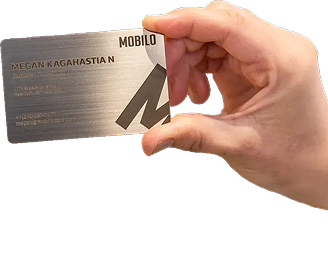
A digital business card from Mobilo shares your details with one tap of an NFC card or a scan of a QR code, and the other person needs no app to receive it. They land on your personal landing page, with your contact details, links, and booking page, and can save you to their phone on the spot. You never run out, and when your title or number changes, you update the profile instead of reordering cards.
The more useful part for a growing network runs in the other direction. With Mobilo's contact exchange and lead capture, the person you just met can share their details back, and those details feed directly into your contact list or CRM. The same-day follow-up in step 6 starts with a complete record, including where you met, instead of a photo of a card you still need to type in.
When It Fits and When It Doesn't
This setup is most beneficial when you or your team attend events or recurring groups regularly and need structured follow-up afterward. It helps even more when two or three people represent the business, because every contact lands in one place and you can see which rooms produce relationships, instead of each person keeping a private pile of cards. It is less useful if you exchange contacts only occasionally, or if your business meets every customer online and never attends in-person events. In that case, a spreadsheet and a steady LinkedIn habit will cover most of what you need.
How It Supports the Seven Steps
- Step 3: your profile is the shareable home for your introduction, website, and booking link.
- Step 6: captured contacts arrive ready for a same-day note, with no typing in between.
- Step 7: a monthly review starts from a complete contact list instead of the contacts you happened to remember to enter.
The network itself still comes from you: the warm contacts you reconnect with, the rooms you choose, and the follow-up you give. The tool's job is to make sure none of that effort leaks out between the handshake and the next conversation.
Related Reading
- How To Scale Business Networking Online
- Business Networking Automation
- Business Networking Skills
- Business Networking Plan
- Strategic Networking For Business Growth
- Where To Network For Business
- Virtual Speed Networking
- How To Build A Referral Network
- Business Networking Tips
Next steps
If you are building a network from zero, start with the foundation: your warm contacts, a one-page target list, and a single home for every new contact. Then choose two recurring rooms and commit to the same-day follow-up that turns names into relationships. To make the exchange itself effortless, start with a digital business card from Mobilo. One tap shares your details, and the other person's details flow straight into your contact list or CRM, so step 6 begins before you leave the room.
Frequently Asked Questions
How do I start networking as a small business owner with no contacts?
Start with the people who already know you: customers, past customers, vendors, your accountant, and former coworkers. Send each a short update on what you do and ask who they think you should meet. Then write a one-page list of the customers, referral partners, peers, and mentors you want to meet, and use it to choose your first recurring group.
Is joining a chamber of commerce worth it for a small business?
It can be, if the people on your target list attend and you participate actively. Many owners report little value because they join, attend a few mixers, and wait for business to arrive. Visit as a guest first, count how many attendees match your target customers or partners, and if you join, take a committee or volunteer role so you meet members repeatedly.
How much time should a small business owner spend networking?
A sustainable baseline is one or two recurring group meetings a month, a few minutes a day for follow-up and online engagement, and a half-hour monthly review of your network. Consistency matters more than volume. Showing up to the same rooms for six months builds more trust than a burst of events followed by silence.
What is the difference between a business network and a referral network?
A business network is the full set of relationships around your business, including customers, peers, mentors, local groups, and your online audience. A referral network is a smaller, more structured subset made up of partners who actively send you introductions and receive introductions from you in return. Most owners build the broader network first, then formalize the strongest partnerships into a referral network.
How can a small business build a network online?
Complete your LinkedIn profile and company page, claim your Google Business Profile, and join one online community where your buyers already talk. Connect with everyone you meet in person within a day, post weekly about problems you solve, and comment helpfully on posts from people you want to know. Online activity works best as support for in-person relationships.