

How to Run Virtual Speed Networking Events That Convert
On This Page
Virtual speed networking generates 240+ contact moments per session. The format that makes that volume possible also makes capturing it nearly impossible, and most teams are losing 90% of those leads before follow-up ever starts.
Sixty percent of attendees at a typical B2B virtual speed networking event make between 8 and 15 individual connections in a single session, according to event platform data compiled by Glue Up in 2023. That is a meaningful volume of warm contacts generated in under an hour. The common assumption is that running a structured virtual speed networking event with timed rotations and good conversation prompts is enough to generate pipeline, the rest is just rep follow-through, and that's a people problem, not a systems problem.
But the same format engineered to produce those connections is structurally hostile to capturing them. For sales managers who run these sessions, the gap between contacts made and contacts logged is a design problem. It starts the moment the first rotation timer hits zero.
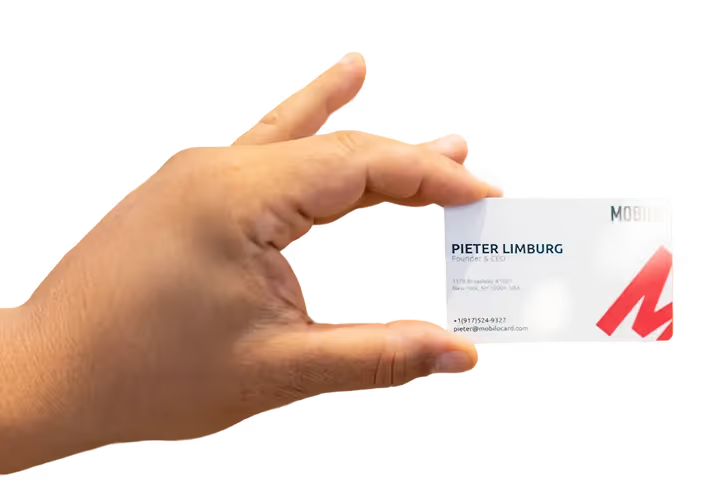
See our digital business card for how this works in practice.
For sales managers who run these sessions, the gap between contacts made and contacts logged is not a discipline problem. It is a design problem, and it starts the moment the first rotation timer hits zero.
Virtual speed networking is a structured format built around rapid, sequential one-on-one video conversations. A platform assigns attendees to private breakout rooms, a timer runs for three to five minutes per rotation, and participants are automatically moved to a new pairing. The Institute of Food Technologists (2021) identifies it as a distinct activity designed to maximize connections in a short period. A 30-person session cycling through 8 to 10 rotations generates more than 240 individual contact moments in under an hour.
The same compression that makes virtual speed networking valuable makes manual contact capture structurally impossible. Each three-to-five-minute rotation leaves no time to open a CRM tab, type a name, paste a LinkedIn URL, and return to conversation before the next room loads. Reps adapt by dropping URLs into the chat box or trusting memory. None of those methods produce a CRM-ready record.
Industry research on post-event CRM adoption consistently finds that the large majority of contacts made during fast-paced networking sessions never reach a CRM record; the friction of manual entry in the moment is too high for most reps to overcome before context fades. As the Institute of Food Technologists (2021) notes, the value of virtual event connections depends heavily on what happens after the event ends. Post-event action requires post-event data, and the breakout room format produces almost none by default. The format is not broken. The pipeline around it is.
Key takeaways
- Sixty percent of attendees at a typical B2B virtual speed networking event make 8-15 individual connections in under an hour, that is a meaningful volume of warm contacts, most of which never reach a CRM.
- The event format is not the problem. Timed rotations and good prompts generate warm contacts; the 90% loss rate happens in the gap between the last breakout room and the first follow-up.
- Structural decisions made before anyone logs in, transition buffer length, pairing logic, pre-event briefing copy, determine whether contacts are capturable, not how smooth the session feels on screen.
- Walking into a rotation without a ready digital profile, a clear one-line pitch, and a frictionless way to exchange contact information means the three-minute timer runs out before the handoff happens.
- Warm contacts from a virtual speed networking session have a shorter shelf life than almost any other lead type, personalized outreach sent within 24 to 48 hours, referencing something specific from the conversation, is the difference between pipeline and silence.
- Mobilo's Contact Exchange and Lead Capture closes the loop at the moment of exchange: when someone taps or scans a Mobilo card during a rotation, their information is captured and synced directly into your CRM, no manual entry, no lost contacts the morning after.
Why Most Virtual Speed Networking Events Lose 90% of Their Leads Before Follow-Up Begins

The Three Operational Failure Modes That Drain Your Virtual Speed Networking Pipeline
Event marketing research from Momencio, including analysis from lead capture platforms that study post-event workflows, consistently identifies the bottleneck as systemic rather than a matter of individual rep follow-through. A BDR who connects with nine people in a 45-minute session has nowhere to route those contacts inside the session itself. The platform's native tools produce chat logs, not CRM records.
Contact details end up spread across whichever surfaces were available in the moment: a copied URL here, a typed name there. This is precisely the gap that structured contact exchange tools are designed to close: Mobilo's lead capture and management layer is built to capture leads from events and field meetings directly into the CRM without relying on reps to manually log contacts, removing the single most destructive variable in post-session workflows.
The second is transcription lag. Industry data suggests sales reps spend several hours per week on manual CRM data entry after networking events, and that time is borrowed from follow-up activity itself. For teams that attend events regularly and need structured lead follow-up, the exact profile where Mobilo Contact Exchange and Lead Capture delivers the most value, this lag is not an occasional inconvenience.
The third is tool mismatch. Chat-box contact sharing, the default in most virtual platforms, was designed for one-to-one messages, not structured lead capture at scale. Both the Teams plan (marked Popular, at $4/month billed annually) and the Business plan (at $5/month billed annually) include:
- Lead enrichment
- Custom lead capture forms
- Lead capture and management
- Unlimited leads and contacts
The Contact Value Drop With Every Hour of Post-Event Delay
Speed matters more than most sales managers assume. Research on lead response time consistently shows that conversion probability drops sharply within the first hour after a connection is made, and falls further with each subsequent hour of delay. The manual entry workflow virtually guarantees that delay exceeds that window.
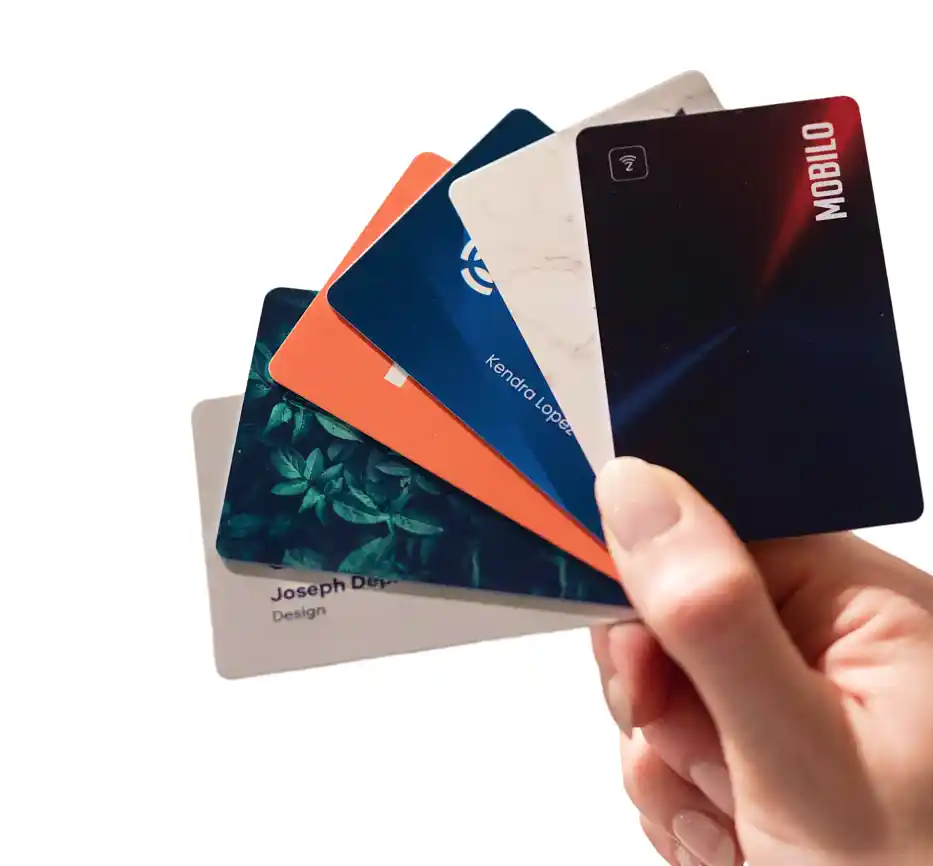
Across a team of five reps, each making ten connections per session, a capture failure rate that Momencio's 2024 event marketing research places as high as 90% for manual post-event workflows means the large majority of contacts per session may never enter the pipeline at all. That is not a bad week. Teams with client-facing roles who network frequently feel this most acutely, and they are precisely the teams for whom a hardware-plus-software approach like Mobilo's (Team, Custom Design Card, for instance, pairs an NFC card with QR Code with full team data analytics and CRM integrations, plus control, lock, and override of data fields across the whole team) eliminates the capture gap rather than just narrowing it.
90% of manual post-event leads never enter the pipeline
Why Zero Visibility Into Team-Level Contact Capture Makes Virtual Event ROI Unmeasurable
The failure compounds at the manager level. Without a structured, trackable contact exchange system, there is no way to know which reps converted their rotations into pipeline-ready leads and which did not. Momencio's 2024 research makes the point directly: event ROI measurement is impossible without analytics tied to lead capture, leaving managers with no visibility into which interactions generated actionable pipeline opportunities.
That blind spot has a compounding cost. Budget decisions, coaching conversations, and event frequency choices all get made on gut feel rather than data. Every one of these failure modes is a systems design problem, the kind that can be engineered out before the first rotation starts, without asking reps to add steps to an already compressed window.
Virtual Networking Event Planning That Sets Up Every Rotation for a Captured Contact
Organizers who treat virtual speed networking event planning as an agenda design problem, pick a platform, set timers, write a few icebreaker prompts, end up with events that run smoothly on screen but produce zero usable pipeline. The structural decisions made before anyone logs in, specifically how long transition buffers last, how pairings are assigned, and what the pre-event briefing says about contact sharing, are what determine whether each rotation ends with a captured contact or a pleasant conversation that evaporates by morning.
Design Every Rotation Around the Contact Exchange Moment
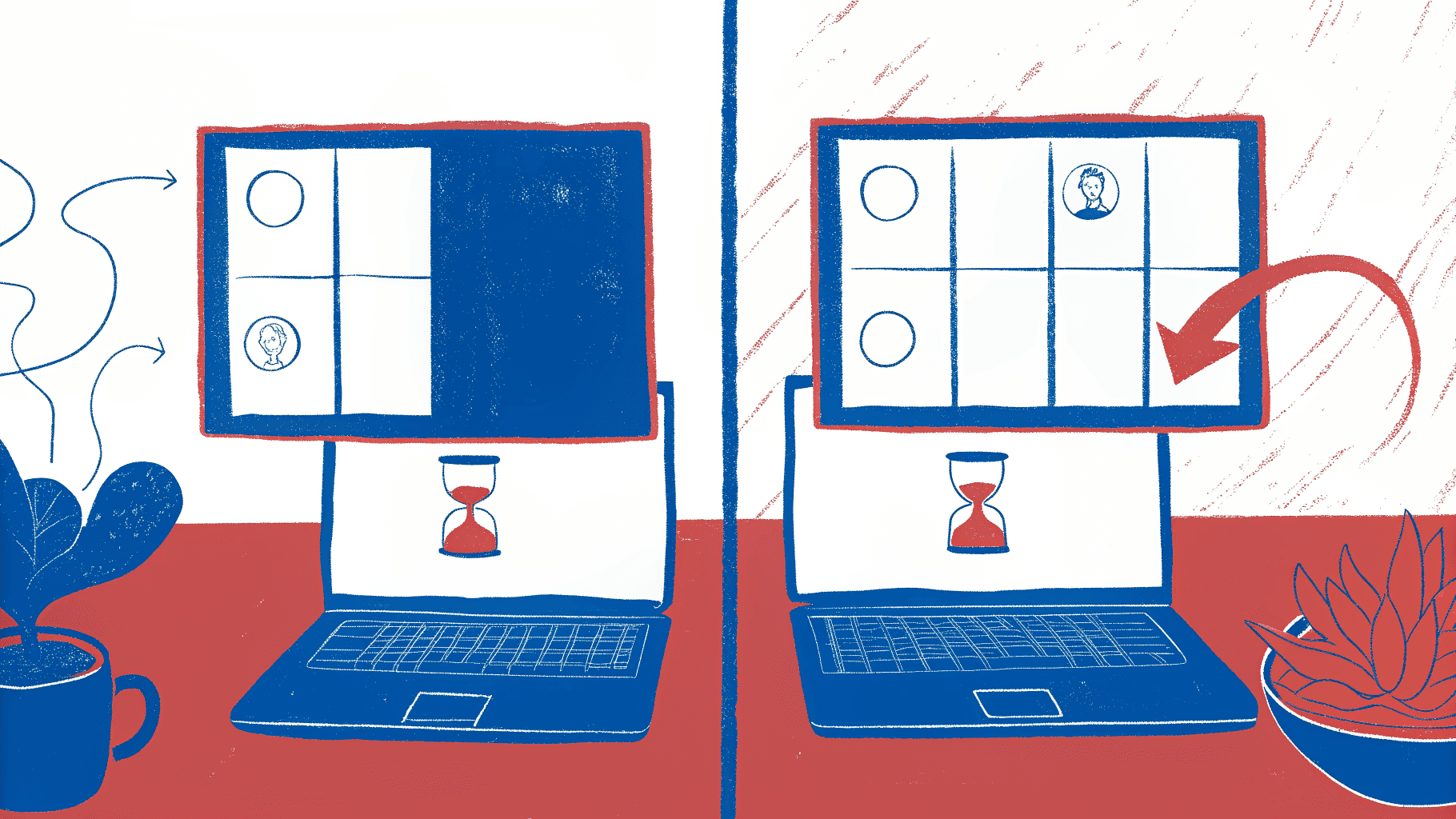
The contact exchange moment is the deliverable of every rotation. Everything else, the icebreaker, the small talk, the rapport, is infrastructure that supports it. According to a 2025 virtual event guide, building a 30-second transition buffer into each rotation gives participants dedicated time to share contact details before rooms switch, turning what would otherwise be a rushed goodbye into a structured capture moment.
Conversation prompts should be written to land with about 60 seconds left on the clock, not at the start of the round. A prompt like "Before we switch, share the best way to reach you" does more pipeline work than any icebreaker question. Organizers who add a "share your card now" cue to the timer script before each rotation ends are engineering contact capture into the schedule itself, rather than leaving it to chance.
The buffer creates the moment; the tool determines whether that moment produces a pipeline record or a sticky note. Because Mobilo is built for professionals who attend frequent networking events, a single tap or QR scan during that 30-second buffer shares a full digital profile instantly, no typing, no running out of physical cards, and routes the captured contact directly into the CRM pipeline rather than into someone's notes app.
Why Automated Pairings Outperform Free-Form Mingling for Equal-Opportunity Contact Capture
Automated or host-assigned pairings ensure every participant gets an equal opportunity to connect and eliminate dead time caused by attendees gravitating toward familiar faces. Airmeet's 2025 guide notes that structured matching removes the self-selection bias that makes free-form mingling structurally unequal, and that advantage compounds when every pairing is also equipped with a consistent contact-sharing method. Field marketing and event teams using Mobilo's Team plans, available starting at $4/month per member, billed annually, with unlimited team members, can ensure every person in every rotation taps or scans to share the same branded digital profile, feeding leads directly into the CRM with no manual reconciliation after the event.
Send a Pre-Event Briefing That Eliminates Contact-Sharing Confusion Before the First Rotation Starts
Pre-event briefings are the single highest-leverage intervention an organizer can make for contact capture, because confusion about how to share contact details during a live rotation costs time that cannot be recovered. Airmeet's event guide is direct: organizers should specify the exact link or tool attendees will use to exchange contacts so no rotation time is wasted on mechanics mid-session.
When every attending team member is equipped with a Mobilo Digital Business Card before the event starts, the briefing becomes straightforward: tap or scan at the 60-second cue, and the contact goes straight into the pipeline. Because Mobilo cards work with no-internet QR sharing, there is a built-in fallback that does not depend on a stable event Wi-Fi connection, removing the single most common mid-rotation failure point.
How Participants Can Prepare for Virtual Speed Networking to Make Every Minute Count
Platforms like Remo and Wonder.me can rotate you into a new room every 180 seconds, but they cannot hand you the words, the questions, or the stable connection that make those seconds count.

Craft a 45-Second Elevator Pitch That Earns the Follow-Up Not Just the Handshake
A sharp elevator pitch works because first impressions form quickly. Research in interpersonal perception consistently shows that judgments about competence and trustworthiness begin to solidify within the first moments of an interaction, leaving little room for a slow warm-up in a three-minute rotation. The participants who consistently earn follow-ups open with a single, concrete outcome statement: who they help, what problem they solve, and what changes as a result. Forty-five seconds is sufficient to deliver all three, and it leaves 90 seconds for the other person to respond, which is where real rapport forms. Rehearse it out loud, not in your head. A pitch that reads well in a notes app often stumbles when spoken under the mild pressure of a live rotation, so run it aloud until the phrasing feels automatic.
Pre-Session Tech Check for Virtual Speed Networking
Technical failures are not rare. Connection disruptions are a routine feature of remote meetings. Platforms and productivity researchers have repeatedly documented that a meaningful share of video calls experience some form of audio, video, or connectivity failure, which means across an eight-rotation session, a participant who skips a pre-check is statistically likely to lose at least one conversation mid-sentence. In a 3-minute window, a 30-second reconnect is not a minor inconvenience. It is 17 percent of your available time, gone.
Run this checklist at least 20 minutes before joining: test your camera and microphone in the target platform's own settings page (Remo and Wonder.me both offer pre-join audio/video checks); close browser tabs and background applications that compete for bandwidth; confirm your lighting puts your face clearly in frame rather than silhouetting you against a window. Having your digital card or share link open and ready in a separate tab before the first rotation begins is the final step that most participants skip.
Prepare Two or Three Open-Ended Questions That Move the Conversation Past Small Talk Instantly
The questions you bring matter as much as the pitch you deliver. Research by Arthur Aron and colleagues, replicated widely in interpersonal psychology, shows that questions requiring a personal or reflective answer create measurably stronger connection in short interactions than questions answerable with a yes or a fact. In a 3-minute rotation, one well-aimed open question can do more relational work than two minutes of mutual biography exchange.
Draft your questions before the session and keep them visible on a sticky note or second screen. The goal is to make the other person feel genuinely seen in under 180 seconds, because the contacts who feel understood are the ones who respond to follow-up.
Make the Hand-Off Instant So the Rotation Timer Never Steals Your Lead
The moment the conversation clicks is the moment most virtual speed networkers lose the contact, because fumbling for a phone, typing out a URL, or hunting for a paper card in a remote session burns the last 30 seconds of a rotation that was already tight. The contacts we work with across teams tell us the same thing: the exchange itself is fine; it is the hand-off that evaporates the lead.
This is the specific problem Mobilo is built to remove. A single tap or QR scan shares your full contact details instantly, so the hand-off happens in the final seconds of a rotation rather than consuming them. For individuals, the Pro plan at $3/month covers unlimited taps and scans, unlimited leads and contacts, lead capture and management, and a free Digital Wallet Card, so the hand-off works whether or not the other person has any app installed.
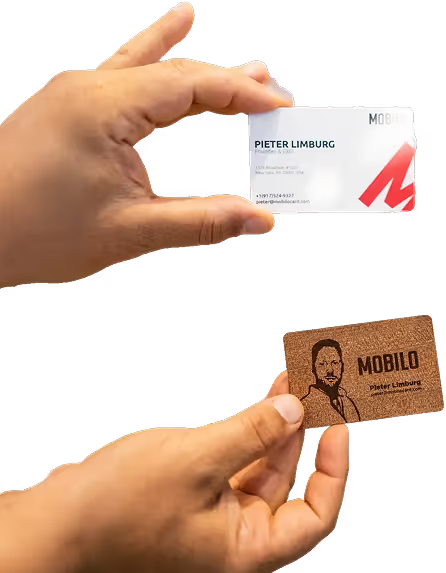
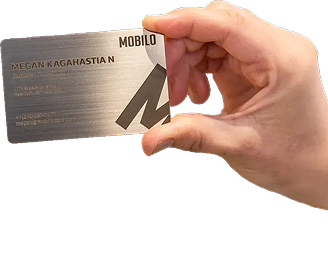
For teams running coordinated outreach across multiple reps, the pattern that makes virtual speed networking scale, the Teams plan at $4/month (billed annually) adds unlimited team members, central billing, team management, full data field control so reps stay on-brand, brandable QR codes, HR directory sync-ready structures, and full team data analytics with CRM integrations through 6,000 Zapier connections. Every card option under the Teams tier, from the Digital Wallet Card included at $0 + $4/month to Paper Plus cards, Custom Design NFC cards in standard, Wood, or Metal, carries unlimited taps and scans, so the rotation timer is never the constraint.
How to Exchange Contact Information Efficiently During Virtual Speed Networking Rotations
That handoff, the one that determines whether a contact enters the pipeline or disappears, depends entirely on what you do with the information exchanged during the rotation.

Why Pasting Your LinkedIn URL Into the Chat Box Is a Pipeline Dead End
The familiar approach is straightforward: a rotation ends, you paste your LinkedIn URL into the chat, and you move on feeling like the exchange is complete. On platforms like Hopin and Zuddl, however, chat messages in breakout rooms scroll out of view within seconds as other participants type, the session host posts instructions, and system notifications stack up.
The hidden cost compounds fast. 30% of B2B contact records go stale every year as people change roles, companies, and contact details, so any delay between the exchange moment and the CRM entry carries a real cost. That delay is made worse by a compounding friction point: manually typing contact details, a phone number, an email address, a job title, into multiple people's phones during back-to-back rotations takes roughly three minutes per person.
Shareable QR Code and Link for Instant Contact Exchange and CRM Sync
Have your digital business card's shareable link or QR code ready before the first rotation begins. When the final 20 seconds of a rotation arrive, displaying your QR code on screen takes less time than typing a URL. The other person scans it with their phone camera, no app required, and your full contact profile saves directly to their device, with no follow-up chase required on either side.
Mobilo's Teams plan, the platform's most popular tier at $4 per month billed annually, is built for this use case. For teams that need tighter control, locking down data fields so a rep cannot accidentally share an outdated phone number or an off-brand title, the Team Custom Design NFC Card adds the ability to control, lock, and override data fields at the admin level, which is most valuable once a business has five or more employees sharing Mobilo and needs centralized control over branding and contact information.
The Teams plan also includes lead enrichment, custom lead capture forms, unlimited leads and contacts, and insights and analytics, all backed by 24/7 customer support, the full infrastructure for closing the loop between the exchange moment and the CRM record without manual intervention.
That infrastructure matters because database decay from stale B2B contact records costs organisations approximately 546 hours annually. Wasted outreach hours, missed follow-ups, and duplicated entry work accumulate quickly across a team over the course of a year, and avoidable entry delays add to that total. The Teams plan connects to 6,000 integrations through Zapier, so the contact captured at the exchange moment can route directly into whichever CRM or outreach tool the team already uses, without a separate import step.
One honest constraint: a CRM admin needs to configure the integration upfront, and the team needs to standardise on displaying the QR code during rotations. Once those two steps are in place, the system runs without further friction. What happens in the 24 hours after the last rotation closes determines whether that contact becomes a conversation or a forgotten row in a spreadsheet.
Related Reading
- How To Scale Business Networking Online
- Business Networking Automation
- Business Networking Skills
- Business Networking Plan
- Strategic Networking For Business Growth
- Where To Network For Business
- How To Build A Referral Network
- Business Networking Tips
Follow-Up Best Practices That Turn Virtual Speed Networking Contacts into Pipeline
Warm contacts from a virtual speed networking event have a shorter shelf life than almost any other lead type. There is no physical artifact to rediscover, no badge scan to pull from an event app days later. The moment a rotation ends, the context that made the connection feel real starts fading, for both sides.
"Small business owners and sales professionals lose track of follow-ups after sending quotes, getting busy, and letting potential pipeline contacts go cold, directly mirroring the drop-off risk after virtual speed networking events."
— what we hear from small business owners and sales professionals
Personalized Follow-Up Within 48 Hours
Send the follow-up message within 24 to 48 hours, and anchor it to one specific detail from the conversation. According to industry research, personalized cold emails sent within 24-48 hours of a networking interaction achieve significantly higher reply rates than those sent later, as contact memory and context decay rapidly after virtual events. The tactic that consistently outperforms generic email in this window is a LinkedIn connection request with a one-sentence note referencing something the contact actually said, sent first, followed by a short email the next morning. The connection request signals recognition; the email creates a second touchpoint before the lead goes cold.
Referencing something specific is the structural difference between a warm follow-up and a cold one. A personalized message sent days after an interaction is functionally equivalent to a cold email, because the recipient's recall of shared context has already degraded. A rep who cannot remember which rotation produced which contact cannot write that message. That is a data capture problem, not a writing problem.
Visibility Is the Real Follow-Up Problem
The hidden cost extends beyond the hours lost to manual entry work; contacts that never reach the CRM cannot be sequenced, tracked, or recovered. When every digital business card tap or QR scan routes a contact directly into the CRM in real time, a capability available on Mobilo's Teams and Business plans, which include team management, central billing, and full analytics, a sales manager reviewing the insights dashboard the morning after a session can see exactly which reps converted rotation-level context into logged, sequenced leads. That visibility turns virtual event ROI from an attendance metric into a pipeline metric the team can actually act on.
Related Reading
- Networking Ideas For Small Business
- Business Networking Event Ideas
- Business Networking Trends
- Business Networking Conversation Starters
- Business Networking Questions
- Business Networking Opportunities
- Networking Ideas For Virtual Events
- Virtual Networking Ideas For Large Groups
Next steps
If your virtual speed networking sessions are generating real connections that never make it into the CRM, the path forward starts with treating contact capture as a system design problem, not a rep behavior problem. Start with our digital business card.
The research on post-event contact decay is direct: recipient memory of a shared interaction degrades to the functional equivalent of cold outreach within 24 to 48 hours, meaning the warm-contact advantage a structured rotation creates disappears faster than manual data entry can capture it. At the same time, 80% of marketers consider live events critical to company success, yet the gap between the interaction and the CRM entry is where the majority of virtual speed networking pipeline is currently being silently discarded. Together, those two realities point to one action: automate the capture at the moment of exchange, before the rotation timer resets.
Start with a digital business card from Mobilo, configured with a custom lead capture form and a live CRM sync before your next session opens. Every rep displays their QR code at the 60-second cue, the contact scans it, and the record routes directly into the pipeline with no manual entry step. The warm context that made the rotation valuable is already in your CRM before the next breakout room loads.
Frequently Asked Questions
Why do so many contacts from virtual speed networking sessions never make it into the CRM?
The format itself is the problem, not rep effort. Each three-to-five-minute rotation leaves no time to open a CRM tab, type a name, and paste a LinkedIn URL before the next room loads, so reps fall back on chat-box links or memory, neither of which produces a CRM-ready record. Industry research places the contact capture failure rate for manual post-event workflows as high as 90%.
How long should the transition buffer between rotations be, and what should happen during it?
A 30-second transition buffer between rotations gives participants dedicated time to share contact details before rooms switch, turning a rushed goodbye into a structured capture moment. Organizers should also add a verbal or timer-script cue, something like "share your card now", roughly 60 seconds before each rotation ends so the exchange happens on schedule, not as an afterthought.
Does it actually matter how quickly you follow up after a virtual speed networking session?
Yes, significantly. Research on lead response time cited in the post shows that conversion probability drops sharply within the first hour after a connection is made and continues to fall with every additional hour of delay, meaning a contact logged two days after a session is effectively a cold name attached to a fading memory rather than a warm lead.
What should a pre-event briefing cover to prevent contact-sharing confusion during rotations?
A pre-event briefing should specify the exact method attendees will use to exchange contacts, the moment in each rotation when that exchange happens, and what to do if the method fails, because confusion about mechanics during a live rotation costs time that cannot be recovered. Having a fallback that doesn't depend on stable event Wi-Fi, such as a no-internet QR share, removes the most common mid-rotation failure point.
Why is it so hard for managers to measure ROI from virtual speed networking events?
Without a structured, trackable contact exchange system, there is no way to know which reps converted their rotations into pipeline-ready leads and which did not. As Momencio's 2024 research notes, event ROI measurement is impossible without analytics tied to lead capture, which means budget decisions, coaching conversations, and event frequency choices all get made on gut feel rather than data.