


How to Set Business Networking Goals That Actually Pay Off
On This Page
Most networking goals measure how busy your reps were, not whether a single contact entered your pipeline. Here is where the measurement breaks and how to fix it.
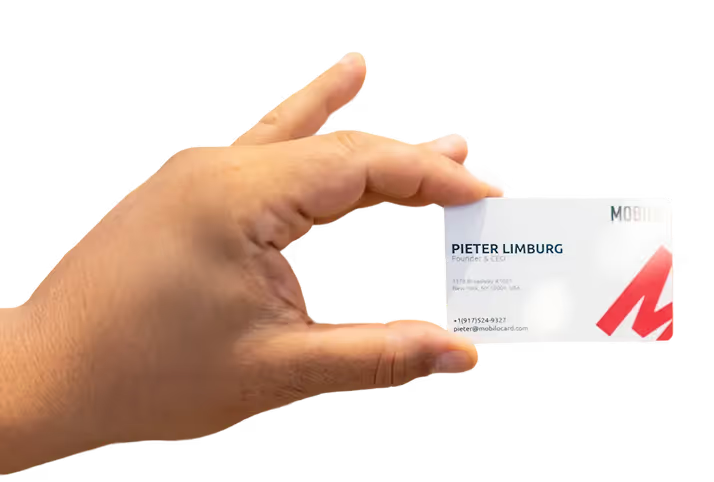
Sales managers hit their event attendance targets every quarter and still stare at a pipeline report that barely moved. The break doesn't happen at follow-up; it happens the moment a goal gets written, because most networking goals measure the wrong thing entirely. A smart digital business card exists precisely because the exchange moment, not the follow-up sequence, is where pipeline either enters the system or disappears.
According to IGE Group (2024), 79% of event leads never convert to sales, a number that points to systemic failure in capture and processing, not individual rep laziness. Yet most networking goals are still written around badge scans, connections added, and events attended. These are activity counts.

They tell you how busy a rep was. They say nothing about whether a single contact entered a structured pipeline process.
79%
of event leads never convert to sales
The gap between activity and outcome is a measurement design problem.
A rep can attend four trade shows, collect 80 contacts, and still produce zero attributable pipeline because the goal never required those contacts to be captured, qualified, or routed anywhere in real time.
The follow-up call that never happened is a symptom. The root cause is a goal that treated the handshake as the finish line instead of the starting gun.
Without a data trail at the point of exchange, the goal has no feedback loop. There is no way to know which events produced warm contacts and which produced noise. There is no way to course-correct mid-quarter. As momencio's research confirms, only 21% of event leads are ever followed up on, yet sales teams keep treating follow-up cadence as the variable to fix rather than the capture process that precedes it.
21%
of event leads ever followed up on
The fix starts with redesigning what a business networking goal actually measures.
Before building your Lead Generation system, you need to know which category of goal you are even setting, and most professionals are conflating three very different ones.
Key takeaways
- Attendance numbers and LinkedIn connections are activity metrics, they tell you nothing about pipeline unless every contact has a clear capture and follow-up path behind it.
- Industry data shows 90% of new contacts never enter a CRM because manual entry is too much friction, that gap is a goal-design problem, not a discipline problem.
- SMART networking goals fail when the framework gets applied to the activity instead of the outcome, a goal with no data trail is a wish with a deadline.
- Five distinct networking goal categories exist, relationship building, referral generation, lead capture, brand visibility, and knowledge exchange, and collapsing them into one volume target is where most plans break down.
- A focused 35-minute daily routine outperforms a blown afternoon at a single conference because consistency compounds; sporadic bursts don't.
- Tailoring goals to career stage and industry matters more than any volume target, a first-year BDR and a senior sales manager building a referral channel need completely different frameworks.
- The majority of paper business cards are discarded within days of an event, which means most contacts exchanged at your last conference never had a realistic chance of entering your pipeline.
- Mobilo's NFC digital business cards close the contact capture gap by syncing every tap directly into your CRM in real time, no scanning, no manual entry, no lost leads.
What Are the Core Categories of Business Networking Goals
That conflation has a structure, and it maps onto five distinct networking goal categories most sales managers collapse into one. Nearly half of B2B marketers struggle to reach their marketing goals, and the root cause is upstream: goals are poorly defined and under-categorized before any execution begins. The result is a familiar pattern where reps attend events, collect contacts, and still produce little measurable pipeline because four of the five goal categories were never assigned a target, a measurement method, or a follow-up sequence in the first place. The common assumption is that the shortfall is a follow-up discipline problem: reps aren't sending enough post-event emails, or the events were the wrong fit. The goal-setting process itself is assumed to be fine.
Most sales managers accept that different networking goals produce different types of contacts, but then route every contact into the same bulk CRM import done days after the event, erasing the category context that made each connection meaningful. A partnership candidate and a qualified prospect need completely different follow-up sequences. Collapsing them into one workflow guarantees that most contacts produce no measurable outcome at all.
The five categories below are not motivational labels. Each is a distinct operational track with its own measurement logic:
- Lead Generation, Convert event contacts into discovery calls
- Brand Visibility, Build industry presence through speaking and publishing
- Knowledge Sharing and Mentorship, Exchange expertise and build reciprocal advisory relationships
- Strategic Partnerships, Qualify co-venture or referral-partner candidates
- Talent Acquisition, Build a warm pipeline of passive candidates
Goal Category: Lead Generation
- Core Objective: Convert event contacts into discovery calls
- Example Measurable Target: 3 qualified prospects per event into discovery calls
- Primary Contact Type: Buyer or end-user
Goal Category: Brand Visibility
- Core Objective: Build industry presence through speaking and publishing
- Example Measurable Target: 2 speaking slots or panel features per quarter
- Primary Contact Type: Audience, media, organizers
Goal Category: Knowledge Sharing and Mentorship
- Core Objective: Exchange expertise and build reciprocal advisory relationships
- Example Measurable Target: 1 reciprocal mentorship relationship per networking cycle
- Primary Contact Type: Peers, senior practitioners
Goal Category: Strategic Partnerships
- Core Objective: Qualify co-venture or referral-partner candidates
- Example Measurable Target: 1 co-venture candidate qualified per conference
- Primary Contact Type: Complementary service providers
Goal Category: Talent Acquisition
- Core Objective: Build a warm pipeline of passive candidates
- Example Measurable Target: 5 high-potential passive candidates per quarter
- Primary Contact Type: Potential hires not actively job-seeking
1. Lead Generation - Convert 3 New Qualified Prospects Per Event Into Discovery Calls

Lead generation is the category almost every sales manager already tracks, but rarely with enough precision to produce consistent results. A vague goal of "generate leads at the event" has no conversion trigger attached to it. The target that actually moves pipeline is specific: convert three new qualified prospects per event into booked discovery calls within 72 hours of the conversation.
Time is the critical variable here. A contact who receives a personalized follow-up within 24 hours is significantly more likely to convert than one who gets a generic email four days later. The goal is a booked call.
Where lead generation goals consistently break down is in the moment of exchange itself. Reps either fail to capture contact details cleanly in the field, or they capture them in formats that lose context by the time they return to the office. Mobilo's lead capture and management tooling addresses this directly: digital business cards with built-in lead capture forms let reps collect, tag, and route contacts on the spot, without manual re-entry. The paper business card scanner extends that same capture logic to contacts who still hand over physical cards. Combined with 6,000 integrations through Zapier, those contacts move into the right CRM workflow, segmented by goal category, before the event floor empties.
2. Brand Visibility - Secure 2 Speaking Slots or Panel Features Per Quarter

Brand visibility as a networking goal is often treated as a vanity metric. It is not. A sales manager who appears on two industry panels per quarter builds the kind of ambient credibility that shortens every future sales conversation. Prospects arrive already familiar with the rep's point of view.
The measurable target here is a concrete deliverable: two confirmed speaking slots or panel features per quarter, tracked against outreach sent to event organizers. That distinction matters because it separates intention from a commitments-based outcome.
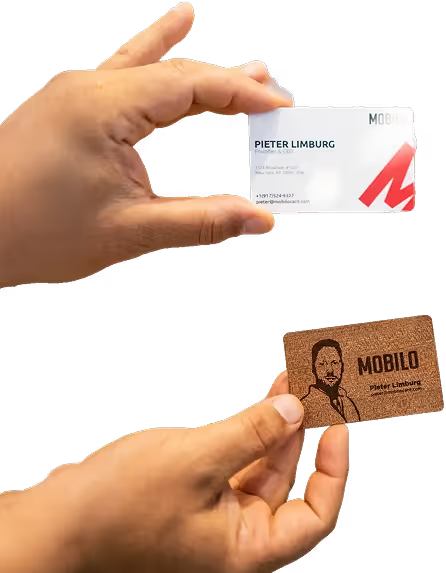
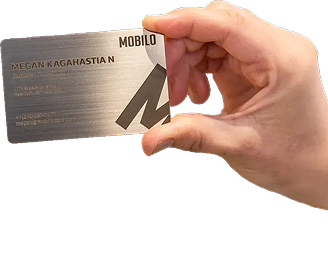
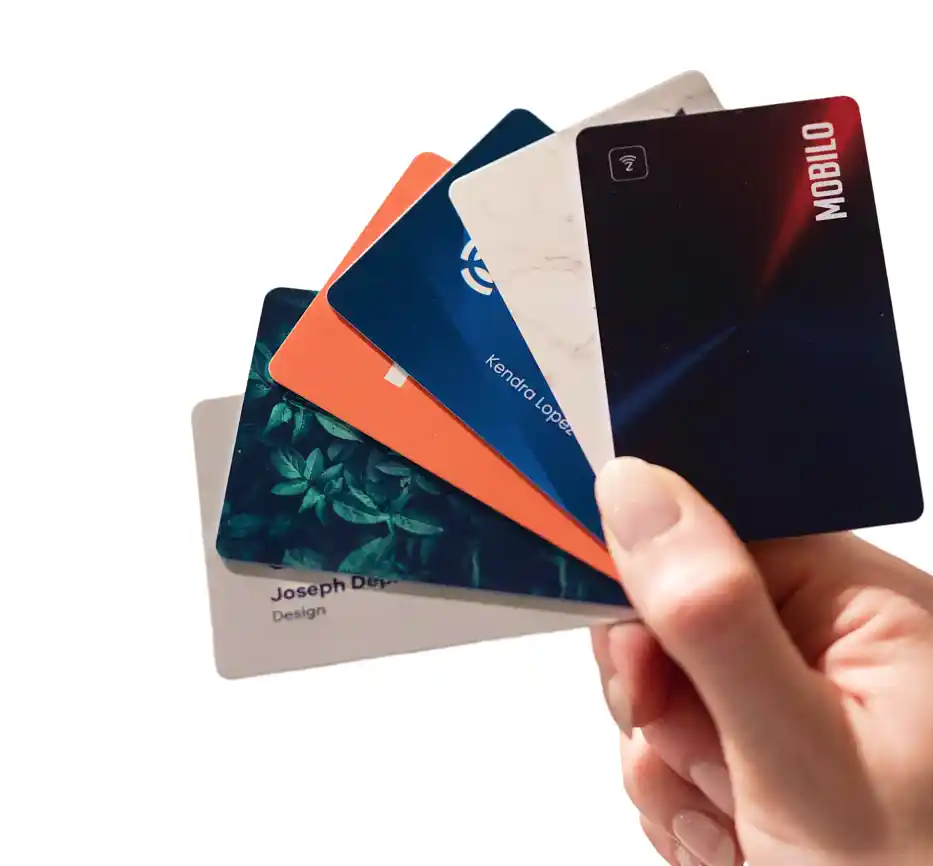
Brand perception also operates at the physical touchpoint level. The first impression a rep makes when sharing contact details is part of the brand visibility goal, not separate from it. Mobilo's Custom Design NFC Cards, available in Classic, Plastic, Wood, and Metal, are most impactful precisely when brand perception and memorable first impressions are the priority.
A Metal Custom Design Card handed to a conference organizer or panel host communicates a level of seriousness that a paper card exchange does not. The card itself becomes a brand visibility moment, independent of any follow-up sequence. Brandable QR codes and personalized business card templates extend that consistency across an entire team, so every rep at every event carries the same on-brand first impression.
3. Knowledge Sharing and Mentorship - Establish 1 Reciprocal Mentorship Relationship Per Networking Cycle

This category is almost universally ignored by sales managers setting quarterly goals. That is a significant miss. A reciprocal mentorship relationship, one where both parties exchange expertise rather than one person simply advising the other, produces referrals, warm introductions, and market intelligence that no lead-gen campaign can replicate. Knowledge sharing and mentorship of this kind compounds over time in ways that transactional networking does not.
The target is one new reciprocal mentorship relationship per networking cycle, defined as a structured cadence of at least monthly contact. Value-first contribution is the mechanism: sharing resources, making introductions, and endorsing contacts before asking for anything in return.
One underappreciated failure mode in this category is the vague ask. Professionals who leave a mentorship or peer conversation with something like "let me know if you hear of anything" have handed their contact no actionable direction. That kind of openness sounds collegial but makes it functionally impossible for the other person to help.
The goal framing must be specific enough that the contact knows exactly what a useful introduction looks like. A digital business card with a custom-built landing page, available to Business plan subscribers at the $5/month tier, gives the recipient a persistent, on-brand reference point for who you are, what you offer, and what kind of connection would be valuable. That specificity does more to activate a mentorship network than any follow-up email sequence.
4. Strategic Partnerships - Identify and Qualify 1 Co-Venture Candidate Per Conference

Strategic partnerships are the highest-value, lowest-volume category in this framework. A single well-qualified co-venture partner can generate more pipeline than an entire quarter of event attendance, precisely because the referral arrives pre-credentialed. Yet most professionals have no formal qualification workflow for partnership candidates. They treat them the same way they treat sales leads, which means the relationship stalls at the first handshake.
The concrete target is one qualified co-venture candidate per conference, with "qualified" defined in advance: complementary service offering, overlapping customer profile, and a confirmed interest in a structured referral or co-marketing arrangement. Without that definition, partnership conversations stay perpetually exploratory.
Routing matters here in a way it rarely does for lead generation. Partnership candidates must be tagged and segmented at the point of contact exchange, not categorized during a CRM cleanup session a week later. Mobilo's lead enrichment, custom lead capture forms, and team management features, included in both the Teams plan at $4/month and the Business plan at $5/month, allow managers to control the data fields their reps capture in the field and lock in the category context before it is lost. A partnership candidate tagged correctly at the event enters a different nurture track automatically, rather than being absorbed into a bulk import that erases the distinction.
5. Talent Acquisition - Add 5 High-Potential Passive Candidates to a Warm Pipeline Each Quarter

Talent acquisition is almost never treated as a formal networking goal by sales managers, despite the fact that industry data shows that 70% of people found their current position through a connection. It surfaces as an afterthought, usually when a role opens and the pipeline is empty.
The operational target is five high-potential passive candidates added to a warm pipeline each quarter. Passive candidates require a different contact-routing logic than sales leads. They need a separate sequence, a longer nurture timeline, and a relationship-first cadence. Routing them into a sales pipeline destroys the relationship before it starts.
A persistent frustration in this goal category is that networking referrals, even warm ones, frequently fail to convert into actual offers, leaving both parties unclear about whether the connection produced any value. The operational fix is better contact segmentation from the first exchange. For sales managers deploying Mobilo across a team, keeping candidate contacts cleanly separated from buyer contacts at the system level requires enforcing that segmentation discipline in the field, not after the fact.
Knowing the five categories is the first move, but a category without a concrete, time-bound target attached to it is still an intention. The next section shows exactly how to apply the SMART framework to each category so that every networking goal you set comes with a built-in measurement system, not just a motivational label.
Related Reading
- Business Relationship Building
- How To Build A Network For A Small Business
- How To Build A Strong Sales Pipeline
- How To Reach B2b Decision Makers
- How To Ask For Referrals In Sales
- Expand Your Network
- Business Networking Goals
- Business Cards For Networking
- How To Start A Business Networking Group
How to Structure Networking Goals Using the SMART Framework
"Users struggle to find efficient tools or systems to manage and track SMART goals, suggesting that applying the SMART framework to networking goals may also face an organizational/tooling barrier."
— what we hear from goal-setting professionals

The Capture-and-Route Specification Every SMART Networking Goal Needs
A goal can be Specific, Measurable, Achievable, Relevant, and Time-bound and still produce zero pipeline if it has no defined path from the moment of contact exchange to a timestamped CRM entry. That path requires three things to be specified in advance:
- Who logs the contact
- Where it goes (which CRM field or pipeline stage)
- By when
The organizational and tooling barrier here is real; even professionals who write solid SMART goals on paper often have no system that makes the logging step automatic, so it collapses into manual entry that never happens.
This is where Mobilo earns its place in a SMART goal architecture. Mobilo is built so that the tap or scan is the logging event, eliminating the gap between contact exchange and CRM entry entirely.
Pair that with Mobilo's lead capture and management, unlimited leads and contacts, and 6,000 integrations through Zapier, and the route from tap to CRM field is defined inside the tool, not left to post-event memory. For teams of five or more, Mobilo's Teams plan ($4/month, billed annually) adds team management, central billing, insights and analytics, and the ability to control, lock, and override data fields, meaning the capture-and-route specification you write into your SMART goal is enforced at the platform level, not just honored by habit.
Identifying Your Target Network and Right Venues
Defining the right audience and venues before setting goals is what makes the Specific and Relevant dimensions meaningful rather than aspirational. Momencio's research supports this directly: analytics that identify which events and audience segments actually produce pipeline make it possible to set goals that are both Specific and Relevant to revenue objectives.
Mobilo's insights and analytics, available on both the Teams and Business plans, give teams the post-event visibility to evaluate which venues and contact profiles actually converted, so each planning cycle produces a sharper audience definition than the last. For organizations reaching the scale where centralized branding and contact-info control matter most (typically five or more employees using Mobilo), the Teams plan's data field controls and team management layer make it practical to enforce a consistent capture standard across every rep at every event. The Business plan ($5/month, billed annually) extends that with HR directory sync, enterprise SSO, a custom domain, and white-glove onboarding for teams of 100 or more seats, features that bring the capture-and-route specification into compliance with enterprise identity and data governance requirements.
An Actionable Weekly Networking Routine That Keeps Goals on Track
Five to six hours a week is all a disciplined networking routine actually requires, and yet most sales managers either spend far less on unfocused, reactive outreach or blow entire afternoons on a single conference and call it done. According to We Are In Business Networking, spending all your time networking leaves no room for actual client work, so balance is essential, and the goal is a consistent split across outreach, follow-up, and relationship nurture rather than a periodic sprint.
The 3.5-Hour Weekly Block
- 60 minutes of new outreach (Monday, 30 minutes on LinkedIn targeting your ideal customer profile; Thursday, 30 minutes identifying referral candidates from recent conversations)
- 90 minutes of follow-up distributed Tuesday and Wednesday in 15-to-20-minute video calls with contacts from the prior week's events
- 60 minutes of relationship nurture on Friday, which means CRM updates, a short congratulatory note on a contact's recent win, or a relevant article forwarded with a one-line observation
That structure only holds, however, if contact data is already in the system when Tuesday arrives. Mobilo's Teams plan ($4/month per member, billed annually) routes tap-and-scan contact data directly into the CRM pipeline at the moment of exchange, so Tuesday's follow-up calls start from a clean, already-logged record rather than a backlog of manual entry.
The Team tier's lead capture and management tools, paired with full team data analytics and CRM integrations, mean the 90-minute follow-up block is spent on conversations, not data cleanup.
The 24-48 Hour Follow-Up Window
A short video call of 15 to 20 minutes outperforms a follow-up email when the goal is to qualify whether a deeper relationship is worth building, and those calls are also the natural moment to ask for a warm introduction to someone else in the contact's network. Warm introductions generated this way convert at significantly higher rates than cold outreach in B2B sales contexts.
None of that is achievable if the contact data hasn't been entered yet.
Mobilo addresses this at the point of tap or scan: the Teams plan's lead capture and management features, unlimited leads and contacts, and Zapier integrations mean a contact captured on the event floor is visible to the follow-up sequence within minutes, not days. The result is that the window stays open long enough to use it.
Networking Between Deals
The most common mistake sales managers make is treating networking as a deal-sourcing activity that switches off once the pipeline looks healthy. The fix is maintaining the same 3.5-hour weekly cadence year-round, even when you are not actively hunting new clients. We Are In Business Networking frames this directly: networking should be treated as an ongoing routine encompassing both online platforms and in-person events as complementary venues, not isolated one-off activities.
Mobilo supports that continuity at the team level as well. The Business plan ($5/month, billed annually) extends this further with HR directory sync and enterprise SSO, so as the team grows, every new member's card is onboarded into the same pipeline-connected system from day one, and the nurture cadence scales without additional manual overhead.
Related Reading
- How To Scale Business Networking Online
- Business Networking Automation
- Business Networking Skills
- Virtual Speed Networking
- How To Build A Referral Network
- Business Networking Tips
- Business Networking Plan
- Strategic Networking For Business Growth
- Where To Network For Business
Common Mistakes That Make Networking Goals Stay Abstract
Most networking goals fail before execution begins because the design flaws are invisible until the pipeline numbers disappoint. The two patterns that cause this most reliably are measuring the wrong variable entirely and treating the moment of contact exchange as the end of the job rather than the start of a relationship. Understanding where the breakdown actually happens, whether in how activity gets counted or how contacts move from event to CRM, is what separates a goal that drives revenue from one that just sounds strategic.
Common networking goal mistakes share one root cause: activity metrics get treated as outcome metrics, while the infrastructure needed to connect those activities to revenue is never built.
1. No Attribution Across Touchpoints - You Can't Fix What You Can't See

The attribution gap is the mistake that makes every other mistake invisible. Without visibility into which events, conversations, and follow-up touchpoints actually generated pipeline, sales teams have no feedback loop and no basis for course-correction mid-cycle. Industry B2B attribution research found that without proper attribution tracking, marketers cannot identify which touchpoints or events are actually generating pipeline, making it impossible to optimize spend or strategy mid-cycle. A rep who cannot trace a closed deal back to the conference where it started has no basis for deciding whether to attend next year. The goal stays abstract because the signal was never captured.
2. Running Out of Cards or Sharing Stale Contact Details at the Worst Moment

Business networking goals depend on a clean first impression, yet reps routinely arrive at high-stakes events with depleted card stacks or outdated phone numbers and titles. That single friction point breaks the credibility the goal was built around. The tradeoff is real: even a perfectly targeted prospect list collapses when the handoff moment fails because the physical or digital contact mechanism wasn't maintained.
3. Launching Outreach Before Your Personal Brand and Pitch Are Ready

Setting ambitious business networking goals without first building a coherent personal brand means well-targeted outreach lands on a LinkedIn profile that contradicts the pitch or a digital presence that simply doesn't exist. Prospects who receive a compelling introduction and then find an inconsistent or empty online footprint disengage immediately. The goal stays abstract because the credibility infrastructure it requires was never built first.
4. Treating Networking as a Pre-Quota Burst Instead of a Continuous System

Episodic, quota-driven networking is one of the most damaging patterns in B2B sales.
This is also the reason referral-based networking so often produces nothing more than a single call, or nothing at all: without a continuous relationship baseline, the ask arrives in a vacuum. Lead tracking at events only produces usable data when there is a continuous baseline to compare against; a burst of badge scans once per quarter generates noise, not signal. Consistent, low-intensity contact maintenance between quota cycles is what converts a contact list into a referral network.
5. Goals Set Without a Defined Follow-Up Cadence Tied to Pipeline Stages
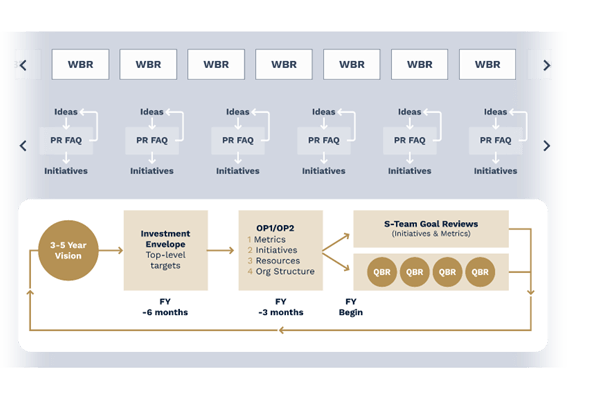
Business networking goals that stop at 'meet more prospects' without specifying a follow-up cadence anchored to pipeline stages never convert introductions into revenue. Without a structured sequence, first touch, value-add check-in, referral ask, contacts stall in limbo and goals remain aspirational. The core limitation is that networking effort and sales pipeline management are treated as separate systems when they must be integrated to produce measurable outcomes.
Why Networking Goals Without a Follow-Up Cadence Stay Abstract and Unmeasurable
A networking goal without a structured follow-up cadence is a contact collection exercise. Industry analysis of B2B attribution gaps confirms that teams investing in events without outcome-based tracking continue reinforcing the false belief that follow-up volume is the core lever, while the upstream goal-setting failures go unexamined. Networking system visibility breaks down completely when follow-up steps are not anchored to pipeline stages: a first-touch email is not the same action as a warm-introduction ask, and treating them identically collapses the data trail.
Mobilo's lead capture and management features, included on both Teams ($4/month) and Business ($5/month) plans, pair with Zapier integrations and custom lead capture forms to anchor every follow-up step to a specific pipeline stage, so the feedback loop is structural rather than dependent on rep discipline. Without that structure, there is no course-correction, and no way to know whether the networking goal was ever measuring the right variable.
How to Tailor Networking Goals to Your Industry and Career Stage
A first-year BDR working a SaaS territory and a senior sales manager building a referral channel in commercial construction share almost nothing in common as networkers, yet both often default to the same goal template: attend more events, collect more contacts.

Why BDRs and Senior Sales Managers Need Different Networking Goals
Effective networking goal-setting requires identifying a precise target network defined by industry vertical, company size, buyer role, and geography before selecting venues, so that effort is directed at high-signal contacts rather than broad audiences.
Mobilo's Team and Business plans both include unlimited taps and scans, lead capture and management, lead enrichment, and native integrations through Zapier, so the contact goes from tap to pipeline without a manual data-entry step.
Industry Context Determines Your High-Signal Venues
The pattern holds consistently across the market: what works in B2B SaaS (digital communities, LinkedIn, virtual events) differs significantly from professional services (referral networks, association memberships) or construction (trade shows, local contractor associations).
That same goal structure applied to a commercial construction BD manager, where broader field trends show in-person interactions with vendor representatives rank among the most influential B2B purchase touchpoints, will systematically underperform.
A trade-show floor in commercial construction favors a physical tap: Mobilo's Team tier offers Custom Designed NFC Cards with QR Code in standard, wood, and metal finishes, all with unlimited taps and scans, full team data analytics, CRM integrations, and the ability to control, lock, and override data fields across the team. A SaaS rep working primarily digital and virtual channels can start with the Team Digital Wallet Card, currently included at $0 plus the $4/month Teams plan, and still get the same analytics and team management infrastructure.
Reciprocity as a Stage-Dependent Networking Goal
This is well established as a general principle: early-career reps should prioritize receiving mentorship and building volume, while senior professionals should weight making introductions, endorsing contacts, and sharing knowledge as primary networking objectives rather than informal courtesies.
The Contact Capture Gap Your Networking Goals Cannot Afford to Ignore
The gap described above has a number: the large majority of paper business cards are discarded within days of an event.

Why the Card-Tap Is a Pipeline Event Not a Social Gesture
The failure does not happen during follow-up. It happens at the moment of exchange. Cleverly's 2025 analysis of CRM data decay makes the mechanism clear: data decay begins the instant contact information is captured, and any static capture method creates a liability rather than an asset in a pipeline tracking system. A contact without a timestamped, routed CRM record is a gap in the pipeline.
A networking goal measured in "contacts exchanged" is only as valid as the data trail behind it. The card-tap is the first measurable action inside the goal's data trail, or it is nothing.
The Hidden Cost of the Post-Event Data Entry Lag
Sales operations research consistently finds that reps devote a material share of their working week to manual CRM data entry, time that produces no new pipeline on its own and compounds the follow-up delay problem. That is roughly 14% of a standard working week consumed by a task that produces no new pipeline on its own. It also compounds a second problem: industry lead-response research has consistently shown that response rates fall sharply when follow-up is delayed beyond the first few minutes after initial contact, a pattern documented repeatedly in sales operations benchmarking studies.
Cleverly's 2025 report identifies the root cause directly: CRM inaccuracy is a data capture infrastructure problem. Closing the decay gap requires a system decision at the point of contact, choosing tools that create an unbroken, timestamped record from first handshake to CRM entry.
The cost savings that follow from that decision can be significant. Landsea Homes eliminated $39.50 per year in print costs after switching to a digital business card workflow with automatic lead capture.
The SMART framework gives your networking goals a target and a timeline, but without a capture system that feeds real data into that framework from the first handshake, you are measuring effort, not outcomes. The infrastructure decision and the goal-setting decision are inseparable.
Related Reading
- Business Networking Trends
- Business Networking Opportunities
- Networking Ideas For Small Business
- Business Networking Event Ideas
- Business Networking Conversation Starters
- Business Networking Questions
- Networking Ideas For Virtual Events
- Virtual Networking Ideas For Large Groups
Next steps
If your team keeps hitting event attendance numbers while the pipeline report barely moves, the path forward starts with recognizing that the goal-setting process itself is the source of the failure. A networking goal with no defined route from handshake to CRM entry is not a goal. It is a wish. Start with our digital business card.
The contact capture moment is not a logistical detail that follows from the goal. It is the single point where the goal either becomes measurable or collapses entirely. And because relationship value decays at roughly 30% per year from the moment contact data is captured, a same-day capture habit is not a nice-to-have. It is the highest-leverage action in the entire networking routine. Those two facts point to the same conclusion: the tool that closes the gap between the handshake and the CRM record is not a convenience purchase. It is part of the goal architecture.
Start with a digital business card from Mobilo. Each tap or scan routes the contact into your CRM in real time, with a timestamp, a source tag, and a follow-up task already attached, so every networking goal you set is measurable from the first exchange, not reconstructed from memory the night before a pipeline review.
Frequently Asked Questions
Why do most networking goals fail to generate any real pipeline?
Most networking goals are written around activity counts, badge scans, connections added, and events attended, rather than outcomes tied to pipeline. The real failure happens at the moment of contact exchange: when contacts are captured inconsistently in the field, no downstream follow-up system can recover the lost opportunity, which is why 79% of event leads never convert to sales.
How do I make a networking goal actually SMART instead of just an activity checklist?
A genuinely SMART networking goal names a specific contact type, attaches a number to a logged outcome, assigns a routing destination, and sets a recurring deadline, for example, converting three qualified prospects per event into booked discovery calls within 72 hours. Goals like "attend three industry events this quarter" satisfy the surface reading of SMART but have no measurement axis tied to pipeline, which is the critical difference.
What are the different types of business networking goals I should be setting?
There are five distinct categories: Lead Generation (converting event contacts into discovery calls), Brand Visibility (securing speaking slots or panel features), Knowledge Sharing and Mentorship (building reciprocal advisory relationships), Strategic Partnerships (qualifying co-venture or referral-partner candidates), and Talent Acquisition (building a warm pipeline of passive candidates). Most sales managers collapse all five into one undifferentiated workflow, which guarantees that most contacts produce no measurable outcome.
Why should I treat strategic partnerships as a separate networking goal from lead generation?
A qualified co-venture partner can generate more pipeline than an entire quarter of event attendance because referrals arrive pre-credentialed, but partnership candidates require a completely different follow-up sequence and nurture timeline than sales leads. If they are routed into the same bulk CRM import, the category context that made the connection meaningful is erased and the relationship stalls.
How quickly should I follow up with a contact I met at a networking event?
A contact who receives a personalized follow-up within 24 hours is significantly more likely to convert than one who gets a generic email four days later. The post identifies the 72-hour window after the conversation as the target for converting a qualified prospect into a booked discovery call.