


How to Start a Business Networking Group That Actually Grows
On This Page
Most networking groups don't die from lack of interest. They die from lack of structure. Here is how to build one people actually keep showing up to.
The common assumption among networking group founders is that the event itself, the room, the agenda, the attendance count, is the product. If people showed up and exchanged cards, the networking "worked." But most business networking groups don't die from lack of interest. They die from lack of infrastructure. A packed first meeting feels like proof of concept, but attendance at meeting one is almost never the real test. The test is whether anyone shows up to meeting four. See our digital business card for how this works in practice.
"Networking groups often devolve into sales pitches rather than genuine relationship-building, causing attendees to disengage and stop returning after the first few meetings."
— what we hear from networking group organizers
The failure pattern is consistent and predictable. An organizer puts genuine effort into the launch, the room fills up, energy runs high, and then, quietly, people stop coming. There was no structural reason to return and no visible proof that returning would be worth the time.
Strong launch energy is a lagging indicator of marketing, not a leading indicator of group health. Banks' Business Solutions (January 2025) found that groups without a lock-out or accountability structure risk members quietly drifting away, as there is no formal obligation or proven recurring value to justify the time investment of returning to meetings. The first meeting produces goodwill.
Goodwill is not a retention mechanism.
The problem is that organizers read a full room as validation of the model, when what it actually validates is curiosity. Curiosity fades fast. Without a system that demonstrates ongoing value, each subsequent meeting asks members to make a fresh cost-benefit calculation with no new evidence in their favor.
Members rarely quit. They just stop showing up, no feedback, no explanation. 4BR (2024) notes that sustained membership depends on members consistently experiencing tangible value; without that demonstrated value, attendance declines and groups dissolve.
When members can't point to a single concrete outcome from attending, the group becomes optional. Optional things get skipped.
A group with no feedback mechanism and no visible output has no way to detect the problem until the room is half-empty. That's a design failure. The fix is a better flyer or a fancier venue less often than it is a whiteboard decision: defining exactly who this group is for and why they can't afford to miss it.
Key takeaways
- Most networking groups don't die from lack of interest, they die from lack of infrastructure built after the first meeting ends.
- Niche definition is a retention decision first, a recruitment decision second, a mixed room of unrelated industries produces polite conversation, not a referral pipeline.
- Your founding cohort of 5-10 warm contacts is the group's most persuasive recruiting asset; their names and titles do more selling than any public listing.
- Promotion is not a launch task, groups that post once and rely on word of mouth hit an invisible ceiling within 90 days when the founding cohort stops referring.
- The first meeting agenda is a closing argument for membership, not a schedule, attendees decide whether to return within the first 60 seconds.
- Every warm introduction has a 48-hour shelf life; without a system to capture contact details at the moment of exchange, the meeting's value evaporates by Friday.
- 90% of new contacts never enter a CRM because manual entry creates too much friction, the follow-up infrastructure has to remove that step entirely.
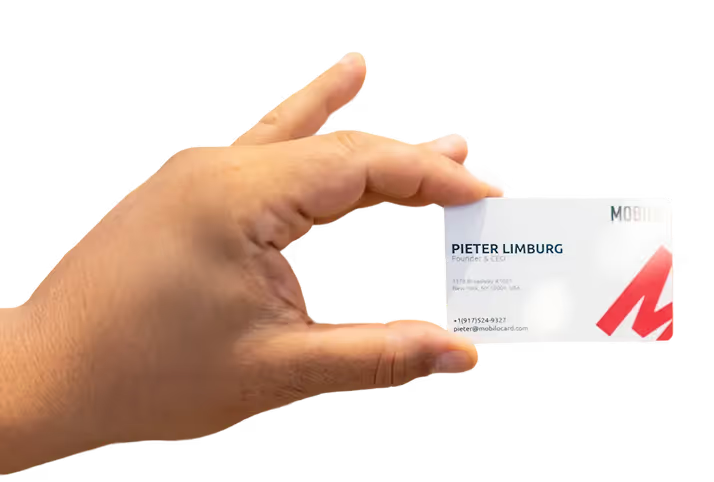
- Mobilo Cards close that gap by letting every member share their digital profile and capture leads with one tap, syncing contacts directly into your CRM before the room clears.
Define Your Niche and Target Audience Before You Book a Single Room
Defining your niche before you schedule a venue is a retention decision.

The "All Business Owners Welcome" Retention Trap
Open-door positioning feels inclusive but quietly undermines the room's usefulness. When every seat in the room represents a professional whose referral problems mirror your own, attendance stops feeling like an obligation and starts feeling like a competitive advantage, and members self-select to stay.
$4/month
Per member for full team CRM tools
The practical test is simple: can every person in the room refer business to at least three other people in the room within the next 90 days? If the answer is no, the niche is too broad. Redefine it around a tighter professional ecosystem before you recruit a single founding member.
One Seat per Industry, How BNI Proves Exclusivity Sells
BNI (Business Network International), the world's largest business referral organization, limits membership to one representative per professional category per chapter, making exclusivity by profession a core structural feature and recruitment hook. That single rule creates urgency: a commercial insurance broker who hears that the seat is taken will feel the loss of a protected referral territory far more sharply than any feature list could motivate them. BNI's model endures because it solves the relevance problem at the structural level; the room is designed so every referral relationship is load-bearing.
A networking group's long-term survival is determined less by the quality of its events than by whether the organizer has engineered member-to-member dependencies that persist independently of the organizer's presence. BNI's one-seat-per-category model works because it makes individual members structurally irreplaceable to one another, so the group's value cannot be replicated by simply attending a different event. That structural irreplaceability is the standard worth designing toward from day one.
Survey Five to Ten Potential Founding Members Before You Commit to a Format
Pre-launch conversations with potential founding members reveal whether your niche hypothesis matches real market demand. They also surface format preferences early, which matters because cadence and venue decisions live or die on whether the founding cohort will actually show up.
Those same conversations generate contact data that needs a home, and Mobilo's Teams plan ($4/month per member, billed annually) includes full team data analytics and CRM integrations, team management, and the ability to control, lock, and override data fields across every card. You get visibility into which reps are actively networking and converting connections into pipeline, not just a static list of contacts.
Every option under the Teams tier includes 24/7 customer support, brandable QR codes, lead enrichment, and 6,000 integrations through Zapier, so the contact intelligence captured during your founding-member outreach flows directly into whatever CRM your group already uses.
For organizers running solo or piloting a single-chapter concept before scaling to a full team, the Pro plan ($3/month, billed annually) provides the same lead capture, unlimited leads and contacts, insights and analytics, and Zapier integrations for a single member, with a free Digital Wallet Card included.
Related Reading
- Business Relationship Building
- How To Build A Network For A Small Business
- How To Build A Strong Sales Pipeline
- How To Reach B2b Decision Makers
- How To Ask For Referrals In Sales
- Expand Your Network
- Business Networking Goals
- Business Cards For Networking
- How To Start A Business Networking Group
How to Determine Meeting Frequency, Location and Membership Policy That Members Will Actually Honor
One underappreciated reason early trust matters so much: groups that skip relational scaffolding and jump straight to rigid participation structures, forced referral quotas, mandatory contribution metrics, tend to produce members who game the system rather than genuinely engage.

Warm outreach and professional exclusivity operate by the same underlying mechanism: they lower the perceived risk of committing to a group by establishing prior trust or protected territory before anyone asks for a yes. This is the core insight most organizers miss: trust must be staged before commitment can be requested, and the founding-member recruitment phase is the only window in which that staging can happen naturally.
trust must be staged before commitment can be requested
Warm Outreach First, Cold Outreach Never First
Begin with people who already trust you personally, and do not move to cold or semi-warm outreach until you have five to eight confirmed founding members. Your first-degree network, former colleagues, clients, referral partners, people you have met at industry events, carries an existing trust balance that dramatically lowers the perceived risk of saying yes to something new and unproven. Mobilo's Teams plan ($4/month per member, billed annually) is built for exactly this: team members tap or scan to exchange contact information, and the lead flows automatically into your CRM through any of 6,000 Zapier integrations, so no warm prospect falls through the gap between a promising first conversation and a second touchpoint.
According to AnyRoad, capturing attendee data and measuring engagement are among the most reliable ways to demonstrate, and compound, the real ROI of in-person brand activations, which is precisely what a founding-member recruitment event is.
6,000
Zapier integrations for seamless CRM flow
That visual consistency is itself a trust signal: it tells a warm prospect they are being invited into something professionally run, not something still figuring itself out.
Professional Exclusivity as a Trust Mechanism, Not a Marketing Tactic
Full Team Data Analytics and CRM integrations mean you can track which members are generating the most connections at each meeting, giving you concrete data to demonstrate exclusivity's value to prospective members who want proof the seat is worth holding. AnyRoad notes that attendance rate and engagement metrics are the foundation for understanding whether an event format is actually working.
The Trust-Staging Sequence in Practice
For teams scaling beyond the founding cohort, Mobilo's Business plan ($5/month per member, billed annually) adds HR directory sync, enterprise SSO, a custom domain, and white-glove onboarding for groups of 100 seats or more, infrastructure that makes sense once the trust-staging phase has produced a community worth systematizing.
Get the trust sequence right, and the venue and cadence you locked in earlier become the stage for something that already has momentum.
How to Recruit Founding Members Who Become the Group's Social Proof Engine

Recruit 5 to 10 Warm Contacts Personally Before Any Public Listing
Five to eight confirmed founding members gives you enough visible energy to signal legitimacy to newcomers while remaining small enough to manage through direct, one-to-one outreach. Budget 30 to 45 minutes for this step. It is the highest-return half-hour in the group's early life.
LinkedIn First-Degree Connections and Chamber of Commerce Relationships as Founding-Member Sources
Your best founding-member candidates are already inside two places: your LinkedIn first-degree connections and your local Chamber of Commerce member directory.
LinkedIn first-degree connections are the most efficient starting pool because the relationship is already established and the professional context is visible. Chamber of Commerce directories are an underused second source; members have already opted into professional relationship-building, which means the disposition to join a curated peer group is already present.
Give Founding Members a Named Role So They Show Up and Bring Others
Assigning founding members a named role does more than acknowledge their early commitment; it creates identity investment.
When someone holds a named role, attendance becomes a matter of personal consistency, not just calendar convenience. That identity investment is also what prompts founding members to recruit on your behalf, because inviting a peer to "a group I helped found" carries far more social weight than forwarding a Meetup link.
Where and How to Promote Your Networking Group Beyond Word of Mouth
Promotion is not a launch task. Groups that post once, fill the room, and wait for word of mouth to do the rest hit an invisible ceiling within 90 days, when the founding cohort stops referring and no external pipeline exists to replace natural attrition. The fix is a layered channel stack where each platform runs continuously, not just around launch week.
1. Meetup - Built-In Discovery for Professionals Actively Seeking Groups

Meetup functions as a discovery platform where professionals actively seek groups to join, giving new organizers built-in access to a motivated audience without paid promotion. A group listing with a specific niche headline, such as "B2B Sales Leaders in Austin," outperforms a generic "Business Networking" label because search intent on Meetup is high-specificity. Across the market, groups with defined-niche titles generate higher RSVP-to-attendance conversion rates than broad-category listings. The tradeoff: Meetup's algorithm rewards active groups, so organizers who post one event and go quiet lose ranking quickly.
2. LinkedIn Events and Facebook Groups - Targeting Professional and Community Audiences at Scale
LinkedIn Events places your group directly in the feed of professionals filtered by title, industry, and geography, making it the strongest channel for reaching mid-market buyers and senior sales leaders who rarely browse Meetup. Facebook Groups serve a different but equally valuable function: they sustain conversation between meetings, generating member posts and comments that new visitors read before deciding to attend. Use both together. LinkedIn drives discovery; Facebook builds the community depth that justifies renewal.
3. Consistent Posting Cadence - Event Announcements, Member Spotlights, and Recap Posts as Social Proof
Recap and spotlight content outperforms standalone event announcements in organic reach. What most teams report is that posts featuring real member outcomes generate significantly higher engagement rates than event-only posts, because the algorithm prioritizes content that drives on-platform interaction rather than simple promotional announcements. A member spotlight showing a real business outcome from a referral made inside the group answers the question every prospect silently asks: "Will this actually be worth my time?" The practical cadence is one event announcement, one member spotlight, and one post-meeting recap per cycle. Organizers who skip the recap post waste the highest-intent moment in the entire content calendar.
4. BNI, Chamber Mixers, and Industry Associations - Established Models That Define What You're Differentiating From
BNI chapters operate on strict exclusivity and referral-accountability structures that many professionals find either too rigid or too expensive to access, particularly at the small-business level. Positioning your group against that context is a legitimate recruitment angle: independent groups can offer the relationship depth of BNI without the formal dues structure, or the niche specificity that a broad Chamber mixer cannot deliver. Be concrete about the difference in your listing copy. Vague claims of being "more relaxed" do not convert; a clear niche and format description does.
What to Include in a First Meeting Agenda That Converts Attendees into Members
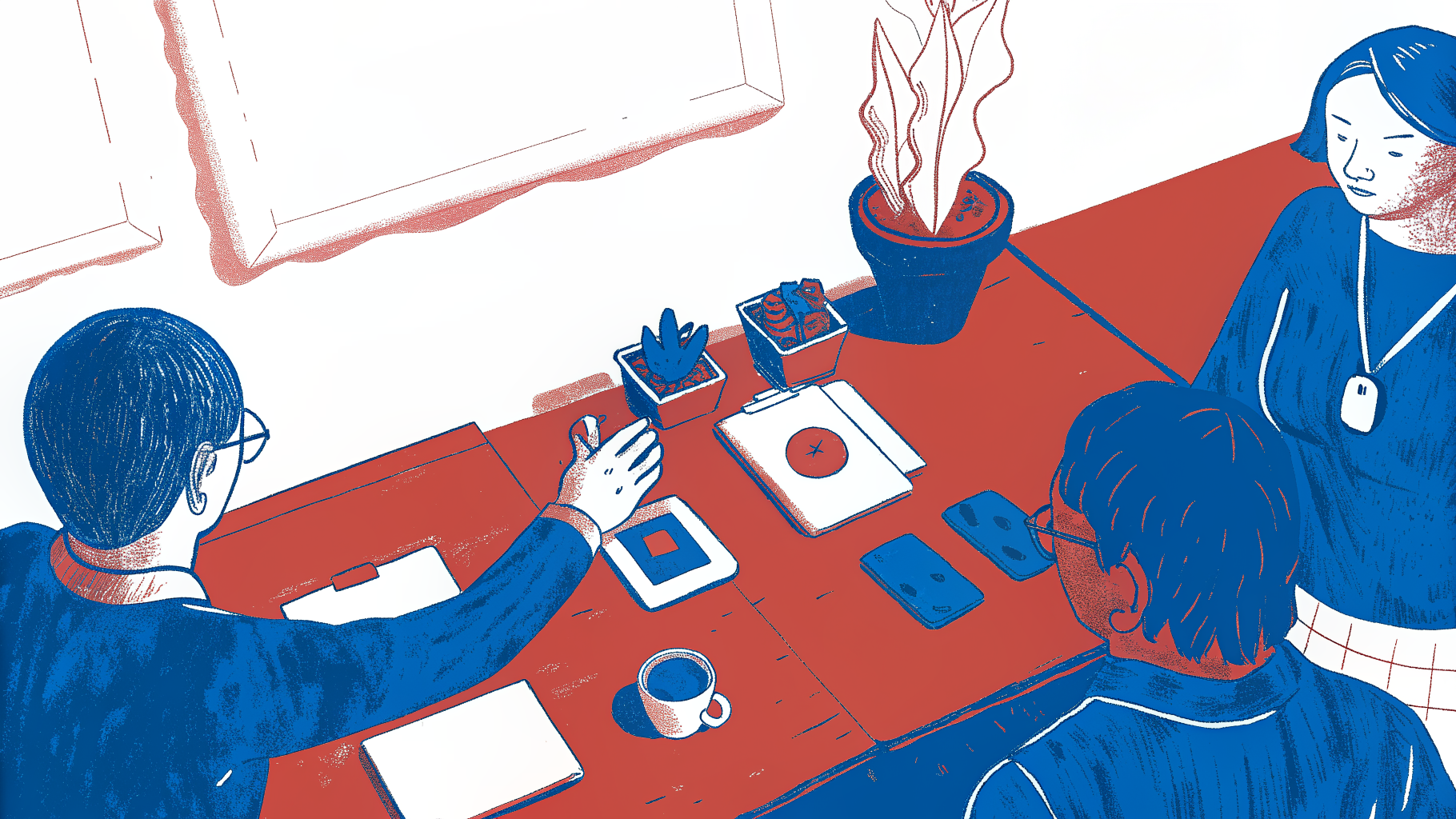
The Proven Agenda Sequence From Open Networking to Closing Commitment in 90 Minutes
Structured agendas with clear time blocks, including an open networking period on arrival, a welcome segment, individual introductions, and a featured segment, are key drivers of return attendance.
Minutes 0-15: open networking on arrival. Attendees filter in at different times, so this buffer absorbs late arrivals without disrupting the formal program.
Minutes 15-25: welcome and vision. The organizer explains the group's purpose, the niche it serves, and what members can expect at every future meeting, grounding newcomers before the room moves on.
Minutes 25-65: elevator pitches, 30-60 seconds each. Research on communication and cognitive retention consistently supports the 30-to-60-second window as optimal for comprehension and recall02868-0/fulltext).
Minutes 65-80: featured value segment. One member presents a short talk, case study, or skill-share relevant to the group's niche, giving attendees a concrete reason to return.
Why the First Meeting Is Also a Contact-Capture Operation
Contact exchanges during live events are rarely tracked, leaving organizers without visibility into the relationship graph forming in the room. Without a reliable capture system, warm connections made during open networking or after pitches dissolve into forgotten business cards by the following week.
Mobilo removes that dependency entirely by turning every card tap or QR scan into a logged, CRM-ready contact record.
For teams, Mobilo's Team tier, the platform's most popular plan at $4/month billed annually, pairs unlimited team members with full team data analytics, CRM integrations, and the ability to control, lock, and override data fields across every card in the group.
How to Build the Digital Contact Layer That Keeps Connections From Dying After the Meeting Ends
Every Warm Introduction Has a 48-Hour Shelf Life
Every warm introduction your group generates has a 48-hour shelf life. Without a system to capture it at the moment it happens, the group's most valuable output quietly disappears before it ever reaches anyone's pipeline.

This points to something organizers rarely state explicitly: networking groups that never define a measurable participation standard are structurally incapable of retaining members past initial enthusiasm, because members cannot perceive value they cannot see accumulating. Silent quitting is an organizer design failure.
The 48-Hour Decay Window - Why In-Room Introductions Die Before Monday Morning
Industry contact-management research consistently finds that the overwhelming majority of paper business cards are discarded within a week of being received, so the vast majority of in-person contact exchanges produce no lasting relationship or follow-up. Every card that doesn't survive the week represents a conversation your members had, a referral that could have moved through someone's pipeline, and a group outcome that stays invisible to anyone trying to measure ROI.
That is a design problem, and it belongs to the organizer to fix.
Set a Group-Wide Contact-Exchange Standard at Meeting One, Not Meeting Six
The organizer who waits until meeting three to introduce a contact-capture standard has already lost two meetings' worth of relationship data, and the habit of informal, untracked exchange is already set.
NFC business card infrastructure solves this at the moment of exchange. A single tap routes contact details directly into the member's CRM with no manual entry required, so the contact exists in the pipeline before the member has even crossed the parking lot. That immediacy is what closes the 48-hour decay window before it opens.
Making the Group's Output Measurable - Turning Contact Graphs Into a Trackable Connection Record
Without a digital contact-capture standard, organizers are left with a fragmented mix of paper cards, QR code screenshots, and manually typed URLs that create an inconsistent and largely unusable contact graph. A consistent capture method replaces that fragmentation with a data layer every member and sponsor can actually read.
Landsea Homes documented $21,000 per year in savings across 400 employees after replacing paper card logistics with a digital system, a figure calibrated to enterprise scale, but one that illustrates the compounding cost of manual contact handling that networking group organizers encounter at smaller volumes every meeting cycle. That data layer also answers the question sponsors actually ask: "What did membership produce?"
Related Reading
- How To Scale Business Networking Online
- Business Networking Automation
- Business Networking Skills
- Virtual Speed Networking
- How To Build A Referral Network
- Business Networking Tips
- Business Networking Plan
- Strategic Networking For Business Growth
- Where To Network For Business
How to Collect Feedback and Iterate Your Format So the Group Keeps Growing Past Month Three

Send the Post-Feedback Email Within 24 Hours and Make It Do Double Duty
That email should also include a shared attendee contact list (with permission), so members can begin follow-up immediately. Organizers who relied on collecting physical cards at the door face a real problem here: reconstructing names and emails from a stack of cards introduces errors and delays that undermine the responsiveness the feedback loop is meant to demonstrate. Mobilo's Teams plan, starting at $4/month billed annually, includes full team data analytics and CRM integrations, unlimited leads and contacts, and lead capture and management, so you're pulling a verified, real-time record rather than reconstructing who spoke to whom after the fact.
Turn Feedback Data Into a Visible Format Change Before the Next Meeting
Idealis Consulting found that making visible format changes members can see signals responsiveness and builds early loyalty, because members feel heard rather than surveyed. Announce the change explicitly at the next meeting: "You told us the open networking ran too long, so we've tightened it to 20 minutes and added a structured ask-and-offer round." Mobilo's insights and analytics, available on both the Teams and Business plans, give organizers a concrete, ongoing read on engagement patterns rather than relying on gut feel or one-off conversations.
Codify Reciprocity Norms After the First Feedback Round, Not Before It
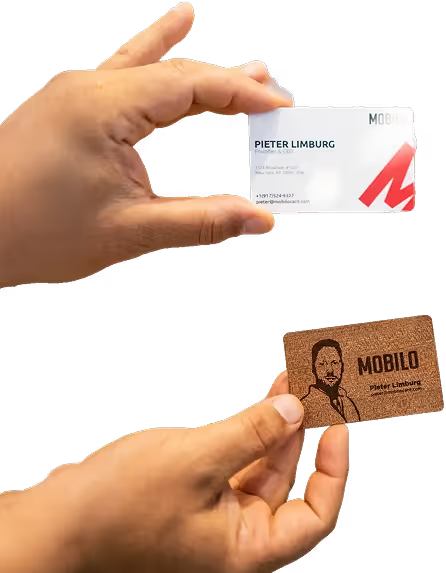
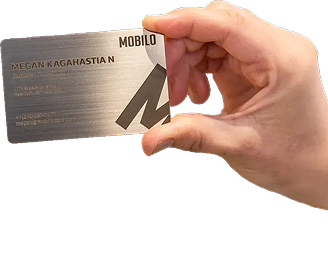
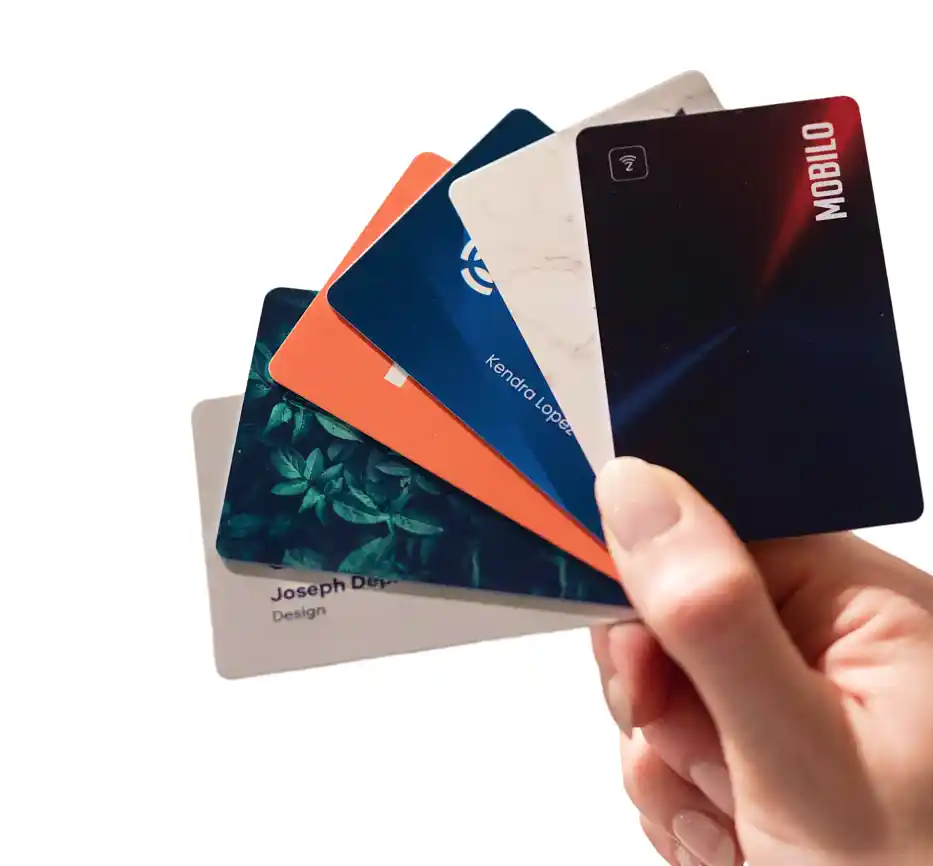
Wait until after the first feedback round to set ground rules. Idealis Consulting confirms that establishing clear expectations around active membership, including referral sharing and reciprocal introductions, measurably reduces post-launch drop-off. Mobilo's team management and data field controls, included across Team tier cards, whether members carry Custom Design NFC, Metal, Wood, or Paper Plus cards, mean the organizer can enforce consistent, professional contact sharing across the whole group without chasing anyone to update their details.
Related Reading
- Business Networking Trends
- Business Networking Opportunities
- Networking Ideas For Small Business
- Business Networking Event Ideas
- Business Networking Conversation Starters
- Business Networking Questions
- Networking Ideas For Virtual Events
- Virtual Networking Ideas For Large Groups
Next steps
If your group is generating warm introductions that never reach anyone's pipeline, the path forward starts with treating the event as a trigger, not a product. A packed first meeting validates curiosity, not infrastructure. The relationship layer built around that meeting, including real-time contact capture and CRM sync, is what converts a promising launch into a group that still has momentum at month six. Start with our digital business card.
The 48-hour decay window on warm introductions means that every handshake without a structured capture method starts a countdown toward that contact becoming permanently unworkable. Paper cards and manual entry do not just create inconvenience; they structurally guarantee lead leakage at a rate that makes in-person networking economically indefensible as a pipeline strategy. At the same time, members who cannot perceive measurable value accumulating across meetings cannot justify returning, which means the organizer who skips trackable participation moments is engineering silent quitting, not preventing it. Together, these two failure points point to the same fix: equipping your founding cohort with a contact layer that makes every tap a CRM entry and every meeting a documented output, before the first attendee walks through the door.
Start with a digital business card from Mobilo, provision every founding member before meeting one, and let each tap push a verified contact record into your CRM automatically. The group you build around that infrastructure will have something most networking groups never produce: proof of what it generated.
Frequently Asked Questions
Why do most networking groups fail after the first few meetings?
Most groups fail not from lack of interest but from lack of infrastructure, there is no structural reason for members to return and no visible proof that returning is worth their time. Groups without a lock-out or accountability structure risk members quietly drifting away, and when members can't point to a single concrete outcome from attending, the group becomes optional and gets skipped.
How do I know if my networking group's niche is too broad?
Apply this practical test: can every person in the room refer business to at least three other people in the room within the next 90 days? If the answer is no for more than one or two members, the niche is too broad and needs to be redefined around a tighter professional ecosystem before you recruit a single founding member.
Is the BNI model worth using as a blueprint for a new networking group?
BNI's one-seat-per-category model is worth studying because it solves the relevance problem at the structural level, limiting membership to one representative per professional category creates urgency, makes individual members structurally irreplaceable to one another, and means the group's value cannot be replicated by attending a different event. The post highlights that this model endures precisely because it engineers member-to-member dependencies that persist independently of the organizer's presence.
Should I start recruiting members through a broad social media blast or email campaign?
No, begin with warm outreach to people who already trust you personally, and do not move to cold or semi-warm outreach until you have five to eight confirmed founding members. Organizers who conflate founding-member recruitment with general promotion skip the trust-staging sequence entirely and force cold audiences to make high-commitment decisions without the relational scaffolding that actually drives conversion.
Do I need to survey potential members before I set the meeting format and location?
Yes, and the post recommends reaching out to five to ten professionals who fit your target niche and asking three specific questions: what referral relationships they currently lack, whether they would pay for a protected seat in a structured group, and what meeting format they would actually honor for twelve months. Their answers reveal whether your niche has enough shared pipeline logic to sustain a group and surface format preferences before you lock in any structural decisions you may later regret.