

10 Ways to Reach B2B Decision Makers and Win More Deals
On This Page
Your reps are finding the right people. The contacts are still disappearing. Here is where the workflow breaks and what actually fixes it.
The common assumption is that if reps are given the right prospecting tools to find decision makers and are coached to follow up faster, the conversion rate from first meeting to pipeline will improve. Sales teams that invest in verified contact data, intent signals, and enriched firmographics are solving a real problem. But according to VIB industry research, 90% of new contacts never make it into the CRM after first contact, which means the prospecting tools are working, and the pipeline is still leaking. The bottleneck was never finding the right person. It is what happens in the 48 hours after you meet them.
"B2B prospecting tools and tactics (e.g. Instagram DMs, cold outreach) often feel intrusive or 'creepy' to decision makers, making it harder to initiate genuine contact."
— what we hear from marketing teams
90% of new contacts never reach the CRM
The failure is structural. Finding a decision maker and logging that decision maker into a trackable workflow are two entirely separate steps, and only the first one has been automated at scale. Reps identify the right VP at a target account, meet them at an industry conference, and walk away with a real connection.
Then the manual step begins: type the name into the CRM, find the company, attach the contact, set a follow-up task. At the volume and pace that real-world networking demands, that step does not happen reliably. The contact disappears into a pocket, a notebook, or a mental list that never gets processed.
VIB's research on B2B decision-maker availability finds that decision makers spend over 50% of their working week in meetings, leaving roughly one hour per week to consume external content. A warm conversation at a trade show does not stay warm for long. By the time a rep returns to the office and gets to manual CRM entry, the connection that felt like momentum has cooled to a cold contact with no record in the system. The window to act is closer to the first few hours after the conversation ends.
For a Sales Director, this gap is structurally hidden. Reps intend to log contacts. They rarely do at the speed and volume required. No alert fires. No dashboard flags the missing entry. The contact simply never appears, and the pipeline consequence is invisible until a quarter-end review asks where the event leads went. That invisibility is the core problem. Most teams treat it as a discipline issue and respond with follow-up coaching. The fix is a smart digital business card workflow that captures contact data and syncs it to the CRM at the moment of exchange, before the manual step can fail.
That fix works by removing the manual step entirely from the point of contact. A smart digital business card workflow triggers CRM entry at the moment a card is shared, not hours or days later when the rep is back at a desk and the urgency has faded.
When a decision maker taps a card or scans a QR code, their contact data enters the system immediately, tagged with the event, the date, and the rep who made the connection. The follow-up task is created automatically. The contact record exists before the conversation has ended. There is no window in which the lead can disappear, because the capture step and the exchange step are now the same step.
For a Sales Director managing a team across multiple events and territories, this means pipeline visibility is no longer dependent on rep discipline or post-event data entry sprints. Every warm conversation becomes a logged contact with a timestamp, and the follow-up sequence starts from a position of data rather than memory.
Key takeaways
- 90% of new contacts never make it into the CRM, not because reps skip follow-up, but because the manual steps between a handshake and a logged record are too slow and too easy to skip.
- The real bottleneck in B2B sales isn't finding decision makers, it's the 48-hour window after you meet them, where most qualified contacts quietly disappear from the pipeline.
- Four reps can attend a three-day summit, have real conversations with real buyers, and return with zero new CRM records, that's a workflow failure, not a prospecting failure.
- The average B2B buying committee now involves 11 stakeholders, which means missing even one contact from a single meeting compounds across the entire deal cycle.
- Outreach tactics, intent data, enrichment, cold sequencing, find decision makers. They don't keep them. A separate capture layer is what carries a contact from conversation to qualified record.
- Mobilo's NFC digital business cards close that gap by syncing every contact exchange directly into your CRM in real time, no manual entry, no scanning, no lost leads sitting in a pocket.
The Three Workflow Gaps That Let Decision Maker Contacts Go Cold
Not because the reps skipped sessions or avoided conversations, but because the process that should carry a decision maker from handshake to CRM record simply does not exist. From Wave Connect Trade Show Statistics, 81% of trade show attendees have buying authority; the right people are in the room.
81% of trade show attendees have buying authority
Gap 1 - Manual CRM Logging Is Structurally Unreliable at Event Pace
The volume and pace of a live event make manual CRM logging impossible to sustain. What compounds it is a silent failure mode that sales leaders consistently underestimate: automations fail without any visible warning, and nobody notices for weeks or months that follow-up sequences stopped running, by which point decision-maker contacts have gone cold and the window to act has closed. Mobilo's Teams and Business plans capture leads from events and field meetings directly into the CRM without relying on reps to manually log contacts, closing the structural gap at the moment of exchange rather than patching it afterward.
Gap 2 - No Visibility Into Which Decision Makers Your Reps Are Actually Reaching
IGE Group's analysis makes the consequence explicit: without systematic data collection at events, sales managers have no visibility into which reps are engaging with the right attendees or which interactions are generating qualified conversations worth pursuing. Mobilo's Teams plan ($4/month per member, billed annually) and Business plan ($5/month per member, billed annually) both include team management, insights and analytics, and lead capture and management across unlimited team members, giving Sales Directors a structured, real-time view of which reps are generating qualified interactions and which contacts are progressing.
10 Ways to Reach B2B Decision Makers and Win More Deals
Titles on a business card lie. A CFO may control the budget, but the RevOps leader controls the data environment. A CRO sets the growth priority, but procurement shapes the final terms. According to The Starr Conspiracy's B2B Buying Journey Trends Brief, the average B2B buying committee now involves 11 stakeholders. That number is not a trivia point. It is the structural reason why single-contact outreach strategies fail even when the contact data is perfect. The ten methods below are sequenced deliberately. Ways 1 through 7 solve the identification and engagement problem. Ways 8 through 10 reveal the compounding failure that makes the first seven underperform without a structured capture system behind them.
How to Map the Full Buying Committee Before You Reach B2B Decision Makers
Buying committee mapping is the prerequisite that makes every other method more effective. As The Geisheker Group explains, B2B buying committees include at least three distinct roles: the Economic Buyer who controls budget and final approval, the User or Initiator who experiences the problem and triggers the search, and the Technical Evaluator who assesses fit, security, and integration. Reaching only one of these is not a pipeline milestone. It is a starting condition. Map all three functional areas first, then sequence your outreach so each role receives messaging that speaks to their specific concern, not a generic pitch.
1. Mobilo Digital Business Card - NFC and QR Contact Capture with Automatic CRM Sync at the Moment of First Meeting
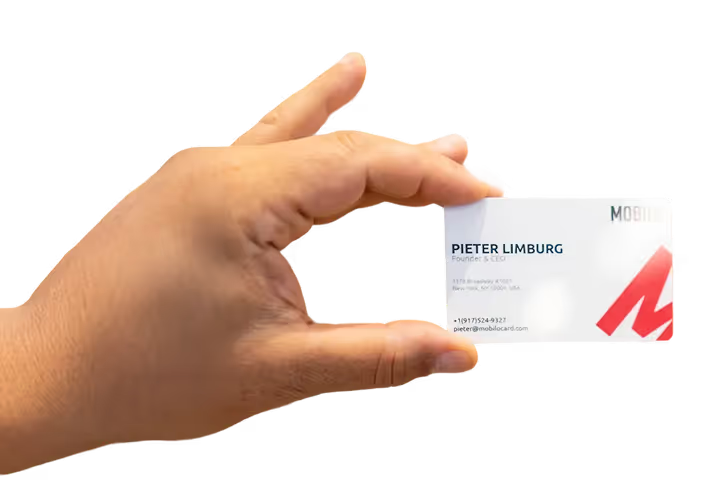
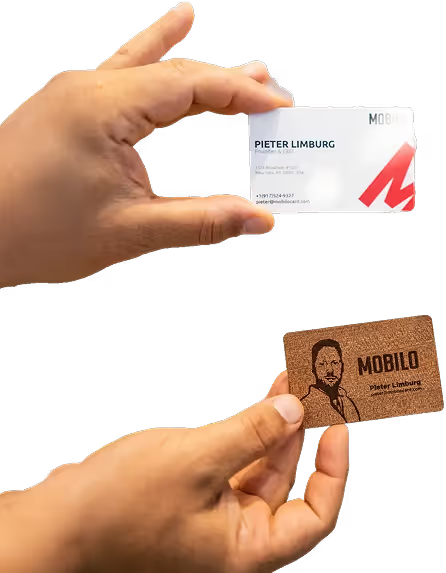
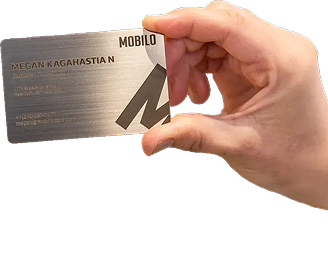
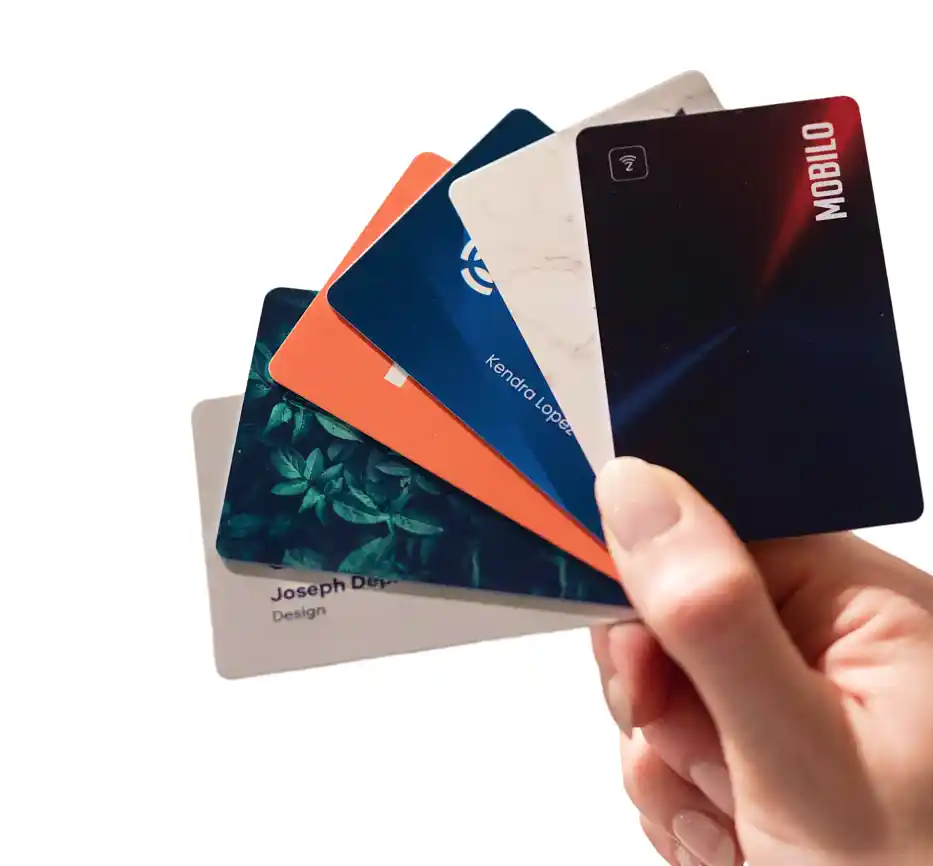
The biggest post-meeting failure in B2B sales is the gap between exchanging contact details and CRM entry. Mobilo's NFC and QR-enabled digital business card closes this gap instantly: a tap or scan auto-populates the decision maker's contacts and syncs directly to your CRM without any manual rep entry. Landsea Homes deployed this across 400 employees and saved $21,000 per year in administrative overhead. The tradeoff is upfront hardware cost and change management for reps accustomed to paper cards.
2. Map the Buying Committee Before You Dial - Economic Buyer, User, and Technical Evaluator

Modern B2B deals involve 6-13 stakeholders, and reaching only one guarantees stalls. Use Sales Navigator, Cognism, or Apollo to map three distinct roles before outreach: the Economic Buyer who controls budget, the User or Initiator who feels the pain, and the Technical Evaluator who controls the environment. Note functional nuances, a CFO may own budget approval while RevOps actually controls the data stack you're selling into.
3. Bypass Gatekeepers with the 'Where' Question and Consensus Forum Callback Strategy
Cold calls fail at the gatekeeper stage most often because reps ask "who" instead of "where." The question "Where would I go to share an industry compliance update regarding data security?" is structurally harder to deflect than "Who handles your data security?" because it frames the caller as a resource, not a vendor. A reliable variation: call the general line, ask a topic-based question to surface a name, note the name, hang up, then call back later asking directly for that person by name. The second call bypasses the screening entirely because the rep now sounds like an existing contact.
4. Sales Navigator vs. Cognism vs. Apollo - Decision-Maker Targeting Filters, Data Accuracy, and CRM Depth Compared
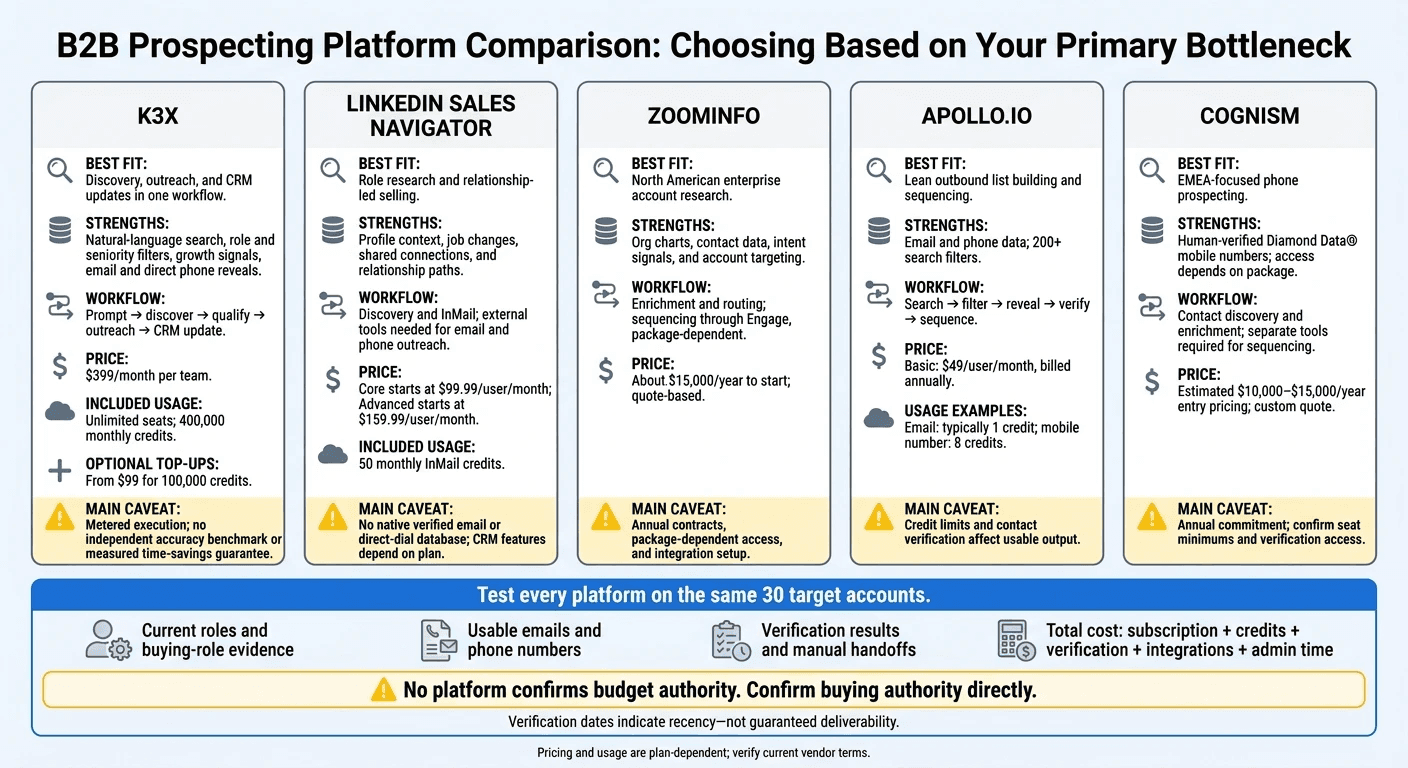
LinkedIn Sales Navigator is the most direct tool for identifying B2B decision maker contacts by seniority, function, company size, and buying signals like recent job changes or content engagement. Its account-level view lets you see multiple stakeholders inside a single target account simultaneously, which supports committee mapping rather than single-thread outreach. The real limitation: data freshness degrades faster than most teams expect, and a filter-built list without a warm-in strategy produces cold outreach that decision makers have learned to ignore. Use Sales Navigator to build the map, not to replace the relationship.
5. Value-First Multi-Channel ABM - Warm the Entire Buying Committee on LinkedIn Before Entering the Inbox

Account-based marketing solves the consensus problem that single-contact outreach cannot. When only one stakeholder is engaged, that person must internally champion your solution to colleagues who have no prior exposure to your brand, with no support from your team. Coordinating LinkedIn outreach and email campaigns so the entire target committee sees your messaging simultaneously removes that dependency. The practical execution: assign each committee role a content track matched to their concern (ROI framing for the Economic Buyer, integration and security documentation for the Technical Evaluator, workflow improvement narratives for the User), then run all three tracks in parallel before any individual outreach begins. Deals where the full committee is warmed before the first meeting close with fewer late-stage objections because no stakeholder is encountering your brand cold at the decision point.
6. Invitation-Only Executive Roundtables and Pitch-Free Masterclasses That Pull Decision Makers In

Decision makers protect their calendars from vendor pitches. They do not protect their calendars from peer learning. Invitation-only executive roundtables and masterclasses where a credible subject-matter expert leads the content, rather than a sales rep, consistently reach senior buyers who would delete a cold email without reading it. The mechanism is access and positioning: a VP of Sales who ignores InMail will attend a closed-door session on pipeline forecasting accuracy if the speaker list is credible and the format is explicitly pitch-free.
The trade-off is real: these events require months of planning, meaningful speaker investment, and dedicated marketing support to execute at a quality level that attracts the right attendees. For teams without that infrastructure, a co-hosted format with an industry association or analyst firm reduces the build cost substantially.
7. Hyper-Specific Peer Case Studies and Radical Pricing Transparency as a Trust Accelerator
Senior buyers have been burned by overpromising vendors. The fastest way to differentiate from that pattern is to lead with proof that is specific enough to be verifiable and honest enough to include limitations. They want a case study from a company in their industry, at their company size, that solved the specific problem they are currently facing, with named metrics.
Equally effective: publishing upfront, transparent pricing and clearly stating what your product cannot do. Radical honesty is rare in sales and tends to build credibility faster than polished positioning. The Technical Evaluator and procurement stakeholder, in particular, respond to vendors who scope limitations honestly rather than discovering them during contract review.
8. Niche Industry Associations as Trusted Expert-Sourcing Channels Decision Makers Already Use
Decision makers frequently source external experts through the industry associations they already belong to, not through cold outreach channels. A presence inside those associations, whether through speaking slots, committee membership, or sponsored content in association publications, positions your team as a known quantity before any direct sales conversation begins. This is one of the highest-trust channels available for identifying B2B decision maker contacts and also one of the most underused by teams defaulting to digital-first prospecting. The limitation is time horizon: association relationships build over quarters, not weeks. Treat this as a compounding investment that raises the conversion rate of every other outreach method over time, not a tactic with a short-cycle payoff.
9. Team Networking Analytics - See Which Reps Are Reaching the Right Stakeholders and Link Activity to Pipeline
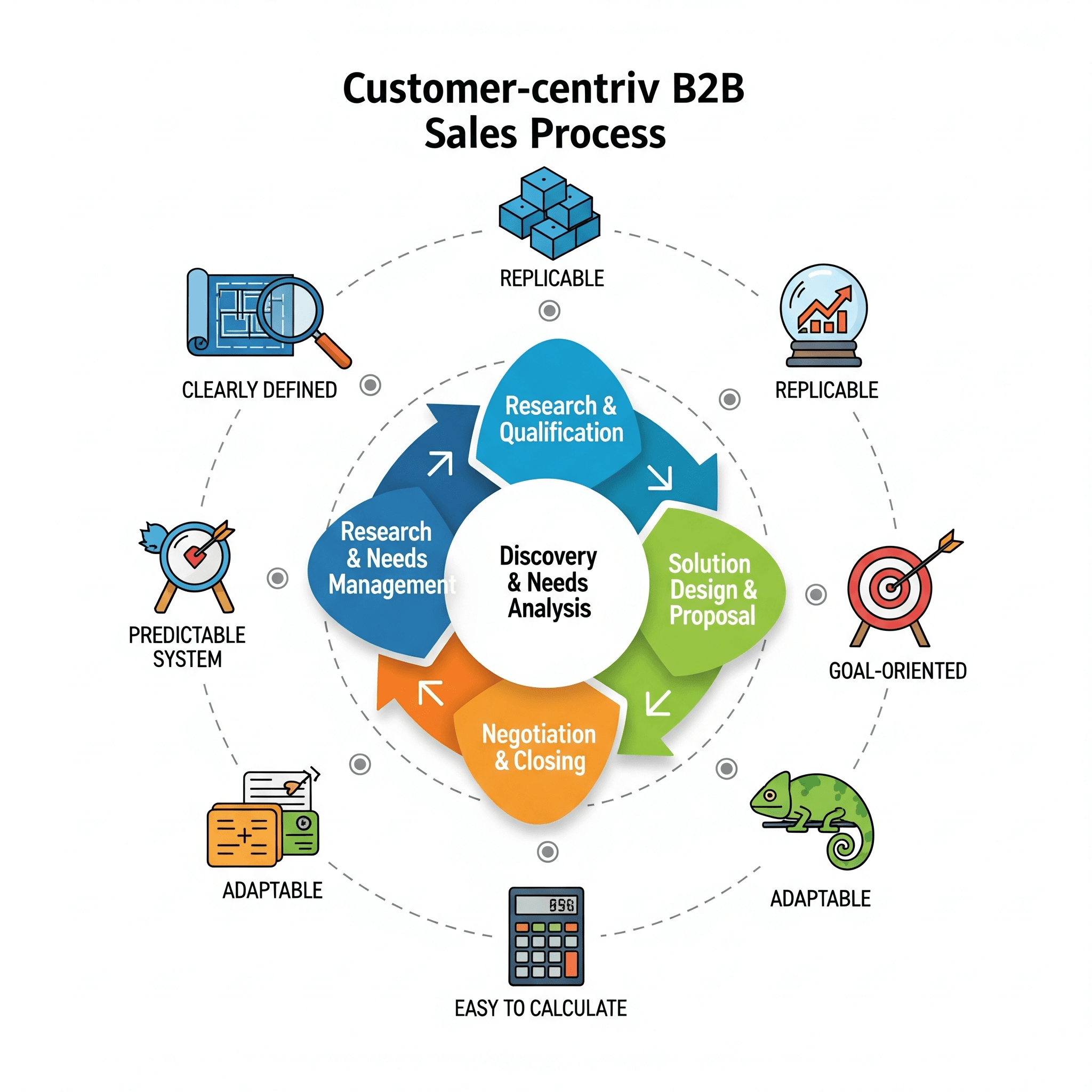
Outreach investment without visibility is budget spent on faith. Team networking analytics close the accountability gap by surfacing which reps are actively exchanging contacts with the right stakeholders, which events and touchpoints are generating conversations worth following up on, and which accounts have committee-level engagement versus single-contact exposure. For a Sales Director managing a distributed sales org, this is the difference between coaching on gut feel and coaching on evidence.
The trade-off: analytics visibility is only as useful as the data flowing into it. If contact capture is manual and incomplete, the dashboard reflects the gaps rather than the activity. The analytics layer and the automatic capture layer are interdependent; one without the other produces either blind spots or noise.
10. The 48-Hour Contact-to-CRM Workflow - Automatic Enrichment and Sync That Makes Every Other Tactic Convert
Industry research notes that formal titles do not always reflect actual decision-making authority, meaning even a correctly identified contact may not be the right stakeholder without enrichment that maps functional ownership. With an average buying committee of 11 stakeholders per The Starr Conspiracy's B2B Buying Journey Trends Brief, one manually logged contact is a single data point in a multi-stakeholder equation the CRM cannot yet see. The 48-hour window is not a motivational concept; it is the interval within which a new contact is still warm enough to respond, the rep still remembers the conversation context, and the lead can be routed into a sequence before competing priorities bury it.
Automatic enrichment and CRM sync at the moment of exchange is not a convenience feature. It is the mechanism that determines whether ways 1 through 9 generate pipeline or generate a list of names no one followed up on.
Related Reading
- Virtual Speed Networking
- How To Build A Referral Network
- Business Networking Automation
- How To Scale Business Networking Online
- Business Networking Skills
- Business Networking Plan
- Strategic Networking For Business Growth
- Where To Network For Business
- Business Networking Tips
Why the Best Decision Maker Outreach Systems Still Need an Automatic Contact Capture Layer
What most sales teams never fix is what happens in the hours after that conversation ends, before any follow-up is possible, before the contact exists anywhere it can be acted on. This section explains why even a well-built outreach system leaks pipeline without an automatic capture layer at the moment of exchange, and where a tool like Mobilo fits into closing that gap.

Why Outreach Methods Alone Fall Short
A Sales Director who deploys strong outreach tactics without an automatic capture layer has built a pipeline with a hole in the bottom.
The 48-Hour Decay Window and CRM Sync at the Moment of Exchange
The true conversion lever is whether capture happened at the moment of exchange, not how quickly a rep responds afterward. FatRank's June 2024 benchmarking data shows the average lead response time for companies that convert is around five minutes, but that standard is irrelevant when the contact was never logged. Separately, ProfileSpider's 2024 analysis found that B2B contact data decays at roughly 22.5% per year, meaning a business card sitting unlogged for even a few days is already losing accuracy. Mobilo's digital business card closes that gap by syncing contact data to the CRM automatically at the moment of tap or scan, so the capture layer is built into the exchange itself, not scheduled for later.
Team Analytics Visibility Turns Contact Capture Into a Management System
Team-level analytics, available on Mobilo's Teams and Business plans, surface which reps are generating conversations worth following up on, which events are producing real pipeline, and where follow-up is stalling. Landsea Homes' deployment across hundreds of employees is one documented example: automatic capture and team analytics together eliminated manual card entry and generated attributable cost savings, turning contact capture from a rep habit into a management system with measurable ROI attribution. The system argument is straightforward: outreach tactics find the door, but automatic contact capture is what keeps it from closing behind you.
Next steps
If your team is walking away from events with conversations that never become CRM records, the path forward starts with eliminating the manual step between handshake and pipeline entry. Start with our digital business card.
The research is unambiguous: 90% of event contacts never reach the CRM, which means follow-up speed is irrelevant when the contact was never logged in the first place. Coaching reps to respond faster does not fix a capture problem. Separately, with buying committees averaging 11 stakeholders per deal, one manually logged contact is a single data point in a multi-stakeholder equation the CRM cannot yet see. Together, these two realities point to one action: automating contact capture at the exact moment of exchange, before the 48-hour window closes and the lead goes cold.
Start with a digital business card from Mobilo. A tap or scan writes the contact record directly to your CRM in real time, no manual entry required, and team analytics surface which reps are generating qualified conversations worth following up on.
Frequently Asked Questions
What are the different types of B2B decision makers I need to reach?
B2B buying committees include at least three distinct roles: the Economic Buyer who controls budget and final approval, the User or Initiator who experiences the problem and triggers the search, and the Technical Evaluator who assesses fit, security, and integration. Reaching only one of these is not a pipeline milestone, it is a starting condition.
How should I tailor my message for each type of decision maker?
Match your content track to each role's specific concern: ROI-focused messaging for the Economic Buyer, integration specs for the Technical Evaluator, and workflow improvement for the User. Running all three tracks in parallel before the first meeting closes deals faster and with fewer late-stage objections.
Why do event leads almost never make it into the CRM even when reps intend to log them?
The problem is structural, not behavioral. A rep working a busy conference floor might exchange contact details with a dozen decision makers before lunch, and by the time they are back at their desk the window for accurate, complete entry has closed. Industry research confirms that 90% of new contacts never make it into the CRM after first contact, and no dashboard flags the missing entry, the pipeline consequence stays invisible until a quarter-end review.
How quickly does a warm connection with a decision maker go cold if I don't follow up?
The window is much shorter than most reps assume. Because decision makers spend over 50% of their working week in meetings and have roughly one hour per week to consume external content, a warm conversation does not stay warm for long. The effective follow-up window is closer to the first few hours after the conversation ends, not 48 hours.
How do I warm up a decision maker before sending a cold outreach message?
Two or three meaningful interactions over two weeks, such as commenting with a substantive insight on their LinkedIn post or sharing their content with a genuine observation, is enough to shift a cold message into a warm one. The key rule is never to pitch in the first message after connecting; save the pitch for the second or third exchange, after demonstrating that you understand what they actually care about.