


Where to Network for Business: 12 Places That Build Pipeline
On This Page
The right rooms matter, but most networking value is lost after the handshake. Here are 12 places worth your time and how to keep what you earn in them.
Most professionals who ask where to network for business already have a calendar full of options. There is a chamber mixer on Tuesday, a referral group breakfast on Thursday, an industry conference next month, and a LinkedIn feed that never stops. The hard part is deciding which rooms deserve your time, and then making sure the people you meet in those rooms actually turn into pipeline.
That second part is where most networking quietly fails. A sales manager works a room for two hours, collects a stack of business cards, and promises a dozen people a follow-up. By Friday, half the stack is still in a jacket pocket. By the next event, the conversations have blurred together and the warm leads have gone cold.

This guide covers both halves of the problem. You will get the 12 places worth your networking time, grouped into local groups, industry events, online platforms, and peer groups, with notes on who each one fits and what it costs you in time. You will also see why the venue is rarely the bottleneck, and how a simple capture habit, such as handing over a tap-to-share card that saves your details and collects theirs, decides whether any venue pays off.
Pick the right mix for your goals, then fix what happens after the handshake. Do both and the same number of events produces far more pipeline.
Key takeaways
- The best places to network for business depend on your goal: local referrals, industry buyers, online reach, or senior peer advice.
- These 12 options span local groups (chambers, BNI, service clubs, Meetup, associations), industry events, online platforms, and peer groups like Vistage and EO.
- Local groups reward repeat attendance, while trade shows compress months of prospecting into a few days.
- LinkedIn, Alignable, and role-based communities keep relationships warm between in-person events.
- The venue is rarely the bottleneck: 90% of new contacts never reach the CRM because manual entry takes too much effort.
- Pick one primary venue plus one or two supporting channels, and give each at least two quarters with tracked pipeline.
- A tap-to-share digital business card with lead capture sends contacts to your CRM at the handshake, so every venue produces more pipeline.
The Contact-Capture Gap That Makes Good Venues Look Bad
The venue is rarely the reason networking fails to produce revenue. The gap between meeting someone and getting them into your CRM is. Mobilo's own survey of 4,000 sales reps found that 90% of new contacts never make it into the CRM because entering them takes too much effort. Every venue in this guide feeds the same leaky process if that gap stays open.
90%
New contacts that never reach the CRM

Where the Leak Happens
The loss follows a predictable sequence. It shows up at a chamber breakfast just as often as on a trade show floor.
- The exchange. Details land on a small piece of cardstock, or in a phone note typed in a hurry, rather than in a system anyone else can see.
- The commute home. The card goes into a pocket or a bag. The context of the conversation (what they need, when they buy, who else is involved) starts fading immediately.
- The entry session. Manual data entry happens days later, if it happens at all. Contacts that do get entered often arrive without notes, source, or event tag.
None of this is a motivation problem. Reps are not lazy. They are doing data entry at the end of a long day, after a long event, with a full inbox waiting. The process is built to lose contacts.
Why Speed Matters More Than Volume
Timing is the hidden cost. In a widely cited Harvard Business Review study of inbound leads, firms that responded within an hour were nearly seven times as likely to have a qualifying conversation with a decision maker as firms that waited even one hour longer. That research looked at online leads, but the mechanism carries over to event contacts. Interest is highest right after the conversation, and it decays from there.
So a rep who meets dozens of people at a conference and enters them the following Wednesday has already given up most of the advantage the event created. A rep who meets fewer people and has every one of them in the CRM, tagged and noted, before leaving the venue is in a much stronger position.
What This Means for Choosing Where to Network
Face-to-face still matters for business. In Accor's 2024 global study of 9,000 professionals, 92% said in-person meetings with external clients are important, and 74% preferred meeting in person to close deals. The demand for in-person networking is real.
That is exactly why the leak is so expensive. You are spending your most valuable selling hours in rooms full of the right people, then losing most of what you earned on the way home. Keep that in mind as you read the list below. Every venue on it works better when the capture step is solved before you walk in.
There is a second cost that rarely gets counted. Sales leaders have no visibility into which events produced which contacts. Without a source tag on each new record, nobody can say whether the chamber membership or the trade show booth earned its budget. Decisions about where to network next year end up based on gut feel, and the venues that quietly produce the most pipeline get cut along with the ones that produce nothing.
Local In-Person Groups for Referrals and Regional Clients
Local groups are the best place to network for business when you sell to customers in your region or depend on referrals from other local professionals. They reward repeat attendance. The same faces show up every week or month, so trust builds faster than at one-off events. Here are the five local options worth comparing.
1. Local Chamber of Commerce - Broad Local Reach and Credibility
There are approximately 7,000 chambers of commerce in the United States, so almost every market has one within driving distance. Chambers run ribbon cuttings, morning coffee meetups, after-hours mixers, lunch-and-learns, and annual dinners. Membership usually comes with a directory listing, which gives you visibility with other members before you have even met them.
Chambers fit best when your buyers are local business owners, municipal decision-makers, or companies that care about community presence. Commercial real estate, banking, insurance, staffing, B2B services, and construction trades tend to do well here.
The tradeoff is breadth. A chamber mixer attracts every kind of business, so the share of people who match your ideal customer profile can be small. Treat the chamber as a credibility and awareness channel. Join a committee or volunteer to host an event, because committee members get to know each other far better than people who only attend mixers.
2. BNI - Structured Weekly Referral Exchange
BNI is the largest structured referral organization in the world. As of mid-2025 it reported more than 340,000 member businesses across over 11,400 chapters in 76 countries, with over 17.4 million referrals and about $26.4 billion in member-reported revenue between August 2024 and July 2025. Those figures are self-reported by members, but they show the scale of the model.
The format is strict on purpose. Chapters hold weekly meetings with a structured agenda, and each chapter accepts only one member per profession, so members collaborate instead of competing. The guiding idea is "Givers Gain": you pass referrals to others first, and they return the favor.
BNI works best for service businesses with a clear local buyer: accountants, attorneys, IT providers, marketing agencies, contractors, and financial advisors. It asks a lot of you. Weekly attendance is expected, and you are expected to bring referrals as well as receive them. If your category is already taken in the nearest chapter, look for another chapter or start one.
3. Rotary and Other Service Clubs - Relationships Through Shared Work
Rotary International, along with Lions, Kiwanis, and similar service clubs, brings local professionals together around community projects. Selling is not the purpose of the meeting, and members notice when someone treats it like a sales call.
That is exactly why service clubs can work so well. You build relationships by working next to people on a fundraiser or a service project, which creates a level of trust that a 30-second introduction at a mixer cannot. Club rosters often include business owners, senior executives, and community leaders who rarely attend open networking events.
Service clubs fit people with a long time horizon: business owners, senior sales leaders, and anyone whose deals depend on reputation in a specific community. Expect to give a year or more before relationships produce business.
4. Meetup Groups - Niche and Industry-Specific Circles
Meetup has about 60 million users, and in most metro areas you will find groups for startup founders, SaaS sales professionals, marketing operators, real estate investors, and specific technologies or industries. Many are free or charge only a small fee to cover the venue.
The advantage is focus. A group built around a single topic draws people who share a problem, which makes conversations easier to start and more relevant to your offer. The quality varies widely, though. Some groups are active and well run. Others are one organizer and a handful of regulars.
Attend two or three meetings before deciding, and look for groups where the attendee list on the event page shows job titles that match your buyer. If none exist, starting your own Meetup group around your buyer's problem is one of the cheapest ways to become the person at the center of a local network.
5. Professional Associations and Alumni Chapters - Your Industry, Locally
Most industries have a national trade or professional association with local chapters: groups for HR leaders, CFOs, IT directors, property managers, procurement professionals, and dozens of other roles. University alumni associations run regional chapters too, and alumni share an immediate point of connection.
Association chapters are often the most targeted local option. If you sell to HR leaders, a chapter meeting of HR professionals puts a room full of potential buyers in front of you. Many chapters accept vendor or associate members, sometimes with limits on how much you can pitch.
The etiquette is the same everywhere. Show up to learn, contribute to the program, and earn the right to talk business. Vendors who offer a useful talk or sponsor a workshop get far better access than vendors who hand out brochures at the door.
Industry Events and Trade Shows for Concentrated Buyer Access
Industry events are where to network for business when you need to meet a large number of qualified buyers, partners, or vendors in a short window. They compress months of prospecting into a few days. The catch is that they also compress the follow-up load, so the capture problem hits hardest here.

6. Industry Trade Shows and Conferences - Concentrated Buyer Access
In-person trade shows are back near full strength. The Center for Exhibition Industry Research reported that the fourth quarter of 2024 was the strongest level of U.S. trade show activity since the onset of the pandemic, although attendance was still 12.9% below 2019 levels. Fewer attendees on a recovering floor means each serious conversation carries more weight.
The right show depends on your vertical. Most industries have one or two flagship events where buyers, analysts, and partners all gather, plus smaller regional shows that are cheaper and less crowded. Look at the attendee profile the organizer publishes, not just the headline attendance number. A smaller show full of people who match your ideal customer profile beats a huge one where few of them do.
You do not need a booth to network at a trade show. Many experienced sellers attend as visitors, book meetings in advance through the event app or LinkedIn, and spend their time in sessions, hallway conversations, sponsored dinners, and partner receptions.
How to Work a Trade Show for Pipeline
The best trade show networkers do most of their work before and after the event.
- Before: Pull the exhibitor and speaker lists, identify 20 to 30 target accounts, and request meetings two to three weeks out. A booked 15-minute coffee is worth more than an hour of wandering the floor.
- During: Capture every contact the moment you meet them, with a short note on what they need and what you promised. Tag each record with the event name so you can measure the show later.
- After: Follow up within one business day while the conversation is fresh. Prioritize the people who showed real buying signals, then work through the rest.
Teams that skip the "during" step pay for it in the "after" step. Three days of conversations entered from memory a week later produce thin, unreliable records.
7. Small Business Expo - Broad B2B Networking Across U.S. Cities
The Small Business Expo describes itself as America's biggest business-to-business trade show and networking event for small business owners. Its current schedule lists 19 live shows in 18 U.S. cities, and attendance is free. Each show combines an exhibitor hall, workshops, keynotes, industry meetups, happy hour networking, and a dedicated business card exchange.
This is a strong option if your buyers are small business owners or if you sell services that small businesses buy: payroll, insurance, marketing, IT support, financing, software. It also works well for business owners looking for vendors and partners.
Because attendance is free and the audience is broad, expect a mix of serious buyers and casual browsers. The people who get the most out of it arrive with a short target list, attend the meetups for their industry, and capture contacts fast enough to follow up the same day.
Picking Between Big and Small Events
Large conferences give you reach and brand visibility. Smaller regional events and executive summits give you longer conversations with fewer, more senior people. Most sales teams do best with one or two flagship shows a year plus a steady rhythm of smaller events. Measure each one by the pipeline it creates.
Online Platforms and Communities for Reach Between Events
Online platforms are where to network for business when you need reach beyond your city, want to stay visible between events, or sell to buyers who rarely attend local mixers. They also keep in-person relationships alive. A contact you met at a conference is much easier to follow up with when you are already connected and they have seen your posts.
8. LinkedIn - The Default Professional Network
LinkedIn has more than 1.4 billion members, and for most B2B buyers it is the first place they check after meeting someone new. That makes it both a networking venue and a reputation layer on top of every other venue in this guide.
To network on LinkedIn instead of just collecting connections:
- Connect with context. Send a short note that references where you met or a specific post of theirs.
- Comment before you pitch. Thoughtful comments on a buyer's posts build familiarity faster than cold messages.
- Join and contribute to a few focused groups or newsletters in your industry, rather than dozens of inactive ones.
- Post about the problems your buyers face. Consistent, useful posts turn your profile into a reason to accept your next meeting request.
LinkedIn fits almost every B2B role. Its weakness is noise. Buyers get a lot of automated outreach, so personal, specific messages stand out more than ever.
9. Alignable - Small Business Owner Referral Network
Alignable reports more than 11 million members, most of them small business owners across North America. It is organized around local communities, so you can see and connect with business owners in your town or region, ask for recommendations, and trade referrals.
Alignable is a good fit if you sell to small businesses or run one yourself. Accountants, insurance agents, marketing consultants, and local service providers use it to build referral relationships with owners nearby. The basic version is free, with paid tiers for more connections and visibility.
Treat it like a digital chamber of commerce. Answer questions in your area of expertise, endorse businesses you have worked with, and suggest coffee with the members who show up repeatedly in your local feed.
10. Role-Based Online Communities - Peers Who Share Your Job
Some of the most valuable online networking happens in private communities organized around a role. Sales and go-to-market leaders, for example, gather in communities like Pavilion, which combines a private online community with local chapter events and executive programs. Marketing, RevOps, HR, finance, and customer success leaders all have similar Slack groups, forums, and membership communities.
These communities are less about selling directly and more about building a reputation among peers. Peers become referral sources, hiring networks, and eventually buyers when they move to new companies. For a sales manager, being known as the person who gives helpful answers in a large community of revenue leaders is a long-term pipeline asset.
The rule that applies everywhere online applies doubly here: contribute first. Communities remove members who join only to pitch. Pick one or two that match your role or your buyer's role, show up weekly, and answer questions in public.
Online and In-Person Work Best Together
Online networking rarely replaces the room, and the room rarely works without the online follow-up. The strongest pattern is simple. Meet in person, connect online the same day, keep the relationship warm with useful content, and use the next in-person event to deepen it.
Related Reading
- Business Relationship Building
- How To Build A Network For A Small Business
- How To Build A Strong Sales Pipeline
- How To Reach B2b Decision Makers
- How To Ask For Referrals In Sales
- Expand Your Network
- Business Networking Goals
- Business Cards For Networking
- How To Start A Business Networking Group
Peer and Executive Groups, and How to Choose Your Mix
Peer and executive groups are where to network for business once you are leading a company or a team and need advice, accountability, and high-trust relationships more than volume. They are small, confidential, and expensive in time and money. For the right person they are the highest-value networking available.
11. Vistage - CEO and Executive Peer Advisory Groups
Vistage serves about 45,000 leaders in 40 countries, with small groups of noncompeting local peers that meet monthly to work through real business problems. A trained chair runs each group and also coaches members one on one.
Vistage fits CEOs, business owners, and senior executives of small and midsize companies. The networking value comes from depth. Over months, group members learn each other's businesses closely, which makes the introductions they offer unusually well targeted. Programs exist for CEOs, key executives, and small business owners, so a VP of Sales can join a group made up of other senior leaders.
The commitment is significant. Expect a full day each month plus coaching time, and annual fees that make sense only if you will show up consistently.
12. Entrepreneurs' Organization (EO) - Founder Peer Network
EO has just over 20,000 members in 221 chapters across 61 countries. Membership is limited to founders and owners whose businesses meet a revenue threshold. Members join small confidential "forums" that meet monthly, and they get access to chapter events, learning programs, and a global network of other founders.
EO is a strong fit for founders who want peers facing the same scaling problems. It is less useful for salaried sales leaders, since membership requires ownership. The global network is a real asset for founders who sell across regions. Members routinely open doors for each other in other markets.
How to Choose the Right Mix for Your Goals
No one needs all 12. The right mix depends on what you are trying to get from networking. Start with your goal, then pick one primary venue and one or two supporting channels.
Your Main Goal: Local clients and referrals
- Primary Venue: BNI or a chamber of commerce
- Supporting Channels: Alignable, service club
- Time Commitment: Weekly to monthly
Your Main Goal: Meeting buyers in your industry
- Primary Venue: Flagship trade show or conference
- Supporting Channels: LinkedIn, association chapter
- Time Commitment: A few events a year plus prep
Your Main Goal: Small business customers
- Primary Venue: Small Business Expo
- Supporting Channels: Alignable, chamber
- Time Commitment: Quarterly to monthly
Your Main Goal: Reputation in your field
- Primary Venue: Role-based online community
- Supporting Channels: LinkedIn, Meetup group
- Time Commitment: A few hours a week
Your Main Goal: Advice and senior relationships
- Primary Venue: Vistage or EO
- Supporting Channels: Service club, alumni chapter
- Time Commitment: Monthly, long term
Three Questions to Ask Before Joining Anything
- Who is in the room? Ask the organizer for an attendee or member list, or check job titles on the event page.
- If fewer than one in five people match your buyer or your referral partners, keep looking.
- How often will I see the same people? Repeated contact builds trust. A group that meets weekly or monthly with stable membership usually beats a series of one-off events.
- Can I measure it? Decide before you join how you will track contacts, meetings, and pipeline from that venue. If you cannot measure it after six months, you cannot defend the time or the fee.
Give Each Venue a Fair Test
Most networking channels take time to pay off. Commit to a venue for at least two quarters before judging it, and track the same numbers for each one: new contacts captured, follow-ups sent within a day, meetings booked, and pipeline created. That data will tell you where to double down and what to drop.
Related Reading
- How To Scale Business Networking Online
- Business Networking Automation
- Business Networking Skills
- Virtual Speed Networking
- How To Build A Referral Network
- Business Networking Tips
- Business Networking Plan
- Strategic Networking For Business Growth
- Where To Network For Business
How Your Capture Workflow Decides Which Venues Pay Off
Choosing where to network for business decides who you meet. Your capture and follow-up workflow decides whether those meetings become pipeline. Fixing that workflow is the single change that improves the return on every venue in this guide at once.

Close the Gap at the Moment of the Handshake
The leak described earlier happens between the exchange and the CRM entry. The way to close it is to remove the manual step entirely.
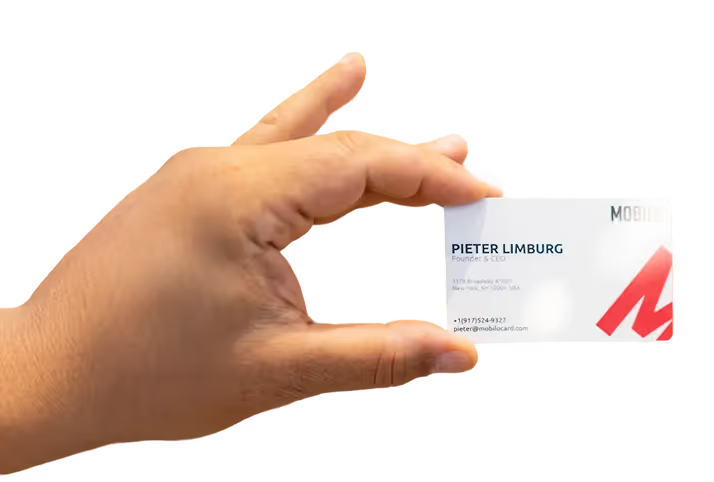
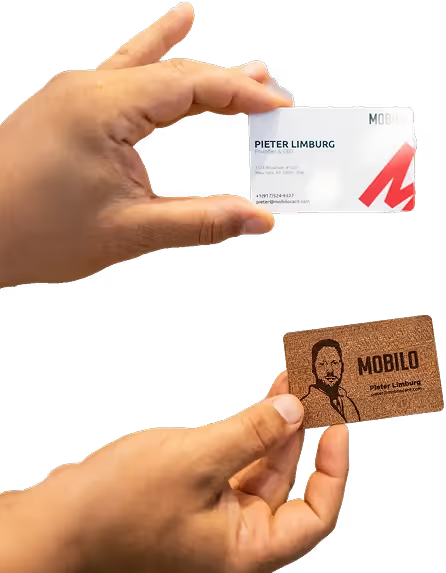
With a digital business card from Mobilo, the exchange happens with one tap or scan. The other person's phone opens your digital profile without needing an app, and they can save you as a contact on the spot. Mobilo's Contact Exchange and Lead Capture works in the other direction too: when someone taps or scans your card, they can share their details back, and those details feed directly into your contact list or CRM in real time. The contact is captured before the conversation ends, with the event context still fresh.
That changes the math for every venue on the list:
- At a weekly BNI meeting, referral partners are saved and synced the first time you meet, so nobody falls through the cracks between meetings.
- At a trade show, three days of conversations arrive in the CRM as they happen, tagged and ready for same-day follow-up, instead of being typed in from a stack of cards the following week.
- At a chamber mixer, you never run out of cards, and your details never go out of date when your title or phone number changes.
This works best when a team attends events regularly and needs structured follow-up. A solo professional who meets a handful of people a quarter will feel less of the benefit than a sales team that works a dozen events a year.
Make Capture a Team Habit
For sales managers, the bigger gain is visibility. When every rep's new contacts land in the same pipeline with a source attached, you can finally see which events and groups produce meetings, and which ones only produce lunch. Budget decisions about next year's trade show calendar or chamber memberships stop being a guess.
The savings are measurable too. Mobilo customer Landsea Homes saved $21K per year and The Falcon Group saved $6K per year after making the switch from business cards. Those savings come before counting the pipeline recovered from contacts that would otherwise never have reached the CRM.
Pick Your Rooms, Then Protect What You Earn in Them
Use the 12 options above to choose the rooms that fit your goals. Then make sure every handshake in those rooms ends with a saved contact, a CRM record, and a follow-up that goes out the same day. That combination turns networking from a calendar of events into a reliable source of pipeline.
Related Reading
- Business Networking Trends
- Business Networking Opportunities
- Networking Ideas For Small Business
- Business Networking Event Ideas
- Business Networking Conversation Starters
- Business Networking Questions
- Networking Ideas For Virtual Events
- Virtual Networking Ideas For Large Groups
Next steps
If your networking calendar is full but your CRM is not, the fastest gain comes from closing the gap between the handshake and the CRM entry. Start with our digital business card.
Pick the two or three venues from this list that match your goals, then walk into the next one with a card that shares your details in one tap and captures theirs in real time. Every contact lands in your pipeline before you leave the room, and follow-up starts the same day.
Frequently Asked Questions
What is the best place to network for business?
The best place depends on your goal. For local clients and referrals, a chamber of commerce or a BNI chapter usually produces the most consistent results. For buyers in a specific industry, the flagship trade show or association in that industry is the strongest choice. Most professionals do best with one primary venue they attend consistently plus LinkedIn for staying in touch between events.
Is BNI worth it for small businesses and sales professionals?
BNI is worth it for service businesses with a clear local buyer who can commit to weekly meetings and to giving referrals as well as receiving them. Each chapter accepts only one member per profession, which reduces competition inside the room. It is a poor fit if you cannot attend weekly or if your buyers are national enterprises rather than local businesses.
Are chambers of commerce worth joining?
A chamber is worth joining if your customers are local businesses or if community visibility matters to your deals. Results come from consistent involvement, such as serving on a committee or hosting an event, rather than attending an occasional mixer. Expect to invest several months before introductions start turning into business.
How do I find business networking events near me?
Start with your local chamber of commerce calendar, the BNI chapter finder, and Meetup searches for your industry or role. Check the local chapters of the professional associations your buyers belong to, and look at the city schedule for events like the Small Business Expo. LinkedIn events and Alignable's local community pages also list nearby gatherings.
Is online networking as effective as in-person networking?
Online and in-person networking do different jobs. In-person meetings build trust faster and remain the preferred way to close deals for most professionals, while online platforms like LinkedIn give you reach and keep relationships warm between meetings. The most effective approach combines both: meet in person, connect online the same day, and follow up while the conversation is still fresh.