


12 Business Networking Skills Tips to Grow Your Career
On This Page
Most networking fails before follow-up ever starts. Here are the 12 skills that turn handshakes into pipeline, and the structural fix that stops warm contacts from going cold the moment you walk away.
85% of jobs are filled through professional networking, not job boards, not cold applications, not recruiters. That single number reframes the entire career growth conversation. If the majority of opportunities move through relationships, then the ability to build and maintain those relationships is not a soft skill. It is the skill.
"Many of us attend networking events repeatedly without converting conversations into actual business, leaving us questioning whether our networking skills or the event quality is the bottleneck for career and business growth."
— what we hear from networking professionals
85% of jobs filled through networking, not boards
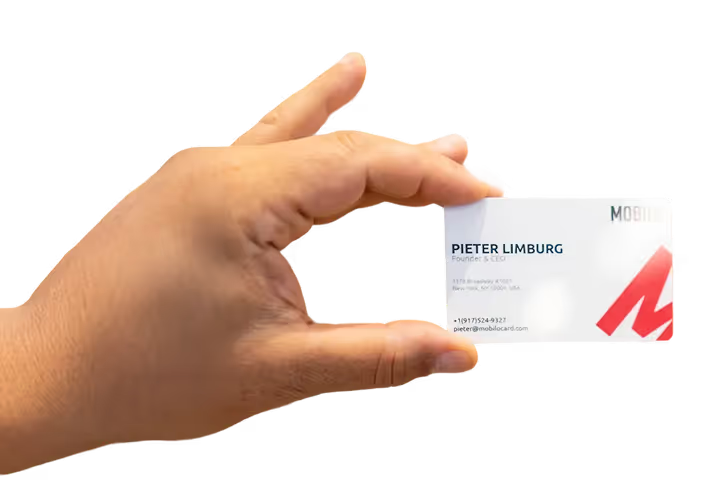
See our digital business card for how this works in practice.
The professionals who consistently advance are not necessarily the most charismatic people in the room. They have built a repeatable system. Tools like smart digital business cards are one part of that system, but the system itself starts with understanding what networking actually is and why so many hard-working professionals still get stuck.
ATD identifies three distinct types of networking: operational, personal, and strategic. Strategic networking is the one most directly tied to career advancement and revenue, because it connects you to people and information outside your immediate circle. That is where the asymmetric opportunities live.
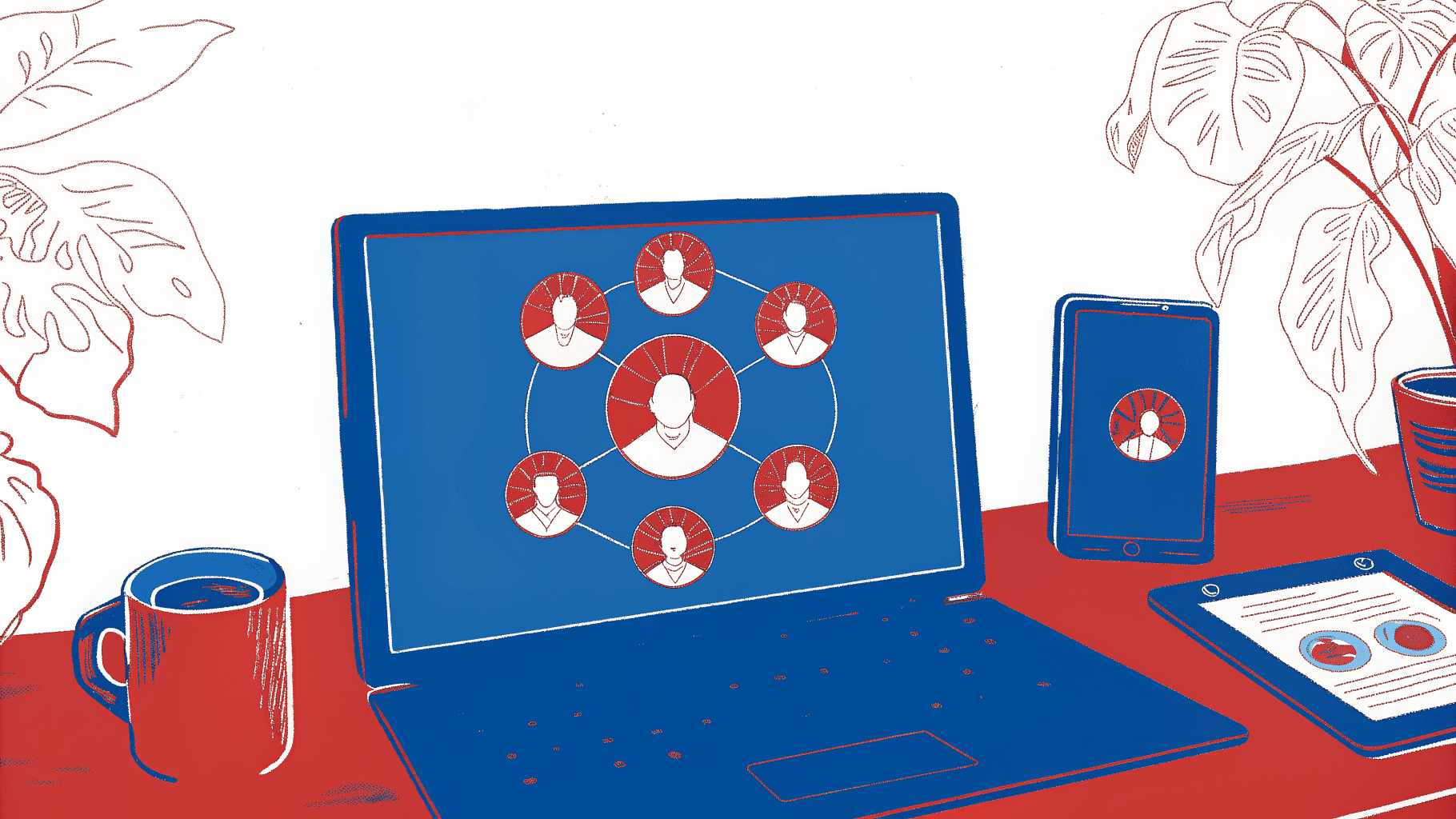
The most common assumption among sales managers and business development professionals is that pipeline leaks from follow-up discipline: if reps sent emails faster or wrote better messages, the leads would convert. The data-entry lag feels like an annoying but unavoidable cost of doing business at events. Industry research on post-event lead management tells a different story: most contacts evaporate not because the rep lacked charisma, but because nothing structured happened in the sixty seconds after the handshake, before any follow-up was ever attempted.
Type 1: Operational Networking the relationships that keep your current work functioning. Operational networking is the most instinctive form because it emerges from necessity. These are the colleagues, vendors, internal stakeholders, and cross-functional contacts you rely on to get things done inside your existing role.
Most professionals build this network without ever calling it networking at all. It happens through project collaboration, Slack threads, recurring meetings, and the informal trust that accumulates when someone consistently delivers. The risk with operational networking is that it can feel complete. When your internal relationships are strong and your day-to-day work flows smoothly, there is little felt pressure to look beyond the current organization or role.
That comfort is precisely where career stagnation begins. Operational networks are dense and efficient, but they are also insular. Everyone in them already knows what you know, works where you work, and sees the same opportunities you see.
They are essential infrastructure, but they cannot generate the kind of asymmetric information or access that moves careers forward. Type 2: Personal Networking the relationships that sustain you across organizations and time. Personal networking extends beyond the org chart and survives job changes, layoffs, and industry pivots. These are former colleagues who became genuine connections, mentors from earlier chapters of your career, peers from professional associations, and contacts who know you as a person rather than a function. Personal networks are the ones professionals tend to neglect during periods of stability and desperately wish they had maintained during periods of transition.
Research on career resilience consistently shows that people who move through disruption most effectively are not those with the longest resumes, but those with the warmest and most reciprocal personal networks. The quality signal here is mutual investment: both parties are aware of what the other is working on, both surface relevant introductions without being asked, and both would take a call without needing context. Building this type of network requires consistent low-stakes contact over time, not transactional outreach triggered by urgency. A digital business card that stays current and shareable makes it structurally easier to maintain that ambient presence across a personal network without requiring a formal reason to reconnect every time.
Key takeaways
- 85% of jobs are filled through professional networking, not job boards, not cold applications, which means relationship-building is the career skill, not a complement to one.
- 90% of new contacts never enter a CRM because manual data entry is too much friction, the pipeline leak starts at the handshake, not the follow-up.
- Warm introductions close faster than cold outreach in B2B sales, making every conversation a pipeline event, but only if the contact is actually captured.
- The gap between a great conversation and a logged contact is not a skill problem; it is a structural one that quietly cancels every interpersonal skill a rep has spent years building.
- Most paper business cards are never followed up on or entered into a CRM, a pattern that holds regardless of how motivated the rep who collected them was.
- When someone taps or scans a Mobilo card, their information is captured and stored directly into your contact list or CRM, closing the gap between the handshake and the pipeline before follow-up even starts.
The Networking Habit That Leaks Pipeline Before Follow-Up Even Starts

Why Warm Contacts Go Cold Between the Handshake and the CRM
One of the most consistent patterns field marketing and event teams run into is that warm connections don't go cold because reps are lazy; they go cold because there is no clear plan for what happens after the card is exchanged. Broader industry trends confirm the mechanics: when contact capture relies on physical cards and manual data entry, leads become untrackable before any follow-up is ever attempted. Mobilo addresses this at the process level. Its lead capture tools are built specifically to arm field marketing and event teams with a way to capture leads efficiently and feed data directly into the CRM pipeline, not as a batch upload on Monday morning, but in the moment the connection is made.
The Hidden Cost of Bulk CRM Uploads - Decay, Errors, and Dropped Context
When contact capture depends on physical cards and end-of-event batch uploads, data arrives in the CRM incomplete: job titles absent, notes on what was discussed missing, and no record of which conversations had real pipeline potential.
Mobilo's lead capture and management features, available across the Teams ($4/month, billed annually) and Business ($5/month, billed annually) plans, integrate directly with CRM tools to streamline pipeline management and eliminate the manual handoff where context is lost. With 6,000 integrations through Zapier, the contact captured at a booth flows into the CRM without a rep having to transcribe a stack of cards at the airport.
12 Business Networking Skills That Turn Conversations Into Pipeline
Warm introductions close significantly faster than cold outreach in B2B sales, a pattern consistently documented by sales training firms tracking pipeline velocity. That single figure reframes what "networking skill" actually means: it is not a soft asset; it is a pipeline accelerator with a measurable multiplier. Yet most sales professionals treat these skills as a loose collection of social behaviors rather than a sequential system where each skill compounds the one before it. Executing any one of them well is not enough. The skills only produce pipeline when they run in order, and when the final handoff, the moment a contact moves from conversation to CRM record, actually happens.
The skills only produce pipeline when they run in order, and when the final handoff, the moment a contact moves from conversation to CRM record, actually happens.
The 12 skills below are ranked to reflect that sequence. The first seven build the conversation. Skill eight is where the conversation either becomes a pipeline entry or disappears. Skills nine through twelve extend the system into virtual contexts and long-term relationship value.
- Pre-Event Preparation → Key Action: Research 3–5 named targets 24 hours before → Success Signal: Walk in with names, not just curiosity.
- 30-Second Elevator Pitch → Key Action: Open with the customer problem, not your job title → Success Signal: They ask a question back.
- Active Listening → Key Action: Pause and paraphrase before responding → Success Signal: Surface buying signals mid-conversation.
- Body Language Mastery → Key Action: Open stance, mirror posture, and firm handshake → Success Signal: Rapport established before the pitch begins.
- Value-First Mindset → Key Action: Offer a specific referral or resource first → Success Signal: Obligation loop created naturally.
- Follow-Up Timing → Key Action: Send a LinkedIn message within 24 hours → Success Signal: Reply rate materially higher than the 48–72-hour window.
- Follow-Up Message Content → Key Action: Send a 3-sentence note: reference → value → next step → Success Signal: Low-friction reply and meeting booked.
- Contact Capture & CRM Handoff → Key Action: NFC tap triggers instant CRM entry → Success Signal: Contact enters the pipeline within minutes of the conversation.
- Virtual Networking Adaptation → Key Action: Use a branded background and camera-direct eye contact → Success Signal: Rapport gap closed in remote settings.
- Relationship Nurturing → Key Action: Maintain a 90-day touch cadence: 30 / 60 / 90 check-ins → Success Signal: Warm introduction surfaces at the deal-acceleration moment.
- Second-Degree Connection Mapping → Key Action: Map mutual connections before cold outreach → Success Signal: Warm path into the target account identified.
- Goal-Setting Before Every Event → Key Action: Define a measurable ICP-qualified conversation target → Success Signal: Event ROI evaluable against a concrete metric.
1. Pre-Event Preparation and Goal-Setting - Research Attendees Before You Walk In
Research attendees before you walk in. Preparation before a networking event means reviewing the attendee list, speaker roster, or company exhibitor directory at least 24 hours in advance, then identifying three to five specific people worth a real conversation. Cross-reference LinkedIn profiles against your ideal customer profile so you walk in with context, not just curiosity. This is the single most underused practical networking strategy: reps who arrive with named targets consistently leave with higher-quality conversations than those who rely on chance encounters and floor energy.
2. The 30-Second Elevator Pitch - Lead With the Problem You Solve, Not Your Job Title

Lead with the problem you solve, not your job title. An effective elevator pitch is brief, a concise opening of just a few sentences, and leads with the customer problem, not your role or company name. Problem-first framing creates immediate relevance, while job-title openers trigger the mental "vendor alert" that shuts a conversation down before it starts. Tailor the framing to your audience: a VP of Sales cares about quota attainment; a CTO cares about integration risk. Avoid jargon and scripted language. The goal is a question back from them, not applause.
One barrier worth naming honestly: many professionals, especially those early in their careers or stepping into a new market, lack an existing network at the exact moment they need it most. Networking skills feel inaccessible when there is no established base to build from. The answer is to treat the elevator pitch as a door opener: a crisp, problem-led 30 seconds that makes it easy for a stranger to self-identify as relevant. The lower the friction of your opener, the faster a cold room becomes a warm one.
3. Active Listening - Use the 'Pause-and-Paraphrase' Technique to Unlock Buying Signals
Use the pause-and-paraphrase technique to unlock buying signals. Active listening in a networking context means letting the other person do most of the talking, then pausing before responding and paraphrasing what you heard before asking a follow-up question. A practical opener, "What's the biggest challenge your team is tackling this quarter?", creates a discovery moment inside what feels like casual conversation. Maintain eye contact, nod to signal comprehension, and resist the urge to fill silence with your own pitch. The pause-and-paraphrase technique surfaces buying signals that a rep who is waiting to speak will always miss.
Many professionals also struggle with small talk as an entry point; initiating conversation does not come naturally, and a room full of strangers can feel like a cold outreach sequence with no script. Reframing small talk as structured discovery removes that friction. When your opener is a genuine question about the other person's priorities rather than a social pleasantry, the conversation has a destination. That makes initiation easier and makes the signals you capture more actionable.
4. Body Language Mastery - Mirror Posture and Maintain an Open Stance to Signal Trustworthiness

Mirror posture and maintain an open stance to signal trustworthiness. Body language communicates credibility before a word is spoken. An open stance, shoulders back, arms uncrossed, and direct but relaxed eye contact, signals approachability.
A firm handshake paired with a warm smile at introduction sets a baseline of trust that the rest of the conversation either confirms or erodes. Mirroring the other person's posture subtly, not mimicking it, creates a sense of rapport that most people feel but cannot articulate. This skill matters most in high-density event environments where first impressions form in seconds and are rarely revised.
5. Value-First Mindset - Give a Useful Referral or Resource Before Asking for Anything
Give a useful referral or resource before asking for anything. The value-first approach means offering something genuinely useful, a referral, a relevant article, an introduction to a third contact, before making any ask. This reframes the interaction from a transaction to a contribution, which changes how the other person remembers you.
The limitation here is real: value-first only works when the offer is specific and relevant. A generic pleasantry reads as filler. A rep who commits to a concrete, specific offer on the spot creates an obligation loop that makes follow-up feel natural rather than intrusive.
6. Follow-Up Timing and Channel - Send a Personalized LinkedIn Message Within 24 Hours
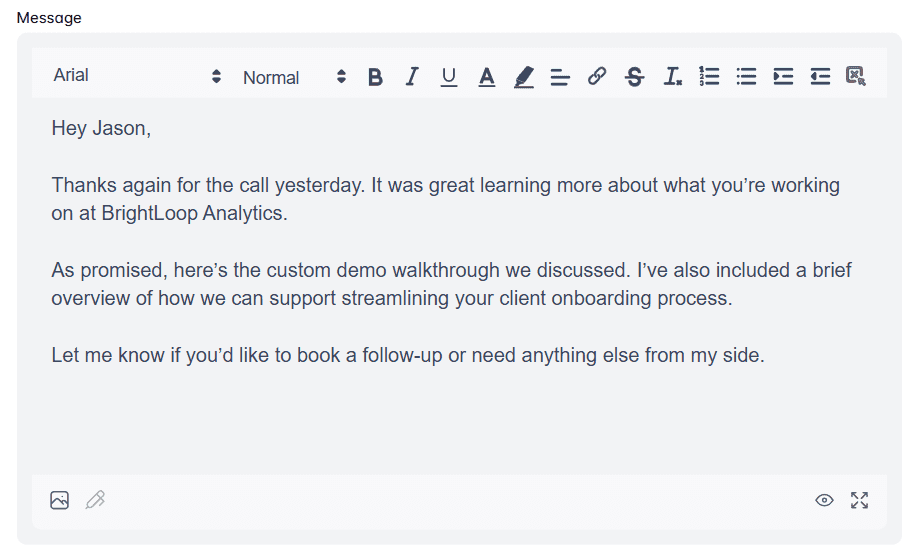
Send a personalized LinkedIn message within 24 hours. Follow-up response rates drop sharply after the first 24 hours post-event. Sending a personalized LinkedIn connection request or message within that window, while the conversation is still fresh for both parties, significantly outperforms follow-up at 48 or 72 hours.
Use LinkedIn as the first channel because it meets the contact in a professional context without the friction of an unsolicited email. Reference something specific from the conversation in the first line. Generic "great to meet you" messages are the networking equivalent of a missed call with no voicemail.
7. Follow-Up Message Content - Write a Three-Sentence Note That References, Adds Value, and Proposes a Next Step

Write a three-sentence note that references, adds value, and proposes a next step. A high-converting follow-up message has three components:
- A specific reference to what you discussed ("You mentioned your team is evaluating new outbound tooling")
- A value add that delivers on something you offered or adds new context
- A concrete next step with low friction ("Would a 20-minute virtual coffee next week work?")
Three sentences is a discipline, not a suggestion. Longer messages shift the burden to the recipient. The three-sentence format respects their time and makes a reply easy. This is where the value-first mindset from skill five pays its first dividend.
8. Contact Capture and CRM Handoff - Use NFC-Enabled Digital Cards to Trigger Instant CRM Entry
Use NFC-enabled digital cards to trigger instant CRM entry. The failure point that quietly cancels every skill listed above is contact capture. A rep executes the research, delivers a sharp pitch, listens well, offers genuine value, and follows up within 24 hours.
But the contact's details are on a paper card in a jacket pocket, and the CRM entry is scheduled for "this weekend." By Monday, the lead is cold, the context is gone, and the conversation that felt like pipeline is absent from the system that determines who gets called next. From surveying 4,000 sales reps, we know that 90% of new contacts do not enter your CRM because it's too much of an effort.
90% of new contacts never enter your CRM
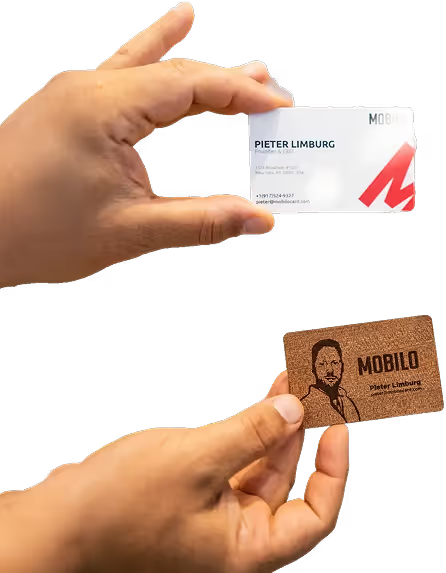
This is where Mobilo closes the loop, and it delivers the clearest ROI for sales and business development teams that attend frequent in-person events or work in client-facing roles where every conversation is a potential pipeline entry. When a contact taps or scans a Mobilo NFC card, their information flows directly into the rep's CRM in real time, no typing, no batch upload, no memory required. The contact exists in the pipeline within minutes of the conversation, captured and routed correctly, removing the manual logging step that quietly kills follow-through for even the most disciplined reps.
That same motion also eliminates a budget drain that marketing and operations teams feel acutely: recurring spend on printed collateral that becomes outdated the moment a title, phone number, or office address changes. A Mobilo digital card updates across every future tap without a reprint, so the team that attends frequent events stops paying a per-event collateral cost and can demonstrate marketing's contribution to pipeline in concrete terms rather than soft attendance metrics. Landsea Homes documented significant annual savings after switching from physical card reprints to Mobilo, a figure that reflects print and logistics savings alone, before accounting for any recovered pipeline value from leads that previously went unlogged.
For teams evaluating the investment, the Mobilo Teams plan starts at $4 per month per member, billed annually, and includes full team data analytics, CRM integrations, lead capture and management, unlimited leads and contacts, brandable QR codes, and 24/7 customer support.
The honest trade-off: the NFC tap requires the contact's phone to be accessible. In rare environments where phones are restricted, the QR code embedded on every Mobilo card serves as the fallback capture mechanism, so the workflow is not dependent on a single channel.
This benefit is most tangible for teams that attend events regularly: a single missed entry at a trade show costs more than the monthly tool subscription. Capturing leads from events and field meetings directly into the CRM, without relying on reps to manually log contacts afterward, is the connective tissue that determines whether the eleven skills above ever produce a pipeline record.
9. Virtual Networking Adaptation - Turn Your Video Background and First Chat Message Into Conversation Starters
Turn your video background and first chat message into conversation starters. Virtual networking requires a different set of environmental signals. Your video background functions as a visual introduction before you speak: a clean, branded, or contextually interesting background signals professionalism and gives the other person something to react to. In chat-based virtual events, the first message you send in a breakout or networking room sets the tone.
Lead with a specific observation about the session or speaker rather than a generic greeting. Look into the camera, not the screen, to simulate eye contact. These small adjustments close the rapport gap that video creates and make the follow-up feel like a continuation rather than a cold reach.
10. Relationship Nurturing - Schedule a 90-Day Touch Cadence for Every High-Value Contact
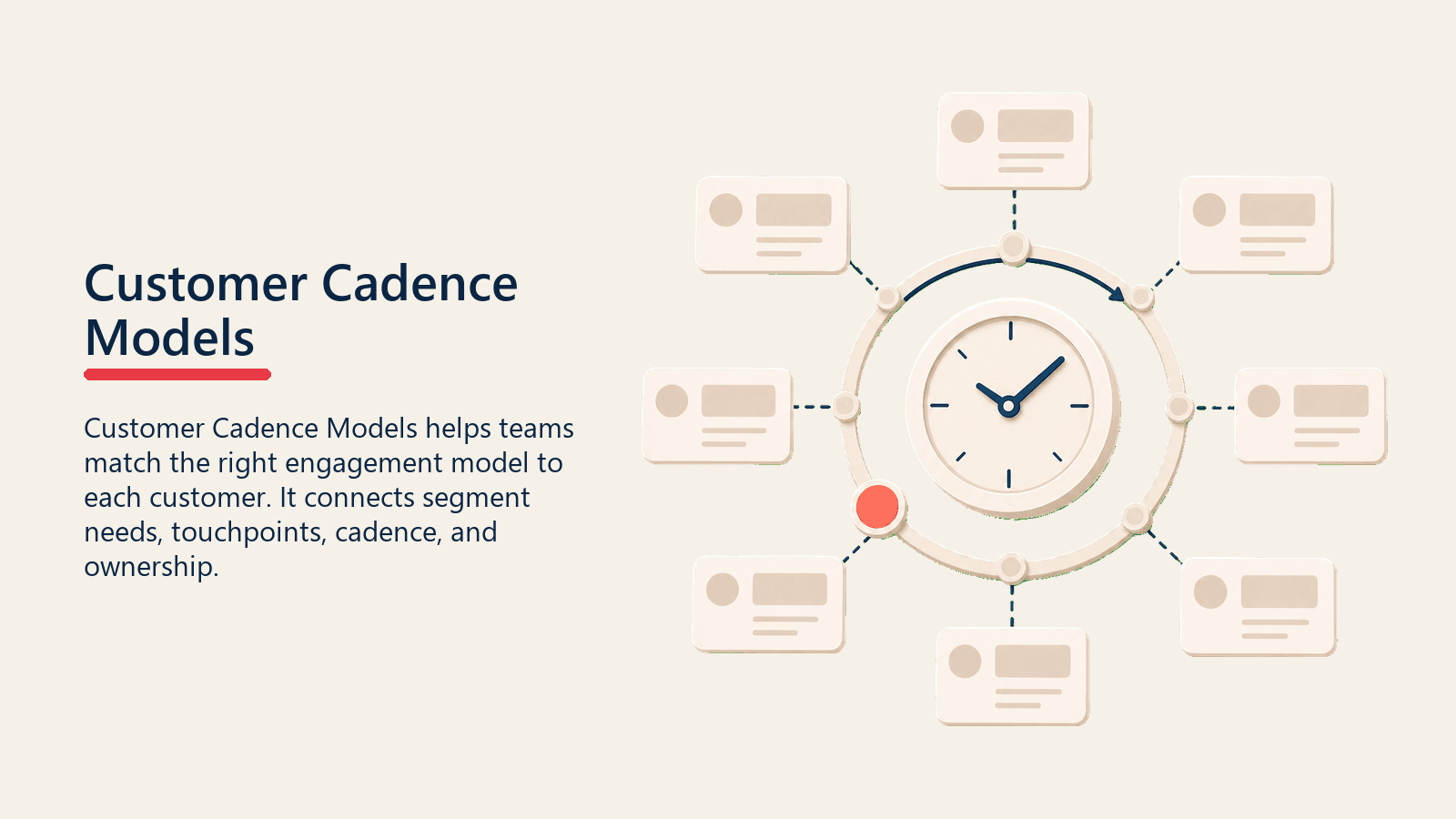
Schedule a 90-day touch cadence for every high-value contact. Converting a networking conversation into a long-term pipeline relationship requires a structured touch cadence, not good intentions. A 90-day cycle works in practice: a check-in at 30 days with a relevant piece of content, a milestone acknowledgment at 60 days (a promotion, a company announcement, a published article), and a direct value offer or meeting proposal at 90 days.
Staying in touch with contacts feels overly manual for most professionals; calendar reminders exist, but the process breaks down at scale, and passive connections rarely convert into active pipeline without a repeatable system behind them. The fix is treating relationship nurturing as a workflow, not a personality trait. Contacts who feel periodically seen without being sold to become the warm introductions that accelerate your next deal.
11. Identifying and Expanding Your Network - Map Second-Degree Connections to Find Warm Paths Into Target Accounts
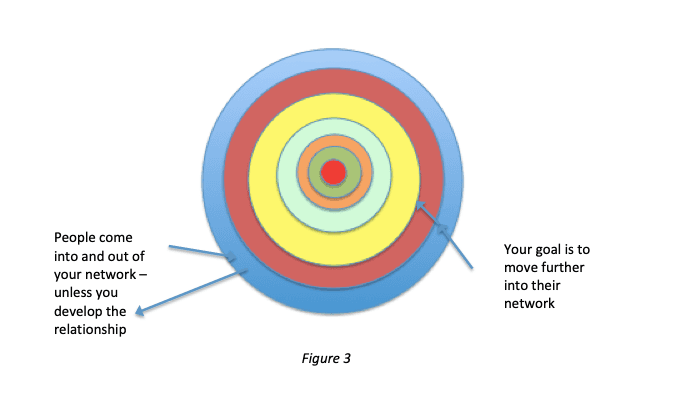
Use LinkedIn's mutual-connection filter to identify who in your existing network is already connected to decision-makers at your target accounts, then ask for a specific warm introduction rather than a generic referral. This second-degree mapping strategy consistently outperforms cold outreach because the trust transfer from a mutual contact shortens the sales cycle. Audit your network quarterly and identify at least five new second-degree paths per quarter. The tradeoff: over-relying on warm intros can create a network that's deep in one sector but dangerously narrow overall.
12. Setting Clear Networking Goals - Define a Measurable Pipeline Metric Before Every Event
Define a measurable pipeline metric before every event. Attending an event with a vague goal of "meeting people" produces vague results. Defining a measurable networking goal before arrival, such as three qualified conversations with contacts who match your ICP, one introduction to a specific target account, or two follow-up meetings booked before you leave the venue, creates a frame that turns a social activity into a sales motion. A sales manager who sets a goal of three qualified conversations per event will consistently leave with higher-quality pipeline entries. The metric does not need to be aggressive; it needs to be specific enough that you can evaluate whether the event was worth attending.
Eleven of these twelve skills live entirely in the conversation. Skill eight is the only one that determines whether the other eleven ever show up in your pipeline. The next section breaks down exactly how real-time contact capture works as the connective tissue between every great networking interaction and the CRM record that makes it count.
Quick-Reference: 12 Business Networking Skills at a Glance
- Pre-Event Preparation → Key Action: Research 3–5 named targets 24 hours before → Success Signal: Walk in with names, not just curiosity.
- 30-Second Elevator Pitch → Key Action: Open with the customer problem, not your job title → Success Signal: They ask a question back.
- Active Listening → Key Action: Pause and paraphrase before responding → Success Signal: Surface buying signals mid-conversation.
- Body Language Mastery → Key Action: Open stance, mirror posture, and firm handshake → Success Signal: Rapport established before the pitch begins.
- Value-First Mindset → Key Action: Offer a specific referral or resource first → Success Signal: Obligation loop created naturally.
- Follow-Up Timing → Key Action: Send a LinkedIn message within 24 hours → Success Signal: Reply rate materially higher than the 48–72-hour window.
- Follow-Up Message Content → Key Action: Send a 3-sentence note: reference → value → next step → Success Signal: Low-friction reply and meeting booked.
- Contact Capture & CRM Handoff → Key Action: NFC tap triggers instant CRM entry → Success Signal: Contact enters the pipeline within minutes of the conversation.
- Virtual Networking Adaptation → Key Action: Use a branded background and camera-direct eye contact → Success Signal: Rapport gap closed in remote settings.
- Relationship Nurturing → Key Action: Maintain a 90-day touch cadence: 30 / 60 / 90 check-ins → Success Signal: Warm introduction surfaces at the deal-acceleration moment.
- Second-Degree Connection Mapping → Key Action: Map mutual connections before cold outreach → Success Signal: Warm path into the target account identified.
- Goal-Setting Before Every Event → Key Action: Define a measurable ICP-qualified conversation target → Success Signal: Event ROI evaluable against a concrete metric.
Related Reading
- Virtual Speed Networking
- How To Build A Referral Network
- Business Networking Automation
- How To Scale Business Networking Online
- Business Networking Tips
- Where To Network For Business
- Business Networking Plan
- Strategic Networking For Business Growth
How Real-Time Contact Capture Closes the Gap Every Networking Skill Opens
The handoff between conversation and CRM is broken before the follow-up email is ever drafted. The cause is a fixable operational failure that quietly cancels every interpersonal skill a rep has spent years building.
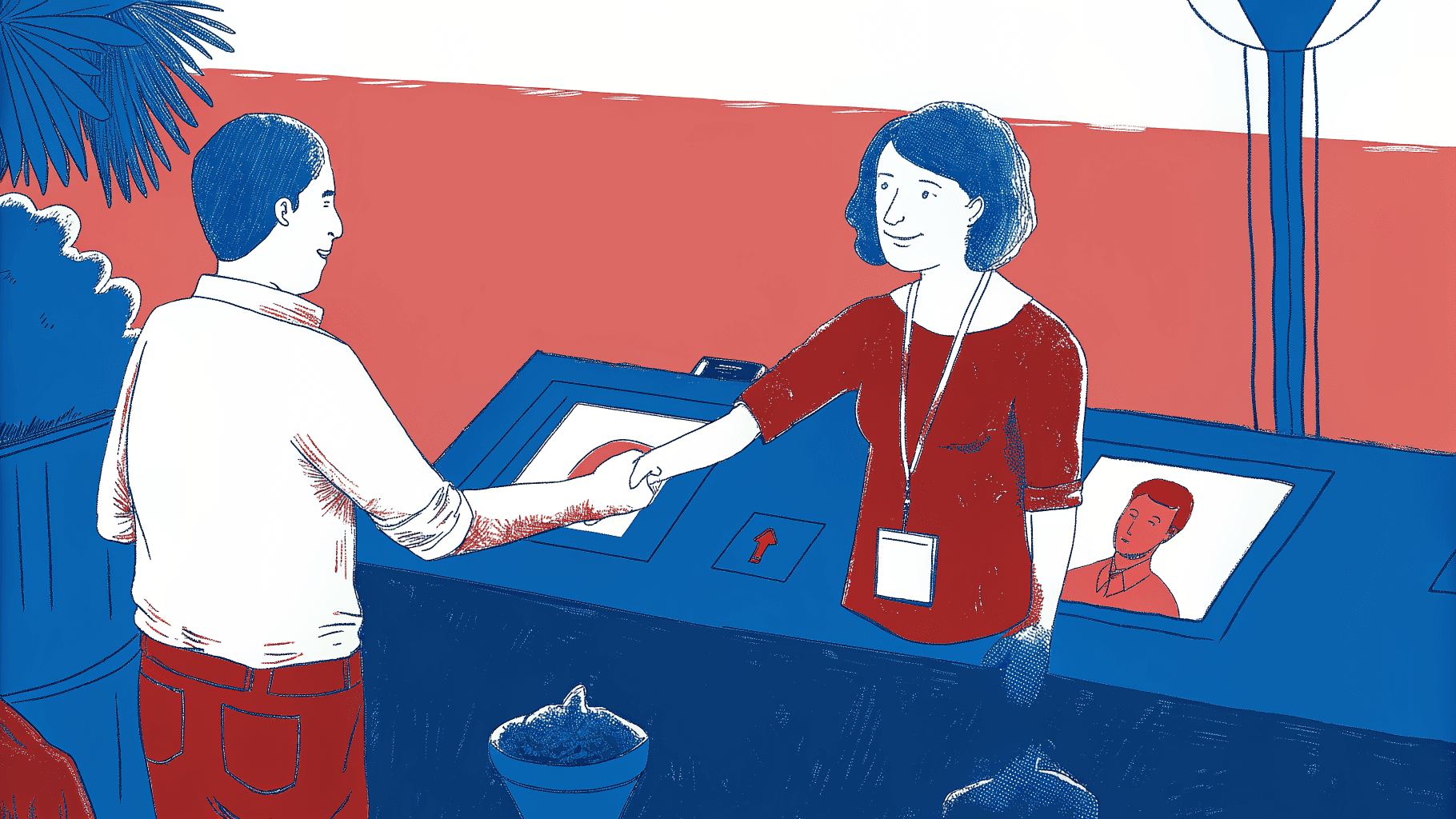
Why the Handoff Moment Not the Conversation Is Where Pipeline Is Won or Lost
When reps manually enter contacts after an event, the delay that erodes conversion speed also destroys conversational context: the pain point the prospect mentioned, the commitment made at the booth, the personal detail that would make the message worth opening. Across the market, lead capture is treated as a real-time data workflow, not a post-event administrative task, precisely because trade show leads require follow-up within 24-48 hours to maximize conversion, yet the average exhibitor takes days to enter contact data manually after an event, and prospects move on or get contacted by competitors inside that window.
How a Tap-to-CRM Workflow Turns Every Skill in This List Into a Measurable Output
Skill without a capture system is effort without a record. Companies lose leads through systemic gaps in the handoff process, specifically delays introduced when contact data must be manually captured after the event. Real-time contact capture is the link that converts a skilled conversation into a pipeline record.
How Real-Time Contact Capture Turns Every Networking Conversation Into a CRM Record
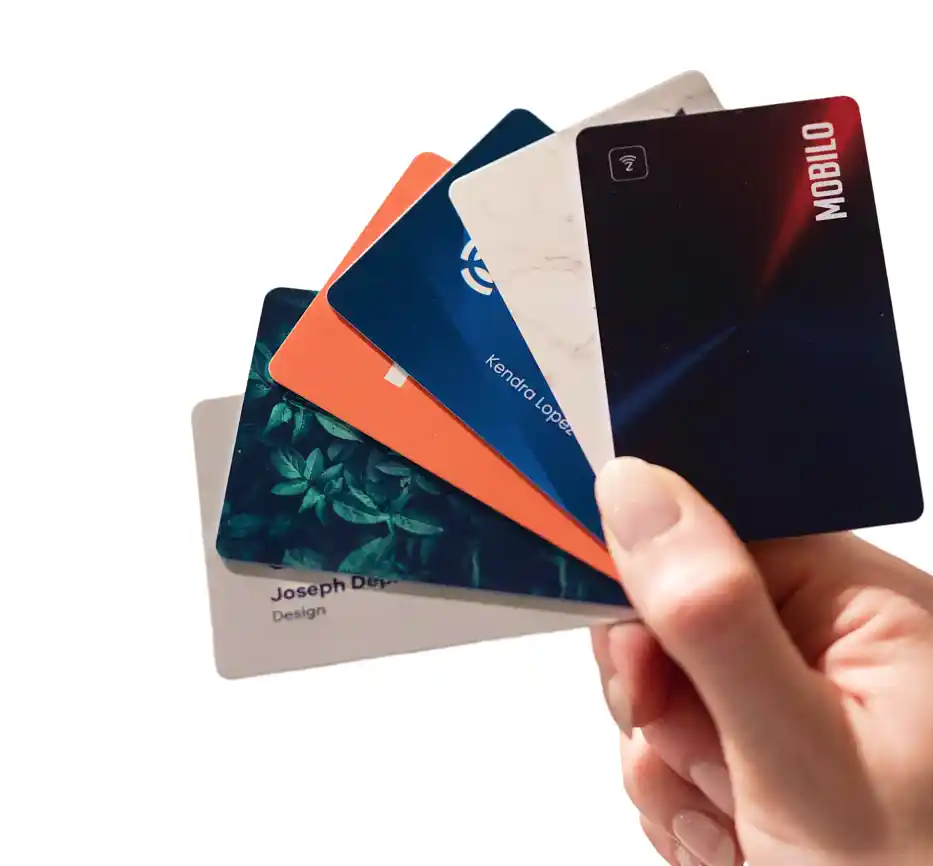
Mobilo's digital business card closes that gap at the moment of exchange. A tap or scan routes contact data through custom lead capture forms and syncs directly into a CRM via a broad library of integrations through Zapier. The Teams plan at $4 per month and the Business plan at $5 per month both include full team analytics, central billing, and team management, with the Business plan adding enterprise SSO, HR directory sync, and white-glove onboarding for deployments of 100 seats or more. A sales manager can see, inside the same dashboard, which events and reps are generating pipeline-ready contacts and reallocate budget accordingly. Every skill in this article creates an opportunity; the operational layer determines whether that opportunity compounds into pipeline or disappears into a stack of forgotten cards.
Related Reading
- Business Networking Trends
- Business Networking Opportunities
- Networking Ideas For Virtual Events
- Business Networking Event Ideas
- Virtual Networking Ideas For Large Groups
- Networking Ideas For Small Business
- Business Networking Conversation Starters
- Business Networking Questions
Next steps
If your best conversations keep disappearing between the handshake and the CRM, the path forward starts with closing the handoff gap at the moment of exchange, not after the event. Start with our digital business card.
The finding that 90% of new contacts never reach a CRM because manual entry creates too much friction means that follow-up discipline is not the variable to fix. The finding that delayed data entry strips out the conversational context, the pain point mentioned, the commitment made at the booth, that would make a follow-up worth opening means that faster emails on empty records solve nothing. Together, they point to one corrective action: capturing contact data in real time, at the moment of introduction, so every skill built across twelve networking behaviors actually produces a pipeline record.
Start with a digital business card from Mobilo. A tap or scan routes contact details directly into your CRM through Zapier integrations, with no batch upload, no manual entry, and no context lost between the conversation and the follow-up. The contacts captured at your next event arrive complete, correctly routed, and ready for outreach before the conference floor clears.
Frequently Asked Questions
What actually is business networking, and why does it matter for career growth?
Business networking is the practice of building and maintaining professional relationships that create access to opportunities, information, and introductions outside your immediate circle. It matters because 85% of jobs are filled through professional networking, not job boards or cold applications, making it the skill most directly tied to career advancement and revenue growth.
What are the biggest challenges people run into when trying to network?
Two of the most common challenges are lacking an existing network when you need one most, and struggling to initiate conversation with strangers. The post also identifies a structural problem: warm contacts go cold not because of poor follow-up intent, but because nothing organized happens in the sixty seconds after a handshake, before any follow-up is ever attempted.
How do I set a useful goal before attending a networking event?
Define a measurable target tied to your ideal customer profile before you walk in, for example, a specific number of ICP-qualified conversations you want to have. The post frames this as Skill 12, and notes that having a concrete metric is what makes event ROI actually evaluable after the fact.
How do I craft a networking pitch that doesn't make people tune out?
Lead with the customer problem you solve, not your job title or company name, problem-first framing creates immediate relevance, while job-title openers trigger a 'vendor alert' that shuts conversations down. Keep it to a concise few sentences, tailor it to your audience's specific priorities, and treat it as a door opener rather than a closing move; the goal is to get a question back from them, not applause.
Why do warm leads go cold even when I plan to follow up?
The failure is structural, not behavioral: when contact capture relies on physical cards and manual data entry, the lag between meeting someone and recording their details creates irreversible drop-off in both volume and quality before a single follow-up message is sent. Industry research cited in the post confirms that 90% of new contacts never make it into a CRM because the manual effort is too high, and the window for relevance closes faster than most teams expect.