.avif)

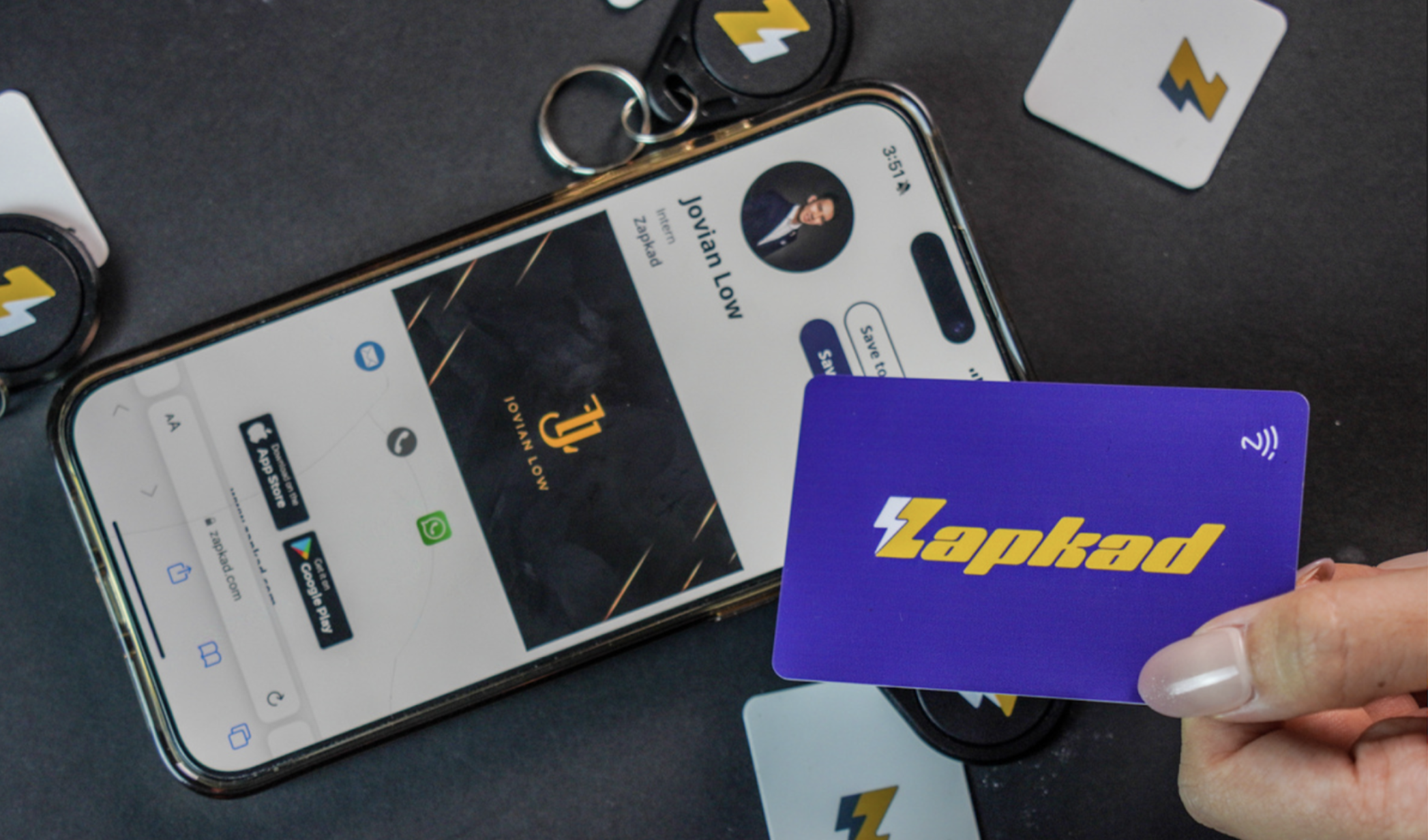
What are NFC Business Cards and the Top Tools to Create Them Easily
On This Page
Every week, billions of business cards are printed—and most of them end up in the trash. Despite the effort put into designing and exchanging them, traditional business cards rarely leave a lasting impression. After a busy event, your card becomes just another rectangle in a growing stack. NFC business cards change that experience entirely. With a simple tap, they instantly share your contact details, links, and brand presence—no app or paper required. In this article, you’ll learn what NFC business cards are, how they work, and the top tools that make creating one quick and easy. Want to stop fumbling and start making real connections?
Mobilo's digital business card helps you do exactly that, letting you build and update smart business cards in minutes with tap-to-share, QR code fallback, mobile wallet support, and easy lead capture, so sharing contact info becomes natural.
Summary
- A tap eliminates manual entry and can increase networking efficiency by 30%, reducing transcription errors and improving follow-up rates.
- Replacing static paper with hosted NFC profiles turns handshakes into measurable pipeline activity, in a market projected to reach $3.1 billion by 2025.
- Adoption is accelerating: over 60% of businesses are expected to adopt NFC business cards by 2025. IT and procurement should plan for secure provisioning and integrations now.
- Paper waste remains acute, with an estimated 8 billion business cards discarded each week, while NFC and digital profiles can reduce paper usage by up to 90%.
- Successful rollouts require rigorous QA, for example, testing at least 20 cards across three phone models and targeting a failure rate below 1 percent before mass distribution.
- Prioritizing integrations and chip quality pays off in outcomes: NFC-enabled digital cards retain users 50% more than QR-based cards and capture 16% more leads, according to 2025 data.
This is where Mobilo's digital business card fits in: it provides centralized provisioning, QR fallback, mobile wallet support, and CRM connectors that map NFC taps to owner records, shortening time-to-first-touch.
What are NFC Business Cards?
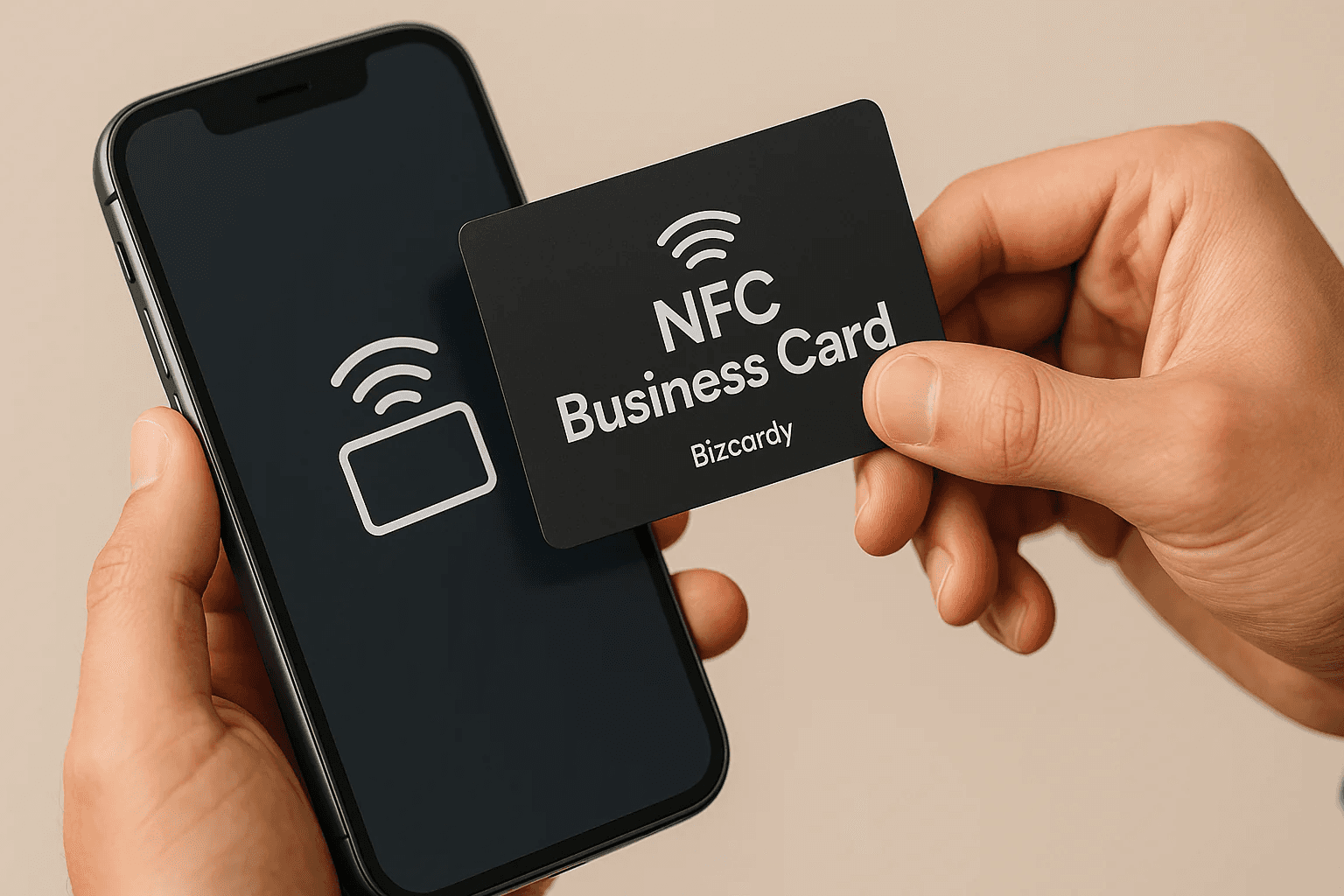
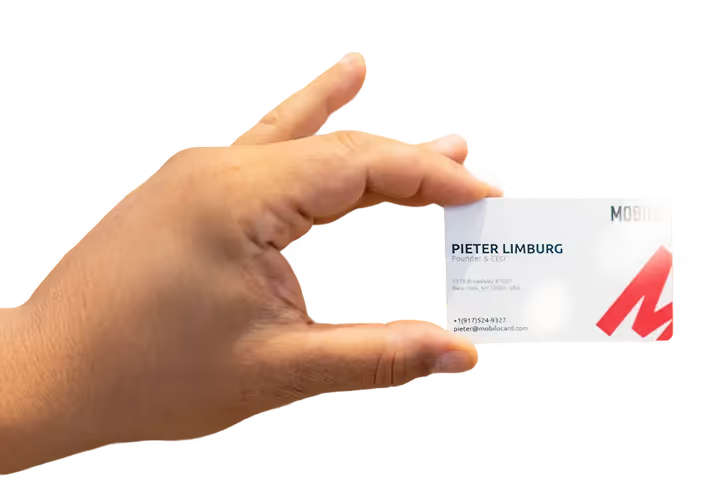
NFC business cards are physical cards with a tiny NFC chip that, when tapped to a compatible phone, opens a live digital profile so contacts save your details instantly and accurately. They convert a static paper handoff into an updateable digital touchpoint that can push contact data, links, and tracking into the tools your team already uses.
How Does the Tap Actually Transfer Data?
The card holds a small NFC chip programmed with a URL or a vCard payload. When a phone with NFC enabled comes within a few centimeters of that chip, the phone reads the tag, and either opens a browser page or offers to save the contact. No app is required for most modern phones, because the operating system handles the read and the handoff to the browser or contacts app. In practice, that makes the experience feel instant: a short physical motion, a visible profile, and the recipient either taps save or follows a link.
What Can You Store on an NFC Business Card?
You can host anything that fits on a web profile: vCard fields, phone and email links, a meeting scheduler, portfolio images, videos, product pages, or direct links to social profiles. Because the card typically links to a hosted page, that page can include UTM tracking, custom branding, and deep links that route leads directly into a CRM or marketing funnel. That move from static text to a live web endpoint is what turns handshakes into measurable pipeline activity.
What Are the Key Components and Features?
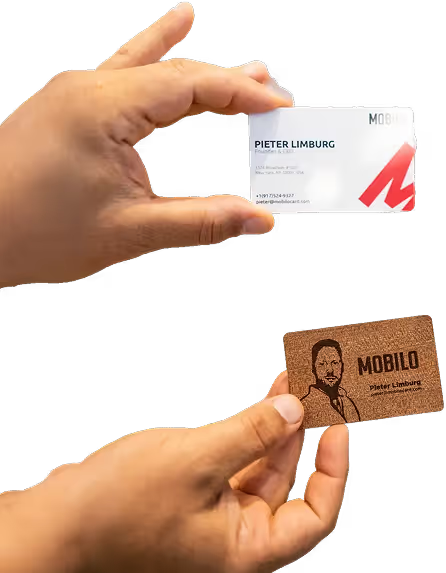
Physically, an NFC card contains three elements: the shell (plastic, metal, wood, or cardstock), the embedded NFC tag, and a printed surface for branding. On the software side, the typical stack includes a hosted profile page, analytics, and integration hooks for CRMs and automation. That pairing of hardware and a centralized platform is why teams treat these as enterprise tools rather than novelty items.
Share Information Instantly and Digitally
A tap eliminates manual entry and transcription errors. The recipient receives a formatted contact card or profile immediately, increasing the likelihood of follow-up. For sales teams, this means fewer lost leads after events and cleaner contact records entering your CRM.
Network Eco-Friendly
If your goal is to reduce waste, NFC profiles deliver impact by enabling a single durable card to replace dozens of printed runs. Industry projections highlight a significant shift in networking behavior, with the global NFC business card market projected to grow at a Compound Annual Growth Rate (CAGR) of approximately 10–12% through 2025. This growth signals that organizations are increasingly investing in digital-first alternatives to traditional paper cards, with the broader digital business card industry expected to reach several hundred million dollars in valuation by year-end.
The High Cost of Static Networking
This transition is driven by mounting pressure to eliminate waste from the 10 billion business cards printed annually, of which nearly 88% are discarded within a single week. By adopting NFC technology, companies can significantly reduce the recurring costs of reprints and logistics while aligning with corporate sustainability goals.
Update and Customize Easily
A hosted profile lets you change phone numbers, titles, or links in real time without issuing new cards. That flexibility eliminates the recurring expense and logistical hassle of reprinting cards whenever someone changes roles or contact details.
Save Money Long-Term
The upfront price of smart cards is higher than basic paper, but the economics flip once you factor in reprint cycles, event volume, and CRM efficiency. When you stop paying for periodic reprints and adopt automated lead capture that reduces manual data entry, the total cost of ownership declines over time.
Analytics and Tracking
Linking an NFC card to a hosted profile unlocks visit counts, geographic origin, and referral data. Those signals answer a fundamental business question: which conversations are turning into engagement. That data lets marketing and sales prioritize follow-up, refine messaging, and measure event ROI.
What Common Problems Do Teams Still Face with Paper Cards?
This pattern appears consistently at conferences and in inside sales meetings: stacks of paper cards pile up, and only a fraction of them turn into actionable leads; that waste is one reason 8 billion business cards are discarded each week. The result is missed opportunities and extra manual work to reconcile contact lists. It is exhausting for event teams who must chase incomplete or mis-typed details after the fact. Most teams hand out paper cards because they are familiar and require no new tools. As events scale and teams attend multiple conferences, those stacks become a bottleneck: manual follow-up eats hours, contact records fragment across spreadsheets, and lead attribution goes dark.
Enterprise-Grade Connection Orchestration
Platforms like Mobilo provide an alternative: teams find that smart cards with centralized profiles push captured contacts directly into CRMs via prebuilt connectors, offer admin controls for fleet-wide updates, and maintain enterprise safeguards such as SOC 2 and GDPR-ready practices, thereby compressing the follow-up gap without upending existing workflows.
What Should I Expect in Form Factor and Compatibility?
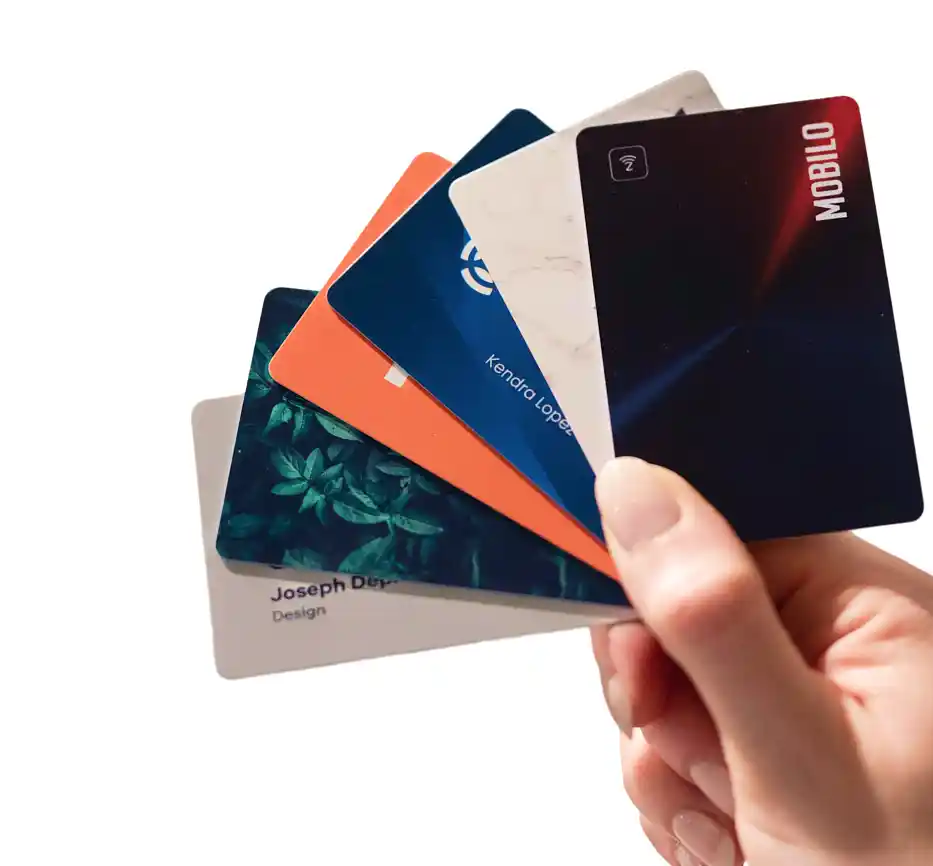
Cards are available in thin plastic, metal plates, wood, stickers, and key fobs. Most tags support passive NFC; compatibility depends on the phone model and OS settings, not on the card material. For large teams, choosing a vendor that offers device testing, pilot deployment, and admin dashboards is the practical decision that keeps rollouts smooth and consistent.
How Fast Will Adoption Grow in My Company?
Adoption of digital networking technology is accelerating, with more than 52% of companies with over 50 employees already implementing innovative contact-sharing systems. A global push for digital transformation is driving this mainstream shift, with approximately 58% of businesses aiming to replace traditional paper-based methods with more efficient, contactless tools. You think the hard part is convincing people to tap; the real friction shows up when you try to scale consistency, security, and measurable lead flow across teams.
Related Reading
- Best Business Card Scanner
- What Makes a Good Business Card
- Business Card Trends
- QR Code Marketing Strategy
- New QR Code Technology
- Professional Networking Tools
- Best Paid QR Code Generator
- What to Include on a Business Card
How to Make NFC Business Cards?

Start by defining a clear goal: do you want a single premium card that represents an executive, or a managed fleet that generates leads in your CRM at scale? Once that’s decided, the steps are straightforward: choose the physical form and supplier, determine what the chip will point to, encode and test every batch, and design the face so it both reads reliably and reinforces your brand.
What Are the Practical Options for Getting Started?
Creating a business card with NFC is easy and affordable. Here are two methods for developing an NFC business card.
1. Use a Combined NFC and Digital Profile Provider Service
Various NFC card providers offer a digital business card profile attached to the card. Therefore, you do not need to create a separate digital business card and link it to your NFC card. On the downside, the provider may not offer all the essential digital business card features. This could negatively impact your networking.
2. Buy an NFC Card and Create a Digital Business Card Separately
The other option is to purchase a blank NFC business card on Amazon, Etsy, or another online marketplace. Then, create a digital business card profile from any digital business card platform. Disclosure: My service offers a digital business card platform, but you can use any provider. Lastly, use an NFC writer app to link the digital business card profile to your NFC card. This step requires extra effort but can provide more control over your digital business cards and networking.
Operationalizing the Digital Handshake
1. Choose the Right Card Type and Supplier
- Decide on material by role and volume. Choose low-cost PVC for bulk distributions at trade shows, and reserve metal or wood for small runs that must signal premium positioning. For enterprise deployments, factor in lifecycle costs, not just unit price.
- Confirm the vendor supports bulk encoding, unique serial IDs per card, and returns or replacements for failed tags. Ask for a sample run of 10 to 25 cards before committing to thousands.
- If you buy blank tags, note the chip type and memory. NTAG213 is widely used and supports URLs and small vCard payloads if you need larger payloads or secure NDEF support, select chips with more memory and robust UID handling.
2. Decide what the NFC chip will contain and how you will host it
- Choose between a direct payload and a hosted URL. A hosted URL provides updateability, analytics, and CRM hooks; a direct vCard payload writes contact fields to the phone immediately without a server. For enterprise use cases, you will typically prefer a hosted profile that can be updated without reissuing physical cards.
- Prepare the hosted endpoint to accept tracking parameters, deep links for scheduling meetings, and a lead-capture webhook. Ensure your endpoint uses HTTPS, responds quickly, and includes mobile-optimized metadata for social previews.
- If privacy and compliance are a concern, review the hosting provider’s certificates and data transfer policies, and confirm alignment with SOC 2 or GDPR, as needed.
3. Encoding the NFC Chip
- Single-card or small batch: Use phone apps like NFC Tools or TagWriter to write a URL or vCard. Always set the NDEF record type explicitly and verify that the write completed.
- Large batch: Use a USB NFC encoder or a vendor that offers bulk programming with CSV import, where each card receives a unique serial number and its target URL—record the mapping between physical serial numbers and user accounts in your admin system.
- Locking tags: Avoid locking tiles unless you are certain the payload is final. Locked tags cannot be rewritten. For enterprise fleets, keep tags rewritable until handoff and record who has write access.
- Verification: After encoding, scan each card and capture a screenshot or log entry showing the expected URL and UID.
4. Design for Functionality and Aesthetics
- Keep the antenna area free of heavy ink or metal layers. For metal cards, use specialized antennas or nonconductive windows, because unmodified metal will block the field.
- Place logos and text away from the central tag zone; leave a 6 to 10 mm clearance if you cannot confirm the antenna layout. Include a visible QR code as a fallback for phones that cannot read NFC.
- Use high-contrast type and a minimum font size that is readable in low light. If the card will be used in regulated environments, include small legal copy or a link to privacy terms on the hosted profile rather than cluttering the physical surface.
- Consider a short call-to-action line, such as "Tap to save contact, or scan QR," to make it clear what to do.
5. Production Routes: Online Platforms, Professional Printers, or DIY
- Platform + card vendors: many services sell NFC cards pre-paired to their hosted profiles. This route minimizes setup time but may limit integration options.
- Professional print shops: good for complex finishes and strict brand guidelines; pick vendors that partner with NFC encoder houses to offer combined print-and-programming.
- DIY kits: valid for prototypes and small pilots, where purchasing blank tags and manually encoding them is acceptable. This is slower and riskier at scale, but it provides maximum control.
Best Practices For Creating NFC Business Cards
1. Choose the Right Card Material
NFC cards are typically made of PVC or metal. Pick based on durability, brand signal, and technical constraints.
- Plastic NFC cards are cheaper but less durable. If you want to create NFC business cards in bulk, plastic cards are the practical choice.
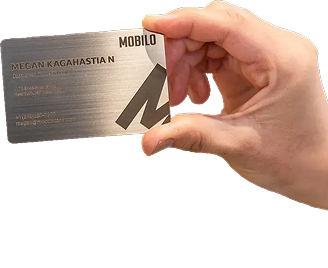
- Metal NFC cards, on the other hand, are expensive but robust. They also look premium and can make you stand out. If you want a premium networking impression, metal is the right call.
Practical detail: Metal surfaces require special tag designs or a non-metal insert. Ask your supplier for test samples and confirm the read range on both Android and iPhone before final production.
2. Select the Right digital business card platform for your needs
Pick a platform that supports fleet provisioning, role-based admin controls, CRM connectors, automation, and compliance features so IT and procurement can sign off quickly.
3. Share In-Depth Information About Yourself
Populate the hosted profile with useful fields and actions, such as contact methods, role, team, a one-line value proposition, and a clear next step, such as scheduling or a permissions sheet for outreach.
4. Test Your NFC Business Cards
Build a test protocol and acceptance threshold. For example, test 20 cards across three phone models and require a failure rate below 1 percent before mass distribution. If failures exceed the threshold, isolate the cause to chip encoding, physical placement, or phone settings.
How Will People Actually Share the Card?
- Tapping varies by phone model, so remind recipients to enable NFC and to tap the correct spot: on Android, aim near the center back; on iPhone, aim high on the rear “sweet spot.”
- If reads fail, check these common causes: airplane mode, battery saver, the screen being off, or camera usage locking NFC on some phones. If you encounter these failures during pilots, add a one-line recipient tip to your verbal script and your hosted profile.
- The recipient does not need your same app installed for most implementations. A standard read will open a browser or contacts prompt. Still, include a QR fallback for strict enterprise environments where phones are locked down.
What Deployment Pitfalls Should You Expect, and How Do You Avoid Them?
This pattern appears repeatedly in pilot projects: teams order cards, hand them out, and learn too late that a small percentage of tags are dead, or that many recipients have restrictive phone settings. The hidden cost is not the replacement cards; it is the missed conversations and the downstream gap in lead capture. Teams find that platforms like Mobilo replace ad hoc handoffs with centralized provisioning, bulk encoding support, and CRM integrations, reducing failed handoffs and making event ROI measurable while maintaining enterprise controls.
Operational Checklist Before First Distribution
- Pilot run with 10 to 50 cards across the exact devices your team will meet.
- Log every UID and map it to the user account or asset tag.
- Create an easy one-page script for reps to explain the tap and what recipients will see.
- Include a QA pass: test on an older Android, a recent Android, and an iPhone model representative of your audience.
- Prepare replacements and a simple process for lost cards and role changes, and keep tags rewritable until the last handoff.
Real-World Caution and Human Insight
When we run pilots in sales teams, a clear pattern emerges: defective tags and phone settings cause most early failures, not the concept itself. That frustration is real and draining for reps, who then have to resort to manual methods. Addressing this means setting a low failure threshold, baking testing into procurement, and training reps to give a two-sentence explanation that reduces recipient confusion.
Quick, Evidence-Backed Reasons This Pays Off
Adopting NFC business cards can measurably accelerate outreach and meeting follow-ups, with research indicating that digital networking tools can increase overall networking efficiency by 30%. Organizations using these smart cards report a 35% increase in successful follow-ups, primarily by eliminating manual data entry and syncing contact details directly into CRM systems such as:
- HubSpot
- Salesforce
The Sustainability Dividend
For organizations prioritizing sustainability and operational efficiency, adopting NFC business cards offers a significant environmental advantage, with data indicating they can reduce corporate paper usage by up to 92%. This transition addresses a critical waste issue: of the 10 billion business cards printed annually, nearly 88% are discarded within a single week.
Top 10 NFC Business Card Providers
1. Mobilo: Enterprise Fleet, CRM-First Provisioning
Mobilo pairs physical NFC cards, QR fallbacks, and a centralized platform built for teams and enterprises, with:
- Bulk encoding
- Prospect enrichment
- Direct CRM sync
Pricing is enterprise-quoted by fleet size and feature set; they offer pilot demos and a promotional first-25-cards trial for new demos.
Institutional Governance and Scale
Unique strengths beyond materials include lead scoring and automated lead enrichment workflows that drive sales activity. Pros: built for governance and scale, admin controls, audit trails, SOC 2, and GDPR alignment; Cons: enterprise pricing and contracting cycles, requires procurement lead time for fleet orders.
2. MOO: Premium Print Quality with NFC Finish Options
MOO brings its print-first design expertise to NFC, so expect finely finished cards and a wide range of surface treatments for brand-sensitive teams. They sell per-order, consumer-friendly runs, and support bulk orders; their value lies in design fidelity and turnaround.
Pros:
- Standout physical appearance
- Well-suited for executives and client-facing staff
Cons: Less emphasis on enterprise-grade analytics and CRM automation than platform-focused vendors.
3. Linq: Programmable Cards with Flexible Redirects
Linq emphasizes programmable NFC tags and flexible link routing, making it easy to change destinations, A/B test landing pages, or switch profiles without reissuing cards. Their tooling is developer-friendly and integrates with third-party platforms via webhooks and APIs.
Pros: Fine-grained routing and A/B potentials
Cons: Teams that need packaged CRM connectors may need custom work to reach parity with enterprise platforms.
4. Tapni: Simple, Customizable Sharing Made Visual
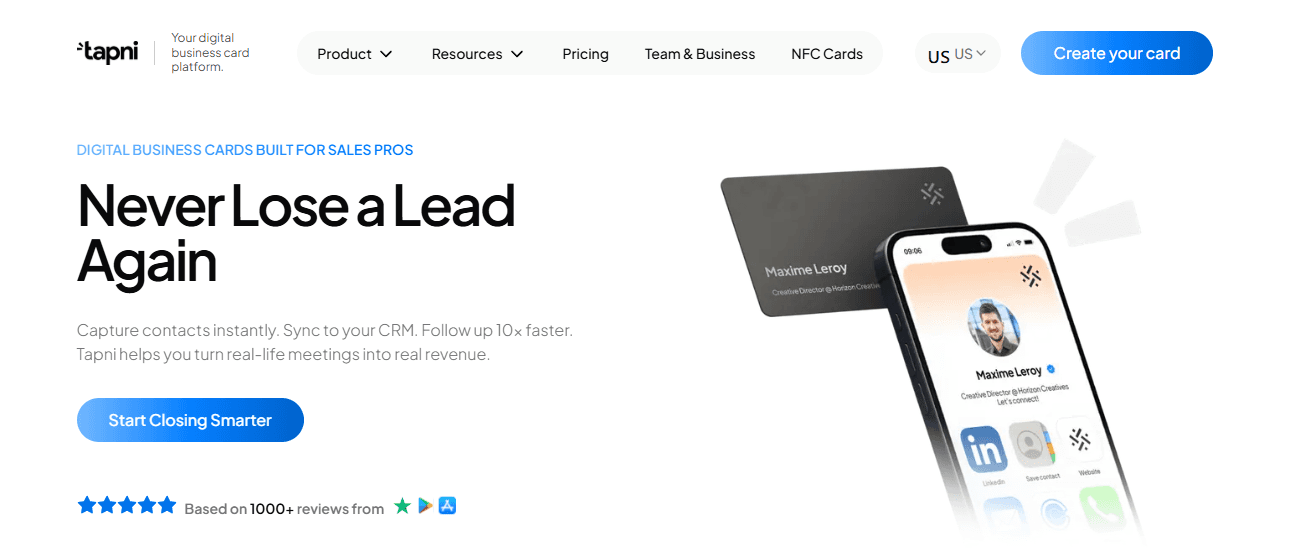
Tapni focuses on clear, social-first profiles and straightforward bulk ordering, with options for various finishes and simple analytics. It’s a solid choice when you want a balance of customization and predictable per-card pricing.
Pros:
- Easy setup
- Suitable for marketing and creator roles
Cons: Enterprise provisioning and compliance features are less robust than those on vendor platforms designed for procurement teams.
5. HiHello: Low-Cost Entry, App-First Digital Profiles
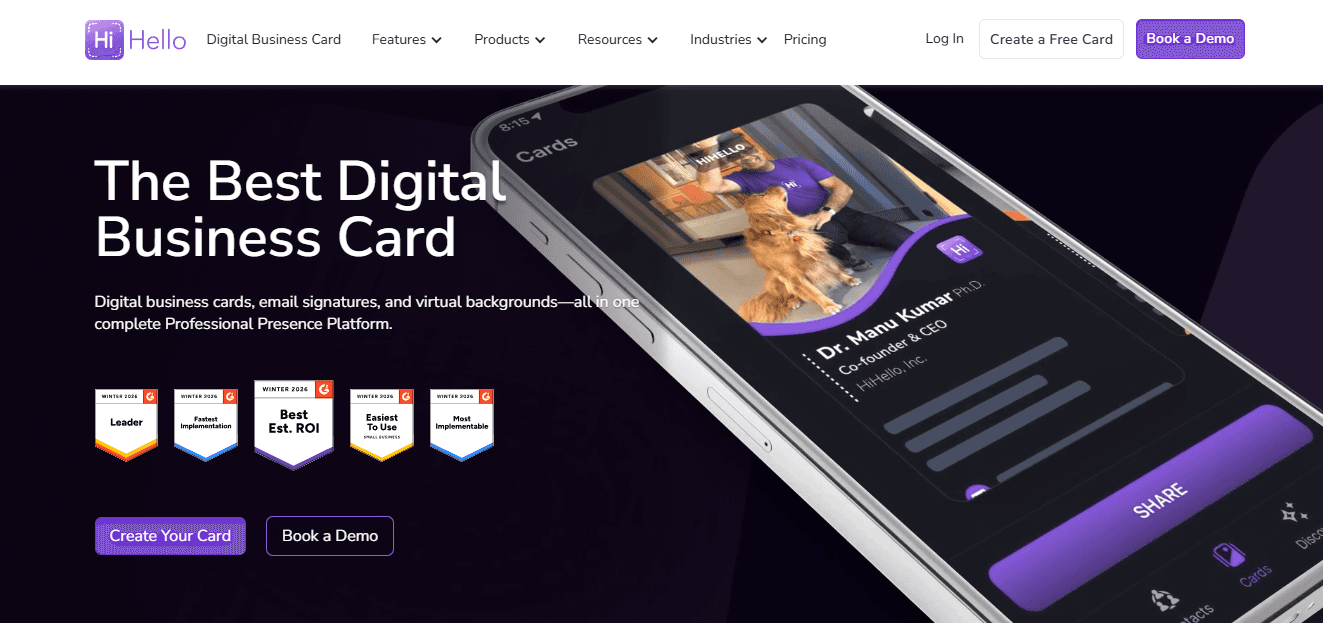
HiHello offers a free app that pairs with NFC tags, allowing individuals and small teams to experiment without a significant upfront investment. You purchase tags or cards, then manage the profile in the app, keeping initial costs minimal.
Pros:
- Budget-friendly
- Fast to deploy for pilots
Cons:
- Limited fleet management
- Weaker bulk encoding workflows
- Fewer out-of-the-box CRM integrations for enterprise needs
6. VistaPrint (VistaConnect): Known Print Partner Adding NFC Profiles
VistaPrint leverages its global printing and fulfillment network to offer NFC-enabled cards alongside standard print services through VistaConnect. This is convenient when strict brand templates and international shipping logistics are a concern.
Pros:
- Reliable printing and distribution
- Familiar ordering flow
Cons: Platform analytics and lead routing are generally less sophisticated than those of dedicated digital card platforms.
7. TapTag: Material Variety and User-Updatable Profiles
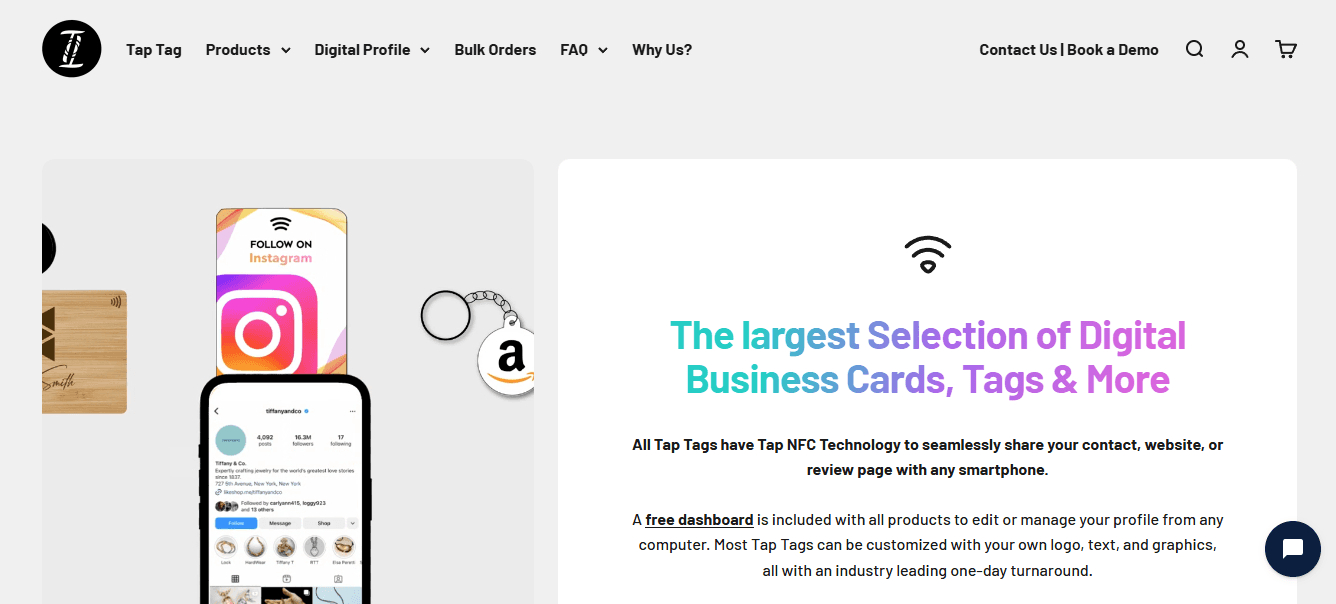
TapTag differentiates through materials and offers a free digital profile you can edit anytime, with options including wood and metal finishes. They are attractive for teams that want unusual tactile cards but still need a simple online endpoint.
Pros:
- Strong material choices
- No-cost editable profile
Cons: The integration surface for enterprise CRMs can be limited without additional tooling.
8. V1CE: Sustainability-First NFC Cards
V1CE focuses on eco-friendly materials and carbon-aware production while offering NFC functionality suitable for client-facing roles that prioritize sustainability messaging.
Pros:
- Low environmental footprint
- Coherent sustainability story for brands
Cons: Special materials can sometimes alter antenna design, which can affect read range and require verification across phone models.
9. Metal Business Card: Premium Stainless Steel Options
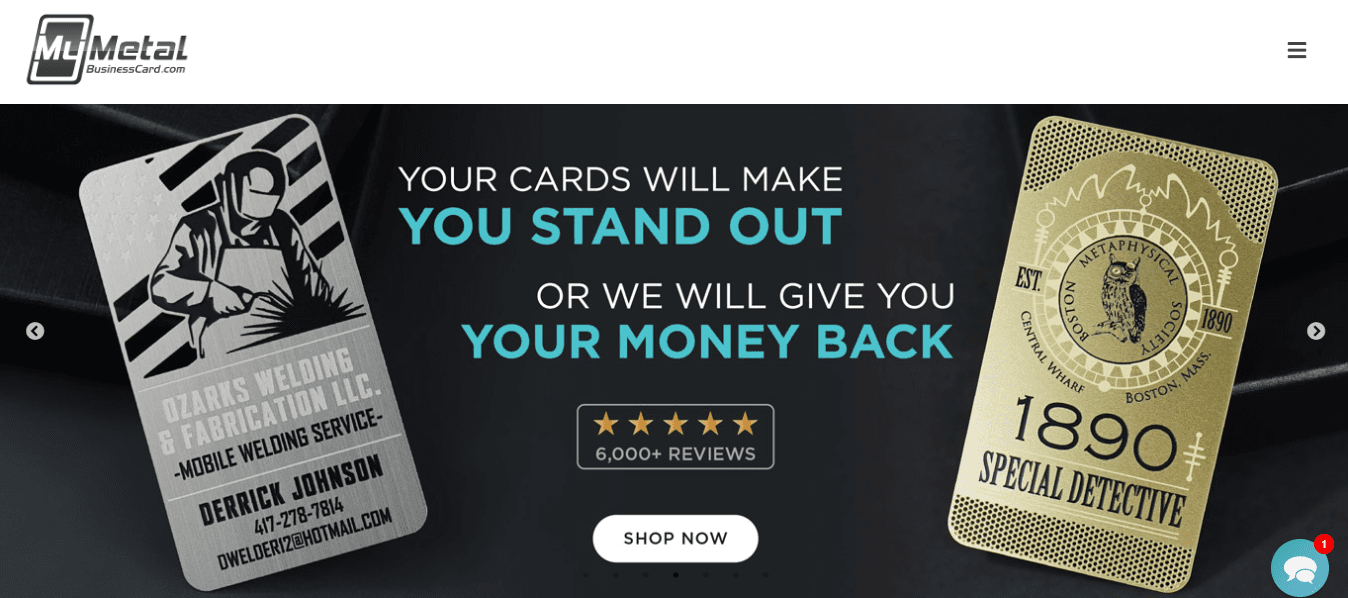
For a deliberate, high-impact feel, Metal Business Card offers stainless steel NFC plates with durable finishes and a strong tactile presence. Pros: memorable and long-lasting, signals status; Cons: metal can interfere with NFC antennas unless engineered correctly, so test reads across Android and iPhone models before a full run.
10. Popl: App Ecosystem with Team Analytics and CRM Hooks

Popl combines NFC-enabled items with an app that provides analytics, team dashboards, and CRM connectors, making it a practical choice for growth-oriented teams that want measurable follow-up. Their product mix ranges from individual creators to multi-user teams and includes accessories such as phone tags and badges.
Pros:
- Ease of use
- Built-in tracking
- Ready integrations
Cons: For strict enterprise governance, negotiate provisioning and data-residency requirements early.
How Should You Pick Between These Vendors?
What matters most are three constraints: how many cards you need, whether admins must control content and identities at scale, and how the taps must land in your systems. If you need single-card style and low cost, app-first options like HiHello or Tapni keep risk low. If you must consistently feed leads into CRMs, prefer vendors with bulk encoding, unique serial mapping, and prebuilt connectors.
Strategic Infrastructure: Scaling Beyond the Pilot
This pattern appears consistently in pilot programs: CRM mapping and tag reliability determine whether an NFC rollout feels transformative or just fiddly. The familiar route is to order attractive cards and hope follow-up workflows catch up, because that requires little upfront change. As volume, compliance, and tracking needs increase, hidden costs emerge, contacts drop out of pipelines, and operational overhead rises. Teams find that platforms like Mobilo provide centralized provisioning, automated CRM syncing, role-based controls, and compliance-ready practices, which compress the gap between handing out a card and creating a usable pipeline.
Frictionless Lead Acceleration
Prioritizing integration and chip quality yields two primary practical outcomes: significantly higher long-term retention and a measurable increase in lead capture. These metrics are critical for procurement evaluations, as data indicate that NFC-enabled digital cards achieve a 50% higher user retention rate than platforms that rely solely on QR codes.
The Pipeline Growth Catalyst
For sales and event teams, this technical superiority translates directly into pipeline growth. Organizations utilizing digital card ecosystems capture an average of 16% more leads than those using traditional methods. This efficiency gain is driven by the frictionless nature of the "tap-to-save" interaction, which reduces the administrative barriers that often cause high-intent prospects to be lost during busy networking sessions.
Technical Checks You Must Demand from Any Supplier
Request explicit chip specifications, the NTAG model offered, sample UIDs per run, bulk encoding workflows, failure and replacement SLAs, and a read test across at least three phone models. When we review rollouts for mid-market sales teams, the failure mode is not concept; it is poor QA and unclear mapping between physical UID and CRM record. Require a small pilot, UID mapping, and a clear replacement policy before you approve a larger order.
What to Expect on Support, SLA, and Procurement
Vendors that scale well provide CSV mapping for card serials, sample proof-of-reads, and a clear escalation path when tags fail. If your security or procurement teams require audit logs, choose a provider that can export event logs and provide data handling commitments. Balance sticker shock against the cost of lost leads and manual reconciliation; durable chip quality and reliable encoding save time and reputation.
A Quick Checklist for Narrowing Vendors
- Confirm bulk encoding and unique serial assignment.
- Verify CRM connectors you actually use.
- Test card works across Android and iPhone models before completing the purchase.
- Request SOC 2 or equivalent compliance statements if you handle personal data.
- Request a replacement SLA for dead tags within the first 90 days.
That simple test separates novelty buys from enterprise-grade deployments, and it will save your reps hours of follow-up work and frustration. The problem you solved here is only the first win. The next step reveals the habits that actually keep those wins from slipping away.
Related Reading
- How to Put Linkedin on Business Card
- How to Share Linkedin QR Code
- How to Add Instagram QR Code to Business Card
- QR Code Instead of Business Card
- QR Code Size on Business Card
- How to Scan QR Code on Iphone
- Aztec Code vs QR Code
- How QR Codes Work
- QR Code Analytics
- Linkedin QR Code Business Card
- How to Create Vcard
Best Practices to Use NFC Business Cards Effectively
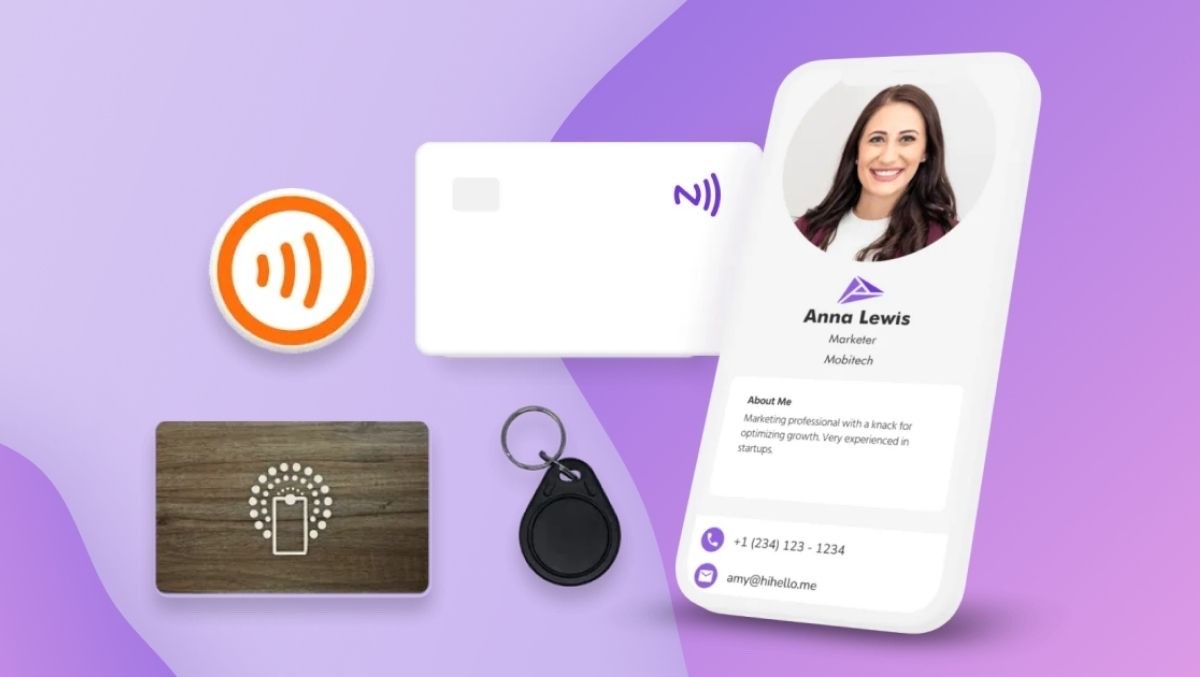
Make the card work for what comes after the handshake: design each profile to prompt a single following action, instrument every tap so it becomes a measurable lead, and treat updates as routine governance rather than a one-off task.
Set Up Your Digital Profile
What should be evident on first glance? Lead with a clear next step. Start your profile with a one-line value statement and a single call to action, such as "Schedule 15 minutes" or "View portfolio." Use mobile-first images optimized for fast load times, and add UTM parameters to links so each event or rep maps back to campaign data. Version and access control matter: set a cadence to review and update profiles, for instance, tie profile reviews to role changes or weekly sales huddles so contact details never look stale.
Share Contact Information
How do you make saving effortless and polite? Give recipients two fast paths: a one-tap save and an explicit micro-conversion, like a calendar booking or a permission checkbox for follow-up. Train reps with a two-line script: one sentence explaining the gesture, one stating the benefit. Example: “Tap to save my contact, and you’ll get a short intro email with a meeting link.” Include a visible QR fallback, and place a short privacy note on the landing page so recipients understand what will happen when they tap.
Integrate with CRM Systems
How do you stop leads from evaporating? Map the physical UID to a persistent CRM record at provisioning, not after the event. Use webhooks to immediately push a “tap” event with source, campaign, and card UID, then apply simple automation: create an owner-assigned task within 24 hours, tag the contact by event, and run an enrichment step to append company data. Where deduplication is risky, match on email plus UID and keep a log of matching attempts so reconciliation is auditable. If you need a metric to enforce, measure time-to-first-touch and aim to reduce it to under 48 hours after a tap.
Security and Privacy
Data Protection
Which data should travel, and how is it guarded? Share minimal personal identifiers on the landing page, keep PII exchange explicit, and require an opt-in before adding contacts to marketing sequences. Prefer short-lived redirect tokens in URLs so a lost link cannot be reused indefinitely, use HTTPS, and keep server-side logs with timestamps for audit. If your organization has strict data rules, place the hosted endpoint behind conditional logic that asks for consent before writing data to downstream systems.
Privacy Settings and Controls
How do you keep control at scale? Maintain multiple profile templates, with role-based editing rights and the ability to remotely deactivate individual cards or bulk-revoke access when someone leaves. Provide an audit log that shows who changed a profile and when, and automate data-retention rules so that contact records created from taps expire or are anonymized per policy. This combination gives legal and IT teams the control they need without slowing down the field.
Customize and Brand Your Card
Personal Branding
What should a personal profile prioritize? Highlight the specific contribution you make for the recipient, not your entire resume. Use short portfolio clips or one testimonial that validates your claim, and offer two persona-specific variants, for example, an investor-facing profile and a client-facing profile, with different CTAs. Think of the profile as a micro-pitch deck: each element is chosen to shorten the path to the next meeting.
Corporate Identity Integration
How do you keep a brand consistent across dozens or hundreds of cards? Lock corporate tokens in templates so logos, colors, and legal copy cannot be altered by end users, while allowing role-level custom fields for phone numbers or territories. Provide a single source of truth for approved assets and enforce admin checks during provisioning so every card distributed reflects corporate identity and compliance requirements.
The Psychology of First Impressions
In professional networking, perception is a critical driver of opportunity; research indicates that 72% of people form a definitive judgment of a company or individual based solely on the quality and presentation of their business card. This initial impression often dictates whether a connection successfully progresses into a formal business relationship or stalls after the first meeting.
Maximizing Brand Recall and Longevity
Beyond the initial exchange, card durability plays a vital role in long-term brand recall. Statistics show that 85% of professionals retain a business card for future reference, provided it feels substantial and valuable. By using premium NFC materials instead of disposable paper, the physical object becomes a lasting part of your brand story, ensuring your contact information remains accessible and professional long after the event concludes.
Common Misconceptions about NFC Business Cards
What should you tell skeptical recipients? Explain clearly which phones read NFC and offer a QR fallback when needed, then move the conversation to value: “Tap to save, or scan to open my calendar.” Practically, include a tiny troubleshooting tip on the printed face for the few phones that need guidance.
Cost Concerns
When does NFC pay off? For teams that attend regular events or manage revolving client lists, the cost of replacing printed cards and reconciling leads adds up fast. Compare lifecycle costs: a single durable, updatable card avoids repeated print runs and administrative overhead, especially when profile feeds automatically drive CRM workflows.
Security Worries
What actually risks exposure? The shared data is usually limited and controllable. Still, the fix is engineering: require consent before adding contacts to outreach, implement short-lived tokens in links, and keep the ability to deactivate cards remotely. Those small controls remove most legitimate security objections.
Limited Functionality
Why is this not just contact sharing? Use deep links that open app-native destinations when available, embed short videos or carousels for portfolios, and present targeted offers based on the event source. That turns a single tap into a branch point in your funnel rather than a static handoff.
Complexity of Use
How do you prevent adoption friction? Run a focused pilot using a three-point checklist: confirm reads across representative phone models, map each UID to a CRM user, and train reps on a two-sentence script. Track adoption with two KPIs, taps per rep and profile saves, and intervene when those metrics diverge from expected ranges.
Status Quo Disruption
Most teams manage lead capture with ad hoc notes and spreadsheets because they are familiar and require no new approvals. That approach works early, but as event volume and headcount grow, records fragment and follow-up delays multiply. Teams find that platforms like Mobilo centralize provisioning, map UIDs to owner accounts, automate CRM syncing, and provide admin controls and compliance logs, resulting in measurable pipeline growth and reducing follow-up from days to hours.
Practical Tracking Tactics and Follow-Up Strategies
What concrete habits turn taps into meetings? Treat each tap as a signal, not a finished task. Automate a lightweight playbook that triggers three steps:
- Create a CRM lead with tap metadata and a source tag.
- Assign the lead to a named rep and create a 24-hour follow-up task.
- Run a two-step nurture: a personalized connection message within 24 hours, then a value email 3 to 5 days later.
For events, batch-review tap activity the next morning to prioritize high-intent signals.
Measurement You Can Act On
Which metrics matter most? Track conversion of tap to saved contact, time-to-first-touch, and meeting rate within two weeks. Use campaign tags to compare events by yield, and A/B test different CTAs to see which profile versions convert at higher rates. Think of analytics as a conversation: every number should suggest one following action to improve the funnel.
Human Patterns and Failure Modes
This challenge appears consistently across field teams and marketing: reps get excited about the tech, but without governance, profiles diverge, reads occasionally fail, and follow-up slips. The failure usually shows up as low conversion from tap to meeting, not a technology flaw. The cure is a short feedback loop: daily triage of new taps, weekly profile audits, and a single standard operating procedure that every rep follows after a tap.
Analogy to Make It Tangible
Consider your profile like a storefront window: it must be tidy, clearly labeled, and direct visitors to the cashier. A cluttered window confuses buyers; an updated, signposted window converts foot traffic into sales. That solution feels right, but the hard part is turning pilot wins into predictable, repeatable pipeline growth.
Related Reading
- Static vs Dynamic QR Code
- How to Put a QR Code on a Business Card
- RFID vs QR Code
- How to Track QR Codes
- Is QR Code Generator Safe
- How Much Does a QR Code Cost
- QR Code Accessibility
- QR Code Lead Generation
- Business Card Ideas With QR Code
- Dynamic QR Code Example
Book a Demo Today and Get your First 25 Cards Free (Worth $950)
You're juggling conferences, messy follow-up, and a leaking pipeline, and it hurts when good conversations disappear. If you're ready to turn handshakes into measurable pipeline, book a demo today to see how Mobilo's smart NFC digital business cards help teams exchange contact details automatically, enrich and score leads against your ICP, and sync directly to your CRM, and get your first 25 cards free, worth $950, because you cannot afford to let 90% of contacts vanish.