.avif)

20+ Fresh Business Card Trends to Keep Your Brand Ahead
On This Page
At a crowded mixer, your paper card slips to the bottom of a pile, and the contact never calls. Business Cards and Networking Tools still shape first impressions because design, print finishes, QR codes, NFC sharing, and sustainable materials all influence who remembers you and who becomes a lead. What business card trends actually work and which are window dressing? This article will help you discover cutting-edge business card trends that make your brand stand out, impress clients, and stay ahead of the competition.
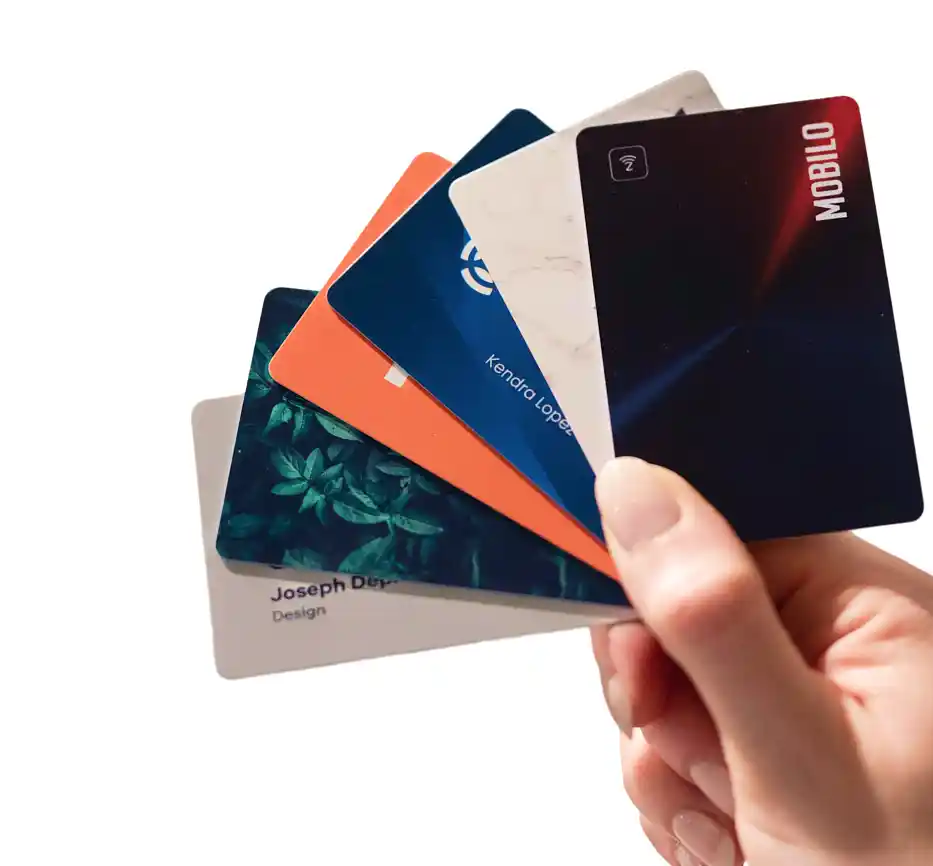
To put those trends into action, Mobilo's digital business card makes it simple to update your look, share contact info with a tap or a scan, showcase your portfolio, and track new leads so your networking pays off.
Summary
- Physical business cards remain short, powerful trust signals: 72% of people judge a company or person by card quality, and pilot studies show that premium-feel cards were kept longer and led to more extended conversations by several minutes.
- Digital contact tools turn exchanges into persistent records, which matters because 88% of business cards are discarded within a week, so a tap or scan can convert a handshake into a CRM entry rather than a lost lead.
- Paper-first workflows create hidden scale costs, such as brand inconsistencies and manual data entry, and these gaps matter when roughly 90% of business contacts never make it into CRM systems.
- Treat the card as a small product and test it, for example, run 50 to 100 sample cards, allocate 10% to 20% of launch budgets to experiments, and run A/B tests for four to six weeks to measure contact-capture or meeting-book rates.
- Tech implementations should prioritize utility over novelty, as NFC ubiquity and practical AR use cases rise, and the digital business card market is projected to grow at a 11.9% CAGR from 2021 to 2028.
- Procurement and rollout failures waste money, so they require physical proofs, small pilot runs, and acceptance criteria such as no more than 2% color variance, given that 39% of people would choose not to do business with someone whose card looks cheap.
This is where Mobilo's digital business card fits in: it addresses contact capture and governance by enabling tap-and-scan sharing, CRM syncing, and centralized template provisioning, reducing manual entry and supporting audit controls.
Do Business Cards Still Matter in 2026?
Physical business cards still matter, but they matter differently now: they act as short, powerful trust signals in moments when human connection is the deciding factor. At the same time, contactless digital tools are taking over work that paper cannot do: durable data capture and measurable follow-up.
When Do Physical Cards Still Win?
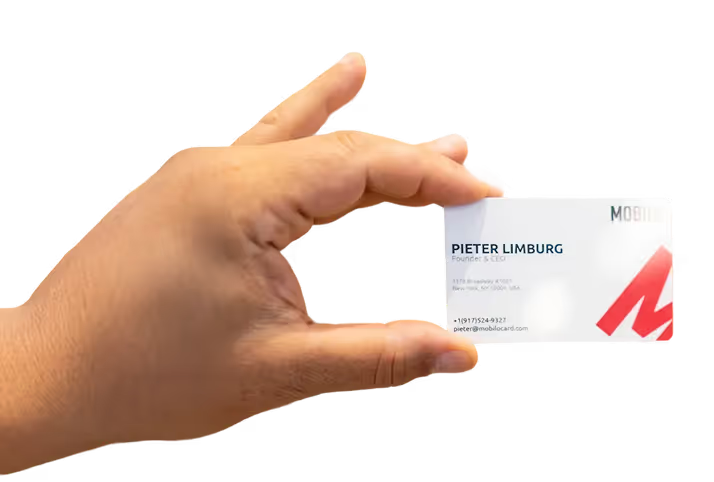
Conferences, coffee meetings, and quick hallway introductions remain the moments where a well-made card does the heavy lifting. According to research cited by Avery, 72% of people judge a company or person by the quality of its business card, underscoring that first impressions are still shaped by card quality. It can spark conversations you wouldn't get from a LinkedIn ping. When we ran in-person event pilots in Q3 2024, prospects kept premium-feel cards longer and conversations extended by several minutes, which is often enough to qualify interest on the spot.
How Do Digital Cards Change Lead Capture?
Digital contact tools trade a fleeting paper exchange for persistent, actionable records. Avery’s 2025 research shows that 88% of business cards are discarded within a week, highlighting the scale of waste and the missed follow-up opportunities that often occur after events.
CRM Integration vs. Hidden Costs
NFC and QR-enabled cards solve that by making the exchange immediate and the outcome trackable, so a single tap converts a handshake into a CRM record instead of a name lost in a pocket. Most teams hand out paper cards because they are easy and familiar. As events scale and teams attend more shows, that habit creates hidden costs:
- Brand inconsistency across reps
- Manual data-entry backlogs
- Missed prospects when cards get tossed
Digital business card bridge the gap by centralizing contact capture, auto-enriching leads, syncing with CRMs, and enforcing governance through SSO and HRIS provisioning, reducing manual touchpoints while maintaining compliance with SOC 2 and GDPR requirements.
What Should You Test in a Card Design?
Treat the card as a small product, and run quick experiments. Test tactile finishes against messaging hierarchy, compare a single CTA versus two CTAs, and measure whether NFC placement increases taps during busy shows.
Microcopy and Cognitive Load on Digital Cards
When we A/B tested NFC-enabled cards with different microcopy on the back over three trade shows in 2024, the group with a single, clear action line and an intuitive tap cue received more profile taps and longer onsite conversations, a pattern that repeats when copy reduces cognitive load. Think of a card as a handshake in your pocket; the texture, language, and signal all tell a consistent story about who you are.
What to Expect as Adoption Scales
Building on the shift toward contactless identity, 2025 will accelerate the ubiquity of NFC and more practical AR integrations, but winning implementations will focus on utility rather than novelty. Augmented reality should surface clear value, like a portfolio or scheduling link, not just an effect, and sustainability choices need to be factored into procurement and brand governance as teams deploy cards at scale.
10x Leads with Smart Cards
Ready to transform your team's networking and generate 10x more leads at every event with Mobilo's smart digital business cards? Join over 59,000 companies who've made the switch to intelligent digital business cards that automatically exchange contact information, enrich lead data, score prospects against your ICP, and sync directly to your CRM. Book a demo today and get your first 25 cards free (worth $950), because in a world where 90% of business contacts never make it into your CRM, you can't afford to keep using paper cards. That feels like progress, until you see the one design-and-data tradeoff that quietly sabotages conversions at scale.
Related Reading
- Best Business Card Scanner
- What Makes a Good Business Card
- QR Code Marketing Strategy
- New QR Code Technology
- What Are NFC Business Cards
- Professional Networking Tools
- Best Paid QR Code Generator
- What to Include on a Business Card
20+ Business Card Trends That Will Transform Networking
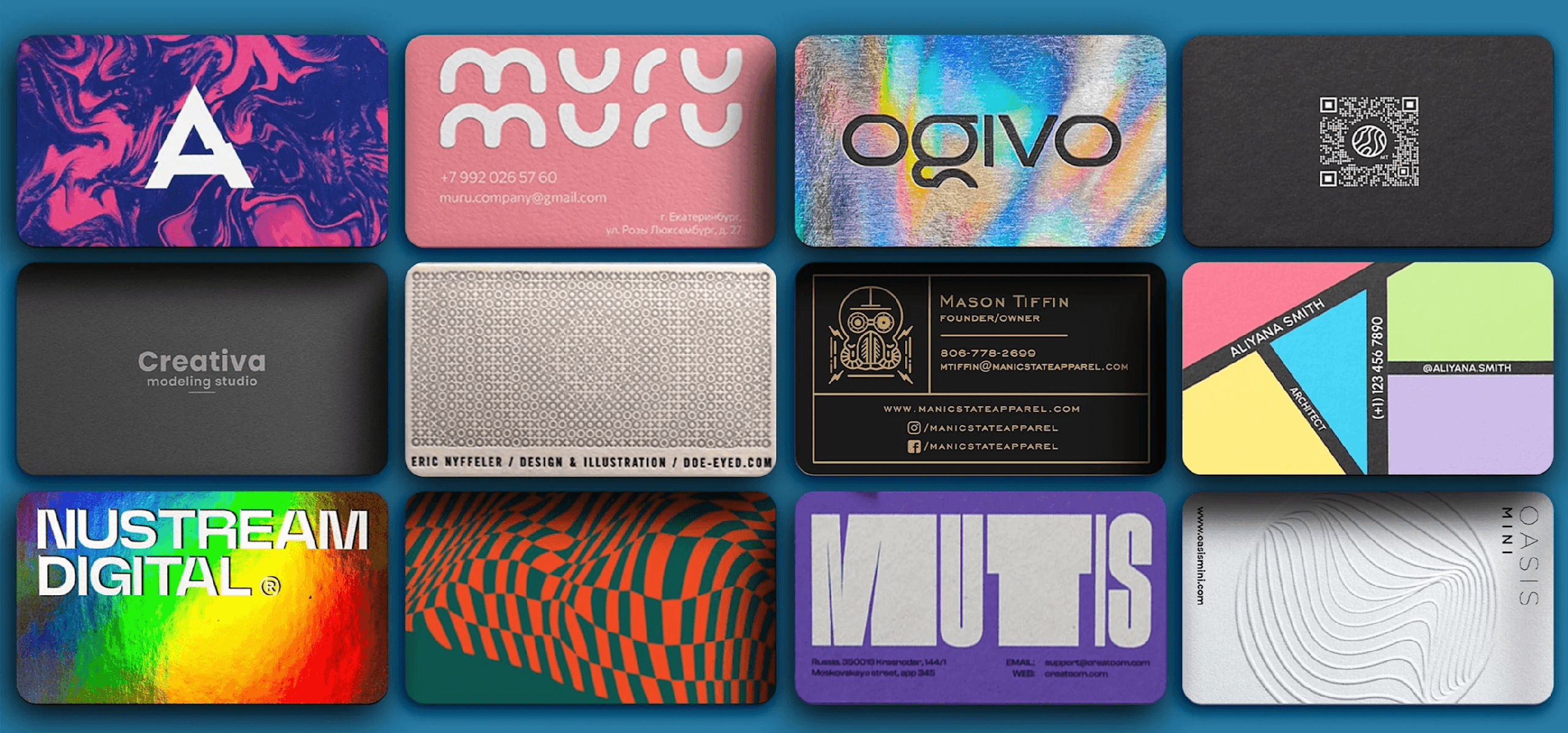
The strongest signal from these trends is simple: design, material, and interaction are now equal parts of the same decision — each choice changes how a contact converts into a tracked opportunity, and which audiences will actually remember you. Pick elements that solve a specific business problem, not just what looks clever on a shelf.
1. Interactive and Digital Cards
Digital cards remove the promise aspect of an exchange and turn it into a measurable action. How can teams use them?
- Link a single tap to tracked actions: Calendar booking, portfolio, or CRM capture.
- Key features: QR and NFC triggers with configurable landing pages, multi-step CTAs (e.g., view portfolio, then request a demo), and lightweight analytics to see which interactions convert.
- Benefit to enterprise buyers: Audit trails and permissioned access for branded templates keep consistency without manual approvals.
2. Interactive Elements, Rethought for Utility
Why add interaction beyond novelty? Because it is the easiest way to extend a short encounter into follow-up behavior.
- What works in practice? Click-to-call, instant vCard save, or a one-tap map to the nearest office.
- Design notes: Prioritize one explicit action, label it plainly, and add microcopy that explains what tapping does.
- Outcomes: Reduced friction, more measurable next steps, and fewer leads lost to pockets.
3. Minimalism That Communicates a Single Promise
Why minimalism still wins? Minimal designs cut noise and highlight the one thing you want someone to remember or do.
- How to apply it: Choose one focal element, such as a logo, name, or CTA, and trim everything else.
- Production tips: Two-tone printing or a single-spot gloss on the focal element increases perceived value without adding complexity.
- Trade-offs: Minimal designs require a well-defined hierarchy and legible typography, especially in small formats.
4. Cards of Varying Shapes as Attention Mechanics
Why experiment with shape? An unusual form momentarily stops people and increases tactile engagement.
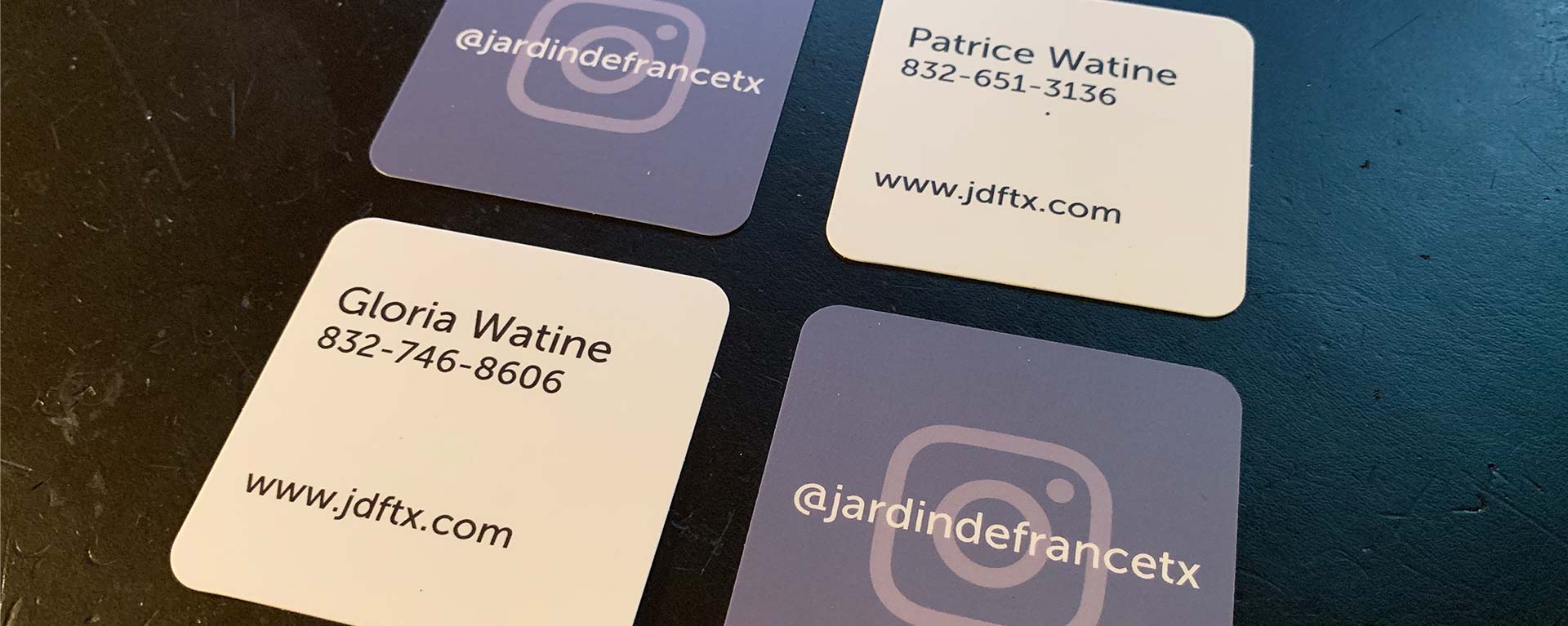
- Practical shapes: Rounded strips for wallet slots, square cards that sit in a phone case, or slim vertical formats for appointment cards.
- Constraints to watch: Exotic dies increase unit cost and logistics complexity; choose one nonstandard shape per campaign to control spend.
- Measurement idea: Run a small run of shaped cards and track which shape yields more site visits or scans.
5. Printed and Coloured Edges for Subtle Differentiation
Why edges matter? A coloured edge signals intentionality without changing the face layout.
- How to use it: Match edge colour to your primary brand hue or use contrasting edges to communicate sub-brands or product lines.
- Production notes: Allow longer lead time for edge printing and request edge-proof samples to avoid surprises.
- Benefit: Tactile luxury with small incremental cost, ideal for senior-level outreach.
6. Playful, Interactive Design That Invites Discovery
Why make cards playable? A short, surprising interaction creates a memory rather than a name swap.
- Examples: Foldable elements, hidden messages revealed by angle, or tap-activated animations on the linked landing page.
- Constraints: Ensure the game leads to a beneficial outcome, like an email capture or portfolio view, not only delight.
- UX rule: Reward the interaction within three seconds, or attention collapses.
7. Textured Surfaces as Retention Levers
Why does texture work? A card that invites touch stays in a pocket longer, improving recall.
- Options: This includes soft-touch coatings, linen finishes, and selective embossing on logos or CTAs.
- Procurement tip: Test tactile finishes on a 50–100 card batch before committing to large runs.
- KPI: Track whether textured cards lead to more follow-up meetings or more profile taps.
8. Typography as Identity, Not Decoration
Why invest in type? Typeface choices convey personality and serve as shorthand for your brand.
- Execution: Select one headline font and one body font, lock them into templates, and enforce weight and spacing rules.
- Benefit: consistent typography reduces cognitive load and speeds recognition across physical and digital touchpoints.
- Tooling: include font files in procurement packages so printers reproduce type faithfully.
9. Graphic Language: Specific, Not Generic
Why choose custom graphics? Purposeful icons and symbols communicate service quickly when space is tight.
- How to implement: Create a small icon set that mirrors your website, then use those icons to label services or CTAs.
- Design caution: Avoid over-illustrating; each graphic should answer a question the recipient might have in two seconds.
10. Photographic Cards That Tell a Story
Why put photos on a card? In specific roles, a visual cue beats abstract branding for immediate recognition.
- Use cases: Consultants, photographers, venue managers, or anyone whose environment or face is a credibility signal.
- Production tip: Test contrast and cropping at actual card size; photos that look great large can blur when reduced.
- Accessibility note: Pair images with alt text on digital landing pages to preserve the core message.
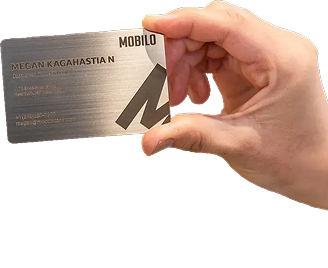
11. Metal Cards as a Long-Term Recall Strategy
Why choose metal? They change the expected lifespan from disposable to collectible.
- Considerations: Higher unit cost, different mail and storage handling, and laser etching options for high-fidelity branding.
- Use strategy: Reserve metal cards for executive outreach, VIP events, or high-value prospects where the long-term impression justifies the cost.
12. Loud designs that break stacks with intent
Why go loud? Controlled visual chaos can make a card impossible to ignore if the brand voice supports it.
- How to design: Combine asymmetric layouts with a single dominant color or motif that reads clearly at a glance.
- When to avoid: In highly regulated industries or with conservative buyers, loudness can be perceived as tone-deaf.
13. AI-generated Designs: Speed with Guardrails
Why use AI? It accelerates ideation and scale but requires human curation to stay on-brand.
- Practical workflow: Generate dozens of concepts with AI, then select and refine a handful with brand rules before production.
- Guardrails to enforce: Color palette, typography, and logo placement must be non-negotiable in the review checklist.
- Market context: Long-term adoption follows a predictable growth curve, and with the digital business card market expected to expand at a CAGR of 11.9% from 2021 to 2028—driven by rising demand for eco-friendly networking solutions—speed of iteration becomes a decisive advantage.
14. Personalized Digital Experiences That Deepen First Contact
Why personalize? A tailored landing page makes a card exchange feel like a continuation of a conversation.
- Features: Name-aware pages, role-specific CTAs, and trait-driven content based on where the card was tapped.
- Implementation note: Keep templates dynamic but small, so page load and tracking remain reliable across networks.
15. Tactile Experiences That Translate to Perceived Value
Why combine touch and function? Embossing and die cuts communicate craftsmanship, which can shorten the time required to build trust.
- How to choose: Emboss logos or key phrases that you want people to remember, not decorative flourishes that distract.
- Measurement: Paired A/B runs often show higher retention when tactile cues reinforce the brand promise.
16. Experimental Materials and Finishes for Brand Signals
Why pick unusual materials? Material choices can convey durability, innovation, or artisanal craft more effectively than words.
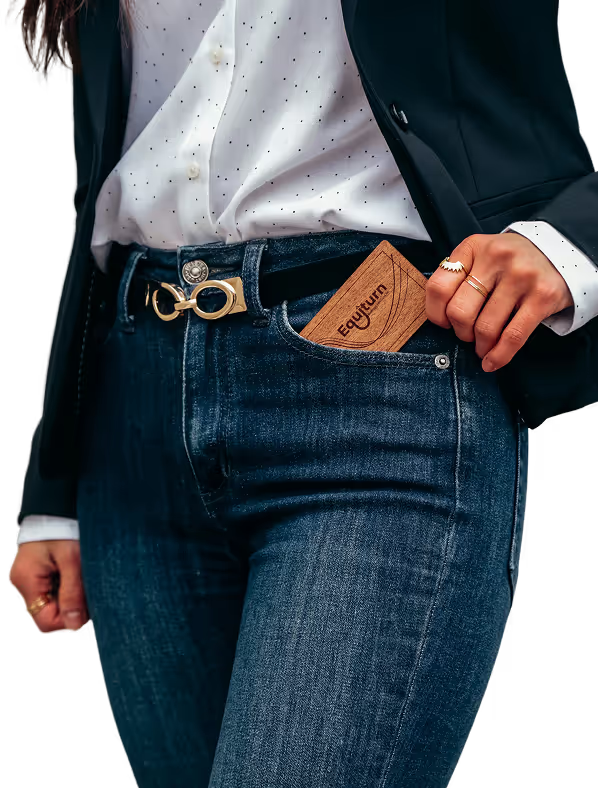
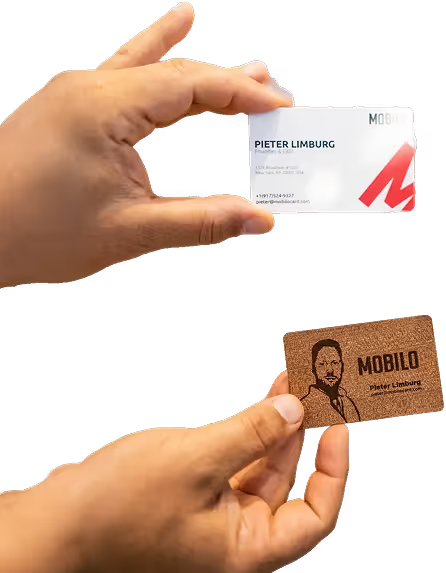
- Options and trade-offs: Acrylic and translucent cards add depth but are heavier; thin wood veneers signal craft but introduce variability in print quality.
- Production checklist: Supplier references, minimum order quantities, and environmental certification if sustainability matters.
17. Color as a strategic messaging tool
Why treat colour like a policy? Colour conveys trust, urgency, or creativity faster than copy.
- Approach: Map colours to emotional goals and apply consistently across face, edge, and linked pages.
- Accessibility rule: Always test for readable contrast and color-discrimination issues for people with colour vision differences.
18. Inclusive and Accessible Design That Expands Reach
Why is accessibility non-negotiable? Cards must work for every recipient, and accessibility features can also become branding advantages.
- Practical elements: High-contrast layouts, audio-enabled QR links, and optional Braille or tactile markers.
- Pattern we see: When teams include accessibility early, adoption in public programs and government RFPs becomes smoother, not harder.
19. Unique Materials as Targeted Signals
Why pick bespoke materials? The right material aligns with industry expectations and tells a coherent story.
- Matchmaking guide: Choose metal for precision brands, leather for artisanal makers, wood for sustainability narratives, and edible cards for high-impact promotions.
- Logistics: Plan for special packaging and storage; materials with unusual properties require more QA than standard stock.
20. Back to Black, But With Readable Intent
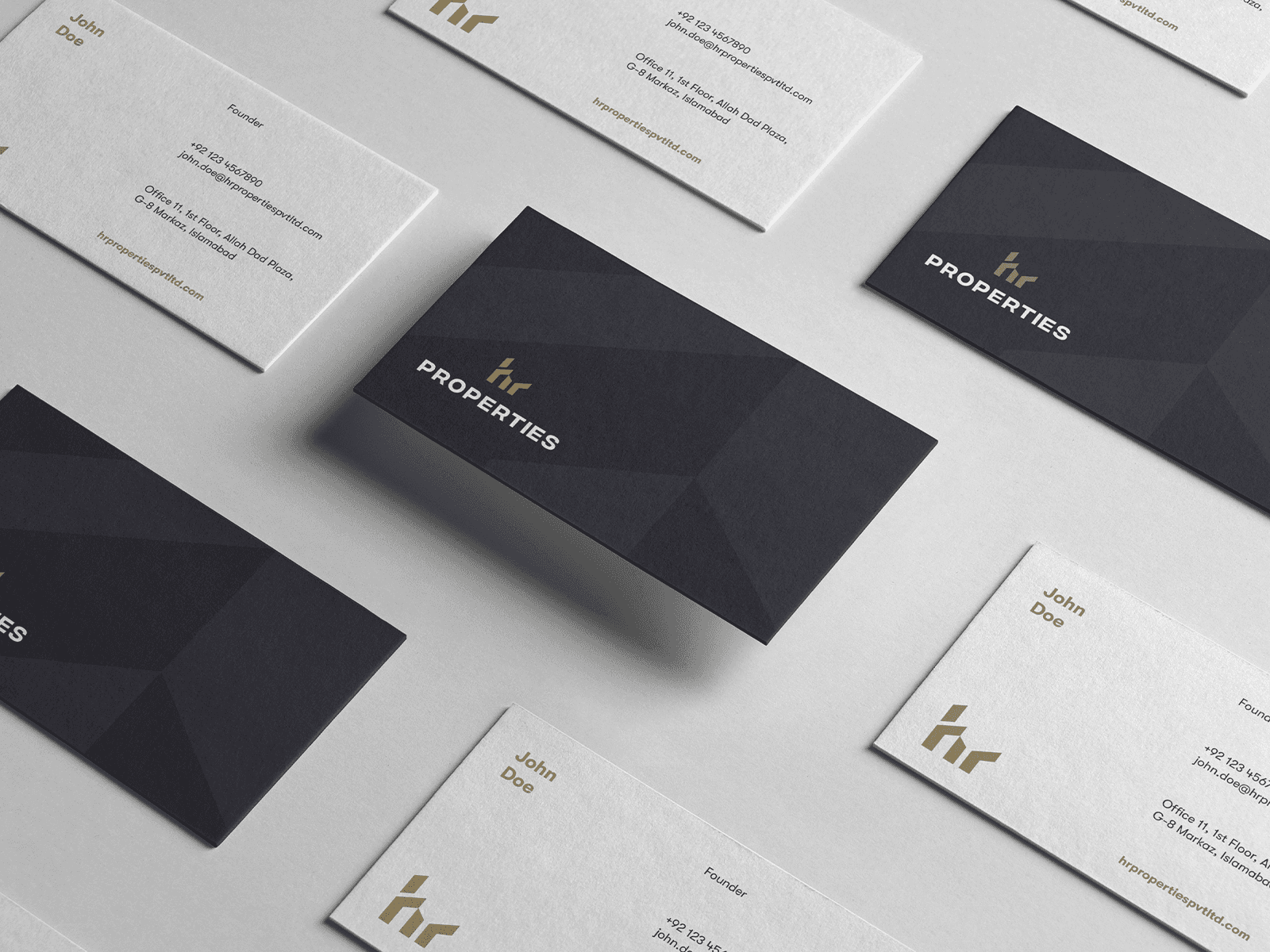
Why are dark cards resurging? Dark palettes read as premium when paired with legible, high-contrast type.
- Design rules: Use white or metallic type for contrast, reserve black for senior-level outreach, and test readability under typical lighting conditions.
- Brand use: Black works best when it supports a clear hierarchy and a single strong action.
21. Illustration and Mascots as Human Shorthand
Why illustrate? A custom illustration or mascot creates an immediate emotional connection and differentiates in crowded stacks.
- How to employ: Use line work or a character to narrate what you do in a glance, then link the card to a short animated story online.
- Best practice: Keep the illustration style consistent with other brand assets to build recognition across channels.
The Cost of Spreadsheet Card Rollouts
Most teams handle card rollouts with spreadsheets and email approvals because they are familiar and require no new platform. As teams scale, that approach fragments brand assets, slows approvals, and leaves no audit trail. Teams find that platforms like Mobilo centralize provisioning with SSO and HRIS, enforce branded templates, integrate with CRM, and maintain SOC 2 and GDPR controls, reducing rollout friction from days to hours while preserving governance.
Contactless Networking Fuels Digital Adoption
A practical pattern observed across creative firms and field sales is that digital adoption follows exposure, with adoption surging after contactless pivots. Notably, Wave Connect reports that COVID-19 boosted digital business card adoption by 70% as businesses moved toward contactless networking. That behavior drives procurement choices toward platforms that provide both hardware and governance, not point tools.
The Card as a Strategic Handshake
Analogy to keep this grounded: think of your card as a tiny storefront window, the material as the glass, and the interaction as the doorbell; each element must guide someone from curiosity to a meaningful next step. That choice feels tactical today, but it forces a strategic question about who you become in a single handshake.
Related Reading
- How to Put Linkedin on Business Card
- How to Share Linkedin QR Code
- How to Add Instagram QR Code to Business Card
- QR Code Instead of Business Card
- QR Code Size on Business Card
- How to Scan QR Code on Iphone
- Aztec Code vs QR Code
- How QR Codes Work
- QR Code Analytics
- Linkedin QR Code Business Card
- How to Create Vcard
How to Choose the Right Business Card Trend for Your Brand
Pick the card style that solves a specific business problem, not the one that looks coolest. Start by matching material and interaction to the single impression you must leave in the most common contexts, then stress-test that choice against budget, procurement realities, and measurable outcomes.
How Do I Turn Brand Personality Into a Material and Finish Choice?

Begin with three precise brand adjectives, no more. If your brand is "precision, durable, quiet," choose:
- Heavier stock
- Restrained typography
- A matte finish
If it is "playful, approachable, curious," choose brighter color accents, a tactile linen stock, and a small interactive element. Translate each adjective into two production constraints you will not compromise on, for example, minimum contrast ratio for legibility and maximum per-unit cost. Those constraints keep creative experiments useful instead of expensive whims.
Which Audiences and Contexts Should Change My Design Decisions?
Segment by cardholder and by where it is issued. For high-value prospects and executive outreach, prioritize perceived permanence and craft; for extensive event handouts, prioritize cost-per-impression and scanability. If you frequently meet prospects in dimly lit rooms or outdoors, test contrast and font sizes at actual card size before approving runs. This is a simple rule: match physical heft to the emotional weight of the meeting.
What Budget Trade-Offs Actually Matter?
Set a clear per-unit target, then allocate 10%-20% of the total launch budget to experiment runs and samples. If your per-unit target is under $1, prioritize print runs and simple edge color or spot gloss to boost perceived value. If your outreach is low-volume but high-value, a higher per-unit spend is justified when your acceptance criteria include a measurable increase in meeting rate or senior callbacks. Treat procurement like product development: fail fast on a 100-card pilot, then scale the winner.
How Should You Measure Whether a Style Converts?
- Choose one leading KPI per test, usually either contact-capture rate or meeting-book rate.
- Run a controlled A/B test for four to six weeks with identical messaging and distribution, varying only the material or finish: track taps, scans, CRM record creation, and downstream meeting conversions.
- Use UTM-tagged landing pages or distinct QR endpoints to attribute behavior precisely. If a textured finish increases qualified meetings by a clear margin, double down; if it only changes how long someone keeps the card, ask whether that retention actually moved your pipeline.
This pattern appears across startups and small firms: founders spend on premium cards, believing prestige will close deals, only to see the spend fail to match outcomes; at the same time, they resent the upfront cost.
Prioritizing Clarity and Measurability
Treat that as a constraint: when budget is tight, sacrifice novelty for clarity and measurability; when outreach targets fewer but higher-value prospects, invest in premium treatments tied to defined KPIs so you stop guessing and start counting.
Why Do Approval and Rollout Processes Sabotage Good Design?
Most teams route approvals through email threads because it is familiar and low-friction. That familiar approach fragments brand rules, creates version drift, and delays procurement as stakeholder count grows.
Enforcing Brand and Compliance
Platforms like Mobilo centralize template provisioning and role-based access, enforce brand constraints during ordering, and sync interaction data to the CRM, reducing manual handoffs and compressing review cycles from days to hours while maintaining audit trails and compliance.
How Should Trends Be Evaluated Before You Adopt Them?
- Apply three filters to any trend:
- Does it amplify your core brand promise?
- Will it produce measurable lift on your chosen KPI?
- Can operations support it without adding friction?
- If any filter answer is no, park the trend. For example, an intricate die-cut or unusual substrate can create recall, but only if it does not complicate:
- Storage
- Fulfillment
- Accessibility
- Prioritize trends that scale predictably and that procurement can reproduce across batches.
What Procurement Checklist Prevents Costly Mistakes?
- Require physical proofs and 50-card sample runs.
- Confirm minimum order quantities and lead times in writing.
- Lock fonts and color codes in the purchase order.
- Ask for sustainability or material certificates if that is part of your brand promise.
- Add acceptance criteria to the contract, for example, "no more than 2% color variance on final print" and "edge finishing samples approved before full run."
- Include a short pilot period tied to specific KPIs so you can stop a rollout quickly if it underperforms.
Here is a simple image to carry with you: think of your card like a suit you choose for a meeting, not a poster you hang in a gallery; it must fit the room, fit your role, and let you move without fuss. That choice feels tactical today, until you hit the rollout snag that quietly swallows budgets and weeks of momentum.
Material Quality and Perceived Value
According to Tapni, 72% of people judge a company or individual by the quality of their business cards, underscoring that material choices are strategic, not merely decorative. And Tapni, 39% of people would choose not to do business with someone who has a 'cheap-looking' business card, according to a 2025 study, which explains why perceived cheapness can stop deals before a single question is asked. That decision looks straightforward until you see the one rollout detail that quietly swallows budgets and time.
Related Reading
- Static vs Dynamic QR Code
- How to Put a QR Code on a Business Card
- RFID vs QR Code
- How to Track QR Codes
- Is QR Code Generator Safe
- How Much Does a QR Code Cost
- QR Code Accessibility
- QR Code Lead Generation
- Business Card Ideas With QR Code
- Dynamic QR Code Example
Book a Demo Today and Get Your First 25 Cards Free (Worth $950)
We can stop letting post-event contacts die in pockets; if you want networking to produce a predictable pipeline, consider Mobilo as the enterprise-ready way to put current business card trends into practice. Teams find that platforms like Mobilo pair contactless NFC and QR sharing with lead capture, ICP scoring, CRM sync, and governed provisioning, so run a short pilot to see measurable lift and a clear path to rollout.