
Business to Business Networking: Turn Contacts Into Pipeline
On This Page
B2B networking rarely fails in the room. It fails in the hours after, when good conversations never become CRM records. Here is how to fix both halves.
Business to business networking is the work of building relationships between companies: buyers and suppliers, referral partners, technology partners, and peers who serve the same customers. Done well, it produces introductions, partnerships, and deals that cold outreach rarely reaches. Done loosely, it produces a calendar full of breakfasts and a phone full of names nobody follows up with.
Most guides stop at the first half of that sentence. They tell you which events to attend, how to work a room, and why you should lead with value. All of that is true. But for sales managers and business development professionals, the harder question comes after the handshake: does the conversation ever become a record, a next step, and eventually pipeline?
What B2B Networking Covers
B2B networking is broader than "meeting prospects." A useful working definition includes four kinds of relationships:
- Buyers and decision makers you meet at conferences, trade shows, and private dinners.
- Referral sources such as accountants, consultants, agencies, and brokers who already sit in front of your ideal customer.
- Partners whose products or services sit next to yours in the same customer's stack.
- Peers and industry voices who share market intelligence, hiring leads, and early signals about where budgets are moving.
Each of these relationships pays off on a different clock. A buyer conversation might turn into a demo next week. A referral partner might send nothing for three months and then send two qualified introductions in the same month. A peer might never send a deal, but tell you which competitor just lost a key account.
Why It Still Matters for B2B Teams
In-person networking has not faded the way many predicted. In Bizzabo's 2025 research, 50% of attendees agreed that in-person B2B conferences offer the best networking opportunities, and 24% of event organizers named sales pipeline growth as their top priority for those events. Organizers are building events around the outcome sales teams care about.
Referral groups tell a similar story at scale. BNI reports that its members generated $25.2 billion in revenue through more than 16.8 million referrals over a 12-month period, based on self-reported member data. Even with that caveat, the volume shows how much business still moves through structured relationships.
So the opportunity is real. The rest of this guide covers where B2B networking happens, which habits turn it into pipeline, and the step most teams skip: capturing and following up on every contact before the relationship cools.
Key takeaways
- Business to business networking builds relationships with buyers, referral sources, partners, and peers that produce introductions and deals cold outreach rarely reaches.
- The four main channels are industry events, referral and industry groups, partner ecosystems, and online platforms such as LinkedIn.
- Partner-sourced leads close at a 53% higher rate than cold leads, according to Crossbeam, which makes partner ecosystems one of the strongest B2B channels.
- The biggest leak is after the conversation: 90% of new contacts never reach the CRM, according to a survey of 4,000 sales reps.
- Strong networkers set a pipeline goal, pre-book meetings, lead with value, and follow up the same day.
- A single capture workflow that tags each contact by source and syncs it to the CRM makes networking measurable.
- A digital business card captures and syncs contacts at the moment of exchange, which suits teams that network in person regularly.
Why Most B2B Networking Never Reaches the Pipeline
The weak point in most B2B networking programs sits in the hours after a conversation, when nobody is watching. Reps meet the right people. They have good conversations. Then the contact details sit in a jacket pocket, a camera roll, or a badge-scan export until the moment to follow up has passed.
The Follow-Up Window Closes Fast
Speed matters more than most networkers admit. Research published in Harvard Business Review found that firms which tried to contact a lead within an hour were nearly seven times as likely to qualify that lead as firms that waited longer. That study looked at inbound online leads, but the logic carries over to a hallway conversation. Interest is highest right after the exchange, and it fades as both people go back to their inboxes.
A rep who meets twelve people on a Tuesday and logs them on Friday has already lost most of that advantage. By Friday, the prospect may not remember which booth or breakout session they were at, let alone what problem they mentioned.
Manual Entry Competes With Everything Else
Contacts usually sit untouched because of workload. Salesforce's State of Sales research found that reps report spending 70% of their time on non-selling tasks such as admin work and meeting prep. Typing in a stack of business cards from last week's conference is one more admin task, and it usually loses to quota-carrying work that feels more urgent.
The result is predictable. In a survey of 4,000 sales reps, one digital business card provider found that 90% of new contacts never enter the CRM because it's too much of an effort. Whatever the exact figure is on your team, the pattern will feel familiar: the conversation happened, but the system of record says it did not.
Three Losses That Compound
When capture breaks, the damage spreads past one missed follow-up.
- Lost deals. A warm contact who never hears back moves on. If a competitor followed up the same day, that is usually where the deal goes.
- Stale first impressions. Reps run out of cards at the worst moment, or hand over a card with an old title or phone number. The relationship starts with a correction.
- No attribution. If contacts never reach the CRM with a source tag, no one can tell which events, groups, or partners actually produced pipeline. The budget conversation for next year's events turns into guesswork.
That last loss is the one sales leaders feel most. It is a line we hear from sales directors again and again: "My reps come back from events with a stack of business cards and half of them never make it into Salesforce. I have no idea what happened to those conversations."
Why More Networking Does Not Fix It
The instinct is to add volume: more events, more groups, more coffee meetings. But if the capture step is broken, more networking means more contacts lost in the same place. Every hour of extra attendance produces the same leak at a larger scale.
The fix starts by choosing the right channels for your goals, then building habits and a capture workflow that protect each conversation. The next sections take those in order.
The Main B2B Networking Channels and What Each Is Good For
B2B networking happens in four main channels: industry events, referral and industry groups, partner ecosystems, and online platforms. Each one reaches a different kind of contact and pays off on a different timeline, so most strong programs use at least two.
Industry Events, Trade Shows, and Conferences
Events put a high density of buyers, partners, and competitors in one place for a short time. Trade shows work best for meeting buyers in active evaluation. Conferences and summits work best for meeting senior decision makers in sessions, dinners, and side meetings. Smaller formats, such as executive roundtables and hosted dinners, trade reach for depth.
The planning side has changed. Many large events now run on platforms such as Cvent, Bizzabo, Swapcard, Grip, and Brella, which let attendees browse profiles and book one-to-one meetings before the doors open. When the event you are attending uses one of these tools, pre-booking even five meetings can change the value of the trip. Adoption is the catch: matchmaking only works if the people you want to meet have completed their profiles and accepted meeting requests.
Organizers are leaning in. Bizzabo's 2025 research found that 66% of organizers plan to host more in-person experiences in 2025, up from 42% in 2024. For sales teams, that means more options and a bigger need to choose the right rooms.
Best for: pipeline from buyers in active evaluation, partner meetings, and brand visibility in a specific vertical.
Referral Groups, Chambers, and Industry Associations
Structured groups trade reach for trust. Referral organizations such as BNI meet weekly, limit membership to one person per profession in each chapter, and make passing referrals the explicit agenda. BNI reports more than 330,000 member businesses across over 11,200 chapters in 76 countries, meeting in person, online, or in a hybrid format.
Local and regional chambers of commerce run mixers, breakfast briefings, and committee work. They are open by design, so the contact mix is wide. Industry associations sit in between: narrower than a chamber, broader than a referral chapter, and often the best place to meet peers and buyers in one vertical. Committee and volunteer roles in these associations tend to build stronger relationships than attending as a guest.
Best for: steady referral flow, local credibility, and long-term relationships with professionals who serve your buyer.
Partner Ecosystems
Partner networking is B2B networking between companies that share customers. Think of a payroll provider and an accounting firm, a CRM and a sales engagement tool, or a commercial insurer and a property management company. The goal is co-selling: sharing account overlap, making warm introductions, and showing up together in deals.
The payoff can be large. Crossbeam reports that co-selling teams see a 53% higher close rate on partner-sourced leads compared with cold leads, and that deals close 46% faster when a partner is involved. Those figures come from a partner-data vendor, so treat them as directional, but the direction matches what most partner managers see.
Best for: larger deal sizes, shorter sales cycles, and entry into accounts where you have no direct relationship.
Online Networking and LinkedIn
Online channels extend every other channel. LinkedIn is the default for B2B, with more than 1.4 billion members. It is where most professionals check you out after meeting you, where you stay visible between events through posts and comments, and where you can reach a referral partner's contacts through a warm introduction.
Online communities matter too: Slack and Discord groups for revenue leaders, private member communities, and virtual events with breakout rooms. They work well for staying in touch and for meeting peers outside your region. They work less well for building deep trust from scratch, so most professionals use them to start or maintain relationships that deepen in person.
Best for: research before meetings, staying visible between touchpoints, and reaching people you cannot meet in person.
Choosing the Right Mix
Channel: Industry events
- Typical contacts: Buyers, partners, competitors
- Time to first pipeline: Weeks
- Main risk: Contacts lost after the event
Channel: Referral and industry groups
- Typical contacts: Referral sources, local peers
- Time to first pipeline: Months
- Main risk: Low fit between members and your buyer
Channel: Partner ecosystems
- Typical contacts: Partner reps and their customers
- Time to first pipeline: Weeks to months
- Main risk: Agreements that never turn into introductions
Channel: Online and LinkedIn
- Typical contacts: Everyone above
- Time to first pipeline: Varies
- Main risk: Shallow connections with no follow-through
Start with your ideal customer profile. If your buyers cluster at a handful of trade shows, events should carry the most weight. If they rely on advisers such as accountants and consultants, referral groups and partners should. Most teams end up with one primary in-person channel and LinkedIn as the connective layer that keeps every relationship warm.
B2B Networking Best Practices That Build Pipeline
The B2B networkers who turn conversations into pipeline share a small set of habits. They decide what they want before they show up, they give before they ask, and they treat follow-up as part of the conversation instead of a chore for later.
Set a Pipeline Goal Before Every Event or Group
"Meet people" is too vague to act on. A useful goal names the outcome and the number: book three discovery calls, meet two potential referral partners in commercial real estate, or reconnect with five open opportunities. Write it down before the event and review it the next morning.
Goals also make it easier to say no. If a monthly mixer has produced zero qualified conversations in six months, that time is better spent on an association committee or a partner co-selling session.
Research the Room and Pre-Book Meetings
Most events publish speaker lists, sponsor lists, and sometimes attendee lists. Spend thirty minutes matching those names against your target accounts and open opportunities. If the event runs a matchmaking app, send meeting requests a week before, with a short reason to meet that relates to the other person's priorities.
For referral groups and associations, research the members the same way. Look for people whose clients match your buyer and who are not direct competitors. Those are your best potential referral partners.
Lead With Value, Then Make a Specific Ask
The best networkers open by being useful: an introduction, a relevant data point, a contact at a company the other person is chasing. That builds the trust that makes a later ask feel natural.
When you do ask, be specific. "Let me know if you meet anyone who needs help with sales" gives the other person nothing to act on. "I am looking to meet VPs of Sales at mid-sized logistics companies who are rolling out a new CRM this year" gives them a picture to match against their network.
Qualify in the Conversation, Not After It
You do not need to run a discovery call at a cocktail reception, but you should leave every conversation knowing three things: what the person cares about right now, whether there is a reason to talk again, and what the next step is. A simple shorthand works: note the priority, the timing, and the agreed next step for each contact.
That context is what makes follow-up personal. "Great to meet you yesterday" is easy to ignore. "You mentioned your team is replacing its event lead-capture process before the spring trade show season, so here is the checklist I promised" gets a reply.
Follow Up While the Conversation Is Fresh
Follow-up within the same day, or the next morning at the latest, is the single habit with the clearest payoff. The research on response speed points the same way: contact within an hour is far more effective than contact a day later. For in-person meetings, a same-day message that references the conversation and proposes one clear next step is the standard to hold.
Build follow-up into your calendar. Block thirty minutes after each event and the first hour of the next morning. Treat it as part of the event itself.
Give Referrals as Often as You Ask for Them
Referral relationships are reciprocal. A partner who receives two good introductions from you is far more likely to send one back. Keep a short list of your top referral partners and their ideal clients, and look for chances to connect them every week.
Keep a Steady Cadence With Your Best Contacts
Most relationships fade from simple neglect. Set a simple rhythm: check in with top partners monthly, with warm prospects every few weeks, and with wider peers quarterly. Share something useful each time, such as an article, an introduction, or an invitation to an event you are attending.
Measure What Networking Produces
Track a few numbers for each channel: contacts captured, meetings booked, opportunities created, and revenue influenced. Review them each quarter. Within two or three quarters you will know which events to repeat, which groups to drop, and which partners deserve more time.
None of these numbers exist unless the contact gets captured, tagged, and logged in the first place. That makes the capture workflow the foundation every other best practice rests on.
Related Reading
- Business Relationship Building
- How To Build A Network For A Small Business
- How To Build A Strong Sales Pipeline
- How To Reach B2b Decision Makers
- How To Ask For Referrals In Sales
- Expand Your Network
- Business Networking Goals
- Business Cards For Networking
- How To Start A Business Networking Group
How Teams Capture and Follow Up on B2B Contacts
B2B teams capture and follow up on networking contacts in one of three ways: by hand, with event-specific tools, or with a single capture workflow that sends every contact into the CRM with its source attached. Each step up solves a problem the previous one leaves behind.
Approach One - Business Cards and Manual Entry
The status quo still has real strengths. Handing over a business card is familiar, polite, and works anywhere without a signal or an app. Many professionals write notes on the back of cards they receive, which preserves context.
The drawback is everything that happens next. Someone has to type each card into the CRM, add the event and notes, and set a follow-up task. That work competes with selling time and usually slips. Cards also go stale the moment a title, phone number, or brand changes, and every rebrand or promotion across a team means another reprint order.
Approach Two - Badge Scans, Event Apps, and Scanner Apps
The next step up fixes the typing. Trade show badge scanners, lead-retrieval apps from event platforms, and business card scanner apps capture details in seconds. LinkedIn connections at the moment of meeting do something similar for individuals.
These tools are useful, and many teams should keep using them where the event provides them. Their drawback is fragmentation. Each event has its own app and its own export. Badge data often arrives as a spreadsheet days after the show. Scanner apps live on individual phones, and LinkedIn connections never reach the CRM unless someone moves them. The result is several partial lists, none of them tagged consistently, and a manager who still cannot see which events produced pipeline.
What a Complete Capture Workflow Looks Like
The goal is one path from the conversation to the CRM, used the same way at every event, group meeting, and client visit. A complete workflow has five steps:
- Capture at the moment of exchange. Contact details are saved during the conversation, not reconstructed later.
- Two-way exchange. You share your details and receive theirs in the same moment, so both sides have a record.
- Context and source tags. Each contact carries the event, group, or partner it came from, plus a short note on priorities and next steps.
- Automatic sync to the CRM. The record lands in the system of record without anyone retyping it, ready for a follow-up task or sequence.
- Team-level visibility. Managers can see contacts captured by rep and by event, which turns networking into something the team can measure and improve.
How to Roll It Out Across a Team
Start with one upcoming event. Agree on the tags the team will use, set up the CRM fields to receive them, and assign a same-day follow-up rule. After the event, review how many contacts were captured, how many received follow-up within a day, and how many turned into meetings.
Then extend the same workflow to referral group meetings, partner sessions, and client visits. The value compounds when every channel feeds the same pipeline with the same tags. By the end of a quarter, the team can compare channels on evidence instead of anecdotes.
Common Mistakes to Avoid
- Collecting more contacts than you can follow up. Ten qualified conversations with same-day follow-up beat fifty scans with none.
- Letting every rep invent their own tags. Without shared source names, attribution reports fall apart.
- Treating the CRM as the finish line. A record with no next step is a cold lead with better formatting. Pair every captured contact with a task or sequence.
- Skipping the review. If nobody looks at the numbers after each event, the team repeats the same choices next year.
Related Reading
- How To Scale Business Networking Online
- Business Networking Automation
- Business Networking Skills
- Virtual Speed Networking
- How To Build A Referral Network
- Business Networking Tips
- Business Networking Plan
- Strategic Networking For Business Growth
- Where To Network For Business
Where a Digital Business Card Fits in B2B Networking
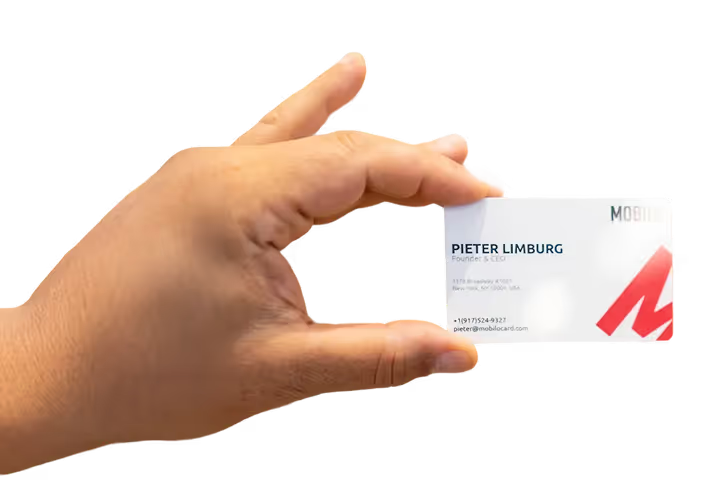
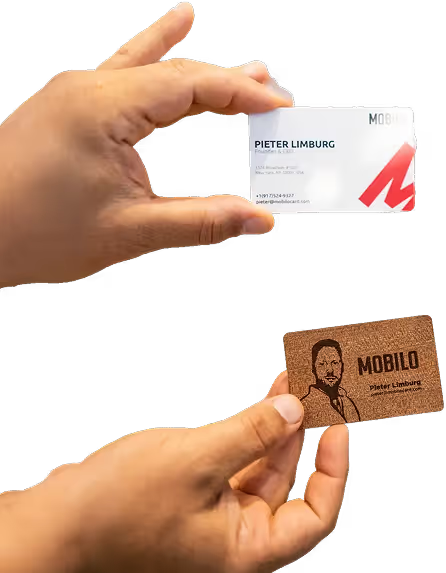
A digital business card fits at the exact point where most B2B networking breaks: the moment of exchange. Instead of handing over a card and hoping someone types it in later, the contact is shared and captured in one step, then synced to the CRM with its source attached.
Capture at the Moment of Exchange
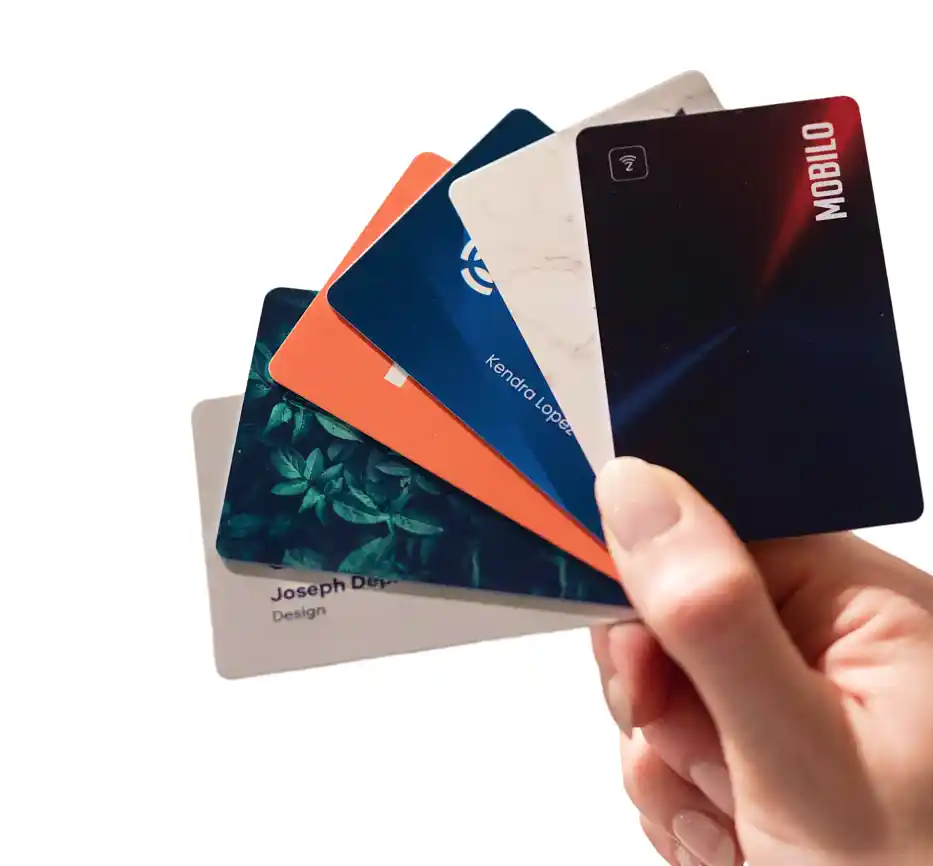
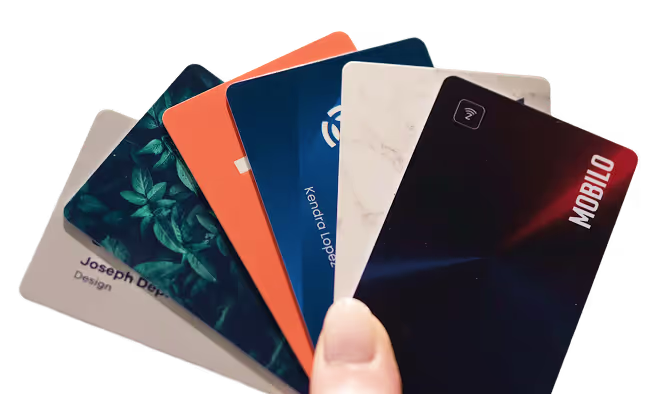
With a digital business card from Mobilo, the person you meet taps an NFC card or scans a QR code with their phone and receives your full profile, with no app download on their side. Mobilo's Contact Exchange and Lead Capture works in both directions: when someone taps or scans, their information can be captured and stored, feeding directly into your contact list or CRM.
That closes the gap described earlier in this guide. The follow-up task exists before you leave the room, and the record already carries the event or group it came from. Your profile also stays current, so a new title or phone number never breaks a first impression, and you never run out of cards in the middle of a busy session.
This is most beneficial when a team attends events regularly and needs structured lead follow-up. A rep who goes to one conference a year will see less value than a field team that networks every week.
Visibility for Sales Leaders
The second piece is team-level control. Mobilo's Team Management and Admin Dashboard lets administrators manage cards and profiles across the team from one place, with bulk updates and consistent branding. When someone changes roles or the company rebrands, the update happens centrally instead of through a reprint order.
Combined with lead capture, that gives sales leaders the data they rarely have: which reps are capturing contacts, at which events, and how many of those contacts become pipeline. That answers the question sales directors raise in every QBR about whether networking time is paying off.
The results show up in operating costs too. Landsea Homes onboarded 400 employees and saves $21,000 per year after moving its team to Mobilo, while also improving its sales process.
When It Is the Right Call
A digital business card is a strong fit when your team meets prospects and partners in person on a regular basis, uses a CRM as its system of record, and wants to measure which networking channels produce pipeline. It is a weaker fit for companies whose networking happens almost entirely online, or for individuals who exchange contacts only occasionally and have no need for CRM sync or team reporting.
For teams that do fit, the change is practical. Every conversation at a trade show, chamber breakfast, or partner meeting turns into a tagged record with a next step, and B2B networking becomes a channel you can manage like any other part of the pipeline.
Related Reading
- Business Networking Trends
- Business Networking Opportunities
- Networking Ideas For Small Business
- Business Networking Event Ideas
- Business Networking Conversation Starters
- Business Networking Questions
- Networking Ideas For Virtual Events
- Virtual Networking Ideas For Large Groups
Next steps
If your team already invests in events, referral groups, and partners, the fastest gain usually comes from protecting the conversations you are already having. Fix the capture step first, then decide which channels deserve more time.
See how a digital business card can share your details with one tap, capture every new contact, and sync it to your CRM before you leave the room.
Frequently Asked Questions
What is business to business networking?
Business to business networking is the practice of building relationships between companies, including buyers, suppliers, referral sources, partners, and industry peers. The goal is to create introductions, partnerships, and deals through trust, rather than relying only on cold outreach or advertising.
What are some examples of B2B networking?
Common examples include attending trade shows and industry conferences, joining a referral group such as a BNI chapter, taking part in a chamber of commerce or industry association, co-selling with partner companies that share your customers, and building relationships on LinkedIn and in online professional communities.
Is LinkedIn good for B2B networking?
Yes. LinkedIn is the main online channel for B2B networking because most buyers and partners keep an active profile there. It works best alongside in-person networking: use it to research people before you meet, connect right after a conversation, and stay visible between meetings with useful posts and comments.
How soon should you follow up after a networking event?
Follow up the same day if you can, and no later than the next morning. Interest is highest right after the conversation. A short message that mentions what you discussed and proposes one clear next step will get far more replies than a generic note sent a week later.
How do you measure ROI from B2B networking?
Tag every new contact with the event, group, or partner it came from, then track contacts captured, meetings booked, opportunities created, and revenue influenced for each source. Review those numbers every quarter to decide which events to repeat, which groups to keep, and which partners deserve more time.