.avif)


Are Digital Business Cards Worth It for Networking Today?
On This Page
Picture this: you're at a networking event, and someone asks for your business card. You fumble through your wallet, realize you left them at the office, and watch a valuable connection slip away. Paper cards often end up crumpled in pockets, never to be seen again, leaving professionals wondering if there's a smarter way to network.
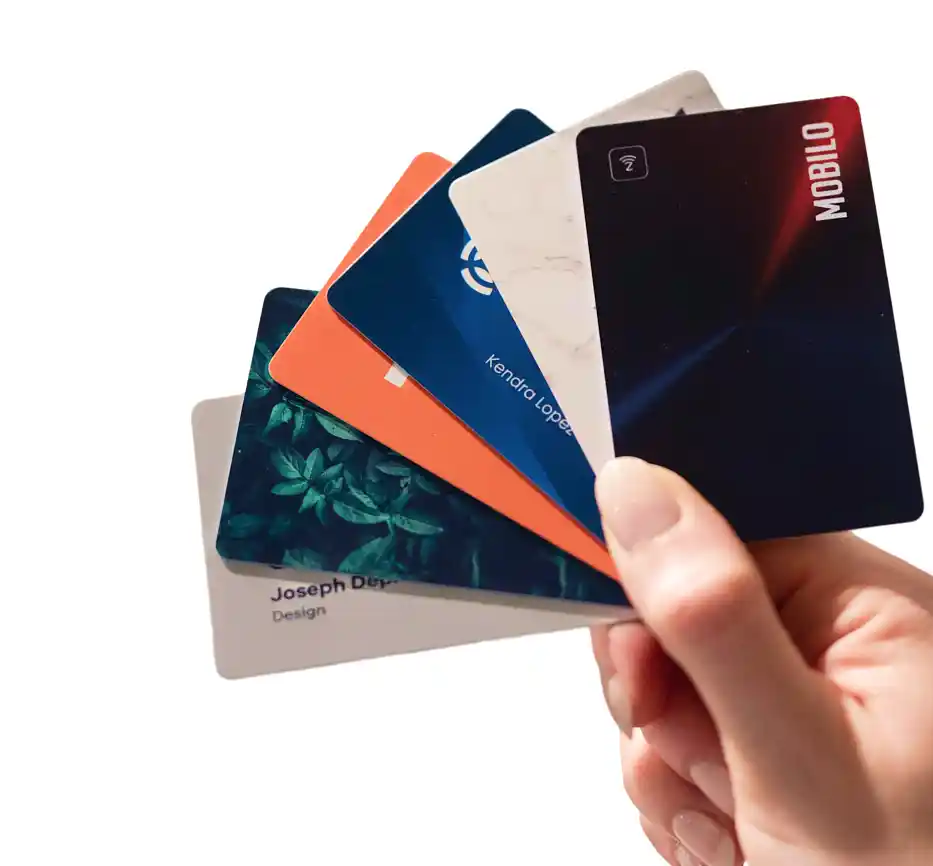
Digital alternatives solve these common networking frustrations by enabling instant contact sharing and Best Business Card Printing through a simple tap, scan, or link. They eliminate the need to carry stacks of paper cards while offering real-time updates and connection tracking capabilities. Modern professionals can create memorable first impressions and stay top of mind without the limitations of traditional cards. For those ready to transform their networking approach, Mobilo's digital contact card provides the tools needed to build stronger professional relationships.
Table of Contents
- The Problem with Traditional Business Cards
- Why Digital Business Cards Are Becoming the New Standard
- Are Digital Business Cards Worth It? Yes!
- Digital business cards: Reasons they're worth it
- How to Make Digital Business Cards Work for You
- Take Control of Your Networking with Mobilo — Book Your Free Demo Today
Summary
- Physical business cards produce almost no follow-through, with only 2% of recipients acting on the information they receive. The other 98% of cards either get lost, discarded, or filed away with good intentions that never materialize. The friction of manually entering contact details creates failure points at every step, and by the time someone tries to follow up, the moment has passed, or the card has disappeared into a wallet or desk drawer.
- Information becomes outdated the moment you print traditional cards. When your phone number changes, your job title shifts, or your company rebrands, every card you've already distributed becomes a liability rather than an asset. There's no way to correct it, and recipients either reach a dead end or assume the contact isn't worth pursuing. Digital cards update in real time across everyone who saved them, eliminating reprint costs and ensuring your network always has accurate information.
- The environmental and financial waste compounds quickly across organizations. Over 7 billion business cards are printed annually, and 88% get thrown away within a week, according to industry research. Companies spend money on multiple print batches per year as roles change and branding updates, turning yesterday's cards into expensive landfill material. Digital alternatives eliminate both recurring costs and environmental impact while projecting a modern, efficiency-focused image.
- Multimedia context shortens the path from introduction to conversation. Physical cards constrain what you can share to basic contact information, while digital formats let you include portfolio links, demo videos, calendar booking tools, LinkedIn profiles, and customer testimonials. Someone can evaluate whether to engage based on what you've actually accomplished, not just your title and company name. That depth helps prospects decide you're worth their time without requiring multiple touchpoints.
- Lead capture becomes automatic rather than aspirational when contact sharing integrates directly with CRM systems. Every tap or scan creates a logged interaction that triggers follow-up workflows without manual data entry. You can track who viewed your information, when they engaged, and what actions should follow, turning passive networking into an active pipeline-generation system.
- Mobilo's digital contact card addresses this by turning every introduction into a tracked lead that syncs automatically to your CRM, logging interactions and triggering follow-up workflows without manual data transfer.
The Problem with Traditional Business Cards
Traditional business cards create a significant gap between first contact and follow-through. You meet someone at a conference, exchange cards, and by the time you're back at your desk, that card sits in a stack with twenty others. The contact information doesn't change, the card is easy to lose, and there's no system prompting action. What felt like a meaningful connection becomes another name you never reached out to.

🎯 Key Point: The traditional business card model creates a passive networking experience that relies entirely on manual follow-up and memory retention.
"85% of professionals admit to losing or forgetting about business cards within one week of receiving them." — Networking Industry Report, 2023

⚠️ Warning: Without an active system for contact management, even the most valuable networking opportunities become missed connections that could have transformed your business relationships.
The waste happens faster than you think
According to UPrinting Blog, 88% of business cards get thrown away within a week. A paper card lacks built-in reasons to remain useful: you cannot click it, save it to your phone with one tap, or update it when your job changes. It becomes clutter.
Over 7 billion business cards are printed annually, requiring millions of trees and creating waste that people discard almost immediately. Companies reprint entire batches when branding changes or when employees receive new titles, turning old cards into expensive waste.
Information decays the moment you print it
A business card freezes your details at a single point in time. If your phone number changes, your job title shifts, or your company rebrands, every card you've already distributed becomes outdated. Recipients either use outdated information and reach a dead end or assume the contact isn't worth pursuing. You lose credibility without knowing it happened.
Physical cards limit what you can share: a name, title, phone number, email, and perhaps a website. Digital alternatives let you include portfolio links, calendar booking tools, LinkedIn profiles, and video introductions, all of which update automatically when your information changes.
Why do most business cards fail to generate results?
Only about 2% of people act on information from a physical business card. That means 98 out of 100 cards you distribute produce no follow-up, meeting, or deal.
The friction is real: someone must manually type your contact information into their phone or CRM, and that step rarely happens immediately. By the time they try, the card is lost or the urgency has faded. You can't track who viewed your information, who saved it, or who intended to follow up but forgot.
How do digital platforms solve the conversion problem?
Platforms like Mobilo close that gap by automating contact sharing. A tap or scan adds the person directly to your CRM, logs the interaction, and triggers follow-up reminders without manual data entry. You know who engaged, when, and what happens next.
But improving conversion rates matters only if the shift changes how people perceive your professionalism and whether they remember you afterward.
Related Reading
- Best Business Card Printing
- How Many Business Cards Should I Order
- What To Put On A Business Card For Networking
- Why Are Business Cards Important
- How Much Does It Cost To Make Business Cards
- What Should I Put on the Back of My Business Card
- Best Paper For Business Cards
- How Much Does Business Card Design Cost
- How Thick Is A Business Card
Why Digital Business Cards Are Becoming the New Standard
Digital business cards solve what paper cards never could: they transform a simple exchange into an active relationship. When someone taps your card or scans your QR code, their phone saves your contact immediately—no manual entry, no typos, no card forgotten in a jacket pocket. The information lives where people manage their professional lives: in their phone, synced to their calendar, connected to their CRM. That shift from physical artifact to digital workflow changes what a business card can accomplish.
🎯 Key Point: The real advantage isn't just going paperless—it's creating instant digital connections that integrate directly into your contact's existing workflow and business systems.
"Digital business cards eliminate the friction between meeting someone and actually staying connected, turning every networking interaction into an immediate digital relationship." — Modern Networking Trends, 2024
💡 Tip: The seamless integration with smartphones and CRM systems means your contact information doesn't just get stored—it gets actively used in the digital tools people rely on for business relationships.
How does having your card always available change networking
Your phone is always with you, so your card is too. No more empty boxes, emergency reprints, or awkward apologies. Share via tap, scan, email signature, or link during video calls. The format adapts to the situation instead of forcing every interaction into a face-to-face handoff.
Remote networking now operates much like in-person networking, particularly as Google searches for networking events have soared by 28% worldwide, and events increasingly span time zones and digital platforms.
What happens when your card links to your actual work
Your digital card links directly to your portfolio, demo video, calendar booking tool, and LinkedIn profile. Someone can decide whether to work with you based on what you do, not just your job title. That context shortens the path from introduction to conversation to action.
Updates happen in real time, everywhere at once
When your role changes or your email shifts, you update the card once, and everyone who saved it sees the new information. No outdated cards with wrong contact details, no reprint costs, no apologies for dead inboxes. Your network always has the right way to reach you, building trust in a way static information never could.
Paper cards create waste at scale; digital options eliminate that problem. Companies using digital solutions reduce their carbon footprint while projecting a modern, tech-forward image. Clients and partners notice when you offer something that reflects the future rather than the 1980s.
Lead capture becomes automatic, not aspirational
Platforms like digital contact card connect directly with CRMs, creating new lead entries from each tap or scan without manual data transfer. Our digital contact card logs who engaged, when, and what follow-up actions should occur next. You're capturing intent in the moment and automating the workflow that converts intent into a meeting.
But convenience and automation matter only if the format delivers measurable results that justify the switch.
Are Digital Business Cards Worth It? Yes!
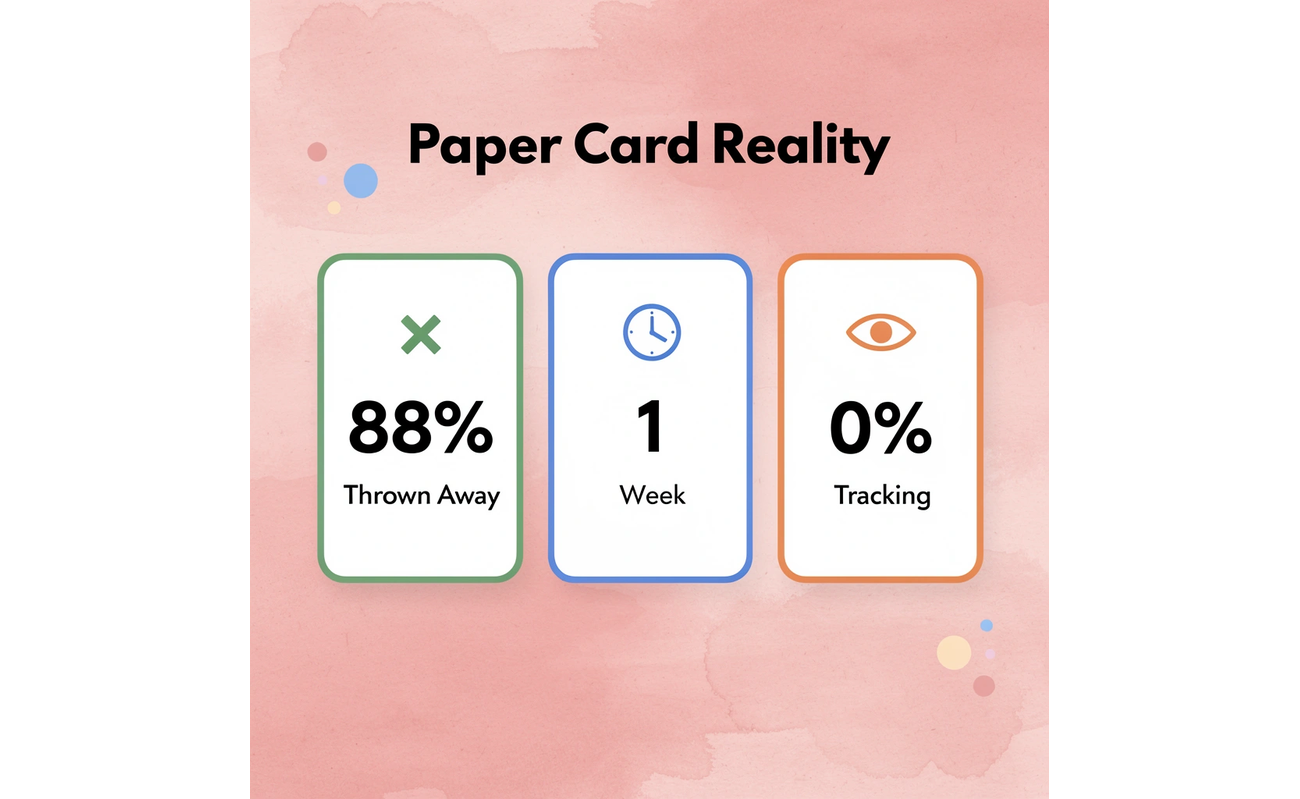
The question is whether digital business cards work better than what you're using now. If you care about convenience, sustainability, or basic contact sharing, any digital card will work. But for lead generation, CRM integration, or measurable ROI from networking, not all digital solutions deliver the same value. According to QRCodeChimp, 88% of paper business cards are thrown away within a week: lost opportunity buried in desk drawers or recycling bins before your name registers.

"88% of paper business cards are thrown away within a week—lost opportunity buried in desk drawers or recycling bins before your name registers." — QRCodeChimp, 2024
🔑 Key Takeaway: The 88% waste rate of traditional paper cards represents a massive opportunity cost for businesses still relying on outdated networking methods.
💡 Pro Tip: Digital business cards eliminate the physical waste problem while providing instant contact sharing and trackable engagement metrics that paper cards simply cannot deliver.
1. They're free to update if your role or contact information changes
Traditional business cards become outdated whenever you change jobs or get a new phone number, requiring you to pay for reprints. Digital business cards like Mobilo solve this problem: log in, update your information, and save. No new cards to buy, no recurring costs.
2. Gives unlimited space to accommodate your personal details
A typical printed business card is 3.5x2.0 inches and lacks space for comprehensive information. Digital business cards offer unlimited space for details, including your LinkedIn profile, calendar link, payment platforms, portfolio links, and booking tools, without compromising readability.
3. Makes it easy for prospects and customers to contact you
Typing data by hand from paper cards causes problems: prospects must copy details accurately, and a single wrong number can prevent contact. With a digital business card, clients tap once to access your social media, website, payment platform, Calendly booking links, and click-to-call icons. This eliminates manual data entry and removes barriers to contact.
4. Cuts costs
Paper business cards cost $10–50 per 100 (10 to 50 cents each), depending on paper type, design, printing method, and whether they're printed on one or both sides. Cheaper cards often have lower quality, which undermines your professional credibility. Many cards get lost, thrown away, or forgotten in drawers. Digital business cards eliminate these costs. You can create one yourself without hiring a graphic designer, using your brand colors, logo, social media links, website, and contact information.
5. Reduces your carbon footprint
Paper business cards harm the environment. The paper and pulp industry ranks as the third largest source of industrial pollution in the United States. Most paper cards end up in landfills because they're made of glossy or coated paper, which cannot be recycled. Digital business cards eliminate these problems: they require no trees or landfill space, allowing you to protect the environment while staying connected with your contacts.
6. Integrates with CRM and Active Directory to aid follow-ups
Digital business cards consolidate contact information, making it easy to convert contacts into leads. Blinq business's Zapier integration connects with CRM tools like Salesforce, HubSpot, and Zoho, automatically sending contacts to your CRM. You can also download a CSV file of your contacts from your dashboard. This enables you to nurture relationships with warm leads and convert them into clients.
Why does automated lead capture outperform manual methods?
Manually capturing leads using spreadsheets works for a small number of leads. As volume increases, important information gets lost and response times stretch to hours or days, causing interested leads to disengage. Platforms like digital contact card solve this by centralizing all leads in one place. Our digital contact card automatically sends leads to your CRM system and tracks interactions with each lead, enabling follow-up within hours and providing a complete record of meetings and dates.
7. Facilitates networking across geographical boundaries
Virtual networking events are now commonplace: 28% of marketers report 90-100% of their events are virtual, according to LinkedIn. Digital business cards streamline networking by traveling through email, text, LinkedIn messages, and other digital channels, removing geographic limits that physical handoffs impose.
8. Providers like Mobilo let you try them for free to make up your own mind
Paper business cards carry real risk: you pay upfront, and if they don't meet your needs, that money is gone. No printing service offers a free trial. Digital providers like Mobilo offer free trials, letting you evaluate effectiveness, test integrations, and measure engagement before committing financially. Our digital contact card platform helps you eliminate wasted costs and discover whether the solution delivers on lead generation, analytics, and CRM automation.
How do printing costs add up over time?
Printing 100 business cards costs $10 to $50, depending on paper quality and design complexity. Most professionals reorder multiple times per year as roles change, branding updates, or contact information shifts; each outdated batch represents wasted spending.
UPrinting Blog reports that 72% of people judge a company based on business card quality, despite most cards ending up in landfills.
What makes digital cards more cost-effective?
Digital cards cost nothing to update or reproduce. Create your card once with your brand colors, logo, and key details, then share it thousands of times without additional expense. The return on investment becomes clear the first time you avoid a reprint order due to a phone number change.
Digital cards deliver value only when used in ways that fit your team's workflow and your prospects' preferred communication methods.
Related Reading
- Should Business Cards Be Double-Sided
- Business Cards Etiquette
- Business Cards Finishes
- Best Font Size For Business Cards
- Professional Business Card Design Ideas
- Best Business Card Apps
- Digital Business Card Examples
- Business Card Design Tips
How to Make Digital Business Cards Work for You
Your digital card won't deliver results simply because it exists. Design it clearly, load it with the right links, and share it consistently in ways that match how people actually decide whether to follow up.

Start with a strategic design that puts your most important information front and center. Include your name, title, company, and primary contact method in a clean, scannable format. Avoid cluttering your card with unnecessary details that distract from your core message.
Load your card with high-value links that showcase your expertise. Connect your LinkedIn profile, portfolio website, calendar booking link, and relevant social media accounts. Each link should serve a specific purpose in moving prospects toward meaningful engagement.

- Essential Element: Contact Info
Purpose: Direct communication
Best Practice: Phone + email only - Essential Element: Professional Links
Purpose: Credibility building
Best Practice: LinkedIn + website - Essential Element: Booking Link
Purpose: Meeting scheduling
Best Practice: Calendar integration - Essential Element: Social Proof
Purpose: Trust building
Best Practice: Testimonials or portfolio
"Digital business cards generate 3x more engagement than traditional paper cards when designed with clear call-to-actions and strategic link placement." — Digital Marketing Institute, 2024
Share your card strategically at the right moments during conversations. Send it immediately after meeting someone new, include it in your email signature, and add it to your social media profiles. Consistent distribution makes it easy for contacts to find and save your information.
Keep the design clean and easy to scan
Your name should be the first thing someone sees, followed by your title and contact details. Use hierarchy to guide the eye: if everything competes for attention, nothing gets remembered. Choose easy-to-read fonts, stick to your brand colors, and add your logo without letting it dominate. A professional headshot builds trust faster than a blank profile icon.
Link to what proves you know your work
Your digital card should link to your portfolio, demo videos, case studies, published articles, and calendar booking tool. Someone deciding whether to schedule a call wants evidence that you've solved problems like theirs. Payment links, social profiles, and eBooks demonstrate expertise and facilitate the next step.
Share it everywhere your audience already looks
Your card belongs in your email signature, LinkedIn bio, Twitter profile, and website. Print the QR code on physical materials like brochures or event signage. Use it as a virtual background during video calls so attendees can scan it without interrupting the conversation. Platforms like digital contact card let you track who viewed your card and when, revealing which channels drive real engagement.
Make it part of your follow-up system
Sending your digital card after a meeting strengthens the connection and gives the other person everything they need to reach you. If your card integrates with your CRM, every share becomes a logged interaction you can follow up on systematically, eliminating the need for memory or scattered notes. The card becomes the first step in a workflow that converts introductions into relationships and relationships into opportunities.
But a well-designed card with all the right links matters only if you put it in front of people who need what you offer.
Related Reading
- How To Use Digital Business Cards
- How to Share a Digital Business Card
- Hihello Vs Blinq
- Blinq Vs Popl
- Popl Vs Hihello
- Blinq Vs Dot
- Popl Vs Linq
- Popl Vs Dot
- Popl Vs Ovou
Take Control of Your Networking with Mobilo — Book Your Free Demo Today
Most professionals lose contact with 90% of the people they meet at events. Digital cards solve this problem, but only when they're integrated with a system that captures leads, syncs them to your CRM, and automates follow-up.
🎯 Key Point: Networking connections are lost without a proper digital capture system.
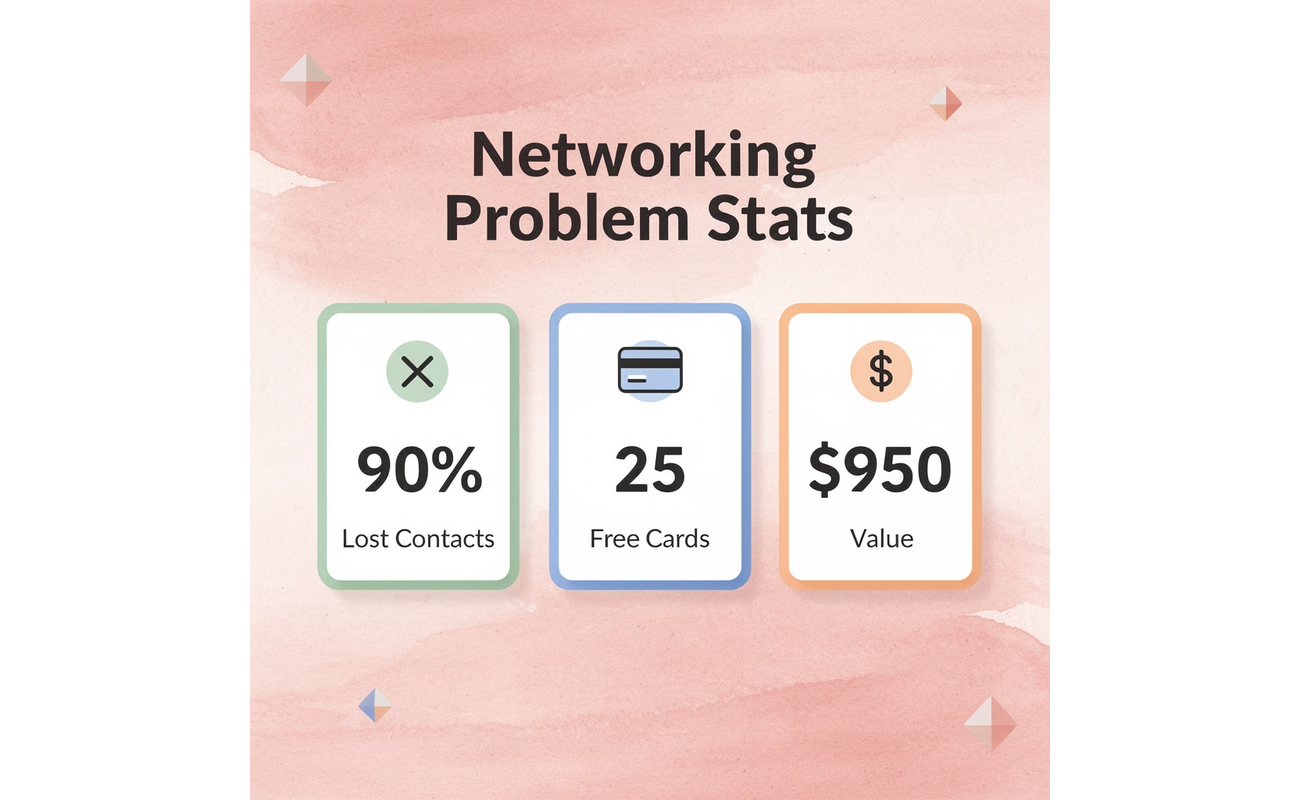
"Most professionals lose contact with 90% of the people they meet at events." — Freeman Trends Report
Mobilo turns every introduction into a tracked lead. When your team taps a card or shares a QR code, the contact is saved automatically, and your CRM logs the interaction without manual entry. You get real-time analytics showing who engaged, when, and which team members are converting conversations into pipeline. Companies using Mobilo report capturing leads they would have lost to forgotten business cards or mistyped email addresses.
💡 Tip: Real-time analytics help you identify which team members are most effective at converting networking conversations into actual business opportunities.
Start with 25 Mobilo cards, free and worth $950, plus personalized onboarding that integrates with your CRM. No long-term contract. The onboarding team sets up lead scoring, contact syncing, and follow-up workflows so you generate actionable leads immediately. Over 59,000 companies use Mobilo because it bridges the gap from meeting someone to doing business with them. Reserve your demo today and stop losing leads.
🔑 Takeaway: With 59,000+ companies already using the platform, Mobilo has proven its ability to transform networking from chance encounters into systematic lead generation.