.avif)


Popl vs Ovou Guide for Modern Networking and Lead Capture
On This Page
Standing at a conference, phone in hand, fumbling through awkward contact exchanges while someone waits, highlights exactly why digital business cards have become essential for modern networking. When comparing Popl vs Ovou for networking needs, professionals are really asking which tool will transform clunky interactions into systems that work automatically. Both platforms offer digital sharing capabilities, but the real question is which one turns handshakes into qualified opportunities without manual follow-up work.
While Popl and Ovou provide basic digital sharing features, some professionals need more than simple information exchange. The most effective solutions connect directly to CRM systems, automatically tag interactions, and build pipelines that grow businesses without constant manual input. Every tap, scan, or share should become part of a larger system designed to qualify and nurture relationships after that first introduction, which is exactly what Mobilo's digital contact card delivers.
Table of Contents
- Why Digital Business Cards Are Replacing Traditional Networking Tools
- Popl vs Ovou In Detail (Key Differences That Actually Matter)
- Which One Is Better for You (Based on How You Network)
- Skip the Guesswork and Choose a Digital Card That Actually Drives Leads
Summary
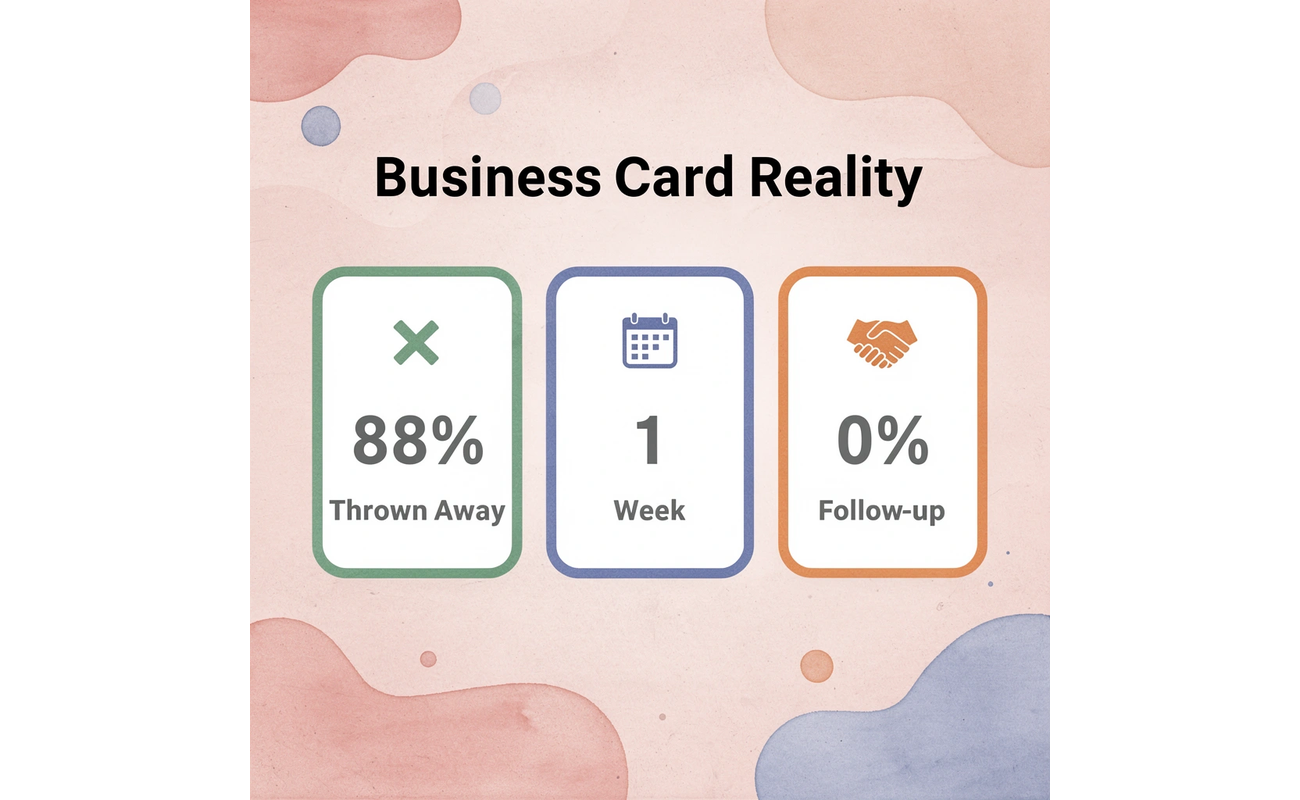
- Digital business cards prevent contact loss, which kills most networking efforts. 88% of printed business cards are discarded within a week, meaning the majority of in-person connections evaporate before anyone follows up. Digital cards eliminate manual data entry and update automatically when your information changes, keeping every connection you've made current without reprinting.
- Tap tracking reveals which networking events produce results and which waste time. Traditional cards offer zero visibility after you hand them out, leaving you to guess which contacts engaged and which forgot you immediately. Digital cards show when someone opens your profile, which links they click, and how long they engage, turning networking from hopeful guessing into a measurable strategy.
- The digital business card market will reach $6 billion by 2030, reflecting a fundamental shift away from manual contact exchange. This growth isn't driven by trends but by recognition that manual processes create friction at every step, and that friction directly costs deals. Professionals switching to digital report faster follow-up times and higher conversion rates because they can see which connections are engaging.
- Engagement data matters more than tap counts when prioritizing follow-up. Knowing 47 people tapped your card tells you volume but nothing about quality or intent. Without visibility into who visited your website, saved your contact, or clicked specific links, you're guessing which prospects warrant immediate outreach instead of using interaction patterns to score and route leads efficiently.
- Admin overhead compounds quickly when deploying cards across teams. Per-card pricing looks straightforward, but managing who has active profiles, updating information when people leave, and exporting contact data for pipeline reporting creates ongoing administrative costs that don't appear in upfront comparisons. Centralized provisioning and CRM integration eliminate this manual work.
- Mobilo's digital contact card connects tap data directly to your CRM, automatically scoring leads based on engagement patterns and routing high-intent prospects without manual triage.
Why Digital Business Cards Are Replacing Traditional Networking Tools
Paper business cards disappear before follow-up happens. You hand someone your card at a conference, it lands in a pocket with dozens of others, and vanishes. According to Tapt, 88% of printed business cards are thrown away within a week.

🔑 Key Takeaway: The 88% waste rate of traditional business cards represents a massive networking failure that digital solutions can eliminate.
"88% of printed business cards are thrown away within a week." — Tapt, 2025
💡 Best Practice: Digital business cards solve the disappearing act problem by delivering contact information instantly to recipients' phones, where it's immediately saved and never lost.
What happens after you exchange business cards?
The friction starts after the exchange. Someone must manually type your information into their phone or CRM. Most people never do this work. Sales teams waste hours each week entering contact data from paper cards, and half of those contacts never make it into the system. The delay kills momentum. By the time your details are entered, the conversation has gone cold.
How do digital business cards solve this problem?
Digital business cards eliminate this problem. Your contact information opens immediately on any phone when someone taps your card or scans your QR code. No app is required, and recipients avoid manual data entry. They save your details with one tap, adding you to their system before your conversation ends.
Real-time updates keep your information current without reprinting cards. When your phone number or job changes, every card you've shared updates automatically.
How does tracking reveal networking blind spots?
Regular cards don't show you what happens after you give them to someone. Digital cards track every action: when someone views your profile, which links they click, and how long they spend with your content. This data transforms networking from guesswork into a measurable strategy.
What revenue impact do lost contacts create?
Most professionals underestimate how much money walks away when contacts get lost. Every discarded card represents a missed deal. Teams using digital cards report faster follow-up times and higher conversion rates because they can identify engaging connections and prioritize accordingly.
How do automated systems eliminate manual friction?
The digital business card market will reach USD 6 billion by 2030, reflecting a fundamental shift in how professionals exchange contact information. Manual processes create friction at every step, costing you deals. Solutions like Mobilo connect directly with your CRM, automatically tagging interactions and building your pipeline without manual data entry.
But choosing digital over paper is the starting point, and not all digital solutions work the same way.
Related Reading
- Best Business Card Printing
- How Many Business Cards Should I Order
- What To Put On A Business Card For Networking
- Why Are Business Cards Important
- How Much Does It Cost To Make Business Cards
- What Should I Put on the Back of My Business Card
- Best Paper For Business Cards
- How Much Does Business Card Design Cost
- How Thick Is A Business Card
Popl vs Ovou In Detail (Key Differences That Actually Matter)
Popl and Ovou both offer NFC tap and QR code backups, but they differ in big ways when it comes to customization options, sharing flexibility, and what you can see after exchanging information. For individual users who want simple, fast sharing, the difference feels small. For teams managing multiple contacts across events, those differences determine whether your networking data becomes a real sales pipeline or just another list of names.
Feature
Popl
- NFC Technology
✅ Standard tap - QR Code Backup
✅ Available - Team Management
✅ Advanced - Analytics Depth
✅ Detailed tracking - Customization
✅ Extensive options
Ovou
- NFC Technology
✅ Standard tap - QR Code Backup
✅ Available - Team Management
❌ Limited - Analytics Depth
❌ Basic metrics - Customization
❌ Standard templates
🎯 Key Point: While both platforms handle basic contact sharing effectively, Popl's advanced features make it the better choice for business teams and sales professionals who need detailed analytics and customization control.
"The difference between simple contact exchange and strategic networking lies in what happens after the tap - tracking, follow-up capabilities, and data insights separate casual users from serious networkers." — Digital Networking Analysis, 2024
🔑 Takeaway: Choose Ovou for personal networking simplicity, but select Popl when you need team coordination, detailed analytics, and advanced customization for business growth.

Sharing Methods and Compatibility
Popl and Ovou both use NFC technology to share contact information instantly. Popl's tap-to-share feature works on any smartphone with NFC without requiring recipients to download an app, and includes a circular QR code on the back for older devices. Ovou offers the same NFC and QR features plus multiple profiles, allowing you to create separate landing pages for different situations: meeting investors in the morning and potential employees in the afternoon.
Both cards work across iOS and Android, but their backup strategies differ. Popl includes printed contact details as a fallback if someone's phone cannot read NFC or scan QR codes. Ovou skips the physical backup, relying entirely on digital compatibility. This works in tech-forward environments but creates friction at traditional industry events where some attendees have NFC disabled for security reasons.
Customization and Branding Control
Ovu offers more visual customization than Popl, though within limits. You can design the front with silver or gold foil on matte black plastic for a high-end feel, though color choices are limited. The back remains standard with the QR code.
Popl limits design to preset templates where you can edit text, but cannot upload custom logos or images to the physical card. Digital customization differs: Popl's Popl Direct feature lets you choose which link opens when someone taps your card—LinkedIn, a landing page, Instagram, or a custom URL, depending on the situation.
Which platform works better for team branding?
The difference matters most for team branding. Ovou's design-first approach suits individual professionals seeking unique cards. Popl's template system works better for companies distributing cards to dozens of employees who need consistent branding without individual design choices slowing the process.
Analytics and Engagement Tracking
Popl tracks tap counts, but this only shows volume without indicating quality. You know 47 people tapped your card at the conference, but not which ones visited your website, how long they stayed, or whether they saved your contact information.
Ovu provides tap counts and visibility into which profile buttons people click after landing on your page. If someone taps "Connect" and submits their information, that signals higher intent than someone who views your details and closes the tab.
How does engagement data improve lead generation?
Without engagement data, you're guessing which contacts need immediate outreach. Teams using digital business cards for lead generation need more than tap counts: they need to see who engaged, what they clicked, and how quickly they responded.
Solutions like Mobilo connect engagement data directly to your CRM, automatically scoring leads based on interaction patterns and triggering follow-up sequences without manual data entry. This transforms networking into a measurable, trackable component of your sales pipeline.
Pricing and Team Deployment
Popl's pricing scales with order volume: single cards cost $15–$25, while bulk orders are significantly cheaper. Ten cards run $99–$149, making them affordable for small teams. Ovou charges around $80 per card and includes more customization options. For teams ordering 50+ cards, the cost difference becomes substantial.
What hidden costs affect team deployment?
Both platforms offer free profile updates, so role or contact changes don't require reprinting. Neither includes team-level admin controls, centralized provisioning, or CRM integration at the base-tier pricing.
Managing cards across departments requires manual tracking of active cards, profile updates when people leave, and separate contact data exports for pipeline reporting: administrative overhead that costs time weekly but doesn't appear in per-card pricing.
The real question isn't which card costs less upfront, but which one fits how your team actually captures and converts contacts.
Related Reading
- Should Business Cards Be Double-Sided
- Business Cards Etiquette
- Business Cards Finishes
- Best Font Size For Business Cards
- Professional Business Card Design Ideas
- Best Business Card Apps
- Digital Business Card Examples
- Business Card Design Tips
Which One Is Better for You (Based on How You Network)
The better tool fits how you meet people and what you need afterward. Solo professionals and networking professionals occasionally need different tools than sales teams capturing hundreds of leads every three months. If you're handing out five cards a month at local meetups, Popl's simplicity and lower per-card cost make sense. If you're working a booth at a three-day conference and need to qualify 200 contacts before the flight home, you need lead capture automation that neither Popl nor Ovou offers in their base plans.

🎯 Key Point: Your networking frequency and volume should drive your tool choice - casual networkers benefit from simple, cost-effective solutions, while high-volume professionals need advanced automation features.
"The most effective networking tool is the one that matches your actual usage patterns, not the one with the most features." — Digital Networking Best Practices, 2024

⚠️ Warning: Don't pay for enterprise-level features you'll never use, but also don't choose a basic tool that will become a bottleneck when your networking activity scales up.
For solo professionals and freelancers
Popl works well for small-batch networking with manual follow-up. You tap your card, they save your contact, and you handle outreach yourself. The $15 to $25 price point is low-friction, and the tap-to-share experience avoids compatibility issues. It suits anyone needing a reliable way to share information without fumbling for a pen or risking typos.
Ovou works well for freelancers who want their card to showcase their personal brand. You can customize the design and set up multiple profiles, which suits consultants working with different client types or creative professionals who want their card to feel like part of their portfolio. The $80 price helps you stand out when brand identity differentiates you from competitors. You must follow up with contacts yourself, but engagement tracking shows which links they clicked.
For sales teams and lead-heavy roles
According to HubSpot, 80% of professionals consider networking essential to career success, yet most sales teams treat contact capture as an afterthought. They collect business cards or manually enter phone numbers into spreadsheets, then wonder why conversion rates stagnate.
Popl and Ovou both eliminate manual entry, but neither connects directly with your CRM to score leads, trigger follow-up sequences, or organize contacts by intent. You get a list of people who tapped your card; what happens next still requires manual work.
How can networking turn into measurable pipeline development?
At trade shows and conferences, you need to identify which contacts match your ideal customer profile and which engaged deeply enough for immediate outreach. Mobilo connects tap data directly to your CRM, automatically tagging interactions based on engagement patterns and routing high-intent leads to your sales team without manual triage.
That turns networking into measurable pipeline development, since the system qualifies contacts in real time rather than leaving you to sort through names later.
For event-heavy users and enterprise teams
If you're attending multiple conferences quarterly or distributing cards to geographically dispersed teams, neither Popl nor Ovou offers the admin controls required for large-scale operations. You cannot set up cards from a central location, track active profiles, or enforce consistent brand guidelines across departments. Each cardholder manages their own profile independently, creating compliance issues and preventing you from deactivating former employees' access to company contact information.
How do you choose between networking tools and lead generation systems?
The real question isn't which card offers a better tap experience: it's whether the tool integrates with your existing systems for qualifying, routing, and converting contacts. If your workflow ends at contact exchange, Popl or Ovou will do the job. If networking is part of a larger lead generation strategy, you need infrastructure that treats every tap as the beginning of a measurable process, not the end of a manual task.
Understanding what drives conversion after the exchange happens determines which tool fits your workflow.
Skip the Guesswork and Choose a Digital Card That Actually Drives Leads
Most people comparing Popl and Ovou focus on the wrong question. They ask which card taps faster or looks better, when the real issue is what happens after someone saves your contact. If your networking stops at information exchange, either tool works. If you need those connections to turn into a qualified pipeline, you need infrastructure that treats contact capture as the start of a conversion process, not the end of a transaction.

Mobilo approaches this differently. Instead of stopping at the tap, it enriches contact data automatically, scores prospects against your ideal customer profile, and syncs everything into your CRM, so follow-up happens immediately without manual sorting. Teams using Mobilo report measurably faster qualification times because our system identifies high-intent contacts in real time and routes them to the right person before momentum dies. This matters at conference booths, where you must separate serious buyers from casual browsers while conversations remain fresh.
🎯 Key Point: The difference between basic digital cards and lead-generation tools isn't about contact sharing—it's about what happens in the critical minutes after the exchange.
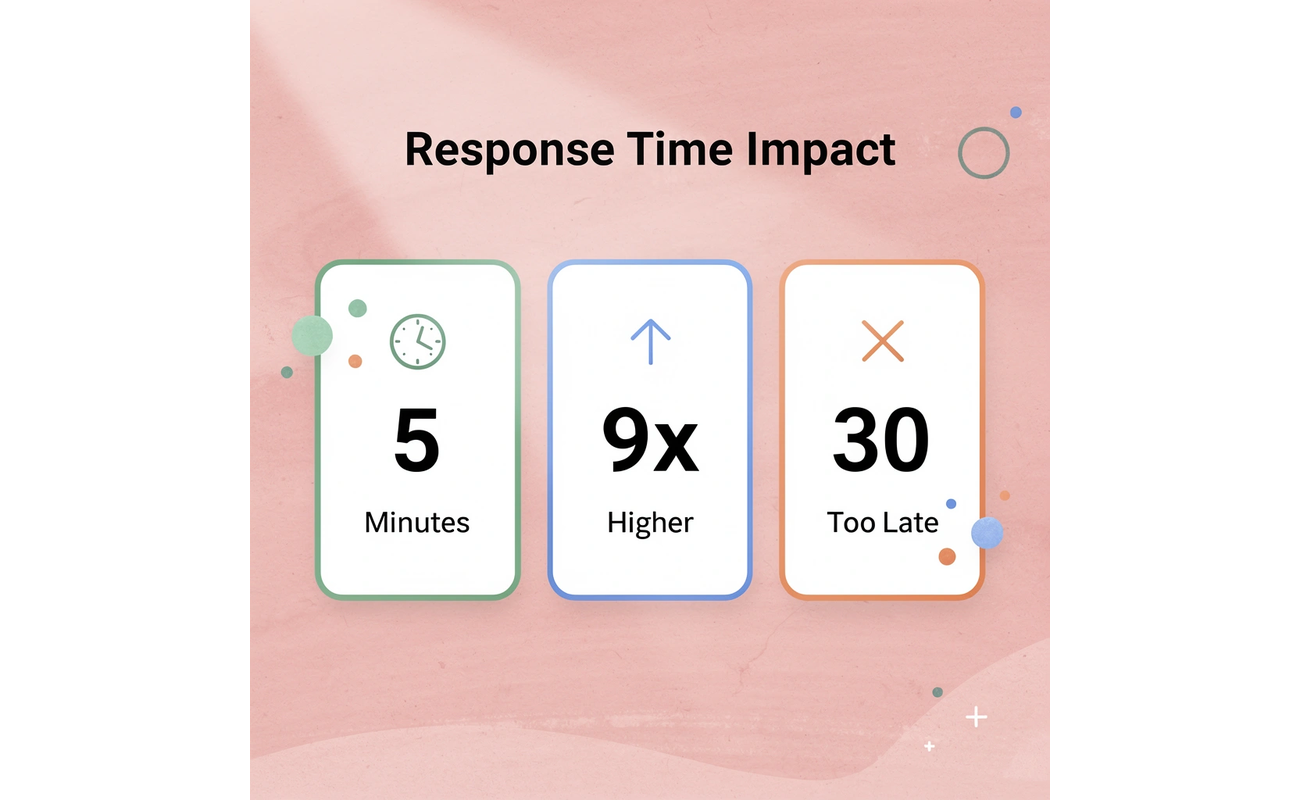
"Teams that respond to leads within 5 minutes are 9 times more likely to convert them compared to those who wait 30 minutes or longer." — Harvard Business Review, 2023
This makes sense if you attend events where lead tracking drives revenue, if your sales process depends on CRM integration and structured follow-up, or if you prioritize pipeline growth over connection counts. It's less relevant if you need a simple personal networking tool or lack CRM infrastructure. The difference isn't about features: it's whether your workflow ends at contact exchange or begins there.
💡 Tip: Book a demo in under two minutes. Choose a time that works, join a quick walkthrough (typically 15 to 20 minutes), and see how Mobilo captures, qualifies, and syncs leads in real time. You'll receive 25 Mobilo business cards free (worth $950) to test with your team. If your goal is just to share contact information, Popl or Ovou may be enough. But if you want your networking to directly drive pipeline and revenue, this is the next step.
Related Reading