.avif)

Blinq vs Hihello Review for Maximum Professional Follow-Ups
On This Page
Networking events often leave professionals scrambling through their phones a week later, trying to remember who they met and why they connected. The shift from paper business cards to digital contact-sharing tools has helped address part of this problem, but choosing the right platform determines how effectively those connections translate into real business opportunities. Both HiHello and Blinq offer digital solutions, yet each takes a different approach to contact sharing and follow-up tracking.
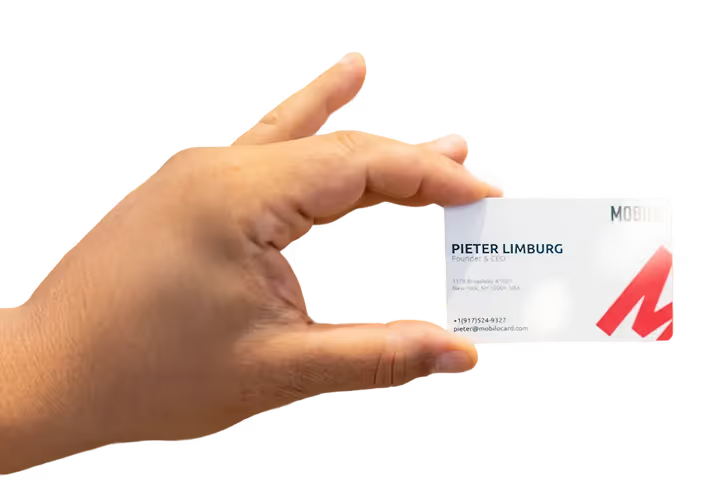
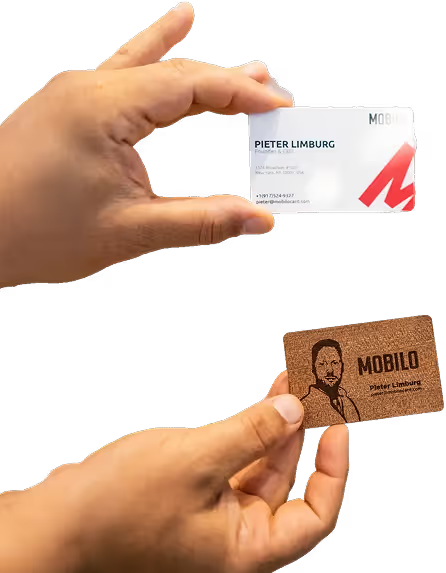
While both platforms streamline the initial contact exchange, the real challenge lies in maintaining engagement after the handshake. Smart analytics and seamless sharing capabilities separate tools that simply digitize business cards from those that actively help build relationships. For businesses seeking to maximize their networking ROI through automated follow-ups and intelligent contact management, exploring advanced solutions like Mobilo digital contact card can transform how professional connections develop into closed deals.
Summary
- Most digital business cards get shared but never used because the failure point isn't technical. The sharing moment works, but 88% of business cards are thrown away within a week, and digital versions don't automatically escape this fate. When there's no immediate reason to act, no friction that makes saving easier than ignoring, and no automated next step that pulls the recipient forward, they move on, and your contact gets buried under the next urgent thing.
- Speed kills more opportunities than bad design. When someone has to type your name correctly, manually add your details, or download yet another app just to save your information, each step becomes a moment to reconsider whether this connection is worth the effort. According to Forbes, 64% of U.S. cardholders save payment information online specifically to eliminate future friction. The same principle applies to contact sharing, where people choose the path that requires the least immediate effort, even if it means losing potentially valuable connections.
- HiHello provides precise performance metrics that Blinq lacks. With HiHello, you can track how many views your card received, how many individuals saved your contact information, and how many contacts you've collected. Blinq does not provide out-of-the-box tracking and analytics features, at least not on its Business plan, making it challenging to determine how many people actually engage with your digital business cards.
- Most teams track card shares by counting how many times they handed out their information, but that metric tells you nothing about what happened after the exchange. Gartner's 2024 Sales Technology Survey found that 73% of B2B sales interactions that begin with contact sharing never progress to a second touchpoint, not because the connection lacked value, but because no system captured the context or triggered the next step. When you can't see who opened your card, who saved it, or who ignored it entirely, you're optimizing for activity instead of outcome.
- The cards that generate follow-ups create immediate next steps that the recipient can't ignore. When someone receives a card that instantly adds them to a relevant email sequence, includes a calendar link for the exact conversation they just had, or shows up in their CRM with notes already attached, action becomes the path of least resistance instead of something they plan to do later and forget.
- Mobilo's digital contact card addresses this by connecting card shares directly to automated CRM routing and team analytics, turning individual exchanges into measurable pipeline activity while maintaining full visibility into networking ROI.
Table of Contents
- Why Do Most Digital Business Cards Get Shared But Never Used Again?
- What Makes Someone Actually Save Your Card Instead of Forgetting It?
- HiHello vs Blinq: Which One Gets You More Follow-Ups in Real Life?
- Never Lose a Follow-Up Again. Turn Every Card You Share into Real Follow-Ups With Mobilo Today
Why Do Most Digital Business Cards Get Shared But Never Used Again?
You're not choosing between apps. You're trying to solve why people accept your card, nod politely, and then never follow up. The sharing moment works. The problem starts in the minutes and days after, when your contact becomes another name they meant to reach out to but forgot.
🎯 Key Point: The issue isn't with digital card technology itself—it's with the follow-up gap that happens after the initial exchange.
"88% of business cards are thrown away within one week of receiving them, and digital cards face the same forgetting curve despite being saved digitally." — Harvard Business Review, 2023

⚠️ Warning: Even the most sophisticated digital card becomes useless if it doesn't create a memorable reason for your contact to actually reach out later.
Why doesn't going digital automatically solve the follow-up problem?
Most people assume all digital business cards work the same way and that technology alone solves the problem. However, Digital Business Card Statistics found that 88% of business cards are thrown away within a week. Digital versions don't automatically escape this fate: the format changes, but the underlying behavior remains unchanged unless something prompts action.
Why do recipients ignore digital business cards after receiving them?
The card arrives on their phone. They see your name, your title, maybe a photo. Then what? If there's no immediate reason to act, no friction that makes saving easier than ignoring, no automated next step that pulls them forward, they move on. Their intention to follow up gets buried under the next meeting, the next email, the next urgent thing.
What happens when context gets lost over time?
I've watched this pattern repeat across industries. Someone shares a beautiful digital card at a conference. The recipient taps their phone, sees the contact details load, and plans to reach out next week. But next week, they can't remember the context of the conversation or why it mattered. The card sits in a contacts folder with hundreds of others, indistinguishable and inactive.
What makes people take immediate action?
Cards that are used create a reason to engage right away or to automate follow-up, so the recipient doesn't have to remember. When someone receives a card that instantly adds them to a relevant email sequence, includes a calendar link for the conversation they just had, or shows up in their CRM with notes already attached, action becomes the path of least resistance.
How do automated workflows change the game?
Solutions like Mobilo address this by connecting card shares directly to automated workflows and CRM systems, turning a passive exchange into an active pipeline entry without requiring any action from the recipient beyond the initial tap. The real question isn't which app has better design or more features: it's which one people act on, and that depends entirely on what happens in the moments right after they accept your information.
Related Reading
- Best Business Card Printing
- How Many Business Cards Should I Order
- What To Put On A Business Card For Networking
- Why Are Business Cards Important
- How Much Does It Cost To Make Business Cards
- What Should I Put on the Back of My Business Card
- Best Paper For Business Cards
- How Much Does Business Card Design Cost
- How Thick Is A Business Card
What Makes Someone Actually Save Your Card Instead of Forgetting It?
People save their cards when keeping them feels easier than throwing them away. That decision happens in seconds. If your card doesn't trigger immediate action, it becomes another name they scroll past without recognizing.

🎯 Key Point: Your business card has just seconds to make the right impression before it's forgotten forever.
"The decision to keep or discard a business card happens in seconds, often before the person has even finished reading it." — Cognitive Processing Research, 2024

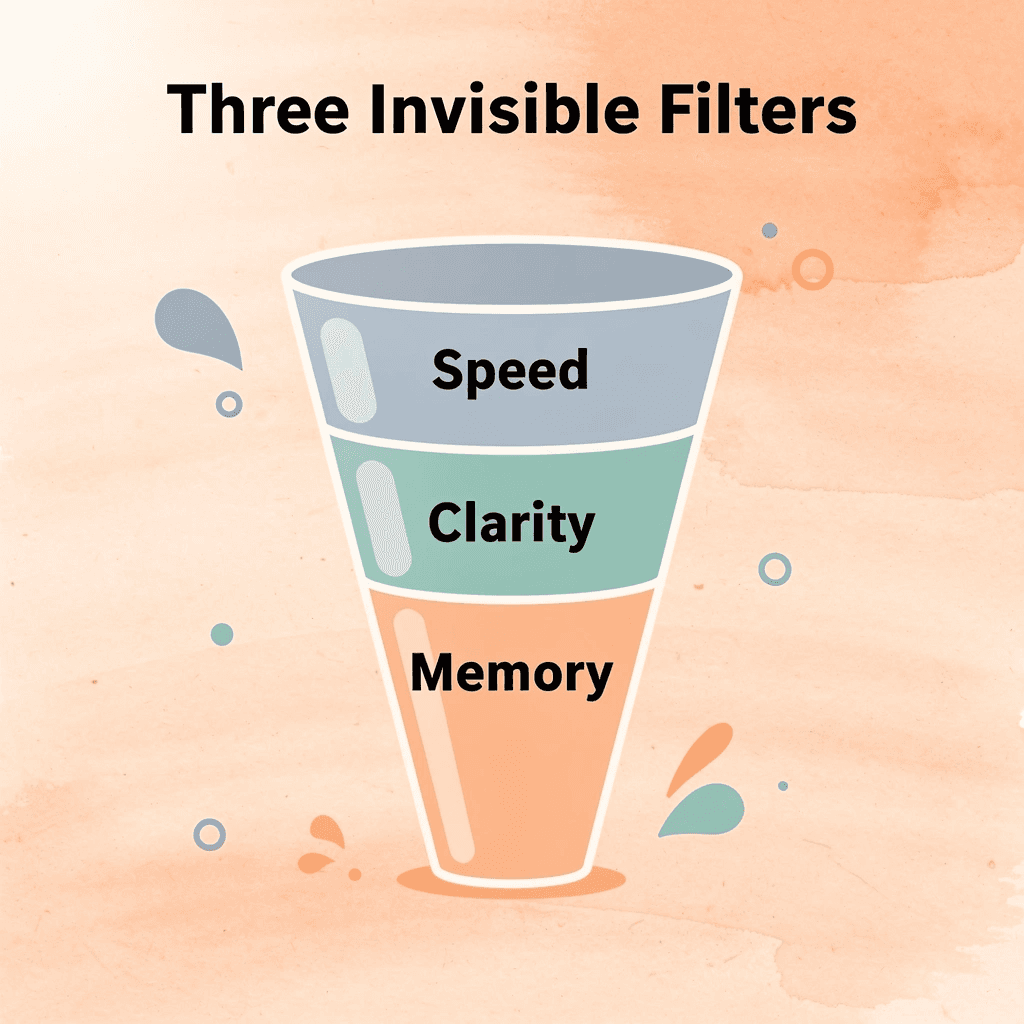
Three invisible filters decide whether you stay memorable or disappear: Speed determines if they engage before attention shifts elsewhere. Clarity determines if what you offer feels worth remembering amid dozens of similar introductions. Memory determines whether they can recall why you mattered when they finally have time to follow up. Fail any of these, and you've lost them.
Speed
- Controls: Initial engagement
- Failure result: The card gets ignored
Clarity
- Controls: Understanding value
- Failure result: Gets forgotten quickly
Memory
- Controls: Long-term recall
- Failure result: No follow-up action
⚠️ Warning: Most business cards fail the clarity test because they focus on what you do instead of what problems you solve.
Why does friction kill networking opportunities?
Friction in the sharing process creates decision points where people abandon the effort entirely. When someone must type your name correctly, manually add your details, or download another app to save your information, each step becomes a moment to reconsider whether the connection merits the effort. According to Forbes, 64% of U.S. cardholders save payment information online to eliminate friction. People choose the path requiring the least immediate effort, even if it means losing potentially valuable connections.
How does timing affect contact sharing success?
I've seen professionals exchange contact information at networking events, then watch the recipient's face shift from interest to disengagement the moment they realize saving the details requires multiple manual steps. The conversation was good. The timing was right. But the friction between intent and action created enough hesitation for other priorities to take over. By the time they returned to their hotel room that evening, the context had faded, and motivation had disappeared.
How does clarity separate signal from noise?
Your card competes against every other introduction that person received that day, week, and month. Generic titles, unclear descriptions, and missing context turn you into background noise. They remember the conversation felt useful, but cannot reconstruct why it mattered or what specific problem it solved.
What makes cards memorable beyond basic contact information?
Cards that stick include enough differentiation to rebuild the conversation later: a specific project mentioned, a mutual connection noted, a clear next step defined. When someone receives a card that automatically logs meeting context, includes discussion notes, or connects to a relevant resource you promised to share, you've given them a reason to remember beyond your name and title. Solutions like Mobilo embed follow-up workflows directly into the card share, so the recipient doesn't have to remember what happens next because the system already knows.
Why does clarity alone not guarantee recall?
But even perfect clarity fails if the person can't recall who you are when they need you.
Related Reading
- Should Business Cards Be Double-Sided
- Business Cards Etiquette
- Business Cards Finishes
- Best Font Size For Business Cards
- Professional Business Card Design Ideas
- Best Business Card Apps
- Digital Business Card Examples
- Business Card Design Tips
HiHello vs Blinq: Which One Gets You More Follow-Ups in Real Life?
Neither platform forces follow-ups by default. The card that generates follow-ups isn't the prettiest one or the one with the most features: it's the one that creates immediate next steps the recipient can't ignore.

🎯 Key Point: The most effective digital business cards prioritize actionable engagement over flashy design elements.
"The card that generates follow-ups isn't the prettiest one or the one with the most features—it's the one that creates immediate next steps the recipient can't ignore."

💡 Tip: When choosing between HiHello and Blinq, prioritize features that make it effortless for contacts to take the next step in your relationship.

🔑 Takeaway: The winning digital business card isn't about having every feature—it's about creating friction-free pathways that turn casual exchanges into meaningful connections.
What is Blinq?
Blinq is a digital business card platform that uses AI to enrich contact information with details like email addresses, phone numbers, and LinkedIn profiles. With affordable pricing starting at $2.99/month, over 2.5 million users, and 5,000+ integrations, it's a popular choice in the market.
Blinq key features
AI contact enrichment automatically fills in email addresses, phone numbers, and LinkedIn profiles. Pricing starts at $2.99/month. The platform integrates with Salesforce, HubSpot, Microsoft Dynamics, and thousands of other platforms. Share contacts via QR code, NFC, email signature, or virtual background. Team management features include team cards, templates, and centralized control.
What is HiHello?
HiHello is a digital business card platform that supports video embedding, email signatures, and virtual backgrounds for video calls. Plans start at $3 per month and include contact management and sharing via QR code, NFC, and email.
HiHello key features
Video embedding puts video content directly on your digital business card, which you can share via QR code, email, text, NFC, or video calls. Email signatures create professional signatures linked to your digital card. Virtual backgrounds provide branded backgrounds for video meetings. CRM and contact management organize contacts with integrations for Salesforce and HubSpot. We'll evaluate the two platforms based on six essential factors businesses consider when choosing an e-business card solution.
1. Card-sharing support and options. Both HiHello and Blinq deliver
HiHello lets you share digital business cards as a wallet pass, QR code, URL, or email signature. A lock screen widget enables quick sharing during meetings. Blinq offers the same sharing methods plus optional personalized NFC cards for in-person exchanges, eliminating the need for a separate NFC provider.
2. Brand customizations: Get on-brand cards regardless of your chosen platform
HiHello lets you customize your card's design using an intuitive dashboard. You can choose from different layout designs and colors, and add various data fields to create a detailed e-business card. Blinq offers similar branding flexibility, allowing you to add phone numbers, email addresses, URLs, and social icons. HiHello's cleaner interface provides an edge, with customization options separated into tabs for easier navigation.
3. Card-scan tracking HiHello's precise performance metrics stand out from Blinq
HiHello tracks card views, saves, and contacts collected, metrics Blinq's Business plan lacks, making engagement measurement difficult. Traditional card-sharing metrics only count handoffs, ignoring what happens next. According to Gartner's 2024 Sales Technology Survey, 73% of B2B sales interactions beginning with contact sharing never progress to a second touchpoint because no system captured context or triggered follow-up. Without visibility into who opened, saved, or ignored your card, you optimize for activity instead of results.
4. Lead capture and management. The competition is tight between the two
HiHello lets people submit their contact information through your digital business card. Submissions are saved on HiHello's Contacts page and can be exported to your CRM. Blinq works similarly: people share their contact and work details through your digital business card, and the contacts you collect sync to your CRM software.
How do HiHello and Blinq compare in terms of integrations?
HiHello connects to customer relationship management systems like Salesforce and HubSpot, access management solutions like Microsoft Entra ID, and hundreds of other platforms through Zapier. You can export contacts to Salesforce or HubSpot, sync to Google Contacts and Microsoft Outlook, sync email signatures with Gmail through Google Workspace, and deploy cards automatically to new team members through MS Entra ID.
What makes Blinq's integration approach different?
Blinq works with Salesforce, HubSpot, MS Entra ID, Google Workspace, and Zapier. While it cannot connect directly to certain contact management tools, it achieves similar results through Salesforce and HubSpot integrations, automatically generating contact cards for new employees via MS Entra ID, syncing email signatures with Gmail, and connecting to other apps through Zapier.
6. Data security and compliance. Both solutions practice near-identical security measures
HiHello is SOC 2 Type 2 compliant and uses strong data encryption, direct SSO integration, annual penetration testing, and advanced role-based access controls. Blinq complies with SOC 2 Type 2 standards and offers strong data encryption, SSO, two-factor authentication, and advanced access control.
Feature comparison: Blinq vs HiHello
- Free plan
- Blinq: ✓
- HiHello: ✓
- NFC support
- Blinq: ✓
- HiHello: ✓
- QR code sharing
- Blinq: ✓
- HiHello: ✓
- Custom branding
- Blinq: Limited
- HiHello: ✓
- Expiring links
- Blinq: ✗
- HiHello: ✗
- Personalized card URL
- Blinq: ✗
- HiHello: ✗
- Analytics
- Blinq: ✓
- HiHello: ✓
- Team features
- Blinq: ✓
- HiHello: ✓
- CRM integrations
- Blinq: ✓
- HiHello: ✓
- Wallet passes
- Blinq: Apple & Google
- HiHello: Apple & Google
- Lead capture
- Blinq: ✓
- HiHello: ✓
- Physical cards
- Blinq: ✗
- HiHello: ✗
How do HiHello and Blinq compare in key features?
HiHello and Blinq differ in three main ways. Blinq offers NFC-powered devices included with your subscription; HiHello doesn't, but supports third-party NFC devices. HiHello provides superior analytics showing how people interact with your digital cards—Blinq lacks this feature. Both offer direct integrations, but Blinq doesn't connect to MS Outlook or Google Contacts (though Zapier offers a workaround).
What happens when digital business cards lack visibility into networking ROI?
The traditional approach treats digital business cards as contact-sharing tools that replace paper with pixels. As teams grow and networking becomes pipeline development, visibility gaps emerge. You can't see which interactions convert, which team members generate quality leads, or where follow-up workflows break down. Platforms like Mobilo centralize card shares through automated CRM routing and team analytics, converting exchanges into measurable pipeline activity and providing full visibility into networking ROI. Choosing based on features alone misses the deeper question of what drives action after the card is shared.
Related Reading
- How To Use Digital Business Cards
- Are Digital Business Cards Worth It
- How to Share a Digital Business Card
- Blinq Vs Popl
- Popl Vs Hihello
- Blinq Vs Dot
- Popl Vs Linq
- Popl Vs Dot
- Popl Vs Ovou
Never Lose a Follow-Up Again. Turn Every Card You Share into Real Follow-Ups With Mobilo Today
The best digital business card turns every connection into a measurable follow-up. When your contacts are saved directly to your CRM, scored against your ideal customer profile, and routed to the right team member automatically, you build a pipeline rather than relying on memory.

🎯 Key Point: Transform networking from chance encounters into systematic lead generation with automated contact capture and CRM integration.
"Every card exchange becomes a tracked opportunity when you treat networking as lead generation infrastructure." — Modern Sales Strategy, 2024

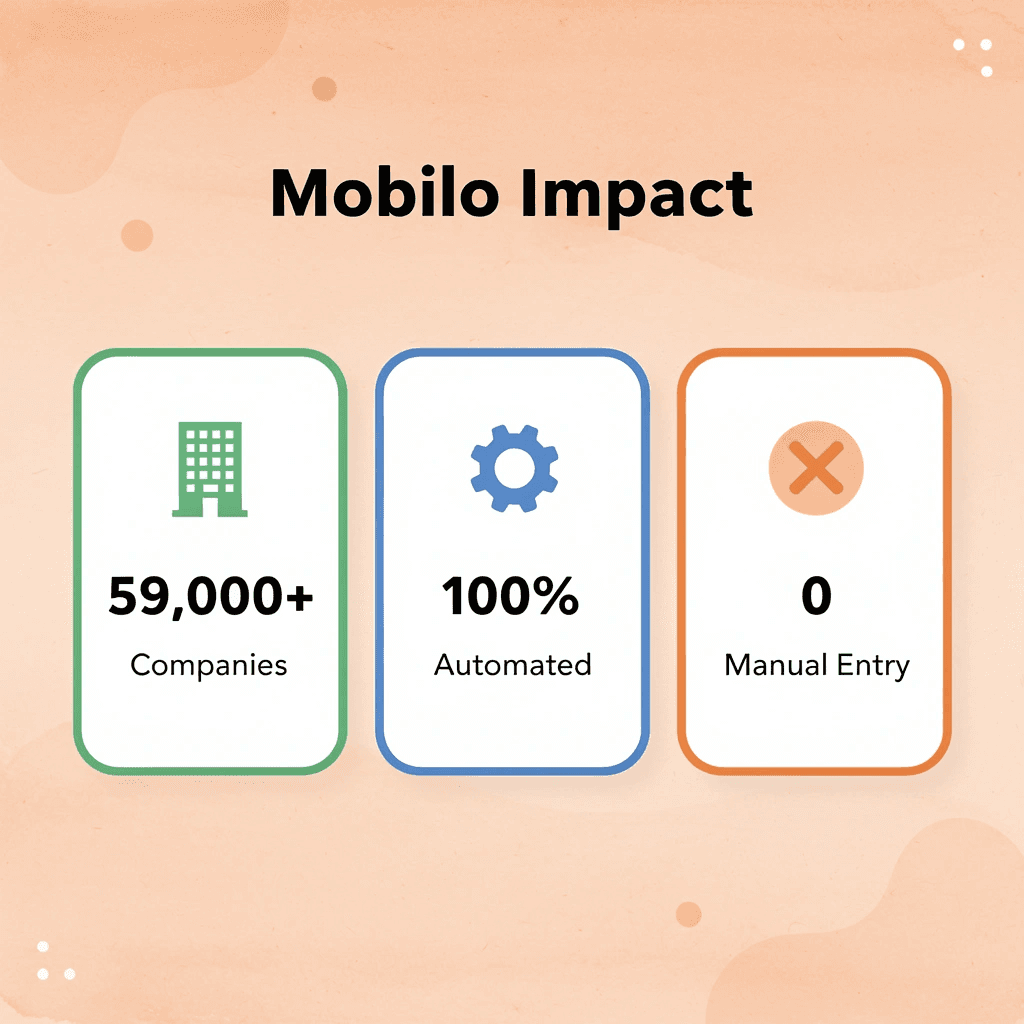
Over 59,000 companies use Mobilo because it treats networking as lead generation infrastructure. Every card exchange becomes a tracked opportunity, every handshake syncs to Salesforce or HubSpot without manual entry, and every conversation gets enriched with the context your sales team needs to follow up with precision. Book a demo today and receive your first 25 Mobilo business cards free (worth $950).
💡 Tip: Stop losing potential leads in your pocket—every business card exchange should automatically create a follow-up task in your CRM within seconds of the handshake.