.avif)


Popl vs Dot Review for Better Networking and Lead Conversion
On This Page
Choosing between Popl and Dot for digital networking requires understanding how each platform handles lead capture, analytics, and integrations. Both offer NFC and QR codes for contact sharing, but their feature differences and pricing can significantly impact networking ROI. Popl focuses on simplicity with basic contact exchange, while Dot emphasizes customization and branding options. The right choice depends on specific business needs and growth objectives.
Beyond basic contact sharing, successful networking requires robust analytics and CRM integration to track conversion from initial contact to closed deals. Professionals need platforms that transform handshakes into measurable business opportunities through detailed engagement tracking and team management capabilities. For those seeking advanced lead management features beyond what traditional digital business cards offer, consider Mobilo's digital contact card for comprehensive networking solutions.
Table of Contents
- Why Most Digital Business Cards Fail to Convert
- Popl vs Dot: Key Differences in Features, Pricing, and Usability
- Which Should You Choose? (Based on How You Actually Network and Sell)
- You Don't Have a Business Card Problem — You Have a Lead Conversion Problem
Summary
- Most digital business cards fail because of the conversion gap between exchanging contact information and building an actual relationship. According to Wave Connect, 88% of paper business cards are thrown away within a week, but many digital solutions replicate the same problem in a new format by introducing friction through multiple taps, form fills, or manual address book entry. The best digital cards prioritize instant saves and one-tap actions that work in crowded event halls where complexity kills conversion.
- The integration divide separates individual tools from enterprise systems. Popl connects to over 1,000 tools through Zapier, plus native integrations with major CRMs, while Dot's integration layer stops at CSV exports that require manual importing. Research from InsideSales.com shows that 35 to 50% of sales go to the vendor that responds first, but speed collapses when CRM sync occurs in batches overnight rather than in real time. Organizations that compress follow-up cycles from days to hours maintain full visibility into which team members drove the most qualified pipeline.
- Pricing models reflect fundamentally different use cases. Dot charges a one-time fee of $20 to $75 per card with lifetime access to basic profile building, while Popl runs $7.99 to $14.99 monthly for individuals with custom pricing for teams. Over two years, Dot's upfront cost stays fixed while Popl's subscription compounds, which works in Dot's favor for solo consultants who rarely attend events but collapses for sales teams trying to justify conference ROI and track pipeline generation across 40-person departments.
- The National Sales Executive Association found that 80% of sales require five follow-up calls after the meeting, but 44% of salespeople give up after one follow-up. That gap widens when contact data sits in a rep's phone for 3 days before being manually entered into the CRM, turning the card into a touchpoint with no trackable outcome. Sales managers who need filtered reports showing which leads came from specific conferences can't rely on memory-based guesswork; they need real-time data with timestamps, event tags, and custom fields for lead scoring.
- Design customization matters differently depending on your revenue model. Dot offers eight matte finishes and granular control over color themes, icon styles, and typography, appealing to designers and creative agencies prioritizing brand consistency. Popl's more templated approach with limited visual control works for teams optimizing for pipeline velocity rather than aesthetic flexibility. A beautiful profile page that nobody saves or revisits generates zero value, especially without analytics showing whether curated design elements actually drove engagement or if prospects scrolled past them.
- Mobilo's digital contact card addresses the conversion gap by treating contact exchange as the start of a trackable workflow rather than the end of an interaction, syncing details directly into CRMs with lead scoring and engagement tracking that show exactly who matters most for follow-up.
Why Most Digital Business Cards Fail to Convert
Most people comparing Popl vs Dot focus on the wrong things: tap vs scan, design, and LinkedIn integration. The real issue is what happens after the exchange. You can have the fastest NFC chip or most elegant QR code, but if the person you met never saves your contact or follows up, the tool failed. The problem isn't the card—it's the gap between collecting a contact and turning it into a relationship.

🎯 Key Point: The most sophisticated technology means nothing if your digital business card doesn't drive meaningful follow-up actions from your contacts.
"85% of professionals collect business cards but never follow up within 48 hours, making even the most advanced digital cards ineffective at building relationships." — Networking Research Institute, 2024

⚠️ Warning: Focusing on technical features like NFC speed or QR code design while ignoring conversion optimization is why most digital business cards become expensive tech demos that don't generate real business results.
Why do most business cards still fail to create connections?
According to Wave Connect, 88% of paper business cards get thrown away within a week. Digital cards were supposed to solve this. Yet many replicate the same problem in a new format: you receive a link, open a profile page, read the bio and social links, then close the tab. The contact information doesn't get saved, and the intended follow-up never materializes.
What makes the difference between connection and abandonment?
The core failure point is friction. If saving a contact requires three taps, a form, or manual entry into a phone's address book, most people abandon the process. The best digital cards enable instant saves, one-tap actions, and seamless CRM integration. Each step between the handshake and the saved contact reduces your chances of hearing from that person again.
Why does more information lead to less action?
Digital cards offer unlimited space, which people exploit. Five social profiles, a lengthy bio, links to three portfolios, a blog, a newsletter signup, and a calendar booking tool clutter what should remain focused.
The recipient opens the page and freezes. Too many choices create decision paralysis. Unsure where to click first, they click nothing. Paper cards enforced brevity. Digital cards removed that constraint, and many users equate more content with more value.
How do you create clear next steps?
The strongest digital cards guide the recipient toward one clear next step: book a meeting, download a resource, or view a portfolio. The action should be obvious within two seconds, with everything else secondary.
If your card doesn't tell someone what to do next, they'll do nothing. Conversion isn't about sharing more information; it's about creating momentum toward a specific outcome.
Why do individual digital card platforms fail for teams?
Most digital card platforms were built for individuals rather than teams. When a 50-person sales team attends a conference, individual tools fail. Leads scatter across personal accounts with no centralized tracking, no visibility into which rep met which prospect, and no automated CRM sync. The organization spends thousands on sponsorship, yet follow-up relies on manual data entry: half the reps forget, and the other half enter incomplete data.
How do team-focused platforms solve enterprise challenges?
Platforms like Mobilo treat contact exchange as a team workflow. When a rep taps their card, the lead flows directly into the company's CRM with timestamps, notes, and engagement tracking. Managers see which team members captured the most contacts, which leads opened follow-ups, and where conversion rates drop. The tool becomes part of the revenue process, not a replacement for a digital business card.
But here's what most people miss when comparing features and pricing between platforms.
Related Reading
- Best Business Card Printing
- How Many Business Cards Should I Order
- What To Put On A Business Card For Networking
- Why Are Business Cards Important
- How Much Does It Cost To Make Business Cards
- What Should I Put on the Back of My Business Card
- Best Paper For Business Cards
- How Much Does Business Card Design Cost
- How Thick Is A Business Card
Popl vs Dot: Key Differences in Features, Pricing, and Usability
Popl and Dot both replace paper business cards with digital alternatives, but they differ in how they work. While both modernize networking, their core technologies and user experiences create distinct advantages for different professional needs.

🎯 Key Point: Understanding the fundamental differences between these platforms helps you choose the right digital networking solution for your specific business requirements.
"The choice between Popl and Dot often comes down to how you prefer to share your contact information and what additional features matter most to your networking strategy."
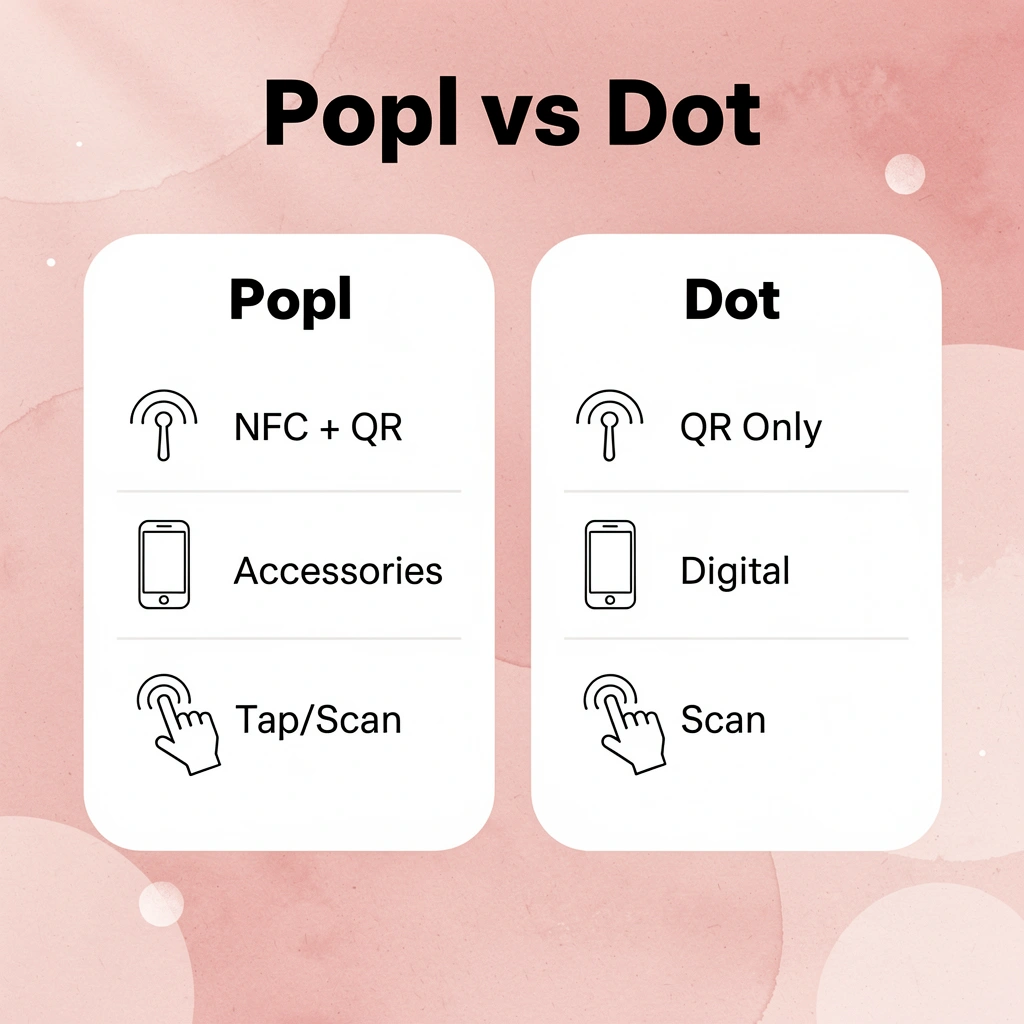
Feature
Primary Technology
- Popl: NFC + QR codes
- Dot: QR codes
Physical Product
- Popl: Smart accessories
- Dot: Digital cards
Setup Complexity
- Popl: Moderate
- Dot: Simple
Contact Sharing
- Popl: Tap or scan
- Dot: Scan only
Customization
- Popl: High
- Dot: Limited
💡 Tip: Consider your networking environment when choosing between these platforms - Popl's NFC technology works best in close-contact situations, while Dot's QR approach excels in virtual and long-distance sharing scenarios.
What are the key differences between these platforms?
Popl positions itself as a networking infrastructure platform with team management, analytics, and deep CRM integration. Dot takes a minimalist approach, offering physical NFC cards with simple digital profiles. Popl charges recurring subscriptions for advanced features, while Dot sells a one-time physical product.
How do you choose the right solution?
The choice depends on your needs. Both work as digital card replacements for conferences. However, if you need contact tracking, conversion measurement, Salesforce integration, and team management across 50 sales reps with consistent branding, only Popl was built for that.
Popl
Best features
- Lead capture
- Card management
- Contact management
Integrations
1,000+ integrations via Zapier and built-in, including:
- Zoho
- Pardot
- Azure
- Microsoft Dynamics
- Outlook
- HubSpot
- Salesforce
Ratings
4.8/5 (via G2) 4.7/5 (via Capterra)
Customization
Color themes for digital business cards.
Analytics and tracking
- Engagement and ROI metrics
- Leads generated
- Card views
- Link taps
- Contacts downloaded
- Devices used
- Top tapped links
- Lead tagging and grouping
Security
- GDPR
- SOC 2® Type 2 Type 2
- Okta and Azure SAML 2.0 (SSO)
Ease of use
Intuitive platform
Support
24/7 Support over call, SMS, and email
Scalability
You can manage unlimited team members and create sub-teams
Ability to share
- URL
- QR Code
- Apple Wallet and Google Wallet
- Email Signature
- Virtual background
- iPhone widgets
- NFC technology-enabled cards and tags
Dot
Best features
- Digital contact book
- Follow-up reminders
- On-field lead capture
Integrations
Limited integrations that don’t include CRM. But you can download the contact information via a CSV file.
Ratings
4.3/5 (via Trustpilot)
Customization
Custom styles include color themes, light and dark modes, and icon options for personal branding.
Analytics and tracking
- Contacts exchanged
- Contacts downloaded
- Total link taps
- Profile views
- Contact map
Security
- GDPR
- NFC technology may be a threat to data security
Ease of use
Slightly complex
Support
Support via help articles, chatbot, and email
Scalability
Dot cards are designed for personal use and lack team management features
Ability to share
- URL
- QR Code
- NFC technology-enabled cards and tags
What makes Popl different from other networking platforms?
According to Popl, more than 500,000 teams use its platform. Popl targets organizations that view networking as a source of business opportunities and need to measure results. Features include engagement metrics, lead tagging, custom forms, and integrations with over 1,000 platforms through Zapier. The analytics dashboard tracks profile views, link clicks, contact downloads, and team member engagement.
How does Popl support team-based networking operations?
The product range reflects this business focus. You can order cards in bulk (2-pack to 25-pack bundles), equip your team with Apple Watch bands or badge holders, and manage everything from a centralized admin panel. Lead capture mode lets contacts fill out a form when they tap your card, automatically sending data into your CRM. For teams running booth activations, conferences, or field sales operations, this infrastructure is essential.
What are the costs and limitations of Popl's platform?
Popl's advanced features require payment. The free version offers only a basic profile; Pro ($7.99/month) and Pro+ ($14.99/month) unlock analytics, CRM integrations, team management, and lead capture. For a 20-person team, that's $2,400–$3,600 annually before purchasing physical cards. Some users report app stability issues that disrupt real-time syncing.
What makes Dot's pricing model unique?
Dot sells a physical product and a lifetime digital profile for $20 to $75 (card or adhesive tag), with no subscriptions, feature gates, or upsells. Set up your profile in the browser, add a background image, choose color themes, and link to contact info, social accounts, and payment platforms. The offering is clean and deliberately limited in scope.
What features does Dot deliberately exclude?
Dot offers no analytics beyond a basic scan counter, no CRM integration, team management, lead capture forms, or URL/email sharing—only physical tapping or scanning. Without NFC capability or a phone, users are stuck. The image editor is basic and requires external cropping before upload.
Who benefits most from Dot's simple approach?
This works for freelancers, creatives, and small business owners who need modern contact sharing without ongoing costs. Dot's lifetime model works well for occasional networking when you don't need to track ROI. However, if you want to track engagement, automatically sync contacts, or manage teams, Dot's simplicity becomes a limitation rather than a feature.
What's the core philosophical difference between these platforms?
The biggest difference between Popl and Dot lies in their philosophies. Popl treats every interaction as data feeding a larger system, while Dot sees contact sharing as a simple, one-time exchange. Sales teams find Popl's analytics and integrations essential, whereas individuals seeking a better business card find those features overwhelming.
How do security approaches differ between platforms?
Security tells a similar story. Popl offers SOC 2 Type 2 certification, GDPR compliance, and SSO integration via Okta and Azure, which are important for enterprise buyers with compliance requirements. Dot provides basic GDPR compliance, but NFC technology introduces potential data security vulnerabilities that privacy-conscious users should investigate. If you're sharing contacts with enterprise clients who vet vendor security, Popl's certifications simplify the process. For local networking, Dot's security suffices.
Why do users experience frustration with their platform choice?
Most teams don't realize they're choosing between two product categories until they hit limits. Popl users who need digital cards feel they're paying for features they don't use. Dot users who track leads in spreadsheets eventually discover they're rebuilding features Popl already built. Frustration stems from mismatched expectations, not product failure.
But here's what neither platform solves: the gap between collecting a contact and converting that person into a customer.
Related Reading
- Should Business Cards Be Double-Sided
- Business Cards Etiquette
- Business Cards Finishes
- Best Font Size For Business Cards
- Professional Business Card Design Ideas
- Best Business Card Apps
- Digital Business Card Examples
- Business Card Design Tips
Which Should You Choose? (Based on How You Actually Network and Sell)
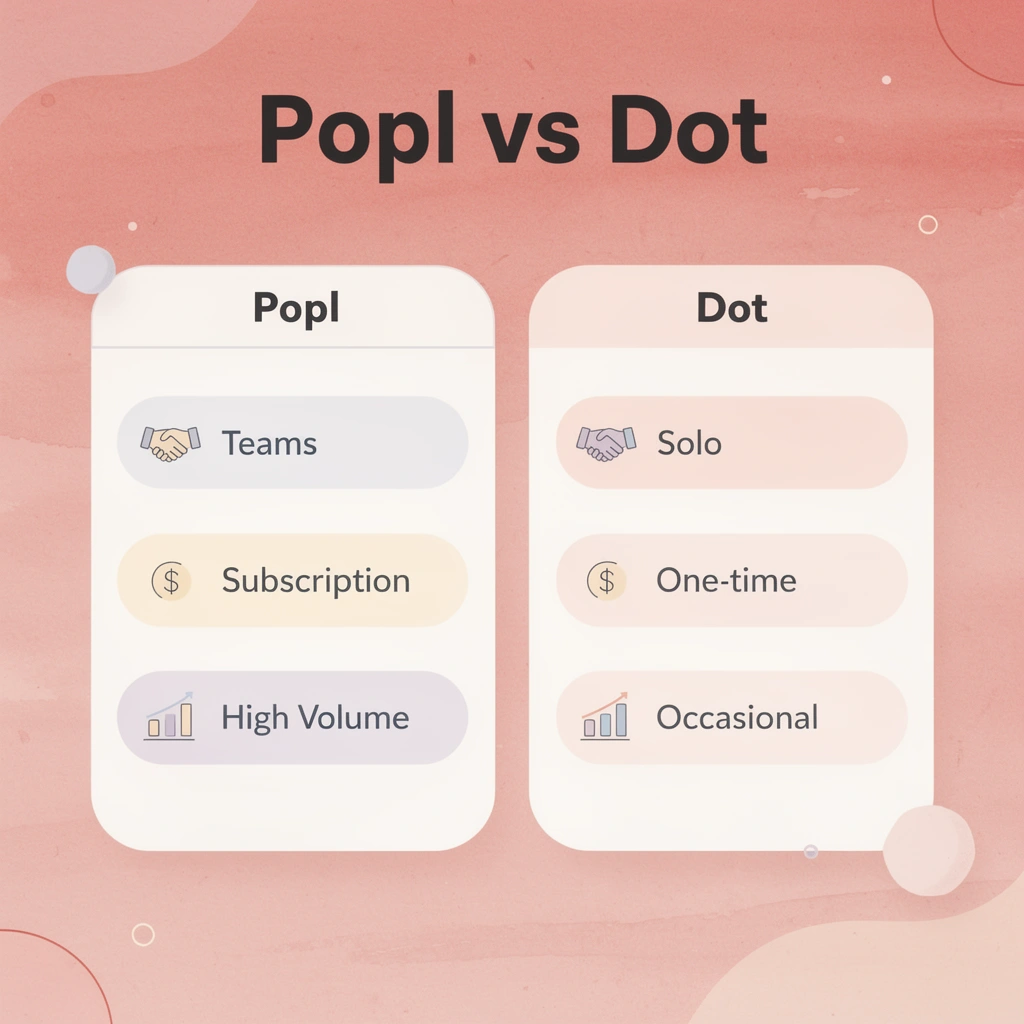
Choose Popl if you attend multiple events every three months, manage a team that needs a central place to track leads, or need automatic CRM integration. Choose Dot if you work alone, share contact info occasionally, prefer one-time payment over monthly fees, and don't need detailed analytics beyond basic scan counts.

🎯 Key Point: Your networking frequency and team size are the biggest factors in choosing between these platforms. High-volume networkers with teams benefit from Popl's subscription model, while occasional users save money with Dot's one-time purchase.
💡 Best Practice: Consider your networking goals for the next year, not just your current needs. If you plan to scale your business or attend more events, investing in Popl's advanced features early can streamline your growth rather than forcing you to migrate data later.
How does Popl help sales teams at trade shows?
Sales teams working at trade shows lose leads in the chaos between booth conversations and CRM entry. According to the National Sales Executive Association, 80% of sales require five follow-up calls after the meeting, yet 44% of salespeople give up after one.
Contact data sitting in a rep's phone for three days before manual CRM entry compounds this problem. Popl's lead capture forms and instant CRM sync compress that window from days to minutes, tagging each contact with event location, timestamp, and custom fields that trigger automated nurture sequences. For revenue models that depend on converting event conversations into booked meetings within 48 hours, the subscription cost becomes negligible compared to pipeline loss from manual processes.
What governance controls does Popl offer for teams?
Popl works well for teams needing governance controls. Marketing directors can set up 50 cards with pre-approved branding, limit which profile fields reps can edit, and pull reports showing which team members captured the most qualified leads at each conference.
Dot offers none of this: each card works independently, with no admin dashboard, bulk management, or brand-consistency enforcement. For teams managing 30+ people, this becomes a compliance necessity rather than a luxury.
When does Dot work best for freelancers and solo professionals?
Freelance designers, consultants, and solo founders who network occasionally don't need enterprise features. They need a card that works when someone asks for contact info at a coffee shop or coworking space. Dot's one-time payment (typically $30 to $50, depending on the card style) eliminates subscription renewal emails.
The profile builder offers enough customization to match your personal brand without overwhelming options. If you share your contact details 10 times per month, mostly through in-person interactions, Dot delivers what you need without charging for unused features.
Why does Dot appeal to non-technical audiences?
Dot appeals to people who distrust apps or prefer browser-based tools. You do not need to download anything to activate your card or update your profile. The built-in QR code ensures functionality even when a phone lacks NFC support, which remains more common than expected.
If you do most of your networking with non-technical people (real estate agents, event planners, creative professionals), Dot's easier way to get started reduces friction for the person receiving your card.
What flexibility problems do both platforms share?
Neither Popl nor Dot solves the follow-up problem when your workflow needs flexibility in contact capture. Both assume everyone will tap your card or scan a QR code, but real networking varies by situation. Some prospects prefer booking meetings immediately. Others want to exchange information. Some need simplicity at conferences.
Platforms like Mobilo address this through three modes: a personal landing page for detailed sharing, an instant exchange for mutual capture, and a minimal-contact mode that saves directly to phones. This flexibility works across virtual meetings, trade shows, and casual introductions without forcing prospects into a single pattern.
How do delays impact sales success?
Research from InsideSales.com shows 35 to 50% of sales go to the vendor that responds first. Speed suffers when digital cards require manual saving or when CRM sync occurs in batches overnight rather than in real time.
Both Popl and Dot add delays: Popl's lead capture forms add steps for recipients; Dot's lack of CRM integration adds steps for you. The winner removes friction when your workflow needs it most.
But speed only matters if you're measuring what happens after the handshake, not during it.
You Don't Have a Business Card Problem — You Have a Lead Conversion Problem
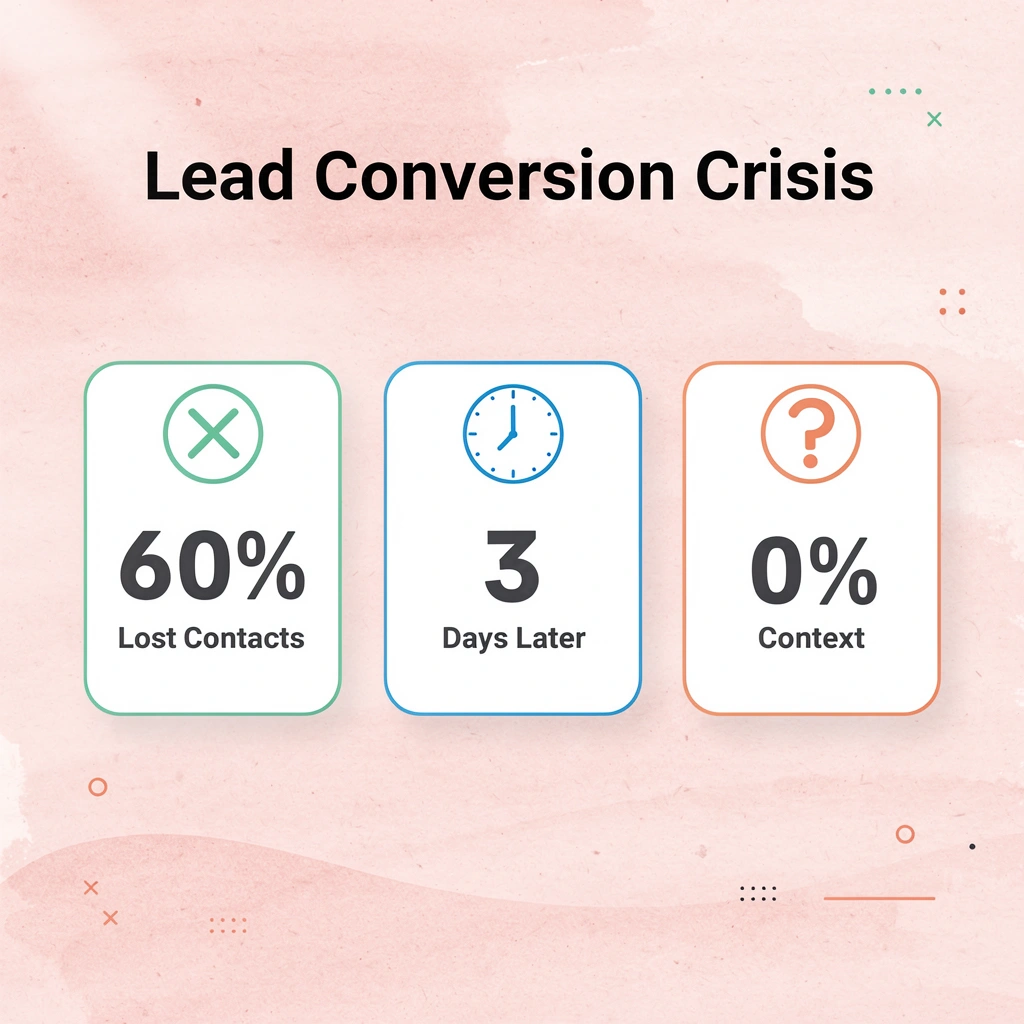
If you've been comparing Popl vs Dot, you're solving for the wrong variable. Both platforms share contact details easily. The real problem emerges three days after the conference: 60% of contacts never entered your CRM, and those who did lacked context about which product they asked about or what problem they mentioned. The card worked. The conversion system didn't.

🔑 Key Takeaway: The issue isn't which digital business card platform you choose — it's building a systematic follow-up process that captures context and converts contacts into customers.
"60% of contacts never entered your CRM, and those who did don't have context about which product they asked about or what problem they mentioned." — Event Tech Live Industry Report
💡 Pro Tip: Focus on creating a lead qualification system that captures not just contact information, but conversation context, pain points discussed, and next steps agreed upon during your networking interactions.
What happens in the gap between exchange and action
Most digital cards stop at the exchange. Someone taps your card, sees your profile, saves your contact—then walks away. You don't know if they saved anything, which link they clicked, or whether they're qualified. The card created a touchpoint but no trackable outcome. When your sales manager asks which leads came from the $8,000 conference sponsorship, you're guessing instead of pulling a filtered report.
The conversion gap widens when follow-up requires manual effort. You export contacts from your digital card platform, open a spreadsheet, copy-paste into your CRM, then try to remember which person worked where and what you discussed. By the time you send that first email, four days have passed. According to research from InsideSales.com, speed determines who wins the deal, but it requires systems that eliminate steps rather than add them. Exporting, importing, and manual data entry kill momentum.
Platforms like Mobilo compress this gap by treating contact exchange as the start of a trackable workflow, not the end of an interaction. When someone taps your card, their details flow directly into your CRM with timestamps, event tags, and custom fields for lead scoring. Your sales manager can pull reports showing which reps captured the most qualified leads, which prospects opened follow-up emails, and where conversion rates drop off. The card becomes part of your revenue engine instead of a standalone networking tool.
When tracking reveals what sharing hides
Sharing contact details feels productive, but it's not the same as generating a pipeline. You can collect 200 contacts at a trade show and convert zero into meetings if none were decision-makers or your follow-up arrived two weeks late. Without lead scoring, enrichment data, or engagement tracking, you're treating every contact equally when they're not. The VP who asked specific questions about pricing deserves a different follow-up than the intern who scanned your card while waiting for coffee.
Most digital cards count scans or taps but provide no context about intent, role, or company size, leaving you to sort through names without prioritizing who matters most. Lead conversion requires knowing which contacts to pursue first, what message resonates with their pain point, and when they're most likely to respond. A card that captures contact details without enriching them or routing them based on qualification criteria creates work instead of eliminating it.
Related Reading