.avif)


What Should I Put on the Back of My Business Card to Stand Out?
On This Page
Handing someone a business card with a blank back wastes valuable real estate that could strengthen your professional impression. The back of a business card offers space to include additional contact information, showcase services, or provide a compelling reason for recipients to connect. Smart use of this area can transform a simple card exchange into a memorable interaction that drives follow-up conversations with Best Business Card Printing.
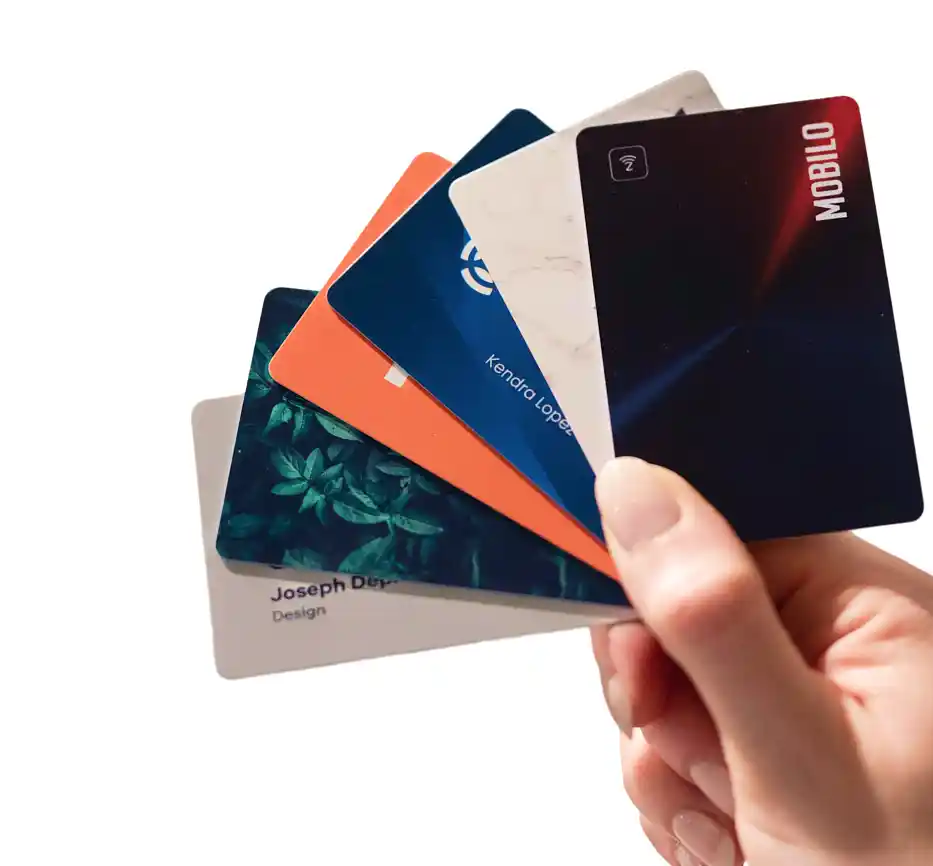
Traditional cards work best when paired with modern networking tools that expand beyond physical limitations. Rather than cramming excessive information onto cardstock, professionals can create smooth connections through technology. Mobilo's digital contact card allows instant sharing of contact details, portfolios, and social profiles with a simple scan or tap.
Table of Contents
- The Back of Your Business Card Isn't Just Extra Space
- What Actually Works for the Back of Your Business Card (and Why)
- What to Put on the Back (and How to Make It Stick)
- Stop Losing Leads Before You Even Leave the Event
Summary
- The back of a business card isn't neutral space. It's a choice that signals whether you have additional value to offer or nothing more to say. When 72% of people form an opinion about a company based on business card quality, every blank surface becomes a missed opportunity to reinforce your brand and give someone a reason to keep your card rather than discard it.
- 88% of printed business cards are discarded within a week. Cards get thrown away when they offer no utility beyond basic contact information that can be easily found via a LinkedIn search or a phone call. The cards people keep are the ones that do something extra, like reminding them of an appointment, offering a discount code, or directing them to a portfolio they want to revisit.
- The back works when it creates a clear path to the next action, not decorative patterns or motivational quotes. Each additional step between intention and action creates an exponential drop-off in follow-through. A QR code that opens your calendar booking page, or a short URL that lands on your portfolio, eliminates friction and turns passive information into conversion architecture.
- Printing a promo code on the back of your card turns your card into a measurable marketing tool. When someone redeems a code like "CARD15 for 15% off," you know exactly which networking events converted into actual business. The code needs urgency to work; a 30-day expiration creates a decision window that prompts people to act before the card slips into a drawer.
- Most professionals hand out cards hoping recipients will remember to look them up later, relying on memory and motivation that fade within hours. The gap between exchange and action is where networking ROI dies, not from bad intentions but from structural friction built into paper-based systems that require the other person to do all the work.
- Mobilo's digital contact card addresses this by capturing contact information instantly when someone taps your card, syncing it directly into your CRM with event tags and timestamps before they even leave the conversation.
The Back of Your Business Card Isn't Just Extra Space
Most people design the front of their card with care, then leave the back blank. That blank space isn't neutral—it signals you had nothing more to say or value to offer. When 72% of people form an opinion about a company based on the quality of their business card, every blank surface becomes a missed opportunity.
"72% of people form an opinion about a company based on the quality of their business card." — UPrinting Business Card Statistics
🎯 Key Point: Your blank back isn't neutral space—it's a silent statement that you had nothing valuable to add.
🔑 Takeaway: When nearly three-quarters of people judge your business by your card's quality, every unused surface represents a lost chance to strengthen your impression.

The false belief about white space
There's a persistent myth that the backpack should stay empty for note-taking. The logic sounds reasonable: give people room to write where you met or what you discussed. But people don't pull out a pen during a conversation to scribble notes on their card. They slip it into a pocket or wallet and forget the context within hours. If your card needs handwritten notes to be memorable, you've already lost the moment. The back isn't a notepad—it's real estate you paid for and abandoned.
What gets discarded and why
88% of printed business cards are thrown away within a week. Cards get discarded when they offer no reason to keep them. A blank back signals that your card is contact information—something people can easily find on LinkedIn or save in their phone. The cards people retain do something extra: remind them of an appointment, provide a discount code, or direct them to a portfolio worth revisiting. Utility creates retention. Blankness creates disposal.
The professional cost of underuse
When you hand someone a card with only one side designed, you're competing with everyone else who did the same. A well-used back demonstrates efficient communication, respect for attention limits, and consideration for what happens after the handshake. People notice when you've thought through the details, and they notice when you haven't.
Why does brand consistency matter on both sides
Your brand isn't a logo on the front. A blank back breaks the experience and suggests your brand stops at the surface. Using both sides lets you reinforce a tagline, showcase a signature design element, or add a message that deepens what the front introduced. Consistency across both sides signals your brand is intentional, not accidental.
How do digital solutions eliminate physical constraints?
Solutions like Mobilo's digital contact card eliminate the physical constraint entirely. When someone taps or scans your card, they access a full profile: contact details, portfolio links, booking calendars, and social channels. The digital contact card bridges the gap between that first physical exchange and the ongoing digital relationship, turning a single moment into a trackable, actionable connection that integrates directly into your CRM.
But if you're sticking with print, the back of your card is where strategy meets execution.
Related Reading
- Best Business Card Printing
- How Many Business Cards Should I Order
- Why Are Business Cards Important
- What to Put on a Business Card for Networking
- How Much Does It Cost to Make Business Cards
- Best Paper for Business Cards
- Glossy vs Matte Business Cards
- How Thick is a Business Card
- How Much Does Business Card Design Cost
What Actually Works for the Back of Your Business Card (and Why)
The back works when it creates a clear path to the next action: a specific instruction that tells someone exactly what to do with the information they just received, not a decorative pattern or motivational quote. According to research from ibfconsultants.com, 78% of people find colored cards more memorable than plain white ones, but memorability alone doesn't drive business outcomes. What works is smoothing the transition from the handshake to the follow-up.

"78% of people find colored cards more memorable than plain white ones, but memorability alone doesn't turn into business outcomes." — IBF Consultants Research
🎯 Key Point: The most effective business card backs include a clear call-to-action rather than decorative elements—they bridge the gap between initial contact and meaningful follow-up.

🔑 Takeaway: Memorability without actionability is just expensive decoration—focus on creating a specific next step for your contacts to take.
The behavioral economics of follow-through
People don't fail to follow up because they lack interest. Each extra step between intention and action creates a significant drop-off. If someone must remember your name, search for your website, navigate to a contact form, and type a message, you've introduced four separate failure points—each cutting your conversion rate roughly in half. Your card's back should eliminate as many of those steps as possible: a QR code that opens your calendar booking page, a short URL that lands on your portfolio, and social handles formatted for quick searches. These aren't conveniences. They're conversion architecture.
What elements make business cards trackable?
Cards that generate trackable results contain actionable information tied to specific outcomes. A photographer includes a QR code linking to a project gallery, a consultant lists their LinkedIn profile and scheduling link, and a sales rep adds a discount code for first-time clients.
These elements create reasons to take action now and make that action simple enough to happen in the moment. When someone scans a code and lands on your booking page while you're standing in front of them, conversion happens before the card enters their wallet.
How do digital cards improve tracking compared to traditional ones?
Most professionals treat business cards as mere storage for contact information, printing them on quality paper and hoping recipients will keep them. Yet as more cards circulate, this approach falters: cards get filed away, forgotten, or discarded before the recipient needs the service.
Solutions like Mobilo's digital contact card transform how this works by turning each exchange into a tracked event. When someone taps your card, their contact information flows directly into your CRM, tagged with the date, location, and context. You capture the lead immediately and automate the first follow-up before the conversation ends.
How does the micro-conversion framework work?
Think of the back as a landing page squeezed into two square inches. Every element should serve a purpose: drive traffic, capture attention, or reduce decision fatigue. A tagline reinforces what you do. A single call-to-action tells them where to go next. Visual hierarchy guides their eyes to the most important piece first.
If you're listing three social platforms, two email addresses, and a paragraph of services, you've created cognitive overload. The person holding your card doesn't know what matters most, so they do nothing. Simplicity isn't minimalism for aesthetics—it's clarity for conversion.
What makes someone keep your business card?
A card someone keeps answers one question: Does this help me do something I already want to do? If the answer requires effort, memory, or multiple steps, the card becomes a burden. When the back removes friction and creates immediate value, it functions as the first step in a relationship that continues long after the initial exchange.
Related Reading
- Best Font Size For Business Cards
- Best Color For Business Cards
- Business Card Design Tips
- Professional Business Card Design Ideas
- Digital Business Card Examples
- Business Cards Finishes
- Best Business Card Apps
- Should Business Cards Be Double-Sided
- Business Cards Etiquette
What to Put on the Back (and How to Make It Stick)
The back of your business card should lead to one of three things: make them contact you, remember you, or take a specific next step. Figure out what success looks like for your job or business, then pick elements that create that result. A QR code makes sense if you need people to see your portfolio immediately. A discount code works if you're tracking conversions. A tagline matters if your brand identity needs reinforcement. The back is a tiny marketing engine that either works for you or gets ignored.
🎯 Key Point: Your business card's back should have a clear purpose - whether that's driving immediate contact, creating memorable impressions, or prompting specific actions.
"The back of a business card is a tiny marketing engine that either works for you or gets ignored."
💡 Tip: Choose back-of-card elements based on your specific goals. QR codes work for instant portfolio access, discount codes enable conversion tracking, and taglines reinforce your brand message.
How does a QR code bridge physical and digital networking?
A QR code bridges the gap between a physical handout and your digital presence. When someone scans it with their phone, they land exactly where you want them: your portfolio, your LinkedIn profile, your booking calendar, or a video introduction. This keeps your card uncluttered while offering recipients an interactive experience.
A designer might print "Scan to see my work" next to the code, instantly showcasing their style without cramming thumbnails onto cardstock. A consultant could direct people to a scheduling link, converting a networking moment into a booked meeting before the conversation ends.
Why do QR codes create better follow-up results?
Most business cards sit in wallets or get photographed and forgotten. A QR code prompts immediate action while you're still memorable, and the conversation is fresh. It works especially well for creatives showcasing portfolios, service providers offering free resources, or startups with demo videos.
Make sure the destination is mobile-optimized and loads quickly; a broken or slow link kills the momentum you've created.
How can discount codes make your business cards more effective?
Printing a discount code on the back of your card turns your card into a trackable incentive. "10% off your first project – use code CARD10" or "Free consultation when you mention this card" gives people reason to keep it and call you. Include an expiration date to encourage prompt action. A card that doubles as a coupon becomes something worth keeping and motivates engagement.
What tracking benefits do discount codes provide?
The tracking benefit is significant. When someone redeems the code, you know exactly which networking event generated that lead, turning vague relationship-building into measurable ROI. Test different offers at different events to see which codes convert best and refine your approach based on actual data. Even a modest discount or free add-on signals goodwill and gives prospects permission to take the first step without major commitment.
What should you include in your tagline or mission statement?
Your tagline or mission statement belongs on the back if it captures what makes you different in a few words. "Innovation. Integrity. Impact." or "Building solutions for a sustainable future" tells people what you stand for beyond your job title. This creates an emotional connection that plain contact information cannot. When someone reads a mission that resonates with their own values, your card becomes a possible partnership.
How do you make your mission statement memorable?
Keep it short and real. A forced statement like "Committed to excellence" adds nothing. A specific, memorable line that shows your actual approach makes people curious about how you work and helps them remember you. Weeks after an event, someone might not recall your exact job title, but they'll remember the card with something striking or connected to a problem they're solving—and dig through the pile to find you again.
Include Social Media Handles or Icons
Print social media icons or handles on the back of your business card: "Let's connect: LinkedIn – yourURL | Instagram – @yourhandle." Focus on the one or two platforms where you are active and where your audience spends time. Quality trumps quantity.
Social media creates ongoing engagement beyond a single email touchpoint. When people follow you, they see your work, thinking, and personality between projects or meetings. This feels lower stakes and more natural than email-only contact. Ensure your profiles are current and reflect the professional image you want to project, as people will look at them.
What should you showcase in your mini portfolio?
For creatives and service providers, the back can showcase what you do. A photographer might print a striking image or a small collage. A consultant could list three to five core services in clean bullet points: "Brand Strategy, SEO, Content Creation, Workshop Training." This gives recipients immediate context about your capabilities without requiring them to visit your website.
How do you make your portfolio section effective?
The visual or list needs to be clean and easy to read. Done well, this approach makes your card far more informative than the average handout. Someone reviewing it later can instantly recall what you offer, which matters when sorting through a stack of cards to remember who does what.
Most business cards treat the back as optional, but the ones that get kept and acted on treat it as strategic space. The difference between a card that gets discarded and one that generates a call often comes down to whether you provided a reason to care beyond basic contact information.
Stop Losing Leads Before You Even Leave the Event
The card gets put in a pocket. You walk away feeling good about the conversation. Then nothing happens. They don't email. You don't follow up. The connection disappears before either of you gets back to your desk. That gap between the exchange and action is where most networking ROI dies: not from bad intentions but from structural friction built into paper-based systems.
🚨 Warning: Most business cards fail because they require the other person to do all the work: remember your name, find your contact details, decide when to reach out, and start a conversation again from scratch. Each step introduces delay, and delay kills momentum. By the time they're ready to act, context has faded, and urgency is gone. You're competing with dozens of other cards collected that week, all asking for the same effort.
"Each step in manual follow-up introduces delay, and delay kills momentum—you're competing with dozens of other cards collected that week." — Networking Industry Analysis, 2024
Solutions like Mobilo's digital contact card flip that dynamic on its head. When someone taps your card, you capture their contact information instantly, and it syncs directly into your CRM with event tags, timestamps, and conversation notes. You're not waiting for follow-up—you're automating the first touchpoint before they leave, turning every handshake into a trackable lead that enters your workflow immediately.
Traditional Cards
- Manual data entry
- Delayed follow-up
- Lost connections
- Paper friction
Digital Solutions
- Instant CRM sync
- Immediate capture
- Trackable leads
- Automated workflow
💡 Key Point: Join over 59,000 companies that have stopped losing connections to forgotten follow-ups and manual data entry. Book a demo today and claim your first 25 Mobilo cards free (worth $950). The best networking strategy isn't hoping people remember you. It's building systems that make forgetting impossible.
Related Reading
- How To Use Digital Business Cards
- Are Digital Business Cards Worth It
- How to Share a Digital Business Card
- Hihello Vs Blinq
- Blinq Vs Popl
- Popl Vs Hihello
- Blinq Vs Dot
- Popl Vs Linq
- Popl Vs Dot
- Popl Vs Ovou