.avif)


What Is the Best Color for Business Cards for Networking Success?
On This Page
When someone receives a business card at a networking event, they form an instant impression based largely on its visual appeal. Color psychology plays a powerful role in this split-second judgment, influencing whether the card gets saved or discarded. The best business card printing and right color choice can strengthen brand identity, convey professionalism, and create memorable connections that lead to lasting business relationships.
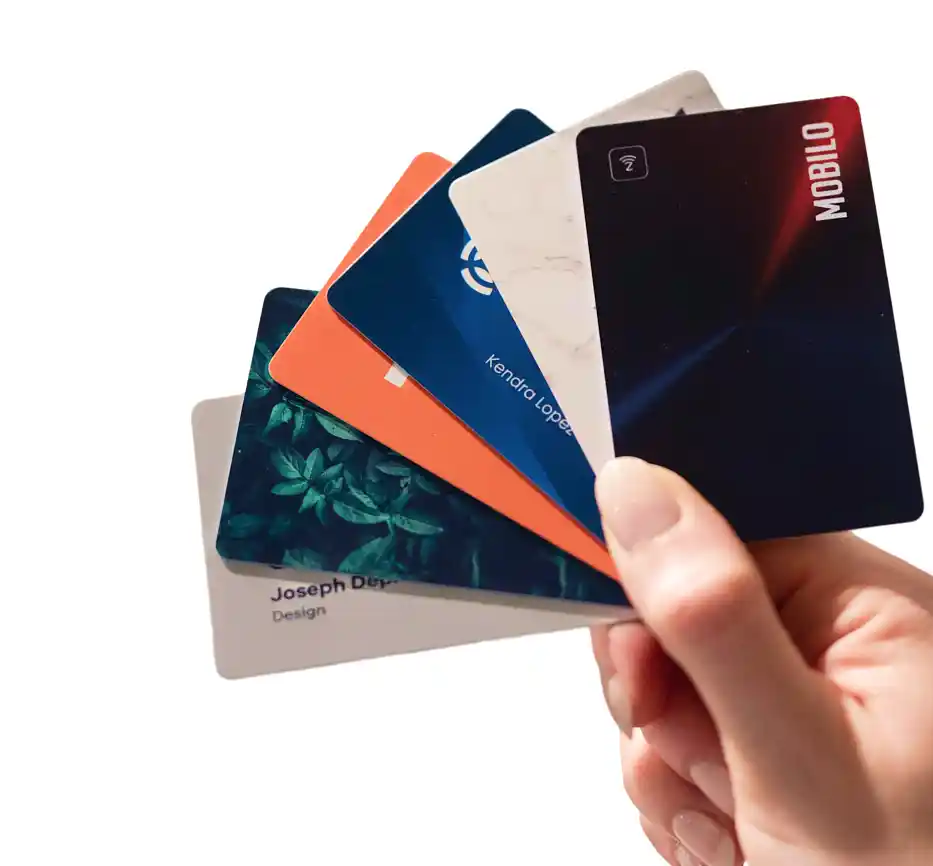
Traditional paper cards lock professionals into a single color scheme, but modern networking offers more flexibility. Digital alternatives enable customization that matches different audiences and situations, allowing testing of which design choices generate the most engagement. Professionals seeking this adaptability can explore options like Mobilo's digital contact card to optimize their networking approach.
Table of Contents
- Does Color Choice Matter When Designing a Business Card?
- The Science and Psychology of Business Card Color Combinations
- Popular Business Card Color Options and What They Communicate
- Tips for Using Color Strategically on Your Business Cards
- Turn Your Business Card Color Choices into Real Networking Results
Summary
- 72% of consumers form opinions about companies based on business card design alone, according to UPrinting's research, meaning color decisions shape professional credibility before any conversation happens. The brain processes color 60,000 times faster than text, which means your palette registers before someone reads your name or job title. Cards without strategic color fade into identical stacks of monochrome rectangles, indistinguishable from every other professional at the event.
- Research from Affiverse Media shows that 90% of snap judgments about products are based on color alone, triggering instant perceptions about competence and trustworthiness before anyone reads your credentials. The color wheel provides mathematical frameworks for creating combinations that feel intentionally cohesive rather than accidentally assembled. Complementary colors like blue and orange generate high contrast, making key information stand out, while analogous schemes using adjacent hues create sophisticated combinations that feel naturally related.
- Western audiences associate specific colors with distinct professional qualities through culturally reinforced patterns. Navy blue signals trust and stability, making it standard for financial services and law firms. Red commands attention and works for creative agencies, but can feel aggressive if overused. Affiverse Media found that 85% of consumers say color is the primary reason they buy particular products, meaning palette choices directly influence whether prospects perceive services as premium or budget, innovative or traditional.
- UPrinting's data show that 88% of business cards are thrown away within a week, not because the colors were wrong, but because recipients never convert physical cards into trackable contacts. Traditional paper locks you into single color decisions that represent your brand across every context, every audience, every campaign. Testing which color schemes drive higher engagement rates becomes impossible when you cannot track who saves your information or follows up after events.
- Mobilo's digital contact card addresses this by letting teams customize colors for different audiences, test which combinations drive engagement, and track actual conversion metrics across the organization in real time.
Does Color Choice Matter When Designing a Business Card?
The color you choose for your business card matters. It can determine whether someone keeps your card or discards it within seconds. According to UPrinting's research, 72% of people form an opinion about a company based on business card design. The colors you pick directly shape professional credibility and affect whether potential customers remember you, trust you, and contact you.
"72% of people form an opinion about a company just by looking at the business card design." — UPrinting Research
🎯 Key Point: Your color choice is not aesthetic—it's a business decision that impacts first impressions and customer retention.
🔑 Takeaway: With nearly three-quarters of people making judgments based on your card's design, choosing the right colors is essential for professional success.

The Memorability Gap Nobody Talks About
Most professionals stick with safe black-and-white designs, then wonder why networking doesn't yield callbacks. Cards without strategic color get lost in identical stacks of rectangles. The brain processes color 60,000 times faster than text, so your color choice registers before someone reads your name. When that first impression comes across as "generic," you've lost the opportunity to stand out.
How do wrong color choices damage your networking ROI?
Wrong color combinations create measurable damage to your networking ROI. Hard-to-read text on poorly contrasted backgrounds forces recipients to squint or abandon the message, rendering your contact information inaccessible.
Colors that clash with your brand identity confuse prospects about what your company represents: whether you're signalling luxury with discount-store colour palettes, or claiming innovation while presenting corporate beige. Cards that feel visually cheap get discarded immediately, since perception outweighs actual cost.
Why do traditional paper cards limit your color strategy?
Paper cards lock you into one colour choice for every interaction and event. If that choice doesn't work well, you're spreading brand confusion at scale until you print new ones.
Solutions like Mobilo's digital contact card eliminate this problem. Digital cards let you change colours for different audiences, test which combinations drive engagement, and update instantly when your brand evolves. Teams using Mobilo maintain consistency across all staff while customising profiles for specific campaigns or regional preferences.
When Color Becomes a Competitive Advantage
Cards that get saved share a specific trait: they make recipients feel something immediate and positive. Bright, thoughtfully chosen colours signal confidence and attention to detail. Multi-colour designs, gradient finishes, and metallic accents create tactile and visual interest that single-colour cards cannot match. In professional environments where everyone competes for the same attention, standing out through colour determines whether a card stays in someone's pocket or gets discarded.
Choosing effective colours requires understanding how different colours influence perception, which combinations enhance readability, and why certain colour groups succeed in specific industries while failing in others.
Related Reading
- Best Business Card Printing
- How Many Business Cards Should I Order
- What To Put On A Business Card For Networking
- Why Are Business Cards Important
- How Much Does It Cost To Make Business Cards
- What Should I Put on the Back of My Business Card
- Best Paper For Business Cards
- How Much Does Business Card Design Cost
- How Thick Is A Business Card
The Science and Psychology of Business Card Color Combinations
Understanding how colors work together transforms business card design from an abstract concept into an actionable strategy. Research from Affiverse Media shows that 90% of quick product decisions are based solely on color. Your card's colors create instant impressions of competence, trustworthiness, and brand identity before anyone reads your job title. The color wheel provides a framework for creating intentional color combinations. Designers use the wheel's positioning to build color schemes through similarity or contrasting effects.
"90% of quick decisions about products are based on color alone." — Affiverse Media Research
🎯 Key Point: Your business card colors trigger instant psychological responses about competence and trustworthiness before prospects read your name.
🔑 Takeaway: The color wheel transforms colour selection into a strategic system for creating professional combinations that work harmoniously together.

How does the color wheel create reliable color combinations?
Similar colour schemes use colours positioned next to each other on the wheel, creating subtle combinations like blue-green-teal. Opposite colours sit across from each other: blue and orange, purple and yellow, generating high contrast that makes text and key information stand out. Three-colour schemes select three colours equally spaced around the wheel, producing balanced designs with visual energy. These formulas leverage how human vision processes colour relationships, ensuring your card feels professionally designed.
How can saturation and value adjustments add depth?
Changing how bright and dark a colour is creates depth without adding complexity. A single blue can form a gradient from light sky blue to deep navy, maintaining brand consistency while adding visual texture. This method works well for minimalist designs where colour variation replaces the need for multiple graphic elements.
How do different colors affect viewers' emotions?
Color psychology explains the feelings people experience when seeing certain colours. These feelings stem from cultural conditioning. In Western countries, blue signals safety and trust, which is why banks and hospitals use it extensively to create a sense of security.
Green evokes nature and growth, making it popular with environmental and wellness brands. Different shades also signal wealth for luxury products. Red triggers strong emotions and urgency, a favoured colour among creative agencies, though excessive use can feel aggressive or threatening.
Why does color choice directly impact purchasing decisions?
According to Affiverse Media, 85% of consumers say colour is the main reason they buy a product. The colours you choose directly affect whether potential customers perceive your services as high-end or budget-friendly, new and creative or traditional.
Black conveys power and formality, grey suggests professionalism, and white creates clean, modern aesthetics. Orange balances creativity with friendliness, yellow signals optimism but risks feeling unpredictable in excess, and purple carries associations of luxury and spirituality, suited to niche positioning.
How does temperature affect brand energy perception?
Colors carry psychological temperature that affects how people experience your brand's energy level. Warm colours like red, orange, and yellow convey high energy, confidence, and action-orientation, while cool colours, including blue, purple, and green, evoke calm, measured thoughtfulness.
This temperature contrast matters more than individual colour choices: a business card using warm yellows and oranges communicates differently than one using cool grays and blues.
Why do digital cards offer temperature flexibility advantages?
Traditional paper cards lock you into a single temperature choice across all contexts and audiences. Our digital contact card lets teams test warm colour palettes for creative pitches and cool schemes for corporate presentations, then measure which combinations drive higher follow-up rates.
Digital cards eliminate the gamble of printing 500 cards in a colour scheme that tests poorly, enabling real-time adjustments based on actual engagement data.
How do natural colors create physical connections?
Colors found in nature evoke strong, physical responses that transcend simple emotion. Earth tones like browns and tans suggest honesty and dependability through their association with soil, wood, and natural materials that feel grounded. Ocean blues and forest greens convey sustainability and organic values. Metallic golds and silvers evoke perceptions of quality and premium value.
Why does context matter for natural color choices?
The same green colour means different things depending on context. Environmental consultants use sage green to signal environmental stewardship, while wealth management firms use deeper emerald tones to represent money and prosperity.
This semantic flexibility makes natural colours powerful, but only when your entire design system reinforces the intended association through typography, imagery, and material choices that align with the natural reference you're invoking.
Understanding which specific combinations work well in your industry and why certain colour palettes consistently perform better than others matters more than individual colour choices.
Related Reading
- Best Font Size For Business Cards
- Business Card Design Tips
- Professional Business Card Design Ideas
- Digital Business Card Examples
- Business Cards Finishes
- Best Business Card Apps
- Should Business Cards Be Double-Sided
- Business Cards Etiquette
Popular Business Card Color Options and What They Communicate
The specific colors you choose send messages that people understand immediately. These colors shape whether people see you as trustworthy, creative, high-quality, or easy to forget. These color associations are culturally reinforced patterns that Western business audiences recognize from repeated brand exposure. Choosing navy blue sends a different professional message than burnt orange because each color triggers different feelings in people's minds. These feelings either match what your brand promises or they don't.
🎯 Key Point: Color psychology works because people make instant judgments about your business based on visual cues. Your business card colors create the first impression before anyone reads your name or title.

"Color associations are culturally reinforced patterns that Western business audiences recognize from seeing brands use them over and over." — Research on Cultural Color Psychology
💡 Tip: Test your color choices by asking 5-10 people in your target market what feelings your business card colors trigger. If their responses don't match your brand positioning, consider adjusting your palette.

Color
Message Communicated
Best For
Navy Blue
Trust, stability, professionalism
Finance, law, consulting
Burnt Orange
Creativity, energy, and approachability
Design, marketing, startups
Forest Green
Growth, reliability, nature
Healthcare, sustainability, finance
Charcoal Gray
Sophistication, neutrality, and premium
Luxury brands, architecture, tech
Navy Blue Signals Authority Without Aggression
Law firms, financial advisors, and corporate executives choose navy blue because it conveys trust and stability without the harshness of pure black. Pair it with white, silver, or gold text for readability. Avoid navy for small details or thin letters: darker shades are difficult to see when printed, especially on lower-quality cardstock, making sharp text look blurry. A matte finish or subtle embossing adds texture, preventing navy cards from appearing flat.
Crimson Red Commands Attention but Requires Restraint
Tech startups, restaurants, and athletic brands use red to stand out in crowded networking environments, where most professionals tend to stick to conservative colour palettes. Red announces rather than whispers, making it an effective accent colour. Overuse feels aggressive or overwhelming. A deep crimson logo on white or black maintains visual impact without triggering the fight-or-flight response that bright red backgrounds cause. Matte finishes keep the design sophisticated by preventing the glare that makes red cards look cheap.
How does forest green connect to growth and natural systems?
Eco-friendly brands, wellness centres, and medical professionals choose forest green to convey sustainability and health-conscious values. Darker greens feel refined and professional, while lighter shades risk appearing too casual for formal business contexts.
A forest green background with cream or gold lettering creates warmth without sacrificing professionalism, particularly when printed on textured card stock that reinforces natural, earthy associations. According to UPrinting's research, 72% of people judge a company by the quality of its business cards, so texture and finish influence perceived professionalism as much as colour choice.
What limitations do traditional paper cards create with forest green?
Traditional paper cards lock you into a single colour across all contexts and audiences. If your forest green reads as sophisticated to environmental consultants but feels too casual to corporate clients, you're stuck sending mixed messages until you reprint.
Our Mobilo digital contact card eliminates this constraint, letting teams customize colour schemes for different audiences while maintaining brand consistency. Sales reps can use warmer palettes for creative pitches and cooler schemes for financial presentations, then track which combinations drive higher follow-up rates through built-in analytics.
Slate Gray Offers Versatility Without Blandness
Consultants, marketers, and tech startups use gray as a neutral base that pairs well with accent colours like teal, orange, or yellow, adding personality without chaos. Pure gray alone can suggest lifeless conformity, the visual equivalent of beige cubicles and corporate sameness. A dark gray background with white embossed text creates a minimalist, high-end feel that conveys confidence through restraint. Matte finishes keep gray looking modern rather than dull, preventing the flat appearance that glossy gray cards produce.
How do luxury brands use black to signal premium positioning?
Luxury brands, fashion companies, and high-profile professionals use jet black to communicate exclusivity and sophistication. Black-on-black designs with spot UV gloss or metallic accents add depth without relying on colour contrast, creating tactile interest that monochrome cards cannot match.
Soft-touch or suede finishes enhance the premium feel, turning a simple card into a sensory experience that recipients remember. The risk: too much black with insufficient contrast makes text disappear under poor lighting. Contrasting white or gold text solves this while preserving the elegant, mysterious look that makes black cards memorable.
How should you apply color strategically across your design?
Use colour strategically across your card design to ensure readability and visual appeal.
Tips for Using Color Strategically on Your Business Cards
Strategic color use starts with structure, not aesthetics alone. White space and easy-to-read text create the foundation that makes color choices effective rather than merely decorative. Once you've established a clear order through layout, color becomes the layer that expresses your brand's personality and directs attention to important information. Using color as the primary design element creates visually busy cards where nothing stands out.

🎯 Key Point: Structure must come before color - establish your hierarchy with typography and spacing first, then use color to enhance that foundation.
"White space is the most underutilized design element on business cards - it creates the breathing room that makes strategic color placement actually work." — Design Psychology Research, 2023

💡 Best Practice: Follow the 60-30-10 rule for business card colors: 60% neutral base (usually white), 30% brand color, and 10% accent color for critical information like your contact details.
Logo Color Sets the Anchor Point
Your logo determines the starting palette because it appears on every brand touchpoint. Study the colour wheel to identify hues that work well with your logo's family (blues with teals, reds with oranges), or create deliberate contrast by pairing opposite hues (purple logos with orange accents). If your logo uses multiple colours, select one as the dominant colour and use the others sparingly for text or graphic elements to prevent competing focal points. A neutral backdrop makes the logo's colours feel more intentional and controlled.
Color Placement Creates Visual Hierarchy
Decide whether colour will dominate or accent your design before choosing specific hues. Full-colour backgrounds work in conservative industries when you need maximum contrast, but they require careful management to keep text readable. Most effective designs use primary brand colours only on logos and key text elements, with contrasting accent colours for borders, icons, or secondary information. This approach creates visual breathing room and prevents sensory overload.
How does paper finish affect color appearance?
Thick cardstock conveys quality, but your finish choice determines whether the colours look polished or cheap when printed. Glossy surfaces bounce light, making cards difficult to read under common lighting conditions at networking events, particularly with shiny colours like dark blue or black.
Matte finishes absorb light, creating richer colour depth that feels premium while eliminating glare that forces readers to tilt cards at awkward angles. Textured paper reinforces natural colour associations, particularly earth tones that convey authenticity or environmental values.
Why do traditional paper cards limit color flexibility?
Traditional paper cards lock you into a single colour and finish combination that represents your brand in every context and for every audience. If your glossy black card looks elegant in office lighting but becomes hard to read at evening networking events, you're distributing contact information that people cannot use.
Our Mobilo digital contact card eliminates these physical constraints, letting teams test different colour schemes for various audiences while maintaining brand consistency. Sales reps can adapt palettes for creative pitches versus corporate presentations, then measure which combinations drive higher follow-up rates through built-in engagement analytics that paper cards cannot provide.
Test Before Committing to Print
Order sample prints in your chosen colours before making full quantities; screens display colours differently from physical card stock. What looks bright on your monitor may print dull or too dark, particularly with reds and purples. Test readability under multiple lighting conditions: bright office lights, dim restaurant lighting, and outdoor natural light. Ask colleagues unfamiliar with your design whether they can quickly find your phone number and email. If they hesitate or squint, your contrast ratios need adjustment regardless of appearance.
Selecting the right colours matters less than using them consistently across your team and measuring whether they improve networking outcomes.
Related Reading
- How To Use Digital Business Cards
- Are Digital Business Cards Worth It
- How to Share a Digital Business Card
- Hihello Vs Blinq
- Blinq Vs Popl
- Popl Vs Hihello
- Blinq Vs Dot
- Popl Vs Linq
- Popl Vs Dot
- Popl Vs Ovou
Turn Your Business Card Color Choices into Real Networking Results
Choosing the right color makes your business card memorable, but converting contacts into your CRM is where most opportunities are lost. According to UPrinting's research, 88% of business cards get thrown away within a week because recipients never convert that physical card into a trackable contact. Your design decisions matter most when paired with systems that automatically capture lead data, enrich prospect information, and sync directly to your CRM without manual data entry.

Mobilo intelligent digital business cards capture contact information instantly through NFC tap or QR scan, then automatically enrich lead data, score prospects against your ideal customer profile, and sync to your CRM in real time. This transforms color strategy into measurable performance: you can track which color schemes drive the highest engagement rates, fastest follow-up responses, and best conversion metrics across your team.
Book a demo today and get your first 25 Mobilo business cards free (worth $950). With 90% of contacts never making it into your CRM, smart tools convert networking moments into pipeline opportunities.