.avif)


Complete Glossy vs Matte Business Cards Handbook for Networking
On This Page
The finish on a business card creates an immediate impression before any conversation begins. Glossy and matte finishes each offer distinct advantages in appearance, feel, and professionalism. Understanding these differences helps professionals choose the option that best represents their brand and makes networking interactions more memorable with Best Business Card Printing.
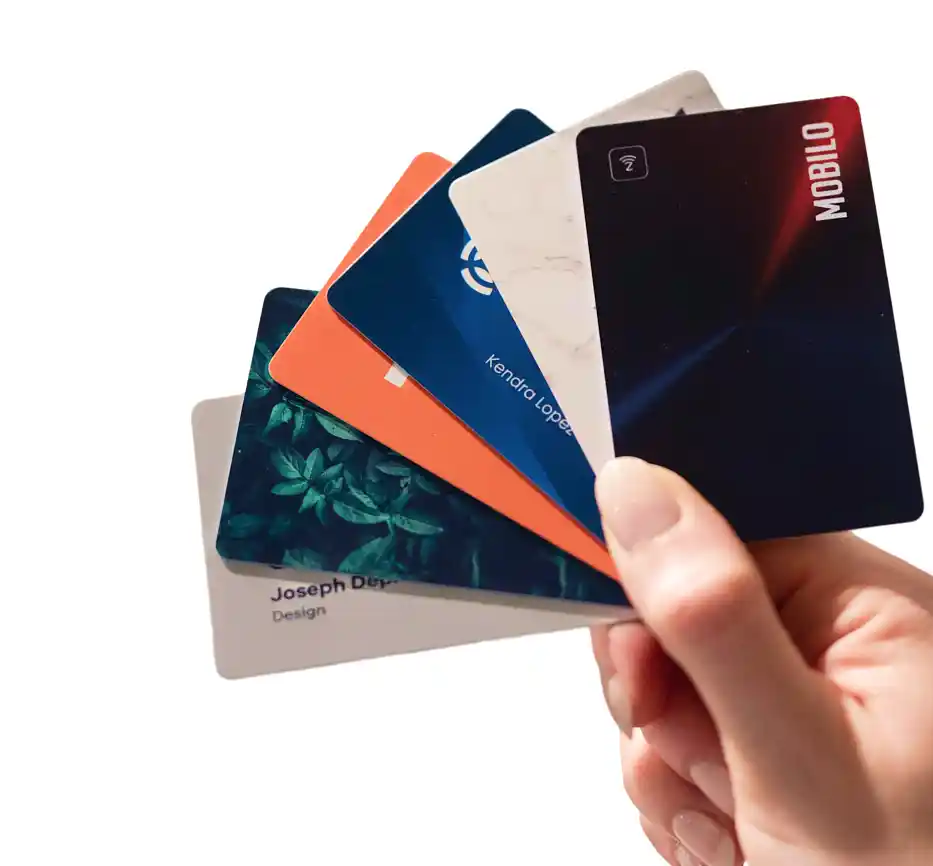
While selecting the right paper finish remains important in traditional networking, modern professionals often benefit from multiple methods for sharing contacts. Mobilo's digital contact card provides an instant alternative, eliminating concerns about print quality, finish durability, or running out of cards during crucial networking moments.
Table of Contents
- Do Glossy or Matte Business Cards Look More Professional?
- Glossy vs Matte Business Cards: What's the Real Difference?
- Which One Should You Choose for Your Brand?
- The Most Professional Card Isn’t Glossy or Matte—It’s Smart
Summary
- The finish you choose for a business card creates an immediate perception of professionalism before anyone reads your title or company name. Matte finishes signal restraint and confidence, working best for industries like law, consulting, and finance where authority matters. Glossy finishes amplify color saturation and create visual energy, which benefits photographers, designers, and event planners who rely on creative impact. The key is alignment, not personal preference. Matching your finish to your brand strategy determines whether your card reinforces or undermines the impression you're trying to create.
- Glossy cards resist scratches, moisture, and folding better than matte ones, keeping your card looking crisp even after weeks in a wallet. Matte cards show fingerprints and scuffs more easily because they lack the protective coating that preserves glossy finishes. This durability gap matters at multi-day conferences or outdoor events where a worn, smudged card suggests carelessness. However, matte cards allow you to write on them with a pen, creating opportunities for personalized follow-up notes that make the interaction feel less transactional and more human.
- Consistent branding can increase revenue by up to 23% according to Forbes research, and that consistency extends to every physical touchpoint, including your business card finish. Edelman found that 81% of consumers need to trust a brand before making a purchase, and matte finishes convey steady, understated confidence better than reflective coatings. The finish becomes a trust signal before prospects even read your credentials, making it a strategic positioning decision rather than an aesthetic one.
- Matte finishes eliminate glare under harsh office lighting or bright sunlight, keeping text readable regardless of the environment. Glossy cards create readability challenges because the reflective coating reflects light directly into the reader's eyes, forcing them to tilt their heads and adjust the card. This friction interrupts the moment, shifting focus from absorbing your information to fighting with your card. For text-heavy designs or small fonts, that clarity difference becomes essential to maintaining a professional first impression.
- Testing both finishes with your actual design before committing reveals which option your target audience responds to most strongly. Hand cards to five to ten people and observe which they hold longer, comment on first, or naturally keep. Perception happens immediately and viscerally, not through theoretical analysis. The card that generates the strongest instinctive reaction aligns best with how your audience actually processes professionalism and credibility in your specific industry context.
- Mobilo's digital contact card addresses this by replacing static printed cards with a customizable profile that updates instantly, letting your design and information adapt without reprinting while the physical card becomes an NFC-enabled tool for sharing that dynamic digital presence.
Do Glossy or Matte Business Cards Look More Professional?
You hand someone your card, and in seconds, they've made a judgment about you—not just your design or title, but your attention to detail, brand maturity, and trustworthiness. The finish you choose sends a powerful signal before a single word is read. The coating creates an immediate connection with professionalism, quality, and credibility. This isn't a design decision—it's a choice about what people will think.
🎯 Key Point: Your business card finish creates an instant impression that influences how prospects perceive your professionalism and brand quality.
"First impressions are formed within 7 seconds of meeting someone, and your business card finish plays a crucial role in that initial judgment." — Psychology of First Impressions Research
💡 Tip: Consider your industry and target audience when choosing between glossy and matte finishes—each sends a different professional signal.

How do people respond to different card textures?
When someone touches a matte card, they feel texture. The flat, non-reflective surface appears intentional and refined. Softer colours signal thoughtfulness, which people interpret as confidence.
In industries like law, consulting, or finance, where authority and good judgment matter, matte finishes convey those values. The card feels serious, not flashy.
What makes glossy cards effective for visual brands?
Glossy cards reflect light, boost color saturation, and create visual pop. This vibrancy suits brands built on energy, creativity, or visual impact. Photographers, designers, and event planners benefit from how glossy coatings sharpen images and enhance logo dynamism.
But reflectiveness can make text harder to read in direct light. Text-heavy cards with small fonts become problematic: people squint and struggle to focus, which undermines professionalism.
How do you match the finish to brand identity?
Being professional isn't something that comes naturally with either finish. It's about ensuring everything matches. A shiny card with a bold, image-driven design looks polished. A matte card with clean typography and white space looks refined.
If you use the wrong finish for your design strategy, the card will feel off—like wearing a tuxedo to a startup pitch or sneakers to a board meeting. The finish either strengthens or weakens your brand identity.
How does durability affect professional perception?
Glossy cards resist scratches, moisture, and folding better than matte ones. That protective layer keeps your card crisp longer, even after weeks in a wallet. A worn, smudged card suggests carelessness.
Matte cards show fingerprints and scuffs more easily and lack the protective coating that keeps glossy cards looking fresh. At multi-day conferences or outdoor events, this durability gap matters: a card that looks tired after two days undermines professionalism.
When does writability outweigh durability concerns?
But durability isn't always the priority. Matte cards let you write on them with a pen, enabling personalization. You can jot down a quick note, a follow-up date, or a reminder tied to your conversation. That handwritten detail makes the card feel less like a transaction and more human.
Glossy cards don't offer that option: the coating repels ink. If your networking strategy relies on creating memorable, personalized moments, the ability to write on cards becomes a useful advantage that outweighs durability concerns.
How do digital cards change the durability equation?
Traditional paper cards lock you into a single impression. Once printed, your design, finish, and message cannot change. Mobilo's digital contact card completely changes that. Our digital contact card lives on a customizable profile page that updates instantly, with no reprinting required.
The physical card becomes a smart tool for sharing your digital presence rather than a static object. You're no longer choosing between matte restraint and glossy vibrancy—you're choosing how you want to be remembered, and that memory lives beyond the finish.
But here's what most people miss: the finish you choose only matters if the card gets kept.
Related Reading
- Best Business Card Printing
- How Many Business Cards Should I Order
- Why Are Business Cards Important
- What to Put on a Business Card for Networking
- How Much Does It Cost to Make Business Cards
- What Should I Put on the Back of My Business Card
- Best Paper for Business Cards
- How Thick is a Business Card
- How Much Does Business Card Design Cost
Glossy vs Matte Business Cards: What's the Real Difference?
Same design. Two finishes. Completely different first impressions. The coating you choose affects how your card looks under light, how it feels in someone's hand, the readability of your details, and its durability in their wallet. Glossy finishes reflect light, amplify color saturation, and create visual energy. Matte finishes absorb light, soften colors, and deliver a tactile, understated presence.
🎯 Key Point: Your finish choice impacts every aspect of the user experience - from visual appeal to practical usability.
"The finish you choose for your business card can make the difference between a memorable first impression and a card that gets forgotten in someone's wallet." — Print Industry Research, 2023
Feature: Visual Appearance
- Matte Finish: Subdued, soft, sophisticated, and elegant look
- Glossy Finish: Bright, vivid, shiny, and eye-catching look
Feature: Durability
- Matte Finish: More resistant to fingerprints and scratches
- Glossy Finish: Adds a protective layer, more resistant to moisture
Feature: Maintenance
- Matte Finish: Requires less upkeep, stays cleaner for longer
- Glossy Finish: Prone to fingerprints and smudges, requires frequent cleaning
Feature: Readability
- Matte Finish: Better readability, less glare, ideal for text-heavy prints
- Glossy Finish: Can cause glare, making text harder to read
Feature: Usability
- Matte Finish: Smooth but non-slippery surface, easy to write on
- Glossy Finish: Slick surface, challenging to write on, ink takes longer to dry, and may smear
Feature: Cost
- Matte Finish: Generally higher than glossy
- Glossy Finish: Often more affordable, but it varies by quality
Feature: Ideal For
- Matte Finish: Documents, menus, formal invitations, business cards
- Glossy Finish: Photos, promotional materials, and prints need vivid colors
🔑 Takeaway: Choose matte for professional sophistication and readability, or glossy for vibrant colors and visual impact.
Visual appearance
Glossy cards make colours look brighter and more vivid through reflection, causing reds, blues, and greens to glow. This boost helps brands using bold images, product photos, or high-contrast logos. The shine creates immediate visual interest when your card sits in a stack with competitors. Matte cards produce the opposite effect: colours appear softer and velvety, signalling sophistication. This understated approach works well in industries where quiet competence invites closer inspection rather than demanding attention.
How do glossy and matte finishes handle wear and tear?
Glossy coatings resist moisture, scratches, and bending: a card handed out at a humid outdoor event or tossed into a crowded bag will look crisp days later. This durability matters when your card must survive multiple touchpoints before someone acts on it.
Matte cards lack a protective barrier. Fingerprints show immediately, and the surface scuffs easily with normal handling. In high-volume environments like trade shows, wear becomes visible quickly. A smudged card undermines professionalism, regardless of the original design's quality.
Which finish requires more frequent cleaning?
Matte cards need cleaning less often because they don't attract the oils and smudges that stick to glossy surfaces. Glossy finishes show every fingerprint, making your card look dirty within hours of handling.
If your card looks dirty when someone pulls it out to share with a colleague, it reflects poorly on you.
How does matte finish improve card readability?
Matte finishes work well with text-heavy designs. The non-reflective surface eliminates glare, keeping your phone number, email, and title legible in bright office lighting or strong sunlight.
Glossy cards can be hard to read in bright environments because the reflective coating bounces light into the reader's eyes, forcing them to adjust the card to find the right angle. This interruption diverts attention from your information.
Why does writing ability matter for business cards?
Shiny surfaces repel ink, making them nearly impossible to write on. Matte cards accept pen marks cleanly, enabling personalization.
A handwritten follow-up date, project reference, or contextual note transforms a static object into a conversation artifact rather than a transactional exchange.
How do digital cards change finish considerations?
Most professionals treat finish selection as a final design detail. But traditional cards lock you into a single static impression that cannot change as your role, contact details, or brand evolve.
Mobilo's digital contact card eliminates that constraint. The customizable profile page lets you design, brand, and update contact information instantly without reprinting. The physical card becomes an NFC-enabled tool for sharing that dynamic digital presence.
But choosing the right finish matters only if the card matches how your brand wants to be perceived.
Related Reading
- Best Font Size For Business Cards
- Best Color For Business Cards
- Business Card Design Tips
- Professional Business Card Design Ideas
- Digital Business Card Examples
- Business Cards Finishes
- Best Business Card Apps
- Should Business Cards Be Double-Sided
- Business Cards Etiquette
Which One Should You Choose for Your Brand?
Your finish choice should match your brand positioning, not personal preference. Matte finishes signal authority, discretion, and intellectual credibility, making them perfect for professional services, consulting firms, and luxury brands. Glossy finishes amplify energy, visual impact, and creative boldness, ideal for dynamic startups, creative agencies, and consumer brands.

🎯 Key Point: The wrong finish can undermine your brand message faster than poor logo design. A glossy finish on a law firm's cards suggests flashiness over substance, while matte finishes on a party planning business might signal boring professionalism.
"Brand consistency across all touchpoints, including business card finishes, increases brand recognition by up to 80% and builds stronger customer trust." — Brand Marketing Institute, 2023

Finish Type: Matte
- Best For: Professional services, luxury brands, consultants
- Brand Message: Authority, sophistication, discretion
Finish Type: Glossy
- Best For: Creative agencies, retail, and entertainment
- Brand Message: Energy, innovation, approachability
Finish Type: Soft-touch
- Best For: Premium brands, high-end services
- Brand Message: Luxury, exclusivity, quality
⚠️ Warning: Don't choose a finish based on what looks cool - choose based on what communicates your brand values most effectively. Your business cards are often the first physical touchpoint with potential clients.

What perception are you trying to create?
Start by asking what feeling you want to create. Shiny finishes make colours stand out, and images look sharper, which works well when your brand relies on visual storytelling. Matte finishes convey calm, understated confidence. According to Edelman, 81% of consumers need to trust a brand before making a purchase. The finish becomes a trust signal before anyone reads your title.
How do different industries choose their finishes?
Corporate environments, consulting firms, and tech companies prefer matte for credibility. Creative industries such as photography and design often choose glossy for visual impact. Premium positioning favours matte or soft-touch finishes because luxury doesn't announce itself. Research from Forbes shows consistent branding can increase revenue by up to 23%, and that consistency extends to every physical touchpoint, including your card's coating.
How should you test finishes before making a decision?
Print both finishes with your actual design. Hand them to five to ten people in your target audience and ask which feels more professional. Don't explain your reasoning or guide their answers. The card they keep, the one they hold longer, the one they comment on first—that's your answer. Perception is immediate and comes from gut feeling.
What practical factors should guide your finish choice?
If you're distributing cards at high-volume events where durability matters, glossy finishes last longer and show less wear. If your networking strategy relies on personalized follow-up notes written directly on the card, matte finishes accept ink cleanly. The right choice depends on how the card gets used.
Your business card is judged by how it feels when touched, how easily it reads under office lighting, and whether it remains sharp after a week in a wallet. The finish you choose either reinforces that perception or undermines it.
But the finish only matters if the information on the card remains relevant long enough to act on.
Related Reading
- How To Use Digital Business Cards
- Are Digital Business Cards Worth It
- How to Share a Digital Business Card
- Hihello Vs Blinq
- Blinq Vs Popl
- Popl Vs Hihello
- Blinq Vs Dot
- Popl Vs Linq
- Popl Vs Dot
- Popl Vs Ovou
The Most Professional Card Isn’t Glossy or Matte—It’s Smart
A shiny or matte finish changes how people perceive your card, but the best business cards today are smart. They help you follow up, make connections, and convert leads into customers—maintaining that relationship drives results.
🎯 Key Point: Smart cards eliminate the friction between meeting someone and staying connected.
Mobilo shares contact information right away with no typing needed, automatically improves and rates leads based on who your ideal customer is, and sends every interaction straight to your CRM. You get the benefit of a real card plus a digital follow-up that turns leads into customers, because most paper cards get thrown away.
"Most paper cards get thrown away, but smart cards create lasting connections that turn into real business results." — Digital Networking Trends, 2024
Book a demo and get your first 25 Mobilo cards free (worth $950). The real question isn't shiny versus matte: it's whether your card works after you shake hands.
💡 Tip: The most professional card is the one that keeps working long after the meeting ends.