.avif)


A Simple Horizontal vs Vertical Business Cards Comparison
On This Page
Choosing between horizontal and vertical orientation affects how people perceive your brand, read your information, and remember your business. This decision in business card design strategy influences readability, reinforces brand identity, and shapes first impressions during networking events. The orientation you select can determine whether your card ends up in someone's wallet or gets discarded.
Traditional paper cards lock you into one orientation permanently, but modern alternatives offer more flexibility. Rather than worrying about print layouts and fixed dimensions, professionals can focus on making meaningful connections that convert into real opportunities with a digital business card.
Summary
- 72% of people judge a company by the quality of their business cards, and that judgment happens in under three seconds. Orientation directly affects how quickly someone can scan your information, whether they need to rotate the card to read it, and how naturally it fits into the flow of conversation. A card that requires extra effort to process gets discarded first, and you're competing against the mental effort required to deal with yours, not just against other cards.
- 88% of business cards are thrown away within a week, according to UPrinting's research. Cards that don't fit standard wallets or cardholders, that break expected patterns, or that feel awkward to handle get tossed fastest. Memorability isn't about being clever or different; it's about removing obstacles between your information and someone's ability to act on it.
- Horizontal layouts align with natural reading patterns because 90% of business cards are landscape-oriented. Recipients process horizontal cards faster because the format matches their expectations, which matters when you have multiple contact points to communicate. Financial advisors, lawyers, and corporate consultants benefit from horizontal space because readers can absorb structured information without rotating the card or squinting at cramped text.
- Vertical orientation interrupts the expected pattern and forces a moment of attention. That disruption works for creative fields like photography, architecture, and fashion, where standing out signals innovation, but becomes friction in traditional industries. A portrait photographer using vertical format creates immediate visual coherence with how clients already view images on phone screens, while the same choice makes a corporate procurement officer pause to figure out which way the card fits in their holder.
- Information density determines which orientation actually works. Horizontal cards naturally accommodate multiple lines of equal-weight information, such as three phone numbers, two email addresses, and office locations, without feeling cramped. Vertical cards work best when you have one primary action you want someone to take with minimal supporting details, like a consultant directing people to a single portfolio URL.
- Mobilo's digital business card adapts to how people naturally hold their phones, displaying contact information correctly whether viewed vertically or horizontally, and lets you update branding anytime without reprinting.
Why Your Business Card Design May Be Costing You Opportunities
A business card gets three seconds of attention before someone decides whether to keep it or throw it away. Most professionals focus on logo placement and color palettes while overlooking the single design choice that determines whether their card gets read at all: orientation.
.webp)
🎯 Key Point: Your business card orientation directly impacts whether recipients will engage with your information or discard it within seconds.
The assumption feels harmless enough. Horizontal or vertical, what's the difference? But that thinking misses how people interact with business cards in real situations: at networking events, conferences, and quick hallway conversations where attention is fragmented, and decisions happen fast.
.webp)
"Business cards get just three seconds of attention before recipients make their keep-or-toss decision, making orientation a critical factor in information processing."
⚠️ Warning: Choosing the wrong orientation can make your perfectly designed business card unreadable in the brief moment when first impressions matter most.
.webp)
How does orientation affect first impressions?
According to the UPrinting Blog, 72% of people judge a company by the quality of their business cards in seconds. Card orientation affects how quickly someone can read your information and whether they need to rotate it. A vertical card may look striking, but if someone must tilt their head to find your email address, you've made it harder for them.
Why do most business cards get discarded so quickly
Research from the UPrinting Blog shows that 88% of business cards get discarded within a week. Cards requiring extra processing or non-standard wallet sizes are discarded first. You're competing against the mental effort required to handle yours.
What gets remembered versus what gets filed
People remember things better when they're easy to use. A card that's hard to read quickly, doesn't match how people hold it, or breaks expectations creates cognitive load, meaning people take longer to understand it and, in business networking, won't follow up.
How do digital cards adapt to different viewing preferences?
Traditional paper cards lock you into one orientation forever, while digital business card solutions adapt to how people view contact information on their devices. Your details display correctly whether someone holds their phone vertically or horizontally, and you can update your branding or layout at any time without having to reprint outdated cards.
Why does orientation affect information processing?
Understanding how each orientation affects how people see, process, and remember your information is essential before choosing the right approach for your goals.
Related Reading
- Business Card Ideas
- Matte Vs Uncoated Business Cards
- Types Of Business Cards
- Business Card Psychology
- What Should Be On A Business Card
- How to Make a Professional Business Card
- Rounded Corner Business Cards
- Minimalist Business Cards
- Business Card Paper Weight
- Business Card Colors
- Vertical Business Card Designs
Are Horizontal Or Vertical Business Cards Better?
Neither orientation is objectively better. Choose based on how you want people to process your information and what action you need them to take. Horizontal cards work with existing reading patterns, while vertical cards disrupt them.
.webp)
Card Orientation: Horizontal
Best For
Traditional industries, conservative clients
Key Advantage
Works with natural reading patterns
Card Orientation: Vertical
Best For
Creative fields, memorable branding
Key Advantage
Creates visual disruption and stands out
🎯 Key Point: Your industry expectations and target audience should drive your choice of orientation, not personal preference alone.
.webp)
💡 Tip: Consider your networking environment - if everyone uses horizontal cards, a vertical design will immediately stand out in their collection.
How Horizontal Cards Shape Perception
Horizontal layouts match the way we naturally read text—left to right. According to Japan Printing & Graphics, 90% of business cards are horizontal, so people can read them more quickly because of familiarity. This format helps recipients understand your card quickly when pulling it from a stack.
Horizontal space lets you fit more information without clutter. A financial advisor listing certifications, office locations, and service areas benefits from this layout, particularly when using different font sizes and weights to guide the eye from the logo to the name to the contact details in a clear sequence.
How Vertical Cards Create Distinction
Vertical orientation interrupts expected patterns and forces attention. A portrait photographer using a vertical card that mirrors phone screen aspect ratios creates immediate visual coherence with how clients view images, reinforcing the brand message before a word is read.
That same disruption becomes friction in traditional industries. Handing a vertical card to a corporate procurement officer introduces a micro-decision point: which way does this go in my cardholder? Horizontal cards avoid this friction. Creative fields reward pattern breaks as signals of innovation, while conservative sectors interpret them as unnecessary complexity.
How does orientation signal information hierarchy?
The orientation you choose signals how you think about information hierarchy. Horizontal cards accommodate multiple lines of equally important information (three phone numbers, two email addresses, office and mobile contacts). Vertical cards work best when you have one main action and a few supporting details.
A consultant directing people to a portfolio site benefits from vertical space that draws the eye to a single URL, while a law firm partner listing practice areas, bar admissions, and office locations needs horizontal space.
What storage considerations affect the choice of card orientation?
Most people store cards horizontally, so vertical cards get noticed during exchange but may not fit standard holders. If your goal is visual memorability at the moment of exchange, vertical wins. If your goal is accessibility in someone's desk organizer six months later, horizontal reduces friction.
Digital business cards eliminate this trade-off by adapting to different devices, but with physical cards, the storage question matters more than most designers acknowledge. Understanding how each orientation affects perception helps only if you know what your specific audience values when deciding whether to keep your card.
Related Reading
- Should I Put My Picture On My Business Card
- Photography Business Cards Examples
- Business Card Examples For Owners
- How To Put an Instagram Handle on a Business Card
- Esthetician Business Card Ideas
- Business Cards For Multiple Employees
- Back Of Business Card Ideas
- Business Card Details
- Business Card Requirements
- Business Card Dimensions
Which Business Card Orientation Is Right for You?
Your choice should match what your industry expects and how much creative risk you are willing to take. Conservative sectors like law, finance, and corporate consulting favor horizontal cards for professionalism. Creative fields like photography, architecture, and fashion can use vertical orientation as part of their brand identity.
.webp)
Recommended Orientation
Horizontal
Key Reason
Professional expectations
Recommended Orientation
Horizontal
Key Reason
Traditional networking
Recommended Orientation
Vertical
Key Reason
Creative differentiation
Recommended Orientation
Vertical
Key Reason
Design-forward branding
Recommended Orientation
Vertical
Key Reason
Artistic expression
🎯 Key Point: The safest choice is horizontal orientation if you're unsure about your industry's preferences, as it works well in traditional business environments and most networking scenarios.
.webp)
"85% of business professionals still prefer horizontal business cards because they fit naturally in standard wallets and card holders." — Print Industry Association, 2023
💡 Tip: Consider your target audience's expectations and the specific networking events you attend most frequently. If you're in a hybrid role that spans both conservative and creative industries, stick with horizontal orientation to ensure universal professional acceptance.
.webp)
If readability is your priority, choose horizontal
Horizontal cards support natural scanning behavior. When someone glances at your card during a rushed conversation or while juggling a coffee and conference materials, they process information faster when it flows left to right. According to UPrinting's 2023 research, 72% of people judge a company or person by the quality of their business card, including how easily they can access your contact details when in a hurry. A financial planner listing multiple certifications, office locations, and service areas needs a horizontal layout to prevent information from feeling cramped or difficult to read.
If differentiation drives your business model, vertical can work
Vertical cards create immediate visual distinction in industries where standing out matters. A portrait photographer handing out vertical cards reinforces their visual thinking before a word is read. The format itself becomes a filtering mechanism: people who appreciate that creative decision are more likely to value your aesthetic judgment. But this only works when your brand identity is strong enough to carry the friction. Weak branding plus an unconventional format equals confusion, not memorability.
When information density is high, horizontal wins on layout flexibility
Horizontal orientation provides more usable space for multiple contact methods, social handles, taglines, and credentials. Vertical cards force narrow columns or stacked text that reduces readability at business card size. When someone must squint to read your name, you've lost the three-second judgment window.
For visual-first brands, vertical supports minimalist expression
Vertical format lets visual-first brands—luxury goods, high-end creative services, premium personal brands—showcase striking imagery or logos without competing text. A fashion stylist can use vertical orientation to display a portfolio-quality photo with minimal text, transforming the card into a miniature portfolio piece. The format reinforces scarcity and intentionality, essential to premium positioning.
But choosing the right format matters only if you can measure whether your cards work or accumulate in desk drawers.
Stop Wondering Whether Your Business Card Design Is Working
Choosing between a horizontal and vertical business card isn't about how it looks—it's about helping people quickly understand who you are, remember your brand, and take action. Paper business cards have significant limits: they get lost, contact information gets entered incorrectly, and conversations often disappear before reaching your CRM.
.webp)
💡 Tip: The real question isn't orientation—it's whether your business card actually drives results and captures leads effectively.
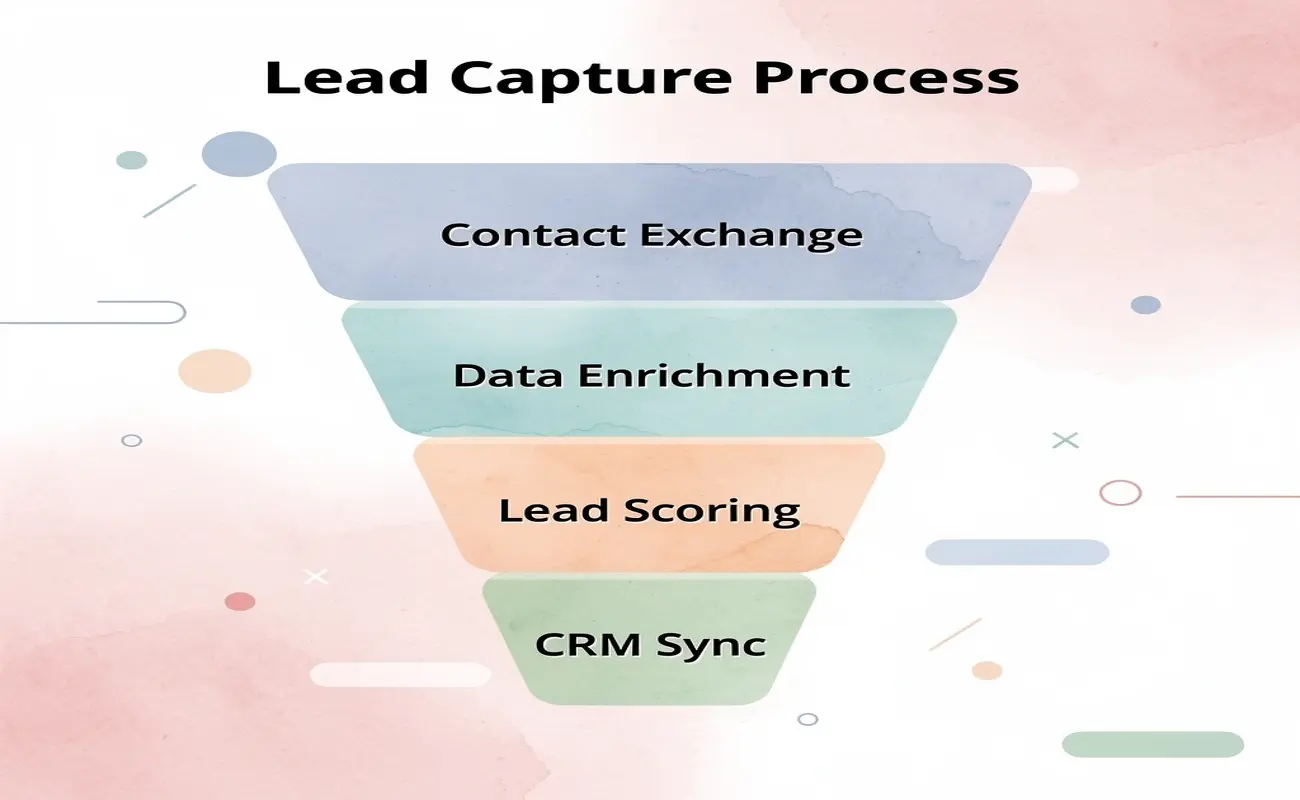
Digital business cards do much more than exchange contact details. Mobilo captures lead information, enriches prospect data, scores contacts against your ideal customer profile, and syncs directly with your CRM. More than 59,000 companies have already moved beyond paper.
.webp)
"More than 59,000 companies have already moved beyond paper business cards to capture and qualify leads automatically." — Mobilo, 2024
🎯 Key Point: Book a Mobilo demo today (about 5 minutes to schedule) for a personalized walkthrough of how digital business cards help your team capture, qualify, and manage more event leads—plus your first 25 Mobilo digital business cards free (a $950 value).
Related Reading
- Plumbing Business Cards Examples
- HVAC Business Cards Examples
- Electrician Business Card Ideas
- Unique Business Card Ideas
- Artist Business Cards Examples
- Therapist Business Cards Examples
- How To Put Social Media On Business Card
- Best Real Estate Business Cards