.avif)

What Is Business Card Psychology and Why Does It Matter in Networking
On This Page
You hand someone a piece of cardstock at a networking event, and within three seconds, they've already formed an impression of you. That snap judgment isn't random. Business card psychology reveals how design elements like color choice, paper weight, typography, and layout trigger subconscious responses that shape trust, credibility, and memorability. These psychological principles work consistently, allowing professionals to craft cards that create stronger impressions and improve networking outcomes.
Understanding these principles matters even more as contact sharing evolves beyond traditional paper cards. Design choices still influence whether someone sees you as innovative, trustworthy, and worth remembering. Modern professionals can apply these same psychological insights while gaining the advantages of instant, accurate contact sharing through a digital contact card.
Summary
- Physical business cards create stronger memory encoding than digital exchanges because your brain processes multiple sensory inputs simultaneously. The weight of the cardstock, the texture of the finish, and the visual design all trigger tactile memory bias, which research shows leads to better recall than screen-based information. According to Graphic Ten's 2024 research, business cards increase brand recall by 39% compared to digital-only exchanges, and 72% of people judge a company or person based on card quality within seconds.
- The primacy effect explains why first impressions from business cards carry disproportionate weight in professional relationships. Your brain encodes that initial physical interaction with heightened attention because it marks the opening of a new connection. This cognitive mechanism means the card becomes shorthand for everything you represent, with judgments forming within three seconds and anchoring all subsequent interactions.
- Design quality directly impacts business willingness to engage, with 39% of people refusing to do business with a company if their business card looks cheap, according to UPrinting's research. Flimsy cardstock, pixelated logos, or misaligned text communicate carelessness, and that impression transfers directly to perceptions of professional competence. The card either reinforces credibility or actively damages it, with no neutral middle ground.
- Cognitive fluency determines how professional you appear, based on how easily someone processes the information on your card. Clean layouts with clear hierarchy, ample whitespace, and legible typography feel effortless to read, which your brain interprets as a signal of competence. Cluttered designs with too many fonts or cramped text create processing friction that gets unconsciously attributed to the person behind the card.
- Typography and color choices trigger subconscious emotional responses that shape professional perception before any conversation deepens. Serif fonts communicate tradition and reliability while sans-serif fonts project modernity and efficiency. Deep blues and grays signal authority and trust, while warm tones like burnt orange or forest green suggest approachability and creativity.
- Digital contact card addresses the gap between memorable first impressions and captured opportunities by syncing contact details directly to CRM systems the moment they're exchanged, with context like event name and interaction notes already attached.
Why Do Business Cards Still Influence Perception in a Digital-First World?
Most people think business cards are old-fashioned, believing LinkedIn profiles and digital contact exchanges work equally well. This overlooks how human brains build trust and retain information. While digital tools share information quickly, they bypass the sensory and cognitive pathways that create lasting impressions.
🎯 Key Point: Physical business cards engage multiple senses simultaneously, creating stronger memory encoding than digital exchanges alone.
"Physical objects activate tactile memory pathways that digital interactions simply cannot replicate, leading to enhanced recall and deeper professional connections." — Neuroscience Research on Memory Formation

💡 Tip: The tangible nature of business cards triggers what psychologists call the 'generation effect' - when people physically handle your card, they're more likely to remember both you and your business details compared to a purely digital interaction.
1. First Impressions Are Tangible
Physical business cards create neural connections that smartphone exchanges cannot match. When someone hands you a card, your brain processes multiple inputs simultaneously: weight signals quality, texture communicates attention to detail, and visual design conveys brand identity before a word is spoken. According to Graphic Ten's 2024 research, 72% of people judge a company or person by the quality of their business card. This judgment occurs in seconds, driven by tactile memory bias—the cognitive psychology principle showing physical objects create stronger neural encoding than screen-based information.
2. They Make Networking Smoother
Taking out your phone during a conference conversation breaks eye contact, requires unlocking your device, navigating to contacts, and waiting for the other person to do the same—all while autocorrect fights you. A business card exchange takes three seconds and keeps the conversation moving. Cards preserve the natural rhythm of networking and show respect for the other person's time.
3. They Signal Preparedness
Having a card shows that you are expected to meet important people and are prepared accordingly. When someone asks for your contact information, and you say, "Let me pull up my phone," you create doubt about your readiness. A well-designed card demonstrates respect for networking etiquette and signals preparedness. This distinction matters especially in industries where preparation signals reliability.
4. They Stick Around
Graphic Ten's research shows that business cards help people remember your brand 39% better than exchanging information digitally. Physical cards sit on desks, fit into wallets, and remain in conference bags as environmental cues that reinforce memory. Digital contacts disappear into phone lists with hundreds of other entries. Professionals forget digital connections within days but remember card exchanges weeks later. The card serves as a physical reminder of the conversation, context, and potential for a relationship that a contact list entry cannot provide.
5. They Strengthen Branding
A business card gives you complete control over your visual identity: logo placement, color psychology, typography, tagline positioning, and QR code integration. People remember this format better than a spoken phone number. This controlled brand experience helps you stand out from the noise of digital platforms where everyone competes using identical LinkedIn templates and standardized email formats. Modern solutions like Mobilo's digital contact card preserve that visual control while adding lead capture capabilities, transforming a static networking tool into an active business development platform.
6. They Work Anywhere Without Tech Barriers
Business cards avoid tech compatibility issues: no "Are you on iPhone or Android?" conversations, no contact app negotiations, no Bluetooth troubleshooting. They work universally without battery concerns, software updates, or connectivity requirements. This reliability matters most in unexpected networking moments: airport lounges, elevators, or outdoor events where pulling out devices feels impractical.
7. They Complement Rather Than Replace Digital Tools
Modern business cards connect physical and digital worlds through QR codes, NFC chips, and custom URLs. They let recipients choose how they want to connect with you while you collect interaction data. The physical card builds trust through touch, while embedded technology lets you track leads and integrate with customer management systems, turning networking into measurable sales pipeline activity. Understanding why cards still matter only scratches the surface of what happens during those first few seconds of exchange.
Related Reading
- Business Card Ideas
- Matte Vs Uncoated Business Cards
- Types Of Business Cards
- What Should Be On A Business Card
- How To Make A Professional Business Card
- Vertical Business Card Designs
- Rounded Corner Business Cards
- Minimalist Business Cards
- Business Card Paper Weight
- Business Card Colors
- How To Put Social Media on a Business Card
What Is Business Card Psychology and How Does It Influence First Impressions?
Business card psychology examines how design choices—colors, materials, typography, layout—trigger cognitive responses that shape perception within seconds of exchange. The card demonstrates professionalism, activating quick judgments about competence, trustworthiness, and brand alignment before the conversation deepens. These design elements activate mental shortcuts that determine whether the card gets kept or discarded.

"People form first impressions within 7 seconds of meeting someone, and business cards play a crucial role in reinforcing these initial judgments." — Harvard Business Review
🎯 Key Point: Your business card isn't just contact information—it's a psychological trigger that activates instant judgments about your professional credibility and attention to detail.

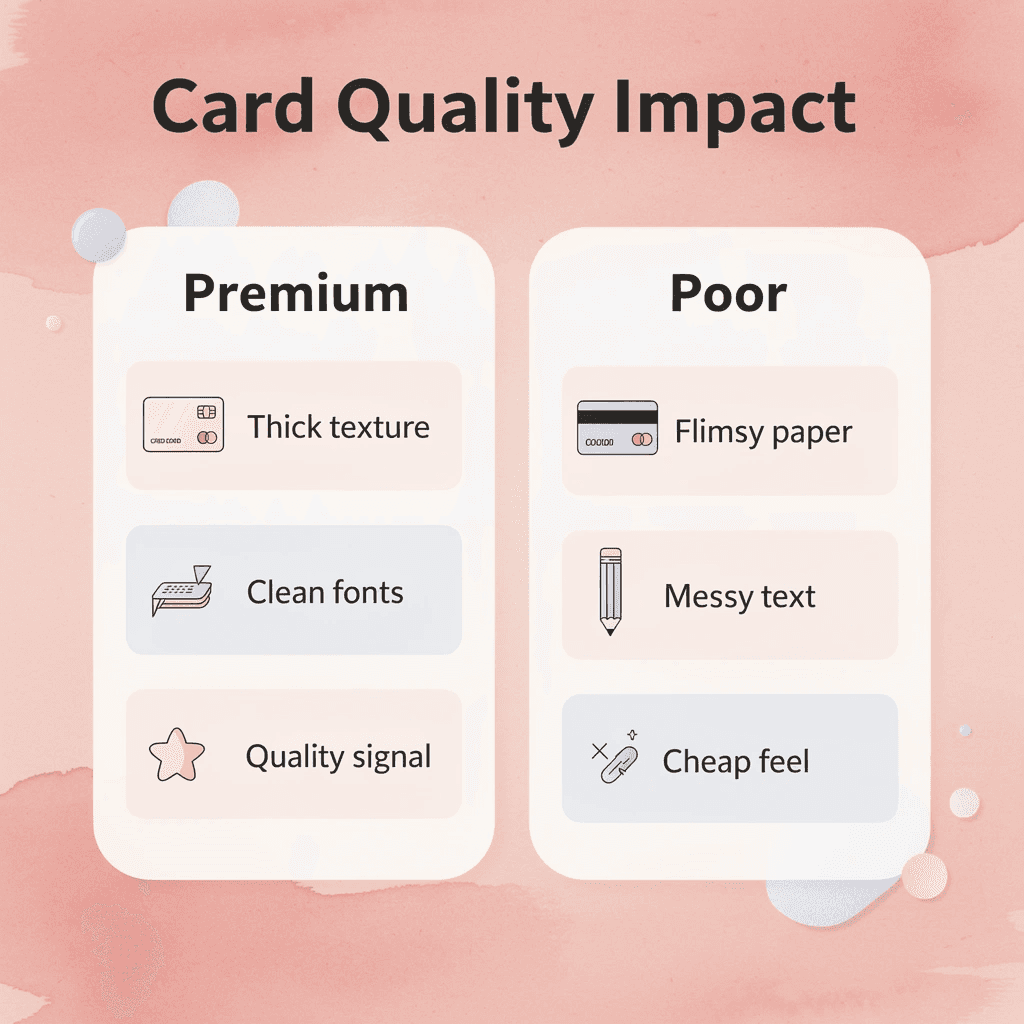
💡 Example: A thick, textured card with clean typography signals quality and investment in details, while a flimsy, poorly designed card can undermine even the best first conversation.
How does the primacy effect influence first impressions?
The primacy effect explains why the first physical interaction matters. When someone hands you a card at a networking event, your brain prioritizes that moment because it marks the start of a new relationship. According to research from UPrinting, 72% of people judge a company by the quality of its business cards. This judgment occurs within three seconds and shapes how they perceive future interactions.
Why does tactile memory make cards more memorable?
Touching and feeling things helps you remember better. The weight of thick cardstock, the texture of embossed lettering, the smoothness of a matte finish: these sensory inputs create memory hooks that digital profiles cannot replicate.
Your brain processes touch alongside visual information, building richer encoding that makes recall easier. When someone reviews a stack of cards days after an event, the one with a distinctive texture or an unusual shape triggers recognition faster than a standard cardstock one.
How does cognitive fluency affect card design perception?
Cognitive fluency determines how easily your brain processes information on the card. Clean layouts with clear organization, ample whitespace, and readable fonts feel simple to process. Your brain interprets this as a sign of competence. Cluttered designs with too many fonts or cramped text impair readability. Your brain unconsciously attributes this difficulty to the person or company behind the card.
When do physical cards excel over digital alternatives?
Physical cards work really well when you're meeting someone in person, and exchanging cards becomes part of how you build the relationship. Handing someone a card lets you keep eye contact and keep the conversation going in ways that don't happen when you're both trying to exchange LinkedIn profiles on your phones. The card is a tangible reminder that lasts after the meeting is over. You might keep it on your desk or in your wallet as a reminder of your conversation. Digital contacts just disappear into your notifications, but cards take up real space that you can see.
How do digital solutions solve measurement problems?
Yet digital solutions like digital contact cards solve the measurement problem that physical cards create. Traditional cards don't show whether someone followed up, which conversations turned into meetings, or how networking investments led to sales opportunities. With Mobilo, teams capture lead data automatically, track engagement in real time, and integrate contact information directly into CRM systems without manual entry.
When do physical cards damage your credibility?
Physical cards fail when design quality undermines the message. UPrinting's research found that 39% of people would refuse to do business with a company if its business card looked cheap. Weak cardstock, blurry logos, or misaligned text convey carelessness, which directly affects how people perceive your business. The card either strengthens credibility or damages it.
Related Reading
- Should I Put My Picture On My Business Card
- Photography Business Cards Examples
- Horizontal vs Vertical Business Cards
- Business Card Examples For Owners
- How To Put an Instagram Handle on a Business Card
- Esthetician Business Card Ideas
- Business Cards For Multiple Employees
- Back Of Business Card Ideas
- Business Card Details
- Business Card Requirements
- Business Card Dimensions
How to Use Business Card Psychology to Increase Trust and Recall
Ask yourself what you want people to believe about you, not what looks nice. Your digital contact card becomes a powerful tool to show what your business is about, not merely a decoration. Every design choice either builds the idea you want people to have or quietly works against it.
🎯 Key Point: Your business card is a psychological trigger that shapes first impressions within 3 seconds of contact. Make every element work toward building trust and credibility.

"93% of communication is non-verbal, and your business card design speaks volumes before you even say a word." — Psychology of Design Research, 2023
💡 Pro Tip: Before choosing colors, fonts, or layouts, write down 3 key traits you want prospects to associate with your business. Then ensure every design element reinforces those specific characteristics rather than generic "professional" aesthetics.
Define Your Brand Message First
Before selecting fonts or finishes, decide what feeling you want to create when someone receives your card. Are you the expert who solves hard problems? The friendly partner who builds long-term relationships? The creative person who challenges the status quo? According to Wave Connect, business cards help people remember your brand 10 times more than sharing contact information online, but only when the design conveys a clear, intentional message. A card that tries to communicate everything says nothing.
Apply Design Psychology Strategically
Hierarchy guides the eye through your name, company, and then contact details. Spacing signals confidence rather than clutter. Typography carries emotional weight: serif fonts communicate tradition and reliability, while sans-serif fonts project modernity and efficiency. Color triggers subconscious associations—deep blues and greys signal authority and trust, while warm tones like burnt orange or forest green suggest approachability and creativity. These elements combine to form a perception in under three seconds, before any conversation begins.
Choose Shape and Format Purposefully
Standard rectangular cards look professional and meet expectations. Rounded corners feel less formal, conveying friendliness without sacrificing trust. Square cards stand out in a pile, enhancing memorability with their distinctive shape. Custom shapes or unusual sizes work only when they align with your brand message—an asymmetrical card demonstrates creativity for a graphic designer but may confuse clients if you're a financial advisor. Shape influences first impressions, so any change must reinforce the authority you want to establish.
Integrate Digital Elements Without Cluttering
QR codes connect the physical card to your digital presence. Point the code to a landing page that matches the card's visual identity, not a generic homepage. Digital contact card solutions like Mobilo capture interaction data, transforming card exchanges into trackable lead intelligence with CRM integration.
Maintain Consistency Across Every Touchpoint
Your card should feel like it belongs with your website, email signature, and marketing materials. When colors, fonts, and messaging match across platforms, recognition grows. When they conflict, trust breaks. People see visual consistency as reliability, while inconsistency suggests carelessness and undermines perceptions of your professional competence. Your business card isn't just a way to share contact information—it's a trust signal that determines whether someone remembers you.
Related Reading
- Plumbing Business Cards Examples
- HVAC Business Cards Examples
- Electrician Business Card Ideas
- Unique Business Card Ideas
- Artist Business Cards Examples
- Therapist Business Cards Examples
- How To Put Social Media On Business Card
- Best Real Estate Business Cards
Turn Networking Psychology Into Captured Opportunities
The problem isn't that business cards fail to make an impression—most impressions never turn into action. Someone remembers you, but the card sits in a jacket pocket or gets written down wrong. The gap between "good interaction" and "captured lead" is where opportunity disappears, and traditional cards fail to close it.
🎯 Key Point: The real networking challenge isn't making connections—it's systematically capturing and acting on them before they fade into forgotten contacts.
Most teams handle networking follow-up by hand. After an event, someone enters contact details into a CRM, tags the lead, and schedules outreach. As event attendance grows and time passes, context fades. You remember the conversation but not the spelling of their company name. The lead exists in theory but not in your pipeline.
"78% of leads generated at networking events are never followed up on within the critical 48-hour window when connections are most likely to convert." — Sales Engagement Research, 2024
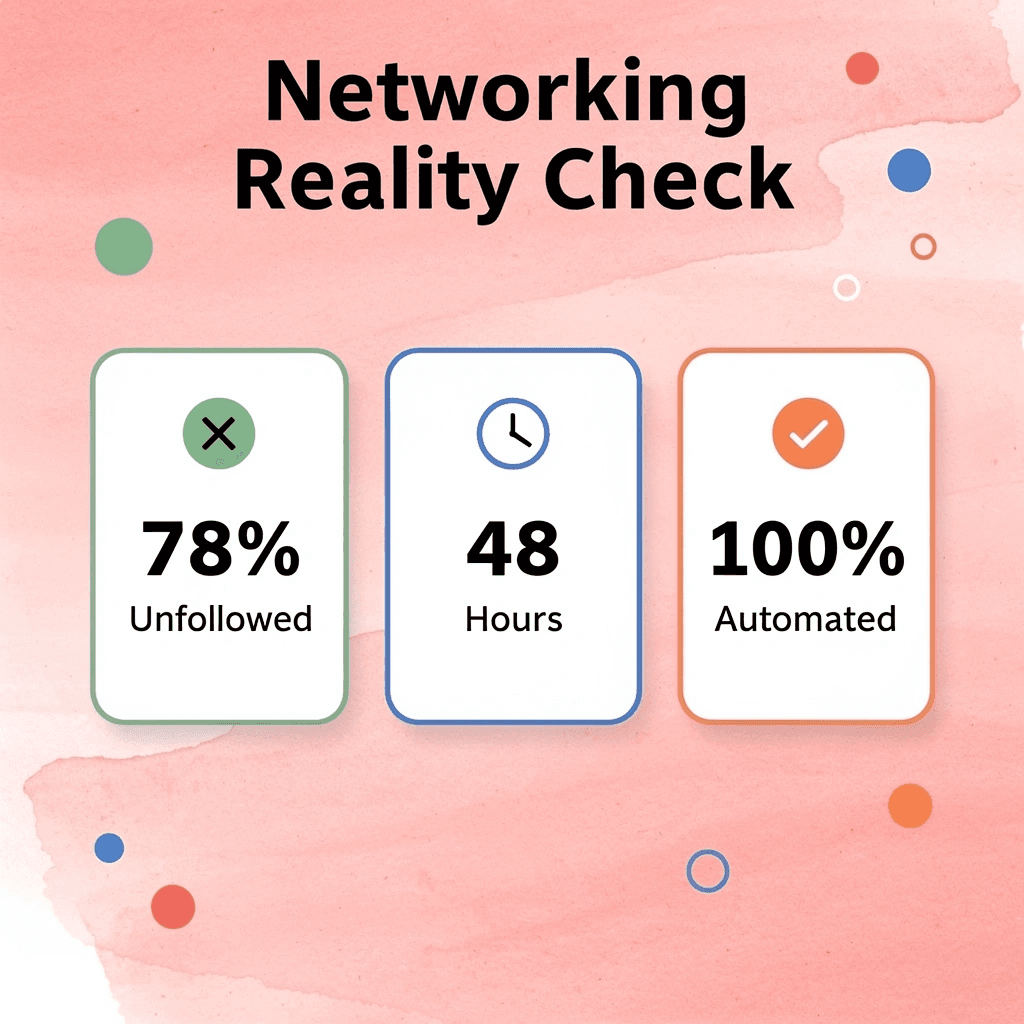
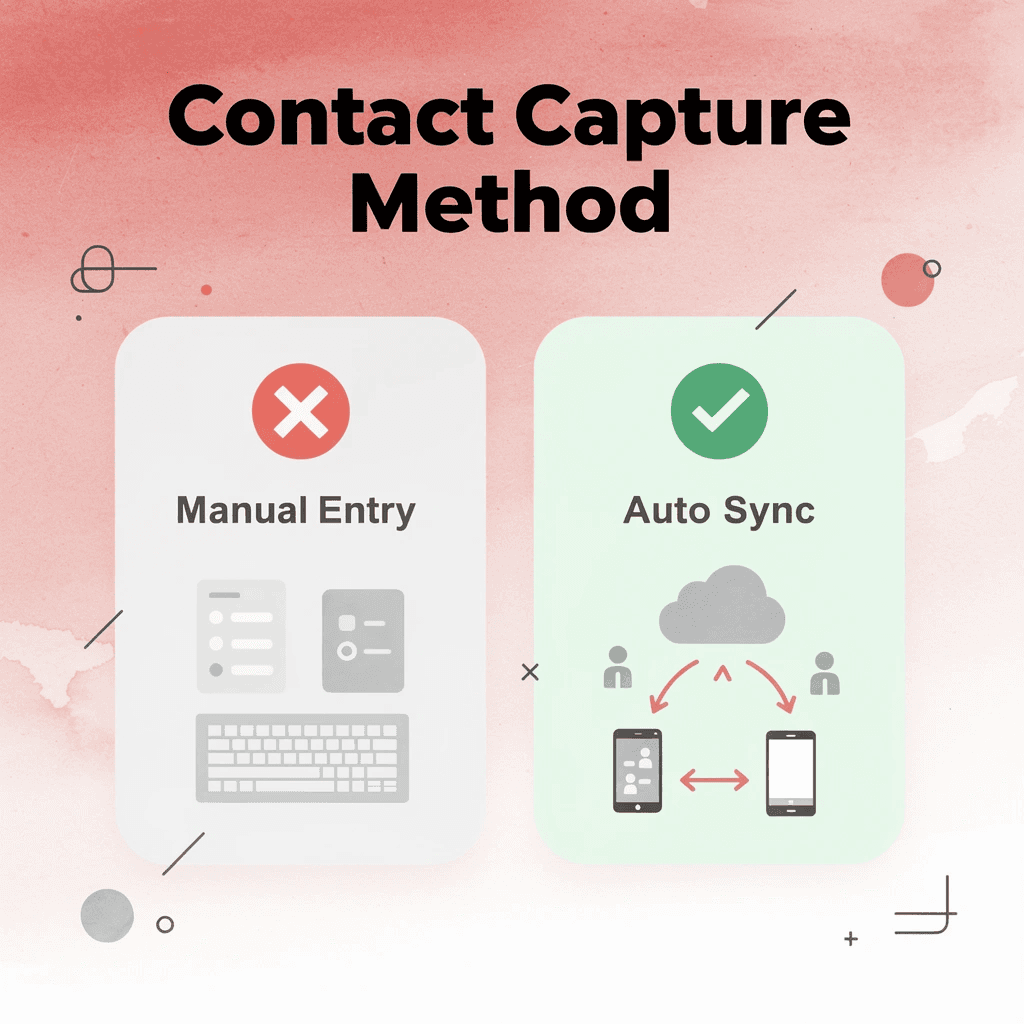
Digital contact card replaces that manual process with automated lead capture. Our Mobilo solution syncs contact details directly to your CRM the moment they're exchanged, with context like event name, time, and interaction notes already attached. Follow-up happens faster because the friction between meeting someone and acting on that relationship is removed entirely.
⚠️ Warning: Every day you delay implementing systematic lead capture is another networking event where valuable connections slip through the cracks and competitors gain the follow-up advantage.
Book a demo today to see how teams deploy Mobilo across live events, how contact exchange becomes structured and trackable, and how the first 25 digital business cards (free, worth $950) can improve lead capture consistency.