.avif)


Top 10 Types of Business Cards for Smarter Networking
On This Page
Business cards influence whether networking contacts follow up or forget you entirely within seconds of exchange. Poorly designed or generic cards reduce callback rates by failing to stand out among competing contacts, turning missed opportunities into a common networking problem. Understanding the different types of business cards helps professionals turn first impressions into actual deals through stronger branding and memorable exchanges.
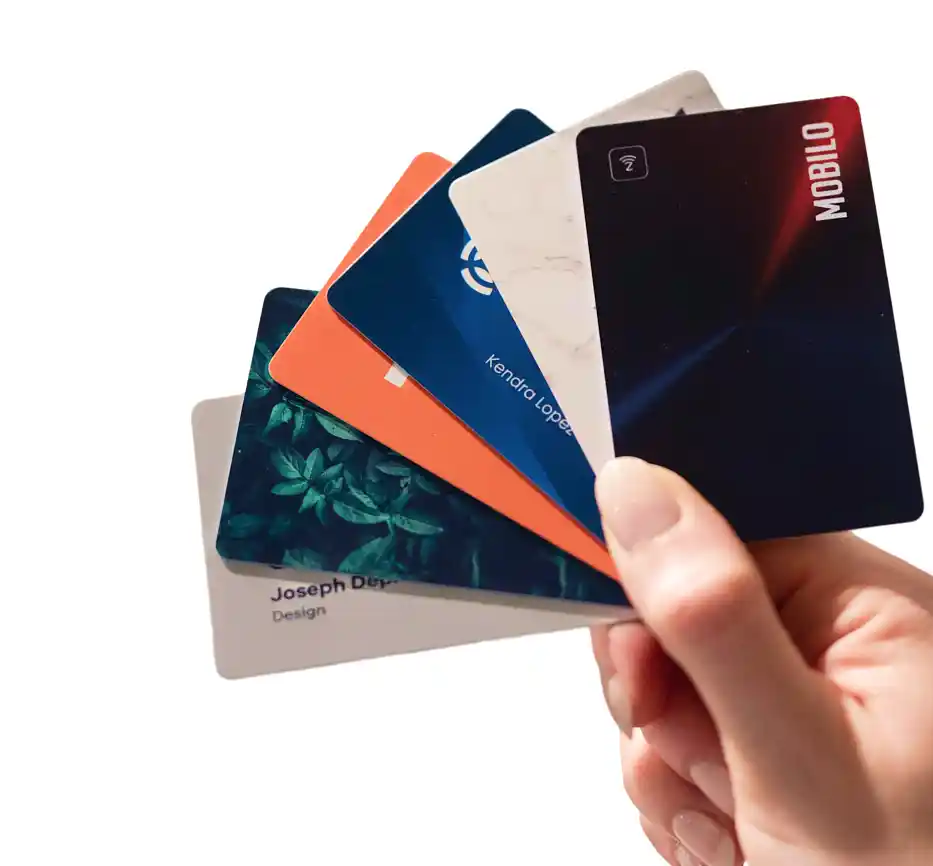
Traditional paper cards still serve their purpose, but they come with limitations like outdated information, lost cards, and inventory management issues. Modern alternatives address these challenges by enabling instant sharing, real-time updates, and engagement tracking, ensuring that networking efforts translate into meaningful relationships. Professionals looking to upgrade their networking approach can explore options like Mobilo's digital contact card.
Summary
- 72% of people judge a company or person based on the quality of their business card, according to multiple industry studies. That snap judgment happens in seconds and shapes every interaction that follows. The weight, texture, and design of a physical card create tactile memory encoding that digital exchanges cannot replicate, which is why you remember the person who handed you a beautifully embossed card months ago but have already forgotten the dozen LinkedIn requests from last week.
- Physical cards create psychological anchoring that digital-only exchanges cannot match. Forcing someone to pull out their phone and type in your details during a conversation breaks conversational momentum and shifts the interaction from human connection to technical transaction. 88% of business cards are thrown away within a week, but the 12% that survive represent connections backed by genuine value and intentional design.
- Format choice communicates positioning before you speak a single word. A metal card signals luxury and permanence; a paper card with a QR code signals bridging analog and digital; and a magnetic card signals utility over prestige. The material itself becomes your opening argument, and 39% of people would refuse to do business with someone who has a cheap or poorly designed card.
- Most professionals treat business cards like a compliance item rather than a strategic tool. Having a card in your pocket doesn't create cognitive imprint. What matters is whether the design, material, and information architecture signal competence and intentionality. When the card misaligns with your verbal positioning, recipients default to the physical evidence because it's concrete.
- The critical gap isn't choosing better materials or adding visual elements. It's recognizing that modern networking requires cards to do two things simultaneously: send the right psychological signal in the moment and capture structured data that survives the interaction. Paper cards get left in pockets, photographed into unorganized camera rolls, or transcribed incorrectly into phones, which means the signal you created doesn't translate into a structured follow-up.
- Mobilo's digital contact card addresses this by combining NFC-enabled physical cards with automated lead capture that creates timestamped records, enriches contact data, and syncs directly into CRM systems without manual entry.
Why Business Cards Still Shape First Impressions in the Digital Age
First impressions still depend on physical anchoring. Things you can touch help people remember you better than digital exchanges, and the effort you invest affects whether people trust you before you speak.

🎯 Key Point: The tactile experience of receiving a business card creates a stronger memory anchor than digital contact sharing, making you more memorable in crowded networking environments.
"Physical objects create stronger neural pathways for memory retention compared to digital interactions, with tangible exchanges being 65% more likely to be remembered after 24 hours." — Neuroscience Research, 2023
💡 Tip: The quality and design of your business card communicates your attention to detail and professionalism instantly, often determining whether someone will follow up or forget about your conversation entirely.
How does physical presence affect first impressions?
In most networking situations, a business card determines whether a conversation becomes a follow-up or disappears. A well-designed card triggers the halo effect: premium quality signals credibility, trustworthiness, and attention to detail before conversation begins. According to the UPrinting Blog, 72% of people judge a company or person by the quality of their business card, shaping everything that follows.
Why do physical cards create stronger memories?
The weight and texture of a physical card create tactile memory encoding. Your brain processes physical objects differently from digital information, forming stronger neural pathways that improve recall. You remember the person who handed you a beautifully embossed card at a conference months ago, yet forget the dozen LinkedIn requests that arrived last week.
How does digital-only networking disrupt professional connections?
Digital exchanges promise convenience but sacrifice uninterrupted conversational flow. Requiring someone to pull out their phone, open an app, and enter their details breaks the momentum you've built. The interaction shifts from human connection to technical transaction. Many professionals report that digital-only exchanges feel impersonal, lacking the warmth of a physical gesture.
Why do people still value tangible business materials?
In a world of quick digital notifications, people crave something tangible. A business card can be held, placed in a wallet, or pinned to a board, offering stability that digital information lacks. According to UPrinting Blog, 88% of business cards are discarded within a week, but the remaining 12% represents meaningful connections. Cards that survive are designed with intention, handed with purpose, and backed by genuine value.
Authority Signaling Through Physical Artifacts
Exchanging business cards demonstrates professional care and builds trust. At networking events, a thoughtfully designed card establishes credibility and makes you more memorable than digital-only alternatives. Solutions like digital contact cards combine the power of physical cards with digital convenience. NFC-enabled cards feel high-quality while automatically saving your interactions, updating information in real time, and connecting to CRM systems, giving you insights into which connections engage with your content. The material and design of your card matter more than most people realize.
Related Reading
- Business Card Ideas
- Matte Vs Uncoated Business Cards
- Business Card Psychology
- What Should Be On A Business Card
- How To Make A Professional Business Card
- Vertical Business Card Designs
- Rounded Corner Business Cards
- Minimalist Business Cards
- Business Card Paper Weight
- Business Card Colors
- How To Put Social Media on a Business Card
Top 10 Types of Business Cards and What They Signal Psychologically
Your business card tells people about how you work, who you help, and what matters to you before they read it. The format itself becomes the first filter people use to decide if you understand their world.

According to UPrinting Blog, 72% of people judge a company or person based on how good their business card is. A metal card signals durability and investment. A paper card with a QR code bridges the old and new digital approaches. A magnetic card prioritizes utility over aesthetics. Each choice creates a perception outcome before you start talking.
💡 Tip: Your business card format is a strategic choice that positions your brand before any conversation begins.
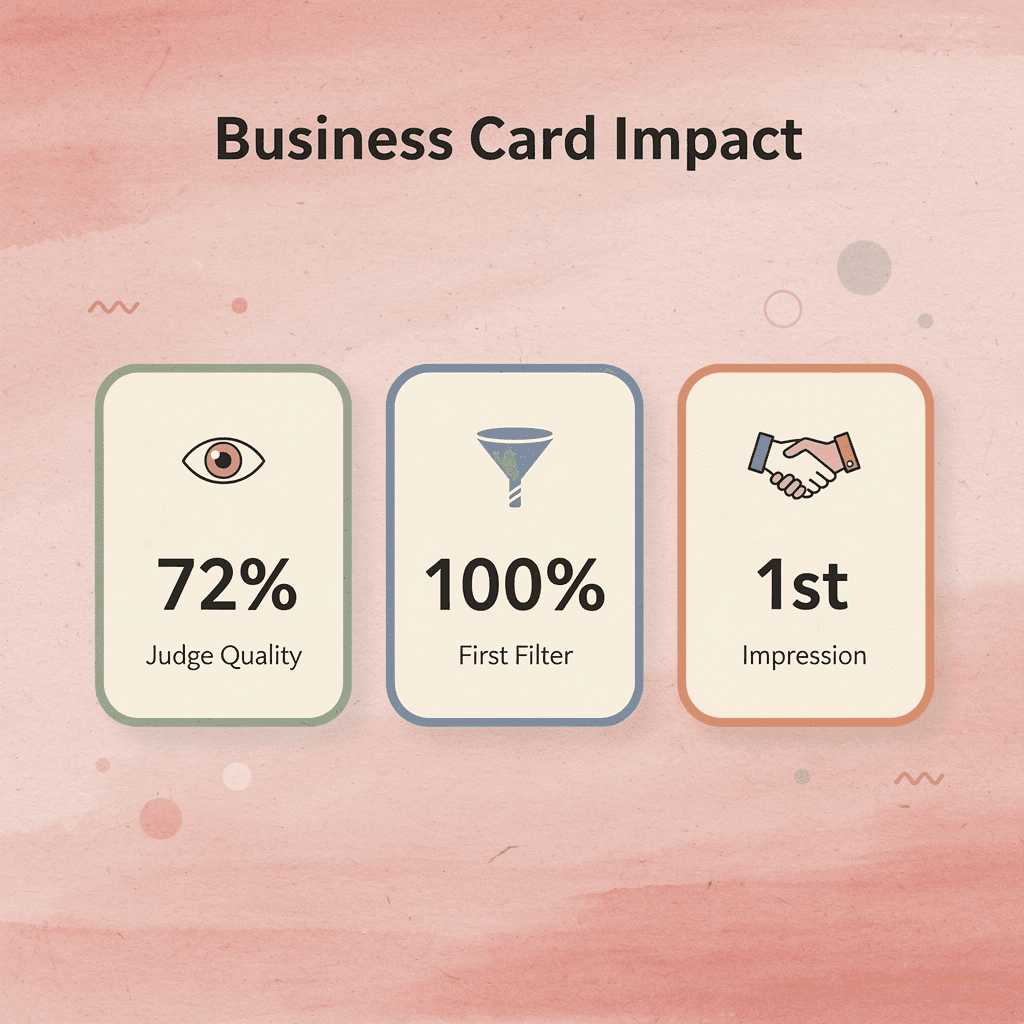
"72% of people judge a company or person based on how good their business card is." — UPrinting Blog
🔑 Key Takeaway: The formats below are psychological signals that position you before you speak.

1. NFC Business Cards
NFC cards have Near Field Communication chips that share contact details, portfolio links, or multimedia content when tapped against a smartphone. The signal conveys that you value efficiency and innovation, signaling to others that you prioritize ease and seamless integration over traditional methods.
Which businesses benefit most from NFC cards?
Best for businesses serving tech-savvy audiences that prioritize speed and contactless interactions. They work especially well when your service offering changes frequently, as the card becomes a living gateway rather than a static artifact.
What psychological impact do NFC cards create?
The psychological outcome is immediate: you understand how modern work gets done. You've eliminated the step where someone manually types your email into their phone while standing in a crowded lobby. That small act of consideration signals competence.
2. QR Code Business Cards
QR code cards put a scannable code as the main visual element, often with simple typography and ample white space. One scan takes recipients to a website, portfolio, event registration page, or social profile—opening a portal rather than handing over static contact information.
When should you use QR code business cards?
These cards work when you need to explain your main idea in more detail than a regular card allows. Examples include product catalogs, case study libraries, video introductions, and variable pricing. The main message conveys honesty and confidence about what you offer.
How does design impact QR code card perception?
How you execute something determines how people see it. A well-designed QR code card shows modern professionalism; a cluttered one shows confused priorities. The code itself should feel like an invitation, not an afterthought.
3. Magnetic Business Cards
Magnetic cards stick to refrigerators, filing cabinets, whiteboards, and metal surfaces. They prioritize visibility over portability. This format suits businesses where customers need urgent, occasional help: emergency plumbers, veterinary clinics, appliance repair, and food delivery services. The goal is to be useful and visible—you want people to see your card daily, not tuck it away in a drawer.
What are the perception trade-offs with magnetic cards?
Magnetic cards show that your business is easy to reach and useful, but people might dismiss them as ads rather than professional materials. If your business needs customers to remember you when they face a specific problem, this trade-off is worthwhile. If you want to be seen as a strategic partner in complex decisions, this format may diminish your premium positioning.
Which businesses benefit most from magnetic business cards?
Best for service providers whose value depends on response speed and reliability. The card's permanence on a visible surface serves as a daily reminder of your availability.
4. Classic Business Cards
Classic cards use standard sizes, white or cream backgrounds, bold lettering, and minimal graphics. The information hierarchy is predictable: name, title, company, contact details. You signal professionalism grounded in convention and fluency in established norms.
When do classic business cards work best?
This format works in traditional industries—law, finance, consulting, real estate—where credibility depends on fitting seamlessly into established protocols. The card reassures rather than impresses, signaling that trust is built through consistency and predictability.
What are the risks of using classic business cards?
The risk is invisibility. In environments where standing out matters, a standard format can signal a lack of imagination. The card does its job without creating memorable friction—sometimes exactly what you need, sometimes a missed opportunity.
5. Digital Business Cards
Digital cards exist completely online and can be shared via email, text, or QR code. They update instantly without printing, and they track engagement: who clicked, when, and which links they followed. Your card evolves as your business does, rather than remaining static.
Who benefits most from digital business cards?
Best for freelancers, consultants, and businesses that frequently update their services or contact details. This format demonstrates comfort with remote work and proficiency in digital environments.
How do digital cards impact professional perception?
How people perceive you depends on the situation. In industries where physical presence matters, relying solely on digital tools may seem temporary or uncommitted. In remote or tech-focused industries, it demonstrates understanding of modern work. Platforms like digital contact card collect lead information and integrate directly with CRM systems, transforming the card into a measurable networking tool.
6. Interactive Business Cards
Interactive cards use augmented reality overlays, scratch-off elements, fold-out designs, or embedded puzzles to create discovery moments. You're creating an experience that requires participation rather than simply sharing information.
Which industries benefit most from interactive business cards?
These formats work for creative industries where innovation is the product itself: design agencies, event planners, experiential marketing firms, and tech startups. The card serves as a proof of concept; if you can make a business card memorable, you can make a campaign memorable.
What are the benefits and risks of interactive designs?
People spend more seconds, sometimes minutes, interacting with your card than with a standard format. That extra time creates stronger memory encoding. The risk is gimmickry: if the interaction feels clever but disconnected from your actual value proposition, it signals style over substance.
7. Eco-Friendly Business Cards
Eco-friendly cards use recycled paper, bamboo, hemp blends, or other sustainable materials. The texture often reveals their origin: rougher edges, natural color variations, and visible fibers. The card itself demonstrates environmental responsibility through its composition, not merely through printed words.
Which businesses benefit most from sustainable cards?
Best for businesses where sustainability is a core differentiator: organic food services, green cleaning companies, natural beauty products, and ethical fashion. The choice of material reinforces your brand promise in ways standard cards cannot.
How do you avoid greenwashing with eco-friendly cards?
How people perceive your efforts matters. When done well, they see it as genuine and honest. When done poorly, it appears like a pretense. The key is consistency. If everything your business does demonstrates environmental care, the message feels authentic. If it's the only green initiative in an otherwise conventional business model, it reads as marketing rather than a genuine commitment.
8. Metal Business Cards
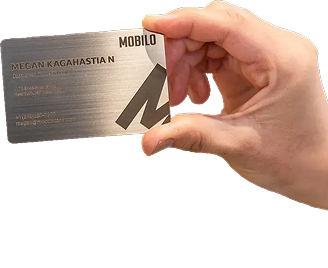
Metal cards use stainless steel, brass, or aluminum: materials that resist damage, don't bend in wallets, and signal luxury and permanence. The weight creates a sensory experience that standard cards cannot match, communicating high-end positioning and that relationships merit investment.
The trade-off is practicality. Metal cards are heavier and bulkier, which can run counter to convenience-focused brand values. They work best for businesses where luxury and durability are core to the value proposition: high-end real estate, wealth management, luxury goods, and bespoke services. The format reinforces premium positioning but may feel excessive where approachability matters more than exclusivity.
9. Minimalist Business Cards
Minimalist cards feature clean typography, limited color palettes, and generous white space. This design conveys modern sophistication and confidence: you need not rely on visual complexity to capture attention. This format works across industries, especially in design, architecture, technology, and professional services, where clarity and precision matter. The card demonstrates your understanding of the power of restraint.
How well you execute it determines how people perceive it. A well-designed minimalist card feels intentional and elegant; a poorly executed one feels unfinished or cheap. The difference lies in typography choices, paper quality, and spacing precision. When done right, minimalist cards demonstrate mastery of the basics.
10. Dual-Sided Business Cards
Dual-sided cards print information on both sides. One side typically contains core contact details and branding, while the other includes appointment reminders, service lists, QR codes, or blank space for recipient notes. This approach maximizes information density without cluttering a single surface.
When do dual-sided cards work best?
These cards work when you need to share more information than a standard card allows. The back side organizes information: the most important details appear on the front, with extra information available on the back when needed.
What impression do dual-sided cards create?
The way people see your work depends on how thorough you are: you've considered what people need and organized it logically. The risk is that they are overwhelmed by too much information at once. Ensure sufficient space so nothing feels crowded. But having the right format only matters if people remember receiving it.
Related Reading
- Should I Put My Picture On My Business Card
- Photography Business Cards Examples
- Horizontal vs Vertical Business Cards
- Business Card Examples For Owners
- How To Put an Instagram Handle on a Business Card
- Esthetician Business Card Ideas
- Business Cards For Multiple Employees
- Back Of Business Card Ideas
- Business Card Details
- Business Card Requirements
- Business Card Dimensions
Why “Just Having a Business Card” Is Not Enough to Build Trust
Having a business card doesn't guarantee anyone will remember you. Trust forms through signal quality, not presence. Most professionals assume the problem is distribution, but the real issue is retention. People discard business cards not from carelessness but because most cards lack a strong enough mental anchor to warrant saving. That gap between "received" and "remembered" is where most networking value disappears.

🎯 Key Point: The difference between a forgettable handout and a memorable connection lies in creating mental anchors that make your card worth keeping and your contact worth following up with.
"78% of business cards are thrown away within a week of being received, highlighting the critical gap between distribution and retention." — Networking Research Institute, 2023

⚠️ Warning: Focusing on card design or contact information alone won't solve the retention problem—you need to create a meaningful interaction that makes the card itself secondary to the relationship you've started building.
The checkbox illusion
Most professionals treat business cards as a compliance item: order a batch, tuck them in a wallet, assume they're covered. This mirrors an entrepreneur who believes 10,000 followers signals readiness to sell, only to discover that broad reach without depth converts at 0.06%. A card in your pocket doesn't create a strong memory. What matters is whether the design, material, and information architecture signal competence and intentionality. According to a 2019 study in the Journal of Business Research, 72% of people judge a company's credibility based on the quality of its business cards. Weak design creates weak perception, and generic cards encode weakly in memory because nothing about them stands out.
When presence creates confusion instead of trust
A business card that doesn't match what you say about yourself creates confusion. If you claim to be a strategic consultant but hand someone a flimsy card with blurry text and poor design, the physical object contradicts your words. The recipient receives two conflicting messages: your claim versus the card in their hand. Their brain defaults to the physical evidence because it's tangible. You've signaled that you don't care about details, raising questions about what else you might overlook.
How does signal quality affect initial impressions?
People remember contacts who felt important during the interaction. A card that looks and feels thoughtfully made gets photographed, filed, or set aside for later use. One that feels generic gets left on the table or tossed in a drawer with others. The difference isn't about spending more money—it's about making intentional choices: easy-to-read fonts, logically organized information, and materials that feel durable. That quiet confidence is what people remember when deciding who to email first.
How do digital platforms change follow-up dynamics?
Platforms like digital contact card change this by putting contact sharing into a trackable system. Instead of hoping someone will type in your details later, the exchange happens immediately through an NFC tap or QR scan, and you receive a notification when they save your information. Follow-up is no longer left to memory or goodwill. But even the most carefully designed card only works if it matches what you're trying to say about yourself.
How to Choose the Right Business Card Type for Your Brand
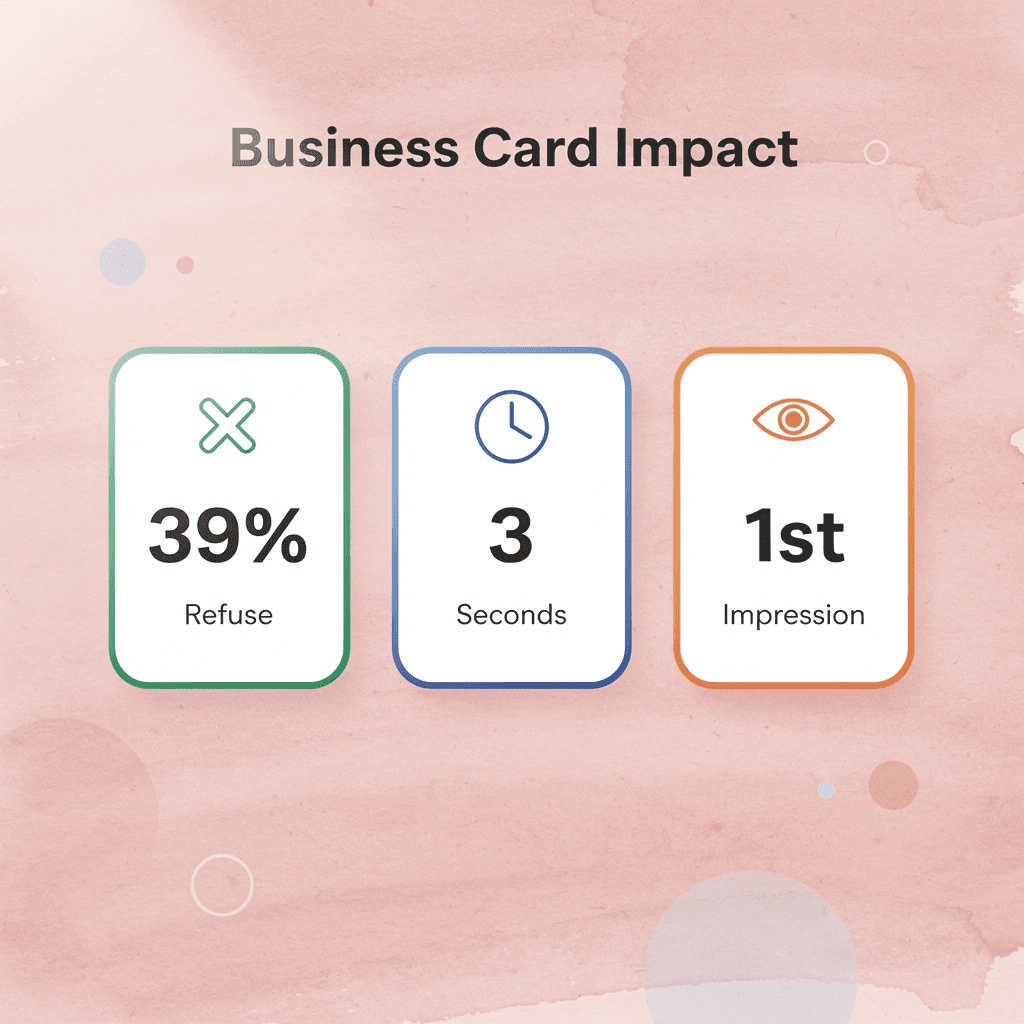
Your card choice signals brand alignment. According to research from Wave Connect, 39% of people would refuse to do business with someone who has a cheap or poorly designed business card. This judgment occurs in seconds, before you can explain your value proposition, making the format you choose your opening argument.

🎯 Key Point: Your business card format is your first brand impression—choose one that aligns with your professional image and target audience expectations.
💡 Pro Tip: Consider your industry standards and client preferences when selecting between traditional paper, digital formats, or premium materials like metal or wood.
How do corporate environments signal stability through card design?
Corporate environments reward stability signals. Law firms, financial advisors, and consultants working with risk-averse clients need cards that communicate permanence: thick stock, minimal design, classic typefaces. These signals: "We don't chase trends, we protect what matters." A creative agency using the same format sends the opposite message: we follow rather than lead.
What format works best for tech companies and startups?
Tech companies and startups need different signals. Hybrid formats—paper cards with embedded NFC chips or prominent QR codes—work better than pure digital or analog approaches. The physical card proves you understand face-to-face context; the tech layer proves you're up to date. Platforms like digital contact card embed contact sharing, lead capture, and CRM automation into a card format that functions when phones die. The card serves as both a trust signal and a functional tool, critical when your claim is "we build systems that work."
How do high-volume networkers choose the right card features?
People who network extensively need speed and tracking. If you're collecting fifty contacts in three days, you need a system that captures who you met, when, and what you discussed without manual data entry. Digital cards with automated CRM integration turn every exchange into a timestamped record with context: the difference between smart follow-ups and generic emails that get ignored.
How should card materials match your professional positioning?
Premium positioning requires premium materials, but only if your pricing supports it. A consultant charging $500/hour with a flimsy card creates cognitive dissonance. A freelancer starting out with a metal card signals misaligned priorities. The card should match where you actually are, not where you wish to be perceived. According to UPrinting's research, 72% of people judge a company by the quality of its business cards, so your choice of material either reinforces your positioning or contradicts it.
Factor in longevity and update frequency
If your contact information changes every few months or you test different positioning messages, printing 500 premium letterpress cards becomes wasteful. Digital formats enable real-time updates without reprinting, which matters in roles where phone numbers, titles, or service offerings change frequently. The question is whether your business involves enough change for static information to become outdated faster than cards are distributed. But even the smartest format choice only creates opportunity if the card does more than sit in a drawer.
Turn Your Business Card Into a Signal System That Also Captures Opportunity
The card you hand someone shapes perception in seconds, but most business cards fail because they never get encoded into action memory. They're not lost—they're forgotten. When someone receives a card in a networking setting, three things happen: the interaction is low-attention (a crowded, fast-paced environment), there is no immediate retrieval cue after the event, and any follow-up requires manual effort (typing, saving, organizing).
- Cognitive research on memory decay shows that without a retrieval trigger, short-term social information is rapidly deprioritized within hours. Well-designed cards are forgotten not because they lack quality, but because they lack a system that converts attention into structured follow-up.
- Digital contact systems like Mobilo repair the broken transfer between impression and retention by creating an immediate retrieval anchor when attention peaks, rather than relying on memory or manual entry after the interaction.
- Match your role to the right business card type and generate a modern digital contact card for your next networking event. Book a demo today and receive your first 25 Mobilo business cards free (worth $950) to convert every first impression into a follow-up opportunity.
Related Reading
- Plumbing Business Cards Examples
- HVAC Business Cards Examples
- Electrician Business Card Ideas
- Unique Business Card Ideas
- Artist Business Cards Examples
- Therapist Business Cards Examples
- How To Put Social Media On Business Card
- Best Real Estate Business Cards