.avif)


What Should Be On a Business Card for a Strong First Impression?
On This Page
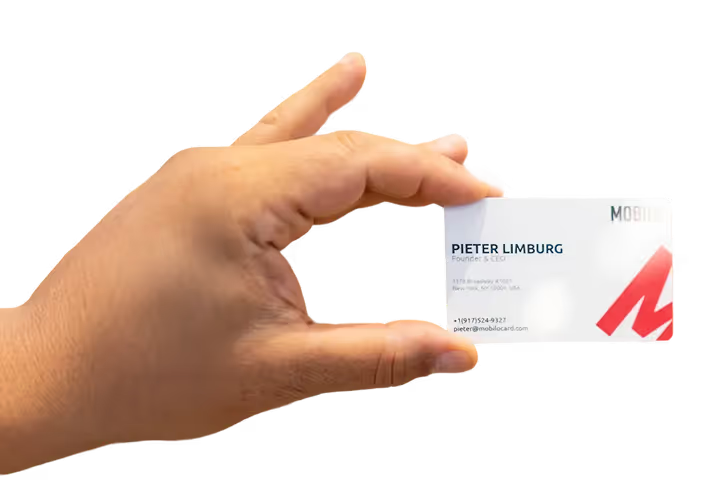
A business card ideas gets roughly three seconds of attention before someone decides whether to remember or forget the person who handed it to them. What should be on a business card determines whether those crucial moments create a lasting professional connection or simply add another forgotten piece of paper to someone's pocket. The right combination of essential information, strategic design choices, and clear contact details transforms a simple card into a powerful networking tool that drives real opportunities.
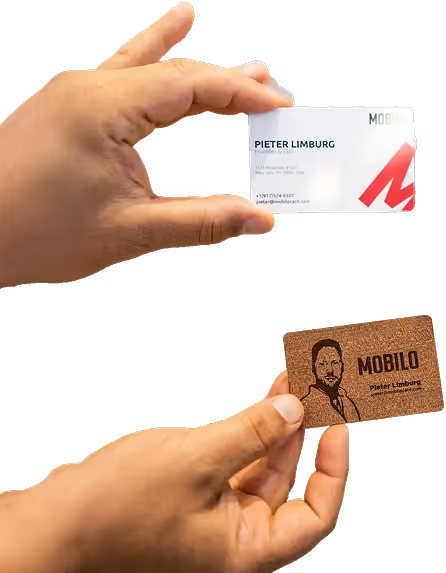
Modern networking requires more than static paper cards can deliver. Professionals need the ability to share comprehensive information instantly, update details without costly reprinting, and track engagement with their contacts. Mobilo's digital business card provides the flexibility and functionality that today's dynamic business environment demands.
Summary
- Most business cards get thrown away within a week because they try to communicate everything and end up saying nothing. According to UPrinting Blog, 88% of business cards are discarded within seven days, not because recipients are careless, but because the cards fail to create a clear reason to keep them. Overcrowded layouts with multiple phone numbers, excessive credentials, and competing visual elements destroy hierarchy and make every detail fight for attention, so nothing wins.
- First impressions form based on card quality before anyone reads the content. Research shows 72% of people judge a company or person based on business card quality alone, and 39% would refuse to do business with someone if their card looked cheap. This judgment happens in seconds and stems primarily from visual clarity. Cards that require effort to decode signal disorganization, while cluttered designs suggest poor judgment rather than thoroughness.
- Visual hierarchy determines what gets remembered after networking events. Your name should be the largest element because people recall faces and names before job functions or contact details. When someone searches through cards days later, they're trying to remember a person, not decode a brand promise. Cards that treat hierarchy as an aesthetic choice rather than a functional system force recipients to work too hard to extract basic information.
- Minimalist approaches outperform information dumps for follow-up conversion. Including three phone numbers, two emails, and four social handles doesn't improve accessibility. It creates decision paralysis about which contact method you actually monitor. The most effective cards answer one question instantly: what do you do and how do I reach you? Everything else dilutes that core message and reduces the likelihood that someone will take action.
- Static printed cards create ongoing friction as contact details change and teams grow. Every role change, website update, or new hire requires reprinting with minimum order quantities, leaving boxes of outdated cards in storage. Mobilo's digital business card addresses this by allowing teams to update details instantly across the organization and automatically capture lead data when contacts tap or scan.
Why Most Business Cards Fail to Make a Strong First Impression
Most business cards fail because they try to say everything and communicate nothing. The card sits in your pocket, gets tossed on your desk, and disappears into a pile of identical rectangles.
🎯 Key Point: A business card that tries to communicate everything ends up communicating nothing memorable.
.webp)
According to UPrinting Blog, 88% of business cards get thrown away within a week because most fail to provide a clear reason to keep them or take action.
"88% of business cards get thrown away within a week." — UPrinting Blog
⚠️ Warning: Without a compelling reason to keep your card, you're adding to someone's trash pile.
Common Business Card Mistakes
Too much information
Overwhelming and confusing
Generic design
Forgettable and disposable
No clear value proposition
No reason to keep or contact
.webp)
What happens when you try to include everything on your card?
When you're unsure what matters, your first instinct is to include everything: title, company name, multiple phone numbers and email addresses, LinkedIn, website, tagline, and certifications. The card becomes a resume printed on cardstock. But cramming information into a small rectangle destroys hierarchy and makes every element compete equally for attention, so nothing stands out.
How does overcrowding affect your professional credibility?
I've watched people hand out cards filled with credentials, then struggle to explain in conversation what they help with. That disconnect is a significant problem. Research from UPrinting Blog shows 72% of people judge a company by the quality of their business cards, meaning your card determines whether someone perceives your entire organization as credible or forgettable.
What actually gets remembered
The cards that stick answer one question immediately: what do you do, and why does it matter to me right now? Not your credentials or corporate structure, but the core value you deliver, presented clearly enough that someone can repeat it to a colleague three days later. Generic fonts, standard layouts, and information overload signal that you haven't thought carefully about how you want to be remembered.
How do digital solutions change the game?
Teams using solutions like digital business cards shift this equation entirely. Instead of cramming static details onto paper that become outdated when your phone number changes, digital contact cards create dynamic profiles that update instantly, can be shared with a tap, and track engagement. The card becomes a gateway to deeper information, not a final statement.
Which details deserve that limited space?
But which specific details deserve that limited space, whether physical or digital?
Related Reading
- Business Card Ideas
- Matte Vs Uncoated Business Cards
- Types Of Business Cards
- Business Card Psychology
- How To Make A Professional Business Card
- Vertical Business Card Designs
- Rounded Corner Business Cards
- Minimalist Business Cards
- Business Card Paper Weight
- Business Card Colors
- How To Put Social Media on a Business Card
What Should Be on a Business Card
The answer depends on what you want the card to do. A card designed for immediate credibility needs different elements than one built for follow-up conversion. This is a strategic question: are you optimizing for recall, action, or both?
🎯 Key Point: Your business card strategy should align with your primary networking goal—whether to build immediate trust or drive future engagement.
"72% of people judge a company or person based on the quality of their business card." — UPrinting Blog
According to UPrinting Blog, 72% of people judge a company or person based on the quality of their business card. That judgment happens in seconds, so each element sends a signal before anyone reads a word. A cluttered card signals disorganization; a sparse one feels incomplete. The skill is knowing which details earn their space and which dilute your message.
🔑 Takeaway: First impressions form instantly—your card design communicates professionalism before content gets read.
.webp)
1. Name
Your name and company name should have a clear visual hierarchy, not equal weight. If you're building personal brand equity as a consultant, freelancer, or executive, your name deserves prominence. If an established organization's brand carries more weight than individual recognition, prioritize that instead. Sizing both equally creates confusion about what matters most.
Job titles need the same careful thought. "Senior Vice President of Strategic Client Solutions" is unclear and wastes space. "VP, Enterprise Sales" works better. If your title needs explanation, it's not working.
2. Address
Physical addresses matter when location is integral to your business. A law firm, medical practice, or retail storefront benefits from listing where clients can find them. Consider adding a small map on the back if foot traffic drives your business model.
For remote teams, digital-first companies, or roles involving client travel, an address is unnecessary. Skip it unless someone might mail you something or visit unannounced.
3. Phone Numbers
List the number where you will answer. If you maintain separate lines, choose the most direct one and format it consistently with hyphens or periods. Multiple phone numbers create decision paralysis and suggest you are harder to reach than you probably are.
People often list office numbers they never answer because they look more official than a mobile number. If your mobile is your primary line, own it.
4. Web Presence and Email
Your website and email address are essential for any modern professional. These are the primary ways people contact you for follow-up, and unlike phone calls, they allow people to reach you at mutually convenient times.
Social media links work when they have a clear purpose. A photographer benefits from an Instagram handle; a B2B consultant probably doesn't. The test: will someone judge your credibility or decide to buy based on that channel? If not, it's decoration.
5. Tagline or Description of Services
A tagline works when it clarifies what you do in terms that people immediately understand. "We help manufacturers reduce waste" is useful. "Innovative solutions for tomorrow's challenges" is empty. If you need to explain your tagline, it has failed.
Short service lists help when your title alone doesn't communicate scope. "Estate Planning Attorney" is clear, but adding "Wills, Trusts, Probate" removes ambiguity. Keep it to a maximum of three items; beyond that, you're creating a menu rather than providing clarity.
6. QR Codes
QR codes let people access information without typing a URL, directing them to portfolios, demos, or detailed service breakdowns that won't fit on cardstock. The code should link to something worth scanning, not just your homepage.
Teams using digital business cards embed contact details, lead capture forms, and CRM integration directly into the scan action. Our digital contact card solution transforms the exchange into trackable data, rather than relying on someone to visit your site later.
7. Logo
If you have a professional logo, use it. Logos create visual anchors that improve brand recall and signal investment in your brand identity. A poorly designed logo suggests amateur work; if choosing between no logo and a bad logo, choose no logo.
Where you place the logo matters more than its size. Top corner or centered header positions work because they don't compete with text for attention. Logos that interrupt contact information or force awkward spacing impair readability.
8. Product Images
Product images work for businesses where the product is the main differentiator: a bakery, jeweler, or furniture maker. Service businesses rarely help and often look forced.
One strong image of your best work beats three mediocre ones. If you cannot choose a single image that represents your work, skip this element.
9. Color
Color should reinforce your brand and match your logo. Consistency across touchpoints—website, signage, and cards—builds recognition.
Research from CloudCard Digital found that 39% of people would refuse to do business with someone if their business card looked cheap. Neon backgrounds or clashing color combinations signal poor judgment, while complementary palettes that create contrast without visual noise signal professionalism.
10. Readability and Decorative Elements
Font size below 8pt becomes hard to read for many people, especially in dimly lit networking environments. Decorative fonts sacrifice clarity for style; prioritize instant comprehension over artistic expression.
Lines, boxes, and spacing elements organize information by creating a visual hierarchy. Decorative elements that exist purely for aesthetics add complexity without function. Every line should guide the eye or separate distinct types of information.
11. Social Media
Only include social profiles when they demonstrate professional credibility. LinkedIn works for most business situations. Twitter, Instagram, or TikTok matter when you use them to showcase expertise or reach your target audience.
Here is what I notice: people list every platform they have an account on, regardless of how much they use it or how important it is. A Twitter account with 47 followers that sits dormant does not build trust—it signals neglect. It is better to list nothing than to demonstrate inactivity.
But even a business card with all the right elements depends on one thing most people overlook: whether the design makes someone want to keep it.
Business Card Design Principles That Improve First Impressions
Design isn't decoration: it's a system for directing attention. A well-designed business card tells someone where to look first, what matters most, and what action to take next. When that system breaks down, even perfect content becomes invisible.
.webp)
🎯 Key Point: Your business card's visual hierarchy determines whether recipients focus on your name, contact information, or value proposition within the critical first 3 seconds of viewing.
"83% of professionals make judgments about business competence based on business card design quality alone." — Print Industry Research, 2023
.webp)
💡 Best Practice: Apply the rule of three when designing your card—limit yourself to three key elements that recipients should notice, process, and remember after your interaction ends.
Why should your name be the largest element on the card?
Your name should be the largest element on the card, not your logo or tagline. When someone reviews a stack of cards days later, they're trying to remember a person, not a brand promise. Role comes second, contact information third. This mirrors how memory works: we recall faces and names before job functions or email addresses.
How does visual clarity affect first impressions?
According to Wave Connect, 72% of people judge a company or person by the quality of their business card. That judgment happens in seconds, driven by visual clarity. If your card requires effort to read, you've lost. Designers often treat hierarchy as decorative rather than functional, balancing elements for symmetry instead of guiding the eye through a deliberate sequence.
Why do designers confuse legibility with boring design?
Most cards fail readability tests because designers confuse legibility with boring. You can use interesting typefaces and play with layout, but body text below 8 points becomes hard to read—and unread text serves no purpose at networking events. Light gray text on white paper may look sophisticated on screen, but under conference hall lighting, it disappears.
How does white space prevent your card from looking cheap
White space creates separation between elements so the eye knows where one idea ends and another begins. Cramming information together signals panic, not value. Research from Wave Connect shows that 39% of people would refuse a business card if it looked cheap or poorly designed—often meaning cluttered.
How does visual consistency create brand recognition
Your card should feel like it came from the same universe as your website, email signature, and slide decks: same color palette, typography, and visual language. When someone sees your card after visiting your site, the visual echo reinforces memory. They think, "I know this person."
What happens when teams treat cards as standalone artifacts
The mistake happens when teams treat cards as standalone items: they hire a designer for the card, a different agency for the website, and an intern for the email template. Each piece works independently, but together they fragment the identity.
Digital tools like digital business cards organize brand assets in one place. Our Mobilo profile, shared link, and virtual card all use the same design system, so every interaction reinforces the same visual identity instead of weakening it.
Does perfect branding guarantee action from recipients
But even a card designed with perfect hierarchy and flawless branding depends on one question most people never ask: Does the layout itself motivate action?
Related Reading
- Should I Put My Picture On My Business Card
- Photography Business Cards Examples
- Horizontal vs Vertical Business Cards
- Business Card Examples For Owners
- How To Put an Instagram Handle on a Business Card
- Esthetician Business Card Ideas
- Business Cards For Multiple Employees
- Back Of Business Card Ideas
- Business Card Details
- Business Card Requirements
- Business Card Dimensions
Examples of High-Impact Business Card Layouts (and Common Mistakes)
The layout decides whether someone reads your card or puts it aside. A strong layout creates a path through information, guiding attention to what matters most and clarifying what to do next.
.webp)
🎯 Key Point: Your business card has approximately 3-5 seconds to make an impression before someone decides whether to keep it or discard it.
"Visual hierarchy is the most critical factor in business card effectiveness - it determines whether your contact information gets noticed or ignored." — Design Psychology Research, 2023
.webp)
⚠️ Warning: The biggest mistake is cramming too much information without considering visual flow - this creates confusion and reduces the likelihood your card will be kept by 67%.
Minimalist professional layout
This approach includes only your name, role, and one primary contact method. The front displays your name in an easy-to-read typeface, with your title below and a single phone number or email address. The back might feature a logo or tagline. It works best when your reputation precedes you or your industry values restraint over explanation. Lawyers, architects, and senior executives often use this structure because their credibility stems from who they are, not what they list. According to Wave Connect, 39% of people would refuse a business card if it looks cheap or poorly designed. Minimalist layouts avoid that trap by eliminating clutter.
Creative portfolio-style layout
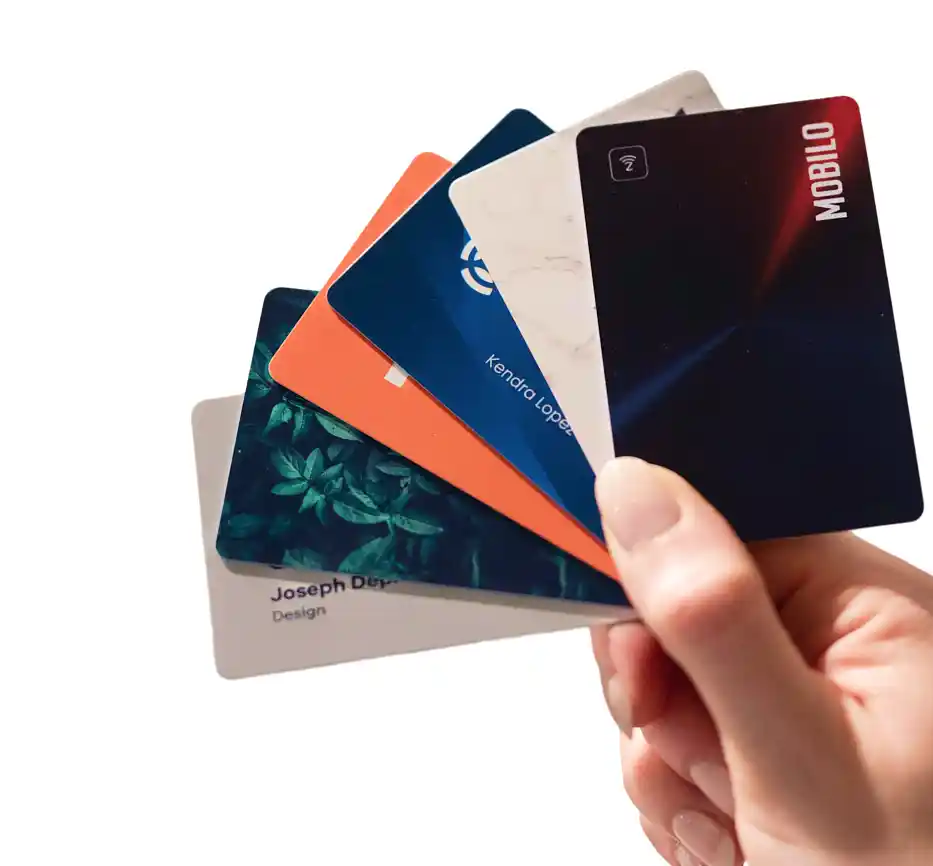
Designers, photographers, and creative professionals often treat the card as a sample of their work. The front might feature a striking image or bold typography reflecting their style, while the back includes contact details and a QR code linking to a portfolio. This layout works when style is the selling point—when showing proves more convincing than telling. The risk is overdesigning: if the card becomes so visually complex that someone cannot find your email within three seconds, the creativity backfires. The goal is to demonstrate good taste, not overwhelming.
Corporate clean layout
This structure puts the company brand before personal identity. The logo takes up the most space on the front, often paired with a tagline or brand color. Your name and title appear smaller, positioned to support the brand rather than compete with it. The back lists multiple contact methods, office address, and social handles. It's standard for sales teams, customer service representatives, and anyone representing a larger organization. Tools like digital business cards extend this approach by pulling all team members from the same design system, so every card reinforces the same visual identity without requiring manual updates or reprints.
Personal brand layout
Consultants, coaches, and solopreneurs often flip the corporate model: their name becomes the brand. The front features their name prominently with a short description of what they do. The back includes a headshot, website, and a single call to action, such as "Book a free consultation" or "Download my framework." This layout works when trust in you as an individual drives the business, but fails when the description is unclear or the call to action asks for too much too soon.
What mistakes happen when you overcrowd your business card?
Overcrowding occurs when you treat the card as a data dump rather than a communication tool. Adding three phone numbers, two emails, four social handles, and a physical address doesn't make you more accessible; it makes you harder to contact because the recipient doesn't know which method you prefer.
Unreadable fonts appear when designers prioritize style over function, choosing typefaces that look elegant at large sizes but become blurry smudges when printed at 8 points.
Why does visual hierarchy matter on business cards?
When every element looks the same, readers struggle to identify what's important. This missing hierarchy forces them to work harder to parse the content. Without a clear call to action, people don't know what to do next.
Both mistakes stem from the same problem: designing for yourself instead of for the person who will use the card three weeks later. Knowing what works in theory gets you only halfway there. The harder question is how to apply these principles to your specific situation without starting from scratch.
Related Reading
- Plumbing Business Cards Examples
- HVAC Business Cards Examples
- Electrician Business Card Ideas
- Unique Business Card Ideas
- Artist Business Cards Examples
- Therapist Business Cards Examples
- How To Put Social Media On Business Card
- Best Real Estate Business Cards
Apply These Business Card Essentials to Your Own Design
Pull out your current card and ask: Can someone tell what I do in under five seconds? Can they find one clear way to reach me without squinting or flipping the card over twice? If the answer is no, you're not networking—you're handing out paper.
.webp)
Start with subtraction. Remove anything that doesn't answer "who are you, what do you do, and how do I contact you." Cut secondary email addresses, multiple phone numbers, social icons that lead nowhere important, and any tagline that sounds impressive but means nothing to a stranger. What remains should fit comfortably, with enough breathing room for each element to stand on its own. Hierarchy matters more than completeness. If your name is smaller than your company logo and you're the one building relationships, your card works against you.
Most teams manage business card updates through design agencies or print vendors, creating friction when roles change, URLs shift, or new team members need cards. Each update cycle takes days, requires minimum order quantities, and leaves outdated cards in storage. Solutions like Mobilo let you update contact details instantly across your entire team without reprinting, while capturing lead data automatically when someone taps or scans your card. This turns every introduction into a trackable connection instead of a business card sitting in someone's wallet.
.webp)
Your name and title go at the top because that's what people remember first. Include one phone number, one email address, and your website. Add a QR code only if it links to something specific and useful, such as a portfolio, booking page, or maintained LinkedIn profile. Include your address if your industry values physical presence; omit it if you work remotely or serve clients nationally. Every element should help someone contact you or understand what you do.
🎯 Key Point: Hand your card to someone outside your industry and ask them to explain what you do and how they'd reach you. If they hesitate, your card isn't clear enough yet. Fix that before you print 500 more.
.webp)
💡 Tip: Test your card's effectiveness by timing how long it takes a stranger to identify your main service and preferred contact method. Five seconds is your maximum window.
"Every element should either help someone contact you or understand what you do - anything else is just visual noise that weakens your message." — Business Card Design Principles