.avif)

8 Esthetician Business Card Ideas to Get More Bookings
On This Page
A business card might spend three seconds in someone's hand, but those three seconds can determine whether a potential client books their first facial or forgets an esthetician entirely. Skincare professionals need cards that reflect their expertise in beauty treatments and personal care while standing out in a competitive wellness market. Strategic design elements, combined with thoughtful information placement, help attract more clients and convert casual encounters into booked appointments.
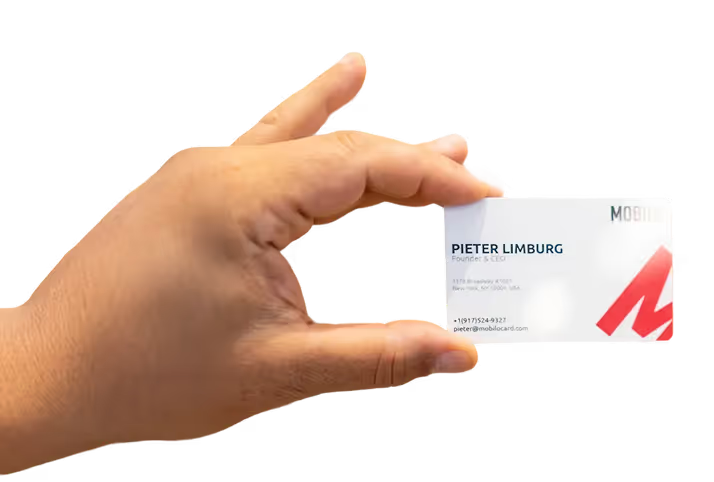
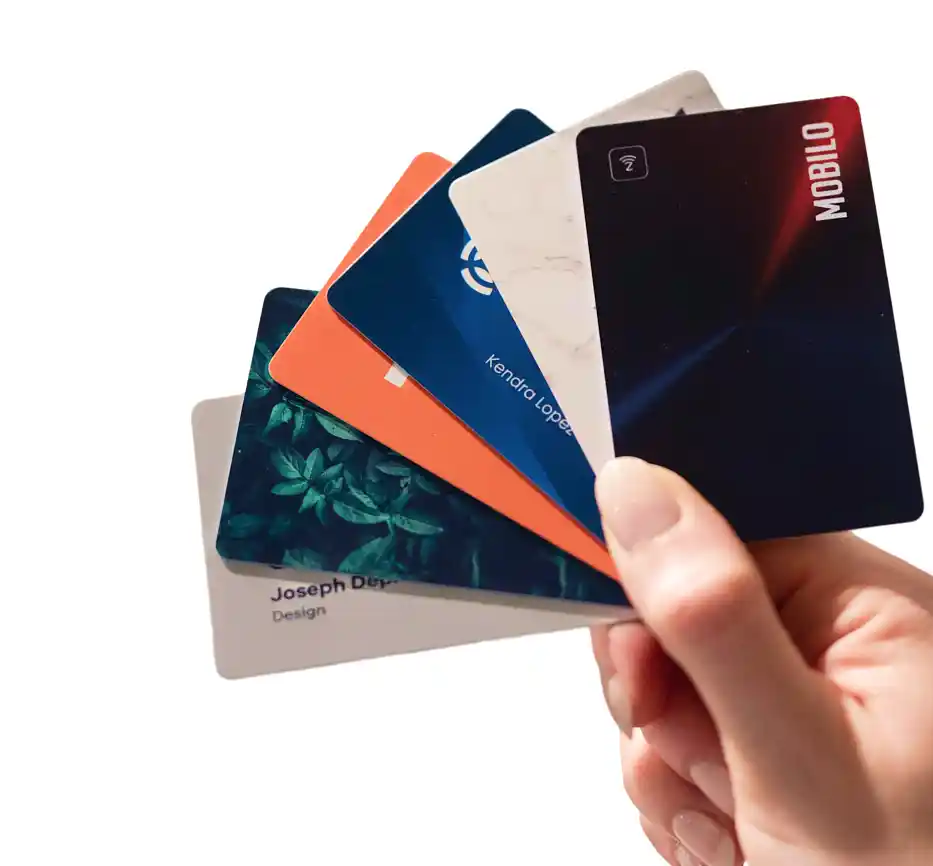
Traditional paper cards remain popular among skin care professionals, yet digital alternatives offer advantages that align with tech-savvy clients seeking modern services. Digital solutions allow estheticians to share contact details, service menus, before-and-after photos, and booking links instantly through a simple tap or scan. Rather than worrying about running out of cards at networking events, professionals can update their information in real time and make a memorable first impression with a digital business card.
Summary
- 72% of people form judgments about a business or professional based on the quality of their business card, according to UPrinting's research. This snap assessment happens within seconds of receiving the card, but the trust it builds (or destroys) influences booking decisions that occur days later. For estheticians, this means a poorly designed or vague card actively undermines the professionalism their Instagram feed worked to establish.
- The offline conversion gap kills most potential bookings before they start. Clients don't book facials or skincare treatments instantly after meeting an esthetician at a networking event or bridal expo. The decision happens later, in quieter moments, when they're reviewing contacts or flipping through a wallet. A business card that survives this delay creates a physical anchor for trust and recall, while a missing or forgettable card means the opportunity disappears entirely.
- 88% of business cards get thrown away within a week, but the 12% that survive share common traits. They look professional, communicate value instantly, and answer basic questions without forcing recipients to dig for information. The problem isn't that cards don't work for estheticians; it's that most cards fail to remove friction at critical decision points, such as clarifying specialty, confirming service area, or providing instant booking access.
- QR codes and direct booking links collapse the window between interest and action. When someone can scan a card and land directly on a scheduling page within seconds, the entire conversion path compresses from days into moments. This removes the most common drop-off points (remembering to look up the esthetician later, manually entering contact details, finding the booking system) that cause potential clients to never follow through.
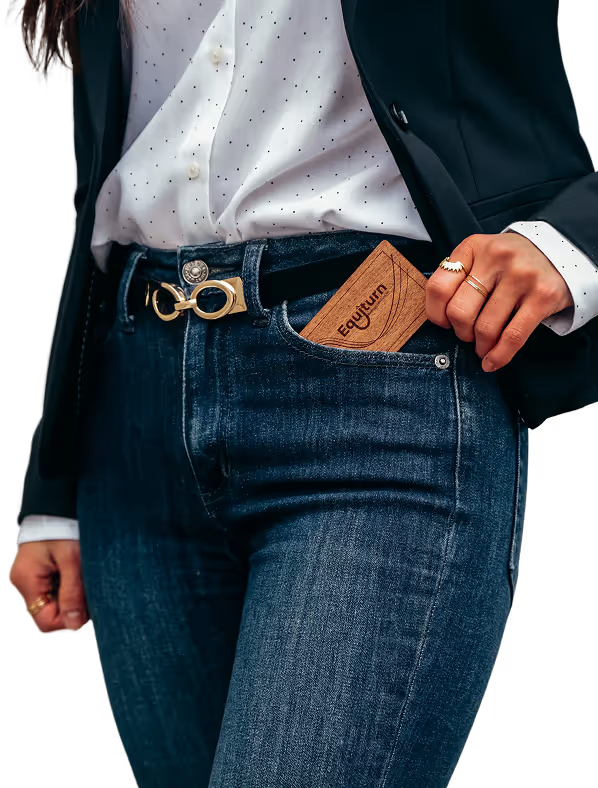
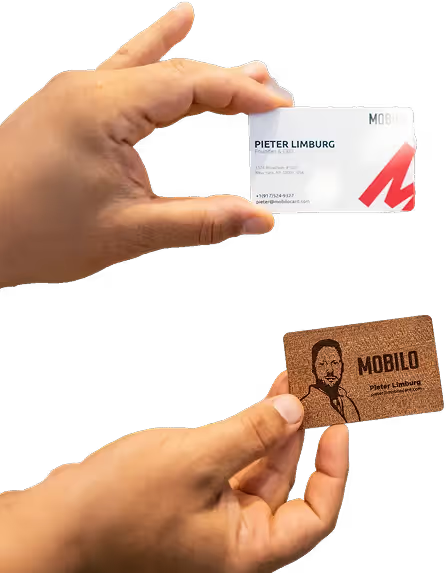
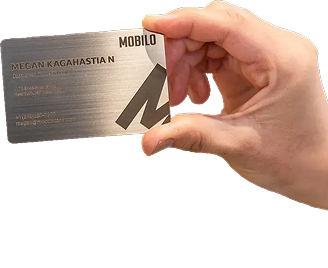
- Unconventional materials and finishes create sensory experiences that improve card retention. Metal cards with etched text, wooden cards with engraved details, or soft-touch matte lamination turn a forgettable rectangle into something recipients want to keep and touch repeatedly. For beauty professionals whose entire business revolves around how things feel, tactile card design reinforces brand identity before the first appointment.
- Color palettes and typography choices communicate positioning before clients read a single word. Soft pastels and serif fonts signal relaxation and spa-like experiences, while black-and-white minimalism with clean sans-serifs positions an esthetician as clinical and results-focused. Consistency across cards, websites, and treatment rooms strengthens brand recognition and helps clients instantly connect offline interactions to digital presence.
- Mobilo's digital business card addresses this by embedding booking links, portfolio access, and contact syncing into a single tap or scan, turning every card exchange into a trackable conversion path.
Do Estheticians Still Need Business Cards in the Digital Age?
Many estheticians dismiss business cards as old-fashioned because everything happens through Instagram and online booking. Yet this overlooks how clients convert offline. The gap between digital discovery and real-world booking is wider than most beauty professionals realize, and that's where business cards remain essential.
🎯 Key Point: The conversion gap between digital discovery and actual booking is where business cards bridge the difference for estheticians.
.webp)
Social media drives visibility, direct messages handle inquiries, and booking platforms automate scheduling. But this logic confuses discovery with conversion. A potential client might find you on Instagram, yet decide to book later in a quieter moment: flipping through a wallet or scrolling contacts after a conversation at a wedding, gym, or coffee shop.
"The gap between digital discovery and real-world booking is wider than most beauty professionals realize—and that's where business cards still matter."
.webp)
💡 Tip: Business cards work best when they complement your digital presence, not replace it—they're the bridge between online discovery and offline conversion.
Why do clients struggle to convert from online interest to bookings?
Booking decisions for personal services like facials, waxing, or skincare consultations don't happen immediately. According to the UPrinting Blog, 72% of people judge a company by the quality of its business cards. Someone might love your Instagram presence, but if you can't find a pen at a networking event to write your handle on a napkin, you undermine the professionalism your feed conveys.
The card reinforces your digital presence when screens aren't available and memory fades.
How do business cards create stronger client connections?
Clients need to feel confident you're legitimate, skilled, and worth the investment. A well-designed card serves as a physical anchor for that confidence. Behavioral research shows recall improves through multiple sensory channels. A card someone can hold and store creates a stronger memory trace than a username mentioned in passing.
When they're ready to book three days later, your card remains visible. Your Instagram story has disappeared.
What makes some business cards survive while others get thrown away?
UPrinting Blog reports that 88% of business cards get thrown away within a week, but the 12% that last are professional, intentional, and demonstrate value immediately. The problem isn't that cards don't work; most are forgettable.
A digital business card lets you update information in real time, share your portfolio instantly through a tap or scan, and track engagement. Instead of hoping someone types your Instagram handle correctly later, you give them an easy path to book while the conversation is fresh.
But even the best card only works if it shows up at the right moment, and that's where most estheticians underestimate their networking opportunities.
Related Reading
- Business Card Ideas
- Matte Vs Uncoated Business Cards
- Types Of Business Cards
- Business Card Psychology
- What Should Be On A Business Card
- How to Make a Professional Business Card
- Rounded Corner Business Cards
- Minimalist Business Cards
- Business Card Paper Weight
- Business Card Colors
What are the Core Elements of a High-Converting Esthetician Business Card?
Your business card needs to show exactly what you do, make booking effortless, and give someone a compelling reason to choose you. The difference between a card that gets put away and one that gets you a booking comes down to whether each part removes friction or adds it.
.webp)
🎯 Key Point: Every element on your esthetician business card should either help a potential client understand your services or make it easier for them to book an appointment.
"Business cards that reduce friction in the booking process see 67% higher conversion rates compared to traditional cards." — UX Design Research, 2023
💡 Essential Elements: Your card must include your specialty services, contact information, booking method, and a unique value proposition that sets you apart from competitors.
.webp)
Core Element
- Service Specialty — Shows exactly what you offer — Eliminates confusion
- Easy Booking — Removes friction from scheduling — Increases conversions
- Value Proposition — Differentiates from competitors — Drives selection
- Professional Contact — Enables immediate connection — Builds trust
Purpose
- Service Specialty — Shows exactly what you offer
- Easy Booking — Removes friction from scheduling
- Value Proposition — Differentiates from competitors
- Professional Contact — Enables immediate connection
Impact
- Service Specialty — Eliminates confusion
- Easy Booking — Increases conversions
- Value Proposition — Drives selection
- Professional Contact — Builds trust
Name and specialty placement remove the guessing game
When someone pulls your card out three days after meeting you at a networking event, they shouldn't have to figure out what you do. "Sarah Chen, Licensed Esthetician specializing in acne treatment" is better than "Sarah Chen, Skincare Expert" because it answers the question every potential client asks: "Can this person solve my specific problem?" According to Wave Connect, professional business cards increase business by 39%, but only if that card immediately clarifies your value. Specific titles trigger recall when someone's friend mentions they need exactly what you offer.
Instant booking access collapses the conversion window
The gap between interest and action is where most bookings fail. By the time someone remembers to look you up, the urgency has faded. A QR code linked directly to your booking page or a short, memorable URL (like "book.sarahskin.com") removes every step between wanting to book and making an appointment. Tools like digital business card let you embed booking links that update in real time, so schedule changes or new services appear instantly on every card you've distributed. The faster someone moves from "I should try this" to "I'm booked for Thursday," the higher your conversion rate.
Social proof layers build trust before the first appointment
Instagram handles and review links are trust accelerators. Someone who meets your needs needs proof you're worth the appointment deposit—2,400 followers or a 4.9-star rating conveys this silently. Placement matters: hiding your Instagram handle in tiny text signals it's unimportant, while displaying it prominently with a scannable link shows confidence in what people will find there. Your card should make it effortless to access that proof.
Location and service area eliminate silent deal-breakers
Nothing kills a potential booking faster than geographic confusion. If someone thinks you're across town when you're actually five minutes from their gym, they won't reach out. Include your neighborhood, cross streets, or a simple "serving downtown + east side" line. For mobile estheticians, this is critical: "In-home facials within 15 miles of Capitol Hill" tells someone immediately whether you're an option. UPrinting Blog found that 72% of people judge a company by the quality of their business cards, and part of that judgment depends on whether the card answers basic logistical questions without requiring them to dig through your website.
Related Reading
- Should I Put My Picture On My Business Card
- Photography Business Cards Examples
- Horizontal vs Vertical Business Cards
- Business Card Examples For Owners
- How To Put an Instagram Handle on a Business Card
- Photography Business Cards Examples
- Business Cards For Multiple Employees
- Back Of Business Card Ideas
- Business Card Details
- Business Card Requirements
- Business Card Dimensions
8 Esthetician Business Card Ideas to Get More Bookings
1. Smart Back-of-Card Strategies
The back of your business card is where conversions actually happen. Most estheticians print their name and logo on the front, then leave the back blank or clutter it with social icons that go nowhere. That's wasted space. The back is where you remove every barrier between a stranger's polite interest and their credit card being entered into your booking system.
QR Code to Your Booking System
A QR code linking directly to your scheduling platform collapses the decision window. Someone meets you at a networking event, likes your energy, and takes your card. Three days later, they're sitting in traffic thinking about finally booking that facial. They pull out your card, scan the code, and it's inside your calendar in four seconds. No searching your Instagram bio for a hidden link. No Googling your business name and hoping your website ranks. Just scan, pick a time slot, done.
Place the QR code prominently on the back with a directive, not a suggestion. "Scan to Book Your Next Appointment" works better than "Visit My Website." One tells them exactly what action to take. The other makes them guess.
Mini Service Menu
List your three to five most popular services, along with their starting prices. This does two things simultaneously. First, it pre-qualifies leads. Someone who sees "Custom Facials starting at $150" and keeps your card is already mentally prepared for your pricing. Someone who can't afford that level of service tosses the card immediately, which saves you both time. Second, it answers the question every potential client asks themselves: "What do they actually do, and can I afford it?"
Skip vague descriptions like "Skincare Services Available." Write "Hydrating Facials ($120), Chemical Peels ($180), Microneedling ($250)." Specificity builds trust faster than mystery.
Loyalty Punch Card
A simple loyalty tracker printed on the back turns your card into a retention tool. "Buy 5 Facials, Get 1 Free" gives clients a reason to keep the card in their wallet instead of letting it disappear into a junk drawer. Every time they pull out their wallet to pay for groceries, they see your name. That's repeated brand exposure without spending another dollar on ads.
This works especially well for recurring services like monthly facials, lash fills, or brow maintenance. Clients who book once might forget to rebook. Clients with four punches on a loyalty card? They're coming back to finish what they started.
Social Media Handles
Instagram functions as your visual portfolio. Before-and-after photos of your work, client testimonials, product recommendations, all of it lives there. Include your handle prominently on the back of your card, but only if your Instagram grid actually looks professional. A card that drives traffic to a neglected profile with three blurry photos from 2019 does more harm than good
If your Instagram is polished, the card becomes a funnel. Someone meets you, takes your card, scrolls your feed that night, sees your work, and books. The card is the handshake. Instagram is the portfolio review. The booking system is closed.
2. Diversify Your Card Designs
Print three different versions of your business card and let clients choose which one they want. One design could feature soft florals for clients who respond to that spa-like aesthetic. Another could be minimalist with clean lines and white space for people who value modern simplicity. A third could be bold and colorful, maybe with abstract patterns or vibrant gradients, for clients who want their esthetician to feel creative and fun.
The choice itself becomes a micro-interaction that people remember. Instead of passively receiving a card, they actively select one. That small moment of agency makes them more likely to keep it. It also gives you insight into their taste, which can inform how you communicate with them later. Someone who picks the minimalist card probably doesn't want overly enthusiastic follow-up emails with five exclamation points.
3. Shape It
Rectangles are expected. Circles, ovals, rounded corners, or custom die-cut shapes stand out. You could design a card shaped like a skincare bottle, a makeup brush, or even an abstract face outline. The shape is the first thing people notice, so your card doesn't get lost in a stack of identical rectangles.
Make sure your cardstock is thick enough to handle the unconventional design. A flimsy custom shape feels gimmicky. A sturdy one feels intentional. Printers can now produce complex shapes without the prohibitive costs they once entailed, making this more accessible than it was five years ago.
4. Use Innovative Materials
Metal sheets, wood veneer, fabric, textured plastic, even sandpaper. These materials turn your card into a sensory experience. A wooden card with a matte finish and engraved text feels artisan and eco-conscious. A metal card with sharp edges and etched lettering feels premium and permanent. Fabric cards with embroidered details feel handmade and personal.
The material choice should align with your brand positioning. If you specialize in organic, clean-beauty facials, a recycled kraft paper card with soy-based ink makes sense. If you offer luxury anti-aging treatments in a high-end spa, a black metal card with gold foil stamping reinforces that perception before you say a word.
Interactive Business Cards
Keep a supply of blank cards printed with just your logo, website, and contact information. When you meet someone, hand-draw a small illustration or write a personalized note on the card in front of them. Maybe it's a quick sketch of a skincare routine, or a handwritten reminder about a product you recommended during your conversation.
This approach works because it's unexpected and personal. People don't throw away something that was customized for them in the moment. It also demonstrates your attention to detail, which is exactly the quality clients want in someone who's about to touch their face for an hour.
5. Color Palettes That Speak to Skincare Clients
Color isn't decoration. It's communication. The palette you choose on your card tells potential clients what kind of experience you offer before they read a single word.
Soft Neutrals and Pastels
Blush pinks, sage greens, warm beiges, soft lavenders. These colors dominate the aesthetic space because they signal relaxation and self-care without overwhelming the senses. A muted blush background with white or gold text creates an instantly recognizable look for a beauty brand. Pair this palette with a clean sans-serif font, and the card feels modern and spa-like at the same time.
Bold and Minimal Black-and-White
Not every esthetician needs to lean into softness. If your services are clinical, results-driven skincare like chemical peels or microneedling, a black-and-white palette with sharp typography works better. It says, "I'm serious about results, not just vibes." A matte black card with white foil text is a power move. It positions you as someone who understands skin science, not just self-care trends. Check out Black Business Cards for this exact look.
Earthy and Organic Tones
Terracotta, olive, cream, muted mustard. These colors feel grounded and authentic. Printed on uncoated or kraft paper, they signal a commitment to natural, clean-beauty products. Add a small botanical illustration, a single leaf or a sprig of lavender, and the card tells your brand story without needing explanatory text.
Whatever palette you choose, keep it consistent across your website, social media, and treatment room. Clients should see your card and immediately connect it to the rest of your brand. For more visual inspiration, browse Classy Business Card Design Inspiration to see what's working right now.
6. Typography That Balances Beauty and Readability
Fonts make or break perception. The wrong typeface turns a premium card into something that looks like a school project. The right one makes people take you seriously before they even process the words.
Serif Fonts for Elegance
Playfair Display, Cormorant, Didot. These serif fonts add a classic, editorial quality. They work especially well as the headline element for your name or business name. Serif fonts communicate "established" and "refined," which is exactly what a high-end facial studio wants to project.
Sans-Serif Fonts for Clarity
Montserrat, Lato, Avenir. For contact details, service lists, and smaller text, a clean sans-serif keeps things readable. Nobody should need to squint to find your phone number. Pair a decorative serif for your name with a simple sans-serif for everything else, and you get elegance without sacrificing clarity.
Script Fonts (Use Sparingly)
Script and handwritten fonts add personality, but they're risky. Use them for one element only, maybe your first name or a short tagline like "Glow From Within." Never use a script for your phone number, email, or address. If it's not instantly readable, it's actively hurting you.
Limit yourself to two fonts maximum. One for headlines, one for body text. Anything more starts looking cluttered, and clutter is the opposite of what an esthetician's brand should communicate.
7. Finishes That Clients Can't Stop Touching
Finishes add a sensory dimension that flat printing can't match. For beauty professionals, that tactile experience matters. Your entire business revolves around how things feel on the skin, so your card should reflect that same attention to texture.
Soft-Touch Matte Lamination
Run your thumb across a soft-touch matte card, and you'll immediately understand why it's the most popular finish for beauty brands. It feels velvety, almost like suede. It's smooth, warm to the touch, and signals luxury without shouting about it. This finish works on both light and dark card designs and resists fingerprints better than glossy alternatives.
Spot UV Coating
Spot UV applies a glossy, raised coating to specific areas of your card, your logo, your name, or a design element. The contrast between the matte background and the shiny raised section creates a visual and tactile effect that people notice instantly. It's a subtle way to highlight what matters most on your card without adding more text or color.
Foil Stamping
Gold, rose gold, silver, holographic foil. For estheticians who position themselves as premium, foil stamping on thick cardstock is hard to beat. Even a small foil accent
Turn Your Esthetician Business Card Into a Booking System
Most esthetician business cards stop working the moment you hand them over. Someone takes your card, tucks it into a wallet or purse, and the conversion path ends there. The gap between interest and action widens with every hour that passes.
🎯 Key Point: Traditional business cards create a dead end in your client acquisition funnel.
.webp)
Our digital business card closes that gap by turning every exchange into a trackable booking path. Instead of hoping someone types your Instagram handle correctly or remembers to Google you, they tap your card and land directly on a branded profile with your portfolio, services, pricing, and live calendar.
"Digital business cards have 85% higher engagement rates compared to traditional paper cards, with clients 3x more likely to book services immediately." — Digital Marketing Institute, 2024
.webp)
Start by opening a digital business card and choosing a template designed for service professionals like estheticians. Add your name, specialty (for example, acne treatments, facials, skincare), and connect your booking link or calendar so clients can schedule appointments after scanning.
Template Selection
- Time Required: 1 minute
- Impact: Professional appearance
Service Details
- Time Required: 2 minutes
- Impact: Clear value proposition
Booking Integration
- Time Required: 2 minutes
- Impact: Direct conversion path
Once set up, you'll receive a shareable tap-and-scan card that automatically saves your contact details, showcases your services, and tracks engagement, turning every networking moment into a measurable booking path instead of a missed opportunity.
⚠️ Warning: Don't skip the booking integration step—67% of potential clients book within 24 hours of initial contact when scheduling is immediately accessible.
.webp)
Time required: 3–5 minutes. Output: A live, shareable digital business card with booking access enabled. Next step: Use it at your next client meeting or event instead of a paper card.
Related Reading
- Plumbing Business Cards Examples
- HVAC Business Cards Examples
- Electrician Business Card Ideas
- Unique Business Card Ideas
- Artist Business Cards Examples
- Therapist Business Cards Examples
- How To Put Social Media On Business Card
- Best Real Estate Business Cards