.avif)


How to Make a Professional Business Card That Looks Credible
On This Page
A well-designed business card can transform a fleeting conversation into a lasting professional connection. When someone hands over their contact information, that small piece of cardstock communicates volumes about their attention to detail, brand identity, and level of professionalism. Creating an effective business card ideas requires more than simply printing a name and phone number on paper. The most memorable cards combine strategic design principles with clear branding elements that help recipients understand exactly what value the person offers.
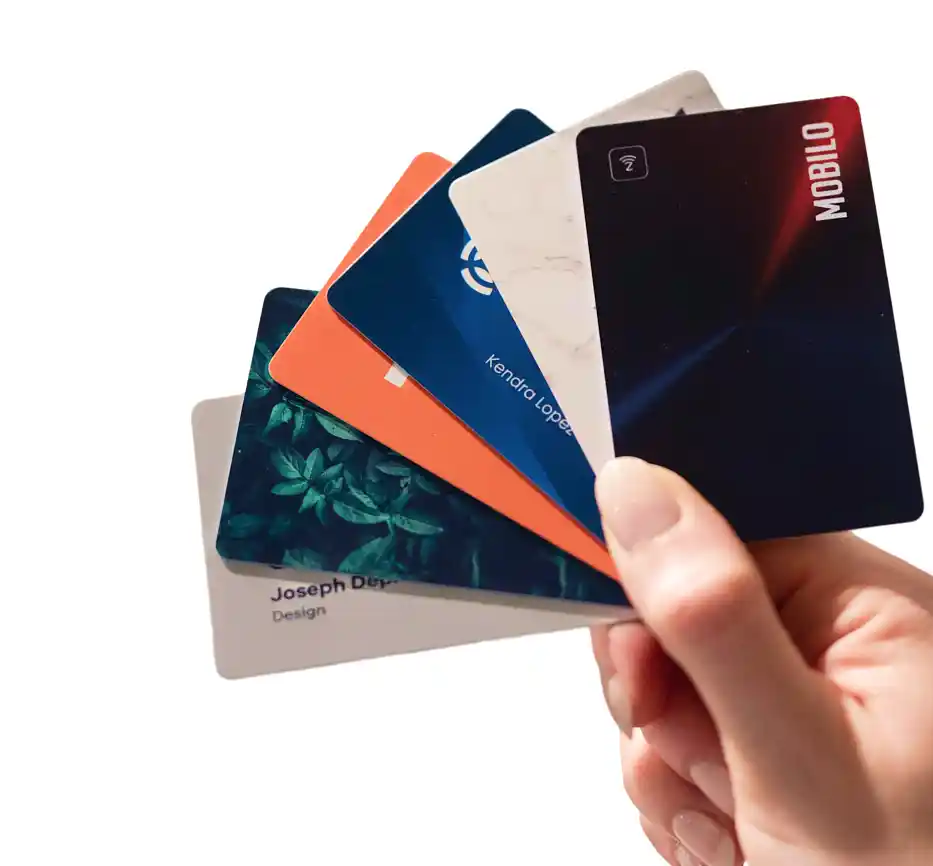
Modern professionals benefit from having both physical and digital options for sharing their contact information. Digital solutions offer unique advantages such as real-time updates, engagement tracking, and instant accessibility on any device. Whether designing for print or digital formats, the same core principles of professional presentation and brand consistency apply to create maximum impact with potential clients and contacts. Mobilo's digital business card platform provides the flexibility to design, customize, and share professional contact information that aligns with your brand identity, while offering the convenience of modern technology.
Summary
- Professional business cards fail 88% of the time, not because they look cheap, but because they lack clear value propositions. Generic job titles like "Senior Consultant" force recipients to guess your expertise, and when people have to work to understand your relevance, they discard the card. A single line beneath your name explaining what you actually solve (like "Helping SaaS companies reduce churn by 40%") transforms passive contact information into an active reason to reconnect.
- Visual polish doesn't guarantee communication effectiveness. Cards with ultra-thin fonts, low-contrast color schemes, or elaborate scripts might win design awards but fail in dim conference halls and busy networking environments. High contrast between text and background, and font sizes of 9-point or larger aren't aesthetic compromises. They're recognition that recipients glance at cards while juggling coffee cups and phones, not in perfectly lit studios.
- 72% of people judge a company by the quality of its business cards, according to multiple industry studies. That judgment happens in seconds and encompasses more than visual design. Heavier paper stock above 350gsm, textured finishes, or cotton-based materials create a tactile memory that makes your card feel different from the indistinguishable stack of standard cardstock. That sensory distinction buys three extra seconds of attention, enough time for someone to actually read your value proposition instead of reflexively discarding it.
- Borders expose every imperfection in the cutting process. A guillotine cutter can shift by a millimeter, making carefully aligned borders look uneven and signaling carelessness instead of polish. Using whitespace and alignment to create visual boundaries instead of physical borders ensures cards look intentional even when cuts aren't perfectly precise.
- Most professionals print a thousand cards and realize six months later that phone numbers, email addresses, or website URLs have changed. Physical cards become outdated the moment contact details change, leading to expensive reprint cycles and missed connections with people who hold obsolete information. Mobilo's digital business card addresses this by letting you update details in real time and share via QR code or NFC tap, so recipients always see current information without reprinting.
Why Many Business Cards Look Professional but Fail to Make an Impact
Most professionals invest in premium paper stock, embossed logos, metallic finishes, and pixel-perfect layouts. Yet weeks later, those expensive cards generate no meaningful conversations or follow-ups. The disconnect between visual investment and actual results reveals a fundamental misunderstanding of what makes business cards effective.
.webp)
Visual polish doesn't guarantee communication effectiveness. A card can look expensive and still fail its primary job: helping someone remember who you are and why they should reach out. The problem isn't aesthetics—it's strategic purpose.
"88% of business cards are thrown away within a week—not because they look unprofessional, but because they fail to create a reason to keep them." — UPrinting Blog
🎯 Key Point: Professional appearance is the baseline, not the differentiator. Your card needs to solve a specific problem or offer clear value to survive that critical first week.
⚠️ Warning: Investing in premium materials without addressing strategic messaging is like buying an expensive frame for a forgettable picture—the presentation won't save poor content.
The Value Proposition Gap
Generic business cards fail immediately. A name, job title like "Senior Consultant," and contact details leave recipients guessing what you do. When people must work to understand your value, they discard your card.
A single value line changes everything. Something like "Helping SaaS companies reduce churn by 40%" or "Trademark attorney for creative agencies" clarifies your offering immediately. That one sentence transforms basic information into an active value statement, giving recipients a specific reason your card matters.
How does poor design undermine readability?
Beautiful typography becomes meaningless when people can't read it. Ultra-thin sans-serif fonts at 6-point size, white text on metallic gold backgrounds, or fancy script typefaces might win design awards, but they fail in real networking environments. Conference halls have dim lighting, and people quickly glance at cards as they walk between meetings or juggle coffee cups and phones.
What makes text readable in professional settings
High contrast between text and background respects how humans process information under pressure. Standard readable font sizes of 9-point or larger for contact details, a clear hierarchy between primary and secondary information, and straightforward typefaces ensure your card works in the messy reality of professional events.
What happens when business cards lack clear next steps?
Contact information alone creates a passive endpoint. Without a specific call to action, your card becomes a bookmark for a conversation that never restarts. The recipient returns to their office with 30 business cards and cannot identify which ones need immediate attention.
How do digital solutions bridge the action gap?
Digital business card solutions close this gap by embedding clear next steps into the physical card experience. A QR code linking to your calendar booking page, a prompt to download your digital contact file, or an invitation to access a resource you mentioned transforms a static card into an active gateway. Recipients know exactly what to do next, making it easier to move from meeting someone to starting a working relationship.
Why do standard business cards feel forgettable?
Standard cardstock feels identical to every other card. When someone collects 15 cards at an event, yours blends into a stack unless something about how it feels in your hand stands out.
Research from UPrinting Blog shows that 72% of people judge a company by the quality of its business cards. Quality encompasses how it looks and the tactile memory your card creates: whether it feels substantial enough to make someone pause and notice it rather than automatically sort through it.
How can tactile differences create memorable impressions?
Heavier paper stock, textured finishes, or cotton-based materials create that pause. The recipient notices the weight difference, the unusual texture, and how the card feels distinct from others in their hand.
That sensory distinction buys you an extra three seconds of attention: enough time for them to read your value proposition instead of reflexively discarding your card.
What happens when even premium cards get lost?
But even the most carefully designed physical card faces one insurmountable problem: what happens when it gets lost?
Related Reading
- Business Card Ideas
- Matte Vs Uncoated Business Cards
- Types Of Business Cards
- Business Card Psychology
- What Should Be On A Business Card
- Vertical Business Card Designs
- Rounded Corner Business Cards
- Minimalist Business Cards
- Business Card Paper Weight
- Business Card Colors
- How To Put Social Media on a Business Card
What Makes a Business Card Look Professional?
A professional business card starts with visual hierarchy. Your name, role, and contact details should guide the viewer's eye through deliberate choices about font size, spacing, and contrast.
.webp)
🎯 Key Point: The most successful business cards use strategic visual hierarchy to ensure essential information stands out within the first 3 seconds of viewing.
"Visual hierarchy is the principle of arranging elements to show their order of importance, guiding the viewer's eye through the design in a deliberate sequence." — Canva Design School
.webp)
💡 Best Practice: Always make your name the largest element, followed by your job title, then contact information in descending order of font size and visual weight.
Clear Typography Wins Every Time
The fonts you choose communicate as much as the words themselves. A clean sans-serif like Helvetica or Arial signals modern professionalism, while a traditional serif like Garamond suggests established credibility. Using three or more different fonts on a single card or choosing decorative scripts that sacrifice readability undermines professionalism. According to Wave Connect, 39% of people would refuse a business card if it looks cheap or poorly designed, and confusing typography is one of the fastest ways to trigger that rejection.
Focused Information Architecture
Professional cards know what to leave out. Your card needs your name, title, phone number, email, and perhaps one social media handle or website. It doesn't need your fax number, multiple office locations, and a mission statement. A card crammed with eight lines of shrinking text signals you haven't prioritized what matters most, eroding trust before the first conversation begins.
Brand Consistency Creates Recognition
Your business card should feel like a natural extension of your company's visual identity. The colors, logo treatment, and overall look must match what appears on your website, email signature, or presentation deck. When these elements align, Wave Connect's research shows that 72% of people judge a company by the quality of its business cards. Inconsistent branding appears unprofessional regardless of paper quality. Digital business cards solve this consistency challenge by pulling branding elements from a central profile that updates across every touchpoint.
White Space Signals Confidence
The most professional cards feel spacious, not packed. White space around text and logos creates visual calm and signals confidence. Cramming information edge-to-edge suggests inexperience or anxiety. Generous margins make information easier to process and demonstrate respect for the recipient's time.
But knowing these principles and putting them into practice under real constraints are two different challenges.
How to Make a Professional Business Card Step by Step
Start with your brand identity. Your card should feel like a natural extension of your website, email signature, and LinkedIn presence. That visual consistency signals intentionality and tells people you've thought about how you show up, which translates directly into trust.
.webp)
Before you choose fonts or finishes, decide what impression you want to leave, then build every design choice around that clarity. Your card should extend how you already present yourself, not introduce a separate identity.
1. Choose a Design That Matches Your Brand
Your card's visual identity should mirror your business. Use the same colors, fonts, and logo treatment across all touchpoints. Consistency builds recognition: when someone sees your card after visiting your website or reading your email signature, the connection should feel instant.
Minimal layouts work well for consulting, finance, or legal services. Brighter palettes and bold typography suit creative studios, lifestyle brands, or hospitality businesses. Your choice of template signals how seriously you take coherence across every touchpoint.
2. Get the Essentials Right: Size, Layout, and Typography
The standard UK business card measures 85 x 55mm because it fits in wallets, cardholder slots, and pockets without bending. Square or vertical formats feel distinctive but are harder to store and often get left behind. Stick with standard dimensions unless you have a strategic reason to deviate.
How should you structure layout and typography?
The layout needs a clear order: your name as the main focus, followed by your job title, business name, and contact details. Keep font sizes at 8pt or larger for readability in dim lighting or when scanning quickly. Use no more than two typefaces to maintain a clean design.
White space is as important as the content itself. Filling every bit of space with text makes cards look messy and hard to read. Space between elements guides the reader's eye and directs focus appropriately.
3. Make Use of Both Sides
Most cards leave the back blank, wasting valuable space. Use it for your logo, a QR code linking to your portfolio, an appointment reminder, or a short testimonial. The back also enables creative expression without compromising front professionalism.
QR codes are now familiar enough that people readily scan them. Test it on multiple devices before printing, and ensure it links to something useful: a booking page, product catalog, or contact form. A broken or irrelevant link undermines the gesture.
4. Consider Print Quality and Finishes
Pick paper stock thicker than 350gsm, or 450gsm for a more solid feel. Thin cards signal a lack of investment; heavier weight conveys durability and reliability.
Finishes like spot UV or metallic foil enhance your design when they match your brand. A law firm might use subtle embossing; a design agency might choose matte with a single foil accent. The effect should strengthen your design, not distract from it.
5. Maximize Your Logo
Your logo is the visual shorthand for everything your business represents. Consider using one full side of the card for your logo, giving it space without competing elements. This creates instant recognition and makes the card feel intentional.
According to research highlighted by Krumzi, 72% of people judge a company by the quality of its business cards. A well-placed logo accomplishes more than paragraphs of text.
6. Leave Some White Space
Don't fill every corner with information. When too many elements compete for attention, nothing stands out. White space makes the design easier to scan and leaves room for a handwritten note before distribution, such as your direct extension or a colleague's name.
Fewer elements mean each one carries more weight, making the card feel more polished and purposeful.
7. Add Something Special
A thoughtful design detail or print treatment makes your card memorable. Foil accents add sophistication, while embossed gloss creates a raised, tactile effect. These finishes work best when they match your brand's personality rather than serve as mere novelty.
Paper stock matters too. Extra-thick stock feels premium, and recycled kraft paper signals sustainability. Ensure your choice aligns with your industry: a financial advisor with glittery foil might confuse rather than impress.
8. Include a Call to Action
A call to action gives people a reason to act immediately rather than set the card aside. It could be a discount code, a link to a free resource, or an invitation to book a consultation. The CTA should feel like a natural next step, not a hard sell.
QR codes work well here because they simplify the experience. Place the code on the back so it scans easily without obscuring your front logo. Ensure it links to something specific and valuable, such as a scheduling tool or exclusive content.
9. Consider Your Card's Physical Materials
The texture and weight of your card communicate as much as the design itself. Matte finishes feel understated and professional, while glossy stock can look modern but risks appearing cheap if quality is low. Embossed lettering adds a memorable tactile dimension.
These choices should align with your desired perception. A tech startup might choose sleek, minimalist cards with sharp edges, while a boutique consultant might choose something softer and textured. The material conveys your message.
10. Make Readability a Priority
Your card exists to help people contact you. If the font is too small, the contrast too low, or the layout too complex, it fails. Use font sizes large enough to read comfortably and choose colors that create a clear contrast between text and background.
Test the design by printing a sample and handing it to someone unfamiliar with your brand. If they hesitate or squint, simplify. Readability always beats cleverness.
How can you avoid common proofreading mistakes?
Spelling errors, outdated contact details, and broken links can ruin a strong design. Check every word, number, and URL, then have someone else review it with fresh eyes.
What technical details should you verify before printing?
Double-check your file setup. Ensure bleed, safe zone, and resolution match your printer's requirements. A design that looks perfect on screen can fail in print if the technical details are wrong.
How do digital alternatives solve outdated information problems?
While traditional printed cards remain important for meeting people in person, teams using Mobilo's digital business card can update contact details immediately across all shared profiles, eliminating outdated information. The digital business card also tracks engagement, showing which contacts opened your profile or saved your details, transforming static cards into measurable networking tools.
Related Reading
- Should I Put My Picture On My Business Card
- Photography Business Cards Examples
- Horizontal vs Vertical Business Cards
- Business Card Examples For Owners
- How To Put an Instagram Handle on a Business Card
- Esthetician Business Card Ideas
- Business Cards For Multiple Employees
- Back Of Business Card Ideas
- Business Card Details
- Business Card Requirements
- Business Card Dimensions
Common Business Card Mistakes That Undermine Professionalism
Credibility damage comes from subtle signals: borders highlighting crooked cuts, fancy fonts that impair readability, or cards so full of logos and taglines that contact information disappears. According to UPrinting Blog, 72% of people judge a company or person by business card quality, meaning every design choice either builds trust or erodes it.
"72% of people judge a company or person by business card quality." — UPrinting Blog
🔑 Takeaway: Your business card quality directly impacts how potential clients and business partners perceive your professionalism and attention to detail.
⚠️ Warning: Design flaws like poor font choices or cluttered layouts can instantly undermine your professional credibility before you speak.
.webp)
Borders that broadcast printing errors
Borders expose every mistake in the cutting process. A guillotine cutter that moves a millimeter makes carefully aligned borders look uneven or crooked, signaling carelessness. Skip borders entirely. Use whitespace and alignment to create boundaries instead, and your cards will look intentional even if the cut isn't perfect.
Typography that prioritizes style over legibility
A script font might feel elegant in your brand guidelines, but if someone has to squint to read your email address, you've lost. Ultra-thin sans serifs or condensed typefaces become hard to read at small sizes. Choose fonts that show your brand's personality without sacrificing legibility. If your card needs to be tilted toward light to be read, the typography has failed its only job.
What happens when business cards try to communicate everything at once?
Some cards try to communicate everything at once: multiple phone numbers, social media handles, a QR code, a tagline, office addresses in three cities, and a logo consuming a quarter of the space. The result is overwhelming, leaving the recipient unsure where to look first. Strip the card down to what someone needs in the first thirty seconds after meeting you. Everything else belongs in your email signature or on your website.
How do digital business cards solve the static information problem?
Most professionals treat business cards as static items printed once and distributed until depleted. Roles change, email addresses update, and portfolio links evolve faster than printing can keep up with. Digital business cards let you update information immediately without reprinting. You share them via a QR code or an NFC tap, and recipients always see the latest version. It's not about replacing physical cards—it's about having a backup that evolves with your career.
Why does design alone not guarantee business card success?
Even a perfect design can fail if the card doesn't make the next step clear.
If People Can't Act on Your Business Card, It's Not Professional Yet
A professional business card makes it easy for people to remember you, contact you, and continue the conversation after the first meeting. Even with excellent design, traditional cards create friction: manual data entry, saved details that get lost, and delayed follow-ups. Each step reduces the chance of connection.
.webp)
💡 Tip: The best business cards eliminate friction between first contact and meaningful follow-up.
Mobilo eliminates that gap by turning your business card into an active networking tool. Instead of simply exchanging contact information, our digital contact cards let you instantly share details, capture leads, enrich contact data, and sync new connections directly to your CRM.
"Every extra step between meeting someone and following up reduces your chance of building a meaningful business relationship." — Professional Networking Research, 2024
🎯 Key Point: Transform your networking approach from passive information exchange to active relationship building.
Book a demo today and see how Mobilo works in practice. You'll receive your first 25 digital business cards free (a $950 value) to help your team get started.
.webp)
Related Reading
- Plumbing Business Cards Examples
- HVAC Business Cards Examples
- Electrician Business Card Ideas
- Unique Business Card Ideas
- Artist Business Cards Examples
- Therapist Business Cards Examples
- How To Put Social Media On Business Card
- Best Real Estate Business Cards