.avif)

8 Plumbing Business Card Examples to Win More Local Customers
On This Page
When a potential customer finds a plumber's card after a pipe bursts at midnight, that small piece of cardstock carries real weight. A well-designed plumbing business card can be the difference between a callback and a missed booking. Studying real plumbing business card examples makes it easier to see what earns trust, what gets ignored, and how to position services so local customers choose one plumber over another.
Even the best printed card has limits, though. Combining strong card design with a digital business card lets plumbers share contact details, service areas, and booking links instantly from a phone tap or scan, so a customer can lock in an appointment before they set the card down.
Summary
- Most business cards handed out by plumbers never generate a callback. According to UPrinting, 88% of business cards are thrown away within a week of being received. The problem is rarely the phone number or the logo. It is that the card gives the customer nothing distinctive to hold onto mentally when the moment they actually need a plumber arrives.
- Card design functions as a credibility signal before a single word is read. Research cited across multiple design sources shows that 72% of people judge a company's credibility based on business card quality, and 39% would choose not to do business with a company whose card looked cheap. For a trade that depends on entering someone's home, a card that feels disposable suggests the work might be too.
- Different design directions attract different customer types, and matching the two is more important than choosing the most visually impressive option. An emergency-forward card with high-contrast colors and a prominent 24/7 callout filters for exactly the calls that generate after-hours premium revenue. A minimalist card with restrained design and an oversized phone number signals confidence to customers in the luxury renovation market. The design is doing positioning work, not just aesthetic work.
- QR codes on plumbing business cards reduce friction at a measurable level. Data from Tight Designs shows that cards with a QR code see up to 40% more engagement than those without, because they give the customer a direct path to reviews, a booking form, or a full service listing without requiring them to type anything. Paired with consistent brand colors, the card also builds visual recognition across every other customer touchpoint.
- Readability consistently outperforms decoration as a design priority. A phone number buried in small print at the bottom of a cluttered card creates hesitation, and hesitation means the customer sets the card down and calls someone else. The single most effective structural change that most plumbing cards could make is to increase the phone number size and remove anything that competes with it visually.
- The follow-up gap between handing over a card and hearing back is where most plumbing leads quietly disappear, and no amount of design investment closes it without a system behind it. Mobilo's digital business card addresses this by automatically capturing contact details at the moment of exchange and syncing them directly to a CRM, so the connection becomes trackable before the plumber leaves the job site.
Why Most Plumbing Business Cards Fail to Generate Repeat Business
Picture this: a homeowner finishes paying for a pipe repair, takes your card, and drops it in the kitchen drawer with two others. Six months pass. A fitting fails under the sink at 9pm. Water spreads across the floor. They need a plumber now. They don't search the drawer for the card with the best phone number. They call the plumber they remember.
💡 Tip: The moment a customer drops your card in a drawer, you've lost the memory battle. Your card needs to win it before the emergency happens.
"Customers don't choose the most qualified plumber in a crisis — they choose the most memorable one." — Plumbing Business Marketing Insight
⚠️ Warning: If your business card looks identical to every other card in that drawer, you are invisible when it matters most.

That gap between handing over a card and being remembered is where most plumbing businesses quietly lose money. The homeowner calls someone else, not because your work was poor, but because your card gave them nothing to hold onto mentally when the critical moment arrived.
🔑 Takeaway: A business card's real job isn't to carry your contact details — it's to make you the only plumber a customer thinks of when water is spreading across their floor at 9pm.
Why do most plumbing business cards get thrown away within a week?
Most plumbers treat a business card as a way to share contact information: name, number, logo. But customers don't keep cards for the phone number; they keep cards because something about them deserves a spot in memory. According to the UPrinting Blog - Business Cards Statistics, 88% of business cards get thrown away within a week of being handed out. A card that looks like every other plumber's card shows nothing special, builds no trust, and gives customers no reason to save it.
The problem worsens with referrals. A homeowner who remembers you hands your card to a neighbor whose water heater is broken. A forgettable or cheap-looking card stops that chain completely. According to the UPrinting Blog - Business Cards Statistics, 39% of people would choose not to do business with a company if they received a cheap-looking business card. In a trade built on entering someone's home and working on their systems, a shabby card suggests the work might be too.
How does a digital business card turn a one-time job into a lasting customer relationship?
Most plumbers handle follow-up by hand, inconsistently, and only when time permits. A job ends, a card gets handed over, and the relationship stops. A digital business card changes that entirely. When a customer taps or scans to save your details, that interaction feeds directly into a contact record with no manual entry. For a solo operator or growing crew, that automatic follow-through is the difference between a one-time job and a customer relationship that compounds over years.
Every element on your card either earns its place or costs you a customer when it matters most.
Related Reading
- Business Card Ideas
- Matte Vs Uncoated Business Cards
- Types Of Business Cards
- Business Card Psychology
- What Should Be On A Business Card
- How to Make a Professional Business Card
- Rounded Corner Business Cards
- Minimalist Business Cards
- Business Card Paper Weight
- Business Card Colors
What Every High-Converting Plumbing Business Card Should Include
Every element on a professional plumbing business card answers a single question: Does this help someone choose me or remember me? When you hold that standard against each design decision, the noise disappears fast. What's left is a short list of elements that work hard, and a longer list of decorative habits that quietly cost you jobs.
"Every design element should earn its place — if it doesn't help someone choose you or remember you, it's working against you." — Core Principle of High-Converting Business Card Design
💡 Tip: Before finalizing your card, hold each element to this standard — does this help someone choose me or remember me? If the answer is no, cut it without hesitation.
⚠️ Warning: Decorative clutter is one of the most common mistakes plumbers make on business cards. Every unnecessary element dilutes your most critical contact details and weakens your first impression.
To optimize your business card for maximum conversion, prioritize functional clarity over aesthetic filler:
- Name & Business Name: Essential for establishing identity and building professional trust. (Keep)
- Phone Number: Acts as your primary action trigger; it must be prominent. (Keep)
- Service Area / Specialty: Immediately answers the customer’s question: "Can you help me?" (Keep)
- Decorative borders/clip art: Adds no functional value and clutters the design. (Cut)
- Excessive taglines: Creates noise instead of providing clarity. (Cut)
🎯 Key Point: A high-converting plumbing business card isn't about looking busy — it's about making it effortless for a potential customer to take the next step and call you.

The Elements That Do the Real Work
Your business name is the anchor. Without it, the card becomes an anonymous slip of paper. Your name and job title sit beside it because customers hire people, not logos. A card that shows "Mike Torres, Licensed Master Plumber" tells a story in six words: this is a real professional with a real credential, not a side hustle.
Why does phone number placement determine whether customers call?
Your phone number is the only call to action most cards need, but placement and size matter. A number buried in small print creates hesitation: the customer sets the card down, gets distracted, and calls someone else. Make the number large and readable, and the first thing the eye lands on after the name. If you offer emergency service, state so directly next to that number. Customers who need a plumber at 11pm on a Sunday are not browsing options; they are scanning for the one card that tells them you are available right now.
How do credentials and a tagline turn a card into a credibility signal?
According to the DesignCrowd Blog, 72% of people judge a company's credibility based on business card design. Your license number and certifications signal trustworthiness, converting hesitant prospects into customers. A tagline strengthens this further. "Fast. Licensed. Guaranteed." gives people a reason to keep the card. Without one, it's merely contact information.
What closes the gap between handing out a card and hearing back?
Most plumbing professionals hand out cards and wait, hoping customers remember to call. That gap between handing over a card and hearing back is where most leads disappear. A digital business card closes that gap by feeding the contact interaction directly into a follow-up pipeline, so the connection is tracked and actionable before you've left the job site.
QR Codes and Brand Colors: The Underestimated Pair
A QR code on a plumbing business card reduces friction. Research from Tight Designs shows that business cards with a QR code see up to 40% more engagement than those without, giving customers instant access to your reviews, website, or booking form without typing. Pair that with consistent brand colors and a clean 12-point font, and the card becomes memorable rather than disposable. Color creates pattern recognition; when customers see your truck or yard sign, the card in their wallet already feels familiar.
8 Plumbing Business Card Examples (and Why They Work)
Eight design directions work consistently well for plumbing business cards. Each one answers one critical question: why would a customer remember this card?
"A well-designed business card isn't just contact information — it's the first impression that determines whether a customer calls you or your competitor." — Design & Marketing Insight
Choosing the right design direction for your business card depends on how you want to be perceived and the specific plumbing niche you serve:
- Bold Color Contrast: Best for standing out in a crowded wallet via instant visual impact.
- Minimalist Layout: Perfect for a clean, professional feel, ideal for high-end residential clients.
- Service Icons: Efficiently communicates your service menu, best for multi-service plumbing businesses.
- Photo of Plumber: Builds immediate trust and familiarity, well-suited for solo operators and small crews.
- Emergency Callout: Effectively highlights 24/7 availability for companies focused on emergency repairs.
- QR Code Integration: Drives digital engagement, especially effective for tech-savvy customer bases.
- Testimonial Snippet: Provides instant social proof, crucial for reputation-driven markets.
- Guarantee Badge: Directly reduces customer hesitation in highly competitive local markets.
💡 Tip: The most memorable cards don't just look good — they communicate a clear reason to call within 3 seconds of being seen.
✅ Best Practice: Choose a design direction that matches your target customer's expectations — a luxury remodel client and an emergency burst-pipe caller respond to very different visual cues.
1. The Minimalist Card
Design style
Clean white or off-white stock with a single bold typeface, a centered oversized phone number, and one small logo mark.
Ideal plumbing business
High-end residential or luxury plumbing, such as contractors who replace fixtures in $800,000 kitchens.
Why it works psychologically
Holding back on design signals confidence. When a card doesn't need to be loud, customers assume the work speaks for itself. The oversized phone number facilitates easy contact.
Potential downside
Minimalism can feel cold or fade from memory if the logo mark is weak. Without a strong visual anchor, the card disappears into a stack.
Who should copy it
Plumbers are positioning themselves above the commodity tier. If your average job ticket exceeds $2,000, this card aligns with your market positioning.
Best for
Solo plumbers and owner-operators who want to project calm authority. Test: Can someone find your phone number in under two seconds? If not, the card works against you.
2. Color Palettes That Work for Plumbers
Design style
High-contrast, intentional color pairing.
Ideal plumbing business
Emergency plumbing services or 24-hour call lines.
Why it works psychologically
Dark charcoal paired with bright orange signals urgency without panic. Navy with copper accents communicates premium service and craftsmanship. Color is shorthand for what kind of company you are before anyone reads a word.
Potential downside
Choosing trendy colors over functional ones. A card that looks stunning in a design app but prints muddy on standard stock loses its impact.
Best for
Plumbers who want their card to match their truck wrap and uniform, building visual consistency across all customer touchpoints.
3. The Trust-Builder Card
Design style
Dark charcoal or black background, bright orange or red accent on the phone number, bold sans-serif font, and "24/7 Emergency Service" in high-contrast type.
Ideal plumbing business
Emergency plumbing specialists, after-hours services, or any operation where speed is the primary value proposition.
Why it works psychologically
Color triggers urgency before the customer reads a word. Orange on black is a warning palette that the brain processes as "act now." When someone stands in a flooded bathroom at 11pm, this card needs no interpretation.
Potential downside
The high-contrast palette can feel aggressive in non-emergency contexts. A customer calling for a routine water heater installation might feel they're hiring a SWAT team.
Who should copy it
Plumbers whose business model depends on after-hours charges will find this card filters for exactly the right calls.
3. The Trust-Builder Card
Design style
Navy blue background, gold or copper accent type, license number and certifications printed clearly on the front, professional headshot on the back.
Ideal plumbing business
Established local plumbers with 10 or more years of experience and a strong reputation.
Why it works psychologically
According to the ServiceTitan Blog, 72% of people judge a company by the quality of its business card. A navy-and-gold color scheme with visible credentials builds trust before the conversation begins. The headshot on the back transforms a card into a face—people trust faces more than logos.
Possible downside
A headshot that resembles a driver's license photo undermines its effectiveness. The photo must be professional.
Who should copy it
Plumbers who compete on reputation and want the card to function as a portable credential. If your license number and certifications help sell your services, display them prominently on the card.
4. The Retro Craftsman Card
Design style
Aged paper texture or kraft stock, vintage badge logo, hand-lettered or slab-serif font, muted earth tones.
Ideal plumbing business
Owner-operated shops focused on craftsmanship, longevity, and durable work.
Why it works psychologically
Nostalgia is a trust shortcut. Retro design signals that the business predates the era of fast and cheap products. Customers burnt by shortcuts respond to promises of quality materials and old-fashioned accountability.
Possible downside
Retro can become "old-fashioned" if executed poorly. There's a thin line between "skilled craftsmanship from the past" and "hasn't changed anything since 1987."
Who should use it
Plumbers targeting homeowners who prioritize durability over cost, particularly in areas where word-of-mouth referrals drive business decisions.
5. The Multi-Service Card
Design style
Clean grid layout with prominent company name and logo, three to five bulleted services, and a QR code on the back linking to a full service page.
Ideal plumbing business
Multi-trade contractors offering plumbing, HVAC, and electrical services, or handyman operations with a plumbing division.
Why it works psychologically
A customer who hires you to fix a leaky faucet doesn't know you also handle furnace replacements. The service list plants that seed without requiring conversation. The QR code extends the card's reach without cluttering the front.
What happens when a multi-service card gets too crowded?
Most plumbing businesses list every service in small print, hoping something catches the customer's eye. A card crammed with eight services and three phone numbers reads as disorganized, and disorganized contractors don't get callbacks. A digital business card solves this differently: it links to a live profile that displays everything, tracks who tapped it, and feeds contact details directly into a CRM without manual entry.
Possible downside
If the service list isn't carefully selected, the card can look messy and unclear. Three services with clear descriptions outperform eight services in tiny six-point type.
Who should copy it
Any plumbing business generating revenue from multiple trades. The goal is to stay top of mind across every category customers might need.
Typography That Reads Clean
Design style
Bold, weighted sans-serif hierarchy.
Ideal plumbing business
Multi-service plumbing companies with multiple points of contact.
Why it works psychologically
Font weight creates a natural reading path. The company name in bold, personal name in medium weight, and services and address in regular weight guide the eye effortlessly. Decorative or script fonts introduce friction and signal the wrong industry.
Potential downside
Too many font weights or mixed typefaces create visual noise that undermines the confidence the card should project.
Best for
Plumbers offering multiple services who need to communicate their range on a 3.5 x 2 inch surface.
6. The Contact-First Card
Design style
White or light grey background; owner's name in large, bold type; phone number and email equally prominent; website URL or social handle printed cleanly below.
Ideal plumbing business
Solo operators and small shops where the owner is the brand and personal relationships drive referrals.
Why it works psychologically
People hire people, not companies. When the owner's name is the first thing a customer reads, the card becomes personal. Multiple contact options (phone, email, website) remove every excuse for not reaching out.
Potential downside
Without a strong logo or visual identity, this card risks looking hastily made. The simplicity must be intentional, not accidental.
Who should copy it
Owner-operators who close jobs through personal referrals and want the card to reinforce that relationship.
Interactive Elements That Drive Calls
Design style
QR code integration on the card back.
Ideal plumbing business
Any plumber with a Google Business profile or online booking system.
Why it works psychologically
A QR code links the physical card to your digital reputation with a single scan. A homeowner sees your 4.8-star rating before they call—social proof that sells before you answer. A printed coupon code, such as "$25 off your first service call," adds urgency and makes the card worth keeping.
Potential downside
QR codes linking to slow-loading or mobile-unfriendly pages destroy the trust your card built. The destination page must deliver what the QR code promises.
Best for
Plumbers are building their online reviews and seeking to connect their in-person reputation to their digital presence.
7. The Eco-Specialist Card
Design style
Recycled or seed paper stock, green and earth-tone color palette, water conservation or sustainability icon, and a short tagline referencing eco-friendly service.
Ideal plumbing business
Plumbers specializing in low-flow fixture installation, greywater systems, or water-efficient remodels.
Why it works psychologically
The material and message align. A plumber who cares about sustainability, handing out a card printed on recycled paper, demonstrates their values immediately, before speaking. Environmentally conscious customers notice when everything is consistent.
Possible downside
UPrinting's research on business card statistics shows that 39% of people would choose not to do business with a company if the card looked cheap. Recycled stock can feel flimsy, undermining the eco message unless the card feels solid and well-made.
Who should copy it
Plumbers targeting environmentally conscious homeowners in areas where sustainable purchasing drives consumer decisions.
8. The Premium Material Card
Design style
Thick 32pt stock or metal card with spot UV on the logo, soft-touch matte lamination, minimal text, and maximum tactile impact.
Ideal plumbing business
Plumbers who work on numerous commercial jobs or upscale residential properties, where aesthetics directly affect profitability.
Why it works psychologically
The card's weight does the persuading. When someone picks up a card that feels like it belongs in a wallet long-term, they keep it. The way something feels creates memory in a way that how it looks alone cannot. A premium card signals that the business doesn't cut corners on materials—exactly what customers want to believe about their plumber.
Potential downside
High-quality materials increase card costs. These cards work best when given intentionally, not distributed at trade show booths.
Who should copy it
Plumbers who close large contracts through in-person meetings want the card to carry the same weight as the proposal that follows.
Related Reading
- Should I Put My Picture On My Business Card
- Photography Business Cards Examples
- Horizontal vs Vertical Business Cards
- Business Card Examples For Owners
- How To Put an Instagram Handle on a Business Card
- Esthetician Business Card Ideas
- Photography Business Cards Examples
- Back Of Business Card Ideas
- Business Card Details
- Business Card Requirements
- Business Card Dimensions
How to Design a Plumbing Business Card Customers Actually Keep
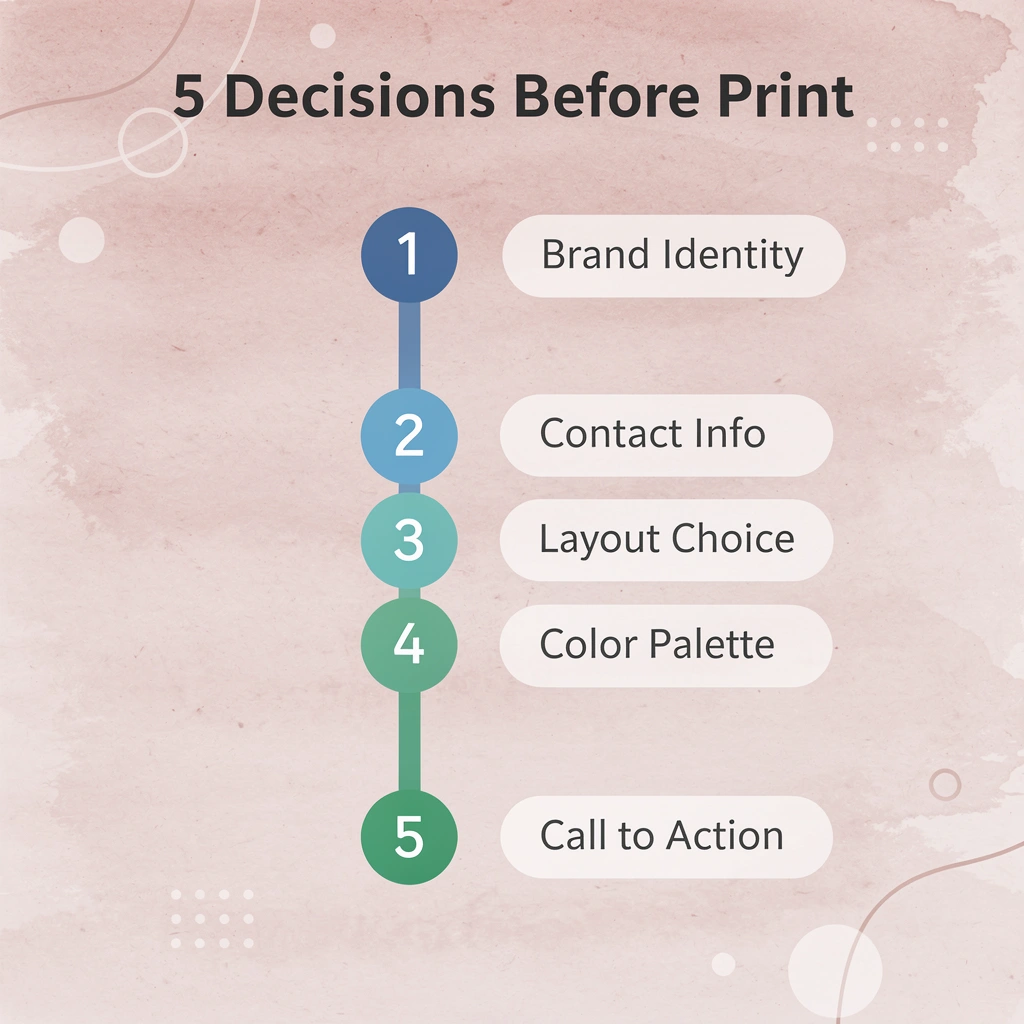
A card that gets kept isn't the result of luck or expensive printing. It's the result of five deliberate decisions made before the card ever goes to print.
💡 Tip: Before you spend a single dollar on printing, lock in your design choices — the most costly mistakes happen when you skip the planning stage.
⚠️ Warning: Skipping even one of these five decisions is the difference between a card that lands in a drawer and one that gets thrown away immediately.
"A well-designed business card is a physical extension of your brand — and for tradespeople, it's often the last impression that turns a quote into a booked job." — Print Industry Design Research
Here are the critical factors for creating an impactful business card:
- Card size & shape: Influences whether your card fits in a wallet and is actually kept by the recipient.
- Contact information layout: Ensures your details are legible and easy to use at a glance.
- Brand colors & logo: Establishes instant visual recognition and builds professional trust.
- Paper stock & finish: Acts as a tactile signal of your professionalism before any text is even read.
- Call to action: Provides clear direction to potential customers on their next step with your business.
🎯 Key Point: Every great plumbing business card starts with intentional choices — not templates grabbed at the last minute.
Step 1: Identify your brand position
Before you choose a font or pick a color, answer one question honestly: are you the affordable, reliable option or the premium specialist? Your brand position shapes every design choice that follows. A plumber targeting high-end kitchen renovations needs a card that signals precision and expertise, while one focused on fast emergency callouts needs a card that communicates speed and availability. Skipping this step results in a generic card that speaks to no one.
Step 2: Choose one customer message
Most plumbing cards try to say too much: licensed, insured, 24/7, residential, commercial, free estimates, family-owned since 1987. The reader remembers none of it. Pick the single message that matters most to your ideal customer. If your best customers are homeowners who worry about being overcharged, lead with your license number and a clear price guarantee. One message, consistently placed, is more persuasive than five competing claims.
Step 3: Prioritize readability above everything else
According to the UPrinting Blog, 72% of people judge a company or person by the quality of their business card. Poor readability signals low quality. Your phone number should be the largest text element, with your name and credentials immediately visible. Avoid decorative fonts, low-contrast colors, and overcrowded layouts: they undermine the card's core purpose of making it easy for someone to call you.
What trust builders actually earn a place on your card?
A trust builder earns its place on the card only if a customer would notice its absence. Your state license number, recognizable certification logos (Master Plumber, EPA-certified), and Google review counts or star ratings all qualify. A tagline like "Serving Austin homeowners since 2009" works because it demonstrates longevity and local connection—two factors customers weigh when deciding whether to trust you. Skip anything that merely looks nice without answering: "Why should I trust this person in my home?"
How do you prevent a card exchange from becoming a cold lead?
Most plumbers hand out cards and never follow up. The contact sits in a pocket, gets transferred to a drawer, and the lead goes cold. Digital business cards from Mobilo change that by turning each exchange into a trackable lead, feeding contact details directly into a CRM without manual entry, which is critical when you're running between job sites with no time to chase down names.
Step 5: Test before you commit to a print run
Print a single proof and live with it for 48 hours. Hand it to someone unfamiliar with your business and ask what you do, who you serve, and how to reach you. If they hesitate on any answer, the card isn't ready. Premium materials like thick cardstock, soft-touch laminate, or spot UV coating reinforce quality for high-end residential brands, but they won't compensate for weak messaging or poor design. Invest in print quality only after the card clearly communicates who you are, what you do, and why homeowners should remember you.
A great plumbing business card is one customers remember when a pipe bursts at midnight and they need someone they trust.
Upgrade Your Plumbing Business Cards with Mobilo—and Get Your First 25 Free
Most plumbers hand out a card and hope for the best. The card gets pocketed, the number gets lost, and the follow-up never happens. That gap between handing someone a card and converting them into a repeat customer is where most small plumbing businesses lose money.
"The gap between handing someone a card and converting them into a repeat customer is where most small plumbing businesses lose money." — Key Industry Insight
⚠️ Warning: A traditional business card has no tracking, no follow-up trigger, and no way to capture customer information in return. Every card you hand out is a potential lead you may never recover.
💡 Tip: The problem isn't the card itself—it's the broken follow-up process behind it. Fix the system, not the card.
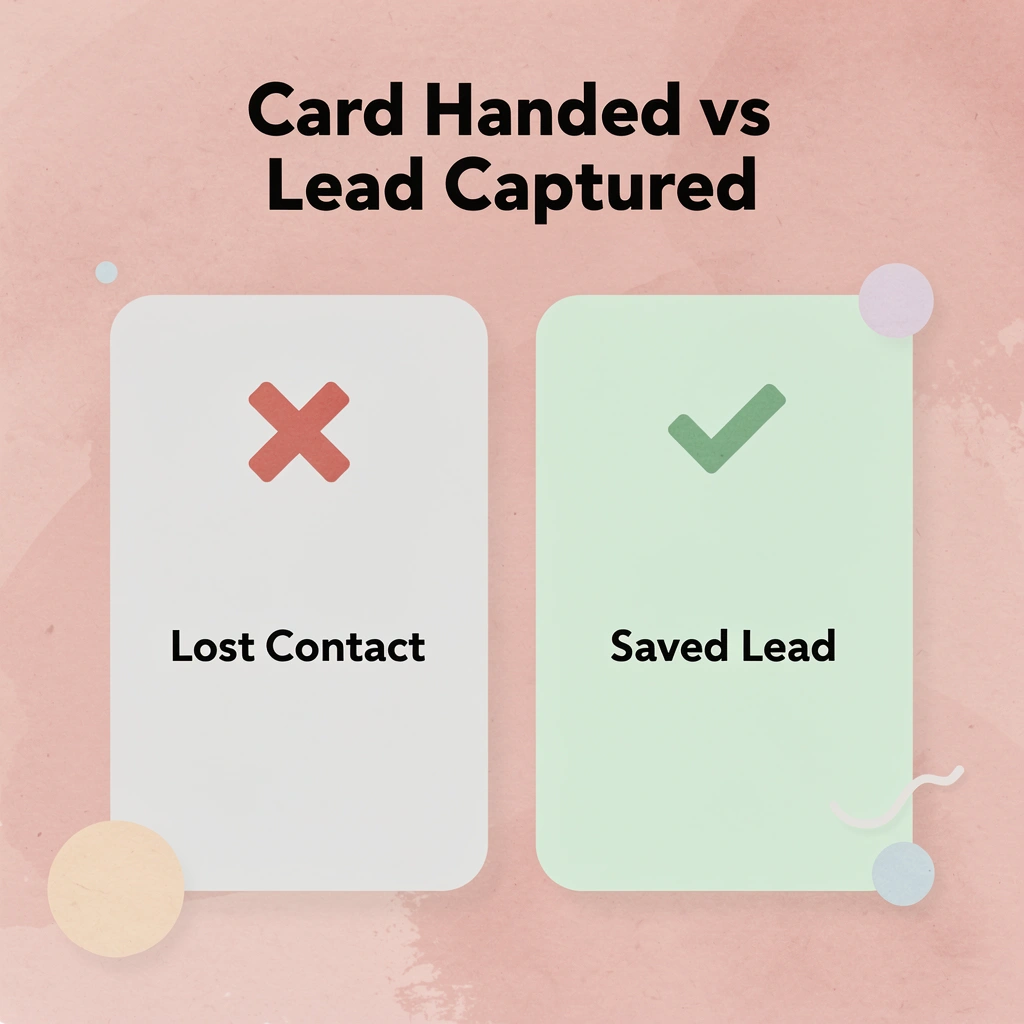
Digital business cards like Mobilo close that gap without adding work to your day. Every tap shares your contact details instantly, captures the customer's information automatically, and syncs directly to your CRM—so no lead slips through. More than 59,000 companies already use Mobilo to turn every handshake into a trackable connection. Book a demo and your first 25 Mobilo cards are free—a $950 value.
The following table compares traditional paper business cards against the capabilities of the Mobilo digital card:
- Contact Sharing: Traditional cards are manual and one-way; Mobilo enables instant, two-way exchange.
- Lead Capture: Traditional cards offer no capture functionality; Mobilo automates lead gathering.
- CRM Sync: Traditional cards lack integration; Mobilo provides direct synchronization with your CRM.
- Follow-up Tracking: Traditional cards have no tracking; Mobilo features built-in follow-up monitoring.
- Initial Cost: Traditional cards vary by print volume; the first 25 Mobilo cards are free (valued at $950).
🎯 Key Point: With Mobilo, every single tap transforms a passive card exchange into a fully trackable, CRM-connected lead—meaning your plumbing business never loses another contact to a forgotten pocket.
✅ Best Practice: Book your free demo today and claim your first 25 Mobilo cards at no cost—a $950 value that pays for itself the moment you land your first converted repeat customer.
Related Reading
- HVAC Business Cards Examples
- Electrician Business Card Ideas
- Unique Business Card Ideas
- Artist Business Cards Examples
- Therapist Business Cards Examples
- How To Put Social Media On Business Card
- Best Real Estate Business Cards