.avif)


How To Get Business Contacts and Turn Them Into Real Opportunities
On This Page
Collecting business cards at networking events only to lose them in a drawer is a common frustration for professionals trying to grow their networks. Learning how to get business contacts effectively requires more than gathering names and phone numbers. It demands a systematic approach to acquiring quality connections, nurturing relationships with intention, and converting introductions into meaningful partnerships. The key lies in building processes that help promising contacts become actual business opportunities.
Modern technology eliminates the awkward gap between meeting someone and maintaining that connection. Instead of scrambling to exchange information or hoping people remember you after brief conversations, professionals can now share details instantly and make follow-up effortless. When contact sharing becomes seamless, more energy can be devoted to what truly builds relationships: meaningful conversations and consistent follow-through with a digital contact card.
Summary
- Most professionals think expanding business contacts is about meeting more people, but volume without targeting creates networks full of connections who can't help you and don't need what you offer. B2B contact data decays 30% per year according to MarketsandMarkets, which means even carefully built lists become less relevant over time. When you add contacts without context about their needs, challenges, or decision-making authority, you're building a database of strangers who won't refer business or open doors.
- Networking operates on visibility and reciprocity, not possession, yet only 48% of professionals maintain contact with their network, according to Forbes. Most connections fade because people don't invest in keeping them alive. Successful networkers refer business to people they've just met, connect members to opportunities even when there's no immediate benefit, and market fellow professionals on social media. This openness creates a reputation that precedes you and makes you someone others want to stay close to.
- Generating high-quality leads remains the biggest challenge for 61% of B2B marketers, according to HubSpot, because most approaches prioritize volume over relevance. Strategic contact building requires three elements working together: a clear offer, a defined audience, and alignment on timing. When any of these pieces is missing, even targeted approaches waste time because you're either pitching to people without budget authority or building a pipeline that never closes.
- Companies excelling at lead nurturing generate 50% more sales-ready leads at 33% lower cost, according to BookYourData, but most contacts die in the gap between exchange and action. The first 24 to 48 hours after meeting someone is when context is strongest and reciprocity is highest. Waiting three weeks to follow up makes your message feel like cold outreach rather than a warm continuation, and by then they've forgotten the conversation entirely.
- According to the National Sales Executive Association, 80% of sales require five follow-up calls after the initial meeting, yet 44% of salespeople give up after one follow-up. That gap between intention and execution is where opportunity evaporates. You can't scale networking through memory and good intentions because you need a system that turns every new contact into a series of deliberate, timed interactions that keep you present without being pushy.
- Digital contact cards address this by syncing new connections directly into CRM systems, with context tags, notes, and automated reminders the moment you meet someone, eliminating the manual data entry that causes half your event leads to go cold before you even reach out.
Why Most Efforts to Expand Business Contacts Lead to Low-Quality Connections
You're attending more events, collecting more cards, and connecting on LinkedIn. But your pipeline doesn't convert. Most professionals assume growing your business contacts means meeting more people or expanding your list. More contacts often creates confusion, not opportunities.
💡 Tip: Prioritizee contact quality over quantity. 10 well-researched prospects outperform 100 random connections every time.

The problem is that growing your network without a plan creates a group of people who can't help you and don't need what you offer. According to MarketsandMarkets SalesPlay, B2B contact data degrades by 30% annually. Adding contacts without understanding what they need, what problems they face, or who makes decisions means building a database of strangers. People you don't know won't refer business to you or open doors for you.
"B2B contact data gets worse by 30% every year." — MarketsandMarkets SalesPlay, 2025
⚠️ Warning: Building a large network of irrelevant contacts wastes time and resources while creating the illusion of progress.
1. They Enter the Room to Sell, Not to Serve
Walk into any networking event, and you'll spot them right away: professionals who lead with their pitch. Their first question isn't "What do you do?" but "Can I tell you about what we offer?" People sense this energy before a word is spoken. Body language shifts. Eye contact becomes transactional. The conversation ends politely, but the relationship never begins. Networking spaces are relationship incubators, not marketplaces. When you show up to take value rather than create it, people instinctively protect their networks from you. They might exchange pleasantries or accept your card, but they won't introduce you to their best contacts or advocate for your work. The moment someone senses self-interest, doors close quietly.
2. They Forget This Is a Game-Changing Room
Every networking room contains potential most people miss. One connection can lead to 10 referrals; one conversation can unlock markets you couldn't access on your own. Yet people walk in without a plan, talk too much, listen too little, and miss chances to understand what others need. Strategic networkers enter with curiosity, not hunger. They scan the room asking: What brings people here? What challenges do they mention repeatedly? Who seems well-connected and generous? This awareness transforms random encounters into strategic relationships, replacing contact collection with genuine pathways.
3. They Don't Become the "Honey."
People naturally move toward value. The honey isn't your product or service—it's your ability to connect people, refer business, create visibility, and open doors for others. When people know you're a source of opportunity, they gravitate toward you without being asked.
How do you shift from scarcity to abundance mindset?
This requires a mindset shift from scarcity to abundance. Share your contacts generously. Introduce people who could help each other, promote their work on your platforms, display their materials in your office, and speak well of them in their absence. You become visible, valuable, and trusted. People remember who helped them succeed and return that energy when it matters most.
4. They Close Their Networks Instead of Opening Them
Many professionals guard their contacts like trade secrets, focusing only on personal gain. This fails because networking operates on visibility and reciprocity rather than possession. Forbes reports that only 48% of professionals stay in touch with their network; most connections fade from neglect. When you close your network, you become forgettable.
Successful networkers do the opposite: they refer business to new contacts, connect members with opportunities without immediate benefit, and publicly promote fellow professionals. This openness builds a reputation that precedes you—people mention your name in rooms you've never entered because you help others succeed. That reputation is worth more than any contact list.
5. They Don't Understand the Law of Reciprocity
Networking is governed by one principle: when you give, people give back. Not immediately. Not always directly. But inevitably. People who fail at networking are impatient. They want instant sales and immediate returns, meeting someone on Tuesday and expecting a referral by Friday. When it doesn't happen, they move on and repeat the cycle.
How does giving first create long-term networking success?
People who succeed know that networking is a long-term investment based on generosity. You help someone today without expecting anything in return. Six months later, they remember and send you a client. A year after that, they introduce you to someone who transforms your business. Give first. Give often. Give without keeping score. The returns grow in ways you cannot plan or control, but they always come.
Why aren't all networking contacts equally valuable?
But here's what nobody tells you about those returns: not all contacts hold equal value, and most people can't distinguish the difference until it's too late.
Related Reading
- Benefits Of Business Networking
- Digital Networking
- Types Of Business Networking
- Professional Networking
- Digital Presence
- Virtual Networking Tips
- Business Networking
- Networking Business Card
What Actually Makes a Business Contact Valuable for Growth
A valuable business contact isn't defined by their job title or company size. They're valuable when three things come together: they're relevant to what you offer, they're in a position to act (either as decision-makers or credible influencers), and the timing matches their need. Everything else is noise.

🎯 Key Point: The most impressive contact list means nothing if those contacts can't or won't buy from you right now.
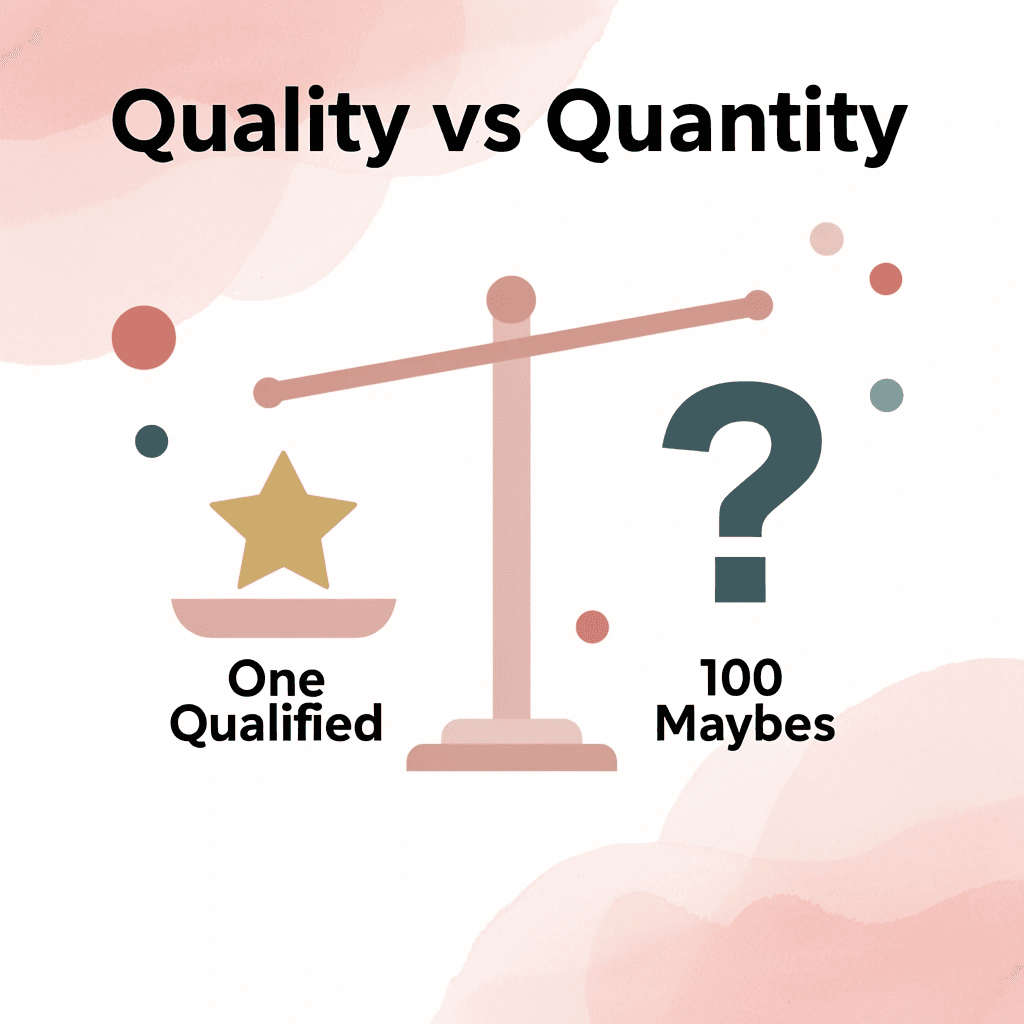
"Quality over quantity - one qualified contact who needs your solution today is worth more than 100 contacts who might need it someday." — Business Development Research, 2024
💡 Pro Tip: Focus on building relationships with contacts who have both budget authority and an active problem your business solves - these are your highest-value connections.
Why does volume-based networking often fail?
Most professionals chase volume because it feels productive. Collecting 50 new LinkedIn connections at a conference creates the illusion of progress, but misalignment kills conversion faster than any other factor. When you connect with someone who lacks budget authority, doesn't face the problem you solve, or operates in a context where your solution doesn't fit, you've added friction to your pipeline. Wrong roles become dead ends. Without shared context, there's no follow-through. One qualified contact who understands your value and can act on it creates more opportunity than 50 random introductions that go nowhere.
Trusted Referrals Transfer Credibility Instantly
A contact becomes more valuable when they act as a gate-opener. Their introduction skips the trust-building phase because credibility transfers. According to Business Enterprise Mapping's analysis of growth metrics, companies tracking referral quality alongside volume see conversion rates climb because high-intent leads arrive pre-qualified. These contacts bring people who need what you offer, not just anyone willing to meet.
Industry Expertise Accelerates Decision-Making
Good contacts give you smart advice that helps you see problems in your own business that you might miss. Mentors and industry leaders can spot pain points you don't notice because you're too close to the situation. They share insider knowledge about competitor activity, upcoming regulations, and market changes before they become common knowledge. When a contact can explain why your plan won't work in a certain situation before you waste six months learning it the hard way, that's invaluable.
Complementary Capabilities Enable Scale
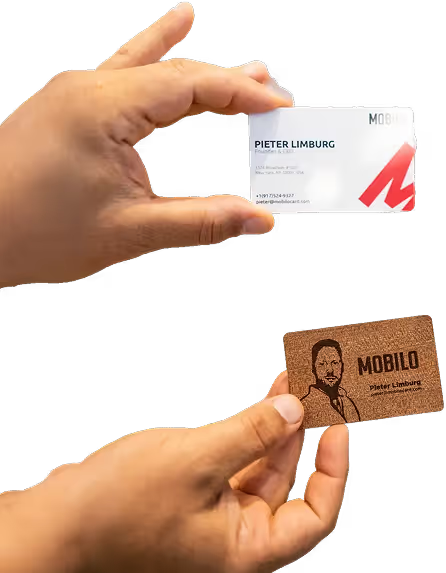
The most valuable partnerships leverage resources, technology, or skills you lack. They enable faster market entry, joint offerings, or better customer reach than solo efforts. Strong supplier relationships provide priority access, better pricing, and faster service. The 70/30 rule applies: valuable contacts prioritize outcomes benefiting both sides and long-term partnership over quick gains. Tools like digital contact cards capture high-value interactions in an organized way. Our Mobilo card automates lead capture and syncs contact details, conversation notes, and next steps directly into your CRM, ensuring nothing gets missed, and your team can act while the information remains fresh.
Access to Capital and Resources Fuels Growth
Some contacts provide direct access to funding or operational support, improving your ability to invest in growth. Investor relations matter when they believe in your long-term vision, not just current revenue. Strategic partners offer logistical, financial, or technical support that removes constraints. These relationships require alignment on risk, timeline, and what success looks like under pressure. But knowing what makes a contact valuable doesn't tell you how to find them, which is where most strategies fall apart.
Related Reading
- How To Use Social Media For Networking
- Social Networking For Business
- Icebreaker Examples Business Networking
- How To Build A Professional Network
- Business Networking Ideas
- Small Business Networking
- Networking Mistakes
- Networking Follow-Up Email
How to Get Business Contacts Strategically Instead of Randomly
Strategic contact building starts with a clear picture of who you need, why you need them, and where they already gather—unlike random networking that casts wide nets hoping something sticks. According to HubSpot, 61% of B2B marketers say generating high-quality leads is their biggest challenge. This struggle exists because most approaches prioritize quantity over quality, creating databases full of contacts who never respond or convert.
"61% of B2B marketers say generating high-quality leads is their biggest challenge." — HubSpot, 2025
🎯 Key Point: Strategic networking targets specific people with clear intent, while random networking wastes time on unqualified contacts who won't convert.

Precision requires three elements: a clear offer, a defined audience, and alignment on timing. When any piece is missing, even targeted approaches waste time. You can attend the right conference but fail to explain your value proposition, or have a compelling offer but pitch it to people without budget authority or immediate need—both result in pipelines that never close.
Essential Element
What Happens When Missing
Clear Offer
Contacts don't understand your value
Defined Audience
You waste time on wrong prospects
Timing Alignment
Perfect contacts aren't ready to buy
⚠️ Warning: Even one missing element can derail your entire contact strategy—ensure all three components align before reaching out.
1. Referrals
When you need a specific contact—a technical advisor, potential partner, or niche expert—start with your existing network. Referrals work because they're warm introductions from mutual connections, which increases response rates and speeds up conversations. Even if your network feels small, reach out anyway. The consultant you worked with two years ago might know the exact CFO you need, or your college roommate's sister might run the industry association you've been trying to access.
How do you make referral requests more effective?
The problem with referrals isn't that people don't know others—it's that the request lacks clarity. Asking "Do you know anyone in marketing?" yields unclear answers or silence. Asking "Do you know any VP-level marketers at SaaS companies with 50 to 200 employees who are currently evaluating lead generation tools?" enables them to search their memory and provide a real answer.
2. Networking Apps and Platforms
LinkedIn remains the largest professional network, though alternatives like HubSpot's Connect.com, Meetup.com, Fishbowl, and Bumble Bizz suit different industries and goals. Prioritize quality relationships over quantity: professionals with hundreds of thousands of LinkedIn connections often see minimal engagement or business value, having built vanity metrics rather than real networks.
Real relationships require active participation, not passive membership. Answering specific questions about pricing strategy or customer acquisition demonstrates your value and generates inbound connection requests. The greatest networking benefit comes from using your experience to help others, not from collecting profile views.
3. Industry Events and Educational Conferences
Trade shows and conferences bring together relevant contacts in one place, though not all events deliver equal value. Well-attended industry-specific events provide substantial ROI because attendees self-select based on relevance. A cybersecurity consultant attending RSA Conference meets 50 qualified prospects in three days, compared to six months of random online networking. I landed one of my biggest consulting clients by sitting at a lunch table with a stranger during a workshop session.
Which types of events attract higher-quality prospects?
Educational events often work better than general trade shows because people who pay for their own learning tend to be more driven and focused on their careers. Someone who paid to attend a workshop on growing B2B sales operations is more likely to have decision-making power and budget control than someone sent by their company to a trade show booth. Pick events that match your target audience: a focused conference on HIPAA rules will outperform a general tech expo for healthcare compliance software.
How can you prevent event leads from going cold?
Most teams manage event contacts using paper business cards or manual spreadsheet entry, which loses context and reduces response rates as conversations multiply. Platforms like digital contact card automate lead capture at events, syncing contact details directly into your CRM with conversation notes and eliminating manual data entry that causes event leads to go cold.
4. Targeted Groups and Communities
Professional associations, entrepreneurship groups, and community organizations that align with your interests help you build business contacts. The U.S. Chamber of Commerce operates in more than 7,500 locations and offers structured networking opportunities. Industry-specific associations put you in rooms with people facing similar challenges, creating natural conversation starters. I built meaningful business relationships through a local mountain biking trail advocacy group, which was unexpected when I first joined to help with trail maintenance.
Which communities should you choose for strategic networking?
Pick communities where your target audience already spends time. If you want to connect with startup founders, join a local Entrepreneurs' Organization chapter. For corporate HR leaders, SHRM events make more sense than random chamber mixers. Smart contact-building means choosing the right channels based on where your audience spends time.
5. Research-Driven Cold Outreach
Cold outreach works when you replace spray-and-pray tactics with research and personalization. The National Sales Executive Association reports that 80% of sales require five follow-up calls after the initial meeting. Find common ground, reference their specific work, and explain why connecting benefits both parties.
What makes personalized outreach messages successful?
My most valuable mentors came from cold outreach early in my career. Those messages worked because I did the homework: I referenced their published articles, explained what I was working on, and asked specific questions only they could answer. Generic "I'd love to connect" messages get ignored, while personalized outreach that demonstrates understanding of their work generates responses.
6. Alumni Networks and Shared Context
Your alma mater represents an investment you can leverage long after graduation. Alumni networks provide built-in commonalities that make initial outreach easier. Shared experiences with specific professors, campus traditions, or career services create natural conversation starters. An alumni network message mentioning those shared touchpoints generates far more responses than a generic LinkedIn request.
How do you turn alumni connections into real opportunities?
The precision principle still applies. Finding alumni who work in your target industry, hold relevant positions, or possess needed expertise, then making specific requests, turns shared background into real opportunity. Without clear positioning about what you offer and what you need, even warm alumni connections lead nowhere.
7. Social Media
You don't have to use only platforms made for professionals to find business contacts. Facebook, for example, has groups for almost everything. Join groups that match your professional skills and engage with other members. Share your knowledge whenever possible. The best networking comes from using what you know to help others, not passively reading what others post. But getting contacts is only the start; most networking efforts fail at that point.
How to Turn New Business Contacts Into Real Opportunities Consistently
Most contacts die in the gap between exchange and action. According to HubSpot Sales Statistics, 80% of sales require five follow-up calls after the meeting, but 44% of salespeople give up after one follow-up. That gap between intention and execution is where opportunity evaporates.
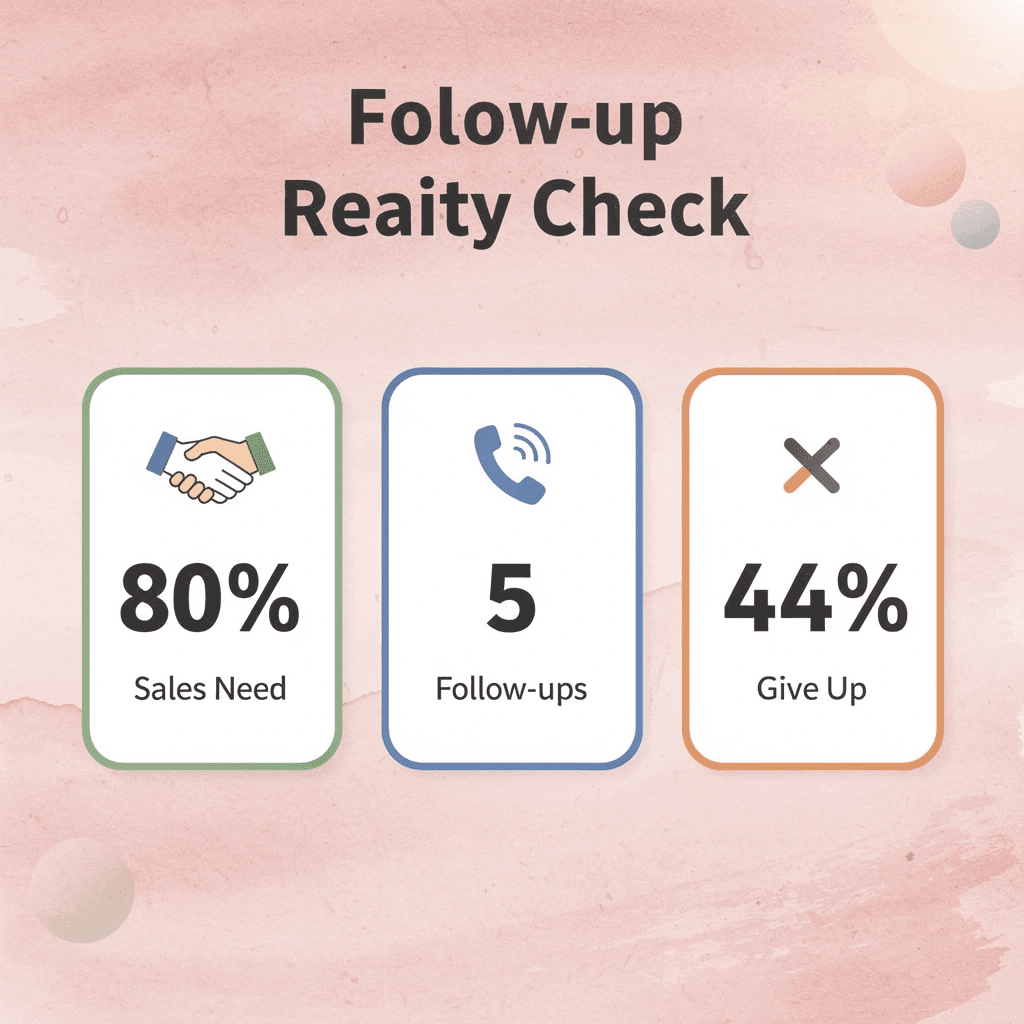
"80% of sales require five follow-up calls after the meeting, but 44% of salespeople give up after one follow-up." — HubSpot Sales Statistics, 2024
🎯 Key Point: The majority of business opportunities are lost not because of poor initial connections, but because of inadequate follow-up strategy and execution gaps.

⚠️ Warning: Never assume that exchanging contact information equals relationship building – the real work begins after the initial meeting when consistent follow-up separates successful networkers from those who waste connections.
Why does the follow-up system matter more than the initial contact?
A contact is raw material. Without a process to activate it, you've collected data, not built a relationship. Most professionals treat follow-up as an afterthought, so it never happens. You can't scale networking through memory and good intentions. You need a system that turns every new contact into a series of deliberate, timed interactions that keep you present without being pushy.
How does timing affect your networking success?
Timing kills more opportunities than poor messaging. Meet someone at a conference, then wait three weeks to reach out—by then they've forgotten the context and your message feels like cold outreach instead of warm follow-up. The first 24 to 48 hours after meeting someone is when context is strongest and reciprocity is highest. Your follow-up lands as continuation, not interruption.
How does value exchange turn contacts into conversations
Value exchange is the bridge between connection and opportunity. Most follow-ups fail because they ask without giving. "Let's grab coffee" signals "give me your time so I can pitch you." Instead, lead with something useful: a relevant article, an introduction to someone in your network who solves a problem they mentioned, or insight into a challenge they're facing. BookYourData found that companies excelling at lead nurturing generate 50% more sales-ready leads at 33% lower cost.
Platforms like digital contact card close the gap between contact capture and follow-up by syncing new connections directly into CRM systems with context tags, notes, and automated reminders. Rather than manually entering details later, digital contact cards log when and where you met, what you discussed, and trigger follow-up sequences based on contact type.
What follow-up cadence builds lasting relationships
Consistency beats intensity. One thoughtful touchpoint every few weeks outperforms radio silence followed by a desperate pitch. Build a cadence: initial follow-up within 48 hours, value-add check-in at two weeks, another at 30 days. Track what you sent and when to avoid repetition. Remain relevant through pattern, not volume. But perfect follow-up fails if you're not tracking what moves contacts toward opportunity.
Related Reading
- Tips For Networking Events
- Professional Networking Platforms
- Business Networking For Entrepreneurs
- Networking Tips For Small Business Owners
- Business Networking Strategies
- Best Business Networking Apps
- Top Contact Management Software
If You’re Expanding Business Contacts, Don’t Let Them Go to Waste
The problem isn't meeting more people; it's that most new contacts never become opportunities because there's no system to capture who they are, what they need, or when to follow up. You exchange details, and the connection dissolves into incomplete CRM entries or forgotten phone notes. Growth happens when every interaction becomes structured, actionable data the moment it occurs.

🎯 Key Point: The gap between meeting someone and logging their details is where momentum dies and opportunities vanish.
Without instant capture and enrichment, high-value introductions get lost. You meet someone at a conference, scribble notes on their card, and by the time you're back at your desk, the context has faded. You can't remember if they mentioned budget authority, timing, or which pain point resonated. That gap between meeting someone and logging their details is where momentum dies.

"The longer the delay between initial contact and CRM entry, the colder the lead becomes. Speed matters because relevance has a shelf life."
Most teams rely on manual entry after the fact, leaving contacts in limbo for days or never entering the system at all. The longer the delay, the colder the lead becomes. Speed matters because relevance has a shelf life.
Traditional Method
- Manual entry after events
- Lost context and details
- Days of delay before follow-up
- Incomplete contact information
Digital Contact Cards
- Real-time sync to CRM
- Instant capture with notes
- Immediate qualification
- Enriched prospect data
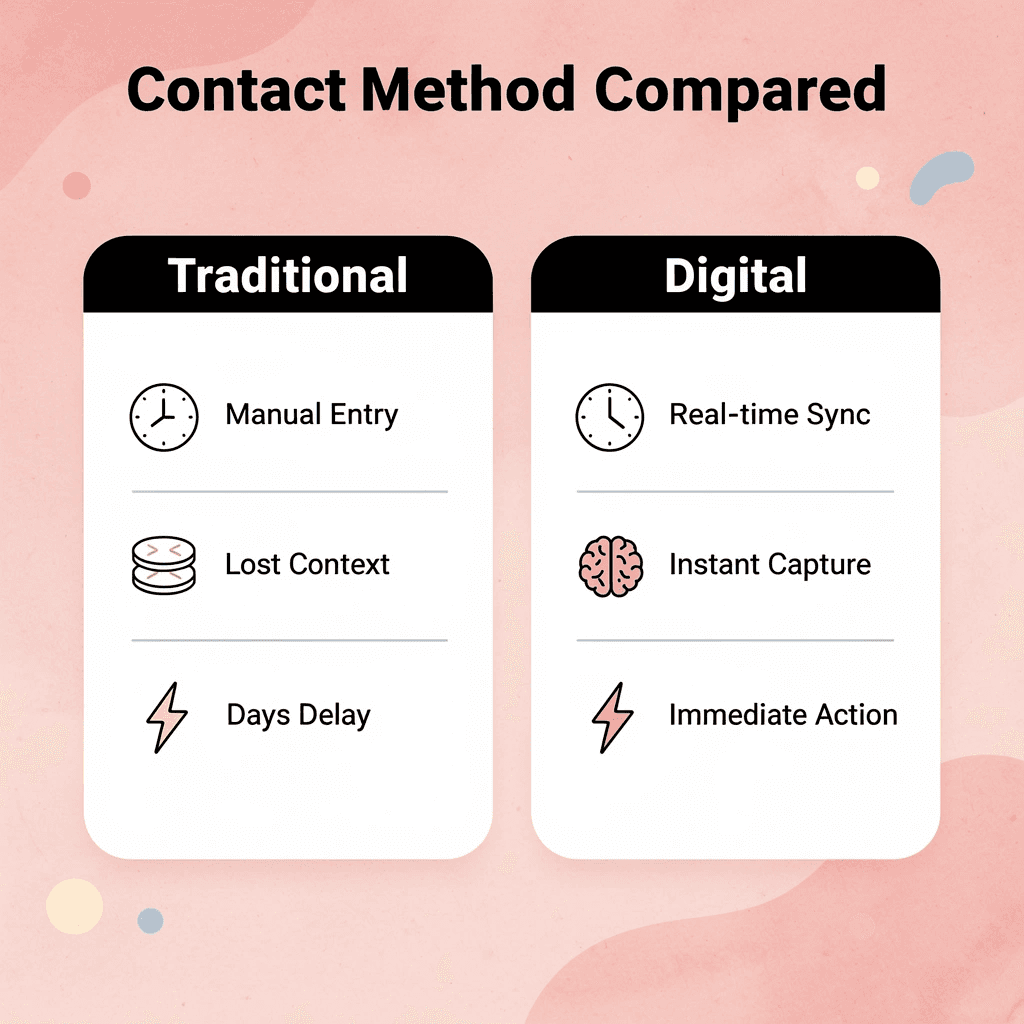
Solutions like digital contact card close that gap by letting you exchange details, score prospects, and sync everything into your CRM in real time. No typing, no delay, no lost context. Every new connection gets captured with the information you need to qualify them before the moment passes.
⚠️ Warning: Without a systematic approach to contact capture, even the best networking efforts turn into missed opportunities and wasted connections.
Get started today and receive your first 25 Mobilo business cards free (worth $950). Book a demo, set up your team, and turn every new business contact into something actionable.