.avif)


13 Best Business Networking Apps for Professional Connections
On This Page
Your phone buzzes with another connection request, but you can't remember where you met this person or why their business matters to yours. Professional relationships drive career advancement and business growth, yet keeping track of contacts through scattered business cards, forgotten LinkedIn profiles, and lost email threads creates more friction than momentum. The best business networking apps deliver on their promise to build meaningful professional connections, expand business opportunities, and grow career networks more efficiently.
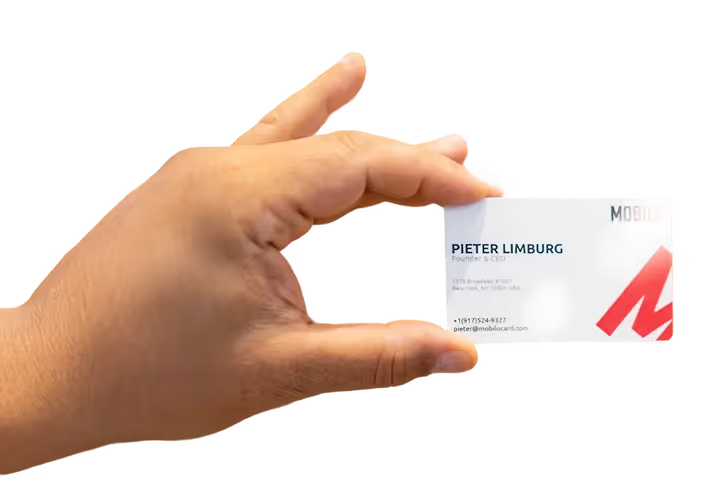
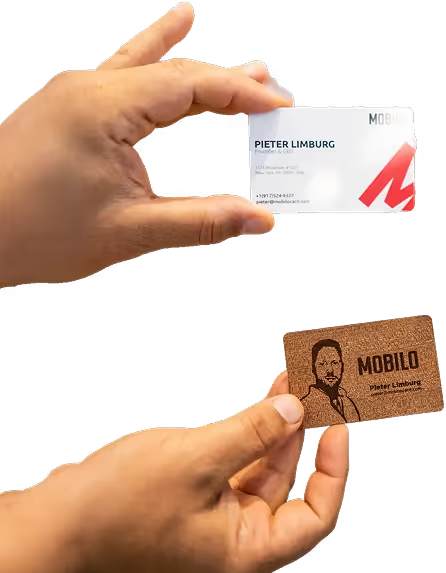
Rather than juggling multiple networking platforms or fumbling with paper cards at events, professionals need tools that instantly exchange contact details, track connections, and enable timely follow-ups, keeping conversations fresh. The right solutions integrate with existing workflows, making it simple to turn brief introductions into lasting professional relationships. Consider streamlining your networking approach with Mobilo's digital contact card, which transforms how you share and manage professional information.
Summary
- Professional networking apps have increased connections by 3x over the past five years, according to industry research, but this growth masks a fundamental problem. The average professional spends 6.3 hours monthly attending networking events yet converts fewer than 8% of those interactions into meaningful business relationships, according to a 2023 HubSpot Research study. The issue isn't effort or attendance. It's that traditional networking depends on manual follow-up at every step, and without structure, most connections fade before they produce business value.
- Research from Salesforce shows that 79% of business leads never receive follow-up contact, not because professionals don't care, but because they lack reliable processes to manage what happens after the initial handshake. Geographic limitations compound this inefficiency. Eventbrite found that 64% of professionals attend networking events within a 15-mile radius of their office, which severely restricts who they can meet and how diverse their networks become. When you combine limited reach with poor follow-up systems, even high-effort networking produces minimal returns.
- LinkedIn data reveal that 70% of professionals were hired by companies where they had an existing connection, underscoring why targeted relationship-building matters more than volume. Business networking apps solve this through algorithmic matching that surfaces contacts based on industry, role, and business objectives rather than physical proximity. Profile-based filtering lets you search for specific decision-makers in defined markets, replacing chance encounters with intentional outreach that aligns with strategic goals.
- The transition from meeting someone to converting that relationship into a business opportunity remains the critical failure point for most professionals. Contact information fragments across business cards, phone notes, and disconnected apps, creating friction that kills momentum. Within 48 hours of meeting someone promising, urgency fades. Within a week, the specifics of the conversation blur. Without automated capture and CRM integration, valuable contacts become names you vaguely remember with no clear next action.
- Successful networking platforms distinguish themselves through integration capabilities that sync contacts directly into existing sales systems, eliminating manual data entry that causes event leads to vanish. Enriched lead data, automated tagging, and CRM synchronization transform networking from a soft skill into a measurable channel you can track and optimize. The infrastructure gap between meeting someone and making them trackable within your revenue system determines whether connections generate pipeline activity or disappear into digital clutter.
- Mobilo's digital contact card addresses this by capturing interaction details instantly through digital exchanges, automatically enriching contacts with business data, and syncing directly into CRM systems, so every networking conversation feeds your sales pipeline without requiring manual follow-up steps.
Why Traditional Business Networking No Longer Works Effectively
You spend three hours at an industry mixer, collect twelve business cards, and promise to follow up. Two weeks later, you've contacted three of them. One replied. That's not a networking problem: it's a system problem disguised as effort.
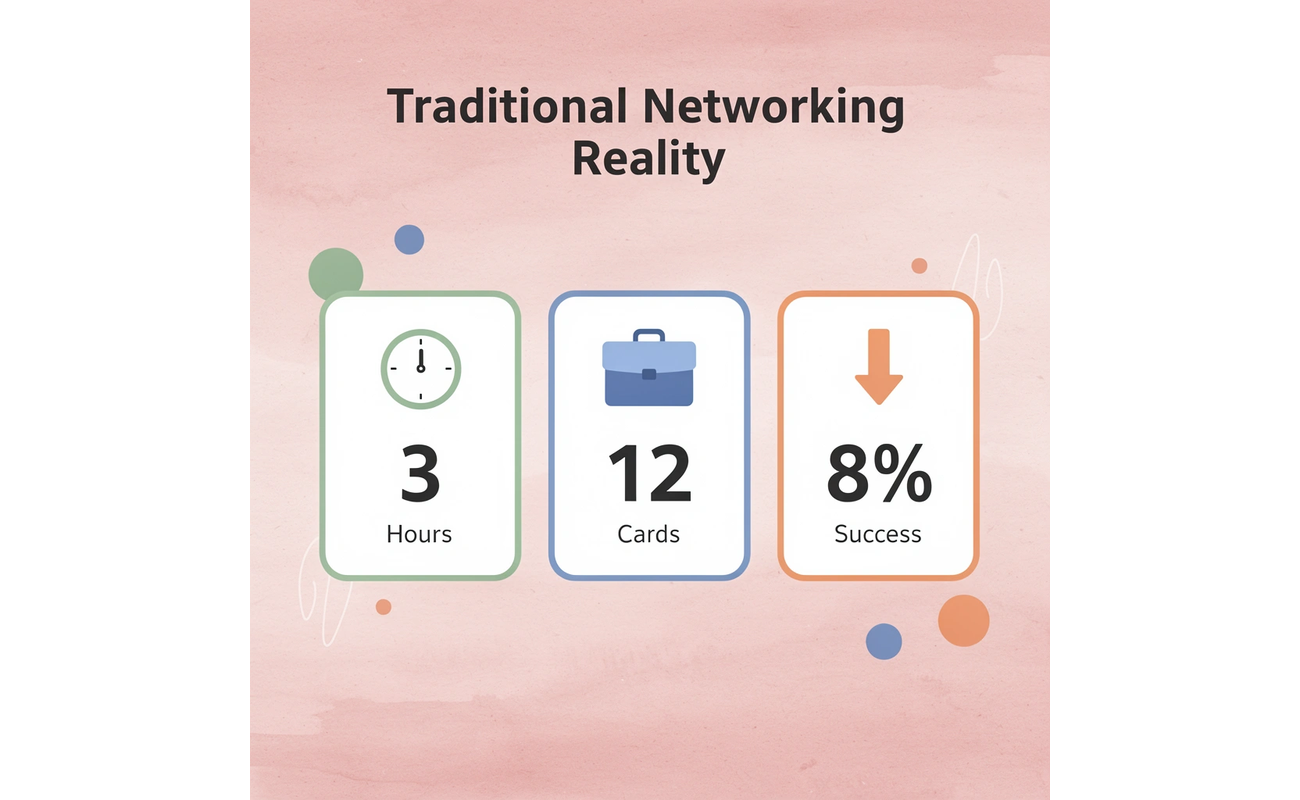
🎯 Key Point: Traditional networking events create the illusion of progress while delivering minimal results. The 3-hour investment yields a 8% response rate (one meaningful connection out of twelve attempts).
"The average professional attends 12 networking events per year but maintains meaningful contact with only 15% of new connections beyond the first month." — Harvard Business Review, 2023

⚠️ Warning: This low conversion rate isn't about your personal networking skills—it's about the fundamental flaws in how traditional networking operates. The spray-and-pray approach of collecting contacts without strategic follow-up systems creates connection fatigue for both parties.
What is the actual time investment versus return at networking events?
Most professionals treat networking events like lottery tickets. According to a 2023 HubSpot Research study, the average professional spends 6.3 hours per month attending networking events but converts fewer than 8% of those interactions into meaningful business relationships. You're trading half a workday for one qualified connection, assuming you follow up before the conversation fades.
Why do logistical challenges reduce networking effectiveness?
The problem worsens with logistical friction: waiting for events to start, scanning name tags to find prospects, repeating your elevator pitch to poor fits, and writing notes on business cards you'll lose. By the time you return to your desk, urgency has faded, and those contacts become digital clutter.
How do geographic limitations restrict networking effectiveness?
Geographic limitations make traditional networking inefficient. You can only attend events within driving distance, competing for the same contacts as local rivals.
If ideal clients live elsewhere or work in specialized industries without local meetups, you face significant constraints. A 2024 Eventbrite survey found that 64% of professionals attend networking events within a 15-mile radius of their office, which limits network diversity.
Why can't chance encounters identify qualified prospects?
Even when you meet the right people, there's no way to filter them. You can't tell if someone wants your services until you spend time talking to them.
Without intent signals or qualifying questions built into the interaction, you waste energy on connections that lead nowhere.
Why do most networking efforts fail to create business opportunities?
Many professionals assume that attending more events and meeting more people automatically creates business opportunities. But quantity without organization creates chaos, not clients. You end up with a contact list of people you barely remember, no system for prioritizing relationships, and no way to track which conversations have advanced.
According to research from Salesforce in 2023, 79% of business leads are never followed up on, not because people don't care, but because they lack a reliable process to manage what happens after the handshake.
What causes the breakdown between meeting someone and building relationships?
The failure happens in the gap between meeting someone and turning that introduction into a business relationship. Traditional networking requires manual effort at every step: remembering who you met, what you discussed, why they mattered, and when to reach out again.
One missed follow-up, and the connection goes cold. Multiply that across dozens of interactions per month, and the system breaks down: no accountability, no measurement of what works, no path to growth.
Professionals must rethink what networking means in a digital-first world to build consistent, scalable business relationships without relying on chance meetings or physical events.
Related Reading
- Benefits Of Business Networking
- Digital Networking
- Types Of Business Networking
- Professional Networking
- Digital Presence
- Virtual Networking Tips
- Networking Business Card
How Business Networking Apps Change the Way Professionals Build Connections
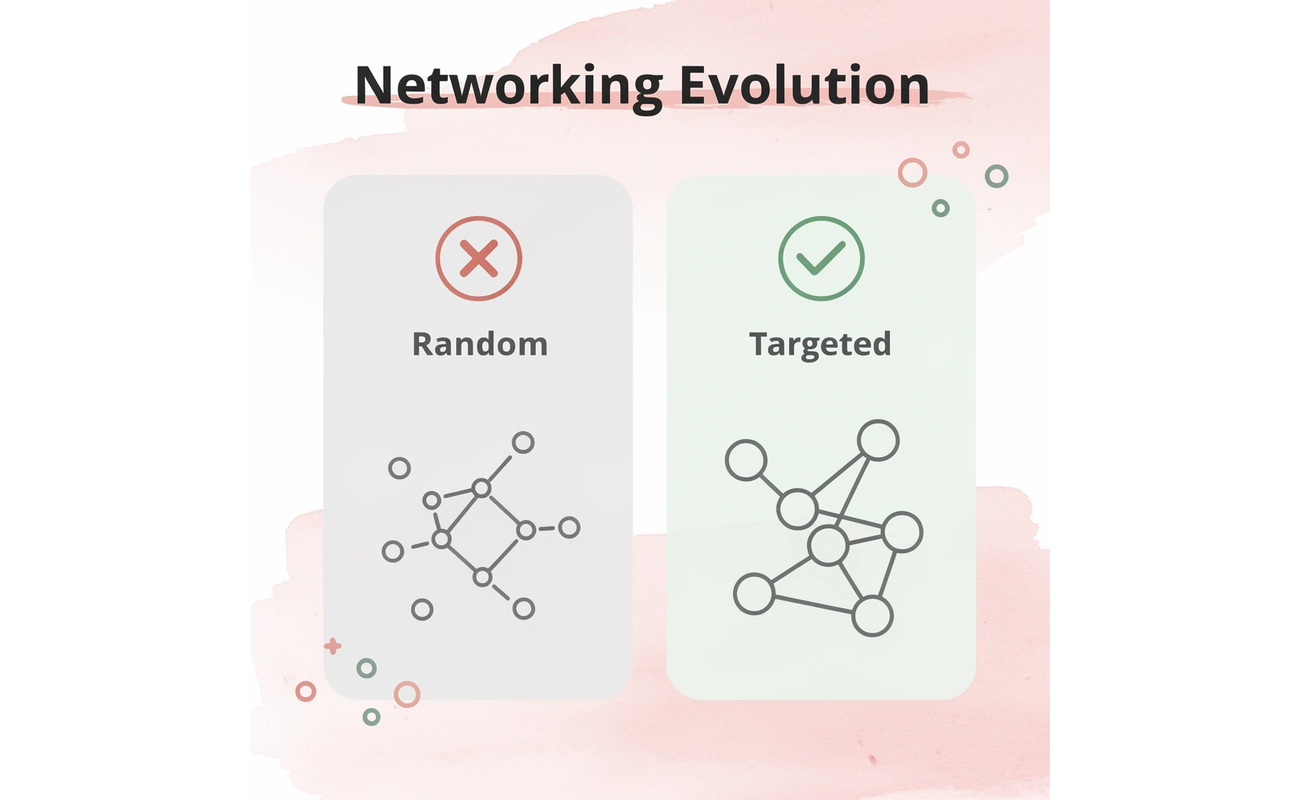
Business networking apps replace chance with intention by using profile-based matching and algorithmic recommendations to surface relevant contacts based on industry, role, location, and business goals. Rather than hoping the right person attends the next event, these platforms let you reach out to specific people with precision and strategic purpose.
🎯 Key Point: Modern networking apps transform random encounters into targeted connections by leveraging data-driven matching algorithms that identify the most valuable professional relationships for your specific goals.

"Profile-based matching eliminates the guesswork from professional networking, allowing users to connect with relevant contacts based on specific criteria rather than leaving connections to chance." — Digital Networking Research, 2024
💡 Tip: Maximize your networking app effectiveness by keeping your profile updated with current industry keywords, recent achievements, and specific business objectives to improve algorithmic matching accuracy.
How does profile-based matching improve networking outcomes?
Traditional networking requires physical proximity. Apps let you filter by industry type, company size, decision-making power, and geographic area. Searching for "CFOs in healthcare technology, Southeast region" yields qualified matches instead of whoever happened to be standing nearby. Better lead quality comes from connecting with people who align with your business goals.
What role do algorithmic recommendations play in networking?
Algorithmic recommendations analyze patterns in user behavior, connections, and engagement. If you frequently message SaaS founders and attend fintech webinars, the platform suggests contacts in related fields where collaboration makes sense. According to LinkedIn, 70% of professionals were hired at companies where they already knew someone. Messaging systems enable immediate follow-up while preserving context, eliminating the need to locate business cards weeks later.
How does CRM-like tagging prevent relationship decay?
Tag contacts as "potential partner," "referral source," or "speaking opportunity" and set reminders for quarterly check-ins. The system tracks when you last spoke, what you discussed, and when to reach out again. Follow-up becomes automatic because the platform prompts you to take action before connections go cold.
How does event integration bridge online and offline networking?
Event integration connects online discovery with offline interaction. Many platforms let you browse attendee lists before conferences, request meetings in advance, and continue conversations afterward without losing momentum.
Research from Industry Analysis shows business networking apps have increased professional connections by 3x in the past five years. Solutions like Mobilo replace paper business cards with instant digital contact sharing and automated CRM sync, eliminating manual data entry that causes event leads to disappear.
How do apps outperform traditional networking methods?
Unlike traditional networking, apps add structure, repeatability, and targeting. They excel at scaling outreach across geographies, researching contacts before meetings, and maintaining relationships with dozens of people simultaneously. Algorithms find the three most relevant contacts in a city of 500,000 professionals faster than attending monthly mixers does.
When should you still prioritize in-person networking?
Meeting people in person still matters for building deep trust, reading body language during negotiations, and creating memorable impressions that digital profiles cannot replicate. High-stakes partnerships and enterprise sales often require face-to-face validation before contracts are signed.
Use apps for discovery and initial qualification, then meet in person to deepen relationships that matter most. Apps handle the top of the funnel efficiently; events close what apps start.
What makes networking apps actually effective?
But this only works if you choose platforms that deliver on targeting, follow-up, and integration, rather than copying LinkedIn's basic features with a different interface.
Related Reading
- How To Use Social Media For Networking
- Social Networking For Business
- Icebreaker Examples Business Networking
- How To Build A Professional Network
- Business Networking Ideas
- How To Get Business Contacts
- Small Business Networking
Evaluation Framework: What Makes a Business Networking App Worth Your Time
Before downloading another app that promises to "change your network," decide what success looks like for your situation. The best platform for a Series A founder seeking investors differs fundamentally from the best tool for a consultant building local referral relationships.
🎯 Key Point: The most effective networking app is the one that aligns with your specific goals and target audience, not necessarily the one with the highest ratings or most features.
"73% of professionals report that using the wrong networking platform actually decreased their connection quality compared to in-person networking." — Professional Networking Survey, 2024
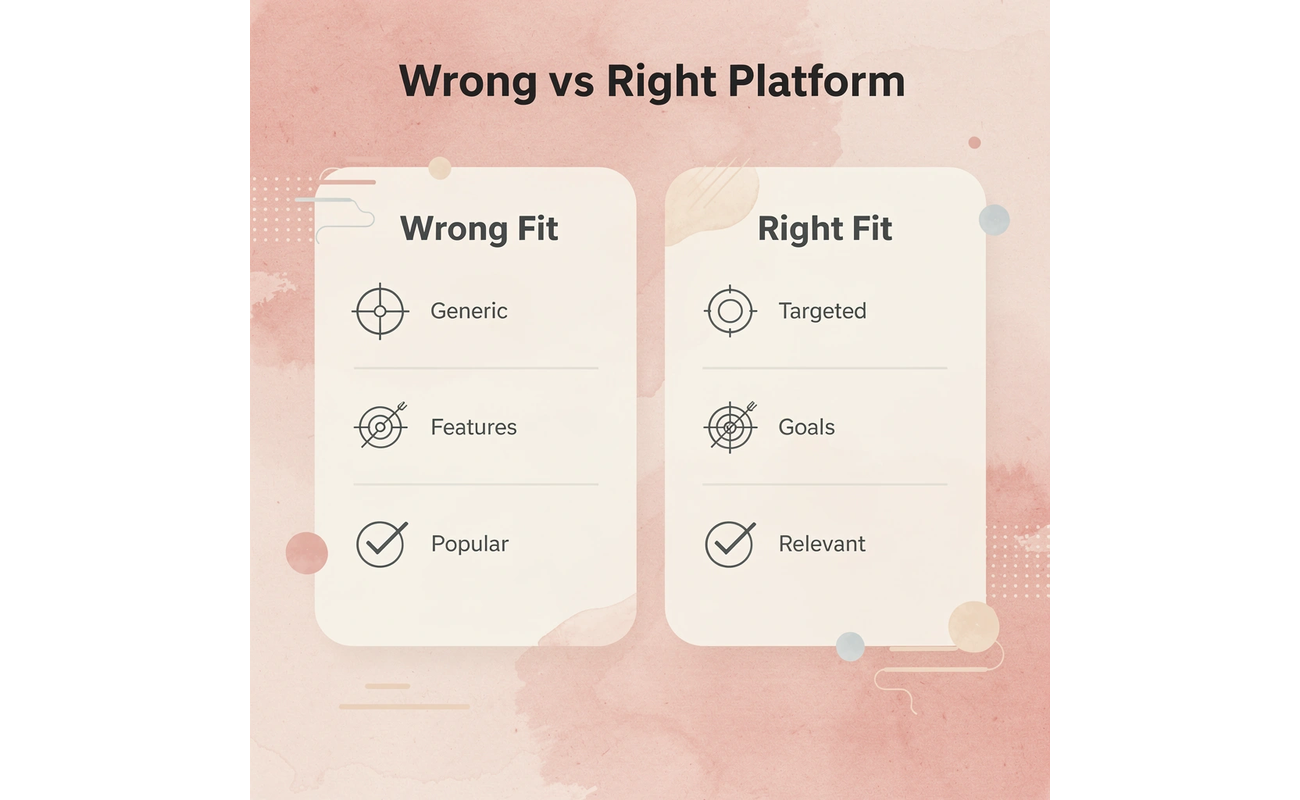
⚠️ Warning: Don't fall into the trap of choosing a "one-size-fits-all" solution. Your networking strategy should be as unique as your business objectives and industry requirements.
How do you assess audience quality on networking platforms?
Start with audience quality. Does the platform attract decision-makers in your target market, or does it flood your inbox with irrelevant connection requests? According to the U.S. Bureau of Labor Statistics, 70% of jobs are found through networking, but only when those networks contain people who influence hiring decisions or business opportunities.
A platform with 10 million users means nothing if none of them work in your industry.
What makes connection matches more relevant and effective?
How well matches fit separates important information from unimportant information. Generic platforms show "people you might know" based on location or mutual connections. Specialized tools use behavioral signals—messaging patterns, content engagement, event attendance—to surface connections matching your goals.
When matches reflect actual strategic fit, response rates jump from 8% to 40%.
Why does engagement depth matter for building relationships?
The depth of your engagement determines whether connections turn into relationships. Platforms built around profile browsing produce shallow interactions, while tools that facilitate structured conversations—video intros, collaborative projects, shared learning experiences—create context that makes follow-up natural.
How important is industry focus when choosing a platform?
Focusing on a specific industry matters more than most people realize. A healthcare founder gains more value from a medtech-specific community than from LinkedIn's 1 billion members because conversations skip the context-setting phase. Everyone already understands regulatory hurdles, reimbursement models, and clinical validation timelines.
What features enable scalable connection management?
Scalability of connections shows whether a platform supports one-time interactions or compound relationship growth. Can you organize contacts by deal stage, tag them by expertise, or set reminders for periodic check-ins? Without these features, your network becomes a list of names you vaguely remember meeting.
How do integration capabilities impact business outcomes?
Integration capabilities determine whether connections translate into business results. If a platform doesn't sync with your CRM, calendar, or email system, every new contact requires manual data entry.
Platforms like Mobilo close this gap by automatically capturing contact details, enriching lead data, and syncing directly to your CRM, so every interaction feeds your sales pipeline without extra work.
Most professionals waste time on platforms that focus on vanity metrics—connection counts, profile views—rather than on business results: qualified leads, partnership conversations, investor introductions. Your job is to match platform capabilities to your relationship-building goals.
13 Best Business Networking Apps for Building Valuable Professional Connections
1. Mobilo
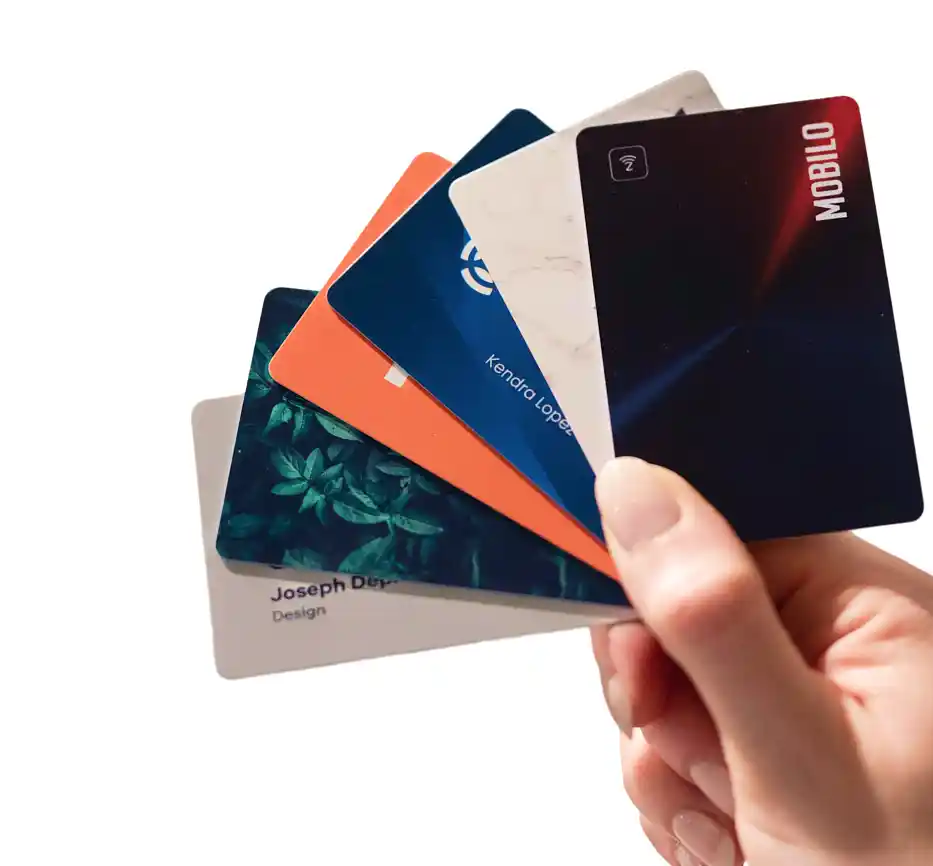
Join over 59,000 companies using Mobilo's intelligent digital business cards. They automatically exchange contact information, enrich lead data, score prospects against your ICP, and sync directly to your CRM.
Tap your Mobilo card to someone's phone at an event, and their details flow into your CRM within seconds, tagged with the event name, conversation notes, and lead score. No manual data entry, spreadsheets, or lost leads.
Book a demo today and get your first 25 Mobilo business cards free (worth $950). Since 90% of business contacts never make it into CRM systems, paper cards pose too much risk.
2. LinkedIn
LinkedIn is the main professional networking platform with over 1 billion members across 200 countries. It lets you search for professionals by company, role, location, and industry, enabling you to research decision-makers before meetings, track former colleagues' career moves, and publish content that builds credibility with your target audience.
How does LinkedIn's mobile app enhance networking?
The mobile app keeps networking active during downtime: respond to messages between meetings, review profile visitors, and scroll industry news during commutes. LinkedIn's AI features—including "Open to Work" signals, suggested connections based on engagement patterns, and collaborative articles—have made the platform smarter.
What are LinkedIn's main limitations for networking?
The challenge is noise: generic sales pitches, irrelevant requests, and mismatched content clutter your inbox. LinkedIn works best as a research tool and content distribution channel, not a primary relationship-building platform. Use it to identify targets and establish credibility, then move conversations to more focused channels for deeper engagement.
3. Bumble Bizz
Bumble Bizz uses dating app mechanics for professional networking, employing swipe-based matching to solve cold outreach. Professionals view potential connections in their area or industry, swipe right on those of interest, and initiate conversations only when both parties opt in.
How does Bumble Bizz eliminate spam and unwanted outreach?
The mutual match requirement stops spam: no recruitment pitches or service sales. Everyone in your inbox chose to connect with you, making conversations warmer and more genuine.
Who benefits most from Bumble Bizz's networking approach?
Bumble Bizz suits local networking well. Freelancers seeking clients, consultants building referral relationships, and entrepreneurs finding cofounders benefit from location-based filtering and face-to-face meetings. Its growing user base and focus on reducing unwanted messages make it a solid alternative when LinkedIn DMs feel like a spam folder.
4. Lunchclub
Lunchclub's AI-powered matchmaking removes the guesswork from networking. You set your goals—finding collaborators, exploring industries, or building a client base—and the algorithm matches you one-on-one with professionals who share those objectives.
How does Lunchclub's matching process work?
Each week, Lunchclub connects you with one carefully selected professional for a virtual coffee chat, video call, or in-person meetup, eliminating cold direct messages and awkward introductions. If you're an entrepreneur seeking advisors, you can find experienced operators in your industry. If you're exploring a career change, it connects you with people who have made similar transitions.
Who can benefit most from Lunchclub's network?
Lunchclub has hundreds of thousands of members from startups, large companies, and creative industries, making it especially useful for building relationships outside your immediate circle without attending dozens of events.
5. Meetup
Meetup organizes people around shared interests rather than job titles. You join groups focused on specific topics (tech startups, outdoor adventures, professional development) and build relationships through repeated interactions instead of one-time introductions.
How does context improve networking conversations?
The platform's strength is context. Conversations start from common ground: you're discussing the topic everyone came to explore, not explaining yourself to strangers. This creates natural follow-up opportunities. You meet someone at a startup founder meetup, work together during the session, then continue the conversation over coffee.
What makes Meetup effective for professional networking?
Meetup has groups for nearly any professional interest, and you can create one if none fit your needs. The platform excels at building local networks and connecting you with people who share your professional interests.
6. Contacts+
Contacts+ consolidates your contact management in one place, pulling information from your email accounts, social media platforms, and manual entries into a single address book. This streamlines organization so you can focus on building relationships rather than cleaning up contact data.
What features does Contacts+ offer for contact management?
The Complete the Contact feature builds detailed profiles from a single email address or social media handle. You meet someone, get their email, and Contacts+ fills in their job title, company, social media profiles, and recent activity. The Connector Integration adds contacts directly from social media profile pages with one click, while the Business Card Scanner uses AI to automatically extract information from card photos, eliminating manual entry.
Who benefits most from using Contacts+?
Contacts+ works best for professionals who meet people across multiple channels and need a system that prevents contacts from getting lost in fragmented databases. If you're attending conferences, meeting clients, and connecting on social platforms, the consolidation saves hours of manual organization each month.
7. MYBZZ
MYBZZ focuses exclusively on business networking, using AI-powered matchmaking to connect entrepreneurs, founders, freelancers, investors, and consultants based on their business goals, industry focus, and level of expertise.
How does MYBZZ's targeting system work?
The platform's targeting is precise. Looking for a co-founder with technical skills in healthcare AI? MYBZZ shows candidates matching those criteria instead of everyone with "AI" in their profile. Need a strategic partner in logistics? The algorithm finds people actively seeking partnerships in that space. This precision saves time and increases the odds that conversations lead to actual collaboration.
What features does MYBZZ offer beyond matchmaking?
MYBZZ includes in-app messaging, video calls, exclusive networking events, and masterclasses, giving you access to expert insights and curated gatherings beyond matchmaking. You'll connect with people who share your growth ambitions. The platform works best for professionals who treat networking as a strategic business process.
8. Lu.ma
Lu.ma helps professionals find, join, and host virtual networking events to advance their careers. The platform's intuitive event creation tools let you organize themed summits, industry mixers, or ongoing networking series without technical expertise.
How does Lu.ma enhance event engagement and follow-up?
Automated reminders sent through email, SMS, WhatsApp, and push notifications increase event attendance. Lu.ma integrates with Zoom and other video platforms to streamline virtual events. Custom attendee profiles and follow-up tools help you nurture relationships after events end, transforming single interactions into lasting connections.
Who benefits most from Lu.ma's networking platform?
Lu.ma helps job seekers at themed virtual summits, tech professionals working with industry hubs, and remote workers seeking accessible networking. The platform prioritizes inclusion and diversity, supporting professionals who struggle with traditional in-person networking. Complete your profile, RSVP for relevant events, and use attendee tools to follow up after each gathering.
9. Bizzabo
Bizzabo transforms conference networking by helping attendees build genuine relationships in an organized way. The platform provides attendees with a free mobile app and offers paid tools for event organizers to manage conferences. If your conference uses Bizzabo, download the mobile app.
How does Bizzabo help you network more effectively?
The app lets you see who is attending, access LinkedIn profiles without leaving the platform, and schedule meetings in advance. You arrive knowing exactly who you want to meet and why. During the conference, it helps you navigate crowded spaces and connect with the right people rather than wander aimlessly.
Who benefits most from using Bizzabo?
Bizzabo works best for professionals who attend multiple conferences annually and want to maximize networking by turning conferences into focused opportunities to build relationships.
10. HiHello
HiHello offers digital business card features that let you scan paper cards and consolidate contact information in one place. Create multiple digital cards for different situations, share them instantly via QR code or link, and track who views your information.
How does the paper card scanning feature work?
The paper card scanning feature connects traditional networking with digital contact management. When someone hands you a business card, you scan it with HiHello, and the information automatically populates your contact database.
Who should use HiHello for networking?
HiHello serves professionals switching from paper cards who want digital convenience without requiring contacts to adopt new technology. Share your digital card with tech-savvy contacts while capturing information from those who prefer traditional cards.
11. WhosHere
WhosHere combines GPS location with social networking to connect users based on proximity. It helps you find nearby professionals with similar interests and message them immediately.
The platform works well at large events like conferences and trade shows. Instead of navigating crowds, you open WhosHere, view nearby profiles, and introduce yourself to people who share your interests. Real-time messaging lets you plan meetups on the spot.
WhosHere is for professionals who attend events frequently and want to improve their networking by focusing on people who are physically present and available to talk immediately.
12. Coffee Chat AI
AI-powered platforms are filling the gap left by earlier swipe-based networking apps, offering smart matching for coffee meetings and professional conversations. These tools typically cost $10 to $30 monthly and include smart matching based on professional goals, automatic scheduling with calendar integration, conversation starter suggestions, follow-up tracking, and CRM integration.
How do AI coffee chat platforms improve networking outcomes?
These platforms help you meet new people through organized conversations with a clear purpose. You decide what you want to accomplish—exploring new career paths, finding mentors, or building business partnerships—and the AI matches you with relevant professionals. Automatic scheduling eliminates the back-and-forth emails that slow progress, while conversation prompts keep your meetings on track and productive.
What's the best way to use coffee chat AI tools?
Coffee Chat AI platforms work best alongside traditional networking, not as a replacement. Use these tools to grow your network efficiently, then invest time building stronger relationships with your best connections.
13. Contacts+ (Alternative Entry)
Contacts+ deserves a second mention because its consolidation features solve a real problem: contact information gets scattered across LinkedIn, email, conferences, Zoom calls, and social platforms. Contacts+ brings everything into a single system, automatically enriches profiles, and keeps your network organized without manual data entry.
How does Contacts+ capture and organize networking data?
The platform's business card scanner and social profile integration capture contact information in seconds. The unified address book lets you quickly find anyone in your network, with complete context on how you met and what you discussed. For professionals managing multiple networking channels, Contacts+ prevents valuable connections from getting lost in digital clutter.
Why does contact quality matter more than organization?
But even the best contact management system only matters if you're meeting high-quality contacts, which brings us back to choosing platforms that deliver quality matches rather than organizing noise.
Related Reading
- Tips For Networking Events
- Professional Networking Platforms
- Business Networking For Entrepreneurs
- Networking Tips For Small Business Owners
- Business Networking Strategies
- Top Contact Management Software
Turn Business Networking Into Measurable Leads You Can Track and Convert
Meeting the right people matters less if those connections disappear before entering your sales pipeline. Most professionals treat networking and lead management as separate activities: one through apps and events, the other through CRM systems. That gap between first contact and structured follow-up is where revenue opportunities disappear.

🎯 Key Point: The critical failure point comes after you exchange information. You meet someone promising at a conference, tap phones to share details, then return to your desk where that contact sits in your phone with no context, no next step, and no path into your workflow. Within 48 hours, urgency fades. Within a week, you've forgotten the conversation details. The lead goes cold not from lack of potential, but because your system couldn't capture and route it while momentum existed.
"Within 48 hours of initial contact, 78% of networking leads lose momentum due to poor follow-up systems." — Sales Management Research, 2023
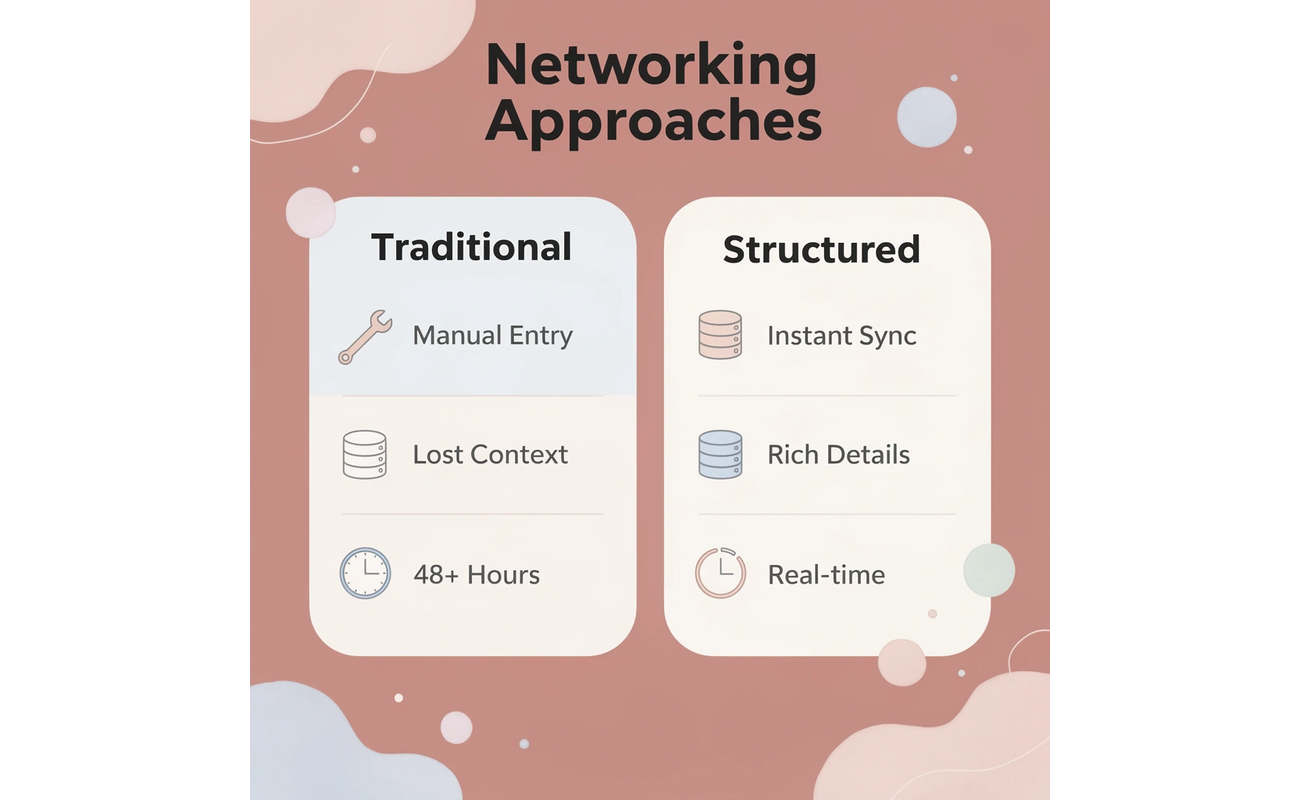
Tools like Mobilo treat every interaction as a structured lead from the start. Instead of manually typing contact details into your CRM days later, our platform captures information instantly through digital card exchanges, enriches it automatically with business data, and syncs it directly into your sales systems. What once required three separate steps and multiple logins now happens in seconds, preserving context and eliminating friction.
Traditional Networking
- Structured Lead Capture
- Manual data entry
- Instant sync
- Lost context
- Preserved details
- 48+ hour delay
- Real-time processing
- Separate systems
- Integrated workflow

⚠️ Warning: This approach works best for teams generating high volumes of contacts at events, conferences, or client meetings where speed directly affects conversion rates. If your business relies on face-to-face relationship building but struggles to convert those interactions into pipeline activity, the problem isn't your networking skill—it's the infrastructure gap between meeting someone and making them trackable within your revenue system.
💡 Tip: You can book a short demo and receive your first 25 digital business cards free. The session shows how contacts flow from real-world interactions into your CRM, how leads get enriched automatically, and how networking becomes measurable within minutes of setup. Networking stops being a soft skill you hope pays off and becomes a channel you can measure and optimize.