.avif)


100+ Best Icebreaker Examples for Business Networking to Try
On This Page
Walking into a conference room filled with potential clients, partners, and industry leaders can feel intimidating when you're unsure what to say. The right conversation starter transforms these awkward moments into genuine connections that advance your career. Proven icebreaker techniques help networking professionals confidently approach anyone and build rapport quickly in any professional setting.
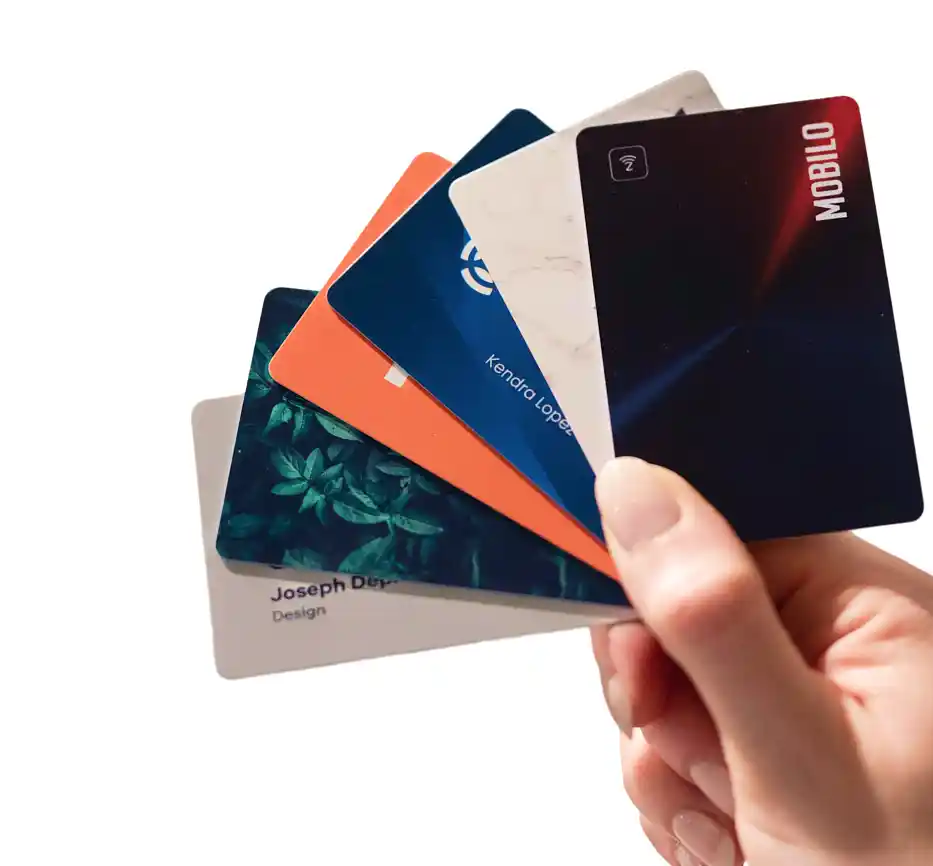
Breaking the ice is just the beginning of successful networking. After establishing a meaningful connection, you need an efficient way to ensure the relationship continues beyond that initial conversation. Mobilo's digital contact card makes following up effortless by allowing you to share your details instantly through a simple tap or scan, turning those hard-earned connections into lasting professional relationships.
Summary
- First impressions form in one-tenth of a second, according to Princeton University research from 2023, and those snap judgments are largely based on perceived warmth and competence. A well-chosen icebreaker demonstrates both qualities before the conversation even reaches substance, shifting the entire trajectory of a professional relationship. Weak openers like "How's the weather?" signal you haven't thought about the interaction or the person in front of you, reducing perceived credibility and creating forgettable connections that rarely convert into ongoing relationships.
- Negative first impressions require up to eight subsequent interactions to correct, according to Harvard Business Review's 2024 studies, meaning one bad start can cost you weeks of relationship-building effort. The halo effect works in reverse as well. An awkward opener or an uncomfortable silence can lead people to assume your entire professional persona, making them generalize a single negative trait (like nervousness or lack of preparation) across your competence, leadership ability, and communication skills.
- The most effective icebreakers share three qualities, according to research on the dynamics of networking events. They're open-ended enough to allow personality, specific enough to avoid vague answers, and relevant enough to the context that they don't feel random. Questions that invite storytelling without requiring emotional labor consistently outperform both overly personal topics and surface-level exchanges that feel transactional.
- Context determines effectiveness more than creativity or wording. A question that works brilliantly at a casual networking mixer can feel invasive in a formal client meeting, and what lands perfectly in person often falls flat in digital contexts like LinkedIn messages or cold emails. The strongest networkers match their opener to the setting, the relationship stage, and what they genuinely want to know, treating questions as starting points rather than scripts to memorize.
- Manual CRM entry after networking events creates the gap where opportunities die. HubSpot's 2023 sales productivity report found that 40% of salespeople identify manually entering contact data as their least productive activity, yet most networking still relies on collecting paper cards and transcribing details hours later when context has faded, and momentum has stalled. Teams that eliminate this friction by capturing contact information instantly during conversations report 3x more leads at events simply because the process requires no memory, no data entry, and no follow-up lag.
- Digital contact card address this by syncing contact information directly to CRM systems, with timestamps, notes, and context intact, through a simple tap or scan, turning every introduction into structured, actionable data before you've left the room.
Why Icebreakers Matter in Business Networking and First Impressions
Business networking works best when you make first interactions easier, so trust can be built quickly. The difference between a good conversation and awkward silence often comes down to the first ten seconds, where icebreakers are most important.
🎯 Key Point: The first ten seconds of any business interaction determine whether you'll build meaningful connections or fade into the background of forgettable encounters.

"People decide whether they trust you within the first few seconds of meeting you, making those initial moments crucial for business success." — Harvard Business Review Research
Most professionals stay quiet or use generic greetings like "How's the weather?" or "Busy day?" These openers lower people's perception of your credibility and signal that you haven't thought about the conversation or the person. Weak openings lead to missed chances because people remember how you made them feel, and a forgettable start becomes a forgettable connection.

⚠️ Warning: Using generic conversation starters like weather talk or busy-day comments immediately signals that you're not prepared and haven't invested mental energy in making a meaningful connection.
How do icebreakers signal confidence and competence?
Icebreakers remove the guesswork from starting a conversation. They demonstrate confidence, relevance, and ease of communication without burdening the other person. A thoughtful question or observation based on your surroundings shows you've prepared, feel comfortable in the room, and respect their time. According to research published by Princeton University in 2023, first impressions form in as little as one-tenth of a second, based largely on perceived warmth and competence. An icebreaker demonstrating both can shift the trajectory of a professional relationship before substantive conversation begins.
Why do icebreakers transform networking environments?
Icebreakers reduce social friction by providing a clear starting point. They transform intimidating networking events and quiet meeting rooms into relaxed spaces where people feel comfortable conversing. A strong opening boosts group energy and encourages participation, making individuals more likely to share ideas, listen, and remember you. Without that structure, conversations stall or never begin, and you lose opportunities—you've spent time attending and preparing, but the connection fails because the opening didn't work.
How does the halo effect enhance your professional image?
A positive, friendly start creates what psychologists call a halo effect. People generalize one good trait—such as friendliness or attentiveness—to your entire professional persona, making you seem more trustworthy before discussing your work. A well-chosen icebreaker demonstrates your ability to lead, empathize, and communicate effectively: the soft skills that hiring managers, clients, and collaborators value most. Studies from Harvard Business Review in 2024 show that negative first impressions require up to eight additional interactions to overcome, meaning one poor start can cost weeks of relationship-building effort.
Why do memorable conversations lead to better opportunities?
The best icebreakers make you and your conversation memorable, turning quick chats into possible long-term partnerships or referrals. They provide a structured way for quieter or introverted individuals to join the conversation. When you create space for different perspectives early on, you increase the chance that the exchange yields value for both sides—whether that's a new client lead, a strategic partnership, or a contact who remembers you when an opportunity arises.
Related Reading
- Benefits Of Business Networking
- Digital Networking
- Types Of Business Networking
- Professional Networking
- Digital Presence
- Virtual Networking Tips
- Business Networking
- Networking Business Card
100+ Best Icebreaker Examples for Business Networking in Different Situations
The right icebreaker question shapes a conversation before you finish asking it. Effective networking questions offer the other person something specific and easy to answer while revealing common ground to build on.

The questions below create natural entry points into topics people want to discuss: their work, preferences, expertise, or experiences. According to aanmelder.nl's analysis of networking event dynamics, the most effective icebreakers share three qualities: they're open-ended enough to reveal personality, specific enough to avoid vague answers, and relevant enough to the setting that they feel natural.
💡 Tip: What follows is a comprehensive collection organized by situation and intent. Adapt these questions to match your energy, the setting, and what you genuinely want to know about the person in front of you.

"What is your favorite…?" icebreaker questions
1. What is your favorite project you've worked on?
2. What is your favorite way to keep up with the news?
3. What is your favorite management style?
4. What is your favorite aspect of your job?
5. What is your favorite thing about this event?
6. What is your favorite assignment at work?
7. What is your favorite work tip to share with others?
8. What is your favorite fact?
9. What is your favorite activity outside of work?
10. What is your favorite book?
11. What is your favorite ice cream flavor?
12. What is your favorite work snack?
13. What is your favorite cereal?
14. What is your favorite Disney song?
15. What is your favorite pizza topping?
16. What is your favorite way to stay active?
17. What is your favorite type of donut?
Work-related icebreaker questions
18. What brought you to this event?
19. What do you do?
20. Do you have other connections at this event?
21. What skill do you have that adds the most value to your career?
22. What skill would you most like to master?
23. What career decision would you advise others to make?
24. What is something you have always wanted to share but haven't had the chance to?
25. What time of day are you most productive?
26. How have you been enjoying the event?
27. Does your degree align with your current career?
28. What is the best advice you have ever received?
29. What is the weirdest meeting you've ever been in?
30. What motivates you to get work done?
31. How would you describe your management style?
32. How do you measure professional success?
33. What course did you take in school that has helped you the most?
34. What is a work-related book that you would recommend reading?
35. Who is someone that you are inspired by?
36. What is an embarrassing mistake you have made at work?
37. How do you get motivated for a difficult task?
38. What is your dream job?
39. In what environment are you most productive?
Get to know you icebreaker questions
40. What is your most prized accomplishment?
41. What are you most proud of in life?
42. Who or what has been most influential for you?
43. What is your most unusual skill?
44. What is your dream travel destination?
45. What is your favorite mode of transportation?
46. If you had to pick one social media platform, what would it be?
47. What has been the highlight of your day?
48. What is the worst job you've ever had?
49. How different is your career from your childhood dream job?
50. What is your favorite music genre?
51. Would you ever own or start your own business? Or do you prefer working for others?
52. What book has most impacted your life?
53. What is your greatest accomplishment, professional or otherwise?
54. What piece of advice would you share with your younger self?
55. Are you a morning person or a night owl?
56. What is something you have always wanted to learn?
57. Share one of your hobbies.
58. What is something that you are unbeatable at?
59. You can only watch one movie for the rest of your life. What movie are you picking?
60. What could you give a 40-minute presentation on with no preparation?
61. What brand are you most loyal to and why?
62. What is your preferred way to get some exercise?
Virtual icebreaker questions
63. What is the biggest challenge that comes with working from home for you?
64. Do you ever see yourself returning to a fully in-person role again?
65. How do you break up your at-home schedule?
66. Do you have any "office" pets?
67. What is the best way to interact with your co-workers virtually?
68. What would your dream home office look like?
69. If you could work from anywhere in the world, where would you pick?
70. Do you like to work with background noise or in silence?
71. Do you find that the day moves faster while working from home or in the office?
72. Where are you most productive?
73. What is your morning routine like before you sign on?
74. What is the weather like where you are?
75. What is your ideal background noise while you are working?
Fun icebreaker questions
76. What is the best trip you have ever taken?
77. If you could pick any celebrity to play you in a movie, who would it be?
78. If you were an animal, what would you be?
79. What superpower do you wish you had?
80. What is your favorite thing to do in your city?
81. If you could have any animal as a pet, what would it be?
82. Share your best knock-knock joke.
83. Is a hot dog a sandwich?
84. What is the best type of Oreo?
85. If you could go to space, would you?
86. What is your go-to fast food restaurant?
87. What is the best kind of bagel? What are you putting on it?
88. What appliance could you not live without?
89. If you could time-travel, where would you go?
90. What fictional world or place would you like to visit?
91. A genie appears and grants you three wishes. What are they?
92. Do you have any neighbor horror stories?
93. What is something that really excites you as an adult, but the child/teenager version of you would think is SO lame?
94. What time of day do you shower?
95. Do you name your cars?
96. If you became famous, what would you be famous for?
97. What is your go-to karaoke pick?
98. Would you survive the zombie apocalypse? What is your survival plan?
99. You are in a pageant. What is your talent?
Open-ended networking questions
100. Tell me something cool about where you are from.
101. How did you find yourself at this event? What excited you about it?
102. Everyone's got one subject they know a whole lot about. What's yours?
103. What is your favorite conversation starter?
104. What is something most folks would never guess about you?
105. What is a story you love to tell but rarely find an opportunity to do so?
106. The secret to your success is….
107. If you were to write a book, what would it be about?
108. What is the thing that most excites you about your job or industry?
109. What kinds of coworkers do you most love working with?
110. What is one unanswered question about your field that you hope to see answered throughout your career?
Networking questions to ask senior leaders
111. If you could give advice to yourself just entering the workforce, what would it be?
112. What excites you about your job every day?
113. What do people not know about your job?
114. What did your career path look like?
115. What would your subordinates be most surprised to learn about you?
116. What is your top career tip?
117. Did you ever have a mentor? What were they like?
118. What is one thing you learned from one of your subordinates?
119. Describe your dream employee.
120. What is one thing that existed when you started your career that is rare or nonexistent in the business world now?
121. What is the biggest change you have seen in this industry since you started working?
122. What is the legacy you hope to leave behind?
123. What is a change that you hope to make in your workplace?
124. What else do you hope to achieve in your career?
125. What is the greatest professional lesson you have ever learned?
126. What is the greatest obstacle you have overcome in your career? How did you do it?
Virtual networking icebreaker questions
127. Say I'm visiting your home city. Where's the first place I should eat?
128. Now that we have experienced working remotely, do you prefer in-person work or working from home?
129. Did you ever imagine you'd become such a pro at all of these virtual platforms?
130. What is your standard remote workday routine?
131. What is something you have in your home office that would raise eyebrows in an actual office?
132. What is your biggest distraction when working from home?
133. Besides home, where is your favorite place to work remotely?
134. What is the most unexpected thing that has ever happened during a Zoom meeting?
135. What is an object in your home office that you could not live without?
136. What is your best virtual work hack?
137. What is the strangest place you have ever worked remotely?
138. What do you typically wear while working remotely?
139. What is the most fun Slack channel you are part of?
What makes these questions effective for networking?
These questions invite specificity without demanding vulnerability. They allow someone to showcase expertise, share preferences, or reveal personality without feeling interrogated. The best questions offer multiple ways to answer based on comfort level. Most professionals exchange business cards at events, then face friction during manual follow-up. Contact details get entered into spreadsheets or CRMs hours later, when context has faded.
Solutions like digital contact card capture contact information instantly, sync it directly into CRM systems while the conversation is fresh, and preserve context that makes follow-up feel personal rather than transactional. Our digital contact card maintains that personal connection by eliminating the gap between meeting someone and reaching out. These questions work across industries and seniority levels because they respect a fundamental truth: people remember how you made them feel more than what you said. When your opening question signals genuine interest, you've already differentiated yourself from most of the room.
How do you balance professionalism with approachability?
According to research compiled by HiHello on networking engagement patterns, the most successful networkers balance professionalism with approachability. They avoid overly personal topics early but also eschew surface-level exchanges that feel like business transactions. The best approach is to ask questions that invite storytelling without requiring emotional labor.
Context matters more than exact wording. A formal industry conference calls for different questions than a casual team offsite. Read the room and match your question to the energy. At formal events, start with work-related questions that establish credibility. In relaxed settings, open with something lighter to build rapport faster.
Why do these questions create memorable conversations?
These questions cover scenarios most professionals encounter: industry conferences, virtual networking events, meetings with senior leaders, casual team gatherings, and one-on-one conversations beyond small talk. What they share is intentionality—each serves a purpose beyond filling silence.
When you ask what skill someone wants to master, you learn about their ambitions. When you ask about the weirdest meeting they've been in, you invite humor and shared frustration. When you ask what excites them about their job, you give permission to discuss what they care about. These are acts of respect disguised as curiosity.
The strongest networkers treat these questions as starting points, not scripts. They listen and build from there, asking follow-up questions that deepen the conversation rather than jumping ahead. The goal isn't to get through a list but to create a conversation both people remember. But having the right question is only half the equation.
Related Reading
- How To Use Social Media For Networking
- Social Networking For Business
- How To Build A Professional Network
- Business Networking Ideas
- How To Get Business Contacts
- Small Business Networking
- Networking Mistakes
- Networking Follow-Up Email
How to Choose and Use the Right Icebreaker in Professional Settings
Most professionals memorize clever icebreakers without considering the situation, their relationship with the person, or their goal. A question that works at a casual networking mixer can feel too personal in a formal client meeting, and what works in person often fails in a LinkedIn message.
🎯 Key Point: The most effective icebreakers are situationally appropriate and align with your relationship level and communication goals.

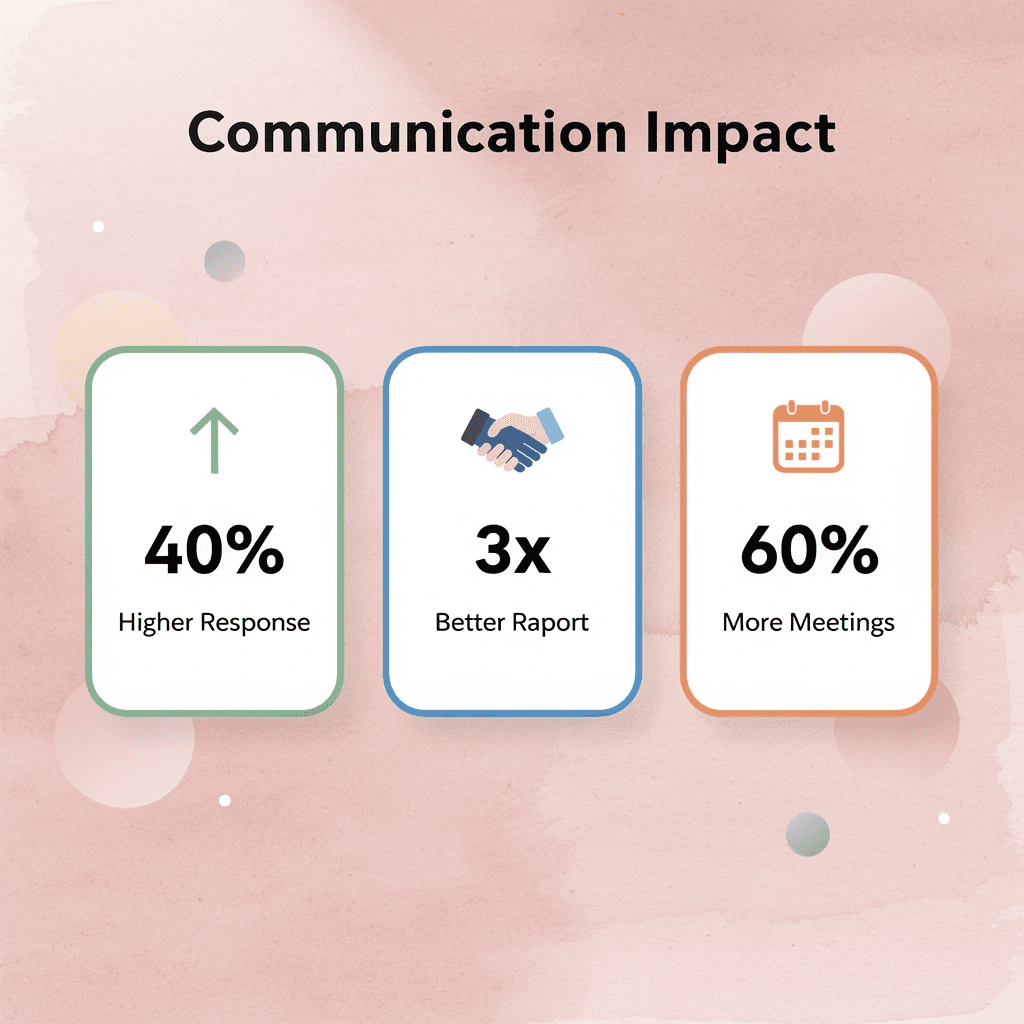
"Context-appropriate icebreakers increase response rates by 40% compared to generic conversation starters." — Professional Communication Research, 2023
Icebreaker styles by setting
- Formal client meeting
- Professional, business-focused
- Example: “What’s driving your biggest priorities this quarter?”
- Networking mixer
- Casual, industry-related
- Example: “How did you get started in [their field]?”
- LinkedIn message
- Brief, value-oriented
- Example: “Noticed your recent post about [topic] — great insights!”
- Team meeting
- Collaborative, goal-oriented
- Example: “What’s one thing that would make this project easier for everyone?”
⚠️ Warning: Using the wrong tone for your setting can make you appear unprofessional or overly familiar before you've established rapport.
Why does the same icebreaker work differently in different situations?
The same icebreaker works differently depending on context. At a large conference, "What brought you to this event?" works because everyone shares that common ground. In a one-on-one coffee meeting scheduled weeks in advance, it sounds like you forgot why you're there. A thoughtful question in a Slack channel might start a conversation, but the same question in a cold email reads as intrusive or overly familiar.
What makes an icebreaker effective in any context?
According to Skift Meetings' research on professional icebreaker ideas, the most effective approaches are non-threatening, easy to understand, interactive, aligned with social norms, relevant to the event, and aligned with logistical constraints such as time and space. What matters is whether your opener fits the setting, reduces friction, and invites engagement without putting the other person on the spot.
How does your relationship stage affect your opening approach?
First interactions need different opening lines than warm leads or ongoing contacts. When meeting someone for the first time, your icebreaker should find common ground without asking them to be vulnerable—"How do you know the host?" or "What did you think of the keynote?" work because they're low-pressure and situationally appropriate.
What works best with warm leads and existing contacts?
With a warm lead you've emailed twice, reference shared history: "Last time we talked, you mentioned expanding into the Southeast. How's that going?" This signals that you were listening and that you care about their progress. Ongoing contacts need less setup. The relationship already exists, so your opener can dive straight into substance: "I saw your post about the rebrand. What drove that decision?" Skip small talk when trust is already there.
How does matching your goal improve icebreaker effectiveness?
The best icebreaker matches your goal. Casual connection-building calls for open-ended curiosity: "What projects are you excited about right now?" Business opportunity conversations need sharper focus: "What's the biggest bottleneck in your sales process?" Collaboration discussions benefit from specificity: "If you could solve one workflow problem this quarter, what would it be?" Misaligned intent creates awkwardness. Asking about someone's weekend plans while pitching a six-figure contract feels tone-deaf. Leading with a hard business question at a social mixer comes across as transactional.
Why does contextual fit matter more than creative wording?
How well something works depends less on the exact words you use and more on whether those words fit the situation. When your opening line matches the moment and your relationship with someone, conversation flows naturally. When it doesn't match, even creative questions fall flat.
Most teams rely on paper business cards and manual follow-up after networking events, letting great conversations fade away. Platforms like digital contact card eliminate that friction by letting you share contact details instantly with a tap or QR scan, then automatically route new connections into your CRM with notes about where you met and what you discussed.
The best networking outcomes come from choosing simple, context-aware openings that reduce friction and invite natural conversation flow. You don't need 50 icebreakers memorized—three solid questions tailored to your most common contexts, delivered with genuine curiosity, work better. When you stop performing and start listening, the conversation builds itself.
Related Reading
- Tips For Networking Events
- Professional Networking Platforms
- Business Networking For Entrepreneurs
- Networking Tips For Small Business Owners
- Business Networking Strategies
- Best Business Networking Apps
- Top Contact Management Software
Starting Great Conversations Is Only Half the Equation in Networking
The best icebreaker becomes worthless without a reliable way to reconnect. You exchange ideas and find common ground, then three days pass—you can't remember their last name, and their crumpled business card is lost in your jacket pocket. The conversation happened, but the opportunity vanished because the handoff failed.

The failure point is the gap between meeting someone and getting them into your follow-up system. Paper cards get lost. Manual CRM entry gets delayed until details blur together. According to HubSpot's 2023 sales productivity report, 40% of salespeople say manually entering contact data is their least productive activity, yet most networking still relies on that process.
💡 Tip: The key to successful networking isn't just starting conversations—it's creating a seamless bridge between initial contact and meaningful follow-up.

"40% of salespeople say manually entering contact data is their least productive activity, yet most networking still relies on exactly that process." — HubSpot Sales Productivity Report, 2023
Digital contact cards close that gap by turning every conversation into structured, actionable data without adding steps to your routine. Instead of collecting paper and transcribing details later, you tap your phone or scan a code, and contact information syncs directly to your CRM with timestamps, notes, and context intact. Teams using Mobilo report capturing 3x more leads at events because the process requires no memory, no data entry, and no follow-up lag.

🔑 Takeaway: Digital contact solutions eliminate the manual data entry bottleneck that causes 40% of networking opportunities to fall through the cracks.
⚠️ Warning: Even the most engaging conversation becomes a missed opportunity if your follow-up system creates friction between connection and action.

Book a demo today and receive your first 25 Mobilo business cards free, a $950 value. Every icebreaker you use can connect to outcomes that matter. The gap between meeting someone and moving them forward disappears when tools match the speed of real interaction.