.avif)


17 Professional Networking Platforms Beyond LinkedIn
On This Page
Many professionals rely solely on LinkedIn for networking, yet countless other platforms offer unique opportunities to connect with industry peers and discover career-advancing relationships. Different professional networking platforms cater to specific industries, skill sets, and networking styles, making it worthwhile to explore options beyond the most obvious choice. The right platform can unlock access to niche communities, mentorship opportunities, and collaborations that align perfectly with your career goals.
Success on any networking platform depends on how effectively you can turn digital connections into lasting professional relationships. Rather than juggling multiple contact methods or losing touch with valuable connections, streamlining your contact-sharing process ensures that every interaction counts. Mobilo's digital contact card enables instant, seamless information exchange on any platform or in-person, helping you focus on building meaningful relationships instead of managing contact details.
Summary
- Most professionals treat networking platforms like digital bulletin boards, posting updates and sending connection requests without seeing results. According to Forbes, 85% of jobs are filled through networking, yet most users experience zero traction because algorithms prioritize users with momentum, and oversaturation means your outreach becomes one of hundreds someone receives each week. Express Employment Professionals' research found four in five professionals calling networking transactional, which creates a weak value exchange where people accept requests out of politeness, then forget you exist.
- Hidden opportunities circulate through niche networks rather than public job boards. LifeShack reports that 70 to 80% of opportunities never hit job boards, instead moving through specialized platforms, private communities, and industry-specific networks where relevant decision-makers already gather. The platform you choose should match the specific outcome you need, whether that's visibility, hiring, referrals, or project work, rather than defaulting to the most familiar option.
- Profile optimization for discovery requires treating your presence as a living document rather than a static resume. SHRM reports that 70% of jobs are never publicly advertised, and many of those hidden opportunities surface first in group discussions or through search results when recruiters look for specific skills. Using industry-specific keywords in your headline, summary, and experience descriptions, combined with regular updates when you complete projects or shift focus areas, signals momentum rather than disengagement.
- Strategic connection quality outperforms network size across every meaningful metric. Every connection request should include context that references a shared interest, a mutual connection, or a specific reason you want to connect, followed by a follow-up within 48 hours that suggests a specific next step. Making introductions easy by being specific about why you want to meet someone and what you hope to learn gives your connections everything they need to say yes, rather than creating work and uncertainty that gets ignored.
- Poor follow-up destroys most networking results regardless of platform choice. A 2023 Bain & Company study found that 68% of leads are lost due to poor follow-up, not lack of interest, because the transition from conversation to action relies on memory, scattered notes, or manual CRM entry that happens days later when context has faded. Tracking meaningful metrics like monthly quality connections (five to ten rather than large numbers), follow-up conversation rates (targeting 30% or higher response), and referral opportunities generated separates professionals who guess from those who identify what works and do more of it.
- Mobilo's digital contact card addresses the follow-up gap by syncing contacts directly into your CRM the moment you exchange details, tagging every interaction with context such as event name and notes, so teams can see which events generate pipeline and which connections are worth prioritizing.
Why Most People Struggle to Build Meaningful Professional Connections Online
Most people believe that joining a professional networking platform suffices to generate opportunities. They create a polished profile, send connection requests, and wait. It doesn't work.
🚨 Warning: Simply having a profile won't generate meaningful connections or opportunities.

The problem is the fundamental mismatch between what these platforms promise and how they work. Visibility doesn't equal connection. A profile isn't engagement. Showing up isn't being seen.
"Visibility doesn't equal connection. A profile isn't engagement. Showing up isn't being seen."

🔑 Key Takeaway: Professional networking requires active engagement and strategic relationship building, not just platform presence.
The Illusion of Active Networking
According to Forbes, 85% of jobs are filled through networking, yet most professionals treat these platforms as digital bulletin boards. They post updates without purpose, send generic connection requests that go ignored, and watch their content go unattended.
The pattern shows up everywhere. Someone spends an hour writing the perfect LinkedIn post and sees three pitiful likes from former colleagues. Another professional sends 50 connection requests, gets 12 acceptances, but zero conversations. The platform shows you're "building your network," yet your phone never rings, and opportunities never materialize.
Why the System Fails You
Algorithms prioritize active users gaining attention. With low visibility, platforms have no reason to show your content.
Too much content means your connection request is one of hundreds someone receives that week. Without clear positioning or a compelling reason to engage, you become invisible.
What makes networking feel transactional?
The failure point is weak value exchange. When outreach feels transactional, people disengage. Express Employment Professionals' research found that four in five professionals call networking transactional.
They accept your request out of politeness, then forget you exist. Your profile sits technically connected to hundreds of people, functionally connected to none.
How does passive networking damage your confidence?
Passive networking doesn't fail slowly—it trains you to believe the problem is your message, timing, or worth, when the actual issue is structural. You're using tools designed for scale without the infrastructure to make scale meaningful.
Every ignored request reinforces quiet despair.
But what if the problem isn't the platforms themselves, but which ones you're using?
Related Reading
- Benefits Of Business Networking
- Digital Networking
- Types Of Business Networking
- Professional Networking
- Digital Presence
- Virtual Networking Tips
- Networking Business Card
17 Most Effective Professional Networking Platforms Beyond LinkedIn
The platform you choose should match the outcome you need. If you want visibility, you need a stage. If you want to hire, you need filters. If you want referrals, you need structure. Most professionals default to LinkedIn because it's familiar, but according to LifeShack, 70–80% of opportunities never hit job boards. They circulate through niche networks, private communities, and specialized platforms where the right people gather.
🎯 Key Point: Most career opportunities lie in the hidden job market that traditional platforms never reach.
"70–80% of opportunities never hit job boards. They circulate through niche networks, private communities, and specialized platforms." — LifeShack Research

The platforms below solve different problems. Some automate introductions. Others verify skills. A few focus entirely on local referrals or creative portfolios. Choosing the wrong one puts you in a room full of people who can't help you.
🔑 Takeaway: Platform alignment is everything. The wrong network wastes time; the right one accelerates career momentum.
Category 1: Digital Networking Tools
For professionals with connections who need infrastructure to capture, manage, and activate them
1. Mobilo
What it is
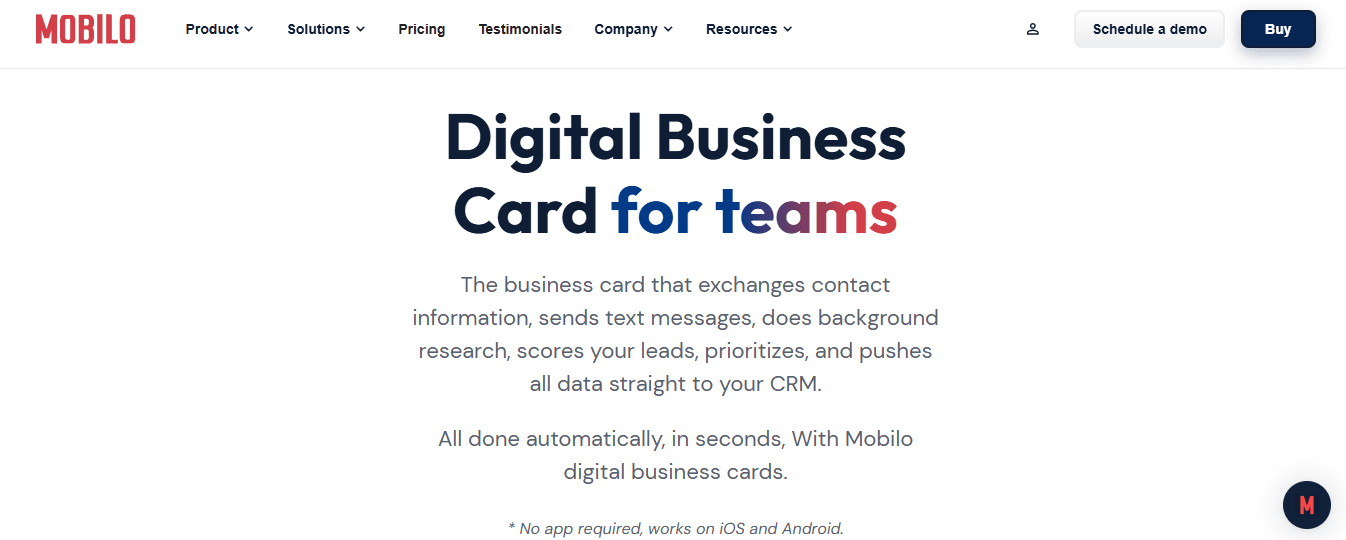
Mobilo is an intelligent digital business card platform that treats in-person networking as a lead generation and CRM workflow. It automatically enriches lead data, scores prospects against your ICP, and syncs contacts directly to your CRM at the moment of meeting.
What's best for
Sales teams and enterprise organizations attending large-scale events, where the gap between meeting someone and getting them into a CRM represents where most networking investment is lost.
Key Features
- Automatic contact exchange and lead data enrichment at the point of meeting
- ICP scoring to prioritize follow-up immediately after capture
- Direct CRM sync without manual data entry
- Adopted by over 59,000 companies globally
- First 25 cards free on demo booking (worth $950)
How does it facilitate better networking than LinkedIn
90% of paper business cards never make it into a CRM. Mobilo eliminates the manual step entirely: the contact is captured, enriched, scored, and synced before the handshake ends. For teams where event networking drives revenue, that workflow gap represents real money lost.
Who should use it
Sales teams, enterprise organizations, and event-heavy businesses with defined contact capture needs at scale.
Where it fails
Mobilo solves a capture-and-routing problem, not a relationship problem. For professionals whose networking ROI comes from depth rather than volume, the automation layer addresses the wrong challenge.
2. Blinq

What it is
Blinq is a digital business card platform built around "Smart Links". When two people tap their phones, they exchange contact details, project portfolios, and calendar availability with instant CRM tagging. Blinq captures contacts at volume while enabling seamless transitions from the meeting moment into digital relationships.
What's best for
Individual sales professionals and conference-heavy networkers who need in-person introductions to feed directly into their digital workflow without manual follow-up steps.
Key Features
- Automatic contact exchange and lead data enrichment at the point of meeting
- ICP scoring to prioritize follow-up immediately after capture
- Direct CRM sync without manual data entry
- Adopted by over 59,000 companies globally
- First 25 cards free on demo booking (worth $950)
How does it facilitate better networking than LinkedIn
Blinq captures the moment before the digital relationship: the physical introduction that feeds directly into CRM infrastructure. For salespeople, eliminating the manual step between meeting someone and entering them into a CRM means the difference between a lead captured and a lead lost.
Who should use it
Conference attendees and sales professionals who engage in high-volume in-person networking regularly.
Where it fails
Blinq is event-dependent. For professionals whose networking is primarily digital or relationship-driven rather than volume-driven, the Smart Link infrastructure solves a problem they don't have.
3. LeadDelta
What it is
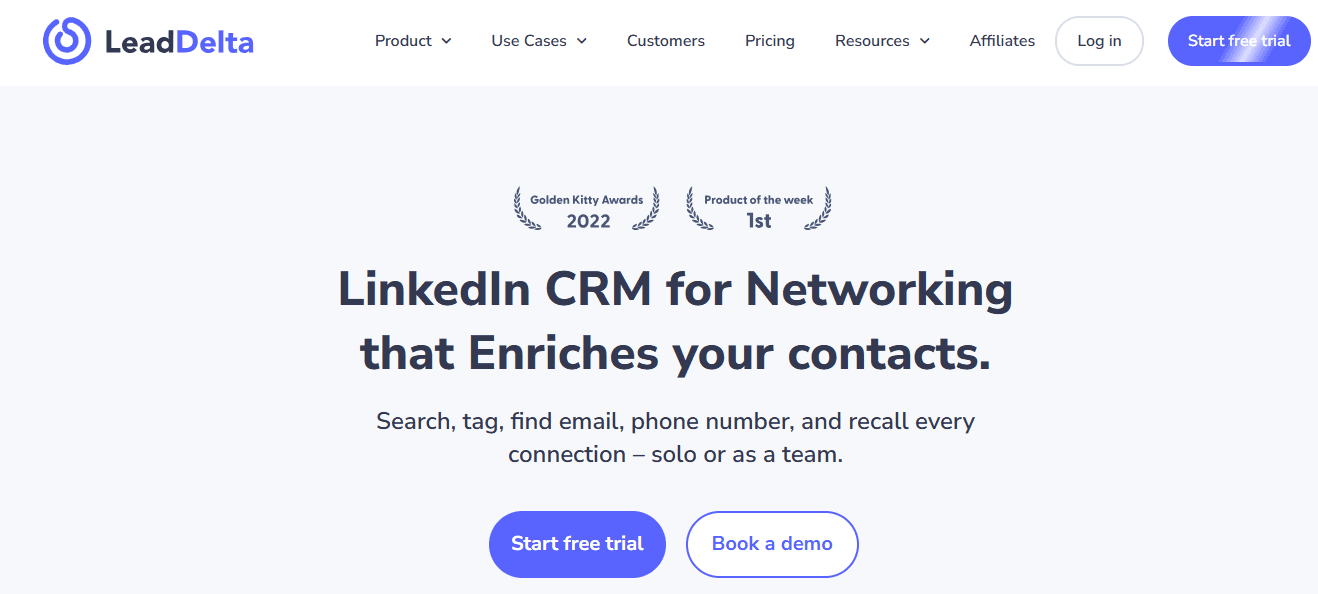
LeadDelta is a LinkedIn network management tool that transforms your connection list into an organized, searchable, and actionable database for professionals whose networks have outgrown memory and LinkedIn's native search capabilities.
What's best for
Recruiters, sales professionals, and senior networkers with 1,000+ LinkedIn connections who lack a structure for leveraging their network.
Key Features
- Tag, sort, and organize LinkedIn connections into structured, searchable categories
- Auto-Outreach with time-based relationship reminders
- Surfaces specific contacts on the exact date a follow-up is scheduled
- Designed to manage multiple active relationship threads simultaneously
- Solves the "I know a guy, but I forgot his name" problem at a structural level
How does it facilitate better networking than LinkedIn
LinkedIn's native tools assume your network is manageable. For anyone with a large, dense connection list, they aren't. LeadDelta adds the CRM layer LinkedIn lacks: tagging, categorization, and scheduled follow-through. This transforms a passive list of names into an active relationship database with built-in memory.
Who should use it
Recruiters managing candidate pipelines, sales professionals tracking relationship health across large prospect lists, and senior professionals whose networks are genuine assets requiring management.
Where it fails
LeadDelta is only as useful as your existing LinkedIn network. For early-career professionals with sparse connections, it provides organizational infrastructure for a network that doesn't yet need organizing. It also adds cost on top of LinkedIn Premium.
4. Contacts+

What it is
Contacts+ is a personal contact management platform that merges Google Contacts, iCloud, and LinkedIn into a single interface. Its "Context Cards" feature pulls the last three interactions with a contact—email, LinkedIn engagement, text message—before a scheduled meeting.
What's best for
Solopreneurs, freelancers, and independent professionals who want to maintain a warm network without the cost or complexity of a full CRM system.
Key Features
- Unified contact database merging Google Contacts, iCloud, and LinkedIn
- Context Cards: the last three interactions surfaced automatically before each meeting
- Simple, low-friction interface designed for individuals rather than teams
- Affordable pricing accessible for solo practitioners
- Relationship warming without dedicated CRM management overhead
How does it facilitate better networking than LinkedIn?
LinkedIn shows you who you're connected to. Contacts+ shows you when you last interacted, what that interaction was, and what context to carry into the next conversation. That difference separates a warm relationship from an awkward reintroduction.
Who should use it
Solopreneurs, consultants, and freelancers managing a personal network rather than a sales pipeline, particularly those who meet the same people repeatedly across different contexts.
Where it fails
Contacts+ is a personal tool, not a team one. Organizations needing shared contact databases, pipeline visibility, or coordinated outreach will outgrow it immediately. It also inherits whatever disorganization exists across your connected platforms.
Category 2 AI-Powered Matching & Introductions
For professionals seeking curated, warm connections without the cold outreach grind
5. Lunchclub

What it is
Lunchclub is an AI-powered introduction platform that matches professionals for structured 1:1 video calls based on stated goals, industry, and interests. The algorithm finds connections and schedules meetings without requiring manual searches.
What's best for
Professionals who need warm, high-signal introductions without public broadcasting. Particularly strong for career changes, early-stage fundraising, and mentorship across industries where cold-outreach conversion is low.
Key Features
- AI matchmaking connected to your calendar and stated professional goals
- Intent Mode filtering for Mentorship, Funding, or Sales Leads (launched 2026)
- 15-minute structured video calls with matched professionals
- No public profile performance required — purely relationship-driven
- 40% higher connection conversion rate versus cold outreach per the 2025 transparency report
How does it facilitate better networking than LinkedIn
LinkedIn requires you to generate inbound interest through content or absorb rejection through cold outreach. Lunchclub removes both variables: both parties chose the same intent before the call was set, which is why conversion rates are meaningfully higher than those of cold outreach.
Who should use it
Introverts, founders in early fundraising mode, career changers seeking warm access to a new industry, and anyone who has found cold LinkedIn DMs ineffective.
Where it fails
Volume is low by design. If you need to build a large network quickly or reach a specific niche audience at scale, Lunchclub's deliberate pacing works against you. It prioritizes depth over breadth.
6. Coffee Chat AI

What it is
Coffee Chat AI is an AI-powered meeting facilitation platform that matches professionals for goal-oriented conversations, automates scheduling, and manages follow-up tracking. It addresses a gap most introduction platforms leave open: what happens after the introduction.
What's best for
Busy professionals with established networks who struggle with follow-through, and executives managing high volumes of relationship touchpoints who need help prioritizing.
Key Features
- Smart matching based on declared professional goals
- Automated scheduling and calendar integration
- Conversation starter suggestions generated before each meeting
- Follow-up tracking and relationship management post-conversation
- CRM integration for professionals managing high contact volumes
- Typically $10–30/month for premium features
How does it facilitate better networking than LinkedIn
LinkedIn surfaces connections but doesn't tell you what to do with them. Coffee Chat AI structures the conversation before it happens and manages the relationship afterward, the two stages where most LinkedIn connections go cold.
Who should use it
Professionals with existing networks who struggle with follow-through, executives managing relationship portfolios across multiple industries, and anyone who has left too many "let's stay in touch" conversations unresolved.
Where it fails
Coffee Chat AI is a facilitation layer, not a discovery platform. Without an existing network, it offers limited standalone value. It optimizes existing relationships rather than generating new ones.
Category 3 Freelance & Portfolio Networks
For independent workers and creatives, where the work speaks louder than the resume
7. Contra
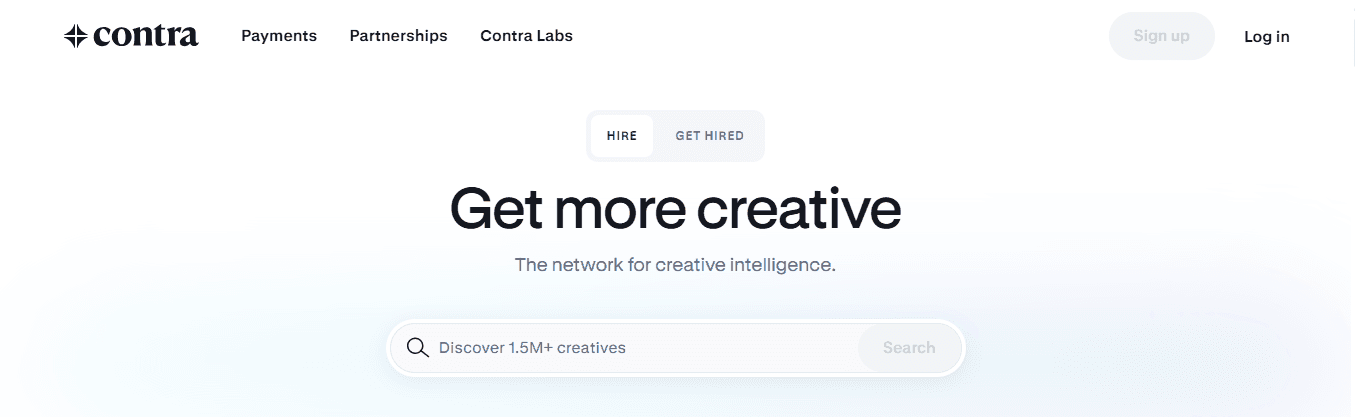
Contra is a commission-free freelance platform that replaces the traditional profile with a project-based portfolio, targeting Gen Z and Millennial independent workers who find LinkedIn too corporate and Upwork's fee structure too punitive.
What's best for
Freelancers in design, writing, development, and creative fields who want to showcase project work, receive instant payment via Stripe, and build client relationships without platform fees.
Key Features
- Zero commission on earnings — Contra takes no cut of any project
- Project-based profiles that showcase work rather than job history
- Commissions feature for instant Stripe payment on project completion
- Skill verification through actual project evidence rather than self-reported titles
- Strong adoption among Gen Z and Millennial creative professionals
How it differs from LinkedIn
LinkedIn profiles are chronological resumes. Contra profiles are evidence of capability. Clients see what you've built rather than where you've worked, which changes the quality of inbound interest and removes the credentialism that disadvantages talented independents without brand-name employers.
Who should use it
Freelance designers, developers, writers, and creatives are building client bases rather than seeking traditional employment.
Where it fails
The network is strongest in design and tech. Freelancers in legal, finance, or B2B consulting will find their audience thin. Enterprise clients with formal procurement processes may default to more established platforms.
8. Peerlist

Peerlist is a professional network for tech workers built around verified skill demonstration. Users share actual code, designs, and product launches through "Project Walls," creating a portfolio-first profile that functions like a GitHub for professional reputation.
What's best for
Software engineers, product designers, and technical product managers who want their work to speak for itself and connect with recruiters searching for demonstrated capability.
Key Features
- Project Walls, where users share actual work products rather than job descriptions
- Profile scoring system out of 100 that reflects demonstrated output
- The Peerlist Connect job board requires a minimum profile score of 80 to apply
- Meritocracy-driven matching between candidates and recruiters
- Growing fast with a strong signal-to-noise ratio in technical communities
How it differs from LinkedIn
On LinkedIn, "Senior Software Engineer" is self-reported. On Peerlist, it is a demonstrated score. Recruiters get pre-filtered candidates. The profile score requirement creates mutual accountability that generic platforms cannot enforce.
Who should use it
Tech workers with strong portfolios are tired of competing against keyword-stuffed LinkedIn profiles, and early-career professionals who lack brand-name employers but have strong project work.
Where it fails
The platform is concentrated in tech. Non-technical professionals will find it of limited use, and the signal advantage largely disappears outside the tech vertical.
9. Behance / Dribbble

What it is
Behance (owned by Adobe) and Dribbble are the primary professional portfolio networks for visual creatives — UI/UX designers, illustrators, brand designers, photographers, and motion graphics professionals. Networking happens through comments, project visibility, and community engagement around shared work rather than connection requests.
What's best for
Visual creatives who need their portfolio to generate inbound interest from recruiters, clients, and collaborators, particularly in UI/UX, brand design, and digital illustration.
Key Features
- Project-based profiles that function as living, public portfolios
- Dribbble Design Briefs, where brands post challenges and designers submit work for visibility
- Behance's direct integration with Adobe Portfolio for seamless publishing
- Recruiter search functionality with a visual portfolio as the primary filter
- Community engagement through comments that create organic relationship building
How it differs from LinkedIn
A creative director doesn't need your career history—they need to see how you think. Behance and Dribbble put work front and center, making discovery visual and merit-based. Recruiters in product design search Dribbble for app designers because a portfolio conveys more in 10 seconds than a resume does in 10 minutes.
Who should use it
UI/UX designers, brand designers, illustrators, photographers, and visual creatives whose work speaks for itself. Particularly valuable for those building freelance client pipelines or seeking creative director attention.
Where it fails
The networking is largely passive: you post work and wait for inbound. Active relationship-building requires consistent engagement with comments, which is time-intensive. For non-visual roles, both platforms are irrelevant. Dribbble's aesthetic culture has created a perception gap between polished visual execution and functional design thinking, which some hiring teams push back against.
Category 4 Niche & Industry-Specific Networks
For professionals whose best connections exist in a specific context, not a general feed
10. Bumble Bizz
What it is
Bumble Bizz is the professional networking extension of the Bumble app, built around visual, mobile-first profiles and video cover letters. It targets entry-level and early-career professionals in hospitality, retail, and service industries where personality matters more than credentials.
What's best for
Entry-level job seekers in hospitality, retail, and consumer-facing industries, and Gen Z professionals who find formal resume culture alienating.
Key Features
- Visual, swipe-based interface that prioritizes personality over credentials
- Video cover letters that allow candidates to demonstrate their presence and communication style
- Mobile-first design built for on-the-go job searching and networking
- Lower formality barrier than traditional professional platforms
- The 2026 Career Swipe update focused specifically on hospitality and retail hiring
How does it facilitate better networking than LinkedIn
A hiring manager for a boutique hotel doesn't need to read about your customer service philosophy; she needs to see how you present yourself on camera. For roles where the interview is the audition, video-first profiles compress the selection process in ways text resumes cannot.
Who should use it
Gen Z job seekers in hospitality, retail, and service industries, as well as hiring managers in those sectors, who want to evaluate personality and presence before committing to formal interviews.
Where it fails
The swipe model and informal register suit entry-level consumer-facing roles. Senior professionals, B2B industries, and anyone seeking positions where credentials matter will find Bumble Bizz too shallow.
11. Alignable

What it is
Alignable is a hyperlocal business networking platform for small business owners. It operates on referral logic: connecting businesses within a geographic area that can serve each other's needs, rather than career advancement. Think of it as a local chamber of commerce made algorithmic.
What's best for
Small business owners, local service providers, and independent operators are seeking warm referrals from nearby businesses.
Key Features
- Zip code-level business matching and referral recommendations
- AI-powered Local Lead Generation that matches services to posted local needs (2026)
- Referral Rewards system that incentivizes active community participation
- Community structure that mirrors a local chamber of commerce, but with algorithmic assistance
- Designed explicitly for brick-and-mortar and service-area businesses
How does it facilitate better networking than LinkedIn
LinkedIn is built for professional careers and B2B enterprise relationships. Alignable matches the roofer who needs the property manager and the coffee shop that wants to refer customers to the accountant next door. The AI scans local business profiles for active needs: a property manager posting about a leak gets matched with a local roofer, creating transactional relevance at geographic granularity that general platforms cannot.
Who should use it
Plumbers, landscapers, accountants, therapists, restaurant owners, and any small business that grows through local word-of-mouth. Particularly valuable in markets where community reputation carries more weight than online presence.
Where it fails
Alignable is irrelevant to professionals in national or remote roles, enterprise B2B contexts, or situations where geography isn't a factor. Its referral model also requires active participation; passive members see minimal return.
12. Shapr

What it is
Shapr is an invite-only, manually verified professional network for C-suite executives and senior leaders. The 2026 Stealth Connection feature makes profiles invisible unless you match specific project criteria, eliminating unsolicited outreach by design.
What's best for
Senior executives (VPs, C-suite, and board-level professionals) who need high-stakes connections without junior-level noise or unsolicited pitches.
Key Features
- Invite-only access with manual title and seniority verification
- Stealth Connection: profiles remain hidden unless you match a specific project's criteria.
- Designed for board seat searches, executive hiring, and high-value partnerships.
How does it facilitate better networking than LinkedIn
LinkedIn's accessibility creates a core problem at senior levels: executives receive hundreds of unsolicited messages weekly from irrelevant contacts. Shapr's structural exclusivity ensures every connection is contextually relevant before the first message. The signal-to-noise ratio is the product.
Who should use it
C-suite executives, domain experts, board members, and senior investors whose time cost of a bad connection justifies the exclusivity barrier. This is a platform to qualify for, not aspire to.
Where it fails
By design, it is inaccessible to most professionals. For those who qualify, the network is significantly smaller than general platforms, limiting serendipitous discovery. The value is precision at the expense of breadth, a trade-off that only makes sense at specific seniority levels.
13. AngelList / Wellfound

What it is
Wellfound is the talent side of AngelList, the primary professional network for startup founders and job seekers. Every job listing includes transparent salary and equity data, and AI-powered Talent Sourcing delivers matched candidates to founders weekly.
What's best for
Professionals seeking startup roles with upfront equity and compensation transparency, and founders needing lean, high-signal talent acquisition without recruiting overhead.
Key Features
- Salary and equity data built into every job post — no negotiation, guesswork
- AI-powered Talent Sourcing that delivers three matched candidates to founders per week
- Remote-First Equity focus across all listings
- Startup-specific context visible: stage, funding round, team size
- Direct candidate-to-founder connection, bypassing recruiter intermediaries
How does it facilitate better networking than LinkedIn
LinkedIn tells you a Series A fintech startup is hiring a Product Manager. Wellfound tells you they're paying $142k + 0.5% equity, they're 18 months post-raise, and the founding team has two prior exits. Transparency shapes whether you apply, how you negotiate, and whether the connection merits pursuit.
Who should use it
Anyone seeking startup work, especially early-stage roles, and founders hiring without recruiters. Particularly valuable for professionals prioritizing equity upside and evaluating company health.
Where it fails
Wellfound's value diminishes outside the startup ecosystem. Enterprise job seekers, regulated industry professionals, and those prioritizing stability over equity will find the platform irrelevant.
14. GrowthMentor / MentorCruise

What it is
GrowthMentor and MentorCruise are paid mentorship marketplaces functioning as professional networks. The primary value comes from 1:1 access to domain experts, with real networking in alumni Slack communities.
What's best for
Product managers, marketers, and early-to-mid-career professionals seeking warm introductions to inaccessible industries or companies.
Key Features
- Subscription-based access to domain expert mentors across growth, product, and marketing
- Alumni community Slack groups for structured peer-to-peer networking
- 50% increase in peer-to-peer connection requests on MentorCruise in 2026
- Warm introduction pathway — mentors introducing mentees into their own networks
- Structured session booking rather than open-ended cold connection requests
How does it facilitate better networking than LinkedIn?
A cold LinkedIn connection to a Director of Growth has low response rates. An introduction from a mentor at that company to their colleague has near-certain success. The subscription cost buys access to warm introductions: what professional networking has always been, now made transparent and transactional.
Who should use it
Early- to mid-career professionals in product, growth, and marketing seeking warm introductions. Valuable for career changers needing faster, more credible access to new industries than organic relationship-building.
Where it fails
Cost is a barrier for early-career professionals or those between roles. Mentor quality varies significantly by domain—growth and product are well-served, while specialized niches have a thin supply. Value depends entirely on the mentor's willingness to make introductions, which is not guaranteed.
15. Business Network International (BNI)

What it is
BNI is the world's largest structured referral networking organization, with over 340,000 members across 76 countries. Weekly in-person chapter meetings feature a strict format, formal referral tracking, and exclusive industry representation: only one professional per industry per chapter, structurally incentivizing members to refer business to you.
What's best for
Small business owners, entrepreneurs, and sales professionals seeking accountable, structured referral relationships that generate consistent revenue.
Key Features
- Weekly chapter meetings with a proven, consistent format
- One member per industry per chapter — no direct competitor within your group
- Formal referral tracking and member accountability systems
- Global network across 76 countries with chapter-level intimacy
- $26.4 billion in member-generated referral revenue in the last 12 months
- Educational programs on networking, communication, and referral strategy
- Annual membership: $500–$1,500+, depending on chapter
How does it facilitate better networking than LinkedIn?
LinkedIn connections are passive. BNI relationships are accountable: members must bring referrals and attend weekly meetings, creating a relational obligation that generates actual business. The exclusivity model means your fellow members are actively incentivized to send you clients because you are their only option in your category.
Who should use it
Business owners, sales professionals, and entrepreneurs who rely on referrals as a primary revenue channel and can commit to regular attendance. Members who consistently show up and actively refer report an ROI of 10x their membership investment.
Where it fails
BNI requires a significant time commitment—weekly meetings are non-negotiable —and passive membership yields minimal return. The membership cost also presents a barrier for solo practitioners in the early stages. For remote workers or professionals in fields where referrals aren't a primary business driver, the model doesn't translate.
Category 5 Community & Event-Based Networking
For professionals who build relationships by being present and useful in the right rooms
16. Discord / Slack Communities

What it is
Discord and Slack host the real-time professional communities that have replaced forums and listservs as the underground networking layer of most industries. Professional relationships form as a natural byproduct of shared interests and mutual help over time.
What's best for
Professionals in tech, remote work, creative industries, and niche verticals who want to build relationships through demonstrated value rather than profile optimization.
Key Features
- Real-time chat that enables organic relationship building through daily interaction
- Niche communities with specific shared contexts — Nomad List, Women in Tech, and thousands of industry-specific servers
- Job referrals shared inside communities before they reach public job boards
- Cultural fit is established through participation well before any interview process
- Free to join; value is entirely participation-driven
How does it facilitate better networking than LinkedIn
LinkedIn broadcasting is one-to-many and optimized for visibility. Discord and Slack are many-to-many and optimized for belonging. Helping someone debug code at 11 PM in a shared channel creates a relationship that a connection request never could. Job referrals from Discord communities carry a 60% higher retention rate because cultural fit is established before the hire.
Who should use it
Remote workers, developers, designers, startup operators, and anyone in a niche professional community where shared context matters more than credential signaling. Find the one for your exact niche, rather than large, generic servers where the signal gets drowned out by volume.
Where it fails
Value is entirely proportional to participation. Lurking produces nothing. Community quality varies dramatically; the wrong Discord server is a distraction, not an asset to the network. Discovery of the right communities often requires existing social capital.
17. Lu.ma
What it is
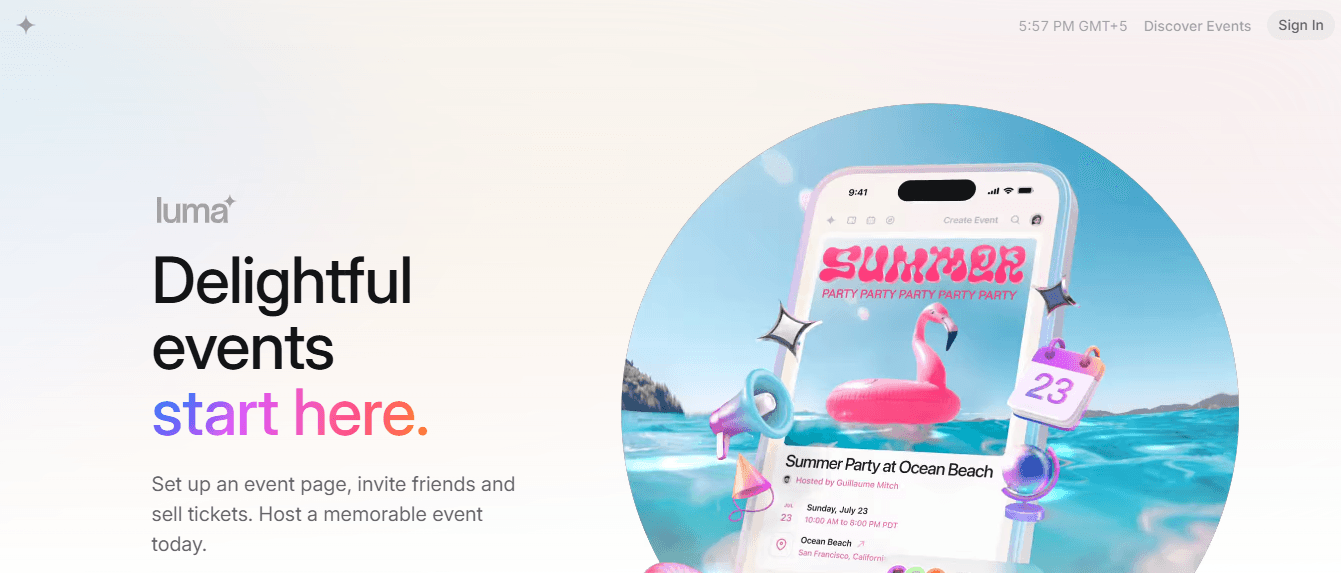
Lu.ma is an event creation and discovery platform that powers professional networking through structured virtual and in-person events. It serves professionals who build relationships most naturally through shared experiences.
What's best for
Job seekers who network through events, tech professionals attending industry-specific virtual summits, and remote workers seeking structured contexts for meeting new people.
Key Features
- Effortless event creation with automated email, SMS, WhatsApp, and push reminders
- Custom attendee profiles and post-event follow-up tools are built into the platform
- Paid ticketing and fundraising support with 0% platform fee on Lu.ma Plus
- Zoom and video platform integration for virtual event hosting
- Curated event discovery for job seekers, tech professionals, and remote workers
- Free plan available; Lu.ma Plus at $59/month with advanced analytics and Zapier integration
How does it facilitate better networking than LinkedIn
LinkedIn events lack robust mechanisms for discovery and follow-through. Lu.ma is purpose-built for event networking: attendee profiles, post-event follow-up tools, and automated reminders enable relationships to develop beyond a single interaction. The platform's inclusion-focused curation surfaces communities that don't typically appear in professional network algorithms.
Who should use it
Job seekers who prefer cold networking in shared contexts, community builders hosting professional events without technical overhead, and remote professionals seeking to replicate in-person networking serendipity through virtual events.
Where it fails
Lu.ma is a venue, not a network. It facilitates attendance and follow-up, but relationship building still happens between people. Professionals who don't follow up after events will find Lu.ma generates exposure without connection. Event quality is highly variable; curation helps but does not guarantee relevance to your specific goals.
Related Reading
- How To Use Social Media For Networking
- Social Networking For Business
- Icebreaker Examples Business Networking
- How To Build A Professional Network
- Business Networking Ideas
- How To Get Business Contacts
- Small Business Networking
Tips on How to Use Networking Platforms to Your Advantage
Networking platforms work only when you treat them as active systems, not passive directories. The professionals who get results follow repeatable processes that turn visibility into conversations, conversations into relationships, and relationships into career momentum.

💡 Tip: Transform your networking approach by dedicating 15-20 minutes daily to strategic engagement rather than random scrolling. This consistent activity builds compound visibility over time.
The difference between someone who gets three likes and someone who gets three job offers is understanding that these platforms reward structured engagement over sporadic activity. Success comes from treating your networking strategy as a deliberate system rather than hoping for lucky breaks.

"Structured engagement on professional platforms generates 5x more meaningful connections than passive browsing." — LinkedIn Professional Network Study, 2024
🔑 Takeaway: Your networking ROI depends entirely on how you show up, not just that you show up. Intentional activity always beats random activity when building professional relationships.

1. Optimize Your Profile for Discovery, Not Just Display
Your profile must be easy for the right people to find. Use industry-specific keywords in your headline, summary, and experience descriptions so recruiters searching for your skills can locate you. According to LinkedIn, 85% of jobs are filled through networking, making your profile far more powerful than a resume.
Update your profile when you complete projects, learn new skills, or shift focus areas. Outdated profiles signal disengagement; fresh ones signal momentum.
2. Use a Professional Photo That Reflects Your Industry Context
Your photo sets the tone before anyone reads a word. In creative fields, this might mean something relaxed; in finance or law, traditional business attire works better. Professional photos generate significantly more views because they demonstrate that you take your professional presence seriously.
3. Engage Actively by Adding Value, Not Noise
Think carefully before commenting on posts from people in your industry. Ask questions that spark conversation. Share lessons from your own work that others can apply. Platforms amplify users who create engagement, so your actions directly affect how many people see your posts.
Read, think about it, and respond with something specific. Generic praise ("Great post!") doesn't help. Specific observations ("Your point about quarterly planning cycles matches what we saw when we shifted from annual reviews") start real conversations.
4. Join Relevant Groups and Participate With Intention
Join industry groups where your target employers, clients, or mentors gather. Membership alone achieves nothing; answer questions with genuine expertise and share resources that solve problems. SHRM reports that 70% of jobs are never publicly advertised, and many of those hidden opportunities surface first in group discussions.
5. Connect Strategically, Not Indiscriminately
Every connection request should include context. Reference a shared interest, mutual connection, or specific reason you want to connect. "I noticed your work on X and would value staying connected as I explore Y" works far better than the default message. Quality connections who engage with your content matter more than a large network of strangers who ignore you.
When someone accepts, follow up within 48 hours. Thank them, reference your original message, and suggest a specific next step if appropriate. Most people send requests and then disappear; be the exception.
6. Follow Industry Leaders and Target Companies for Early Access
Companies often post job openings on their pages before listing them on job boards. Following target employers keeps you informed and lets you apply early when competition is lower. Following industry leaders also keeps you current on trends and increases your visibility to their networks through engagement.
Set aside 20 minutes each week to review what these accounts have in common. Comment on posts that match your expertise; you're building visibility to the hundreds of people who follow that account, not trying to impress the CEO.
7. Ask for Introductions by Making It Easy to Say Yes
When asking for an introduction, be clear about why you want it and what you hope to learn. "Would you introduce me to Sarah? I'm researching how companies in her industry handle X, and her perspective would be valuable." gives your connection everything they need to make a warm introduction. Vague requests ("Can you connect me with Sarah?") create extra work and confusion, so they get ignored.
8. Seek Recommendations and Endorsements From People Who Know Your Work
Recommendations add credibility that self-description cannot match. Ask former managers, colleagues, or clients to highlight specific projects or skills. Make it easy by suggesting what they might focus on: "Would you be willing to write a brief recommendation focusing on the analytics work we did together?" yields better results than "Can you recommend me?"
Endorsements signal validation and matter more when reciprocated genuinely. Endorse skills you've seen someone demonstrate; others will often return the favor.
9. Utilize Alerts to Act Fast on Opportunities
Set up job alerts for roles, companies, and keywords that match your search. Also set up news alerts for your industry. Speed matters: the first applicants often receive the most attention for competitive positions. Alerts ensure you find opportunities immediately, not days after others have already applied.
Check your alerts daily and apply for jobs that interest you within 24 hours. This habit demonstrates you're serious about finding a job, not casually browsing.
10. Measure Your Networking ROI With Metrics That Matter
Track new meaningful connections monthly, aiming for five to ten quality additions. Monitor your follow-up conversation rate, targeting 30% or higher response when you reach out. Count referral opportunities and interview requests generated from networking. Measure time from networking activity to tangible opportunity.
Why do most networking efforts fail to deliver results?
Most professionals can't answer basic questions about their activity: How many people did you connect with last month? How many responded when you followed up? How many conversations led somewhere? Without measurement, you're guessing. With it, you can identify what works and do more of it.
What qualitative indicators show networking success?
Qualitative indicators matter too. Are your conversations deepening? Are you gaining insider knowledge about your industry? Do people recognize your name and expertise? Are you providing value to others? Is networking feeling less awkward? These signals show whether you're building real relationships or collecting contacts.
How can automation improve networking follow-up?
For teams managing multiple networking touchpoints, solutions like digital contact card automate manual work that buries leads. Instead of writing down business cards into your CRM days later—losing 90% of context and momentum—digital contact cards sync contact details immediately, track follow-up status, and identify which connections deserve prioritization. This ensures every connection gets tracked and followed up on.
Bridge the Gap Between Networking and Real Business Outcomes
The real test isn't whether you can collect contacts—it's whether they turn into measurable opportunities. You can master every networking platform and attend a dozen events monthly, but if your follow-up relies on memory, scattered notes, or manual CRM entry, you're losing most of what you built. The gap between meeting someone and moving them through your pipeline is where networking falls apart.
Most professionals bridge this gap with a patchwork of tools: collecting business cards, photographing them, manually typing details into spreadsheets, and setting calendar reminders. By follow-up time, context has faded. According to a 2023 Bain & Company study, 68% of leads are lost due to poor follow-up, not lack of interest.

Mobilo removes that transition entirely. Our digital contact cards sync directly into your CRM upon exchange, tagged with context (event name, date, notes). Lead scoring surfaces, which connections matter most, and automated workflows ensure no one falls through the cracks. Every handshake becomes a trackable opportunity.
When networking becomes measurable, you can see which events generate pipeline, which team members close the most deals from introductions, and where your time pays off. Professional networking platforms provide reach. Automation delivers results. The combination turns networking into a repeatable growth channel.

Book a demo today and get your first 25 Mobilo business cards free (worth $950). Transform your networking into a fully connected system where every conversation becomes a measurable opportunity.
Related Reading
- Tips For Networking Events
- Business Networking For Entrepreneurs
- Networking Tips For Small Business Owners
- Business Networking Strategies
- Best Business Networking Apps
- Top Contact Management Software