.avif)


11 Main Types of Business Networking for Growth and Leads
On This Page
Walking into a networking event or conference often raises the question of whether traditional relationship-building approaches truly drive business growth. Different types of business networking deliver vastly different results, from structured industry events and online communities to strategic partnerships and referral groups. Understanding these various networking strategies helps professionals connect more effectively with potential clients, collaborators, and industry leaders. The key lies in choosing approaches that generate genuine leads and sustainable growth rather than wasting time on ineffective methods.
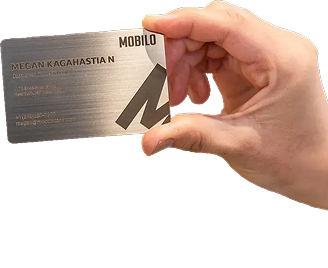
Making meaningful connections represents only the first step in successful networking. The follow-up process often determines whether promising contacts develop into valuable business relationships. Professionals need seamless systems to capture contact information, track new connections, and maintain ongoing communication across multiple networking channels to ensure no opportunities are lost, which is where Mobilo's digital contact card proves invaluable.
Summary
- Most networking fails because professionals confuse activity with results. Research from The Percolator shows that 80% of professionals fail at networking despite investing significant time in it. The breakdown happens in the gap between meeting someone and turning that introduction into something tangible, where context gets lost, and follow-up becomes generic or never happens at all.
- The follow-up problem kills more opportunities than the initial conversation. McKinsey reports that only 48% of professionals follow up after networking events, which means more than half of all connections die within 72 hours. Even those who do follow up often send messages with no context, no value, and no clear next step.
- Referral networking produces the highest quality leads because introductions carry built-in trust. According to McKinsey, networking can increase business revenue by 40%, and referral networks have a disproportionate impact because conversion rates for warm introductions far exceed those for cold outreach. The approach breaks down when relationships become one-sided or when you fail to communicate what makes a good referral for each party.
- LinkedIn data shows that 85% of jobs are filled through networking, yet most professionals abandon relationship-based approaches because results don't appear immediately. Professional networking produces positioning and access to decision-makers over multiple interactions, not single conversations. Treating industry events as pure lead generation creates the opposite of authority.
- The failure point surfaces in the 48 hours after you meet someone, not during the introduction. Without systematic capture of conversation details, pain points, and timing, follow-up becomes generic and momentum dies. Traditional methods, like manually entering business cards, create gaps that shift context from sharp memory to vague recollection before you can act.
- Mobilo's digital contact card captures contact details instantly with conversation notes, syncs everything directly to your CRM, and sets follow-up reminders while context is still fresh.
Why Most Business Networking Efforts Fail to Produce Real Opportunities
Most networking fails because people confuse being busy with making real progress. Going to events, collecting business cards, and adding contacts on LinkedIn feels productive, but without a system to capture, organize, and follow through on those connections, you're building a list of names that never become real opportunities.

🎯 Key Point: The difference between successful networkers and those who struggle isn't the number of events they attend—it's a systematic approach to relationship-building that turns initial contacts into meaningful business relationships.
"85% of professionals say networking is critical to career success, yet only 23% have a structured system for managing their professional relationships." — Harvard Business Review, 2023
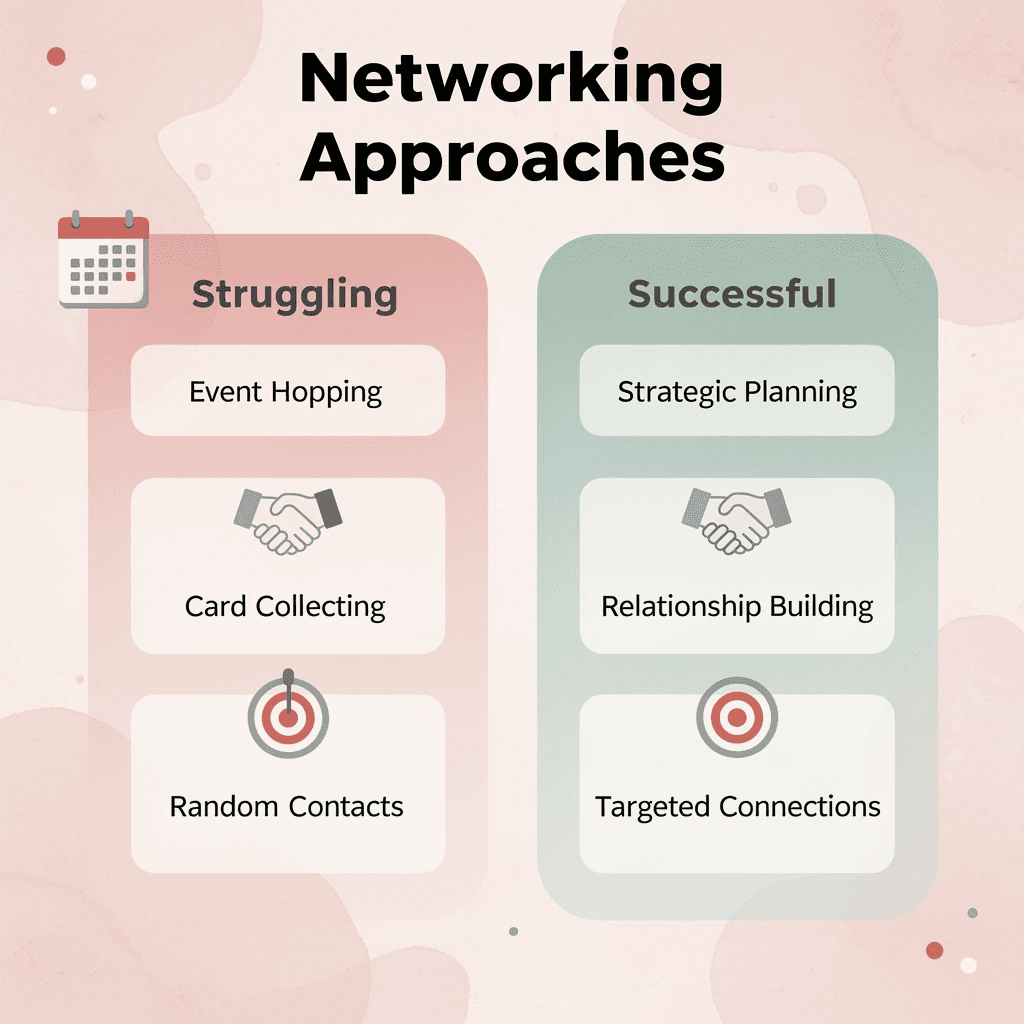
⚠️ Warning: Without a follow-up system, even the best networking conversations become wasted opportunities. Most people forget to reconnect within the critical 48-hour window when initial impressions are still fresh and actionable.
What does the research reveal about networking failure rates?
According to research from The Percolator, 80% of professionals fail at networking despite investing significant time in it. The disconnect occurs between meeting someone and converting that introduction into something tangible. You meet a potential client at a conference, exchange pleasantries, promise to follow up, then return to your desk, buried under emails. Three weeks later, you can't remember their specific pain points or why the conversation mattered.
The follow-up problem nobody talks about
The real failure point shows up after the handshake. McKinsey reports that only 48% of professionals follow up after networking events, meaning more than half of all connections die within 72 hours. Those who do follow up often send generic "nice to meet you" messages lacking context, value, or a clear next step. The contact feels obligatory rather than intentional. Traditional networking treats each interaction as separate. Without a centralized system to track conversations, remember key details, or set follow-up reminders, your networking becomes fragmented. You cannot see patterns, measure outcomes, or understand which connections generate business value.
Why does volume-based networking fail?
The familiar approach is to attend as many events as possible, hoping that quantity compensates for the lack of strategy. You collect stacks of business cards, manually enter contacts into your phone, and promise yourself you'll organize everything later. As your contact list grows, important context gets lost, response times stretch from days to weeks, and promising connections cool before you can act on them. Solutions like digital contact cards eliminate this friction by capturing contact details instantly, syncing them to your CRM, and tracking who you've met so follow-up happens while the conversation still matters.
How does a misaligned strategy impact networking results?
Different networking environments require different approaches, yet most people use the same basic tactics everywhere. They treat a targeted industry conference the same as a casual meetup and use the same follow-up methods for warm referrals and cold introductions. A networking strategy that doesn't align with your goals, applied without measurement or adjustments, yields random results that feel like wasted time. But here's what most people miss about why their networking consistently underperforms.
Related Reading
- Benefits Of Business Networking
- Business Networking
- Networking Business Card
- Types Of Business Networking
- Digital Presence
- Virtual Networking Tips
- Professional Networking
11 Main Types of Business Networking and When to Use Each
Each networking type works under different conditions, creates different results, and fails predictably when misused. Choosing the right type depends on three factors: your business goal, the depth of relationships required, and your timeline for results.
🎯 Key Point: The most common networking mistake is using formal networking events when you need deep relationships, or relying on social media networking when you need immediate business results.
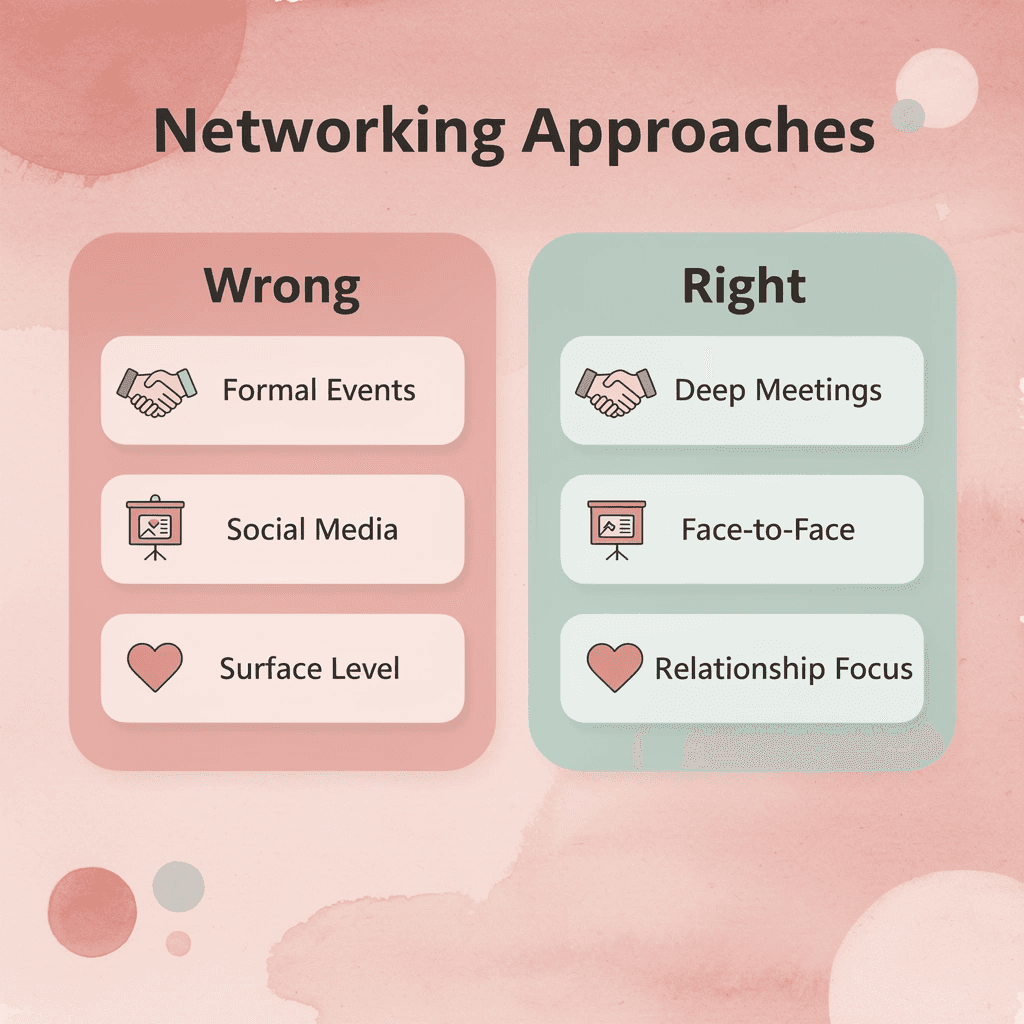
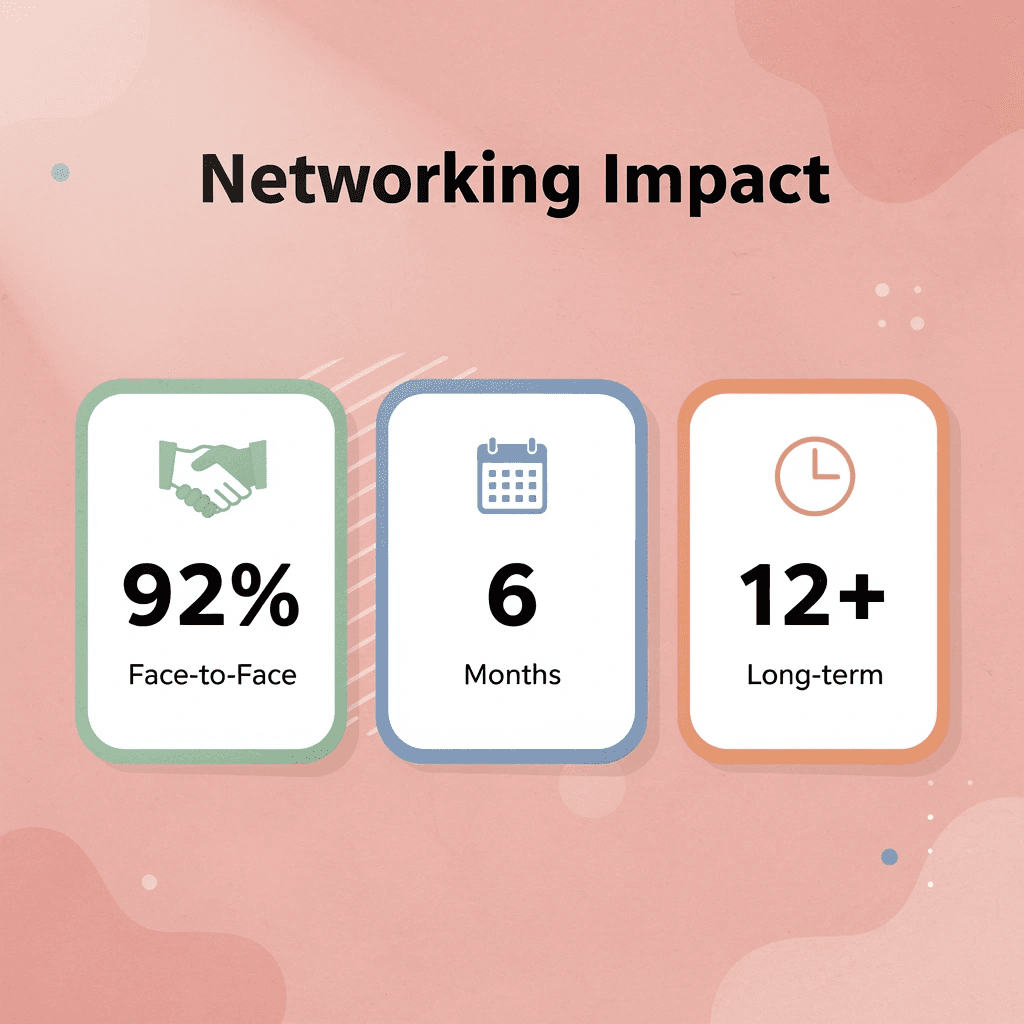
"92% of professionals say that face-to-face meetings are essential for building long-term business relationships, yet most spend their time on surface-level digital connections." — Harvard Business Review, 2023
💡 Tip: Match your networking intensity to your timeline. High-touch approaches like one-on-one meetings work for 6-month goals, while low-touch strategies like LinkedIn outreach support long-term relationship building over 12+ months.
1. Professional Networking
You can build professional connections through industry conferences, trade shows, seminars, and business associations. Use these opportunities to build trust in your field, stay current with market shifts, and demonstrate industry knowledge.
How does professional networking build authority and connections?
Professional networking works best when you build authority or connect with decision-makers who value domain expertise. A consultant entering a new industry attends conferences to learn the language, understand pain points, and meet potential clients who expect deep sector knowledge. According to LinkedIn, 85% of jobs are filled through networking, and professional environments allow people to evaluate your expertise in real time.
What mistakes should you avoid in professional networking?
This type fails when treated as a pure lead-generation channel. Pitching your services to everyone at an event and expecting immediate responses undermines authority. Professional networking produces results over multiple interactions, yielding positioning and access to decision-makers rather than immediate sales.
2. Event-Based Networking
Event-based networking focuses on conferences, meetups, and industry gatherings as opportunities to make first connections. This approach prioritizes volume and exposure, creating multiple touchpoints in compressed timeframes.
When does event-based networking work best?
It works when you need to see many people quickly or find potential contacts before investing in deeper relationships. A startup launching a new product attends three industry events in one month to gauge market interest, collect feedback, and build an initial prospect list. Without organized follow-up, these connections disappear within days.
Why do most event networking efforts fail?
Most event-based networking fails because people confuse attendance with action. You collect contacts, promise to follow up, then return to work where those names sit in a pile or scattered across apps. As your contact list grows and opportunities become more time-sensitive, important context gets lost, and response times stretch from hours to weeks.
Solutions like digital contact cards eliminate this friction by capturing contact details instantly and syncing them directly to your CRM, ensuring follow-up occurs while the conversation is still relevant. Our digital contact card maintains momentum by preventing leads from falling through the cracks. Event-based networking produces exposure and initial awareness, not depth or commitment. Use it to open doors, not close deals.
3. Online Networking
Online networking through platforms like LinkedIn, industry forums, and professional communities removes geographical barriers to connection. It works best when you need to reach people outside your immediate area, share knowledge with a large audience, or maintain visibility without frequent in-person meetings. You can work with potential partners worldwide and build relationships asynchronously. A B2B consultant shares insights on LinkedIn, comments thoughtfully on industry discussions, and connects with prospects who discover them through content rather than cold outreach.
What makes online networking fail?
Online networking fails when people treat it like broadcasting: posting generic updates, sending connection requests with immediate sales pitches, or engaging only when they need something. Effective online networking requires consistent participation over months to generate sustained visibility and inbound interest.
4. Social Media Networking
Social media networking uses platforms like Twitter, Instagram, and community groups to build connections through shared interests and casual interaction. It emphasizes personality and relatability over credentials, distinguishing it from professional online networking.
When should you use social media networking?
Use this approach when your business benefits from an emotional connection or when your audience values authenticity over formal expertise. A local coffee shop owner shares behind-the-scenes stories on Instagram, responds to customer comments personally, and builds loyalty through consistent, human interaction. People buy from businesses they feel connected to, not merely ones with superior product specifications.
How can social networking become counterproductive?
Social networking becomes performative when you chase engagement metrics instead of genuine connection. Posting motivational quotes, jumping on trending topics, or manufacturing personality for clicks erodes trust. Brand affinity and community convert into business only when the relationship feels real.
5. Community Networking
Community networking involves local chambers of commerce, neighborhood associations, civic organizations, and regional business groups. It works when your business depends on local reputation, word-of-mouth referrals, or being recognized as part of the community fabric.
Who benefits most from community networking?
Small businesses and service providers in specific geographic areas benefit the most. A family-owned restaurant that sponsors youth sports teams, participates in town events, and builds relationships with other local owners gains referrals through trust built on repeated presence and shared investment in community success.
What causes community networking to fail?
Community networking fails when you treat it like a business deal: joining a chamber only to hand out flyers, attending one event, then disappearing, or showing up only when you need something. Real credibility and referral networks grow when you get genuinely involved and stick with it over time.
6. Referral Networking
Referral networking focuses on building relationships with people who regularly send business your way, including complementary service providers, consultants, advisors, and anyone whose clients naturally need what you offer.
Why does referral networking produce the highest quality leads?
This type produces the highest quality leads because referrals come with built-in trust. A web designer partners with marketing consultants, brand strategists, and business coaches who meet clients needing websites. When those partners refer someone, the conversation starts with credibility already established. According to McKinsey, networking can increase business revenue by 40%, and referral networks have a disproportionate impact because conversion rates for warm introductions far exceed those for cold outreach.
What causes referral networking to break down?
Referral networking breaks down when the relationship becomes one-sided. If you only receive referrals without sending opportunities back, or fail to update partners on outcomes, the pipeline dries up. Keeping it going requires giving back and discussing what makes a good referral for each party.
7. Strategic Networking
Strategic networking means targeting specific people who match your long-term business goals. You identify investors, potential partners, mentors, or industry leaders who could accelerate your success, then build relationships with them purposefully.
When should you use strategic networking?
Use strategic networking when you need resources, expertise, or access that only specific people can provide. A SaaS founder identifies three executives at enterprise companies who could become early customers and advisors, then pursues them through research, thoughtful outreach, and value provision before making requests.
What makes strategic networking fail?
Strategic networking fails when it becomes purely extractive: reaching out only when you need funding, asking for introductions without offering anything in return, or treating people as stepping stones. Success requires approaching it as relationship-building rather than transaction-hunting.
8. Industry-Specific Networking
Industry-specific networking occurs within niche professional groups, specialized forums, and vertical-focused events, where participants share a common market context. It works when insider knowledge, regulatory understanding, or technical depth matters more than general business skills.
How does industry-specific networking create value?
A cybersecurity consultant joins information security associations, attends DefCon, and participates in threat intelligence forums where conversations assume baseline expertise. The value lies in pattern recognition across the industry, early awareness of emerging issues, and relationships with peers facing identical challenges.
What are the risks of industry-specific networking?
Industry-specific networking becomes closed off when it stops you from hearing outside perspectives. Spending all your networking time with people who think like you limits your exposure to new ideas and causes you to miss market changes in nearby industries. The result is strong field knowledge and access to specialized opportunities, but you risk getting stuck in echo chambers where everyone agrees.
9. Internal Networking
Internal networking means building relationships with people across different departments, levels, and roles within your organization. It directly affects how quickly things get done, how much support your ideas receive, and how far you can advance in your career, yet people often overlook its importance.
How do strong internal networks improve performance?
Strong internal networks make cross-functional projects run smoothly, clarify how the organization works, and create advocates for your opportunities. An account manager with relationships across product, engineering, and customer success can solve client problems faster than one working only with their immediate team.
What causes internal networking to fail?
Internal networking fails when it becomes political maneuvering: building relationships solely for career advancement, taking credit for others' work, or forming alliances against colleagues. Genuine collaboration and mutual success are essential to the operational efficiency and career progression it enables.
10. Global Networking
Global networking means building relationships across borders, time zones, and different cultures. It matters when you want to expand into new markets, find international partners, or create products for people around the world. You must work with different business practices, communication styles, and relationship expectations. For example, a software company expanding into Asia needs to understand how business relationships differ between Japan and Singapore, adapting its approach to local norms rather than applying Western networking methods universally.
Why does global networking fail without cultural intelligence?
Global networking fails when you assume your domestic approach works everywhere. Rushing relationship-building in cultures that value patience, being too direct when people prefer indirectness, or ignoring local business etiquette can create problems. Success requires cultural intelligence and patience to access international markets and diverse perspectives.
11. Informal Networking
Informal networking happens through friends, family, social gatherings, hobby groups, and community events where business isn't the primary focus. Relationships develop naturally around shared interests, and business opportunities emerge organically.
How does informal networking build authentic relationships?
A graphic designer joins a local running club, builds friendships over months of training together, and eventually gets referred to other members who need design work. The strength lies in authenticity: the relationship exists independent of business value. People trust recommendations from friends more than professional contacts because the motivation feels pure.
What mistakes should you avoid in informal networking?
Informal networking becomes uncomfortable when you treat every personal relationship as a business opportunity. Joining hobby groups to find customers, steering conversations toward work, or measuring friendships by their financial value repels people. Genuine support networks and unexpected opportunities emerge only when business remains secondary to authentic connection.
Related Reading
- How To Use Social Media For Networking
- Social Networking For Business
- Icebreaker Examples Business Networking
- How To Build A Professional Network
- Business Networking Ideas
- How To Get Business Contacts
- Small Business Networking
- Networking Mistakes
- Networking Follow-Up Email
How to Choose the Right Type of Networking Based on Your Goals
The right type of networking depends on your specific goal. Do you need leads? Use relationship-based networking with systematic follow-up. Do you need visibility? Use event-based networking amplified through digital channels. Do you need partnerships? Practice strategic networking targeting specific individuals. Do you need a scale? Build online networking that compounds over time. Matching the type to your goal separates productive effort from wasted motion.
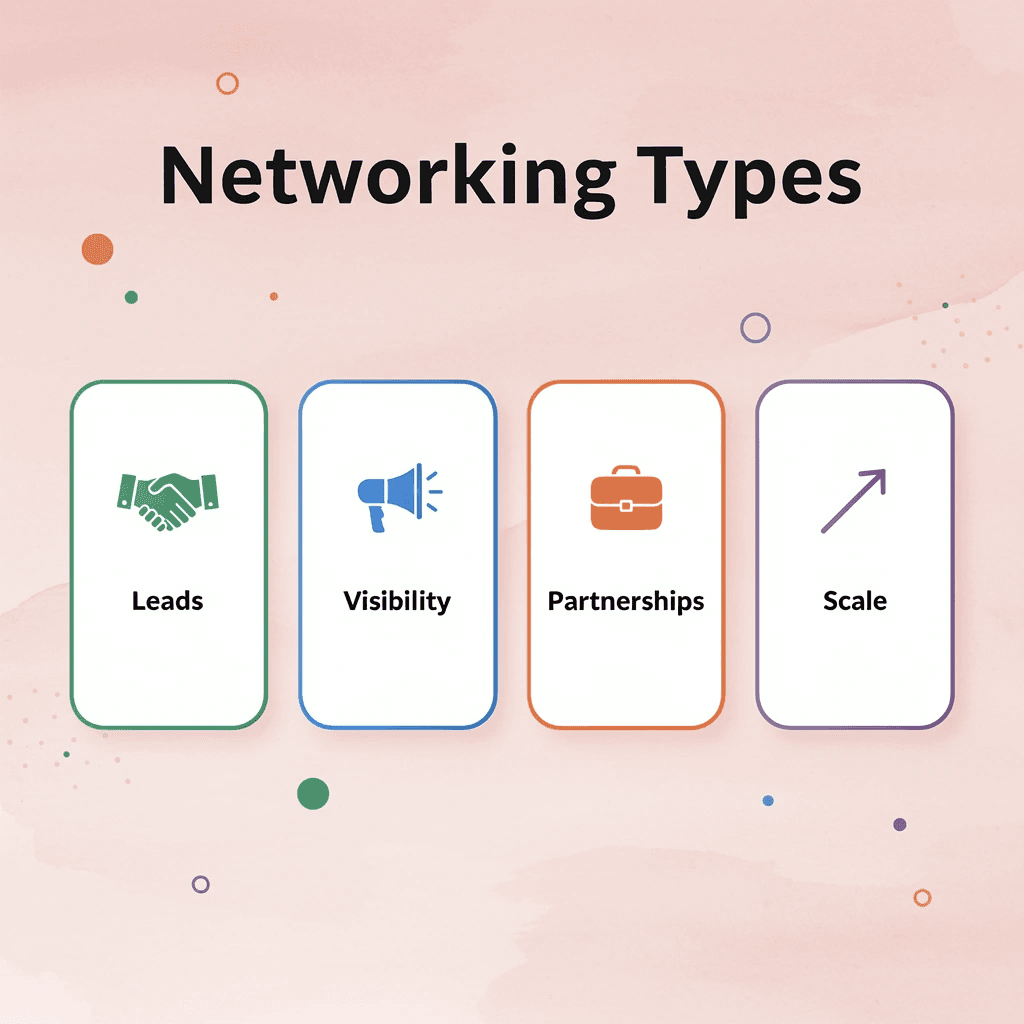
🎯 Key Point: Most networking fails because people use a one-size-fits-all approach instead of matching their networking strategy to their actual business goals.
"Matching the type to your goal is the difference between productive effort and wasted motion." — Networking Strategy Framework

⚠️ Warning: Using the wrong networking type for your goal wastes valuable time and creates minimal results - always align your networking method with your specific outcome.
What mistakes do professionals make when networking?
Most professionals treat networking types as the same, using identical approaches regardless of their goals. They attend industry conferences expecting immediate sales, build large online presences seeking quick credibility, or arrange coffee meetings without clarity on desired outcomes. Each networking type operates under different conditions and produces different results on different timelines.
How does relationship-based networking produce qualified leads?
Building relationships and using referral systems together creates the highest-quality leads. Find service providers, consultants, and advisors whose clients naturally need what you offer, then build relationships where both parties send opportunities to each other. For example, a financial advisor can partner with estate attorneys, accountants, and insurance brokers whose clients need investment guidance. When partners refer someone, the conversation starts with trust already established.
What are the limitations of referral-based lead generation?
The limitation shows up in speed and scale. Building referral relationships takes months of consistent interaction, delivering value before asking for anything, and proving you'll handle their referrals professionally. According to LinkedIn, 80% of professionals consider networking essential to career success, yet most abandon relationship-based approaches because results don't appear immediately. You need a systematic follow-up to keep conversations alive between referrals. Solutions like digital contact card sync every new connection directly into your CRM with conversation notes, set automated follow-up reminders, and track which relationships actively produce referrals versus go dormant.
How does event networking quickly create broad exposure?
Event-based networking creates broad exposure quickly but requires digital amplification for lasting impact. Attending conferences, speaking at industry gatherings, and participating in trade shows puts you in front of decision-makers who evaluate expertise in real time. The strength lies in concentrated access to your target audience; the weakness is that connections fade quickly.
Why do most event networking efforts fail to build relationships?
Most event networking fails because people confuse collecting contacts with building relationships. You meet 30 people at a conference, exchange business cards, and then return to work buried under emails. Three weeks later, you can't remember specific conversations or why each connection mattered. Amplify event networking by documenting insights immediately, sharing key takeaways publicly through LinkedIn or industry forums, and following up within 48 hours with specific references to your conversation. This converts temporary exposure into sustained visibility by reinforcing the in-person interaction.
When you need access to specific people or resources
Strategic networking means connecting with people who match your long-term goals rather than hoping to meet the right person by chance. This approach works well when you need investors, partners, mentors, or industry leaders who can accelerate your success.
How do you approach strategic networking effectively?
The approach involves researching what matters to them, reaching out thoughtfully to demonstrate your homework, and providing value before making any ask. A founder building enterprise software identifies three executives at target companies who could become early customers and advisors. Rather than cold pitching, they share relevant industry analysis, introduce useful connections, and participate in conversations where those executives are already engaged.
What makes strategic networking fail or succeed?
Strategic networking fails when it becomes transactional—reaching out only when you need funding or treating people as stepping stones. Success requires genuine relationship-building that develops over months, not deals completed in weeks. But getting the type right means nothing if you can't execute what happens after that first conversation ends.
Related Reading
- Best Business Networking Apps
- Business Networking Strategies
- Business Networking For Entrepreneurs
- Professional Networking Platforms
- Tips For Networking Events
- Top Contact Management Software
- Networking Tips For Small Business Owners
Most Networking Fails After the First Conversation, Not During It
The breakdown happens in the 48 hours after you shake hands, not during the introduction. You remember the person's name and company, perhaps one detail about their challenge. But you don't recall the specific pain point they mentioned, the timeline they're working under, or the exact context that made the conversation relevant. Without that detail, your follow-up becomes generic, and the connection cools before it develops into something actionable.
🎯 Key Point: The 48-hour window after networking is when most connections are lost due to fading memory and lack of context.
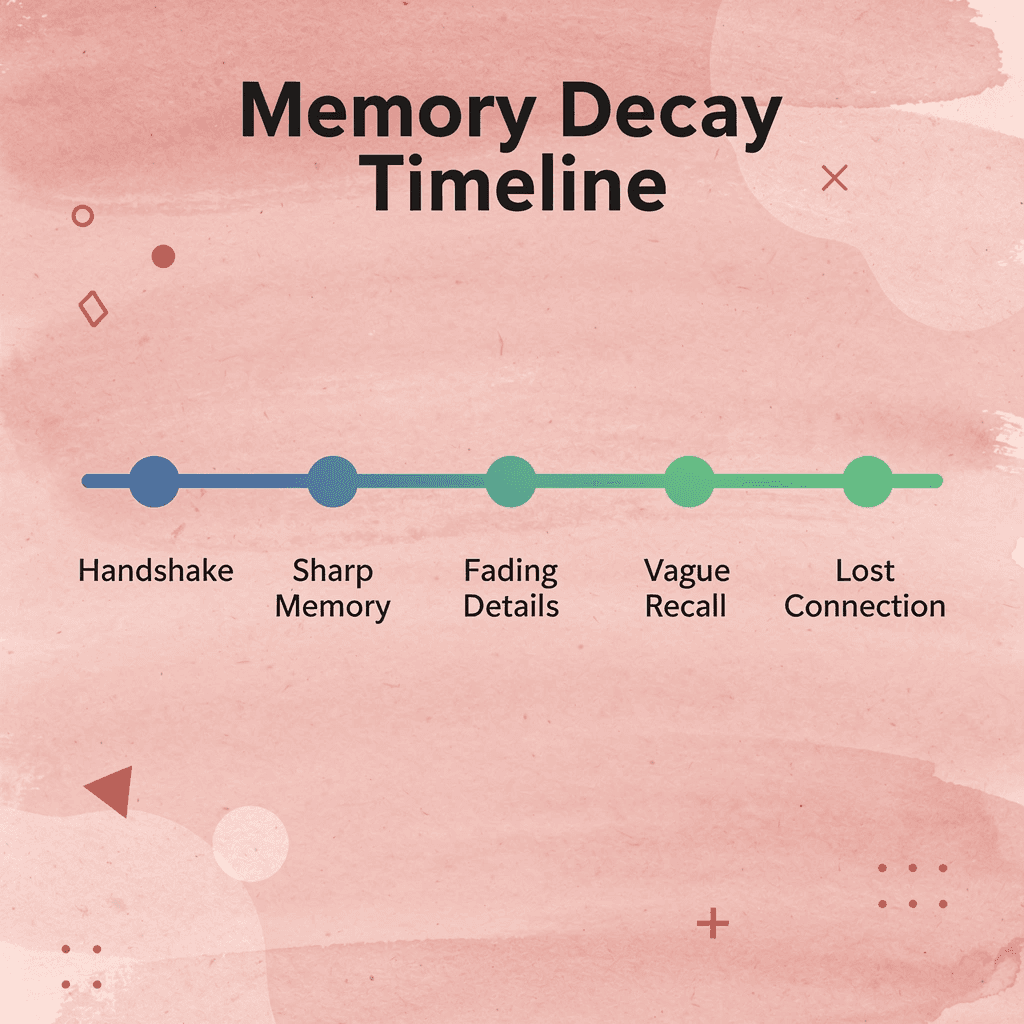
"Without that detail, your follow-up becomes generic and the connection cools before it develops into something actionable."
Traditional contact capture creates this gap by design. You collect a business card that sits in a stack with 20 others from the same event. As days pass, the conversation fades from sharp memory to vague recollection, and you can't reconstruct why the conversation mattered or what specific value you could offer. Our digital contact card eliminates this friction by capturing contact details instantly, including notes from the conversation, syncing everything directly to your CRM, and setting follow-up reminders while the context is still fresh. Every interaction becomes structured and trackable, shrinking the gap between meeting someone and taking action from weeks to hours.

⚠️ Warning: Traditional business cards create a dangerous delay between meeting and action that kills networking momentum.
When structured capture replaces manual effort
Most professionals lose opportunities because they lack systems to act on connections before momentum dies. You meet a potential client at a conference who mentions they're evaluating vendors next quarter. That detail fades from memory, and the opportunity passes to someone whose system reminds them to follow up at the right moment.
When your team can see every new connection, track which interactions convert, and measure networking ROI across events, online channels, and referral sources, networking becomes part of your sales infrastructure. You can test which networking types produce qualified leads, which conversations stall at follow-up, and which team members build relationships that turn into pipeline. That visibility transforms networking from a hopeful effort into a measurable strategy, with conversion rates that compound over time instead of contacts that evaporate after each event.